S T U D Y P R O T O C O L
Open Access
A complex behavioural change intervention
to reduce the risk of diabetes and
prediabetes in the pre-conception period in
Malaysia: study protocol for a randomised
controlled trial
Jutta K. H. Skau
1*, Awatef Binti Amer Nordin
2, Julius C. H. Cheah
3, Roslinah Ali
2, Ramli Zainal
4, Tahir Aris
5,
Zainudin Mohd Ali
6, Priya Matzen
7, Regien Biesma
8,7, Jens Aagaard-Hansen
9,1, Mark A. Hanson
7and Shane A. Norris
1Abstract
Background:Over the past two decades, the population of Malaysia has grown rapidly and the prevalence of
diabetes mellitus in Malaysia has dramatically increased, along with the frequency of obesity, hyperlipidaemia and hypertension. Early-life influences play an important role in the development of non-communicable diseases. Indeed, maternal lifestyle and conditions such as gestational diabetes mellitus or obesity can affect the risk of diabetes in the next generation. Lifestyle changes can help to prevent the development of type 2 diabetes mellitus. This is a protocol for an unblinded, community-based, randomised controlled trial in two arms to evaluate the efficacy of a complex behavioural change intervention, combining motivational interviewing provided by a community health promoter and access to a habit formation mobile application, among young Malaysian women and their spouses prior to pregnancy.
Method/design:Eligible subjects will be Malaysian women in the age group 20 to 39 years, who are nulliparous, not diagnosed with diabetes and own a smartphone. With an alpha-value of 0.05, a statistical power of 90 %, 264 subjects will need to complete the study. Subjects with their spouses will be randomised to either the intervention or the control arm for an 8-month period. The primary endpoint is change in waist circumference from baseline to end of intervention period and secondary endpoints are changes in anthropometric parameters, biochemical parameters, change in health literacy level, dietary habits, physical activity and stress level. Primary endpoint and the continuous secondary endpoints will be analysed in a linear regression model, whereas secondary endpoints on an ordinal scale will be analysed by using the chi-squared test. A multivariate linear model for the primary endpoint will be undertaken to account for potential confounders. This study has been approved by the Medical Research and Ethics Committee of the Ministry of Health Malaysia (protocol number: NMRR-14-904-21963) on 21 September 2015. (Continued on next page)
* Correspondence:[email protected]
1MRC Developmental Pathways for Health Research Unit, Department of
Paediatrics, School of Clinical Medicine, Faculty of Health Sciences, University of the Witwatersrand, Johannesburg, South Africa
Full list of author information is available at the end of the article
(Continued from previous page)
Discussion:This study protocol describes the first community-based randomised controlled trial, to examine the efficacy of a complex intervention in improving the pre-pregnancy health of young Malaysian women and their spouses. Results from this trial will contribute to improve policy and practices regarding complex behavioural change interventions to prevent diabetes in the pre-conception period in Malaysia and other low- and middle-income country settings. Trial registration:This trial is registered with ClinicalTrials.gov (www.clinicaltrials.gov) on 30 November 2015, Identifier: NCT02617693.
Keywords:Pre-conception, Pre-pregnancy, Complex behavioural change intervention, E-health, Malaysia, Lifestyle intervention, Motivational counselling
Background
Diabetes mellitus (DM) is one of the most common non-communicable diseases (NCDs) across the world. Today 387 million people are living with diabetes whereas 46.3 % remain undiagnosed. The prevalence of DM is expected to increase to 53 % by 2035 [1]. DM is an important public health concern in Malaysia. Over the past two decades, the population of Malaysia has grown rapidly and the prevalence of DM in Malaysia has increased dramatically, along with the prevalence of obesity, hyperlipidaemia and hypertension. The National Health and Morbidity Survey (NHMS) 2015 estimated the prevalence of DM in adults 18 years old and over was 11.6 % in 2006 and 17.5 % in 2015 [2]. The prevalence of DM has almost tripled over the past two decades in the younger generations (20–39 years old) [2, 3].
There is a body of evidence showing that lifestyle changes, such as achieving a healthy body weight, can help to prevent the development of type 2 diabetes mellitus (T2DM) [4–6]. Complex behavioural change interventions, or lifestyle intervention trials, have also moved in the past decade from targeting high-risk to low-risk populations and interventions have also been targeted earlier in the life course [7–9]. The use of new communication technologies, such as computer-based interventions, and empowerment techniques such as goal setting, have been found to be helpful and eventually more effective than other inter-ventions on weight loss and self-management of T2DM [10–13]. Lifestyle interventions seek to delay or halt the development of T2DM and achieve, e.g. a healthy body weight. Goal setting requires a coordinated team effort that involves the person at risk in the decision-making process. Evidence demonstrates that structured, intensive lifestyle programmes involving participant education, individualised counselling, reduced dietary energy and fat intake, regular physical activity, and frequent participant contact are ne-cessary to produce long-term weight loss of 5–7 % [14].
The Developmental Origins of Health and Disease (DOHaD) concept describes how during early life (at con-ception, and/or during foetal life, infancy and early child-hood), the environment induces changes in development that have a long-term impact on later health and disease
risk [15]. Early-life influences play an important role in the development of NCDs, and maternal lifestyle and condi-tions such as gestational diabetes mellitus (GDM) or obes-ity can affect the risk of diabetes in the next generation [16, 17]. Besides complications of pregnancy such as GDM, hypertension, and preeclampsia that directly affect the pregnancy outcome, the mother’s health during preg-nancy affects her child’s risk of becoming overweight or obese. If the mother makes lifestyle choices that lead to unbalanced nutrition, obesity, stress, smoking and others, her child is more vulnerable to diabetes and other NCDs [18]. Children born to mothers with GDM have a four to eight times higher risk of obesity, glucose intolerance and T2DM in adolescence or young adulthood [19].
Methods/design Aim
The primary objective of the trial is to evaluate the efficacy of a complex behavioural change intervention combining behaviour change counselling provided by community health promoters (CHPs) and utilisation of an E-health platform to enhance women’s health prior to pregnancy. This will be measured through the change in waist circum-ference after the 8-month intervention period between fe-male subjects exposed to the intervention and fefe-male subjects exposed to standard of care in a control group. The secondary objectives are to evaluate the efficacy of the intervention on health literacy, dietary habits, physical ac-tivity, sedentary behaviour and stress level.
Study design
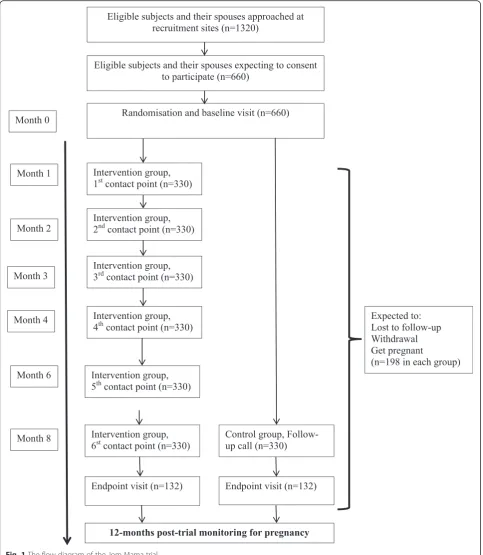
The trial is designed as an unblinded, RCT to assess the efficacy of a complex behavioural change intervention aiming to improve the overall health of young women prior to their first pregnancy. The intervention follow-up period is 8 months from randomisation/baseline. After end trial the subjects will be monitored for a period of 12 months for pregnancy. Figure 1 gives the flow diagram of the trial. The trial was designed following the Standard Protocol Items: Recommendations for Interventional Trials (SPIRIT) 2013 statement (see Additional file 1).
Site and participation selection
The trial will be carried out in the district of Seremban in the state of Negeri Sembilan, Malaysia. This location was selected due to Negeri Sembilan having a higher prevalence of diabetes (22.0 %) compared to the national prevalence (15.2 %) [22]. Ethnic diversity is one of the key features of Malaysia and the district of Seremban has a representation of the three major ethnic groups: Malay, Chinese and Indian, 67.4, 24.6 and 7.3 %, respectively [23]. The target subjects will be newly registered married or engaged women. The woman will be recruited with her spouse, who also will be exposed to the intervention.
Inclusion and exclusion criteria
Eligible subjects must meet all the following inclusion criteria:
1. Female and between the ages of 20–39 years 2. Nulliparous
3. Not pregnant at the time of signing the informed consent
4. Own a smartphone, with either an Android operating system version 4.1 and above or iOS operating system 7.0 and above, and have Internet access
Subjects meeting any of the following criteria will be excluded from participation in the trial:
1. Female subject undergoing treatment for type 1 or 2 diabetes mellitus
2. Subject not residing in the district of Seremban
Screening
Newly married or engaged women and their spouses will be recruited from 2 November 2015, primarily from five designated primary health clinics in the district of Seremban, whereas Muslim Malay couples are obligated to conduct a pre-marriage screening, which involves a HIV/ AIDS test. Other sites in Seremban such as the state mar-riage registration office, temples and churches or other sites (work places, malls, gyms, etc.) will also be approached for recruitment purposes. A research officer will meet the young couples face-to-face and provide an explanation of the study rationale and a description of the Jom Mama pro-ject. The women and spouse will be given an opportunity to ask questions and those who are interested in the study will have their contact details recorded for further contact and arrangements for a baseline visit. If possible, the couple will be given a clinic appointment for baseline measure-ments at one of the five designated primary health clinics in Seremban. If the couple need time to consider their in-volvement, the research officer will follow-up with three phone calls over the next 3 weeks. If, at these phone calls the couple accepts participation in the trial, a baseline ap-pointment will be made. If the couple does not answer the three phone calls or rejects the offer to participate, they will be dropped from the participation registration list.
Intervention
The CHP will function as a personal coach to engage, sup-port and guide the young woman and her spouse toward achieving and maintaining a healthier lifestyle. During the interaction over the intervention period of 8 months, the CHPs will assess the subject and her spouse’s health risks and behaviour, share information on healthy living and
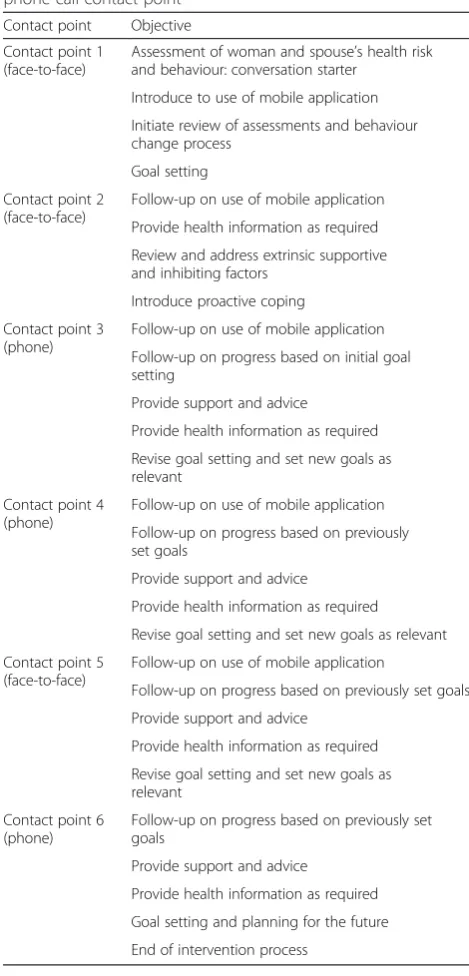
support the subjects and spouses to reach their personal health goals. The objectives of each contact point are presented in Table 1.
The CHP role will be carried out by community nurses who are currently working in primary health care in Malaysia. Prior to the start of the intervention, the
[image:4.595.57.541.88.644.2]community nurses undertook training in becoming a CHP. This was a 5-day training programme with ses-sions in motivational interviewing techniques, the use of
the E-health platform and basic knowledge of healthy diet and physical activity. The training was carried out by local trainers who are social-psychologists with
[image:5.595.65.540.86.623.2]expertise in motivational interviewing techniques, pro-fessional dieticians and physical activity experts. During the trial, refreshment training with the social-psychologist trainers will take place to support and help the CHPs in addressing challenging situations they encountered with the young women and their spouses.
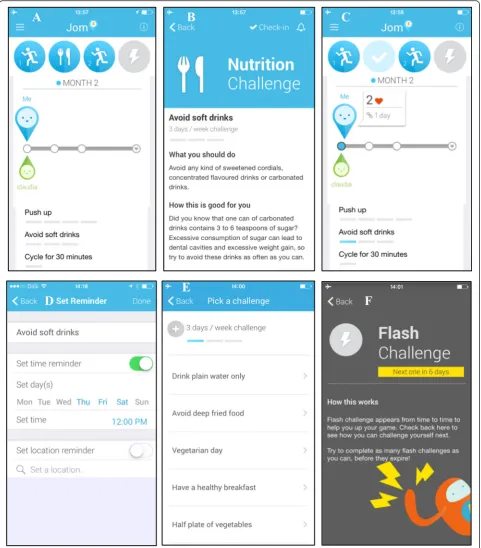
The mobile application is a habit-formation applica-tion, which incorporates personal goal setting, progress tracking and general information on healthy lifestyles. The mobile application has two key components com-prising diet and physical activity. Under each domain
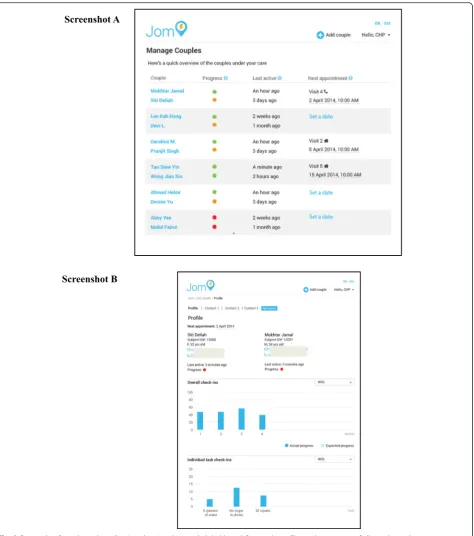
several challenges have been developed which can be selected by the subject on a monthly basis in dialogue with the CHP. The application will suggest several chal-lenges for healthy eating, such as making healthy food choices and healthy food preparation, and interactive options for the subject to stay active and prevent seden-tary behaviour. In addition, the mobile application will also provide information on what constitutes a healthy lifestyle and further information on how to stay healthy before pregnancy. The mobile application is available on iOS and Android operating systems. Figure 3 presents several screen shots from the mobile application.
Control arm
Subjects in the control arm will receive standard of care, which is no contact with a CHP and no access to the E-health platform. They will receive one phone call from a research officer towards the end of the intervention period to remind them of their endpoint visit.
Outcomes Primary endpoint
Change in waist circumference was selected as the primary endpoint because of its validity as a superior measurement for assessing abdominal fat content and associated obesity health risk, as compared to a meas-ure such as body mass index (BMI) [24–26]. In addition, there are existing national Malaysian data on population waist circumference, which allow for the study results to be comparable on a national level. In the present trial, the primary endpoint is predicted to provide a 2-cm reduction of waist cir-cumference in the intervention group compared to the control group, which will reflect a reduction of central fat distribution. The reduction of 2 cm in waist circumference as a primary endpoint is based on the mean from a number of studies indicating that a decrement of waist circumference is possible with a lifestyle changing intervention over a period of 8 months [27–31]. The variation between the two time-points in these studies was small (standard devi-ation (SD) of 3–5) after the intervention period, and we therefore assume an expected within-person esti-mate of SD = 5.
Secondary endpoints
The secondary endpoint will be as follows:
1. Change in BMI from baseline to after 8 months 2. Change in waist-to-height ratio from baseline to
after 8 months
3. Change in waist-to-hip ratio from baseline to after 8 months
[image:6.595.55.290.104.593.2]4. Change in weight from baseline to after 8 months
Table 1Overview of the objective of each face-to-face and phone call contact point
Contact point Objective
Contact point 1 (face-to-face)
Assessment of woman and spouse’s health risk and behaviour: conversation starter
Introduce to use of mobile application
Initiate review of assessments and behaviour change process
Goal setting
Contact point 2 (face-to-face)
Follow-up on use of mobile application
Provide health information as required
Review and address extrinsic supportive and inhibiting factors
Introduce proactive coping
Contact point 3 (phone)
Follow-up on use of mobile application
Follow-up on progress based on initial goal setting
Provide support and advice
Provide health information as required
Revise goal setting and set new goals as relevant
Contact point 4 (phone)
Follow-up on use of mobile application
Follow-up on progress based on previously set goals
Provide support and advice
Provide health information as required
Revise goal setting and set new goals as relevant
Contact point 5 (face-to-face)
Follow-up on use of mobile application
Follow-up on progress based on previously set goals
Provide support and advice
Provide health information as required
Revise goal setting and set new goals as relevant
Contact point 6 (phone)
Follow-up on progress based on previously set goals
Provide support and advice
Provide health information as required
Goal setting and planning for the future
5. Change in glycated haemoglobin A1c(HbA1c) from
baseline to after 8 months
6. Change in the fasting lipid profile (total cholesterol, low-density lipoprotein cholesterol, high-density lipoprotein cholesterol and triglycerides) from base-line to after 8 months
7. Change in blood pressure (systolic and diastolic blood pressure) from baseline to after 8 months 8. Change in the level of health literacy, as measured
by the European Health Literacy Survey
Questionnaire (HLC-EU-Q47) from baseline to after 8 months
9. Change in dietary intake, as measured by a Food Frequency Questionnaire (FFQ), from baseline to after 8 months
10.Change in physical activity and sedentary behaviour, as measured by the International Physical Activity Questionnaire (IPAQ) used in national health surveys in Malaysia, from baseline to after 8 months 11.Change in stress levels, as measured by the
Depression Anxiety and Stress Scale 21-items (DASS-21) used by general practitioners in the Malaysian primary health care system from baseline to after 8 months
Other endpoints
The incidence of GDM, confirmed by an oral glucose tolerance test (OGTT), will be assessed in the subjects who will complete the intervention period and who become pregnant in the post-trial monitoring period. The OGTT will be taken at weeks 26–28 of the pregnancy. Data will be captured retrospectively and obtained from medical charts.
Supportive data
Anthropometric measurements, blood pressure and data on physical activity, dietary, stress and health literacy will be collected from the subject’s spouse. Socio-demographic data and family medical history will be collected from both the subject and the spouse. These variables are collected to adjust for confounding effects.
Sample size calculation
The sample size calculation is based on a 2-cm reduc-tion in waist circumference, in the primary endpoint of waist circumference between the intervention and control arms at 8 months. Assuming a 5 % level of significance (alpha = 0.05), a statistical power of 90 % (beta = 0.10) and a SD of 5 cm using a two-sidedttest, 132 women per arm are required. Taking into consideration a 20 % drop-out rate, and that 20 % will be pregnant, a total of 660 women would be randomised/enrolled to ensure 264 subjects to cover both the intervention and control arms.
Randomisation
At the baseline measurement visit, subjects will be randomised into the intervention and control arms at a 1:1 allocation ratio. Random allocation sequences will be computer- generated with block sizes of six subjects. Each clinic will be provided with a sufficient number of identification (ID) numbers with random-isation codes. When a subject is enrolled in the trial, the study nurse should assign the lowest available ID number to the subject from the list of ID numbers.
The Institute for Health System Research (IHSR) under the MoH has prepared the randomisation list and these are distributed to the five designated primary health clinics in Seremban. A copy is maintained by the IHSR.
Data collection, management and analysis Study conduct
Study nurses will be trained to conduct the data collec-tion at the five designated primary health clinics in Seremban district. At the baseline assessment, the prin-ciples of the trial will be explained again for the subject and spouse and they will be asked to provide consent by signing the consent form. One original copy of each form will be kept by the study nurse who will file the document on site. One copy of each form will be given to the subjects. The women and their spouses will have linked ID numbers by assigning each subject and spouse the same ID number with subject ID ending with the number ‘2’ and spouse ID ending with the number ‘1’ respectively.
Data collection
At baseline the subjects will undergo measurements of waist circumference, hip circumference, weight, height and blood pressure by following standardised procedures based on World Health Organisation (WHO) STEPS surveillance [32]. Only the subject in the couple will provide a 10-mL blood sample to measure glycated haemoglobin A1c (HbA1c) and a
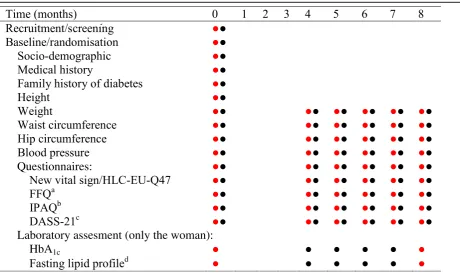
level, and stress level, respectively. Data such as socio-demographic parameters and family history of diabetes will be collected by structured interviews with the study nurse. The spouse will undergo the same data measure-ments, with the exception of blood sampling. At the end of the data collection, and before subject and spouse leave, data will be checked by the study nurse and site coordin-ator or research officer, to ensure that all data forms and questionnaires have been filled correctly. When data col-lection is completed the data colcol-lection forms and ques-tionnaires will be signed-off by the study nurse and site coordinator or research officer. At the end of the baseline visit, if the subject is randomised to the intervention, the first contact with a CHP will be made. The subject and spouse will be introduced to the mobile application and it will be installed on the subject’s and spouse’s smartphone device. If the subject and spouse have sufficient time the CHP will proceed with the first contact point. If the sub-ject and spouse do not have the time, an appointment will be set in the next 5 days either at the clinic or at the cou-ple’s house. The same measurements, except height, socio-demographic parameters and medical history, de-scribed above will be conducted at the endpoint visit (Table 2).
If a subject becomes pregnant within the 8-month intervention period, she will be withdrawn from the trial. Exit measurements, which are similar to those at the endpoint visit, will be performed only for subjects who become pregnant between 4.1 and 8 months from base-line. For those who become pregnant between baseline and month 4 in the intervention period, no measurements will be taken.
Data management
All data will be managed and stored with protection of data privacy. Documentation as well as corrections, if necessary, will be done in accordance to Good Clinical Practice guidelines. All protocol-required information collected during the trial must be entered on a data col-lection form containing the four questionnaires. The ori-ginal completed data collection form will be send to IHSR, MoH Malaysia, where double data entry will be performed by two independent data clerks. The com-pleteness, validity and plausibility of data are examined by validating programmes, which thereby generate queries. The generated queries will be checked with original data collection forms and all changes from the original data are documented on audit files. Data will be maintained and
Table 2Data collection at each time-point in the Jom Mama trial
Data collection on woman;●Data collection on spouse;a
FFQFood Frequency Questionnaire,b
IPAQInternational Physical Activity Questionnaire,c
DASS-21
Depression Anxiety and Stress Scale 21-items,d
Fasting lipid profile: will be measured as a combination of: total cholesterol (TC) level, low-density lipoprotein cholesterol (LDL-C) level, high-density lipoprotein cholesterol (HDL-C) level and triglyceride (TG) level; 5
analysed in the statistical Stata programme, version 12.0 or higher (StataCorp LP). Monitoring will be performed regularly by an independent clinical research organisation from Malaysia to check the completeness of the contents of records and the data collection forms, the adherence to the protocol and the progress of enrolment.
Statistical analysis
The null hypothesis is that there is no difference in the change in waist circumference between the intervention and the control group after the 8-month intervention. The alternative hypothesis is that the decrement in waist cir-cumference will be bigger in the intervention group com-pared to the control group after the 8-month intervention. A linear regression model will be used to assess the differ-ence in the change of waist circumferdiffer-ence from baseline to end of intervention, with the difference in waist circum-ference as the independent variable, treatment (interven-tion versus control) and baseline waist circumference as covariates. Additional tests will be performed for the im-pact of the intervention in both high- (waist circumfer-ence above 80 cm) and low-risk (waist circumfercircumfer-ence below 80 cm) groups. This will be done by subgroup ana-lysis or by assessing the proportional changes in the pri-mary endpoint. Each subgroup will also be analysed in a linear regression model. The continuous secondary end-points will be analysed in a linear regression model, whereas the difference in the change of each secondary endpoint from baseline to end of intervention, will be the dependent variable, treatment (intervention versus con-trol) and baseline value as covariate. Regarding health lit-eracy (HL-EU-Q47), physical activity (IPAQ) and stress (DASS-21) all the variables are ordinal and, therefore, in-dependence between intervention and control groups will be tested with the chi-squared test. Change in nutrient intakes will be compared between the groups using a gen-eralised linear model, with additional adjustments for total energy intake. Nutrient and food patterns before and after the intervention will be explored in both groups separately by using dimension reduction techniques such as principal component analysis. Multivariate analysis will be per-formed to assess the association between exposure to the intervention, primary endpoints and secondary endpoints (BMI, waist-to-height and waist-to-hip ratio, HbA1c, lipid
profile, blood pressure, health literacy, physical activity, dietary intake and stress level) using linear regressions. In this model the secondary endpoint will be included in the model as covariates and the estimated coefficients will be presented unadjusted and adjusted for appropriate and/or effect modifier and/or confounders. Furthermore, interac-tions between the secondary endpoints will also be ex-plored. Several supportive analyses will be performed. The first supportive analysis will explore the relation between subjects’and spouses’change in waist circumference and
other anthropometric measurements, diet, physical activ-ity, health literacy and stress. A second supportive analysis will explore whether a short intervention period (subjects who become pregnant between 4.1 and 8 months in the intervention period), will also have an impact on the pri-mary endpoint and secondary endpoints. A time variable explaining how long they have been included in the inter-vention will be included in the models as a covariate. At the end of the 12-month post-intervention monitoring period, a full analysis will be conducted on subjects who become pregnant within 12 months after completing the intervention. This will be done by assessing the incidences of GDM among women who became pregnant between treatment groups, using a chi-squared test. Additionally, a logistic regression model to explore associations between the number of subjects with GDM and several secondary endpoints will be conducted.
Ethical, regulatory and data management considerations The study protocol version 4.0 dated 12 August 2015 has received ethical and governance approvals by the Medical Research and Ethics Committee of the Ministry of Health Malaysia (protocol number: NMRR-14-904-21963) on 21 September 2015. The study is performed in compliance with the Declaration of Helsinki. Written informed consent will be taken from each participant prior to study enrolment by trained study nurse. The trial was registered at Clinical-Trials.gov, Identifier: NCT02617693 on 30 November 2015.
Safety monitoring
In the event of an abnormal laboratory test results for Hb1Ac or a newly suspected or diagnosed health con-cern during a subject’s measurements (i.e. high blood pressure or a high score in the DASS-21 tool) at baseline/ exit point/endpoint, the subject will be referred to their primary health care physician for further examination.
Discussion
guidelines and policies are designed to mainly target high-risk groups [42]. Therefore, this study may con-tribute evidence to this important area which is needed to support policy-makers in making rational decisions to improve population health.
A pilot test was conducted prior to trial implementa-tion and has identified a number of challenges. A major challenge that has been found is that the intervention addresses a challenging period for young Malaysian cou-ples, whereby busy work schedules and lack of time affect participation rates and generate low interest in such an intervention. While it would be ideal to collect spousal data at baseline and endpoint, it will be made optional for the spouse to attend both baseline and end-point visits if they are unable to attend in order to con-tinue with recruitment. Based on these observations, it is expected that the recruitment period will be longer than initially anticipated.
The combination of motivational interviewing through a CHP and E-health platform is a novel ap-proach. Training the community nurses to become CHPs involves an interactive approach beyond their conven-tional training programmes; this provided new learning experiences for these nurses to build higher capacity in patient engagement. The E-health platform is also a new experience for the primary health care services in the Seremban district and considerable time was needed to train community nurses with the necessary IT skills. An-other key challenge faced was the limited usage of the E-health mobile application due to poor Internet connectiv-ity in the district of Seremban. In mitigating this challenge, Wi-Fi hotspots in the designated primary health clinics have been set up to enable participating women and their spouses to download the mobile application in a secured Internet environment. Additionally, several changes have been made to the E-health platform to make it more robust.
The proposed trial will not directly assess the long-term effects of the intervention on the risk of the offspring de-veloping T2DM. Given the complexity of dede-veloping, implementing and evaluating complex behavioural change lifestyle interventions, this trial will focus on improving the pre-conception health in young women prior to their first pregnancy.
Trial status
The trial started recruitment in November 2015. The trial is expected to be completed by July 2017.
Additional file
Additional file 1:The SPIRIT recommendations for clinical trials protocols. (DOC 117 kb)
Abbreviations
BMI:body mass index; CHP: community health promoter; DASS-21: Depression Anxiety and Stress Scale 21-items; DBP: diastolic blood pressure; DM: diabetes mellitus; DOHaD: The Development Origins of Health and Disease; FFQ: Food Frequency Questionnaire; GDM: gestational diabetes mellitus; HbA1c: glycated haemoglobin A1c; HDL-C: high-density lipoprotein cholesterol; HLC-EU-Q47: The European Health literacy Survey Questionnaire; ID: identification; IHSR: Institute for Health System Research;
IPAQ: International Physical Activity Questionnaire; LDL-C: low-density lipoprotein cholesterol; MoH: Ministry of Health; NCDs: non-communicable diseases; NHMS: National Health and Morbidity Survey; OGTT: oral glucose tolerance test; RCT: randomised controlled trial; SBP: systolic blood pressure; SD: standard deviation; T2DM: type 2 diabetes mellitus; TC: total cholesterol; TG: triglycerides; WHO: World Health Organisation.
Competing interests
The study forms part of the Jom Mama project in Malaysia. The Jom Mama project is a public-private partnership with the Ministry of Health Malaysia, Novo Nordisk (Denmark), the University of Southampton (UK), the University of Witwatersrand (South Africa), and the Steno Diabetes Center (Denmark) to address diabetes prevention in Malaysia. The development of the intervention package, project management and the costs of the CRO have been funded by an unrestricted grant from Novo Nordisk. The Ministry of Health Malaysia is providing the funding for human resources and trial implementation. JKHS, JCHC and PM are employed by Novo Nordisk. The Steno Diabetes Center is a not-for-profit institution owned by Novo Nordisk. MAH is supported by the British Heart Foundation.
Authors’contributions
All authors have collectively contributed to the development of the study protocol. ZMA and RA are responsible for the overall trial coordination and implementation and drafting the first report. JKHS is responsible in assisting the trial design, overall coordination of the trial, data management and drafting the first report and been responsible for the intervention package development. ABAN has been responsible for the intervention package development, assisted in pilot testing and contributed to the implementation of the trial. JCHC is responsible in assisting the trial design, overall coordination of trial implementation and assisting with drafting the first report. RZ, TA, RB, JAH, MAH, PM and SAN are responsible for the trial design and the development of the intervention package and will be assisting in drafting the first report. All authors read and approved the final manuscript.
Acknowledgements
The authors would like to thank the Director General of Health, Malaysia, for his permission to publish this article. We greatly acknowledge all the young couples who have agreed to participate in the pilot study and the staff of Seremban Health Office who cooperated with us in conducting the study. The Ministry of Health Malaysia is providing the funding for human resources and trial implementation. The development of the intervention package, project management and the costs of the CRO have been funded by an unrestricted grant from Novo Nordisk.
Author details
1MRC Developmental Pathways for Health Research Unit, Department of
Paediatrics, School of Clinical Medicine, Faculty of Health Sciences, University of the Witwatersrand, Johannesburg, South Africa.2Institute of Health System
Research, Ministry of Health, Selangor, Malaysia.3School of Medicine and
Health Sciences, Monash University Malaysia, Jalan Lagoon Selatan, 46150 Bandar Sunway, Selangor, Malaysia.4Pharmaceutical Policy and Strategic Planning Division, Pharmaceutical Services Division, Ministry of Health Malaysia, Selangor, Malaysia.5Institute of Public Health, Ministry of Health,
Kuala Lumpur, Malaysia.6State Health Department Negeri Sembilan, Ministry
of Health, Seremban, Malaysia.7Institute of Developmental Sciences, Faculty of Medicine, University of Southampton, Tremona Road, Southampton SO16 6YD, UK.8Department of Epidemiology and Public Health Medicine, Royal
College of Surgeons in Ireland, Dublin, Ireland.9Health Promotion Research,
Steno Diabetes Center, Gentofte, Denmark.
References
1. International Diabetes Federation (IDF). IDF Diabetes Atlas. 6th ed. Brussels: International Diabetes Federation; 2014. http://www.idf.org/diabetesatlas. Accessed 25 Nov 2015.
2. Institute for Public Health (IPH). National Health and Morbidity Survey 2015 (NHMS 2015). Vol. II: non-communicable diseases, risk factors and other health problems. Kuala Lumpur: Ministry of Health Malaysia; 2015. 3. Institute for Public Health (IPH). National Health and Morbidity Survey 1996
(NHMS 1996). Vol. II: non-communicable diseases. Kuala Lumpur: Ministry of Health; 1996.
4. Ivy JL. Role of exercise training in the prevention and treatment of insulin resistance and non-insulin-dependent diabetes mellitus. Sports Med. 1997;24:321–36.
5. Tuomilehto J, Lindstrom J, Eriksson JG, Valle TT, Hämäläinen H, Ilanne-Parikka P, et al.Finnish Diabetes Prevention Study Group. Prevention of type 2 diabetes mellitus by changes in lifestyle among subjects with impaired glucose tolerance. N Engl J Med. 2001;344:1343–50.
6. Knowler WC, Barrett-Connor E, Fowler SE, Hamman RF, Lachin JM, Walker EA, et al. Reduction in the incidence of type 2 diabetes with lifestyle intervention or metformin. N Engl J Med. 2002;346:393–403.
7. Pan XR, Li GW, Hu YH, Wang JX, Yang WY, An ZX, et al. Effects of diet and exercise in preventing NIDDM in people with impaired glucose tolerance. The Da Qing IGT and Diabetes Study. Diabetes Care. 1997;20(4):537–44. 8. Wareham NJ. The long-term benefits of lifestyle interventions for prevention
of diabetes. Lancet Diabetes Endocrinol. 2014;2:441–2.
9. Li G, Zhang P, Wang J, An Y, Gong Q, Gregg EW, et al. Cardiovascular mortality, all-cause mortality, and diabetes incidence after lifestyle intervention for people with impaired glucose tolerance in the Da Qing Diabetes Prevention Study: a 23-year follow-up study. Lancet Diabetes Endocrinol. 2014;2:474–80.
10. Neve M, Morgan PJ, Jones PR, Collins CE. Effectiveness of web-based interventions in achieving weight loss and weight loss maintenance in overweight and obese adults: a systematic review with meta-analysis. Obes Rev. 2010;11:306–21.
11. Wieland LS, Falzon L, Sciamanna CN, Trudeau KJ, Brodney S, Schwartz JE, et al. Interactive computer-based interventions for weight loss or weight maintenance in overweight or obese people. Cochrane Database Syst Rev. 2012. doi:10.1002/14651858.CD007675.pub2.
12. Brown MJ, Sinclair M, Liddle D, Hill AJ, Madden E, Stockdale J. A systematic review investigating healthy lifestyle interventions incorporating goal setting strategies for preventing excess gestational weight gain. PLoS One. 2012. doi:10.1371/journal.pone.0039503.
13. Pal K, Eastwood SV, Michie S, Farmer AJ, Barnard ML, Peacock R, et al. Computer-based diabetes self-management interventions for adults with type 2 diabetes mellitus. Cochrane Database Syst Rev. 2013.
doi:10.1002/14651858.CD008776.pub2.
14. Franz MJ, Bantle JP, Beebe CA, Brunzell JD, Chiasson JL, Garg A, et al. Evidence-based nutrition principles and recommendations for the treatment and prevention of diabetes and related complications. Diabetes Care. 2002;25:148–98.
15. International Society for DOHaD. What is DOHaD? 2014. https://dohadsoc. org/. Accessed 23 Oct 2015.
16. Ge ZJ, Zhang CL, Schatten H, Sun QY. Maternal diabetes mellitus and the origin of non-communicable diseases in offspring: the role of epigenetics. Biol Reprod. 2014;90:139.
17. Inadera H. Developmental origins of obesity and type 2 diabetes: molecular aspects and role of chemicals. Environ Health Prev Med. 2013;18:185–97. 18. Hanson M, Gluckman PD, Ma RC, Matzen P, Biesma RG. Early life
opportunities for prevention of diabetes in low and middle income countries. BMC Public Health. 2012;12:1025.
19. American Diabetes Association (ADA). Gestational diabetes mellitus. Diabetes Care. 2004;27 Suppl 1:88–90.
20. Bartholow LK, Parcel GS, Kok G, Gottlieb NH. Planning health promotion programs: an Intervention Mapping approach. San Francisco: Jossey-Bass; 2006. 21. Norris SA, Anuar H, Matzen P, Cheah JCH, Jensen BB, Hanson M. The life and
health challenges of young Malaysian couples: results from a stakeholder consensus and engagement study to support non-communicable disease prevention. BMC Public Health. 2014; 14 Suppl 2. doi:10.1186/1471-2458-14-S2-S6. 22. Institute for Public Health (IPH). National Health and Morbidity Survey 2011
(NHMS 2011). Vol. II: non-communicable diseases. Kuala Lumpur: Ministry of Health; 2011.
23. Department of Statistics Malaysia. Population distribution and basic demographic characteristics report 2010–Ethnic composition. 2010. [Online] https://www.statistics.gov.my/. Accessed 25 Nov 2015. 24. Chan JM, Rimm EB, Colditz GA, Stampfer MJ, Willett WC. Obesity, fat
distribution, and weight gain as risk factors for clinical diabetes in men. Diabetes Care. 1994;17:361–9.
25. Janssen I, Katzmarzyk PT, Ross R. Waist circumference and not body mass index explains obesity-related health risk. Am J Clin Nutr. 2004;79:379–84. 26. Brenner DR, Tepylo K, Eny KM, Cahill LE, El-Sohemy A. Comparison of body
mass index and waist circumference as predictors of cardiometabolic health in a population of young Canadian adults. Diabetol Metab Syndr. 2010;2:28. 27. Eriksson J, Lindstrom J, Valle T, Aunola S, Hämäläinen H, Ilanne-Parikka P,
et al. Prevention of type II diabetes in subjects with impaired glucose tolerance: the Diabetes Prevention Study (DPS) in Finland. Study design and 1-year interim report on the feasibility of the lifestyle intervention programme. Diabetologia. 1999;42:793–801.
28. Crandall J, Schade D, Ma Y, Fujimoto WY, Barrett-Connor E, Fowler S, et al. The influence of age effects of lifestyle modification and metformin in prevention of diabetes. J Gerontol A Biol Sci Med Sci. 2006;61:1075–81. 29. Oldroyd JC, Unwin NC, White M, Imrie K, Mathers JC, Alberti KG.
Randomised controlled trial evaluating the effectiveness of behavioural interventions to modify cardiovascular risk factors in men and women with impaired glucose tolerance: outcome at 6 months. Diabetes Res Clin Pract. 2001;52:29–43.
30. Bo S, Ciccone G, Baldi C, Benini L, Dusio F, Forastiere G, et al. Effectiveness of a lifestyle intervention on metabolic syndrome. A randomized controlled trial. J Gen Intern Med. 2007;22:1695–703.
31. Orozco LJ, Buchleitner AM, Gimenez-Perez G, Roque I, Figuls M, Richter B, et al. Exercise or exercise and diet for preventing type 2 diabetes mellitus. Cochrane Database Syst Rev. 2008. doi:10.1002/14651858.CD003054.pub3. 32. WHO STEPS Surveillance. Guide to physical measurements. 2008.
http://www.who.int/chp/steps/manual/en/. Accessed 25 Nov 2015. 33. HLS-EU Consortium. Comparative report of health literacy in eight EU
member states. The European health literacy survey HLS-EU. 2012. http://www.health-literacy.eu. Accessed 25 Nov 2015
34. Lovibond PF, Lovibond SH. The structure of negative emotional states: comparison of the Depression Anxiety Stress Scales (DASS) with the Beck Depression and Anxiety Inventories. Behav Res Ther. 1995;33(3):335–43. 35. Henry JD, Crawford JR. The short-form version of the Depression Anxiety
Stress Scales (DASS-21): construct validity and normative data in a large non-clinical sample. Br J Clin Psychol. 2005;44:227–39.
36. Koivusalo SB, Rono K, Klemetti MM, Roine RP, Lindström J, Erkkola M, et al. Gestational diabetes mellitus can be prevented by lifestyle intervention: The Finnish Gestational Diabetes Prevention Study (RADIEL). Diabetes Care. 2015. doi:10.2337/dc15-0511.
37. Guelinckx I, Devlieger R, Mullie P, Vansant G. Effect of lifestyle intervention on dietary habits, physical activity, and gestational weight gain in obese pregnant women: a randomised controlled trial. Am J Clin Nutr. 2014;91:373–80.
38. Quinlivan JA, Lam LT, Fisher J. A randomised trial of a four-step
multidisciplinary approach to the antenatal care of obese pregnant women. Aust N J Obstet Gynaecol. 2011;91:141–6.
39. Phelan S, Phipps MG, Abrams R, Darroch F, Schaffner A, Wing RR, et al. Randomized trial of a behavioural intervention to prevent excessive gestational weight gain: The fit for delivery study. Am J Clin Nutr. 2011;39:772–9.
40. Vinter CA, Jensen DM, Ovesen P, Beck-Nielsen H, Jørgensen JS, et al. The Lip (Lifestyle in Pregnancy) study: a randomized controlled trial of lifestyle intervention in 360 obese pregnant women. Diabetes Care. 2011;34:2502–7. 41. Whitworth M, Dowswell T. Routine pre-pregnancy health promotion for
improving pregnancy outcome. Cochrane Database Syst Rev. 2009. doi:10. 1002/14651858.CD007536.pub2.