S T U D Y P R O T O C O L
Open Access
The effectiveness of a low-intensity
problem-solving intervention for common
adolescent mental health problems in New
Delhi, India: protocol for a school-based,
individually randomized controlled trial
with an embedded stepped-wedge, cluster
randomized controlled recruitment trial
Rachana Parikh
1,2†, Daniel Michelson
3†, Kanika Malik
1, Sachin Shinde
1, Helen A. Weiss
4, Adriaan Hoogendoorn
5,6,
Jeroen Ruwaard
5,6, Madhuri Krishna
1, Rhea Sharma
1, Bhargav Bhat
1, Rooplata Sahu
1, Sonal Mathur
1,
Paulomi Sudhir
7, Michael King
8, Pim Cuijpers
9, Bruce F. Chorpita
10, Christopher G. Fairburn
11and Vikram Patel
1,12*Abstract
Background:Conduct, anxiety, and depressive disorders account for over 75% of the adolescent mental health
burden globally. The current protocol will test a low-intensity problem-solving intervention for school-going adolescents with common mental health problems in India. The protocol also tests the effects of a classroom-based sensitization intervention on the demand for counselling services in an embedded recruitment trial.
Methods/design:We will conduct a two-arm, individually randomized controlled trial in six Government-run
secondary schools in New Delhi. The targeted sample is 240 adolescents in grades 9–12 with persistent, elevated mental health symptoms and associated distress/impairment. Participants will receive either a brief problem-solving intervention delivered over 3 weeks by lay counsellors (intervention) or enhanced usual care comprised of problem-solving booklets (control). Self-reported adolescent mental health symptoms and idiographic problems will be assessed at 6 weeks (co-primary outcomes) and again at 12 weeks post-randomization. In addition, adolescent-reported distress/impairment, perceived stress, mental wellbeing, and clinical remission, as well as parent-adolescent-reported adolescent mental health symptoms and impact scores, will be assessed at 6 and 12 weeks post-randomization. We will also complete a parallel process evaluation, including estimations of the costs of delivering the interventions. An embedded recruitment trial will apply a stepped-wedge, cluster (class)-randomized controlled design in 70 classes across the six schools. This will evaluate the added effect of a classroom-based sensitization intervention over and above school-level sensitization activities on the primary outcome of referral rate into the host trial. Other
(Continued on next page)
© The Author(s). 2019Open AccessThis article is distributed under the terms of the Creative Commons Attribution 4.0 International License (http://creativecommons.org/licenses/by/4.0/), which permits unrestricted use, distribution, and reproduction in any medium, provided you give appropriate credit to the original author(s) and the source, provide a link to the Creative Commons license, and indicate if changes were made. The Creative Commons Public Domain Dedication waiver (http://creativecommons.org/publicdomain/zero/1.0/) applies to the data made available in this article, unless otherwise stated. * Correspondence:[email protected]
†Rachana Parikh and Daniel Michelson are joint first authors 1
Sangath, C-1/52, 1st Floor, Safdarjung Development Area, New Delhi, Delhi 110016, India
12Department of Global Health and Social Medicine, Harvard Medical School,
641, Huntington Avenue, Boston, MA 02115, USA
(Continued from previous page)
outcomes will be the proportion of referrals eligible to participate in the host trial, proportion of self-generated referrals, and severity and pattern of symptoms among referred adolescents in each condition. Power calculations were undertaken separately for each trial. A detailed statistical analysis plan will be developed separately for each trial prior to unblinding.
Discussion:Both trials were initiated on 20 August 2018. A single research protocol for both trials offers a resource-efficient methodology for testing the effectiveness of linked procedures to enhance uptake and outcomes of a school-based psychological intervention for common adolescent mental health problems.
Trial registration:Both trials are registered prospectively with the National Institute of Health registry (www. clinicaltrials.gov), registration numbersNCT03633916andNCT03630471, registered on 16th August, 2018 and 14th August, 2018 respectively).
Keywords:Mental health, Problem-solving, Psychological intervention, Stepped-wedge trial, Adolescents, Schools, Randomized controlled trial, Low- and middle-income countries, India
Background
Adolescence is a critical period for the prevention and treatment of mental health problems. Around 10% of adolescents experience a mental disorder [1] and about half of all mental disorders have their on-set by the mid-teens, rising to three-quarters by the mid-20s [2]. Effective early intervention is therefore vital to mitigate the substantial personal, familial, and societal costs of mental disorders [3]. Low- and middle-income countries (LMICs) are home to 90% of the world’s 1.3 billion adolescents, but there is a severe shortage of mental health services targeting this age group in most LMICs [4]. This includes India, which is home to one-fifth of the global popu-lation of adolescents. Resource constraints are com-pounded by low demand for mental health care and the scarcity of context-specific evidence on the ef-fectiveness of interventions [5]. Although a robust body of research testifies to the treatability of ado-lescent mental disorders, mainly through psycho-logical interventions such as cognitive behavioral therapy (CBT), the bulk of such evidence originates from high-income countries [6]. Generalizability of the existing evidence base to LMICs is further re-stricted by the widespread use of specialist providers in intervention trials, with supervision often provided directly by program developers [7].
Transdiagnostic approaches have been advocated as a means of providing more scalable psychological in-terventions [8], with emerging evidence (mainly from adult populations) supporting their use in LMICs [9, 10]. Transdiagnostic interventions recognize the con-siderable overlap that exists in the constituent
ele-ments of disorder-specific protocols and the
abundance of shared risk and protective factors for psychopathology in general [11]. The available data suggest that transdiagnostic interventions may be comparable in effectiveness to their disorder-specific
counterparts, although head-to-head comparisons are scarce [12]. There are also indications that transdiag-nostic protocols may confer advantages in terms of improved efficiencies afforded by the parsimonious use of a single intervention framework for multiple problems [13], as well as meeting an expressed need among practitioners for therapies that are designed to fit ‘real-world’ settings where psychosocial com-plexity and comorbidity are commonplace [14].
The PRIDE (PRemIum for aDolEscents) research pro-gram involves linked studies in India with the goal to de-sign and evaluate a scalable transdiagnostic intervention model that addresses common mental health problems (i.e., anxiety, depression, and conduct difficulties) in school-going adolescents. The public health importance of adolescent mental health has been recognized in the Na-tional Adolescent Health Program (the Rashtriya Kishor Swasthya Karyakram) [15]. PRIDE was initiated in re-sponse to these national and global priorities, and chal-lenges, for improving the quality and coverage of adolescent mental health interventions. The process of aligning the global evidence base on youth psychother-apies with local evidence followed recommendations from an earlier research program (PREMIUM) on psychological intervention development in low-resource settings, which led to the design and demonstration of the clinical effect-iveness of two brief psychological treatments for adult mental health problems [16–18].
the main element in other low-intensity psychological interventions in LMICs [25, 26]. The emphasis on prob-lem solving also reflects the primacy of psychosocial fac-tors in adolescents’ narratives around explanatory models of distress and help-seeking [21]. Our provisional theory of change for the intervention draws on evi-dence-based principles of stress and coping [27], such that the impact of an ecological stressor is assumed to be mediated by appraisals of the stressor and of the rep-ertoire of available coping resources. Our problem-solv-ing intervention can be considered transdiagnostic in the sense that a single procedure is assumed to have gener-alized benefits for a diversity of clinical presentations. Non-responders to this first-line intervention will be of-fered a more intensive and dynamic transdiagnostic treatment incorporating additional cognitive and behav-ioral procedures. The effectiveness of the second step will be evaluated in a separate randomized trial for which participants will be recruited from a different school cohort.
As well as shaping the design of the two interven-tion steps, formative and pilot work suggested a need for awareness generation around the topics of mental health and psychological help-seeking. We therefore developed a sensitization plan to address factors such as low mental health literacy and confidentiality con-cerns, which might otherwise impede the demand for school mental health services. In so doing, we noted the lack of consistent evidence for the effects of school-based and other youth-focused mental health sensitization interventions. Existing approaches have varied considerably in their design and intensity [28, 29] and their ability to increase demand from adoles-cents for mental health care has yet to be established [30, 31]. We therefore identified an opportunity to test an additional component of the PRIDE interven-tion architecture—a classroom sensitization session led by school counsellors—by embedding a recruit-ment trial within a host intervention trial [32]. Where applicable, the distinctive features of the two trials are presented sequentially, structured according to the Standard Protocol Items: Recommendations for Inter-ventional Trials (SPIRIT) guidelines [33]. Shared fea-tures of the two trials (e.g., data management) are presented under unified headings.
Objectives and hypotheses Embedded recruitment trial
The primary objective of this stepped-wedge, cluster randomized controlled trial is to evaluate the impact of a classroom sensitization session (intervention condition), over and above school-level sensitization activities (con-trol condition), on the rate of referred adolescents (i.e., the proportion of adolescents referred as a function of
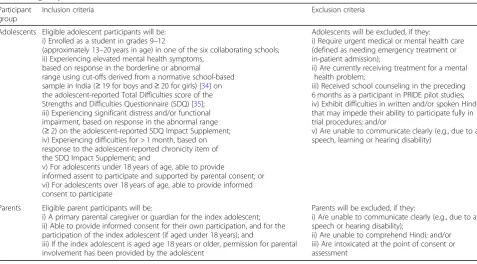
the total sampling frame in each condition) into the host trial. The primary hypothesis is that the classroom-level sensitization intervention will be associated with a higher referral rate into the host trial compared with referrals arising from school-level sensitization activities in isola-tion. The secondary hypotheses are that, compared with the control condition, the intervention condition will be associated with a greater proportion of referred students who meet eligibility criteria for inclusion in the host trial (Table1) and a greater proportion of students who self-refer. We will also explore whether there are any differ-ences between conditions in terms of the severity of total symptoms and symptom subtypes presented by referred adolescents.
Host trial
The primary objective of this two-armed, parallel-design, individually randomized controlled trial is to evaluate the effectiveness of a low-intensity, problem-solving intervention (intervention arm) in reducing adolescent-reported mental health symptoms and idiographic prob-lems at 6 weeks post-randomization, compared with en-hanced usual care (control arm), for adolescents with common mental health problems. The primary hypoth-esis is that the problem-solving intervention will be su-perior to the control arm in reducing the severity of adolescent-reported mental health symptoms and idio-graphic problems at 6 weeks post-randomization.
The secondary objectives are:
To evaluate the effectiveness of the intervention on adolescent-reported distress/functional impairment, perceived stress, mental wellbeing, and clinical remission
To explore whether a theoretically informed a priori factor (perceived stress at 6 weeks) mediates the effects of the intervention on mental health symptoms and idiographic problems at 12 weeks To explore the effectiveness of the intervention on
caregiver-reported adolescent mental health symptoms, associated distress/functional impairment, and adolescent-reported prosocial behavior
To evaluate intervention delivery processes in order to assist in the interpretation of the trial results and to inform potential implementation of the PRIDE interventions on a wider scale
To estimate the costs and cost-effectiveness of implementing the PRIDE interventions
Methods/design
Study setting
The two trials will be conducted in six Government-run secondary schools in New Delhi, India. The schools were purposively selected in consultation with the Depart-ment of Education, GovernDepart-ment of New Delhi, to focus on relatively under-served, low-income communities. Of the six schools, three are boys’ schools, two are girls’ schools and one is co-educational. Each school contains grades 6–12, of which grades 9–12 will be the focus of this research. As of August 2018, there were 172 classes in grades 9–12 with a total student population of 8448 (ranging from 1050 to 1632 per school; mean = 1408; standard deviation (SD) = 225), including 4694 (56%) boys and 3754 (44%) girls.
Participants
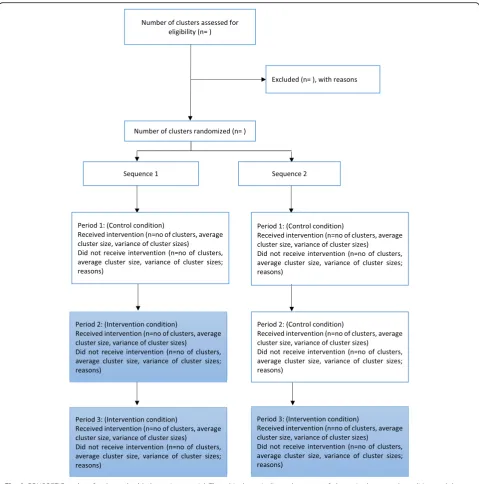
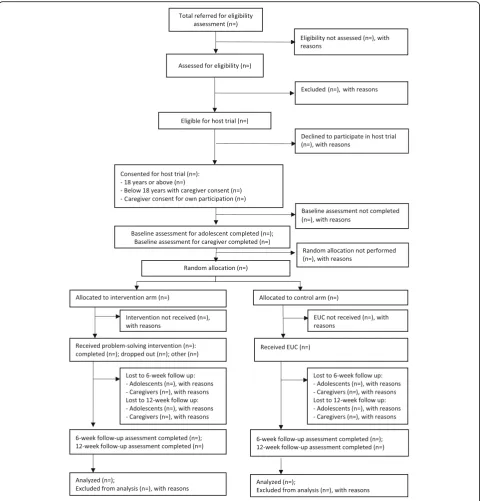
Figures 1 and 2 summarize the participant timeline and flow for the embedded recruitment trial as per CON-SORT guidelines for reporting stepped-wedge, cluster-randomized controlled trials [36]. Figure3 presents the CONSORT diagram for the host trial [37].
Embedded recruitment trial
[image:4.595.59.537.96.360.2]Seventy classes will participate in the embedded recruit-ment trial. These classes will be selected at random using computer-generated random numbers, stratified by school and grade, drawing from a pool of 118 eligible classes (excluding 54 classes that had received sensitization during earlier pilot work in these schools).
Table 1Eligibility criteria for the host trial
Participant group
Inclusion criteria Exclusion criteria
Adolescents Eligible adolescent participants will be: i) Enrolled as a student in grades 9–12
(approximately 13–20 years in age) in one of the six collaborating schools; ii) Experiencing elevated mental health symptoms,
based on response in the borderline or abnormal
range using cut-offs derived from a normative school-based sample in India (≥19 for boys and≥20 for girls) [34] on the adolescent-reported Total Difficulties score of the Strengths and Difficulties Questionnaire (SDQ) [35]; iii) Experiencing significant distress and/or functional impairment, based on response in the abnormal range (≥2) on the adolescent-reported SDQ Impact Supplement; iv) Experiencing difficulties for > 1 month, based on response to the adolescent-reported chronicity item of the SDQ Impact Supplement; and
v) For adolescents under 18 years of age, able to provide
informed assent to participate and supported by parental consent; or vi) For adolescents over 18 years of age, able to provide informed consent to participate
Adolescents will be excluded, if they:
i) Require urgent medical or mental health care (defined as needing emergency treatment or in-patient admission);
ii) Are currently receiving treatment for a mental health problem;
iii) Received school counseling in the preceding 6 months as a participant in PRIDE pilot studies; iv) Exhibit difficulties in written and/or spoken Hindi that may impede their ability to participate fully in trial procedures; and/or
v) Are unable to communicate clearly (e.g., due to a speech, learning or hearing disability)
Parents Eligible parent participants will be:
i) A primary parental caregiver or guardian for the index adolescent; ii) Able to provide informed consent for their own participation, and for the participation of the index adolescent (if aged under 18 years); and
iii) If the index adolescent is aged age 18 years or older, permission for parental involvement has been provided by the adolescent
Parents will be excluded, if they:
i) Are unable to communicate clearly (e.g., due to a speech or hearing disability);
ii) Are unable to comprehend Hindi; and/or iii) Are intoxicated at the point of consent or assessment
[image:4.595.59.539.563.694.2]The participating 70 classes will be randomized to re-ceive the control and intervention conditions across two sequences. A small block size of 2 will be used to allo-cate the 70 classes across the two sequences in order to ensure balance, as the number of classes within each grade from the individual schools is relatively small. In the rare instance that a selected class has been dissolved or merged with another class, the next class in the ran-dom list will be included to replace the unavailable class. Each sequence will be implemented over three consecu-tive 4-week intervals (excluding holidays and exam
breaks). Thus, each class will switch over from the con-trol to the intervention condition at 4-week intervals, over two steps (Fig.1). Schedules for sensitization in the allocated classes will be shared with the schools in ad-vance to ensure access.
Host trial
Referrals to the host trial will be generated through a combination of self-referrals, teacher referrals, and refer-rals made by friends, siblings, and/or parents. These re-ferrals will be drawn from the 70 classes sampled in the
[image:5.595.58.538.86.571.2]embedded recruitment trial, with additional participants recruited from the remaining 102 classes as needed. The precise schedule of recruitment activities in the latter classes will be calibrated according to referral patterns and caseload capacity for intervention providers in the various schools. When initiating a self-referral, students will have the option to either approach a counsellor dir-ectly or else post a completed referral form/written note in a secure drop-box. The school counsellor will also serve as a central point of contact for other potential
referrers, and will offer referral forms on request. All re-ferred adolescents will be followed up by a researcher and screened for eligibility to participate in the host trial (Table1).
Consenting participants (see section on consent proce-dures below) will be enrolled by researchers and ran-domized to the intervention or the control arm after baseline outcome assessments are completed. Partici-pants who are randomized to the intervention arm will be escorted by a researcher to meet the counsellor in an
[image:6.595.58.539.87.589.2]adjacent room/cubicle, ensuring efficient and discrete handover. The randomization list will be developed by an independent statistician (HW), applying stratification by school (and gender for the co-educational school) using randomly sized blocks of four or six. The randomization code will be concealed using sequentially numbered opaque sealed envelopes to maximize alloca-tion concealment. Errors in randomizaalloca-tion will be re-corded and reported.
Sample size and power calculations Embedded recruitment trial
We based our power calculation on a within-period comparison [38] for a stepped-wedge design using Stata package “clustersampsi”. Based on pilot data, we anticipated referral rates of 5% and 15% on the control and intervention conditions, respectively, with an intra-cluster correlation coefficient (ICC) of 0.124. We assumed the same ICC for the between-time correl-ation given the short time period of follow-up. In practice, it may be smaller than 0.124 and both ICCs will be reported. Using these parameters, a sample size of 70 classes (average class size of 50 students) will have 92% power to detect a difference of 10 percent-age points (treating the outcome as a binomial vari-able), at a significance level of 0.05.
Host trial
Sample size estimations were produced for two co-pri-mary outcomes: severity of adolescent-reported mental health symptoms measured by the Total Difficulties score on the Strengths and Difficulties Questionnaire (SDQ) and severity of idiographic problems measured by the Youth Top Problems (YTP; Table2). We based the esti-mations on two data sources. First, we obtained uncon-trolled effect sizes (ES = Difference in means/pooled SD) for both co-primary outcomes from a group of 52 adoles-cents who received the problem-solving intervention dur-ing pilot work in the six secondary schools in New Delhi. Among these students, all of whom met the same baseline eligibility criteria as intended for the current trial, the mean SDQ Total Difficulties scores changed from 23.4 (SD 3.4) at baseline to 16.1 (SD 5.9) at the end of the intervention (ES = 1.4). The mean YTP scores for the same group changed from 5.6 (SD 2.0) at baseline to 2.9 (SD 2.6) at the end of the intervention (ES = 0.9). Second, we obtained a paired effect size on the SDQ Total Difficul-ties score from another cohort of 47 adolescents partici-pating in a later phase of piloting, including 29 students who received the problem-solving intervention and 18 waitlisted controls (ES = 1.0). YTP data were unavailable for this second cohort. Effect sizes in trials are often smaller than in pilots so we conservatively hypothesized that our intervention would be associated with an ES = 0.5
on both the co-primary outcomes with 90% power. We as-sumed a 1:1 allocation ratio of individual participants within each of the six schools, loss to follow-up of 15% over 6 weeks (based on piloting), and a Bonferroni correc-tion to adjust for multiple primary outcomes. Based on these assumptions, we determined that N= 240 partici-pants would be required. This sample size also provides 80% power to detect an ES of 0.44.
Interventions
Embedded recruitment trial
Intervention condition This will comprise a one-off
30-min classroom session that is intended to improve understanding about signs and symptoms of mental health problems, raise awareness about the school coun-selling service, and generate demand for the service. The session will be delivered for individual classes (approxi-mately 50 students per class) by a counsellor (drawn from the same group responsible for the problem-solv-ing intervention in the host trial) with assistance from a researcher who will have additional responsibilities for processing referrals and conducting eligibility assessments. The classroom session will start with a short animated video (https://drive.google.com/file/d/1Y2NoMYf-NTjuN ekYgxWZf7nNZIg88E98/view?usp=drivesdk) which pro-vides age-appropriate information about types, causes, impacts and ways of coping with common mental health problems. The video will be followed by a guided group discussion, structured around a standardized script that builds on the topics covered in the video. In case of tech-nical difficulties that may prevent the video from being shown, the counsellor will use a flipchart based on printed images from the video. At the end of the session, students will be handed a self-referral form which includes normal-izing information and question-based prompts to assist with self-identification of mental health problems. Inter-ested students can approach the facilitators immediately after the session with self-referral forms, or else deposit the forms discreetly in a secure drop-box located outside or near to the counsellor’s usual room.
be rated on a three-point Likert scale (not completed, partially completed, fully completed). A‘refresher’ train-ing session will also be conducted before the trial begins.
Control condition This will comprise whole-school
sensitization activities. The supervisor will meet the principal of each school individually to inform them about planned counselling and research activities and to seek their cooperation for the same. This meeting will also provide structured information about common mental health problems faced by adolescents and ad-dress any concerns related to planned procedures and resource demands. Teachers will be invited to participate in separate group sensitization meetings (up to 30 teachers at a time). A standardized script will mirror the topics covered in the meetings with the school princi-pals, but with additional emphasis placed on referral procedures for the host trial. Up to three meetings will be held in each school to maximize coverage of teaching staff. These meetings will be conducted by the same counsellor and researcher pairings responsible for deliv-ering the classroom intervention. Posters will be placed in highly visible locations such as noticeboards or com-mon corridors, in addition to signage on the drop-box, which will remind students (and teachers) of the coun-selling service.
Host trial
Intervention arm A problem-solving intervention will
be delivered to individual students across four to five face-to-face sessions spread over 3 weeks. Each session will last for up to 30 min (aligned with the usual dur-ation of school periods) and will be delivered in the local language (Hindi). The sessions will be conducted on school premises in private rooms or, where private rooms are not available, behind screens and curtains in a suitable location (e.g., the school library). Such contin-gencies to address space limitations were piloted in earl-ier work and deemed to be feasible and acceptable in the local context, enabling a temporary counselling space in which students would not be on direct view.
Session 1 will focus on fostering engagement, under-standing the participant’s difficulties, and introducing the structure and process of the intervention. Over the next three sessions, the participant will be helped to learn and apply a structured problem-solving strategy in-volving three steps (following the acronym “POD”): (1) identify and prioritize distressing/impairing problems (“Problem identification”); (2) generate and select coping options for modifying the identified problem directly (problem-focused strategies) and/or the associated stress response (emotion-focused strategies) (“Option gener-ation”); and (3) implement and evaluate the outcome of this strategy (“Do it”). The intervention may be
concluded after four sessions or else extended to a fifth session, depending on the adolescent’s preferences and logistical barriers to intervention completion such as exam breaks and holidays. The concluding session will focus on consolidating learning and generalizing prob-lem-solving skills across different contexts. With permis-sion, all sessions will be audio-recorded for office-based quality and fidelity assessments. Adolescents will be en-couraged to practice problem-solving skills between the sessions, aided by a set of three “POD booklets” which explain problem solving using illustrated vignettes and suggest corresponding between-session practice exer-cises. The booklets (each corresponding to one of the steps of problem solving) will be distributed sequentially over the first three intervention sessions. In the conclud-ing session, the adolescent will be additionally handed a full-color POD poster that summarizes the three steps of problem-solving.
Each school will have one or two counsellors, depend-ing on demand. The counsellors will be Hindi-speakdepend-ing college graduates aged 18 years or above, with no formal training or qualifications related to psychotherapy or mental health. They will be recruited through online job portals commonly used in the NGO/public sector in India. Selection will be based on reasoning capacity (assessed by written test) and interpersonal skills (assessed by structured role-plays and interview). Se-lected candidates will receive an intervention manual and complete one week of classroom-based training in-volving a combination of lectures, demonstrations, and role-plays. This will be followed by a minimum 6-week period of field training in which counsellors will carry out casework (with at least four cases) under the super-vision of psychologists. Trainees’ performance will be evaluated using structured role-plays at the end of class-room-based training, as well as supervisors’ ratings of audio-recorded intervention sessions.
representative selection of audio-recorded sessions, with the intention that all counsellors should receive equal opportunities to discuss their cases. In addition, supervisors will undertake weekly telephone calls (lasting 20–30 min) with each counsellor in order to monitor the progress of their caseload, and identify and manage risks. The counsellors will be able to ini-tiate ad hoc calls if urgent consultation is needed on any case.
Control arm There are no mental health services in the participating schools. A standardized control arm was devised accordingly, keeping in mind the requirement to offer a pragmatic, resource-efficient mode of support with minimal risk of contamination between trial arms. In terms of contamination, a recent scoping review of complex intervention trials in mental health [42] found that the principal processes leading to contamination were the same clinicians treating participants across conditions and communication between clinicians/par-ticipants. Moreover, the review recommended that methods other than cluster randomization should be considered to minimize contamination, given the lack of evidence for a link between the level of randomization and intervention effect size.
Participants allocated to the control arm will therefore receive the same printed problem-solving materials used in the intervention arm but without any counsellor con-tact. Immediately following random allocation to this condition, a researcher (rather than a counsellor) will provide a set of POD booklets and explain their purpose and contents using a standardized script. Students will be encouraged to read through the booklets in sequence and complete the specified practice exercises. No further guidance will be provided. In this way, all trial partici-pants will receive the POD booklets, thereby eliminating the likeliest source of contamination. The counselling process itself is less likely to spill-over as this will be de-livered in a one-to-one individual format, and our for-mative and pilot work showed that students emphasized confidentiality (mentioned earlier) such that disclosure of counselling experiences should be minimized.
Screening and outcome measures Embedded recruitment trial
The primary outcome (referral rate based on the propor-tion of referred adolescents as a funcpropor-tion of the total sampling frame in each condition) will be collated from referral logs maintained by researchers in each school. Referral data will be aggregated over each 4-week calen-dar period. Students deemed ineligible for participation in the host trial will be allowed to re-refer themselves after a gap of 4 weeks, offering a suitable time period to re-assess mental health status in line with the host trial’s
inclusion criterion about symptom chronicity (Table 1). Secondary outcomes pertaining to the eligibility and clinical characteristics of students referred to the host trial will be derived from screening data on the SDQ (see below).
Host trial
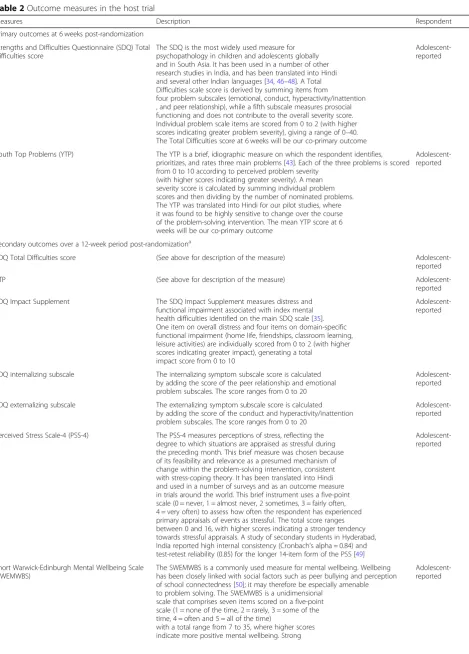
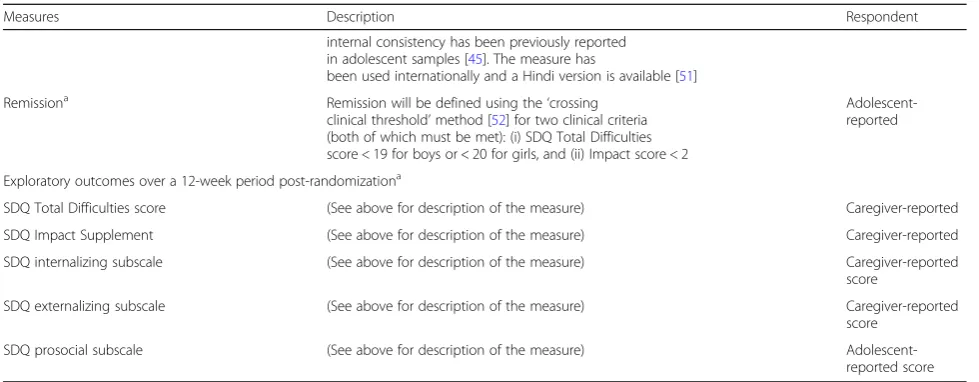
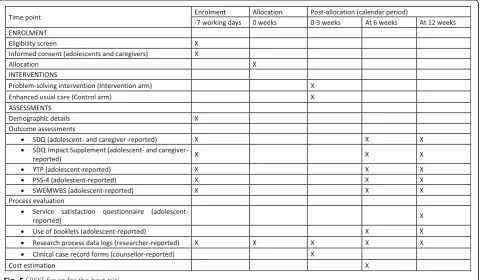
All screening and outcome assessments will be under-taken using standardized self-report measures that have been translated into Hindi. Clinical eligibility criteria (i.e., severity, chronicity, and impacts of mental health symp-toms) will be assessed using the adolescent-reported form of the SDQ (including the Impact Supplement). The same screening data will also serve as the baseline SDQ/Impact Supplement outcomes for eligible participants who are subsequently enrolled in the trial; baseline assessments for other outcome measures will be completed as soon as possible after completing consent procedures (ideally within 2 working days). The adolescent-reported SDQ/ Impact Supplement will be repeated at 6 and 12 weeks post-randomization, along with the parent-reported SDQ/ Impact Supplement, and adolescent-reported Youth Top Problems (YTP) [43], Perceived Stress Scale-4 (PSS-4) [44] and Short Warwick-Edinburgh Mental Wellbeing Scale (SWEMWBS) [45]. These measures are described in Table2. The SDQ will also serve as the basis for assessing remission at both end-points, defined as falling below cut-offs for eligibility on both the SDQ Total Difficulties score and Impact score.
Process measures
Process data on enrollment, randomization, and assess-ment procedures in both trials will be obtained from re-searcher-completed record forms. These will be collated to obtain assent/consent rates of adolescents and parents (and reasons for missing assent/consent); randomization rates (and reasons for randomization errors); completion rates of baseline and follow-up outcome assessments (and reasons for non-completion); and time lags between intended and completed assessments (and reasons for deviating from targets). In addition, motivations for help-seeking and expectancies for the school counselling program will be explored at the time of eligibility assess-ment through a brief qualitative interview with a sub-sample of referred students. Assent/consent to use the interview data in the research will be obtained as part of the consent process for the embedded recruitment trial.
Table 2Outcome measures in the host trial
Measures Description Respondent
Primary outcomes at 6 weeks post-randomization
Strengths and Difficulties Questionnaire (SDQ) Total Difficulties score
The SDQ is the most widely used measure for psychopathology in children and adolescents globally and in South Asia. It has been used in a number of other research studies in India, and has been translated into Hindi and several other Indian languages [34,46–48]. A Total Difficulties scale score is derived by summing items from
four problem subscales (emotional, conduct, hyperactivity/inattention , and peer relationship), while a fifth subscale measures prosocial functioning and does not contribute to the overall severity score. Individual problem scale items are scored from 0 to 2 (with higher scores indicating greater problem severity), giving a range of 0–40. The Total Difficulties score at 6 weeks will be our co-primary outcome
Adolescent-reported
Youth Top Problems (YTP) The YTP is a brief, idiographic measure on which the respondent identifies, prioritizes, and rates three main problems [43]. Each of the three problems is scored from 0 to 10 according to perceived problem severity
(with higher scores indicating greater severity). A mean severity score is calculated by summing individual problem scores and then dividing by the number of nominated problems. The YTP was translated into Hindi for our pilot studies, where it was found to be highly sensitive to change over the course of the problem-solving intervention. The mean YTP score at 6 weeks will be our co-primary outcome
Adolescent-reported
Secondary outcomes over a 12-week period post-randomizationa
SDQ Total Difficulties score (See above for description of the measure) Adolescent-reported
YTP (See above for description of the measure)
Adolescent-reported
SDQ Impact Supplement The SDQ Impact Supplement measures distress and functional impairment associated with index mental health difficulties identified on the main SDQ scale [35]. One item on overall distress and four items on domain-specific functional impairment (home life, friendships, classroom learning, leisure activities) are individually scored from 0 to 2 (with higher scores indicating greater impact), generating a total
impact score from 0 to 10
Adolescent-reported
SDQ internalizing subscale The internalizing symptom subscale score is calculated by adding the score of the peer relationship and emotional problem subscales. The score ranges from 0 to 20
Adolescent-reported
SDQ externalizing subscale The externalizing symptom subscale score is calculated by adding the score of the conduct and hyperactivity/inattention problem subscales. The score ranges from 0 to 20
Adolescent-reported
Perceived Stress Scale-4 (PSS-4) The PSS-4 measures perceptions of stress, reflecting the degree to which situations are appraised as stressful during the preceding month. This brief measure was chosen because of its feasibility and relevance as a presumed mechanism of change within the problem-solving intervention, consistent with stress-coping theory. It has been translated into Hindi and used in a number of surveys and as an outcome measure in trials around the world. This brief instrument uses a five-point scale (0 = never, 1 = almost never, 2 sometimes, 3 = fairly often, 4 = very often) to assess how often the respondent has experienced primary appraisals of events as stressful. The total score ranges between 0 and 16, with higher scores indicating a stronger tendency towards stressful appraisals. A study of secondary students in Hyderabad, India reported high internal consistency (Cronbach’s alpha = 0.84) and test-retest reliability (0.85) for the longer 14-item form of the PSS [49]
Adolescent-reported
Short Warwick-Edinburgh Mental Wellbeing Scale (SWEMWBS)
The SWEMWBS is a commonly used measure for mental wellbeing. Wellbeing has been closely linked with social factors such as peer bullying and perception of school connectedness [50]; it may therefore be especially amenable to problem solving. The SWEMWBS is a unidimensional
scale that comprises seven items scored on a five-point scale (1 = none of the time, 2 = rarely, 3 = some of the time, 4 = often and 5 = all of the time)
with a total range from 7 to 35, where higher scores indicate more positive mental wellbeing. Strong
In the intervention arm of the host trial, counsellor-completed session record forms will be used to obtain process data on duration, spacing, and frequency of attended sessions (and reasons for non-attendance); and intervention uptake and completion rates (and reasons for pre-intervention and mid-intervention drop-out). Participants’adherence to intervention activities and po-tential engagement challenges will be assessed using checklists within the same record forms, indicating whether or not the student completed practice exercises at home; used the POD booklets at home; brought the POD booklets to the session; and demonstrated under-standing of POD booklets and session content. Use of POD booklets will be assessed in each arm of the trial at 6- and 12-week follow-up using a brief adolescent-re-ported measure that asks about estimated frequency of home use and perceived helpfulness of POD booklets in the preceding 6 weeks. Service satisfaction data will also be obtained from participants in each trial arm at 12 weeks using an eight-item service satisfaction question-naire [53]. Three supplementary questions will elicit open-ended written feedback on the most preferred as-pects of the service, potential areas for improvement and recommended changes.
Intervention quality and fidelity will be assessed in both trials using independent ratings of audio-re-corded sessions. For the classroom sensitization intervention, 20% of all recordings will be selected at random and rated by a psychologist who is not directly involved with supervision of the interven-tion providers. A similar approach will be taken with the problem-solving intervention, for which
10% of all audio-recorded sessions will be rated in-dependently. Reliability of the independent raters will be established initially by comparison with intervention quality and fidelity ratings from super-visors (see above).
Blinding
Embedded recruitment trial
The researchers who co-facilitate the classroom sensitization sessions will also record referrals and con-duct the host trial eligibility assessments. Blinding of the outcome assessors will therefore not be possible.
Host trial
Baseline and outcome assessments will be conducted by separate teams of researchers. All trial investigators, apart from the data manager (BB), will be blind to allo-cation status until the trial arms are revealed in the pres-ence of both the Trial Steering Committee (TSC) and Data Safety and Monitoring Committee (DSMC). How-ever, unblinding of individual participants may be under-taken if requested by the DSMC (e.g., in case of a serious adverse event).
Data collection, management, and analysis Data collection
[image:11.595.55.545.97.288.2]There will be a seamless flow of adolescents from the embedded recruitment trial to the host trial. The sched-ules for enrollment, interventions, and assessments are summarized in separate SPIRIT diagrams for the embed-ded recruitment trial (Fig. 4) and host trial (Fig. 5). A team of school-based researchers will process the Table 2Outcome measures in the host trial(Continued)
Measures Description Respondent
internal consistency has been previously reported in adolescent samples [45]. The measure has
been used internationally and a Hindi version is available [51]
Remissiona Remission will be defined using the‘crossing
clinical threshold’method [52] for two clinical criteria (both of which must be met): (i) SDQ Total Difficulties score < 19 for boys or < 20 for girls, and (ii) Impact score < 2
Adolescent-reported
Exploratory outcomes over a 12-week period post-randomizationa
SDQ Total Difficulties score (See above for description of the measure) Caregiver-reported
SDQ Impact Supplement (See above for description of the measure) Caregiver-reported
SDQ internalizing subscale (See above for description of the measure) Caregiver-reported score
SDQ externalizing subscale (See above for description of the measure) Caregiver-reported score
referrals, undertake eligibility assessments for the host trial (within a target of≤3 working days from the date of referral) and obtain adolescent assent/consent (within the same day if possible). A separate team of commu-nity-based researchers will visit parents/guardians (within a target of≤2 working days after confirming an adolescent’s eligibility) to obtain consent and complete
baseline outcome assessments (within the same day if possible). The school-based research team will complete baseline outcome assessments with adolescents once all consent procedures are completed (within a target of≤2 working days). All assessment procedures should there-fore be completed within 7 working days from the date of referral.
Fig. 4SPIRIT figure for the embedded recruitment trial
[image:12.595.56.541.89.302.2] [image:12.595.59.540.442.722.2]The community-based research team (blinded to allo-cation) will complete follow-up assessments at 6 and 12 weeks post-randomization. Assessments will take place at participants’ homes or other convenient locations, within a maximum period of 7 calendar days from the due date. Researchers will make up to four approaches for each scheduled contact.
Process data from researchers’ logs and counsellors’ session records will be captured on paper forms. All other measures, except for the YTP (which rates idio-graphic problems and does not readily lend itself to a digital format), will be administered via a tablet computer.
Data management
Data will be collected digitally using the customized STAR software program [54], and will be remotely uploaded as comma-separated values (CSV) files on a se-cured server. The date and time stamps for original data entry will be included, and an audit trail documenting any subsequent changes will be maintained. All paper-based data will be entered manually in SQL Epi-info forms and linked by participant ID with digitally col-lected data. Range and consistency checks will be per-formed at weekly intervals, with all inconsistencies and corrections logged to maintain an audit trail. All data will be anonymized and backed-up on external hard disks on a daily basis. All session audio-recordings will be linked with the participant ID and stored in a separ-ate, secure, password-protected folder. A separate pass-word-protected file linking names and participant IDs and the random allocation code will be maintained se-curely by the data manager and will not be accessed until the unblinding of the trial. All data will be shared in an encrypted form in password-protected files and through secure electronic transfer, when necessary.
Data analysis
Quantitative analysis will be conducted using STATA (version 15). A detailed analysis plan will be agreed with the DSMC before any analysis is undertaken. Findings will be reported as per CONSORT guidelines [37] for the host trial, and the CONSORT extension for report-ing of stepped-wedge, cluster-randomized trials for the embedded recruitment trial [36].
Embedded recruitment trial The baseline
characteris-tics of the participating 70 classes, including class size and gender composition, will be described and assessed for any systematic differences across the two sequences. The primary outcome will be analyzed using generalized estimating equations (GEE) with robust standard errors. GEE is a recommended method for analysis of stepped-wedge, cluster-randomized controlled trials, providing
population-averaged effects of exposure across trial con-ditions [55]. GEE allows for longitudinal data analysis without resorting to fully specified random effect models and can be applied to both continuous and categorical outcomes [56]. It provides both parameter estimates and standard errors that are corrected for clustering of data and are consistent despite misspecifications in the cor-relation structure. For this trial, the clustering of data will be specified at the class level. Analysis of the sec-ondary and exploratory outcomes will also be under-taken using the GEE method. Sensitivity analysis will be conducted using a ‘within-period comparison’ of data [38] from the second period only. No interim analyses will be undertaken.
Host trial The trial flowchart will include the number of students referred, screened, eligible, randomized, followed up at 6-week and 12-week endpoints and ana-lyzed for the primary outcomes. The number refus-ing participation or excluded (with reasons), actively withdrawing, and passively lost to follow-up will be shown by arm. These will be summarized by means (standard deviation), medians (interquartile range), or numbers and proportions as appropriate to relevant sub-groups (defined by age, gender, and baseline outcome score). For continuous outcomes, histograms within each arm will be plotted to assess normality and deter-mine whether transformation is required.
by time. No interim analyses of outcomes will be undertaken.
We will explore potential moderators of intervention effects, with respect to a priori defined modifiers (chron-icity of mental health difficulties, severity of mental health difficulties, YTP type, and SDQ caseness profile). We will fit relevant interaction terms and test for het-erogeneity of intervention effects in regression models. A mediation analysis will be conducted to examine whether the theoretically driven a priori factor (per-ceived stress at 6 weeks) mediates the effects of the intervention on mental health symptoms and idiographic problems at 12 weeks.
Process evaluationWe will undertake descriptive statis-tical analysis of quantitative process data to explore the differential implementation of intervention procedures. In addition, thematic analysis will be used to code and organize qualitative interview data on service expectan-cies (assessed prior to enrolment in the host trial) and qualitative written feedback on service satisfaction (assessed at 12-week follow-up in the host trial). Find-ings from the various data sources will be triangulated and used to develop explanatory hypotheses about po-tential differences in intervention delivery and participa-tion across schools, subgroups of participants, and providers. Process evaluation findings will be used to fa-cilitate interpretation of the main trial results. The trial statisticians may conduct further analyses to test hypoth-eses generated from integration of the process evaluation and trial outcome data; these will necessarily be post hoc and identified as such in any subsequent publications.
Cost-effectiveness analysis An economic evaluation
will be conducted to estimate the costs and incremental cost-effectiveness of the problem-solving intervention. A combination of top-down and ingredients-based costing approaches will be used to generate cost estimates for the whole package, and for each package component (e.g., counselling sessions and POD booklets), in the intervention and control arms. All costing will be esti-mated from the providers’ perspective (the schools and the implementing partner Sangath); financial and eco-nomic costs will be calculated for all inputs (e.g., mate-rials, training, supervision, staff time, overheads). The cost analysis will assess the costs of setting up and run-ning the interventions; the distribution of costs across different forms of inputs; the unit cost per student/ado-lescent reached; the cost per additional case remitted; the cost of delivering all activities in intervention schools; and the cost per unit of measure for selected primary and secondary outcomes. We will estimate the incremental cost-effectiveness of the intervention rela-tive to the control condition (enhanced usual care). The
cost-effectiveness measure proposed here will be com-pared to similar school programs in the region and it will inform program replication, scalability, and financial sustainability.
Results will be plotted on a cost-effectiveness plane and presented as cost-effectiveness acceptability curves to show the probability of the intervention being cost-ef-fective at a range of willingness-to-pay threshold levels. A sensitivity analysis will be conducted to take account of uncertainty and imprecision in the measurements.
Trial governance
Monitoring and governance for both trials will be pro-vided by a Trial Management Group (TMG; comprising senior investigators and project staff involved in day-to-day coordination of research activities), TSC (comprising senior investigators and independent subject experts), and DSMC (a fully independent group with relevant clinical and trials expertise). The TMG and TSC will re-view trial process indicators (e.g., rates of screening, eli-gibility, consent, outcome assessments, adverse events) fortnightly and quarterly, respectively. The independent DSMC will meet at the outset of the two linked trials and again at the time of unblinding the trial results, as well as receiving reports of emergent serious adverse events (as per criteria below). Any trial protocol amend-ments will be agreed and formulated in conjunction with the TSC and DSMC and submitted to relevant Institu-tional Review Boards for approval.
Ethics
Research ethics
Approvals have been obtained from the Institutional Re-view Boards of Sangath, Harvard Medical School, the London School of Hygiene and Tropical Medicine, and Indian Council of Medical Research. Harvard Medical School is the trial sponsor while Sangath is the imple-menting agency in India.
Consent
18 years, consent will also be sought from a parent/ guardian for participation of the index adolescent and for their own participation in outcome assessments. Consenting adolescents aged 18 years or older will be able to take part without permission from their parent/ guardian. We will seek their permission before ap-proaching a parent/guardian about participating in as-sessments. When approaching the family member of an index adolescent, telephone contact will be initiated by a community-based researcher in the first instance, after which a meeting will be arranged at their home or an-other convenient location, if agreed.
Serious adverse events
Serious adverse events (SAEs) include death,
life-threat-ening events, clinical deterioration requiring
hospitalization or other specialist treatment,
victimization, sexual abuse, and chronic absenteeism and/or drop-out from school. Immediate safeguarding actions will prioritize the safety of participants. This may involve suicide risk assessment, informing stakeholders, facilitating treatment with specialists, and statutory reporting in line with relevant legislation, such as the Protection of Children from Sexual Offences Act 2012 and the Juvenile Justice (Care and Protection) Act 2000 (last amended in 2015).
Each potential SAE will also be assessed for causality by two clinically qualified co-investigators and classified as unrelated, unlikely, possible, probable, or definitely re-lated to trial participation. In the event that consensus is not reached, a third clinical psychologist (independent of the trial) will review the SAE report. Where causality is deemed to be anything other than unrelated to trial par-ticipation, the DSMC will advise on further actions such as withdrawal of individual participants, modifications to the trial protocol, continuing without modifications, or suspending/terminating the trial.
Discussion
This paper describes an integrated protocol that will evaluate the demand for a school counselling program delivering a low-intensity psychological intervention, and the effectiveness of that intervention for school-going adolescents with elevated mental health presentations in New Delhi, India. The interventions used in the host trial and embedded recruitment trial will be provided by lay counsellors, working under the supervision of psy-chologists, in Government-run secondary schools cater-ing to adolescents from lower socio-economic groups of the city. Concurrent process evaluation and cost-effect-iveness analysis will complement the effectcost-effect-iveness find-ings, generating important evidence relevant to the scaling up of the interventions. To the best of our know-ledge, these two trials have no comparable precedent
from any low-resource context, and our findings have the potential to inform the design of school-based inter-ventions to address adolescent mental health problems on a large scale in India and other global settings.
An individually randomized design was chosen for the host trial due to the relatively small number of available schools, which ruled out an alternative cluster-random-ized design. The inherent risk of contamination associ-ated with individual randomization was minimized by the inclusion of an enhanced usual care control arm, in which participants received the same printed materials as provided in the intervention arm. The augmentation of face-to-face counselling in the intervention arm was not expected to pose a significant risk of spill-over due to the reluctance of participants to share confidential counselling experiences with peers. Moreover, enhanced usual care was designed in such a way that the same de-livery agents would not be involved in treating partici-pants across conditions, ruling out another commonly cited source of contamination [42].
The use of a stepped-wedge cluster randomized design for the embedded recruitment trial was also influenced by pragmatic considerations. Formative and pilot work showed that classroom-based sensitization activities had the potential to increase the volume of referrals for school-based counselling. A stepped-wedge design—in which classes formed natural clusters in each school— offered the potential to stagger the roll-out of classroom sessions so that school-based counsellors could accom-modate the anticipated flow of referrals within their lim-ited caseload capacity.
Despite the use of contextually adapted sensitization activities, some potentially eligible students (and/or their caregivers) may be unwilling to participate. Reasons for non-participation will be systematically recorded and ex-amined in the embedded process evaluation. We will also seek to address the concerns of referred adolescents who are not eligible for inclusion in the host trial despite a felt need for counselling. In anticipation, we have de-signed hand-outs with advice on self-management of common problems (such as academic stress). These hand-outs will be distributed to relevant students by the researchers conducting the baseline screening assess-ments. Another recruitment challenge relates to the aca-demic calendar in the participating schools, which includes frequent breaks for exams, festivals, and other holidays. These scheduling disruptions may require tem-porary halting of recruitment (for example, so that stu-dents are not recruited immediately prior to a long break, as they would not be able to receive the interven-tion without a delay).
stakeholder groups, including school principals and the local Department of Education in New Delhi. If effective, we will use the process and economic data to model the costs for scaling up the interventions across the school system in New Delhi. This may involve the deployment of counsellors by the state government under the Educa-tional and VocaEduca-tional Guidance Scheme (EVGC), due for implementation in some sectors of New Delhi start-ing from the 2018–2019 academic year.
Trial status
Both trials are registered with ClinicalTrials.gov (host trial, NCT03630471, https://clinicaltrials.gov/ct2/show/NCT0363 0471; embedded recruitment trial, NCT03633916, https:// clinicaltrials.gov/ct2/show/NCT03633916). Recruitment for both trials was initiated on 20 August 2018. We expect to conclude participant recruitment by February 2019 and complete follow-up assessments by June 2019.
Additional files
Additional file 1:SPIRIT checklist for embedded recruitment trial. (DOC 122 kb)
Additional file 2:SPIRIT checklist for host trial. (DOC 122 kb)
Abbreviations
CI:Confidence interval; DSMC: Data Safety and Monitoring Committee; ES: Effect size; LMICs: Low- and middle-income countries; PSS-4: Perceived Stress Scale-4; SAE: Serious adverse event; SD: Standard deviation; SDQ: Strengths and Difficulties Questionnaire; SWEMWBS: Short Warwick-Edinburgh Mental Wellbeing Scale; TSC: Trial Steering Committee; YTP : Youth Top Problems
Acknowledgements
We gratefully acknowledge the contributions made by Aoife Doyle in preparing the statistical analysis plan for the host trial and by Bhagwant Chilhate in data collection and management of the host trial.
Authors’contributions
VP led the conception of the trials with contributions from all other authors. DM, RP, SS, and VP led on trial design and developed the initial draft of the manuscript with contributions from HW, AH, and JR on statistical considerations; KM, RS (R. Sharma), SM, and MK (M. Krishna) on the description of trial interventions; and BB and RS (R. Sahu) on data collection and management. MK (M. King), CF, BC, PC, and PS reviewed the manuscript at different stages and provided critical revisions. All authors have read and approved the final manuscript.
Funding
This study was supported by a Principal Research Fellowship awarded to Vikram Patel by the Wellcome Trust (grant number 106919/A/15/Z). The funding agency has no role in the design of the study and in data collection or the writing of the manuscript.
Availability of data and materials
Data from pilot studies used for arriving at sample size and power calculations can be made available by the corresponding author upon reasonable request.
Ethics approval and consent to participate
Written informed consent will be obtained from all participants in both the trials. For adolescents younger than 18 years of age (minors), informed consent will be obtained from parents or guardians of the adolescents. The
study procedures were approved by the Institutional Review Boards of the Harvard Faculty of Medicine (reference IRB17–0379), Sangath (references VP_2018_41 and RP_2018_47) and London School of Hygiene and Tropical Medicine (LSHTM Ethics reference 15907). Additional approval from the Indian Council of Medical Research (HMSC/1/2016/SBR) and the Department of Education, Government of India (DE40 [20]/EVGB/2017/711–717) were also obtained before the commencement of the trials.
Consent for publication
Consent for publication of anonymized data will be obtained from trial participants.
Competing interests
The authors declare that they have no competing interests.
Author details
1Sangath, C-1/52, 1st Floor, Safdarjung Development Area, New Delhi, Delhi
110016, India.2Department of Clinical, Neuro and Developmental
Psychology, Faculty of Behavioural and Movement Sciences, Vrije Universiteit Amsterdam, van der Boechorstraat 1, 1081 BT Amsterdam, The Netherlands.
3School of Psychology, University of Sussex, Falmer, Brighton BN1 9RH, UK. 4
MRC Tropical Epidemiology Group, London School of Hygiene & Tropical Medicine, Keppel Street, London WC1E 7HT, UK.5Amsterdam UMC,
Amsterdam Public Health research institute, Vrije Universitiet, Van der Boechorststraat 7, 1081 BT Amsterdam, The Netherlands.6GGZ inGeest
Specialized Mental Health Care, Oldenaller 1, 1081 HL Amsterdam, The Netherlands.7Department of Clinical Psychology, National Institute of Mental
Health and Neurosciences, Hosur Road, Bangalore, Karnataka 560029, India.
8Division of Psychiatry, Faculty of Brain Sciences, University College London,
Maple House, 149 Tottenham Court Rd, London W1T 7NF, UK.9Department of Clinical, Neuro and Developmental Psychology, Amsterdam Public Health research institute, Vrije Universiteit Amsterdam, van der Boechorstraat 1, 1081, BT Amsterdam, The Netherlands.10Department of Psychology,
University of California, Los Angeles, 3227 Franz Hall, Los Angeles, CA 90095-1563, USA.11University Department of Psychiatry, Warneford Hospital,
Oxford, Oxford OX3 7JX, UK.12Department of Global Health and Social
Medicine, Harvard Medical School, 641, Huntington Avenue, Boston, MA 02115, USA.
Received: 4 December 2018 Accepted: 11 July 2019
References
1. Belfer ML. Child and adolescent mental disorders: the magnitude of the problem across the globe. J Child Psychol Psychiatry Allied Discip. 2008; 49(3):226–36.
2. Kessler RC, Amminger GP, Aguilar-Gaxiola S, Alonso J, Lee S, Ustun TB. Age of onset of mental disorders: A review of recent literature. Curr Opin Psychiatry. 2007;20(4):359–64.
3. Holmes EA, Ghaderi A, Harmer CJ, Ramchandani PG, Cuijpers P, Morrison AP, et al. The Lancet Psychiatry Commission on psychological treatments research in tomorrow's science. Lancet Psychiatry. 2018;5(3):237–86. 4. Morris J, Belfer M, Daniels A, Flisher A, Ville L, Lora A, et al. Treated
prevalence of and mental health services received by children and adolescents in 42 low-and-middle-income countries. J Child Psychol Psychiatry Allied Discip. 2011;52(12):1239–46.
5. Collins PY, Patel V, Joestl SS, March D, Insel TR, Daar AS. Grand challenges in global mental health: A consortium of researchers, advocates and clinicians announces here research priorities for improving the lives of people with mental illness around the world, and calls for urgent action and investment. Nature. 2011;475(7354):27–30.
6. Das JK, Salam RA, Lassi ZS, Khan MN, Mahmood W, Patel V, et al. Interventions for Adolescent Mental Health: An Overview of Systematic Reviews. J Adolesc Health. 2016;59(4s):S49-s60.
7. Weisz JR, Krumholz LS, Santucci L, Thomassin K, Ng MY. Shrinking the gap between research and practice: tailoring and testing youth psychotherapies in clinical care contexts. Annu Rev Clin Psychol. 2015;11:139–63.
9. Bolton P, Lee C, Haroz EE, Murray L, Dorsey S, Robinson C, et al. A transdiagnostic community-based mental health treatment for comorbid disorders: Development and outcomes of a randomized controlled trial among Burmese refugees in Thailand. PLoS Med. 2014;11(11):e1001757. 10. Murray LK, Hall BJ, Dorsey S, Ugueto AM, Puffer ES, Sim A, et al. An
evaluation of a common elements treatment approach for youth in Somali refugee camps. Global Mental Health. 2018;5:e16.
11. Marchette LK, Weisz JR. Practitioner review: Empirical evolution of youth psychotherapy toward transdiagnostic approaches. J Child Psychol Psychiatry. 2017;58(9):970–84.
12. García-Escalera J, Chorot P, Valiente RM, Reales JM, Sandín B. Efficacy of transdiagnostic cognitive-behavioral therapy for anxiety and depression in adults, children and adolescents: A meta-analysis. Revista de Psicopatología y Psicología Clínica. 2016;21(3):147.
13. Chorpita BF, Daleiden EL, Park AL, Ward AM, Levy MC, Cromley T, et al. Child STEPs in California: A cluster randomized effectiveness trial comparing modular treatment with community implemented treatment for youth with anxiety, depression, conduct problems, or traumatic stress. J Consult Clin Psychol. 2017;85(1):13–25.
14. Santucci LC, Thomassin K, Petrovic L, Weisz JR. Building evidence-based interventions for the youth, providers, and contexts of real-world mental-health care. Child Dev Perspect. 2015;9(2):67–73.
15. Ministry of Health and Family Welfare. Implementation Guidelines Rashtriya Kishor Swasthya Karyakram (RKSK) 2018. New Delhi: Ministry of Health and Family Welfare, Government of India; 2018.
16. Vellakkal S, Patel V. Designing psychological treatments for scalability: The PREMIUM approach. PLoS One. 2015;10(7):e0134189.
17. Nadkarni A, Weobong B, Weiss HA, McCambridge J, Bhat B, Katti B, et al. Counselling for Alcohol Problems (CAP), a lay counsellor-delivered brief psychological treatment for harmful drinking in men, in primary care in India: a randomised controlled trial. Lancet. 2017;389(10065):186–95. 18. Patel V, Weobong B, Weiss HA, Anand A, Bhat B, Katti B, et al. The Healthy
Activity Program (HAP), a lay counsellor-delivered brief psychological treatment for severe depression, in primary care in India: a randomised controlled trial. Lancet. 2017;389(10065):176–85.
19. Michelson D, Malik K, Krishna M, Sharma R, Mathur S, Bhat B, et al. Development of a transdiagnostic, low-intensity, psychological intervention for common adolescent mental health problems in Indian secondary schools. Behav Res Ther. 2019; in press.
20. Parikh R, Michelson D, Sapru M, Sahu R, Singh A, Cuijpers P, et al. Priorities and preferences for school-based mental health services in India: a multi-stakeholder study with adolescents, parents, school staff and mental health providers. Global Mental Health. 2019; in press.
21. Parikh R, Sapru M, Krishna M, Cuijpers P, Patel V, Michelson D. "It is like a mind attack": stress and coping among urban school-going adolescents in India. BMC Psychol. 2019;7(1):31.
22. Roy K, Shinde S, Sarkar BK, Malik K, Parikh R, Patel V. India's response to adolescent mental health: a policy review and stakeholder analysis. Soc Psychiatry Psychiatr Epidemiol. 2019;54(4):405-14.
23. Boustani MM, Frazier SL, Becker KD, Bechor M, Dinizulu SM, Hedemann ER, et al. Common elements of adolescent prevention programs: minimizing burden while maximizing reach. Admin Pol Ment Health. 2015;42(2):209–19. 24. Chorpita BF, Daleiden EL. Mapping evidence-based treatments for
children and adolescents: application of the distillation and matching model to 615 treatments from 322 randomized trials. J Consult Clin Psychol. 2009;77(3):566–79.
25. World Health Organization. Problem management plus (PM+): psychological help for adults in communities exposed to adversity: WHO Kenyan field-trial version 1.0, 2016: World Health Organization; 2016 [Available from:http:// www.who.int/iris/handle/10665/205536. Accessed 30 July 2019. 26. Dias A, Azariah F, Cohen A, Anderson S, Morse J, Cuijpers P, et al. Intervention
development for the indicated prevention of depression in later life: The“DIL” protocol in Goa, India. Contemp Clin Trials Commun. 2017;6:131-9. 27. Lazarus RS, Folkman S. Stress, appraisal, and coping. New York: Springer
Pub. Co.; 1984.
28. Chiappetta L, Stark S, Mahmoud KF, Bahnsen KR, Mitchell AM. Motivational interviewing to increase outpatient attendance for adolescent psychiatric patients. J Psychosoc Nurs Ment Health Serv. 2018;56(6):31–5.
29. Notley C, Christopher R, Hodgekins J, Byrne R, French P, Fowler D. Participant views on involvement in a trial of social recovery cognitive-behavioural therapy. Br J Psychiatry. 2015;206(2):122–7.
30. Michelson D, Day C. Improving attendance at child and adolescent mental health services for families from socially disadvantaged communities: evaluation of a pre-intake engagement intervention in the UK. Admin Pol Ment Health. 2014;41(2):252–61.
31. Bonevski B, Randell M, Paul C, Chapman K, Twyman L, Bryant J, et al. Reaching the hard-to-reach: a systematic review of strategies for improving health and medical research with socially disadvantaged groups. BMC Med Res Methodol. 2014;14:42.
32. Treweek S, Lockhart P, Pitkethly M, Cook JA, Kjeldstrøm M, Johansen M, et al. Methods to improve recruitment to randomised controlled trials: Cochrane systematic review and meta-analysis. BMJ open. 2013;3(2).https:// doi.org/10.1136/bmj.e7586.
33. Madurasinghe VW. Sandra Eldridge on behalf of MRCSG, Gordon Forbes on behalf of the SECG. Guidelines for reporting embedded recruitment trials. Trials. 2016;17(1):27.
34. Bhola P, Sathyanarayanan V, Rekha DP, Daniel S, Thomas T. Assessment of Self-Reported Emotional and Behavioral Difficulties Among Pre-University College Students in Bangalore, India. Indian J Community Med. 2016;41(2): 146-50.
35. Goodman R, Ford T, Simmons H, Gatward R, Meltzer H. Using the Strengths and Difficulties Questionnaire (SDQ) to screen for child psychiatric disorders in a community sample. Br J Psychiatry. 2000;177:534–9.
36. Hemming K, Taljaard M, McKenzie JE, Hooper R, Copas A, Thompson JA, et al. Reporting of stepped wedge cluster randomised trials: extension of the CONSORT 2010 statement with explanation and elaboration. BMJ. 2018; 363:k1614
37. Moher D, Hopewell S, Schulz KF, Montori V, Gøtzsche PC, Devereaux PJ, et al. CONSORT 2010 Explanation and Elaboration: updated guidelines for reporting parallel group randomised trials. BMJ. 2010;340:c869. 38. Thompson JA, Davey C, Fielding K, Hargreaves JR, Hayes RJ. Robust analysis
of stepped wedge trials using cluster-level summaries within periods. Stat Med. 2018;37(16):2487–500.
39. Singla DR, Weobong B, Nadkarni A, Chowdhary N, Shinde S, Anand A, et al. Improving the scalability of psychological treatments in developing countries: an evaluation of peer-led therapy quality assessment in Goa, India. Behav Res Ther. 2014;60:53–9.
40. Kohrt BA, Jordans MJ, Rai S, Shrestha P, Luitel NP, Ramaiya MK, et al. Therapist competence in global mental health: Development of the ENhancing Assessment of Common Therapeutic factors (ENACT) rating scale. Behav Res Ther. 2015;69:11–21.
41. Muse K, McManus F, Rakovshik S, Thwaites R. Development and psychometric evaluation of the Assessment of Core CBT Skills (ACCS): An observation-based tool for assessing cognitive behavioral therapy competence. Psychol Assess. 2017;29(5):542–55.
42. Magill N, Knight R, McCrone P, Ismail K, Landau S. A scoping review of the problems and solutions associated with contamination in trials of complex interventions in mental health. BMC Med Res Methodol. 2019;19(1):4 43. Weisz JR, Chorpita BF, Frye A, Ng MY, Lau N, Bearman SK, et al. Youth Top
Problems: using idiographic, consumer-guided assessment to identify treatment needs and to track change during psychotherapy. J Consult Clin Psychol. 2011;79(3):369–80.
44. Cohen S, Kamarck T, Mermelstein R. A global measure of perceived stress. J Health Soc Behav. 1983;24(4):385–96.
45. Clarke A, Friede T, Putz R, Ashdown J, Martin S, Blake A, et al. Warwick-Edinburgh Mental Well-being Scale (WEMWBS): Validated for teenage school students in England and Scotland. A mixed methods assessment. BMC Public Health. 2011;11:487.
46. Srikala B, Kishore KK. Empowering adolescents with life skills education in schools - School mental health program: Does it work? Indian J Psychiatry. 2010;52(4):344–9.
47. Srinath S, Kandasamy P, Golhar TS. Epidemiology of child and adolescent mental health disorders in Asia. Curr Opin Psychiatry. 2010;23(4):330–6. 48. Singh K, Junnarkar M, Sharma S. Anxiety, stress, depression, and
psychosocial functioning of Indian adolescents. Indian J Psychiatry. 2015; 57(4):367–74.
49. Augustine LF, Vazir S, Rao SF, Rao MV, Laxmaiah A, Nair KM. Perceived stress, life events & coping among higher secondary students of Hyderabad, India: a pilot study. Indian J Med Res. 2011;134:61–8.
51. Stewart-Brown S. The Warwick-Edinburgh Mental Well-Being Scale (WEMWBS): Performance in Different Cultural and Geographical Groups. In: Keyes CLM, editor. Mental Well-Being: International Contributions to the Study of Positive Mental Health. Dordrecht: Springer Netherlands; 2013. p. 133-50.
52. Wolpert, M., Görzig, A., Deighton, J., Fugard, A. J., Newman, R., & Ford, T. 2015. Comparison of indices of clinically meaningful change in child and adolescent mental health services: difference scores, reliable change, crossing clinical thresholds and‘added value’-an exploration using parent rated scores on the SDQ. Child and Adolescent Mental Health, 20(2), 94–101.
53. Larsen DL, Attkisson CC, Hargreaves WA, Nguyen TD. Assessment of client/ patient satisfaction: development of a general scale. Eval Program Plann. 1979;2(3):197–207.
54. OPSPL. STAR: Sangath digital tool for advanced research. 2013. 55. Barker D, McElduff P, D'Este C, Campbell MJ. Stepped wedge cluster
randomised trials: a review of the statistical methodology used and available. BMC Med Res Methodol. 2016;16:69.
56. Liang K-Y, Zeger SL. Longitudinal data analysis using generalized linear models. Biometrika. 1986;73(1):13–22.
57. Sullivan TR, White IR, Salter AB, Ryan P, Lee KJ. Should multiple imputation be the method of choice for handling missing data in randomized trials? Stat Methods Med Res. 2018;27(9):2610–26
58. Peugh JL, Strotman D, McGrady M, Rausch J, Kashikar-Zuck S. Beyond intent to treat (ITT): A complier average causal effect (CACE) estimation primer. J Sch Psychol. 2017;60:7–24.
Publisher’s Note