ISSN Online: 2167-9509 ISSN Print: 2167-9495
DOI: 10.4236/ajcc.2019.82016 Jun. 17, 2019 284 American Journal of Climate Change
Knowledge and Perspectives of Residents in
Grenada Regarding Climate Change and the
Impacts on the Coastal Environment
Lindonne Glasgow
1*, Benny Langaigne
2, Carisha Thomas
2, Olando Harvey
3,
Ezra Angella Campbell
21St. George’s University, St. George’s, Grenada
2Grenada Community Development Agency, Gouyave, Grenada
3Ministry of Agriculture, Lands, Forestry, Fisheries and the Environment, St. George’s, Grenada
Abstract
Objective: The authors conducted this study to assess the knowledge, atti-tudes, and practices of residents in two parishes in Grenada with regard to climate change and coastal and marine ecosystems. Method: A cross-sectional study was conducted with a survey administered to 220 resi-dents in two parishes, St. John and St. Mark, which lie along the west coast in Grenada. Results: At least 50% of the respondents correctly identified factors that can contribute to climate change although the majority, 52.6%, also stated they were “somewhat informed” about impacts of climate change and mitigation measures. Overall, about 90% of respondents did not participate in programmes to raise awareness about climate change or coastal ecosystem management in the past five years. Residents who completed their education lower than college, residents above 45 years and residents in St. Mark were found to have significantly lower levels of knowledge and awareness about climate change and coastal ecosystem. Together, almost 50% of respondents reported they were somewhat concerned, not concerned at all or not sure if they should be concerned about climate change. In each case, more than 50% of the respondents also felt communities were prevented from taking action due to lack of knowledge, cooperation, and resources. There was moderate to high support for designating Marine Protected Areas in St. John and St. Mark. Conclusion: Residents in St. John and St. Mark need to increase their knowledge and awareness of the relationship between climate change, coastal and marine ecosystem, and community development and sustainability. In-creasing knowledge about climate change is also expected to have a positive effect on the residents’ participation in the Coastal Protection for Climate Change Adaptation in Small Island States project.
How to cite this paper: Glasgow, L., Lan-gaigne, B., Thomas, C., Harvey, O. and Campbell, E.A. (2019) Knowledge and Perspectives of Residents in Grenada Re-garding Climate Change and the Impacts on the Coastal Environment. American Journal of Climate Change, 8, 284-301.
https://doi.org/10.4236/ajcc.2019.82016
Received: March 5, 2019 Accepted: June 14, 2019 Published: June 17, 2019
Copyright © 2019 by author(s) and Scientific Research Publishing Inc. This work is licensed under the Creative Commons Attribution International License (CC BY 4.0).
DOI: 10.4236/ajcc.2019.82016 285 American Journal of Climate Change
Keywords
Grenada, Climate Change, Marine Protected Area, Marine Ecosystem, Coastal Ecosystem, St. John, St. Mark
1. Introduction
The Community-based Coastal Ecosystem Management for Climate Adaptation in Selected Areas of Grenada Project constitutes part of a larger Caribbean Community Climate Change Centre (5Cs) project. The project in Grenada in-cluded a community knowledge baseline study with qualitative and quantitative components. The study was conducted to assess the knowledge and attitudes of residents in two parishes—St. Mark and St. John—which lie along the western coast of Grenada and bordered by the Caribbean Sea. Grenada is a small island in the southern part of the Caribbean with a population of about 105,000 resi-dents. As a small island state, the country is especially vulnerable to the effects of climate change but has limited resources to combat the impacts [1][2]. As such, the study was conducted to identify gaps in knowledge and practices that will need to be addressed to improve the management and sustainability of the ma-rine and coastal resources. The qualitative study and findings were published in the American Journal of Climate Change [3]. This quantitative component of the study included a cross-sectional survey with residents randomly selected in St. Mark and St. John. The study was funded by the German Ministry for Eco-nomic Cooperation and Development (BMZ) through support to 5Cs for the Coastal Protection for Climate Change Adaptation in Small Island States. In Grenada, the project was implemented by the Grenada Community Develop-ment Agency (GRENCODA). The overall goal of the project was to pursue the implementation of local adaptation measures for the sustainable improvement of coastal ecosystems relevant to climate change adaptation.
2. Methodology
2.1. Development of the Questionnaire
DOI: 10.4236/ajcc.2019.82016 286 American Journal of Climate Change
2.2. Sampling
A sample size of 200 residents was pre-determined for inclusion in the survey. A mixed approach was used in sampling involving multi-stage clustering of fishers, residents in closest proximity to the coastline—that is, residing in a community that is bordered by the coastline—and residents across other communities in the parishes.
The members of Gouyave Fishermen Cooperative Society Ltd. and fishers from St. Mark’s were randomly selected to participate in the study. A propor-tional number of participants were selected from each group based on the total listing and, together, totaling 25% (50 participants) of the overall sample.
The Central Statistics Office (CSO) provided a list of communities that were bordered by the western coastline in St. John (Maran, Palmiste, Grand Roy, Black Bay, Concord, Gouyave, Marigot,) and St. Mark (Waltham, Union, Du-quesne, NonPariel, Industry, Victoria). The households were randomly selected from which participants were recruited. A total of 25% (50 participants) of the overall sample was included from these communities.
A total of 21 Enumeration Districts (ED) were randomly selected for inclusion in the study—14 ED in St. John and 7 ED in St. Mark. A proportionate number of participants were selected in each ED based on the total number of house-holds and, together, totaling 50% (100 participants) of the overall sample. Enu-meration maps were used to demarcate the ED and to identify the selected households of participants within the respective ED.
2.3. Recruitment
To recruit the participants in the coastal communities and in other communities in the parishes, the adult (person above 18 years) with the next birthday was identified in the selected household. One member per household was inter-viewed. The inclusion criteria were physically present in the country at the time of the survey and age 18 years or older. The exclusion criteria were the individu-al not physicindividu-ally present in the country at the time of the survey, unwilling or unable to participate, mentally incapable, participated in the focus group, parti-cipated in piloting the questionnaire, member of the household previously inter-viewed and age under 18 years. The closest nearby household was selected to re-place one in which the selected person did not meet the inclusion criteria or was absent after two attempts to make contact.
2.4. Survey Administration and Data Analysis
The survey was administered over 3 weeks in January, 2018 via face-to-face in-terviews. The questions were based on:
• Awareness of climate change • Knowledge of coastal ecosystems
DOI: 10.4236/ajcc.2019.82016 287 American Journal of Climate Change • Knowledge of Marine Protected Areas
• Attitude to weather changes • Responses to weather changes
• Education and sources of information
Written consent was secured from all participants prior to participation in the survey. A written introduction of the study, rights to withdraw, use of the data and contact information for the Lead Consultant and the Institutional Review Board (IRB) were provided for each participant before providing consent to participate.
The responses were written on the questionnaire. Each participant was assigned an identification number that was also used in data entry and analysis. The data was entered into an Excel worksheet and exported into SPSS (V.24) for analysis.
3. Results
3.1. Response Rate and Profile of the Participants
A total of 221 participants were contacted and responded to the survey. A slightly higher percentage of males participated in the study, 123 (55.7%), as compared to females, 98 (44.3%). The majority of respondents were in the age groups 26 - 35 (50, 22.6%) and 36 - 45 years (49, 22.2%). Less than 15% of res-pondents were in each of the other age group categories.
An almost equal percentage of respondents reported that they lived about a 1/4 mile or less from the coastline (103, 46.6%) and more than 1/4 mile from the coastline (105, 47.5%). A small number of respondents, 13 (5.9%) did not report on the distance they lived from the coastline. Almost three-quarter of the res-pondents, 159 (71.9%), reported that their houses were not insured. The majori-ty of respondents, 80 (36.2%) stated their houses were constructed of wood and concrete. About 90% of households had 1 - 4 residents (adults only or adults and children). Table 1 shows the demographic characteristics of the respondents.
Disaggregated by parish, 76 (34.4%) of the respondents lived in St. Mark, which included 41 (33.3%) male respondents and 35 (35.6%) female respon-dents. A total of 145 (65.6%) respondents resided in St. John, which included 82 (66.7%) male respondents and 63 (64.3%) female respondents. Based on the CSO population estimates in 2016, Table 2 shows that the proportion of res-pondents in the survey, disaggregated by parish and gender, was similar to the general population in the two parishes.
3.2. Involvement in Activities Related to the Coastal Ecosystem
DOI: 10.4236/ajcc.2019.82016 288 American Journal of Climate Change
Table 1. Demographic characteristics of the respondents.
Number Percent Number Percent Gender Residence in the Parish
Male 123 55.7 1 - 5 years 3 1.4
Female 98 44.3 >5 years 218 98.6
Total 221 100.0 Total 221 100.0
Age Group Education
18 - 25 31 14.0 Lower than primary school 13 5.9
26 - 35 50 22.6 Primary School 80 36.2
36 - 45 49 22.2 Secondary School 79 35.7
46 - 55 38 17.2 Vocational/Trade school 11 5.0
56 - 65 25 11.3 Community College 27 12.2
≥66 28 12.7 University 11 5.0
Total 221 100.0 Total 221 100.0
Employment Employment Status
Unemployed 74 33.5 Employed full-time 63 46.3
Employed 136 61.5 Employed part-time 23 16.9
Student 8 3.6 Self-employed full-time 37 27.2
No response 3 1.4 Self-employed part-time 5 3.7
Total 221 100.0 No response 8 5.9
Total 136 100
Primary Type of
Employment Size of Household
Business 31 22.8 1 - 4 adults 196 88.7 Public service 25 18.4 5 - 10 adults 16 7.2 Construction 13 9.6 Missing 9 4.1
Agriculture 11 8.1 Total 221 100
Factory 3 2.2 1 - 4 children 203 91.9 Fishing 33 24.3 5 - 10 children 11 5.0
Other 7 5.1 No response 7 3.1
No response 13 9.6 Total 221 100
Total 136 100.0
House Insurance Type of Construction Material
Yes 44 19.9 Concrete 72 32.6
No 159 71.9 Wood 66 29.9
No response 18 8.1 Concrete and wood 80 36.2
Total 221 100.0 Other 1 .5
No response 2 .9
DOI: 10.4236/ajcc.2019.82016 289 American Journal of Climate Change
Table 2. Comparison of the percentage of respondents in the survey and in the general population in the parishes.
Parish Population Population by Gender Percentage of Parish Respondents in Percentage of Parish by Gender St. Mark St. John St. Mark St. John St. Mark St. John
Male 2372 4523 17.8 34.0 18.6 37.1
Female 2160 4242 16.2 31.9 15.8 28.5 Total Population 4532 8765 34.1 65.9 34.4 65.6
Figure 1. Percentage of respondents involved in various marine-related activities.
more likely to report being a member of an association than those residing in St. Mark’s. A significant relationship was also found between gender and reporting membership in a fishermen’s organization (X2 (1, N = 180) = 14.41, p ≤ 0.1),
with males more likely to report being a member of an association than females. A statistically significant relationship was not found between age and education, respectively, and reporting membership in an association. Among the 61 res-pondents that reported they were involved in marine or freshwater activities, 49 (80.3%) stated they did so for 5 - 7 days per week and 40 stated for 1 - 4 days per week.
3.3. Awareness of Climate Change
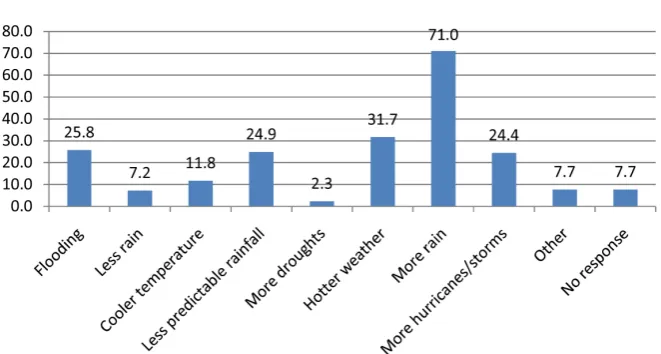
The majority of respondents, 199 (90.0%) stated that they had observed changes in the weather pattern while 20 (9.0%) stated they did not observe changes. In-creased rainfall was the most frequently reported observed change in the weather (157, 71.0%). Warmer weather was reported by 70 (31.7%) respondents, flooding by 57 (25.8%), less predictable rainfall by 55 (24.9%) and more hurri-canes/storms by 54 (24.4%). Figure 2 shows the percentage of respondents that reported observed changes in the weather.
DOI: 10.4236/ajcc.2019.82016 290 American Journal of Climate Change
Figure 2. Percentage of respondents that observed various changes in the weather.
“somewhat informed” about impacts and mitigation measures. Almost half, 100 (45.2%), of the respondents stated that climate change was caused both by the acts of God and man, while about quarter, 58 (26.2%) felt that the phenomenon is primarily caused by man, 41 (18.6%) respondents felt it was caused by God and 17 (7.7%) were unsure of the cause.
More than half of the respondents, 122 (55.2%), stated they were very con-cerned about climate change while 61 (27.6%) respondents stated they were somewhat concerned. A total of 35 (15.8%) of respondents reported they were either not concerned at all or uncertain about whether they were concerned. The results from a chi-square test found that age was associated with the level of concern by respondents about climate change (X2 (1, N = 218) = 8.00, p < 0.01).
Respondents aged 18 - 45 years were more likely to report either being “very concerned” or “somewhat concerned” while respondents aged 46 years and older were more likely to report “not concerned at all” or “don’t know/not sure” about their level of concern. Among 98 respondents that were involved in marine and freshwater activities, the majority, 60 (61.2%), felt that climate change was an important issue for their livelihood, 14, (14.3%) felt it was somewhat important and 24 (24.5%) felt the issue was not important or was uncertain about the im-portance to their livelihood.
Among 132 respondents that resided in a community that was bordered by the coastline, 97 (73.5%) felt that climate change was an important issue for the community, 17 (12.9) felt the issue was somewhat important, 4 (3.0%) felt the issue was not important at all and 10 (14.6%) were unsure if the issue was im-portant for the community.
3.4. Knowledge of Coastal Ecosystem
DOI: 10.4236/ajcc.2019.82016 291 American Journal of Climate Change (27.1%).
Most of the respondents stated that the coastal ecosystem was beneficial for food 86 (38.9%), clean water, 52 (23.5%) and income, 48 (21.7%) (Figure 3). Few respondents stated protection from storms (19, 8.6%) and health and well being (23, 10.4%) were benefits of the coastal ecosystem.
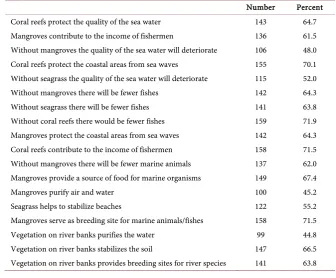
[image:8.595.257.489.282.401.2]Respondents demonstrated inconsistency in their level of knowledge about the linkages between the components of the ecosystems in stating whether statements were true or false. Table 3 shows the frequency of respondents that responded correctly to the statements. Over 70% of respondents demonstrated knowledge about coral reefs protecting the land from sea waves as well as coral reefs and mangroves as breeding sites for fishes. The lowest level of knowledge was demonstrated in relation to the function of seagrass, vegetation on river banks and mangroves.
Figure 3. Respondents stated benefits of the coastal ecosystem.
Table 3. Respondents that correctly responded to statements about coastal ecosystems.
[image:8.595.202.539.454.732.2]DOI: 10.4236/ajcc.2019.82016 292 American Journal of Climate Change Respondents most frequently reported that they noticed changes in the stock of fish/marine creatures, 122 (55.2%), beaches 104 (47.1%) and rivers/streams, 96 (43.4%). Less than one-third of the respondents reported they noticed changes in the seagrass (66, 29.9%), corals (51, 23.1%), beach vegetation (56, 25.3%), mangroves (34, 15.4%), and coastal lagoons (32, 14.5%). More than one-quarter of the respondents, 63 (28.5%), also reported that they did not no-tice any change in the coastal ecosystem.
3.5. Perception of the Impact of Climate Change on Coastal
Ecosystem
Respondents who resided in coastal areas were asked about their perception of how climate change may have affected their household or their community. Among 163 respondents, 83 (50.9%) stated they believed their household in-come was affected by climate change, 75 (46.0%) believed their household fin-ances were impacted, 72 (44.2%) believed the health of one or more household member was impacted, 76 (46.6%) believed their house or property infrastruc-ture was impacted. On the other hand, 49 (30.1%) respondents stated that do not believe their household was impacted in any way and 2 (1.2%) respondents stated they were unsure.
Figures 4-6 show the percentage of respondents that correctly identified fac-tors that affect coral reefs, mangroves and fish reproduction, respectively. Res-pondents demonstrated the highest level of knowledge about high sea tempera-tures (74, 33.5%), storm surge/sea level rise (68, 30.8%) and water pollution (63, 28.3%), as factors that can negatively affect coral reefs. Respondents demon-strated the least knowledge about the effects of reduced light intensity (22, 10.0%), algal growth (25, 12.0%) and sedimentation on the coral reefs (32, 14.5%).
DOI: 10.4236/ajcc.2019.82016 293 American Journal of Climate Change
Figure 5. Respondents that correctly identified factors that negatively affect mangroves.
Figure 6. Respondents that correctly identified factors that negatively affect fish repro-duction.
3.6. Attitude to Climate Change and Coastal Ecosystem
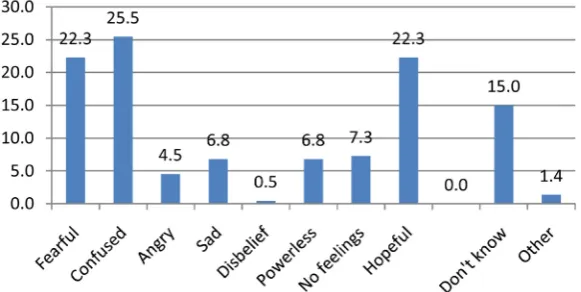
The highest number of respondents, 56 (25.5%), reported they felt confused about climate change, while 49 (22.3%) stated they were fearful or hopeful, re-spectively (Figure 7). Less than 10% of respondents expressed that they either felt sad, angry or powerless and 15% said they were uncertain of their feelings about the issue. When asked who was mainly responsible for addressing climate change, half of the respondents, 110 (50.7%), felt it should be a joint effort be-tween government, businesses, community organizations, industrialized coun-tries, the United Nations and individuals. A smaller percentage, 49 (22.6%), felt that the local government was mainly responsible for addressing the problem and 18 (8.3%) felt that individuals were mainly responsible.
DOI: 10.4236/ajcc.2019.82016 294 American Journal of Climate Change
Figure 7. Respondents feelings about climate change.
to address the problem. While 109 (49.3%) agreed that Grenada should play a leading role in addressing climate change in the Caribbean region, an almost equal percentage of respondents, 94 (42.5%), were neutral.
About half of the respondents, 111 (50.2%), also felt that individuals were in a position to act while more than a quarter, 64 (29.0%), were neutral and 145 (67.8%) stated they wished for more opportunities to take practical actions to address the issue.
Only 22 (10.0%) of the respondents reported that they read, listened, or watched information frequently about climate change while more than one third either did so occasionally (76, 34.4%) and 68 (30.8%) did so infrequently. The results from a chi-square test do not show a statistically significant difference in responses by gender, age, parish of residence and education (p > 0.05). Respon-dents stated the most common sources of information on climate change were radio/television (165, 74.7%), internet (81, 36.7%) and neighbours (61, 27.6%).
3.7. Response to Climate Change and Coastal Ecosystem
Management
Figure 8 shows the overwhelming majority of respondents, 202 (91.4%), re-ported they did not take any action to mitigate the impacts of climate change on the coastal ecosystem in the past 5 years.
The results from a chi-square test found there was an association between age and reporting haven taken action to mitigate the impacts of climate change on the ecosystem (X2 (1, N = 217) = 4.56, p = 0.03). Respondents in the age groups
of 46 years and over were more likely to report having taken action to mitigate the impacts of climate change on the ecosystem. A statistically significant rela-tionship was also found between education and reporting having taken action to mitigate the impacts of climate change on the ecosystem (X2 (1, N = 217) =
14.32, p < 0.01). Respondents that completed education at college or university level were more likely to report having taken actions to reduce the effects on the ecosystem.
DOI: 10.4236/ajcc.2019.82016 295 American Journal of Climate Change
Figure 8. Respondents self-reported action to mitigate the im-pacts of climate change on coastal ecosystem.
that should be taken to address climate change are public education, reduced pollution, and establishment and enforcement of laws for resource management.
When asked what may have prevented the community from taking action in regard to climate change, at least 50% of 138 respondents stated that the com-munity lacked knowledge about the issue, resources to address the issue and there was a lack of cooperation among the residents.
3.8. Knowledge and Support for Marine Protected Areas
More than one-third of the respondents, 88 (39.8%), reported they were familiar with the term “marine protected area.” More than half of the respondents, 129 (58.4%), however, also stated they were not familiar with the term. When asked to describe the term, respondents correctly alluded to the designation of an area for protection of the environment and resources such as fishes, coral and other marine life.
With regard to knowledge about MPAs in Grenada, 98 (44.8%) reported that they knew of other MPAs while an almost equal percentage of respondents, 93 (42.1%) reported they were not aware of other MPAs in the country.
3.9. Education and Awareness
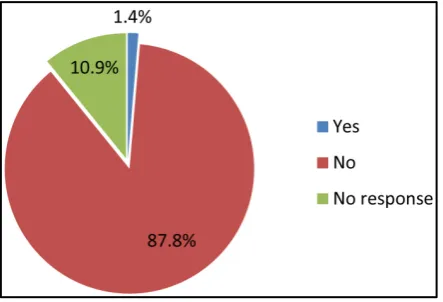
The overwhelming majority of respondents, 207 (93.7%) stated that they did not participate in any programmes to raise awareness about climate change in the past 5 years while 10 (4.5%) of the respondents stated they had participated in such programmes (Figure 9). Those who participated in programmes stated they did so at a forum in Victoria, while on a tour to the reefs, in a programme with the Ministry of Agriculture, in a forum at Gouyave Fish Market, and while participating in a cleanup drive.
DOI: 10.4236/ajcc.2019.82016 296 American Journal of Climate Change
Figure 9. Respondents participation in climate change awareness programmes in the past 5 years.
Figure 10. Respondents participation in programmes to raise awareness about coastal ecosystem.
4. Discussion
[image:13.595.263.485.243.394.2]DOI: 10.4236/ajcc.2019.82016 297 American Journal of Climate Change The results of this study were, generally, consistent with the findings of the two previous studies conducted by Fontenard [5] and Isaac [4] showing that knowledge and practices related to climate change and coastal ecosystem man-agement were, in many regards, limited and there is a need to increase awareness about climate change and its impacts as well as to strengthen measures for coastal and marine resource management. The findings of this study with resi-dents on the western side of the island indicate many similarities to the findings in the study by Isaac [5] on the eastern side of the island focusing on knowledge and practices related to coastal and marine ecosystems. In both studies, it was found that, generally, between a quarter to half of the residents noticed changes in the coastal and marine environments that may be indicative of climate change impacts. Isaac indicated, however, there were contradictions in some responses, such as, in finding that coral reefs were in good/very good conditions while the fish stock was in a bad/very bad condition. In the study in St. John and St. Mark, there was a similar pattern of inconsistency in observation of changes in the en-vironment with almost half of the respondents reporting changes in stock of fish/marine creatures, beaches, and rivers/streams, respectively, while only about one quarter reporting observed changes seagrass, corals, mangroves, and coastal lagoons. In a report by Day, the degradable condition of the corals and man-groves in Grenada were noted although it did not appear that residents were aware. Instead, the changes that were noted by the residents may indicate they were more aware of what was obvious or had more meaning or impact on their livelihood and survival, such as availability of fish for food and the condition of beaches for recreation, rather than an indication of keen attention to their gen-eral environment.
Some residents in this study were able to make connections between the state of the coastal and marine environments and changes in the weather. In the study with residents on the eastern side of the island, climate change was not men-tioned as a possible cause of the changes in the environment. Sand mining was felt to have the greatest impacts on coastal and marine environments [4]. This result may be due to the closed-ended questions that did not allow for an indica-tion of climate change or a lack of awareness about the potential impact of cli-mate change and on environmental resources. In the study in the westerly pa-rishes, overwhelmingly, fewer than 70% of residents correctly identified state-ments about the coastal ecosystem. Fontenard also reported that few residents felt climate change was among the most serious issues in Grenada and the Ca-ribbean [5]. The three studies emphasize the need for urgent attention to in-crease knowledge about climate change and adaptation in Grenada especially give the current and potential impacts on small island states already evidenced in Grenada and other Caribbean countries.
un-DOI: 10.4236/ajcc.2019.82016 298 American Journal of Climate Change certainties about how participants felt about climate change with more than half (53.0%) saying that they needed more information [5]. Few respondents felt that they were “very well informed” of issues related to climate change with less than a quarter indicating not knowing enough regarding issues such as the cause and possible effects of climate change, or what could be done to reduce climate change and protect themselves from it [[4], p. 7]. Similarly, the studies that were conducted in St. Lucia, Belize and Jamaica also show inconsistency in knowledge and practices related to climate change and/or management of coastal resources [6][7][8][9].
The majority of respondents stated they observed changes in the weather pat-tern. While at least 50% of the respondents correctly identified factors that can contribute to those changes, the majority, nonetheless, also reported they were only “somewhat informed” about the causes and impacts and measures to miti-gate the impacts of climate change. On average, about 90% of respondents re-ported that, in the past 5 years, they did not participate in any programmes to raise awareness about climate change or about coastal ecosystem management. There were several initiatives in Grenada to raise awareness about climate change, such as programmes by the National Disaster Management Agency (NADMA) on climate change resilience, the World Bank, Food and Agriculture Organization (FAO), the Ministry of Agriculture and The Nature Conversancy (TNC). A Ministry has also been designated to address climate change matters. However, only a few programmes may have been conducted in St. John and St. Mark, especially over the last seven years. Fontenard reported that 42.5% of res-idents stated they were aware of organizations dealing with climate change in Grenada [5]. Nonetheless, there was an indication of low participation in the programmes by the residents in the westerly parishes which may be related to the level of participation may be related to the low concerns about the issue of impacting livelihood and routine activities. Efforts should be made to address this issue with particular targeting of the residents in sustained communi-ty-based programmes. Television programmes may be given preference in edu-cation campaigns given Fontenard [5] reported 84.2% of the residents had a preference for receiving information through that medium. Using an ecosys-tem-based approach may also be best to also heighten awareness about the con-nectivity and value of each part of the environment. Residents who completed less than college level education, residents above 45 years and residents in St. Mark should be specially targeted to participate in such initiative. Albeit, the lev-el of participation and impact of such programmes will need to be assessed to ensure that the objectives can be achieved.
DOI: 10.4236/ajcc.2019.82016 299 American Journal of Climate Change The vulnerability of coastal communities in Grenada and the urgency for ac-tion was highlighted by Day [2]. Day stated, “Grenada’s coastal communities are particularly at risk from the combined hazards of sea level rise and intensifying storms, which present real and increasing threats to human life and infrastruc-ture in low-lying areas. These hazards are greatly exacerbated by the degraded condition of many of Grenada’s coastal ecosystems, particularly mangroves and coral reefs, which, in a healthy state, can provide effective barriers for coastal protection and disaster risk reduction” [[2], p.72]. The results from the focus groups indicate that community residents, in general, were less knowledgeable about climate change and coastal ecosystems than students and fishers, but the group also demonstrated the most willingness to learn about the issues and to take actions. A suggestion was made to form a community action group. GRENCODA should leverage this interest to galvanize support and participation in the MPA project. This may also contribute to the residents’ ownership of and responsibility for managing the community resources beyond the lifetime of the project.
Almost half of the respondents reported that they were somewhat concerned, not concerned at all or not sure if they were concerned about climate change. This represents a fairly significant proportion of respondents and may indicate a likelihood of indifference towards community initiatives to address the prob-lems, particularly by older individuals (above 45 years). As such, careful consid-eration should be given to the design and implementation of the MPA project to attract high participation and interest.
Previous studies by Isaac and Fontenard and this study showthe need to in-crease climate change education and awareness in Grenada. The potential posi-tive results of education programmes are reflected in studies in Cambodia that show significant changes in understanding the causes and effects of climate change and how daily activities can contribute to climate change [10]. Imple-mentation of education and adaptation programmes that link routine activities and livelihood to climate change in both directions may be most effective to im-prove knowledge and practices to reduce and mitigate climate change impacts [10]. A study in Belize also shows a low appreciation for MPAs can be as a result of low knowledge about climate change [6]. This is significant for the context of the GRENCODA project for which community support and participation is cru-cial. Many respondents were not familiar with MPAs in Grenada which may also indicate limited knowledge and awareness about the national measures to pro-tect the marine resources.
DOI: 10.4236/ajcc.2019.82016 300 American Journal of Climate Change of better stewardship by stakeholders should also answer the basic question, “What is in it for me?” being sensitive to the fact that several practices observed are related to livelihood issues. For example, stones that are washed onto the beaches are gathered and sold by persons whose preoccupation is generating in-come to sustain themselves or family. Considerations of long-term impact on the beach take second place even when it may be observed that the coastline is changing.
The following considerations can be taken on board in framing the response: • Establish and nurture a close relationship with the Grenada Fisheries
Divi-sion, under whose jurisdiction MPAs will fall to keep them informed of plans and benefit from their technical expertise, policy and legal guidance, or ma-terial resource inputs for any interventions undertaken.
• Review and draw on best practices and lessons learned in the management of other MPAs in Grenada. This should lead to a quicker startup and imple-mentation as well as reduce the cost associated with trials and formative re-search.
• Target community persons to be the beneficiary of positions that reward ser-vices rendered with pay, as much as possible. For example, young people in the community can be hired to operate/maintain watercrafts, affording a prolonged interest in the project beyond the education campaign.
• Emphasize the use of indigenous resources to create a cycle of benefit. For example, specials boats may be constructed to provide tours to reefs with the aim of heightening awareness about the local resources while promoting live-lihood. The crafts can also be used to patrol and monitor the MPA.
• For sustainability, it may be advantageous to build a livelihood component into the MPA project to keep an interest in protecting the area even after the lifetime of the project. For instance, if the project targets the restoration of coastal reefs: introduce the planting and harvesting of seamoss (i.e. macroal-gae of the genus Gracilaria) as a livelihood activity for which stakeholders would have an economic incentive to keep the reefs healthy.
• A partnership should be formed with the Ministry of Agriculture to imple-ment the training in schools with the climate change education kits. Their use and effectiveness may also be assessed in the context of the suitability for wider community education initiatives.
• The use of climate change education kits can be extended to the community education programmes.
Acknowledgements
The following persons and institutions are acknowledged for their support and contributions to this study:
DOI: 10.4236/ajcc.2019.82016 301 American Journal of Climate Change Ms. Hayley Crandell—Department of Public Health and Preventive Medicine, St. George’s University.
Mr. Crafton Isaac—Ministry of Agriculture, Forestry and Fisheries.
Conflicts of Interest
The authors declare no conflict of interest.
References
[1] Sem, G. (2007) Vulnerability and Adaptation to Climate Change in Small Island Developing States.
https://unfccc.int/files/adaptation/adverse_effects_and_response_measures_art_48/ application/pdf/200702_sids_adaptation_bg.pdf
[2] Day, O., Van Proosdij, D., Campbell, D., Lee, S., Baker, G. and Thomas, J. (2016) Building Capacity for Coastal Ecosystem-Based Adaptation in Small Island Devel-oping States. http://www.lumbadive.com/fotosite2014/BCCEbA-SIDS.pdf
[3] Glasgow, L., Langaigne, B., Thomas, C., Harvey, O. and Campbell, E.A. (2018) Pub-lic Knowledge and Attitudes towards Climate Change and It’s Impacts on Ecosys-tems in Grenada. American Journal of Climate Change, 7, 600-610.
https://doi.org/10.4236/ajcc.2018.74037
[4] Isaac, C.J. (2010) An Evaluation of Socio-Economic Conditions and Environmental Interactions on a Section of the East Coast of Grenada.
http://www.socmon.org/upload/documents/Isaac%202010%20east%20coast%20Gre nada%20SocMon%20CTR%2027.pdf
[5] Fontenard, T. (2016) UNDP-JCCCP In-Country Specific Campaign for Grenada: Results of Climate Change Awareness Survey.
https://www.undp.org/content/dam/barbados/docs/Publications/undp_bb_GRN_K AP_climate_change_kap_survey_report_grenada_0.pdf
[6] Belize Marine Conservation and Climate Adapptation Project (2016) Knowledge, Attitude, and Practice Survey Consultancy—Belize.
[7] Severin, P. and Small, B. (2016) Knowledge, Attitude, Practices, Behaviour Study on Climate Change: Saint Lucia Baseline Study 2016.
[8] Jamaica Climate Change Enabling Activity (JCCEA) Project (2005) Jamaica Climate Change Kap Study.
[9] Planning Institute of Jamaica (2012) Appendices for the Report on Climate Change Knowledge, Attitude and Behavioural Practice.