PLATFORM SWITCHING: BLISS TO IMPLANT DENTISTRY
1
Dr. Nidhi Duggal,
2,*Dr.
Department of Prosthodontics and Crown
ARTICLE INFO ABSTRACT
The success of dental implant therapy depends upon a good amount and quality of bone present around the implant.
resorption and this rate of resorption is 1.5
restoration which is clinically acceptable. This crestal bone resorption is restricted by many modifications in the implant
clinically to maintain the crestal bone level and consequently preserving the normal soft tissue contours. Placement of a small diameter abutment on a large diameter implant platform has proposed as an effective way to control circumferential bone loss around dental implants. The purpose of this review is to discuss the literature dealing with platform switching concept to preserve the crestal bone, the mechanism by which it contribut
Copyright © 2018, Nidhi Duggal et al. This is an open distribution, and reproduction in any medium, provided
INTRODUCTION
These days, patients receiving implant treatments not only expect restoration of masticatory function, but also
the prostheses should be aesthetically pleasing, easy to clean, and permanent. To maintain long-term implant stability, it is important to minimize bone loss around the implant, as well as soft tissue atrophy that accompanies it. Osseo integrated implants have become the standard of
replacement. The goals of modern implant therapy entail more than just the successful osseointegration of the implant. The final result must also include a restoration with stable soft and hard tissue level. For the short term and long term prognosis of oral implants, the quality and stability of soft tissue interface with implant and abutment along with crestal bone prese
are of prime importance(Abrahamsson and
When dental implants are placed into function, stress concentration occur at the coronal region of the implant which leads to crestal bone remodelling (Pillar et al
authors advocated that post restorative crestal bone remodeling occurasaresult of localized inflammation within the soft tissue located at implant abutment interface (Ericsson
Abrahmsson et al., 1998) and is a result of the soft tissue’s attempt to make a biological seal around the top
implant, peri‑implant inflammatoryinfiltrate, 2006) micromovements of the implant and components,(Hermann et al., 2001; King et al
*Corresponding author: Dr. Jatinder Kumar,
Department of Prosthodontics and Crown and Bridge, GDC Patiala, Punjab, India.
ISSN: 0975-833X
Article History: Received 30th January, 2018
Received in revised form 17th February, 2018
Accepted 24th March, 2018
Published online 30th April, 2018
Citation: Dr. Nidhi Duggal, Dr. Jatinder Kumar, Dr. Sarabjit Kaur and Dr. Kanav Journal of Current Research, 10, (04), 68485-68489.
Key words:
Platform switching, Crestal bone loss, Biologic width, Implant abutment Junction (IAJ).
REVIEW ARTICLE
PLATFORM SWITCHING: BLISS TO IMPLANT DENTISTRY
Dr. Jatinder Kumar,
3Dr. Sarabjit Kaur and
Department of Prosthodontics and Crown and Bridge, GDC Patiala, Punjab, India
ABSTRACT
The success of dental implant therapy depends upon a good amount and quality of bone present around the implant. During the first year of implant placement,
resorption and this rate of resorption is 1.5-2mm around the dental implants after the prosthetic restoration which is clinically acceptable. This crestal bone resorption is restricted by many modifications in the implant system. Platform switching is one such concept which can be applied clinically to maintain the crestal bone level and consequently preserving the normal soft tissue contours. Placement of a small diameter abutment on a large diameter implant platform has proposed as an effective way to control circumferential bone loss around dental implants. The purpose of this review is to discuss the literature dealing with platform switching concept to preserve the crestal bone, the mechanism by which it contributes to maintenance of marginal bone.
access article distributed under the Creative Commons Attribution the original work is properly cited.
These days, patients receiving implant treatments not only expect restoration of masticatory function, but alsoexpect that the prostheses should be aesthetically pleasing, easy to clean, term implant stability, it is important to minimize bone loss around the implant, as well as
Osseo integrated dental standard of care for tooth oals of modern implant therapy entail more than just the successful osseointegration of the implant. The final result must also include a restoration with stable soft and hard tissue level. For the short term and long term prognosis of uality and stability of soft tissue interface with crestal bone preservation and Berglundh, 2009). When dental implants are placed into function, stress
coronal region of the implant which et al., 1991). Various authors advocated that post restorative crestal bone remodeling
aresult of localized inflammation within the soft tissue Ericsson et al., 1995; and is a result of the soft tissue’s attempt to make a biological seal around the topofdental infiltrate, (Brogginiet al., implant and prosthetic
et al., 2002)
Department of Prosthodontics and Crown and Bridge, GDC Patiala,
and repeated screwing and unscrewing 1997).
Other factors which are responsible for crestal bone loss are (Deshpande and Sarin, 2009
Surgical trauma Biologic width/seal Microgap
Occlusal overload Crest module
According to (Smith and Zarb
success is vertical bone loss of <0.2mm annually are following first year of implant function. Historically, approximately 1.5mm apical to the IAJ or the first thread has been used as one of the criteria for post-restorative succe
(Smith and Zarb, 1989; Albrektsson
various techniques have been evolved to diminish
bone loss such as the non-submerged technique, scalloped implant, rough surface implant neck with micro threads, progressive loading and immediate implant. Platform Switching (PS) is one such concept
whichrefers to use of a smaller diameter abutment on a larger diameter implant collar. This connection shift the perimeter of the IAJ inward toward the central axis.
implant.
Method of literature search:
textbooks were used to find out the studies related to platform switching for crestal bone preservation.
International Journal of Current Research Vol. 10, Issue, 04, pp.68485-68489, April, 2018
Dr. Nidhi Duggal, Dr. Jatinder Kumar, Dr. Sarabjit Kaur and Dr. Kanav, 2018. “Platform switching: Bliss
PLATFORM SWITCHING: BLISS TO IMPLANT DENTISTRY
and
4Dr. Kanav
Punjab, India
The success of dental implant therapy depends upon a good amount and quality of bone present During the first year of implant placement, most of the crestal bone undergoes 2mm around the dental implants after the prosthetic restoration which is clinically acceptable. This crestal bone resorption is restricted by many system. Platform switching is one such concept which can be applied clinically to maintain the crestal bone level and consequently preserving the normal soft tissue contours. Placement of a small diameter abutment on a large diameter implant platform has been proposed as an effective way to control circumferential bone loss around dental implants. The purpose of this review is to discuss the literature dealing with platform switching concept to preserve the
es to maintenance of marginal bone.
License, which permits unrestricted use,
and repeated screwing and unscrewing (Abrahamsson et al.,
Other factors which are responsible for crestal bone loss Deshpande and Sarin, 2009):
Zarb, 1989) the criteria for implant success is vertical bone loss of <0.2mm annually are following first year of implant function. Historically, approximately 1.5mm apical to the IAJ or the first thread has been used as one restorative success of a dental implants Albrektsson et al., 1986). Recently, various techniques have been evolved to diminish marginal submerged technique, scalloped implant, rough surface implant neck with micro threads, rogressive loading and immediate implant. Platform Switching (PS) is one such concept (Richard et al., 2006), refers to use of a smaller diameter abutment on a larger diameter implant collar. This connection shift the perimeter of toward the central axis. (i.e the middle) of the
: Pub Med, Google scholar and textbooks were used to find out the studies related to platform switching for crestal bone preservation.
INTERNATIONAL JOURNAL OF CURRENT RESEARCH
Inclusion Criteria
Human subjects involving, males and females, Using hexed implants,
Papers in which modified platforms in dental implants are studied (platform switching concept),
Using different surgical techniques and clinical situations (immediate loading, delayed loading) with or without immediate provisionalization.
Experimental studies of animals with a minimum follow-up of one month and 3D finite element models simulating implants and surrounding bone.
Exclusion Criteria
Those papers for which only the abstract was available (incomplete information).
Studies with no results. No indexed manuscripts.
Concept of platform switching
The concept of “platform switching” refers to the inward horizontal repositioning of implant abutment junction (IAJ) so
as to minimize the circumferential bone loss. This concept
accidentally came into existence in 1991, when implant
innovation, Inc. introduced 5mm and 6mm diameter implants with sealing surfaces of the same diameter. The dimensional mismatch between the fixture and prosthetic component credits 0.45mm or 0.95mm circumferential horizontal difference. After 5 years period, reduced crestal bone loss was observed in radiographs of patient in whom platform switch system was
used. Lazzara and Porter (Richard et al., 2006) advocated that
because of shifting the IAJ inward, the inflammatory cell infiltrate also repositioned itself away from the crestal bone and confined it within 90° area. (Baumgarten et al., 2005) stated that the potential application of platform switching include situations where a larger implant is necessary but prosthetic space is limited, in the aesthetic zone where preservation of crestal bone can lead to improved esthetics and
where shorter implant must be used. (Gardner, 2005) stated that the main advantage of Platform switching is it can control circumferential bone loss around implants. He concluded that platform switching needs further investigation and also noted several disadvantages of platform switching. The disadvantage being, that the components have similar designs and need adequate space to develop a proper emergence profile.
Rationale of platform switching
It moves the implant abutment junction (IAJ) medially. Allows biological width to be established horizontally. It shifts the stress concentration zone away from crestal
bone
Switching the platform
Platform Switching can be achieved by
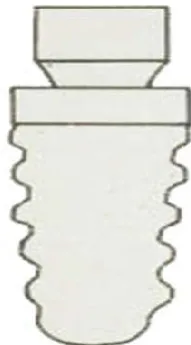
Using abutments with a diameter smaller than the implant neck or body width (Figure 1) (Singla et al., 2015).
Using an implant design where the neck diameter is increased with respect to the implant body width (Figure 2) (Singla et al., 2015).
Using inherently platform‑switched implants and conical emergence abutments, with a variable height of 1.5-2 mm, freeing the extension of the implant platform between 0.5-0.75 mm (Figure 3) (Canay and Akça, 2009).
[image:2.595.384.482.161.345.2] Using implants with a reverse conical neck (Figure 4) (Carinci et al., 2009), referred to as Bone Platform Switching.
[image:2.595.388.478.390.556.2]Figure 1. Platform-switched implant, with an abutment diameter less than the implant platform diameter
Figure 2. Expanded implant platform with equal implant and abutment diameter
[image:2.595.384.480.596.769.2]Figure 4. Implant with a reverse conical neck abutments
Applications
In situations where larger implant is desirable but prosthetic space is limited
In the esthetic zonewhere preservation of crestal bone can lead to improved esthetics
Where shorter implants must be utilized.
Advantages
Formation of a leak-proof peri-implant soft tissue cuff. Improve esthetics as crestal bone preservation helps
preserve papilla Maintenance of the mid facial bone height which helps to maintain facial gingival tissues. Less shear force exerted on the cortical bone in the PS
model.
Improved Bone Support for Short Implants.
Disadvantages
Need for sufficient space to develop a proper emergence profile.
It increases the stress in abutment or the abutment screw.
DISCUSSION
(Adell et al., 1981) did a retrospective study and noted that 1.2mm marginal bone loss from the first thread during healing and in the first year after loading with an average bone loss of 0.1mm annually thereafter. In addition, (Berglundh and Lindhe, 1996) studied peri implant soft tissue dimensions in beagles and concluded that an adequate biologic mucosal barrier was necessary to protect the bone. This mucosal barrier consists of sulcular epithelium (1.5-2mm) and connective tissue (1-2mm) rich in collagen fibers but poor in cells. (Herman et al., 2001) demonstrated that when a bone loading surface that had been sandblasted and acid etched extended coronally within 0.5 mm of IAJ, the location of newly formed crestal bone remain constant. This finding provides direct evidenced that the biological process result in the formation of the biologic dimensions has greater capacity to resorb bone than does the ability of fixture to resist resorptive process. (Todescan et al., 2002) stated that when the IAJ is placed more deeply in the bone, vertical bone loss increases. However the final position of the crestal bone from the IAJ never exceeds 2 mm.
(Vela-Nebot et al., 2006)concluded that platform switching improves aesthetic results and when biological width violation is less, bone loss also get reduced (p<0.0005). He also said that further microbiological, pathological and clinical studies are required to confirm both these results as well as the study’s working hypothesis. Markus (Hurzeler et al., 2007) concluded that platform switching seemed capable of limiting crestal resorption and preserving peri-implant bone level. Another study by (Cappiello et al., 2008)observed that vertical bone loss for the platform-switched cases varied between 0.6 and 1.2 mm (mean: 0.95 ± 0.32 mm), where as for the non-platform switched cases, the bone loss was between 1.3 and 2.1 mm (mean: 1.67 ± 0.37 mm).An average of 1–2 mm of bone loss occurs in non– platform-switched implants as compared to platform-switched implants. Rodriguez (Ciurana et al., 2009) did a finite element analysis and concluded that platform switched implant with an internal hexagon connection; showed the smallest distortions in stress distribution after bone modeling as compared to other platform switched model with external hexagon connection and also the design, with smaller-diameter abutment with larger-diameter implant showed better results.
(Degidi et al., 2008) assesed the histology and histomorphology of three morse cone connection implants in a real case report and explained that when there is zero microgap and no micromovement, platform switching shows no resorption. The combination of features some implants system (Ankylos) have the one size diameter abutment,90° step external implant–abutment connection and a Morse taper internal connection decreased the crestal bone resorption, assured a bacteria proof seal and diminishes peri-implant inflammation. (Maeda et al., 2008)used a 3D finite element model and examined the biomechanical advantages of platform switching. He noted that this procedure shifts the stress concentration away from the bone-implant interface, but these forces are concentrated more in the abutment or the abutment screw. (Luango et al., 2008) examined biopsy specimen and found out the biological process occurring around platform switched implants. They observed that inflammatory connective tissue infiltrate was confined over the entire surface of the implant platform and approxiamately0.35mm coronal to IAJ but did not reach the crestal bone, which may be the reason for crestal bone preservation by platform switching.
it also contributes to maintaining the width and height of crestal bone and the crestal peak between adjacent implants. (Wagenberg et al., 2010) did prospective study about implant survival and crestal bone levels around implants that used the platform – switching concept, with a follow-up period ranging From 11 to 14 years. The results of this research showed that 99% of all the surfaces examined had ≤ 2.0 mm of bone loss over this observation period, confirming that the platform switching concept was effective in preserving interproximal crestal bone levels. (Cocchetto et al., 2010) studied both clinically and radiographically the biologic effect of using wide platform-switching restorative protocol in human. The results of this preliminary study showed that, when properly selected, patients receiving wide platform-switched implants may experience less crestal bone loss than that resulting from the use of regular platform-switching ornon-platform-switching approaches. In the study by, (Bilhan et al., 2010) they compared bone around platform-switched and regular platform implants that supported removable prostheses and found that, after a period of 36 months, the marginal bone loss was significantly lower in platform-switching situations.
Conclusion
Once the implant is exposed to the oral environment bone remodels downward along the implant body and then stops at some predefined position. Such changes in crestal bone height have been attributed to implant loading and concentration of forces, the counter sinking procedure during implant placement, and localized soft tissue inflammation. Various methods have been tried to overcome this problem that includes submerged implant technique, bone grafts/bone crushes, usage of sealants to reduce the bone loss around the crestal region, apart from modifying the design of the implants around the collar region. The use of prosthetic abutments with a reduced diameter in relation to the implant diameter (platform switching) limits the crestal resorption usually observed during the year following loading. It not only maintains the biological width but helps in improved esthetics by preserving the interproximal papilla. So, Platform switching should be clinically applied in every case of implant placement if clinical situations permit. Though the survival rate of matched and platform switched implants are similar, further long term longitudinal studies are required to validate this concept.
REFERENCES
Abrahamsson, I. and Berglundh, T. 2009. Effects of different implant surfaces and designs on marginal bone level alterations: a review. Clinical Implant Dentistry and Related Research, 20:207–215.
Abrahamsson, I., Berglundh, T. and Lindhe, J. 1997. The mucosal barrier following abutment dis/reconnection. An experimental study in dogs. J ClinPeriodontol., 24:568‑72. Abrahmsson, I., Berglundh, T. and Linde, J. 1998. Soft tissue
response to plaque formation at different implant systems. A Comparitive study in the dog. Clin Oral Implants Res., 9:73-79.
Adell, R., Lekholm, U., Rockler, B. and Brånemark, PI. 1981. A 15year study of osseointegrated implants in the treatment of the edentulous jaw. Int J Oral Surg., 10:387‑416. Albrektsson, T., Zarb, G., Worthington, P. and Eriksson, AR.
1986. The long term efficacy of currently used dental
implants. A review and proposed criteria for success. Int J oral Maxillofaci Implants. 1:11-25.
Baumgarten, H., Cocchetto, R., Testori, T. and Meltzer, A., Porter S. 2005. A new implant design for crestal bone preservation: initial observations and case report. Pract Proced Aesthet Dent., 17:735-40.
Berglundh, T. and Lindhe, J. 1996. Dimension of the periimplant mucosa . Biological width revisited. J Clin Periodontal., 23:971-973.
Bilhan, H., Mumcu, E., Erol, S. and Kutay, O. 2010. Influence of platform-switching on marginal bone levels for implants with mandibular overdentures: a retrospective clinical study. Implant Dent., 19: 250-258.
Broggini, N., McManus, LM., Hermann, JS., Medina, R., Schenk, RK., Buser, D., et al., 2006. Peri‑implant inflammation defined by the implant‑abutment interface. J Dent Res., 85:473‑478.
Canay S, Akça K. Biomechanical aspects of bone level diameter shifting at implant‑abutment interface. Implant Dent.2009;18:239‑48.
Cappiello, M., Luongo, R., Di Iorio, D., Bugea, C., Cocchetto, R. and Celletti, R. 2008. Evaluation of peri-implant bone loss around platform switched implants. Int J Periodont Restorat Dent., 28:347-55.
Carinci, F., Brunelli, G. and Danza, M. 2009. Platform switching and bone platform switching. J Oral Implantol., 35:245‑50.
Cocchetto, R., Traini, T., Caddeo, F. and Celletti, R. 2010. Evaluation of hard tissue response around wider platform-switched implants. Int J Periodontics Restorative Dent., 30:163-71.
Degidi, M., Iezzi, G., Scarano, A. and Piattelli, A. 2008. Immediately loaded titanium implant with a tissue-stabilizing/maintaining design (‘beyond platform switch’) retrieved from man after 4 weeks: a histological and histomorphometrical evaluation. A case report. Clin Oral Implants Res., 19:276-82.
Deshpande, SS. and Sarin, SP. 2009. Platform switching of dental implants: Panacea for crestal bone loss? J Clin Diagn Res., 3:1348-1352.
Ericsson, I., Persson, LG., Berglundh, T., Marinello, CP., Lindhe, J. and Klinge, B. 1995. Different types of inflammatory reactions in periimplant soft tissues. J Clin Periodontal., 22:255-261.
Gardner, DM. 2005. Platform switching as a means to achieving implant esthetics. N Y State Dent J. 71:34‑7. Hermann, JS., Schoolfield, JD., Nummikoski, PV., Buser, D.,
Schenk, RK. and Cochran, DL. 2001. Crestal Bone changes around titanium implants.A methodological study comparing linear radiographic with histometric measurements. Int J Oral Maxillofac Implants., 16: 475-485.
Hermann, JS., Schoolfield, JD., Schenk, RK., Buser, D. and Cochran, DL. 2001. Influence of the size of the microgap on crestal bone changes around titanium implants. A histometric evaluation of unloaded non‑submerged implants in the canine mandible. J Periodontol., 72:1372‑83.
Hürzeler, M., Fickl, S., Zuhr, O. and Wachtel, HC. 2007. Peri-implant bone level around Peri-implants with platform-switched abutments: Preliminary data from a prospective study. J Oral Maxillofac Surg., 65:33-9.
King, GN., Hermann, JS., Schoolfield, JD., Buser, D. and Cochran, DL. 2002. Influence of the size of the microgap on crestal bone levels in non‑submerged dental implants: A radiographic study in the canine mandible. J Periodontol., 73:1111‑7.
López-Marí, L., Calvo-Guirado, JL., Martín-Castellote, B., Gomez-Moreno, G. and López-Marí, M. 2009. Implant platform platform switching concept: an updated review. MedOral Patol Oral Cir Bucal., 14:450-454.
Luango, R., Traini, T., Guidone, PC., Bianco, G., Cocchetto, R. and Celletti, R. 2008. Hard and soft tissue responses to the platform switching techn. Int J Periodont Restorative Dent., 28(6):551
Maeda, Y., Horisaka, M. and Yagi, K. 2008. Biomechanical rationale for a single implant-retained mandibular overdenture: an in vitro study. Clin Oral Implants Res., 19:271-5.
Pillar, RM., Deporter, DA., Watson, PA. and Valquuette, N. 1991. Dental Implant design: Effect on bone remodeling. J Biomed Mater Res., 25:467-483.
Richard, J., Lazzara and Stephan, S. 2006. Porter. Platform Switching: A new Concept inimplant Dentistry for controlling postrestorative Crestal Bone Levels. Int J Periodontics Restorative Dent., 26:9-17.
Rodríguez-Ciurana, X., Vela-Nebot, X., Segalà-Torres, M., Rodado-Alonso, C., Méndez-Blanco, V. and Mata-Bugueroles, M. 2009. Biomechanical repercussions of bone resorption related to biologic width: A finite element analysis of three implant-abutment configurations. Int J PeriodontRestorat Dent., 29:479-87.
Schrotenboer, J., Tsao, YP., Kinariwala, V. and Wang, HL. 2009. Effect of platform switching on implant crest bone stress: A finite element analysis. Implant Dent., 18 :260-9. Singla, S., Rathee, M., Kumar, L. and Gupta, M. 2015.
Platform switching: A step away from the gap. Eur JProsthodont., 3:1-9.
Smith, DE. and Zarb, GA. 1989. Criteria for success of osseointegrated endosseous implants. J Prosthet Dent., 62:567-72.
Todescan, F., Pustiglioni, F., Imbronito, A., Alberktsson, T. and Gisso, M. 2002. Influence of the microgap in the peri-implant hard and soft tissues.Ahistomorphic study in the dogs. Int J Oral Maxillofac Implants., 17:467-472.
Vela-Nebot, X., Rodríguez-Ciurana, X., Rodado-Alonso, C. and Segalà-Torres, M. Benefits of an implant platform modification technique to reduce crestal bone resorption. Implant Dent., 2006;15:313-20.
Wagenberg, B. and Froum, SJ. 2010. Prospective study of 94 platform-switched implants observed from 1992 to 2006. Int J Periodontics Restorative Dent., 30: 9-17.