Published Online November 2012 in SciRes (http://www.SciRP.org/journal/psych) http://dx.doi.org/10.4236/psych.2012.311147
Pragmatic Randomised Controlled Trial of an Exercise
Programme to Improve Wellbeing Outcomes in Women with
Depression: Findings from the Qualitative Component
Elizabeth Khalil, Patrick Callaghan, Tim Carter, Ioannis Morres
School of Nursing, Midwifery and Physiotherapy, University of Nottingham, Nottingham, UKEmail: [email protected]
Received July 19th, 2012; revised August 19th, 2012; accepted September 23rd, 2012
This paper reports the qualitative component from a pragmatic randomized controlled trial (PRCT), the quantitative component is reported in Callaghan, Khalil, Morres and Carter (2011). Exercise may be ef-fective in treating depression, but trials testing its effect in depressed women are rare. Our previous re-search found that standard exercise programmes, prescribed by General Practitioners and based on na-tional guidelines of intensity levels thought to produce health benefits, are not suitable for this group, as they find them discouraging and lonely, with many dropping out very early on. Exercise that is matched to participants’ preferred intensity improves mental health outcomes and attrition rates. Our aim was to develop such a programme. This study addressed the question: does mentored exercise of preferred inten-sity lead to better psychological, physiological and social wellbeing outcomes and improved adherence rates when compared with exercise of prescribed intensity in 38 depressed women? Focus groups were conducted with participants from both arms of the study, to explore their experience of the exercise pro-gramme and to gather information that might help to explain the quantitative outcomes, a technique rec-ommended by previous researchers conducting pragmatic trials. Women in the experimental programme experienced a statistically significant improvement in their mood, physical health, sense of wellbeing, self-esteem and quality of life. They reported achieving these gains via a positive experience which en-couraged continued attendance. In contrast, women who received the “exercise as usual” programme ex-perienced no significant benefits, were less likely to continue attending, and markedly less enthusiastic.
Keywords: Depression; Exercise; Mental Health; Pragmatic Randomised Controlled Trial; Wellbeing; Women
Introduction
The Link between Physical and Mental Illness
Health is “a state of complete physical, mental, and social well-being and not merely the absence of disease, or infirmity” (World Health Organisation, 2007). Within the notion of global wellbeing, there are physical, psychological and social con- structs, and between them is a complex interplay (Department of Health [DoH], 2006; Mental Health Foundation, 2006; Sey- mour, 2003).
People with mental health problems are more likely to ex- perience physical ill health than the rest of the population, they have high levels of physical morbidity and mortality (Nocon, 2004; Phelan, Stradins, & Morrison, 2001), being mentally ill increases a person’s risk of ill-health and may shorten their life by 10 years (Robson & Gray, 2007).
Depression impacts on a range of physical health outcomes; it is associated with asthma, arthritis and diabetes (Turner & Kelly, 2000), is a risk factor for stroke (Ostir, Markides, Peek, & Goodwin, 2001) and increases the risk of heart disease by four times (Hippisley-Cox, 1998). Depression occurs in be- tween 5% and 10% of people seeking primary care in the UK and is expected to be the second most common cause of dis- ability worldwide; rates for women are double that of men (Richardson, Faulkner, McDevitt, Skrinar, Hutchinson, & Piette,
2005).
The Health Benefits of Exercise
There is consistent evidence that physical activity is benefi- cial across the range of physiological, psychological, and social outcomes that comprise global well-being (Thompson, 1994). Encouraging regular exercise represents an opportunity to tackle many of the inter-related health problems facing individuals with a mental disorder, such as low self-esteem, obesity, ele- vated blood pressure (DoH, 2004). Exercise can also help peo- ple to function better through alleviation of stress and improved sleep (Kubitz, Landers, Petruzello, & Han, 1996; Sherill, Kotchou, & Quan, 1998; Youngstedt, O’Connor, & Dishman, 1997), improved mood (Biddle, 2000) and self-perception (Fox, 2000).
The Health Benefits of Exercise in Depression
Kremer, Meade, Graham, & Dudgeon, 1998). Both the Lawlor and Hopker (2001) and Cochrane (2009) systematic reviews of the effect of exercise on depression reported that exercise im- proves depressive symptoms. Exercise can also reduce the risk of suffering clinical depression (Paffenberger, Lee, & Leung, 1994; Dunn, Trivedi, & O’Neal, 2001).
These benefits are now recognized in official national guid- ance on health care, and in particular for depressed individuals, for example, NICE (2004) recommended that sufferers of mild depression of all ages are advised of the benefits of participat- ing in an exercise programme of a moderate level three times a week. In “Up and Running” (2004) the Mental Health Founda- tion review the evidence and present a strong case for exercise referral as “inexpensive, effective, and having coincidental benefits”, and as Mutrie (2002) points out, unlike drug therapy, exercise has few negative side effects.
Despite the fact that consultation rates are three to four times higher than for the general population (Seymour, 2003), people with mental illness are less likely to be offered health promo- tion interventions, or exercise prescriptions (Cohen & Hove 2001; Friedli & Dardis, 2002). In 2004, the Mental Health Foundation reported that 42% of GPs have access to an exercise referral scheme, and of the GPs surveyed only 5% used exer- cise as one of their top three front-line treatments for depression (MHF, 2004). Less than half of the GPs surveyed felt exercise was an effective treatment for depression. Moreover, when exercise interventions are offered, they are often of little use to the client group. Women living with depression in the commu- nity regard the mainstream exercise regimes prescribed by their GP as a negative experience (Owen & Khalil, 2006). While the benefits of exercise to physical health are widely known, the benefits to mental health are still less well understood and ac- cepted (MHF, 2004). On the whole exercise appears to be a neglected intervention in mental health care. There is little or no mention of exercise as a treatment option in most standard mental health/illness texts or reports published by authoritative groups in mental health (Callaghan, 2004). There are, however, notable exceptions, The National Quality Assurance Frame- work for Exercise [NQAFE] (Department of Health, 2001) acknowledges the strong causal evidence for the impact of ex- ercise on mental health and offers detailed guidance to mental health workers interested in referring patients to exercise refer- ral programmes.
There is a clear need for an intervention comprising physical activity that is accessible and appropriate to people with de- pression in particular for whom the evidence suggests exercise is a sound first-line treatment option; it is less expensive to deliver than many alternatives; promotes social inclusion; is popular; has few side effects; and the mechanism for delivery in a primary care context already exists in the form of exercise referral schemes (MHF, 2004).
Whilst a growing body of research has focused on the physi- cal health problems of adults with mental illness; less is known about acceptable and appropriate practice regarding the provi- sion of lifestyle interventions to this group (Bradshaw, 2005). The Cochrane (2005) systematic review of 25 depression trials found little evidence about the most effective type of exercise, or how effective it can be. Only six trials sampled clinical populations.
Several factors emerge from the literature and the research teams’ previous work as vital to the design and delivery of such an intervention to depressed individuals. “There is emerging
evidence that people with serious mental illness can be more physically active if interventions and lifestyle programmes are tailored to overcome the neurological, behavioural and social deficits associated with serious mental illness” (Robson & Gray, 2007). “Exercise therapy needs to be delivered in such a way that support for the patient is maximized. Embarking on be- havior change is not easy, especially for a population with mo- tivation difficulties, and it is more likely to be successful when that change is supported by well-trained specialist staff, able to devote their time and attention to helping people with their programme” (MHF, 2004).
Designing an Exercise Programme for Depressed
People
When testing the effect of exercise on mental health out- comes among healthy people, researchers often use intervene- tions based on national guidelines of intensity levels thought to produce health benefits (McGeorge, 2004). Notwithstanding the benefits of exercise, national and international studies show that many people with mental health problems do not engage in physical activity, and struggle to maintain the prescribed inten- sity, as result, high attrition rates are reported (Morgan, 2001). Our previous research found that standard GP prescribed exer- cise programmes, based on national guidelines of intensity levels thought to produce health benefits, are not suitable for this group, as they find them discouraging and lonely, with many dropping out very early on (Owen & Khalil, 2006). Exer- cise that is matched to participants’ preferred intensity im- proves mental health outcomes and improves attrition rates (Callaghan & Norman, 2004). Ideally people need to exercise with sufficient intensity for 20 - 30 minutes three to five times a week to experience health benefits (British Heart Foundation, 2003; Callaghan, 2004; DoH, 2004; Ekkekakis, Hall, VanLan- duyt, & Petruzello, 2000). Benefits are observed regardless of age or socioeconomic status (DoH, 2004). Our earlier work suggests that tailored interventions supplemented with motive- tional support may increase self-esteem and overall quality of life, and reduce exercise attrition rates (Callaghan & Norman 2000; Callaghan, Eves, Norman, Cheung, & Chang, 2002). In the scoping study that preceded this trial, Owen and Khalil (2006) found that women living with depression in the commu- nity expressed preferences for low-intensity exercise of par- ticular activities in particular environments. Group projects were cited as preferable, with peers (of similar physical and mental health status); low impact activities such as swimming and walking were preferred. Rhythmic, aerobic forms of exer- cise, such as brisk walking, jogging, swimming, or dancing are most consistently effective in achieving mental health benefits (DoH, 2004). All of these factors were taken into consideration when designing our programme to be emotionally supportive, friendly, sensitive and responsive to the specific needs of this group, and featuring low impact rhythmic exercise (brisk walk- ing) within a facilitated group of peers, led by specialist staff.
Rationale and Research Question
women (DoH, 2003).
In this study we addressed the question: does mentored exer- cise of a preferred intensity lead to better psychological, phy- siological and social wellbeing outcomes and improved adher- ence rates when compared with exercise of prescribed inten- sity?
Research Hypotheses
From the PRCT encompassing this qualitative component: H1 = A tailored exercise intervention will lead to better psy-
chological, physiological and social wellbeing outcomes when compared with an intervention based on national recommenda- tions.
H2 = Women assigned the tailored programme will attend a
greater number of sessions than women assigned the standard prescribed programme of exercise.
Method
This paper focuses on the qualitative component of the Prag- matic Randomised Controlled Trial (PRCT). Further detail con- cerning design and delivery of the trial may be found in Cal- laghan, Khalil and Morres (2011). Both the experimental and control programmes were fully manualised, and a protocol devised for both the motivational interviewing and healthy lifestyles components. This ensured transparency of approach, replicability and minimizes researcher effects in delivery.
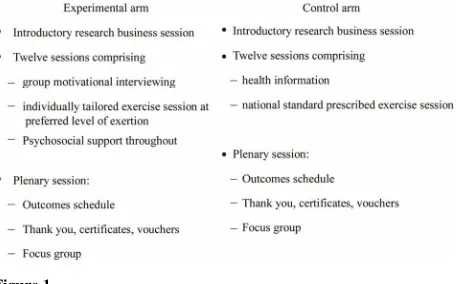
[image:3.595.311.540.85.227.2]There were a total of seven programmes run, with approxi- mately four women exercising together in each, at three differ- ent sites—local authority leisure centres—in Nottinghamshire. Figure 1 outlines the control and experimental arms of the study.
Design
The exercise programme was evaluated in a “pragmatic ran- domised controlled trial” (Hotopf, 2002). This design is espe- cially suited to encompassing a complex intervention such as our programme and informing everyday practice with evidence. In addition, the women we aimed to improve outcomes for we have defined very broadly as “living with depression”, as it is the presentation, and not specific diagnoses, that leads to spe- cific challenges for service providers. The pragmatic random- ised controlled trial (PRCT) is particularly suited to reflecting the heterogeneity of patients encountered in clinical practice and keeping exclusion criteria to a minimum (Hotopf, 2002). This was crucial as our aim was to target a programme to the women presenting to GPs as “depressed” in functional terms with the aim of improving their daily situation. A mixed me- thod approach was employed in data collection, analysis and interpretation, using both quantitative and qualitative methods and measures. In order to meet our stated research objectives a positivistic approach was essential. A battery of outcome mea- sures was devised and piloted by the project team, advised by the steering group, to capture change across a representative selection of the spectrum of physical, psychological and social components of wellbeing. However, there have been calls from researchers and mental health bodies working in this area for more qualitative data collection and analysis to unpack the nature of why exercise seems a preferred treatment choice, and what makes a helpful exercise programme (Oakley, Strange, Bonell, Allen, & Stephenson, 2006), and to “convey the richness
Figure 1.
Design of the study.
of experience reported by those who employ exercise as a re- covery strategy” (MHF, 2004).It is rare to find studies investi- gating the role of exercise on health that use qualitative re- search methods (Callaghan, 2004), yet they allow researchers to study intensively the participants’ experiences. For these rea- sons a substantive qualitative strand was included in the study design. Moreover, the nature of a pragmatic controlled trial means that it is appropriate for a real world intervention such as this, yet while such a design will reveal whether the intervene- tion is helpful, it will not necessarily be clear how the interven- tion achieves this, as variables are not subject to such stringent control as in a traditional RCT. Again, qualitative data collec-tion in the form of focus groups at the end of each programme, but also in the form of ongoing field notes throughout each pro- gramme are essential in documenting and exploring the reasons why exercise may be helpful.
Promotion, Recruitment and Sampling
The project team set up a project website, carefully piloted and targeted at the sample group, with an automated system for acquiring more information about the project. A dedicated telephone line with a named member of the project team, a female, was also provided. A poster/flyer was designed to cir- culate widely, again carefully targeted to appeal to the intended audience.
The project team sent information letters to primary (GP sur- geries in both PCTs) and secondary services (Nottinghamshire Healthcare NHS Trust Mental Health Services), detailing the study and inviting clinicians to assist us in identifying potential participants. Those services agreeing to engage with us re- ceived a pack containing a poster to display where potential participants could see it, a set of flyers to hand to potential par-ticipants, and a flow chart to guide each clinician through the inclusion criteria. Clinicians were requested to hand the flyer out to every consecutive potential participant (to maximise opportunity for interested women to participate and minimise selection bias), having worked through the inclusion criteria. In addition our collaborating service user group “Making Waves” and the East Midlands hub of the Mental Health Research Network publicised the programme among its members and relevant independent and voluntary sector organisations and contacts. Furthermore, we promoted our study in the local me- dia and on the University of Nottingham web pages.
ate to their home address via a dedicated central allocation and randomisation system, by a research professional unconnected to the study.
Participants
38 women participated in the study, 19 in each arm. Women were included if they were being monitored by, or receiving treatment for depression from any primary or secondary mental health service, aged 45 - 65 (age at first session of programme), living in the community and resident within Nottinghamshire as indicated by postcode. Participants were excluded if, at the time of the study, they were unable to participate on account of any injury or physical health problem.
Procedure
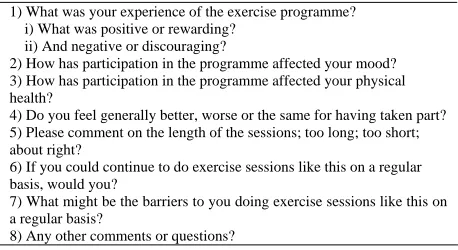
The qualitative component to the study took the form of fo- cus groups with participants from the intervention and active comparator arms of the study; moreover field notes were col- lected throughout every session of each programme, to docu- ment and explore the journey that the women made. Partici- pants often added input to these field notes, mentioning aspects of their journey that they felt were important to the experience. A focus group lasting approximately 45 minutes to an hour was conducted at the close of each programme, three to five women participated in each group, which was facilitated by the same researcher in each instance. The focus group topic guide (Table 1), was informed by the literature base and the service user views from the preceding scoping study (Owen & Khalil, 2006), and advised by the project steering group.
Ethical Approvals and Adoptions
The study was adopted by the Mental Health Research Net- work (East Midlands Hub), and is registered with the US Na- tional Institutes of Health clinical trials database
(https://register.clinicaltrials.gov). It had R & D approval from Nottinghamshire Healthcare NHS Trust, Nottingham City Pri- mary Care Trust and Nottinghamshire County Teaching Pri- mary Care Trust. The study received a favourable ethical opin- ion from Derbyshire Research Ethics Committee via the Na- tional Research Ethics Service (ref. 07/H0401/110).
Results
[image:4.595.58.287.611.736.2]This paper focuses on the qualitative component of the Prag- matic Randomised Controlled Trial (PRCT). From the quantita-
Table 1.
Focus group topic guide.
1) What was your experience of the exercise programme? i) What was positive or rewarding?
ii) And negative or discouraging?
2) How has participation in the programme affected your mood? 3) How has participation in the programme affected your physical health?
4) Do you feel generally better, worse or the same for having taken part? 5) Please comment on the length of the sessions; too long; too short; about right?
6) If you could continue to do exercise sessions like this on a regular basis, would you?
7) What might be the barriers to you doing exercise sessions like this on a regular basis?
8) Any other comments or questions?
tive component, the battery of outcome measures devised to capture change across a representative selection of the physical, psychological and social components of wellbeing revealed a statistically significant improvement in mood, physical health, sense of wellbeing, self‐esteem and quality of life in experi- mental arm participants. The intervention group attended a greater number of exercise sessions (8 (66%) out of a possible 12 sessions) than the control group (6 (50%) out of a possible 12 sessions), giving a mean difference of 2.3 sessions (95% CI: 0.3 to 4.8). Further detail concerning quantitative outcomes of the trial may be found in Callaghan, Khalil and Morres (2011).
Transcript Analysis
Framework analysis (Lacey & Lacey, 2001) was used to ana- lyse the focus group data and field notes. This thematic analysis technique was chosen because it allows for the inclusion of a priori (previously identified as relevant) and emergent concepts (e.g. unforeseen views or experiences from the participants). This method of analysis is particularly suited to health services research as it provides “systematic and visible stages to the analysis process, so that funders and others can be clear about the stages by which the results have been obtained from the data” (Lacey & Lacey, 2001). The topic schedule formed the basis for the core themes in the thematic framework. A total of seven focus groups were conducted, and seven sets of field notes collected, one for each exercise programme.
Conceptual Framework Findings
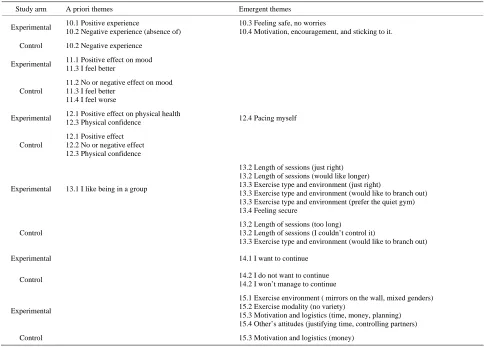
The findings are presented in Table 2 in a conceptual framework, organised as follows:
Core theme 10: Your experience of the programme. Core theme 11: Effect on your mood and general wellbeing. Core theme 12: Effect on your physical health.
Core theme 13: What should we keep and what could we improve?
Core theme 14: Would you continue? Core theme 15: Barriers to exercise.
Summary of the Findings
Table 2.
Conceptual framework of focus group findings.
Study arm A priori themes Emergent themes
Experimental 10.1 Positive experience
10.2 Negative experience (absence of)
10.3 Feeling safe, no worries
10.4 Motivation, encouragement, and sticking to it.
Control 10.2 Negative experience
Experimental 11.1 Positive effect on mood 11.3 I feel better
Control
11.2 No or negative effect on mood 11.3 I feel better
11.4 I feel worse
Experimental 12.1 Positive effect on physical health
12.3 Physical confidence 12.4 Pacing myself
Control
12.1 Positive effect 12.2 No or negative effect 12.3 Physical confidence
Experimental 13.1 I like being in a group
13.2 Length of sessions (just right) 13.2 Length of sessions (would like longer) 13.3 Exercise type and environment (just right)
13.3 Exercise type and environment (would like to branch out) 13.3 Exercise type and environment (prefer the quiet gym) 13.4 Feeling secure
Control
13.2 Length of sessions (too long) 13.2 Length of sessions (I couldn’t control it)
13.3 Exercise type and environment (would like to branch out)
Experimental 14.1 I want to continue
Control 14.2 I do not want to continue
14.2 I won’t manage to continue
Experimental
15.1 Exercise environment ( mirrors on the wall, mixed genders) 15.2 Exercise modality (no variety)
15.3 Motivation and logistics (time, money, planning) 15.4 Other’s attitudes (justifying time, controlling partners)
Control 15.3 Motivation and logistics (money)
unlikely. In terms of barriers to exercise, the most often stated obstacles were doing it alone, cost, prioritising the time, and other’s attitudes.
Discussion
This qualitative component of a larger PRCT study aimed to explore the participants’ experiences of a tailored programme of low effort physical activity and psychosocial support on glo- bal well-being in a community-based sample of women living with depression, to help in interpreting the quantitative findings of the PRCT study, but also because there is a paucity of quali-tative studies of exercise as a treatment for depression (MHF, 2004).
Adherence rates for middle-aged depressed women are not well known, previous qualitative research reports low levels of attendance in this group (Owen & Khalil, 2006). The experi- mental arm participants attended significantly more exercise sessions than the control arm women, in the focus groups they made it clear that they felt the rewarding nature of the experi- ence had encouraged them to attend, when perhaps they may previously have failed to do so. It is clearly important that exer- cise programmes intended for delivery to people with mental health problems are specifically designed to be acceptable and accessible to this group. Existing research literature concurs with these findings of this study, that where exercise interven-
tions are specifically tailored to be acceptable to people with mental health problems “contrary to common opinion, adher- ence… is at least similar to other forms of treatment. In one study where physical activity was offered as part of psychiatric services, adherence was comparable to that of the general population” (DoH, 2004).
Themes evident in the focus group data from the experimen- tal arm validated the design and delivery of the specially de- signed exercise programme:
My experience of the exercise programme was positive and rewarding.
I feel positive and rewarded in the exercise and it’s coping with the illness isn’t it, instead of just sitting and moping in that rut.
Participation in the programme has had a beneficial effect on my mood.
Participation in the programme has had a beneficial effect on my physical health.
I feel more confident in my physical self and my emotional self. I do think it’s helped with my mood.
I feel generally better for having taken part.
I feel energised.
If I could continue to do exercise sessions like this on a regu- lar basis I would.
Yes!
logical benefits of exercise, outcomes such as “feeling better” and enjoyment, assist long-term motivation. The women in the tailored programme felt “better” and enjoyed their exercise ex- perience, this is important in helping them to maintain a longer term exercise routine and stay motivated. Many of the women in our study had not previously explored exercise as a treatment or adjunct to treatment, and were delighted to discover the benefits. We can conclude that carefully targeted programmes that maximize psychological benefits make exercise a sustain- able treatment choice. The evidence base is unanimous in the opinion that currently “exercise is seldom recognized by main- stream mental health services as an effective intervention in the care and treatment of mental health problems” (Callaghan, 2004; MHF, 2004). Exercise promotion needs to be part of every care package (and tailored specifically to this group based on available evidence and user input). Robson and Gray (2007) suggest that this process should begin when the service user first comes into contact with mental health services. The Chief Nursing Officer’s Review of Mental Health Nursing recommends that MHNs “actively engage in health promotion strategies... for example by encouraging physical exercise” (DoH, 2006), Gray and Robson (2007) also point out the op-portunity for MHNs to play a significant role in this arena. Some of the women in this study reported being offered exer-cise on prescription as a method of weight maintenance (weight gain is a side-effect of many anti-depressants), but not as a treatment of depression. The majority of GPs do not currently prescribe exercise as a treatment for depression or recognize its value (Mental Health Foundation, 2004). The Mental Health Foundation (2004) recommend that GPs with access to exercise referral schemes should offer all patients presenting with mild or moderate depression the opportunity for referral to that scheme as part of their treatment plan. Many of the women who participated in the study had used anti-depressant medication and been dismayed by the unpleasant side-effects. Conversely, no participants reported unpleasant side-effects as a result of engaging in exercise, other than occasional reports of mild aches from using dormant muscles, yet positive benefits were experienced.
Themes evident in the focus group data revealed four key elements in designing and delivering an appropriate intervene- tion to this group:
1) The facilitated group nature of the sessions was vital:
I’m really pleased and proud of what I did, and I wouldn’t have done it without the fact that I was in a group, and the encouragement and bonding of the group and everyone in it was really helpful, all of us chatting and going in together.
2) The opportunity to explore the exercise environment was invaluable, reduced anxiety, and increased comfort:
They look to be the same age as us!
3) My significant others’ negative attitudes to me exercising is an obstacle to belief in change:
What do you want to do that for?
4) Money and scheduling might be the barriers to me doing exercise sessions like this on a regular basis.
Our findings reveal that the social aspect of an exercise pro- gramme is valued by women with depression. However, as the government report “Five a Day” points out “little is known about the potential of physical activity to alleviate social exclu- sion or to enhance social outcomes; it is likely that the im- pact… is greater than the limited evidence base suggests” (DoH, 2004). Clearly further research exploring the potential
social benefits and how these could be maximized is required. As “Five a Day” (DoH, 2004) suggests, there is a potential for physical activity programmes to be utilized as part of a wider ranging strategy to tackle issues such as social exclusion. The majority of participants reported surprise at discovering that other people exercising were “the same as us”, the experience was seen as normalizing, as opposed to stigmatizing as so many gym users “are the same as us” it was seen as a normalising experience, rather than stigmatizing, which was their experi-ence of other treatments such as medication and talking therapy. Affordability was cited as a barrier to regular exercise, by women considering funding the treatment themselves, but in fact, exercise offered on script is a very affordable choice for commissioners (MHF, 2004).
Participants highlighted the importance of belief when they reported that they felt that their families’ attitude to their exer- cise regime could influence their experience, and their potential for benefit. Belief in change appears to play a central role in the benefits derived from exercise and in maintenance of a life-time routine. It seems paramount therefore that participants have adequate emotional support, especially in the initial stages of establishing an exercise habit, and equipped with strategies for overcoming obstacles and maintaining the changes in their lifestyle. One of the most fundamental ways in which this study supported the participants was to make the opportunity to ex- plore the exercise environment and physically escort partici- pants over the threshold (it had been suggested in the previous pilot study that this may be an area of real challenge to the par- ticipants). Women reported this aspect of the design as being invaluable to them in terms of reducing their anxiety and pro- moting belief that change was possible. Support of this type was gradually withdrawn as the experimental groups estab- lished their own support mechanisms and grew in confidence. This is a good example of a very specific way in which a pro- gramme for this client group may need to be structured to fa- cilitate attendance in the early stages of establishing an exercise routine.
Conclusion
A tailored exercise programme demonstrated significant benefit across a range of psychological, social and physical out- comes constituting “health in women living with depression”. The women achieved these gains via a positive, comfortable experience. The positive nature of the experience encouraged regular attendance. Delivering an intervention informed by service users and responsive to them ensured the success of the programme.
Recommendations
Several areas key to improving the wellbeing of women liv- ing with depression through exercise participation coupled with psychosocial support have been identified in this study. Re- commendations are made regarding these areas, encompassing general principles for delivery and design of exercise intervene- tions and for further research.
Provision of Exercise Interventions for People with
Mental Illness
grammes tailored to their needs.
It needs to be clear to the target group that the exercise of- fered is specifically tailored to their needs.
Prescribed exercise programmes need to focus on improving, and measuring improvement in, health and social care out- comes.
Provide primary care practitioners, MHNs and local authority leisure centre staff with basic training and manualised guide- lines for recruiting and supporting depressed women in exercise activity, continued attendance without dropping out, and return to exercise after periods of crisis.
Design of Exercise Programmes
Exercise programmes should include service user involve- ment in design and delivery, and systematically collect and respond to feedback from users.
Exercise programmes designed for women living with de- pression need to be structured to facilitate attendance in the early stages of establishing an exercise routine.
Exercise programmes must pay attention to the value of ex- ercise as a normalizing experience that promotes social inclu- sion, focusing on group exercise in a supportive friendly envi- ronment.
Exercise programmes should be evaluated against a range of wellbeing outcomes with special reference to continued atten- dance as a discrete measure of perceived benefit.
Research on Exercise and Mental Health
Further qualitative research exploring what makes for an ac- ceptable, accessible exercise programme is needed. A longitu- dinal study evaluating the longevity of lifestyle change and benefit, as well as issues around returning to exercise following a crisis is recommended.
Further research focusing on how the social mechanisms of support, interaction and affiliation are linked to exercise adher- ence is needed.
There is a need also for more focus on how the social mecha- nisms of support, interaction and affiliation might work within exercise programmes.
Acknowledgements
Thanks to The Burdett Trust for Nursing for funding this re- search (Grant ref. 293/350). The Mental Health Research Net- work adopted this study; many thanks to the East Midlands Hub for all their assistance. The authors would also like to thank everyone at the Middle Street Resource Centre for being so supportive and enthusiastic about the research.
REFERENCES
Alaoui-Ismaïli, O., Robin, O., Rada, H., Dittmar, A., Vernet-Maury, Barbui, C., Butler, R., Cipriani, A., Geddes, J., & Hatcher, S. (2007). Depression in adults (drugs and other physical treatments). BMJ Clinical Evidence, 6, 1-27.
Biddle, S. J. H. (2000). Emotion, mood and physical activity. In: S. J. H. Biddle, K. R. Fox, & S. H. Boutcher (Eds.), Physical activity and psychological well-being (pp. 63-87). London: Routledge.
Blumenthal, J. A., Babyak, M. A., Moore, K. A., Craighead, E., Her- man, S., Khatri, P. et al. (1999). Effects of exercise training on older patients with major depression. Archives of Internal Medicine, 159, 2349-2356. doi:10.1001/archinte.159.19.2349
British Heart Foundation (2003). BHF coronary heart disease statistics. London: British Heart Foundation.
Callaghan, P., & Norman, P. (2000). Motivations and predictors of exercise in Chinese high school children. International Journal of Behavioral Medicine, 7, 23-24.
Callaghan, P., Eves, F. F., Norman, P., Cheung, Y. L., & Chang, A. M. (2002). Applying the transtheoretical model of change to exercise in young Chinese people. British Journal of Health Psychology, 7, 267- 282. doi:10.1348/135910702760213670
Callaghan, P., & Norman, P. (2004). A prospective evaluation of the theory of planned behaviour (TPB) and the transtheoretcial model of change (TTM) on exercise in young people. Psychology and Health, 19, 29-30.
Callaghan, P. (2004). Exercise: A neglected intervention in mental health care? Journal of Psychiatric and Mental Health Nursing, 11, 476-483. doi:10.1111/j.1365-2850.2004.00751.x
Callaghan, P., Khalil, E., Morres, I., & Carter, T. (2011).Pragmatic randomised controlled trial of preferred intensity exercise in women living with depression. BMC Public Health, 11, 465-472.
doi:10.1186/1471-2458-11-465
Cohen, A., & Hove, M. (2001). Physical health of the severe and en-during mentally ill: A training pack for GP educators. London: Sainsbury Centre for Mental Health.
Craft, L. L., & Landers, D. M. (1998). The effect of exercise on clinical depression and depression resulting from mental illness: A meta- analysis. Journal of Sport and Exercise Psychology, 20, 339-357. Department of Health (1999). The national service framework for
men-tal health. London: The Stationary Office.
Department of Health (2001). The national quality assurance frame-work for exercise. London: Department of Health.
Department of Health (2003). Womens’ mental health: Into the main-stream. Strategic development of mental health care for women. Lon-don: The Stationary Office.
Department of Health (2004). At least five a week: Evidence on the impact of physical activity and its relationship to health. A report from the Chief Medical Officer. London: HMSO.
Department of Health (2004). Choosing health: Making healthier choices easier. London: HMSO.
Department of Health (2006). From values to action: The chief nursing officer’s review of mental health nursing. London: HMSO.
Dunn, A. L., Trivedi, M. H., & O’Neal, H. A. (2001). Physical activity dose-response effects on outcomes of depression and anxiety. Medi- cine and Science in Sports and Exercise, 33, 87-597.
doi:10.1097/00005768-200106001-00027
Ekkekakis, P., Hall, E. E., VanLanduyt, L. M., & Petruzzello, S. J. (2000). Walking in (affective) circles: Can short walks enhance af- fect? Journal of Behavioral Medicine, 23, 245-275.
doi:10.1023/A:1005558025163
Fox, K. R. (2000). Self-esteem, self-perceptions and exercise. Interna-tional Journal of Sport Psychology, 31, 228-240.
Friedli, L., & Dardis, C. (2002). Not all in the mind: Mental health service user perspectives on physical health. Journal of Mental Health Promotion, 1, 36-46.
Hippisley-Cox, J. (1998). Depression as a risk factor for ischaemic heart disease in men: Population based case control study. British Medical Journal, 316, 1714-1719. doi:10.1136/bmj.316.7146.1714 Hotopf, M. (2002). The pragmatic randomised controlled trial.
Ad-vances in Psychiatric Treatment, 8, 326-333. doi:10.1192/apt.8.5.326 Kubitz, K. A., Landers, D. M., Petruzzello, S. J., & Han, M. (1996).
The effects of acute and chronic exercise on sleep: A metaanalytic review. Sports Medicine, 21, 277-291.
doi:10.2165/00007256-199621040-00004
Lacey, A., & Lacey, L. D. (2001). Framework analysis. Qualitative data analysis. UK: Trent Focus for Research and Development in Primary Care.
Lawlor, D. A., & Hopker, S. W. (2001). The effectiveness of exercise as an intervention in the management of depression: Systematic re- view and meta-regression analysis of randomised controlled trials. British Medical Journal, 322, 1-8. doi:10.1136/bmj.322.7289.763 McGeorge, S. (2004). Couch kids: The continuing epidemic. London:
Mead, G. E., Morley, W., Campbell, P., Greig, C. A., McMurdo, M., & Lawlor, D. A. (2009). Exercise for depression (review). Cochrane Database of Systematic Reviews, 3, Article ID: CD004366. doi:10.1002/14651858.CD004366.pub4
Mental Health Foundation (2004). Up and running: Exercise therapy and the treatment of mild or moderate depression in primary care. London: Mental Health Foundation.
Mental Health Foundation (2006). Feeding minds. London: Mental Health Foundation.
Morgan, W. P. (2001). Prescription of Physical activity: A paradigm shift. Quest, 53, 366-382. doi:10.1080/00336297.2001.10491754 Mutrie, N. (2002). Healthy body, healthy mind? The Psychologist, 15,
412-413.
Nocon, A. (2004). Equal treatment: Closing the gap. London: Disabil-ity Rights Commission.
Oakley, A., Strange, V., Bonell, C., Allen, E., & Stephenson, J. (2006). Process evaluation in randomised controlled trials of complex inter- ventions. British Medical Journal, 332, 413-416.
doi:10.1136/bmj.332.7538.413
Ostir, G. V., Markides, K. S., Peek, M. K., & Goodwin, J. S. (2001). The association between emotional well-being and the incidence of stroke in older adults. Psychosomatic Medicine, 63, 210-215. Owen, S., & Khalil, E. (2006). Meeting the physical health needs of
adults with serious and enduring mental illness in community set-tings. UK: The University of Nottingham.
Paffenberger, R., Lee, I., & Leung, R. (1994). Physical activity and personal characteristics associated with depression and suicide in American college men. Acta Psychiatrica Scandinavica, 377, 16-22. doi:10.1111/j.1600-0447.1994.tb05796.x
Phelan, M., Stradins, L., & Morrison, S. (2001). Physical health of people with severe mental illness. British Medical Journal, 322, 443- 444. doi:10.1136/bmj.322.7284.443
Richardson, C. R., Faulkner, G., McDevitt, J., Skrinar, G. S., Hutchin-son, D. S., & Piette, J. D. (2005). Integrating physical activity into mental health services for persons with serious mental illness. Psy- chiatric Services, 56, 324-331. doi:10.1176/appi.ps.56.3.324 Robson, D., & Gray, R. (2007). Serious mental illness and physical
health problems: A discussion paper. International Journal of Nurs- ing Studies, 44, 457-466. doi:10.1016/j.ijnurstu.2006.07.013 Scully, D., Kremer, J., Meade, M., Graham, R., & Dudgeon, K. (1998).
Physical exercise and psychological well-being: A critical review. British Journal of Sports Medicine, 32, 111-120.
doi:10.1136/bjsm.32.2.111
Seymour, L. (2003). Not all in the mind: The physical health of mental health service users. Radical mentalities briefing paper 2. London: Mentality.
Sherrill, D. L., Kotchou, K., & Quan, S. F. (1998). Association of phy- sical activity and human sleep disorders. Archives of Internal Medi- cine, 158, 1894-1898. doi:10.1001/archinte.158.17.1894
Thompson, W. G. (1994). Exercise and health: Fact or hype? Southern Medical Journal, 87, 567-574.
Turner, J., & Kelly, B. (2000). Emotional dimensions of chronic dis- ease. British Medical Journal, 172, 124-128.
WHO (2007). URL (last checked February 2012). http://www.who.int/mediacentre/factsheets/fs220/en/