The role of endogenous lipids in the
emulsifying properties of cocoa
Joanne M. Gould1*, Samuel Furse1, Bettina Wolf1
1School of Bioscience, University of Nottingham, United Kingdom
Submitted to Journal: Frontiers in Chemistry Specialty Section: Food Chemistry Article type:
Original Research Article Manuscript ID: 181686 Received on: 11 Dec 2015 Revised on: 08 Feb 2016
Frontiers website link: www.frontiersin.org
Conflict of interest statement
The authors declare that the research was conducted in the absence of any commercial or financial relationships that could be construed as a potential conflict of interest
Author contribution statement
BW wrote the original grant proposal. JG and BW conceived the research project and designed surface tension experiments. JG carried out all surface tension experiments and isolated lipid samples. SF supervised lipid isolation, ran NMR spectroscopy experiments and analysed NMR data. JG drafted the manuscript; all authors were involved in revising it; BW and SF supervised its preparation. All authors (JG, BW, SF) have approved and are accountable for the final version of the manuscript submitted.
Keywords
Oil-in-water emulsions, Cocoa, Emulsifier, Phospholipids, pickering
Abstract
Word count: 174
This paper describes a study in which the emulsifying properties of cocoa material with and without its lipid fraction were explored. This study was motivated by the commercial interest in naturally-occurring particulate emulsifiers as opposed to the chemically modified emulsifying particles presently available for commercial use. The hypothesis was that endogenous lipids from cocoa were responsible for driving the formation of stable oil-in-water (o/w) emulsions. The data presented includes relative quantification of phospholipids from different commercially available cocoa material using 31P NMR spectroscopy and analyses of the emulsifying power of delipidified cocoa material. The commercially available cocoa material comprised several phospholipids, with phosphatidylcholine being the most abundant in all samples. Dispersions of delipidified cocoa material were found to drive the formation of o/w emulsions despite the absence of lipids. We therefore concluded that the emulsifying behaviour of cocoa material is not entirely reliant upon the endogenous lipids. This suggests that cocoa material may have a new and potentially widespread use in industrial food preparation and may inform manufacturing strategies for novel food grade emulsifiers.
Funding statement
The authors would like to thank BBSRC (BB/I532602/1) and Nestlé PTC York for the financial support.
Ethics statement
(Authors are required to state the ethical considerations of their study in the manuscript including for cases where the study was exempt from ethical approval procedures.)
Did the study presented in the manuscript involve human or animal subjects: No
1
The role of endogenous lipids in the emulsifying properties of cocoa
1
2
Joanne Gould*, Samuel Furse and Bettina Wolf
3 4
School of Biosciences, The University of Nottingham, Sutton Bonington Campus,
5
Loughborough LE12 5RD, UK.
6 7
Abstract 8
This paper describes a study in which the emulsifying properties of cocoa material
9
with and without its lipid fraction were explored. This study was motivated by
10
the commercial interest in naturally-occurring particulate emulsifiers as opposed
11
to the chemically modified emulsifying particles presently available for
12
commercial use. The hypothesis was that endogenous lipids from cocoa were
13
responsible for driving the formation of stable oil-in-water (o/w) emulsions. The
14
data presented includes relative quantification of phospholipids from different
15
commercially available cocoa material using 31P NMR spectroscopy and analyses
16
of the emulsifying power of delipidified cocoa material. The commercially
17
available cocoa material comprised several phospholipids, with
18
phosphatidylcholine being the most abundant in all samples. Dispersions of
19
delipidified cocoa material were found to drive the formation of o/w emulsions
20
despite the absence of lipids. We therefore concluded that the emulsifying
21
behaviour of cocoa material is not entirely reliant upon the endogenous lipids.
22
This suggests that cocoa material may have a new and potentially widespread use
23
in industrial food preparation and may inform manufacturing strategies for novel
24
food grade emulsifiers.
25 26
Keywords 27
Oil-in-water emulsions, Cocoa, Emulsifier, Phospholipids, Pickering
28 29
Introduction 30
Emulsions comprising oil as the dispersed liquid fraction and water as the
31
continuous one are found across a considerable variety of foods, including soups,
32
salad dressings, mayonnaise, sauces and the majority of dairy products. The
33
emulsification of oil into water to produce such oil-in-water (o/w) emulsion based
34
consumer goods requires the addition of an emulsifying agent. Such agents
35
facilitate emulsion processing through reduction in interfacial tension and
36
contributing to emulsion stability during shelf-life by counteracting
37
thermodynamically driven instability mechanisms. Typical emulsifying agents in
38
foods are amphiphilic proteins and surfactants such as lecithin, although, in recent
39
years, the use of solid particles as emulsifiers has attracted significant research
40
interest (Berton-Carabin and Schroën, 2015, Dickinson, 2012, Lam et al., 2014).
41
Solid particles have been reported to impart a higher emulsion stability with
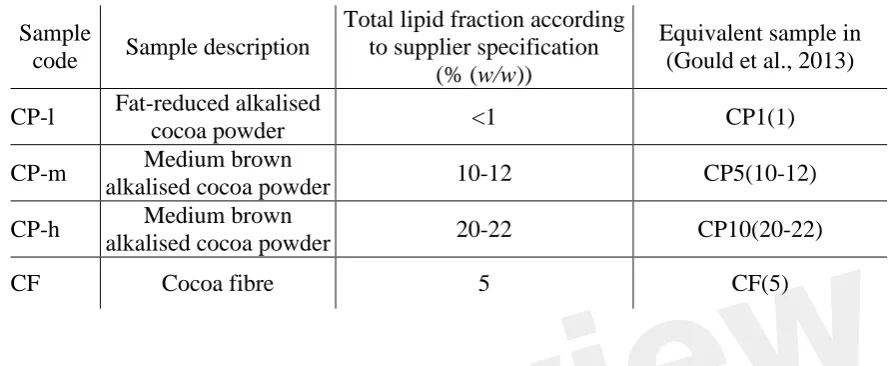
42
respect to proteins and surfactants, as their energy of desorption from the interface
43
is several orders of magnitude higher than in the case of proteins and surfactants
44
(Hunter et al., 2008, Aveyard et al., 2003). Thus, coalescence and Ostwald
45
2
ripening are less favoured, imparting prolonged microstructure stability which in
46
turn increases the shelf-life of edible emulsion based consumer goods. This
47
property also facilitates formation of stable multiple emulsions, a system that is
48
sought-after for low fat food formulations (Dickinson, 2011, Lobato-Calleros et
49
al., 2008), and for the encapsulation of bioactive species for targeted release
50
(McClements, 2015, Lamba et al., 2015). An additional attraction of formulating
51
food emulsions with particulate material is that artificial surfactants are not
52
required. However, to date, the application has been limited due to the scarcity of
53
food grade particulate emulsifier ingredients.
54 55
Recently, we demonstrated that o/w emulsions comprising only sunflower oil,
56
water and a particulate material from several parts of the Theobroma cacao bean
57
showed no evidence of emulsion instability in form of droplet coalescence (≥100
58
days) or free oil (≥2 years) (Gould et al., 2013) for storage periods well above the
59
requirements of most emulsion based manufactured foods. While the use of food
60
grade particles is an obvious requirement for application in the food industry,
61
cocoa particles are not only food grade but can be classified as natural
62
emulsifying food particles as there is no requirement for chemical modification to
63
impart emulsifying ability. This is in contrast to hydrophobised starches (Yusoff
64
and Murray, 2011); the only particulate emulsifier ingredient applied in the food
65
industry to date.
66 67
The efficacy of cocoa material as an emulsifier (Gould et al., 2013) raises the
68
question of which molecular species is/are responsible for it. It has been
69
understood for some time that cocoa comprises up to around 0.4% (w/w)
70
phospholipids (Parsons et al., 1969, Knapp, 1937). Phospholipids, as a class of
71
biomolecules, are well-established emulsifying and surface-active agents in the
72
context of food (Pichot et al., 2013, Singh et al., 2009, Guzey and McClements,
73
2006). The presence of such species in this quantity is consistent with the
74
commonly used food emulsifier lecithin, which contains a mixture of
75
phospholipids, and can drive the formation of o/w emulsions at concentrations as
76
low as 0.5% (w/w) (Pan et al., 2002). The presence of these species in all of the
77
cocoa material therefore led us to the hypothesis that the cocoa material used
78
previously (Gould et al., 2013) was an emulsifying agent because of the presence
79
of phospholipids.
80 81
In order to determine the contribution of such endogenous lipids to the kinetic
82
stability of the microstructure of o/w emulsions with cocoa material, the
83
phospholipid fraction of four different types of cocoa was profiled using 31P
84
NMR. Surface tension and emulsion assays were used to determine the interfacial
85
functionality of both the untreated and the delipidified cocoa material and, by
86
comparison, indicate what contribution non-lipid species make to the emulsifying
87
power of cocoa material.
88 89
Materials and methods 90
Cocoa material 91
Cocoa powders (CPs) were a gift from Barry Callebaut (Banbury, Oxfordshire,
92
UK) and cocoa fibre (CF) was donated by Food Ingredient Technology (Sandy,
93
Bedfordshire, UK). Data including the total lipid content are given in Table 1.
94
3
The samples codes used in a previous study are included for comparison (Gould et
95
al., 2013).
96 97
Lipid extraction 98
Extraction solvents (petroleum ether, chloroform, ethanol and triethlyamine) were
99
HPLC grade (Sigma-Aldrich, Gillingham, Dorset, UK) and used without further
100
purification. CUBO solvent for NMR was prepared freshly before use following
101
published protocol (Bosco et al., 1997, Culeddu et al., 1998, Cremonini et al.,
102
2004) using guanidinium chloride (Fisher scientific, Loughborough, UK),
103
deuteriated dimethylformamide (d7-DMF) (Sigma-Aldrich, Gillingham, Dorset,
104
UK) and triethlyamine. NMR tubes were obtained from Wilmad (Vineland, NJ,
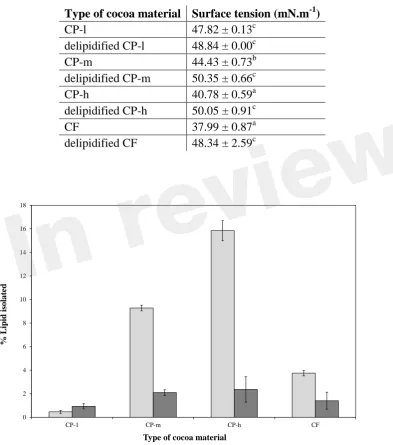
105
USA). To extract the triglyceride fraction, a 50 g sample of cocoa was mixed with
106
petroleum ether (300 mL) and agitated (1 h at 4 °C). The remaining solid was
107
isolated by centrifugation (11,400 × g, 1 h, 4 °C; J2-21M Induction Drive
108
Centrifuge, Beckman, High Wycombe, Buckinghamshire, UK). The solid was
re-109
suspended in CET (Furse et al., 2013, Furse et al., 2015a) (chloroform: ethanol:
110
triethylamine, 3:1:1, 300 mL) and agitated (1 h at 4 °C) to extract the
111
phospholipid fraction. The organic solutions were concentrated to dryness
112
separately under reduced pressure. The solids were suspended in CET for a
113
second time, agitated and dried; however no further lipid was extracted. All traces
114
of solvent were removed by drying the delipidified cocoa (40 °C, 4 days, Vacuum
115
Oven, Weiss Gallenkamp, Leicester, UK). Three independent extractions were
116
carried out for each type of cocoa material.
117 118
Profiling of lipid fractions 119
Lipid isolates (80 mg) were dissolved in 200 µL CUBO solvent and after agitation
120
centrifuged at 21,100 × g for 30 min at 4 °C (Heraeus Fresco 21 Microcentrifuge,
121
Thermo Corporation, Waltham, USA). The organic solution was then transferred
122
to a 5 mm NMR tube and diluted (CUBO solvent, overall sample volume 500
123
µL). The 31P NMR spectra were obtained from a Brucker AV400 spectrometer
124
(Brucker, Coventry, UK). The phospholipids were identified using the reported
125
shifts of phosphorous resonances (Bosco et al., 1997, Culeddu et al., 1998,
126
Cremonini et al., 2004), which were 5.12 ppm for phosphatidic acid (PA), 1.25
127
ppm and 1.21 ppm for phosphatidylglycerol (PG), 1.07 ppm for
128
phosphatidylinositol (PI), 0.48 ppm and 0.44 ppm for lyso-phosphatidylcholine
129
(LPC) and phosphatidylcholine (PC) was calibrated to 0.00 ppm.
130 131
Emulsion preparation 132
The oil phase of the emulsions consisted of commercially available sunflower oil
133
(J Sainsbury Plc, London, UK) and double distilled water. Surface active
134
impurities present in sunflower oil were removed by adding magnesium silicate
135
(4% (w/w), Sigma-Aldrich, Dorset, UK) followed by stirring (30 min, 600 rpm,
136
RCT Basic, IKA – Werke GmbH & Co, Staufen, Germany). The magnesium
137
silicate was removed by centrifugation (2,700 × g, 30 min, Jouan CR3i
138
multifunction Centrifuge, Thermo Fisher Scientific, Massachusetts, USA).
139
Absence of surface active molecules in the purified oil was confirmed by
140
measuring interfacial tension against water using the pendant drop technique (see
141
method below) verifying that interfacial tension at 20°C was constant at a value of
142
27.3 mN.m-1 ± 1.5 mN.m-1. It remained unchanged for at least 29 days of storage
143
at room temperature in the dark which was the longest storage period for purified
144
4
oil used for emulsion preparation in this study. Sodium azide (Sigma-Aldrich,
145
Gillingham, Dorset, UK) was added as anti-microbial agent to all aqueous
146
emulsion phases at a final concentration of 0.02% (w/w). Emulsions (o/w, 20%
147
(w/w) oil) were produced on a 100 g scale. Water (75.2 g) and cocoa material
148
(4.8 g) were placed in a glass beaker (250 mL) and mixed briefly by hand to
149
produce an aqueous dispersion of 6% (w/w) cocoa material. Sunflower oil (20 g)
150
was added to the dispersion prior to homogenisation using a high shear overhead
151
mixer (L5M Series fitted with emulsor screen, Silverson, Chesham, Hertfordshire,
152
UK) operating at 8,000 rpm for 2 min.
153 154
Characterisation of emulsions 155
Particle size analysis was used to assess the coalescence stability of the emulsions;
156
no significant increase in droplet size over the storage period deemed a stable
157
emulsion in this study. Size distributions of prepared emulsions were measured
158
with a low angle laser diffraction particle size analyser (LS 13 320, Beckman
159
Coulter, High Wycombe, UK) fitted with an aqueous dispersion cell (Universal
160
liquid module, LS13 320, Beckman Coulter, High Wycombe, Buckinghamshire,
161
UK). Data was analysed using the Fraunhofer approximation optical model from
162
the instrument’s software. Graphical representations of the surface area based
163
mean, d3,2,are presented. Three independent measurements of each sample were
164
used to calculate the values given.
165 166
Interfacial tension and surface tension measurement 167
A drop shape tensiometer (PAT-1, Sinterface, Berlin, D) was used to quantify
168
interfacial tension and surface tension of samples. Interfacial tension measurement
169
was used to confirm the absence of surface active impurities in the oil, whereas
170
the surface tension of the aqueous dispersions of cocoa material was used to
171
assess the contribution of the lipid fraction to the surface activity of cocoa. All
172
measurements were taken at 20 °C and values recorded for 600 s after drop
173
formation. The values reported in the results section represent an average of the
174
equilibrium surface tension, recorded at 600 s. Three independent measurements
175
of each sample were used. For interfacial tension measurement at the purified
176
sunflower oil/water interface a straight capillary with a diameter of 2 mm (outer
177
diameter) was used to dose a water drop of 35 mm3 constant volume into the oil
178
phase contained in a quartz glass cuvette. The surface tension of aqueous
179
dispersions of 6% (w/w) cocoa material was measured using the same straight
180
capillary and constant drop volume of 35 mm3. Due to the low surface tension of
181
the 6% (w/w) aqueous dispersion of cocoa fibre the volume of the droplet was
182
reduced to 25 mm3 for this sample. It was previously verified that reducing the
183
droplet volume did not change the result.
184 185
Statistical analysis 186
Mean droplet size and standard deviation are reported based on three independent
187
samples. Whether or not significant increases in emulsion droplet diameter
188
occurred over storage was determined using an ANOVA and Tukey’s statistical
189
test was carried out. In order to compare the mean droplet diameter of emulsions
190
stabilised by the same type of cocoa material either untreated or delipidified, a
t-191
Test was used to assess difference between the two samples. The level of
192
significance was set at p = 0.05 for both statistical tests.
193
5 Results
194
The cocoa used in this study reflected the cocoa material from different parts of
195
the cocoa bean, and different treatments during isolation. The latter represent the
196
range of sizes of the lipid fraction in commercially available cocoa and are low,
197
medium and high lipid and denoted CP-l, CP-m and CP-h, respectively. The
198
fourth cocoa material is powdered cocoa fibre (CF).
199 200
Endogenous lipid composition 201
A sequential extraction approach (Furse et al., 2015a) was adopted in order to
202
separate the triglyceride (TG) fraction and the phospholipid (PL) fractions clearly.
203
This approach has been shown to remove more than 99.99% of the TGs and thus
204
gives practically no contamination of the PL fraction (Furse et al., 2013). The
205
triglyceride fraction of the cocoa materials was therefore isolated using petroleum
206
ether, after which the PL fraction was isolated using the CET solvent system
207
(Furse et al., 2013) The size of the TG and PL fractions was assessed
208
gravimetrically (Figure 1) and the profile of the PL fraction determined using31P
209
NMR spectroscopy (Figure 2).
210 211
The overall size of phospholipid fraction of the cocoa varied between 0.9% (w/w)
212
and 2.4% (w/w) for the CP/s with the lowest (CP-l) and the highest (CP-h) lipid
213
content, respectively.
214 215
31
P NMR spectroscopy showed that the same five phospholipids PA, PG, PI, LPC
216
and PC are present in all cocoa material, regardless of lipid content or origin
217
(Figure 2). Signals were identified using literature values for chemical shift (Furse
218
et al., 2013, Furse et al., 2015a, Murgia et al., 2003). Phosphatidyl ethanolamine
219
and phosphatidyl serine have been previously identified in cocoa beans (Parsons
220
et al., 1969) but were not found in the cocoa material tested in this study.
221 222
The relative proportions of the phospholipids were determined by integrating the
223
resonances of the different phosphorus environments. This indicated the
224
composition of the phospholipid fraction of each cocoa material (Figure 3).
225
Phosphatidylcholine (PC) dominated in each type of cocoa material. Not all of the
226
signals could be identified, however, unidentified signals contributed less than
227
10% of the total phospholipid for the cocoa powders. 31P NMR spectra of all
228
samples showed additional peaks at chemical shifts of 0.18 ppm and 0.7 ppm. The
229
peak at 0.75 ppm may be evidence for the presence of cardiolipin (Culeddu et al.,
230
1998), which was present in a much higher concentration for CF (24%). The
231
unknown signals (0.18, 1.4, 3.7 and 4.8 ppm) may be ascribed to small molecules,
232
e.g. glycerol phosphate. Inorganic phosphates such as sodium phosphate, and
233
pyrophosphates such as ADP can be ruled out as they do not dissolve in the
234
solvent system used to disperse lipids samples for NMR spectroscopy. Full
235
structural determination is required for unambiguous identification of these
236
phosphorylated species.
237 238
Characterisation of the emulsifying ability of delipidified cocoa material 239
All types of delipidified cocoa material stabilised o/w emulsions. Figure 4 shows
240
that there was no significant increase in droplet size of the emulsions stabilised
241
with untreated or delipidified cocoa material measured over 100 days of storage at
242
20 °C (p<0.05). In addition there was no evidence of a coalesced oil layer after 2
243
6
years of storage at 20 °C. This indicates that the removal of lipid did not affect the
244
coalescence stability of cocoa stabilised o/w emulsions.
245 246
While none of the emulsions showed coalescence, in the case of the cocoa
247
powders with medium and high lipid content (CP-m and CP-h, respectively) the
248
removal of the lipid fraction had a significant impact on the mean droplet
249
diameter of the emulsions. In both cases it was significantly lower following lipid
250
extraction compared to the mean diameter of the emulsions prepared with the
251
original cocoa material (p=0.01 and p=0.02, respectively). As emulsion droplet
252
size has a linear relationship with the size of the particles stabilising the interface
253
(Binks and Lumsdon, 2001), the particle size of the cocoa material was evaluated.
254
Particle size measurement of the cocoa material, shown in Table 2, confirms that
255
lipid extraction caused a significant reduction in particle size of cocoa materials
256
CP-m and CP-h. There was no significant change in particle size of CP-1 or CF.
257 258
Surface tension of delipidified cocoa material 259
The surface tension of the aqueous dispersions of the four cocoa materials was
260
measured to assess whether the phospholipid fraction contributes to the interfacial
261
activity of cocoa as phospholipids are known to facilitate emulsion formation by
262
reducing the interfacial tension. The surface tension of the aqueous dispersion of
263
the cocoa material analysed after 600 s are shown in Table 3.
264 265
These data indicate that lipid extraction significantly decreased the surface tension
266
of the cocoa material except in the case of the cocoa powder with the smallest
267
proportion of lipid (CP-l). Surface tension measurements of the aqueous
268
dispersions of the cocoa material indicated that the phospholipids contribute to the
269
surface activity of the dispersions as removal of the lipid fraction decreased the
270
surface tension.
271 272
Discussion 273
In this study the contribution of the endogenous lipid of cocoa material was
274
evaluated with respect to the emulsifying ability of cocoa. The phospholipid
275
fraction, quantified by mass after extraction using organic solvents, was consistent
276
with supplier specifications and removal of the entire lipid fraction from the cocoa
277
material. Notably, the phospholipid fraction (0.9 – 2.4% (w/w)) was higher than
278
the 0.3% - 0.4% (w/w) previously reported for cocoa beans (Parsons et al., 1969,
279
Knapp, 1937). However, the techniques used previously were based on
280
chromatographic rather than spectroscopic methods and thus did not produce
281
structural data to support identification of the compounds present. The
282
comparative advantage of the 31P NMR spectroscopy is that it is a high resolution,
283
quantitative technique that gives structural data. Furthermore, the method used to
284
isolate the lipid fraction in the current study was designed to isolate lipids with a
285
variety of head groups. Earlier methods were less general (Furse et al., 2015a,
286
Rydhag and Wilton, 1981). This may be why previously unreported
287
phosphorylated species (unknown species, Figure 3) were observed.
288 289
31
P NMR spectroscopy of the cocoa indicated the presence of phospholipids in all
290
types of cocoa material tested with five well-known phospholipids (PA, PG, PI,
291
LPC and PC) identified in all samples. The proportion of each of phospholipid
292
varied between the types of cocoa material although PC was the major
293
7
phospholipid (25 – 57% (w/w)) in all samples. The same high concentration of
294
PC was previously reported for cocoa beans where PC was found to contribute
295
36% – 40% of the total phospholipid (Parsons et al., 1969). The presence of PC
296
was of particular interest as PCs are a major component of lecithin; a commonly
297
used emulsifier (Whittinghill et al., 2000, Pichot et al., 2013).
298 299
The contribution of the (whole) lipid fraction to the emulsifying ability of the
300
cocoa material was quantified by a comparison of the emulsions generated by
301
cocoa before and after extraction of the lipid fractions. All four cocoa materials
302
were found to be able to stabilise an o/w emulsion after lipid extraction. There
303
was no significant increase in emulsion droplet diameter over a period of 100 days
304
which indicates that emulsions were stable to droplet coalescence. Lipid
305
extraction did affect the droplet size of two of the emulsion samples prepared
306
from cocoa materials of originally medium and high lipid content. This may be
307
ascribed to the change in the size distribution of the cocoa material to smaller
308
diameters following lipid extraction, as shown in Table 2, as smaller particle
309
diameters are known to enable stabilisation of smaller droplets (Binks and
310
Lumsdon, 2001, Luo et al., 2011). The shift in size distribution of the particles
311
may be due to removal of surface lipid that promotes particle aggregation.
312 313
The role of the lipid fraction on the interfacial properties of commercially
314
available cocoa material was quantified by analysis of the surface tension of
315
aqueous dispersions of both untreated and delipidified cocoa material. We found
316
that the lipid present in cocoa contributed to the surface activity of the dispersions.
317
This is consistent with the established behaviour of phospholipid as a surfactant.
318
However, extracting the lipids decreased the surface tension to values comparable
319
to the cocoa powder with the originally smallest lipid fraction, (CP-l), which was
320
still capable of driving the formation of an emulsion. The aqueous dispersions of
321
delipidified cocoa material were still surface active which may explain why
322
emulsions could be formed by the delipidified cocoa. However, the stability of
323
particle stabilised emulsions is not reliant upon particle adsorption at the interface
324
impacting the interfacial tension as dispersions with known emulsifying ability
325
have been shown not to decrease interfacial tension (Rana et al., 2012, Tzoumaki
326
et al., 2011).
327 328
Conclusion 329
The evidence from this study indicates that several phospholipids found in lecithin
330
and other known surfactant mixtures are present in cocoa material. Crucially,
331
there is evidence that the formation of o/w emulsions based on cocoa material is
332
not only driven by these molecules but also by other biomolecules that do not
333
dissolve in organic solvents or water. This observation raises a number of
334
questions. Naturally, what this component is and how it works are important but
335
also where else such components are found and how they may be developed for
336
commercial use. Further research is required to characterise this emulsifier
337
properly. Cocoa is a heterogeneous material containing lipids, polyphenol,
338
proteins, starch and lignin, all of which have known emulsifying ability. We
339
suggest that the next step in elucidating the behaviour of these systems is to
340
evaluate role of these components on the emulsifying ability of the cocoa
341
material. The results of such a study would shape efforts in identifying other
342
8
naturally occurring material with emulsifying ability as well as preparing
343
emulsifying material from natural material.
344 345
Conflict of Interest 346
The authors declare that the research was conducted in the absence of any
347
commercial or financial relationships that could be construed as a potential
348
conflict of interest.
349 350
Acknowledgements 351
The authors would like to thank BBSRC (BB/I532602/1) and Nestlé PTC York
352
for the financial support.
353 354
Author Contributions 355
BW wrote the original grant proposal. JG and BW conceived the research project
356
and designed surface tension experiments. JG carried out all surface tension
357
experiments and isolated lipid samples. SF supervised lipid isolation, ran NMR
358
spectroscopy experiments and analysed NMR data. JG drafted the manuscript; all
359
authors were involved in revising it; BW and SF supervised its preparation. All
360
authors (JG, BW, SF) have approved and are accountable for the final version of
361
the manuscript submitted.
362 363
References 364
AVEYARD, R., BINKS, B. P. & CLINT, J. H. 2003. Emulsions stabilised solely by 365
colloidal particles. Advances in Colloid and Interface Science, 100, 503-546. 366
BERTON-CARABIN, C. C. & SCHROËN, K. 2015. Pickering Emulsions for Food 367
Applications: Background, Trends, and Challenges. Annual review of food science 368
and technology, 6, 263-297. 369
BINKS, B. P. & LUMSDON, S. O. 2001. Pickering emulsions stabilized by 370
monodisperse latex particles: Effects of particle size. Langmuir, 17, 4540-371
4547. 372
BOSCO, M., CULEDDU, N., TOFFANIN, R. & POLLESELLO, P. 1997. Organic 373
solvent systems for P-31 nuclear magnetic resonance analysis of lecithin 374
phospholipids: Applications to two-dimensional gradient-enhanced H-1-375
detected heteronuclear multiple quantum coherence experiments. Analytical 376
Biochemistry, 245, 38-47. 377
CREMONINI, M. A., LAGHI, L. & PLACUCCI, G. 2004. Investigation of 378
commercial lecithin by P-31 NMR in a ternary CUBO solvent. Journal of the 379
Science of Food and Agriculture, 84, 786-790. 380
CULEDDU, N., BOSCO, M., TOFFANIN, R. & POLLESELLO, P. 1998. P-31 381
NMR analysis of phospholipids in crude extracts from different sources: 382
improved efficiency of the solvent system. Magnetic Resonance in Chemistry, 36,
383
907-912. 384
DICKINSON, E. 2011. Double Emulsions Stabilized by Food Biopolymers. Food 385
Biophysics, 6, 1-11. 386
DICKINSON, E. 2012. Use of nanoparticles and microparticles in the formation 387
and stabilization of food emulsions. Trends in Food Science & Technology, 24, 4-388
12. 389
FURSE, S., EGMOND, M. R. & KILLIAN, J. A. 2015a. Isolation of lipids from 390
biological samples. Molecular membrane biology, 32, 55-64. 391
FURSE, S., LIDDELL, S., ORTORI, C., WILLIAMS, H., NEYLON, D. C., 392
SCOTT, D., BARRETT, D. & GRAY, D. 2013. The lipidome and proteome 393
9
of oil bodies from Helianthus annuus (common sunflower). Journal of Chemical 394
Biology, 6, 63-76. 395
FURSE, S., WIENK, H., BOELENS, R., DE KROON, A. I. P. M. & KILLIAN, J. 396
A. 2015b. E. coli MG1655 modulates its phospholipid composition through 397
the cell cycle. FEBS Letters, 589, 2726-2730. 398
GOULD, J., VIEIRA, J. & WOLF, B. 2013. Cocoa particles for food emulsion 399
stabilisation. Food & Function, 4, 1369-1375. 400
GUZEY, D. & MCCLEMENTS, D. J. 2006. Formation, stability and properties of 401
multilayer emulsions for application in the food industry. Advances in Colloid 402
and Interface Science, 128–130, 227-248. 403
HUNTER, T. N., PUGH, R. J., FRANKS, G. V. & JAMESON, G. J. 2008. The role 404
of particles in stabilising foams and emulsions. Advances in Colloid and Interface 405
Science, 137, 57-81. 406
KNAPP, A. W. 1937. Cacao Fermentation London John Bale, Sons & Curnow Ltd 407
LAM, S., VELIKOV, K. P. & VELEV, O. D. 2014. Pickering stabilization of foams 408
and emulsions with particles of biological origin. Current Opinion in Colloid & 409
Interface Science, 19, 490-500. 410
LAMBA, H., SATHISH, K. & SABIKHI, L. 2015. Double Emulsions: Emerging 411
Delivery System for Plant Bioactives. Food and Bioprocess Technology, 8, 709-728. 412
LOBATO-CALLEROS, C., SOSA-PÉREZ, A., RODRÍGUEZ-TAFOYA, J., 413
SANDOVAL-CASTILLA, O., PÉREZ-ALONSO, C. & VERNON-414
CARTER, E. J. 2008. Structural and textural characteristics of reduced-fat 415
cheese-like products made from W1/O/W2 emulsions and skim milk. LWT - 416
Food Science and Technology, 41, 1847-1856. 417
LUO, Z., MURRAY, B. S., YUSOFF, A., MORGAN, M. R. A., POVEY, M. J. W. & 418
DAY, A. J. 2011. Particle-Stabilizing Effects of Flavonoids at the Oil-Water 419
Interface. Journal of Agricultural and Food Chemistry, 59, 2636-2645. 420
MCCLEMENTS, D. J. 2015. Encapsulation, protection, and release of hydrophilic 421
active components: Potential and limitations of colloidal delivery systems. 422
Advances in Colloid and Interface Science, 219, 27-53. 423
MURGIA, S., MELE, S. & MONDUZZI, M. 2003. Quantitative characterization of 424
phospholipids in milk fat via 31P NMR using a monophasic solvent mixture. 425
Lipids, 38, 585-591. 426
PAN, L. G., TOMAS, M. C. & ANON, M. C. 2002. Effect of sunflower lecithins on 427
the stability of water-in-oil and oil-in-water emulsions. Journal of Surfactants and 428
Detergents, 5, 135-143. 429
PARSONS, J. G., KEENEY, P. G. & PATTON, S. 1969. Identification and 430
quantitative analysis of phospholipids in cocoa beans Journal of Food Science, 431
34, 497-&. 432
PICHOT, R., WATSON, R. L. & NORTON, I. T. 2013. Phospholipids at the 433
interface: current trends and challenges. International journal of molecular sciences, 434
14, 11767-11794. 435
RANA, S., YU, X., PATRA, D., MOYANO, D. F., MIRANDA, O. R., HUSSAIN, 436
I. & ROTELLO, V. M. 2012. Control of Surface Tension at Liquid-Liquid 437
Interfaces Using Nanoparticles and Nanoparticle-Protein Complexes. 438
Langmuir, 28, 2023-2027. 439
RYDHAG, L. & WILTON, I. 1981. The function of phospholipids of soybean 440
lecithin in emulsions. Journal of the American Oil Chemists’ Society, 58, 830-837. 441
SINGH, H., YE, A. & HORNE, D. 2009. Structuring food emulsions in the 442
gastrointestinal tract to modify lipid digestion. Progress in Lipid Research, 48,
443
92-100. 444
10
TZOUMAKI, M. V., MOSCHAKIS, T., KIOSSEOGLOU, V. & BILIADERIS, C. 445
G. 2011. Oil-in-water emulsions stabilized by chitin nanocrystal particles. 446
Food Hydrocolloids, 25, 1521-1529. 447
WHITTINGHILL, J. M., NORTON, J. & PROCTOR, A. 2000. Stability 448
determination of soy lecithin-based emulsions by Fourier transform infrared 449
spectroscopy. Journal of the American Oil Chemists' Society, 77, 37-42. 450
YUSOFF, A. & MURRAY, B. S. 2011. Modified starch granules as particle-451
stabilizers of oil-in-water emulsions. Food Hydrocolloids, 25, 42-55. 452
453 454
11
Table 1: Cocoa material investigated for impact of lipid composition on emulsifying ability. The sample code signifies whether the cocoa material is a cocoa powder (CP) or a cocoa fibre (CF) with the lipid content indicated for the CP/s as l = low, m = medium and h = high. The second column shows the sample coding used in previous work (Gould et al., 2013).
Sample
code Sample description
Total lipid fraction according to supplier specification
(% (w/w))
Equivalent sample in (Gould et al., 2013)
CP-l Fat-reduced alkalised
cocoa powder <1 CP1(1)
CP-m Medium brown
alkalised cocoa powder 10-12 CP5(10-12)
CP-h Medium brown
alkalised cocoa powder 20-22 CP10(20-22)
CF Cocoa fibre 5 CF(5)
Table 2: Particle size (d3,2) of aqueous dispersions of untreated and
delipidified cocoa material. CP-l, m and h indicates the low, medium and high lipid content of the original cocoa powders respectively. The effect of lipid extraction on particle size was statistically tested per cocoa material type. The presence of an asterisk (*) indicates the particle size of the delipidified material was significantly different (p<0.05) to the untreated material. Differences between the types of cocoa material were not evaluated.
Type of cocoa material Particle size (d3,2) (μm)
untreated delipidified
CP-l 9.58 ± 0.24 9.90 ± 0.37 CP-m 10.58 ± 0.13 8.02 ± 0.76* CP-h 13.66 ± 1.03 8.27 ± 0.31*
CF 16.87 ± 0.57 18.28 ± 1.69
[image:13.595.73.518.166.349.2]12
Table 3: Surface tension of aqueous dispersions of untreated and delipidified cocoa material. CP-l, m and h indicate the low, medium and high lipid content of the original cocoa powders respectively. Mean surface tension values after 600 s of measurement at 20 °C are presented. The different letters represent a significant difference (p<0.05).
Type of cocoa material Surface tension (mN.m-1)
CP-l 47.82 ± 0.13c
delipidified CP-l 48.84 ± 0.00c
CP-m 44.43 ± 0.73b
delipidified CP-m 50.35 ± 0.66c
CP-h 40.78 ± 0.59a
delipidified CP-h 50.05 ± 0.91c
CF 37.99 ± 0.87a
[image:14.595.105.499.177.623.2]delipidified CF 48.34 ± 2.59c
Figure 1: Relative sizes of the phospholipid and triglyceride fractions of four cocoa materials. The percentage of lipid recovered was based on initial dry sample weight and the triglyceride (TAG, ) and phospholipid ( ) proportions of the lipid recovered are shown. CP-l, m and h indicate the low, medium and high lipid content of the original cocoa powders, respectively. The error bars represent standard deviation.
0 2 4 6 8 10 12 14 16 18
CP-1 CP-m CP-h CF
%
Lipid
iso
la
ted
Type of cocoa material
13
Figure 2: 31P NMR spectra of the phospholipid fraction of the cocoa lipid extracts acquired by CET (chloroform, ethanol and triethylamine) solvent extraction. The identity of the phospholipids was established using reported shifts of phosphorous resonances for phosphatidic acid (PA),
phosphatidylglycerol (PG), phosphatidylinositol (PI), lyso
-phosphatidylcholine (LPC) and -phosphatidylcholine (PC). Assignments made by assigning the PC resonance to 0·00 ppm and measuring the relative shift of each resonance and comparing with literature values (Furse et al., 2013, Cremonini et al., 2004, Furse et al., 2015b). CP-l, m and h indicate the low, medium and high lipid content of the original cocoa powders respectively.
ppm
S _ F U R . J O G - 5 2 3 - C U B O . 0 0 1 . 0 0 1 . 1 R . e s p
5.5 5.0 4.5 4.0 3.5 3.0 2.5 2.0 1.5 1.0 0.5 0 -0.5
Chemic al Shif t (ppm) 0.1 0.2 0.3 0.4 0.5 0.6 0.7 0.8 0.9 N o rm a li z e d I n te n s it y
8 4 ( 3 ) . E S P
5.5 5.0 4.5 4.0 3.5 3.0 2.5 2.0 1.5 1.0 0.5 0
Chemic al Shif t (ppm) -0.1 0 0.1 0.2 0.3 0.4 0.5 0.6 0.7 0.8 0.9 1.0 N o rm a li z e d I n te n s it y
S A M P L E 1 1 R E P L I C A T E 3 . E S P
5.5 5.0 4.5 4.0 3.5 3.0 2.5 2.0 1.5 1.0 0.5 0
Chemic al Shif t (ppm) 0 0.1 0.2 0.3 0.4 0.5 0.6 0.7 0.8 0.9 N o rm a li z e d I n te n s it y
C O C O A F I B R E R E P L I C A T E 1 . E S P
5.5 5.0 4.5 4.0 3.5 3.0 2.5 2.0 1.5 1.0 0.5 0
14
Figure 3: Profiling of phospholipid fraction of four cocoa materials using 31P NMR. Abbreviations: Phosphatidic acid (PA), Phosphatidylglycerol (PG),
Phosphatidylinositol (PI), Lyso-phosphatidylcholine (LPC) and
Phosphatidylcholine (PC). The contribution of the total phospholipid which was not identified is presented by the chemical shift (ppm). CP-l, m and h indicate the low, medium and high lipid content of the original cocoa powders respectively. Error bars denote standard deviation.
0 10 20 30 40 50 60 70
%
o
f
T
o
tal
pho
spho
lipid
Phospholipid
CP-1 CP-m CP-h CF
PA PI PG LPC PC 0.18 0.7 PA PI PG LPC PC 0.18 0.7 PA PI PG LPC PC 0.18 PA PI PG LPC PC 0.18 0.7 1.4 3.7 4.8
15
Figure 4: Droplet diameter of emulsions stabilised with untreated and delipidified cocoa material measured after 1 day ( ), 53 days ( ) and 100 days ( ) of storage at 20 °C. CP-l, m and h indicate the low, medium and high lipid content of the original cocoa powders respectively. The error bars denote standard deviation.
0 1 2 3 4 5 6 7 8 9 10
CP-1 Delipidified CP-1
CP-m Delipidified CP-m
CP-h Delipidified CP-h
CF Delipidified CF
d3
,2 (µm
)
Type of cocoa material