An Improved MDL-Based Compression Algorithm for
Unsupervised Word Segmentation
Ruey-Cheng Chen National Taiwan University
1 Roosevelt Rd. Sec. 4 Taipei 106, Taiwan
Abstract
We study the mathematical properties of a recently proposed MDL-based unsuper-vised word segmentation algorithm, called regularized compression. Our analysis shows that its objective function can be efficiently approximated using the nega-tive empirical pointwise mutual informa-tion. The proposed extension improves the baseline performance in both efficiency and accuracy on a standard benchmark.
1 Introduction
Hierarchical Bayes methods have been main-stream in unsupervised word segmentation since the dawn of hierarchical Dirichlet process (Gold-water et al., 2009) and adaptors grammar (Johnson and Goldwater, 2009). Despite this wide recog-nition, they are also notoriously computational prohibitive and have limited adoption on larger corpora. While much effort has been directed to mitigating this issue within the Bayes frame-work (Borschinger and Johnson, 2011), many have found minimum description length (MDL) based methods more promising in addressing the scalability problem.
MDL-based methods (Rissanen, 1978) rely on underlying search algorithms to segment the text in as many possible ways and use description length to decide which to output. As differ-ent algorithms explore differdiffer-ent trajectories in the search space, segmentation accuracy depends largely on the search coverage. Early work in this line focused more on existing segmentation algo-rithm, such as branching entropy (Tanaka-Ishii, 2005; Zhikov et al., 2010) and bootstrap voting ex-perts (Hewlett and Cohen, 2009; Hewlett and Co-hen, 2011). A recent study (Chen et al., 2012) on a compression-based algorithm, regularized com-pression, has achieved comparable performance result to hierarchical Bayes methods.
Along this line, in this paper we present a novel extension to the regularized compressor algorithm. We propose a lower-bound approximate to the original objective and show that, through analy-sis and experimentation, this amendment improves segmentation performance and runtime efficiency.
2 Regularized Compression
The dynamics behind regularized compression is similar to digram coding (Witten et al., 1999). One first breaks the text down to a sequence of char-acters (W0) and then works from that
represen-tation up in an agglomerative fashion, iteratively removing word boundaries between the two se-lected word types. Hence, a new sequence Wi
is created in the i-th iteration by merging all the
occurrences of some selected bigram(x, y)in the original sequence Wi−1. Unlike in digram
cod-ing, where the most frequent pair of word types is always selected, in regularized compression a spe-cialized decision criterion is used to balance com-pression rate and vocabulary complexity:
min. −αf(x, y) +|Wi−1|∆ ˜H(Wi−1, Wi)
s.t. eitherxoryis a character f(x, y)> nms.
Here, the criterion is written slightly differ-ently. Note that f(x, y) is the bigram fre-quency,|Wi−1|the sequence length ofWi−1, and
∆ ˜H(Wi−1, Wi) = ˜H(Wi)−H˜(Wi−1)is the
dif-ference between the empirical Shannon entropy measured onWi andWi−1, using maximum
like-lihood estimates. Specifically, this empirical esti-mateH˜(W)for a sequenceW corresponds to:
log|W| − 1 |W|
X
x:types
f(x) logf(x).
For this equation to work, one needs to estimate other model parameters. See Chen et al. (2012) for a comprehensive treatment.
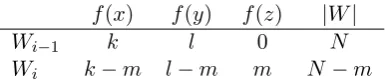
f(x) f(y) f(z) |W|
Wi−1 k l 0 N
[image:2.595.85.278.62.104.2]Wi k−m l−m m N −m
Table 1: The change between iterations in word frequency and sequence length in regularized compression. In the new sequence Wi, each
oc-currence of thex-ybigram is replaced with a new
(conceptually unseen) wordz. This has an effect of reducing the number of words in the sequence.
3 Change in Description Length
The second term of the aforementioned objective is in fact an approximate to the change in descrip-tion length. This is made obvious by coding up a sequenceW using the Shannon code, with which
the description length ofW is equal to|W|H˜(W). Here, the change in description length between se-quencesWi−1 andWiis written as:
∆L=|Wi|H˜(W)− |Wi−1|H˜(Wi−1). (1)
Let us focus on this equation. Suppose that the original sequence Wi−1 is N-word long, the
se-lected word type pairxandyeach occurskandl
times, respectively, and altogetherx-ybigram
oc-curs mtimes inWi−1. In the new sequence Wi,
each of the m bigrams is replaced with an
un-seen wordz=xy. These altogether have reduced the sequence length bym. The end result is that
compression moves probability masses from one place to the other, causing a change in descrip-tion length. See Table 1 for a summary to this exchange.
Now, as we expand Equation (1) and reorganize the remaining, we find that:
∆L= (N−m) log(N−m)−NlogN
+klogk−(k−m) log(k−m) +llogl−(l−m) log(l−m) + 0 log 0−mlogm
(2)
Note that each line in Equation (2) is of the form
x1logx1 −x2logx2 for some x1, x2 ≥ 0. We exploit this pattern and derive a bound for ∆L
through analysis. Considerg(x) = xlogx. Since g00(x)>0forx≥0, by the Taylor series we have the following relations for anyx1, x2≥0:
g(x1)−g(x2)≤(x1−x2)g0(x1), g(x1)−g(x2)≥(x1−x2)g0(x2).
Plugging these into Equation (2), we have:
mlog(k−m)(l−m)
N m ≤∆L≤ ∞. (3)
The lower bound1 at the left-hand side is a
best-case estimate. As our aim is to minimize∆L, we
use this quantity to serve as an approximate.
4 Proposed Method
Based on this finding, we propose the following two variations (see Figure 1) for the regularized compression framework:
• G1: Replacing the second term in the
origi-nal objective with the lower bound in Equa-tion (3). The new objective funcEqua-tion is writ-ten out as Equation (4).
• G2: Same asG1except that the lower bound
is divided by f(x, y) beforehand. The nor-malized lower bound approximates the per-word change in description length, as shown in Equation (5). With this variation, the func-tion remains in a scalarized form as the orig-inal does.
We use the following procedure to compute de-scription length. Given a word sequenceW, we
write out all the induced word types (say,M types in total) entry by entry as a character sequence, de-noted asC. Then the overall description length is:
|W|H˜(W) +|C|H˜(C) + M−1
2 log|W|. (6) Three free parameters,α,ρ, andnmsremain to
be estimated. A detailed treatment on parameter estimation is given in the following paragraphs. Trade-off α This parameter controls the
bal-ance between compression rate and vocabulary complexity. Throughout this experiment, we es-timated this parameter using MDL-based grid search. Multiple search runs at different granular-ity levels were employed as necessary.
Compression rate ρ This is the minimum
threshold value for compression rate. The com-pressor algorithm would go on as many iteration as possible until the overall compression rate (i.e., 1Sharp-eyed readers may have noticed the similarity
be-tween the lower bound and the negative (empirical) point-wise mutual information. In fact, whenf(z)>0inWi−1, it
can be shown thatlimm→0∆L/mconverges to the empirical
G1 ≡f(x, y)
log(f(x)−f(x, y))(f(y)−f(x, y))
|Wi−1|f(x, y) −
α
(4)
G2 ≡ −αf(x, y) + log
(f(x)−f(x, y))(f(y)−f(x, y))
[image:3.595.321.510.181.290.2]|Wi−1|f(x, y) (5)
Figure 1: The two newly-proposed objective functions.
word/character ratio) is lower thanρ. Setting this
value to 0 forces the compressor to go on until no more can be done. In this paper, we exper-imented with predetermined ρ values as well as
those learned from MDL-based grid search. Minimum supportnms We simply followed the
suggested settingnms= 3(Chen et al., 2012).
5 Evaluation
5.1 Setup
In the experiment, we tested our methods on Brent’s derivation of the Bernstein-Ratner cor-pus (Brent and Cartwright, 1996; Bernstein-Ratner, 1987). This dataset is distributed via the CHILDES project (MacWhinney and Snow, 1990) and has been commonly used as a standard bench-mark for phonetic segmentation. Our baseline method is the original regularized compressor al-gorithm (Chen et al., 2012). In our experiment, we considered the following three search settings for finding the model parameters:
(a) Fixρto 0 and varyαto find the best value (in
the sense of description length);
(b) Fix α to the best value found in setting (a)
and varyρ;
(c) Set ρ to a heuristic value 0.37 (Chen et al., 2012) and varyα.
Settings (a) and (b) can be seen as running a stochastic grid searcher one round for each param-eter2. Note that we tested (c) here only to compare
with the best baseline setting.
5.2 Result
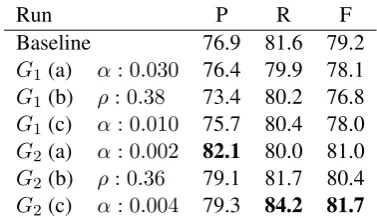
Table 2 summarizes the result for each objective and each search setting. The best (α, ρ) pair for 2A more formal way to estimate bothαandρis to run
a stochastic searcher that varies between settings (a) and (b), fixing the best value found in the previous run. Here, for simplicity, we leave this to future work.
Run P R F
Baseline 76.9 81.6 79.2
G1 (a) α: 0.030 76.4 79.9 78.1
G1 (b) ρ: 0.38 73.4 80.2 76.8 G1 (c) α: 0.010 75.7 80.4 78.0 G2 (a) α: 0.002 82.1 80.0 81.0
G2 (b) ρ: 0.36 79.1 81.7 80.4 G2 (c) α: 0.004 79.3 84.2 81.7
Table 2: The performance result on the Bernstein-Ratner corpus. Segmentation performance is mea-sured using word-level precision (P), recall (R), and F-measure (F).
G1 is (0.03, 0.38) and the best for G2 is (0.002,
0.36). On one hand, the performance ofG1is
con-sistently inferior to the baseline across all settings. Although approximation error was one possible cause, we noticed that the compression process was no longer properly regularized, sincef(x, y) and the∆Lestimate in the objective are
intermin-gled. In this case, adjustingα has little effect in
balancing compression rate and complexity. The second objective G2, on the other hand,
did not suffer as much from the aforementioned lack of regularization. We found that, in all three settings, G2 outperforms the baseline by 1 to 2
percentage points in F-measure. The best perfor-mance result achieved byG2in our experiment is
81.7 in word-level F-measure, although this was obtained from search setting (c), using a heuristic
ρ value 0.37. It is interesting to note thatG1 (b)
andG2 (b) also gave very close estimates to this
heuristic value. Nevertheless, it remains an open issue whether there is a connection between the optimalρ value and the true word/token ratio (≈ 0.35 for Bernstein-Ratner corpus).
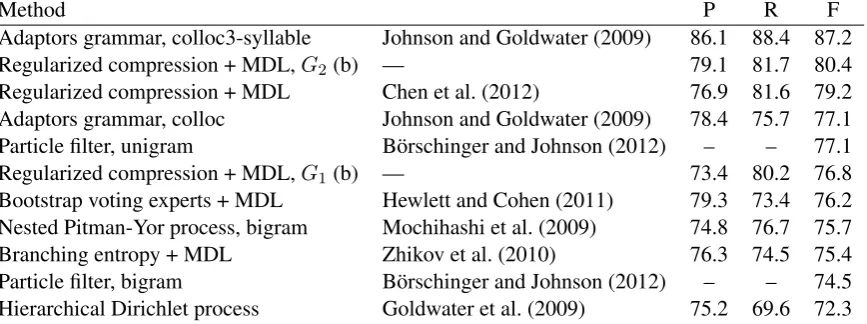
effec-Method P R F Adaptors grammar, colloc3-syllable Johnson and Goldwater (2009) 86.1 88.4 87.2
Regularized compression + MDL,G2(b) — 79.1 81.7 80.4
Regularized compression + MDL Chen et al. (2012) 76.9 81.6 79.2
Adaptors grammar, colloc Johnson and Goldwater (2009) 78.4 75.7 77.1
Particle filter, unigram B¨orschinger and Johnson (2012) – – 77.1
Regularized compression + MDL,G1(b) — 73.4 80.2 76.8
Bootstrap voting experts + MDL Hewlett and Cohen (2011) 79.3 73.4 76.2
Nested Pitman-Yor process, bigram Mochihashi et al. (2009) 74.8 76.7 75.7
Branching entropy + MDL Zhikov et al. (2010) 76.3 74.5 75.4
Particle filter, bigram B¨orschinger and Johnson (2012) – – 74.5
[image:4.595.86.520.64.226.2]Hierarchical Dirichlet process Goldwater et al. (2009) 75.2 69.6 72.3
Table 3: The performance chart on the Bernstein-Ratner corpus, in descending order of word-level F-measure. We deliberately reproduced the results for adaptors grammar and regularized compression. The other measurements came directly from the literature.
tive. In our experiment, search setting (b) won out on description length for both objectives, while the best performance was in fact achieved by the others. It would be interesting to confirm this by studying the correlation between description length and word-level F-measure.
In Table 3, we summarize many published re-sults for segmentation methods ever tested on the Bernstein-Ratner corpus. Of the proposed meth-ods, we include only setting (b) since it is more general than the others. From Table 3, we find that the performance ofG2 (b) is competitive to other
state-of-the-art hierarchical Bayesian models and MDL methods, though it still lags 7 percentage points behind the best result achieved by adap-tors grammar with colloc3-syllable. We also com-pare adaptors grammar to regularized compressor on average running time, which is shown in Ta-ble 4. On our test machine, it took roughly 15 hours for one instance of adaptors grammar with colloc3-syllable to run to the finish. Yet an im-proved regularized compressor could deliver the result in merely 1.25 second. In other words, even in an100×100grid search, the regularized com-pressor algorithm can still finish 4 to 5 times ear-lier than one single adaptors grammar instance.
6 Concluding Remarks
In this paper, we derive a new lower-bound ap-proximate to the objective function used in the regularized compression algorithm. As computing the approximate no longer relies on the change in lexicon entropy, the new compressor algorithm is made more efficient than the original. Besides
run-Method Time (s)
Adaptors grammar, colloc3-syllable 53826
Adaptors grammar, colloc 10498
Regularized compressor 1.51
Regularized compressor,G1(b) 0.60
Regularized compressor,G2(b) 1.25
Table 4: The average running time in seconds on the Bernstein-Ratner corpus for adaptors grammar (per fold, based on trace output) and regularized compressors, tested on an Intel Xeon 2.5GHz 8-core machine with 8GB RAM.
time efficiency, our experiment result also shows improved performance. Using MDL alone, one proposed method outperforms the original regu-larized compressor (Chen et al., 2012) in preci-sion by 2 percentage points and in F-measure by 1. Its performance is only second to the state of the art, achieved by adaptors grammar with colloc3-syllable (Johnson and Goldwater, 2009).
A natural extension of this work is to repro-duce this result on some other word segmenta-tion benchmarks, specifically those in other Asian languages (Emerson, 2005; Zhikov et al., 2010). Furthermore, it would be interesting to investigate stochastic optimization techniques for regularized compression that simultaneously fit bothαandρ.
We believe this would be the key to adapt the al-gorithm to larger datasets.
Acknowledgments
References
Nan Bernstein-Ratner. 1987. The phonology of parent child speech. Children’s language, 6:159–174.
Benjamin Borschinger and Mark Johnson. 2011. A particle filter algorithm for bayesian word segmen-tation. InProceedings of the Australasian Language Technology Association Workshop 2011, pages 10– 18, Canberra, Australia, December.
Benjamin B¨orschinger and Mark Johnson. 2012. Us-ing rejuvenation to improve particle filterUs-ing for bayesian word segmentation. InProceedings of the 50th Annual Meeting of the Association for Com-putational Linguistics (Volume 2: Short Papers), pages 85–89, Jeju Island, Korea, July. Association for Computational Linguistics.
Michael R. Brent and Timothy A. Cartwright. 1996. Distributional regularity and phonotactic constraints are useful for segmentation. InCognition, pages 93– 125.
Ruey-Cheng Chen, Chiung-Min Tsai, and Jieh Hsiang. 2012. A regularized compression method to unsu-pervised word segmentation. InProceedings of the Twelfth Meeting of the Special Interest Group on Computational Morphology and Phonology, SIG-MORPHON ’12, pages 26–34, Montreal, Canada. Association for Computational Linguistics.
Thomas Emerson. 2005. The second international chi-nese word segmentation bakeoff. InProceedings of the Fourth SIGHAN Workshop on Chinese Language Processing, volume 133. Jeju Island, Korea.
Sharon Goldwater, Thomas L. Griffiths, and Mark Johnson. 2009. A bayesian framework for word segmentation: Exploring the effects of context.
Cognition, 112(1):21–54, July.
Daniel Hewlett and Paul Cohen. 2009. Bootstrap vot-ing experts. InProceedings of the 21st international jont conference on Artifical intelligence, IJCAI’09, pages 1071–1076, San Francisco, CA, USA. Mor-gan Kaufmann Publishers Inc.
Daniel Hewlett and Paul Cohen. 2011. Fully unsuper-vised word segmentation with BVE and MDL. In
Proceedings of the 49th Annual Meeting of the Asso-ciation for Computational Linguistics: Human Lan-guage Technologies: short papers - Volume 2, HLT ’11, pages 540–545, Portland, Oregon. Association for Computational Linguistics.
Mark Johnson and Sharon Goldwater. 2009. Im-proving nonparameteric bayesian inference: exper-iments on unsupervised word segmentation with adaptor grammars. InProceedings of Human Lan-guage Technologies: The 2009 Annual Conference of the North American Chapter of the Association for Computational Linguistics, NAACL ’09, pages 317–325, Boulder, Colorado. Association for Com-putational Linguistics.
Brian MacWhinney and Catherine Snow. 1990. The child language data exchange system: an update.
Journal of child language, 17(2):457–472, June.
Daichi Mochihashi, Takeshi Yamada, and Naonori Ueda. 2009. Bayesian unsupervised word segmen-tation with nested Pitman-Yor language modeling. In Proceedings of the Joint Conference of the 47th Annual Meeting of the ACL and the 4th International Joint Conference on Natural Language Processing of the AFNLP: Volume 1 - Volume 1, ACL ’09, pages 100–108, Suntec, Singapore. Association for Com-putational Linguistics.
Jorma Rissanen. 1978. Modeling by shortest data de-scription. Automatica, 14(5):465–471, September.
Kumiko Tanaka-Ishii. 2005. Entropy as an indica-tor of context boundaries: An experiment using a web search engine. In Robert Dale, Kam-Fai Wong, Jian Su, and Oi Kwong, editors,Natural Language Processing IJCNLP 2005, volume 3651 ofLecture Notes in Computer Science, chapter 9, pages 93– 105. Springer Berlin / Heidelberg, Berlin, Heidel-berg.
Ian H. Witten, Alistair Moffat, and Timothy C. Bell. 1999. Managing gigabytes (2nd ed.): compressing and indexing documents and images. Morgan Kauf-mann Publishers Inc., San Francisco, CA, USA. Valentin Zhikov, Hiroya Takamura, and Manabu