University of Warwick institutional repository: http://go.warwick.ac.uk/wrap
This paper is made available online in accordance with publisher policies. Please scroll down to view the document itself. Please refer to the repository record for this item and our policy information available from the repository home page for further information.
To see the final version of this paper please visit the publisher’s website. Access to the published version may require a subscription.
Author(s): Phra Nicholas Thanissaro
Article Title: Measuring attitude towards Buddhism and Sikhism: internal consistency reliability for two new instruments
Year of publication: 2011 Link to published article:
http://dx.doi.org/10.1080/13674676.2010.523891
Acknowledgements
The author would like to thank Dr. Mandy Robbins (Senior Research Fellow at Warwick Religions and Education Research Unit) who supervised the original research. Special thanks are also due to Revd. Prof. Leslie J. Francis for encouraging the present author to publish his dissertation findings.
Measuring attitude towards Buddhism and Sikhism: internal consistency
reliability for two new instruments
Phra Nicholas Thanissaro
Postgraduate Student: Warwick Religions and Education Research Unit
Abstract
This paper describes and discusses the development and empirical properties of two new 24-item scales – one measuring attitude toward Buddhism and the other measuring attitude toward Sikhism. The scale is designed to facilitate inter-faith comparisons within the psychology of religion alongside the well-established Francis Scale of Attitude toward Christianity. Data were obtained from a multi-religious sample of 369 school pupils aged between 13 and 15 in London. Application of the two scales demonstrated that adolescents had a more positive attitude to Buddhism than Sikhism. The findings confirm the reliability of the scales and commend them for further use.
Keywords
Introduction
The effort to model the religious sphere of life has led to the development of over 125
measurement scales for religiosity (Hill & Hood 1999). Since the majority of these
measures have been grounded in Christianity alone, it cannot be assumed that they
would apply equally to Buddhismor Sikhism. Some of the scales of attitude to religion
seem more readily applicable to non-Christian religions than others. One style of
attitude measure which has proved valid and reliable for religiosity in Christianity
(Francis 1978), Hinduism (Francis et al. 2008), Islam (Sahin & Francis 2002) and
Judaism (Francis & Katz 2007) is that of the Francis Scale of Attitude toward
Christianity (FSAC). In brief, it has employed attitude questions on religious values
using a five-point Likert scale, to yield a score of between the extremes of 24 (negative
attitude) and 120 (positive attitude). The design generally includes reverse-coded
questions to control for mechanical ticking by respondents. The practicality of the
FSAC has been in its assumption of unidimensionality of religiosity rather than
focussing on other dimensions of religious life such as frequency of worship. Thus,
although Christianity has some degree of internal diversity, FSAC has managed to
overcome this in practice to allow, for example, experimental control for religiosity in
comparison of values between the Catholic and Protestant communities in Northern
Ireland (Greer & Francis 1992).
A FSAC-equivalent scale has not yet been developed for either Buddhist or Sikh
religiosity. If Buddhist or Sikh religiosity were to be measured, it is not clear whether
the internal diversity problems could be overcome with the same ease as for previously
researched religions, because for Buddhism issues of internal diversity seem particularly
challenging (Gombrich 1996) – and the same appears to be true of Sikhism in the UK
(Lall 1999; Nesbitt 2009, 47).
Quantitative measurement of Buddhist religiosity has, however, already been
psychology, part of the Thai language testing of the Tennessee Self-Concept Scale
(TSCS) involved comparison of TSCS factors and the Lifestyle Index (LSI) with an
arbitrarily (i.e. without any scriptural or researched basis) constructed eleven-question
schedule of Buddhist beliefs and practices (Emavardhana & Tori 1997; Tori 2004, 41)
which could be construed as a measure of Buddhist religiosity. Buddhist religiosity has
recently been analysed qualitatively in terms of its sources, beliefs, practices, positive
consequences and prognosis of future benefits (Yeung & Chow 2010). Furthermore,
Buddhist religiosity has been taken into account in psychiatric contexts (Scotton 1998),
alcohol abuse (Assanangkornchai et al. 2002), moral training (Pupatana 2000),
psychosocial change (Thananart 2000), psychoanalytic defence mechanisms (Tori &
Bilmes 2002), psychological therapy (de_Silva 1996) and learning English as a foreign
language (Adamson 2003). Smith and Kay designed (2000, 190) and ascertained
reliability of a sixteen-question, FSAC-equivalent scale for Buddhism but did not
validate it against degree of Buddhist practice (Kay & Smith 2002).
For Sikhism, measures of religiosity have already been employed in several
academic disciplines. Smith and Kay designed (2000, 189) a sixteen-question,
FSAC-equivalent scale for Sikhism in their research on how classroom factors affected
Religious Education (Kay & Smith 2002) but did not validate it against degree of Sikh
observance. However, a scale of ‘Sikh-ness’ has been described qualitatively in
ethnographic studies (Nesbitt 1999, 319). Comparisons between the attitudes of young
Sikhs and adolescents of other or no religious affiliation have been made by Alan Smith
(2002; 2006), Francis (2001) and Francis and Robbins (2005, 186-193).
Given the ethnological maxim that interpretations made about religious identity
ought to be acceptable to insiders of that religion (Cantwell-Smith 1981, 97), part of the
brief of this research was to explore quantitative methods of measuring attitude to
Buddhism and Sikhism acceptable to outsiders as well as insiders of those religions.
5
UK adolescents, whether reliable scales of Buddhist and Sikh religiosity could be
constructed in a way comparable to those of previously researched religions.
Method
Sample
Research was undertaken upon a convenience sample of 369 young people – 237 boys
and 132 girls – aged between 13 and 15 years attending London schools. Ethnically the
sample consisted of 150 whites (41%), 103 blacks (30%), 58 Asians (16%), 41 of mixed
race (11%) and 7 Chinese (2%). The religious composition of the sample was 149
Christians (41%), 120 of no religion (33%), 45 Moslems (12%), 17 Hindus (5%), 15
Buddhists (4%), 5 Sikhs (1%), 3 Jews (1%) and 13 of other religions (4%). Of the
pupils in the sample, 49% had studied Buddhism and 43% had studied Sikhism in their
Religious Education lessons of the past year.
Instrument
A multi-purpose survey (detail of the survey can be found in Thanissaro 2010, 184-191)
was deployed as part of a wider research project. The survey contained biographical
questions adapted from Francis’s (2001) adolescent values inventory and48 Likert
five-point response scale: strongly agree, agree, not certain, disagree and disagree strongly.
Attitude questions focussed on Buddhist and Sikh values adapted from previous
qualitative and quantitative adolescent attitudes research in the UK (Nesbitt 2000; Kay
& Smith 2002; Thanissaro 2011).
Procedure & Analysis
Three schools volunteered their participation in response to a circular letter from their
local Standing Advisory Council on Religious Education. Surveys were delivered to
participating schools in the quantities they required and administered to pupils by Year
classes in the period January and February 2010. In keeping with constraints of ethical
approval non-consenting pupils had the option of destroying their questionnaires after
completion instead of submitting them and completed surveys were kept anonymous to
protect participants from having their views traced back to them. The resulting dataset
was analyzed by means of the SPSS statistical package (SPSS_Inc. 1988) using the
reliability routine and a non-parametric test of related samples.
Results
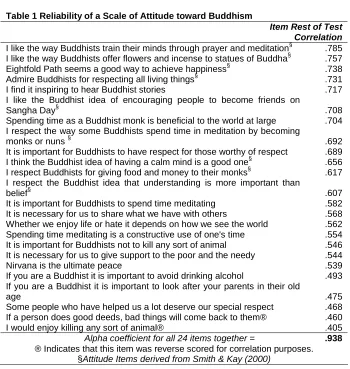
[image:7.595.120.470.281.650.2]Scale of Attitude toward Buddhism
Table 1 Reliability of a Scale of Attitude toward Buddhism
Item Rest of Test Correlation
I like the way Buddhists train their minds through prayer and meditation§ .785 I like the way Buddhists offer flowers and incense to statues of Buddha§ .757 Eightfold Path seems a good way to achieve happiness§ .738 Admire Buddhists for respecting all living things§ .731 I find it inspiring to hear Buddhist stories .717 I like the Buddhist idea of encouraging people to become friends on
Sangha Day§ .708
Spending time as a Buddhist monk is beneficial to the world at large .704 I respect the way some Buddhists spend time in meditation by becoming
monks or nuns § .692
It is important for Buddhists to have respect for those worthy of respect .689 I think the Buddhist idea of having a calm mind is a good one§ .656 I respect Buddhists for giving food and money to their monks§ .617 I respect the Buddhist idea that understanding is more important than
belief§ .607
It is important for Buddhists to spend time meditating .582 It is necessary for us to share what we have with others .568 Whether we enjoy life or hate it depends on how we see the world .562 Spending time meditating is a constructive use of one's time .554 It is important for Buddhists not to kill any sort of animal .546 It is necessary for us to give support to the poor and the needy .544
Nirvana is the ultimate peace .539
If you are a Buddhist it is important to avoid drinking alcohol .493 If you are a Buddhist it is important to look after your parents in their old
age .475
Some people who have helped us a lot deserve our special respect .468 If a person does good deeds, bad things will come back to them® .460 I would enjoy killing any sort of animal® .405 Alpha coefficient for all 24 items together = .938 ® Indicates that this item was reverse scored for correlation purposes.
§Attitude Items derived from Smith & Kay (2000)
The study was able to verify the internal consistency of a new Scale of Attitude toward
Buddhism using the usual measures of reliability (Cronbach 1951; DeVellis 1991).
Cronbach’s alpha coefficient for all 24 items of Buddhist attitude together was .938,
7
acceptability since Kline indicates that an alpha-coefficient of over .8 is acceptable in
psychological testing (1999) – and the score also offers a modest improvement on the
reliability of the 16-item scale of Sikhism developed by Smith and Kay (2000, 189)
which achieved an overall alpha-coefficient of .8138, even though the 24-item scale
described here shares a third of their question items. Table 1 shows the contributing
reliabilities for each item, arranged in decreasing order of reliability.
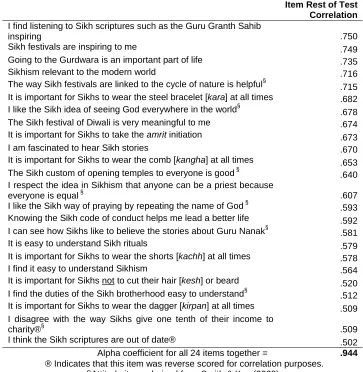
[image:8.595.104.467.284.656.2]Scale of Attitude toward Sikhism
Table 2 Reliability of Scale of Attitude toward Sikhism
Item Rest of Test Correlation
I find listening to Sikh scriptures such as the Guru Granth Sahib
inspiring .750
Sikh festivals are inspiring to me .749
Going to the Gurdwara is an important part of life .735
Sikhism relevant to the modern world .716
The way Sikh festivals are linked to the cycle of nature is helpful§ .715 It is important for Sikhs to wear the steel bracelet [kara] at all times .682 I like the Sikh idea of seeing God everywhere in the world§ .678 The Sikh festival of Diwali is very meaningful to me .674 It is important for Sikhs to take the amrit initiation .673
I am fascinated to hear Sikh stories .670
It is important for Sikhs to wear the comb [kangha] at all times .653 The Sikh custom of opening temples to everyone is good § .640 I respect the idea in Sikhism that anyone can be a priest because
everyone is equal § .607
I like the Sikh way of praying by repeating the name of God § .593 Knowing the Sikh code of conduct helps me lead a better life .592 I can see how Sikhs like to believe the stories about Guru Nanak§ .581
It is easy to understand Sikh rituals .579
It is important for Sikhs to wear the shorts [kachh] at all times .578
I find it easy to understand Sikhism .564
It is important for Sikhs not to cut their hair [kesh] or beard .520 I find the duties of the Sikh brotherhood easy to understand§ .512 It is important for Sikhs to wear the dagger [kirpan] at all times .509 I disagree with the way Sikhs give one tenth of their income to
charity®§ .509
I think the Sikh scriptures are out of date® .502 Alpha coefficient for all 24 items together = .944 ® Indicates that this item was reverse scored for correlation purposes.
§Attitude items derived from Smith & Kay (2000)
The study was also able to verify the internal consistency of a new Scale of Attitude
toward Sikhism. Cronbach’s alpha coefficient for all 24 items of Sikh attitude together
was .944, with item-total reliabilities ranging from .502 to .750 – also well within the
reliability of the 16-item scale of Sikhism developed by Smith and Kay (2000, 190)
which achieved an overall alpha-coefficient of .8431, even though the 24-item scale
described here shares half of their question items. Table 2 shows the contributing
reliabilities for each item, arranged in decreasing order of reliability.
Comparison of Attitudes between Buddhism and Sikhism
As an example of how the scales can be applied, comparisons were made by a
Wilcoxon Signed Ranks Test, between the pupils attitudes to Buddhism as compared
with Sikhism. On the Buddhist attitude scale, scores were found to be significantly
more positive (mean=78.78) than scores on the Sikh scale of attitude (mean=71.50, z =
-7.30, p<.000).
Discussion
Two 24-item scales of attitude – one for Buddhism and one for Sikhism – with
satisfactory levels of reliability are commended here for further use. They offer an
improvement on the reliability of previous measures of Buddhist and Sikh religiosity,
including aspects of identity thought important by adherents of those religions while
avoiding religious jargon to the extent they are accessible for completion by
respondents who are outsiders to those religions.
Although the two scales were developed in parallel, some caution may be attached to
interpreting the significant difference between attitudes reported by participants since it
can still not be guaranteed that the two scales are equal in their ability to tap into the
features considered by insiders most central to their particular faith. For the Buddhist
scale, much more than for the Sikhism scale, it was possible to word questions in terms
less explicit to that religion, thereby finding more compatibility with outsiders’ own
points of view. It is possible that a more favourable attitude to Sikhism would be
9
Before generalizing the results of this research, it should be borne in mind, at this
stage, that validity of the scales of attitude to Buddhism and Sikhism for tests of
religiosity can still not be assumed – and similarly, in the absence of further testing,
reliability across a broader age range than the 13-15 year-old target group can still not
be guaranteed. It would be recommended that the two 24-item scales be further tested in
comparison between much larger samples of Buddhist/Sikh adolescents and a control
group – and across a wider age-range. Such further testing should include
cross-correlation for gender, age and religious involvement to verify validity of this scale in a
way the sample of the present study has not allowed. It would also be instructive to
make correlations between this Buddhist measure and scales of self-compassion (Neff
2003) and mindfulness (e.g. Lau et al. 2006).
References
Adamson, J. (2003). Challenging beliefs in teacher development: potential influences of Theravada Buddhism upon Thais learning English, Asian EFL Journal, 5, 1-21. Assanangkornchai, S., Conigrave, K.M. & Saunders, J.B. (2002). Religious beliefs and
practice and alcohol use in Thai men, Alcohol and Alcoholism, 37, 193-197. Cantwell-Smith, W. (1981). Towards a World Theology: Faith and the Comparative
History of Religion. Maryknoll, NY: Orbis.
Cronbach, L.J. (1951). Coefficient alpha and the internal structure of tests,
Psychometrika, 16, 297-334. doi:10.1007/BF02310555.
de_Silva, P. (1996). Buddhist psychology and implications for treatment In D. Bhugra (ed.). Psychiatry and Religion: Context, Consensus and Controversies. 112-124. London: Routledge.
DeVellis, R.F. (1991). Scale Development: Theory and applications (Vol. 26). London: Sage Publications.
Emavardhana, T. & Tori, C.D. (1997). Changes in self-concept, ego defense mechanisms and religiosity following seven-day Vipassana meditation retreats,
Journal for the Scientific Study of Religion, 36, 194-206.
Francis, L.J. (1978). Attitude and longitude: a study in measurement, Character
Potential: a record of research, 8, 119-130.
Francis, L.J. (2001). Religion and values: a quantitative perspective In L.J. Francis, J. Astley & M. Robbins (ed.). The Fourth R for the Third Millennium: Education
in Religion and Values for the Global Future. 47-78. Dublin: Lindisfarne.
Francis, L.J. & Katz, Y.J. (2007). Measuring attitude toward Judaism: the internal consistency reliability of the Katz-Francis Scale of Attitude toward Judaism,
Mental Health, Religion and Culture, 10, 309-324. doi:10.1080/13694670600668291.
Francis, L.J. & Robbins, M. (2005). Urban Hope and Spiritual Health: The Adolescent
Voice. Peterborough: Epworth.
Gombrich, R. (1996). Freedom and Authority in Buddhism In B. Gates (ed.). Freedom
and Authority in Religions and Religious Education. 10-17. London: Cassell.
Greer, J.E. & Francis, L.J. (1992). Measuring rejection of Christianity among 14-16-year-old adolescents in Catholic and Protestant schools in Northern Ireland,
Personality and Individual Differences, 13, 1345-1348.
doi:10.1016/0191-8869(92)90178-R.
Hill, P.C. & Hood, R.W. (1999). Measures of religiosity. Birmingham, AL: Religious Education Press.
Kay, W.K. & Smith, D.L. (2002). Classroom Factors and Attitude towards Six World Religions, British Journal of Religious Education, 24, 111-122.
Kline, P. (1999). The handbook of psychological testing. London: Routledge.
Lall, S. (1999). 'I Know who God is': A Study of Sikh Children's Spirituality within
Various Expressions of Sikhism. Oxford: Farmington Institute for Christian
Studies.
Lau, M.A., Bishop, S.R., Segal, Z.V., Buis, T., Anderson, N.D., Carlson, L., Shapiro, S., Carmody, J., Abbey, S. & Devins, G. (2006). The Toronto Mindfulness Scale: Development and Validation, Journal of Clinical Psychology, 62, 1445-1467. doi: 10.1002/jclp.20326.
Neff, K.D. (2003). The Development and Validation of a Scale to Measure Self-Compassion, Self and Identity, 2, 223-250. doi: 10.1080/15298860309027. Nesbitt, E. (1999). Sikhs and Proper Sikhs: The Representation of Sikhism in
Curriculum Books and Young British Sikhs' Perceptions of their Identity In P. Singh & N.G. Barrier (ed.). Sikh Identity: Continuity and Change. 315-334. New Delhi: Oxford University Press.
Nesbitt, E. (2000). The Religious Lives of Sikh Children: A Coventry Based Study. Leeds: Department of Theology & Religious Studies, University of Leeds. Nesbitt, E. (2009). Research Report: Studying the Religious Socialization of Sikh and
'Mixed-Faith' Youth in Britain: Contexts and Issues, Journal of Religion in
Europe, 2, 37-57. doi:10.1163/187489208X382901.
Pupatana, S. (2000). The Development of Peace through the Process of Morality,
Chung-Hwa Buddhist Journal, 13, 613-634.
Sahin, A. & Francis, L.J. (2002). Assessing attitude toward Islam among Muslim adolescents: the psychometric properties of the Sahin-Francis scale, Muslim
Education Quarterly, 19, 35-47.
Scotton, B.W. (1998). Treating Buddhist Patients In H.G. Koenig (ed.). Handbook of
Religion and Mental Health. 263-270. New York: Academic Press.
Smith, A.G.C. (2002). The Nature and Significance of Religion among Adolescents in
the Metropolitan Borough of Walsall. University of Wales, Bangor: unpublished
PhD dissertation.
Smith, A.G.C. (2006). Growing up in Multifaith Britain: explorations in youth, ethnicity
and religion. Cardiff: University of Wales Press.
Smith, D.L. & Kay, W.K. (2000). Religious Terms and Attitudes in the Classroom (Part 2), British Journal of Religious Education, 22, 181-191. doi:10.1080/0141620000220306.
SPSS_Inc. (1988). SPSS User's Guide, 2nd Edition. New York: McGraw-Hill.
Thananart, M. (2000). Longitudinal Study of Psychosocial Changes among Thai Adolescents participating in a Buddhist Ordination Program for Novices,
Adolescence, 35, 285-293.
Thanissaro, P.N. (2010). Religious Education and Attitudes to Buddhism & Sikhism. Unpublished MA Dissertation: University of Warwick.
Thanissaro, P.N. (2011). A preliminary assessment of Buddhism’s contextualisation to the English RE classroom, British Journal of Religious Education, 33, 61-74. Tori, C.D. (2004). Self-Representation in a Selfless Society: Reliability and Validity of
11
Tori, C.D. & Bilmes, M. (2002). Multiculturalism and Psychoanalytic Psychology: The Validation of a Defense Mechanisms Measure in an Asian Population,
Psychoanalytic Psychology, 19, 701-721.
Yeung, G.K.K. & Chow, W.-y. (2010). "To take up your own responsibility": the religiosity of Buddhist adolescents in Hong Kong, International Journal of