1 University of Twente
Bachelor Thesis
Relation between working memory capacity and frontal-midline theta
increase in the Sternberg Task
Student: Michelle Brinkmann
1788485
Bachelor Thesis
28th of June 2019
University of Twente
Faculty of Cognitive Psychology and Ergonomics
Subject: Psychology
Bachelor Thesis
Supervisor: Rob van der Lubbe
2
Abstract
The goal of this study was an investigation of the relationship between working
memory capacity and individual differences in frontal-midline theta. In dependence
on prior research, it was assumed that (1) frontal-midline theta power increases with
increasing memory load (n) on a working memory task and (2) that this increase
would only be visible for individuals with a high working memory capacity as
opposed to individuals with a low working memory capacity. In order to test these
hypotheses, the current study employed the Sternberg Task as a working memory task
and the OSPAN as a working memory capacity measurement in a similar approach as
Zakrzewska and Brzezicka (2014). Results did not yield support for both hypotheses.
Mental load was successfully manipulated, and mental effort induced by means of the
Sternberg Task with focus on retrieval and comparison processes. The mental effort
produced by these processes alone seemed not able to induce an increase in
frontal-midline theta from a lower to a higher load. These results might suppose a difference
in increase of frontal-midline theta for isolated mental processes and mixed mental
processes such as seemingly employed in the study of Zakrzewska and Brzezicka
(2014). Hence, mental effort might not only be manipulated by memory load (n) but
3
Introduction
Over the past century, science developed prominent models of cognition and gathered
evidence by means of behavioural and imaging data in numerous cases of cognitive
processes. Working memory represents one of these well-researched topics in which
working memory tasks are increasingly monitored with imaging techniques such as
Electroencephalography (EEG). However, these studies often leave aside the
individual differences found in imaging data and the implications that these might
have for understanding brain activity differences as individual traits. Hence, this study
focuses on the relationship between working memory, mental effort and individual
differences in frontal-midline theta and working memory capacity.
Working Memory and Mental Effort
Working memory (WM) represents a system of human cognition that enables
temporary storage and manipulation of information. In 1974, Baddeley and Hitch
proposed a prominent model for working memory in which the system is divided into
four components: the visuo-spatial sketchpad, the phonological loop, the central
executive, and the episodic buffer. While the visuo-spatial sketchpad and
phonological loop seem responsible for the temporary storage, rehearsal, and
maintenance of verbally and visually/spatially coded information, the central
executive coordinates both by controlling encoding, retrieval, attention, and the
mental manipulation of materials (Baddeley & Hitch, 1974). In 2000, Baddeley added
4
the visuo-spatial sketchpad, phonological loop, and long-term memory for attaining
one unified episodic representation.
The cognitive processes performed by the central executive - encoding,
retrieval, attention, and mental manipulation – have been monitored by means of
numerous EEG studies. These studies employ behavioral measurements such as the
n-back, Add-n, and Sternberg Task. All three represent working memory measurements
that induce mental effort by manipulating the memory load (n) of participants and
require the central executive to direct, divide, and monitor perception and attention
accordingly and properly. Task difficulty increases with increasing n in all three tasks.
In the n-back task (Kirchner, 1958) participants are presented with items sequentially
and need to indicate for each item if it matches the item n back in the sequence.
During the Add-n task (Kahneman & Beatty, 1966), participants are presented with a
four-digit number and need to add n to each individual digit. In the Sternberg Task
(Sternberg, 1969), participants are presented with a memory set consisting of a n-digit
number (e.g. one, two, or four digits), n letters, or n words and need to compare probe
items with the memory set that were part of the set (i.e. target) or not (i.e. non-target).
According to Sternberg (1969), the comparison process that is performed during this
task functions as a serial scanning process with increasing n leading to increasing
reaction times. Differences in reaction times for target and non-target probes are
explained in terms of self-terminating and exhaustive models, with self-terminating
models proposing a termination of serial scanning when the probe item was found in
the memory set and exhaustive models proposing no termination of serial scanning
until the whole memory set was compared with the probe item (Van Zandt &
Townsend, 1993). Since self-terminating models predict slopes of reaction times for
5
generally expected to be shorter than those for non-target trials during the Sternberg
Task (Van Zandt & Townsend, 1993).
All three – n-back, Add-n, and Sternberg Task – involve the maintenance of
items in working memory with the Add-n task thereafter requesting a mental
manipulation of the four maintained items and the n-back and Sternberg Task
requesting a comparison process of the probe item with the item n back in the
sequence or with the memory set of size n, respectively. However, the Sternberg Task
has an important advantage over the n-back and Add-n task for EEG studies:
Maintenance, retrieval and comparison processes are identified and separated in time
as they take place sequentially (Jensen, Gelfand, Kounios, & Lisman, 2002). Hence,
the current EEG study will focus on the Sternberg Task as a working memory task to
induce mental effort with focus on the retrieval and comparison process performed
with onset of the probe presentation.
Frontal-Midline Theta
Numerous EEG studies worked with the Sternberg Task so far and found
further consistent results concerning imaging data. Jensen and Tesche (2002) showed
that during the maintenance and recall phase of the Sternberg Task, the power of the
frontal-midline (4 to 8 Hz) theta frequency band increases systematically with
increasing memory load. Consequently, frontal-midline theta power was interpreted in
terms of active maintenance and serial search for information (Jensen & Tesche,
2002). These results have been replicated in numerous studies (e.g. Kamiński,
Brzezicka, & Wróbel, 2011; Maurer et al., 2015; Onton, Delorme, & Makeig, 2005;
6
during working memory tasks to be located at the anterior cingulate cortex (ACC) of
the prefrontal cortex (e.g. Onton, Delorme, & Makeig, 2005).
Individual Differences in Theta Increase
Zakrzewska and Brzezicka (2014) showed that the systematic increase in
frontal-midline theta (4 to 6 Hz) with increasing memory load can only be
demonstrated for individuals with a high working memory capacity. These scholars
investigated the matter by employing the Sternberg Task with a memory set
consisting of two to five digits, digits as the probe items, and a new memory set prior
to each single trial. Average reaction times did increase with a slope of b = 39.6 ms
from Load 2 to Load 5. Furthermore, Zakrzewska and Brzezicka (2014) divided the
participants in two groups according to their working memory capacity. The groups
were determined by administering the Operation Span (OSPAN) task, a task in which
participants are requested to solve mathematical computations while simultaneously
remembering items presented after each computation (Turner & Engle, 1989). As the
to-be-remembered (TBR) items, Zakrzewska and Brzezicka (2014) chose for single
letters. As reported by these scholars, frontal-midline theta power seems to indicate
individual working memory efficiency by marking the amount of information stored
as well as the effort for maintenance and efficiency of underlying neuronal processes.
Therefore, frontal-midline theta might represent an individual trait of working
memory efficiency leading to an increase in frontal-midline theta only for those with
7
Current Study
The goal of this study is an investigation of the relationship between working
memory capacity and individual differences in frontal-midline theta. In dependence
on prior research, two hypotheses were formulated. First, it was assumed that
frontal-midline theta power increases with increasing memory load (n) on a working memory
task. Second, it was hypothesised that the increase in frontal-midline theta power with
increasing memory load on a working memory task would only be visible for
individuals with a high working memory capacity as opposed to individuals with a
low working memory capacity.
In order to test these hypotheses, the current study will employ the Sternberg
Task as a working memory task and the OSPAN as a working memory capacity
measurement in a similar fashion as Zakrzewska and Brzezicka (2014). Increases in
frontal-midline theta power will be assessed by administering the Sternberg Task to
participants while monitoring their brain activity by means of EEG measurements.
Different from Zakrzewska and Brzezicka (2014), the current study utilises three
memory loads with one, two, or four items in one memory set to ensure an increase in
difficulty while decreasing mental fatigue caused by redundant measurements of
similar difficulty. Furthermore, one memory set needs to be maintained in working
memory for more than one trial to decrease the possibility of simple recognition
strategies and to ensure measurement of sequential retrieval and comparison
processes. To enable this approach, a repetitive counterbalancing of the three memory
loads (e.g. Load 2, Load 1, Load 4, Load 2, Load 1, Load 4) will be employed with
the order of loads determined beforehand. This will decrease training effects for one
8
memory set. The relationship between increases in frontal-midline theta power and
working memory capacity will be assessed by administering the OSPAN to
participants. Different from Zakrzewska and Brzezicka (2014), single digits instead of
single letters will be used as TBR items during the OSPAN. Thereby, the same format
(i.e. digits) for both the Sternberg Task and OSPAN will be ensured and differences in
working memory performance due to format minimised. Furthermore, mnemonic
strategies such as chunking of single letters should be impeded by the competing
digits of the mathematical computations. Different than Zakrzewska and Brzezicka
(2014), the current study employs less blocks for the OSPAN to decrease mental
fatigue and any influences for the subsequent Sternberg Task.
Methods
Participants
Twenty students (3 male, 17 female) were sampled at the University of Twente for a
voluntary participation in the study. In exchange for participation, students received
an incentive in form of 2.5 credits in the BMS Test Subject Pool system SONA. The
age of the participants ranged from 18 to 26 (M= 20.75, SD = 1.80) years. Students
were of German (n = 13), Dutch (n = 3), Bulgarian (n = 2), Latvian (n = 1), and Swiss
(n = 1) nationality. Eligibility was restricted to participants aged 18 and older without
cognitive impairments and free of any influences that might constrain cognitive
abilities at the time of the experiment. All participants gave informed consent. The
study was ethically approved by the BMS (Behavioural, Management, and Social
9
Stimuli and Procedure
Participants were assessed individually at the “RecogNice” laboratory of the
University of Twente. Each assessment took 2.5 hours with instructions given in
English. Prior to any measurement, each participant was informed about the purpose
of the study as well as asked to provide informed consent by signing a form and give
further information by filling in an EEG questionnaire (Appendix A). Thereafter, two
computerised tasks were assessed: The Operation Span (OSPAN) Task and the
Sternberg Task.
[image:9.595.98.504.428.647.2]Operation Span (OSPAN) Task
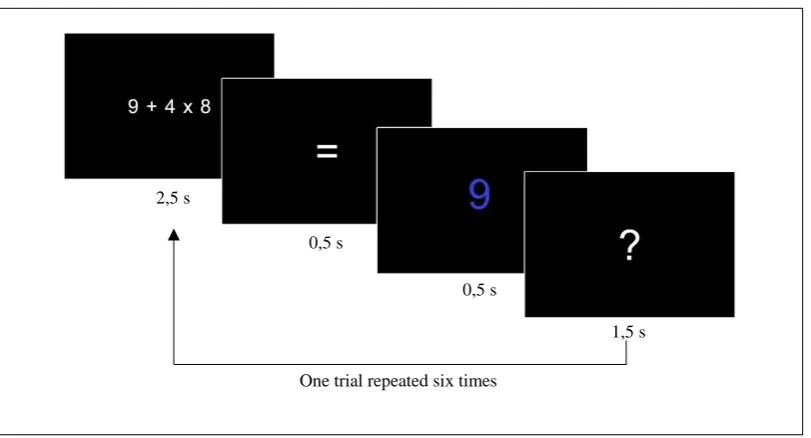
Figure 1. Depiction of one trial of the OSPAN task. Participants are shown a
mathematical computation for 2.5 s, followed by an equal sign (“=”) for 0.5 s, a blue
digit for 0.5 s and a question mark (“?”) for 1.5 s. One block consists of six trials.
0,5 s 2,5 s
0,5 s
1,5 s
10
Working memory capacity was measured with the OSPAN task as a .pptx file
displayed by executing Microsoft PowerPoint 2019 on a MacBook Pro with a macOS
Mojave system (Version 10.14) and 13-inch display. Responses were given verbally
and notated by the researcher. Digits were used as the TBR items (“Operations Digit”)
(Turner & Engle, 1989). Participants were shown one practice block of one trial and
two blocks of six trials consisting of operations alternating with blue digits presented
after the operations. Each operation was presented for 2.5 seconds and took the form
of mathematical equations following the structure 𝑋 +/− 𝑌 ÷ 𝑜𝑟 × 𝑍. Subsequently,
an equal sign (“=”) was shown for 0.5 seconds followed by a blue digit as the TBR
item presented for 0.5 seconds. Participants were instructed to verbally indicate for
every blue digit whether it was the solution to the antecedent operation or not while
being presented with a question mark (“?”) for 1.5 seconds. Furthermore, participants
were asked to remember the blue digits independent from their correctness or
incorrectness. After six trials (i.e. 30 seconds) the block was completed, and
participants were asked to verbally recall the blue digits as the TBR items in the
correct sequence. Generally, the OSPAN is a popular and widely used measurement
for working memory capacity (Unsworth, Heitz, Schrock, & Engle, 2005) with an
adequate internal consistency as shown by an α coefficient between .76 to .83 for
different scoring techniques (Đokić, Koso-Drljević, & Đapo, 2018). Hence, the
OSPAN used in this research should represent a valid and reliable measurement of
11 Sternberg Task
2000 ms Memory Set
Start
Maintenance 1500 ms
Probe Item
Retrieval Comparison
Response
1000 ms Fixation
Maintenance
[image:11.595.89.509.113.448.2]One trial repeated 20 times
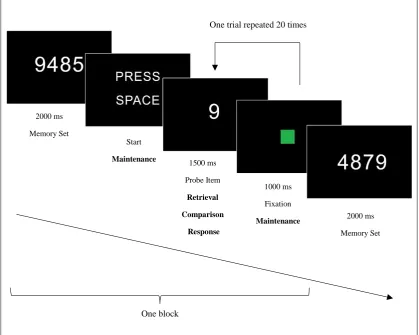
Figure 2. Depiction of Sternberg Task trial and block structure by means of a Load 4
block example. During one block, participants are presented with a memory set of size
n (Load 1, Load 2, Load 4) for 2000 ms. Participants start the first trial by pressing the
spacebar. Subsequently, they are presented with a probe item for 1500 ms. During this
period, they need to retrieve the memory set, compare the probe item with the memory
set and respond by pressing the right or left control key. Afterwards, a green fixation
dot is presented for 1000 ms. Probe item and fixation dot presentation are repeated 20
times. Thereafter, the block is completed, and the next memory set presented for 2000
ms.
2000 ms Memory Set
12
Mental effort was induced by means of the Sternberg Task. The task was administered
by executing the Presentation software by Neurobehavioral Systems Inc. on a
computer with a Windows 10 Enterprise system (executed in Windows Leanmode)
and 22-inch monitor used to control the presentation of stimuli and for sending
markers to the EEG amplifier to code the onset of relevant events. Responses were
given with a QWERTY keyboard by pressing the spacebar, enter, right or left control
keys.
In this task, participants are presented with a memory set of n digits and
required to memorise this set. Subsequently, probe items were shown to the
participants who had to decide whether the probe was part of the memory set (i.e.
target) or not (i.e. non-target). At the beginning of a block, participants were shown
the memory set for 2000 ms. Subsequently, they started the block by pressing an
adequate key and were presented with probe items at the centre of the screen for 1500
ms each, followed by a green fixation dot at the centre of the screen for 1000 ms each
(Figure 2). For every probe item, the participants were instructed to indicate whether
the item was part of the memory set by pressing the left or right control key. One
block consisted of 20 trials and each load (Load 1, Load 2, Load 4) included one
practice and two experimental blocks. Hence, participants were requested to fulfil
three blocks for each load and each load two times with the order of loads being
determined beforehand (e.g. Load 2, Load 1, Load 4, Load 2, Load 1, Load 4).
The Sternberg Task represents a popular and agreed on measurement of serial
storage, retrieval, and comparison speed in working memory, as the reaction time
increases with memory set size. Since this measurement is especially popular in EEG
studies on (frontal-midline) theta (e.g. Kamiński, Brzezicka, & Wróbel, 2011; Maurer
13
was judged as a valid and reliable assessment tool for the current study with the time
interval of importance found during the 1500 ms of probe item presentation in which
participants are engaged in retrieval of the memory set for serial comparison with the
probe item (Figure 2).
Apparatus and EEG Recording
Participants were seated in a darkened room at a distance of approximately 60
cm from the monitor. Electrical brain activity was measured during the Sternberg
Task through an elastic electroencephalography (EEG) cap called Braincap by
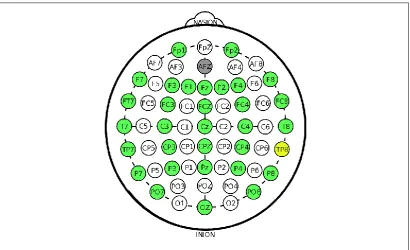
Brainproducts GmbH with 32 active Ag/AgCI electrodes. These electrodes were
placed at the positions: Fp1, F7, F3, F1, Fz, FT7, FC3, FCz, T7, C3, Cz, TP7, CP3,
CPz, P7, P3, Pz, PO7, Oz, PO8, P8, P4, TP8, CP4, T8, C4, FT8, FC4, F8, F4, F2, Fp2
with TP8 as the reference electrode and an additional electrode placed at AFz as the
ground electrode (Figure 3). In order to record horizontal and vertical saccades,
electro-oculographic (EOG) electrodes were placed at the temples of the participants
close to the corner of the eyes (hEOG) and above and below the left eye in line with
the pupil (vEOG) respectively. A ground electrode for the electro-oculography was
placed in the middle of the forehead. For lowering the resistance below 10kΩ,
electrolytical gel was filled in between skin and electrode by making use of a syringe.
In order to amplify the EEG and EOG signals, a 64-channels Actichamp amplifier by
Brain Products GmbH was used. A second computer with a Windows 10 Enterprise
system and 22-inch monitor was equipped with the programme BrainVision Recorder
by BrainProducts GmbH to register EEG and EOG signals as well as codes
14
Data Analysis
Processing of Behavioral Data
Total scores on the OSPAN were generated by assigning a 1 for correctly
identifying whether the blue digit was the solution to the mathematical equation, an
additional 1 for correctly recalling a digit, and an additional 1 for correctly recalling a
digit at the correct position in the sequence. Thereby, participants were able to attain a
maximum total score of 36 on both blocks. This scoring approach differed from
Zakrzewska & Brzezicka (2014) who scored only perfectly recalled sequences and
included participants that were able to recall minimum 80 % of sequences in total. As
digits as the TBR items might increase task difficulty due to hindering mnemonic
Figure 3. Electrode placement during EEG measurements with AFZ as the ground
[image:14.595.95.506.62.312.2]15
strategies, this partial scoring method should ensure variability of OSPAN scores and
prevent flooring effects.
Behavioural data of the Sternberg Task was analysed by employing Matlab
scripts on the marker data. Thereby, the percentage of correct responses and the
reaction time between stimulus presentation and response were identified for all three
loads divided by target and non-target trials.
Processing of EEG Data
The raw data was analysed using BrainVision Analyzer and SPSS. After checking for
distorted channels and deleting them if needed, the data was segmented selecting a
−500 to 1000 ms time window relative to cue onset. The baseline of the segmented
data was set from -500 to 0 ms. Furthermore, data was checked for artefacts
(Min/max: ± 350 μV, gradient with 50 μV/ms, low activity for 100 ms > 0.5 μV) and
corrected for eye movements. Subsequently, the data was checked for residual
artefacts (Min/max: ± 150 μV, gradient with 50 μV/ms, low activity for 100 ms > 0.5
μV) and a second baseline set from -500 to 0 ms. The data was then segmented within
a -500 to 1000ms time window relative to the onset of markers for each load in order
to separate the data of the three loads into different sets of data. A Fast Fourier
Transformation (FFT) was applied to each of these sets in order to disaggregate the
data into the various frequency bands. This transformation allowed for an analysis of
the average power of the frequency band of interest later on. The average power of
each frequency band was calculated and the average power of the theta (4 to 6 Hz)
band exported as a .cvs file. Before further statistical analysis was conducted, the data
16
average theta power of the electrodes Fz, F1, and F2 averaged as a replication of the
electrodes of interest utilised by Zakrzewska and Brzezicka (2014).
Statistical Analysis
Outliers were removed prior to the statistical analysis in concordance with the
exclusion criteria xi ˃ Q3 + 1.5 * IQR or xi ˂ 1.5 * IQR. Descriptive statistics of the
OSPAN scores as well as percentage of correct responses and reaction times during
the Sternberg Task were derived. A repeated measurement ANOVA with the three
loads (Load 1, Load 2, Load 4) as factor as well as a repeated measurement ANOVA
with the two trial types (target and non-target) as factor was applied to the reaction
time data. Furthermore, a repeated measurement ANOVA with the three loads (Load
1, Load 2, Load 4) as well as a repeated measurement ANOVA with the two trial
types (target and non-target) as factor was applied to the percentage of correct
responses data. In order to investigate whether average frontal-midline theta increases
with increasing memory load, a repeated measurement ANOVA with the three loads
(Load 1, Load 2, Load 4) as factor was be applied to the data. Thereafter, the OSPAN
scores were added as a covariate in order to check for interaction effects between
frontal-midline theta increase with increasing memory load and working memory
capacity. For all repeated measurement ANOVA models, Partial Eta squared, and the
17
Results
One outlier (Participant 19) was removed for further analysis based on the exclusion
criterium xi ˃ Q3 + 1.5 * IQR.
Behavioural Data
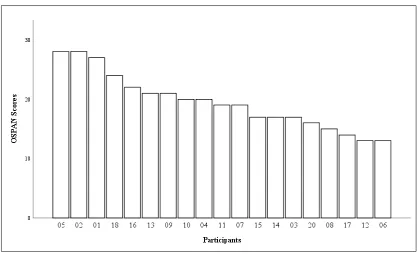
Operation Span Task. Scores on the Operation Span Task ranged from 13 to 28 (M
[image:17.595.90.508.356.610.2]= 19.2, SD = 4.7257) (Figure 4).
Figure 4. Distribution of OSPAN scores with 36 as the highest attainable total score.
Scores ranged from 13 to 28 (M = 19.2, SD = 4.7257).
Sternberg Task. The reaction time ranged from 487.9 ms to 704.3 ms (M =
18
Table 1.
Descriptive Statistics for Reaction Times on the Sternberg Task Divided by Load and
Type of Trial.
Load Minimum Maximum Mean Standard Deviation
Load 1 410.6 ms 663.2 ms 529.4 74.59
Load 2 461.1 ms 755.4 ms 584.6 82.16
Load 4 582.7 ms 758.8 ms 665.8 50.03
Type of Trial Minimum Maximum Mean Standard Deviation
Target 466.95 ms 754.66 ms 580.88 73.20
Non-Target 508.75 ms 745.00 ms 605.61 63.64
The difference in reaction time between the three loads (Load 1, Load 2, Load
4) was significant (F(2,36) = 81.107, p < .001, ηp² = .787, 1-β = 1.00) (Figure 5)
between all of the loads in a pairwise comparison (p < .001). Average reaction time
increased from Load 1 to Load 4 with a slope of b = 68.2.
The difference in reaction time between target and non-target trials was not
significant (F(1,18) = 3.829, p = .066, ηp² = .175, 1-β = .457). Post hoc analysis
showed that the difference in reaction time between target and non-target trials was
not significant for Load 1 (F(1,18) = 2.285, p = .148, ηp² = .113, 1-β = .299) and Load
2 (F(1,18) = .371, p = .550, ηp² = .020, 1-β = .089) while it was significant for Load 4
19 Figure 5. Significant increase in mean reaction time with increasing memory set size
from the first to the third load.
The percentage of correct responses ranged from 65.63 % to 100 % (M =
96.43, SD = 3.39) across the three loads of the Sternberg Task (Table 2).
20
Table 2.
Descriptive Statistics for Percentage of Correct Responses on the Sternberg Task
Divided by Load and Type of Trial.
Load Minimum Maximum Mean Standard Deviation
Load 1 78.13 % 100 % 97.24 5.42
Load 2 75.52 % 100 % 95.94 5.44
Load 4 86.25 % 100 % 96.13 3.39
Type of Trial Minimum Maximum Mean Standard Deviation
Target 82.71 % 100 % 95.25 4.65
Non-Target 87.64 % 100 % 97.62 3.01
The difference in percentage of correct responses between the three loads (Load 1,
Load 2, Load 4) was not significant (F(2,36) = .923, p = .406, ηp² = .049, 1-β = .196).
Furthermore, the difference in percentage of correct responses between target and
non-target trials was significant (F(1,18) = 12.423, p = .002, ηp² = .408, 1-β = .915)
(Figure 6) with an increase in percentage of correct responses from target to
21 Figure 6. Significant increase in mean of percentage of correct responses from target
trials (i.e. including the probe in the memory set) to non-target trials (i.e. not including
the probe in the memory set).
Electroencephalographic Data
Electroencephalographic data was log-10 transformed prior to statistical analyses.
Average frontal-midline theta (4 to 6 Hz) power recorded in the Fz, F1, and F2
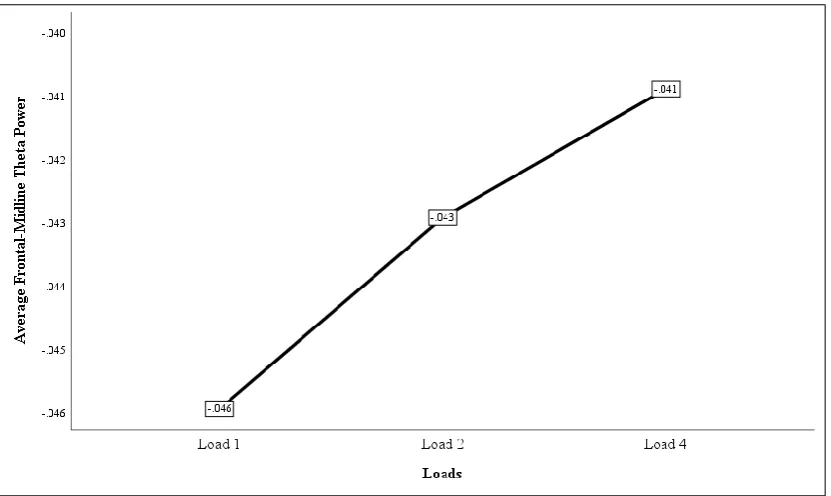
electrodes centred around M = 1.26 𝜇𝑉 (SD = 1.15 𝜇𝑉). This average differed
between the first (M Load 1 = -.046 𝜇𝑉, SDLoad 1 = .043 𝜇𝑉), second (M Load 2 =
-.043 𝜇𝑉, SDLoad 2 = .041 𝜇𝑉), and third (MLoad 4 = -.041 𝜇𝑉, SDLoad 4 = .0.41
𝜇𝑉) load of the Sternberg Task with an increase in frontal-midline theta power from
22 Figure 5. Average frontal-midline theta (4 to 6 Hz) power for the three Sternberg Task
loads (Load 1, Load 2, Load 4).
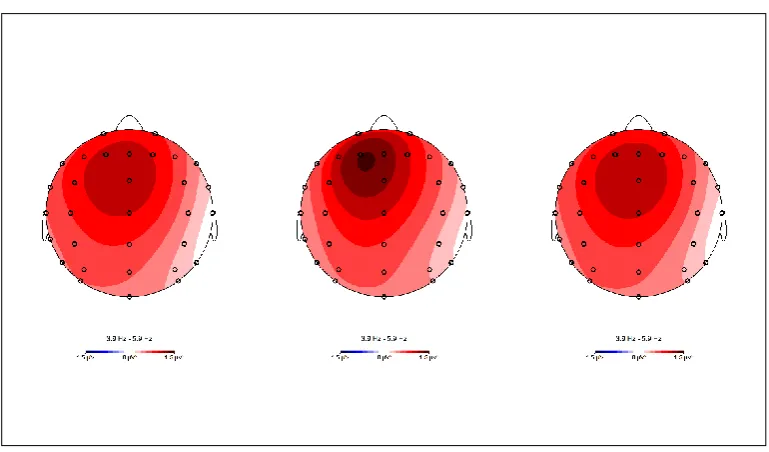
Topographical Data. Topographical data of brain activity shows frontal-midline
23 Figure 8. Topographical data shows theta (4 to 6 Hz) power ranging from 0 𝜇𝑉² (i.e.
white) to 1.5 𝜇𝑉2 (i.e. dark red) for the three loads Load 1 (left), Load 2 (middle), and
Load 4 (right). Increases in theta power seem to be concentrated at frontal-midline
areas (i.e. F1, Fz, F2, FCz, Cz).
Increase in Theta Power with Memory Load. In order to check for an increase in
average frontal-midline theta (4 to 6 Hz) power with increasing memory load in the
Sternberg Task loads, a repeated measurements ANOVA with the three Sternberg
Task loads (Load 1, Load 2, Load 4) as factor was performed. Results were not
significant (F(2,34) = .102, p = .904, ηp² = .006, 1-β = .064). Hence, an increase in
average theta (4 to 6 Hz) power with increasing memory load in the Sternberg Task
could not be supported by data.
Differences in Theta Power with Working Memory Capacity. In order to check for
an influence of working memory capacity as measured through OSPAN scores on
24
with the three loads (Load 1, Load 2, Load 4) as factor and OSPAN scores as a
covariate was performed. Results were not significant (F(2,32) = .020, p = .977, ηp² =
.001, 1-β = .053) and could not support an interaction effect of working memory
capacity on average frontal-midline theta (4 to 6 Hz) power.
Discussion
The goal of this research was an investigation of the relationship between working
memory capacity and individual differences in frontal-midline theta. In dependence
on prior research, two hypotheses were formulated. First, it was assumed that
frontal-midline theta power increases with increasing memory load (n) on a working memory
task. Second, it was hypothesised this increase would only be visible for individuals
with a high working memory capacity as opposed to individuals with a low working
memory capacity. The Sternberg Task was utilised as a working memory task for
testing the first and the OSPAN as a working memory capacity measurement for
testing the second hypothesis. Results did not yield any support for both hypotheses as
neither an increase in average theta (4 to 6 Hz) power with increasing memory load
nor an interaction effect of working memory capacity on average frontal-midline theta
(4 to 6 Hz) power in the Sternberg Task could be supported by data.
Working Memory and Mental Effort
The Sternberg Task was employed as a working memory task that induces mental
effort with the three loads (Load 1, Load 2, Load 4) of increasing memory set size
25
reaction times would increase significantly with increasing memory load as the serial
scanning process in retrieval of the memory set and comparison with the probe item
would be extended with increasing n. In concordance with self-terminating models
(Van Zandt & Townsend, 1993), a significant increase in reaction times from target to
non-target trials was expected as the serial scanning would on average terminate faster
for trials in which the probe was included in the memory set. No significant difference
in percentage of correct responses was expected.
Analysis of behavioral results did show a significant increase of reaction time
from Load 1 to Load 4 with a slope of b = 68.2 ms for average reaction time from the
first to the third load, while there was no significant difference in reaction time
between target and non-target trials. Post hoc analysis revealed a significant increase
from target to non-target trials only for Load 4. This fits with the self-terminating
model as the reaction times for Load 1 are expected to be equal for both types of trials
and the reaction times for Load 2 only expected to be lower for target trials when the
probe is located at the first position of the memory set. Hence, differences in reaction
time between target and non-target trials might be more pronounced for larger loads.
As expected, no significant difference in percentage of correct responses between the
loads was found. However, a significant increase of percentage of correct responses
from target to non-target trials was found.
Overall, the current study seems to support the Sternberg Task as a working
memory task that induces mental effort by manipulating the memory load n with
increasing memory set size. Thereby, more attentional resources are required for
serially and self-terminating scanning the memory set for the probe item as shown by
increasing reaction times from Load 1 to Load 4 and from target to non-target trials
26
Frontal-Midline Theta
In line with prior research (e.g. Kamiński, Brzezicka, & Wróbel, 2011; Maurer et al.,
2015; Onton, Delorme, & Makeig, 2005; Zakrzewska & Brzezicka, 2014) it was
assumed that frontal-midline theta power increases with increasing memory load (n)
on a working memory task. Unexpectedly, no significant increase in average theta (4
to 6 Hz) power with increasing memory load on the Sternberg Task could be
supported by the current study.
The current study used the Sternberg Task in a similar fashion as Zakrzewska
and Brzezicka (2014) with deviations concerning fewer loads, decreased memory set
sizes, as well as the duration of memory set maintenance for numerous rather than
single trials. Increasing reaction times from Load 1 to Load 4 and from target to
non-target trials for larger loads supported the successful manipulation of memory load
and mental effort in the current study. Furthermore, the slope of the increase of
average reaction time was higher in the current study (b = 68.2 ms) than for
Zakrzewska and Brzezicka (2014) (b = 39.6 ms), indicating a successful induction of
increasing mental effort during serial retrieval and comparison from Load 1 to Load 4
that exceeds the study of Zakrzewska and Brzezicka (2014). Still, the increase in
frontal-midline theta power with increasing memory load (n) could not be replicated.
This might be explained by the methodological deviation concerning duration of
memory set maintenance for numerous rather than single trials. By updating the
memory set for each single trial, Zakrzewska and Brzezicka (2014) might have
induced mental effort due to a mental process of constant memory load updating and
27
process might have been less effortful in their study as shown by the slower increase
of average reaction time from Load 2 to Load 5. Hence, the current study might
represent a more sensitive but less effortful measurement of retrieval and comparison
processes during the Sternberg Task that led to no significant increase in
frontal-midline theta power.
Individual Differences in Theta Increase
Further in line with Zakrzewska and Brzezicka (2014), it was hypothesised that the
increase of frontal-midline theta power with increasing memory load (n) on a working
memory task would only be visible for individuals with a high working memory
capacity as opposed to individuals with a low working memory capacity.
Unexpectedly, no interaction effect of working memory capacity on average
frontal-midline theta (4 to 6 Hz) power in the Sternberg Task could be supported in the
current study.
This result can be explained with an extension of the line of argument given
above. As a result of the methodological approach of Zakrzewska and Brzezicka
(2014), the Sternberg Task might have induced mental effort due to the mental
process of constant memory load updating and maintenance of the new memory set
rather than due to retrieval and comparison processes. Memory updating represents a
predictor for verbal working memory capacity in children aged 7 to 11 years
(Magimairaj & Montgomery, 2013) and for fluid intelligence in adults (Ecker,
Lewandowsky, Oberauer, & Chee, 2010) which is commonly reported as correlating
with working memory capacity (e.g. Au et al, 2015; Colom et al, 2014; Kane et al,
28
interaction effect between working memory capacity as measured by OSPAN and
frontal-midline theta power as induced by memory updating in Zakrzewska’s and
Brzezicka’s (2014) version of the Sternberg Task seems in line with prior research as
memory updating performance predicts working memory capacity and fluid
intelligence.
Limitations and Recommendations
Limitations mainly concern the administration of the OSPAN and Sternberg
Task which deviated from the approach chosen by Zakrzewska and Brzezicka (2014)
and other scholars. First, the OSPAN was administered only with single digits instead
of single letters and digits as the TBR items. This deviation might have caused an
increased task difficulty due to competing stimuli in form of digits as part of the
mathematical computations, which could not be controlled for as single letters were
not used as a second format for comparison purposes. Second, this deviation required
a partial scoring method as the scoring method of Unsworth and Engle (2005)
proposes an accuracy criterion of 85% accuracy and total scores computed by adding
up the perfectly recalled sequences which would have led to the exclusion of 19
participants. Third, the reliability and validity of scores might have further been
decreased by administering fewer blocks of the task. Fourth, the Sternberg Task
seemed unable to induce enough mental effort for producing an increase in
frontal-midline theta power as it focused on retrieval and comparison only.
Additionally, the interpretation of some results of statistical analyses seems
questionable against the background of observed power. The chance of detecting a
29
specifically for those that test the two hypotheses: for the differences in average
frontal-midline theta (4 to 6 Hz) power with increasing memory load (1-β = .064), as
well as for the analysis of the interaction effect between frontal-midline theta (4 to 6
Hz) power and working memory capacity (1-β = .053). Hence there is a high
probability of committing Type II error for parts of the statistical analysis, with a
chance of 94 % for an actually significant difference in average frontal-midline theta
(4 to 6 Hz) power with increasing memory load, and 95 % for an actually significant
interaction effect between frontal-midline theta (4 to 6 Hz) power and working
memory capacity. Therefore, the possibility of an actually significant difference in
average frontal-midline theta (4 to 6 Hz) power with increasing memory load and an
interaction effect between frontal-midline theta (4 to 6 Hz) power and working
memory capacity needs to be considered.
In order to meet these limitations, future research should, therefore, compare
the results of OSPAN with single digits to those of OSPAN with single letters or
words to investigate the influence of format on task difficulty and scores.
Furthermore, future studies should employ reliable and valid scoring methods for the
OSPAN and administer enough blocks to allow for the computation of a reliable and
valid average working memory capacity score. With regard to the Sternberg Task,
future studies should administer varied loads with more extreme memory set sizes to
induce enough mental effort in retrieval and comparison processes, as well as
compare the approaches of random trial presentation and counterbalancing of loads
with consecutive trials to further elucidate the differences between involved mental
processes. Increasing the sample size could further improve the observed power of
30
Conclusion
The current study did provide new insights into the relationship between
working memory, mental effort, working memory capacity and individual differences
in frontal-midline theta. While mental effort was induced by means of the Sternberg
Task with focus on retrieval and comparison processes, the mental effort produced by
these processes alone was not able to induce an increase in frontal-midline theta from
a lower to a higher load. Furthermore, no interaction between working memory
capacity and frontal-midline theta was observable. These results might suppose a
difference in increase of frontal-midline theta for isolated mental processes and mixed
mental processes, probably caused by increased mental effort in tasks with mixed
mental processes. Thereby, the current study complements existing research on
individual differences in imaging data and might serve as a basis for future research
31
References
Au, J., Sheehan, E., Tsai, N., Duncan, G. J., Buschkuehl, M., & Jaeggi, S. (2015).
Improving fluid intelligence with training on working memory: A
meta-analysis. Psychonomic Bulletin & Review, 22(2), 366-377.
doi:10.1037/e524912015-029
Baddeley, A. (2000). The episodic buffer: a new component of working memory?
Trends in Cognitive Sciences, 4(11), 417-423. doi:10.1016/s1364
6613(00)01538-2
Baddeley, A. D., & Hitch, G. (1974). Working memory. Psychology of Learning and
Motivation, 47-89. doi:10.1016/s0079-7421(08)60452-1
Colom, R., Privado, J., García, L. F., Estrada, E., Cuevas, L., & Shih, P. (2015). Fluid
intelligence and working memory capacity: Is the time for working on
intelligence problems relevant for explaining their large relationship?
Personality and Individual Differences, 79, 75-80.
doi:10.1016/j.paid.2015.01.051
Đokić, R., Koso-Drljević, M., & Đapo, N. (2018). Working memory span tasks:
Group administration and omitting accuracy criterion do not change metric
characteristics. PLOS ONE, 13(10), e0205169.
doi:10.1371/journal.pone.0205169
Ecker, U. K., Lewandowsky, S., Oberauer, K., & Chee, A. E. (2010). The
components of working memory updating: An experimental decomposition
and individual differences. Journal of Experimental Psychology: Learning,
32
Jensen, O., Gelfand, J., Kounios, J., & Lisman, J. E. (2002). Oscillations in the Alpha
Band (9-12 Hz) increase with memory load during retention in a short-term
memory task. Cerebral Cortex, 12(8), 877-882. doi:10.1093/cercor/12.8.877
Jensen, O., & Tesche, C. D. (2002). Frontal theta activity in humans increases with
memory load in a working memory task. European Journal of Neuroscience,
15(8), 1395-1399. doi:10.1046/j.1460-9568.2002.01975.x
Kahneman, D., & Beatty, J. (1966). Pupil diameter and load on memory. Science,
154(3756), 1583-1585.
Kamiński, J., Brzezicka, A., & Wróbel, A. (2011). Short-term memory capacity (7±2)
predicted by theta to gamma cycle length ratio. Neurobiology of Learning and
Memory, 95(1), 19-23. doi:10.1016/j.nlm.2010.10.001
Kane, M. J., Hambrick, D. Z., Tuholski, S. W., Wilhelm, O., Payne, T. W., &
Engle, R. W. (2004). The generality of working memory capacity: A
latent-variable approach to verbal and visuospatial memory span and reasoning.
Journal of Experimental Psychology: General, 133(2), 189-217.
doi:10.1037/0096-3445.133.2.189
Kirchner, W. K. (1958). Age differences in short-term retention of rapidly changing
information. Journal of experimental psychology, 55(4), 352.
Maurer, U., Brem, S., Liechti, M., Maurizio, S., Michels, L., & Brandeis, D. (2014).
Frontal midline theta reflects individual task performance in a working
memory task. Brain Topography, 28(1), 127-134.
doi:10.1007/s10548-014-0361-y
Magimairaj, B. M., & Montgomery, J. W. (2013). Examining the relative
33
attention to children’s verbal working memory span. Child Development
Research, 2013, 1-12. doi:10.1155/2013/763808
Onton, J., Delorme, A., & Makeig, S. (2005). Frontal midline EEG dynamics during
working memory. NeuroImage, 27(2), 341-356.
doi:10.1016/j.neuroimage.2005.04.014
Salthouse, T. A., & Pink, J. E. (2008). Why is working memory related to fluid
intelligence? Psychonomic Bulletin & Review, 15(2), 364-371.
doi:10.3758/pbr.15.2.364
Sternberg, S. (1969). Memory-scanning: Mental processes revealed by reaction-time
experiments. American scientist, 57(4), 421-57. Retrieved from:
https://www.researchgate.net/publication/17809464_Memory-scanning_Mental_processes_revealed_by_reaction-time_experiments
Turner, M. L., & Engle, R. W. (1989). Is working memory capacity task dependent?
Journal of Memory and Language, 28(2), 127-154.
doi:10.1016/0749-596x(89)90040-5
Unsworth, N., Fukuda, K., Awh, E., & Vogel, E. K. (2014). Working memory and
fluid intelligence: Capacity, attention control, and secondary memory
retrieval. Cognitive Psychology, 71, 1-26.
doi:10.1016/j.cogpsych.2014.01.003
Unsworth, N., Heitz, R. P., Schrock, J. C., & Engle, R. W. (2005). An automated
version of the operation span task. Behavior Research Methods, 37(3),
498-505. doi:10.3758/bf03192720
Van Zandt, T., & Townsend, J. T. (1993). Self-terminating versus exhaustive
processes in rapid visual and memory search: An evaluative review.
34
Zakrzewska, M. Z., & Brzezicka, A. (2014). Working memory capacity as a
moderator of load-related frontal midline theta variability in Sternberg task.
35
Appendix
Appendix A: EEG Questionnaire
Participant __
EEG questionnaire
Please circle the best fitting answer. Vision
Do you have normal or corrected to normal vision? Yes No
If you have corrected to normal vision, do you wear glasses now? Yes No
Circumstances
Have you ever had head or brain surgery? Yes No Do you suffer from epilepsy?
Yes No Do you suffer from colorblindness? Yes No
Do you suffer from any other neurological disorder? Yes No
Do you suffer from any psychiatric disorder? Yes No Do you have a pacemaker?
Yes No
Do you have piercings that you have not yet removed in or around your face? Yes No
Did you drink alcoholic beverages in the last 24 hours? Yes No
Demographics What is your age? ________
What is your gender? _____________
What is your nationality?
36 Participant __
Handedness
Always left
Mostly left
No preference
Mostly right
Always right
Writing a letter
Throw a ball to hit a target
To play a racket in tennis, squash etc.
What hand is up to handle a broom removing dust from the floor
What hand is up to manipulate a shovel
Lighting matches
Scissors when cutting paper
To hold a wire to move it through the eye of a needle
To distribute playing cards
To hit a nail on the head
To hold your toothbrush