© 2019, IRJET | Impact Factor value: 7.211 | ISO 9001:2008 Certified Journal
| Page 7332
AUTOMATIC SEPARATION OF MUNICIPAL WASTE USING PLC AND SMART
HOPPER
Durgesh Kumar Chaturvedi1, Dr. Nagendra Tripathi2
1M.Tech Scholar, Department of EE, Bhilai Institute of Technology, Durg, India,
2Associate Professor Department of EE, Bhilai institute of Technology, Durg, India,
---ABSTRACT:
Now-a-days the wastes are dumped as landfill waste and the major problem in solid waste disposal isplastic bottles, glass bottles, metal can separation and they are separated manually and recycled. [2] Mission clean India campaign has motivated people for not disposing household waste in open land. The domestic wastes are collected in two bins provided to the every citizen by the municipal corporation. The municipal corporation has broadly classified the waste in two category i.e. dry waste and wet waste. Most of the waste collecting agencies are finding difficulty in separation of dry and wet waste due to poor awareness amongst the citizen. All the wet waste is basically degradable where as dry waste are non-degradable. So is very important to separate the degradable and non-degradable waste for recycling and developing compost for green uses. This paper aims in providing effective solution for the separation of the municipal waste by using custom hopper which is controlled by programmable logic controller. The successful separation of the waste lays the path for the onsite effective utilization of the bio-degradable waste as compost, manure etc.
KEYWORD:
programmable logic controller, municipal waste, sensor, hopper, conveyor belt.
INTRODUCTION:
The discipline associated with the control of generation, collection, storage, transfer and transport,processing and disposal of municipal waste in a manner that is in accord with the best principles of public health, economics, engineering, conservation aesthetics and other environmental considerations. The separation of municipal waste is the one of the most important process. The municipal can be broadly classified as bio-degradable and non-Biodegradable waste. However it is not an end process of managing the municipal waste, but actually it is the beginning the management of municipal waste [6]. This paper provides an effective separation scheme using PLC.
LITERATURE REVIEW
:
Khalid Chahine et.al introduces an automated solid waste sorting system. The developed© 2019, IRJET | Impact Factor value: 7.211 | ISO 9001:2008 Certified Journal
| Page 7333
material into a dry product. The dry form of product can be used as manure [8]. This paper described onsite effective utilization of municipal waste and separation of bio-degradable and non-biodegradable waste using programmable logic controller.
PRINCIPLE:
The separate municipal waste into bio-degradable and non-biodegradable is done using specially designedhopper whose operation is controlled by programmable logic controller. The separation of municipal waste is carried out automatically with minimum human intervention
.
METHODOLOGY:
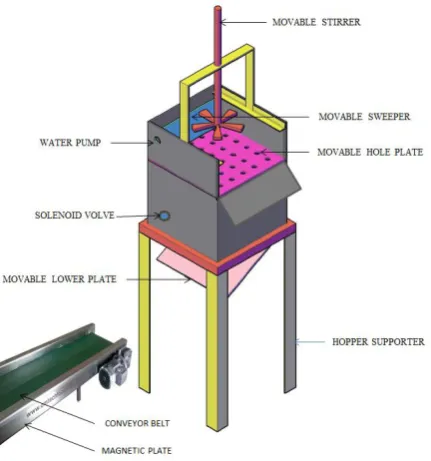
The programmable logic controller is the brain of project. The automation of the waste separation is [image:2.595.194.410.493.724.2]done automatically. The municipal waste is put on the specially designed hopper and that hopper is connected to PLC from where it receives necessary action command [7]. The schematic block diagram for the separation of municipal waste is shown in figure 1.
Figure 1 schematic block diagram of separator
© 2019, IRJET | Impact Factor value: 7.211 | ISO 9001:2008 Certified Journal
| Page 7334
WORKING:
The calculated amount (kg) of the municipal waste is poured in special designed hopper.
A fixed amount of water is automatically added to the hopper containing municipal waste using motor -1.
Now PLC will turn-on stirrer for specified period of time, the stirrer is connected with motor-2.
The hole-plate goes up with accumulated non-degradable waste at the upper side of the hopper and PLC turn ON the motor-3 the calculated amount (kg) of the municipal waste is poured in special designed hopper.
The PLC turn ON the sweeper which sweeps out the non-degradable waste, sweeper is connected through motor-4.
The sweeper comes back to its place after sweeping out the non-degradable waste.
Water which used for mixing of municipal waste drain with the solenoid valve.
The PLC turns ON the motor-6 which is connected through the lower plate. The lower plate goes down to separate bio-degradable waste.
The bio-degradable waste is now put on the conveyor belt, this conveyor belt is magnetized which separated the small piece of magnetic material from bio-degradable waste.
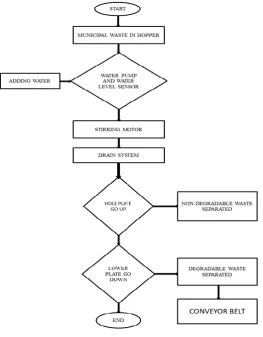
[image:3.595.147.411.358.696.2]Flowchart:
The flow chart for the separation and onsite effective utilization of municipal waste using PLC is given infigure 2.
© 2019, IRJET | Impact Factor value: 7.211 | ISO 9001:2008 Certified Journal
| Page 7335
LADDER DIAGRAM
:
The ladder diagram written to execute this logic is as shown in below.
1. Ladder diagram of addition of water and mixing of municipal waste
2. Ladder diagram for draining of water and hole plate operation
© 2019, IRJET | Impact Factor value: 7.211 | ISO 9001:2008 Certified Journal
| Page 7336
(4) Ladder diagram for hole plate and lower plate operation
(5) Ladder diagram for operation of lower plate and Conveyor plate
RESULT:
This project separate the bio-degradable waste and non-biodegradable waste automatically from themunicipal waste and the remaining bio-degradable waste used for compost, also non-biodegradable waste recycled easily
.
ADVANTAGE:
The municipal waste separated automatically into bio-degradable waste and non-biodegradable.
The plastic, cans, bottle, glasses from non-biodegradable waste which is automatically separated from municipal waste is recycled for reused.
The small piece of magnetic material is easily removed from bio-degradable waste using magnetized conveyor belt.
Minimum time required to separate the municipal waste.
DISADVANTAGE:
Crushed glass not removed easily.© 2019, IRJET | Impact Factor value: 7.211 | ISO 9001:2008 Certified Journal
| Page 7337
CONCLUSION:
The separation and onsite effective utilization of municipal waste using PLC is separate the municipalwaste into bio-degradable waste and non-biodegradable waste. The bio-degradable waste is used for making compost, and non-biodegradable waste is recycled. The small piece of glass and pebbles are not easily removed. The separation of municipal waste can be achieving 70-80%.
FUTURE SCOPE:
Plastic, cans, bottle and glasses are recycled.
The separated bio-degradable waste is used for making compost.
By using this proposed scheme will be helpful to easily achieve our mission clean India.
REFERENCES
:
[1] Khalid Chahine, Bilal Ghazal, (Dec 2017-Jan 2018) “Automatic Sorting of Solid Wastes Using Sensor Fusion” International Journal of Engineering and Technology (IJET), ISSN (Print): 2319-8613 ISSN (Online): 0975-4024, V0l- 9 No 6. (pp. 4408-4414)
[2] M.Deepak, S.Karthik, N.Mohamed Hassan, P.Sathish, (ICAETS-2018), “Design on PLC based Automatic Waste Segregator” International Conference on Advance in Engineering, Technology and Science. ISBN: 978-93-87793-11-8. (pp. 826-834)
[3] Mangesh B. Nagapure, Dr. R. M. Deshmukh, (April 2017) “PLC based Segregation of Scrap Material” International Journal of Engineering Research and Application, ISSN: 2248-9622, Vol. 7, Issue 4, (Part -3), (pp. 06-10)
[4] P.Thirumurugan, R.Aravind, M.Arun Kumar, S.Dharshan Manjunath, R.Kalaiselvan (February-2018.) “Programmable Logic Controller Based Metal Segregation in Steel Industry” “International Journal of Advances in Electronics and Computer Science” ISSN: 2393-2835, Vol. 7, Issue 2, (pp. 578-583)
[5] Rahul Deshmukh, Chinmay Joshi, Yash Bachhav, Sachin More, Amit Mishra, (March 2018) “Material Segregation & Waste Management using PLC” “International Journal of Engineering Technology Science and Research” ISSN 2394 – 3386, Volume 5, Issue 3. (pp. 1057-1060)
[6] Rashmi M. Kittali and Ashok Sutagundar, (2016). “Automation of Waste Segregation System using PLC” “International Journal on Emerging Technologies” 7(2) (pp.265-268)
[7] S.M .Dudhal, B. S. Jonwal, Prof. H. P. Chaudhari, (April-2014) “Waste Segregation Using Programmable Logic Controller” International Journal For Technological Research In Engineering, ISSN (Online): 2347 – 4718, Volume 1, Issue 8, (pp. 593-595)