Original Article
Predictors for prolonged stay in the intensive care
unit after surgery for acute aortic dissection type A
Wei Sheng1*, Hai-Qin Yang2*, Wei Han3, Long Sun1, Yi-Fan Chi1
1Department of Cardiovascular Surgery, Qingdao Municipal Hospital, Medical College of Qingdao University, Qingdao, Shandong, China; 2Department of Mental Intervention, Qingdao Preferential Hospital, Qingdao,
Shandong, China; 3Department of Respiratory, Qingdao Municipal Hospital, Medical College of Qingdao University, Qingdao, Shandong, China. *Equal contributors.
Received October 6, 2018; Accepted November 8, 2018; Epub April 15, 2019; Published April 30, 2019
Abstract:Objective: The goal of this study was to identify predictors of prolonged stay in the intensive care unit (ICU) in patients undergoing surgery for acute aortic dissection type A. Methods: A total of 202 patients who underwent surgery for acute aortic dissection type A in our hospital from May 2009 to May 2016 were divided into two groups
based on their duration of stay in the ICU. Prolonged length of ICU stay was defined as 5 days or more in the ICU
postoperatively. There were 167 patients with length of ICU stay less than 5 days, and 35 patients with length of ICU stay 5 days or more. Univariate and multivariate analysis (logistic regression) were used to identify the predic-tive risk factors. Results: The mean age of patients was (56.2±10.8) years, and there were 156 men (77.2%) and 46 women (22.8%). The lengths of ICU stay were (63.5±17.2) hours and (207.2±20.5) hours respectively. Overall in-hospital mortality rates were 2.4% and 14.3% respectively. Multivariate logistic analysis showed that CPB time, occurrence of postoperative stroke, acute renal failure, and acute respiratory failure were the independent predic-tors for prolonged ICU stay. Conclusion: The incidence of prolonged ICU stay is high after surgery for acute aortic dis-section type A. Based on above factors, more active perioperative treatment strategies should be taken for patients with these risk factors to avoid more complications, and further to shorten the ICU stay time.
Keywords: Acute aortic dissection, risk factors, intensive care unit, cardiac surgery, aortic aneurysm
Introduction
Acute type A aortic dissection is a serious life-threatening cardiovascular disease that requires positive surgical treatment. Although the preoperative recognition, perioperative management and surgical techniques have
been significantly improved, operations for
acute type A aortic dissections are still associ-ated with high mortality and high incidence of complications. Compared with other patients undergoing routine cardiac or aortic operation, these patients usually have prolonged stay in the intensive care unit (ICU). Prolonged ICU stay accounts for considerable expenditure of health care costs and excessive consumption of medical resources, and perioperative mor-tality and complication increased accordingly. Various predictive models for prolonged ICU stay after cardiac surgery have been developed during the last two decades, but we still know
less about variables influencing the ICU length
of stay in patients undergoing surgery for acute aortic dissection type A. Therefore, it is essen-tial to investigate the risk factors of prolonged ICU stay after surgery for acute type A aortic dissection so as to implement reasonable and effective prevention and treatment. A retro-spective study was conducted to identify potentially risk factors amenable to interven-tion for prolonged ICU stay in these patients in our institution, so as to improve the surgical treatment effect and reduce the perioperative mortality by early intervention and treatment.
Materials and methods
Clinical data
May 2009 to May 2016 were enrolled in this study. This study was conducted in accordance with the principles of the Declaration of Helsinki and was approved by the Ethics Committee of our hospital (No.4), and written informed con-sent was obtained from all study participants.
Prolonged stay in the ICU is defined as a stay of ≥5 days in the ICU after surgery [1]. The 202
patients were divided into two groups
accord-ing to length of stay (<5 and ≥5 days). Among
202 patients, 35 patients had prolonged ICU stay. Exclusion criteria included intraoperative or early postoperative (within 5 days after sur-gery) death. Preoperative clinical characteris-tics of these two groups are listed in Table 1. Preoperative risk factors, operative data, and perioperative mortality and complications for all patients undergoing surgery for acute aortic dissection type A were systematically collected by two physicians. Clinical data were as follows: 1. Preoperative risk factors: age, sex, body mass index (BMI), chronic obstructive pulmo-nary disease (COPD), hypertension, cerebro-vascular disease (CVD), diabetes mellitus, New York Heart Association functional class III~IV, Euroscore, preoperative serum creatinine, preoperative D-dimer, left ventricular ejection fraction (LVEF), emergency operation. 2. Intra-operative risk factors: with or without concomi-tant coronary artery bypass grafting (CABG),
cardiopulmonary bypass (CPB) times, aortic cross-clamping times, deep hypothermic circulatory arrest (DHCA), lowest rectal temper-ature, blood transfusion volume, use of positive inotropic agents. 3. Postoperative risk factors: postoperative stroke, dialysis-dependent renal failure, respiratory failure, re-intubation, chest re-exploration.
Surgical procedures
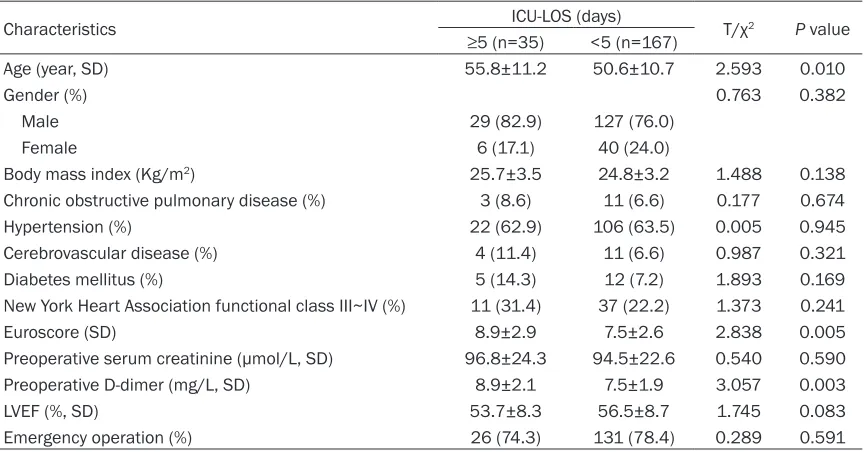
[image:2.612.91.523.96.322.2]All the patients with acute type A aortic dissec-tion underwent surgical treatment by prosthet-ic graft replacement of ascending aorta and/or aortic arch. Operations were performed through a standard longitudinal median sternotomy. Cardiopulmonary bypass was established by cannulation of right atrium or separately the superior and inferior vena cava. Femoral or axillary arterial cannulation was established. Myocardial protection was provided by inter- mittent, antegrade, cold blood cardioplegic solution via coronary ostia. If an intimal tear was localized to the ascending aorta, the distal anastomosis was constructed proximal to the innominate artery. If the intimal tear originated in or extended into the arch, deep hypothermic circulatory arrest (DHCA) was instituted to extend the aortic replacement to include the intimal tear. Of the 202 patients, 65 cases Table 1. Univariate analysis of the preoperative characteristics of patients undergoing surgery for acute aortic dissection type A
Characteristics ICU-LOS (days) T/χ2 P value
≥5 (n=35) <5 (n=167)
Age (year, SD) 55.8±11.2 50.6±10.7 2.593 0.010
Gender (%) 0.763 0.382
Male 29 (82.9) 127 (76.0)
Female 6 (17.1) 40 (24.0)
Body mass index (Kg/m2) 25.7±3.5 24.8±3.2 1.488 0.138
Chronic obstructive pulmonary disease (%) 3 (8.6) 11 (6.6) 0.177 0.674
Hypertension (%) 22 (62.9) 106 (63.5) 0.005 0.945
Cerebrovascular disease (%) 4 (11.4) 11 (6.6) 0.987 0.321
Diabetes mellitus (%) 5 (14.3) 12 (7.2) 1.893 0.169
New York Heart Association functional class III~IV (%) 11 (31.4) 37 (22.2) 1.373 0.241
Euroscore (SD) 8.9±2.9 7.5±2.6 2.838 0.005
Preoperative serum creatinine (µmol/L, SD) 96.8±24.3 94.5±22.6 0.540 0.590 Preoperative D-dimer (mg/L, SD) 8.9±2.1 7.5±1.9 3.057 0.003
LVEF (%, SD) 53.7±8.3 56.5±8.7 1.745 0.083
Emergency operation (%) 26 (74.3) 131 (78.4) 0.289 0.591
underwent surgery with moderate hypothermic cardiopulmonary bypass. Cerebral protection was performed with DHCA and selective antegrade cerebral perfusion in 137 patients.
Open distal repair was performed after finish -ing the proximal aortic root procedure with the rectal temperature 18°C around. Antegrade selective cerebral perfusion was applied during circulatory arrest, and the patients’ heads were packed in ice bags. We simply replaced it when the intimal tear was located only in the ascend-ing aorta. Aortic root replacement, Bentall procedure was performed for patients with dilation of aortic root. Partial or total arch replacement was performed when the entry site was present or extended into the aortic arch. Ascending aorta/hemiarch replacement was performed in 87 patients, the Bentall procedure in 68, the David procedure in 11, total arch replacement in 32, and aortoplasty in four. At the same time, 21 patients underwent CABG, and 65 patients underwent descending aorta stent implantation.
Definition
1. Criteria for discharge from the ICU: (1): Evi- dence of adequate neuropsychological func-tion (patient alert and cooperative, and no sei-zure activity); (2): No need of mechanical respi-ratory assistance, self respirespi-ratory frequency is below 25 times/min, PaO2 >80 mmHg, PaCO2 <60 mmHg, SpO2 >90% at an FiO2 ≤0.5 by face
mask; (3) Adequate cardiac stability with no
hemodynamically significant arrhythmias,
che-st tube drainage <50 mL/h, urine output >0.5 mL/kg/h, no other intravenous inotropic or vasopressor agents in excess of dopamine
5 µg/kg/min [2]. 2. Positive inotropic agents:
Infusion of intraoperative dopamine, dobuta-mine, epinephrine, norepinephrine, and isopro-terenol more than 30 minutes. 3. Body mass index (BWI) is calculated by body weight (Kg)/ height (m2). 4. Emergency operation is defined as a surgical procedure within 24 hours after
admission. 5. Renal failure is defined as post -operative acute renal failure with the necessity
for continuous venovenous hemofiltration. 6. Respiratory failure is defined as the necessity
for mechanical ventilation more than 48 hours
postoperatively [3]. 7. Postoperative stroke is
defined as having evidence of a new central neurologic deficit persisting for more than 72
hours during the postoperative period. Neuro-
logic complications were diagnosed clinically
and confirmed by cerebral computed
tomo-graphy.
Statistical analysis
Statistical analysis was carried out by using SPSS Base 16.0 statistical software (SPSS Inc, Chicago, IL, USA). Continuous variables are expressed as mean ± standard deviation and analyzed with Student’s t-text or t’-test. Cate- goric variables expressed as percentages were analyzed with the Chi-square test. After univari-ate analyses, variables found to be potentially predictive of the outcome variable from the uni-variate analyses (P<0.10) were included in the multivariate logistic regression models by using the method of maximum likelihood. Odds ratios
(OR) were calculated with 95% confidence
intervals (CI). A P value of less than 0.05 was
considered statistically significant. The discrim -inatory ability of the risk model was assessed by using the area under the receiver operating characteristics curve (AUC), with an AUC of 100% equating to a predictive power of 100%.
The Hosmer-Lemeshow goodness-of-fit test
was performed to evaluate the calibration of
the model. A small χ2 value and a P greater than 0.05 would show an acceptable adaptation.
Results
Baseline clinical characteristics of the study population
There were 156 male cases and 46 female cases among 202 patients. Average age was 53.2±10.9 years (21-79 years). All the patients underwent surgical treatment within 7 days after admission, 157 (77.7%) within 24 hours. There were 35 patients (17.3%) with length of ICU stay 5 days or more, and the average time was (207.2±20.5) hours. The hospital stay was (33.2±11.2) days. Five out of the 35 patients died postoperatively accounting for an in-hospi-tal morin-hospi-tality of 14.3% (5/35). There were 167 patients with length of ICU stay less than 5 days, and the average time was (63.5±17.2) hours. The hospital stay was (20.5±9.8) days, and the in-hospital mortality was 2.4% (4/167). The total in-hospital mortality was 4.5% (9/ 202). The differences in ICU stay, hospital stay, and in-hospital mortality between these two
Comparation of preoperative data
Patient characteristics, lab tests and surgical variables were summarized and compared. The details are listed in Table 1. Univariate analysis
showed that there was no statistical signifi -cance between the two groups in gender, BMI, hypertension, diabetes, CVD history, COPD,
cardiac function (NYHA Classification) Class III
to IV, preoperative creatinine levels, preopera-tive LVEF and emergency operation (P>0.05). The mean age in the prolonged ICU stay group
was significantly greater than that in non-pro -longed ICU stay group (55.8±11.2 VS. 50.6±
10.7, P<0.010), the preoperative D-dimer in
prolonged ICU stay group was significantly
higher than that in non-prolonged ICU stay group (8.9±2.1 VS. 7.5±1.9, P<0.003), and the Euroscore in the prolonged ICU stay group was
significantly higher than that in non-prolonged
ICU stay group (8.9±2.9 VS. 7.5±2.6, P<0.005). Comparation of intra-operative and postopera-tive data
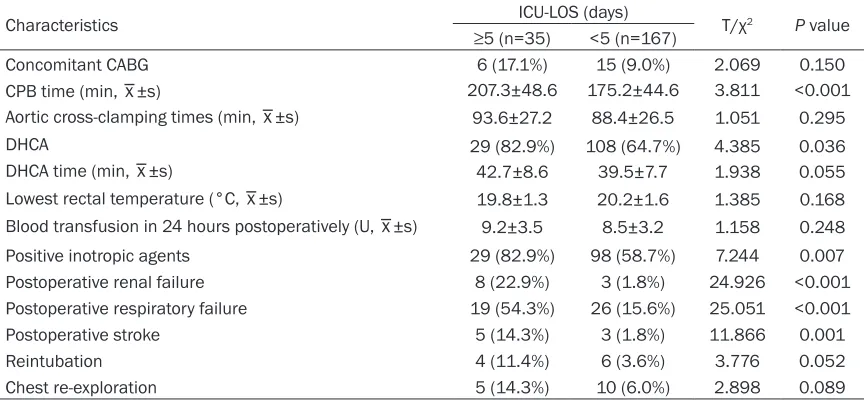
[image:4.612.90.522.98.298.2]The intraoperative and postoperative charac-teristics of patients in the two groups are shown in Table 2. The CPB time in prolonged ICU stay Table 2. Univariate analysis of the intra-operative and postoperative characteristics of patients under-going surgery for acute aortic dissection type A
Characteristics ICU-LOS (days) T/χ2 P value
≥5 (n=35) <5 (n=167)
Concomitant CABG 6 (17.1%) 15 (9.0%) 2.069 0.150
CPB time (min, _x±s) 207.3±48.6 175.2±44.6 3.811 <0.001 Aortic cross-clamping times (min, _x±s) 93.6±27.2 88.4±26.5 1.051 0.295
DHCA 29 (82.9%) 108 (64.7%) 4.385 0.036
DHCA time (min, _x±s) 42.7±8.6 39.5±7.7 1.938 0.055
Lowest rectal temperature (°C, _x±s) 19.8±1.3 20.2±1.6 1.385 0.168 Blood transfusion in 24 hours postoperatively (U, _x±s) 9.2±3.5 8.5±3.2 1.158 0.248 Positive inotropic agents 29 (82.9%) 98 (58.7%) 7.244 0.007 Postoperative renal failure 8 (22.9%) 3 (1.8%) 24.926 <0.001 Postoperative respiratory failure 19 (54.3%) 26 (15.6%) 25.051 <0.001
Postoperative stroke 5 (14.3%) 3 (1.8%) 11.866 0.001
Reintubation 4 (11.4%) 6 (3.6%) 3.776 0.052
Chest re-exploration 5 (14.3%) 10 (6.0%) 2.898 0.089
ICU, intensive care unit; LOS, length of stay; SD, Standard deviation; CABG, coronary artery bypass grafting; CPB, Cardiopulmo-nary bypass; DHCA, Deep hypothermic circulatory arrest.
Table 3. Multivariate logistic regression analysis of prolonged stay in ICU in patients undergoing sur-gery for acute aortic dissection type A
Variable Coefficient Standard error valueWard Odds ratio 95% confidence interval P
Lower bound Upper bound
Age 0.037 0.030 1.526 1.038 0.979 1.100 0.217
Euroscore 0.204 0.220 0.866 1.227 0.798 1.887 0.352
Preoperative D-dimer 0.239 0.161 2.222 1.270 0.927 1.740 0.136
CPB time 0.038 0.012 9.587 1.039 1.014 1.064 0.002
DHCA 0.950 0.594 2.559 2.585 0.807 8.272 0.110
Positive inotropic agengts 0.983 0.768 1.635 2.671 0.592 12.043 0.201 Postoperative renal failure 1.627 0.809 4.046 5.087 1.043 24.824 0.044 Postoperative respiratory failure 1.778 0.590 9.077 5.917 1.861 18.810 0.003 Postoperative stroke 2.236 0.872 6.579 9.359 1.695 51.683 0.010 Constant -16.553 3.592 21.235 <0.001 <0.001
[image:4.612.91.524.365.524.2]group was significantly longer than that in
non-prolonged ICU group (207.3±48.6 VS. 175.2± 44.6, P<0.001), the DHCA ratio in prolonged
ICU stay group was significantly longer than
that in non-prolonged ICU group (82.9% VS. 64.7%, P<0.036), the positive inotropic agents
usage rate was significantly higher than that in
non-prolonged ICU group (82.9% VS. 58.7%, P<0.007), and the incidence of postoperative stroke, postoperative renal failure and
respira-tory failure was significantly higher than that in
non-prolonged ICU group (14.3% VS. 1.8%, P<0.001; 22.9% VS. 1.8%, P<0.001; 54.3% VS. 15.6%, P<0.001).
Multivariate analysis
Risk factors with a P-value <0.10 on univariate analyses were entered in the multivariate anal-yses to identify independent risk factors. Mul- tivariate logistic regression analysis showed
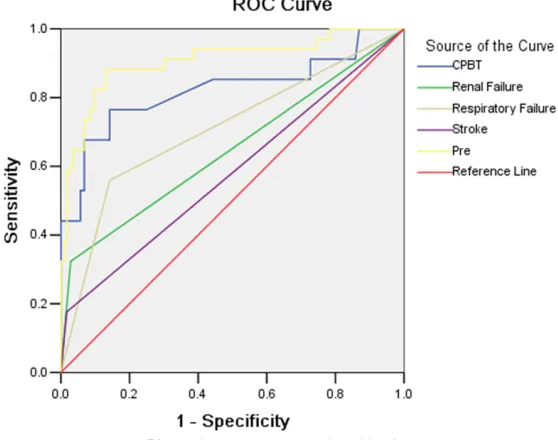
produced in a SPSS worksheet. We drew the receiver operating characteristic (ROC) curve by taking the new variable Pre, CPB time, post-operative renal failure, postpost-operative respira-tory failure and postoperative stroke as test variables and prolonged ICU stay as state able. The corresponding AUC of each test vari-able were shown in Table 4: CPB time (P<0.001, AUC: 0.823; 95% CI, 0.727-0.919), Postopera- tive renal failure (P<0.007, AUC: 0.647; 95% CI, 0.532-0.762), Postoperative respiratory failure (P<0.001, AUC: 0.708; 95% CI, 0.602-0.814), Postoperative stroke (P<0.145, AUC: 0.579; 95% CI, 0.465-0.693). The AUC of the new able Pre was higher than all the other test vari-ables, the AUC of Pre was 0.907, P≤0.001, 95%
confidence interval was 0.842 to 0.971, as
shown in Figure 1. It indicated that the predic-tion model had a good discriminatory power.
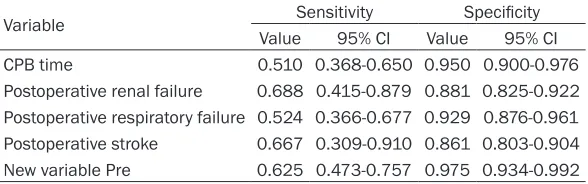
[image:5.612.96.521.85.177.2]The sensitivity and specificity of the indepen -dent predictors and the new variable Pre are Table 4. AUC analysis of the prediction model
Test variable AUC Standard error P value 95% confidence interval Lower bound Upper bound
CPB time 0.823 0.049 <0.001 0.727 0.919
Postoperative renal failure 0.647 0.059 0.007 0.532 0.762 Postoperative respiratory failure 0.708 0.054 <0.001 0.602 0.814
Postoperative stroke 0.579 0.058 0.145 0.465 0.693
New variable Pre 0.907 0.033 <0.001 0.842 0.971
AUC, area under the receiver operating characteristics curve; CPB, Cardiopulmonary bypass.
Figure 1. AUC of each test variable.
that CPB time (odds ratio [OR], 1.039; 95% confidence inter
-val [CI], 1.014-1.064), postop -erative stroke (OR, 9.359; 95% CI, 1.685-51.683), postopera-tive renal failure (OR, 5.087; 95% CI, 1.043-24.824) and respiratory failure (OR, 5.917; 95% CI, 1.861-18.810) were
significant independent
pre-dictors for prolonged ICU stay in patients undergoing surgery for acute aortic dissection type A (P<0.05, Table 3).
[image:5.612.92.371.215.435.2]shown in Table 5. The details are as follows: CPB time (cutoff value, 193.5 min; sensitivity:
0.510, 95% CI: 0.368-0.650; specificity: 0.950,
95% CI: 0.900-0.976), postoperative renal fail-ure (sensitivity: 0.688, 95% CI: 0.415-0.879;
specificity: 0.881, 95% CI: 0.825-0.922), post -operative respiratory failure (sensitivity: 0.524,
95% CI: 0.366-0.677; specificity: 0.929, 95%
CI: 0.876-0.961), postoperative stroke
(sensi-tivity: 0.667, 95% CI: 0.309-0.910; specificity:
0.861, 95% CI: 0.803-0.904), and the new variable Pre (sensitivity: 0.625, 95% CI:
0.473-0.757; specificity: 0.975, 95% CI: 0.934-0.992). The Hosmer-Lemeshow goodness-of-fit test showed that χ2<10.251 and P<0.248. This indicated that this model was well-calibrated for prediction of prolonged ICU stay.
Discussion
Mortality rates following cardiac surgery have been steadily decreasing with improvements in preoperative diagnosis, surgical technique, and patient care. However, postoperative complica-tions and prolonged ICU stay are still high with cardiac surgery increasingly utilized in older and having more advanced disease and greater co-morbidity patients. Prolonged ICU stay is associated with increased hospital costs and incremental use of medical resources, and it also leads to a shortage of ICU beds and results
in operations being canceled [4]. Furthermore,
these patients usually have poor quality of life
and higher mortality after discharge [5]. The
mortality rate is about 34% in one year after discharge, and even highly to about 60% in
three years after discharge [6, 7]. Most patients
undergoing surgery for acute aortic dissection type A have a more prolonged ICU stay in com-parison to patients undergoing routine cardiac or aortic operation. In this study preoperative, intraoperative, and postoperative models were
There are many reports about the risk factors related with the mortality after operation for acute aortic dissection type A. Many studies have pointed out that age, renal failure, preop-erative hemodynamic instability, cardiopulmo-nary resuscitation, tamponade, prolonged DHCA, sustained injury to the nervous system,
and respiratory insufficiency are the important
risk factors related with in-hospital mortality
after surgery [8-12]. But there are still few reports about the risk factors influencing ICU
length of stay after operation for acute aortic dissection type A. Variables reported to deter-mine ICU stay in routine cardiac operation are type of operation, emergency surgery, reopera-tion, age, higher preoperative serum creatinine, left ventricular function, CPB time, and volume
of blood transfusions [13-16].
A substantial volume of work over the years has demonstrated that CPB time is predictor of immediate postoperative complications and mortality after cardiac surgery. It is related with prolonged mechanical ventilation time, postop-erative renal dysfunction, gastrointestinal
com-plications and prolonged ICU stay [17, 18]. Our study confirmed that CPB time was the inde -pendent risk factor for prolonged stay in the ICU after surgery for acute aortic dissection
type A in accordance with above findings. Car-diopulmonary bypass can trigger significant inflammatory response during the cardiac sur
-gery. Complements were activated, inflamma -tory cytokines release increased, oxidation products increased, and blood cells adhesion increased in endothelial cell with the extens- ion of cardiopulmonary bypass time. All these
inflammatory responses may result in multiple
organ dysfunction (heart, brain, lung, liver and kidney etc) and blood coagulation mechanism disorder, thus extending the duration of
[image:6.612.91.385.98.190.2]mechanical ventilation and ICU stay time [18]. Table 5. Sensitivity and specificity of the independent predictors and
the new variable Pre
Variable Sensitivity Specificity
Value 95% CI Value 95% CI CPB time 0.510 0.368-0.650 0.950 0.900-0.976 Postoperative renal failure 0.688 0.415-0.879 0.881 0.825-0.922 Postoperative respiratory failure 0.524 0.366-0.677 0.929 0.876-0.961 Postoperative stroke 0.667 0.309-0.910 0.861 0.803-0.904 New variable Pre 0.625 0.473-0.757 0.975 0.934-0.992
CPB, Cardiopulmonary bypass; CI, confidence interval.
used to predict prolonged ICU stay. CPB time, postop-erative renal failure, posto- perative respiratory failure, and postoperative stroke
are proved to be significant
There is a relationship between CPB time and
surgical skills and proficiency and complexity of
the disease. The cardiopulmonary bypass time should be shortened as far as possible to reduce the multiple organ function damage and reduce postoperative ICU stay time.
Neurological complication is one of the major causes of in-hospital mortality and morbidity in patients undergoing operation for acute type A aortic dissection. Especially postoperative stroke is one of the catastrophic complications after great vessel operation, the mortality and disability rate are higher in these patients, and
this seriously influences the prognosis and
quality of life of these patients. This study
confirmed that the postoperative stroke was an
independent risk factor for prolonged stay in the ICU after surgery for acute aortic dissection type A. Therefore, the effective perioperative cerebral protection to reduce the incidence of postoperative stroke is one of the important measures to reduce the ICU stay length. The technique of DHCA associated with selective
antegrade cerebral perfusion (ASCP) [19] is a
more effective cerebral protection method in great vessel operation. In addition, taking effective monitoring measures such as the use of near infrared spectroscopy technology (NIRS) to monitor cerebral oxygen saturation continu-ously during DHCA is a reliable way to detect cerebral ischemia/hypoxemia timely. We can take effective treatment to prevent severe cerebral complications according the
monitor-ing result [20].
Postoperative respiratory failure showed a
sig-nificant influence on ICU stay length in patients
with acute aortic dissection type A in our study. This is in accordance with much research on the risk factors related with prolonged ICU
stay length in routine cardiac surgery [21, 22].
Respiratory failure is one of the serious post-operative complications in patients with acute aortic dissection type A, the incidence is about
13% in some studies [23]. These patients may
fail to wean from the ventilator due to the respi-ratory failure, so they needed longer intubation or even tracheotomy. This resulted in prolonged ICU stay length. Therefore, effective periopera-tive measures should be taken to protect the lung function, and we should also take more measures timely and effectively to prevent and treat the postoperative respiratory failure, so this may shorten the ICU stay length in acute
aortic dissection type A patients after opera-tion. Some researchers have shown that prone positioning is a viable treatment option, im- proving pulmonary oxygenation significantly.
Additionally, there was a tendency toward a shorter total time of mechanical ventilation and shorter ICU stay in the prone positioning sub-group in patients who underwent surgery for
acute aortic dissection type A [23].
Acute renal failure is a frequent postoperative complication in patients after cardiac surgery with a reported incidence of between 1% and
31% [18]. It is related with increased postoper -ative mortality in patients undergoing cardiac
surgery [22]. The results of this study showed
that acute renal failure was an independent risk factor for prolonged stay in the ICU after surgery for acute aortic dissection type A.Many studies have demonstrated increased cardio-pulmonary bypass time is associated with acute renal failure. Therefore, shortening the CPB time as far as possible can also reduce the incidence of postoperative acute renal failure after cardiac surgery, and so as to reduce the ICU stay length. For patients with postoperative acute renal failure, early initiation of continu-ous or intermittent renal replacement therapy
can improve patients’ outcomes [24], and so as
to shorten ICU stay length.
In conclusion, this study demonstrates that CPB time, occurrence of postoperative stroke, acute renal failure, and acute respiratory failure are independent predictors for prolonged ICU stay after surgery for acute aortic dissection type A. These measures as follows may be use-ful in order to reduce the postoperative com- plications and shorten ICU stay length, pro- mote effective protection of brain, kidney, and lung function in perioperative period, and in strengthening management of respiratory tract. This approach can be used to carefully and promptly treat respiratory failure
postoper-atively, thus ensuring sufficient renal blood sup -ply during and after the operation. Furthermore, avoiding the application of nephrotoxic drugs, and timely and effective renal replacement therapy can be used to shorten he CPB time as far as possible during operation.
Limitation
population collected for investigation was relatively small and just in a single institution. Second, factors such as experience of the individual surgeon, and institutional philosophy
influence the decision for method of treatment
cannot be taken into account in this analysis. Third, long-term results are presently not obtained by the registry data. Finally, as this is
a retrospective study, potential misclassifica -tion bias could not be completely excluded. Acknowledgements
This work was supported by the project “Scien-
tific research project” of Qingdao Municipal
Bureau of health (No: 2014-WJZD030).
Disclosure of conflict of interest
None.
Address correspondence to: Dr. Wei Sheng, Depart- ment of Cardiovascular Surgery, Qingdao Munici- pal Hospital, Medical College of Qingdao Univer- sity, Donghai Zhong Road No. 5, Qingdao 266071, Shandong, China. Tel: +86-0532-88905456; Fax: +86-0532-88905457; E-mail: [email protected]
References
[1] Hoefer D, Ruttmann E, Riha M,
Schobersber-ger W, Mayr A, Laufer G, Bonatti J. Factors influ -encing intensive care unit length of stay after surgery for acute aortic dissection type A. Ann Thorac Surg 2002; 73: 714-718.
[2] Bignami E, Frati E, Ceriotti F, Daverio R, Silvetti S, Landoni G, Marino G, Zangrillo A. Urinary neutrophil gelatinase-associated lipocalin as an early predictor of prolonged intensive care unit stay after cardiac surgery. Ann Card An-aesth 2012; 15: 13-17.
[3] Hein OV, Birnbaum J, Wernecke K, England M, Konertz W, Spies C. Prolonged intensive care unit stay in cardiac surgery: risk factors and long-term-survival. Ann Thorac Surg 2006; 81: 880-885.
[4] Ghotkar SV, Grayson AD, Fabri BM, Dihmis WC, Pullan DM. Preoperative calculation of risk for prolonged intensive care unit stay following coronary artery bypass grafting. J Cardiothorac Surg 2006; 1: 14.
[5] Giakoumidakis K, Baltopoulos GI, Charitos C, Patelarou E, Galanis P, Brokalaki H. Risk fac-tors for prolonged stay in cardiac surgery inten-sive care units. Nurs Crit Care 2011; 16: 243-251.
[6] Bapat V, Allen D, Young C, Roxburgh J, Ibrahim M. Survival and quality of life after cardiac
sur-gery complicated by prolonged intensive care. J Card Surg 2005; 20: 212-217.
[7] Hellgren L, Ståhle E. Quality of life after heart valve surgery with prolonged intensive care. Ann Thorac Surg 2005; 80: 1693-1698.
[8] Legras A, Bruzzi M, Nakashima K, Hillion ML, Loisance D, Kirsch M. Risk factors for hospital death after surgery for type A aortic dissection. Asian Cardiovasc Thorac Ann 2012; 20: 269-274.
[9] Olsson C, Hillebrant CG, Liska J, Lockowandt U, Eriksson P, Franco-Cereceda A. Mortality and reoperations in survivors operated on for acute type A aortic dissection and implications for catheter-based or hybrid interventions. J Vasc Surg 2013; 58: 333-339.
[10] Goda M, Imoto K, Suzuki S, Uchida K, Yanagi H, Yasuda S, Masuda M. Risk analysis for hospital mortality in patients with acute type A aortic dissection. Ann Thorac Surg 2010; 90: 1246-1250.
[11] Macrina F, Puddu PE, Sciangula A, Trigilia F, taro M, Miraldi F, Toscano F, Cassese M,
To-scano M. Artificial neural networks versus mul -tiple logistic regression to predict 30-day mortality after operations for type A ascending aortic dissection. Open Cardiovasc Med J 2009; 3: 81-95.
[12] Chavanon O, Costache V, Bach V, Kétata A, Du-rand M, Hacini R, Thony F, Blin D. Preoperative predictive factors for mortality in acute type A aortic dissection: an institutional report on 217 consecutives cases. Interact Cardiovasc Thorac Surg 2007; 6: 43-46.
[13] Eltheni R, Giakoumidakis K, Brokalaki H, Gala-nis P, Nenekidis I, Fildissis G. Predictors of pro-longed stay in the intensive care unit following cardiac surgery. ISRN Nurs 2012; 2012: 691561.
[14] De Cocker J, Messaoudi N, Stockman BA, Bossaert LL, Rodrigus IE. Preoperative predic-tion of intensive care unit stay following cardi-ac surgery. Eur J Cardiothorcardi-ac Surg 2011; 39: 60-67.
[15] Atoui R, Ma F, Langlois Y, Morin JF. Risk factors for prolonged stay in the intensive care unit and on the ward after cardiac surgery. J Card Surg 2008; 23:9 9-106.
[16] Messaoudi N, De Cocker J, Stockman B, Bossaert LL, Rodrigus IE. Prediction of pro-longed length of stay in the intensive care unit after cardiac surgery: the need for a multi-insti-tutional risk scoring system. J Card Surg 2009; 24: 127-133.
[18] Taniguchi FP, Souza AR, Martins AS. Cardio- pulmonary bypass time as a risk factor for acute renal failure. Rev Bras Cir Cardiovasc 2007; 22: 201-205.
[19] Wiedemann D, Kocher A, Dorfmeister M, Va-dehra A, Mahr S, Laufer G, Ehrlich M. Effect of cerebral protection strategy on outcome of pa-tients with stanford type A aortic dissection. J Thorac Cardiovasc Surg 2013; 146: 647-655.
[20] Greenberg SB, Murphy G, Alexander J, Fasanel-la R, Garcia A, Vender J. Cerebral desaturation events in the intensive care unit following car-diac surgery. J Crit Care 2013; 28: 270-276.
[21] Joskowiak D, Kappert U, Matschke K, Tugtekin S. Prolonged intensive care unit stay of pa-tients after cardiac surgery: initial clinical re-sults and follow-up. Thorac Cardiovasc Surg 2013; 61: 701-707.
[22] Tekumit H, Uzun K, Cenal AR, Tataroglu C, Polat A, Akinci E. Determinants of mortality in pa-tients requiring prolonged intensive care unit stay after elective isolated on-pump coronary artery bypass grafting surgery. Kardiol Pol 2010; 68: 257-262.
[23] Girdauskas E, Kuntze T, Borger MA, Röhrich K, Schmitt D, Fassl J, Falk V, Mohr FW. Acute re-spiratory dysfunction after surgery for acute type A aortic dissection. Eur J Cardiothorac Surg 2010; 37: 691-696.