Original Article
Association analysis of
ALOX5
gene polymorphisms
with stroke risk: a case-control study in a
Chinese Han population
Jun He1*, Shuaiqi Sun1*, Mingxia Zhang2, Yongri Ouyang2, Ning Zhang2, Min Yang2, Tianbo Jin2,3, Ying Xia1
1Department of Neurosurgery, Haikou People’s Hospital, Haikou, Hainan, China; 2School of Life Sciences,
Northwest University, Xi’an, Shaanxi, China; 3Key Laboratory of High Altitude Environment and Genes Related to
Diseases of Tibet Autonomous Region, School of Medicine, Xizang Minzu University, Xianyang, Shaanxi, China.
*Co-first authors.
Received December 23, 2015; Accepted March 7, 2016; Epub April 1, 2016; Published April 15, 2016
Abstract: Background: Stroke is a major cause of death and disability in the world. Genetic factors have been implicated in stroke risk but few have been reported. This study aimed to assess the association of ALOX5 gene polymorphisms and stroke risk in a Chinese Han population. Methods: We conducted a case-control study in isch-emic stroke and its subtypes in 488 cases and 504 controls, all of Chinese Han ancestry. We selected 9 single nucleotide polymorphisms (SNPs) of the ALOX5 gene to test the association. All these SNPs were genotyped using Sequenom Mass-ARRAY technology. For each SNP, genotypic frequencies in controls were tested for departure from Hardy-Weinberg Equilibrium (HWE) using an exact test. A P-value of 0.05 was considered the threshold for statistical significance. We compared the allele frequencies of cases and controls using the chi-squared (χ2) test. Associations
between the gene and the risk of stroke were tested using various genetic models (allele, dominant, and reces-sive) and analysis by SNP stats. Odds ratios and 95% confidence intervals (CIs) were calculated by unconditional logistic regression with adjustments for age and gender. Results: We identified that the SNP rs3740107 were as-sociated with a decreased risk stroke in the recessive model (OR=0.51; 95% CI=0.28-0.91; P=0.02). Additionally, very strong linkage was found between rs6593482, rs3824612, rs2029253, rs7918542, rs7919239, rs1369214, and rs10900213; and between rs3740107 and rs3780914 by Haploview analysis. Conclusion: The present study suggested that gene polymorphisms in the ALOX5 gene may exert influences stroke susceptibility in a Chinese Han population.
Keywords: ALOX5, stroke, gene polymorphisms, case-control study, Chinese Han population
Introduction
Cerebrovascular disease (stroke) is the third leading cause of death worldwide, and the leading cause of adult chronic disability in most regions [1, 2]. Stroke represents an increasing health problem throughout the world as the proportion of elderly increases, and is an impor-tant cause of dementia and age-related cog- nitive decline. Countries of low and middle income have the largest burden of stroke, accounting for more than 85% of stroke mortal-ity worldwide, but few reliable data are avail-able to identify risk factors for stroke in most of these regions, and particularly for hemorrhagic stroke [3-6]. Stroke is a syndrome rather than a
single disease, and subtypes of stroke are caused by a number of different specific dis-ease processes. About 80% of stroke is isch-emic; the three most common ischemic stroke subtypes are large vessel, cardioembolic and small vessel (lacunar) stroke [7].
contribute to the susceptibility to stroke [10] and have already identified many predisposing genes that are associated with stroke risk, including HDAC9 [7], LTC4S and ALOX5 [11]. The ALOX5 gene maps on chromosome 10, which induce a major enzyme called 5-lipoxy-genase, a kind of lipoxygenase that metabolize arachidonic acid into inflammatory molecules called prostaglandins and leukotrienes. Pre- vious studies have demonstrated that ALOX5
gene polymorphisms as factors in vascular pathology and Alzheimer’s disease [12]. Wang’s study also proved that ALOX5 gene polymor-phisms associated with ischemic stroke risk in a cohort of Chinese in east China [11]. Moreover, in Africans this polymorphism was associated with an increased susceptibility to pulmonary tuber culosis [13]. However, whether these polymorphisms associated with stroke in the northwest Chinese Han population is unknown. However, knowledge about the clinical impor-tance of ALOX5 genetics in stroke is still limit-ed. In order to investigate the contribution of genetic variations to the risk of stroke, a case-control study including 488 cases and 503 controls was carried out to clarify the involve-ment of ALOX5 single nucleotide polymor-phisms (SNPs) as risk factors for the pathogen-esis of stroke in the northwest Chinese Han population.
Materials and methods
Study subjects
We performed a case-control study to deter-mine the association between gene polymor-phism of ALOX5 and stroke risk. All the study populations were Han Chinese selected from
Xi’an and its surrounding regions. Finally, a total of 488 stroke cases, and 504 controls were recruited from the Haikou City People’s Hospital between January 2011 and February 2014. All patients were newly diagnosed with stroke and were histologically confirmed. Control subjects were randomly selected from the medical examination center at the same hospital during the similar period, and these controls were can-cer-free individuals and genetically unrelated to the patients. All protocols and methods were approved by the ethics committees of the local participating hospitals. Written informed con-sent was obtained from all participants. Ex- periments were conducted according to the principles expressed in the Declaration of Helsinki.
Polymorphisms selection and genotyping as-says
Candidate t SNPs in the ALOX5 gene was selected from previously published polymor-phisms associated with stroke. Validated t SNPs was selected with a MAF >5% in the Hap Map Asian population. A total of 9 t SNPs in the ALOX5 gene were selected for further genotyp-ing. Genomic DNA was extracted from periph-eral blood leukocytes using the GoldMag® nanoparticles method (GoldMag Ltd. Xi’an, China) according to the manufacturer’s instruc-tions, and DNA concentration was measured using the NanoDrop 2000 (ThermoScientific, Waltham, Massachusetts, USA). We used Se- quenom MassARRAY Assay Design 3.0 Soft- ware to design Multiplexed SNP Mass EXTEND assays [14]. SNP genotyping was performed using the Sequenom Mass ARRAYRS1000 with a standard protocol recommended by the man-ufacturer [14]. Data management and analyses were performed using the Sequenom Typer 4.0 software as previously described [14, 15].
Statistical analysis
[image:2.629.100.298.105.210.2]Statistical analyses were performed using the SPSS 19.0 statistical package (SPSS, Chicago, IL, USA) and Microsoft Excel (Redmond, WA, USA). All P values presented in this study are two-sided, and we used P≤0.05 as the thresh-old of statistical significance. An exact test was used to assess the departure of each SNP fre-quency from Hardy-Weinberg equilibrium (HWE) in controls. We compared allele frequencies between cases and controls using a χ2 test
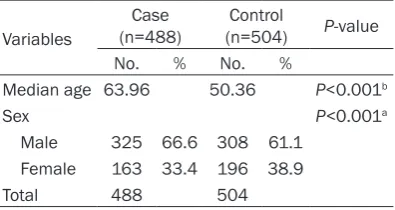
Table 1. General characteristics of case and control subjects
Variables
Case
(n=488) (n=504)Control P-value
No. % No. %
Median age 63.96 50.36 P<0.001b
Sex P<0.001a
Male 325 66.6 308 61.1 Female 163 33.4 196 38.9
Total 488 504
[16]. Odds ratios (ORs) and 95% confidence intervals (95% CIs) were tested using uncondi-tional logistic regression analysis with adjust-ment for age and gender [17]. We did not divide subjects into subgroups because of the limited sample size. The possibility of sex differences as a source of population sub-structure was evaluated by a genotype test for each SNP in male and female controls, and the number of significant results at the 5% level was
com-pared with the number expected by the χ2
test. We did not detect population stratifica- tion because all participants’ ethnicity was Han Chinese.
The three genetic models (dominant, recessive and additive) were applied by PLINK software (http://pngu.mgh.harvard.edu/purcell/plink/) to assess the association of single t SNPs with the risk of stroke. ORs and 95% CIs were
calcu-Table 2. PCR primers used for this study
SNP_ID 1st-PCR primer sequences 2nd-PCR primer sequences UEP sequences
rs6593482 ACGTTGGATGTATATCCTGGATAGAAGTC ACGTTGGATGAAAGTGAAAACACAACCCGC AAATGTCTGTAAGTCATGTATCC
rs3824612 ACGTTGGATGTGCTCCCAGTTCCCTAAATG ACGTTGGATGTGGAAGACAGAGTGTAGAGG GAGCAAAAAAGAAGGGAGA rs2029253 ACGTTGGATGGCATGGTATGAAATAAACCC ACGTTGGATGCTGGTGCCTTGGTGACTTTC cccGCCTTGGTGACTTTCCAGCAG rs7918542 ACGTTGGATGTAATCTCATCCCCAGAGGAC ACGTTGGATGTAGGTGAGTAGTTGCCTAGC gCTAGGAGTTGGGGAGGGG rs7919239 ACGTTGGATGTGGTAGTAGCAGCAGTTCAC ACGTTGGATGGCAGCAAGTATACAAAAGGTG ggAGGTGTTCAACTTCATTAGGA
rs1369214 ACGTTGGATGTGACAAATGTATGGATGGGC ACGTTGGATGCCTTTCACAAAATTGTATCG TCACAAAATTGTATCGTAATTTGC
rs10900213 ACGTTGGATGGAATAGGGCAGCCCCTAAAC ACGTTGGATGTCTGCCCATAAATCCTATCC aatagGAGACAGCATCAAAGTCACTC
rs3740107 ACGTTGGATGACGAAAGATGAGAGACCGAC ACGTTGGATGCACATCTATTTCACCTAACC CCTAACCTCTTTCTTCTTAGT
[image:3.629.96.538.92.219.2]rs3780914 ACGTTGGATGTGGGACAGGAAATACCACCG ACGTTGGATGTGGGAAGTTCCAGAAGTATC TGGAATCAGAAGAGCCT
Table 3. Basic information about nine SNPs examined in the ALOX5gene
SNP ID Chromosome Position Band Allele Gene (s) Role HWE P
A/B
rs6593482 10 45188455 10q11.21 T/G ALOX5 Promoter 0.84
rs3824612 10 45192870 10q11.21 T/C ALOX5 Intron 0.89
rs2029253 10 45211490 10q11.21 A/G ALOX5 Intron 0.54
rs7918542 10 45216257 10q11.21 G/A ALOX5 Intron 0.61
rs7919239 10 45218362 10q11.21 A/C ALOX5 Intron 0.63
rs1369214 10 45220735 10q11.21 G/A ALOX5 Intron 0.82
rs10900213 10 45224720 10q11.21 G/T ALOX5 Intron 0.86
rs3740107 10 45243776 10q11.21 A/G ALOX5 Intron 0.96
rs3780914 10 45255750 10q11.21 C/T ALOX5 Intron 0.67
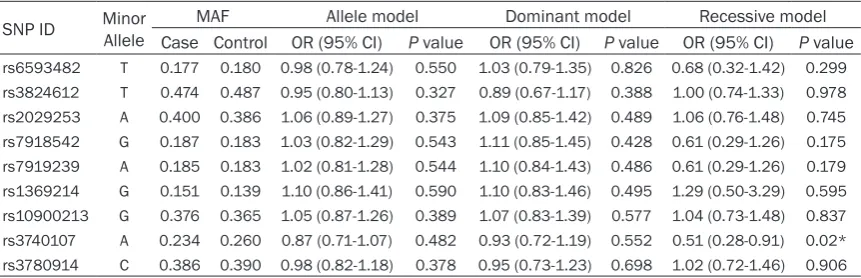
Table 4. Genotypic model analysis of relationship between ALOX5 t SNPs and stroke Risk
SNP ID Minor Allele MAF Allele model Dominant model Recessive model Case Control OR (95% CI) P value OR (95% CI) P value OR (95% CI) P value
rs6593482 T 0.177 0.180 0.98 (0.78-1.24) 0.550 1.03 (0.79-1.35) 0.826 0.68 (0.32-1.42) 0.299
rs3824612 T 0.474 0.487 0.95 (0.80-1.13) 0.327 0.89 (0.67-1.17) 0.388 1.00 (0.74-1.33) 0.978
rs2029253 A 0.400 0.386 1.06 (0.89-1.27) 0.375 1.09 (0.85-1.42) 0.489 1.06 (0.76-1.48) 0.745
rs7918542 G 0.187 0.183 1.03 (0.82-1.29) 0.543 1.11 (0.85-1.45) 0.428 0.61 (0.29-1.26) 0.175
rs7919239 A 0.185 0.183 1.02 (0.81-1.28) 0.544 1.10 (0.84-1.43) 0.486 0.61 (0.29-1.26) 0.179
rs1369214 G 0.151 0.139 1.10 (0.86-1.41) 0.590 1.10 (0.83-1.46) 0.495 1.29 (0.50-3.29) 0.595
rs10900213 G 0.376 0.365 1.05 (0.87-1.26) 0.389 1.07 (0.83-1.39) 0.577 1.04 (0.73-1.48) 0.837
rs3740107 A 0.234 0.260 0.87 (0.71-1.07) 0.482 0.93 (0.72-1.19) 0.552 0.51 (0.28-0.91) 0.02*
rs3780914 C 0.386 0.390 0.98 (0.82-1.18) 0.378 0.95 (0.73-1.23) 0.698 1.02 (0.72-1.46) 0.906
[image:3.629.100.533.259.402.2] [image:3.629.100.531.440.579.2]lated by unconditional logistic regression analy-ses adjusted for age and sex [17, 18].
Results
In total, 992 subjects were recruited in the cur-rent study, including 488 cases (325 male, 163 female; median age at diagnosis 63.96 years) and 504 controls (308 male, 196 female; medi-an age 50.36 years). General characteristics of the cases and controls were listed in Table 1. Statistically significant differences were ob- served between stroke cases and controls in terms of age and gender (P<0.001).
A total of nine SNPs were selected for further genotyping. Each SNP/sample call rate was 98.5% in both cases and controls. The primer sequences are presented in Table 2. Table 3
summarizes the basic information about nine SNPs examined in the study population. All of the tested t SNPs are in Hardy-Weinberg equi-librium (HWE) (P>0.05) in the control popula-tion of this study (Table 3).
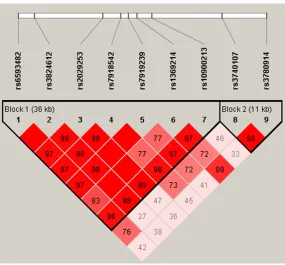
We further analyzed the associations between SNPs and stroke risk under three genetic
mod-00213; and between rs3740107 and rs378- 0914 (Figure 1).
Discussion
Cerebrovascular disease are the leading cau- ses of death and disability in the developed world, with an increasing prevalence due to the aging of the population and obesity [19]. Stroke is a major cause of death and disability in most populations of eastern Asia, and the incidence, particularly of hemorrhagic stroke, is generally higher than in western populations [20]. In our study, we evaluated nine SNPs of the ALOX5
gene to investigate whether they are associat-ed with stroke in the northwest Chinese Han population. We found rs3740107 was associ-ated with a decreased risk of stroke in the study population.
[image:4.629.99.385.77.342.2]The SNP rs3740107 at chromosome 16q12 located in the ALOX5 gene. Previous studies have demonstrated ALOX5 gene polymor-phisms as risk factors in ischemic stroke [11], vascular pathology and Alzheimer’s disease [12], and human pulmonary tuberculosis [13]. Another study revealed the pharmacogenetic
Figure 1. Haplotype block map for all the t SNPs of the ALOX5 gene. Block 1 includes rs6593482, rs3824612, rs2029253, rs7918542, rs7919239, rs1369214, and rs10900213; Block 2 includes rs3740107 and rs3780914. The LD between two SNPs is standardized D9 (red schemes).
els (allele, dominant and re- cessive). Table 4 shows that the SNP rs3740107 were as- sociated with a decreased risk stroke: in the recessive model, (OR=0.51; 95% CI= 0.28-0.91; P=0.02).
ALOX5 polymorphisms were further characterized using linkage disequilibrium (LD) and haplotype analyses. LD was determined pair wise among all 9 SNPs and the haplotype structure of ALOX5
gene was analyzed (D’ and r2).
association between ALOX5 promoter geno-type and the response to anti-asthma treat-ment [21]. Additionally, the ALOX5 gene is proved to be a novel therapeutic target in can-cer stem cells of chronic myeloid leukemia [22]. Despite reported relevant associations, the molecular consequences of ALOX5 variants have only incompletely been characterized so far. In the present study, we identified rs3740107 as a protective locus for stroke in the northwest Chinese Han population. The SNP rs3740107 in ALOX5 was first described to be associated with a decreased risk of stroke in this population. Although the polymorphisms of ALOX5 has been identified as risk of coro-nary artery disease [23]. However, the SNP has not been studied before, so this hypothesis needs to be investigated in future studies. Further investigations are warranted to verify and discover more loci associated with risk for stroke in other ethnic populations.
There are several inherent limitations in our study should be considered. First, the sample size of our study was relatively small. The statis-tical power may be limited because of the sam-ple size. Second, all subjects of this study were limited to the Han Chinese population; there-fore, it is unknown whether the results are applicable to other ethnicities. Third, this was a hospital-based study; therefore, selection bias may be unavoidable. So larger well-designed studies combined with stroke classification are needed to confirm the associations and clarify the potentially biological mechanisms of these polymorphisms in stroke.
In conclusion, the current findings suggested that a common susceptibility locus rs3740107 was associated with a decreased risk of stroke risk in a Chinese Han population and might be used as a molecular marker for evaluating stroke risk. Further investigations are warrant-ed to verify and discover more susceptible loci to other cardiovascular diseases and to eluci-date the underlying molecular mechanism.
Acknowledgements
This work is supported by the Hainan natural fund (No. 310147) and the National Natural Science Foundation (No. 81360190). We are grateful to all the patients and individuals in the study who made this work possible. We would
also like to thank the clinicians and hospital staffs who contributed to data collection for this study.
Disclosure of conflict of interest
None.
Address correspondence to: Dr. Tianbo Jin, School of Life Sciences, Northwest University, 6 East Wenhui Road, Xi’an 710069, Shaanxi 710069, China. Tel: +86-29-33755000; Fax: +86-29-337- 55000; E-mail: [email protected]; Dr. Ying Xia, Department of Neurosurgery, Haikou People’s Hospital, 43 Renmin Avenue, Haikou 570208, Hainan, China. Tel: 89866250883; Fax: +86-89866250883; E-mail: [email protected]
References
[1] Bonita R. Epidemiology of stroke. Lancet 1992; 339: 342-344.
[2] Committee PA. Reducing brain damage: fast- er access to better stroke care. Fifty-Second Report of Session 2005; 6.
[3] Feigin VL. Stroke in developing countries: can the epidemic be stopped and outcomes im-proved? Lancet Neurol 2007; 6: 94-97. [4] Strong K, Mathers C and Bonita R. Preventing
stroke: saving lives around the world. Lancet Neurol 2007; 6: 182-187.
[5] O’Donnell M and Yusuf S. Tackling the global burden of stroke: the need for large-scale inter-national studies. Lancet Neurol 2009; 8: 306-307.
[6] Ariesen M, Claus S, Rinkel G and Algra A. Risk factors for intracerebral hemorrhage in the general population a systematic review. Stroke 2003; 34: 2060-2065.
Rautanen A, Sawcer SJ, Trembath RC, Viswanathan AC, Wood NW, Worrall BB, Kittner SJ, Mitchell BD, Kissela B, Meschia JF, Thijs V, Lindgren A, Macleod MJ, Slowik A, Walters M, Rosand J, Sharma P, Farrall M, Sudlow CL, Rothwell PM, Dichgans M, Donnelly P, Markus HS. Genome-wide association study identifies a variant in HDAC9 associated with large ves-sel ischemic stroke. Nat Genet 2012; 44: 328-333.
[8] O’Donnell MJ, Xavier D, Liu L, Zhang H, Chin SL, Rao-Melacini P, Rangarajan S, Islam S, Pais P and McQueen MJ. Risk factors for isch-aemic and intracerebral haemorrhagic stroke in 22 countries (the INTERSTROKE study): a case-control study. Lancet 2010; 376: 112-123.
[9] Sacco R, Ellenberg J, Mohr J, Tatemichi T, Hier D, Price T and Wolf P. Infarcts of undetermined cause: the NINCDS Stroke Data Bank. Ann Neurol 1989; 25: 382-390.
[10] Dichgans M. Genetics of ischaemic stroke. Lancet Neurol2007; 6: 149-161.
[11] Wang GN, Zhang JS, Cao WJ, Sun H, Zhang J, Wang Y and Xiao H. Association of ALOX5, LTA4H and LTC4S gene polymorphisms with ischemic stroke risk in a cohort of Chinese in east China. World J Emerg Med 2013; 4: 32. [12] Manev H and Manev R. 5-Lipoxygenase
(ALOX5) and FLAP (ALOX5AP) gene polymor-phisms as factors in vascular pathology and Alzheimer’s disease. Med Hypotheses 2006; 66: 501-503.
[13] Herb F, Thye T, Niemann S, Browne EN, Chinbuah MA, Gyapong J, Osei I, Owusu-Dabo E, Werz O, Rüsch-Gerdes S, Horstmann RD, Meyer CG. ALOX5 variants associated with sus-ceptibility to human pulmonary tuberculosis. Hum Mol Genet 2008; 17: 1052-1060. [14] Gabriel S and Ziaugra L. SNP genotyping using
Sequenom MassARRAY 7K platform. Curr Protoc Hum Genet 2004; Chapter 2: Unit 2.12.
[15] Thomas RK, Baker AC, DeBiasi RM, Winckler W, LaFramboise T, Lin WM, Wang M, Feng W, Zander T and MacConaill LE. High-throughput oncogene mutation profiling in human cancer. Nat Genet 2007; 39: 347-351.
[16] Adamec C. [Example of the use of the non- parametric test. Test X2 for comparison of 2
in-dependent examples]. Cesk Zdrav 1964; 12: 613-619.
[17] Bland JM and Altman DG. The odds ratio. BMJ 2000; 320: 1468.
[18] Purcell S, Neale B, Todd-Brown K, Thomas L, Ferreira MA, Bender D, Maller J, Sklar P, De Bakker PI and Daly MJ. PLINK: a tool set for whole-genome association and population-based linkage analyses. Am J Hum Genet 2007; 81: 559-575.
[19] Bonow RO, Smaha LA, Smith SC, Mensah GA and Lenfant C. World Heart Day 2002 the in-ternational burden of cardiovascular disease: responding to the emerging global epidemic. Circulation 2002; 106: 1602-1605.
[20] Blood pressure, cholesterol, and stroke in eastern Asia. Eastern Stroke and Coronary Heart Disease Collaborative Research Group. Lancet 1998; 352: 1801-1807.
[21] Drazen JM, Yandava CN, Dubé L, Szczerback N, Hippensteel R, Pillari A, Israel E, Schork N, Silverman ES and Katz DA. Pharmacogenetic association between ALOX5 promoter geno-type and the response to anti-asthma treat-ment. Nat Genet 1999; 22: 168-170.
[22] Chen Y, Li D and Li S. The Alox5 gene is a novel therapeutic target in cancer stem cells of chronic myeloid leukemia. Cell Cycle 2009; 8: 3488-3492.