ISSN: 2278 – 7798 All Rights Reserved © 2015 IJSETR
3849
LOAD BALANCING AND JOB SCHEDULING OF
CLOUD ENVIRONMENT
USING ROUND ROBIN AND FCFS
Chandeep Singh Dhillon Deepinderjeet Kaur Dhaliwal
Research scholar at Desh Bhagat University Asst. Prof. at Desh Bhagat University
Mandi Gobindgarh Mandi Gobindgarh
Punjab,INDIA Punjab,INDIA
Abstract - Today peoples tries to access the data by using different type of online services like shopping, gaming, learning etc and this increase the load on server if we are using single server and it is very important to manage this load. Increase of Load on a server results in reduction of throughput and it leads to a strong need of developing and maintaining an efficient system with an appropriate load balancing algorithm that will be used to retrieve the important information with a reasonable response time. The main objective of our study is to tell you about an new approach for load balancing which can balance the incoming requests from global users which reside in different geographical locations to retrieve the information from a distributed data sources using effective scheduling and virtualization techniques. This paper provide good results as we compare Batch mode and Online Mode priority, and conclude with suggestion to use Batch Mode in place of Online mode for better load balancing and we will implement this by using MATLAB.
Index Terms - Cloud computing, Load balancing, Batch Mode and Online Mode priority schedule.
INTRODUCTION
Cloud computing, or "the cloud", also focuses on maximizing the effectiveness of the shared resources. Cloud resources are usually not only shared by multiple users but are also dynamically reallocated per demand. This can work for allocating resources to users. For example, a cloud computer facility that serves European users during European business hours with a specific application (e.g., email) may reallocate the same resources to serve North American users during North America's business hours with a different application (e.g., a web server). This approach should maximize the use of computing power thus reducing environmental damage as well since less power, air conditioning, rack space, etc. are required for a variety of functions. With cloud computing, multiple users can access a single server to retrieve and update their data without purchasing licenses for different applications. The term "moving to cloud" also refers to an organization moving away from a traditional CAPEX model (buy the dedicated hardware and depreciate it over a period of time) to
the OPEX model (use a shared cloud infrastructure and pay as one uses it).
Proponents claim that cloud computing allows companies to avoid upfront infrastructure costs, and focus on projects that differentiate their businesses instead of on infrastructure. Proponents also claim that cloud computing allows enterprises to get their applications up and running faster, with improved manageability and less maintenance, and enables IT to more rapidly adjust resources to meet fluctuating and unpredictable business demand.[2][3][4] Cloud providers typically use a "pay as you go" model. This can lead to unexpectedly high charges if administrators do not adapt to the cloud pricing model.
Fig 1: Cloud Computing
The present availability of high-capacity networks, low-cost computers and storage devices as well as the widespread adoption of hardware virtualization, service-oriented architecture, and autonomic and utility computing have led to a growth in cloud computing.
Working of Cloud computing
The goal of cloud computing is to apply traditional supercomputing, or high-performance computing power,
ISSN: 2278 – 7798 All Rights Reserved © 2015 IJSETR
3850
normally used by military and research facilities, to perform tens of trillions of computations per second, in consumer-oriented applications such as financial portfolios, to deliver personalized information, to provide data storage or to power large, immersive computer games. Cloud computing uses networks of large groups of servers typical running low-cost consumer. PC technology with specialized connections to spread data-processing chores across them. This shared IT infrastructure contains large pools of systems that are linked together. Often, virtualization techniques are used to maximize the power of cloud computing.
Cloud Computing in the Data Center and for Small Business
Cloud computing has started to obtain mass appeal in corporate data centers as it enables the data center to operate like the Internet through the process of enabling computing resources to be accessed and shared as virtual resources in a secure and scalable manner. For a small and medium size business (SMB), the benefits of cloud computing is currently driving adoption. In the SMB sector there is often a lack of time and financial resources to purchase deploy and maintain an infrastructure (e.g. the software, server and storage).In cloud computing, small businesses can access these resources and expand or shrink services as business needs change. The common pay-as-you-go subscription model is designed to let SMBs easily add or remove services and you typically will only pay for what you do use.
Types of Cloud Computing:
1. Public Cloud: The whole computing infrastructure is
situated on the premises of the whole computing infrastructure is situated on the premises of a cloud computing company that offers the cloud service. The location remains, separate from the customer and he has no physical control over the infrastructure. Public cloud use shared resources; they do excel mostly in performance, but are also most vulnerable to various attacks.
2. Private Cloud: cloud infrastructure is used by one
organization. It is not shared until we doest find its situation. If the cloud is externally hosted. Company can also choose one private cloud because company have this one option also, which is more expensive, but they don’t have physical control over the infrastructure. The security and control level is highest while using a private network. The cost reduction can be minimal, if the company needs to invest in an on-premise cloud infrastructure.
3 Hybrid cloud: we use both private and public cloud
depending on their purpose. For example, public cloud can be used to interact with customers, while private cloud is use to secure the data of the customers.
4. Community cloud: implies an infrastructure that is shared
between organizations with the shared data and data management concerns. For example, a community cloud can belong to a government of a single country. Community clouds can be located both on and off the premises and this is very big cloud.
Application of cloud computing
Cloud computing has been credited with increasing competitiveness through cost reduction, greater flexibility, elasticity and optimal resource utilization. Here are a few situations where cloud computing is used to enhance the ability to achieve business goals.
1. Infrastructure as a service (IaaS) and platform as a service (PaaS)
When it comes to IaaS, using an existing infrastructure on a pay-per-use scheme seems to be an obvious choice for companies saving on the cost of invention to acquire, manage and maintain an IT infrastructure. There are also instances where organizations turn to paas for the same reasons while also seeking to increase the speed of development on a ready-to-use platform to deploy applications.
2. Private cloud and hybrid cloud
Among the many incentives for using cloud, there are two situations where organizations are looking into ways to assess some of the applications they intend to deploy into their environment through the use of a cloud (specifically a public cloud). While in the case of test and development it may be limited in time, adopting a hybrid cloud approach allows for testing application workloads, therefore providing the comfort of an environment without the initial investment that might have been rendered useless should the workload testing fail. Another use of hybrid cloud is also the ability to expand during periods of limited peak usage, which is often preferable to hosting a large infrastructure that might seldom be of use. An organization would seek to have the additional capacity and availability of an environment when needed on a pay-as you-go basis.
3. Test and development
Probably the best scenario for the use of a cloud is a test and development environment. This entails securing a budget, setting up your environment through physical assets, significant manpower and time. Then come to the installation and configuration of your platform. All this can often extend the time it takes for a project to be completed and stretch your milestones.
ISSN: 2278 – 7798 All Rights Reserved © 2015 IJSETR
3851
With cloud computing, there are now readily available environments tailored for your needs at your fingertips. This often combines, but is not limited to, automated provisioning of physical and virtualized resources.
4. Big data analytics
One of the aspects offered by leveraging cloud computing is the ability to tap into vast quantities of both structured and unstructured data to harness the benefit of extracting business value.
Retailers and suppliers are now extracting information derived from consumers’ buying patterns to target their advertising and marketing campaigns to a particular segment of the population. Social networking platforms are now providing the basis for analytics on behavioral patterns that organizations are using to derive meaningful information.
5. File storage
Cloud can offer you the possibility of storing your files and accessing, storing and retrieving them from any web-enabled interface. The web services interfaces are usually simple. At any time and place you have high availability, speed, scalability and security for your environment. In this scenario, organizations are only paying for the amount of storage they are actually consuming, and do so without the worries of overseeing the daily maintenance of the storage infrastructure. There is also the possibility to store the data either on or off premises depending on the regulatory compliance requirements. Data is stored in virtualized pools of storage hosted by a third party based on the customer specification requirements.
6. Disaster recovery
This is yet another benefit derived from using cloud based on the cost effectiveness of a disaster recovery (DR) solution that provides for a faster recovery from a mesh of different physical locations at a much lower cost that the traditional DR site with fixed assets, rigid procedures and a much higher cost.
7. Backup
Backing up data has always been a complex and time-consuming operation. This included maintaining a set of tapes or drives, manually collecting them and dispatching them to a backup facility with all the inherent problems that might happen in between the originating and the backup site. This way of ensuring a backup is performed is not immune to problems such as running out of backup media , and there is also time to load the backup devices for a restore operation,
which takes time and is prone to malfunctions and human errors.
Cloud-based backup, while not being the panacea, is certainly a far cry from what it used to be. You can now automatically dispatch data to any location across the wire with the assurance that neither security nor capacity is the issues.
Load Balancing
load balancing distributes workloads across multiple computing resources, such as computers, a computer cluster, network links, central processing units or disk drives. Load balancing aims to optimize resource use, maximize throughput, minimize response time, and avoid overload of any single resource. Using multiple components with load balancing instead of a single component may increase reliability through redundancy. Load balancing usually involves dedicated software or hardware, such as a multilayer switch or a Domain Name System server process.
One of the most commonly used applications of load balancing is to provide a single Internet service from multiple servers, sometimes known as a server farm. Commonly load-balanced systems include popular web sites, large Internet Relay Chat networks, high-bandwidth File Transfer Protocol sites, Network News Transfer Protocol (NNTP) servers and Domain Name System (DNS) servers. Lately, some load balancers have evolved to support databases; these are called database load balancers. For Internet services, the load balancer is usually a software program that is listening on the port where external clients connect to access services. The load balancer forwards requests to one of the "backend" servers, which usually replies to the load balancer. This allows the load balancer to reply to the client without the client ever knowing about the internal separation of functions. It also prevents clients from contacting back-end servers directly, which may have security benefits by hiding the structure of the internal network and preventing attacks on the kernel's network stack or unrelated services running on other ports. Some load balancers provide a mechanism for doing something special in the event that all backend servers are unavailable. This might include forwarding to a backup load balancer, or displaying a message regarding the outage. Load balancing gives the IT team a chance to achieve a significantly higher fault tolerance. It can automatically provide the amount of capacity needed to respond to any increase or decrease of application traffic.
Regression Testing Techniques:
Regression testing is a type of software testing that seeks to uncover new software bugs, or regressions, in existing functional and non-functional areas of a system after changes such as enhancements, patches or configuration changes, have
ISSN: 2278 – 7798 All Rights Reserved © 2015 IJSETR
3852
been made to them. The intent of regression testing is to ensure that changes such as those mentioned above have not introduced new faults.[1] One of the main reasons for regression testing is to determine whether a change in one part of the software affects other parts of the software. Common methods of regression testing include rerunning previously completed tests and checking whether program behavior has changed and whether previously fixed faults have re-emerged. Regression testing can be performed to test a system efficiently by systematically selecting the appropriate minimum set of tests needed to adequately cover a particular change.
in most software development situations, it is considered good coding practice, when a bug is located and fixed, to record a test that exposes the bug and re-run that test regularly after subsequent changes to the program.[3] Although this may be done through manual testing procedures using programming techniques, it is often done using automated testing tools.[4] Such a test suite contains software tools that allow the testing environment to execute all the regression test cases automatically; some projects even set up automated systems to automatically re-run all regression tests at specified intervals and report any failures (which could imply a regression or an out-of-date test).[5] Common strategies are to run such a system after every successful compile (for small projects), every night, or once a week. Those strategies can be automated by an external tool.
Regression testing is an integral part of the extreme programming software development method. In this method, design documents are replaced by extensive, repeatable, and automated testing of the entire software package throughout each stage of the software development cycle.
In the corporate world, regression testing has traditionally been performed by a software quality assurance team after the development team has completed work. However, defects found at this stage are the most costly to fix. This problem is being addressed by the rise of unit testing. Although developers have always written test cases as part of the development cycle, these test cases have generally been either functional tests or unit tests that verify only intended outcomes. Developer testing compels a developer to focus on unit testing and to include both positive and negative test cases.[6]
Uses of Regression Testing
Regression testing can be used not only for testing the
correctness of a program, but often also for tracking the
quality of its output.[7] For instance, in the design of a compiler, regression testing could track the code size, and the time it takes to compile and execute the test suite cases.
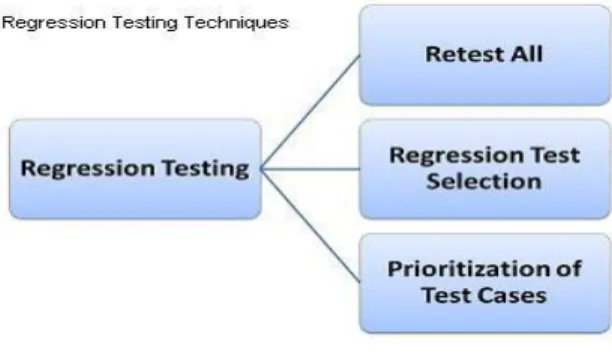
Fig 2: Regression Techniques II.RELATED WORK
Shaikh, F.B. et al [1] “Security threats in cloud computing”
In this paper author proposed that This study aims to identify the most vulnerable security threats in cloud computing, which will enable both end users and vendors to know about the key security threats associated with cloud computing. In this paper, our work will enable researchers and security professionals to know about users and vendors concerns and critical analysis about the different security models and tools proposed.
Wang En Dong et al [2] “Oriented Monitoring Model of Cloud Computing Resources Availability “In this paper author proposed that this paper does research on QoS-oriented cloud computing resources availability. First, a monitoring model of cloud computing resources availability is created. Then, according to the dynamic process of the cloud computing service, the availability of cloud computing resources is analyzed from QoS of a single cloud resource node which is described by common attribution and special attribution to QoS of some cloud resources which are connected by series model, parallel model and mix model to provide service. According to the three models and the analysis of the single cloud service resource, the availability of cloud computing service is monitored.
Qiang Guan et al [3] “A Cloud Dependability Analysis
Framework for Characterizing System Dependability in Cloud Computing Infrastructures” In this paper author wants to say that we present a cloud dependability analysis (CDA) framework with mechanisms to characterize failure behavior in cloud computing infrastructures. We design the failure-metric DAGs (directed a cyclic graph) to analyze the correlation of various performance metrics with failure events in virtualized and non-virtualized systems. We study multiple types of failures. By comparing the generated DAGs in the two environments, we gain insight into the impact of virtualization on the cloud dependability. This paper is the first attempt to study this crucial issue. In addition, we exploit the identified metrics for failure detection. Experimental results from an on-campus cloud computing test bed show that
ISSN: 2278 – 7798 All Rights Reserved © 2015 IJSETR
3853
our approach can achieve high detection accuracy while using a small number of performance metrics.
Sabahi, F. et al [4] “Cloud computing security threats and
responses” Cloud computing is one of today's most exciting technologies due to its ability to reduce costs associated with computing while increasing flexibility and scalability for computer processes. Cloud computing has grown from being a promising business ideato one of the fastest growing parts of the IT industry. IT organizations have expresses concern about critical issues (such as security) that exist with the widespread implementation of cloud computing. Comparison of the benefits and risks of cloud computing with those of the status quo are necessary for a full evaluation of the viability of cloud computing. Some issues arise that clients need to consider as they contemplate moving to cloud computing for their businesses. In this paper I summarize reliability, availability, and security issues for cloud computing (RAS issues), and propose feasible and available solutions for some of them.
Kalagiakos, P. et al [5]“ Cloud Computing learning ”
Author want to proposed that this paper sees cloud computing ecosystem as a new opportunity in designing cloud computing educational platforms where learning actors can reuse learning resources handled by cloud educational operating systems. To enhance learning objects portability and interoperability not only cloud computing API standards should be advocated by the key cloud providers but also learning resources standards should be defined by the Open Cloud Computing Education Federation as proposed by this paper
Wentao Liu et al [6] “Research on cloud computing security
problem and strategy” This paper introduces some cloud computing systems and analyzes cloud computing security problem and its strategy according to the cloud computing concepts and characters. The data privacy and service availability in cloud computing are the key security problem. Single security method cannot solve the cloud computing security problem and many traditional and new technologies and strategies must be used together for protecting the total cloud computing system
Gaurav Raj1 et al [7] “Using Batch Mode Heuristic Priority in Round Robin (PBRR) Scheduling” In this paper author proposed that the main objective of our study is to propose an new approach for load balancing which can balance the incoming requests from global users which reside in different geographical locations to retrieve the information from a distributed data sources using effective scheduling and virtualization techniques. We are utilizing the combination of Batch Mode Heuristic Priority and Round Robin Scheduling for reducing the load on server. This paper provide good results as we compare Batch mode and Online Mode priority, and conclude with suggestion to use Batch Mode in place of Online mode for better load balancing.
Md. Imrul Kayes et al [8] “Test Case Prioritization for Regression Testing Based on Fault Dependency” In this paper
author wants to say that this paper presents the new metric for assessing rate of fault dependency detection and an algorithm to prioritize test cases. Using the new metric the effectiveness of this prioritization is shown comparing it with non-prioritized test case. Analysis proves that non-prioritized test cases are more effective in detecting dependency among faults.
III.PROBLEMFORMULATION
Today peoples handle their all works online and this increase the load on server if we are using single server and it is very important to manage this load. Increase of Load on a server results in reduction of throughput and it leads to a strong need of developing and maintaining an efficient system with an appropriate load balancing algorithm that will be used to retrieve the important information with a reasonable response time. The main objective of our study is to tell you about a new approach for load balancing which can balance the incoming requests from global users which reside in different geographical locations to retrieve the information from a distributed data sources using effective scheduling and virtualization techniques. This paper provide good results as we compare Batch mode and Online Mode priority, and conclude with suggestion to use Batch Mode in place of Online mode for better load balancing.
IV.RESULTS
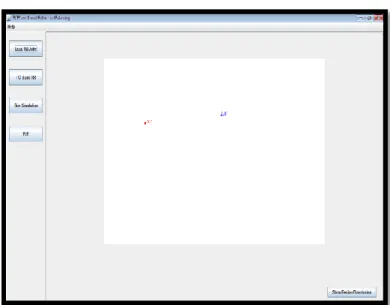
Fig 5.1: GUI for job scheduling on Cloud
This figure is use to represent to the graphic user interface designed for job scheduling on cloud environment. This figure contains the different buttons that perform various actions to schedule different jobs on cloud environment & manage load on these virtual machines on cloud. Jobs have been loaded different user face to execute on different data centers available in cloud computing environment.
ISSN: 2278 – 7798 All Rights Reserved © 2015 IJSETR
3854
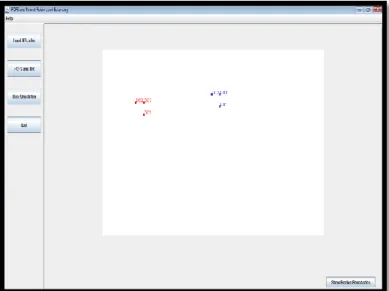
Fig 5.2: Loading of jobs from different user bases This figure represents the load of the jobs different user bases on different data centers. These jobs have been executed on different virtual machines divided by virtual machine division policy. This processor will be used for response of different tasks according to different user request.
Fig 5.3: Simulation of jobs on different virtual image This figure represent the jobs has been arranged in such a manner using first come first serve algorithms. These jobs have been executed by using the first serve & round robin algorithms. These algorithms derive an array that is used for execution on different processor. In this field the simulation has been done on different virtual machines to evaluate response time and cost occurred for data connection between different virtual machines.
Fig 5.4: Response time for different datacenter This figure represents the parameters that have been evaluated for different data centers these parameters are response time, Average time & execution time & execution cost occurred on different data center. These are computed between different data centers that has been used execution of jobs
Fig 5.5: Request serving time for data center
This figure represent request serving time by data centers that used to execute the different jobs. These data centers sense the request from different user’s bases to execute on various virtual machines.
Fig 5.6: Communication Cost for different Datacenter This is representing the cost that has been occurred for communication & response by different data centers. This cost includes cost for communication between VM’S & sharing of data from various cloud data centers.
V.CONCLUSION
Cloud computing is the vast environment to perform different actions. In the cloud computing the different
ISSN: 2278 – 7798 All Rights Reserved © 2015 IJSETR
3855
datacenters have been available at different locations these datacenters have been processed by different user bases to execute various requests. These data centers communicate with each other to share different files of the data and respond to the user base for their requests.
In the purposed work the user base will communicate with different data centers for processing of various jobs that have been defined by the user bases. These jobs have to be executed on different virtual machines available on the cloud environment so that minimum response time can be got. For achieving minimum response time these jobs have to be executing using scheduling
algorithm. The scheduling
algorithm schedules the jobs in such a way that
these jobs will acquire minimum computation time.
In the purposed work hybrid first come first serve
and round robin approach have been used. This
approach generates a cyclic queue that will remove
the shortcoming of FCFS approach. Due to
availability of cyclic queue these each job available
in the queue has the priority to share its own
execution time. No jobs have to be waiting for the
execution process. In this process these jobs will
execute by using hybrid algorithm.
By analyzing the various parameters of job
scheduling on the cloud environment one can
compare that hybrid approach provides much better
results as compare to the first come first serve
approach. The FCFS approach does not set priority
to job for execution that will leads to waiting for the
jobs if a single heavy job will be available.
REFERENCES
[1] Sheikh, F.B. ; Dept. of Compute. & Technol., SZABIST, Islamabad, Pakistan; Haider, S. “Security threats in cloud computing”, 978-1-4577-0884-8, 214 – 219,IEEE, 2011. [2] Wang En Dong ; State Key Lab. of High-end Server & Storage
Technol., Beijing, China ; Wu Nan ; Li Xu “ Oriented Monitoring Model of Cloud Computing Resources Availability ”, 13874396, 1537 – 1540,IEEE, 2013.
[3] .Qiang Guan ; Dept.of Comput. Sci. & Eng., Univ. of North Texas, Denton, TX, USA ; Chi-Chen Chiu ; Song Fu “A Cloud Dependability Analysis Framework for Characterizing System Dependability in Cloud Computing Infrastructures ”, 978-1-4673-4849-2, 11 – 20,IEEE,2012.
[4] Sabahi, F. ; Fac. of Comput. Eng., Azad Univ., Shahrekord, Iran “Cloud computing security threats and responses”, 978-1-61284-485-5, 245 – 249,IEEE,2011.
[5] .Kalagiakos, P. ; Dept. of Inf. Technol., Hellenic American Univ., Manchester, NH, USA ; Karampelas, P. “ Cloud Computing learning ” 978-1-61284-831-0, 1 – 4,IEEE,2011.
[6] Wentao Liu ;Dept. of Comput. & Inf. Eng., Wuhan Polytech. Univ., Wuhan, China “Research on cloud computing security
problem and strategy”, 978-1-4577-1414-6, 1216 – 1219,IEEE, 2012.
[7] Gaurav Raj1, Dheerendra Singh2, Abhay Bansal3 “Using Batch Mode Heuristic Priority in Round Robin (PBRR) Scheduling”,IEEE,2012.
[8] Md. Imrul Kayes et al “Test Case Prioritization for Regression Testing Based on Fault Dependency” 978-1-4244-8679-3/11,IEEE, 2013.