University of Vermont
ScholarWorks @ UVM
Graduate College Dissertations and Theses Dissertations and Theses
2017
Students' Experiences with Personalized Learning:
An Examination Using Self-Determination Theory
Steven NetcohUniversity of Vermont
Follow this and additional works at:https://scholarworks.uvm.edu/graddis Part of theSecondary Education and Teaching Commons
This Dissertation is brought to you for free and open access by the Dissertations and Theses at ScholarWorks @ UVM. It has been accepted for inclusion in Graduate College Dissertations and Theses by an authorized administrator of ScholarWorks @ UVM. For more information, please contact
Recommended Citation
Netcoh, Steven, "Students' Experiences with Personalized Learning: An Examination Using Self-Determination Theory" (2017).
Graduate College Dissertations and Theses. 738.
STUDENTS’ EXPERIENCES WITH PERSONALIZED LEARNING: AN EXAMINATION USING SELF-DETERMINATION THEORY
A Dissertation Presented
by Steven Netcoh
to
The Faculty of the Graduate College of
The University of Vermont
In Partial Fulfillment of the Requirements For the Degree of Doctor of Philosophy
Specializing in Educational Leadership and Policy Studies May, 2017
Defense Date: March 20, 2017 Dissertation Examination Committee: Penny A. Bishop, Ed.D., Advisor Susanmarie Harrington, Ph.D., Chairperson Cynthia Reyes, Ph.D. Bernice Garnett, Sc.D. Cynthia J. Forehand, Ph.D., Dean of Graduate College
Abstract
In recent years, personalized learning has become a buzzword in the field of education and an approach that schools across the United States have adopted in their attempts to account for the diverse interests, aspirations, and needs of their students. Despite the growing interest in personalized learning, there is a dearth of empirical research on this educational approach, particularly as it relates to the student experience. Given the paucity of research in this area, little is known about the extent to which personalized learning can offer students a more beneficial quality of experience than traditional educational methods. This question is further complicated by the fact that personalized learning has been defined and put into practice in diverse ways. Given these conditions, the purpose of this study was to explore students’ experiences with more humanistic forms of personalized learning at three high schools in Vermont. A pragmatic approach to qualitative research was used along with self-determination theory (SDT) as a framework to investigate students’ perceptions of their autonomy, competence,
relatedness, motivation, and well-being within the context of personalized learning. SDT was used as framework because it offers a lens for analyzing how social contexts affect people’s experiences and proposes that individuals experience higher qualities of motivation, engagement, and performance when their basic psychological needs for autonomy, competence, and relatedness are met. Study findings, which are based on interviews with 28 students from three Vermont high schools, suggest participants generally felt autonomous, competent, and related in their personalized learning environments, which contributed to their intrinsic motivation, engagement, and well-being within these settings. Some features of personalized learning that supported multiple facets of students’ basic psychological needs were the individualized nature of instruction, student-driven curriculum, and structures that enabled and supported community-based learning. Although many students suggested personalized learning supported their basic psychological needs, some struggled to direct and manage their own learning, which diminished their feelings of competence while others indicated that the individualized nature of their projects undermined their sense of relatedness to their peers. Overall, the findings indicate that humanistic approaches to personalized learning have the potential to contribute to a more beneficial quality of experience for high school students than traditional educational methods. The study has implications for educational policy and practice as it suggests personalization may be an effective approach for engaging a variety of students with their education and promoting the skills and dispositions for lifelong learning.
Acknowledgements
Words cannot fully express my gratitude to my advisor, Dr. Penny Bishop, for the mentorship she has provided me throughout my time at The University of Vermont (UVM). Penny empowered me to find my own voice and identity as a researcher and always made herself available when I confronted challenges or needed extra support during the dissertation process. Our conversations have forever shaped my thinking about teaching, learning, and education. Without Penny’s wisdom and guidance, this
dissertation would not have been possible. Thank you, Penny, for all the hours you spent with me on this project.
I am also tremendously grateful to the rest of my committee, Drs. Judith Aiken, Bernice Garnett, and Cynthia Reyes, for their support with my dissertation research and their guidance throughout my time at UVM. Judith, Bernice, and Cynthia were always there for me whenever I had questions or hit a road block with my research, and they each brought unique perspectives to my work, which have deeply informed this dissertation. A big thank you also goes out to Dr. Susanmarie Harrington for serving as the Chair of my dissertation committee.
I also want to thank all the faculty members at UVM with whom I have had the great pleasure of working during the past four years. Specifically, I would like to thank Drs. David Shiman, Jill Tarule, Cindy Gerstl-Pepin, Sherwood Smith, Robert Nash, Asim Zia, Sean Hurley, Kieran Killeen, Tammy Kolbe, Kelly Clark-Keefe, George Salembier, Alan
Tinkler, Barri Tinkler, Carmen Petrick Smith, Jessica DeMink-Carthew, and Ken Reissig. I am also tremendously grateful to Drs. Mark Olofson and John Downes for their
contributions to my work. Thank you as well to my Ph.D. cohort, Fahimeh Bahrami, Dr. Winnie Looby, and Dr. Mark Olofson, for being there to celebrate and commiserate with me during the happy and more trying times of the program.
A huge thank you goes out to everyone at the schools that participated in this study. Even though I cannot shout you out by name, I am so appreciative of how you opened your schools and classrooms to me throughout the dissertation process. I could not have felt more welcomed in your learning environments. I especially want to thank all of the students who participated in this research. Without your insight and wisdom, this dissertation would not have been possible.
Thank you to my parents, Frank and Nancy Netcoh, for everything you have done for me throughout my life. I would not be who and where I am today without your love and support. Thank you as well to my sister, Leigh, for always putting up with me. Your dedication to your students inspires me, and our conversations about education have deeply influenced my thinking that is reflected in this dissertation.
Finally, I am forever grateful for my partner, MacKenzie. You were my rock throughout the dissertation process and never gave me a hard time about all of the long hours I spent at night tucked away working on this research. I could not have completed this
Table of Contents
Acknowledgements ... ii
List of Tables ... vi
List of Figures ... vii
Chapter 1: Introduction ... 1
The Problem of Standardization ... 1
The Push for Personalization ... 5
Research Problem ... 8
Statement of Purpose ... 8
Research Questions ... 10
Definition of Key Terms ... 10
Chapter 2: Literature Review ... 13
Historical Perspectives on Personalized Learning ... 14
Current Definitions and Conceptions of Personalized Learning ... 28
The Goals and Values of Personalized Learning ... 33
An Operational Definition of Personalized Learning ... 38
Empirical Research on Personalized Learning ... 39
Theoretical Framework: Self-Determination Theory ... 52
Chapter 3: Methodology... 57
Justification for Qualitative Methods... 58
Justification for Pragmatic Approach ... 59
Student Perspectives in Research... 60
Research Paradigm... 61
Site Selection and Rationale ... 62
Research Site Characteristics ... 64
Data Collection ... 65
Data Analysis ... 74
Ethical Considerations ... 82
Researcher Subjectivity ... 82
Chapter 4: Findings ... 86
The Odyssey Program ... 86
The Personalized Learning Center ... 91
The Lakeview Personalization Program ... 97
The LearnOut Program ... 100
Personalized Learning through the Lens of Self-Determination Theory ... 104
Autonomy ... 104
Competence... 125
Relatedness ... 137
Motivation ... 153
Well-Being and Engagement in School ... 162
Chapter 5: Conclusions and Implications... 172
Personalized Learning, Motivation, and Well-Being ... 175
Personalized Learning and Quality of Experience... 176
Facets of Personalized Learning and the Student Experience ... 179
Personalized Learning and Student Voice Research ... 185
Implications for Practice ... 186
Policy Implications ... 189
Implications for Future Research ... 193
Limitations ... 195
Conclusion ... 197
References ... 200
Appendix A: Student-Friendly Definition of Personalized Learning ... 210
Appendix B: High School Student Interview Protocol ... 211
Appendix C: Maps of Categories and Clustered Sub-Codes ... 215
List of Tables
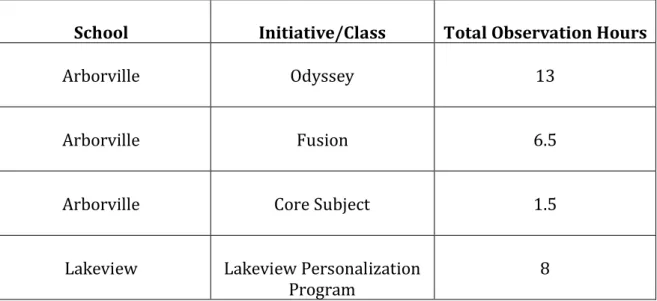
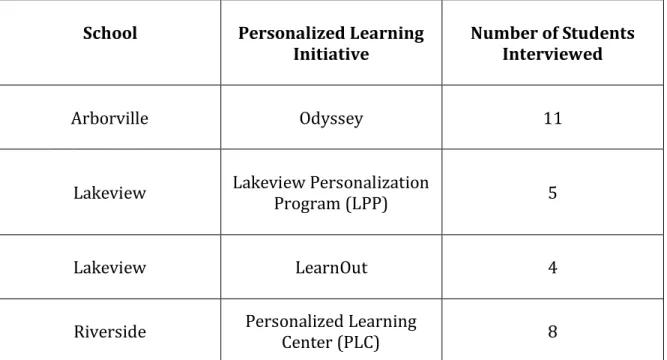
Table 1: Observation Hours 9/6/2016 - 10/5/2016 ... 68 Table 2: Number of Students Interviewed at Each Research Site ... 72
List of Figures
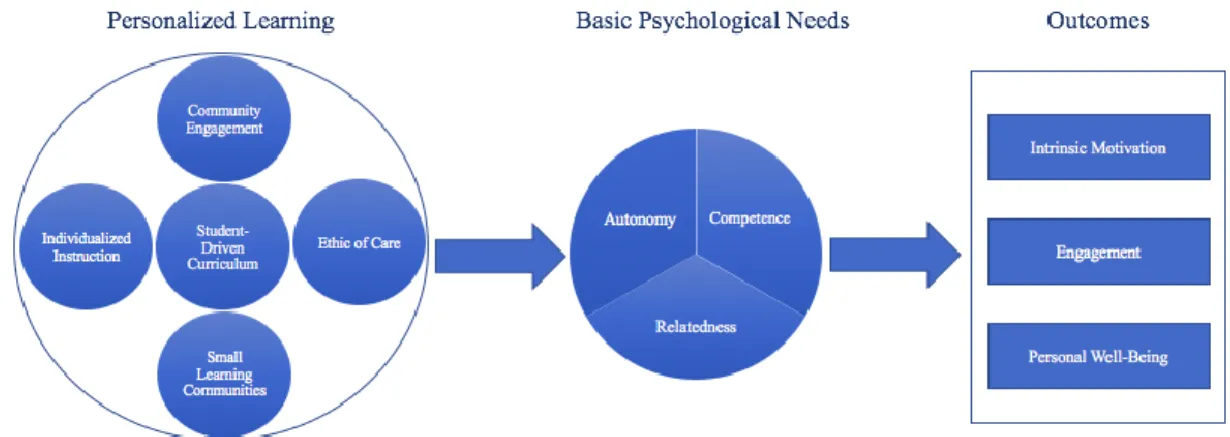
Figure 1: Emergent Model of the Relationship between Personalized Learning and Self-Determination Theory ... 180
Chapter 1: Introduction
The trouble with traditional education was not that educators took upon
themselves the responsibility for providing an environment. The trouble was that they did not consider the other factor in creating an experience; namely, the powers and purposes of those taught. It was assumed that a certain set of conditions was intrinsically desirable, apart from its ability to evoke a certain quality of response in individuals. This lack of mutual adaptation made the process of teaching and learning accidental. Those to whom the provided conditions were suitable managed to learn. Others got on as best they could. Responsibility for selecting objective conditions carries with it, then, the
responsibility for understanding the needs and capacities of the individuals who are learning at a given time. (Dewey, 1938, pp. 45-46)
The Problem of Standardization
In his seminal work, Experience and Education, John Dewey laid bare what he viewed as a fundamental problem with traditional schooling, namely its inattention to the motivations, needs, and capacities of learners. For Dewey, interaction between
individuals and the environment was at the heart of the educational process. Each student came to a learning situation with a unique set of motivations, needs, purposes, and capacities that interacted with the environment (i.e., the social context, curriculum, and teaching methods) to create experiences that could be “educative” or “mis-educative.” Educative experiences piqued curiosity and promoted personal growth while mis-educative experiences restricted “the possibilities of having richer experience in the future” by “engender[ing] callousness” or “produc[ing] lack of sensitivity and responsiveness” (Dewey, 1938, pp. 25-26). Dewey believed traditional schooling produced mis-educative experiences for many students because it all but ignored
individuals’ purposes and needs and assumed certain subjects and teaching methods held inherent educational value. As Dewey wrote:
The trouble with traditional education was not that it emphasized the external conditions that enter into the control of the experiences but that it paid so little attention to the internal factors which also decide what kind of experience is had. It violated the principle of interaction from one side. (Dewey, 1938, p. 42) For Dewey, the principle of interaction signified that objective and internal conditions were equally important in determining the type of experience an individual had. Within the context of education, this meant that students’ motivations, aspirations, and needs made an equal contribution to the types of experiences they had as the curriculum and teachers’ instruction. Because it relied on relatively prescribed curriculum and
instructional methods without accounting for students’ “internal conditions,” Dewey believed traditional education violated the principle of interaction and therefore contributed to mis-educative experiences for many students in school.
Dewey’s (1938) analysis of “traditional education” still rings true more than 75 years after the publication of Experience and Education as imposing “adult standards, subject-matter, and methods” upon students remains the norm of educational policy and practice (pp. 18-19). It is indeed rare for students to have a voice in their schooling experiences or for their own interests, needs, and goals to drive the educational process (Cook-Sather, 2002; Fullan, 2001; Kirshner & Jefferson, 2015). What has evolved instead is a curriculum driven by externally imposed standards and a “one-size-fits-all” approach to teaching and learning. The standards-based reform movement of the past 30 years has contributed to even greater standardization of classroom conditions as states and national professional organizations have largely taken responsibility for defining “what students should know and be able to do in core subjects at critical points in their
formal schooling” (Spillane, 2004, pp. 9-10). The high-stakes testing associated with standards-based reform has led to a narrowing of both curriculum and instructional practices used in schools, exacerbating the imposition of particular subject matter and teaching methods on students (Au, 2007; Deci & Ryan, 2002). Even in the absence of federal, state, and district mandates, many educators believe there is inherent value in certain subject matter and continue to teach that content year-after-year irrespective of the interests and needs of students in their classrooms. In these ways, the “traditional
education” that Dewey described in Experience and Education has predominated formal schooling for the greater part of the past century as students’ unique interests, needs, and goals have largely been subordinated to imposed standards, content, and instructional practices.
This relative disregard for students’ interests, motivations, and aspirations within dominant approaches to schooling undermines, as Dewey predicted, students’ learning and experiences in the classroom each day. Research using self-determination theory (SDT) has consistently shown that, when they are in classroom environments where teachers “bypass” their “inner motivational resources” (Reeve & Cheon, 2014) and use controlling instructional practices, students experience more controlled forms of motivation, which are associated with lower levels of engagement, learning, and
psychological well-being compared to classrooms where they are afforded autonomy and opportunities for input on the learning environment (Cheon & Reeve, 2015; Grolnick & Ryan, 1987; Reeve, 2009; Ryan & Niemiec, 2009). As Reeve (2009) succinctly noted, “students relatively benefit when teachers support their autonomy but relatively suffer
curricular and instructional practices remain the norm in many schools, particularly within the context of the standards-based reform movement. Studies show that the more pressure teachers feel to comply with curriculum mandates and performance standards, the less self-determined they feel toward teaching and the more controlling instructional approaches they use with their students (Deci & Ryan, 2002; Pelletier, Séguin-Lévesque, & Legault, 2002; Roth, Assor, Kanat-Maymon, & Kaplan, 2007).
Large-scale surveys of secondary school students also offer some insight into how the relative disregard for youths’ interests, needs, and motivations undermines their learning and experiences in school. Of the 81,499 students across the United States who took the 2006 High School Survey of Student Engagement (HSSSE), 67% reported being bored in school at least every day, with 17% suggesting they were bored in every class. When asked why they were bored in class, 75% of students responded that the material was not interesting to them while 39% reported that they did not find the material to be relevant to their lives. Only 34% of respondents suggested they attended school each day because they enjoyed it (Yazzie-Mintz, 2007). More recently, results from the Quaglia Institute for School Voice and Aspirations’ (2016) School Voice Report revealed similar patterns to those found in the 2006 HSSSE. Of the 48,185 students in grades 6-12 who took the survey, 49% suggested they enjoyed being at school with 43% claiming that “school is boring” (p. 30). These reports of “ennui and boredom,” as Dewey (1938) would call them, indicate that many schools are not accounting for students’ motivations, needs, and aspirations as they are generally disinterested in the material they are taught and perceive it to have little relevance to their personal lives (p. 27).
The feelings of disengagement and disinterest reported in the HSSSE and School Voice Report contribute to the dropout problem in the U.S. whereby more than one million students make the decision to exit their formal schooling each year (National Center for Education Statistics [NCES], 2013). Dropping out of school is understood to be “the last step in a long process through which [students] have become disengaged from school” (Wang & Fredricks, 2014, p. 722). Indeed, research (e.g., Gillet, Vallerand, & Lafrenière, 2012; Lepper, Corpus, & Iyengar, 2005; Wigfield & Cambria, 2010) has found that students’ motivation and engagement in school steadily decline as they progress through their formal education, perhaps lending some credence to Dewey’s (1938) theory that the accumulation of “mis-educative” experiences leads students to develop “slack and careless attitude[s]” toward school (p. 26). As of 2012, over 2.5 million people (or about 6.5 percent of individuals) in the U.S. between the ages of 16 and 24 were not enrolled in school and had not completed a high school program (NCES, 2013). This collection of research suggests many schools are not providing the types of learning environments in which students with diverse backgrounds, interests,
motivations, and aspirations can thrive and maximize their learning potential. The Push for Personalization
In response to the aforementioned trends, policymakers, school leaders, and educators across the U.S. are attempting to move students’ motivations, needs, and capacities from the periphery to the center of the schooling process. One approach that is growing in popularity is the development of personalized learning environments (PLEs) in which students’ unique interests, needs, and goals are used to make key educational decisions and to drive the schooling process. The U.S. Department of Education (DOE)
made PLEs its first “Absolute Priority” (U.S. DOE, 2013, p. 6) in its Race to the Top-District competition and awarded $510 million to 21 school districts between 2012 and 2013 that demonstrated an ability to create more personalized school settings (Sykes, Decker, Verbrugge, & Ryan, 2014). Individual school districts are also making efforts to provide students more personalized educational experiences with the support of
philanthropic and non-profit organizations such as the Bill & Melinda Gates Foundation and Next Generation Learning Challenges (Education Cities, 2014). In Colorado, for example, Denver Public Schools (DPS) and Colorado Springs District 11 are piloting personalized learning programs within select schools to inform larger district initiatives to expand student access to personalized learning. DPS intends to have 75% of its students in “personalized learning schools” by the end of 2022 and 100% of students in these schools by the 2024-25 school year (Education Cities, 2014, p. 13). Personalized learning initiatives are also being piloted in major U.S. cities such as New Orleans, Washington, D.C., and Dallas in hopes of using these programs to inform and drive district-wide reform efforts (Education Cities, 2014).
Vermont is at the forefront of the push for personalization at the state level with the recent passing of the Flexible Pathways Initiative (2013) and the Education Quality Standards (EQS). These initiatives aim to personalize students’ schooling experiences by offering flexible pathways to advancement and graduation. The EQS open these flexible pathways by mandating that local school districts replace Carnegie Units with
proficiency-based advancement and graduation requirements. By the 2019-20 school year, all students in Vermont will advance and graduate based on demonstrated mastery of locally-developed proficiencies rather than the amount of time they spend in the
classroom (Vermont State Board of Education, 2014). Within this proficiency-based assessment system, students can theoretically work toward mastery of these knowledge and skills through any combination of educational experiences (in traditional classroom settings and/or outside school) that are best suited to their individual interests, needs, and aspirations as learners. A student could, for example, demonstrate proficiency in
scientific inquiry by creating a portfolio or exhibition of her work with a local engineering firm that meets pre-defined district standards.
The Flexible Pathways Initiative (2013) provides legislative backing to the personalization called for in the EQS by requiring that all students in grades 7-12 have a personalized learning plan (PLP) by the 2017-18 school year. PLPs are intended to document the ongoing planning processes in which students engage with school staff and their parents or legal guardians to identify their evolving interests, abilities, aspirations, and “high-quality educational experiences” that enable them to attain their goals (Flexible Pathways Initiative, 2013, p. 2). These PLPs are the primary mechanism students will use to design their own personalized pathways to high school graduation through various combinations of traditional coursework, online, work-based, and service-learning, dual enrollment, and early college. The Vermont Agency of Education (AOE, n.d.) has suggested “there may be as many unique pathways [to graduation] as there are students” and that “the components that make up each pathway are limited only by our
imaginations and the resources available” (p. 2). The AOE (n.d.) also indicated that the Flexible Pathways Initiative moves Vermont’s “public education system to a model based on personalization” (p. 5). In this way, state policy in Vermont is aiming to make the
educational process more responsive to students’ individual motivations, purposes, and needs as learners.
Research Problem
Although personalization aims to create learning environments that are responsive to students’ individual motivations, purposes, and needs, little empirical research has documented how students experience this approach in practice. Given this dearth of research, the extent to which personalized learning offers students a different quality of experience from more traditional approaches to education remains relatively unknown. It could be the case, for example, that students experience personalized learning to be equally as controlling as more traditional classroom settings. In this case, reforms rooted in personalization, upon which millions of dollars are being spent, would do little to disrupt the patterns of demotivation and disengagement among students described in previous sections. Additionally, personalized learning is a relatively nebulous concept that has been defined and put into practice in diverse ways. Some approaches to
personalization may contribute to different qualities of experience for students in school while others may not. Further research is needed to understand how different facets of personalized learning relate to students’ experiences with this approach.
Statement of Purpose
Given these gaps in the research literature, the purpose of this study was to explore students’ experiences with personalized learning at three high schools in Vermont. More specifically, I used a pragmatic approach to qualitative research (Savin-Baden & Major, 2013) and self-determination theory (Ryan & Deci, 2000b) as a framework to examine these experiences. Self-determination theory (SDT) is a
macro-theory of motivation and human development, which posits that individuals demonstrate optimal functioning (e.g., motivation, engagement, performance, and learning) when their basic psychological needs for autonomy, competence, and relatedness are met (Ryan & Deci, 2000b). It offers a “psychological level of analysis” to examine how “social contexts affect people’s experience and, moreover, their satisfaction of some very basic psychological needs” (Ryan & Niemiec, 2009, p. 265). SDT was used in this study to better understand the extent to which personalized learning supported students’ basic psychological needs of autonomy, competence, and relatedness and contributed to their feelings of motivation and well-being in school. The goal of investigating these
constructs was to obtain preliminary insight on the quality of students’ experiences with personalized learning.
A secondary aim of the study was to identify the features of personalized learning that supported and undermined students’ basic psychological needs and feelings of intrinsic motivation and well-being. A broad range of educational approaches and pedagogies have been labeled as “personalized learning” in the literature, but little research has explored how specific practices and structures, individually and in tandem with others, factor into the quality of students’ experiences. Some structures and practices may contribute to a different quality of experience for students compared with more traditional classroom settings while others may not. Therefore, a goal of this study was to better understand the aspects of personalized learning that supported and diminished students’ basic psychological needs, intrinsic motivation, and well-being.
A final goal of this study was to illuminate students’ perspectives on educational practices that have been encouraged by new policy initiatives in the state of Vermont.
Because the success of reform efforts depends on the participation and buy-in of everyone involved in the educational process, including students, it is imperative to understand youths’ perspectives on personalized learning (Corbett & Wilson 1995; Levin, 2000). This study was grounded in the belief that “Young people themselves are powerful and insightful analysts of what works and what does not work for them in school and the conditions that need to be brought into existence for them to have a meaningful education” (Smyth, 2007, p. 635). Through interviews with high school students, this study aimed to understand the facets of personalized learning that “worked” for youth and contributed to a meaningful education and those that undermined the quality of their experience and learning. Such insights are important for educators, school administrators, and policymakers as they consider whether and how to adopt more
personalized approaches to education. Research Questions
Given the aims outlined in the previous section, this study was guided by the following research questions:
1. How do students perceive their autonomy, competence, and relatedness within the context of personalized learning?
2. How do students describe their feelings of motivation and personal well-being within the context of personalized learning?
Definition of Key Terms
Personalized learning (or personalization). A student-centered approach to education that alters traditional relationships between students, teachers, and knowledge in the learning process. Personalized learning is student-driven in that it emerges from the
individual interests, motivations, aspirations, and needs of students. It forges partnership between students and teachers (or advisors) as they collaboratively develop plans for learners to work toward mutually agreed upon goals and become co-constructors of knowledge. It also accounts for students’ social positioning and the broad spectrum of their human needs (e.g., social, emotional, psychological, physical, etc.) in the design of their educational plans. Personalized learning can work toward a variety of ends, but it positions the holistic development of each learner as one of its primary goals.
Personalized learning environment. A class or school initiative in which personalized learning is used as the primary educational approach.
Autonomy. “The psychological need to experience behavior as emanating from and as endorsed by the self; it is the inner endorsement of one’s behavior (Deci & Ryan 1985a). Students experience autonomy need satisfaction to the extent to which their classroom activity affords them opportunities to engage in learning activities with an internal locus of causality, sense of psychological freedom, and perceived choice” (Reeve, 2012, p. 153).
Competence. “The need to be effective in one’s pursuits and interactions with the environment. It reflects the inherent desire to exercise one’s capacities and, in doing so, to seek out and master environmental challenges” (Reeve, 2012, p. 154).
Relatedness. “The need to establish close emotional bonds and secure attachments with others. It reflects the desire to be emotionally connected to and
interpersonally involved in warm, caring and responsive relationships” (Reeve, 2012, p. 154).
Intrinsic Motivation. “Doing an activity for its inherent satisfactions rather than for some separable consequence” (Ryan & Deci, 2000a, p. 56); “the inherent tendency to seek out novelty and challenges, to extend and exercise one's capacities, to explore, and to learn” (Ryan & Deci, 2000b, p. 70).
Extrinsic Motivation. “Doing something because it leads to a separable
outcome” (Ryan & Deci, 2000a, p. 55); feeling “externally compelled into action” (Ryan & Deci, 2000a, p. 55).
Chapter 2: Literature Review Chapter Overview
Although the term “personalized learning” has gained currency during the past fifteen years, the idea of building the educational process around individual learners can be traced back to the writings of Jean-Jacques Rousseau and has been taken up by many progressive and humanistic educators from John Dewey and Maria Montessori to Dennis Littky and Eliot Washor (Zmuda, Curtis, & Ullman, 2015). In this way, the concept and practice of personalized learning are far from novel. Personalized learning has, however, been defined and operationalized in diverse ways in the field of education. These distinct conceptions and applications of the term are undergirded by disparate goals, values, and assumptions about learners, learning, and the nature of knowledge. Despite this
conceptual diversity, little effort has been made in the scant body of empirical research on personalized learning to distinguish among the different types and philosophies of personalization that have been studied. Therefore, the body of empirical research on personalized learning is relatively fragmented.
Because empirical research on personalized learning remains limited, particularly as it pertains to the student experience, I spend much of this literature review exploring the history of personalized learning in theory and practice. In the first section of this chapter, I offer historical context for this study’s conception of personalized learning by locating it within the humanistic tradition of education and exploring its roots in the educational philosophies of Jean-Jacques Rousseau and John Dewey. I also provide a brief review of the predecessors of personalized learning in practice, including
next section of the chapter, I consider the various ways personalized learning has been defined and conceptualized in the literature to situate this study within the broader theorizing on this educational approach. I then review the limited body of empirical research on personalized learning to illustrate what is known about this approach in practice and how the present study will contribute to this literature. I close the chapter with an overview of self-determination theory, the theoretical framework that guided this study.
Historical Perspectives on Personalized Learning
In many ways, personalized learning represents the most recent manifestation of the humanistic paradigm in education (DeCarvalho, 1991). Humanist perspectives on education can be traced as far back as the philosophical writings of Immanuel Kant and Jean-Jacques Rousseau and serve as the basis for many progressive theories of and movements in education (Chatelier, 2015). Although there are various types of
humanistic education (Chatelier, 2015), the educational philosophy is largely concerned with self-actualization of the individual and the development of learners’ innate
capacities (DeCarvalho, 1991; Koopman, 1987). The individual takes on central importance within humanistic education. Whereas more traditional forms of education prioritize subject matter, teaching methods, and academic achievement, humanism places learners’ interests, motivations, and aspirations at the center of the educational process and sees the holistic development of the individual as one of its primary goals (Chatelier, 2015; Koopman, 1987). This section aims to further contextualize personalized learning within the humanistic educational tradition by exploring its philosophical roots and
considering some of the humanistic educational approaches that preceded current practices of personalized learning.
Jean-Jacques Rousseau. The philosophy of personalized learning can be traced back to the educational writings of Jean-Jacques Rousseau (Zmuda, Curtis, & Ullman, 2015). Numerous scholars have asserted that Rousseau’s educational writings serve as the basis for the humanistic and progressive movements in education of which personalized learning is understood to be a part (Chatelier, 2015; Mintz, 2012). Rousseau’s
perspectives were representative of the naturalistic-romantic tradition within humanistic education that assumes there is a “fixed self” that is “essentially good and unique to the individual, and drives to actualise and fulfill itself” (Aloni, 2002, p. 42; Chatelier, 2015). Much of Rousseau’s writing about education was indeed based on the assumption that each individual has a natural way of being that is “formed from Nature” (Peckover, 2012, p. 85). Rousseau believed that all humans were born good, and therefore “education should accept the individual’s nature as given” (Gilead, 2005, p. 437).
Rousseau also argued that all human beings were born happy and that the goal of education should be to maintain that state of well-being (Gilead, 2012). For Rousseau, happiness involved more than an individual’s experience of pleasure (Mintz, 2012). Rather, happiness was achieved through self-realization of one’s true nature (Peckover, 2012). According to Gilead (2012), Rousseau argued that “happiness stems from internal balance in the soul, from the unity of the self, and from the satisfaction that one receives by achieving all that one values” (p. 271). Rousseau believed, however, that traditional approaches to education interfered with individuals’ happiness because they imposed external standards and ways of being, which “separated” children from their “own
creative urges” and served as “a wedge between the student and his or her self-realization” (Peckover, 2012, p. 87-88). Given this disruption, Rousseau argued that education should account for students’ interests and allow them the freedom to explore their inherent curiosities and desires (Gilead, 2005; Peckover, 2012).
While there are many warranted critiques of Rousseau’s ideas, his perspectives initiated a focus on the individual within the educational process that would be taken up by educators and philosophers in the following centuries. Rousseau’s belief in self-realization as education’s primary goal is present in many humanistic and progressive philosophies of education, including some approaches to personalized learning. The same can be said for Rousseau’s attention to the individual interests and motivations of learners as well as his advocacy for giving students freedom to explore their intrinsic curiosities and desires through their education. In many ways, Rousseau’s ideas laid the groundwork for the educational perspectives and approaches explored in the remainder of this section.
John Dewey. Considered by some to be “the greatest educational theorist of the modern era,” John Dewey took up many of Rousseau’s ideas about the importance of individuals’ internal characteristics in the learning process in his own educational theorizing (Chatelier, 2015, p. 86). Unlike Rousseau, however, Dewey did not believe that human nature was “a fixed entity waiting for release” (Brick, 2008, p. 123). Instead, he maintained that individuals’ “native activities” develop through interaction with their social and physical environments (Dewey, 1916, p. 133; Brick, 2008). In describing the view of human nature that informed Dewey’s educational theories, Curti (1980)
making up human nature were neither a ‘given’ nor an ‘end’ product. Human nature was a function of ever-changing social conditions and needs” (p. 250).
Given this view of human nature, the environments in which learning occurred took on added importance in Dewey’s philosophies of education. According to Dewey (1895), “The ultimate problem of all education is to coordinate the psychological and social factors” (p. 224). He maintained that it was the educator’s responsibility to create an environment that fostered individuals’ “power to join freely and fully in shared or common activities” (Dewey, 1916, p. 144) and developed their capacities for “mutual accommodation and adaptation” (Dewey, 1938, p. 60). In creating these environments, Dewey (1916) believed that educators should account for individuals’ intrinsic qualities and characteristics because they “furnish the conditions of all teaching” (p. 133). As he asserted in Democracy and Education, “To take into account the contribution made by the existing instincts and habits of those directed is to direct them economically and wisely” (Dewey, 1916, p. 31).
Dewey’s interest in accounting for the motivations and capacities of individual learners was informed by some of his basic beliefs and assumptions about human nature. One belief he held about humans was that “In the strict sense, nothing can be forced upon or into them. To overlook this fact means to distort and pervert human nature” (Dewey, 1916, p. 31). Dewey (1916) used an example of a burglar to suggest that “a man can be prevented from breaking into other persons’ houses by shutting him up, but shutting him up may not alter his disposition to commit burglary” (p. 32). Given this assumption, Dewey believed it was critical to understand the dispositions and motivations already at work within individuals in any educational situation and to create environments that
helped channel them toward desired ends. As Dewey (1916) put it, “all direction is but
re-direction; it shifts the activities already going on into another channel. Unless one is cognizant of the energies which are already in operation, one’s attempts at direction will almost surely go amiss” (p. 31).
Dewey’s educational theories and philosophies in many ways serve as the
foundation for contemporary humanistic approaches to personalized learning. He viewed the educational process as a collaboration between teachers and students that was
responsive to the motivations, needs, and capacities of learners. He believed that learners’ “natural impulses and desires” should serve as the “starting point” for educational
episodes but also maintained that educators had a responsibility to draw on their own knowledge and experience in the world to ensure activities were educative and promoted future growth (Dewey, 1938, p. 64). While Dewey viewed individual and social
development as broad goals for education, he also believed the process of developing the aims of educational experiences should be a “co-operative enterprise, not a dictation. The teacher’s suggestion is not a mold for a cast-iron result but is a starting point to be
developed into a plan through contributions from the experience of all engaged in the learning process” (Dewey, 1938, p. 72). With his attention to the individual motivations, dispositions, and aspirations of learners, focus on personal and social development as primary aims of the educational process, and emphasis on education as a collaborative enterprise between teachers and students, Dewey’s perspectives offer philosophical and practical foundations for humanistic approaches to personalized learning.
Maria Montessori and Montessori education. A contemporary of Dewey, Maria Montessorialso played a significant role in the advancement of more humanistic
and personalized approaches to education. Montessori’s educational philosophy grew out of her work with special needs children as a doctor in Rome, Italy (Thayer-Bacon, 2012). Montessori’s ideas and practices first gained notoriety in 1900 when several students with special needs who participated in her educational program “learned how to read and write and were able to pass the state examinations with above average scores” (Thayer-Bacon, 2012, p. 6). This success led Montessori to pursue further study in education and open her own school, “Casa dei Bambini” (The Children’s Home), in 1907 where she further refined her philosophy and methods of education (Thayer-Bacon, 2012; Whitescarver & Cossentino, 2008). In this school, students were allowed move freely throughout the learning environment and choose the types of activities and materials with which they engaged. Montessori instructed the teacher of the school to refrain from directing students’ activities and instead observe their interests, interactions with classmates, and the materials that attracted them (Thayer-Bacon, 2012; Whitescarver & Cossentino, 2008). Within a year of opening Casa dei Bambini, Montessori was “world famous, ‘for having discovered the world within the child,’” and she began the work of spreading her philosophy and practice through writing and training teachers in her methods (Thayer-Bacon, 2012, p. 7). By 1913, there were close to 100 Montessori schools in the United States (Thayer-Bacon, 2012), and there are now more than 20,000 Montessori schools across the world (Whitescarver & Cossentino, 2008).
The Montessori method is most often associated with early childhood and elementary education, but its principles have also been applied at the middle and high school levels (Rathunde & Csikszentmihalyi, 2005a; Shernoff, 2013). Rathunde (2014) suggested Montessori education has nine principles that are common across grade levels:
1) freedom of choice, 2) eliminating grades, 3) learning by doing, 4) deep concentration, 5) prepared environments, 6) habits of self-regulation, 7) movement, 8) aesthetic order, and 9) the importance of nature. Interest is another central feature of Montessori
education as teachers are expected to keenly observe the materials and content to which students are attracted and encourage them to pursue those interests through independent projects and investigations (Rathunde, 2014; Shernoff, 2013). Indeed, most Montessori schools offer students extended periods of time during the day to work on projects of choice that are often related to their personal interests (Rathunde, 2014). Given its focus on freedom of choice, learning by doing, self-regulation, and student interest, Montessori education itself can be classified as a particular model of personalized learning.
The principles and beliefs underlying Montessori education also help locate it as one of the earliest models of humanistic personalized learning. Like many humanists before (and after) her, Montessori believed that children, rather than being “helpless” and empty vessels waiting to be filled with adult knowledge, are “endowed with great
creative energies, which are of their nature so fragile as to need a loving and intelligent defense” (Montessori, 1949/1988, p. 26). Therefore, Montessori maintained that education should create conditions that set children’s creative energies free, which ultimately involved putting students at the center of the learning process (Shernoff, 2013). For Montessori, a primary goal of education was to help students feel “capable of succeeding in life by his own merits and on his own merits” (Montessori, 1973, p. 103). Although her ideas echo the perspectives of many educational theorists and philosophers who preceded her, Montessori’s work is significant because she was the first to
“elaborate a comprehensive, child-centered, developmentalist philosophy in a concrete pedagogical method” (Whitescarver & Cossentino, 2008, p. 2574).
The Dalton Plan. Traces of personalized learning also can be found in the Dalton Laboratory Plan, which was originally developed by Helen Parkhurst and most notably implemented at a high school in Dalton, Massachusetts in 1921 (Edwards, 1991). Parkhurst (1922) believed that traditional educational methods effectively suppressed students’ natural curiosity and independence and therefore sought to develop an alternative approach that represented “the entire reorganization of school life” (p. 13). This work began in her own classroom as a teacher and continued as she refined and formalized the plan between 1911 and 1919 (Parkhurst, 1922). Although it was intended to significantly alter traditional structures and arrangements within schools, Parkhurst did not want the Dalton Plan to serve as a standardized set of practices that all schools
followed in the same way. Instead, she believed the Dalton Plan should be adapted and modified to fit the local contexts in which it was applied (Parkhurst, 1922).
In practice, the Dalton Plan was built around discipline-specific “laboratories” rather than traditional academic classes. These laboratories were staffed by teachers who specialized in particular content areas and posted the assignments and content that students were expected to complete on monthly bulletins (Jackman, 1920). Students agreed to complete the month’s work by signing contracts with their teachers and tracked their progress on graphs that allowed them to see how many weeks of work they had completed toward their monthly totals (Edwards, 1991; Parkhurst, 1922). Teachers were primarily responsible for working with individuals and small groups of students to help them understand the scope of the work they were expected to complete within a given
amount of time (Parkhurst, 1922). Students were free to work through the material at their own pace and could decide where they wanted to spend their time during the day (Jackman, 1920). If a student completed all of their assignments for each subject area before the end of the month, they were permitted to move onto the next month’s
compilation of work (Parkhurst, 1922). Parkhurst (1922) asserted that these laboratories were intended to be places where “the children experiment—where they are free to work on their jobs, not places where they are experimented upon” (p. 39).
Parkhurst’s (1922) Education on the Dalton Plan outlined the two basic principles that undergirded her educational methods. The first principle of the Dalton Plan was freedom. Parkhurst asserted that students should be free to continue working on a subject in which they were deeply engaged “without interruption” because she believed students were “mentally keener, more alert, and more capable of mastering any difficulty that may arise” when they were interested in the topic at hand (p. 19). This principle of freedom also extended to students’ ability to work through material at their own pace and
approach their studies as they best saw fit. Parkhurst (1922) believed that giving students freedom and responsibility for their own learning fostered their powers of independence, self-sufficiency, and judgment. The second principle of the Dalton Plan was cooperation or what Parkhurst termed “the interaction of group life” (p. 19). Parkhurst believed that schools should reflect the broader democratic society in which they were situated by creating arrangements that promote social functioning through “intimate relations” and “interdependence” (p. 20).
In addition to these principles, Education on the Dalton Plan offered insight into Parkhurst’s humanistic beliefs about learners and learning. Like John Dewey and other
humanistic educators, Parkhurst believed a fundamental shortcoming of traditional schooling was its effective suppression of individuals’ innate curiosities and desires. Parkhurst maintained that ignorance of learners’ motivations and aspirations created many problems between students and teachers in traditional classroom settings.
Therefore, Parkhurst (1922) believed that education should “try to reach and release the deep well of [students’] natural powers. In doing so we shall assist and encourage the expression of [their] life-force and harness it to the work of education” (p. 28). Evident within this statement is Parkhurst’s conviction that education should work to foster students’ inner motivational resources and promote their self-actualization. These underlying beliefs, along with the freedom it provided students to organize and direct their own learning, help locate the Dalton Plan as a predecessor to more contemporary approaches to personalized learning.
Open education. Personalizedlearningalso shares many characteristics with the “open education” movement (also known as “informal education”) that swept through the United States and Great Britain in the 1960s and 1970s (Silberman, 1973). Open
education originated in British public elementary schools after World War II and grew in popularity when a parliamentary commission published a report in 1967, which
advocated adoption of open education in all British schools (Cuban, 2004). This publication, commonly known as the Plowden Report, influenced many American educators who visited British schools during the 1960s (Cuban, 2004) as it offered “the most thorough and important presentation of the ideas and practices of open education to date” (Barth, 1969, p. 29). Many educators viewed open education as an effective
and 1960s (Cuban, 2004). By the 1970s, this approach to schooling became quite common as open education programs and open classrooms were developed across the United States (Cuban, 2004).
Open education represented a shift away from traditional classroom arrangements with the teacher positioned at the front of the classroom and students seated in rows as passive recipients of knowledge. In its place, open education was built around “interest centers” and discipline-specific workshops where students engaged with a variety of books and physical materials such as scales, yardsticks, clocks, and shells (Silberman, 1973). Students learned at their own pace in these interest centers with the support of a teacher who structured classroom activities for individuals and small groups of students. (Cuban, 2004). Teachers served mainly as guides rather than directors of student’s activities in these settings as they “helped students negotiate each of the reading, math, science, art, and other interest centers on the principle that children learn best when they are interested and see the importance of what they are doing” (Cuban, 2004, p. 70; Rathbone, 1971). Although open education was most prevalent at the elementary level, some high schools created alternative open education programs where students had the opportunity to direct their own learning, pursue learning opportunities in their
surrounding communities, and learn through their personal and intellectual interests (Cuban, 2004; Silberman, 1973).
As with personalized learning, early advocates of open education asserted it was not a model or particular set of techniques to be “slavishly imitated or followed”
(Silberman, 1973, p. xix). Instead, it represented a set of beliefs and convictions about the nature of human beings, childhood, adolescence, and learning itself. Many of these
beliefs and assumptions are similar to those that undergird contemporary reforms related to personalized learning. Open educators believed, for example, that students were “active agent[s] in [their] own learning process” rather than “passive vessel[s] waiting to be filled” or “amorphous lump[s] of clay awaiting some form-giving artist” (Rathbone, 1971, p. 100). Similarly, open educators operated under the assumption that students were naturally curious and had inherent motivational resources that would drive them toward exploration if they remained unthreatened. For some open educators, these beliefs implied they should adopt a “don’t meddle role” in their work with students (Barth, 1969, p. 3). Others grappled with what the appropriate role of a teacher in an open classroom should be. Regardless of what role they believed teachers should play, open educators maintained students had the right to make important decisions about their own learning and should be involved in the planning of their education (Barth, 1969). These same beliefs underlie many of the recent personalized learning initiatives within the humanistic tradition of education.
Big Picture Learning. One of the most well-known contemporary models of personalization is the Big Picture approach, which originated at the Metropolitan Regional Career and Technical Center (The Met) in Providence, Rhode Island in 1996 and has since expanded to a network of over 60 Big Picture Learning (BPL) schools across the United States (Alger, 2016; Levine, 2002). After decades of work as teachers and administrators, Elliot Washor and Dennis Littky had an opportunity, through their involvement with the Annenberg Institute for School Reform at Brown University, to design their own school that “turned the traditional arrangement on its head” (Littky & Grabelle, 2004, p. 285; Levine, 2002). Given relative autonomy in this task, Littky and
Washor pretended to know nothing about the traditional organization of schools (e.g., grades, subjects, classes, etc.) and asked themselves what kinds of environments and structures would best support learning for each student in their school (Littky & Grabelle, 2004).
The result of this work was the Big Picture model, which aims to educate “one student at a time” by involving youth, their family members, and teachers in the process of developing a personalized learning program for each student in their schools (Littky & Grabelle, 2004). Rather than attending traditional classes, students at BPL schools spend three days per week in advisories working on projects related to their personal interests and the other two days of the week learning through real-world experiences in
community-based internships that are often linked to their career interests. Students spend the entire four years of high school in their advisories with approximately 14 other
students and the same advisor to help foster close personal and academic connections (Levine, 2002). Traditional “subjects” do not exist in BPL schools (Littky & Grabelle, 2004). Instead, students use their interest-based projects and internships to work toward five learning goals: 1) communication, 2) social reasoning, 3) empirical reasoning, 4) quantitative reasoning, and 5) personal qualities. Students are assessed on their progress toward these goals through exhibitions of learning four times each year (Klein, 2008).
The Big Picture model is informed by a number of beliefs about learners and learning. At the core of its approach to education is the belief that “true learning” happens when students are “active participants in their education, when their course of study is personalized by teachers, parents, and mentors who know them well, and when school-based learning is blended with outside experiences that heighten student interest” (Littky
& Grabelle, 2004, p. 285). The individual is placed at the center of the learning process in the Big Picture model as is evidenced by its mantra of educating “one student at a time” and practice of developing personalized programs of study for each student (Littky & Grabelle, 2004, p. 285). Big Picture’s belief in fostering individuals’ innate curiosities and inner motivational resources is manifest in its practice of involving students in the educational planning process and encouraging them to learn through their personal interests and curiosities. One of the Big Picture model’s primary goals is to help students become lifelong learners, and BPL schools believe that “using interests as the starting point for learning is the best way to achieve that goal” (Levine, 2002, p. 29).
The Big Picture model has been associated with a host of positive outcomes for its students, who are primarily urban youth of color from low-income communities and historically underserved by traditional schooling (Washor, Arnold, & Mojkowski, 2008). The first class at the Met had a high school graduation rate of 96% and college
acceptance rate of 98% (Arnold, Soto, Wartman, Methven, & Brown, 2015), and as of 2008, schools in the Big Picture network had a 92% graduation rate with 95% of graduates being accepted into college (Washor, Arnold, & Mojkowski, 2008). The Big Picture Longitudinal Study (BPLS) offered more recent evidence of the Big Picture model’s relative success (Arnold et al., 2015). The BPLS suggested that across all Big Picture schools, 93% of the class of 2006 and 97% of the class of 2007 enrolled at a two-year or four-two-year college at some point since graduating high school. Sixty-nine percent of students from the classes of 2006-2011 entered college immediately upon high school graduation, which compares favorably to the national rate of 53% of students from the
lowest income quartile who enrolled in college the fall after graduating from high school (Arnold et al., 2015).
In many ways, BPL is one of the most well-established and well-developed contemporary models of personalized learning to date with a network of more than 120 schools in the United States and abroad (Alger, 2016). Many of its core features such as personalized learning plans, advisory systems, and learning through internships have been adopted in public schools’ recent efforts to provide students with more personalized learning experiences. These features have often been adopted in a piecemeal fashion, however, and implemented in schools with varying definitions of personalized learning and diverse beliefs about the ends personalization should serve. Given this variety, the following section will explore the different ways that personalized learning has been defined and conceptualized in the literature since 2004.
Current Definitions and Conceptions of Personalized Learning
Although personalized learning has grown increasingly popular in educational discourse and practice in recent years, there is a lack of clarity about what personalization learning is or entails in practice (Fielding, 2006). As Pykett (2009) noted, “it can be shown how personalization means different things to different people at the same time”
(p. 378). Campbell, Robinson, Neelands, Hewston, and Mazzoli (2007) illustrated, for example, the diverse ways that personalized learning has been conceptualized and defined in policy documents in the United Kingdom (U.K.). Given these varying
conceptions, it is important to consider how personalized learning has been defined in the literature to situate this study’s conception of personalization within the broad spectrum of practices and philosophies to which the term has been assigned. In this section, I
explore the different ways that personalized learning has been defined and conceptualized in both policy documents and scholarly literature in the United States (U.S.) and U.K.
Technology-based personalization. One particular body of literature (e.g., Chen, 2008; Lin, Yeh, Hung, & Chang, 2013) uses “personalized learning” to connote primarily web-based learning systems that adapt curriculum sequencing, pacing, and presentation to the unique backgrounds, knowledge, preferences, interests, and learning goals of each student. Within this conception of the term, learning occurs primarily through
engagement with digital programs as opposed to interactions with teachers and classmates toward particular learning goals. The role of the teacher is significantly
reduced within this model of personalized learning as computer programs take on most of the responsibility for delivering the curriculum and tailoring instruction to individual students’ preferences and needs.
Teacher-directed personalization. Other definitions and applications of the term broaden personalization beyond the use of technology to meet students’ diverse needs in the classroom. Some share many similarities with more traditional classroom approaches but assert learning is not personalized unless the teacher tailors curriculum and
instruction to the unique interests, preferences, and needs of each student. For example, The U.S. Department of Education (2010) defined personalized learning in its National Education Technology Plan 2010 as “instruction that is paced to learning needs, tailored to learning preferences, and tailored to the specific interests of different learners” (p. 12). With this and similar definitions of personalized learning, teachers remain largely in control of the educational process. They use their knowledge of students’ interests and needs to determine the pace, style, and content of curriculum for each student.
Student-directed personalization. Clarke (2013) asserts, however, that these types of teacher-directed approaches should be defined as individualization and not personalization. For Clarke, personalization involves students taking increased control of and responsibility for their learning whereas individualization occurs when teachers or computer programs tailor curriculum and instruction to students. As he puts it, “The difference between individualization and personalization lies in control. We can individualize education by imposing it, but students choose to personalize their own learning. Their volition drives their inquiry” (Clarke, 2013, pp. 6-7). Based on this definition, learning is only personalized when students are actively involved in
determining what they learn, how they develop new knowledge and skills, and how they demonstrate their new proficiencies. This definition suggests many practices and
approaches currently labeled as “personalized” should in fact be described as
“individualized” because the teacher maintains control of curricular and instructional decisions for students.
Stages of personalization. Bray and McClaskey (2015) offer a definition of personalization that is similar to Clarke’s, but they assert there are different “stages” of personalized learning. Stage One is primarily teacher-directed and shares many
similarities with Clarke’s (2013) conception of individualization. The primary difference is that teachers design projects and activities in ways that allow for learner voice and choice, which introduces some degree of student control into the learning environment. In Stage Two, students begin to take on increased responsibility for their learning and “co-design” learning experiences with teachers by determining how they best access and engage with new content, choosing the tools and strategies that are suited to their needs,
creating assessments, and identifying extended learning opportunities that match their interests and aspirations (p. 77). Stage Three is “learner-driven” as students are fully self-directed and design their own learning experiences both within and outside the traditional classroom setting, create their own assessments, demonstrate their learning through public showcases and exhibitions of their work, and learn at their own pace in a competency-based system of assessment (p. 77). Bray and McClaskey’s classification scheme is useful for distinguishing among different kinds and degrees of personalization.
Deep vs. shallow personalization. Campbell et al. (2007) make similar distinctions between “deep” and “shallow” personalization in their assessment of the U.K.’s movement toward personalized learning.1 Their conception of shallow personalization again shares many similarities with Clarke’s (2013) definition of
individualization in that it involves teachers tailoring the curriculum and instruction to the students in their classrooms. For Campbell et al. (2007), shallow personalization attempts to make educational services more “streamlined, accessible, and efficient” but does not shift the relationship between teachers and students in a way that they become
“co-producers of educational knowledge” (p. 144). Deep personalization, on the other hand, is “disruptive” because it requires “changed power relations over knowledge production” (p. 145). With deep personalization, teachers and students become partners in the learning process, and students are actively involved in making decisions about what, where, and how they learn. Students become co-producers and “co-authors of their
1 Campbell et al.’s (2007) analysis builds on and expands the work of Leadbeater (2004) who first introduced the distinction between “deep” and “shallow” personalization.
educational script[s]” rather than passive recipients of educational services in a deeply personalized setting (p. 138).
Process vs. outcome personalization. While Campbell et al. (2007) distinguish between “deep” and “shallow personalization, Zhao (2016) differentiates between
“process” and “outcome” personalization (p. 9). For Zhao, process personalization entails customizing aspects of the learning process such as pace, content, products, and learning environments for each student. It allows students to work at their own pace, choose where and how they learn, and determine how they demonstrate new knowledge and skills. With process personalization, all students to work toward mastery of the same established set of standards. Outcome personalization, on the other hand, allows students to
determine the objectives of their educational experiences. With outcome personalization, students are not required to follow a prescribed curriculum or meet a common set of standards. Instead, students work with teachers to develop unique educational programs toward their own goals that are based on their personal strengths and interests as learners.
Whole child personalization. David Hargreaves (2006) extends these conceptions by examining the conditions that must be present beyond the learning
process itself for personalization to occur. Specially, he asserts “deep support” is required for students to engage in deep forms of personalized learning (p. 8). For Hargreaves, deep support involves assuring students’ general wellbeing, “including their health, their general security and their freedom from poverty and disadvantage” (p. 8). He argues individual schools may not be able to provide this deep support alone and therefore suggests that schools aiming for personalization should collaborate with external institutions and agencies to better meet their students’ needs. Hargreaves’ (2006)
conception broadens the focus of personalization from a relatively narrow attention to teaching and learning to a focus on students’ basic needs and well-being as individuals. The Goals and Values of Personalized Learning
As the previous section demonstrated, there are varying conceptions and definitions of personalized learning in both scholarly literature and policy documents related to this educational approach. Underlying each of these conceptions are particular values and assumptions about students and the purposes of schooling. In this section, I consider varying perspectives on the values, goals, and assumptions that undergird different conceptions of personalized learning.
Economic rationales and individuals as consumers. Hartley (2009) argues that personalized learning is based in marketing theory rather than educational theory and that its rationale is ultimately economic. He asserts that personalized learning conceptualizes the individual as a “competitive entrepreneur” or “self-centred consumer” and that the rationale for personalization is “explicitly consumerist” (p. 429). Hartley acknowledges that personalization has democratic appeal with its goal of enabling all students to have a voice and fulfill their potential but argues that this voice must be expressed “in a certain way, about certain things, and in a ‘new’ middle-class manner that is seen as legitimate by would-be providers” (p. 430). In other words, students only have voice to the extent that it conforms to the standards and expectations of their schools, which Hartley argues are grounded in neo-liberal conceptions of the individual as a consumer and competitor. Therefore, from Hartley’s perspective, “The ‘voice’ of personalisation is a would-be consumer’s voice, not that of a citizen-in-the-making” (p. 430).