European Commission
Directorate-General for Economic and Financial Affairs Economic Policy Committee
Efficiency and effectiveness of
public expenditure
on tertiary education in the EU
Joint Report by the Economic Policy Committee
(Quality of Public Finances)
and the Directorate-General for Economic and Financial
Affairs
Working Document
Table of contents
1. Introduction ... 6
2. Lessons from the literature... 8
2.1. The economic impact of education ... 8
2.1.1. The economic impact of education on the individual ... 10
2.1.2. The impact of education on growth... 13
2.1.3. The returns to tertiary education on the individual and the society ... 17
2.2. Tertiary education funding ... 22
2.3. Tertiary education governance, efficiency and effectiveness ... 26
2.4. Summary ... 35
3. Main trends and performance in tertiary education ... 38
3.1. Attainment and graduation ... 38
3.2. Performance indicators... 50
3.3. Quality ... 53
3.4. Funding... 54
3.5. Summary ... 59
4. Mapping performance with institutions: lessons from country experience... 61
4.1. The nature of tertiary education systems... 61
4.2. Governance... 63 4.2.1. Selection of students... 63 4.2.2. Staff policy ... 65 4.2.3. Governance structures ... 67 4.3. Funding arrangements ... 67 4.4. Accountability ... 75
4.5. A typology of tertiary education systems... 79
4.6. Conclusions: mapping performance with institutions ... 81
5. Reform of tertiary education in the EU ... 82
6. Summary and policy conclusions... 84
7. Statistical annex... 92
List of tables
Table 2-1 – Estimates of wage effects and private returns to schooling, in percentage 13 Table 2-2 – Internal rates of return to tertiary education, 1999-2000, in percentage 19 Table 2-3 – Internal returns to tertiary education, in percentage 19 Table 2-4 – Private rates of return to tertiary education, in percentage 20
Table 2-5 – Indicators of governance 28
Table 2-6 – Main indicators of efficiency 32
Table 3-1 – Distribution of students by age, in %, in 2008 43 Table 3-2 – Graduation rates in tertiary education, in 2000 and 2008 44 Table 3-3 – Survival rates in tertiary education, in 2000 and 2008 45 Table 3-4 – Tertiary students studying in or coming from another EU27 Member State, as
percentage of total students in the country 49
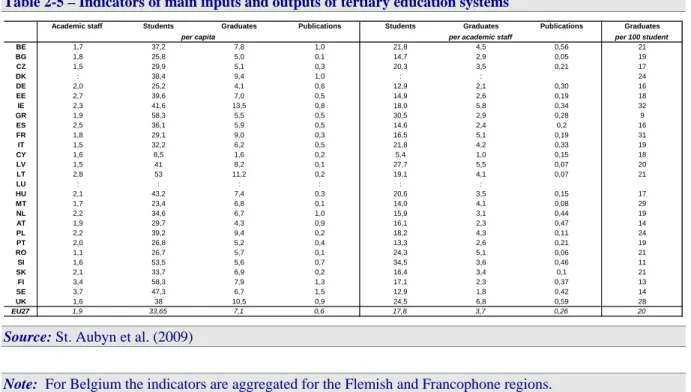
Table 3-5 – Indicators of main inputs and outputs of tertiary education systems 51 Table 3-6 – Total general government expenditure on tertiary education, as a percentage of
GDP 57
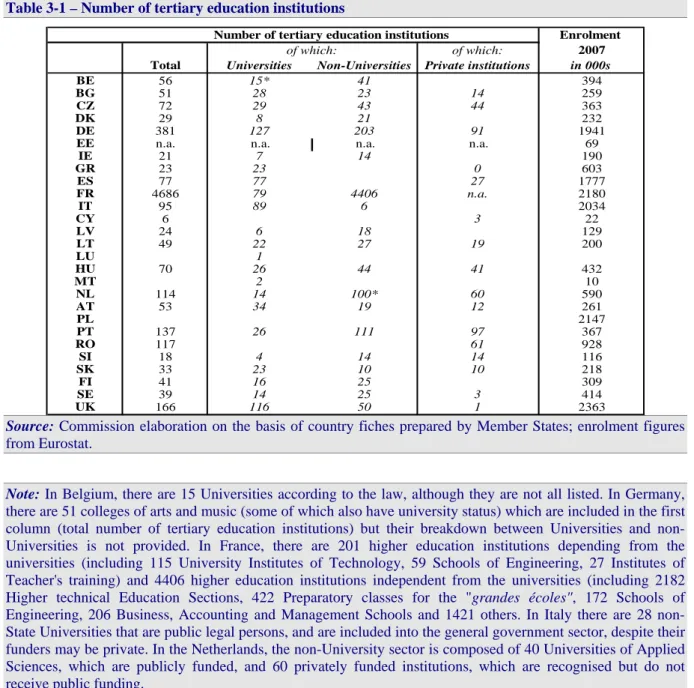
Table 4-1 – Number of tertiary education institutions 62
Table 4-2 – Selection of students 64
Table 4-3 – Staff policy 66
Table 4-4 – Funding rules 69
Table 4-5 – Private provision of funding 73
Table 4-6 – Evaluation 76
Table 4-7 – Strengths and weaknesses 77
Table 4-8 – Selected good practices identified during the peer review 79 Table 4-9 – Selected elements of tertiary education systems 80 Table 7-1 – Projection of the impact of an increase in tertiary level attainment on public
expenditure (the share of 30-34 years-old with tertiary education attainment is assumed to reach 45%), change relative to the baseline scenario, in p.p. 92 Table 7-2 –Enrolment, in 000s (1999 to 2008) and growth rates 93
List of graphs
Graph 2-1 – Relative earnings of 25-64 year-olds with tertiary educational attainment (upper secondary and post-secondary non-tertiary education = 100) in 2007 21 Graph 2-2 – Rankings according to the efficiency scores in the Data Envelopment Analysis
(DEA) and Stochastic Frontier Analysis (SFA) in St. Aubyn (2009) 30 Graph 2-3 – Relative efficiency in research and teaching activities, according to the efficiency
scores in the Data Envelopment Analysis (DEA) in St. Aubyn (2009) 31 Graph 3-1 – Population with at least upper secondary education attainment, 2000 and 2009,
percentage, by age group 39
Graph 3-2 – Quality of learning outcomes as measured by PISA surveys (2003 and 2006) 40 Graph 3-3 – Population with at least tertiary education attainment, percentage, by age group41 Graph 3-4– Entrants at theoretical starting age in ISCED level 5, 2008 42 Graph 3-5 – Breakdown of enrolled students and graduates by gender, in percentage, 2008
and 2000 46
Graph 3-6 – Recruiter review index 47
Graph 3-7 – Peer review index 47
Graph 3-8 – Employment rates by highest level of education attained (2009), age 25-64 48 Graph 3-9 – Unemployment rates by highest level of education attained (2009), age 25-64 48 Graph 3-10 – Share of enrolment by field of study, 1999 and 2007 50
Graph 3-11 – Citation index 54
Graph 3-12 – Public expenditure on education, percentage of GDP 55 Graph 3-13 – Public expenditure on education, breakdown by funding source, in percentage55 Graph 3-14 – Public expenditure on education, breakdown by education level 56 Graph 3-15 – Public expenditure on education, per student 58 Graph 3-16 – Public and private sources of funds on tertiary education institutions 59 Graph 7-1 – Private and public sources of funds in total expenditure on educational
institutions 93 Graph 7-2 – Financial aid to pupils, by educational level 94
Introduction
Two important features of education stand out: it has a strong influence on economic growth (increasing average education in the population by one year would raise the level of output per capita by between 3 and 6 percent in the long-run or lead to one percentage point faster growth if the effect on productivity growth is also taken into account, see Veugelers and van der Ploeg, 2008) and it accounts for a sizable share of public expenditure: over 5% of GDP for education as a whole, of which the tertiary level accounts for 22% in the EU as a whole. Education is at the core of the Europe 2020 strategy. Member States recognise a strong need for highly qualified labour. Several Member States have explicit policies to raise participation rates in higher education and all have agreed an EU level target for attainment rate of 40% of the 30 to 34 years-old. The ageing of populations compounds the need for periodic education and training: as the labour force shrinks, raising labour productivity increasingly becomes the efficient way to maintain standards of living. The working-age population is projected to shrink after 2020 in the EU as a whole, acting as a drag on growth and productivity would become the dominant source of growth.1 Productivity growth, however, can only be expected to partially alleviate the need to reduce and contain costs in order to safeguard sustainable public finances.
At the same time, it has become more urgent to improve the quality of public finances in view of the need for budget consolidation across the EU. Increased scrutiny is required to monitor the efficiency and effectiveness of public expenditure and assist in the definition of priorities, notably to identify areas that may enhance future growth. Although the policy stance across the EU is diverse, the public finance situation increases the responsibility for increased efficiency, and effectiveness, of public expenditure on education across the board.2 Member States should use all available tools to ensure that the consolidation of public finances is accompanied by improving government services.
Following the mandate of the Economic Policy Committee, the Working Group on Quality of Public Finances and the European Commission have focused on the efficiency and effectiveness of expenditure on tertiary education. The approach includes both quantitative and qualitative aspects. The starting point is a quantitative analysis to highlight the determinants of efficiency and effectiveness of public expenditure, which was carried out by a team led by Professor St. Aubyn, in cooperation with the European Commission.3 This analysis was then used to discuss tertiary education policy issues, on a country-by-country basis: a peer review was carried out over the period October 2008 to May 2009, on the basis
1
See European Commission (2009), 2009 Ageing Report: Economic and budgetary projections for the EU-27 Member States (2008-2060), European Economy 2/2009.
2
Moreover, future costs of tertiary education are probably set to increase further only due to technical progress which lags behind other sectors in the economy (Baumol cost disease), ignoring future increases in enrolment from different age groups in the population.
3
St. Aubyn, M., Pina, A., Garcia, F. and J. Pais (2009), Study on the efficiency and effectiveness of public spending on tertiary education, European Economy. Economic Papers. 390. November. Available at http://ec.europa.eu/economy_finance/publications/publication_summary16265_en.htm.
of country fiches prepared by Member States on their tertiary education systems (involving co-operation mainly between Finance and Education Ministries). The peer review brought qualitative and country-specific elements to the analysis of tertiary education systems. This report presents the fruit and policy conclusions of this collaborative work.
The report starts by drawing the main lessons from the economic literature on education. It then reviews trends in tertiary education, based on the statistical information available. The third chapter presents the institutions of tertiary education systems across the EU and draws some lessons from country experience. The final chapter presents policy conclusions on tertiary education.
1.
Lessons from the literature
1.1. The economic impact of educationThe literature provides evidence of the benefits of education to individuals and society. For the individual, education attainment is a key determinant of earnings and has a significant effect on labour market outcomes (de la Fuente, 2003, CHEPS, 2010). Moreover, the returns to the individual have increased strongly in the past few decades in many countries, contributing to wider income inequalities between people with different education attainment.4
Investment in education is a critical factor for aggregate productivity and economic growth. This is because growth is based on technical advances that demand more skilled and qualified workers. Investment in education also delivers non-monetary benefits, such as higher life-expectancy for more educated people, greater participation in civic and social life, enhanced social cohesion and reduced crime5 (see Woessmann, 2006).
Box 1: Working definitions on the rates of return to education (adapted from Psacharopoulos and Patrinos (2004) and the Centre for the Study of Higher Education Management (2007)
The private rate of return compares the costs and benefits of education to the individual student: how much the student actually pays out of pocket to attend a tertiary education institution, and the opportunity cost of the student's time, relative to what he/she gets in terms of increased earnings, after taxes. The comparison is made relative to a control group of secondary school graduates who did not pursue tertiary education studies. Private rates of return are used to explain the behaviour of students regarding the demand for different levels and types of education, or the equity effects of state subsidies to education.
The social rate of return compares the costs and benefits for the country as a whole. They refer to what education really costs, rather than to what students actually pay out of pocket. It helps to design policies regarding the expansion or contraction of different levels and types of education. Ideally, social rates of return should be based on productivity differentials, rather than earnings. They should also include the external effects of education, e.g. a higher education graduate spilling benefits to others by means of being more educated. While data on social costs tend to be available (the full cost of the provision of education and the opportunity cost of having people in education and not participating in the production of output), information about the full range of social benefits is less readily available (the increased productivity associated with the investment in education and a host of possible non-economic benefits such as better health, lower crime and more social cohesion). Mainly due to the scarcity of suitable data to measure externalities, the social rate of return is typically understood as either: (i) a narrow social return, which is a private rate of return adjusted for the full cost of education or (ii) a wide social return that is including externalities. Social returns are those over and above the returns to the individual.
The social returns suggest whether the investment in human capital formation is adequate from the social point of view, taking into account the externalities as human capital is a public good. When social returns exceed private returns, investment in higher education tends to be too low from a social perspective. When the government provides substantial financial support to the higher education sector, subsidies to higher education may in fact be so high that individuals invest beyond the socially optimal level (i.e. private returns exceed social returns to schooling).
4
The increase in earnings inequality over the period 1973 to 2005 in the United States is attributed to the increase in the returns to investment in higher education that, in turn, is due to the increased demand for skilled workers, see Psacharopoulos (2009).
5
Lochner (2010) discusses the relationship between education and crime from an economic perspective, with a focus on the crime-reduction effects of early childhood programs, policies that encourage schooling, and job training programs for low-skill adolescents and young adults in the United States.
Fiscal returns to education are based on a narrow measure of costs and benefits – those relating to the public purse. They relate to the country’s public finances and are not estimated as widely as the private and social rates.
In economic theory, education has a key role in economic growth – especially so in modern growth theory. Estimates of education externalities and impacts on economic growth however are very difficult to make and the empirical evidence on the private returns to education is firmer than as concerns its social returns.
The empirical literature, indeed, is faced with a number of difficulties. Since both levels of education and levels of GDP per capita in any given year are closely related to those in earlier and later years, it is difficult to disentangle the ways in which GDP and education are interconnected. The measurement of education is also surrounded by difficulties, in particular how to account for differences in the quality of education.
While there is consensus in the literature on robust correlations, the need to resolve the empirical question of causality remains one of the major challenges faced by studies linking education and economic performance, both at the individual level and at the aggregate level. Evidence strongly supports the human capital explanation that education raises productivity (Sianesi and Van Reenen, 2003).
In recent literature, a further step was made from using quantitative measures of education, such as average years of schooling or education attainment, to analysing the impact of the acquisition of skills, mostly using test scores as a proxy. Heckman et al. (2007, 2009) further refine the analysis of education and study the impact of skills acquired, covering both cognitive and non-cognitive skills.
The economic literature on education has a strong emphasis on the early stages of education, which are associated with relatively large benefits (albeit they accrue over a very long period of time). There is an abundant literature on schools and recent empirical work stresses the key role of early (pre-primary) education.
The literature on schools mostly concerns the United States; see Wossman (2006) for a review. It has notably studied the consequences of changes in class size, the implications of greater school choice and increased competition among schools or the implications of various forms of testing of students. Detailed studies show that smaller class sizes do result in higher student achievement for some students and some classes, however further analysis of the costs and benefits of such use of resources are needed (Averett and Mc Lennan, 2004). As regards school reforms, the available evidence supports to focus the incentives of all actors on increasing the performance of students. This could be achieved for example through a combination of accountability and school autonomy. It is essential to couple accountability and autonomy, as evidence suggests that local decision-making without external examinations is detrimental for student performance. How to design school autonomy in practice is however difficult. Caution should be exercised in designing and implementing proper accountability systems, as there are risks of strategic responses of teachers and schools.
Recently, studies have focused on the tertiary level of education. Some influential studies converge on similar messages on the role of governance and funding for research performance, as well as on the need for increased competition, see Aghion et al. (2007, 2008, 2009) and Van der Ploeg and Veugelers (2008).
Country-specific and comparative (cross-country) empirical assessments are still necessary to evaluate the impact of specific policies on the efficiency of tertiary education. Too little is known on the specificities of EU tertiary education systems. There is still a glaring lack of data and of rigorous empirical evaluation of policy interventions, to create and share the knowledge of what works and what does not work; the peer review on tertiary education recently carried out can make a contribution, by creating and sharing knowledge as well as exchanging examples of good practice.
The next sections review the literature on the private and social returns to education. The private return to education indicates whether the adequate level of education is being provided: are individuals' private investment decisions in education optimal? The social returns indicate whether education subsidy levels are optimal, thus suggesting how that level of education should be funded (Harmon et al., 2001). Externalities matter, as they can lead to sub-optimal investment decisions by individuals for society at large. They matter especially if social returns are above the returns to the individual. The private returns to education are easier to estimate than the social returns and more estimates are available.
1.1.1. The economic impact of education on the individual
This section covers all education levels and examines the returns to the individual, or private returns. Traditional human capital theory stresses the central role of education (see Psacharopoulos and Patrinos, 2004, for a review of the work by Becker, 1964, Schultz, 1971 and Mincer, 1974).
The main idea is that education by an individual can be regarded as an investment in human capital. Similarly, training or medical treatment are investments in human capital. As any investment, the investment in human capital entails costs and yields future benefits, and an internal rate of return to the investment can be calculated. Costs cover direct expenditure and the opportunity cost of the student's time, notably the foregone earnings as the student is not working. The investment is expected to yield future benefits to the individual, in terms of higher productivity, which will command higher earnings, and also the quality of his or her employment as educated workers tend to have higher wages, greater employment stability, and greater upward mobility in income, relative to less-educated workers (Mincer, 1993). Just as with all investments, the outcome is subject to considerable uncertainty, especially at the individual level.
In addition, benefits will accrue to society at large, such as the increase in the total output of goods and services produced through the increased productivity of the individual, an increased rate of productivity growth in the economy, and additional benefits to society such as more informed and socially-involved citizens and in better health.
Building on traditional human capital theory, Cunha and Heckman (2009) have developed a perspective to assess education policies over the life cycle of an individual. An investment in education matters in so far as skills are successfully acquired. In a nutshell, skills acquired over the life cycle are complementary, with two important features. The first one can be best summarised by Heckman's words: "skills beget skills". This is because already acquired skills are an input to the acquisition of further skills. The second feature is that the acquisition of skills is more productive when skills were acquired earlier on. These features result in a "skill multiplier", by which an investment in education at one stage raises the skills attained at that stage but, also, the productivity of the transformation of future educational investments into skills.
If education at secondary level is of insufficient quality, then the productivity with which investments in education at tertiary level are translated into valuable skills will be negatively affected. Investments in secondary level education in turn are more productive if the young have acquired earlier skills, in primary, pre-primary education institutions and, of course, in the home.
In the context of the efficiency of public expenditure, earlier public interventions are key to make investments in tertiary education productive. A productive tertiary education system requires sound learning foundations acquired by students at earlier stages, unless it relies on attracting talented students (and faculty) from abroad. Empirical analysis, mostly for the United States, shows that education is indeed such a life-cycle process. There is also European evidence supporting this view, although far less developed (see Woessmann, 2006). There is an abundant empirical literature on the private returns to education; however there are very few cross-country comparative studies. Card (1999) surveys the literature and finds a very robust positive association between education and individual earnings in the labour market.
The economic literature also considers signalling and screening models to explain the link between education and productivity. Such models stress the role that education plays to signal the productivity of the individual, which is seen as an innate ability.6 In contrast, human capital models stress the role of education in raising individuals' productivity, which is rewarded in the labour market by higher earnings.
There are some challenges in the estimation of returns because education may, at least partly, reflect a pre-existing ability. Thus the earnings differential does not only reflect the skills acquired via educational attainment, but would also result from the way employers use educational attainment to screen for ability. Furthermore, there are many technical issues
6
For example, ability to progress in education may be correlated with ability to succeed in the labour market. There is also an effect of credentials on wages: a pay premium may be associated with years in education, as employers use educational attainment to screen for ability.
surrounding the estimation of the return to schooling, especially related to the measurement of human capital.7
Despite this inherent difficulty, most authors support the human capital explanation (Woessman, 2006). In particular, Sianesi and van Reenen (2003) provide evidence that education is productivity-enhancing rather than a mere device used by individuals to signal their level of ability to their employer. Ciccone and de la Fuente (2002, 2004) also confirm causation from education to productivity.
Most studies on rates of return to schooling do not explicitly distinguish between primary, secondary and tertiary education. Furthermore, returns to education can vary across the population and the marginal return to schooling is a decreasing function of schooling (Card, 1999).
Harmon et al. (2001) evaluate the relationship between education and wages across the EU using a common methodology.8 Their estimates of wage effects of schooling are substantial, so that each additional year of education is associated with more than an 8% increase in wages on average, see Table 1-1. The impact is significantly higher than average in the United Kingdom and Ireland (between 10 and 14 %). In contrast, it is lower in Sweden, Denmark and Norway (between 4 and 6 %). Harmon et al. (2003) conclude that participation in education has an unambiguously positive effect on the earnings of an individual. Moreover, the size of the effect seems large relative to the returns on other investments.
De la Fuente (2003) finds estimates of the private return to education across 14 EU countries between 8 and 10% for most countries. Returns are larger in Ireland, Germany and Austria (above 10%) and in Portugal and the United Kingdom (between 10 and 12%). The returns are the smallest in Sweden (about 6%). De la Fuente and Jimeno (2005) compute private returns which range between 4.3% (Sweden) and above 12% (United Kingdom) with an average of 8.8%. Furthermore, micro-evidence suggests that more educated people are more successful in obtaining non-wage remuneration, in particular benefits such as insurance or childcare provided by the employer, see survey by Woessman and Schütz (2006).
7
See de la Fuente (2007) on measurement errors and studies using improved data series or econometric techniques to address the bias in measurement.
8
Wages reflect labour market institutions as well as relative productivities, hence caution needs to be exercised when interpreting the impact on wages as a measure of the contribution of schooling to productivity.
Table 1-1 – Estimates of wage effects and private returns to schooling, in percentage
Harmon et al. (2001) de la Fuente (2003) de la Fuente and Jimeno (2004) BE : 8.6 7.5 DK 5.7 8.9 8.0 DE 8.7 10.4 9.1 IE 10.9 10.4 11.0 GR 8.2 9.8 9.2 ES 8.2 9.4 7.5 FR 7.8 9.6 8.6 IT 7.9 8.6 8.4 NL 7 8.0 6.6 AT 8.6 10.5 8.5 PT 9.7 12.3 10.3 FI 8.7 9.6 10.0 SE 4 6.1 4.3 UK 10.3 13.9 12.3
Source: Commission compilation
Note: Harmon et al. (2001) calculate wage effects. De la Fuente (2003) and de la Fuente and Jimeno (2004) calculate private rates of return.
1.1.2. The impact of education on growth
The education of individuals may benefit others in current and future generations, over and above the private benefits that are taken into account by individuals in making their decisions to invest in education. Such externality benefits are the main rationale, on efficiency grounds, for the public support of education. Unfortunately, compared to the private returns to education, much less is known about the social returns to education, which mainly take the form of human capital externalities. The data suitable for the measurement of externalities are scarce. Better estimates of education externalities are very important to obtain.
Theory suggests that increases in the overall level of education can benefit society in ways that are not fully reflected in the wages of educated workers (also due to labour and product market imperfections). Human capital spillovers may increase productivity over and above the direct effect of education on individual productivity.
Furthermore, increases in education also may reduce criminal participation and improve voters' political behaviour. Higher levels of education may also result in better health for educated individuals and their children. If parental education indeed improves child health, then the total benefits of human capital accumulation are not captured by estimates of the private (monetary) returns.
Economic theory is very positive as regards the impact of education on economic growth. The augmented neo-classical model includes human capital as an additional input in the production function. The model is estimated for the economy as a whole and takes into account of human capital externalities that increase the level of output.
The endogenous growth approach argues that there should be an additional effect of human capital, over and above the static effect on the level of output. Economies richer in human capital would have a higher rate of innovation, therefore increasing the level of human capital is expected to have an effect on the growth rate of productivity. This occurs through two main
mechanisms. The first is the creation of new knowledge: growth is attributable to increases in human capital, as more highly educated individuals work to increase the stock of knowledge through the development of new processes and technologies. The second way that education affects economic growth is through the diffusion and transmission of knowledge.
Human capital externalities may arise if the presence of educated workers makes other workers more productive, for example by creating learning opportunities through social and professional interactions. Another possible channel is that there may be spill over effects from technical progress or knowledge accumulation resulting from investments in human capital. Mobility of personnel is an important mechanism to facilitate knowledge spillovers and the transfer of knowledge. Knowledge is a public good that spills over the economy in the form of externalities and allows output to grow beyond the measurable inputs.
A large theoretical literature has built on this idea, proposing models where human capital externalities are the main engine of economic growth, especially the so-called endogenous growth theories and recent neoclassical growth theories by Romer and Lucas (reviewed by Psacharopoulos and Patrinos, 2004). Lucas (1988) argues that human capital externalities in the form of learning spillovers may explain long-run income differences between rich and poor countries. Human capital may continue increasing even without further increases in educational attainment, because human capital adds to a public body of knowledge.
Romer (1990) assumes that the growth of productivity depends on the stock of human capital (the existing stock of ideas and the number of people employed in the R&D sector, devoting their time to the accumulation of new ideas). The human capital used in the R&D sector to stimulate innovations is especially relevant to the countries at the technology possibility frontier, while in other countries, the average level of education available to facilitate the dissemination of technology is likely to be much more relevant.
Education also has an indirect effect on productivity and employment through the quality of institutions that may be considered a component of social capital and well-being of individuals and societies (de la Fuente and Ciccone, 2002).
Moving from economic theory to empirical work, growth accounting provides a simple framework to study the effects of education on growth. Increases in education of the workforce raise effective labour supply, which results in an increase in output.9 If, however, the rate of growth of total factor productivity is exogenous, rather than depending on the change in educational attainment, then growth accounting would understate the contribution of education to economic growth. The growth accounting framework also implies that the effect of human capital depends on the expansion of educational attainment and hence there is a limit to its contribution to growth.
A vast literature of cross-country growth regressions tends to find a significant positive association between quantitative measures of schooling and economic growth, mostly using the internationally comparable data on average years of schooling provided by Barro and Lee
(1993, 2001). Some studies estimate that increasing average education in the population by one year would raise the level of output per capita by between 3 and 6 percent, as the stock of human capital affects the long-run level of the economy while it would lead to an over one percentage point faster growth according to the new growth theories as education affects the long-run growth rate of the economy (Veugelers and van der Ploeg, 2008 a).
The literature also examines the magnitude of the effect of education levels and their improvements on output growth. There is debate on whether a rapid growth rate can be expected from a high level of education or only if the stock of educated labour force is expanded.
The recent empirical growth literature emphasises the investment activities of firms, households and the government in both R&D and education as being essential for enhancing the level of technology in an economy and the closer to the technology frontier, the larger the returns to tertiary education – especially at Masters level. Aghion et al. (2007) stress the role of higher education in fostering economy-wide growth. Empirical evidence for the United States reviewed by Moretti (2004) indicates that learning spillovers may be important in some high-tech industries, as evidenced by patent citations more likely to come from the same state or metropolitan area as the originating patent and the role of human capital in the entry decision of new biotechnology firms, as measured by the number of relevant academic publications. Moretti (2004) estimates the magnitude of human capital spillovers from tertiary education on the productivity of manufacturing firms in United States cities. He finds that a one percent increase in the city share of college graduates is associated with a 0.5-0.6 percentage point increase in output.
De la Fuente (2003) estimates that an additional year of average school attainment raises productivity in the average EU country by 6.2% and by a further 3.1% in the long-run through the contribution of faster technical progress. Nicoletti et al. (2003) find that higher skill levels have a positive impact on total factor productivity (TFP) growth, although the effect is not always significant. Vandenbussche et al. (2007) show that high-skilled human capital has a positive effect on TFP growth and the effect is stronger the closer a country is to the world technology frontier.
Van der Ploeg and Veugelers (2008) review economic studies showing the importance of basic research for innovation and economic growth. In science-based industries, such as biotechnology, pharmaceuticals, tissue engineering or nanotechnology, the link between science and innovation is direct. Others industries which are not science-based still benefit from basic research resources, such as the training of researchers helping to increase the absorptive capacity of industry.
Afonso and St. Aubyn (2010) estimate that the human capital contribution to growth is usually positive, but it is not always significant from a statistical point of view. Some 9
The size of the increase in output depends on the labour share. Furthermore, countries with high levels of education are also likely to have more capital per worker.
countries, even if they are close to or at the efficiency frontier (such as Portugal and Spain), are probably limited in their growth prospects by their relative human capital scarcity.
The World Economic Forum (WEF) compiles an annual Global Competitiveness Index where higher education is considered as one of the pillars enabling economies to sustain economic growth and long-term prosperity. The score on "higher education and training" is measured by secondary and tertiary enrolment rates, as well as the quality of education as assessed by the business community through an annual Executive Opinion Survey. The extent of staff training is also taken into consideration because of the importance of vocational and continuous on-the-job training for ensuring a constant upgrading of workers’ skills to the changing needs of the economy. The score on "innovation" includes expenditure on R&D, especially from the private sector, high-quality scientific research institutes, collaboration between universities and industries and protection of intellectual property. The ranking information suggests a positive link between higher education, innovation and growth. The top 15 countries in the Global Competitiveness Ranking also have high scores on "higher education and training" and "innovation".10 It also suggests that this link is country-specific.
Empirical analysis developed in the past ten years uses qualitative measures of education, such as test scores, and finds higher earnings returns compared to measures of educational quantity, see Woessman and Schütz (2006) for a review. This significantly alters the assessment of the role of education in the process of economic development. Using data from the international student achievement tests to build a measure of cognitive skills, Hanushek and Kimko (2000) find a statistically and economically significant positive effect of cognitive skills on economic growth in the period 1960 to 1990 that "dwarfs the association between years of schooling and growth".11. The simple conclusion from the combined evidence is that differences in cognitive skills lead to economically significant differences in economic growth.
A number of studies document that cognitive ability, usually measured by an achievement test at school, is a powerful predictor of wages and schooling, but also participation in crime, health and success in many other aspects of economic and social life. Heckman et al. (2006) present estimates of the causal effect of ability on diverse outcomes. Recent econometric analysis carried out by the OECD (2010) shows that once information is included on cognitive skills, school attainment bears no relation to economic growth. In other words, added years of schooling affect growth insofar as they raise the skills. More recently, non-cognitive abilities have been shown to be important predictors of the same outcomes. Non-cognitive traits include perseverance, motivation, self-esteem, self-control, conscientiousness, and forward-looking behaviour (Cunha and Heckman, 2009).
10
Sweden, Denmark, Finland, Germany, Netherlands and the United Kingdom are in the top 15 countries in the Global Competitiveness Ranking. They all score high or very high on higher education and innovation, with the exception of Germany and the UK (the result for the UK is surprising given the UK's performance on other rankings).
11
Furthermore "the effect of years of schooling is greatly reduced by including cognitive skills, leaving it mostly insignificant, while adding a variety of other factors leaves the effects of cognitive skills basically unchanged".
The Share project brings evidence on the impact of education on health. Within all countries, there is a strong link between health behaviour and socioeconomic status. Individuals with lower levels of education are 70 percent more likely to be physically inactive and 50 percent more likely to be obese than individuals with more years of education. The strong relation between health and socioeconomic status also holds for mental health. Cross-national differences in depression rates resemble patterns of cross-country differences in education. Within countries, persons with low income or low wealth suffer more frequently from depression, particularly in Europe’s North. Eurostat (2010) identifies a systematic relationship between educational attainment and mortality: at any age, life expectancy is less among persons with the lowest educational attainment and increases with educational level. The evidence suggests that life expectancy by educational attainment is a very important indicator of socio-economic inequalities in health. Woessman (2006) reviews evidence on education externalities in terms of reduced crime and increased civic participation.
1.1.3. The returns to tertiary education on the individual and the society
Tertiary education is generally associated with higher earnings and employability. In the last two decades of the twentieth century, there was a strong shift in labour demand towards highly-skilled workers in the majority of industrialised countries. This was mostly driven by a technological change bias towards highly skilled tasks and by employers seeming to be increasingly demanding workers with graduate qualifications (Woessmann 2006). Boarini and Strauss (2007) estimate the employability premium from tertiary education relative to upper secondary education and find an average value of roughly two percentage points. Biagi and Lucifora (2008) study the impact of education on unemployment using data from Labour Force Surveys for 10 EU countries and conclude that higher educational attainment (measured by the share of those with more than primary education) reduces unemployment rates, both for less educated and (especially) for more educated groups.
An issue to explore is the impact of larger segments of the population with tertiary educational attainment on their labour market returns. In recent decades, most EU countries have faced a massive quantitative expansion of education systems, particularly at the tertiary level of education, mostly driven by demand. The question arises whether the increasing supply of higher-educated labour been matched by the rise in demand for graduate skills – and high-paying jobs. It is conceivable that at least some new graduates are doing jobs that do not require graduate skills, thus crowding-out some less well qualified workers. This may be associated with a relative rise in unemployment among people with low qualifications, but also potentially with a reduction in the pay premium associated with tertiary qualifications. The OECD (2007) suggests that the expansion of tertiary education has had a positive impact for individuals and economies and that there are, as yet, no signs of an “inflation” of the labour-market value of qualifications.
There are substantial difficulties in calculating true social returns to education. Moreover, it is difficult to compare the results of the studies available, because they use different data sources and methodologies. The estimation of social returns should ideally include the external
effects, that is, the benefits tertiary education graduates spill over other members of society, thus distinguishing between "narrow" and "wider" social benefits.
The OECD (2002) calculates the internal returns to tertiary (and upper secondary) education for a few countries, see Table 1-2. Overall, human capital investment appears attractive relative to alternative assets, both from the individual and from the social perspectives. It is however important to stress the variability of returns, especially according to area of studies, prestige of the tertiary education institution and gender. The average private returns are large and three groups of countries can be identified: (i) the United Kingdom stands out with very high returns from tertiary education, (ii) Denmark, France, the Netherlands and Sweden have relatively high internal rates of return, ranging from 10 to 15 per cent and (iii) Italy and Germany have rates below 9 per cent.
Countries with strong private incentives to invest in tertiary education are characterised by high earnings differentials and/or relatively short education programmes, and vice versa, see the return based on pre-tax earnings and the length of studies. The influence of policy factors does, however, generate notable exceptions to this general pattern. The contributions of these factors are conditional on the pre-tax earnings and the length of education. The calculated high rates of return in Sweden, the Netherlands and especially Denmark are strongly influenced by a comparatively large public student support, in the form of public student grant and loan arrangements, despite relatively narrow wage differentials and long study periods. The impact of taxes is particularly strong in the United Kingdom and the Netherlands. Unemployment risk differentials have a positive, but relatively small effect on the internal rates of return of tertiary education. Tuition fees apply in many parts of the United Kingdom resulting in reduced rates of return to tertiary education in the United Kingdom. Public student grant and loan arrangements at the tertiary level give a significant boost to incentives, adding on average 2½ to 3 percentage points to the internal rates of return in the countries under review, compared with rates of returns excluding such support. The impact is particularly strong in Denmark, while it is weak in France, and absent in Italy.
The calculated social rates of return do not include externalities or non-economic effects and are thus biased downwards. Typically, private returns exceed social returns, reflecting that the social cost of education is much larger than the private cost. This suggests that individuals (and firms) are probably better placed to capture the benefits from higher education. Furthermore, when taking into account the non-market returns to education and its benefits for social cohesion, human capital becomes a rather attractive investment alternative from a social point of view.
OECD (2008) estimates the highest private returns in the Czech Republic, Portugal, Poland and Hungary, see Table 1-3. Private returns exceed social returns by a margin of 4.4 percentage points on average. Social returns to tertiary education are highest in Hungary, Poland, Portugal, Belgium, and Ireland, while they are relatively lower in France, Spain, Finland, the United Kingdom, Denmark and Sweden. CHEPS (2010) estimates average private returns to 10.2% and social returns to 7.9%.
Table 1-2 – Internal rates of return to tertiary education, 1999-2000, in percentage
Men Women Men Women Men Women Men Women Men Women Men Women Men Women Men Women
DK 6.3 4.2 13.9 10.1 7.9 6 7.9 5.7 -0.4 -1 1.1 0.7 -0.1 -0.2 5.4 4.9 FR 13.2 13.1 12.2 11.7 13.3 12.1 13.3 12.1 -1.6 -1.7 0.4 1.2 -0.8 -0.9 0.9 1 DE 6.5 6.9 9 8.3 7.1 7 7.1 7 -1.5 -1.6 1.1 0.6 -0.3 -0.6 2.6 2.9 IT 7 : 6.5 : 6.7 6.7 : : : 0.5 : -0.7 : : : NL 10 6.3 12 12.3 11.7 9.4 11.7 9.4 -2 -1 : 0.7 -0.6 -0.7 2.9 3.9 SE 7.5 5.7 11.4 10.8 9.4 7.4 9.4 7.4 -1.5 -0.7 1.2 1.6 -0.7 -0.8 3 3.3 UK 15.2 13.6 17.3 15.2 18.1 16.4 18.1 16.4 -2.1 -2.3 0.7 0.7 -2.4 -2.3 3 2.7 (comprehensive)
Return based on pre-tax earnings
Lenght of studies
Impact on private return of:
Return on tertiary education (1999-2000)
Taxes Unemployment risk Tuition fees Public student support Private return
Social return
and lenght of studies
Source: OECD (2002)
Note: The rates of return to tertiary education are calculated by comparing the benefits and costs with those of upper-secondary education. The impact of the length of studies on the private return on tertiary education is larger in the United Kingdom, France and the Netherlands, where education programmes are relatively short and smaller on Denmark, Germany, Italy and Sweden, where the length of studies tends to be larger.
Table 1-3 – Internal returns to tertiary education, in percentage
Social return Private return
BE 10.6 12.7 CZ 8.9 26.5 DK 1.5 4.3 FI 6.9 10 FR 7.4 7.9 DE 8.4 6.4 HU 16 16.8 IE 11.3 11 PL 14.6 20.7 PT 11.2 22.7 ES 5.8 8.2 SE 3.7 4.7 UK 6.5 14.4 Average 7.9 12.3 Source: OECD (2008)
A report by the Centre for the Study of Higher Education Management (2007) analyses evidence on returns to tertiary education and confirms that private returns to higher education in developed countries are positive and substantial. Estimation results point out that the "narrow" social rates (without externalities) are also positive, but lower than the private rates. The evidence on the "wider" social returns (with externalities) is much more limited because of the difficulties to conceptualize and calculate the social externalities of higher education. The following basic patterns emerge: (i) the private returns exceed the social returns – which reflects the public subsidization of higher education; (ii) the returns to higher education have been rising in most dynamic economies in recent years – a reflection of the increased demand for educated labour force to complement technological progress; and (iii) there is wide differentiation of the returns by university faculty – a reflection of the relative demand and supply for graduates. Stevens and Weale (2004) point that social returns decrease with the amount of education received by individuals and also that they decrease with the income of the county concerned (and this, it may be assumed, with the abundance of educated labour). Psacharopoulos and Patrinos (2004) calculate internal rates of return (IRR) for a very large sample of countries including many non-OECD countries and find average IRR to higher
education of 11.6% for OECD countries. OECD (2006) finds relatively low returns to tertiary education for both men and women in Spain, Italy, the Netherlands, Sweden and Belgium. The results are driven by below-average wage and employability premia, which more than offset low (direct or opportunity) costs. Hungary, although with very high wage premia, also displays relatively low returns due to very high marginal taxes. The highest returns are found in Ireland, the United Kingdom and Portugal because of high wage premia, reinforced either by high employability premia and/or low costs of education. Other countries display either moderate returns or significant differences by gender. In most cases, this is because wage and employability premia are just around average or they are offset by high direct costs of education.
Boarini and Strauss (2007) provide estimates of the private IRR to tertiary education for women and men in 21 OECD countries, for the period 1991 to 2005, using comparable individual-level data, see Table 1-4. IRR are computed by estimating labour market premia and adjusting for fiscal factors and education cost. Returns to an additional year of tertiary education are, on average, above 8% and vary in a range from 4 to 15%. Low average returns are found (by ascending order) for Italy, Spain, Sweden, the Netherlands, Germany, Austria, Hungary, Belgium, Greece and Finland. IRR are moderate in France, Poland and Denmark (between 9 and 10%). Luxembourg, the United Kingdom, Portugal, and Ireland record the highest returns, above 10%. The highest returns, close to 12%, are found in Ireland and the United Kingdom.
Table 1-4 – Private rates of return to tertiary education, in percentage
Men Women Men Women
BE 11.3 14.0 6.9 6.4 CZ 29.1 23.8 : : DK 4.4 4.1 9.6 8.7 FI 10.7 9.3 8.6 7.1 FR 8.4 7.4 9.1 9 IT : : 6.1 4.2 DE 8.0 4.8 6.2 6.4 GR : : 6 8.3 LU : : 10.2 9.9 HU 19.8 13.8 : : IE 10.2 11.8 11.8 14.4 NL : : 6 6.5 AT : : 7.8 5 PL 22.8 18.6 6.5 : PT 23.9 21.5 11.2 13.3 ES 7.6 8.7 4.9 6.5 SE 5.1 4.2 6.4 5.4 UK 14.3 14.5 11.8 12.3
OECD (2004) Strauss and Boarini (2007)
Source: OECD (2004), Boarini and Strauss (2007)
Since IRR are most sensitive to gross wage premia, countries with moderate wage differentiation may gain in terms of tertiary education incentives from allowing for stronger differentiation, see Graph 1-1. Finally, differences between countries in the proportion of graduates of each university faculty do not help to explain the cross-country differences in returns to higher education.
Graph 1-1 – Relative earnings of 25-64 year-olds with tertiary educational attainment (upper secondary and post-secondary non-tertiary education = 100) in 2007
0 50 100 150 200 250 DK SE ES BE FI FR LU NL IE AT IT UK DE US PL PT CZ SI HU Source: OECD
Note: 2004 data for ES; 2005 data for BE and IE; 2006 data for DK, FI, LU, NL, IT, PL, PT and SI.
The OECD (2009) calculates the economic returns to tertiary education in terms of net present value (and not internal rate of return, as previously done). Private investment costs include after-tax foregone earnings adjusted for the probability of finding a job and direct private expenditure on education. The largest net financial returns over the working life are found in the Czech Republic, Hungary, Ireland, Italy, Poland, and Portugal. United Kingdom figures were not included. Rewards are substantially lower in Denmark, France and Sweden.
OECD (2009) identifies a trade-off between taxes and the direct costs of education (tuition fees). Countries with low or no tuition fees typically allow individuals to pay back public subsidies later in life through progressive tax schemes. In countries where a larger share of the investment falls on the individual (in the form of tuition fees), a larger portion of the earnings differential is also accrued by the individual.
The salary differences between major fields of study argue for a more in-depth analysis of tertiary education graduates. Having a tertiary degree ignores qualitative differences between both institutions and areas of study. Individuals receiving different degrees from the same institution face different demands for their skills and different market prices for their labour. Thus, individuals with similar ability levels in different fields can have significantly different earnings.
Finally, non-financial returns to higher education add to the already substantial financial returns. Non-financial returns refer to non-wage labour market remuneration, own and spouse’s health, consumer choice efficiency, labour market search efficiency, attainment of desired family size, children level of education and cognitive development and health, charitable giving and savings (Wolfe and Haveman, 2000). These non-financial returns are more difficult to measure, but substantial: conservative estimates of the value of non-labour market influences are in the same order of magnitude as estimates of the annual financial rate of return to schooling.
1.2. Tertiary education funding
The economic literature establishes that public intervention in tertiary education is warranted due to cases of market failure: the existence of externalities, information asymmetry or monopoly powers:
On externalities: individuals making decisions on investing in tertiary education may not take into account the fact that their training will affect the well-being of others in a positive way and the same may hold for firms investing in research (R&D); both examples point to an under-supply of higher education and research from the point of view of the society.
On information asymmetry: it is difficult to assess the outcome of the efforts of academic staff and students, in particular the quality of education provided; tertiary education is an experience good as students can only determine the quality through consumption; applicants rarely possess the information or time to explore all the possibilities offered and they have a limited basis for making comparisons so they may register to institutions even though they may receive a mediocre education; there is also information asymmetry in the market for student loans.
On monopoly power: market power may be concentrated in a number of education institutions, with risks of strategic behaviour emerging.
The role for public tertiary education funding is clear, and undisputed. The literature suggests there is a case for (an increase in) private funding, as a limited public funding may result in a rationing of the number of students or in levels of spending per student which may jeopardise the quality of teaching and the acquisition of skills by students.
A number of different trends would argue for reform tertiary education funding, in particular:
more human capital is needed to cope with labour market trends (in particular technological change, trade and relocation of low-skilled jobs) and with the ageing of populations; indeed raising the productivity of the labour force will increasingly become the efficient way to maintain standards of living in a context of ageing populations (Barr, 2004). Demographic changes would lead to a reduction in the working-age population in the EU as a whole after 2020, according to the projections in the 2009 Ageing Report. This will act as a drag on growth and productivity would become the dominant source of growth. If tertiary education is expanded, more resources may be required if quality is to be preserved or improved;
Baumol's cost disease applied to higher education would suggest that productivity gains in universities lag behind those in manufacturing (Jacobs and van der Ploeg, 2006);
there is evidence of a decline in spending per student real terms in many EU countries; Barr (2004) suggests that available margins tend to be used to support
basic education as well as the needs of the elderly in terms of public pensions and healthcare.
The reduction in the number of students relative to the working population in the future could drive a decline in public expenditure on education. The 2009 Ageing Report suggests the change would be small, from 4.3% of GDP in 2007 to 4.1% of GDP in 2060 (primary, secondary and tertiary levels combined), see annex. The projection assesses the direct impact of smaller numbers of students in coming decades and it assumes no policy change. A number of policies, however, could lead to increased public expenditure on education as a share of GDP, such as policies to improve the quality of education, increase the attainment level of education of future generations, implement life long learning initiatives or to prevent the outflow of qualified staff by offering a faster growth in salaries.
Current objectives on education policy and targets in EU Member States, such as the Europe 2020 benchmarks to improve education levels suggest that educational spending could well increase, in particular with the aim to increase the share of 30 to 34 years-old having completed tertiary or equivalent education from 31% to at least 40% in 2020 and to reduce school drop-out rates from the current 15% to under 10%, as one of headline targets for smart, sustainable and inclusive growth.12
The economic literature on the financing of tertiary education argues for an increase in private funding, and in particular for the introduction of fees, coupled with well designed student loans and grants. The latter would ensure that able students from disadvantaged family backgrounds are provided with proper financial means to cover tuition and living costs during the period of study. Indeed, equity considerations suggest that educational outcome should be a function of effort, not circumstances such as the socio-economic background. The tuition fee of students from low-income families could be subsidised, rather than having tuition free for all students. Psacharopoulos (2005) argues that public provision of tertiary education for free leads to inefficiencies in terms of excess demand and quality problems.
Barr (2004) advances theoretical arguments based on the economics of information to argue that support for the generality of students should derive from a mix of tax funding and income-contingent loans, which is loans with repayment calculated as a per cent of the subsequent earnings of the borrower. This approach would lead to a more generous public support where an individual derives less financial benefit from his or her degree and would be correct for well-informed people. There is however an unequal access to information so that children from disadvantaged families may not even think of going to university and then, it may be required to support people from disadvantaged families via tax funding.
Barr focuses on the finance of teaching, thus setting to one side the issues raised by research funding. In standard tax-financed systems of tertiary education, all tax-paying households contribute to the public financing of tertiary education. In terms of access, however, the
tertiary level of education differs from earlier, compulsory levels, in that there is self-selection with children from professional backgrounds much more likely to access university than children from manual backgrounds. Therefore, unless there is very strong tax progression, tax funding may be viewed as unequal insofar as part of the funding of higher education may come from groups with little opportunities to access it. Blöndal et al. (2002) find that students in higher education still tend to come from a relatively favoured background, notwithstanding the expansion of enrolments in tertiary education in recent decades. Higher education is different from school education and health care, in so far as it is not consumed by everyone. Barr further argues that if students are to be economically better off in the future due to their studying, it seems fair that they should make contributions to the cost of their tertiary education; at least once they have entered the labour market and command high earnings. The literature gives a lot of attention to the design of loans and grants systems. Greenaway et al. (2004) note the excess of private over social rates of return and the socioeconomic mix of students in Universities which means that subsidies being transferred are likely to be regressive, and conclude that both justify a shift towards greater financial commitment coming from beneficiaries, also on equity grounds. They examine alternative sources of funding (increased tax payer contributions via enhanced grant allocations, introduction of a graduate tax, education vouchers, deregulation of fees and income-contingent loans) and conclude that a system of higher education where beneficiaries contribute deferred tuition fees repaid through an income-contingent loan system are potentially the most effective and efficient system available. In their view, this allows overcoming credit constraints, as well as coping with the uncertainty of the outcome of the education investment. The State bears most of the uncertainty of the investment in the sense that reimbursement of the loan is deferred until the beneficiary completes his or her studies and is employed and, in the case of income-contingent loans, reimbursement is a function of earnings so there is an insurance against the inability to repay the loan. There are, however, issues of implementation of income-contingent loans, in particular related to tax evasion in countries with a large informal sector and a limited capacity to collect income tax, and also linked to increasing labour mobility. In a study about English universities, Shephard (2009) suggests universities should be allowed to charge their graduating students additional "deferred" fees if their teaching costs are not met by the current total tuition payment. Graduates could pay the "deferred" fees later once their income rises above a defined threshold and once their national maintenance and tuition loans are repaid. If the graduate's income is not sufficient to make the repayments during their career, then the fee is forgiven. Van der Ploeg and Veugelers (2008) suggest that with a carefully designed social loans system of the type implemented in Australia,13 it may 12
See European Council conclusions of 17 June 2010.
13
Australia introduced an income-contingent loan system in January 1989 (the Higher Education Contribution Scheme). The scheme consists of a charge which each student is liable to pay towards the cost of study. He can pay it to the institution at the time of enrolment or re-enrolment or he may opt to pay later through the taxation system when earning an income. Those students who defer payment until earning an income will eventually make payments through the Australian tax office automatically when the individual's income reaches a threshold. The office will stop collecting the payment if taxable income falls below the threshold and/or when the liability has been paid. An indexing process is applied to the debt to ensure that the amount the student is
well be possible to raise private funds from higher tuition fees without sacrificing accessibility to higher education. Teaching assistantships are proposed in PhD programmes when there is less scope for loans (Aghion et al., 2008).
Credit constraints could lead to an inefficiently low private spending on tertiary education, if families do not have the means to finance the tertiary education of their children at the time of taking the decision to invest on tertiary education. However, the evidence for the United States suggests that credit constraints are not binding in the access to tertiary education in the vast majority of cases (Woessmann, 2006).
Students from disadvantaged family backgrounds do have a much lower probability of entering university, but the cause seems to be a lack of basic prerequisites to advance to university, due to insufficient earlier educational investments, rather than credit constraints. Evidence for the United States again suggests that credit constraints are almost irrelevant, and the lowest for Blacks and Hispanics. Evidence for the United Kingdom suggests that a major determinant of degree performance in Universities is students' performance on A-level/ Scottish Highers scores at school (Woessmann, 2006). Thus, the main reason of inequality of access by children from relatively disadvantaged background would not be that tuition fees are unaffordable, but rather that they do not have the prerequisite educational qualifications to access tertiary education.
Information plays a role, as shown by the work of Sacerdote (2009) in the United States to coach students through the application procedure to college. Children in some secondary schools are not well-informed about the reasons to go to college and the precise steps to take to apply and there is a role for guidance and counselling, besides getting more and/ or better teachers in secondary schools.
The impact of credit constraints on higher education graduation should however not be underestimated as credit constraints may harden study conditions. Some studies have tackled the issue of working students with conclusions varying from no impact of working on the probability of success at the final exam to a significantly negative impact; see Beffy et al. (2009). Overall, there seems to be a non-linear impact of the weekly hours worked, with a threshold between 10 and 20 hours. Working less than 20 hours appears to have no effect neither on the probability of success or on the probability to continue studies. But over 20 hours, the impact on studies is often negative. Some recent work by Hübner (2009) highlights some possibly negative effects of tuition fees. The author finds a small but significant effect of tuition fees on the enrolment behaviour of German high-school graduates after the introduction of tuition fees in seven out of the sixteen German states in 2007.
Evidence from Finland, Norway, Denmark and Sweden, for example, shows that the absence of fees does not help to boost participation of students with low socio-economic status (Teixera at al. 2006). Moreover, tuition fees are seen as raising the incentives of students to study more efficiently (OECD).
required to repay will stay constant in real terms. At the threshold income, payment will begin at 1 per cent of taxable income and this percentage will increase as income increases.
1.3. Tertiary education governance, efficiency and effectiveness
The OECD Thematic Review of Tertiary Education14 (2008) identified the main trends on higher education policiesas follows:
- the expansion of higher education systems, - the diversification of provision,
- the increased heterogeneity of student bodies,
- the introduction of new funding arrangements (more performance- and competition-based funding, more private contributions, expanding student support mechanisms), - an increasing focus on accountability and performance,
- new forms of institutional governance,
- increased global networking, mobility and collaboration.
Boarini et al. (2008) find that graduation ratios increase with private returns to tertiary education, as well aswith the autonomy and accountability of the supply of education. Thus governance matters for the performance of tertiary education. Furthermore, a lack or insufficient financial help to students enrolled in tertiary education negatively affects graduation ratios.
Some studies assess the changes in the governance of tertiary education institutions. CHEPS (2006) finds significant changes: increased emphasis on competition, new funding arrangements and increased attention paid to quality assurance in all countries. Governance through agreement of objectives and evaluation of performance is developing across Europe. There is a tendency to enhance autonomy, albeit not in all aspects. There is also significant heterogeneity across Member States.
Estermann and Nokkala (2009) explore university autonomy along four main dimensions (organisational, financial, staffing and academic) and conclude there is a general increase in university autonomy. However, they stress that a large number of countries do not grant their universities enough autonomy, thereby limiting their performance. There are also cases where previously granted autonomy has been reduced. Quite often, there is a gap between formal autonomy and the real degree of universities' ability to act with certain independence. In some cases, a significant increase in accountability measures has effectively curtailed university autonomy.
CHEPS (2010) identify the expansion of the autonomy of tertiary education institutions as the most significant trend in most countries, gradually moving away from detailed government control. The autonomy of institutions is also widening from the use of financial and physical capital to greater autonomy in personnel matters. An increase in the participation of external stakeholders in the internal governance is also observed.
14
Eurydice (2008) stresses the diversity in higher education governance across the EU. Universities have been granted wider autonomy in areas such as staff management and funding, and they are trying to balance autonomy and accountability. Financial autonomy has generally increased across the EU, with a variety of performance-based models and quality assurance mechanisms.
There are different dimensions to governance: accountability and the degree of autonomy in critical decisions such as university budget level and allocation, tuition fees, hiring professors, pay, promotion and tenure, or admissions policy. Countries have a different balance of governance characteristics and the next section will present the various institutional arrangements along the main dimensions.
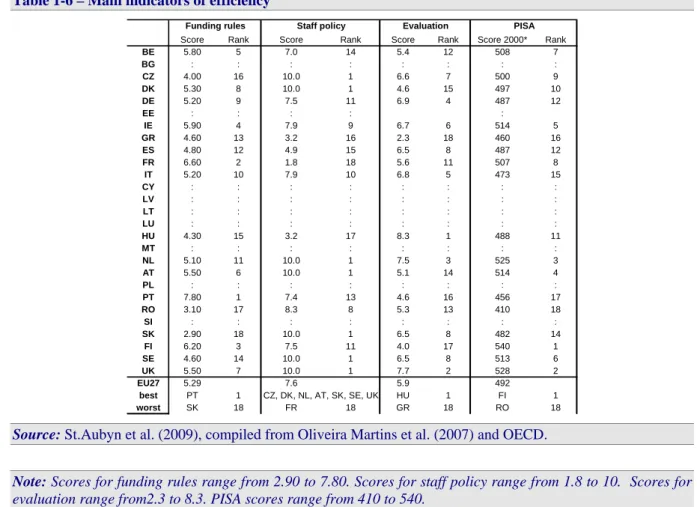
Oliveira Martins et al. (2007) construct indicators on the basis of information provided by OECD Member countries through a questionnaire and reflecting the situation in 2006.15 Since then, many countries have implemented reforms so the indicators would need to be taken as a lower bound. They cover the following three categories:
- Input flexibility includes criteria for the selection of students, the autonomy of tertiary education institutions to decide on the sources and structure of funding (e.g. level of tuition fees), and staff policy (including hiring and firing rules and wage setting).
- Accountability covers features of evaluation and funding. Relevant aspects of evaluation include the type of evaluation (for example whether it is carried out by an independent agency) and the public availability of evaluation reports. Funding rules can be output-based (e.g. output-based on graduation or quality measures) or output-based on grand-fathering or inputs (e.g. number of students). Information on the types of private entities that provide funding (e.g. households, businesses) is also covered.
- Output flexibility includes the possibility of tertiary education institutions to decide on course content, product diversity (short-term, part-time, distant learning studies), existing regional restrictions to access universities (captured by the degree of regional mobility of students) and the existence of numerus clausus for the number of diplomas attributed each year.
The results of the questionnaire were used in St. Aubyn et al. (2009) and they are presented in
Table 1-5. The indicators are measured in a scale ranging from 0 to 10 and the higher the
value of indicator, the higher the flexibility and accountability of the system.
15
For Belgium the answers were provided by region/province and the country level indicator is a simple average of the Flemish and Francophone regions.