University of St. Thomas, Minnesota St. Catherine University
Social Work Master’s Clinical Research Papers School of Social Work
2017
Cognitive Behavioral Therapy for Veterans
Experiencing Insomnia: A Systematic Review
Dustin Cobb
University of St. Thomas, Minnesota, [email protected]
Follow this and additional works at:https://ir.stthomas.edu/ssw_mstrp
Part of theClinical and Medical Social Work Commons, and theSocial Work Commons
This Clinical research paper is brought to you for free and open access by the School of Social Work at UST Research Online. It has been accepted for inclusion in Social Work Master’s Clinical Research Papers by an authorized administrator of UST Research Online. For more information, please [email protected].
Recommended Citation
Cobb, Dustin, "Cognitive Behavioral Therapy for Veterans Experiencing Insomnia: A Systematic Review" (2017).Social Work Master’s Clinical Research Papers. 713.
Cognitive Behavioral Therapy for Veterans Experiencing Insomnia: A Systematic Review
by
Dustin Cobb, B.A.
MSW Clinical Research Paper
Presented to the Faculty of the School of Social Work
St. Catherine University and the University of St. Thomas St. Paul, Minnesota
in Partial fulfillment of the Requirements for the Degree of Master of Social Work
Committee Members
Kari L. Fletcher, Ph.D., LICSW (Chair) Erin Koffel, Ph.D.
Cynthia Wittman, LSW
The Clinical Research Project is a graduation requirement for MSW students at St. Catherine University/University of St. Thomas School of Social Work in St. Paul, Minnesota and is conducted within a nine-month time frame to demonstrate facility with basic social research methods. Students must independently conceptualize a research problem, formulate a research design that is approved by a research committee and the university Institutional Review Board, implement the project, and publicly present the findings of the study. This project is neither a
Abstract
In this systematic literature review, research regarding veterans experiencing insomnia and the utilization of Cognitive Behavioral Therapy for Insomnia as an effective treatment modality were synthesized. Using the sociology research database SocINDEX; nine studies examining the effectiveness of Cognitive Behavioral Therapy as a treatment option for insomnia and insomnia related symptoms met criteria for the review. The Behavioral Model of Insomnia was used as the conceptual framework for this review. This framework was utilized to explore Cognitive
Behavioral Therapy as an effective means of treating veterans experiencing insomnia. Studies included in this systematic review produced these findings: improvements in sleep quality, sleep efficiency, sleep onset latency, total sleep time, a reduction in depressive and insomnia
symptoms, increased normalization of sleep, and a reduction in dysfunctional beliefs about sleep. This study contributes to the growing body of literature supporting Cognitive Behavioral
Therapy for Insomnia as an evidenced based treatment option for veterans experiencing insomnia through a dissemination of the findings, strengths, limitations, and implications for future
research.
Acknowledgments
Taking into consideration all the individuals that helped to motivate, inspire, and continually encourage me to push forward, the most prestigious recognition goes to my loving and supporting wife. Thank you for believing in me throughout this entire process, especially when I didn’t believe in myself. Thank you for motiving me to begin this challenge and
continuing to motivate me to push forward and continually challenge myself to improve. Without you, none of this would have been possible. You have been my source of motivation, energy, and determination to improve myself for these past four years. I would not be where I am today without you in my life.
To my endlessly patient and supportive chair, advisor, professor, and mentor, thank you Dr. Fletcher. You were instrumental in the formation, development, and completion of this project. You provided continual encouragement and never lost faith in me over these past months. Thank you for all that you have done and for always believing in me. Thank you for helping me grow over these past years in the many capacities that we have worked together. You have been influential in my development as a person.
To my friends and classmates, thank you for being a source of support and helping to normalize the entire graduate school experience. You have each played an important part of my development and education over these past two years. Thank you for giving me a chance and for subsequently continuing to put up with me. I am honored to call you all friends.
Table of Contents Introduction………..1 Literature Review……….4 Conceptual Framework………..12 Methods………..16 Findings……….20
Discussion and Implications………..35
Conclusion……….39
List of Table/Figures
Figure 1. Flow diagram of studies throughout the selection process………18
Table 1. Empirical Studies: CBT for Veterans Experiencing Insomnia………..19
Table 2. Summary of Studies Used in Systematic Review for Cognitive Behavioral Therapy for Veterans Experiencing Insomnia………...21 Table 3. Themes identified amongst studies examining CBT for Veterans Experiencing
CBT for Insomnia in Veterans: A Systematic Literature Review Introduction
For veterans and non-veterans alike, when life is reliably filled with an excessive amount of stress, difficulties with sleep can be common. The National Heart, Lung, and Blood Institute recommend that adults should maintain sleep for at least seven consistent hours a day, with inadequate sleep occurring with less than seven hours of continual sleep a day (National Institute of Health [NIH], 2012). While some research suggests that almost two-thirds of adults in the United States get at least seven hours of sleep each day (Liu et al., 2016), when examining service members, the number of individuals reporting receiving the recommended amount of sleep each day drops to one-quarter to one-third of service members (Troxel et al., 2015).
Sleep is a significant factor in maintaining a level of physical and mental health that is needed to adequately function and minimize preventable health risks. Insufficient sleep increases individual risk for a multitude of ailments and symptomology: increased probability of weight gain (Markwald et al., 2013); decreased reaction time, fatigue, increased vulnerability to negative mood disturbances (Scott, McNaughton, & Polman, 2005); increased psychological sequelae, increased cardiovascular health issues, impaired immune function (Gilbert, Kark, Gehrman, & Bogdanova, 2015); and increased risk of suicide (Pigeon, Britton, Ilgen, Chapman, & Conner, 2012). Sleep difficulties have also been found to be prominent symptoms of a traumatic brain injury (TBI), depression, and post-traumatic stress disorder (PTSD), all of which occur in high frequency among service members post-deployment (Gilbert et al., 2015).
With regard to sleep difficulties among service members and veterans, insomnia can be particularly problematic. Insomnia-related concerns, as defined by the Diagnostic and Statistical Manual of Mental Disorders (DSM-5), may include: difficulty initiating and maintaining sleep
(DIMS); early-morning awakening, significant impairment in functioning related to the sleep disturbances; the sleep disturbance occurs at least three nights per week and is present for at least three months, and despite adequate opportunity for sleep the sleep disturbance persists
(American Psychiatric Association [APA], 2013). Relative to the general population, insomnia disproportionately impacts veterans. To illustrate this point, insomnia affects an estimated 10% of the general U.S. population and between 24-54% of OEF, OIF, and Operation New Dawn (OND) veterans (Capaldi, Kim, Grillakis, Taylor, & York, 2015).
Given the severity of complications stemming from the symptoms associated with
insomnia, there has been a wide range of treatment options developed to alleviate and counteract sleep difficulties. The most prevalent treatment currently used amongst service members is pharmacology, with 15-20% of all deployed service members having been prescribed a hypnotic medication (Capaldi et al., 2015). There exists an extensive range of pharmacological treatment options available to our veterans. These include benzodiazepines (the most commonly used), tricyclic antidepressants, serotonergic agents, alpha-1 antagonists, (Gilbert et al., 2015) and even anti-psychotic medication (Capaldi et al., 2015). Seroquel, an anti-psychotic medication which can be used to treat insomnia, became the Veterans Health Administration’s (VA) second highest pharmacological expenditure by 2010 (Capaldi et al., 2015). While these treatment options do have the potential to treat the symptoms of insomnia, they are not without risks. Most
pharmacological options have the potential for significant side effects; including dizziness, anxiety, drowsiness, depression, and disinhibition, have an abuse potential, and have not undergone controlled clinical trials for the treatment of insomnia (Troxel et al., 2015).
Outside of pharmacological treatment options, evidence-based behavioral treatments (EBTs) are most prominent (Gilbert et al., 2015). EBTs address the symptoms associated with
insomnia and an evidence-based psychotherapy that addresses the root causes of insomnia instead of just focusing on the symptoms (Gilbert et al., 2015). There are two most prominent EBTs. One of the behavioral treatment options available is image rehearsal therapy (IRT). IRT is designed to reduce the occurrence and severity of nightmares by working towards the
restructuring of the nightmares responsible sleep disruption in order to improve sleep quality. Most commonly, IRT is utilized in individuals diagnosed with PTSD (Gilbert et al., 2015). The second type of EBT is Cognitive behavioral therapy (CBT), a commonly used evidence-based behavioral treatment option for a wide range of mental health disorders. In part, due to the efficacy and strong evidence base supporting CBT, it has now become the recommended
frontline treatment modality for not only treating insomnia but also addressing the root causes of the disorder, CBT-I (CBT for Insomnia; Gilbert et al., 2015).
The National Institutes of Health released a statement recommending CBT-I as an effective treatment option for insomnia in 2005 (National Institutes of Health, 2005). With a strong recommendation and moderate-quality evidence, the American College of Physicians (ACP) issued guidelines in 2016 recommending CBT-I as the frontline treatment for chronic insomnia in adults (Qaseem et al., 2016). There exists a substantial body of research cementing the efficacy of CBT. However, CBT-I is arguably still in need of a growing body of research articles to help affirm its validity in the treatment of insomnia. The purpose of this project is to develop a systematic literature review that aims to help expand upon and examine the growing body of literature in an effort to determine CBT-I’s efficacy.
Literature Review History
The field of Sleep Medicine is a relatively new field that continues to make breakthroughs while still struggling to establish the fundamental necessity of sleep and understand the biological development of sleep. Rapid eye movement (REM) sleep was discovered in 1953 and in conjunction with the understanding of the prevalence of sleep disorders amongst the general population, helped to spur scientific inquiry and discovery into different sleep disorders, the mechanisms behind them, and potential treatment options (Shepard et al., 2005).
A critical experiment to the advancement of the field of sleep science was conducted in 1988. This experiment was able to demonstrate the critical importance of sleep and the
compounding consequences of sleep deprivation in rats. The rats included in this study that experienced complete sleep deprivation reliably died within 11 to 32 days or were sacrificed when death appeared imminent to the researchers. Rats that experienced partial sleep deprivation of non-rapid eye movement (NREM) and REM sleep died within 16 to 54 days. As the time exposed to sleep deprivation increased, so did the subsequent symptoms experienced by the rats. The rats developed skin lesions, erosions of the gastrointestinal tract, increased food
consumption while simultaneously experiencing weight loss, and the development of
hypothermia occurred imminently before death. Sleep deprivation was not the direct result of death in these rats, but instead was a key factor in the impairment of the rat’s immune system. This consequence of sleep deprivation led to the development of sepsis in the rats and was shortly followed by their inevitable death as a result of their weakened immune system (Rechtschaffen, Bergmann, Everson, Kushida, & Gilliland, 1989). The results of this study
helped to demonstrate the importance of sleep and established a connection between sleep and the body’s ability to maintain a strong immune system (Rechtschaffen et al., 1989).
Insomnia
Without the assistance of laboratory testing and relying entirely on subjective self-reported data, insomnia is not an easily diagnosable disorder, and its symptoms can be
misconstrued as symptoms of other disorders. While the etiology and pathogenesis of insomnia are still unknown (Shepard et al., 2005), advances continue to occur in the treatment of the disorder as a result of its prevalence. With an estimated 6% to 10% of the adult population in the United States meeting diagnostic criteria (Qaseem et al., 2016) for insomnia, up to 20% to 40% in primary care medical settings, and among active duty personnel referred for mental health services, insomnia is one of the most prevalent medical disorders (Troxel et al., 2015). The common occurrence of insomnia among the general adult population has helped to spur the development of ethical, effective, and evidence-based treatments.
For the majority of its medically recognized existence, insomnia has primarily been treated by physicians through the use of pharmacological means. These have included sedative hypnotics (Murtagh & Greenwood, 1995), benzodiazepine-receptor agonists, antidepressant drugs, antihistamines, melatonin, and various herbal remedies (Shepard et al., 2005). More recently, pharmacologic interventions have primarily utilized benzodiazepines and
nonbenzodiazepines. However, these methods are not without consequences and only aim to treat the symptoms and do not address the underlying causes of insomnia (Edinger et al., 2001). These medications put the user at risk of poor-quality sleep, deteriorating daytime functioning, potential development of psychological dependence (Murtagh & Greenwood 1995), and the full return of insomnia symptoms upon stopping medication use (Edinger et al., 2001). In respects to
military connected populations, these same medications used in civilians have been utilized to treat insomnia in veterans and service members despite little evidence to support their use amongst these military connected populations (Troxel et al., 2015).
Throughout the history of insomnia, there has been a wide range of alternative treatment options utilized. These have ranged from hypnosis, autogenic training, meditation, systematic desensitization, progressive muscle relaxation, stimulus control, paradoxical intention, and sleep restriction therapy. Similar to pharmacological interventions in addressing symptoms, these early behavioral therapies are designed to only address sleep-disruptive habits or reduce bed-time arousal (Edinger et al., 2001). Researchers made efforts to determine the validity of these interventions, but results from various studies were inconclusive (Edinger et al., 2001; Murtagh & Greenwood, 1995).
Cognitive behavioral therapy began to be explored as a behavioral therapeutic intervention to insomnia in the 1970’s (Bootzin & Epstein, 2011). Early studies generally produced favorable results for CBT as an effective therapeutic intervention for insomnia as it began to establish itself as a long-term option that produced better results than pharmacotherapy. (Edinger et al., 2001) It wasn’t until 2016 that the American College of Physicians recommended CBT-I as the initial treatment for insomnia in adults. This recommendation came to as a result of a systematic review of randomized controlled trials that were published between 2004 through 2015 (Qaseem et al., 2016).
Predictors of Sleep Disturbances
Many veterans returning from Operation Enduring Freedom (OEF) and Operation Iraqi Freedom (OIF) have reported experiencing emotional trauma, and the majority of OIF and OEF veterans experienced combat situations. Emotional trauma results from experiencing a situation
that is exceptionally traumatic or stressful (Gellis, Gehrman, Mavandadi, & Oslin, 2010). It is well known that experiencing emotional trauma is known to subsequently cause sleep
disturbances. Research has shown that medical and psychosocial problems are caused and exacerbated by sleep disturbances along with an increase in irritability and difficulty concentrating (Gellis et al., 2010).
In 2010, a study was conducted on OIF and OEF veterans that were receiving VA services at the Philadelphia and Lebanon VA Medical Centers and their affiliated outpatient clinics. The veterans included in the study were chosen from a sample used by the Behavioral Health Laboratory. The participants in the study were chosen based on completing a screening interview between 2007 and June 2008. Factors for participation researchers were looking for included identifying as OIF or OEF veterans and having self-reported experiencing emotional trauma. Of the 245 veterans interviewed, 201 recalled experiencing a traumatic event (Gellis et al., 2010).
Researchers measured symptoms of PTSD in participants by utilizing the PTSD Patient Checklist. Researchers removed the sleep-related items when compiling data to test for non-sleep-related PTSD symptom severity. The PTSD Patient Checklist was also used to assess for sleep disturbances. The International Neuropsychiatric Interview was utilized to test participants for panic disorder, alcohol abuse/dependence, bipolar disorder, and a psychotic disorder. A Patient Health Questionnaire-9 (PHQ-9) was utilized to measure depression severity. The researchers in this study excluded the score from the assessment of insomnia and hypersomnia. Sociodemographic factors, such as age, gender, race, income, and pain, were recorded during initial interviews. Of the 201 veterans interviewed, 99 (49.3%) reported experiencing little or no nightmares, 38 (18.9%) reported moderate nightmares, 64 (31.8%) reported severely disturbed
nightmares. Severe difficulties initiating or maintaining sleep (DIMS) were reported by 122 (60.7%) of the sample population, moderate DIMS by 33 (16.4%), and 46 (22.9%) reported little to no problems regarding sleep. (Gellis et al., 2010).
This research conducted by Gellis et al. (2010) develops a significant association between sleep disturbances and PTSD symptom severity. This correlation allows insight for clinicians to have a better understanding of sleep disturbances and their impact on veterans that have
experienced trauma. Risk for Suicide
There are identifying factors that contribute to placing an individual at an acute risk for suicide. The subsequent days or hours after these factors have been identified are crucial to suicide prevention in the clinical setting. For clinicians interacting with suicidal patients, developing a working knowledge of identifying factors and being able to accurately identify these factors is crucial to client suicide prevention. The following research conducted by
McClure, Criqui, Macera, Nievergelt, and Zisook (2015) was conducted in an effort to establish identifying factors that contribute to placing an individual at an increased risk for suicide.
In 2010 a study was conducted on veterans that checked into the VA psychiatric emergency clinic of San Diego between January and May of 2010. The researchers chose to narrow their parameters to unique visits and applied exclusion criteria to the sample. Of the 911 total visits, 757 individuals were identified as unique visits. Next, 38 veterans were eliminated from the research by being inaccessible and 107 were excluded for meeting the exclusion criteria of having documented violent behavior, acute psychosis, anger or agitation, impaired decision-making capacity, a diagnosis of dementia, or being transferred to the emergency department for intoxication. Furthermore, 106 veterans refused to participate, nine did not have data for suicidal
ideation, and 24 surveys could not be utilized. This left the researchers with 473 veterans for the sample size (McClure et al., 2015).
To measure identifying factors of being placed at acute risk, researchers gave participants the suicide warning signs survey to gauge mental health, emotional experiences, drug use, and suicidal ideations. Patient Health Questionnaire depression scale was given to test for current depressive syndrome. Alcohol misuse was screened for by the Alcohol Use Disorders
Identification Test. The sample population utilized in this study consisted of 89% men and 11% women and the mean age was 47 years old. The participants were predominately Caucasian (64%), had some college experience (57%), were disabled (37%), divorced (33%), owned their own home (70%), and had served in Vietnam (33%). The participants had a reported history of suicidal ideation (74%) while one-third (37%) were currently experiencing suicidal ideation or had experienced it theweek prior (52%). The most prominent factors for putting participants at a higher risk of suicidal ideation are sleep disturbances (89%), intenseanxiety (76%), intense agitation (75%), desperation (70%), and hopelessness (70%; McClure et al., 2015).
The research conducted by McClure et al. (2015) clearly identifies factors for putting participants at a higher risk of suicidal ideation, with sleep disturbances as the most prevalent identifier among the risks identified by this research. These findings clearly show that a
relationship exists between sleep disturbances and increased suicidal ideations (McClure et al., 2015).
Interpersonal Problems
Research has shown that veterans diagnosed with PTSD have increased rate of sleep disturbances and interpersonal problems (Troxel & Germain, 2011). Being able to identify an
association between interpersonal issues and identifying factors for increased risk of suicidal ideation would allow for clinicians to better serve their clients.
Troxel and Germain (2011) conducted a study to identify a correlation between insecure attachment and sleep disturbances in veterans. To conduct this study, media advertisements were used to recruit veterans between the ages of 18 and 60 from the Pittsburgh VA Health Care System. The population consisted of primarily Caucasian (85%) males (85%). Participants in the study were excluded if they had an unstable medical condition, low resting blood pressure, a history of psychotic disorder, substance or alcohol abuse, positive drug screen, found to have a diagnosis of sleep apnea, currently taking a beta-blocker, and women were required to test negative for pregnancy (Troxel & Germain, 2011).
Participants were assessed by the Clinician-Administered PTSD Scale to find PTSD symptom severity, depressive symptoms were assessed by the Beck Depression Inventory, data on current medication was recorded utilizing a self-report measurement, attachment style was analyzed by the Experiences in Close Relationships Inventory-Revised, the Pittsburgh Sleep Quality Index measured sleep quality, and data was collected via an in-laboratory
polysomnographic sleep study (Troxel & Germain, 2011). The mean age of this population is 41.4 years, and they mostly served in OIF and OEF (46.3%). High levels of attachment anxiety were associated with a low percent of stage three and four sleep (B= -.36, p<.05) while having increased non-REM sleep beta power (B=.40, p<.05). Attachment avoidance was found to have a positive relationship with REM and non-REM delta power (B=.38 and .35, respectively, p<.05) (Troxel & Germain, 2011).
The research presented in this article has found that reduced percentage of stages 3 and 4 sleep and increased beta power during non-REM sleep is associated with greater attachment
anxiety. Greater attachment avoidance was found to have a positive association with delta power of REM and non-REM sleep. The findings from this research indicate an association between interpersonal styles and sleep disturbances (Troxel & Germain, 2011). The findings of this research help to better understand the association of sleep disturbances, PTSD, and interpersonal relationships and the role that they all play on a person’s health.
Conceptual Framework
The focus of this systematic literature review is to assess the effectiveness of cognitive behavioral therapy used in the treatment of veterans experiencing insomnia. The goal of this study is to further help social workers understand the associated health risks of insomnia and insufficient sleep and to identify an effective and acceptable treatment method for veterans experiencing insomnia or insomnia-related symptoms. The main theory that was used to guide this research is the Behavioral Model of Insomnia. This theory can be applied to support the research on the effectiveness of CBT for veterans experiencing insomnia.
Behavioral Model of Insomnia
The Behavioral Model of Insomnia, or better known as Spielman’s 3P Model of Insomnia (Bootzin & Epstein, 2011), was developed and proposed by Arthur Spielman and Colleagues in 1987 (Perlis et al., 2005). This model is considered to be the first and most universally accepted framework that articulates the etiology of chronic insomnia (Bootzin & Epstein, 2011). The model consists of three factors which are involved in the development of insomnia. They are:
predisposing factors, precipitating factors, and perpetuating factors (Morin & Belleville, 2008). Predisposing factors are psychological or biological characteristics that increase an
individual’s risk for developing sleep difficulties. (Morin & Belleville, 2008) An example of an individual with predisposing factors would be someone experiencing a stressful life event that precipitates sleep difficulties (Manber et al., 2014), such as a veteran being exposed to a combat environment. Other predisposing factors can include gender, hyperarousal/hyperreactivity, anxiety, and excessive rumination (Perlis et al., 2005). Within CBT-I exists a set of different techniques and therapeutic interventions aimed at addressing the spectrum of factors influencing the development and perpetuation of insomnia. The most prominent components that address
predisposing factors are cognitive therapy and sleep hygiene education. Cognitive therapy aims to reduce the maladaptive thoughts and beliefs that directly interfere with an individual’s ability to sleep in an attempt to facilitate sleep, decrease distress, and increase one’s own ability to cope (Morin & Belleville, 2008). The sleep hygiene education component focuses on improving sleep by addressing habits, lifestyle choices, and environmental factors that inhibit sleep (Morin & Belleville, 2008).
Precipitating factors are occurrences or life events with an abrupt onset and can include medical, environmental, and psychological factors (Perlis et al., 2005). Examples of precipitating factors include medical illness, acute stress reactions, development of psychiatric illnesses, and a disruption to the social environment that invokes a change to current sleep patterns (Perlis et al., 2005). Precipitating factors specific to veterans might include basic combat training, job-related injury, exposure to traumatic events such as combat or deployment, and a change in sleep schedule due to long working hours, frequent shift changes, and unpredictable schedules. The two most relevant CBT-I interventions that address precipitating factors are cognitive therapy and relaxation techniques (Bootzin & Epstein, 2011). In relation to precipitating factors,
cognitive therapy would be utilized to address psychological factors and psychological reactions to the medical or environmental factors in order to decrease distress, facilitate sleep, and increase the ability to cope (Morin & Belleville, 2008). Relaxation techniques are used to reduce psychic and somatic anxiety related to sleep difficulties through techniques such as visual imagery, diaphragmatic breathing, and progressive muscle relaxation.
Perpetuating factors are behaviors, beliefs, or thoughts that are considered to be
maladaptive sleep habits that individuals develop in order to cope with a perpetual lack of sleep (Bootzin & Epstein, 2011). Examples of perpetuating factors include spending excessive time in
bed, irregular sleep-wake schedules, napping, fear of sleeplessness, excessive worry, and unrealistic expectations (Bootzin & Epstein, 2011). Veteran specific perpetuating factors can include irregular sleep-wake schedules as a consequence of irregular work schedules and worry as a result of a deployment or being placed into a combat zone. The behavioral portion of CBT-I is designed to explicitly treat the maladaptive behaviors considered as perpetuating factors. Within CBT-I exists two components aimed at adjusting behaviors that inhibit sleep, they are sleep restriction therapy and stimulus control therapy (Perlis et al., 2005). These two skills focus on limiting the amount of time in bed to the patient’s average sleep time and provide instructions that aim to reduce non-sleep behaviors from occurring in the bedroom, respectively. With their intentions being to develop a strong association between the bedroom and sleep and to improve sleep continuity through sleep deprivation (Siebern & Manber, 2011).
Personal Motivation
My personal motivation for the scope of this systematic review is to increase awareness of the potential consequences from lack of sleep and the sleep disorder insomnia, and to further increase the amount of available of research backing the use of CBT as a viable treatment option for veterans experiencing insomnia. Serving in the United States Navy Reserve has afforded me a glimpse into the potential for developing sleep-related disorders as a direct result of the requirements of military service. I have not personally experienced a sleep disorder, but I have personally experienced sleep deprivation and the consequences of it. Not only have I experienced the consequences of it personally, but I have witnessed these consequences in countless
individuals throughout my military career.
I hope to increase my knowledge about the importance of sleep and the potential-disastrous consequences of lack of sleep so that I may continue forward in my military career
with the ability to aid my fellow service members and educate them on this subject of utmost importance.
Professional Motivation
My professional motivations for this study are to continue exploring insomnia and the treatment of it with CBT and to further solidify CBT-I as an evidenced based treatment for veterans and service members. Through the completion of this systematic review, I hope to increase what is known about the implications of sleep loss and to aid in uncovering patterns of symptom reduction in study participants.
As a social worker, I hope that this systematic review will aid in increasing the acceptance and destigmatization of sleep disorders and their treatment amongst veterans and service members.
Methods
An examination of the current literature on cognitive behavioral therapy for insomnia identifies a body of work that continues to grow in support of CBT-I and helps to solidify its establishment as an evidence-based therapeutic intervention and alternative to pharmacological treatment of insomnia. Due to the limited but growing body of research examining the efficacy of CBT-I for veterans, a systematic review will be used to explore this issue because:
“systematic reviews can help practitioners solve specific clinical problems. By critically examining primary studies, systematic reviews can also improve our understanding of inconsistencies among diverse pieces of research evidence. By quantitatively combining the results of several small studies, meta-analyses can create more precise, powerful, and convincing conclusions” (Cook, Mulrow, & Haynes, 1997, p. 4)
A systematic review of Cognitive Behavioral Therapy for veterans experiencing insomnia is an acceptable and worthwhile endeavor to examining its efficacy as a treatment modality.
Considering the amount of literature that exists is substantial in regards to CBT as a treatment method for insomnia, research specific to its implications of its application with veterans is warranted due to the insignificant body of research in the area.
Search Strategies
A literature search was conducted during the period of August 2016 to December 2016 using the online databases SocINDEX. The search was conducted using the terms cognitive behavioral therapy and insomnia and veterans. The preliminary search results produced a total of 1,442 articles from the aforementioned search strategies. A secondary search was conducted removing the key word veterans that resulted in an increase to the pool of potential articles to 12,629.
Selection Criteria
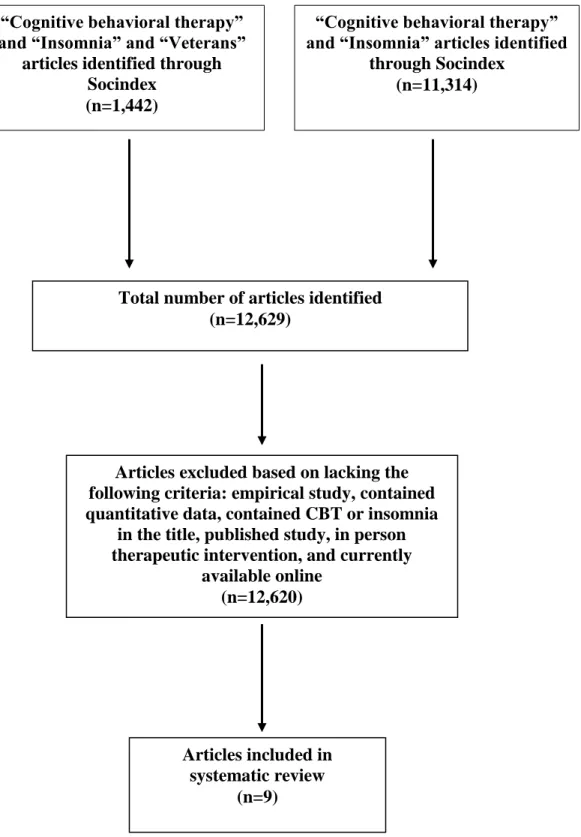
Due to the thousands of articles that were found during the preliminary and secondary searches, articles were narrowed down or eliminated using several criteria. Articles were only included in the study of they were found to be empirical studies, contained quantitative data, contained the search terms cognitive behavioral therapy (or CBT) and insomnia in the title, were published studies, provided an in person therapeutic intervention, and were currently available online. The resulting selection of articles that remained were nine empirical studies. The nine articles that remained were examined and found to be relevant to the goal of this research. A complete list of the empirical studies is illustrated below in Table 1.
Figure 1. Flow diagram of studies throughout the selection process “Cognitive behavioral therapy”
and “Insomnia” and “Veterans” articles identified through
Socindex (n=1,442)
“Cognitive behavioral therapy” and “Insomnia” articles identified
through Socindex (n=11,314)
Total number of articles identified (n=12,629)
Articles excluded based on lacking the following criteria: empirical study, contained quantitative data, contained CBT or insomnia
in the title, published study, in person therapeutic intervention, and currently
available online (n=12,620)
Articles included in systematic review
Table 1
Empirical Studies: CBT for Veterans Experiencing Insomnia
Author Year Title
1 Belleville, Guay, &
Marchand
2010 Persistence of sleep disturbances
following cognitive-behavior therapy for posttraumatic stress
disorder
2 Edinger, Wohlgemuth,
Radtke, Marsh, & Quillian
2001 Cognitive Behavioral Therapy for
Treatment of Chronic Primary Insomnia: A Randomized
Controlled Trial
3 Gehrman 2015 CBT for insomnia in veterans with
PTSD
4 Gellis & Gehrman 2011 Cognitive Behavioral Treatment
for Insomnia in Veterans with Long-Standing Posttraumatic Stress Disorder: A Pilot Study
5 Karlin, Trockel, Taylor,
Gimeno, & Manber
2013 National Dissemination of
Cognitive Behavioral Therapy for Insomnia in Veterans: Therapist-
and Patient-Level Outcomes
6 Karlin, Trockel, Spira,
Taylor, & Manber
2015 National evaluation of the
effectiveness of cognitive behavioral therapy for insomnia
among older versus younger veterans
7 Koffel & Farrell-Carnahan 2014 Feasibility and Preliminary
Real-World Promise of a Manualized Group-Based Cognitive Behavioral
Therapy for Insomnia Protocol for Veterans
8 Margolies, Rybarczyk,
Vrana, Leszczyszyn, & Lynch
2014 Efficacy of a Cognitive-Behavioral
Treatment for Insomnia and Nightmares in Afghanistan and
Iraq Veterans With PTSD
9 Trockel, Karlin, Taylor,
Brown, & Manber
2015 Effects of Cognitive Behavioral
Therapy for Insomnia on Suicidal Ideation in Veterans
Findings
Nine clinical interventions met selection criteria for this systematic review. This findings chapter will break down the articles into four categories of comorbid diagnoses of PTSD (two studies), utilizing CBT-I to treat sleep disturbances (two studies), and treatment of primary insomnia (five studies). Table 2 below provides a brief summary of these nine studies.
Table 2
Summary of Studies Used in Systematic Review for Cognitive Behavioral Therapy for Veterans Experiencing Insomnia
Study Belleville Edinger
Year 2010 2001
Study Question
“Will CBT for PTSD have an impact on sleep disturbances?” “What is the relationship between persistent sleep difficulties and anxiety and depression
symptoms?”
“How will a hybrid CBT compare to a first-generation behavioral treatment and a placebo
therapy for treating primary insomnia?” Evaluation
Aim
Evaluation of CBT for PTSD and associated sleep disturbances
Efficacy of hybrid CBT vs.
progressive muscle relaxation training vs.
placebo therapy Location Hospitals in the Montreal metropolitan area in Quebec,
Canada
Duke University Medical Centers Durham, NC
Sample Size 55 75
Age 18-68 y/o 40-80 y/o
Inclusion Criteria
Diagnosed with PTSD over 18 y/o
Persistent primary insomnia
1-week average wake time after sleep onset of 60 minutes or longer
Insomnia onset after 10 y/o Insomnia for longer than 6 months Intervention
(IV)
CBT for PTSD administered in individual therapy with psychologists
Individual CBT vs RT vs PT
Treatment 20 session CBT for PTSD 6 weekly outpatient individual sessions (CBT or
RT or PT)
Design Pre-/post- Pre-/Post-/ 6 months post
Selection PTSD Dx and recruited through advertisements and hospital referrals
Newspaper advertisements Face-to-face solicitation
Measures The Pittsburgh Sleep Quality Index (PSQI)
The PSQI Addendum for PTSD (PSQI-A) The Modified PTSD Symptom Scale-Self-Report The Beck Depression Inventory-Second Edition
(BDI-II)
The Beck Anxiety Inventory The Medical Outcome Survey-Short Form-12
Polysomnography Sleep logs
Insomnia Symptom Questionnaire (ISQ) Self-Efficacy Scale (SES) Beck Depression Inventory (BDI) Therapy Evaluation Questionnaire (Likert ratings)
Statistical Analysis
Analyses of variance (ANOVAs) Analyses of covariance (ANCOVA)
Fidelity Not specifically discussed Therapy session recordings were randomly
reviewed by a blinded judge Therapist were supervised every 8 to 12 weeks Findings Improvements were recorded for sleep quality, sleep
onset latency, sleep efficiency, and sleep disturbances. Six months after treatment 70% of participants with baseline sleep difficulties still experienced persistent
sleep difficulties associated with posttraumatic, anxious, and depressive symptoms.
CBT produced larger improvements across outcome measures when compared to RT and PT
CBT increased normalization of sleep and subjective symptoms in participants
Limitations Self-report questionnaires
High participant attrition
Changes in use of sedative psychotropic medication was not tracked
Small study sample No urinalysis
Limited objective outcome measures Highly selected sample Recommend. Sleep disturbances in patients with PTSD should be
evaluated and addressed
CBT should be considered in the treatment of sleep maintenance difficulties
Study Gehrman Gellis
Year 2015 2011
Study Question
“Is there efficacy using CBT-I to treat disturbed sleep in individuals diagnosed with PTSD?”
“What are the effects of using CBT-I on sleep disturbances in veterans with PTSD?” “Is CBT-I effective as an independent intervention
for veterans with PTSD?”
“Does CBT-I reduce nightmares by decreasing presleep arousal?”
Evaluation Aim
Efficacy of CBT-I in individuals diagnosed with PTSD Evaluation of using CBT-I in veterans with long-standing PTSD
Location University of Pennsylvania, USA Philadelphia Veterans Affairs Medical Center
Philadelphia, PA
Sample Size 126 8
Age Mean age of 57.2 55-65 y/o
Inclusion Criteria
Military veterans diagnosed with PTSD Diagnosed with PTSD
Over 50 y/o Male veteran Intervention
(IV)
CBT-I CBT-I administered in individual therapy
Treatment 6 weekly group CBT-I sessions 5 weekly individual sessions of CBT-I
Design Pre-/Post- Pre-/Post-
Selection Not listed PTSD Dx and recruited through advertisements and
hospital referrals
Measures Insomnia Severity Index (ISI)
Sleep diaries
PTSD Checklist-Civilian version
Insomnia Severity Index (ISI) Sleep diaries
Actigraphy
Clinician-Administered PTSD Scale (CAPS) Mini-International Neuropsychiatric Interview
(MINI)
Short Form Health Survey (SF-12) Fatigue Severity Scale Patient Health Questionnaire (PHQ-9)
State-Trait Anxiety Inventory (STAI) Patient Symptom Checklist, Military Version
(PCL-M)
Nightmare Frequency Questionnaire Nightmare Effects Survey Statistical
Analysis
ANCOVA Paired t-tests
Fidelity Not specifically discussed Not specifically discussed
Findings CBT-I in veterans with PTSD produces improvements
in sleep and reduction in symptoms of PTSD
Improvements in wake after sleep onset, total sleep time, sleep efficiency, and overall insomnia
severity
Actigraphy-defined sleep was unchanged
Limitations Lack of exclusion criteria
No follow-up data
Small sample size No control group Subjective measures
Recommend. CBT-I for veterans with PTSD should be further
evaluated
Further research with increased sample size, added control group, more stringent methods, and separated those with and without nightmares should
Study Karlin Karlin
Year 2013 2015
Study Question
“Does training lead to clinicians’ competency in delivery of CBT-I?”
“Do veteran patients receiving CBT-I from newly trained clinicians achieve improvement in insomnia
and related outcomes?”
“What impact does CBT-I have on insomnia severity, depression symptom severity, and quality
of life among veterans aged 65 years or older compared to veterans 18- 64 years-old?” “What is the relationship between improvement in
insomnia and improvement in quality of life? “Are older or younger veterans more likely to remain in treatment and what is the quality and
strength of the therapeutic alliance?” Evaluation
Aim
Evaluate efficacy of training and implementation of CBT-I in the Veterans Health Administration VHA
Efficacy of CBT-I in older and younger veterans Evaluating the effects of CBT-I on insomnia severity, depression symptom severity, and quality
of life among veterans aged 65 years and older versus veterans aged 18-64 years-old
Location VHA
USA
VA Medical Centers VA Clinics
Sample Size 102 VA mental health providers
122 patients
657
Age Mean age of 50 Mean age of 52
Inclusion Criteria
Clinicians: licensed VA mental health staff, provide individual psychotherapy regularly, work where insomnia is an issue, committed to the 4 months of weekly consultation, committed to providing CBT-I after training, and able to recruit one or two patients
with insomnia
Patients: veterans meeting criteria for insomnia disorder
Military veterans with insomnia symptoms
Intervention (IV)
CBT-I administered in individual therapy CBT-I
Treatment 6 weekly
Individual sessions of CBT-I
6 weekly Individual sessions of CBT-I
Design Pre-/Post- Pre-/Post-
Selection Not listed Insomnia symptoms and recruited by VA Medical
Center clinicians trained in the VA CBT-I training program
Measures CBT-I Competency Rating Scale (CBT-I-CRS)
Demographic form Insomnia Severity Index (ISI)
Beck Depression Inventory-II
World Health Organization Quality of Life-BREF (WHOQOL-BREF)
Insomnia Severity Index (ISI) Beck Depression Inventory-II (BDI-II) World Health Organization Quality of Life-BREF
(WHOQOL-BREF)
Working Alliance Inventory-Short Revised (WAI-SR)
Statistical Analysis
Principle components of analysis
Intention to treat analysis with a mixed effects model Random effects were specified
Intention to treat (ITT) analysis with mixed effects models
Paired t-tests
Fidelity Not specifically discussed Not specifically discussed
Findings National training and implementation of CBT-I
resulted in a significant increase in clinician competency
CBT-I produced a reduction in insomnia severity and an improvement in depression and quality of life
VA CBT-I Training Program is effective
CBT-I in older and younger veterans produced significant reductions in insomnia severity
CBT-I led to significant improvements in depression and quality of life among older and
younger veterans
Limitations No randomized control group
Lack of data on comorbidities and medication status Therapist rating scale was not previously validated
Lack of a control condition
Lack of data available on comorbid conditions and medication use
Homogenous sample demographics Recommend. CBT-I should be considered for implementation into
health care systems
Increase the availability of CBT-I in public and private health care systems
Study Koffel Margolies
Year 2014 2013
Study Question “Effectiveness of group-based CBT-I for
veterans with a diagnosis of insomnia?” “Is there efficacy combining CBT-I and IRT with the OEF and OIF veteran population?” Evaluation Aim Evaluation of feasibility and acceptability of
group-based CBT-I
Evaluation of group-based CBT-I for insomnia symptoms
Efficacy of using CBT-I and IRT to reduce insomnia and PTSD symptoms in OEF/OIF veterans
Location Minneapolis Veterans Affairs Medical Center Hunter Holmes McGuire Veterans Affairs Medical
Center
Sample Size 21 40
Age 37-72 y/o 21-54 y/o
Inclusion Criteria
Veterans meeting the DSM-IV criteria for insomnia
Veteran of OEF and/or OIF Diagnosis of PTSD
Current symptoms of sleep disturbance Intervention
(IV)
Group-based CBT-I Individual CBT-I with adjunctive imagery rehearsal
therapy
Treatment 6 weekly 90-minute group CBT-I sessions 1 week of sleep monitoring with an actigraph
4 weekly individual sessions of CBT-I with adjunctive IRT
Design Pre-/post- Pre-/Post-
Selection Patients of the Minneapolis VA Medical Center diagnosed with insomnia were referred by their
physicians
Referrals from Hunter Holmes McGuire VA Medical Center PTSD Clinic, general Mental Health Service,
OEF/OIF Outreach Program Presentations during ongoing PTSD groups
Measures Sleep diaries
Insomnia Severity Index (ISI) Dysfunctional Beliefs and Attitudes About
Sleep (DBAS-16) Beck Depression Inventory (BDI-II) Post-Traumatic Stress Checklist: Civilian
Version (PCL-C) Treatment Satisfaction Scale
Sleep diaries Actigraphy
Pittsburgh sleep quality index (PSQI) and PSQI addendum for PTSD (PSQI-A)
Insomnia Severity Index (ISI)
Dysfunctional Beliefs and Attitudes About Sleep Scale (DBAS)
PTSD Symptom Scale-Self Report (PSS-SR) Patient Health Questionnaire-9 (PHQ-9)
The Profile of Mood States (POMS) Statistical
Analysis
Hierarchical Linear Modeling using SAS (PROC MIXED)
Intent-to-treat analyses
Multivariate analysis of variance (MANOVA) Analyses of variance (ANOVA)
Fidelity Not specifically discussed Not specifically discussed
Findings Group-based CBT-I is effective, feasible, and acceptable to veterans
Medium to large effect for sleep onset latency, awakenings during the night, sleep efficiency, insomnia scores, and dysfunctional beliefs about
sleep
CBT-I with IRT produced improved subjectively and objectively measured sleep, a reduction in PTSD
symptom severity, a reduction in PTSD related nighttime symptoms, and a reduction in depression and
distressed mood
Limitations Small sample size
Lack of control
Comorbid diagnoses obtained through chart review
Potential for demand characteristics
Pilot study Modest resources Limited time frame No active control group No measurement for adherence to IRT Recommend. Replicate current findings using multiple
methods including polysomnography and actigraphy
The effects of using CBT-I/IRT concurrently with evidence-based general PTSD treatments should be
examined.
The relationship of sleep and PTSD should be examined further.
Study Trockel
Year 2015
Study Question “Will veterans diagnosed with insomnia experience a reduction in suicidal ideation when treated with CBT-I?”
Evaluation Aim Examine change in suicidal ideation during CBT-I treatment
Examine the effects of change in insomnia severity during treatment on change in suicidal ideation and change in depression severity
Examine the effect of change in insomnia on change in suicidal ideation
Location Outpatient and residential treatment facilities
Sample Size 405
Age 22-85+ y/o
Inclusion Criteria Veterans meeting DSM-IV criteria for insomnia
Intervention (IV) CBT-I
Treatment 6 weekly individual CBT-I sessions
Design Longitudinal data collection
Selection VA patients receiving services in mental health and primary care settings
Measures Insomnia Severity Index (ISI)
Beck Depression Inventory-II (BDI-II) Suicidal ideation
Statistical Analysis Multivariate logistic regression model
Chi-squared test Multivariate linear regression
Fidelity Not specifically discussed
Findings CBT-I in veterans with insomnia produced a reduction in ISI score, and each 7-point
decrease in ISI score was associated with a 65% reduction in odds of suicidal ideation Change in ISI score produced a significant effect on change in depression severity
Limitations Data was not collected from a controlled clinical trial
No control for other treatments participants might have been receiving No control group
BDI-II data were only collected at two time points No standard measures of sleep
Recommend. Randomized controlled research should be conducted to further examine the relationship between CBT-I treatment of insomnia and reduced suicidal ideation.
Measures: The Pittsburgh Sleep Quality Index (PSQI); The PSQI Addendum for PTSD; The Modified PTSD Symptom Scale-Self-Report; The Beck Depression Inventory-Second Edition (BDI-II); The Beck Depression Inventory (BDI); The Beck Anxiety Inventory; The Medical Outcome Survey-Short Form-12; Polysomnography; Sleep logs; Insomnia Symptom Questionnaire; Self-Efficacy Scale; Therapy Evaluation Questionnaire (Likert ratings); Insomnia Severity Index (ISI); Sleep diaries; PTSD Checklist-Civilian version (PCL-C); Actigraphy; Clinician-Administered PTSD Scale (CAPS); Mini-International Neuropsychiatric Interview (MINI); Short Form Health Survey (SF-12); Fatigue Severity Scale; Patient Healthy Questionnaire (PHQ-9); State-Trait Anxiety Inventory (STAI); Patient Symptom Checklist, Military Version (PCL-M); Nightmare Frequency Questionnaire; Nightmare Effects Survey; CBT-I Competency Rating Scale (CBT-I-CRS); Demographic form; World Health Organization Quality of Life-BREF (WHOQOL-BREF); Dysfunctional Beliefs and Attitudes About Sleep (DBAS-16); Treatment Satisfaction Scale; Pittsburgh sleep quality index (PSQI); Pittsburgh sleep quality index addendum for PTSD (PSQI-A); PTSD Symptom Scale-Self Report (PSS-SR); Profile of Mood States (POMS); Working Alliance Inventory-Short Revised (WAI-SR)
Summary of Studies Used in Systematic Review
Demographics. All nine clinical studies occurred between the years of 2001 and 2015. Eight of the studies occurred between 2010 and 2015, with three occurring in 2014. Seven of the studies included inclusion criteria for participants to be veterans of the United States military and two studies utilized civilian participants. The ages of study participants ranged from 18 to 85 + years old. The size of samples ranged from 8 to 657 study participants. Eight of the studies provided interventions in an individual setting and one study provided the intervention in a group setting. Women were explicitly excluded from one study and the other eight studies included women or did not explicitly state the gender of participants. Eight of the studies were conducted within the United States and one of the studies was conducted in Canada.
Interventions. With six of the studies solely using CBT-I and two more utilizing CBT-I in conjunction with another intervention or compared to other interventions, the primary clinical intervention utilized by the studies included in this systematic review is cognitive behavioral therapy for insomnia. One study utilized CBT modified for PTSD and examined its effects on sleep disturbances. CBT-I was used in conjunction with imagery rehearsal therapy (IRT) in one study. An early trial of CBT-I posed its effectiveness against progressive muscle relaxation training and a placebo therapy. Seven of the studies provided their intervention in an individual setting and only one study provided the intervention in a group-based setting.
Evaluation aims of the studies focused on associated effects on sleep disturbances when using CBT for PTSD, the efficacy of CBT-I in individuals diagnosed with PTSD, the efficacy of providing CBT-I in the Veterans Health Administration (VHA), feasibility and acceptability of group-based CBT-I, efficacy of using CBT-I and IRT to reduce insomnia and PTSD symptoms,
change in suicidal ideation during CBT-I treatment, and change in insomnia severity in relation to change in suicidal ideation, depression severity, and quality of life.
Methods. All nine of the interventions were quantitative studies. Inclusion criteria for participants of the studies ranged from 18 to 85 years of age, four studies included diagnosis of PTSD, four studies included meeting the criteria for diagnosis of insomnia, two studies included insomnia symptoms, seven studies included military veteran, one study included being a male, one study included over 50 years-old, one study included over 18 years old, one study included that the insomnia has persisted for longer than six months, and one study included insomnia occurred after 10 years of age.
Fidelity was not specifically discussed in eight out of nine of the clinical studies. One intervention specifically discussed recording the therapy sessions and having them reviewed by a blinded judge. This same study also discussed providing in session supervision to the therapists every 8 to 12 weeks throughout the duration of the study. Eight of the studies had a pre-test and post-test and one of the studies collected data longitudinally; one of the studies utilized a six-month follow-up post-test in addition to the pre-test and post-test. All nine studies utilized measures related to symptoms or symptom severity; two studies included provider efficacy ratings in addition to the symptom measures. The most commonly occurring measure was the Insomnia Severity Index, occurring in seven of the nine studies. Statistical analysis utilized in the clinical studies include paired t-tests, intention to treat analysis, analysis with mixed effects models, analyses of variance, analyses of covariance, hierarchical linear modeling, multivariate analysis of variance, multivariate logistic regression model, chi-squared test, and a multivariate linear regression.
Clinical studies by themes. Analysis and comparison of the nine clinical studies resulted in the identification of four identifiable themes amongst the studies. Summarized in the table below is the outcome of the systematic findings. The four reoccurring themes were found and analyzed based on the diagnoses of study participants, treatment modality utilized, symptom tracking, and measures used. The four themes identified were:
- Participant diagnosis of PTSD
- Utilization of CBT to treat sleep disturbances - Reduction in symptom severity
- Utilization of only subjective measures of sleep
The included clinical studies on CBT for veterans experiencing insomnia ranged from having two to four themes of the identified themes found from comparing and analyzing the nine studies. The most commonly occurring themes amongst the studies were the reduction in symptom severity theme and the utilization of CBT to treat sleep disturbances theme. All nine studies were found to produce a reduction in symptom severity utilizing CBT in some capacity. The next most common theme was the utilization of only subjective measures of sleep with six studies containing this theme. One study utilized polysomnography and two studies utilized actigraphy in addition to subjective measures of sleep. Diagnoses of PTSD was the least commonly occurring theme found in the studies with four studies containing this theme.
Table 3
Themes identified amongst studies examining CBT for Veterans Experiencing Insomnia
Themes Diagnoses of PTSD Utilization of CBT to treat sleep disturbances Reduction in symptom severity Utilization of only subjective measures of sleep Total themes found in each study Total number in each theme 4 9 9 6 Belleville et al (2010) x x x x 4 Edinger et al. (2001) x x 2 Gehrman (2015) x x x x 4 Gellis et al. (2011) x x x 3 Karlin et al. (2013) x x x 3 Karlin et al. (2014) x x x 3 Koffel & Farrell-Carnahan (2014) x x x 3 Margolies et al. (2013) x x x 3 Trockel et al. (2014) x x x 3
Studies Summarized. All nine included studies were able to produce a reduction in symptom severity amongst the study’s participants and all nine utilized a form of CBT to treat sleep disturbances, which include the prominent diagnosing criteria for insomnia. Eight of the nine studies were conducted in the United States of America and one study was conducted in Montreal, Canada.
The first of nine studies utilized in this systematic review was conducted by Belleville, Guay, and Marchand (2010). This study provided CBT for PTSD to 55 individuals aged 16-18 years-old diagnosed with PTSD with the aim being to evaluate CBT for PTSD on the PTSD associated sleep disturbances. The CBT for PTSD was provided in an individual therapy setting with psychologists over the course of 20 sessions that lasted between 60 and 90 minutes. Study participants were provided pre-and post-tests utilizing the following measures: Pittsburgh Sleep Quality Index (PSQI), PSQI Addendum for PTSD (PSQI-A), Modified PTSD Symptom Scale-Self-Report (MPSS-SR), Beck Depression Inventory-Second Edition (BDI-II), Beck Anxiety Inventory (BAI), and Medical Outcome Survey-Short Form-12 (SF-12). This study produced improvements in sleep quality, sleep onset latency, sleep efficiency, and sleep disturbances in participants at the end of treatment. However, six months after treatment 70% of participants with baseline sleep difficulties still experienced persistent sleep difficulties associated with PTSD, anxious, and depressive symptoms.
The second of nine studies utilized in this systematic review was conducted by Edinger, Wohlgemuth, Radtke, Marsh, and Quillian (2001). This is the oldest study included in this systematic review, taking place in 2001, nine years before the second oldest included study. Authors of this study compared the efficacy of a hybrid CBT against progressive muscle relaxation training and a placebo therapy. Therapy sessions were recorded and randomly
reviewed by a blinded judge. Therapists were also supervised every eight to 12 weeks to ensure fidelity. The sample size included 75 individuals aged 40-80 years-old diagnosed with persistent primary insomnia. Participants received their randomly assigned intervention and were provided with six weekly individual outpatient sessions. Study participants were provided pre-and post-test utilizing the following measures: polysomnography, sleep logs, Insomnia Symptom
Questionnaire (ISQ), Self-Efficacy Scale (SES), Beck Depression Inventory (BDI), and Therapy Evaluation Questionnaire (TEQ). The results of this study demonstrated that CBT produced larger improvements across outcome measure when compared to progressive muscle relaxation and a placebo therapy. The CBT recipients also demonstrated an increased normalization of sleep and subjective symptoms.
The third of nine studies included in this systematic review was conducted by Gehrman (2015). This study provided CBT-I to military veterans diagnosed with PTSD. The sample size was 126 veterans with a mean age of 57.2 years-old, and 92.1% of participants were male. The CBT-I was administered in six weekly group sessions using video telehealth equipment with group sizes ranging from four to eight veterans. Study participants were provided pre-and post-test utilized the following measures: Insomnia Severity Index (ISI), sleep diaries, and PTSD Checklist-Civilian version. Participants of this study showed improvements in sleep and a reduction in PTSD symptoms.
The fourth of nine studies included in this systematic review was conducted by Gellis and Gehrman (2011). The aim of this study was to evaluate using CBT-I with veterans diagnosed with chronic PTSD. The sample size was eight veterans aged 55-65 years-old, 87.5% were African-American, and 87.5% were Vietnam-era veterans. The CBT-I was administered in five weekly individual sessions. Study participants were provided pre-and post-tests utilizing the
following measures: ISI, sleep diaries, actigraphy, Clinician Administered PTSD Scale (CAPS), Mini-International Neuropsychiatric Interview (MINI), SF-12, Fatigue Severity Scale, Patient Health Questionnaire (PHQ-9), State-Trait Anxiety Inventory (STAI), Patient Symptom Checklist Military Version (PCL-M), Nightmare Frequency Questionnaire, and Nightmare Effects Survey. This study produced improvements in wake after sleep onset, total sleep time, sleep efficiency, and a reduction in overall insomnia severity. However, no differences were demonstrated with actigraphy-defined sleep when pre-post results were compared.
The fifth of nine studies included in this systematic review was conducted by Karlin, Trockel, Taylor, Gimeno, and Manber (2013). This study sought to evaluate the efficacy of providing CBT-I with Veterans Health Administration (VHA) trained clinicians to veterans meeting the criteria for a diagnosis of insomnia. The sample size included 122 veterans with a mean age of 50 years-old, 78% were male, and 66% were white. The CBT-I was administered in six weekly individual sessions. Study participants were provided pre-and post-tests utilizing the following measures: CBT-I Competency Rating Scale (CBT-I-CRS), demographic form, ISI, BDI-II, and World Health Organization Quality of Life-BREF (WHOQOL-BREF). This study produced a reduction in insomnia severity and an improvement in depression and quality of life.
The sixth of nine studies included in this systematic review was conducted by Karlin, Trockel, Spira, Taylor, and Manber (2015). This study provided CBT-I to 657 veterans with insomnia symptoms. Study participants had a mean age of 52, 89.2% were male, and 71.7% were white. The aim of this study was to evaluate providing CBT-I to older and younger veterans and to examine the efficacy of CBT-I on insomnia severity, depression symptom severity, and quality of life for veterans aged 65 years and older versus veterans aged 18-64 years-old. The CBT-I was administered in six weekly individual sessions. Study participants were provided
pre-and post-tests utilizing the following measures: ISI, BDI-II, WHOQOL-BREF, pre-and Working Alliance Inventory-Short Revised (WAI-SR). This study demonstrated the effectiveness of CBT-I in older and younger veterans to produce reductions in insomnia severity, depression severity, and improvements in quality of life amongst both age cohorts of veterans.
The seventh of nine studies included in this systematic review is Koffel and Farrell-Carnahan (2014). The evaluation aim of this study was to examine the feasibility and
acceptability of group-based CBT-I and to evaluate the effects on CBT-I on insomnia symptoms. Participants of this study included 21 veterans aged 37-72 years-old meeting the DSM-IV criteria for insomnia. The CBT-I was administered in six 90-minute weekly group-based sessions. Study participants were provided pre-and post-tests utilizing the following measures: sleep diaries, ISI, Dysfunctional Beliefs and Attitudes About Sleep (DBAS-16), BDI-II, Post-Traumatic Stress Checklist: Civilian Version (PCL-C), and Treatment Satisfaction Scale. The study found group-based CBT-I to be effective, feasible, and acceptable to veterans. Participants of this study experienced an improvement in regards to their insomnia symptoms through a reduction in sleep onset latency, awakenings during the night, and improvements to their sleep efficiency, insomnia scores, and dysfunctional beliefs about sleep.
The eighth of nine studies included in this systematic review is Margolies, Rybarczyk, Vrana, Leszczyszyn, and Lynch (2014). The evaluation aim of this study was to determine the efficacy of using CBT-I and IRT to reduce insomnia and PTSD symptoms in OEF and OIF veterans. Participants of this study included 40 veterans of OEF and or OIF, aged 21-54 years-old, diagnosed with PTSD, and currently experiencing sleep disturbances. The CBT-I was administered in four weekly individual sessions with adjunctive IRT. Study participants were provided pre-and post-tests utilizing the following measures: sleep diaries, actigraphy, PSQI,
PSQI-A, ISI, DBAS, PTSD Symptom Scale-Self Report (PSS-SR), PHQ-9, and The Profile of Mood States (POMS). The study found CBT-I in conjunction with IRT to be effective at improving subjectively and objectively measured sleep. Study measures reported a reduction in PTSD symptom severity, PTSD related nighttime symptoms, depression, and a reduction in distressed mood.
The ninth and final study included in this systematic review was conducted by Trockel, Karlin, Taylor, Brown, and Manber (2015). The evaluation aim of this study was to examine the efficacy of CBT-I on suicidal ideation in veterans experiencing insomnia. Participants of this study included 405 veterans aged 22-85+ years-old and meeting the DSM-IV diagnostic criteria for insomnia. Study participants received six weekly individual CBT-I sessions. Study
participants’ data was collected longitudinally utilizing the following measures: ISI and BDI-II. CBT-I in veterans with insomnia produced a reduction in ISI score and each 7-point decrease in ISI score was associated with a 65% reduction in odds of suicidal ideation. A reduction in ISI score produced a significant effect on change in depression symptom severity.
Discussion
The purpose of this systematic review was to examine current literature on CBT and its effectiveness in the treatment of veterans experiencing insomnia. A review of nine empirical studies led to the identification of multiple similarities, differences, and to the synthesis of possible future implications for the field of social work practice. This systematic review, the growing body of literature, and the recent recommendation from the American College of Physicians to recommend CBT-I as a front-line treatment (Qaseem et al., 2016), have unequivocally demonstrated CBT-I’s efficacy treating insomnia.
This systematic research study scrutinized the efficacy of treating veterans experiencing insomnia with cognitive behavioral therapy and subsequently adds to the growing body of research around the treatment of insomnia using non-pharmacological methods. This study analyzed current literature to identify commonalities amongst treatment modalities, study participant demographic information, and study findings.
A review of the nine empirical studies demonstrated validity, or were able to produce desired results, in eight out of nine included studies. The one study that did not demonstrate validity was conducted by Belleville et al. (2010), this study produced a reduction in sleep difficulties at the conclusion of the treatment for study participants. However, six months posttreatment 70% of study participants were experiencing seep difficulties associated with posttraumatic, anxious, and depressive symptoms (Belleville et al., 2010). This study is considered to not demonstrate validity due to including data that demonstrated a majority of study participants returned to their baseline sleep difficulties six months post-treatment.
Studies included in this systematic review produced multiple findings; the following are some of the common findings: improvements in sleep quality, sleep efficiency, sleep onset