Outcome Evaluation of an After-School Program for At-Risk Middle School Students
Kelle D. Falls
A thesis submitted to the faculty of the University of North Carolina at Chapel Hill in partial fulfillment of the requirements for the Master’s degree of Educational Psychology, Measurement, and Evaluation in the School of Education.
Chapel Hill 2013
iii Abstract
KELLE D. FALLS: Outcome Evaluation of an After-School Program for At-Risk Middle School Students
(Under the direction of William B. Ware)
Middle school is a time of significant transition for students, and support is needed to ensure school success during this time. This evaluation study examined student outcomes within the context of an after-school program designed to support student success. Participants were 132 middle school students participating in the program at seven different middle schools. Student course grades, school attendance, and student disciplinary actions were examined over the course of program participation, taking into account student attendance in the after-school program. Findings indicate no statistically significant differences in student Mathematics achievement, school attendance, and student behavior from the beginning of the program year to the end. A slight statistically significant difference was found in student Language Arts grades throughout the program year. Results from correlational analysis indicated no relationship between student
iv
TABLE OF CONTENTS
LIST OF TABLES ... vi
LIST OF FIGURES ... vii
CHAPTER 1 ... 1
Introduction ... 1
Current Issues Facing Middle School Students ... 1
Support from After-School Programs ... 5
Evaluation/Research Questions ... 7
Description of Program Afterschool ... 8
Theoretical Framework ... 10
Logic Model ... 13
CHAPTER 2 ... 19
Literature Review ... 19
Middle School Transition ... 19
After-School Programs and Student Outcomes ... 21
Frequency of Participation in After-School Programs ... 26
v
Summary of Literature Review ... 40
Hypotheses ... 41
CHAPTER 3 ... 42
Methods ... 42
Program Evaluation ... 42
Common Program Evaluation Study Designs ... 46
Current Evaluation Study Design ... 48
Sample ... 51
Dependent Variables ... 52
Data Analysis ... 53
CHAPTER 4 ... 57
Results ... 57
Research Question 1 ... 57
Research Question 2 ... 73
Discussion ... 78
Hypothesis 1 ... 78
Hypothesis 2 ... 85
Limitations ... 86
Recommendations to Program Afterschool ... 88
vi
vii LIST OF TABLES
Table 1. Math Achievement Descriptive Statistics for Participating
Students, 2011/12 ... 60 Table 2. Description of the Mathematics Grade Change Score for
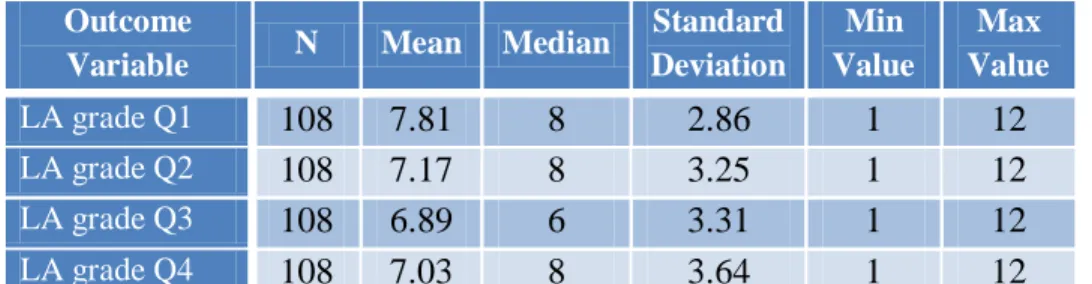
Participating Students. ... 61 Table 3. Language Arts Achievement Descriptive Statistics for
Participating Students, 2011/12 ... 65 Table 4. Description of the Language Arts Grade Change Score for
Participating Students. ... 66 Table 5. School Attendance Descriptive Statistics for Participating
Students, 2010/11 and 2011/12 ... 68 Table 6. Description of the School Attendance Change Score for
Participating Students. ... 69 Table 7. Behavior Descriptive Statistics for Participating Students,
2010/11 and 2011/12 ... 71 Table 8. Description of the Behavior Change Scores for Participating
viii
LIST OF FIGURES
Figure 1. Logic Model for Program Afterschool ... 15 Figure 2. Framework for Program Evaluation ... 43 Figure 3. Frequency Distribution of Quarter 1 Mathematics Achievement
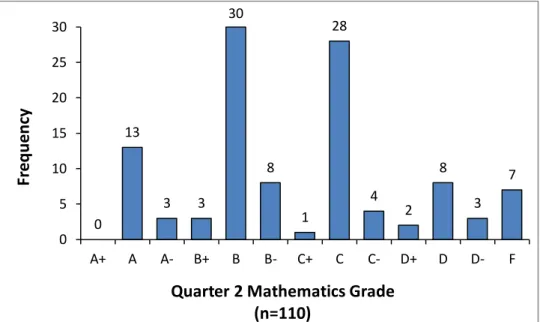
Data for Participating Students, 2011/12 ... 58 Figure 4. Frequency Distribution of Quarter 2 Mathematics Achievement
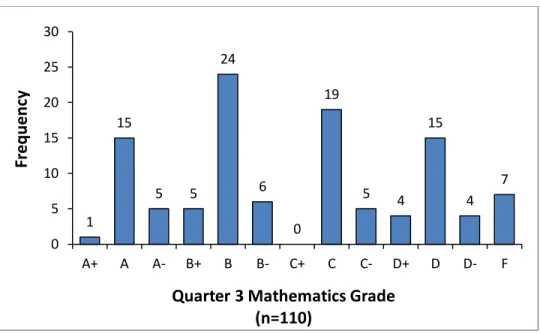
Data for Participating Students, 2011/12 ... 58 Figure 5. Frequency Distribution of Quarter 3 Mathematics Achievement
Data for Participating Students, 2011/12 ... 59 Figure 6. Frequency Distribution of Quarter 4 Mathematics Achievement
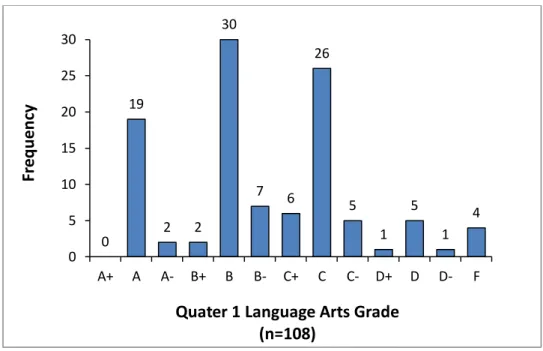
Data for Participating Students, 2011/12 ... 59 Figure 7. Trend in Average Mathematics Grades by Quarter... 60 Figure 8. Frequency Distribution of Quarter 1 Language Arts Achievement
Data for Participating Students, 2011/12 ... 63 Figure 9. Frequency Distribution of Quarter 2 Language Arts Achievement
Data for Participating Students, 2011/12 ... 63 Figure 10. Frequency Distribution of Quarter 3 Language Arts Achievement
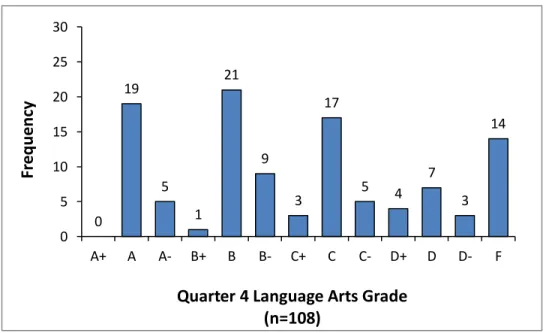
Data for Participating Students, 2011/12 ... 64 Figure 11. Frequency Distribution of Quarter 4 Language Arts Achievement
Data for Participating Students, 2011/12 ... 64 Figure 12. Trend in Average Language Arts Grades by Quarter ... 65 Figure 13. Frequency Distribution of Attendance Data for Participating
Students, 2010/11 ... 67 Figure 14. Frequency Distribution of Attendance Data for Participating
Students, 2011/12 ... 68 Figure 15. Frequency Distribution of Behavior Data for Participating
Students, 2010/11 ... 70 Figure 16. Frequency Distribution of Behavior Data for Participating
ix
Figure 17. Relationship between Frequency of Program Participation and
Mathematics Achievement Change Score. ... 73 Figure 18. Relationship between Frequency of Program Participation and
Language Arts Achievement Change Score... 74 Figure 19. Relationship between Frequency of Program Participation and
School Attendance Change Score. ... 75 Figure 20. Relationship between Frequency of Program Participation and
CHAPTER 1 Introduction
This chapter provides an introduction to the issues facing middle school students, specifically in the areas of decreasing academic achievement, decreasing rates of school attendance, and increasing behavioral issues at school. After-school programs are introduced as a possible solution to the problems facing middle school students today. The research questions guiding the current study are then presented, along with a description of the after-school program being examined. The theoretical framework for the study, Maehr’s (1984) Personal Investment Theory, is also described in detail and applied to student participation in after-school programs. Finally, the logic model for the current evaluation of the after-school program of interest is presented and explained in detail.
Current Issues Facing Middle School Students
Developmental psychologists have identified early adolescence as a crucial time of change; children are seeking independence and identity, while also going through a powerful physical transformation (Eccles, 1999). Adolescents also encounter vast changes to their school structure at this time as they transition into middle school. Challenges may arise as students are presented with new class schedules, new curricula, and new teachers, all while going through this transition in their own personal
2
can often interfere with their ability to excel educationally, and many students struggle both academically and emotionally (Blyth, Simmons, & Carlton-Ford, 1983; Eccles, Lord, & Midgley, 1991; Finger & Silverman, 1966). The school struggles of adolescents are particularly evident when looking at performance indicators in the areas of academic achievement, school attendance, and student behavior. Students from the U.S. have low rates of achievement on large-scale standardized tests, attendance rates are low, and student behavioral issues are increasing in schools across the country (Balfanz & Byrnes, 2012; National Center for Education Statistics, 2011; Robers, Zhang, & Truman, 2010). Furthermore, student academic achievement and school attendance often decline, while negative behavior rises, during the transitions between elementary-middle and middle-high school, particularly for minority and at-risk students (Burchinal, Roberts, Zeisel, & Rowley, 2008; Heller, Calderson, & Medrich, 2002; McIntosh et al., 2008). To keep students on a path toward successful school completion through middle school and beyond, it is vital that support be provided to these adolescents. Participation in
3
One area of concern for today’s students is that of academic achievement. Results from large standardized tests show that middle school students from the United States are struggling in core subjects like Mathematics and Reading. On the National Assessment of Educational Progress (NAEP), the largest nationally representative assessment of
American students, achievement is measured by three achievement levels: Basic,
Proficient, and Advanced. A score of Basic represents “partial mastery” of the knowledge and skills that are required of a particular grade level, while a Proficient score represents “solid academic performance”; and an Advanced score represents “superior
performance” (National Center for Education Statistics, 2011). NAEP tests use the same testing procedures and materials throughout the county, allowing results to be used as a common metric for all states, regardless of their individual standardized test results. In 2011, only 35% of eighth grade students scored at or above Proficient in Mathematics on the National Assessment of Educational Progress (NAEP). Of those 35%, less than 10% demonstrated superior performance and scored at the Advanced achievement level. A similar trend was observed with the Reading assessment. In 2011, only 34% of eighth grade students taking the NAEP scored at or above Proficient in Reading, and of those, only 3% earned Advanced scores (National Center for Education Statistics, 2011). Although the percent of students scoring Proficient on these tests have risen a few
percentage points since 2002 – 9% and 1% respectively – the slow improvement and low overall achievement levels reflect a need for major improvement on core subjects in the middle school grades.
4
and not only are more students absent from school, but a large number of students are chronically absent from school. Chronic absenteeism does not have a standard definition among researchers and practitioners, but it can be thought of as missing at least 10% of school days during a given year (Balfanz & Byrnes, 2012). Since chronic absenteeism is not typically measured, it is difficult to know the exact numbers of students affected by it, but the data that do exist are very bleak. Six states that do record data on chronic
absenteeism – Georgia, Florida, Maryland, Nebraska, Oregon, and Rhode Island – have estimates ranging from 6% to 23% of students (Balfanz & Byrnes, 2012). Absenteeism, chronic or otherwise, is a barrier to success in school because it often leads to
disengagement from school, increased dropout rates, and a widening achievement gap at all grade levels (Balfanz & Byrnes, 2012). School attendance is crucial for school success; even missing what seems like a small amount of time – two weeks during the school year – can translate into a decrease in student achievement (Balfanz & Byrnes, 2012). Unfortunately, the disengagement from school that manifests as low attendance often begins to increase in the middle school grades, making it especially crucial to understand what may contribute to school absenteeism before students reach this age (Balfanz, Herzog, & Ivor, 2007).
5
2010), 46% of public schools took at least one disciplinary action against a student during the 2007-2008 school year. Of these, 31% took action in response to physical attacks, 21% took action for insubordination, 19% for drugs, 15% for weapons, 10% for alcohol, and 3% for firearms and/or explosives. The majority of actions taken against students included suspension for five days or more (76%), while less frequent action included transfers to specialized schools and removal from school with no services for the rest of the school year (19% and 5%, respectively). Unfortunately, this problem is not new. The 2010 School Survey on Crime and Safety also reports that there has been no measureable change in the percent of public schools taking disciplinary action or the number of
disciplinary actions taken since 2003-2004 (Robers et al., 2010). It is essential for student behavior to improve in order for all students to be able to succeed in school. Not only has engaging in negative behavior been linked to lower levels of school engagement and school dropout, it can also predict the probability of students engaging in violent crime during puberty and early adulthood (Lee, 2011). Additionally, students who have been victimized by their peers are more likely to have low attendance rates and academic achievement and be prone to dropping out of school and engaging in violent behavior themselves (Beauvais, Chavez, Oetting, Deffenbacher, & Cornell, 1996; Nansel, Overpeck, Haynie, Ruan, & Scheidt, 2003; Ringwalt, Ennett, & Johnson, 2003). Support from After-School Programs
6
middle school students are unsupervised after the school day ends, and these children are more likely to become victims of crime, drug and alcohol abusers, gang members, pregnant teens, and school dropouts (Afterschool Alliance & JCPenny Afterschool, 2009). After-school programs have been shown to benefit the participating students in the areas addressed above. Students participating in such programs have shown
improvements in academics, attendance, and behavior (Arbreton, Bradshaw, Sheldon, & Pepper, 2009; Kauh, 2011; National Institute on Out-of-School Time, 2009).
Furthermore, studies investigating how often students participate in structured after-school programs have found links between more frequent participation and fewer
discipline problems, higher academic achievement, and higher rates of school attendance (Huang & Dietel, 2011; Munoz, 2002). The aims of after-school programs are to provide additional support to students, especially those at-risk for negative behavior; however, it is essential for programs to be evaluated to determine whether these goals are being met. A comprehensive assessment of any program enables developers to understand the relationship between participation in such a program and student outcomes such as achievement, attendance, and behavior. Program evaluations are a useful tool for providing targeted information to program developers related to the particular subset of students being provided services. Developers can use the information gained from
7 Evaluation/Research Questions
The goal of the current evaluation study was to understand how student outcomes change, if at all, during their year of participation in a middle-school after-school
program referred to throughout this report as “Program Afterschool.” The student outcomes of interest in this evaluation study were achievement (i.e., Mathematics and Language Arts grades), attendance (i.e., the number of school days absent), and behavior (i.e., the number of disciplinary actions taken against students). The research questions that guided the study were:
1. Do students experience improvements in achievement, attendance, and behavior during their participation in Program Afterschool?
2. Is there a relationship between the frequency with which students attended Program Afterschool and their progress on measures of achievement, attendance, and behavior after one year of participation?
To answer Research Question #1, achievement, attendance, and behavior measures were examined to look for differences across designated time periods: four grading quarters in 2011/12 for Mathematics and Language Arts achievement, and the two collection points at the end of 2010/11 and 2011/12 for both attendance and behavior. If statistically significant differences existed, further analysis was conducted to look for discernible linear or polynomial trends in student progress, for each of the variables of interest.
8
It is hoped that the answers to these research questions will provide valuable information to the Program Afterschool staff regarding student progress, as well as areas of improvement, within the context of participation in the program. This information may be used to guide future program development and implementation for Program
Afterschool staff, program developers, and educators involved in other after-school programming for similar populations of middle school students.
Description of Program Afterschool
Program Afterschool is an after-school program designed to increase school engagement by enhancing academic, social, and behavioral competencies with hands-on practical applications and enrichment activities for students. Program Afterschool began in October 2010, and completed its second year of a four-year grant in May 2012. Although the proposed evaluation study will focus solely on the students attending Program Afterschool for the first time in the 2011/12 school year, Program Afterschool serves approximately 200 sixth through eighth grade students each year from seven middle schools in two North Carolina school districts.
The main components of Program Afterschool are homework help, academic modules, educational field trips, character education lessons, and presentations by participating students. Program teachers and volunteers work with school staff to assist students with the homework assigned by classroom teachers, as well as with the projects and tests being conducted in classrooms. The academic curriculum for Program
9
team of artists, headed by an experienced visual artist, who provides opportunities for students to discover their creative side through videography, improvisation, African dance and storytelling, poetry, and photography. The Civics module exposes students to legal professionals and adults who were once involved in the judicial system but now lead productive and successful lives. Positive social skills and school involvement are emphasized through real-world activities that also help the students learn about the government and careers in the public sector. Finally, the Sustainable Energy module is used to introduce students to environmentally friendly, or “green,” technology, jobs, and activities that they can integrate into their daily lives.
Each module is taught for approximately two and a half months and includes hands-on activities and student projects that bring to life the lessons students learned during that module. Students develop and give presentations related to each content area to an audience of program and school staff, families, and peers. In addition to homework assistance and module lessons, program staff organize educational field trips for students and emphasize character education through weekly lessons.
The Program Afterschool program model is defined by student participation for approximately two hours after-school Monday through Friday. Mondays through
Thursdays, approximately one hour is devoted to assisting students with homework from core subjects, while the rest of the time is set aside for teaching the module topic. On Fridays, students spend one hour on homework and the rest of the time participating in the character education projects and/or module-specific field trips.
10
sessions are held within designated spaces at each school building so students are not prohibited from attending due to transportation issues. Students are required to sign into the program and are supervised by several staff members and volunteers during the sessions and field trips.
Theoretical Framework
The theoretical framework applied to this evaluation study was derived from the prolific body of research on Out of School Time. The way that students spend their time outside of school has been linked to their educational outcomes, particularly in the areas of academic achievement, behavior, future employment, and life skills (Peter, 2002). Researchers have found that in order to demonstrate positive outcomes, it is important for after-school activities to be structured and meaningful to students (Cooper et al., 1999; Fletcher et al., 2003; Gilman et al., 2004; Stewart, 2008). High quality, effective, structured out of school time programs are often defined by researchers as having the following components:
A safe environment
Supervision by competent non-parent adults
A way to prevent youth from engaging in delinquent activities Lessons on general and specific skills, beliefs, and behaviors
Opportunities to develop positive relationships with peers and mentors (Gilman et al., 2004; Simpkins, 2003).
11
to understand the underlying motivation behind a person’s actions. The theory asserts that investments, such as time, effort, and money, which an individual devotes to an activity, are determined by how much meaning the activity holds for them. As people attach varying degrees of meaning to activities, the amount of investment that each person gives to such an activity will also vary. These investments provide the basis for personal
motivation: when a person is invested in an activity, they have a source of motivation for positive returns.
By attending non-compulsory programs outside of school hours, students are implicitly acknowledging that the program holds some degree of meaning to them; however, the degree of meaningfulness can be expected to differ depending on the level of active participation in the program. Students invest their time and effort not only by attending the program, but also by participating in activities, projects, and interactions with staff members and other students. Although outside influences encouraging students to attend the program cannot be ignored, there is still a degree of investment placed on attendance, however reluctant it may be. Therefore, participating students have a source of motivation to increase the outcomes that serve as the focus of the after-school
program.
Maehr’s (1984) Personal Investment Theory is a multi-faceted theory that conceptualizes motivation using three factors: (1) an individual’s sense of self, (2) an individual’s goals relevant to the situation, and (3) the action possibilities within the situation.
12
as a key factor in the development of their sense of self. Maehr theorized that when individuals see themselves as competent in a particular area, they are motivated to invest their time and energy into that area. Alternatively, those who see themselves as struggling in an area, like many students who attend after-school programs, often require extra encouragement and support to gain the motivation to invest. Program Afterschool strives to provide that extra support to students in order to increase their sense of competence, and therefore motivation, in areas such as school achievement, attendance, and behavior.
13
Finally, Maehr defined the final investment factor, action possibilities, as “the behavioral alternatives or options that a person perceives to be available to him or her in any given situation” (Maehr, 1984, p.124). A person ascertains which behaviors are available by their environment. Behaviors that are available are those which are most rewarded and valued by those around the individual. In Program Afterschool, the behaviors that are valued line up with the outcome variables of the proposed evaluation: high course grades, frequent school attendance, and low rates of problem behavior.
In summary, Personal Investment Theory implies that the more meaningful a task is to a student, the more they will invest their resources into it, thus increasing the
potential for a rewarding outcome (Jordan & Nettles, 1999; Maehr, 1984). Program Afterschool aims to create meaningful activities for students by providing opportunities for hands-on tasks, group projects, and educational field trips. Therefore, the educational outcomes of participating students may be explained by the motivation they have to receive a return on their investment. It also stands to reason that students who attend Program Afterschool more frequently have an increased investment in achieving positive outcomes compared to students who invest a smaller amount of time and effort into the program. As students are motivated by three main factors – goals, beliefs regarding competency, and values placed on certain behaviors – the degree to which after-school programs provide students with an environment conducive to the factors may lead to improvements in students’ educational outcomes.
Logic Model
14
Figure 1. Logic Model for Program Afterschool. Staff (i.e., Leadership, Site Coordinators, After-School Teachers, Volunteers) Time Money Materials Curriculum Homework help tied to student
classroom assignments
Field trips
6th, 7th, and 8th grade students and families of students who
have been identified as
at-risk and have scored below proficiency on the End-Of-Grade (EOG) Math and/or Reading test. Three learning modules with hands-on activities: Civics Creative Arts Sustainable
Energy
Increased academic achievement
Inputs Process
Activities Participation
Outcomes - Impact
Short Term Medium Term Long Term
Character Education
lessons Fewer school absences
Increasedsocial skills Increased school engagement Increased course grades ACADEMIC: Homework assignments completed more often.
Increased one-on-one time with teachers to review material.
Increased knowledge and skills of course topics. Project presentations to school staff, peers, parents Fewer disciplinary actions incurred BEHAVIORAL:
More opportunities for positive interaction with peers.
Engagement in group work requiring collaboration. Participation in a
meaningful, safe after-school activity in the school building. Increased sense of
belonging at school.
Indicators of Success: Number of days attending Program Afterschool Quarterly grades in Mathematics
Quarterly grades in Language Arts
Number of days absent from school during school year
Number of disciplinary actions taken against student during school year
16
There is no prescribed method for constructing a logic model; instead, logic models are intended to be tailored to each specific program to be evaluated (Taylor-Powell & Henert, 2008). They can be constructed as a collaborative exercise involving program staff and/or stakeholders, or individually developed by evaluators to better understand the program (Hamilton & Bronte-Tinkew, 2007). There are some common components to logic models, however, including:
Inputs: This section includes the resources used by a program to achieve goals (Hamilton & Bronte-Tinkew, 2007; Taylor-Powell & Henert, 2008; W.K. Kellogg Foundation, 2004; Zaff & Redd, 2001). For Program Afterschool, the inputs are staff members, time, money, materials, and curriculum. In addition to staff members, time and money are needed for administrative needs associated with running the program, taking students on field trips, providing snacks, etc. Program staff provide students with materials needed to complete projects, and the three-module curriculum was designed specifically for Program Afterschool. Process: The process section includes both the activities resulting from the inputs,
17
test in Mathematics or Reading. Families of these students are also a targeted population for Program Afterschool.
Outcomes: The outcomes, or impacts, of the program can be split into short-term, medium-term, and long-term goals that the program hopes to achieve (Hamilton & Bronte-Tinkew, 2007; Taylor-Powell & Henert, 2008; W.K. Kellogg
Foundation, 2004; Zaff & Redd, 2001). Program Afterschool focuses on raising student outcomes in the areas of achievement, attendance, and behavior. To do this, there are first short-term outcomes identified that pave the way for the program goals. The short-term outcomes for Program Afterschool fall into two categories: academic and behavioral. The academic short-term outcomes include increased homework completion, increased one-on-one time spent with
knowledgeable teachers, and increased knowledge and skills surrounding the topics students learn in classes. The behavioral short-term outcomes include increased opportunity for positive peer interaction and collaborative group work, participation in meaningful after-school activities in a safe location, and a sense of belonging at school and with school community members. Medium-term
outcomes are the ones analyzed in the proposed evaluation: increased course grades, fewer disciplinary problems at school, and fewer school absences. Long-term outcomes that are the ultimate goal of Program Afterschool include
18
The Program Afterschool logic model illustrated in Figure 1 also includes the theoretical mediating factor for student outcomes, which is student investment. As discussed in the Theoretical Framework section of this proposal above, some researchers believe that student outcomes are a result of the investments that students put into their education as a result of attending after-school programs.
The logic model for the current evaluation study also includes the indicators for success. These are the specific variables that were analyzed to determine student
CHAPTER 2 Literature Review
This chapter begins with a brief review of the research on student development at the middle school grades, particularly relating to student outcomes of achievement, attendance, and behavior. It then provides an overview of the research on after-school programs and each of these outcomes and includes sub-sections on at-risk students, the population of interest in the current evaluation study, and the frequency of student attendance in after-school programs and its relationship to student outcomes. Finally, there is a discussion of common program evaluation study designs and best practices learned from other large-scale studies of after-school programs similar to the one being examined in the current evaluation study. The chapter concludes with a summary of the literature review and the hypotheses to be tested in the current study.
Middle School Transition
Adolescence has long been a topic of interest for psychologists. The pre-teen ages are a period of important development in the lives of children, when they are advancing toward becoming the independent, self-aware, and competent adults of their future (Eccles, 1999). During this time period, many adolescents are also going through
20
uncovered some troubling findings that point to the need for extra support for students in the middle school grades (Alspaugh, 1998; Burchinal et al., 2008; Heller et al., 2002; McIntosh et al., 2008; Mullins & Irvin, 2000; Theriot & Dupper, 2010; West & Schwerdt, 2012; Wigfield & Eccles, 1994).
Dubbed the “Middle School Plunge,” the transition from elementary school to middle school often coincides with a sharp decline in academic achievement, motivation, self-esteem, and self-efficacy, while at the same time students see an increase in
emotional stress, negative attitudes toward school, self-consciousness, and behavioral problems (Alspaugh, 1998; Burchinal et al., 2008; Mullins & Irvin, 2000; West & Schwerdt, 2012; Wigfield & Eccles, 1994). Some of these issues point to the school environment, as students of the same age who do not transition to a separate middle school do not experience such an extreme change (Mullins & Irvin, 2000). Students with straight transitions from one elementary school to one middle school experience a smaller drop in academic achievement compared to students going from multiple elementary schools into one middle school (Alspaugh, 1998). Additionally, middle school policies toward discipline may be more punitive than in elementary schools, leading to higher percentages of students cited for infractions (Theriot & Dupper, 2010).
21
high- and low-achieving students can experience reductions in grade point averages and standardized test scores. This achievement loss, coupled with social and emotional challenges, may often lead students to the decision to drop out of high school (Cohen & Smerdon, 2009).
Researchers have noted that the negative changes in academics, attendance, and behavior often affect minority and at-risk students more deeply than others (Burchinal et al., 2008; Cohen & Smerdon, 2009; West & Schwerdt, 2012). Burchinal et al. (2008) conducted a longitudinal study of 74 African-American children from age 1 to their middle school years. Results from the study indicated that the transition to middle school was related to lower Mathematics scores on standardized tests and an increase in the association between social risk factors such as family poverty, single-parent homes, school poverty, and maternal depression and the extent to which students externalized their problems.
Fortunately, many schools offer after-school programs to provide a source of support for the many students struggling during the middle school years. The following section explores the literature regarding the apparent impact of these programs on student educational progress.
After-School Programs and Student Outcomes
22
Youth Policy Forum, 2006; Apsler, 2009; Arbreton et al., 2009; Cosden, Morrison, Gutierrez, & Brown, 2004; De Kanter, 2001; Dynarski et al., 2003; Grolnick, Farkas, Sohmer, Michaels, & Valsiner, 2007; Huang & Dietel, 2011; Kauh, 2011; Lauer et al., 2006; Miller, 2003; Zief, Lauver, & Maynard, 2006). A review of the prolific body of literature is presented in relation to each of the outcomes of interest in the proposed evaluation study.
Achievement. Academic support and homework assistance are resources offered at many after-school programs. Students participating in these after-school programs have been shown to make academic gains on both standardized tests and course grades, have higher levels of improvement in school compared to their non-participating peers, and make progress on quality homework completion (Afterschool Alliance, 2012). A meta-analysis of research on after-school programs found that there tended to be positive effects of after-school programs on both Reading and Mathematics achievement, with particular improvement seen in secondary school students compared to elementary school students (Lauer et al., 2006). Furthermore, research on a state- funded middle-school after-school program with over 13,000 students in 200 sites demonstrated that students who participated for two years increased their Reading and Mathematics scores on a state standardized tests; the percentage of students in the second year of the program receiving passing grades in their subjects and completing work above grade level also increased (Miller, 2003). Miller (2003), in a review of the body of literature on after-school
23
all factors which can motivate students to perform better in school. Interestingly, the improvements in attitude and motivation for participants in after-school programs often coincide with decreases in the same characteristics for students who do not attend programs after school (Miller, 2003).
Even in programs that are not focused on academic assistance, a link between participation and increased student achievement has been found (Afterschool Alliance, 2012; Cosden et al., 2004; Lauer et al., 2006). Cosden et al. (2004) reviewed the literature on extracurricular activities and found that students participating in things like sports, clubs, and arts activities were more likely to have higher achievement levels and less likely to drop out of school than students not participating in extracurricular activities. Researchers have hypothesized that this increase in academic achievement occurs even when activities are not geared toward academics because they increase feelings of school connectedness, self-esteem, and positive social networks. Others believe that after-school activities provide an incentive for students to attend school regularly, thus increasing their opportunities for learning during the school day (Afterschool Alliance, 2012).
Attendance. Various levels of increase in student attendance have been linked to participation in after-school programs. An evaluation of AfterZone, an afterschool program that provides a variety of activities for middle school students throughout the school year, found that participating middle school students had an absence rate that was 25% lower than their non-participating peers (Kauh, 2011). Also, a review of the
24
attend an after-school program. One after-school program saw a 48% decrease in absences from students after they entered the program. An interesting finding of the review was that high school students who participated in an after-school program during 8th grade had consistent increases in school attendance throughout the 9th, 10th, and 11th grades (Afterschool Alliance, 2012).
Behavior. Students participating in after-school programs, when compared to students not participating, have been shown to have positive increases in behavior during and/or after program participation. The review of literature by Miller (2003) revealed positive outcomes related to after-school programs designed to reduce student
involvement in negative behaviors. Specifically, students attending these programs have shown decreases in rates of illegal drug use and sales, illegal activities, and school dropout; at the same time, there have been increases in skills related to problem-solving and conflict resolution (Miller, 2003). The review by Afterschool Alliance (2012) also detailed findings of more positive behavior for students attending after-school programs. Teacher-reports of classroom behavior showed that students in a 21st Century Community Learning Center program had improvements in good classroom behavior, class
participation, paying attention, and completing homework. Students in grades K-8 who participated in the Chicago After School All-Stars program also had 17% fewer
suspensions after participating in the program. Moreover, as with attendance outcomes, students participating in one after-school program in 8th grade continued to have
25
At-risk students. Researchers in the field of after-school programs acknowledge that “those who need the most, benefit the most” (Miller, 2003, p.4). The positive outcomes in achievement, attendance, and behavior related to after-school participation seem to be especially strong among students who are struggling learners, have limited English proficiency, and are from ethnic minority groups, low-income families, and single-parent homes (Afterschool Alliance, 2012; Cosden et al., 2004; Lauer et al., 2006; Miller, 2003; Woodland, 2008). A review of studies on after-school programs for
African-American males found that several types of programs may be particularly effective at increasing student outcomes for this group. These programs include: (1) extracurricular activities, which offer recreational, academic, art, mentoring, and other supplemental activities to students; (2) mentoring programs, which connect students with a positive, older role model; and (3) cultural rites of passage programs, which provide culture-specific interventions to adolescents as they transition to adulthood (Woodland, 2008). Other studies of after-school programs have concluded that one-on-one tutoring for at-risk students seemed to have the most positive effect on student achievement (Hock, Pulvers, Deshler, & Schumaker, 2001; Lauer et al., 2006). Miller (2003)
hypothesized that at-risk students were likely to benefit from participating in after-school programs because they are most in need of the support offered by high-quality programs, and they are more unlikely to receive those supports outside of the after-school program compared to their peers.
26
Centers, participating middle school students had slightly higher Mathematics grades than non-participants, and both groups completed homework at the same rate.
Participating students were also more likely to report using drugs and bullying other students (Dynarski et al., 2003). Other researchers who have encountered less than positive results have noted that both the features of the programs and the study methods used may provide explanations for the results (American Youth Policy Forum, 2006; Miller, 2003; Zief et al., 2006). Zief et al. (2006) noted that the research on improved outcomes was limited to quasi-experimental and non-experimental designs. Also, programs that are unstructured, poorly staffed, lacking well-trained and well-screened employees, and offered in inadequate facility space are often linked to negative or no outcomes for students (American Youth Policy Forum, 2006; Miller, 2003). Finally, when students do not attend consistently, progress is often not seen. One study found that only students participating at least 50% of the time had positive academic outcomes; students with lower levels of attendance saw no significant changes (Miller, 2003). It is also important to note that students identified as in need of the resources offered by after-school programs often have negative educational outcomes prior to beginning such a program; correlations between outcomes and program participation may reflect a selection bias rather than an attribute of the program itself.
Frequency of Participation in After-School Programs
27
Riggs (2006) followed a group of immigrant Latino first- through sixth-grade students who attended a multi-site after-school program for varying periods of time. All
participating students were considered at-risk and either performed below grade-level on academic tests, had difficulty following the rules in the classroom, or came from families with low involvement in the school they attended. The researcher used hierarchical linear regressions to understand the relationship between student attendance in the after-school program and student behavior and social skills, while controlling for factors such as students’ pre-test scores, age, gender, acculturation level, and family functioning as reported by parents. Student behavior and social skills were measured by the Social Health Profile, through which classroom teachers rated students on social competence (e.g., temperamental, friendly) and behavioral issues (e.g., fights with others, steals). Results indicated that students who attended the program for more days were more likely to see a decrease in classroom behavior problems and an increase in their social
competence skills on a teacher-reported Social Health Profile. The researcher
28
The results from a study of 35 after-school programs across eight states and various geographical regions concur with the research by Riggs (2006). Vandell et al. (2007) identified high-quality elementary and middle school after-school programs through a rating system that examined the supportive relationships between staff
members and students, as well as the opportunities for students in academics, recreation, arts, and other enrichment areas. There were a total of 2,914 economically disadvantaged, minority students who participated in the two-year study, 1,118 of whom were middle school students. Of the middle school sample, about half of the students consistently attended one of the high-quality after-school programs, and one third of those students also regularly participated in other activities during the after-school hours. Researchers used a multiple imputation procedure to minimize bias related to missing data before conducting hierarchical linear modeling to determine the relationship between consistent student attendance in one, two or more, or no after-school programs. Students
characterized as not consistently attending an after-school program may have sporadically attended a program, but consistently spent one to three days per week without adult supervision. Findings indicated that elementary and middle school students who consistently participated in one or more programs during the after-school hours had greater gains in academics compared to students who did not consistently attend
structured programs. For middle school students, consistent participation in one or more after-school program was associated with increases of 12 percentile points on
29
more after-school programs saw a decrease in misconduct and drug and alcohol use compared to students who were consistently unsupervised after school.
Researchers make an important distinction that not only does the time spent in after-school programming matter, but the level of student engagement is also an
important factor (Weiss, Little, & Bouffard, 2005). Whereas many researchers in the field of after-school programming use the terms attend and participate interchangeably, others believe that participation is an active process and attendance is merely a measure of how often a student is present (Weiss et al., 2005). Weiss et al. (2005) have proposed that participation is actually a combination of enrollment, attendance, and engagement, and that this distinction has been largely overlooked by researchers. Each component of the equation is necessary for student progress, but does not work alone. Enrollment, the act of getting students into the after-school programs, is often determined by recruitment strategies, family involvement, and/or cultural factors. Attendance is measured by the time students spend in the after-school program, and this is the most often used variable in research and evaluation studies of programs. Moreover, many researchers treat attendance as a binary variable and group students by those who attend and those who have not. Although attendance in this sense is crucial information, researchers often miss more detailed information such as how often (i.e., dosage), how many years (i.e.
30
as well as their cognitive and social involvement in the activities. A core set of program features have been identified to increase student engagement in after-school programs: a feeling of safety, relationships with caring adults, opportunities for leadership and socializing with peers, and high-quality learning experiences. True engagement in an after-school program is thought to be related to student progress, and it is important for researchers to include student engagement in addition to attendance when studying the effects of a program.
One way to learn from past research on after-school program attendance and study outcomes is to look for best practices in common studies. The following section will explore the notion of best practice research and look at three large-scale evaluations of after-school programs similar to Program Afterschool.
Best Practice Research of After-School Program Evaluations
Program evaluators often conduct best practice research as part of an evaluation. Best practice research is highly sought after by program developers and policy makers, and the term best practices is often interchanged with lessons learned and benchmarking
31
guide practice of similar programs. This type of research will enable evaluators and stakeholders to learn of methods used in evaluations of similar programs, identify the context in which the programs operate, and gain a comprehensive understanding of the outcomes associated with similar programs.
As part of this evaluation study, several large-scale after-school program evaluations were identified to examine for effective practices. As context is crucial, the program evaluation methods and results are discussed along with a discussion of the program environment and population served. The highlighted research is from a national evaluation of the 21st Century Community Learning Centers, a state-wide evaluation of New Jersey After 3, and a city-wide evaluation of Beacon Community Centers Middle School Initiative in New York City. These evaluations were chosen because they serve students similar to those in Program Afterschool, and the different scales may provide a diverse set of evaluation methods from which to learn.
21st Century Community Learning Centers. A three-year, national evaluation of the U.S. Department of Education’s 21st
Century Community Learning Centers was conducted to understand the characteristics of the programs and the impact on student outcomes (Dynarski et al., 2003). The 21st Century Community Learning Centers program was created in 1994 by the U.S. government in order to provide academic, enrichment, and recreational opportunities to students during the hours after the regular school day. More than one billion dollars in funds are awarded to over 7,000 schools to implement the program, particularly to low-performing schools in high-poverty areas.
32
determine the effects of participation on student outcomes. The national evaluation also included both an elementary school study and a middle school study; however, only the middle school study will be used in this best practices review because Program
Afterschool only provides services to middle school students. In addition, this review focuses on the first year of the middle school study, as students in Program Afterschool have also completed only one year of the program.
The middle school evaluation study used a matched comparison design to
compare a nationally representative sample of 21st Century Community Learning Center program participants and similar students who did not participate in the program. Sixty-two randomly selected programs in their first, second, or third year of operation
participated in the evaluation, and a total of 4,400 middle school students-both
participants and matched non-participants- were included in the sample. There were two data collection points in the first year of the impact study: baseline in the fall of Year 1 (2000) and the first follow-up in the spring of Year 1 (2001). In addition, implementation data were collected through at least one site visit to each of the participating programs during the school year. During these two to four day visits, evaluators conducted interviews with staff members at participating programs, schools, districts, and
community organizations; surveyed project directors, principals, program coordinators, program staff members, and participating students; and gathered program attendance records. Also, evaluators surveyed 427 non-participants at six program sites to understand their reasons for not attending.
33
grant program. Homework help was the most common academic activity offered at 89% of sites and was often provided by certified teachers. Unfortunately, approximately 60% of student responding to the surveys indicated that homework was not completed during program hours, and site visitors observed students doing other activities during
homework help sessions. Programs also offered enrichment activities several times a week, and these included mentoring, conflict resolution, role modeling, and creative arts. Recreation activities such as time in the gym, board games, and computers were also available to students daily. Programs were usually offered four or five days per week for two and a half hours; however, students attended an average of less than two days per week. Student attendance may have been inhibited by the abundance of other organized activities available to students after school, or because many of the program attendance policies allowed students to participate on a drop-in basis. Many students who did not attend 21st Century Community Learning Center programs felt that the programs were just for students who needed extra help in school, and said they would rather participate in other school activities of interest to them or hang out with friends after school.
The impact evaluation revealed mixed effects of program participation on middle school students. Students participating in 21st Century Community Learning Center programs had slightly higher Mathematics grades and slightly higher school attendance than similar non-participants, but about the same grades in all other subjects. Both
34
reporting that these students were more likely to pay attention, participate, and volunteer in class. Unfortunately, overall, behavioral data collected from programs paint a rather grim picture of participating students. Programs did not seem to increase students’ feelings of safety after school, and participating students were even more likely than nonparticipants to report drug use and bullying. Discipline data were not related to whether or not students participated in a 21st Century Community Learning Center program, but non-program participants were more likely to rate their conflict resolution skills as good or excellent. Finally, analysis on frequency of program participation and student outcomes showed no difference between students who attended the programs frequently and those who seldom attended.
New Jersey After 3. A three-year state-wide evaluation of the New Jersey After 3 network of after-school programs was conducted to better understand program goals, staff and participant characteristics, activities offered, and short-term program and student outcomes. Like the 21st Century Community Learning Center program
evaluation, only the first year of the New Jersey After 3 program evaluation is discussed in this section in order to provide information relevant to the current evaluation study of Program Afterschool.
The New Jersey After 3 initiative has created a comprehensive state-wide network of high-quality after-school programs to provide a safe environment to elementary and middle school students while providing opportunities for academic and social
35
these participants, a little less than a third were in middle school and about 50% were eligible to receive free or reduced lunch.
The program evaluation used a nested sampling design to collect different levels of data from New Jersey After 3 program sites that were either in the first or second year of existence. For all program sites, evaluators collected descriptive data from the
program’s management information system regarding participant characteristics and attendance, as well as survey data from site coordinators and executive directors. Next, a participant survey was administered to students in grades 3-8 attending programs in the second year of operation only. Finally, 10 of these second year programs were randomly selected to complete a teacher survey (for grades 3-8), site visits and observations, and interviews and focus groups. Evaluators chose this method of data collection in order to progressively gain more detailed information from a subset of New Jersey After 3 programs, and planned to use the data to make informed estimates concerning overall program outcomes. From a practical viewpoint, the nested sampling strategy also lessened the costs associated with extensive data collection, management, and analysis. Evaluators did not note whether or not the nested design was taken into account in the analysis, nor did they note whether the nesting design impacted findings.
36
partners. By administering surveys to different groups of stakeholders, program evaluators were able to identify areas of agreement or disparity regarding program operations and participant outcomes. Both quantitative and qualitative data from the surveys and interviews were presented in evaluation reports.
Results from the evaluation indicated that New Jersey After 3 programs offered many activities geared toward development of students’ academic, artistic, social, health, and civic abilities. Homework help, educational games, reading/writing practice, creative arts projects, and recreational activities were offered at nearly all of the program sites. Students reported feeling supported by staff members, and although parent involvement was limited, staff members reported making contact with parents at least once per month. Program goals of providing a safe place to spend the after-school hours in areas where there was none and creating a sustainable program structure appeared to have been met. Student reported being pleased with the programs they attended, and felt that the after-school program helped them increase achievement levels in after-school. Teachers surveyed also agreed that participating students were performing at or above grade-level
expectations, but expressed some concern regarding student motivation. Low-income students were not rated as highly on academic skills compared to other students in the programs, indicating a need to build these skills in this specific population.
Unfortunately, no student-level data were collected from schools and student
achievement was only measured by student and teacher responses to survey questions. Student attendance in the after-school program was also a focus of the New Jersey After 3 evaluation. Students were grouped into one of three participation levels: (1)
37
they were enrolled in the program; (2) active, if they attended for at least 60 days and 60% of the time they were enrolled; and (3) non-active, if they attended less than 60 days or less than 60% of the time they were enrolled. The analysis revealed that, on average, students attended for about 73% of the days they were enrolled, which evaluators judged to be a high attendance rate among after-school programs nationally. Student categorized as highly active had significantly higher scores on a self-reported scale of perceived academic benefits of the after-school program compared to students who attended less frequently. It does not appear that further analysis was conducted on student program attendance during the first year of the evaluation.
Beacon Community Center Middle School Initiative. Similar to the other after-school evaluations profiled in this section, there was a three-year evaluation conducted of the Beacon Community Center Middle School Initiative. The evaluation was designed to inform the funding agency about program implementation, characteristics of participants, participant attendance, whether or not the initiative is meeting the needs of students, and the context through which the initiative is most and least effective in improving student outcomes (LaFleur, Russell, Scott, & Reisner, 2009).
38
after-school programs, and some lacking such opportunities for students. Centers are open to community members of all ages in need of services. The Middle School Initiative was specifically developed to provide high-quality after-school programming for students in grades 5-8. The Initiative’s activities fall into six core areas of positive youth
development: academic enhancement, life skills, career awareness/school to work transition, civic engagement/community building, recreation/health and fitness, and culture/art. These focus areas align with many other after-school programs, including Program Afterschool.
During the first year of the evaluation, conducted during the first year of program implementation, evaluators conducted an implementation study to gain a deeper
understanding of whether the characteristics of the programs and the participants met Initiative goals, as well as the participation pattern among students. Evaluators conducted several types of data collection activities with the 80 Centers, including surveys from program directors, participant enrollment and demographic data from the online data management system, telephone interviews with a sample of ten program directors, and site visits with a different sample of ten Beacon Centers. An outcome evaluation was planned for later years.
Results from the first year of the evaluation provided a snapshot of the overall Middle School Initiative model. The after-school programs provided both school year and summer activities to students in need, including recreational, academic, and cultural/arts related activities. The evaluation found that participants most often engaged in
39
providing academic and recreation activities, and 79% of sites providing career awareness activities. During the summer months, only one fourth of Initiative sites offered activities in all core areas; instead, the sites tended to emphasize recreation, health, and fitness related activities. Academic activities to prepare students for the upcoming school year were still prominent, however, and offered in 85% of the summer programs.
Overall, the Beacon Community Centers Middle School Initiative programs served an average of 182 students during the school year and 93 during the summer, for a total of 14,575 middle school students during the school year and 7,323 during the
summer. This was more than the goal set by the funding agency. Participants attended for an average of 208 hours during the school year, which was slightly less than the
programmatic goal of 216 hours. Students were recruited to the programs through peer, teacher, and counselor referrals, and initiatives that were housed in schools with existing after-school programs appeared to have higher average enrollments than initiatives in schools without such an existing program. Demographic analysis revealed that the majority of students participating in the program were of an ethnic minority group (i.e., Latino or African American) and almost all of them were proficient in the English Language.
40
training on classroom management techniques and developmentally appropriate practices for working with middle school children. Findings from the evaluation also revealed regular communications between Initiative staff members and participants’ families through phone calls and face-to-face meetings. These communications were aimed at keeping family informed, recruiting participants, and asking for family input on students.
Evaluators concluded that although Beacon Community Centers faced challenges in implementing a comprehensive Middle School Initiative after-school program for youth, this goal seems to have been successfully accomplished during the first year. The evaluation report concluded with some recommendations from evaluators on how the Department of Youth and Community Development can work with the Beacon Community Centers to improve implementation of the Middle School Initiative and facilitate further evaluation efforts. These recommendations included measuring student participation in each of the core activities in order to estimate student engagement in after-school sessions; ensuring accurate and up-to-date record keeping; providing guidance to Initiative sites on how to balance regular programming with middle school programming; and reviewing the decision to place Beacon Community Centers within middle schools with existing after-school programs.
Summary of Literature Review
The preceding review of the literature discussed the unique challenges to
41
vulnerable to the declines in educational outcomes during this transitional period, the majority of studies on after-school programs have linked participation to positive achievement, attendance, and behavioral outcomes. The greater the amount of time that students spend participating in after-school activities has also been linked to stronger educational outcomes, provided that students are actively engaged in the programs. Finally, a best practices review of evaluations from three large-scale after-school
programs serving middle school students provides some guidance on both the context of these programs as well as the different methods that have been used to evaluate them. Hypotheses
The hypotheses for this evaluation study were that student outcomes would
CHAPTER 3 Methods
This chapter begins with a discussion of the process of program evaluation, including the steps and standards contained in the general evaluation framework. Next, the current evaluation study design is presented along with a discussion of issues
surrounding the reliability and validity of such a design. Afterwards, the author describes the sample, dependent variables, and analysis plan used in the current study of Program Afterschool.
Program Evaluation
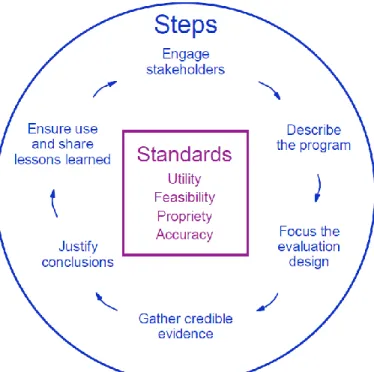
Programs are designed to increase positive outcomes for participants, but without indicators of success, it is impossible to determine whether or not participants have benefited from the services provided. Engaging in a process of evaluation is a useful tool to gain understanding of the impacts of a program. Prior to conducting an evaluation, evaluators need to develop a framework through which to operate. This framework might include steps to follow and standards for conducting quality evaluations. Figure 2
43
Figure 2. Framework for Program Evaluation. Source: Centers for Disease Control and Prevention. (1999). Framework for program evaluation in public health.
Morbidity and Mortality Weekly Report, 48(11), 1-40.
The current evaluation study followed a slightly modified version of the evaluation framework presented above. It began by describing the Program, which included the goals, activities, resources, context, and expected outcomes of Program Afterschool. A useful tool in describing a program and guiding evaluation efforts is a logic model. Logic models are a visual representation of the program components, program outcomes, expected impacts, and the relationships between these things (W.K. Kellogg Foundation, 2004). A logic model specific to this study of Program Afterschool was presented in the previous section.
The next step in this evaluation framework is Focus the Evaluation Design. To do so, evaluators need to identify the purpose, questions, and methods driving the
44
Afterschool on participating students. Because the goals of the program evaluated are to support students in the areas of academic achievement, school attendance, and behavior, these outcomes were chosen for the evaluation study.
Next, Gathering Credible Evidence was performed by using an existing dataset of student-level data containing the identified indicators of the student outcomes: quarterly grades in Mathematics and Language Arts; attendance records; and detention and suspension records for all students participating in the program for the first time during the 2011/12 school year.
After the evidence was gathered, conclusions were justified by analyzing the data, looking for trends in student outcomes, interpreting the results in the context of the program environment and demographics of the students being served, and ultimately making judgments regarding the significance of the program for participating students. These sub-steps are generally accepted activities within the above framework (Centers for Disease Control and Prevention, 1999). Additionally, the current study went a step further by discussing how the results and lessons learned may be generalized beyond Program Afterschool.
45
providing the results of the current study, the leadership of Program Afterschool is able to better understand the reach of their services relating to desired student outcomes.
As an evaluation framework is cyclical, each of steps serves to inform the others. The current study began with describing the Program, but typically evaluators begin by engaging stakeholders. Stakeholders are the vital people involved in the program, and can include leadership, staff, participants, and members of the larger community.
In addition to the steps involved in conducting a program evaluation, this evaluation framework incorporates a set of 30 standards that the Joint Committee on Standards for Educational Evaluation (JCSEE) developed to assess the quality of evaluations of educational programs. The JCSEE was founded in 1975 as a coalition of professional associations concerned with evaluation quality, and the standards developed have been grouped into four major categories: Utility, Feasibility, Propriety, and
Accuracy (Yarbrough & Joint Committee on Standards for Educational Evaluation, 2011). These standards aim to:
ensure that evaluation products meet the unique needs of the programs being evaluated, taking stakeholders, values, timelines, and potential consequences into account (Utility);
increase evaluation effectiveness and efficacy by employing practical and resourceful evaluations (Feasibility);
guarantee that ethical practices are followed, results are non-biased, and conflicts of interests are revealed (Propriety); and
46
In this evaluation study, the standards were applied by fully understanding the goals of the program being evaluated (Utility); creating a program-specific logic model that guided the evaluation by relating program activities, expected outcomes, and
program impacts (Utility and Feasibility); using a de-identified, pre-existing dataset that was approved by the Institutional Review Board (Propriety); and clearly presenting the variables being studied, utilizing technically appropriate methods of analyses, and reporting results in full (Accuracy).
Common Program Evaluation Study Designs
As with general research, there are several types of study designs that can be employed when conducting a program evaluation. Some of the more common designs used in outcome evaluations are:
True Experimental Studies. The most highly regarded type of true experimental design is the Randomized Controlled Trial (RCT), in which participants are randomly assigned to receive an intervention (i.e., treatment group) or not (i.e., control group). Random assignment allows for the assumption that groups are equivalent to one another before receiving or not receiving the intervention; leading to stronger causal inferences regarding the outcomes of the treatment group in relation to the control group (Shadish, Cook, & Campbell, 2001). While RCTs are known as the gold standard of research, they can be costly and often difficult to ethically and logistically implement within an educational setting. Quasi-Experimental Studies. Quasi-experimental studies have been described by