PERFORMANCE EFFECTS OF CITRULLINE MALATE AND BEETROOT JUICE SUPPLEMENTATION
Eric T. Trexler
A dissertation submitted to the faculty of the University of North Carolina at Chapel Hill in partial fulfillment of the requirements for the degree of Doctor of Philosophy in the Human Movement Science Curriculum
in the Department of Allied Health Sciences in the School of Medicine.
Chapel Hill 2018
Approved by:
ABSTRACT
Eric T. Trexler: Performance Effects of Citrulline Malate and Beetroot Juice Supplementation (Under the direction of Abbie E. Smith-Ryan)
The current study sought to determine the effects of citrulline malate (CitMal; 8 g) and beetroot juice (BEET; 400 mg nitrate) on blood flow, energy efficiency, and performance during leg extension exercise compared to placebo (PLA). Recreationally active males (n = 27) completed 3 testing sessions, consuming CitMal, BEET, or (PLA) 2 h prior to submaximal and maximal leg extensions tests.
Measurements included supine and standing blood pressure, superficial femoral artery diameter and blood flow (BF), vastus lateralis (VL) oxygen consumption and BF, VL cross-sectional area and echo intensity, whole-body energy expenditure and respiratory exchange ratio (RER), blood analytes (urea nitrogen, lactate, and nitrate/nitrite [NOx]), and isokinetic leg extension torque and work. For submaximal
leg extension testing at 25% of maximal voluntary contraction torque, treatment had a modest effect on EI (p = 0.04), with greater values in BEET compared to CitMal (64.9 ± 0.7 vs. 62.7 ± 0.7 arbitrary units [AU]; p = 0.04), but not PLA (63.2 ± 0.6 AU, p = 0.16). Baseline RER values differed between treatments (p = 0.01); BEET was higher than CitMal (0.78 ± 0.01 vs. 0.75 ± 0.01 AU; p = 0.01), but not PLA (0.77 ± 0.01 AU, p = 0.58). Treatment did not affect exercise RER (p = 0.64). All other submaximal measurements were unaffected by treatment (p > 0.05). For maximal exercise (5 sets of 30 repetitions at 180°∙s-1),
resting NOx values were higher in BEET (233.2 ± 1.1 μmol∙L-1) than CitMal (15.3 ± 1.1) and PLA (13.4 ±
1.1) at rest (p < 0.0001). Post-exercise NOx values, adjusted for resting differences, followed the same
pattern (p < 0.0001). Treatment had a modest but significant effect on VL EI (p = 0.006), with BEET values higher than PLA (68.0 ± 0.7 vs. 65.5 ± 0.7 AU, p = 0.005), but not CitMal (66.3 ± 0.7, p = 0.07). No other variables were affected by treatment (p > 0.05). While BEET increased NOx, neither treatment was
ACKNOWLEDGEMENTS
I would like to thank my committee members for devoting their time, attention, and expertise to my dissertation project. Without their help, this project would not have been possible. I would specifically like to thank my advisor, Dr. Abbie Smith-Ryan, for her dedication to my academic development. She has sacrificed so much to support my growth over the last six years, and her guidance has shaped my development as a scientist. The information I have learned, the skills I have developed, and the opportunities I have received are all direct results of her mentorship and generosity.
I would like to thank all of my study participants for donating so much time and effort to my dissertation project, and I would like to thank Dale Keith, Adam Lucero, Casey Greenwalt, and Shawn Ahuja for their assistance throughout. Without the selfless efforts of these individuals, this project could not have been completed.
TABLE OF CONTENTS
LIST OF TABLES ... viii
LIST OF FIGURES ... ix
LIST OF ABBREVIATIONS... x
CHAPTER 1: INTRODUCTION ... 1
Purpose ... 4
Research Questions ... 5
Hypotheses ... 5
Delimitations ... 6
Limitations ... 6
Assumptions ... 7
Operational Definitions ... 7
Significance of study ... 7
CHAPTER 2: REVIEW OF LITERATURE ... 9
Introduction ... 9
Nitric oxide production pathways and metabolism ... 10
Performance-Enhancing mechanisms of nitric oxide precursor supplements ... 11
Hypertrophy-promoting mechanisms of nitric oxide ... 15
Interventions with NOS-dependent precursor supplements ... 16
Interventions with NOS-independent precursor supplements ... 19
Synergistic effects with multi-ingredient formulations ... 21
Potential Clinical Applications ... 22
Conclusions ... 24
CHAPTER 3: ACUTE EFFECTS OF CITRULLINE SUPPLEMENTATION ON HIGH-INTENSITY STRENGTH AND POWER PERFORMANCE: A SYSTEMATIC REVIEW AND META-ANALYSIS ... 26
Introduction ... 26
Results ... 33
Discussion ... 35
Conclusions ... 39
CHAPTER 4: EFFECTS OF CITRULLINE MALATE AND BEETROOT JUICE SUPPLEMENTATION ON BLOOD FLOW AND ENERGY METABOLISM DURING SUBMAXIMAL RESISTANCE EXERCISE ... 41
Introduction ... 41
Methods ... 43
Results ... 50
Discussion ... 52
Conclusions ... 55
CHAPTER 5: EFFECTS OF CITRULLINE MALATE AND BEETROOT JUICE SUPPLEMENTATION ON BLOOD FLOW, ENERGY METABOLISM, AND PERFORMANCE DURING MAXIMAL LEG EXTENSION EXERCISE ... 57
Introduction ... 57
Methods ... 59
Results ... 65
Discussion ... 67
Conclusions ... 71
CHAPTER 6: CONCLUSIONS ... 73
TABLES... 75
FIGURES ... 80
LIST OF TABLES
Table 1. Characteristics of studies included in the analysis ... 75
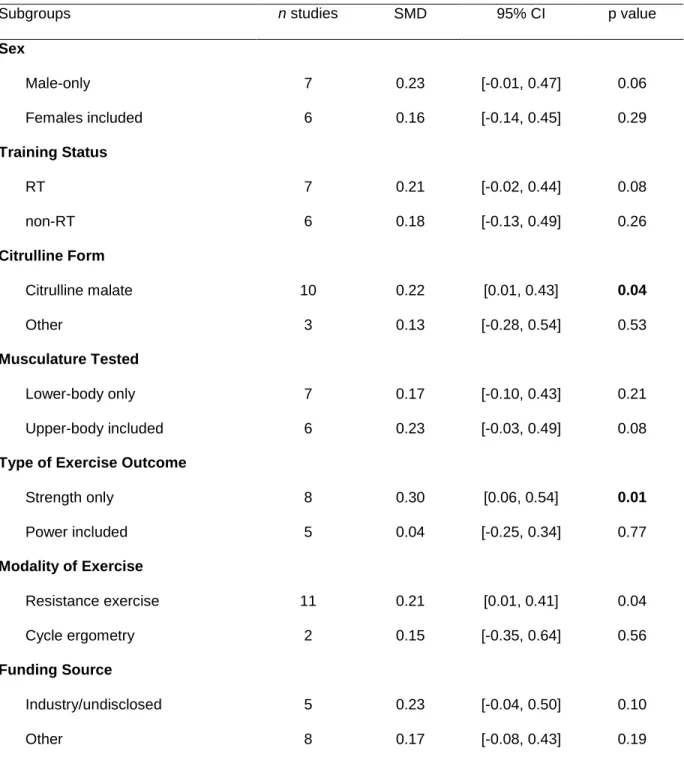
Table 2. Subgroup analyses ... 77
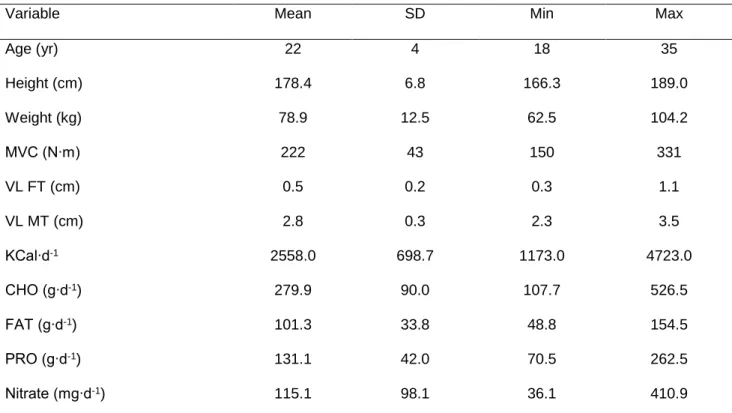
Table 3. Participant characteristics and dietary intake information... 78
LIST OF FIGURES
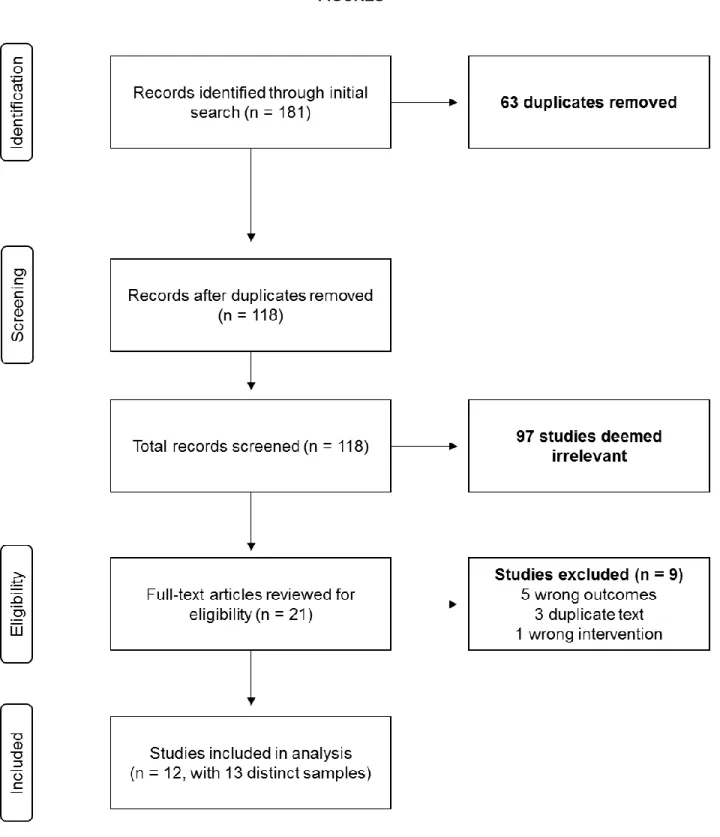
Figure 1. PRISMA diagram ... 80
Figure 2: Funnel plot ... 81
Figure 3: Forest plot ... 82
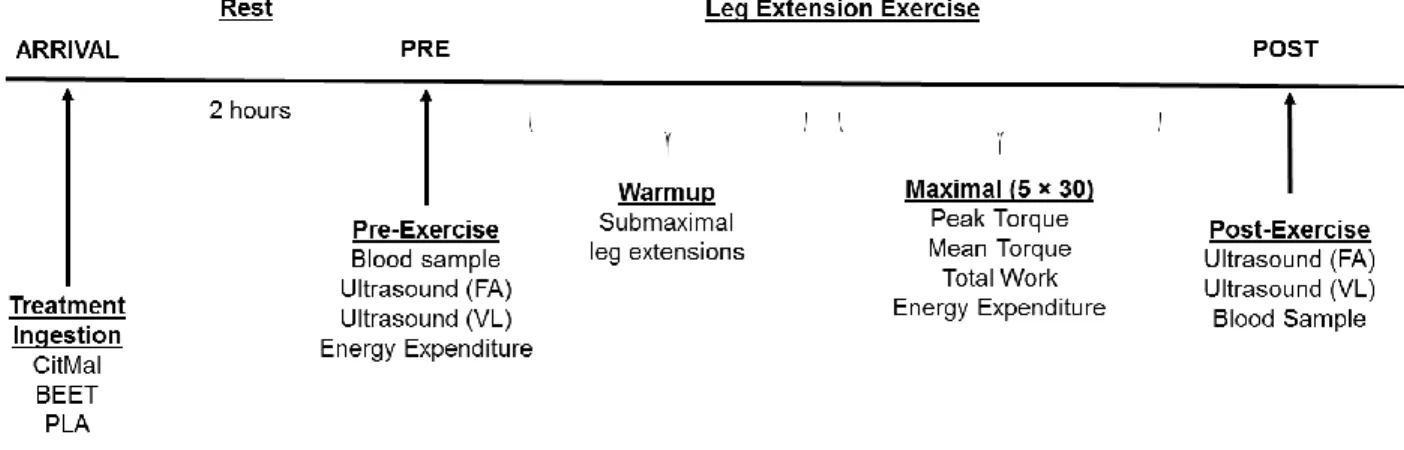
Figure 4: Timeline of each testing visit (submaximal study) ... 83
Figure 5: Effects of treatment on muscle blood flow (mBF) and oxygen consumption (mVO2), as measured via near-infrared spectroscopy ... 84
Figure 6: Effects of treatment on whole-body energy expenditure (EE) and respiratory exchange ratio (RER), as measured via indirect calorimetry. ... 85
Figure 7: Timeline of each testing visit (maximal study) ... 86
Figure 8: Plasma levels of blood urea nitrogen (BUN), nitrate/nitrite (NOx), and lactate ... 87
Figure 9: Leg extension outcomes ... 88
LIST OF ABBREVIATIONS
aBF Artery blood flow aDIAM Artery diameter
ADP Adenosine diphosphate AQP4 Aquaporin-4
ATP Adenosine triphosphate BEET Beetroot juice
BH4 Tetrahydrobiopterin
BUN Blood urea nitrogen CitMal Citrulline Malate CSA Cross-sectional area
cGMP Cyclic guanosine monophosphate DEXA Dual-energy x-ray absorptiometry EE Energy expenditure
EI Echo intensity
FAD Flavin adenine dinucleotide
GAKIC Glycine-arginine-alpha-ketoisocaproic acid GLUT-4 Glucose transporter 4
GTP Guanosine triphosphate
Hb Hemoglobin
HHb Deoxygenated hemoglobin HMB beta-hydroxy-beta-methylbutyrate ICC Intra-class correlation coefficient mBF Muscle blood flow
mVO2 Muscle oxygen consumption
NOS Nitric oxide synthase NOx Combined nitrate and nitrite
NO2- Nitrite
NO3- Nitrate
NIRS Near-infrared spectroscopy O2Hb Oxygenated hemoglobin
PLA Placebo
PRISMA Preferred Reporting Items for Systematic Reviews and Meta-Analyses RER Respiratory exchange ratio
RPE Rating of perceived exertion RTF Repetitions to fatigue
SEM Standard error of measurement SMD Standardized mean difference TBW Total body water
TCA Tricarboxylic acid tHb Total hemoglobin TTE Time to exhaustion
US Ultrasound
VL Vastus lateralis
VO2 Whole-body oxygen consumption
CHAPTER 1: INTRODUCTION
Nitric oxide (NO) is a signaling molecule with widespread effects throughout the body. While NO plays important roles in a variety of processes pertaining to neurotransmission, inflammation, immunity, and oxidative stress, NO is most widely recognized for its role as a vasodilator. By activating guanylyl cyclase, NO catalyzes the conversion of guanosine triphosphate (GTP) to cyclic guanosine
monophosphate (cGMP), thereby inducing relaxation of smooth muscle in vascular tissues. Nitric oxide may be formed endogenously via nitric oxide synthase (NOS)-dependent or NOS-independent pathways. In the NOS-dependent pathway, the precursor L-arginine is converted to NO and L-citrulline. This
conversion is oxygen-dependent and reliant upon tissue-specific NOS isozymes and a number of requisite cofactors [1]. Endogenous NO production is regulated in part by arginine availability [2, 3], but arginine supplementation has failed to consistently improve exercise outcomes [4], primarily due to extensive pre-systemic degradation following oral ingestion. L-citrulline can be recycled back to L-arginine by way of the urea cycle, with argininosuccinate synthase identified as the rate-limiting enzyme in this conversion [5]. L-citrulline is not subject to extensive pre-systemic degradation; as such, L-citrulline has comparatively greater oral bioavailability and improves plasma arginine levels and performance outcomes more efficiently than oral arginine supplementation [6, 7].
In the NOS-independent pathway, nitrate (NO3-) is reduced to nitrite (NO2-), which is further
reduced to NO, without the need for high oxygen availability [1]. The NOS-independent pathway is stimulated by hypoxia and acidosis; as such, this pathway of NO formation may be particularly advantageous in the context of high-intensity exercise, in which anaerobic metabolism is predominant and a high degree of acidosis is observed. While there is multifactorial regulation of the relative balance between circulating levels of NO, NO2-, and NO3- [8], there is ample evidence to indicate that NO2- and
NO3- serve as reservoirs for NO production, and that exogenous provision of that NO2- and NO3- confers
have been used to increase NO through this pathway, with the majority of research utilizing nitrate-rich beetroot juice (BEET).
As reviewed by Bailey et al. [1], NO precursor supplements influence exercise efficiency, mitochondrial respiration, calcium handling, vasodilation, glucose uptake, and muscle fatigue. These effects have prompted great interest in the use of NO precursor supplements as a means of enhancing acute exercise performance. Numerous studies have documented performance improvements following citrulline or nitrate supplementation using aerobic exercise modalities, such as running or cycling [1, 7, 10]. Most commonly, these ingredients are found to increase resistance to fatigue, and enhance energy efficiency by reducing energy expenditure at submaximal workloads [1]. In comparison, very little research has been carried out in resistance training and other anaerobic forms of exercise, which may specifically highlight the NOS-independent pathway. Nitric oxide precursors may acutely enhance
resistance training performance via favorable effects on muscle fatigue, energy efficiency, and blood flow [1, 10], and NO plays a permissive role in muscle hypertrophy by directly promoting satellite cell activation [11]. Collectively, evidence suggests that NO precursor supplementation may enhance acute resistance training performance and chronic training adaptations, but minimal data exist to conclusively confirm these hypotheses. Despite this lack of data, NO precursors are common ingredients in a variety of popular dietary supplements that are marketed toward, and commonly consumed by, both athletes and tactical personnel. It is important to elucidate the effects of NO precursors on strength and hypertrophy outcomes, as supplements enhancing these outcomes have high potential for applications in sport, along with clinical applications for a variety of clinical conditions and pathologies in which muscle mass or function are impaired.
[12-15]. Recent meta-analyses have concluded that weekly training volume is positively associated with both strength [16] and hypertrophy [17], which may indicate that CitMal-induced increases in training volume may favorably affect chronic training adaptations. The results of these preliminary studies are promising, but the current body of CitMal research is limited; to date, only a few small studies have addressed strength outcomes. The mechanisms underlying performance benefits are still unknown, and chronic effects on performance and body composition have not been investigated. Acute performance
improvements may relate to malate’s function as a tricarboxylic acid (TCA) cycle intermediate, thereby
enhancing the aerobic production of adenosine triphosphate (ATP) and reducing lactate accumulation during exercise. Citrulline may also facilitate the clearance of ammonia generated during strenuous exercise by facilitating urea formation via the urea cycle, thereby minimizing the fatigue-inducing effects of ammonia accumulation. Until these potential mechanisms are sufficiently evaluated, it is not known if the effects of CitMal supplementation are directly related to blood flow or NO production. Elucidating the mechanisms underlying CitMal’s potential performance benefits is an important step in determining ideal
dosing strategies and identifying other ingredients that may be co-ingested to improve outcomes via independent, complementary, or synergistic mechanisms of action.
There is abundant evidence to suggest that supplementation of dietary nitrate sources, such as BEET, increase time to exhaustion and decrease submaximal energy expenditure during aerobic exercise [18-20]. Emerging data also demonstrate improvements in sprint performance [21-23], but the effects of these supplements on resistance exercise are under-researched and poorly understood.To date, one study has directly evaluated the effects of BEET on traditional, multi-set, isotonic resistance training performance[24]. The crossover design involved two testing sessions in which three sets of bench press were taken to volitional fatigue, separated by two minutes of rest. Prior to exercise, participants
consumed either BEET (providing 400 mg nitrate) or a placebo. Compared to placebo, BEET enhanced the number of repetitions completed and total work performed.
exercise performance. Furthermore, evidence supporting BEET supplementation is limited to a single study that has not been independently replicated [24]. In addition, the performance effects of NOS-dependent and NOS-inNOS-dependent NO precursor supplements have not been directly compared in the context of resistance exercise. Currently, these supplements are widely marketed and consumed for the purpose of enhancing resistance exercise performance, but the overall efficacy and contributing
mechanisms are not conclusively known. If efficacious with regard to both vascular effects and strength performance, NO precursor supplements could significantly improve health outcomes for individuals with hypertension, ischemic conditions, sarcopenia, and a variety of muscle wasting conditions. To evaluate the current utility and future potential applications of NO precursor supplements, more research pertaining to strength outcomes and their underlying mechanisms is required.
Purpose
1. To compare the effects of acute (single-dose) CitMal, BEET, and placebo (PLA) supplementation on arterial blood flow, whole-body energy expenditure and respiratory exchange ratio, vastus lateralis (VL) blood flow and oxygen consumption, and VL fluid accumulation in response to submaximal leg extension exercise
2. To compare the effects of acute (single-dose) CitMal, BEET, and placebo (PLA) supplementation on maximal concentric isokinetic leg extension performance, including peak torque, average torque, and total work
a. To compare the effects of acute (single-dose) CitMal, BEET, and placebo (PLA) supplementation on arterial blood flow; whole-body energy expenditure and respiratory exchange ratio; VL fluid accumulation; and blood biomarkers of urea cycle function, nitric oxide metabolism, and lactate metabolism, in response to maximal leg extension
exercise
Research Questions
1. Does acute supplementation with CitMal or BEET influence submaximal exercise responses of arterial blood flow, whole-body energy expenditure, respiratory exchange ratio, VL blood flow, VL oxygen consumption, or VL fluid accumulation in comparison to PLA?
2. Does acute supplementation with CitMal or BEET influence peak torque, average torque, or total work performed during maximal concentric isokinetic leg extension?
a. Does acute supplementation with CitMal or BEET influence maximal exercise responses of arterial blood flow; whole-body energy expenditure; respiratory exchange ratio; VL fluid accumulation; or blood biomarkers of urea cycle function, nitric oxide metabolism, and lactate metabolism?
Hypotheses
1. Compared to PLA, it was hypothesized that CitMal and BEET would increase arterial blood flow, VL blood flow, and VL fluid accumulation (cross-sectional area and echo intensity) to a similar degree
a. Compared to PLA, it was hypothesized that CitMal and BEET would decrease whole-body energy expenditure and VL oxygen consumption to a similar degree, with no effect on respiratory exchange ratio
2. Compared to PLA, it was hypothesized that CitMal and BEET would acutely increase leg extension peak torque, average torque, and total work to a similar degree
a. It was hypothesized that these performance improvements would be accompanied by similar increases in arterial blood flow and VL fluid accumulation (cross-sectional area and echo intensity), along with similar decreases in energy expenditure, and no effect on respiratory exchange ratio
c. It was hypothesized that CitMal, but not BEET, would reduce lactate accumulation and increase urea accumulation during maximal exercise
Delimitations
1. Participants were males between the ages of 18-35 years old
2. Participants were recreationally active, as defined by an average of at least two hours per week of exercise activity, including both aerobic and anaerobic forms of exercise
3. The study consisted of four total laboratory visits
4. Participants were excluded if they had a sensitivity or history of adverse reactions to any ingredients of the experimental treatments or placebo
5. Supplementation occurred two hours prior to the onset of testing
6. Participants were randomly assigned to a treatment sequence (order), in a counter-balanced manner
Limitations
1. Participants were primarily recruited from classes within the Department of Exercise and Sports Science and through fliers located near fitness facilities on the campus of the University of North Carolina at Chapel Hill (UNC-CH). Therefore, the sample was not selected in a truly random manner
2. Results may not be applicable to females, specific clinical populations, or individuals below 18 or above 35 years of age
3. Due to poor analyte stability, it was not feasible to directly measure nitric oxide or ammonia. As such, these physiological parameters were indirectly assessed by measuring blood
concentrations of more stable downstream biomarkers (nitrite/nitrate and urea, respectively) 4. In order to obtain readable measurements for ultrasound and near-infrared spectroscopy
Assumptions
Theoretical
1. Participants provided accurate information on all self-reported items used in the process of enrollment and data collection
2. Participants gave appropriate effort during exercise testing
3. Participants were honest regarding compliance with pre-testing instructions
4. Participants successfully maintained normal activity levels and nutritional habits throughout the intervention
5. Measurements taken immediately following exercise accurately reflected hemodynamic responses that occurred during exercise
Statistical
1. The sample of participants was representative of the population from which it was selected 2. The statistical models constructed were correctly specified
3. Model residuals were normally distributed, homoscedastic, and independent
4. Estimated treatment effects were not significantly influenced by carryover effects, sequence effects, period × treatment interactions, or habitual nitrate × treatment interactions
Operational Definitions
1. Acute supplementation: Oral, single-dose ingestion of a dietary supplement intended to yield effects in the hours following ingestion
2. Recreationally Active: An individual that habitually completes an average of at least two hours per week of any type of exercise activity, including aerobic and/or anaerobic forms of exercise.
Significance of study
CHAPTER 2: REVIEW OF LITERATURE
Introduction
The use of dietary supplements is widespread among a variety of populations and continues to expand; between 2007-2011, up to 69% of US adults surveyed identified themselves as supplement users, with 53% of respondents identified as regular users [25]. While vitamin or mineral supplements were the most widely used supplement category, a substantial number of respondents also reported using specialty supplements, botanicals, and sports supplements [25]. Nitric oxide (NO) precursor supplements are a class of supplements that are widely sold and marketed toward active individuals [26, 27]. These precursors are commonly used as primary ingredients in a variety of pre-workout supplement formulas, and are increasing in popularity as health benefits from natural dietary sources of NO
precursors, such as beets, spinach, and pomegranate, become more widely recognized. Nitric oxide precursor supplements are marketed based on the premise that the acute ingestion of NO precursors will transiently increase the production of NO, resulting in an enhancement of blood flow, performance, and the accumulation of intramuscular fluid [26], also known as the muscle “pump” effect [28]. If NO precursor
Nitric oxide production pathways and metabolism
Nitric oxide is a gaseous signaling molecule with a variety of functions throughout the human body. NO is an uncharged molecule that freely permeates cell membranes, which carries out autocrine and paracrine functions following its endogenous production. Its effects as an endocrine factor are somewhat limited by its short half-life; while the exact half-life of NO varies as a function of its
concentration, diffusibility, and the presence of surrounding bioreactants [8, 29], its half-life is typically estimated to be no more than a few seconds [29]. There are two pathways by which nitric oxide is formed endogenously; one pathway requires the nitric oxide synthase (NOS) enzymes (NOS-dependent
pathway), while the other functions independently of this family of enzymes (NOS-independent pathway). In the NOS-dependent pathway, the precursor arginine is converted to NO, creating citrulline as a byproduct. The conversion of arginine to NO requires the NOS enzyme, for which three isoforms exist in mammals (neuronal, nNOS; inducible, iNOS; endothelial, eNOS) [30]. Isoforms differ with regard to their distribution throughout a variety of body tissues, but all three isoforms are present within skeletal muscle, where they are believed to influence both muscle contraction and blood flow to muscle [31]. This pathway of NO production also requires sufficient oxygen availability, along with sufficient levels of several other cofactors including nicotinamide-adenine-dinucleotide phosphate (NADPH), flavin adenine dinucleotide (FAD), tetrahydrobiopterin (BH4), haem, and calmodulin [1]. Citrulline created in this conversion is a
precursor of arginine, and may be recycled accordingly to permit further production of NO. In comparison to the short half-life of NO, the half-life of arginine has been estimated at over 70 minutes [32]. Past interventions have attempted to enhance NO production via the NOS-dependent pathway by oral supplementation with arginine, the direct NO precursor, or indirectly with arginine’s precursor, citrulline
[4]. In contrast, nitrate (NO3-) is the primary NO precursor in the NOS-independent pathway; in this
pathway, NO3- is reduced to nitrite (NO2-), which is further reduced to NO [33]. Although the first reduction
of NO3- to NO2- functions independently of oxygen availability and the NOS enzymes, the presence of
facultative bacteria found in the oral cavity of humans is required. The second reduction of NO2- to NO is
also independent of both oxygen and the NOS enzymes, and is stimulated by the acidosis and hypoxia that accompany high-intensity exercise. The half-lives of NO3- and NO2- are substantially longer than NO,
NO will readily react to directly form NO2- or NO3-, or to form intermediate compounds including
nitrosylhemoglobin, S-nitrosohemoglobin, peroxynitrite, and various nitrosothiols [8]. Many of these intermediate compounds are ultimately converted to NO2- or NO3-; as such, 90% of NO in the body is
ultimately converted to NO3- [35]. Serum or plasma levels of NO2- and NO3- are highly correlated with NO
production, and as a result are often measured as surrogate markers of NO production [35]. Nitric oxide is a multifaceted molecule that plays important roles in immunity, inflammation, neurotransmission, gastrointestinal function, and several other biological processes [35]. NO exerts its physiological effects through both enzymatic and non-enzymatic mechanisms. The guanylate cyclase enzyme is activated by NO, which catalyzes the conversion of guanosine triphosphate (GTP) to cyclic guanosine monophosphate (cGMP), thereby inducing relaxation of the smooth musculature of blood vessels, resulting in vasodilation and increased blood flow. However, NO carries out several physiological functions independently of the guanylate cyclase enzyme via posttranslational protein modifications. Circulating NO may nitrosylate proteins, forming a reversible, covalent bond with cysteine residues that alters the structure and function of the nitrosylated protein. Nitrosylation is responsible for several cellular effects attributable to NO, as evidenced by the identification of over 3,000 nitrosylation targets in animal cells [36, 37]. In addition to nitrosylation, NO and its derivatives influence protein structure and function through other posttranslational modifications, including nitration and nitrosation [38, 39]. Posttranslational modifications appear to mediate several exercise-related effects of NO and NO-derived compounds, including glucose uptake [40-42], calcium release in the sarcoplasmic reticulum [43], contractile properties of myosin [44], and mitochondrial respiration [38, 45].
Performance-Enhancing mechanisms of nitric oxide precursor supplements
Blood Flow
resulting in significant effects on blood pressure and blood flow [20, 46-55]. While blood flow naturally increases in response to exercise, Ferguson et al. [56] have previously shown that NO precursors can augment this blood flow response during exercise, with results demonstrating increased blood flow to the active musculature during submaximal exercise following five days of beetroot juice supplementation in rats. In addition, blood pressure and blood lactate during exercise were significantly lower in the rats receiving beetroot juice. In subsequent work [47], the same laboratory demonstrated an improvement in microvascular oxygen pressure dynamics in rats; this elevation of oxygen driving pressure reflects an improved ability to deliver oxygen delivery relative to demand, thereby improving metabolic control during exercise. More recently, Martin et al. [57] assessed the effects of a citrulline-based pre-workout
supplement on exercise blood flow in humans. Results indicated that the supplement significantly increased plasma NO metabolites, which was accompanied by a significant increase in femoral artery blood flow following leg extension exercise using 80% of the one-repetition maximum load. Taken together, these studies lend support to the purported ergogenic mechanism of enhanced blood flow during exercise in response to NO precursor supplementation.
Exercise Efficiency
To date, a great deal of NO precursor supplement research has investigated potential effects on exercise efficiency. Most commonly, this parameter is assessed by measuring the energy cost of a given submaximal exercise workload. Previous studies have documented reduced oxygen consumption during walking [58], running [58], cycling [59, 60], and leg extension exercise [61]. While enhancements in blood flow and oxygen driving pressure may relate to this improvement in efficiency, changes in mitochondrial efficiency and muscular contractile efficiency may also contribute to this effect. In leg extension exercise, beetroot juice supplementation has been shown to enhance exercise capacity while attenuating exercise-induced reductions in muscle phosphocreatine concentration and increases in oxygen consumption, ADP, and inorganic phosphate, with no effect on muscle pH [61]. This finding suggests that NO
human skeletal muscle mitochondria following nitrate supplementation, along with an increased ratio of ATP produced per oxygen consumed and a reduction in state 4 respiration. Furthermore, this
enhancement in oxidative phosphorylation efficiency was correlated with a reduction in oxygen consumption during exercise. These findings are in line with previous research indicating that NO and NO-derived compounds can bind to cytochrome c oxidase [62] and mitochondrial complex I [38, 45], thereby influencing the efficiency of mitochondrial respiration.
In mice, nitrate supplementation increased the expression of calsequestrin 1 and the
dihydropyridine receptor [63], which are both involved in calcium handling in the sarcoplasmic reticulum. These morphological changes were accompanied by increased myoplasmic free calcium concentrations at stimulation frequencies ranging from 20 to 150 Hz, in addition to enhanced contractile force at
frequencies ≤ 50 Hz, and increased rate of force development at 100 Hz [63]. Nitric oxide also appears to
influence sarcoplasmic reticulum calcium release during muscle contraction by directly affecting
ryanodine receptor activity in a dose-dependent manner, via nitrosylation or oxidation of protein thiols on the ryanodine receptor or associated regulatory proteins [64]. Further, evidence suggests that NO and associated compounds may directly alter the contractile properties of skeletal muscle by nitrosylating cysteine residues of myosin heavy chain proteins, resulting in increased force production [44]. Taken together, results suggest that NO precursor supplements enhance the amount of contractile force generated for a given amount of energy expenditure. This may allow individuals to sustain vigorous resistance exercise for a longer duration prior to fatigue and complete a greater overall training volume, thereby conferring both acute and chronic benefits to resistance exercise performance.
Glucose Utilization
research suggesting that NO may also influence glucose uptake via post-translational protein
modifications, such as nitrosylation [41]. With respect to exercise, NO appears to play a prominent role in contraction-induced skeletal muscle glucose uptake [40, 42], with studies demonstrating attenuation of contraction-induced glucose uptake when nitric oxide synthase is inhibited [67]. At rest, oral arginine has been shown to reduce glucose production without influencing insulin secretion, particularly in participants that experienced a large increase in plasma citrulline concentrations in response to arginine treatment [68]. During exercise, arginine infusion increases glucose disposal, although it is unclear if this effect is attributable to increased insulin secretion due to equivocal effects on insulin secretion following arginine infusion [69, 70]. Notably, a slight shift toward increased carbohydrate utilization does not appear to be accompanied by an increased rate of fatigue resulting from glycolytic metabolism. For example, Larsen et al. [60] found that a slight shift toward carbohydrate utilization following nitrate supplementation was accompanied by a significant reduction in overall energy expenditure, and several studies have observed enhanced time to exhaustion during fatiguing exercise after NO precursor supplementation [7, 18, 19, 58, 61, 71].
Hypertrophy-promoting mechanisms of nitric oxide
Nitric oxide precursor supplements may indirectly promote muscle hypertrophy by increasing fatigue resistance and improving recovery from strenuous exercise, primarily through changes in blood flow, energy efficiency, and the contractile function of muscle. Experimental treatments containing both citrulline and dietary sources of nitrate have been shown to increase repetitions to fatigue [12, 13, 15, 24] and improve indices of recovery, including post-exercise soreness and restoration of neuromuscular function [12, 76-79]. These effects may enhance hypertrophic adaptations by increasing the total amount of volume completed over a given training period, thereby providing a more robust training stimulus for muscle growth. In addition, there is evidence to suggest that NO may play a more direct role in promoting muscle hypertrophy. Satellite cell activation, a key step in muscle repair and hypertrophy, appears to be mediated by NO; as such, experimental inhibition of the NOS enzyme attenuates satellite cell activation in response to skeletal muscle injury [11]. In line with these findings, pharmacological blockade of
endogenous NO production attenuated hypertrophic adaptations to chronic muscle overloading [80], and administration of an NO-donor (isosorbide dinitrate) enhanced exercise-induced hypertrophy of the quadriceps in mice [81].
muscle atrophy has been observed in AQP4-knockout mice, but this atrophy may be explained by a reduction in physical activity among mice lacking AQP4 [87]. Despite the existence of mechanistic links between NO and muscle hypertrophy, longitudinal training studies combined with NO precursor
supplementation are needed to determine if these supplements enhance hypertrophy or strength adaptations in response to resistance training.
Interventions with NOS-dependent precursor supplements
As the direct precursor to NO in the classical, NOS-dependent pathway, several studies have aimed to improve exercise outcomes using oral L-arginine supplementation. As reviewed by Bescos et al. [4], the majority of these studies have failed to identify performance benefits associated with arginine supplementation. For example, a single dose of arginine (2 grams) ingested one hour before exercise was shown to be ineffective for altering blood NO metabolite concentrations or performance on a battery of three maximal Wingate sprint tests separated by four minutes of rest [88]. Following three days of oral L-arginine supplementation at 6 grams per day, no effects on plasma NO metabolites, lactate, ammonia, or peak and average power during intermittent sprint testing were observed [89]. After 28 days of oral L-arginine supplementation (6 grams, twice daily), Sunderland et al. [90] found no effect of L-arginine on maximal oxygen consumption or ventilatory threshold during a graded, maximal exercise test in trained male cyclists. In another study featuring a 4-week supplementation period [91] with arginine aspartate (yielding 5.7 grams of arginine per dose), no benefits for maximal oxygen consumption, time to exhaustion, or any of the metabolic or endocrine parameters assessed were observed in trained male endurance athletes.
In contrast, arginine has been found to improve exercise performance outcomes when combined with other potentially bioactive components. For instance, Bailey et al. [92] found arginine
Notably, antioxidants such as vitamin C and E increase the bioactivity of NO [94], and citrulline is a more bioavailable precursor for NO synthesis in comparison to arginine [6]. Arginine has previously been found to enhance the gas exchange threshold [95] and physical working capacity at fatigue threshold [96] in comparison to placebo when co-administered with grape seed extract; however, the results may not be directly attributable to arginine based on the bioactive compounds and high antioxidant capacity of grape seed extract. Of these studies, it is notable to consider the co-administration of antioxidants in each supplement blend, as antioxidants have been shown to enhance the bioactivity of NO [94].
In the context of strength and power outcomes in short-duration exercise tests, there are select instances in which favorable outcomes have been reported. Campbell et al. [97] found that L-arginine alpha-ketoglutarate supplementation enhanced bench press 1RM and peak power during the Wingate sprint test. Stevens et al. [98] investigated the effects of glycine-arginine-alpha-ketoisocaproic acid (GAKIC), with results showing improvements in muscle torque, total work, and fatigue resistance during isokinetic dynamometry testing. Subsequent work evaluating GAKIC also documented an attenuation of mean power reductions during a series of five, 10-second sprints in comparison to placebo [99]. While these studies appear to provide favorable evidence for arginine-based formulations, the results are confounded by the presence of other bioactive ingredients; as such, performance effects cannot be confidently attributed to arginine. In the case of arginine-alpha-ketoglutarate, null results have been reported with regards to hemodynamic parameters (heart rate, blood pressure, and blood flow) [100] and resistance training performance (one repetition maximum, total load volume) [101], and
While arginine supplementation has demonstrated poor efficacy in previous research pertaining to a wide variety of exercise performance outcomes, citrulline studies have shown more favorable results in comparison. These discrepant results most likely relate to differences in oral bioavailability. Arginine is subject to extensive pre-systemic degradation, resulting in oral bioavailability of approximately 60% [4, 32]. Conversely, citrulline is not subject to extensive first-pass metabolism; as a result, oral citrulline supplementation raises arginine concentrations more effectively than arginine supplementation [6]. A 1500 mg dose of citrulline increased the area under the curve of plasma arginine 46% more than a 1600 mg dose of sustained release arginine, whereas a 3000 mg dose increased it 211% more [6]. As such, Bailey et al. [7] demonstrated that citrulline reduces blood pressure, improves oxygen kinetics, and enhances exercise performance to a greater extent that an equivalent dose of arginine. Recent studies have suggested that citrulline malate (CitMal), a combination of citrulline and malic acid, enhances resistance to fatigue during strenuous bouts of resistance exercise. Perez-Guisado and Jakeman [12] evaluated the effects of an 8gram dose of CitMal consumed prior to a 16-set resistance training workout targeting the pectoralis major muscle group. To elicit muscle fatigue, all sets of exercise were taken to the point of volitional failure, with the first four sets and last four sets of bench press used for analysis.
Results indicated that CitMal attenuated fatigue and allowed for the completion of more repetitions prior to volitional fatigue with 80% of the one-repetition maximum (1RM) load, particularly as fatigue accumulated in the later sets of the testing session. Perceived muscle soreness was also lower at 24 and 28 hours post-exercise in the CitMal condition compared to placebo.
observed for blood lactate. Glenn et al. [14] evaluated the effects of an 8-gram dose of CitMal before exercise in resistance trained females. Participants completed six sets of bench press and leg press to failure using 80% of the 1RM load for each; results indicated that CitMal increased repetitions completed for both upper body and lower body exercise, in addition to reducing the rating of perceived exertion (RPE) during lower body exercise. Benefits of CitMal supplementation have also been noted in female masters athletes (mean age of 51 years) performing high-intensity exercise; in comparison to placebo, 8 grams of CitMal was shown to increase maximal grip strength, average grip strength, and both peak and explosive power during the Wingate test [105].
Although emerging evidence supports favorable effects of CitMal on muscular endurance, more research is needed to fully elucidate its mechanisms of action. The observed ergogenic effects may indeed be mediated by NO production, but may also relate to ammonia clearance resulting from citrulline’s role in the urea cycle, or aerobic ATP production resulting from malate’s role as a TCA cycle
intermediate [12]. Determining the contributing mechanisms of action may have utility in formulation of future NO precursor supplements; if a significant portion of CitMal’s ergogenic effects are attributable to
mechanisms unrelated to NO production, there may be potential to enhance its efficacy via combination with other NO precursors and synergistic ingredients.
Interventions with NOS-independent precursor supplements
short-duration sprints separated by short rest periods, with more pronounced effects on 6-second sprint performance in comparison to 30-second and 60-second sprint protocols [22]. Similar outcomes have been investigated by Thompson et al., who documented significant improvements in Yo-Yo IR1 performance [106] and a repeated sprint protocol consisting of six-second sprints [21].
Despite several studies evaluating the effects of nitrate sources on endurance exercise modalities, only one paper to date has evaluated outcomes resembling dynamic, isotonic resistance exercise [24]. Mosher et al. [24] completed a crossover trial in which bench press endurance was
evaluated in 12 recreational men with at least three years of training experience. Participants completed a six-day supplementation period of consuming concentrated beetroot juice yielding 400 mg nitrate per day, or a placebo treatment. After each six-day supplementation period, participants completed three sets of bench press to volitional failure with 60% of the 1RM load, with two minutes of rest between sets. The beetroot juice treatment resulted in greater repetitions completed and more total weight lifted in
comparison to the placebo condition [24]. As such, the only study to date assessing the effects of nitrate on outcomes resembling traditional resistance exercise performance has indicated a beneficial effect, and the effects of NO on blood flow and contractile function have been shown to preferentially influence type II muscle fibers responsible for high-intensity exercise with heavy external loads. For example, Ferguson et al. [48] determined that the beneficial effects of beetroot juice on blood flow and vascular conductance were greater in muscles containing a higher proportion of fast-twitch fibers, and that beetroot juice specifically increases the partial pressure of oxygen in the vasculature of fast-twitch muscle [107].
Synergistic effects with multi-ingredient formulations
Nitric oxide is rapidly inactivated following endogenous production, resulting in a very short half-life [29]. Reaction of NO with superoxide and other reactive oxygen species is a major contributor to this rapid inactivation [8, 94]; as such, the presence of antioxidants protects NO from oxidative inactivation and enhances its availability and physiological activity [94]. Results of previous arginine studies support the purported synergistic effect between antioxidants and NO. As reviewed by Bescos et al. [4], studies investigating arginine alone typically fail to reveal performance improvements. In contrast, arginine has been efficacious when combined with grape seed extract [95, 96] or a combination of vitamins C and E [93]. In each case, it is likely that the antioxidant properties of the complementary ingredients enhanced the efficacy of arginine by increasing the biological activity of NO. Even in the absence of exogenous L-arginine, grape seed extract alone has been shown to increase NO levels [108], enhance blood flow [109], and reduce blood pressure [110]. Many dietary sources of NO3-, such as beetroot juice and
pomegranate juice, have naturally high concentrations of antioxidant compounds, which may contribute to their effects on performance and hemodynamic parameters [10, 20, 47, 54]. This is supported by the results of Flueck et al. [111], which indicate that the combination of nitrate and antioxidants in beetroot juice enhances exercise energy efficiency to a greater extent that a nitrate-matched dose of sodium nitrate. Recently, McKinley-Barnard et al. [112] investigated the effect of combining L-citrulline with reduced glutathione, an antioxidant. Results indicated that the combination of L-citrulline and glutathione raised plasma NO metabolites to a greater extent than citrulline alone or a placebo. These results provide evidence for the NO-protecting effect of antioxidants, and may suggest that dietary supplements
Potential Clinical Applications
Given the mechanisms by which NO influences blood flow, exercise capacity, and performance, NO precursor supplements may have applications in a variety of clinical populations. Endothelial
dysfunction is commonly observed with aging [113] and is associated with numerous cardiometabolic conditions including cardiovascular disease, hypertension, and diabetes [114]. Nitric oxide plays a critical role in regulation of endothelial function [115]; as such, there is much interest in the therapeutic potential for NO precursors in several pathological conditions. Supplement interventions to increase NO production have been shown to enhance blood flow [56, 57], and therefore may have applications in conditions related to ischemia, such as peripheral arterial disease (PAD) [116], ischemic stroke [117, 118], or ischemic heart disease [119]. For example, PAD is characterized by pain and exercise intolerance in response to impaired blood flow [116]. Research has demonstrated that patients with PAD have impaired endothelial NO production [120], but beetroot juice supplementation improved exercise time before the onset of claudication pain and exercise time to exhaustion in this population [116, 121]. Similarly, endothelial dysfunction is an early sign of atherosclerotic plaque formation and atherosclerotic patients exhibit reduced bioactivity of NO; as such, it has been suggested that interventions to enhance NO production and/or bioactivity may confer vasculoprotective benefits and slow disease progression [122]. Nitric oxide has also been implicated in the progression of hypertension [123]. Several trials have been conducted to determine the effects of NO precursor supplements, such as nitrate, on blood pressure in hypertensive subjects; a meta-analysis of these trials concluded that nitrate confers significant reductions in systolic blood pressure [124].
Sarcopenia presents a major public health concern that could be favorably affected by NO precursor supplementation, based on evidence that NO precursor supplements may enhance both muscle mass and function. Sarcopenia is defined as the age-related loss of muscle mass and function in elderly individuals [130]. As such, the very same mechanisms by which NO precursors may enhance resistance training performance and adaptations could potentially have important applications in aging individuals. Aging is associated with reduced nitrosylation of caldium-dependent proteases, which is accompanied by a loss of neuronal NOS and degradation of myofibrils [131]. Deficient NO signaling has been shown to impair the growth and function of skeletal muscle [132], and aging is associated with a shift in NOS expression that favors the inducible isoform while reducing expression of endothelial NOS expression [133]. As a result, nitric oxide metabolites [134] and endothelial function decline with age [113], while iNOS-mediated muscle loss increases [135]. The unfavorable effects of age and inflammation on endogenous NO production, combined with the effects of NO on hypertrophy [11, 80], sarcoplasmic reticulum calcium release [43, 63, 64], contractile properties [44], and muscular endurance [12-15, 24, 105], suggest that strategies to target NO production may favorably effect outcomes in conditions related to reductions in muscle mass and function. As such, NO precursor supplementation may have benefits for sarcopenic populations that extend to other muscle wasting conditions, such as cachexia [135]. Taken together, the body of literature suggests that NO precursor supplements may have applications in a variety of conditions related to vascular health, tissue perfusion, glycemic control, and muscle wasting, but controlled interventions in humans are required to confirm their efficacy.
Potential for Adverse Outcomes
As reviewed by Clements et al. [46] and Lidder et al. [53], nitrates and nitrites have long been thought to have carcinogenic effects, with several governments and health organizations imposing upper limits for safe human consumption. Nitrates and nitrites can give rise to the production of n-nitroso compounds, which have been found to exert carcinogenic effects in animals [136]. However, more recent research has failed to substantiate links between nitrate consumption and cancer in humans [46, 53]. As it pertains to fruit and vegetable sources of nitrate and nitrite, there is also reason to believe that
n-nitroso compounds [53]. Concerns regarding high nitrate or nitrite intakes are most applicable to infants, in which excessive intakes could cause methemoglobinemia. However, this risk is due to several unique physiological characteristics that are specific to newborn [9], and are not applicable beyond the first few months of life. During exercise, blood must be strategically shunted to sustain skeletal muscle work capacity while maintaining sufficient blood pressure and blood supply to other body tissues. As such, concern regarding exogenous consumption of vasodilating substances such as citrulline or NO2-/NO3- is
intuitive in the context of vigorous resistance exercise. Nonetheless, the preferential shunting of blood during exercise is regulated by several redundant mechanisms to ensure that blood pressure in maintained at an appropriate level, and that sufficient blood will be distributed to tissues other than the active musculature [137]. While NO precursor supplements have been shown to enhance blood flow to active musculature during exercise [56], the current body of literature does not contain reports of adverse effects related to altered blood distribution, such as symptomatic hypotension or ergolytic effects on exercise performance. With NO precursor supplements, the most notable adverse events reported in human literature to date are minor gastrointestinal discomfort and nausea, which have been noted in a small percentage of participants following oral consumption of common dosages of citrulline malate [12], potassium nitrate [138], and beetroot juice [139]. Taken together, it would appear that neither acute nor chronic supplementation with NO precursors are unlikely to induce deleterious or ergolytic effects with respect to resistance exercise.
Conclusions
related to ammonia clearance resulting from citrulline’s role in the urea cycle, or aerobic ATP production resulting from malate’s role as a TCA cycle intermediate. While the body of existing literature pertaining to
CHAPTER 3: ACUTE EFFECTS OF CITRULLINE SUPPLEMENTATION ON HIGH-INTENSITY STRENGTH AND POWER PERFORMANCE: A SYSTEMATIC REVIEW AND META-ANALYSIS
Introduction
Nitric oxide (NO) is a gaseous signaling molecule with widespread effects on several
physiological processes. In the context of repetitive muscle contractions, as seen in both endurance and resistance-type exercise, vasodilation and increased blood flow to the active musculature are observed [137]. Nitric oxide plays a vital role in vasodilation, which enhances delivery of oxygen and energy substrates to active musculature [137]. The guanylyl cyclase enzyme is activated by NO, which catalyzes the conversion of guanosine triphosphate to cyclic guanosine monophosphate. Smooth muscle lining the vasculature relaxes as a result, which causes vessels to dilate and increases blood flow to exercising muscle. Vasodilation may be just one of many mechanisms by which NO levels enhance exercise performance, along with alterations in exercise efficiency, mitochondrial respiration, calcium handling in the sarcoplasmic reticulum, glucose uptake, and muscle fatigue [1]. While nitrate and nitrite may serve as precursors for NO production, the classical pathway of NO production involves the enzymatic conversion of arginine to NO via activity of the nitric oxide synthase (NOS) enzymes [1]. As such, arginine availability is a primary determinant of NO production [2, 3]. Citrulline has emerged as a promising dietary
supplement to increase plasma arginine levels, thereby promoting NO production. Given the multifaceted role of NO in vasodilation and other exercise-related physiological processes, there is great interest in using citrulline supplementation to enhance high-intensity exercise performance. In the past decade, several studies have investigated the effects of citrulline supplementation on strength and power
outcomes, but mixed findings have been reported [12-15, 105, 140-144]. Meta-analytic techniques can be used to elucidate the ergogenic potential of citrulline supplementation, which would have important ramifications for athletes hoping to maximize strength and power performance.
are commonly marketed toward athletes and other active populations engaged in high-intensity exercise [26, 27]. As the direct precursor to NO production, preliminary studies investigated the effects of L-arginine supplementation on exercise outcomes. Select studies performed using untrained individuals showed ergogenic effects, but studies with trained participants have generally shown no significant effects [4]. For example, Liu et al. [89] studied the effect of 6 g of arginine per day for three days on intermittent cycling performance in trained judo athletes, with no ergogenic effect observed. Sunderland et al. [90] studied the effects of four weeks of L-arginine supplementation on maximal oxygen
consumption (VO2 max) and ventilatory threshold in trained cyclists, with no effect of supplementation on
either outcome. Notably, studies in trained athletes have shown that oral L-arginine does not significantly increase markers of systemic NO production [89, 145, 146], as bioavailability of oral L-arginine
supplementation is estimated to be approximately 60% [4].
In contrast, oral supplementation with L-citrulline bypasses first-pass metabolism and enhances circulating L-arginine levels more effectively than oral L-arginine supplementation [6]. Citrulline can be recycled to produce L-arginine [4] without extensive pre-systemic degradation, thereby emerging as a promising target for NO precursor supplementation. A common form of citrulline supplementation is citrulline malate (CitMal), in which citrulline and malate are combined in ratios ranging from 1:1 to 2:1. A study in men with self-reported fatigue documented significant increases in aerobic adenosine
triphosphate (ATP) production and phosphocreatine recovery during finger flexion exercise [147], while other research in trained cyclists showed an enhancement of post-exercise NO metabolite production following 6 g of CitMal supplementation [148]. In 2010, Perez-Guisado and Jakeman [12] conducted the first resistance training study with CitMal. A single, 8 g dose of CitMal consumed one hour before
resistance exercise significantly enhanced the number of bench press repetitions performed over a 16-set training session.
A comprehensive review on NO precursor supplements was published by Bescos et al. [12] in 2012, with search results limited to publications from 2011 and before. At the time of its publication, citrulline research was in its infancy; only one study directly addressed the effects of citrulline
grown considerably. For example, Wax et al. found CitMal to improve repetitions completed across multiple sets of lower-body exercise in male weightlifters [13], and also identified an improvement in upper-body resistance training performance in resistance-trained males [15]. Similarly, Glenn et al. documented strength and power improvements in female masters tennis players following acute (single-dose) CitMal consumption [105], along with upper- and lower-body repetitions completed by resistance-trained females [14]. In contrast, several other studies have shown no benefit of citrulline-based
supplements. For example, Farney et al. [143] found no effect of CitMal supplementation on leg extension peak torque or peak power following circuit training, and repetitions completed during a 10-set leg
extension protocol were not improved by acute CitMal supplementation [140].
While Bescos et al. [12] thoroughly reviewed the NO precursor supplement literature available as of 2011, a substantial number of studies investigating the effects of citrulline supplements on high-intensity strength and power outcomes have emerged in the years since. The results of individual studies have been mixed, with many reporting ergogenic effects [12-15, 105] and many reporting null findings [140-144]. Such ergogenic effects include increases in repetitions to fatigue (RTF) for bench press [12, 14], leg press [14], and multiple-exercise upper-body [15] and lower-body [13] resistance exercise protocols, in addition to improvements in handgrip strength and peak cycling power [105]. Based on the rapid emergence of several citrulline studies with equivocal findings, a systematic review to summarize the effects of citrulline supplements on strength and power outcomes is warranted. The purpose of the current manuscript was to perform a systematic review and meta-analysis of placebo-controlled trials evaluating the effects of citrulline supplementation on high-intensity exercise performance outcomes in healthy adults.
Methods
Search Strategy
To identify suitable studies for the current review, literature searches of the PubMed/Medline, SPORTDiscus, and Web of Science databases were performed by a member of the research team (ETT). SPORTDiscus results were refined by source type (“academic journals”), and Web of Science results were refined by document type (“article”). The literature search included published records from the
inception of each database through 14 August 2018. Searches included the following keywords as search terms: “citrulline,” “citrulline malate,” or “L-citrulline”); in combination with “repetitions to fatigue,”
“resistance exercise,” “resistance training,” "strength," “strength training,” “muscle strength,” “muscular strength,” “weight training,” “weightlifting,” “weight lifting,” “muscular endurance,” “one-repetition maximum,” “one repetition maximum,” "repetitions," "sprint," or "power.”
Inclusion and Exclusion Criteria
Peer-reviewed, original research articles written in the English language were considered for inclusion; review articles and unpublished abstracts, theses, and dissertations were excluded. To be considered for inclusion, articles were required to be human experimental trials in healthy populations, in which the effects of citrulline supplementation on high-intensity strength and power performance were compared to a placebo condition. Primary outcomes included indices of high-intensity exercise
performance, including strength and power variables from performance tests involving multiple repetitive muscle actions of large muscle groups, consisting of either resistance training sets or sprints lasting 30 seconds or less. Tests involving isolated actions of small muscle groups (e.g., handgrip exercise with rest periods between attempts) or isolated attempts of single-jump tasks were not included for analysis, due to differences in metabolic requirements. Fatigue index outcomes reported as a reduction from peak
strength or power were not included in the absence of raw values, as such outcomes may reflect low peak values (performance impairment) or fatigue reduction (performance improvement).
mixed into juices containing antioxidants and other potentially bioactive phytochemicals were considered for inclusion if the study also included a comparator treatment of the same juice without citrulline added. For studies utilizing more than two treatment arms, the current meta-analysis only included comparisons between a citrulline-supplemented treatment beverage and an identical beverage lacking added citrulline.
Text Screening
Titles and abstracts of the initial search results were independently screened for relevance by two investigators (ETT and AES), based upon a priori inclusion and exclusion criteria. Following title and abstract screening, full texts were independently screened by the same two investigators to further evaluate congruence with inclusion and exclusion criteria, and to determine which studies warranted inclusion in the analysis. Any disagreements between reviewers were discussed until a consensus decision was reached.
Data Extraction, Study Coding, and Quality Assessment
Studies were closely reviewed to extract group means, standard deviations, and sample sizes for outcome measures of interest. When values were plotted as figures, but not reported numerically in the text, values were estimated based on pixel count using calibrated images in ImageJ software (National Institutes of Health, MD, USA). Briefly, each figure was calibrated by measuring the number of pixels between two known points on the vertical axis of the figure. Mean and standard deviation values were then estimated by measuring the pixel length of each plotted value in the figure, along with its associated error bar. For studies reporting multiple individual sets of a particular outcome, a summed overall value was calculated by summing the means of each set; an overall standard deviation was calculated by taking the square root of the summed variance from all of the individual sets. All extraction and coding was performed by ETT.
AT), yielding an effect size and an associated variance for each outcome. The SMD was used to determine the magnitude of the effect, where <0.2 was defined as trivial, 0.2–0.3 as small, 0.4–0.8 as
moderate and >0.8 as large [151, 152]. Most studies reported more than one outcome meeting study inclusion criteria; the method described by Borenstein [153] was used to compute a single, aggregated effect size estimate for each study, using the “MAd” package in R software. This aggregation method
requires the estimation of the within-study correlation among outcome variables; while this was not reported in the studies analyzed, Baker and Nance [154] have previously published correlations between a representative collection of variables including both strength and power outcomes of both upper- and lower-body exercises. The mean of these correlation coefficients was calculated (r = 0.70) and used as a generalized estimate of within-study correlation among the variables of interest. A sensitivity analysis was performed to assess the impact of imputing r = 0.5 or r = 1.0, to ensure that findings were robust across a range of plausible correlation values.
All studies meeting inclusion criteria were carefully reviewed to document relevant study characteristics, which were tabulated in a spreadsheet (Microsoft Excel, Microsoft Corporation, WA, USA). Extracted information included study authors, year of publication, study design, dose and form of supplementation, timing of supplementation, participant sex, participant age, participant training status, inclusion and exclusion criteria for each trial, pre-visit guidelines, side effects, funding sources, and exercise outcomes. Exercise tasks were categorized based on type of outcome (strength or power), muscle groups utilized (upper-body or lower-body), and modality. For the purpose of categorizing training status, individuals were considered “resistance trained” (RT) if they engaged in regular resistance training
at least twice a week, for at least six months preceding the trial; participants who were categorized as recreationally active, endurance-trained, or sport-trained were considered non-RT. For subgroup
analyses (Table 2), all study characteristics were coded as binary variables (sex: males only vs. females included; training status: resistance trained vs. non-resistance trained; supplement form: citrulline malate vs. other [L-citrulline or L-citrulline + watermelon juice]; musculature tested: lower-body only vs. upper-body included; type of exercise outcome: strength only vs. power outcomes included; modality of
the Cochrane Risk of Bias Tool [155]. Domains of this tool include selection bias, performance bias, detection bias, attrition bias, reporting bias, and other bias.
Meta-Analysis
A random-effects model meta-analysis was conducted using R software. Weighted estimation of standardized mean differences (SMD) across studies were pooled using the inverse variance method. The statistical heterogeneity across different trials in meta-analysis was assessed by the I2 statistic [156],
where <25% indicates low risk of heterogeneity, 25-75% indicates moderate risk of heterogeneity, and >75% indicates considerable risk of heterogeneity [156]. The I2 statistic was calculated based upon the
restricted maximum-likelihood estimator of τ2. For included studies, standard errors were plotted against
Hedges’ G values to allow for visual evaluation of potential funnel plot asymmetry. Funnel plot asymmetry was further assessed using Egger’s regression test [157], and Duval and Tweedie’s Trim and Fill method
[158]. Pooled effect point estimates are presented as SMDs, accompanied by the corresponding 95% confidence intervals (95% CIs; [Lower bound, Upper bound]).
Sensitivity analyses were conducted to assess the impact of the estimated correlation (r = 0.70) between dependent study outcomes [154]. To assess the effects of study characteristics on the pooled effect estimate, moderator effects were tested by fitting a random effects meta-regression model
incorporating each coded study characteristic individually. The referent level of the moderating factor was set as the model intercept, with significance testing used to determine if the beta-coefficient
Results
Literature Search
The initial search yielded 181 total records, including 118 unique records and 63 duplicates. Title and abstract screening eliminated 97 irrelevant studies, resulting in 21 eligible studies for full-text
screening. After full-text screening, 12 studies, consisting of 13 total independent samples (total n completing testing = 198), met the criteria for inclusion. The PRISMA flow diagram for the systematic review process is presented in Figure 1.
Studies meeting inclusion criteria are summarized in Table 1. Studies were predominantly carried out in young adult populations; all sample means were between 20 and 30 years old, with one exception of 51 ± 9 years [105]. Citrulline malate (CitMal) was the most common form of supplementation (n studies = 10); the most common CitMal dosage was 8 g, with doses ranging from 6-12 g. Only one study using CitMal specifically reported the ratio of citrulline to malate, but independent laboratory analysis indicated that the labeled ratio overestimated the citrulline dose and underestimated the malate dose [140]. Other supplement forms included free-form L-citrulline and L-citrulline mixed into watermelon juice, with all studies supplying a citrulline dose of at least 3 g. Two studies included female-only samples, seven included male-only samples, and four contained a mixture of males and females. Supplements were typically provided 60 minutes prior to exercise, with one study providing the supplement 40 minutes prior [144], and another 120 minutes prior [142]. Eight studies evaluated strength outcomes only, two
evaluated power outcomes only, and three evaluated both strength and power outcomes. Seven studies evaluated lower-body outcomes only, five evaluated upper-body only, and one study evaluated a combination of upper-body and lower-body tasks [14]. In all studies, supplementation was well tolerated, with one study reporting mild gastrointestinal (GI) discomfort in 15% of participants [12], and a
nonsignificant trend for increased subjective ratings of GI discomfort in another study [141].
Risk of Bias
Risk of bias was generally deemed “low” for each component of the Cochrane Risk of Bias Tool.
detail with regard to how the sequences were generated. All studies reported double-blinded designs with one exception [143], in which only participants were blinded; this study resulted in a small SMD (0.03), which suggests a low likelihood that this single-blinded design led to biased outcomes in favor of the supplement condition. Treatment blinding was well-documented, with placebo treatments matched with regard to flavor, smell, and appearance. Five studies further facilitated treatment concealment by
requiring participants to consume the beverage while wearing nose clips to dull taste and smell sensitivity. Two studies asked participants to identify which treatment they received at each visit [14, 105]; in both cases, hypothesis testing indicated that subjects were unable to effectively identify the treatment received. Comparatively little detail was provided with regard to blinding of testers; twelve of thirteen studies claimed to be double-blinded, with seven specifically stating that treatments were mixed and/or packaged by individuals that did not participate in testing.
Studies typically provided detailed pre-visit guidelines for participants, such as attention to dietary consistency the day before and day of testing, and abstinence from alcohol, caffeine, strenuous exercise, and other dietary supplements. Only one study lacked detail with regard to all of these factors [143], and one study instructed participants to maintain consistency with their dietary supplement intake rather than restricting supplementation altogether [140]. Of studies reporting detailed information pertaining to subject withdrawal, attrition was minimal and attributed to schedule constraints or reasons unrelated to the study. Evidence of reporting bias was minimal; some results were presented in graphical format only without numerical values provided, and some multi-set test outcomes were reported as a cumulative sum rather than individual set-by-set data. There were isolated cases in which data pertaining to pre-visit dietary habits and/or training habits were collected and not reported, but this lack of reporting is unlikely to bias the SMD estimate of such studies. Four studies reported that no funding was obtained, and three did not disclose funding information; of those disclosing the receipt of funding, two reported industry funding, with the others (n = 4) reporting combinations of government, foundation, and/or university funding.
Pooled Effect Estimate


![Figure 3. Forest plot of studies meeting inclusion criteria. CI = Confidence interval; RE Model = Random Effects Model Favors Citrulline Favors Placebo Weight (%) Hedges’ G [95% CI]](https://thumb-us.123doks.com/thumbv2/123dok_us/8327956.2208556/93.918.136.791.143.749/figure-inclusion-criteria-confidence-interval-effects-citrulline-placebo.webp)