Introduction:
Ambulatory care pharmacy focuses on direct interaction with patients to reconcile medication lists and optimize pharmacotherapy. Ambulatory care places a strong emphasis on patient
education and self-management to promote health and wellness. Pharmacists in this field manage triage, referrals, and coordination of care to enhance transition of care processes. Ambulatory care pharmacists save time for physicians, improve access to care, and enhance economic and clinical outcomes. Opportunities for pharmacy involvement in the outpatient setting include improving medication safety and refining medication therapy for asthma, kidney disease, diabetes, and cardiovascular disease. Ambulatory care pharmacy services also focus on preventative care, medication therapy management, and lessening healthcare disparities. Specialty pharmacy residency and fellowship training promotes the advancement of clinical practice and research in ambulatory care pharmacy services.1
Clinical Pharmacist Practitioners (CPPs) receive designation from the North Carolina Medical Board and North Carolina Board of Pharmacy to prescribe medications and order laboratory tests in the care of patients under the supervision or direction of a licensed physician. CPPs must have either (a) completed a Board of Pharmaceutical Specialties (BPS) or Geriatric Certification or American Society of Health-Systems Pharmacists (ASHP) accredited residency program plus have clinical experience for two years or (b) earned a Doctor of Pharmacy degree plus have clinical experience for three years plus have completed a Certificate Program or (c) earned a Bachelor of Science degree plus have clinical experience for five years plus have complication two certificate programs.2
There are a total of 29.1 million patients diagnosed and undiagnosed with diabetes. Of these patients, 28% are left undiagnosed emphasizing that greater medical attention is needed.
the country.4 With more patients diagnosed with diabetes, the demand for healthcare is
increasing, but the physician-patient ratio of 2.4 physicians per 1000 patients has been consistent from 1995 to 2012.5 Diabetes is a complex disease targeting many different organs, such as the liver, pancreas, fat, muscle, and brain. Close medical attention is warranted to prevent
progression to irreversible complications. With approximately 40 different medications to treat diabetes, there is a great demand for skilled healthcare professionals.6 In the United Kingdom Prospective Diabetes Study (UKPDS), glyburide and metformin decreased glycated hemoglobin (A1c) for only 1-2 years with a subsequent increase thereafter, suggesting that patients need to be seen long-term and frequently by practitioners to manage their diabetes.7
Pharmacists can play a significant role in identifying and screening high-risk patients, assessing health status and adherence to standards of care, monitoring outcomes, educating and
empowering patients, and referring patients to specific healthcare professionals.8 A randomized, controlled trial of veteran affairs patients (n=99) with diabetes was performed to assess the clinical outcomes of monthly pharmacy appointments versus usual care for six months. Patients in the intervention group achieved the A1c goal of < 7% and the systolic blood pressure (SBP) goal of < 130 mmHg at rates significantly lower than the usual care arm. There were no
significant differences between groups with low-density lipoprotein (LDL).9 Our study aims to assess the clinical impact one pharmacy visit has on patients with type 2 diabetes mellitus (T2DM) over one year.
Methods:
Study Design
electronic health record. The University of North Carolina (UNC) at Chapel Hill Institutional Review Board approved all study procedures.
Participants
Patients with type 2 diabetes and at least one visit with a CPP at the Family Medicine Center from October 2012 through March 2014 were included in the study. Patients with gestational diabetes mellitus or type 1 diabetes mellitus were excluded.
Study Outcomes
Demographics including age, sex, body mass index (BMI), weight, A1c, LDL, SBP, diastolic blood pressure (DBP), and diabetes-related medications were collected and assessed with descriptive statistics. Baseline was defined as the most recent value before or during the CPP visit compared to available data following the CPP visit. Follow-up was defined as the
Results:
A total of 105 patients were assessed in the study. The study population included 56.2% women (n=59) with a mean age of 59.0±10.2 years old and a mean A1c of 9.2%+2.5%. The baseline characteristics of the sample were recorded in Table 1. Table 2 demonstrates that there was a statistically significant difference in the primary outcome of A1c at baseline versus the first follow-up visit (9.2% vs 7.91%, -1.36% 95% CI (-1.83% to -0.89%), p<0.0001) and at baseline versus the second follow-up visit (9.2% vs 7.64%, -1.45% 95% CI (-2.10% to -0.80%),
p<0.0001). When compared to the percentage of patients with A1c < 7% at baseline (19.0%), there were a greater percentage of patients with A1c < 7% at the first and second follow-up, 26.4% and 33.3%, respectively. The percentage of patients with A1c < 8% increases over time from baseline to the first follow-up and to the second follow-up visit (36.2%, 57.0%, and 66.7%, respectively). Blood pressure goals varied throughout the study as the American Diabetes
Table 1. Baseline Patient Characteristics
N = 105
Age, Years + SD 59.0±10.2
Female, n (%) 59.0 (56.2)
Weight, Kg + SD 95.0±22.7
BMI, Kg/m2 + SD 32.8±8.0
Encounters, Visits 2.4±3.9
>2 Encounters, n (%) 44.0 (39.1)
A1c + SD 9.2+2.5
SBP, mmHg + SD (n=104) 135.7+18.0
DBP, mmHg + SD (n=104) 79.4+10.0
LDL, mg/dL + SD (n=95) 108.3+39.4
Aspirin with indication, n (%) 70.0 (66.7)
ACEI/ARB with indication, n (%) 70.0 (66.7)
Statin with indication, n (%) 67.0 (63.8)
Oral/non-insulin injectable monotherapy for T2DM, n (%) 20.0 (19.1)
Oral/non-insulin injectable combination for T2DM, n (%) 17.0 (16.2)
Table 2. Primary Endpoint: A1c
N=105
Baseline A1c + SD 9.2+2.5
1st Follow-up A1c + SD (n=85) 7.9+1.7
Change from baseline to 1st follow-up A1c -1.4+2.2; 95% CI (-1.8 to -0.9), p<0.0001 2nd Follow-up A1c + SD (N=36) 7.6+1.5
Change from baseline to 2nd follow-up A1c -1.5+1.9; 95% CI (-2.1 to -0.8), p<0.0001
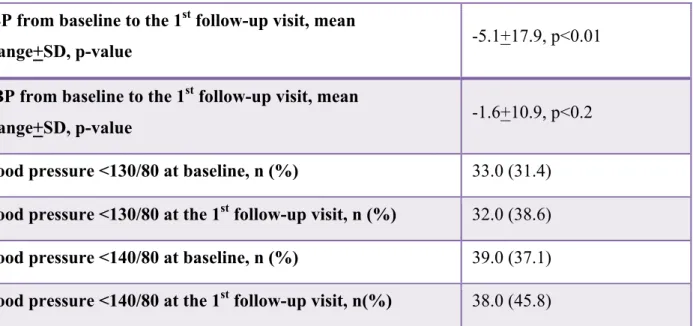
Table 3. Secondary Endpoint: Blood Pressure
SBP from baseline to the 1st follow-up visit, mean
change+SD, p-value -5.1+17.9, p<0.01
DBP from baseline to the 1st follow-up visit, mean
change+SD, p-value -1.6+10.9, p<0.2
Blood pressure <130/80 at baseline, n (%) 33.0 (31.4) Blood pressure <130/80 at the 1st follow-up visit, n (%) 32.0 (38.6) Blood pressure <140/80 at baseline, n (%) 39.0 (37.1) Blood pressure <140/80 at the 1st follow-up visit, n(%) 38.0 (45.8)
Table 4. Secondary Endpoint: LDL
n (%)
LDL<70mg/dL at baseline 11.0 (11.6)
LDL<100mg/dL at baseline 41.0 (43.2)
LDL<100mg/dL at the first follow-up visit 21.0 (55.2)
Discussion:
It can be a challenge for physicians to adequately address the pathophysiology and management of type 2 diabetes mellitus in a short patient visit. Interdisciplinary teamwork can help strengthen patient care surrounding diabetes.8 CPPs at UNC Family Medicine Center impact the healthcare of patients with diabetes immediately and directly during the visit with consultation. Although each patient in this study only had a mean of 2.4 visits with the CPP during the study period, there were still significant improvements in clinical indicators such as A1c and systolic blood pressure. If a CPP at the UNC Family Medicine Center sees a patient for 2 to 3 visits, the patient’s A1c may significantly lower, potentially reducing complications related to diabetes in the future. Pharmacy services at the Family Medicine Center helps ensure appropriate routine monitoring including retinal and foot exams, urine/creatinine and AST or ALT draws, and annual vaccinations. CPPs at other institutions may provide similar benefits in patients with type 2 diabetes mellitus.
This study had several limitations. There was a lack of information on diet and exercise goals, frequency of hypoglycemia, and cigarette or alcohol abuse in patients’ charts. Without this data, it is difficulty to distinguish how pharmacists impacted the sample population. There was also no assessment of the duration of type 2 diabetes mellitus in the study, which would have helped to separate high versus low risk patients. Other limitations include the lack of frequent A1c levels, no control group, and the time limit of the Honors Program. The change in blood pressure recommendations from the American Diabetes Association guidelines presents another challenge.
Future studies are needed to determine if ambulatory care pharmacy is a cost effective
intervention. In addition, future studies can include a control group that has not been seen by a pharmacist. Assessing diabetes medications and their effect on clinical outcomes could help guide practitioners at the Family Medicine Center towards which agents to use. Including patents from other UNC healthcare services would help to increase the sample size and provide more reliable results.
References
1. Helling, DK and Johnson, SG. Defining and advancing ambulatory care pharmacy practice: It is time to lengthen our stride. Am J Health Syst Pharm 2014; 71:1348-1356. 2. North Carolina Board of Pharmacy. Clinical Pharmacist Practitioners. [NCBOP]. 2011.
Available at http://www.ncbop.org/pharmacists_cpp.htm. Accessed October 3, 2014. 3. Center for Disease Control and Prevention. National Diabetes Statistics Report. [CDC].
2014. Available at: http://www.cdc.gov/diabetes/pubs/estimates14.htm. Accessed October 5. 2014.
4. Center for Disease Control and Prevention. Map of Trends in Diagnosed Diabetes.
[CDC]. 2011. Available at:
5. World Health Organization. Global Health Observatory Data Repository. [WHO]. Available at: http://apps.who.int/gho/data/node.main.A1444. Accessed October 3, 2014. 6. DeFronzo, RA. From the Triumvirate to the Ominous Octet: A New Paradigm for the
Treatment of Type 2 Diabetes Mellitus. Diabetes 2009; 58:773.
7. DeFronzo, RA, et al. Pathophysiologic Approach to Therapy in Patients With Newly Diagnosed Type 2 Diabetes. Diabetes 2013; 36:S139-S144.
8. Campbell, RK. Role of the Pharmacist in Diabetes Management. Am J Health Syst Pharm 2002; 59(9):S18-S2.
9. Cohen, LB, et al. Pharmacist-Led Shared Medical Appointments for Multiple Cardiovascular Risk Reduction in Patients with Type 2 Diabetes. Diabetes Educator 2011; 37(6):801-812.
10.American Diabetes Association. Standards of Medical Care in Diabetes – 2013. Diabetes Care 2013; 36(1):S11-S66.