An analysis of the uptake of collaborative TB/HIV
activities at fourteen TB clinics in Kinshasa, DRC.
by
Adam J. Froyum Roise
A Master’s Paper submitted to the faculty of the University of North Carolina at Chapel Hill in partial fulfillment of the requirements for the degree of Master of Public Health in the
Department of Public Health Leadership
Chapel Hill
2007
Approved by:
____________________________ Advisor
______________________________ Reader
Master’s Paper Abstract
Title: An analysis the uptake of collaborative TB/HIV activities at fourteen TB clinics in
Kinshasa, DRC.
Objectives: We assessed the uptake of HIV activities when integrated into routine care at 14 TB
clinics in Kinshasa, DRC.
Design: Descriptive analysis of prospective data on patients registered with TB between
February 2006 and December 2006. Data was collected using modified TB treatment cards to capture both TB and HIV activities.
Results: Among 3521 patients with TB, a high uptake rate of HIV testing was achieved (mean
90.2%), with large variation between clinics (range 65-99%). Almost all patients tested received post-test counseling (mean 95.8%, range 78-99%). The mean HIV prevalence rate was 16.7%, varying by clinic from 8.8 to 33.3%. Cotrimoxazole was initiated in most HIV co-infected patients (81.5%, range 63-91.5%). Referral of HIV-positive patients for psychosocial support increased over time from 32% in the 1st month of operation to 67% in the 10th month, again varying widely by clinic (0 to 85%). Antiretroviral therapy (ART) initiation was sporadic and varied by month and clinic with a mean of 6.9% of patients receiving ART. Among the 39 patients receiving ART, 28 (72%) started ART before TB diagnosis. Only 9 patients gained access to ART following HIV testing at the TB clinic.
Discussion: High uptake of collaborative TB/HIV activities (HIV testing, posttest counseling
and cotrimoxazole) was achieved when these activities were integrated into routine TB care. Access to ART was low among newly diagnosed co-infected patients. Quarterly monitoring and evaluation of performance of activities at the clinic level using visual charts of activities
I. Introduction
Tuberculosis (TB) remains one of the leading causes of infectious disease death worldwide causing 1.6 million deaths in 2005.1 Twelve of the 15 countries with the highest rates of TB are found in Africa, and 28 percent of TB patients in Africa are estimated to be infected with HIV. Eighty percent of the world’s TB/HIV co-infected patients reside in Africa. The Democratic Republic of the Congo (DRC) is identified as one of the 22 high burden of tuberculosis disease countries in the world with 356 new infections per 100,000 people and 73 deaths per 100,000 people in 2005. While not as affected by HIV as parts of southern Africa, 17 percent of TB patients in the DRC are estimated to be HIV positive and the DRC contains 4 percent of the world’s TB/HIV cases.1
Since the 1980’s, TB and HIV have developed a symbiotic relationship. Many patients become latently infected with TB before contracting HIV. As these patients become immune compromised, their systems can no longer contain latent TB infections and, as a result, they progress to active TB. In Africa, TB is often the first sign of HIV infection and is the leading cause of death among HIV-infected patients.2 A study in the early stages of the TB/HIV co-epidemic in the DRC found that 41 percent of autopsies showed TB as the cause of death in HIV-patients in Kinshasa.3
way to offer HIV prevention and care to TB patients in the setting specific to Kinshasa. These findings led to new national TB/HIV policy guidelines.
This paper examines the rollout of collaborative TB/HIV activities for TB patients to fourteen clinics in Kinshasa, DRC. We will describe the uptake of collaborative TB/HIV activities both overall and by individual clinics and discuss the process of monitoring and evaluating TB programs. Ultimately, monitoring and evaluation will help to identify clinics that are in need of improvement that can be addressed through clinic interactions and quality
improvement activities.
II. Literature review
A. Historical Context
Because of the rapid emergence of the HIV epidemic in resource poor countries where tuberculosis is also present, the health care systems of many countries were not equipped to address patients with TB/HIV co-infections. Tuberculosis control programs are historically vertical programs that take a public health approach to case-finding and treatment of active, smear-positive, pulmonary tuberculosis. Largely because of the stigma that surrounded
HIV/AIDS as it emerged in the 1980’s, HIV programs took more of a human rights approach to diagnosing and supporting patients with HIV. Testing was voluntary and on demand of the individual patient. As such, few existing programs integrated HIV activities into routine care and few new clinics initiated collaborative TB/HIV activities.
In 2004, WHO’s Stop TB Department and Department of HIV/AIDS recommended strategies to reduce the burden of suffering caused by TB/HIV co-infections. Their
encompassed three key activities: national oversight of collaborative TB/HIV activities, activities to reduce the burden of TB in HIV patients, and activities to reduce the burden of HIV in TB patients. These recommendations encourage existing TB and HIV programs to expand and consider addressing prevention and treatment of the other half of the co-infection. For
tuberculosis programs, WHO identified six specific activities to reduce the burden of suffering caused by HIV in TB patients. It recommended all tuberculosis patients 1) be tested for HIV and 2) receive their HIV test result through post-test counseling. Those patients who are found to be HIV-positive should be 3) started on cotrimoxazole as a preventive therapy (CPT), 4) provided or referred for HIV care and support, and 5) started on antiretroviral treatment (ART). Finally, 6) condoms should be available in TB clinics for all patients.
B. Evidence for collaborative TB/HIV activities
WHO’s recommended collaborative TB/HIV activities were based on limited evidence available at the time of the published recommendation. From that time, the evidence base has grown and is summarized below.
Systematic Review Methods
Identifying literature
Specific research questions of interest were defined for each recommended collaborative activity to reduce the burden of suffering due to HIV in TB patients. They include:
How effective is counseling and testing for HIV in changing behavior and reducing HIV transmission among newly diagnosed TB patients?
How does providing CPT to newly diagnosed TB patients found to be HIV-positive affect risk of mortality?
To what extent have collaborative TB/HIV activities been implemented at the national and local or clinic level?
Because TB programs treat patients of all ages, the search included studies of adult and pediatric populations. It included both individual and combined activities as activities may be adopted individually or in a step-wise fashion. Medline was searched collectively for all questions of interest using the following search strategy:
(TB or tuberculosis) AND ((HIV OR (human immunodeficiency virus) OR AIDS OR (aquired immune deficiency syndrome) OR (acquired immunodeficiency syndrome)) AND ((VCT OR testing) OR ("Trimethoprim-Sulfamethoxazole Combination"[MeSH] OR cotrimoxazole preventive therapy OR CPT) OR ("Mental Health"[MeSH] OR
"Mental Health Services"[MeSH] OR "Social Support"[MeSH] OR "Counseling"[MeSH] OR "Self-Help Groups"[MeSH]) OR ("Antiretroviral Therapy, Highly Active"[MeSH] OR zidovudine OR lamivudine OR efavirenz OR nevirapine OR stavudine OR ZDV OR 3TC OR EFZ OR NVP OR d4T)).
Validity assessment/data abstraction
Full texts of selected articles were independently reviewed to extract key findings into a summary comparison table and to determine study quality. Because of the small number of studies identified, this review includes all studies with mention of study limitations where appropriate.
Systematic Review Results
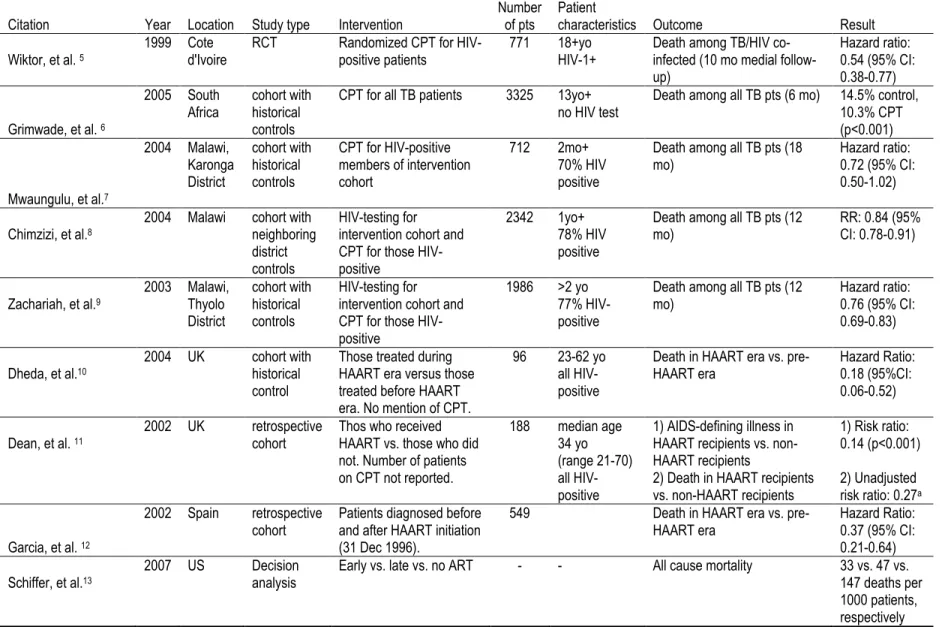
Initial searching yielded 1173 citations. After review of titles and abstracts, eight comparative trials were identified that provided information on the efficacy of recommended interventions using patient-centered outcomes. They are summarized in table 1. Five trials examined the efficacy of CPT (with or without HIV testing) while three addressed ART. No trials independently assessed HIV counseling and testing or the effectiveness of referring patients for HIV care and support in TB/HIV co-infected populations. The effectiveness of HIV
counseling and testing and referral for HIV care and support have been reported in HIV-positive populations. Such studies are briefly reviewed below and give insight into the effectiveness of such interventions among patients co-infected with TB and HIV.
Cotrimoxazole preventive therapy
Table 1. Comparative studies about effectiveness of collective TB/HIV activities
Citation Year Location Study type Intervention Number of pts Patient characteristics Outcome Result
Wiktor, et al. 5
1999 Cote
d'Ivoire RCT Randomized CPT for HIV-positive patients 771 18+yo HIV-1+ Death among TB/HIV co-infected (10 mo medial follow-up)
Hazard ratio: 0.54 (95% CI: 0.38-0.77)
Grimwade, et al. 6
2005 South Africa
cohort with historical controls
CPT for all TB patients 3325 13yo+ no HIV test
Death among all TB pts (6 mo) 14.5% control, 10.3% CPT (p<0.001)
Mwaungulu, et al.7
2004 Malawi, Karonga District
cohort with historical controls
CPT for HIV-positive members of intervention cohort
712 2mo+
70% HIV positive
Death among all TB pts (18
mo) Hazard ratio: 0.72 (95% CI:
0.50-1.02)
Chimzizi, et al.8
2004 Malawi cohort with neighboring district controls
HIV-testing for intervention cohort and CPT for those HIV-positive
2342 1yo+
78% HIV positive
Death among all TB pts (12 mo)
RR: 0.84 (95% CI: 0.78-0.91)
Zachariah, et al.9
2003 Malawi, Thyolo District cohort with historical controls HIV-testing for intervention cohort and CPT for those HIV-positive
1986 >2 yo 77% HIV-positive
Death among all TB pts (12
mo) Hazard ratio: 0.76 (95% CI:
0.69-0.83)
Dheda, et al.10
2004 UK cohort with
historical control
Those treated during HAART era versus those treated before HAART era. No mention of CPT.
96 23-62 yo
all HIV-positive
Death in HAART era vs.
pre-HAART era Hazard Ratio: 0.18 (95%CI: 0.06-0.52)
Dean, et al. 11
2002 UK retrospective
cohort Thos who received HAART vs. those who did not. Number of patients on CPT not reported.
188 median age
34 yo (range 21-70) all HIV-positive
1) AIDS-defining illness in HAART recipients vs. non-HAART recipients
2) Death in HAART recipients vs. non-HAART recipients
1) Risk ratio: 0.14 (p<0.001) 2) Unadjusted risk ratio: 0.27a
Garcia, et al. 12
2002 Spain retrospective
cohort Patients diagnosed before and after HAART initiation (31 Dec 1996).
549 Death in HAART era vs.
pre-HAART era Hazard Ratio: 0.37 (95% CI: 0.21-0.64) Schiffer, et al.13
2007 US Decision
analysis
Early vs. late vs. no ART - - All cause mortality 33 vs. 47 vs.
147 deaths per 1000 patients, respectively a
between the two groups. In their analysis, they confirmed the results seen in HIV-positive non-TB patients supporting the use of CPT for patients with non-TB/HIV co-infections.
Since further placebo controlled trials of CPT for TB/HIV co-infected patients would have received ethical criticism, the subsequent four studies were cohort studies completed in Africa that used historical or neighboring district control groups that did not receive CPT. They enrolled children and adults of varying ages, and at least 70 percent of TB patients enrolled wereHIV-positive. Results include a risk ratio of death of 0.84 (95% CI: 0.78-0.91), a hazard ratio of 0.72 (95% CI: 0.78-0.91), and in the smallest trial (n= 712), a hazard ratio of 0.84 (95% CI: 0.50-1.02).6, 7, 9 The fourth trial reported a statistically significant absolute risk reduction of 4.2 percent for those taking CPT.8 Only two of these observational trials reported adverse events. In the largest trial of over 3,000 patients, 23 people stopped CPT because of perceived adverse events including two serious dermatological reactions. In the other trial to report side effects, 2 percent of the study participants reported minor skin rashes that resolved upon stopping CPT. As these were all cohort studies with non-randomized control groups, each is likely
subject to confounding. Most notably, the implementation of CPT requires additional training and resource input that increases overall quality of care. This could affect a study outcome that would make CPT appear more beneficial than it would be alone. The district that received treatment had a long history of working with the sponsoring NGO, likely altering medical norms in the community. Despite these limitations, these trials taken together support the use of CPT in patients with TB/HIV co-infections.
Anti-retroviral therapy
death in HIV-positive patients.15 ART has just started to become available in parts of resource poor countries. As a consequence, very few studies have reported outcomes of ART in TB/HIV co-infected patients. In this review, four were identified. The first two are retrospective cohort studies from patients in the United Kingdom.10, 11 They both enrolled adult TB patients, many of whom had known their HIV status for several years. Dean, et al., report a risk ratio of 0.14 (p<0.001) for AIDS-defining illness in TB patients on HAART therapy versus those not on therapy. An unadjusted risk ratio of 0.27 for death between the two groups was calculated from figures reported in the article.1 Dheda, et al., reports a hazard ratio for death of 0.18 (95%CI: 0.06-0.52) between those taking and those not taking HAART. As is common in retrospective, observational studies, baseline populations differed in these studies and unaccounted for factors, such as health systems improvement prompted by the implementation of HAART, likely
confound the true relationship between treatment and outcome. Nevertheless, the demonstrated benefit is great enough that ART is likely beneficial in these populations.
A third, cohort study retrospectively studied 549 cases of extra-pulmonary TB who were HIV-positive.12 This analysis compared cohorts before and after 31 December 1996 when HAART became available in the country of study. The hazard ratio of death for those taking HAART was 0.37 (95%CI 0.21-0.64). The study has several potential shortcomings in that there were no baseline characteristics of the groups presented, 82 percent of patients were in the no HAART group, and DOTS was implemented around the same time as HAART. Despite the strong potential for confounding, the results are consistent with the figures reported in other trials.
Schiffer and Sterling used a decision analysis to model the effect of ART in TB patients.13 They report 33, 47, and 147 deaths per 1000 people in groups initiating HAART
1 Calculation of unadjusted RR (# of patients who died while taking HAART/total patients taking HAART divided
early (during the first two months of TB treatment), initiating HAART late (after the first two months of TB treatment), and not starting HAART. In their model, the majority of deaths in the late and no HAART groups were secondary to tuberculosis or HIV. However, a significant number of deaths in the early HAART group are due to immune reconstitution inflammatory syndrome (IRIS). Nevertheless, the decision analysis clearly favors starting HAART over not, and also supports starting HAART early after TB diagnosis rather than waiting until patients are stable on their anti-tuberculosis regimen.
In addition to the three citations evaluating ART in TB patients above, one larger (n=439) retrospective cohort study from Malawi and six additional small, cohort studies (n=20 to 92) were identified. The retrospective study from Malawi examined survival at 6 and 12 months between children under age 12 taking ART who had current TB diagnoses, a TB diagnosis in the past two years, and non-TB diagnoses. Researchers found no difference in death rates between these groups with the probability of survival being 0.86, 0.86, and 0.88, respectively.16 Because this was a retrospective cohort study drawing on routine, clinic-collected data and the difficulty of diagnosing TB in HIV-positive children, a substantial portion of patients may have been misclassified regarding their TB status. However, the results suggest that children given ART have a high likelihood of survival irregardless of TB status.
Referral for HIV care and support
The literature search returned no citations that quantified the effect of referring patients for HIV care and support among TB/HIV co-infected patients. Such programs are diverse and good evaluation measures are lacking. The only studies identified were descriptions of the role that community HIV care and support have played in parts of Malawi.23 In their community, volunteer resources play an integral part in caring for TB/HIV co-infected patients including operating community gardens, providing child/orphan care, monitoring side-effects, providing nutritional support, and directly caring for patients in their homes. Authors were also clear to emphasize the importance of including community members in the development and initiation of community HIV care and support activities and the importance that community resource groups do not duplicate activities that should be the responsibility of clinic staff. The importance of HIV care and support activities is hard to measure, but such reports emphasize the importance of providing community support for patients with TB, HIV, or both.
Voluntary counseling and testing for HIV
While no studies meeting inclusion criteria addressed the effectiveness of VCT in reducing the burden of HIV in patients with TB, more research is available on the usefulness of VCT in HIV-positive populations. One RCT and several meta-analyses of smaller studies suggest that VCT may reduce high-risk behaviors. The RCT compared patients who received VCT to patients receiving routine health information in Kenya, Tanzania, and Trinidad.24 It found that those receiving VCT had lower rates of unprotected intercourse and intercourse with non-primary partners than the control group. When the group receiving routine health
individuals had lower rates of high-risk behaviors compared to HIV-negative patients. This suggests that being diagnosed with HIV may change high-risk behaviors more than if one undergoes VCT but tests negative.
Two meta-analyses show similar trends toward effectiveness of VCT in reducing high-risk behavior, at least in HIV-positive populations.25, 26 The first included 27 studies from the US, Africa, and Europe and reported that HIV-positive patients and discordant couples were significantly more likely to use condoms and less likely to have unprotected intercourse than untested patients. The rate of high-risk behavior for HIV-negative patients was not statistically different, but also not higher, than untested patients.25 The second meta-analysis included 11 trials from the US. It reported that HIV-positive patients who underwent VCT had 53 percent less unprotected anal or vaginal intercourse than HIV-negative patients after VCT (95% CI 45 to 60 percent).26
Such studies suggest that VCT may be effective at reducing high-risk behaviors among HIV-positive patients and do not show an increase in high-risk behavior among HIV-negative patients. The applicability of such trial data to the widespread rollout of VCT has been questioned, however. One of the hurdles to these studies’ generalizability is the concern that people who volunteer for VCT effectiveness trials are often at high risk for HIV.27 Patients who know they are at high risk for HIV may change their behavior after VCT in a different way than those who are at low risk for HIV. When such VCT programs are scaled up to population levels, patients on the whole are likely to be at lower risk and have lower rates of HIV. The
effectiveness of VCT in changing behavior may be more limited than the studies suggest.
high risk of HIV infection may be more similar to some of the VCT trial populations than the general public. As a result, trial outcomes may be more generalizable to this group with high risk for HIV than the population at large. In such instances it seems reasonable to extrapolate the results of the VCT effectiveness trials to such populations, especially for those who test HIV-positive. To truly measure effectiveness in TB populations, however, separate trials would have to be completed, but completing such trials would not be ethical under the current guidelines to screen all TB-positive patients for HIV.
C. Monitoring, evaluation, and uptake of collaborative TB/HIV activities
Monitoring and evaluation of activities are integral to all interventions. WHO has published guidelines to guide the monitoring and evaluation process of collaborative TB/HIV activities.30 As described in WHO recommendations, there are two parts to program evaluation. Monitoring refers to routine analysis of clinic performance using regularly gathered information to evaluate the extent to which a program is achieving its stated goals. Evaluation is an episodic process of evaluating the extent to which results that can be attributed to an intervention or program and can include results of program monitoring in addition to other specially collected data. Often evaluation of a program is subdivided into evaluating the processes involved in implementing the program and evaluating the outcome of the program. While this present analysis is at its core an outcome evaluation, it can contribute to the understanding of the collaborative activity rollout process and the process of clinic evaluation.
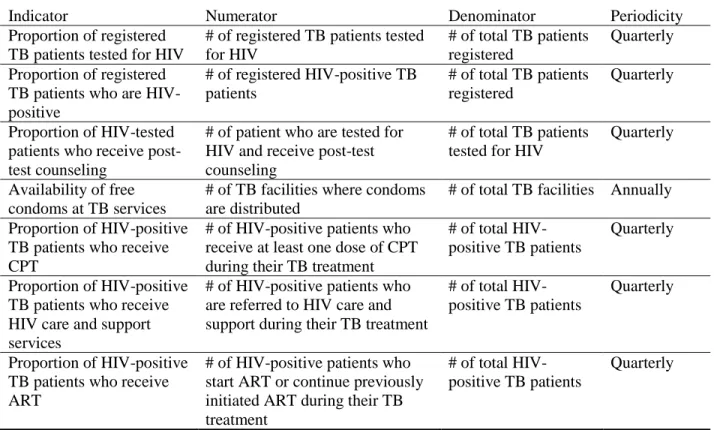
Table 2. Indicators of uptake of activities to reduce the burden of HIV/AIDS in TB patients30
Indicator Numerator Denominator Periodicity
Proportion of registered TB patients tested for HIV
# of registered TB patients tested for HIV
# of total TB patients registered
Quarterly
Proportion of registered TB patients who are HIV-positive
# of registered HIV-positive TB patients
# of total TB patients registered
Quarterly
Proportion of HIV-tested patients who receive post-test counseling
# of patient who are tested for HIV and receive post-test counseling
# of total TB patients tested for HIV
Quarterly
Availability of free condoms at TB services
# of TB facilities where condoms are distributed
# of total TB facilities Annually
Proportion of HIV-positive TB patients who receive CPT
# of HIV-positive patients who receive at least one dose of CPT during their TB treatment
# of total HIV-positive TB patients
Quarterly
Proportion of HIV-positive TB patients who receive HIV care and support services
# of HIV-positive patients who are referred to HIV care and support during their TB treatment
# of total HIV-positive TB patients
Quarterly
Proportion of HIV-positive TB patients who receive ART
# of HIV-positive patients who start ART or continue previously initiated ART during their TB treatment
# of total HIV-positive TB patients
Quarterly
Since WHO recommended the implementation of collaborative TB/HIV activities, uptake has varied widely by country. In its 2007 report, WHO reports the worldwide uptake of
collaborative TB/HIV activities.1 Reported figures are based on those submitted by national tuberculosis programs and their clinics, and, unfortunately, the reporting practices and rigor may vary widely by country. WHO specifically reports on the activities of 63 high-burden countries: 58 countries with >1 percent of the population HIV-positive plus 5 countries with a high
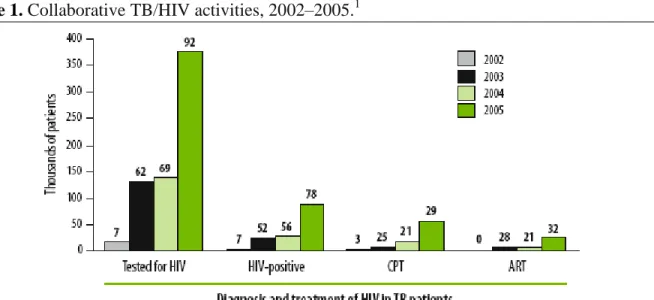
percentage of TB patients with HIV. While rates of testing and reporting of testing have been increasing since 2002 (see Figure 1), globally only 6.7 percent of TB patients are tested for HIV and it is estimated that only 13 percent of patients with TB/HIV co-infections have been
Figure 1. Collaborative TB/HIV activities, 2002–2005.1
Bars show the numbers (in thousands) of TB patients that were tested for HIV, found to be HIV-positive, given CPT, started on ART in four consecutive years. The numbers of countries reporting data in each year are given above the bars.
TB/HIV co-infected patients, it is estimated that between 0.5-18 and 1-55 percent are started on CPT and ART, respectively.
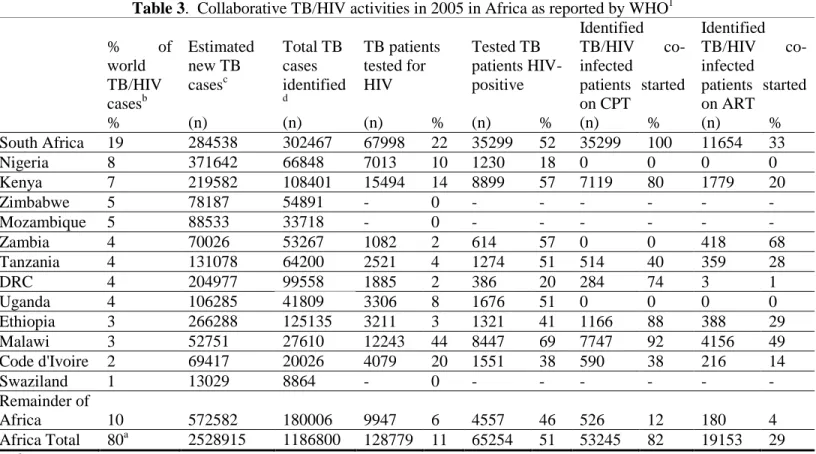
Africa contains 37 of the world’s 63 high burden of TB countries (see Figure 2). Of these 37 countries, only 21 reported the percentage of TB patients who had been tested for HIV in 2005. Uptake of collaborative TB/HIV activities in Africa as reported by countries to WHO is summarized in table 3. Overall in the Africa region in 2005, an estimated 11 percent of TB patients were tested for HIV, and 51 percent of those tested were HIV-positive. Of those who were TB/HIV co-infected, 82 and 29 percent of the HIV-positive patients were reported to have started CPT and ART, respectively.1
Figure 2. Geographical distribution of HIV-positive TB cases, 2005.1
For each country or region, the number of incident TB cases arising in people with HIV is shown as a percentage of the global total of such cases. AFR* is all countries in WHO African Region except those shown separately; AMR* excludes Brazil; EUR* excludes the Russian Federation; SEAR* excludes India.
of HIV counseling and testing was by Abouya, et al. (1998), who reported an HIV-testing acceptance rate of 91.8 percent in eight TB clinics in Cote d’Ivoire between July 1994 and June 1996. 43.2 percent of tested patients were diagnosed with HIV. They achieved these rates despite not offering any HIV treatment at that time.31
Table 3. Collaborative TB/HIV activities in 2005 in Africa as reported by WHO1
% of
world TB/HIV casesb Estimated new TB casesc Total TB cases identified d TB patients tested for HIV Tested TB patients HIV-positive Identified
TB/HIV
co-infected
patients started on CPT
Identified
TB/HIV
co-infected
patients started on ART
% (n) (n) (n) % (n) % (n) % (n) %
South Africa 19 284538 302467 67998 22 35299 52 35299 100 11654 33
Nigeria 8 371642 66848 7013 10 1230 18 0 0 0 0
Kenya 7 219582 108401 15494 14 8899 57 7119 80 1779 20
Zimbabwe 5 78187 54891 - 0 - - - -
Mozambique 5 88533 33718 - 0 - - - -
Zambia 4 70026 53267 1082 2 614 57 0 0 418 68
Tanzania 4 131078 64200 2521 4 1274 51 514 40 359 28
DRC 4 204977 99558 1885 2 386 20 284 74 3 1
Uganda 4 106285 41809 3306 8 1676 51 0 0 0 0
Ethiopia 3 266288 125135 3211 3 1321 41 1166 88 388 29
Malawi 3 52751 27610 12243 44 8447 69 7747 92 4156 49
Code d'Ivoire 2 69417 20026 4079 20 1551 38 590 38 216 14
Swaziland 1 13029 8864 - 0 - - - -
Remainder of
Africa 10 572582 180006 9947 6 4557 46 526 12 180 4
Africa Total 80a 2528915 1186800 128779 11 65254 51 53245 82 19153 29
aNot equal to total due to rounding.
bFrom Figure 6, pg. 27. 2007 WHO TB Report.
c
From Table A2.1, pg.174. 2007 WHO TB Report.
Of the patients who tested positive 97 percent started CPT (range 64 to 100 percent). Factors that the authors cite as reasons for higher testing rates include well organized and enthusiastic staff, no stockouts of supplies, full time counselors, and dedicated counseling and testing rooms in the facility.33
The feasibility of collaborative TB/HIV activities has also been reported at the national level. Several African countries have made substantial efforts to implement collaborative TB/HIV activities; four of which have been highlighted by WHO tuberculosis reports. In 2002 and 2003, Malawi tested 8 and 15 percent of its TB patients, respectively, and in 2003 provided CPT to 87 percent of the patients who tested positive.34 As a complement to its rollout of antiretroviral programs, Malawi started nationwide HIV screening of TB patients in 2004. Initially 24 percent of TB patients were tested for HIV, and 72 percent were found to be HIV-positive. By the third quarter of 2005, at least 43 percent of TB/HIV co-infected patients started ART.28, 29 In 2005, 44 percent of TB patients nationwide were tested for HIV, and nearly half of TB/HIV co-infected patients start ART.
In March 2005, Kenya implemented a nationwide program to rapid test TB patients. By the third quarter of 2005, 32% of TB patients were tested in the country. This doubled to 64% one year later (3rd quarter 2006). Of the 54% of patients found to be co-infected, 80% were given CPT and 30% started ART. 1
Rwanda rolled out nationwide program starting in 2004 when 46% of patients were tested. By the third quarter of 2006, 81% were tested. Of the 38% of TB patients who tested HIV
Finally, Zambia implemented collaborative TB/HIV activities in 2006 and testing increased from 2 to 52% by the third quarter. Of the 56% of TB patients who were co-infected with HIV, 29% were given CPT and 33% started ART.1
III. Methods
Clinic profiles and integrated TB/HIV activities
Data were collected from all patients at 14 tuberculosis clinics in Kinshasa, Democratic Republic of Congo. Of these clinics, 1 is public (a hospital) and 13 affiliated with religious institutions or denominations. They were chosen among the 92 TB clinics present in the city of 6.5 million people because they had a significant patient population, enthusiasm for expanding patient care, and the space needed to implement collaborative TB/HIV activities.
All fourteen study clinics treated TB patients. In preparation for collaborative TB/HIV activities, TB clinic staff underwent a four-day training on HIV testing and counseling and opportunistic infections. Clinics initiated collaborative TB/HIV activities between January 18 and February 27, 2006. Monthly meetings were held with program and clinic staff to discuss concerns and hurdles to implementation and care.
Study design and data collection
testing, HIV test results and referral for HIV care and support, TB treatment cards included boxes to check for accepting or denying an HIV test, for HIV-positive, negative, or
indeterminate status, and for being referred or not. For the remaining uptake indicators, the activity was considered completed if a date was entered on the TB treatment card for each activity.
Study population and clinic procedures
All patients presenting to the study clinics were screened for tuberculosis using sputum microscopy, and physician clinical judgment if smear negative. If found to have TB, clinic staff entered patients into the TB registry and started them on TB treatment according to the national DOTS program guidelines. They were offered HIV counseling and testing by the TB nurse at the time of diagnosis, and if they initially refused, the offer was repeated after one and two months of TB treatment or the patient was tested upon his or her request. All testing was done using Determine HIV-1/HIV-2 (Abbott Laboratories, Tokyo, Japan) and Uni-GoldTM HIV-1/HIV-2 (Trinity Biotech, Wicklow, Ireland), according to WHO strategy II for antibody HIV testing {P1-#9}. HIV-positive TB patients were offered cotrimoxazole, 480 mg twice daily for adults and 6-8 mg/kg for children, unless contraindications were present. Infected patients were referred to a local HIV care and support program if available, offered ART at the clinic if available, or referred to a local HIV clinic. If patients obtained ART, the HIV clinic also managed their CPT.
Outcome measures
HIV-positive, 3) the percent of tested patients who received post-test counseling, 4) the percent of positive patients who started cotrimoxazole preventive therapy, 5) the percent of HIV-positive patients referred for HIV care and support, and 6) the percent of HIV-HIV-positive patients who started anti-retroviral therapy. 35 Per WHO recommendations, these six indicators are to be recorded continuously, extracted at the end of TB treatment, and reported to the national TB program quarterly with routine TB data. This allows for patients who are tested for HIV any time during their treatment to be measured. Following WHO recommendations, patient data were extracted at the conclusion of TB treatment, with patients divided into quarterly groups based on their registration date. WHO recommends that the seventh indicator, the availability of free condoms at tuberculosis services, be measured annually, and was therefore not included in this analysis.
Statistical analysis
IV. Results
Study population
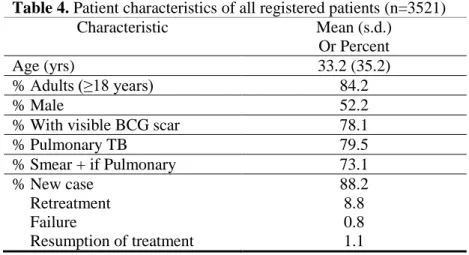
Between January 2006 and January 2007, the fourteen TB clinics registered 3,521 tuberculosis patients for an average of 252 patients per clinic (range 80 to 450). Over seventy-five percent of patients were adults with visible BCG scars and new cases of pulmonary
tuberculosis, of which seventy-three percent were smear positive (Table 4). The average age was 33 years with 84.2 percent of patients being older than eighteen and 2.8 percent under age 2. Slightly more men than women were enrolled: 52.2 and 47.4 percent, respectively.
Table 4. Patient characteristics of all registered patients (n=3521)
Characteristic Mean (s.d.)
Or Percent
Age (yrs) 33.2 (35.2)
% Adults (≥18 years) 84.2
% Male 52.2
% With visible BCG scar 78.1
% Pulmonary TB 79.5
% Smear + if Pulmonary 73.1
% New case Retreatment Failure
Resumption of treatment
88.2 8.8 0.8 1.1
Uptake of HIV counseling and testing
for post-test counseling. Unlike testing rates, return for post-test counseling rates decreased over time from 96.6 percent in the first quarter to 92.3 percent in the final quarter (p=0.031).
When viewed by clinic, the percentage of patients who accepted HIV testing and post-test counseling varied substantially and trends in rates of testing and counseling differed between clinics. All clinics tested more than 90 percent of patients except four which tested 65.0, 82.4, 86.1, and 86.2 percent. Eight clinics had initial testing rates over 90 percent and sustained them over the year. One clinic increased its testing rate from 76.9 percent in the first quarter to 95.6 percent by the third (p=0.0024). Two clinics had statistically significant declines in testing rates over time from 100 to 71.4 percent (p=0.018) and from 97.2 to 87.5 percent (p=0.048). Two
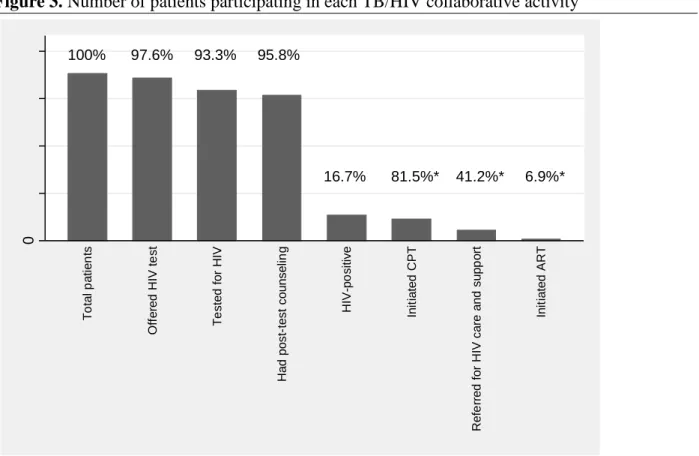
Figure 3. Number of patients participating in each TB/HIV collaborative activity
0 1, 000 2, 000 3, 000 4, 000 T o ta l p a ti e n ts O ff e re d H IV t e st T e st e d f o r H IV H a d p o st -t e st co u n se lin g H IV -p o si ti ve In it ia te d C P T R e fe rr e d f o r H IV ca re a n d su p p o rt In it ia te d A R T
* Values for rates of initiation of CPT and ART and referral for HIV care and support are calculated for the proportion of patients who are HIV-positive
100% 97.6% 93.3% 95.8%
Figure 4. Percent of patients receiving each of the six collaborative TB/HIV activities by quarter.
0 .2 .4 .6 .8 1
Pe
rc
e
nt
1 2 3 4
Registration quarter
Tested for HIV Had post-test counseling
HIV-positive Initiate CPT
Referred for HIV care and support Initiated ART
additional clinics had rates that trended downward from 96.7 to 88.0 percent (p=0.072) and from72.7 to 60.7 percent (p=0.27).
HIV positive rate
Overall, 525 TB patients tested positive for HIV (16.7 percent; 95% CI: 15.4-18.0). This rate had a slight, non-significant decrease over time from 17.6 percent in the first quarter to 14.5 percent in the fourth (p=0.31). The range of HIV-positive rates in TB patients tested by clinic was 8.8 to 33.3 percent. Two clinics showed substantial, but not statistically significant,
increases in their HIV-positive rates over time. The rate in the clinic with the most HIV-positive patients trended upward over time from 28.0 percent in the first quarter to 40.0 percent in the third quarter (p=0.74) as did the rate of the clinic with the second highest percent of HIV-positive patients from 18.7 percent initially to 50.0 percent in the third quarter (p=0.071). However, in the third quarter this clinic had only 10 patients compared to 90 in each of the previous two quarters. Three clinics saw trends toward decreases of about ten percent in their HIV-positive rates between the first and third quarters from rates around to 20 percent to around 10 percept (p=0.16 to 0.39).
Care for TB/HIV co-infected patients
quarter (p=0.13-0.65). The final clinic had consistent average near 70 percent. Of the 92
patients who did not begin CPT, 28 were already taking ART and would thus be prescribed CPT by their HIV clinics, three refused treatment, two had contraindications, and four were followed elsewhere. Data was missing for the remaining 55, 10.5 percent of co-infected patients.
Referral of TB/HIV co-infected patients for HIV care and support occurred in 41.2 percent of patients. This number consistently increased over time from 32.3 percent of patients being referred the first quarter to 68.0 percent being referred the fourth quarter (p=0.001). Four clinics averaged referring over half of their patients, three of which showed increases in referral rate from between 23 to 40 percent (p<0.001, 0.018, and 0.065, respectively). The remaining ten clinics referred patients much more sporadically, with one clinic never making a referral.
Thirty-nine patients (6.9 percent) received ART after TB registration. Of these, 28 (72 percent) had initiated ART before entering TB treatment. Ten patients from one of six clinics received ART as a consequence of HIV testing by TB clinics. Initiation of ART did not change over time (p=0.57), and when viewed by clinic was sporadic with only one clinic having a non-significantly increasing rate over time from 7.1 the first quarter to 42.9 the third quarter (p=0.15). All of this clinic’s patients started ART before enrolling in TB treatment.
Rates of collaborative TB/HIV activity uptake by clinic
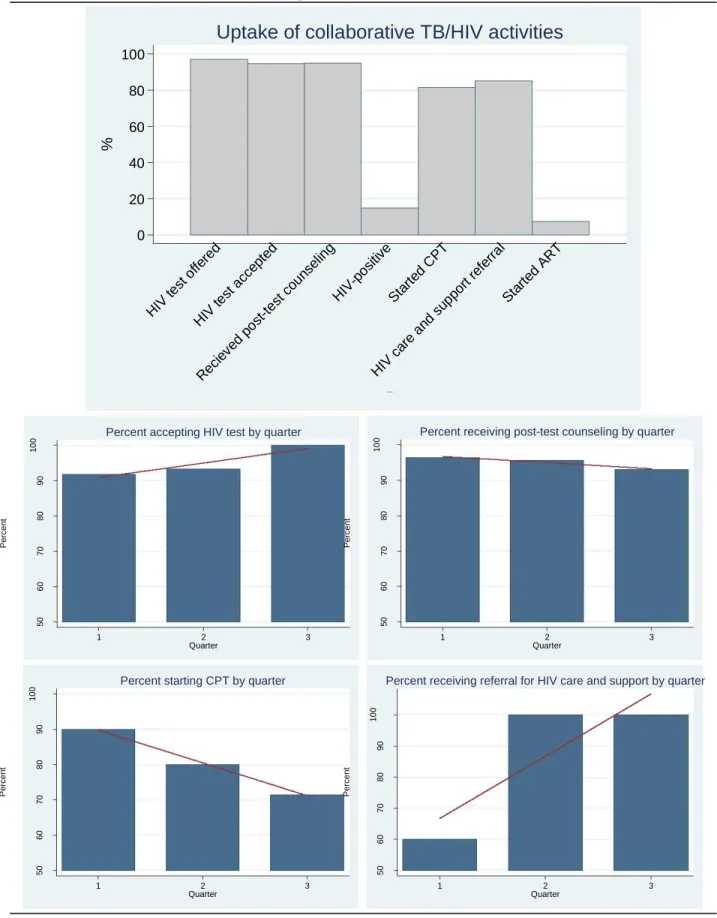
rate of HIV testing, post-test counseling, and CPT initiation all decreased or trended downward from 100 to 71.4 percent (p=0.017), 85.7 to 50 percent (p=0.41), and 100 to 50 percent (p=0.041), respectively, between the first and third quarters. One clinic improved in some indicators but worsened in others. It showed an increase between the first and third quarter in its rate of HIV testing (76.9 to 95.6 percent, p=0.002) and a higher trend in the number of patients who were taking ART (7.1 to 42.9 percent, p=0.14). Even though the rate of HIV positive patients trended down from 20.3 to 10.8 percent (p=0.32), the percent of patients starting CPT also trended downward from 78.6 in the first quarter to 42.? in the third (p=0.26). The remaining clinics showed varied improvements or declines in performance of up to two indicators over time. An example of summary graphs of selected indicators for an individual clinic is shown in Figure 5.
V. Discussion
This study was the first to examine uptake of collaborative TB/HIV activities in the DRC under routine clinic conditions. The results demonstrate that rollout of collaborative activity at TB clinics in Kinshasa, DRC, can be successful. Over ninety percent of newly enrolled TB patients accepted an HIV test and returned for post-test counseling. The HIV positive rate among TB patients was similar to WHO estimates.1 Over eighty percent of HIV positive patients initiated CPT. Rates for referral for HIV care and support were lower, but increased over time. Only initiation rates of ART remained low throughout the study period.
Figure 5. Example graphs detailing uptake of collaborative TB/HIV activities at one TB clinic, overall and with selected indicators by quarter.
0 20 40 60 80 100 % HIV test offe red HIV test acce pted Reci eved post -test coun selin g HIV-p ositive Start ed C
PT
HIV care
and supp
ort re ferra
l
Start ed AR
T
indnum ber
Uptake of collaborative TB/HIV activities
50 60 70 80 90 1 0 0 Pe rce n t
1 2 3
Quarter
Percent accepting HIV test by quarter
50 60 70 80 90 1 0 0 Pe rce n t
1 2 3
Quarter
Percent receiving post-test counseling by quarter
50 60 70 80 90 1 0 0 Pe rce n t
1 2 3
Percent starting CPT by quarter
50 60 70 80 90 1 0 0 Pe rce n t
1 2 3
Percent receiving referral for HIV care and support by quarter
addition, during the study period, these fourteen clinics tested more patients than were tested in the whole of the DRC during the previous year. In 2005, the national TB program reported that 1,885 TB patients were tested for HIV (1.9 percent of TB patients in the DRC). Of them, 386 tested HIV-positive (20 percent), 284 initiated CPT (74 percent) and 3 started ART (1 percent).1
There are several potential reasons for the high uptake of collaborative activities in these clinics. First, from the patient perspective, counseling and testing for HIV was convenient because it occurred at the start of TB treatment and was done in the TB facility by TB staff. The immediate availability of the HIV test simplified the testing process for the patient by
eliminating the cost for transportation to another facility and preventing a second clinic visit to a separate facility with different medical staff.
Second, the clinics chosen to participate in the program were selected based on
enthusiasm and infrastructure. Motivated staff likely contributed to the acceptance of new clinic procedures and responsibilities and subsequent testing and treatment of patients. Presence of space for the increased workload of pre- and post-test counseling facilitate program
implementation. While this study shows that rollout of collaborative TB/HIV activities in TB clinics is feasible, not all TB clinics nationwide might have the motivated staff or available infrastructure to expand their services to the same degree. As a result, one would expect expanded rollout performance to be less successful in other settings.
rollout of collaborative TB/HIV activities, no additional clinic staff were hired but outside funding contributed to the program. International aid provided funding for supervision of
activity rollout, training, cotrimoxazole, monitoring and evaluation of the rollout, and support for formation of support groups. In January 2007, just as the last data in this analysis were
becoming available, responsibility for the program was shifted to the national tuberculosis program. Unfortunately, in the subsequent months, some clinics experienced stockouts of HIV tests and cotrimoxazole, contributing to observed decreased rates of CPT initiation.
International assistance also contributed to the development of HIV care and support referral services. Upon implementation of collaborative TB/HIV activities, few agencies existed to which patients could be referred for HIV care and support. Often the ones in existence already had a full patient load and were reluctant to take on additional patients. Only one clinic initially referred over half of its patients for HIV care and support. During the implementation of
collaborative activities at the TB clinics, HIV support groups were organized by TB clinics, increasing the possibility for referral of patients for care and support. Such local group formation significantly increased referral rates at three of the TB clinics Unfortunately, the referral activities at the remaining clinics were sporadic and suboptimal and are a point of further attention, study, and improvement.
which was also followed by occasional political violence until March 2007.36 During such times, it is conceivable that collaborative activities may decrease as patients may be nervous about leaving their homes or being in public, supply lines for HIV tests or cotrimoxazole may be interrupted, or clinics may have to close for security reasons. During the time of the study, no clinics closed because of violence. Numbers of people presenting to TB clinics were constant. While rates of CPT initiation did decrease slightly over time, there is no direct evidence that political unrest significantly contributed to this decline.
In this analysis, uptake measures for all clinics were first analyzed collectively. Uptake trends were stable with a slight increase in acceptance of HIV testing and slight decreases in post-test counseling and initiation of CPT. Referral for HIV care and support substantially increased over time. As can be expected, when clinics were looked at individually, differences among clinics became apparent. The fourteen clinics selected for implementation of
collaborative activities were a diverse group. Several clinics performed well on all indicators except initiating ART while others performed below average in their HIV testing rates, post-test counseling, and CPT initiation. The referral for HIV care and support between clinics was very variable. Five clinics consistently referred substantially more patients for care and support than the remaining nine clinics. Some clinics’ performance improved over time while others’
performance declined.
responsibilities of the clinic staff in the referral hospital setting. They likely were not as motivated about implementing collaborative TB/HIV activities to the same degree as many health care clinics that treat patients from a single community. Study staff also found it hard to motivate the nurses at a second clinic to routinely offer and test TB patients for HIV. As a result, that clinic had the lowest rates of HIV testing of all of the clinics. A third clinic had the second highest HIV-positive rate at 23.6 percent which increased from 18.7 percent in the first quarter to 50 percent in the third (p=0.07). The explanation for this increase is unclear, but clinic staff suggested it may be due to the clinic’s proximity to a major rail station and the anonymity that such a setting might provide.
Only one other group has published data examining uptake of activities by clinic.33 They reported an evaluation of collaborative activities in one quarter after rollout. The fifteen clinics they evaluated also had heterogeneous clinic characteristics, sized and affiliations. They had lower and variable rates of HIV testing by clinic (59 percent tested, range 40 to 96 percent), but high rates of CPT initiation across clinics (97 percent started CPT, range 64 to 100 percent).
Figure 3, rates of HIV testing and referral for HIV care and support trended upwards over time, and the clinic staff should be congratulated for their efforts.
Periodic assessment also provides an opportunity to discover clinics that are deficient in their performance and intervene to improve rates of uptake activities. It is a springboard for discussion of ways to improve and can be used as the background or baseline information in quality improvement activities (e.g. Plan, Do, Study, Act cycles).37 However, rates of CPT initiation trended downward. Knowing this trend, clinic staff can hypothesize the reason for the decline, and quality improvement measures can be taken to reverse the trend in CPT initiation. As another example, the rates of CPT initiation in the clinic shown in figure three trended downward. Knowing this trend, clinic staff can hypothesize the reason for the decline, and quality improvement measures can be taken to reverse the trend in CPT initiation. Such clinic examination can also provide comparative data to demonstrate what other clinics are achieving and to identify nearby clinics that can be used as models, training sites, or sites with which a clinic could swap staff to promote improvement.
Finally, the quarterly timeframe for routine monitoring used in this analysis is also
conducive to performance improvement. WHO recommends quarterly reporting of collaborative TB/HIV activities because that coincides with the reporting of outcomes of TB treatment by clinics to national programs. We found quarterly measurements to be an appropriate interval in which to analyze our data by clinic. It allowed significant number of patients to be enrolled in each clinic to provide stable trends in data. Because of low numbers of HIV positive patients in many of the clinics, uptake rates differed substantially in some clinics by month due to small sample sizes. In these instances, more frequent analysis could lead to a misleading picture of clinic performance. Compiling uptake rates over three months provided adequate sample size in most cases to obtain a more realistic picture of collaborative activities. Quarterly monitoring was also frequent enough to address performance concerns and is consistent with reporting of other TB clinic data to national tuberculosis programs. If clinics or programs implement specific programs to improve performance, more frequent monitoring may be justified, but in routine clinic management quarterly assessment provides the needed guidance.
Strengths and weaknesses
provides a conservative estimate of uptake activity rates as occasionally staff may have neglected to enter the date of a completed activity on a treatment card. A second strength was that this was an effectiveness study, with collaborative activities being integrated as part of routine activities in established TB clinic settings without the hiring of additional staff. Activities were
implemented over a wide range of clinical presentations seen routinely in TB clinics. The true value of this effectiveness study in establishing HIV prevalence rates and measuring uptake activities may be limited by the difficulty of diagnosing TB in resource poor settings. Study clinics used microscopy of sputum samples to diagnose smear positive TB, which has a low sensitivity. Smear negative pulmonary TB cases and extra-pulmonary TB cases are diagnosed on clinical grounds by a physician, which has a low specificity. With such
uncertain diagnostic instruments, not all pulmonary TB patients are likely to be identified and subsequently tested for HIV, and a number of extra-pulmonary patients tested for HIV are likely to not have TB. This could provide an underestimate or overestimate of the true TB/HIV co-infection rate.
Two other limitations involve the data collection and analysis. First, despite a narrative field to record the reason for not initiating CPT existing on the TB treatment cards, this field was blank for the majority of patients. If these data were provided it would assist clinics in
Finally, these clinics were selected for participation in the rollout of collaborative TB/HIV activities based on their location in the capital city, their enthusiasm, and preexisting infrastructure. While most of the studied clinics succeeded in implementing collaborative activities, such success may not be generalizable to all other clinic settings. However, even if other settings may be more difficult, the experience gained by program staff in such settings may be useful in addressing the needs and limitations that other sites present as activities continue to be rolled out in other settings.
Recommendations for TB clinics
This evaluation of uptake of collaborative TB/HIV activities has implications for TB clinics, both those in this study and others in similar and diverse environments, in regards to each of the recommended TB/HIV collaborative activities. First, WHO recommended model for testing and counseling moved away from traditional, voluntary, opt-in, patient-initiated testing to a provider-initiated, opt-out approach. 35, 38 Opt-out testing emphasizes the importance of HIV testing to patients and actively recruits patients for testing while still providing patient autonomy to consider the benefits and risks of testing in their particular situation.39 In this study, provider-initiated testing appeared well accepted and led to high HIV-testing rates. In theory, the
patients to opt-out of testing may require slightly more clinic time and resources to properly educate patients but is essential for protection of patient autonomy. This perfect testing rate could also come from clinic staff reporting the completion of activities that did not occur. The importance of truthfully recording figures should be routinely emphasized to all clinic staff in order to obtain the most accurate data possible.
For those patients who do initially decline testing, TB treatment requires repeated encounters with medical services providing numerous opportunities for further education and examination of a patient’s reasons for refusal. 40
In the studied clinics, 98.8 percent of patients who accepted an HIV test did so at the initial offer of testing. Such a high rates suggests that repeated offering of HIV testing may unnecessary and could instead lead to patients being coerced into testing against their will.
than the general public. In such settings, expanded provider-initiated, opt-out testing of all patients who present to HIV clinics may significantly increase case fining of HIV. However, the benefit of testing all patients presenting to TB clinics in setting with a lower HIV prevalence is less clear.
A second way to increase HIV case finding is by testing close contacts and family
members of TB/HIV co-infected patients. In a small, retrospective, cohort study done in the US, 16 of 30 close contacts of TB/HIV co-infected patients (e.g. family members, houseguests, or friends) who had been tested for HIV were found to be HIV-positive.43 In a cross-sectional study of TB/HIV infected patients in Thailand, 13.8 percent of contacts and 48.6 percent of spouses of TB/HIV co-infected patients were HIV-positive. 44 In these studies, contacts of HIV negative patients were also found to be positive but at much lower rates. These studies suggest that offering counseling and testing to close contacts of TB/HIV co-infected patients could identify substantial numbers of HIV-positive patients. Testing such contacts may prove even more useful in higher prevalence settings like the DRC or other countries in Africa. Even if TB clinics lack the resources to test all patients presenting to TB clinics or the contacts of TB/HIV co-infected patients, they could refer such populations to local VCT programs.
care and support could provide assistance in identifying barriers to referral and guidance for the formation of support groups and activities. By taking advantage of, strengthening, or building community support for co-infected patients, TB clinics help reduce the burden of suffering caused by TB/HIV and facilitate effective treatment.
Anti-retroviral therapy has been shown to significantly reduce mortality among people living with HIV/AIDS. While randomized trials of the effect of ART on the mortality of TB patients would be considered unethical, cohort studies demonstrated high rates of TB patients achieving undetectable viral loads and very few to no deaths while on therapy. 17-22 According to the DRC’s 2005 UNAIDS progress report, just over 9,000 of the of the estimated 338,700
eligible HIV-positive patients in the DRC have access to ART. A total of 73 prescribing sites exist in 53 of the country’s 515 health districts.45
The few patients that received treatment during this study were fortunate enough to be treated by one of these few clinics, and most of those on ART were diagnosed with HIV and taking ART prior to TB clinic enrollment. For effective uptake of ART to occur, the number of HIV prescribing clinics must be dramatically increased and the availability of anti-retroviral medications must be consistent. Malawi has devised such a system that is thus far operating well.46 Ideally, such clinics would be found in or alongside each TB clinic in urban and rural areas to maximize availability and minimize the burden placed on patients who need to regularly obtain services from both TB and HIV services.47
TB reporting materials should be tailored to collecting information on collaborative TB/HIV activities. In these study clinics, patient TB cards and clinic registers were altered to allow for centralized data gathering. Other groups have proposed similar alterations.48 In
in implementing collaborative activities.49 One addition that does not appear on the new WHO treatment cards is a narrative field identifying the reason for not implementing CPT. While contraindications to CPT are not common events, they occur frequent enough that a significant portion of the 18.5 percent of patients who did not initiate CPT in this study may have been ineligible. Such information can help to address barriers to treatment and motivate clinic staff. With such revisions, reporting of such figures can be done by clinic staff and become normal parts of TB clinic duties.
Finally, questions remain about the optimal way to rollout collaborative TB/HIV
activities logistically and to ensure sustainability. Two clinical questions concerning ART have been debated in the literature: the best treatment regimen and the correct time in relation to TB treatment for its implementation.40 Other operational issues also exist, especially when considering implementation of ART.48 While TB clinic staff were successfully trained in this study to provide HIV testing, post-test counseling, and CPT initiation, initiating ART requires determination of CD4 counts and management of an additional set of complex drug regimens. If resources are available, integrating ART into TB clinics would be the most convenient for the patient as distance and cost of travel have been shown to significantly affect initiation of ART among TB patients.50 However, few clinics are likely to have the resources for such programs and referral to HIV specific programs will likely be necessary. Currently, patients are
resources, with an emphasis on reducing the effort required for patient to obtain treatment, and in all settings, medical staff must work to minimize risk of nosocomial transmission, especially of TB to susceptible HIV-positive patients.
When considering expanding collaborative TB/HIV activities, program sustainability must be addressed from inception. While the demand for such activities is high, implementing programs without planning for their long-term success has high potential for wasting resources. To the highest degree possible, the expertise of local leaders and professionals should be utilized and collaboration with existing programs should be explored and secured. Local people should be hired and trained as program staff. By obtaining local buy in and, if possible, local financing, programs are less likely to require outside support to be sustainable.
Conclusion
REFERENCES
1. Global tuberculosis control: Surveillance, planning, financing. Geneva, World Health Organization: WHO; 2007;WHO/HTM/TB/2007.376.
2. Corbett EL, Marston B, Churchyard GJ, De Cock KM. Tuberculosis in sub-Saharan Africa: Opportunities, challenges, and change in the era of antiretroviral treatment. Lancet.
2006;367:926-937.
3. Nelson AM, Perriens JH, Kapita B, et al. A clinical and pathological comparison of the WHO and CDC case definitions for AIDS in Kinshasa, Zaire: Is passive surveillance valid? AIDS. 1993;7:1241-1245.
4. Scaling up antiretroviarl therapy in resource-limited settings: Treatment guidelines for a public health approach. 2003 revision. Geneva.: World Health Organization.; 2004.
5. Wiktor SZ, Sassan-Morokro M, Grant AD, et al. Efficacy of trimethoprim-sulphamethoxazole prophylaxis to decrease morbidity and mortality in HIV-1-infected patients with tuberculosis in Abidjan, Cote d'Ivoire: A randomised controlled trial. Lancet. 1999;353:1469-1475.
6. Grimwade K, Sturm AW, Nunn AJ, Mbatha D, Zungu D, Gilks CF. Effectiveness of
cotrimoxazole prophylaxis on mortality in adults with tuberculosis in rural South Africa. AIDS. 2005;19:163-168.
7. Mwaungulu FB, Floyd S, Crampin AC, et al. Cotrimoxazole prophylaxis reduces mortality in human immunodeficiency virus-positive tuberculosis patients in Karonga District, Malawi. Bull World Health Organ. 2004;82:354-363.
8. Chimzizi R, Gausi F, Bwanali A, et al. Voluntary counselling, HIV testing and adjunctive cotrimoxazole are associated with improved TB treatment outcomes under routine conditions in Thyolo District, Malawi. Int J Tuberc Lung Dis. 2004;8:579-585.
9. Zachariah R, Spielmann MP, Chinji C, et al. Voluntary counselling, HIV testing and adjunctive cotrimoxazole reduces mortality in tuberculosis patients in Thyolo, Malawi. AIDS. 2003;17:1053-1061.
10. Dheda K, Lampe FC, Johnson MA, Lipman MC. Outcome of HIV-associated tuberculosis in the era of highly active antiretroviral therapy. J Infect Dis. 2004;190:1670-1676.
11. Dean GL, Edwards SG, Ives NJ, et al. Treatment of tuberculosis in HIV-infected persons in the era of highly active antiretroviral therapy. AIDS. 2002;16:75-83.
13. Schiffer JT, Sterling TR. Timing of antiretroviral therapy initiation in tuberculosis patients with AIDS: A decision analysis. J Acquir Immune Defic Syndr. 2007;44:229-234.
14. Anglaret X, Chêne G, Attia A, et al. Early chemoprophylaxis with
trimethoprim-sulphamethoxazole for HIV-1-infected adults in Abidjan, Côte d’Ivoire: A randomised trial.
Lancet. 1999; 353:1463-68.
15. Egger M, May M, Chene G, et al. Prognosis of HIV-1-infected patients starting highly active antiretroviral therapy: A collaborative analysis of prospective studies. Lancet. 2002;360:119-129. 16. Bong CN, Chen SC, Jong YJ, et al. Outcomes of HIV-infected children with tuberculosis who are started on antiretroviral therapy in Malawi. Int J Tuberc Lung Dis. 2007;11:534-538. 17. Jack C, Lalloo U, Karim QA, et al. A pilot study of once-daily antiretroviral therapy integrated with tuberculosis directly observed therapy in a resource-limited setting. J Acquir Immune Defic Syndr. 2004;36:929-934.
18. Ribera E, Azuaje C, Lopez RM, et al. Once-daily regimen of saquinavir, ritonavir,
didanosine, and lamivudine in HIV-infected patients with standard tuberculosis therapy (TBQD study). J Acquir Immune Defic Syndr. 2005;40:317-323.
19. Sungkanuparph S, Manosuthi W, Kiertiburanakul S, Vibhagool A. Initiation of antiretroviral therapy in advanced AIDS with active tuberculosis: Clinical experiences from Thailand. J Infect. 2006;52:188-194.
20. Rolla VC, da Silva Vieira MA, Pereira Pinto D, et al. Safety, efficacy and pharmacokinetics of ritonavir 400mg/saquinavir 400mg twice daily plus rifampicin combined therapy in HIV patients with tuberculosis. Clin Drug Investig. 2006;26:469-479.
21. Friedland G, Khoo S, Jack C, Lalloo U. Administration of efavirenz (600 mg/day) with rifampicin results in highly variable levels but excellent clinical outcomes in patients treated for tuberculosis and HIV. J Antimicrob Chemother. 2006;58:1299-1302.
22. Lopez-Cortes LF, Ruiz-Valderas R, Ruiz-Morales J, et al. Efavirenz trough levels are not associated with virological failure throughout therapy with 800 mg daily and a rifampicin-containing antituberculosis regimen. J Antimicrob Chemother. 2006;58:1017-1023.
23. Zachariah R, Teck R, Buhendwa L, et al. How can the community contribute in the fight against HIV/AIDS and tuberculosis? Aexample from a rural district in Malawi. Trans R Soc Trop Med Hyg. 2006;100:167-175.
24. The voluntary HIV-1 counseling and testing efficacy study group. Efficacy of voluntary HIV-1 counselling and testing in individuals and couples in Kenya, Tanzania, and Trinidad: A randomised trial. Lancet. 2000;356:103-112.
26. Marks G, Crepaz N, Senterfitt JW, Janssen RS. Meta-analysis of high-risk sexual behavior in persons aware and unaware they are infected with HIV in the United States: Implications for HIV prevention programs. J Acquir Immune Defic Syndr. 2005;39:446-453.
27. Glick P. Scaling up HIV voluntary counseling and testing in Africa: What can evaluation studies tell us about potential prevention impacts? Eval Rev. 2005;29:331-357.
28. Global tuberculosis control : Surveillance, planning, financing : WHO report 2006. Geneva: World Health Organization; 2006;WHO/HTM/TB/2006.362.
29. Sherman GG, Jones SA, Coovadia AH, Urban MF, Bolton KD. PMTCT programme--partial assessments can build the picture. S Afr Med J. 2004;94:934.
30. World Health Organization. A guide to monitoring and evaluation for collaborative TB/HIV activities. Geneva: World Health Organization; 2004.
31. Abouya L, Coulibaly IM, Wiktor SZ, et al. The Cote d'Ivoire national HIV counseling and testing program for tuberculosis patients: Implementation and analysis of epidemiologic data.
AIDS. 1998;12:505-512.
32. Zachariah R, Spielmann MP, Harries AD, Salaniponi FL. Voluntary counselling, HIV testing and sexual behaviour among patients with tuberculosis in a rural district of Malawi. Int J Tuberc Lung Dis. 2003;7:65-71.
33. Chimzizi RB, Harries AD, Manda E, Khonyongwa A, Salaniponi FM. Counselling, HIV testing and adjunctive cotrimoxazole for TB patients in Malawi: From research to routine implementation. Int J Tuberc Lung Dis. 2004;8:938-944.
34. Chimzizi R, Harries AD, Gausi F, et al. Scaling up HIV/AIDS and joint HIV-TB services in Malawi. Int J Tuberc Lung Dis. 2005;9:582-584.
35. Stop TB Department and Department of HIV/AIDS. Intermin policy on collaborative TB/HIV activities. Geneva: WHO; 2004;WHO/HTM/TB/2004.330.
36. BBC News. Timeline: Democratic republic of congo. Available at:
http://news.bbc.co.uk/2/hi/africa/country_profiles/1072684.stm. Accessed 5/22, 2007. 37. Langly GJ, Nolan KM, Norman CL, Provost LP. The Improvement Guide: A Practical Approach to Enhancing Organizational Performance. New York: Jossey-Bass; 1996. 38. UNAIDS/World Health Organization. UNAIDS/WHO policy statement on HIV testing. Geneva: WHO; 2004.
39. Jurgens R. Routinizing HIV testing in low- and middle-income countries: background paper. [Revised draft for comment.]. New York.: Open Society Institute.; 2006. Available from:
40. Fujiwara PI, Clevenbergh P, Dlodlo RA. Management of adults living with HIV/AIDS in low-income, high-burden settings, with special reference to persons with tuberculosis. Int J Tuberc Lung Dis. 2005;9:946-958.
41. Srikantiah P, Lin R, Walusimbi M, et al. Elevated HIV seroprevalence and risk behavior among Ugandan TB suspects: Implications for HIV testing and prevention. Int J Tuberc Lung Dis. 2007;11:168-174.
42. Munthali L, Mwaungulu JN, Munthali K, Bowie C, Crampin AC. Using tuberculosis suspects to identify patients eligible for antiretroviral treatment. Int J Tuberc Lung Dis. 2006;10:199-202.
43. Reichler MR, Bur S, Reves R, et al. Results of testing for human immunodeficiency virus infection among recent contacts of infectious tuberculosis cases in the United States. Int J Tuberc Lung Dis. 2003;7:S471-8.
44. Suggaravetsiri P, Yanai H, Chongsuvivatwong V, Naimpasan O, Akarasewi P. Integrated counseling and screening for tuberculosis and HIV among household contacts of tuberculosis patients in an endemic area of HIV infection: Chiang Rai, Thailand. Int J Tuberc Lung Dis. 2003;7:S424-31.
45. Programme National Multisectoriel de Lutte Contre le SIDA. Report on the implementation of the declaration of commitment of heads of state and of government for the response to HIV/AIDS in the DRC. Kinshasa, DRC.: UNGASS; 2005. Available from:
http://www.unaids.org/en/Publications/2005ungassreporting/default.asp. Accessed 6 May 2007. 46. Harries AD, Schouten EJ, Makombe SD, et al. Ensuring uninterrupted supplies of
antiretroviral drugs in resource-poor settings: An example from Malawi. Bull World Health Organ. 2007;85:152-155.
47. Harries AD, Hargreaves NJ, Chimzizi R, Salaniponi FM. Highly active antiretroviral therapy and tuberculosis control in Africa: Synergies and potential. Bull World Health Organ.
2002;80:464-469.
48. Harries AD, Boxshall M, Phiri S, et al. Providing HIV care for tuberculosis patients in sub-Saharan Africa. Int J Tuberc Lung Dis. 2006;10:1306-1311.
49. Expert Group on TB Recording and Reporting forms and registers, WHO Stop TB Department. Revised TB recording and reporting forms and registers – version 2006. World Health Organization; 2006.