ISSN: 2347-7474
International Journal Advances in Social Science and Humanities
Available online at: www.ijassh.com
CASE STUDY
Facebook as Teaching Tool in Higher Education: A Case Study
Angeliki Antoniou, Anastasios Theodoropoulos*, Konstantina Christopoulou, George Lepouras
Informatics and Telecommunications, University of Peloponnese, Tripoli, Greece.
*Corresponding Author: Email:[email protected]
Abstract
Social networks (SN) seem to play a significant role in young adults’ and university students’ lives. Since students already use them in their daily life, why shouldn’t formal higher education incorporate them? The paper presents qualitative and quantitative data gathered through one academic term, after using Facebook as a teaching tool in Higher Education and investigates ways that SN can be used in teaching and learning. Issues of students’ personalities, learning efficiency, motivation, cultural differences, gender differences and patterns of use are discussed.
Keywords: Social networks, Face book, Higher education, Teaching, Cognitive Style.
Introduction
Observing the first year students (average age 18 years) before the beginning of lectures, it seemed that most of them were using their Facebook accounts, if not solely, at least in parallel to other activities. Since these were computer science students, most of their teaching involves the use of computers in class. Talking to colleagues, it seems that students do not just use the computers during class only for their course work, but seem to be distracted with other activities, too. Use of Social networks (SN) was among the biggest issues and students seem to access those sites either from desktop computers of from their mobile phones. Since technology is there and students use it, how can we turn it from a class distraction to a teaching tool? This question lead to the development of the present work.
Using the [1] definition, a social network is a “web-based service that allows individuals to (1) construct a public or semipublic profile within a bounded system, (2) articulate a list of other users with whom they share a connection, and (3) view and traverse their list of connections and those made by others within the system”.
Previous studies show an extensive use of social media by teenagers that seem to spend a large proportion of the day logged on. In the USA average use per person per day was about 6.5 hours [2]. In addition, college students spend more time on SN rather than in classes [3]. More than 95% of British undergraduate students use
SN regularly [4]. Even in cases where the use of SN is not allowed, a common reaction of formal educational systems [5], students discover new ways to overcome the restrictions [6],[7] and therefore, since they will use them, formal education might need to consider incorporating them in teaching and learning, and transform them in learning tools. However, SNare rarely used in formal education [8].
Anastasios Theodoropoulos et. al.|March 2014 | Vol.2 | Issue 3|43-56 44
activities [20], although they do not view SN as a primarily academic tool [21]. Thus, research is still limited and there are many issues to be clarified. For example, student behavior is culturally affected [22-25] but most studies regarding SN in formal education have been conducted in English speaking areas [21] and to our knowledge no such attempt exists in Greece. Thus, both for issues of possible cultural differences but also due to knowledge gaps in this domain, the present study was carried out.
Furthermore, at least on a theoretical level, SNseem to have some desirable attributes that could be beneficial to learning [26]. A constructionist approach to learning emphasizes the importance of social aspects in the learning processes and SN seem to be able to support socialization and communication of users- potential learners [27-28]. Again at a theoretical level, the use of technology and social software can vary from being viewed as means to replace traditional schooling [29] to simply being educational tools that add to the traditional learning. The authors of the present work, view social software as an educational tool with considerable potential, that does not simply add to the traditional learning processes but it can change the very nature of learning, since technology is not a neutral medium [30]. In addition, SN can be a teaching tool in formal educational settings, without being able to replace traditional schooling (at least yet).
Moreover, as far as learning styles, cognitive styles and personality characteristics are concerned, it is known that any teaching approach (using technology or not) will benefit some students more than others [31-33]. Additionally, introvert students might engage more actively in mediated communication rather than direct and SN might provide the tools for that. Past research has shown clear indications towards this direction [34]. Using SN as an educational tool and in parallel to traditional teaching methods, the chances of benefiting students of different learning styles and personalities might increase. The present study also investigated issues of students’ personality (cognitive style) in relation to the use of SN. Although cognitive style (to the knowledge of the authors) has not been used before to study Facebook’s learning effectiveness, another tool has been used in the past to study possible effects on students’ performance, namely communication style [11]. According to [11] different communication styles affect learning performance. In particular, using SN in learning
processes seems to favour students of particular communication characteristics and the authors conclude that considering students’ personal characteristics is crucial when SN are used in teaching and learning. For this reason, the present study included aspects of students’ personalities when Facebook’s efficiency as a learning tool was evaluated.
Moreover, college students seem to prefer Facebook to other networks [21] and they also use it extensively. The faculty of the University of Westminster created and tested a specialized social network named “Connect” [35] to use by students and staff. Even when new innovative SNwere tried, Facebook was still students’ first preference. In another recent study, average time spent on Facebook by college students was around half an hour for the weekdays (active use), use was more common during evening hours and students reported that Facebook was a part of their lives, meaning that they would use it regardless of workload [8]. Particularly, Facebook was very popular with college students even more than any other social network [1].
However, SN and Facebook are not made for education. There are many other educational systems developed only for education with many desirable features, like forums, file sharing, video conferences, shared whiteboards, wikis, etc. [36]. Although, past studies have reported problems with the use of educational software, like learning style issues and software that does not match every preference, confusion from the use of certain features, like wikis, etc. [28], these systems are widely used.
Although SN and especially Facebook design evolved around purely communication concepts, they still seem to contain characteristics of effective learning platforms, as described in the literature [37]. For example, Facebook supports sharing, networking, community building, socialization, integration of newcomers, etc. In addition, past research shows that students are using SN more and more for educational purposes [6], among other purposes that remain primary, like socialization. Researchers [38] explored some tendencies of presentation and communication between Virtual Learning Environments and SN comparing 73 courses' platforms. The authors observed that the designers of typically learning platforms do not seem to take into account the significance of recreational internet services and the possible benefits of informal communication.
Furthermore, students also report that the use of technology in formal education could increase
necessarily occur only in formal educational setting and in school or college classrooms, but can be everywhere, anytime.Social networking can provide a link between formal and informal learning [41]. Therefore, any space, physical or virtual, that can provide learning opportunities is important. In addition, young people seem to be simultaneously involved in many different (learning) settings and learning spans contextual boundaries. In this light, SN can provide valuable opportunities for additional learning and as such they could be incorporated in formal education. According to different guidelines for necessary competencies for the 21st century learners, certain
social network features like computer literacy, communication, effective information retrieval, are among the most important skills to be learnt [6],[41]. Moreover, previous studies have found that the use of SN can increase the quality of engagement and learning [42] and they provide opportunities for pedagogical mentoring [19]. Furthermore, students report positive perceptions for faculty use of Facebook and it seems that instructor engagement increases learning motivation through a relaxed learning atmosphere [43].
Yet, uses of Facebook in traditional educational settings are more challenging to adopt due to cultural factors [44]. Alike in Greek higher education, students and teachers expect certain behaviors and seem to prefer traditional situations. Therefore, the present work seeks to study different patterns of using Facebook among Greek university students. Together with possible cultural differences, students’ personality traits,
such as cognitive style are also considered. Students’ opinions were recorded as well as instructor’s notes and suggestions. In addition, the department of Informatics and Telecommunications, University of Peloponnese, uses a Virtual Learning Environment, widely used both by students and instructors which includes all the above characteristics (eclass). Since such specialized systems are primarily designed for educational purposes they should be superior to Facebook, but from their adoption in higher education, it has become clear that they are seldom used creatively [38]. Yet, students’ behavior shows that Facebook has grown into an important learning platform for education [41]. Facebook provides the opportunities for immediate and quick communication between teachers and learners [41]. In addition, at Greek universities there is a common problem of low class attendance and using Facebook could work as a motivation for increased class turnouts, since it is a part of students’ everyday life and they do not have to be actively involved with the course in order to get information. Based on these findings, it was decided to test the use of Facebook for educational purposes.
The present work is an observational study, wishing to reveal tendencies of social networks' use in higher education in a specific educational and cultural environment. The following sections describe the method used for data selection (both qualitative and quantitative data), the results found and the implication of those results for teaching and learning in higher education.
Method
Facebook was used as an additional teaching tool in the 1st year undergraduate module, Research
Methodology in English for the students of the
department of Informatics and
Telecommunications, University of Peloponnese. There were 66 students registered in the course, 13 of which were females and 53 males. All students were between 18 and 19 years of age. Only first year students were used, since past research showed that especially first year students use SN to ease the transition from their homes to the new environment [45].
use in the course, a new Facebook account was created, only for that particular purpose. Based on previous research findings, it seemed better to use a physical person identity, rather than create a special group, since many students report never to use groups and only to interact with individuals [8]. It was explained that all course necessary information would be posted also in the
Anastasios Theodoropoulos et. al.|March 2014 | Vol.2 | Issue 3|43-56 46
provide both quantitative and qualitative data. Although past research showed that social network users are not always aware of their own behavior online and thus, it is not easy to collect reliable data from questionnaires [6], in the present work, questionnaires were used in addition to qualitative methods for time efficiency and also because the questions did not ask students’ perception on their patterns of use but only asked their opinion about the use of Facebook in class. Thus, the questions did not only ask for the estimates of use, but also about their opinion on different issues regarding SN, like feeling awkward communicating with the course instructor, etc. In addition, involving young adults might provide more reliable answers than having younger students. The questionnaire mainly consisted of open-ended questions.
Data were also collected from the instructor, by keeping a diary of use together with student reactions to different posts and actions. Screenshots were kept of interesting interactions. From the instructor’s diaries the following observations were made:
The instructor’s posts were divided in 6 main categories
Procedural information about the course (i.e. marks now available on eclass)
Reminders (i.e. please, bring your course books) Social postings (i.e. birthday wishes)
General interest information (i.e. art installations, new paths in computer science) Evaluations and feedback aspects (i.e. questions
like what do you expect from this course)
Other notifications (i.e. information about university events, like free lectures, etc.)
Students’ activities while interacting with the instructor were divided in 6 main categories: Asking questions
Asking for clarifications
Replying to instructor’s requests Replying to instructor’s comments
Sending course work to instructor and other students
Sending personal thoughts on social, political issues to the instructor
In order to study possible effects from the use of Facebook in students’ learning performance and how that practice might be influenced by students’ personalities, cognitive style was used. Cognitive style is a person’s preference and habitual approach to the organization and representation of information [46]. Different researchers have described different aspects of cognitive style. The most common are field dependent-field independent [47], impulsive-reflective [48], divergers-convergers [49], holist-serialists[50] and verbalizers-imagers [51]. Cognitive style is a research construct assisting the study of cognitive issues related to learning. It has a strong relation to the individual’s personality and remains relatively constant over situation and time, or at least it is not that easily influenced by the different learning situations. A widely used assessment tool for cognitive style is the Myers-Briggs Type Indicator. The MBTI is based on Jung’s theory of psychological types and it describes learners on four dimensions based on self-reported questionnaires. The dimensions are extraversion-introversion, sensing-intuition, thinking-feeling and judging-perceiving. The combination of the above dimensions provides 16 possible personality types, with different cognitive preferences and learning needs. MBTI has a strong validity and reliability, provided that the participants give honest answers. At the end of the course students were asked to complete a short version of the MBTI questionnaire.
Cognitive style was compared to students’ final course marks. We used final course marks as an indication of students’ learning. The issue is open to many interpretations and different methodological approaches, since other measures could be also used like skill building, added knowledge, etc. However, final marks have been successfully used in the past to study the learning effectiveness of different applications [52],[11],[53-56].
Results
Popularity of Facebook
From the questionnaire data, Facebook was indeed the most popular social network students used, since 51 out of 66 students reported using it (77.2%). Other networks used were Skype (22.7%), MSN (12.1%), Youtube (6%), from 4.5% networks like Twitter, Google+, Yahoo and ooVoo, and from 1.5% networks like Myspace, Gmail, X box live, Hi5, Livejasmine, Last.fm and Academia.edu.
Moreover, for students that used multiple SN 87.2% reported that they used Facebook more than the others. Finally, only 3 students (4.5%) reported that they did not use SN. The reasons that they provided for their choice were: 1. “SN are not necessary”, 2. “I am not interested in SN”, 3. “They trivialize social interactions”.
Privacy
instructor as their Facebook friend, it seems that their actions did not follow their verbal concerns. This finding is consistent in different social media studies with youth, across cultures and media, to the point that some researchers call it the privacy paradox [57],[58], [1]. As also found previously [8], students in this study provided free access to their personal lives and did not seem to restrict the instructor’s access. In the questionnaire, one question asked whether they mind other students seeing details from their personal lives and only 19% of students either stated that they do mind (either all the times or sometimes). As shown at Fig. 1, from the remaining 81%, only 21.5% mentioned that they do not mind since they never post personal details. Thus, almost 60% of students do not seem to mind for issues of privacy.
Fig. 1: Privacy I
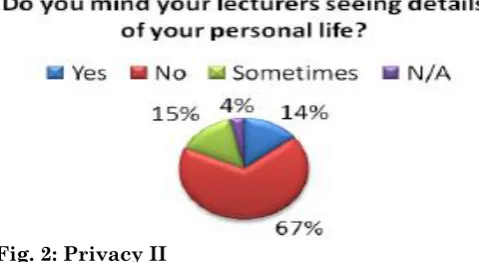
Results seem to change a little when students are asked about lecturers seeing their personal lives. The following Fig. 2 summarizes their answers.
Fig. 2: Privacy II
In addition, in the question “Did the instructor’s presence in Facebook alter your behavior online”, 76.5% of students stated that they did not change their behavior. From the remaining 23.4% of students that did change their behavior, it is interesting to see some of their answers:
“I was more polite”
“I wrote comments in English, instead of Greek with Latin characters, but I expressed the same opinions”
“…sometimes we were more discrete”
“…now I pay more attention in blog articles and user comments”.
Furthermore, students that decided not to send friend requests were asked at the end of the course for the reasons for this choice. Their answers can be classified in two themes. Most of those students mentioned that they had privacy concerns (46.1%) and some others that they are not frequent users of Facebook (15.3%). Privacy issues seem to have mainly affected their decision.
New Friendships
Previous research shows that college students using SN rarely make new friends online [45] and SN are used to support communication between people that know each other in the physical world. Other studies found that Facebook played an important role in the formation on new friendships for first year students and to make them feel settled at the university, since they use it both to keep in touch with their home friends but also to make new, at the new environment [21]. In the present study students reported that the module΄s Facebook page helped in making new friendships, since 48% of students answered positively in the relevant question.
Nature of Posts
Although students in previous studies reported that they wanted instructors only to post specific information [43], in this study a variety of posts were used, spanning from simple course instructions and procedural information to humoristic videos and birthday wishes (using the Facebook feature for birthday wishes). Moreover, 48.9% of students liked the humoristic videos posted by the instructor and 22.4 % likes the course related announcements. The following Fig. 3 shows students’ preferences on instructor’s posts.
Fig. 3: Nature of posts
Gender Differences
Anastasios Theodoropoulos et. al.|March 2014 | Vol.2 | Issue 3|43-56 48
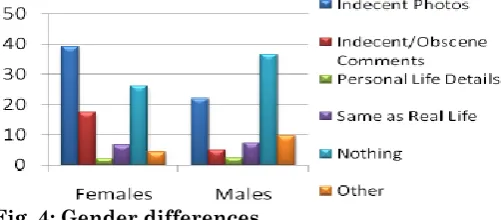
particular, it was mostly girls that informed their wall with details of their personal lives or used offensive phrases, whereas boys seem to be more careful. In addition, in the questionnaire students were asked to identify female and male inappropriate behaviors on Facebook. Their answers show that not only different genders have different behavior on SN but they are also expected to have different behavior. The following Fig. 4 shows their answers.
Fig. 4: Gender differences
Academic and Real life Gap
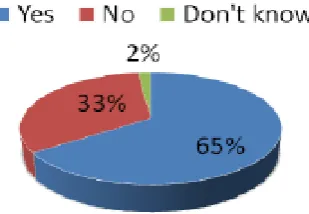
One of the main hypotheses of the present work was that Facebook could bridge the communication gap between students (especially first year students) and course instructors, a common problem also acknowledged in the literature [36]. In the questionnaire there were three relevant questions. In one question, 59.5% of students stated that Facebook helped them feel closer to the instructor. Two more questions were used, one asking them if the course’s Facebook page made them feel closer to the University and the Department and the second if Facebook could be used to bridge private and university life. In the first question, the majority of students reported that the use of Facebook did help them feel closer to the University. The following Fig. 5 summarizes their answers.
Fig. 5: Academic and real life gap I
In the second question asking if Facebook could bridge the private and university life, 61.2% of students gave a positive answer. Thefollowing Fig. 6 summarizes their answers.
Fig. 6: Academic and real life gap II
Motivation
Another main hypothesis regarded student motivation. This was split into two questions: the first question asked whether the use of Facebook increase their lecture attendance motivation, since this is a serious issue at the department and often classes show low turnout rates. In this question about half the students (42.8%) stated that their class attendance motivation increased due to Facebook. However, the instructor observed a significant increase in class attendance (that of course could be due to other factors as well), but the class average absence rate was about 1.6 absences per student for a 13 lectures course. For this particular issue, two student comments are notable:
“SN m ust be used in classes not because they only help in the better functionality of the lesson, but because they work as class attendance motivators”
“One general comment about the module: in my opinion if this course was done differently (for example traditional lectures) the class attendance would be minimum.”
Both comments show that students also recognize the motivating power of SN in learning processes. The second question on this issue, asked directly on students’ perception of Facebook increasing their learning motivation overall. Only 38% of students provided a positive answer to this question.
Course Evaluation
Fig. 7: Course evaluation
File/Information Exchange
Facebook was used frequently for the exchange of course related files and information, since 56 % reported that they used it often for these purposes, 30% rarely and only 14% never used it in such ways.
Communication Preferences
Effective group communication relies both on public and private conversations [60] and Facebook is good at providing both. In fact, students used both in contacting the course instructor. Students preferred using Facebook for their communication with the course instructor, more than mail and face-to-face interaction. Unlike previous findings that indicate that the use of communication technologies traditionally used in colleges is similar to the use of Facebook for academic communication purposes[19], in this study students by far preferred to use Facebook and the messaging option to emails. In addition, in the questionnaire answers students reported that this kind of communication is beneficial especially for introvert students, or as they put it “shy” students. This is a similar finding to previous research [61].
Student Diaries
Although students were instructed to complete diaries of use, only 8 students returned their diaries and only 4 were fully completed. Thus, data from these diaries are very restricting and cannot be used. The limited completion of diaries was probably due to the fact that students had to complete them at home while using Facebook. A different methodology will be used in a future study to collect rich qualitative data (i.e. possibly photo-diaries during class, etc.).
Course Structure and Cognitive Style
In an attempt to study the effect of the use of alternative teaching methods through SN in class, students’ personality characteristics were compared to their final course marks. Knowing that different teaching methods might positively
affect students of certain personalities, students’ cognitive styles were compared to their final course marks. Although, using course marks for this comparison might not be a good indicator of actual learning, in a quantitative methodology (used on this case) it is difficult to collect different data. Therefore, a course mark is treated here as an indicator not as an absolute learning factor. Data from 49 students were used to perform the statistical analysis. Since the number was small, the cognitive styles were deconstructed to their initial dimensions. MBTI can provide 16 possible personality types, reflecting 2 ends of 4 dimensions. In the present analysis we used the 4 dimensions giving different values for the 2 options. Similarly, marks were given in a scale of 4 categories (fail, pass, second, first). Since all data were categorical, a Pearson’s Chi Square test was performed. When marks were compared to the Extraversion-Introversion dimension the value of x²(3) =1.549, p›.05. For the Sensing-Intuition dimension and marks, x²(6) =4.207, p›.05. For the Thinking-Feeling dimension and marks, x²(3) =7.283, p›.05. For the Judging-Perceiving dimension and marks, x²(3) =1.014, p›.05. Therefore, no statistical significance was found in any of the tests performed.
Discussion and Conclusions
Popularity of Facebook
Facebook at present seems indeed the most popular social network used by university students and particularly in the present case study. However, SN follow fashion. Facebook is fashionable and popular for now, but it will not be forever. Instructors that decide to use SN should often verify the actual use and popularity of the tool they are using. Since, one of the main arguments for the use of SN is their popularity among students, it is desirable to maintain this advantage.
Privacy
Anastasios Theodoropoulos et. al.|March 2014 | Vol.2 | Issue 3|43-56 50
Fig. 8: Privacy examples
New Friendships
Previous research has shown conflicting evidence in relation to the issue of making new friends on SN. There might be cultural differences concerning this matter and it is worth further future study. According to the participants of this study, the course’s Facebook account did help them make new friends. The following Fig. 9 from the instructor’s diary of use provides an example, showing two students of the course connecting on Facebook.
Fig. 9: New friendships
Nature of Vposts
The present study attempted to bridge formal and informal learning, by posts of varying themes, since there is limited research in informal learning and the use of modern technology [5]. As explained above, previous studies showed that students wanted specific and directly course related information to be posted by instructors [43]. Various posts were used in this study spanning from formal learning material to birthday wishes and humoristic videos. Students reported liking the different natures of the posts, mostly favoring humoristic videos. The following Fig. 10 shows students reaction to an art video.
Fig. 10: Reaction to art video
Fig. 11 shows student response to Birthday wishes.
Fig. 11: Reaction to birthday wishes
And the following Fig. 12 shows reaction to humoristic photos.
Fig. 12: Reaction to humoristic photos
The student data showed that not only students enjoyed the different posts, but they also viewed them as motivators for further engagement: “Yes, for example, student responses to the
module’s status, attracted our interests and provided motivation for further engagement”
Fig. 13: Reaction to humoristic videos
Fig. 14: Further reaction to humoristic video
Knowing that it is more difficult to maintain relationships online and it takes significantly more effort [62], means that instructors using social media need to be very active, since they have weak ties with the students. The use of social media in class, changes the very nature of learning and teaching, implying that teachers need to practice new ways of approaching students, allocating tasks, distributing information, etc. In addition, using SN implies that students have access to a wide range of resources. In this course, the instructor tried to use different sources and material, not simply course instructions or only course directly related material. However, using SN the instructor runs the risk of harming her credibility with the students but if the networks are used appropriately the instructor can signify that she understands student culture [43]. Finding the balance between the two is not always straight forward and the instructor needs to remain aware of the potential risks and also the benefits [21]. For example, in this particular study, a way to tackle the problem and also to adopt a less intrusive profile, the instructor chose not to comment on students’ posts, but only to comment under her posts and student reactions to those. The students seem to acknowledge the effort made by the instructor to follow a similar style of
use of Facebook as their own. One female student mentioned: “...you tried to follow the way we use Facebook”. The nature of posts used in Facebook for educational purposes is another big area opening that requires future study and since the present study found different results compared to previous works, cultural differences might be also interfering.
Gender Differences
Similarly, gender differences also require further study. It seems that there are strong stereotypes and expectations about female and male use of SN. It seems more unacceptable for girls to post indecent photos and obscene comments than boys. Men are more allowed to express themselves freely than women. On the other hand, different genders seem to be interested in different topics and women, at least in this study, were more likely to post details of their personal lives.
Academic and Real life Gap
It is also interesting to note some of the students’ further comments in the question about Facebook bridging University and private life, although most students agree that it can be used to bring the University closer to their everyday lives and bridge the gap. One student mentioned that “Facebook can be a bridge but not a very solid one”. This is a very good point that could be further extended to learning. SN can be social, learning, communication and other tools but they need to be used in specific frameworks. On their own they cannot provide very solid basis for substantial interactions. Keeping that in mind, using SN in learning requires a very different and active role from the instructors. Learning does not stop in class but it follows us in our homes and private lives, where students can contact us any time and require diverse information and interaction.
Motivation
Concerning learning motivation, although 58% of students provided a negative answer, it is interesting to look at some qualitative data from their comments:
“Yes (Facebook increased learning motivation), because it was easier to communicate with my fellow students – exchange of information” “Yes, because it motivated me to look for new
knowledge”
Yes, because when I saw something (in Facebook), I always googled it immediately” “… to a certain degree, it provided daily contact
with the module”
Anastasios Theodoropoulos et. al.|March 2014 | Vol.2 | Issue 3|43-56 52
“Yes, because the course was more pleasant and active”
“Yes, because there was communication through Facebook”
“Yes, because we could follow the progress of other students, too”
“It was helpful, because even by chance I was involved with the module more than twice per week”
It seems that Facebook has some learning motivating powers, although students do not always recognize them. Student comments reveal that Facebook can address a number of learning issues, like comparison of one’s work to the rest of the class, easy communication with instructors and fellow students, connection between formal and informal learning, constant engagement with the course, etc. However, the methodology used in the present work did not allow further study of this issue, since it could only rely on students’ perception of learning motivation and indirect measures, like absence rates. To study the matter deeper, we would probably need to repeat the course next year (keeping the learning material consistent) with new students but the same instructor (eliminating instructor personality differences) without using Facebook and compare class average marks.
Moreover, according to [21] using Facebook not only motivates students but also instructors. From our observations throughout the duration of the course, this seemed to be very true. As far as the instructor is concerned, the motivation level of engagement with the course increased. Facebook provided an insight into students’ lives, problems, concerns and interests. It thus provided an excellent source of material for the instructor, since it could be used in class for teaching purposes. For example, after observing in Facebook that students communicated by posting music videos, music was used in the class for different activities (i.e. translate your favorite English song, during English lessons). Students were very enthusiastic with activities that incorporated their interests.
Course Evaluation
Facebook allowed direct and constant course evaluation, either by students’ answering direct questions or by the instructor observing their reactions on Facebook during class. In addition, the evaluation processes go both ways, since students can also be quickly informed about their performance, as well. The informal nature of Facebook allowed for imaginative ways to provide evaluation to the instructor and to the students. For example, the students responded with song
videos to the course midterm evaluation request and the instructor provided marks for best course work in the form of Oscars. Using the Oscars metaphor, two needs were covered to praise good course work but also to provide public recognition. The next Fig. 15 shows the number of students’ reactions, together with posts of various song videos.
Fig. 15: Course work evaluation in the form of oscars
File/Information Exchange
Students were using Facebook to exchange information and course related files with their classmates. They reported seeing it as a good tool for that purpose. In addition, using Facebook after teaching and office hours gave students more freedom in their communication with the instructor. From our teaching experience, students rarely send uncompleted course work to be checked by the instructor using other means. In previous years when we were not using Facebook this was the case. This seemed to change when Facebook was introduced. Students were sending more questions (especially when they could see the instructor online by using chat) and uncompleted course work. The following Fig. 16 shows a student asking for feedback while working on his assignment.
Fig. 16: Evaluation on work in progress
Course Structure and Cognitive Style
the actual learning. In any case, the current results show that the specific course structure and teaching style do not seem to favor particular cognitive styles. Although these findings have not been crosschecked with classes that students did not use Facebook or other alternative teaching methods, the present results could imply that using Facebook as an additional teaching tool to the traditional lectures might be an inclusive factor to students’ different cognitive styles. Knowing that using a particular teaching method favors certain students more than others depending on their personalities, using alternative teaching tools, such as SN might increase the number of cognitive styles favored. The present results are by no means conclusive but they rather indicate that further research is required in this direction.
Other Points
Using Facebook to interact with students as a physical person and not as a group, although increased the level of interaction between the instructor and the students, also runs the risk of the expression of inappropriate behaviour or the level of perceived closeness to the instructor. Having used a group for that purpose would have been a safer option, since students are aware that everything they post is visible to the rest of the group. However, in this particular study and for reasons mentioned above (students rarely interact with groups) the physical person approach was applied.
SN can be used for university marketing campaigns, since they are highly effective [61] and also help students to fulfil their necessity of belonging to a community out of the class [38]. In the present study, for example, Facebook was used to advertise free lectures, as show at Fig. 17 below, by using different options (i.e. posts and events planner option).
Fig. 17: Announcing events
Students spend more time reading than directly acting [8],[63]. In our study, students reported that they watched most of the videos posted by the instructor, although they rarely wrote any comments. In particular, 37.5% of students stated that they watch the different videos posted by the instructor but they did not post any comments. Therefore, the instructors that decide to use Facebook as a teaching tool, should not be discouraged if students do not seem to respond to posts.
Moreover, identity formation is an essential part of youth and young adults seem to use SN towards that end [8]. For example, students customize backgrounds, post favorite music videos, personal thoughts, etc. Previous studies have shown the importance of social media in expressing personal identities and the finding is robust across media and geographical areas[6]. In particular, music seems to play a very important role in the expression of identities and different studies support this argument [6], [8]. This feature of social media that allows students’ identity formation could be used for educational purposes (i.e. involve music in different assignments).
Students were also asked to describe their feelings from the experience. Many students mentioned that it was a positive experience, that they felt comfortable, or that they handled the instructors’ Facebook presence as any other friend. No student provided any negative feedback in regards to their feelings, although a couple mentioned that they felt a little strange at the beginning but not in a negative way. It was interesting to read that some students mentioned that they felt special having a course instructor as their Facebook friend and as one of them put it: “I felt special, because this does not happen in many Universities”. Another student said that he felt proud and another one that “I felt that this broke the established old fashioned rules for the relationship between students and instructors”. Another similar point is: “…through their actions (instructors’), you see them as friends and not as professors/dictators”. Two more students started that they felt closer to the instructor and motivated to learn. Finally, a girl mentioned that although she did not feel anything different, this process made her realize that the instructor wanted to approach the students. All the above comments are very interesting and show the need for affective learning in Higher Education. Although this need in recognized by educators, it is often neglected [64],[65],[66].Therefore, a future study could focus on the possible connection between SN and affective learning.
In a final question, students were asked to make suggestions for the use of SN in their department. Only one student thought that the use of SN can have distracting powers and should not be used in formal learning. All other students were positive and here are some of the most interesting answers:
Anastasios Theodoropoulos et. al.|March 2014 | Vol.2 | Issue 3|43-56 54
“I would like more students to participate actively”
“It could be improved with more humoristic videos, photos from class and more announcements in general”
“…you could record the lectures and upload
lecture videos on Facebook”.
Thisparticularideawassuggestedbyafewstudent s.
“…instructors become more active and they motivate us to engage more”. There were similar comments from a few students.
“…there are specialized educational networks to use in the department and they could be linked to Facebook”
“…the (course) announcements saved as from checking our webmail. In addition, from the songs and videos the students form a different opinion for the instructor”
“I wished more instructors used Facebook…” “They (SN) improve the cooperation between
students and staff and thus improve the quality of work”
“They should have a discussions forum only visible to students”
“It was a good way to compare opinions and to exchange files and reports”
Finally, for the development of this work, students were asked to participate in the data analysis and writing of the report through Facebook (asked for volunteers). The third author of the present work is one of the first year
students that responded to the request and most of our cooperation and paper preparation went through Facebook (personal messages and chat), i.e. exchanging data files, versions of the draft, messages about procedural issues, etc. Being in the research world for some years, this is the first time we use SN for not only data collection, but also for researchers’ communication and file exchange. Usually, this work was done with other tools, like Skype, mail and Dropbox. Working with a young student, brought Facebook in our research tools reservoir and the experience was positive. Therefore, SN might need to find their way into Higher Education by not simply assisting teaching but also research.
As a final thought, a student’s comment is quoted: “(Facebook use is formal education) is at an early stage”, implying that e-maturity (“the extent of provision, management and use of technology to support learning across the curriculum” [67] is a crucial aspect. Teaching stereotypes and traditional expectations seem to apply for both students and staff. In addition, not all students seem ready to actively adopt SN for their formal learning [68]. However, we need new pedagogical approaches that enable learners to change identities with technology being only a medium. Until e-maturity regarding the use of SN is reached, we can only keep on studying the field and experiment with the use of different networks.
References
1. Boyd D, Ellison N (2008) Social network sites: Definition, history, scholarship. Journal of Computer-Mediated Communication, 13(1):210-230. 2. Roberts DF, Foehr UG, Rideout V (2005)
Generation M: Media in the lives of 8-18 year-olds. Menlo Park, CA: Kaiser Family Foundation.
3. Liccardi I, Ounnas A, Pau R, Maseey E, Kinnunen P, Lewthwaite S, Midy MA, Sarkar C (2007) The role of SN in students’ learning experiences. ACM SIGCSE Bulletin, 39(4):224-237.
4. Mori I (2007) Student Expectations Study 2007. Coventry: Joint Information Systems Committee. 5. Attwell G (2007) The Personal Learning
Environments- the future of eLearning? E-Learning Papers, 2(1):7 pages.
6. Greenhow C, Robelia B (2009) Informal learning and identity formation in online SN. Learning, Media and Technology, 34(2):119-140.
7. Levin D, Arafeh S, Lenhart A, Rainie L (2002) The digital disconnect: The widening gap between internet-savvy students and their schools. Washington, DC: Pew Charitable Trust.
8. Pempek TA, Yermolayeva, YA, Calvert SL (2009) College students’ social networking experiences on Facebook. Journal of Applied Developmental Psychology, 30:227-238.
9. Brown JS, Duguid P (1991) Organizational learning and communities-of-practice: toward a unified view of working, learning, and innovation. Organizational Science, 2(1):40-57.
10.Cho H, Stefanone M, Gay G (2002) Social information sharing in a CSCL community. Proceedings of 2002 ACM CSCL conference (pp43-53). Boulder. USA: Lawrence Elbaum Associates. 11.Cho H, Gay G, Davidson B, Ingraffea A (2007)
Social networks, communication styles, and learning performance in a CSCL community. Computers & Education, 49:309-329.
13.Lave J, Wenger E (1991) Situated learning: legitimate peripheral participation. Cambridge, UK: Cambridge University Press.
14.Haythornthwaite C (2011) Learning networks, crowds and communities. In Proceedings of the 1st
Conference on Learning Analytics and Knowledge, (pp.18-22) New York: ACM.
15.Lockyer L, Patterson, J (2008) Integrating Social Networking Technologies in Education: A Case Study of a Formal Learning Environment. In Proceedings of the 8th IEEE International
Conference on Advanced Learning Technologies, (pp. 529-533). Washington, DC: IEEE Computer Society.
16.Berg J, Berquam, L, Christoph K (2007) Social Networking Technologies: A “Poke” for campus services. EDUCAUSE Review, 42(2):32-44.
17.Ebersbach A, Glaser M, Heigl R (2006) Wiki:web collaboration. Berlin: Springer-Verlag.
18.Kleiner B, Thomas N, Lewis L (2007) Educational technology in teacher education programs for initial licensure. Washington, DC: National Center for Education Statistics, Institute of Education Sciences, US Department of Education.
19.Roblyer MD, McDaniel M, Webb, M, Herman J, Witty JV (2010) Findings on Facebook in higher education: A comparison of college faculty and student uses and perceptions of social networking sites. Internet and higher Education, 13:134-140. 20.Karlin S (2007) Ezamining how youth interact
online. School Board News, 73(4):6-9.
21.Madge C, Meek J, Wellens, J, Hooley T (2009) Facebook, social integration and informal learning at university: ‘It is more for socializing and talking to friends about work than for actually doing work’. Learning, Media and Technology, 34(2):141-155. 22.Altbach PG (1998) Comparative Higher Education:
Knowledge, the University, and Development. Greenwich, CT: Ablex Pub. Corp.
23.Arnove R, Torres, C (1999) Comparative Education: The Dialectic of the Global and the Local. Oxford: Rowan and Littlefield.
24.Bray M, Adamson B, Mason M (2007) Comparative Education Research Approaches and Methods. Hong Kong and Dordrecht: Springer.
25.Moon B, Ben-Peretz, M, Brown S (2000) International Companion to Education. London & NY: Routledge.
26.Horizon Report (2008). The Horizon Report 2008.
Available Online:
http://wp.nmc.org/horizon2008/chapters/social-operating-systems/ (last accessed November 2012). 27.Richardson W (2006) Blogs, eikis, podcasts and
other powerful web tools for classrooms. Thousand Oaks, CA: Corwin Press.
28.Wheeler S, Yeomans, P, Wheeler D (2008) The good, the bad and the wiki: Evaluating student-generated
content for collaborative learning. British Journal of Educational Technology, 39(6):987-995.
29.Illich I (1970) Deschooling society. New York: Harper and Row.
30.Hlynka D (1996)
Postmodernism.InD.Jonassen,Handbookofresearchi
neducationaltechnology(pp.243-246).NewYork:Macmillan.
31.Dunn R, Dunn K (1978). Teaching students through their individual learning styles: A practical approach. Reston, VA: Reston Publishing Company. 32.Sprenger M (2003) Differentiation through learning
styles and memory. Thousand Oaks, CA: Corwin Press36. Dalsgaard, C. (2006). Social software: E-learning beyond E-learning management systems. European Journal of Open, Distance and E-Learning (EURODL). Available online: http://www.eurodl.org/index.php?article=228 (last accessed November 2012).
33.Hawk TF, Shah AJ (2007) Using learning style instruments to enhance student learning. Decision Sciences Journal of Innovative Education, 5(1):1-19. 34.Williams A, Merten M (2008) A review of online
social networking profiles by adolescents: Implications for future research and intervention. Adolescence, 43:253-274.
35.Oradini F, Saunders G (2008) The use of social networking by students and staff in higher education. In I Learning Forum.
36.Dalsgaard C (2006) Social software: E-learning beyond learning management systems. European Journal of Open, Distance and E-Learning (EURODL). Available online: http://www.eurodl.org/index.php?article=228 (last accessed November 2012).
37.Klamma R, Chatti MA, Duval E, Hummal H, Hvannberg ET, Kravcik M, Law E, Naeve A, Scott P (2007) Social Software for Life-long Learning. Educational Technology & Society, 10(3):72-83. 38.Crook C, Cluley R (2009) The teaching voice on the
learning platform: seeking classroom climates within a virtual learning environment. Learning, Media and Technology, 34(3):199-213.
39.Spires HA, Lee JK, Turner KA, Johnson J (2008) Having our say: Middle grade student perspectives on school, technologies, and academic engagement. Journal of Research on Technology in Education, 40(4):497-515.
40.Barron B (2006) Interest and self-sustained learning as catalysts of development: A learning ecologies perspective. Human Development, 49:193-224.
41.Selwyn N (2009) Faceworking: exploring students' education‐related use of Facebook. Learning, Media
and Technology, 34(2):157-174.
Anastasios Theodoropoulos et. al.|March 2014 | Vol.2 | Issue 3|43-56 56 Journal of Asynchronous Learning Networks, 8(4),
24-37.
43.Mazer P, Murphy RE, Simonds CS (2007) I’ll see you on “Facebook”: The effect of computer-mediated teacher self-disclosure on student motivation, affective learning, and classroom climate. Communication Education, 56(1):1-17.
44.Baran B (2010) Facebook as a formal instructional environment. British Journal of Educational Technology, 41(6).
45.Ellison NB, Steinfield C, Lampe C (2007) The benefits of Facebook “friends”: Social capital and college students’ use of online social network sites. Journal of Computer-Mediated Communication, 12(4):1143-1168.
46.Riding R, Rayner SG (1998) Cognitive styles and learning strategies. London: David Fulton Publisher.
47.Witkin HA (1962) Psychological Differention; Studies of Development. New York: Wiley.
48.Kagan J (1965) Impulsive and Reflective Children: Significance of Conceptual Tempo. In J.D. Krumboltz, Learning and the Educational Process. Rand McNally. Chicago.
49.Hudson L (1966) Contrary Imaginations. Harmondsworth: Penguin.
50.Pask G (1972) A Fresh Look at Cognition and the Individual. International Journal of Man-Machine Studies, 4, 211-216.
51.Riding RJ, Cheema I (1991) Cognitive styles- An overview and integration. Educational Psychology, 11:193-215.
52.Alavi M (1994) Computer-mediated collaborative learning: an empirical evalution. MIS Quarterly, 18(2):159-174.
53.Johnson SD, Aragon, SR, Shalik N, Plama-Rivas N (2000) Comparative analysis of learner satisfaction and learning outcomes in online and face-to-face learning environments. Journal of Interactive Learning Research, 11(1):29-49.
54.Loomis KD (2000) Learning styles and asynchronous learning: Comparing the LASSI model to class performance. Journal of Asynchronous Learning Network, 4(1):23-32. 55.Parker D (2001) Inside online learning: Comparing
conceptual and technique based learning in place-based and ALN formats. Journal of Asynchronous Learning Network, 5(2):64-74.
56.Yang HL, Tang JH (2003) Effects of social network on student performance: Web-based forum study in Taiwan. Journal of Asynchronous Learning Network, 7(3):93-107.
57.Acquisti A, Gross, R (2006) Imagined communities: Awareness, information sharing, and privacy on the Facebook. In P. Golle& G. Danezis (Eds.), Proceedings of 6th Workshop on Privacy Enhancing
Technologies (pp.36-58). Cambridge, UK: Robinson College.
58.Barnes S (2006) A privacy paradox: Social networking in the United States. First Monday, 11(9).
59.Peluchette J, Karl K (2008) Social Networking Profiles: An examination of Student Attitudes Regarding Use and Appropriateness of Content. Cyber Psychology & Behavior, 11(1):95-97.
60.Haythornthwaite C (2005) SN and Internet Connectivity Effects. Information, Communication & Society, 8(2):125-147.
61.Mack DM, Behler A, Roberts B, Rimland E (2007) Reaching students with Facebook: Data and best practices. Electronic Journal of Academic and Special Librarianship, 8(2). Available online: http://southernlibrarianship.icaap.org/content/v08n 02/mack_d01.html (last accessed November 2012). 62.Haythornthwaite C, Kazmer MM, Robins J,
Shoemaker S (2000) Community development among distance learners: temporal and technological dimensions. Journal of Computer-Mediated Communication, 6(1):1-26.
63.Suziki, L., &Calzo, J. (2004). The search for peer advice in cyberspace: An examination of online teen bulletin boards about health and sexuality. Journal of Applied Developmental Psychology, 25, 685-698. 64.Martin BL, Briggs LJ (1986) The cognitive and
affective domains: Integration for instruction and research. Englewood Cliffs, NJ: Educational Technology Publications.
65.Miller M (2005) Teaching and Learning in Affective Domain. In M. Orey, Emerging perspectives on learning, teaching, and technology. Available online: http://projects.coe.uga.edu/epltt (last accessed November 2012).
66.Vinson C (2009) Learning domains and delivery of instruction. Available online: http://pixel.fhda.edu/id/learning_domain.html (last accessed November 2013).
67.Underwood J, Baguley T, Banyard P, Dillon G, Farrington-Flint L, Hayes M, Hick P, Le Geyt G, Murphy J, Selwood I, Wright M (2009) Impact 2008. Coventry: Becta.