···
Journal of Civil Engineering and Materials Application
/ http://jcema.com
:
Journal home page
Received: 02 August 2019 • Accepted: 19 November 2019
doi: 10.22034/JCEMA.2019.99690
Seismic Behavior of Steel-Concrete Composite Columns
Under Cyclic Lateral Loading
Alireza Behnamnia
1*, Maryam Barati
21 Department of Civil Engineering, Kermanshah branch, Islamic Azad University, Kermanshah, Iran. 2 Department of Civil Engineering, Sanandaj branch, Islamic Azad University, Sanandaj, Iran
*Correspondence should be addressed to Alireza behnamnia,Department of Civil Engineering, Sanandaj branch, Islamic Azad University, Sanandaj, Iran. Tel: 0918832397; Fax: 08338214982-Email: [email protected]
1.
Copyright © 2019 Alireza behnamnia This is an open access paper distributed under the Creative Commons Attribution License. Journal of Civil Engineering and Materials Application is published by Pendar pub; Journal p-ISSN 2676-232X; Journal e-ISSN 2588-2880.
1. INTRODUCTION
oncrete-filled steel tube (CFST) columns are the box or tube composite steel columns filled with concrete. The steel portion of the section is usually composed of rolled structural boxes or steel tubes, which are produced in Iran on a large scale. The concrete core of the section may utilize ordinary concrete or self-compacting concrete (SCC). Putting the steel around the concrete core creates a composite section. Different types of roof systems and steel beams are used in combination with these columns [1-3]. Various researchers have investigated the use of composite columns. For example, Hajjar et al. (2000) investigated the behavior of circular
and rectangular concrete-filled steel tube beam-columns and braces, particularly under the earthquake loading. Also, the column behavior under the cyclic, bending and axial loading was studied and compared with conventional columns [4]. Weng et al. (2005) analyzed the steel beam to steel-concrete column connections under earthquake loading and the results of this study indicated that the composite connection can be effectively used to improve the behavior of the whole column [5]. Liu et al. (2008) studied the behavior of CFT columns under the bending loading. This paper explored the effect of axial load ratio, thickness ratio, concrete compressive
ABSTRACT
Lightweight concrete has been used in the construction industry for many years and by the introduction of modern technologies in the construction industry, this type of concrete has been accounted as one of the powerful and reliable materials in the construction industry. The density of lightweight concrete is about 0.56 that of the ordinary concrete. This type of concrete is commonly used as a flooring material in buildings. Thus there is possibility of its corrosion in different climatic conditions. In the present research, we would investigate the compressive strength and durability of the lightweight concrete in the acid environment, so that by specifying the corrosion rate, one could have a better understanding of the behavior of these concretes. For making the lightweight concrete in the present research use has been made of pumice aggregate in the mix design, and the acid used is 1M sulfuric acid. Also, the effect of adding two types of Nanomaterials i.e., Nano silica and Nano clay on the concrete behavior is assessed. The results have shown that in case of keeping the specimens of lightweight concrete in the acid environment for 90 days, their weight reaches 0.56 that of the ordinary specimens. The results of the current research have shown that the use of Nano silica and Nano lime per 10 wt% of cement could result in the increased compressive strength of the lightweight concrete. So that the concrete compressive strength per 10 wt% of Nano lime increases by 1.43%. On the other hand, the concrete durability in the acid solutions reaches the maximum value per addition of 5% Nano silica and 5% Nano lime, and has lost a lower percentage of its weight.
Key words:
Composite column, thickness of steel layer, cyclic lateral loadingCCFT, in the high-rise structures and compared the columns with CFT column. The loading of the axial type was applied to the columns [9]. Badarloo et al. (2019) investigated the behavior of CFT columns under the cyclic loading and analyzed the performance of composite columns under the lateral load using the nonlinear analysis and pushover methods and compared the results with the numerical formulas of regulations [10]. Farajpourbonab et al. attempted to develop compound composite columns and proposed a new steel model for the composite columns. In this study, the steel layer embedded in concrete was used to build CFT columns and the results were verified using the numerical finite element and experimental methods [11]. Liu et al. (2019) investigated the behavior of CFT columns made of high-strength concrete under cyclic loading. This study aimed to enhance the bearing capacity of composite columns and assess their performance under the cyclic loading when using the high-strength concrete in the
strength due to confinement, high allowable ratio of dimension to thickness, and possessed properties of HSS sections cause the significant reduction of steel consumed in the members of CFT section compared to the members, only with steel section to achieve the required strength [14-16]. The numerical and experimental analysis of CFT columns under different loads has been performed in the recent literature, but no research has been conducted up to now in the area of cyclic lateral loading and thickness of steel jacket. Therefore, the present study explores the behavior of composite beams with variable thickness of the steel layer under the cyclic lateral loading and determines how increasing the thickness of the steel layer can affect the behavior of composite columns. The rectangular columns are selected in this study and it is tried to model the column along with the column base in the software to fully examine the behavior of composite columns.
2. METHODOLOGY
In this study, the CFT columns are used for the strengthening of concrete columns because of their unique characteristics, including the low weight and thickness of steel layer, high strength and stiffness, and high resistance to corrosion. Also, the effectiveness of the composite steel layer in improving the ductility and increasing the strength of concrete connections is
evaluated using the ABAQUS software [12]. Two columns with the same performance levels and constant heights are subjected to the earthquake accelerogram. Initially, the columns are not strengthened and modeled in the software with the given dimensions. Then, the compound structure is built using steel jackets and the results are compared.
2.1. VERIFICATION
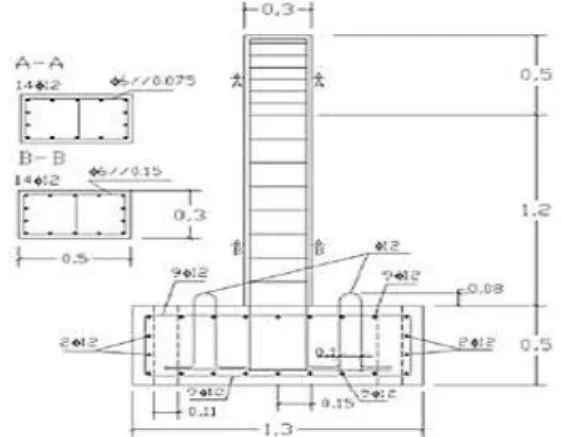
In the present study, a column with an undamaged ordinary concrete is used in the ABAQUS software. The introduced columns are subjected to the axial loading. Figure 1 shows the cross-section of the model in which the modeled steel and rebar are embedded. Figure 2 shows the conditions of samples and the model generated in ABAQUS. The axial load applied to the column is 100 KN and the load-displacement diagrams are plotted for the column and compared with the results of the paper. The modulus of elasticity of the concrete used in the present study is considered equal to 5500 MPa and the modulus of elasticity of steel is 200 MPa. Figure 3 shows the load-displacement diagram after applying the axial load to the columns, which is validated with the paper diagrams [17]. In the present study, the composite column
is modeled in the ABAQUS software. Therefore, the attachment of the steel layer to concrete is done similar to the studies of Badarloo [18] and the steel rebar is embedded in the whole concrete [19]. To evaluate the overall behavior of concrete, the modeling of Vulnerable concrete is used according to the research of Jafari et al., and the stress-strain curve of concrete in both tensile and steel modes is introduced into the software [19]. Figure 1 below shows the plan of the column model made in the laboratory, which was then modeled in ABAQUS software, as shown in Figure 2 [20].
···
Figure 1. Column with biaxial loading
Figure 2.Column with biaxial loading
Figure 3. Verification of composite columns in ABAQUS software Figure 3 shows the results obtained from the validation of
the composite steel-concrete column in the ABAQUS software. According to the results from Figure 3, it can be stated that the ABAQUS software is capable of properly modeling the behavior of concrete columns under the
pushover loading with a slight difference with the experimental results. The load-displacement diagram obtained in the laboratory modeling differs slightly from numerical modeling.
2.2. APPLICATION OF CYCLIC LATERAL LOADING
In this research, to study the behavior of CFT columnsunder the seismic loading according to the criteria, the cyclic load pattern shown in Figure 4 was used where the
load was introduced into the ABAQUS software as displacement-time [20-21].
Figure 4. Load-displacement diagram for concrete strengthened with steel rebar and steel jacket [20]
2.3. INTRODUCTION OF STUDY MODELS
In this study, eight steel samples with identical concrete-filled circular section and concrete grade of 30 Mpa, both with and without reinforcement were subjected
to the cyclic seismic loads and the results were compared with each other. The specifications of the materials in all the modeled samples are given
in Tables 1 and 2.
Table 1. Parameters calculated in sections [17]
Table 2. General specifications of samples with reinforcement 𝑻𝒕 (mm)
𝒃 (mm) h(mm)
𝒇𝒄/(N/𝒎𝟐)
Sample with reinforcement Type of applied
load
5 300*500
1700 2*107
1 Dynamic
10 300*500
1700 2*107
2
15 300*500
1700 2*107
3
20 300*500
1700 2*107
4
3. RESULTS AND DISCUSSION
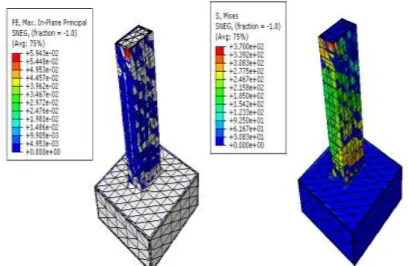
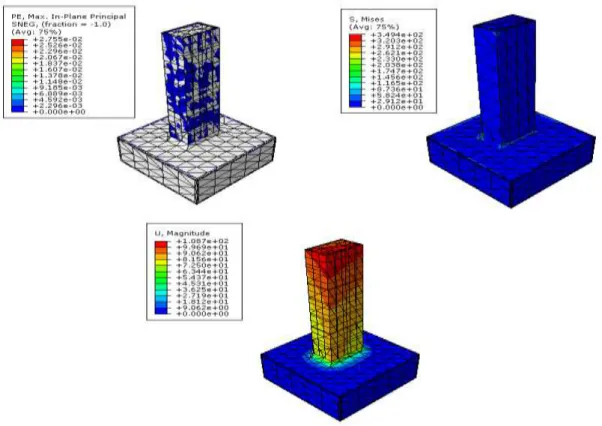
Figure 5 shows the stress and strain of the columns strengthened with the steel jacket. The ultimate force applied to the column was 298 KN, which is almost identical in the three generated models, but the displacement of the column with the higher thickness decreased to some extent. The stress induced in the concrete column was 320 MPa at its maximum level for the column with the steel layer thickness of 5 mm. Also, the maximum displacement of 100 mm was obtained in the column. The results indicate that the maximum stress
was applied at the points of column connection to the base of the columns and the points were selected as sensitive points for the strengthening. The maximum displacement was seen at the column head (load application) points in Figure 6 and the maximum stress was observed at the column end (column connection to base) points. Figure 7 below shows the amount of stress and strain in the steel layer, where the maximum value of 370 Mpa is equal to the yield stress of the steel layer.
-80 -60 -40
Time
𝒗𝒔 𝒗𝒄 𝑬𝒔 (N/𝒎𝟐) 𝑬𝒄 (N/𝒎𝟐) 𝒇𝒄/(N/𝒎𝟐)
···
Figure 5. Stress and strain induced in composite column (sample 1)
Figure 6. Displacement induced in composite column (sample 1)
Figure 8. Amount of damage to composite column (sample 3)
In the following, the results of three steel columns with the steel jacket of 15mm thick are shown for the comparison. Increasing the thickness of the steel layer causes the reduction of stress in composite columns and thus, the column fails later. As can be seen from the figures, the maximum displacement and stress and the stress and displacement contours are similar to the previous case, as shown in Figures 9-11, but the magnitude of the stress induced in the composite columns is different. There is also a decrease in the strain induced
in the column. Figure 9 shows the stress induced in the concrete columns. As seen in the figure, increasing the thickness of the steel layer improves the behavior of the composite column and enhances the ductility of the column under the applied load. The amount of stress induced in the whole composite column decreased, which indicates that the column with a higher thickness resists less stress. The strain induced in the composite column with more steel layer sharply decreased, reaching 0.45 time the initial value.
Figure 9. Stress and strain induced in composite column (sample 1)
Figure 10 shows the stress applied to the steel layer. As seen in the figure, the maximum stress of the steel layer is 0.76 time its initial value. Figure 11 below shows the parameters of damage to the composite column where the damage value reached 1.31 and it can be stated that the
concrete column damage reached 0.94 time the initial value. Generally, it is found that increasing the thickness of the steel layer leads to reduced damage to the column, reduced stress induced in the column cross-section and increased durability of the column in the cyclic loading.
···
Figure 10. Stress and strain induced in steel plate (sample 3)
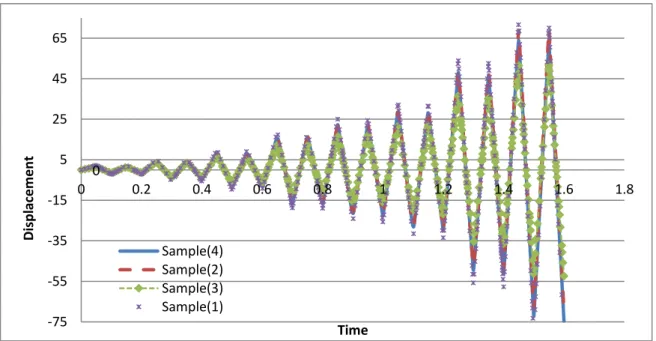
Figure 11. Amount of damage to composite column (sample 3) Figure 12 below shows the displacement-time diagram
for the composite column. The results of the diagram reflect the fact that increasing the column thickness up to 20 mm caused the lower displacement of the column in all loading cycles. In case the thickness of the steel jacket
is 20 mm, the column displacement reaches 0.69 time when the thickness of the steel jacket is 5 mm. Figure 12 shows the displacement results for the 4 samples modeled in the study.
Figure 12. Stress and strain induced in steel plate (sample 3)
0
-75 -55 -35 -15 5 25 45 65
0 0.2 0.4 0.6 0.8 1 1.2 1.4 1.6 1.8
D
isp
lac
e
m
e
n
t
Time
Sample(4) Sample(2) Sample(3) Sample(1)
3.45 0.0594 370 370 68 1
2.89 0.0435 360 320 59 2
1.318 0.02752 349 283 55 3
1.02 0.0185 328 223 47 4
The application of CFT and its behavior under cyclic and axial loading and have been experimentally investigated in previous research. Jothimani et al. examined the CFT column under the lateral and axial compressive load. The experimental studies were conducted on five samples with the exposed column base and the embedded column base connections. The considered parameters were the number of stiffener and embedment depth of CFT column. The force-displacement responses of the samples were compared with each other. Also, increasing the number of stiffeners led to the increased strength of the connections [22]. Among the issues that need to be examined in the present study is how to perform the study numerically. In this study, the column along with the column base was subjected to the cyclic loading, and the results showed that the stability of the column increased with increasing the thickness of the steel layer. The previous research analyzing the column under the cyclic lateral loading has shown that the CFT column strengthening leads to the increased loading capacity,
increased drift ratio, ductility, prevention of steel shell from local buckling, and increased energy absorption capacity. The cyclic displacement diagrams showed that the use of the steel portion of the section stiffener increases the energy dissipation [23]. In the present study, increasing the thickness of the steel layer leads to improved column performance. In general, previous research has shown that it is common to examine the CFT columns under the cyclic lateral loads due to the fact that the concrete structures are subjected to earthquakes during their lifespan. Wang et al. [24] investigated the cyclic seismic behavior of CFT columns and the results showed that the increased tube thickness can effectively improve the column performance. Other researchers, such as [25] evaluated the behavior of CFT columns under the cyclic and lateral loading to find the effect of stiffeners on the behavior of CFT columns in variable temperatures. As such, by exploring the effect of CFT layer thickness, the present study can be considered a comprehensive research in line with previous research.
4. CONCLUSION
It is important to use steel plates in concrete columns, because the stress resisted by the columns due to the use of steel jacket (high modulus of elasticity) leads to the improved behavior and reduced displacement of the column. Therefore, in case of using the equal area for the jackets, increasing the thickness leads to the improved behavior of composite columns. In this way, the structure would resist higher stress while having less deflection. As is evident from the stress contours in this study, the maximum column stress is applied to the column base and thus, the application of the steel jacket leads to the
reduced stress in the whole cross-section of the column. Increasing the thickness of steel layer to 20 mm caused the effectiveness of steel in controlling the behavior of the composite column to be increased and contributed to the absorption of applied force and hence, the column displacement was reduced to some extent. However, the column can exhibit more resistant to lateral loading by absorbing the applied stress. According to the above, the least displacement was observed in the column with a jacket of 20 mm thick. The results of the study showed that:
···
The use of CFT columns will allow
those involved in the strengthening to be
aware of the improvement made in the
column behavior under the biaxial
loading and will eventually lead to the
utilization of the columns as best as
possible.
The use of jackets with higher thickness
leads to the reduced damage in the whole
composite column, as the amount of
damage to the column in case of using
the jacket with the thickness of 20 mm
reaches 0.85 time the case when the
column with the jacket of 5 mm thick is
used.
The use of thicker jackets leads to
reduced stress and displacement of the
column, and due to the flexibility of the
composite
column,
the
column
deflection is reduced.
The plastic strain induced in the
composite column was greatly reduced
when using the thicker steel jacket. Also,
in case of using the steel jacket with the
thickness of 20 mm, the plastic strain
reached 0.25 time the case when the steel
jacket of 5 mm thick was used.
All the columns modeled in this study
were able to exhibit the maximum
strength under the cyclic loading, as all
the columns were able to resist the
applied load.
FUNDING/
SUPPORT
Not mentioned any Funding/Support by
authors.
ACKNOWLEDGMENT
Not mentioned by authors.
AUTHORS CONTRIBUTION
This work was carried out in collaboration
among all authors.
CONFLICT OF INTEREST
The author (s) declared no potential conflicts of
interests with respect to the authorship and/or
publication of this paper.
5. REFERENCES
[1] Yue C, Zheng Y. Shaking table test study on seismic behavior of underground structure with intermediate columns enhanced by concrete-filled steel tube (CFT). Soil Dynamics and Earthquake
Engineering. 2019 Dec 1; 127:105838. [View at Google
Scholar] ; [View at Publisher].
[2] Alimoradi S, Hable R, Stagg-Williams S, Sturm B. Strategies to Maximize P Recovery and Minimize Biochar Formation from Hydrothermal Liquefaction of Biomass. Proceedings of the Water
Environment Federation. 2017 Jan 1;2017(3):529-36. [View at
Google Scholar] ; [View at Publisher].
[3] Alimoradi S, Stohr H, Stagg-Williams S, Sturm B. Effect of temperature on toxicity and biodegradability of dissolved organic nitrogen formed during hydrothermal liquefaction of biomass.
Chemosphere. 2020 Jan 1;238:124573. [View at Google
Scholar] ; [View at Publisher].
[4] Hajjar JF. Concrete‐filled steel tube columns under earthquake
loads. Progress in Structural Engineering and Materials. 2000
Jan;2(1):72-81. [View at Google Scholar] ; [View at Publisher].
[5] Weng FC, Wang HS. Seismic behavior of steel beam to steel reinforced concrete (SRC) column connections. In Fourth International Conference on Advances in Steel Structures. China:
Elsevier; 2005 Jan 1:905-910 . [View at Google Scholar] ; [View
at Publisher].
[6] Liu J, Zhou X, Zhang S. Seismic behaviour of square CFT beam–columns under biaxial bending moment. Journal of
Constructional Steel Research. 2008 Dec 1;64(12):1473-82.
[View at Google Scholar] ; [View at Publisher].
[7] Hu JW, Kang YS, Choi DH, Park T. Seismic design, performance, and behavior of composite-moment frames with steel beam-to-concrete filled tube column connections. International Journal of Steel Structures. 2010 Jun 1;10(2):177-91. [View at Google Scholar] ; [View at Publisher].
[8] Xiao Y, Zhang Z, Hu J, Kunnath SK, Guo P. Seismic behavior of CFT column and steel pile footings. Journal of Bridge
Engineering. 2011 Sep 1;16(5):575-86. [View at Google
Scholar] ; [View at Publisher].
[9] Yadav R, Chen B, Yuan H, Lian Z. Analytical behavior of CFST bridge piers under cyclic loading. Procedia engineering. 2017 Jan
1;173:1731-8. [View at Google Scholar] ; [View at Publisher].
[10] Badarloo, B., & Jafari, F. (2019). Numerical Study on the Effect of Concrete Grade on the CFT Circular Column’s Behavior under Axial Load. Civil Engineering Journal, 5(11), 2359-2376.
[View at Google Scholar] ; [View at Publisher].
[11] Farajpourbonab E. Development of a new steel section for
reinforcing of steel‐reinforced concrete‐filled steel tubular
columns. Structural Concrete. 2019 Apr;20(2):689-706. [View at
Google Scholar] ; [View at Publisher].
[12] Liu S, Ding X, Li X, Liu Y, Zhao S. Behavior of Rectangular-Sectional Steel Tubular Columns Filled with High-Strength Steel Fiber Reinforced Concrete Under Axial Compression. Materials.
Scholar] ; [View at Publisher].
[16] Gao Q, Li JH, Qiu ZJ, Hwang HJ. Cyclic loading test for interior precast SRC beam-column joints with and without slab.
Engineering Structures. 2019 Mar 1;182:1-12. [View at Google
Scholar] ; [View at Publisher].
[17] Rodrigues H, Arêde A, Furtado A, Rocha P. Seismic rehabilitation of RC columns under biaxial loading: An experimental characterization. InStructures 2015 Aug 1;3: 43-56.
[View at Google Scholar] ; [View at Publisher].
[18] Badarloo B, Kari A, Jafari F. Experimental and Numerical Study to Determine the Relationship between Tensile Strength and Compressive Strength of Concrete. Civil Engineering
Journal. 2018 Nov 30;4(11):2787-800. [View at Google
Scholar] ; [View at Publisher].
[19] Jafari F, Badarloo B. Finite Element Analysis and ANFIS investigation of seismic behavior of sandwich panels with different
Scholar] ; [View at Publisher].
[23] Wang N, Zhou F, Xu H, Xu Z. Experimental study on steel-plate composite wall-to-foundation connections subjected to combined axial compression and cyclic lateral-force. Engineering
Structures. 2020 Mar 15;207:110205. [View at Google
Scholar] ; [View at Publisher].
[24] Wang J, Sun Q. Cyclic testing of Q690 circular high-strength concrete-filled thin-walled steel tubular columns. Advances in
Structural Engineering. 2019 Jan;22(2):444-58. [View at Google
Scholar] ; [View at Publisher].
[25] Lyu X, Xu Y, Xu Q, Yu Y. Axial compression performance of square thin walled concrete-Filled steel tube stub columns with reinforcement stiffener under constant high-Temperature.
Materials. 2019 Jan;12(7):1098. [View at Google Scholar] ; [View
![Figure 4. Load-displacement diagram for concrete strengthened with steel rebar and steel jacket [20]](https://thumb-us.123doks.com/thumbv2/123dok_us/8378769.2225817/4.892.125.779.80.433/figure-load-displacement-diagram-concrete-strengthened-steel-jacket.webp)