EXPLORING THE DESIGN AND SYNTHESIS OF CONJUGATED MATERIALS FOR APPLICATIONS IN ORGANIC ELECTRONICS
Samuel Barrer Anderson
A dissertation submitted to the faculty at the University of North Carolina at Chapel Hill in partial fulfillment of the requirements for the degree of Doctor of Philosophy in the Chemistry
Department in the College of Arts and Sciences.
Chapel Hill 2016
ii © 2016
iii ABSTRACT
Samuel Barrer Anderson: Improved Design and Synthesis of Conjugated Materials for Organic Electronic Applications
(Under the direction of Wei You)
Organic electronics offer a variety of advantages over traditional electronics, but their study is hindered by their difficult syntheses. Herein, I tackle several difficult targets of interest to the molecular electronics and organic photovoltaics disciplines, and in doing so I try to
illuminate what is and isn’t possible with this frontier of molecular design. I explore the viability of highly sterically-hindered systems enforce intramolecular π-π stacking and tune the
3-dimensional packing of otherwise flat conjugated molecules. In general, these molecules face many of the solubility issues that face large conjugated systems, while now also facing difficult bond formation because of steric bulk. In the case of building small molecule electron acceptors for organic photovoltaics, the electron deficient nature of these compounds also appears to inhibit the formation of these constrained systems.
Then, I explore the limits of divergent synthesis by attempting to incorporate two distinct divergent steps into the synthesis of an acceptor unit for photovoltaic polymers. This proved to be a challenging goal, and many issues with orthogonality and reactivity are addressed.
Ultimately, the development of this synthesis remains in progress because of
iv
quaterphenyl dithiols for a length-dependent study of electron transport. Then, we design a synthesis of similar oligophenyl dithiols that have sterically hindered rotations so that we can study the effect of inter-ring conjugation on electron transport through the monolayer.
v
vi
TABLE OF CONTENTS
LIST OF FIGURES ... viii
LIST OF SCHEMES ...x
LIST OF ABBREVIATIONS ... xii
CHAPTER 1: Background and Themes in Organic Electronics ...1
CHAPTER 2: Electron Acceptors on 3D Scaffolds for Polymer Solar Cells ...5
Introduction ...5
SECTION 2.1: Motivation ...7
SECTION 2.2: Proposal and Design Goals ...10
The Core-Linker-Acceptor Platform (CLAP) ...10
The Core: POSS ...11
The Linker: Convergent and Divergent Approaches ...13
The Acceptor ...15
SECTION 2.3: Preparing POSS via Convergent and Divergent Approaches ...16
SECTION 2.4: Preparing Acceptors for Cross Coupling to POSS ...18
SECTION 2.5: Utilizing Perylene Assymetric Diimides (PADI) as Acceptors ...20
SECTION 2.6: PADI Dimers To Break LUMO Degeneracy ...29
SECTION 2.7: Conclusions and Outlook...33
CHAPTER 3: Exploring Routes to A Doubly Divergent Triazole Synthesis ...37
SECTION 3.1: Background and Motivations ...37
vii
SECTION 3.3: Weinreb Amides as A Tool for Divergency ...44
SECTION 3.4: Optimizing the Huisgen Cycloaddition of Diacyl Acetylenes ...49
SECTION 3.5: Investigating the Use of Brominated Triazole ...53
SECTION 3.6: Conclusions and Future Work ...56
CHAPTER 4: Synthesizing Oligophenyl Dithiols for Self-Assembled Monolayers in Molecular Electronics ...60
SECTION 4.1: Background and Motivation ...60
SECTION 4.2: Synthesizing Terphenyl and Quaterphenyl Dithiols ...62
SECTION 4.3: Restricted Rotation Oligophenyl Dithiols ...67
SECTION 4.4: Other Approaches To Restricted Oligophenyl Dithiols ...72
SECTION 4.5: Future Work and Conclusions ...79
CHAPTER 5: Conclusions and Closing Thoughts...82
APPENDIX 1: METHODS ...87
APPENDIX 2: NMR SPECTRA ...96
viii
LIST OF FIGURES
Figure 1: Older designs for conjugated polymers, which often had
solubility and stability issues ...2
Figure 2: Suzuki Polycondensation of PPP...2
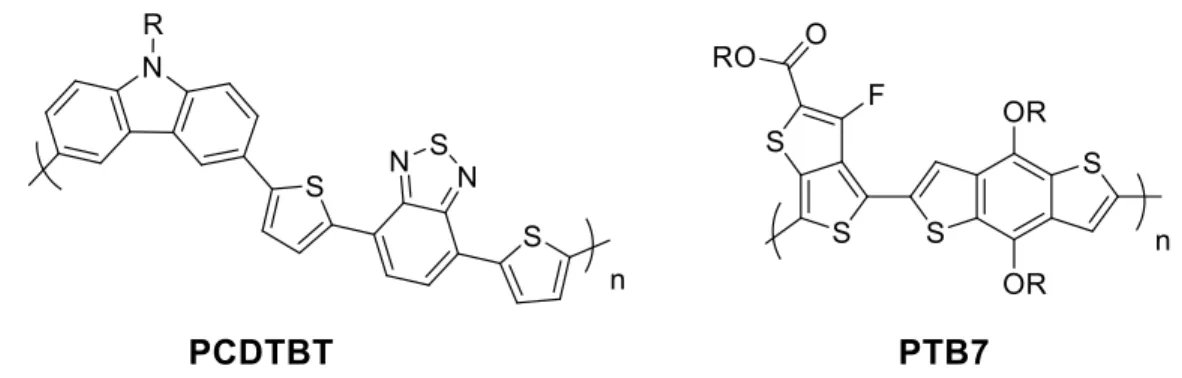
Figure 3: Complex conjugated polymers that are made possible with current syntheses...3
Figure 4: PCBM, the most popular electron acceptor used in PSC ...5
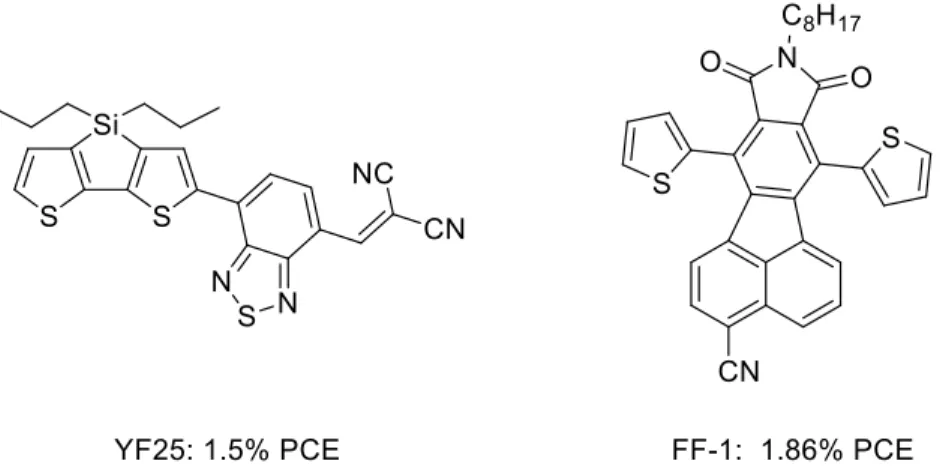
Figure 5: Two older non-fullerene acceptors, indicative of the planar designs common to c. 2012 ...8
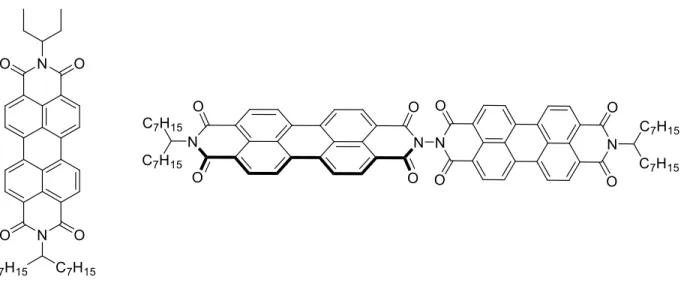
Figure 6: A perylene diimide and a twisted pereylene diimide dimer ...9
Figure 7: A generalized structure for CLAP ...10
Figure 8: T8-POSS, the proposed Core moiety, and our synthetic shorthand ...11
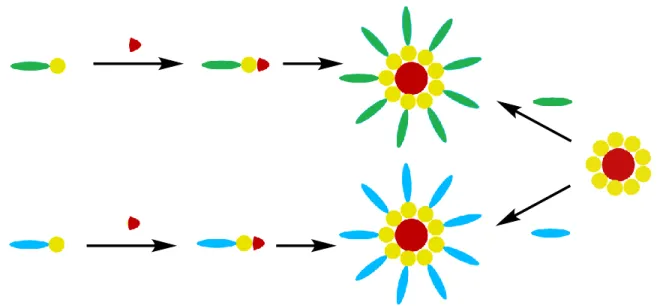
Figure 9: Left: a convergent approach to CLAP, where each Acceptor arm contains a Core precursor. Right: a divergent approach where a completed Core is functionalized with Acceptors. ...13
Figure 10: Proposed acceptor moieties for CLAP ...15
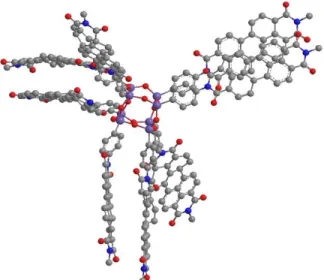
Figure 11: A molecular dynamics simulation of POSS-Ph-PDI, revealing π-π stacking motifs ...15
Figure 12: Liu and Troisi's proposal for a framework which may separate degenerate LUMO levels ...30
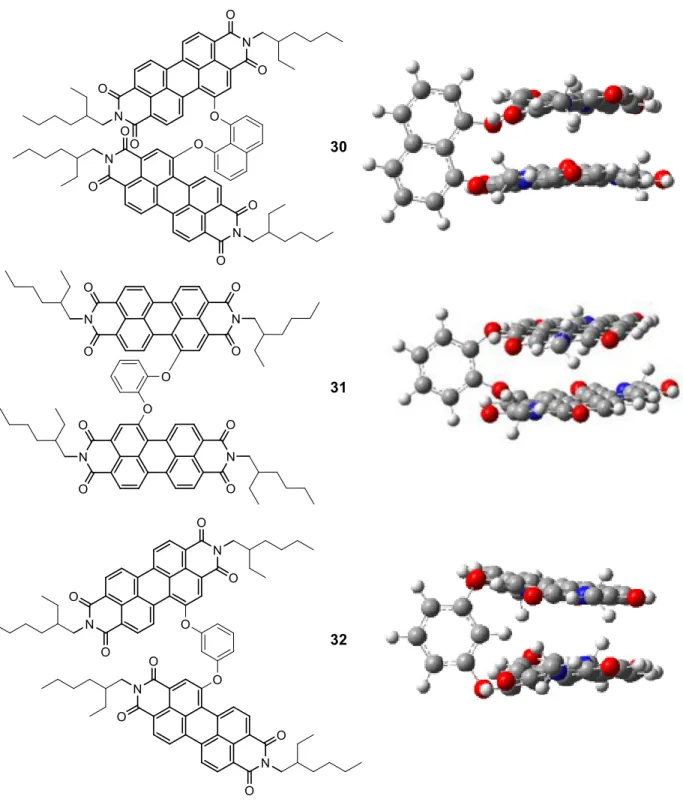
Figure 13: The structures and optimized geometries of three new acceptors which may break the LUMO degeneracy of PDI ...31
Figure 14: Tetraphenylethylene-PDI contorts into a propeller shape and achieves 3D electron transport. ...34
Figure 15: The 3D PDI-based acceptors made by Ie et al. ...36
Figure 16: One example of the Donor-Acceptor approach to OPV polymer design, using Stille Coupling ...37
Figure 17: Analogs of dithienyl benzotriazole (HTAZ) ...39
ix
Figure 19: Two possible retrosyntheses using the Weinreb ketone synthesis ...54
Figure 20: A) Diagram of nTP device. B) Representative 200 nm
diameter gold contacts, printed via nTP onto a dithiol monolayer ...60 Figure 21: The different arrangements of ortho-methyl substituted biphenyls ...72
Figure 22: Molecular modeling of the optimized dihedral angles and
x
LIST OF SCHEMES
Scheme 1: Three POSS-Aryl compounds that we used to determine how
viable the convergent approach would be. Only the first reaction worked ...16 Scheme 2: A divergent approach to PDI-POSS, through either
Stille or Kumada couplings ...19 Scheme 3: Preparation of PADI-Styrene and PADI-bromophenyl for
coupling to POSS via olefin metathesis, Kumada coupling, or hydrosilation ...22 Scheme 4: The Gabriel amine synthesis of PADI-hexene
for hydrosilation and olefin metathesis ...25 Scheme 5: Using Thiol-ene click chemistry to make PADI-POSS ...28
Scheme 6: Synthesis of PDI dimers ...32
Scheme 7: Li’s original divergent synthesis of three analogs
to dithienyl benzotriazole ...40 Scheme 8: A generalized scheme that modifies Li's synthesis
to allow two divergent steps. ...43 Scheme 9: Weinreb amides prevent overfunctionalization by forming
a stabilized tetrahedral intermediate that is stable until workup ...45 Scheme 10: Applying Weinreb amides to the divergent
synthesis of benzotriazole analogs ...46 Scheme 11: “Click-first” routes to triazole-diamide (54) ...49
Scheme 12: Deprotecting the methylpivalate as another
approach towards divergent target (54) ...50 Scheme 13: A new route to the diaryl benzotriazole precursor. ...54
Scheme 14: A method of activating dibromotriazole for
activating the second bromide for Grignard activation...57 Scheme 15: An alternate divergent synthesis with a more robust protecting group ...58
Scheme 16: A quick route to quaterphenyl dithiol ...63
Scheme 17: A route to a protected quaterphenyl dithiol that
xi
Scheme 18: Our successful synthesis of protected oligophenyl dithiols ...65
Scheme 19: Our initial route to the restricted oligophenyl dithiols
used cheap methyl groups that would be removed before SAM formation ...68 Scheme 20: Partial mechanism of base-catalyzed Suzuki
couplings and the base-free Suzuki couplings with aryltriolborates ...70 Scheme 21: Using aryltriolborates to prepare protected oligophenyl dithiols ...71
Scheme 22: We next attempted a batch of atypical Suzuki
couplings from the literature ...74 Scheme 23: A route to restricted oligophenyl dithiols with fewer methyls ...75
Scheme 24: A synthesis of restricted oligophenyl dithiol that
works around thiophenol's reactivity with oxidizers like NBS. ...78 Scheme 25: A simple synthesis to restricted quaterphenyl, but
xii
LIST OF ABBREVIATIONS
BDT Benzodithiophene
CLAP Core-Linker-Acceptor Platform
DTBT Dithienyl benzothiadiazole, or polymers of BDT and it.
HTAZ Benzotriazole or polymers of BDT and dithienyl benzotriazole
FF Fill factor
FTAZ difluoro-benzotriazole or polymers of BDT and dithienyl difluoro-benzotriazole HOMO Highest occupied molecular orbital
JSC Short-Circuit Current
LUMO Lowest unoccupied molecular orbital NBS N-Bromosuccinimide
NDI Naphthalene diimide nTP nano-Transfer Printing
OLED Organic Light Emitting Diodes OPV Organic photovoltaics
OTFT Organic thin film transistors P3HT poly(3-hexylthiophene) PADI Perylene Asymmetric Diimide PCBM Phenyl-C61-butyric methyl ester PCE Power conversion efficiency PDI Perylene Diimide
xiii PPV Poly(phenylvinylene)
1
CHAPTER 1: Background and Themes in Organic Electronics
Organic electronics, as a discipline, have been gaining prominence since their first real successes in the mid 1980’s, when Ching Tang successfully produced an organic solar cell with a power conversion efficiency of 1%1 and, just one year later, produced the first organic LED.2 Since then, the field has grown to encompass a wide variety of pursuits, including organic photovoltaics (solar cells), organic LEDs, organic thin-film transistors,3 and electrochromic displays.4 However, at the root of each of these pursuits is the use of conjugated organic materials, either polymeric or crystalline, as semiconductors that are highly tunable and may offer cost reductions from expensive inorganic semiconductors like silicon.
Now, OPVs have progressed past 11% efficiency5 and OLEDs are commonly used in thin, bright smartphone screens. Thousands of researchers have worked over decades to realize these advancements and have uncovered design principles and limitations of these new, highly conjugated materials.
2
Figure 1: Older designs for conjugated polymers, which often experienced solubility and stability issues
The earliest prominent conjugated polymer was polyacetylene.8 While the first procedure for producing polyacetylene dates back to 1958,9 our ability to study polymeric conjugated materials was limited by polyacetylene’s sensitivity to oxygen and its low solubility.8 One method for polymerizing acetylene could produce films on a surface, but others made short-lived black flakes, and even these films were subject to high concentrations of embedded sp3
hybridized carbons that break conductivity.
Another approach was to create a stable, soluble non-conjugated polymer via more traditional polymerizations and transform this precursor into polyacetylene.8 One strategy eliminated the chlorides on PVC to form the alternating double bonds of polyacetylene.10 However, these processes had low conjugations because an extremely high yield, without side reactions, was needed to form the backbone.10 These approaches allowed researchers to better understand the optoelectronic properties of these new materials, but didn’t grant widespread success because of their limited scope and difficulty.11
3
However, in the mid-1990’s, the Suzuki coupling started to gain prominence as a means of polymerizing these conjugated systems, like the preparation of poly(para-phenylene) in Figure 2.12 At first this was just one more route to PPP, but by the mid 2000’s, the full promise of the Suzuki coupling (and related couplings like Stille, Heck, and Negishi) was revealing itself.
Palladium-catalyzed cross couplings opened up the door to the now dominant donor-acceptor paradigm of donor polymer design (See Section 3.1). The field has broadened from one dominated by a few, well known homopolymers (each with their own syntheses) to include a wide variety of donor polymers under more standardized connectivity. The “donor-acceptor copolymer” model, enabled by metal catalyzed cross coupling reactions, lends incredible flexibility to the field. Much of the work in OPV over the past ten years has been from the exploration of the large opportunity space offered by modular polymer precursors and OPV device layers.
Figure 3: Complex conjugated polymers that are made possible with current syntheses
4
With this view, we have continued to work on the development of new synthetic
schemes, or substantial improvements of old ones, that will yield new modular blocks systems in OPV.13,14
The projects in this work were made for producing targets of interest to study in polymer solar cells, but they also were intended to uncover new design paradigms in the synthesis of organic electronic materials. Thus, the projects are concerned with more than the production of enough of a single target to allow characterization. Of equal importance is creating a synthetic paradigm through which an entire class of compounds can be more easily studied.
5
CHAPTER 2: Electron Acceptors on 3D Scaffolds for Polymer Solar Cells
Introduction
Polymer solar cells (PSCs) are a promising technology on the cusp of commercial deployment because of their low materials and processing cost relative to traditional inorganic solar cells15,16. The most popular and successful PSCs are built on the bulk heterojunction (BHJ) design, where, typically, a polymeric electron donor is mixed with an electron acceptor to produce a complex, interweaving pattern of phases no larger than 20 nm in diameter. This arrangement, called a morphology, promotes good exciton splitting and current generation despite the low exciton diffusion length of conjugated polymer systems17-19. The power
conversion efficiency (PCE) is the primary value by which solar cells are judged and is defined as
𝑃𝐶𝐸 = {𝐽𝑆𝐶∗ 𝑉𝑂𝐶∗ 𝐹𝐹} 𝑃0
where JSC is the short circuit current, VOC is the open circuit voltage, FF is the fill factor that describes the loss in VOC and JSC under working device load, and P0 is
the efficiency of a reference cell.19 Each of these three variables can be tweaked with both device fabrication conditions and by tweaking the structure of the organic components.
Since its first synthesis in 199520, the fullerene derivative
6
employed as the electron acceptor21,22 because it offers excellent charge separation at the
interface and electron transport in bulk19,23. Because of PCBM’s good properties and its limited possibilities for functionalization, the vast majority of research in PSC’s (as of 2012) had focused on designing new donor polymers to match with PCBM. The library of donor polymer structures ballooned in the mid to late 2000’s as labs created and combined structures to tease out new trends and better efficiencies. PCBM’s dominance as the electron acceptor par excellence meant that while these polymers could be evaluated on a variety of intrinsic properties or device structures, the de facto means of comparison was based on their performance in PSC’s with PCBM.
This unintentional standardization was useful for testing early hypotheses about the effects of device and molecular structure and performance, but it came at a cost. Even if PCBM were the perfect acceptor, which it is not, the ubiquity of PCBM has a limiting effect on the growth of the field.
Some of PCBM’s properties work against the promise polymer photovoltaics hold over traditional, inorganic ones. PCBM is extraordinarily expensive, costing >$700/g (Sigma Aldrich, accessed 7/19/2016), which is problematic for devices whose stated purpose is to provide solar energy at lower costs. Tricky fullerene chemistry hampers the economies of scale that roll-to-roll solar cell production should provide.24 Additionally, the promise of tunable organic components is compromised. PCBM is barely tunable, with perhaps a half dozen viable analog candidates. Many of these only improve one or two of PCBM’s failings, like its low absorbance.
7
And regardless of how promising a donor appears based on molar extinction coefficients or hole mobility, if it fails to match PCBM’s energy levels and mix favorably with it, it can’t compete. Donors that do fit well with PCBM often make devices where VOC is limited to values below 0.8 V because donors must have a bandgap for catching visible light while being able to donate electrons to PCBM’s low-lying LUMO levels.
SECTION 2.1: Motivation
Thus, we became interested in applying our synthetic skills towards designing a
replacement system for PCBM that would be more tunable, more absorptive, and cheaper. We began researching leaving behind fullerenes entirely, which we deemed necessary to match the chemical variability of the donor polymers.
In 2012, there had been few attempts to develop new small molecule acceptors that offer a range of energy levels at a low cost. Because poor energy-level matching with a donor is both PCBM’s largest performance fault and the easiest to correct in organic systems, most novel acceptors manage to exhibit a higher VOC than PCBM-based cells. However, all of these acceptors still fail to surpass PCBM in overall PCE because of generally poor JSC and FF.
A typical small molecule acceptor might improve VOC by 20% over PCBM-based devices but achieve only a third or half of the JSC26, as both YF2525 and FF-126 do (Figure 5). Both of these studies used AFM to show that the device morphology was poor and processing problems resulted from the high crystallinity of these systems.
8
Many of these compounds excel at absorbing visible light but are unable to match the electron mobilities of PCBM. For example, acceptors based on perylene diimide (PDI), have shown significant recrystallization in the solid phase,28 leading to poor electron transport connections to the electrodes and decreasing the collected current.
However, some progress had been made towards designing away from high-crystallinity, planar non-fullerene acceptors. Narayan et al. dimerized PDI (Figure 6) and used steric
interactions to ensure that the two moieties were kinked at a 90˚ angle. This acceptor achieved a respectable 2.5% PCE, a 10-fold improvement over the PDI monomer.28 The authors
hypothesize that this design blocks excessive aggregation and that electrons may be able to travel along two axes, encouraging exciton splitting and charge collection.
Figure 5: Two older non-fullerene acceptors, indicative of the planar, small molecule designs
9
Figure 6: A perylene diimide and a twisted pereylene diimide dimer
At the same time, several theoretical investigations granted new insights into the unique properties of PCBM. Computational efforts predicted that systems with three dimensional electron diffusion (e.g., PCBM) favor exciton dissociation over 0D and 1D regimes (e.g., small molecules or polymers, respectively) because of the greater entropic term in the dissociated state21,29,30.
PCBM is known to have two additional unfilled orbitals within 0.3 eV of the LUMO level, and one study has found that all three of these states can be acceptors in a Marcus theory-style electron transfer from a common donor, P3HT. Rather than these additional states simply tripling the rate of exciton dissociation, these extra orbitals introduce an 18-fold rate increase because of the range of rearrangement energies that allow electron transfer23.
10 SECTION 2.2: Proposal and Design Goals
The Core-Linker Acceptor Platform (CLAP)
To address some of the deficiencies of small molecule acceptors as compared to PCBM, we proposed attaching planar electron acceptors to a small, spherical core that enforces π-π stacking interactions between the acceptor moieties (Figure 7). We hypothesized that this design should break the degeneracy in
the LUMO levels of the system, allowing for a synergistic rate improvement in the Marcus theory electron transfer from an excited donor23. Additionally,
the shape should radically change the packing of the acceptors from crystalline network to intercalation-based packing, which we expected to have several advantages. By prohibiting traditional small molecule crystallinity, we may increase the miscibility of the donor and
acceptor phases, creating better interfacial contact and smaller domain sizes which are crucial to efficient exciton splitting17,18,32. In the bulk, the intercalation regime may build a 3D transport network out of 0D molecules, further increasing the driving force for exciton splitting. Last, as this system acts as a platform for electron acceptors, it maintains the wide tunability that
chemical synthesis allows and PCBM lacks. Thus, it would be possible to build a large library of acceptors for matching a range of donor polymers and potentially giving new life to already discovered, but discarded, electron donors.
We further predicted that realizing the modularity central to this idea would require the development of a generalizable chemistry for connecting cores and acceptors. This linker could
11
be as small as the functional group that attaches the acceptor to the core. However, attaching a diverse array of acceptor designs may be eased by introducing a spacer, like a phenyl ring, which has separate chemistry for attaching to the core and to the acceptor.
Thus, the chemistry of connecting a range of acceptors to a pre-made platform might be standardized. If a novel core or acceptor cannot undergo the standard couplings, the linker unit might prove more adaptable to this change than the intricate design of the maintained acceptor or core, respectively. In short, the linker aids modularity.
Synthesizing these components, we arrived at a general design for new class of non-fullerene acceptors that we called the Core-Linker-Acceptor Platform (CLAP). This approach includes straightforward experimental controls. Solar cells fabricated with a CLAP compound could be directly compared to solar cells with the planar acceptor, un-functionalized core, or both. This allows us to examine our hypotheses about LUMO degeneracy and molecular packing without interference from the effect of additives.
Altering the core or even the linker moieties could tune the packing of the acceptors. The modularity of this system would enable the quantitative comparison and independent evolution of better cores, linkers, and acceptors. The Core: POSS
To realize this proposed platform, we began
investigating polyhedral oligomeric silsesquioxane (POSS) as a core (Figure 8). The most common form, POSS-8, is comprised of 8 silicon atoms, with each attached to 3 silicon atoms via oxygen linkers to form a cube-like cage. The resulting core is rigid, cheap, and stable to
12
prolonged exposure to heat, water, and light. Each silicon atom can be singly functionalized with a variety of groups, allowing for linkers and acceptors to be attached to the core in a
monodisperse fashion.
POSS and its production have been well studied in the literature. In polymers chemistry, incorporation of POSS units on side chains has improved the thermal stability of the polymer 33-35. Octal-functionalized POSS has seen limited deployment in the field of organic light emitting diodes. Here, fluorescent molecules are attached to POSS, and the system is found to improve thermal stability and spincoating over the bare fluorescent molecules34. Some linear, rigid aryl chains have found little to no interaction between the identical groups32,34,36, but other
investigations of polycyclic aromatics on POSS found a redshift of about 20-80 nm depending on the aryl substituent33,37. Together, these results show that the POSS core can encourage orbital overlap and tune optoelectronic properties with proper design.
Despite its apparent complexity, the production of POSS is facile from trialkoxysilane precursors. Aryl- or alkyl-linked trialkoxysilanes are readily available both commercially and synthetically. They can be prepared by palladium-catalyzed coupling between a trialkoxysilane and an aryl-halide, but a cheaper and equally effective route utilizes a carbon nucleophile that attacks tetraethoxylsilane via SN238. Acceptable nucleophiles include aryl and alkyl Grignards as well as lithium carbanions via deprotonation with LDA or lithium-halide exchange.
13
lacks free oxyanions, enabling easy purification via precipitation or silica plug. Thus, a wide variety of functionalized POSS molecules are accessible in high yields, with several reports of over 90% isolated yield.39
The Linker: Convergent and Divergent Approaches
With the synthetic ease of creating and attaching POSS to acceptors, both divergent and convergent approaches are available. In the former, a Linker functionalized with a
trialkoxysilane is condensed to form the POSS Core onto which the acceptor is attached. This strategy allows for one large batch of POSS to couple with a range of prepared acceptors, clearly an advantage for assessing a large library of candidates. This is the approach most used in Aryl-POSS research32-34,37.
Figure 9: Two approaches to a CLAP molecule. On the left is a convergent approach, where each Acceptor arm builds the Core. On the right, a divergent approach where a completed Core
is functionalized with Acceptors.
14
Thus, high-conversions are desired when attaching the acceptor to the CLAP system. However, in attaching an Acceptor-Linker pair to a POSS Core, the intended product is only obtained when eight Acceptors attach to a single POSS; this is important to regularly impart the steric crowding that we believe will lead to the semi-degenerate LUMO states we wish to study.
Statistically, this is unlikely. Even assuming that coupling is not hampered by the
creation of even bulkier sites (as the POSS becomes loaded with Acceptor), the yield of an octo-substituted POSS drop precipitously with reaction yield. A 1H-NMR showing 90% conversion of the POSS binding sites means that each site, considered individually, has a 90% chance of conversion. Finding a POSS core with all eight sites substituted has the odds of (0.9)8, or just 43% yield. Other calculated yields are included in Table 1.
While Stille couplings and other metal-catalyzed condensations have successfully been applied in step-growth polymerizations, which require a high yield to produce polymers with high molecular weight, these yields are dependent on the electronics of the substrate. As discussed in the introduction to Chapter 3, the monomers being cross coupled for these copolymers are designed to encourage high-yielding Stille polycondensations, which will not necessarily be possible with the couplings needed for CLAP.
In the convergent approach, the trialkoxysilane-functionalized linker is attached to the acceptor before the formation of POSS. Because POSS is easily purified from its byproducts and forms in high yield, the losses of the divergent approach are not observed, and yields for
Table 1: Isolatable POSS-R8 yields from a given reaction conversion
Functional Group Conversion
98% 95% 90% 75%
15
preparing POSS cages can be above 90%.40 However, the Acceptor moieties must be subjected to additional synthetic alterations, not all of which will be compatible with the Acceptor, which makes preparing a wide library of compounds more difficult. As the reliability and ease of both the convergent and divergent approaches has implications for the viability of CLAP, we
investigated both. The Acceptor
Perylene diimide (PDI) and
naphthalene diimide (NDI) (Figure 10) are among the more common acceptor units used to produce non-fullerene acceptors
because of their strong yellow to blue absorbance, good solubility, and high electron
mobility7,27,41. Their polycyclic aromatic design will allow the π- π stacking that we seek to exploit to break LUMO degeneracy. These traits make PDI in particular a promising target that satisfies many of our design goals for CLAP.
An energy-minimization and molecular dynamics calculation of a Perelyne CLAP system in ChemDraw 3D predicts a slip-stacked structure that we hypothesize should break LUMO degeneracy (Figure 11). This model also shows the potential for significant intercalation of donor polymers or other CLAP chains for transport, which will be important for maintaining electron transport
Figure 10: Proposed acceptor moieties for CLAP
16 while preventing aggregation.
Additionally, perylene possesses two positions that can be functionalized with a Linker: the bay position of the aromatic region and the nitrogen in the imide functional group. This allows for an investigation of acceptor shape on the π-π stacking and morphology of CLAP, which may provide crucial insights for further design.
SECTION 2.3: Preparing POSS via Convergent and Divergent Approaches
As discussed in Section 2.3.3, polyhedral oliomeric silsesquioxanes (POSS) were a promising Core group because they can be prepared either before or after the attachment of our Linker and Acceptor. These two approaches have their advantages and disadvantages, but the divergent approach had one clear fault: isolation of a high purity product with minimal waste. Because of the statistics presented in Table 2, we began our investigation by focusing on the convergent POSS approach.
Scheme 1: Three POSS-Aryl compounds that we used to determine how viable the convergent approach would be. Only the first reaction worked.
17
By forming a Grignard reagent from bromothiophene, we successfully prepared 2-triethoxysilanethiophene (2) in 76% yield.42 Subjecting this analog to the same condensation conditions yielded a thick, black solution that no longer had the ethoxy signals on crude 1 H-NMR. Thus, we believe it likely that while the ethoxy groups were hydrolyzing, the result was a cross-linked siloxane polymer rather than a closed POSS cage.
We were stymied by this unforeseen difficulty until we found a report by Bassindale et al. which attempted to prepare a variety of alkyl-POSS analogs using similar precursors and under the same conditions.43 For their condensation with fluoride, they observe 95% yields with cyclopentyl triethoxysilane, but only 26% with the similar isobutyl triethoxysilane. Phenyl triethoxysilane forms POSS cages in 49% yield, but related vinyl and allyl systems get less than 5%. Thus, the high yields we anticipated with the convergent approach may not be assured.
The success of the original octaphenyl-POSS was dependent on a solvent system that would solubilize all of the incomplete cages while forcing the completed cages to precipitate and push the reversible reaction forward. Thus, it is likely that each new Acceptor-Linker-Siloxane precursor would require a new solvent system to be optimized for it.
At the same time, results from other experiments were also casting doubt onto the viability of a convergent approach. Our attempts to produce (3) from its siloxane precursor produced a mixture that, on 1H-NMR, appeared to have reacted at multiple sites. It is possible that the basic conditions also reacted with the alkyl bromide moiety, producing alcohols and other byproducts. This suggests that the cage-forming conditions may not be orthogonal with Acceptors containing base-sensitive functional groups like halides, amides, and imides.
18
completed POSS cage as a solid, gooey white solids, possibly incomplete cages, were captured at only 15% yield. Our attempts to force the completion of this reaction with a shorter pathlength to the Dean-Stark Trap, adding 4Å molecular sieves to the trap to further dry the system, and adjusting reaction concentration and time did not enhance yields.
The convergent route had been an appealing option because it promised to waste less of the valuable Acceptor unit than the divergent route, but the apparent need for large scales are troubling. Only 1-2 mmol of Acceptor is needed to fully characterize a compound for its optoelectronic and photovoltaic properties, and the rest would be wasted. Thus, we pivoted our time towards producing a Core-Linker compound that would readily couple to an Acceptor.
To make use of the octaphenyl-POSS (4) that we generated above, we attempted to brominate it so that cross coupling reactions would have a scaffold. However, refluxing 4 with molecular bromine, iron tribromide in chloroform produced no change in the aryl signals. We were able to successfully reproduce an iodination that requires a solution of iodine monochloride be kept at 40˚ C for 24 hours (Scheme 2). We isolated (11) in a 35% yield which contained 99% para selectivity, consistent with the literature, which went on to use this compound in a Stille coupling.40
However, this process was tedious and because only several milligrams of POSS were needed for each divergent coupling reaction, we decided to rely on commercially available POSS compounds from Gelest for the majority of this study.
SECTION 2.4: Preparing Acceptors for Cross Coupling to POSS
19
monobrominated species we needed was scant. Because perylene diimides (PDI) like (8) don’t react with NBS, a softer brominating agent, molecular bromine must be used. Unfortunately, molecular bromine is dense – the neat liquid is 19 M – and it fumes, so measuring and maintaining an exact stoichiometric ratio is not feasible. However we found that we could enhance monobrominated yields to 35% by instead refluxing (8) in dichloromethane.
Scheme 2: A divergent approach to PDI-POSS, through either Stille or Kumada couplings
20
Against our desire to limit the number of lossy synthetic steps onto the POSS core, we subjected (11) to isopropylmagnesium chloride and achieved 80% activation (by 1H-NMR of the quenched reaction). Unfortunately, the PDI bromide (9) also failed to couple under Kumada coupling conditions with this activated POSS.
Finally, we attempted to perform a Heck coupling between octavinylPOSS (OVP) and (9), similar to a literature preparation of a PDI polymer, but no reaction occurred.48 Likely this was because of the electron deficiency of the vinyl siloxane as opposed to Mikroyannidis et al.’s electron rich styrene.48
From these attempts, it appears that the bromide is too deactivated by the electron deficient aryl rings to react effectively. More harsh activations, such as lithium halide exchange, were not available because of the electrophilic imide moieties, so we moved towards exploring the imide positions as a means of functionalization.
SECTION 2.5: Utilizing Perylene Assymetric Diimides (PADI) as Acceptors
Generally, the imide positions on PDI are used to attach alkyl chains that maintain solubility and prevent aggregation. It may be possible to replace one of these solubilizing chains with a Linker, while the second imide continues to provide solubility.49
The preparation of perylene asymmetric diimides (PADI) features several challenges. Amines can easily attack the electrophilic anhydride species, and then high temperatures (above 100˚ C) are required to reclose the ring and form the imide, because the amide must perform intramolecular attack on the carboxylic acid and displace a hydroxide leaving group.
21
first amine (with its long alkyl chain) attaches, it increases the molecule’s solubility and therefore its likelihood to be attacked by a second amine.
We investigated a variety of methods for hydrolyzing either the symmetric di-anhydride or the symmetric diimide to introduce asymmetry. However, we ultimately found the most reliable success with a statistical, one-pot addition of both amines simultaneously. Craig Hawker’s group reported an improvement on the acetic acid method we used above, in which imidazole (a better solvent and weaker acid) is heated to 140 ˚C, just above its melting point with the amines and perylene dianhydride.50 A bomb flask is used to prevent the lower boiling point amines from leaving the reaction.
While this method produced two symmetric diimides that were not the desirable product, our systems generally had a range of solubilities that made separation via column
chromatography quite simple. Generally, the PDI with two solubilizing chains eluted quickly in chloroform, followed by the mixed PADI species. The PDI with two Linker units was generally so insoluble that it could be filtered out or remained as baseline in the column.
In these syntheses, we quickly realized that the 2-ethylhexylamine used for the
22
23
To provide that branching as well as a long alkyl chain, we prepared (15) from
commercially available heptadecan-8-one. Following the literature,51 we received a 48% yield by stirring with sodium cyanoborohydride with ammonium acetate in methanol at room temperature for 2 days, but yields increased to 90% when the temperature was raised to a slow reflux. We used this alkyl chain to solubilize all PADI molecules from this point on.
We wanted the Linker to maintain the rigidity of perylene, and also found
4-bromoanisole to be commercially available. Thus, our first Acceptor-Linker target was (16), which we produced in 43% yield. We planned to utilize the couplings that failed to work with the bay-substituted PDI bromide (9), but similar patterns developed. Magnesium metal and
isopropylmagnesium chloride failed to activate the bromide on the phenyl ring of (16). Palladium-catalyzed Heck couplings with octavinylPOSS (OVP) did not appear to react.
Using 4-aminostyrene, we then prepared the alkene (17) in 49% yield. We anticipated its use in two potential couplings: a platinum catalyzed hydrosilation and an olefin metathesis.
For the hydrosilation to produce (20), we purchased the POSS compound (13), which contains electron-rich silanes activated for coupling on each of the siloxanes that form the polyhedral siloxane core.52 Unfortunately it only produced black solutions (likely oxidized platinum) and no apparent reaction by 1H-NMR. Meanwhile, a test reaction between 1-decene and (13) produced 90% conversion by 1H-NMR.53 It is likely that the perylene moiety of (17) interfered with the hydrosilation.
24
might reduce the number of Acceptors that a Core could hold. Furthermore, a deactivated catalyst ensures that the product peaks, once formed, will be stable and will not equilibrate back towards reactants.
While a test olefin metathesis between OVP and 3,4-dimethoxystyrene in dry
dichloromethane produced octa-functionalized POSS in 95% isolated yield, applying the same conditions to (17) failed to produce a reaction. 1H-NMR analysis of the crude mixture indicated that not even the dimers of either species formed. Replacing the 1st generation Grubb’s catalyst for the more reactive Hoyveda-Grubb’s catalyst did not improve yields, indicating that both reactants are significantly electronically deactivated.
Additional attempts to run both of these couplings with another Acceptor that we
25
Scheme 4: The Gabriel amine synthesis of PADI-hexene for hydrosilation and olefin metathesis
We hypothesized that an olefin separated from the Acceptor by an alkyl chain would make the reactive site more electron-rich, and thus activated, while easing the issue of sterics, which may have hindered full functionalization of the POSS. We found no short-chain amino-alkenes that were commercially available, but used a Gabriel amine synthesis to produce one from, 6-bromohexene. Potassium phthalimide performs SN2 on the bromide in DMF to form (22) in 85% yield. The phthalimide ring is then broken open by application of hydrazine hydrate to form the amine, (23), in 92% yield.
26
in 48% yield. Attempts to synthesize (25) failed in a similar fashion to the styrene-based hydrosilation attempt to make (20).
We proceeded to submit this olefin to Grubb’s 1st Generation Catalyst in OVP in dry dichloromethane. After stirring for 3 days, some homodimers of (24) were observed but not any cross coupling moieties indicating formation of (26), and the catalyst appeared to have lost reactivity. Using freeze-pump-thawed dichloromethane improved the reaction and increased the catalyst’s utility out to five days.
Over these days, the reaction of monomer (24) could be tracked on 1H-NMR by its terminal alkene peaks, while the reaction of OVP’s olefins could be tracked by the diminishment of a cluster of peaks around 6.0 ppm. In response, three new olefin peaks emerged: two for successfully cross metathesis and one for the symmetric protons in the homodimer.
Having confidently identified the major components of this mixture, we attempted to resubject the mixture to more catalyst and freeze-pump-thawed dichloromethane, which once again slowly consumed the homodimers and increased the conversion to cross coupling.
At this point, the reaction had been running for over a week and we were unable to achieve total substitution of the Core. By 1H-NMR, there were approximately 6.7 PADI moieties per Core, about 84%, which we decided would be at least enough for an initial test to check the viability of this molecule design.
27
solid phase and eluent are the same. Additionally, the mediocre solubility of these systems leads to broad bands on the column, preventing fine-tuned isolation.
Recrystalization proved unsuccessful and we attempted to use the low solubilities in this mixture for a Soxhlation. This technique is used frequently to purify conjugated polymers. In a soxhlation, several hundred milliliters of solvent are refluxed, and the hot, condensed solvent is dripped onto a cellulose thimble containing the impure solids. When enough solvent has
accumulated around the thimble, a siphon transfers the hot solvent along with some of the sparingly soluble impurity, to the refluxing flask below. Effectively, the system uses minimal solvent to preform repeated hot filtrations in a series of solvents that leave behind an insoluble, increasingly pure product.
As expected, all chlorinated solvents dissolved both the dimer and the POSS mixture too well to separate them. Hexanes seemed to remove some minor byproducts but neither of the main compound types. THF worked too well, but methanol developed the slight red color indicative of a dilute PDI solution. Swapping to isopropyl alcohol favored extracting the dimer, but not in a high enough ratio to isolate product.
Finally, we attempted to react the homodimer into a more soluble species, like the monomer had been. To a flask of freeze-pump-thawed dichloromethane, the product mixture, and Grubb’s catalyst, we added 4-bromobutene to encourage the formation of monomers. Using a more electron-rich olefin will almost certainly irreversibly metathesize with the remaining siloxane olefins, capping our yield at 84%, but should also encourage the reaction of the homodimer towards more soluble species. Unfortunately, even when 2 equivalents of
28
to isolate the polyfunctionalized POSS mixture, and applying the impure mixture in a polymer solar cell was deemed not likely to produce meaningful feedback.
Scheme 5: Using Thiol-ene click chemistry to make PADI-POSS
We then explored the possible utility of the radical-initiated thiol-ene click reaction, but no suitable octathiol-POSS was commercially available. Standard preparation of a terminal thiol from a terminal alkene involves a click reaction with either thioacetic acid or thiourea, both of which can be hydrolyzed to produce the thiol under basic conditions. However, our concerns over the high base-sensitivity of POSS lead us to avoid preparing octathiol-POSS ourselves from OVP.
Instead, we sought to prepare a PADI-thiol species, (28). Test reactions with propane thiol and thiophenol and OVP showed that alkyl thiols could almost quantitatively convert to the thioether, though arylthiols degraded, lending credence to the choice to use a hexanethiol linker.
When we combined recrystallized AIBN, thioacetic acid and the olefin (24) in chloroform, the product mixture contained several inseparable products and, on 1H-NMR, broadened perylene signals indicative of an unintended reaction of the perylene moiety.
29
with 5 mg of each of the following Acceptors: diethylhexyl perylene diimide (7), diethylhexyl naphthalene diimide, DTBT, and no additive. Of the additives, only PDI showed degradation, and the conversion of decene was low in that flask. It appeared that PDI is unstable to radicals.
Toluene is also sometimes applied during click reactions, so we replaced chloroform for it and received a clean, quantitative conversion to the thioester overnight. This reaction proceeds more slowly than radical-based thiol-ene click reactions often do, but it the high conversion is worth it. Deprotection was attempted by adding acetyl chloride to a solution of the thioester in methanol, but the resultant mixture was messy and difficult to purify, as might be expected for the small change in molecular weight. Still, a crude 1H-NMR showed about 60% conversion to thiol (28).
However, this new thiol species was no longer soluble in toluene, and any attempts to perform a thiol-ene click with octa-vinylPOSS resulted in no reaction. PDI systems are typically only soluble in chlorinated solvents (e.g., CH2Cl2, CHCl3), aromatic solvents (e.g., benzene, toluene), and are sparingly soluble in strongly polar solvents (e.g. DMF), so there were few options for solvents that might allow this click reaction to proceed, and none did so.
SECTION 2.6: PADI Dimers To Break LUMO Degeneracy
30
While the CLAP approach seemed to be burdened by its own weight, we sought to simplify by focusing only on the simplest hypothesis: can we improve exciton splitting in non-fullerene acceptors by breaking LUMO degeneracy?
We deemed Troisi’s design,23 in which two Acceptors are attached to a single methylene unit to encourage π-π overlap, to be synthetically incompatible with PDI and likely many other
Acceptors. However, a rigid framework, such as a ring, would still be needed to enforce the proper molecular overlap. Additionally,
the hexene chain that had been used on the more successful CLAP efforts would have to be abandoned so that the two acceptors would be close to the bridge and forced into our desired geometry.
Figure 12: Liu and Troisi's proposal for a framework which may separate degenerate
31
32
We selected benzene and naphthalene-based bridges because they provided commercially accessible reactants, rigid structures, and multiple geometries. In particular, we were interested in the highly co-planar geometry induced by the naphthalene bridge system, as shown in Figure 13.
We created a scheme to couple the monobrominated PDI species (8) to 1,2-catechol, 1,3-catchol, and 1,7-Naphtalenediol viaa nucleophilic aromatic substitution, which should be favored by the electron deficient PDI system. We subjected (8) to a solution of potassium carbonate and diol in NMP at 100 ˚C.54 This solution rapidly turned a dark green and neither product nor perylene diimide was not recovered.
Scheme 6: Synthesis of PDI dimers
33
A polar, aprotic solvent like NMP should be necessary to allowing the deprotonation of the phenol and its subsequent attack onto the perylene. Supplementing the NMP with 5 parts toluene raised solubility but did not prevent the degredation of (8). Neither DMAc nor THF, both polar aprotic solvents, dissolved the PDI, so no reaction occurred.
Eventually, a 1:4 solution of DMF:toluene achieved solubility of both the hydrophobic perylene and the ionic, depronated phenols, yielding modest couplings. Attempts to enhance the yield by using additional equivalents of the perylene (8) and adjusting the reaction temperature and duration achieved the mono-coupled intermediate with 1,3-catechol, but failed to achieve more. Viswanath et al. report making this same mono-coupled system on their route to an assymetric system, and perhaps it is telling that they do not mention isolating any of (32).55
We expected the 1,3-catechol system to be the least sterically demanding of the three targets, so these results ultimately match those of the other couplings we discussed in this chapter, particularly the olefin metathesis. The system’s unwillingness to produce even some product makes it likely that deactivated electronic and bulky steric factors reproducibly prohibit the formation of these induced-geometry, π-π overlapped Acceptor systems.
SECTION 2.7: Conclusions and Outlook
This work details our more fruitful attempts, out of a larger set of mostly unremarkable failures, to create a synthetic route to prepare a fullerene-mimicking electron acceptor for organic photovoltaics. While no particular outcome yields a strong conclusion, together they share clear, recurring themes.
34
solubility in toluene and prevent reactivity. Similarly, the purification of multiple of these compounds, including the PADI-POSS mixture, may have been possible with the ability to use hexanes and ethyl acetate as co-eluents in column chromatography.
Perylene diimide is a promising acceptor with low-lying LUMO energy levels, but this same electronic property often lies in conflict with the reactivity needed to derivatize it. For all of the Linker chemistries we report here that are conjugated with the PDI ring, neither
magnesium nor palladium is shown to effectively activate Grignard reactions or metal-catalyzed cross couplings. Separation of the Linker provided additional reactivity, as in the hexene moiety, but difficulties remained.
35
Since we stopped work on this project, other researchers have continued to explore some of the hypotheses that drove our study. It would be fitting to finish by taking a look at what has been proved and what remains to be investigated.
One study investigates using tetraphenylethane (TPE) as a core to hold four PDI units, which are rotated 50˚ out of plane to produce a propeller-like shape.56 They achieved a VOC of 0.91 V, about what would be expected, but managed to push JSC to an impressive 11.7 cm2V-1s-1. The domain size reduces to just 20 nm, and the mobility increases by an order of magnitude over a PDI-dimer system to practically match PCBM. Both of these properties likely contribute to the high current. However, they do not see any redshifting of the absorption spectrum, indicating that the cores are not electronically interacting with each other.
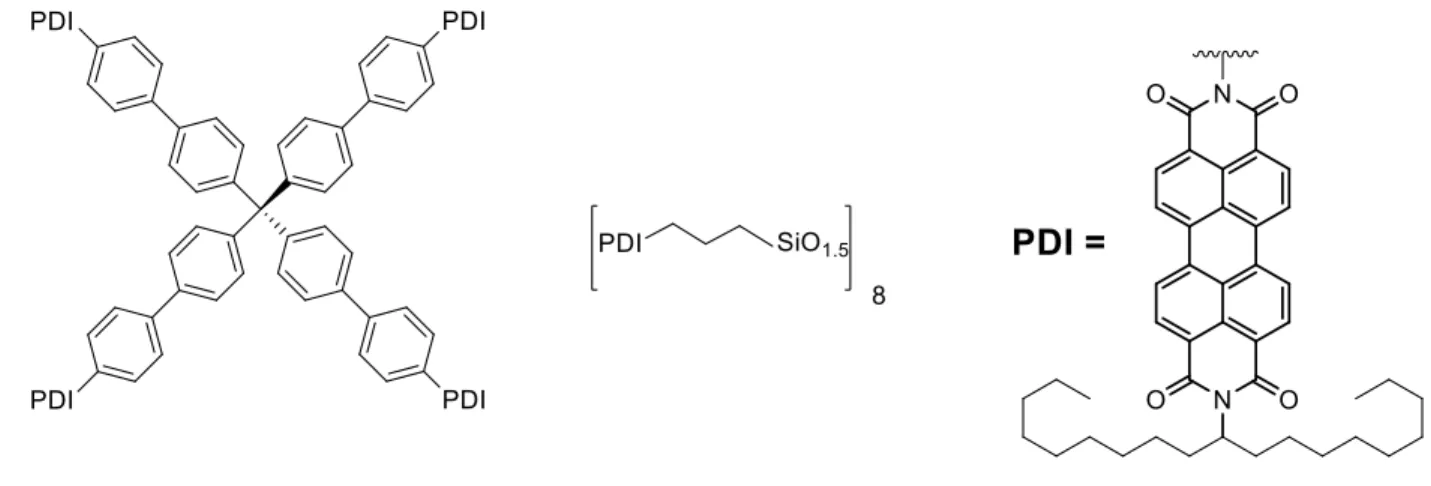
Then, Ie et al did what we could not by producing two perylene-linker-core systems, including one with POSS.57 The first molecule attaches four PDI units to a tetra-biphenyl carbon core (Figure 15) that fails to change the absorption spectrum or enhance the photovoltaic
properties over the monomer (Figure 15). The POSS species, made by a convergent approach that we backed away from early on and purified with prepatory GPC, shows a significant broadening in its absorption spectrum. This and other studies indicating the formation of H-aggregates, meaning that the PDI orbitals do interact intramolecularly. However, these properties only lead to a PCE of 0.18% with the POSS system, a modest gain over the tetramer and
36
Figure 15: The 3D PDI-based acceptors made by Ie et al.
Work towards a non-fullerene electron acceptor for OPV continues. It seems more certain now that ever that the crystallinity and morphology issues that plagued earlier acceptors can be solved by the application of 3-D topologies. However, these topologies are often based on twisted or spiro acceptor systems.58-60
Ie et al.’s work casts doubt on the utility of Troisi and Lu’s proposed acceptor design that was supposed to enhance exciton splitting by breaking the degeneracy of the LUMO levels. Furthermore, our efforts point to the extreme difficulty in achieving this molecular design.
37
CHAPTER 3: Exploring Routes to A Doubly Divergent Triazole Synthesis
SECTION 3.1: Background and Motivations
The active layer of polymer solar cells (PSC’s) generally consists of two components: an electron-rich conjugated polymer (the donor) that gives excited state electrons to an electron poor small molecule or polymer. Generally, the all-polymer systems underperform relative to the polymer-small molecule systems, largely because of the success of fullerene-based small
molecule acceptors.
Because of the difficulties in replacing fullerenes as acceptors (see Chapter 2), many researchers have devoted their attention and effort to the design and synthesis of the polymeric donors. Early polymer systems, up until the success of P3HT in 2002,61 were simple
homopolymers, like those shown in Figure 1. However, a growing trend in polymer design in the late 2000’s moved towards the design of push-pull (or Donor-Acceptor) copolymers,62 which has been the source of nearly all high performing polymer donors since.
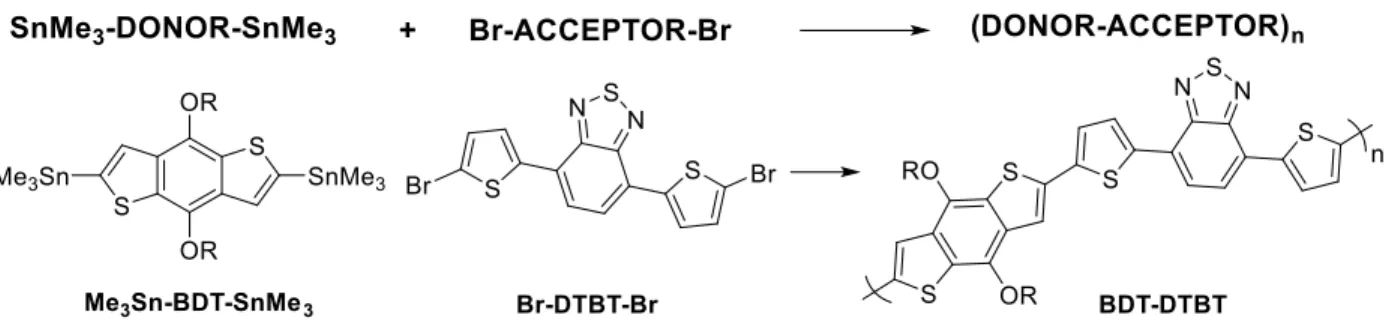
Figure 16: One example of the Donor-Acceptor approach to OPV polymer design, using Stile Coupling
38
alternating copolymer (Figure 16). This design, similar in goals but distinct from the BHJ physical mixing of a polymeric donor and fullerene acceptor, produces a polymer with several advantages over homopolymers.
The DA design gives greater control over the HOMO and LUMO energy levels, as well as the corresponding bandgap. In homopolymers, the selected moiety had to be carefully tuned to have both a low enough bandgap to absorb the visible spectrum, but also have a low-lying
LUMO to effectively donate electrons to the fullerene-based electron acceptor. In the DA approach, the LUMO of the polymer is mostly centered on the electron-deficient Acceptor moiety, and the LUMO energy level is largely dependent on the Acceptor’s LUMO level. The HOMO level of the polymer tends to spread out over both moieties but the energy level is generally close to the Donor. Thus, a high degree of modularity is allowed to tune the bandgap and electron donating capability of the donor polymer.
Also, many of the palladium-catalyzed cross couplings that are employed to form the carbon-carbon bonds that make up the conjugated polymer backbone work best when coupling an electron-rich and electron-poor species to each other. For example, in Stille couplings, placing the trialkyltin moiety on a more electron-rich component improves yield by encouraging
transmetallation, while placing the corresponding halide on an electron poor species improves yield by encouraging oxidative addition. With DA copolymers, both monomers can be easily symmetrically functionalized (with either halides or organostannanes, respectively) and the electron poor and rich natures of these monomers can accelerate the synthesis as well as produce a polymer with highly desirable properties.
39
approach also allowed the field to develop many theories about what features make for a high quality donor polymer, including proper side chain length and branching,63 combining a weak donor with a strong acceptor, and enforcing planarity to increase conjugation length.62
However, as organic photovoltaics have matured as a field, it has naturally drifted towards engineering concerns, where smaller tweaks (with weaker trends) grow in importance when selecting molecular candidates. In earlier, more strongly hypothesis-driven work, one or two alternate monomers might be painstakingly prepared through different synthetic methods using separate batches of material. Often only less important tweaks, like the branching and length of the solubilizing chain,63 were accessible in a divergent manner. To this end, we were curious in expanding what modularity was possible with common monomer units from a single synthetic path.
Figure 17: Analogs of dithienyl benzotriazole (HTAZ)
HTAZ and FTAZ (Figure 17) have been known as useful acceptor units in donor
polymers since 2010,64 with FTAZ showing unique thickness-dependent properties and a PCE of over 7%.65,66 After studying the impact of fluorine content and position on BDT-TAZ based polymers,67 Wentao Li, a former member of the You group, turned his attention to other TAZ analogs which would modify the backbone of the polymer itself.
pyradine-40
analogs of DTBT (related to HTAZ) have been shown to decrease the bandgap and cyano groups offer less powerful electron withdrawing effects than fluorine.
Scheme 7: Li’s original divergent synthesis of three analogs to dithienyl benzotriazole
41
In (37), Li then forms the triazole ring via a Huisgen cycloaddition of the symmetric alkyne and azido methylpivalate. Internal alkynes cannot be reacted with the inexpensive copper (I) catalyst that activates terminal alkynes, so an expensive ruthenium (I) catalyst was used, resulting in high yields.
The selection of a methylpivalate protecting group for the azide is of considerable importance to the investigation to follow, and is worth discussing in detail here. Li recognized that using sodium azide resulted in extremely poor cycloaddition yields of 4%, while organic azides proved more reliable. However, attaching the alkyl chain intended as a solubilizing chain for the polymer target also is not feasible. When organic azides cyclize to form triazoles, the organic moiety rests at the N1 position of the triazole ring, instead of the preferred N2 position. In the N1 position, the alkyl chain extends alongside the polymer chain and can kink the chain, negatively impacting effective conjugation length and thereby charge transport.
Thus, the azide must be functionalized with a protecting group which can be removed so that the intended alkyl chain can be attached at the proper position (N2). Sharpless’s group studied a variety of protecting groups for this purpose, and concluded that methylpivalate provided the most facile, efficient cleavage of the groups they investigated. It deprotects under mild conditions: 30 minutes in 1 M NaOH and methanol.68
42
typical procedure for Acceptor monomers, and the Stille polycondensation with distannyl-BDT to product the final polymer.
These compounds were then polymerized with TAZ’s common co-monomer, BDT, and their properties were tested in OPV devices. All three analogs decreased their bandgap
(absorbing more of the solar spectrum) relative to FTAZ. They also produced a VOC of nearly 1.0 V, which is rare for cells that use fullerene-based electron acceptor. One of FTAZ’s major
deficiencies is its large (2.0 eV) bandgap, and the CNTAZ polymer achieved a respectable 1.77 eV. However, PyCNTAZ produced a better morphology and beat CNTAZ in both FF and JSC, ultimately producing a PCE over 1% higher than the FTAZ reference cells.14 This is impressive, given fluorine’s propensity to reduce charge recombination.67
These successes highlight the utility of a higher throughput method of testing monomer units in D-A copolymers and bolstered our future interest in this avenue of research.
SECTION 3.2: Designing a Doubly-Divergent Synthesis
Inspired by the success of Li’s investigation, we wanted to push the idea to its limits. Was it possible to incorporate even more modularity into this synthesis, so that enterprising
researchers could more easily investigate benzotriazole’s analogs? In other words: could we scientifically design a synthetic route which would allow less synthetically talented groups to focus on characterization and engineering concerns? We decided to become proponents of the idea that the field would now benefit from a focus on creating more divergent syntheses and decided to lead by example.
43
but there are other promising moieties that might yield polymers with even higher power conversion efficiencies,69 if given the chance. However, his synthesis starts by attaching these flanking thiophenes to the central alkyne, so all attempts to investigate other units would have to start over from the first step, with no reusable compounds.
When I analyzed Li’s scheme for this effort (Scheme 9), several key features became apparent. First, that a symmetric alkyne is built up assymetrically, possibly wasting resources and time. Second, that building it assymetrically required the use of a Jones oxidation, which unfavorably employs stoichiometric amounts of chromium (VI) and generates significant amounts of heavy metal waste. Third, that functionalizing the alkyne before the Huisgen cycloaddition would provide useful scaffolds for introducing the flanking aryl rings at a later step. Thus, some precursor to the aryl-ketone species would have to be attached to the alkyne early on in the synthesis and be orthogonal to all of the chemistry used until the aryl unit was attached. Logically, this would occur as one of the final steps in the synthetic scheme, so as to minimize performing identical synthetic steps to different batches of analogs.
Scheme 8: A generalized scheme that modifies Li's synthesis to allow two divergent steps.
44
select, Z, should react to form the desired thiophene-replacements before the Paul-Knorr-like cyclization. This design hedges against the possibility that Li’s cyclization requires an aryl ketone to efficiently generate a benzotriazole analog.
SECTION 3.3: Weinreb Amides as A Tool for Divergency
We researched several promising methods for adding the aryl groups to the triazole ring and forming a ketone. The Weinreb amide ketone synthesis was an obvious frontrunner because it allows carbon nucleophiles to form ketones from a stable, easily made precursor (like how (47) is formed from (46)).
Usually, when strong nucleophiles (like carbon nucleophiles) attack an ester or amide, the ketone is formed immediately. However, ketones are better electrophiles than esters because they lack the heteroatom’s stabilizing lone pair donation into the carbonyl’s π* orbital. As a result, these reactions often lead to overfunctionalization and the formation of a sizable quantity of tertiary alcohol, rather than the desired ketone. Logically, any equivalents of nucleophile
consumed during overfunctionalization cannot also react with the remaining ester. Thus, the final reaction mixture chiefly contains the initial ester and the undesired tertiary alcohol, with minimal desired ketone.
Weinreb amides solve this issue by preventing the immediate formation of the
45
non-electrophilic quaternary intermediate form is kept until the reaction mixture is quenched, cold, along with any still-reactive nucleophile.
Scheme 9: Weinreb amides prevent overfunctionalization by forming a stabilized tetrahedral intermediate that is stable until workup.
Applying the Weinreb amide to our analysis of this system (as Z in Scheme 8), we now had a promising route to doubly-divergent triazole-based monomers. Weinreb amides can be prepared from both esters and carboxylic acids using inexpensive N,O-dimethylhydroxylamine hydrochloride (49), which is often deprotonated immediately prior to use or in situ. We found that both the acetylene dicarboxylic acid (51) and the acetylene diethyl ester (52) were
commercially available and purchased both to investigate them as starting materials. As desired, both the acetylene dicarboxylic acid and the acetylene diethyl ester are symmetric diacyl alkynes, alleviating the inefficiency of the original route’s need to make them over three steps.
46
Scheme 10: Applying Weinreb amides to the divergent synthesis of benzotriazole analogs
One common method to preparing the Weinreb amine is to use two equivalents of isopropylmagnesium chloride to deprotonate the hydrochloride salt (49) in dry THF, which in turn performs a nucleophilic attack on the esters. The dimethylhydroxylamine moiety, newly added to the carbonyl, immediately performs its function as a stabilizer and prevents two amines from attacking a single ester.
47
Turning our attention to the dicarboxylic acid species (51), the most common methods involve passing through an acyl chloride intermediate, which is quenched in situby the free amine (50). We were unable to obtain more than trace amounts of the product from this method, but believe that the partial optimizations detailed below are worth reporting.
To our surprise, application of excess thionyl chloride in dichloromethane produced little acyl chloride unless the reaction flask was heated to a slow reflux (40 ˚C) overnight. Quenching with freshly prepared amine (50) created brown solutions with significant byproduct, which could be cleaned up somewhat by gentle removal of the dichloromethane and thionyl chloride via distillation. Adding in a dry mixture of fresh dichloromethane, triethylamine and the hydrochloride salt (49) produced our best results, albeit in low (<15%) yields.
There are only two NMR active protons on (51), both on carboxylic acids, so analysis of this reaction is difficult. In persistence, we hypothesized that thionyl chloride’s reactivity may have been contributing to the degradation, and that the diacyl chloride intermediate might itself be stable. Thus, we investigated the use of oxalyl chloride, which is generally considered a softer chlorinating agent than thionyl chloride.70
48
Increasing the amount of oxalyl chloride revealed that the apparent doublet of doublets is actually two compounds, each with a pair of equal-integration singlets. Because this major byproduct was not removed by washing with saturated sodium bicarbonate solution, we can deduce that the compound does not have any carboxylic acids, and so is not the mono-functionalized intermediate. Column chromatography in hexanes and distillation failed to separate these two compounds.
It took some lateral thinking to realize that our imposter compound was the double-edged sword of using oxalyl chloride for this reaction. When placed side-by-side (Figure 18), the two chemical reactions are obvious counterparts, and their difficult separation is immediately apparent.
By reducing the equivalents of oxalyl chloride to two (exactly what the reaction mechanism calls for) and running the activation step for longer, we were able to successfully produce 53 in 66% yield and with minimal oxalic diamide. However, this reaction continued to be difficult to reproduce, and often yields less than 10% product.
49
SECTION 3.4: Optimizing the Huisgen Cycloaddition of Diacyl Acetylenes
While we were able to follow Sharpless’s method for producing azidomethyl pivalate, we did encounter one quirk which is worth mentioning. The conditions call for the two reagents (sodium azide, chloromethyl pivalate) are added to room temperature water and then heated to 90 ˚C overnight, which would hint that the order of addition at room temperature would have little effect on the outcome. However, the order of addition is crucial to success. Suspending the chloromethyl pivalate in water, and subsequently adding the sodium azide, will result in ~90% yields, while forming a solution of azide in water first generally yields <10%.
We were able to reproduce Li’s ruthenium catalyzed Huisgen cycloaddition on his original diketone (36), in which the two cycloaddition partners are stirred in DMF at 90 ˚C overnight. However, when we submitted acetylene diamide (53), acetylene diethyl ester (52), and acetylene dicarboxylic acid (51) to the same conditions, no reaction ensued. Adjusting the heat of the reaction and utilizing a higher catalyst loading also did not produce detectable product.
50
Uncatalyzed versions of the azide-alkyne cycloaddition are known, so we began to
investigate a variety of literature-reported conditions that did not include the use of the expensive ruthenium catalyst. At the very least, we reasoned, we would develop hands-on knowledge of the reaction without wasting this expensive reagent, and we might be able to remove it entirely.
Increasing the concentration of the reagents did not originally yield results, but heating to a slow reflux in ether, overnight, gave the triazole dicarboxylic acid 57 in a promising 50% yield.71 However, because both the incompletely reacted starting material and the product
contained two carboxylic acids, neither distillation nor column chromatography presented a good means of separating them. Thus, 57 proved to be difficult to isolate in high purity.
Scheme 12: Deprotecting the methylpivalate as another approach towards divergent target (54)