CONSTRAINED CHOICES: LATINA IMMIGRANTS NEGOTIATING WORK, FAMILY, AND LEGALITY IN THE NEW SOUTH
Holly Straut Eppsteiner
A dissertation submitted to the faculty of the University of North Carolina at Chapel Hill in partial fulfillment of the requirements for the degree of Doctor of Philosophy in the Department
of Sociology
Chapel Hill 2018
© 2018
ABSTRACT
Holly Straut Eppsteiner: Constrained Choices: Latina Immigrants Negotiating Work, Family, and Legality in the New South
(Under the direction of Jacqueline M. Hagan)
Undocumented people are often described as living and working “in the shadows.” This framing identifies the illegality of migrants as an individual characteristic. Yet federal, state, and local policies are structural features that shape the meaning and consequences of being
unauthorized in the United States. Latinas have increasingly joined migration streams and now constitute 46 percent of unauthorized people in the United States.
In this dissertation, I identify the constraints and opportunities for Latina immigrant workers in North Carolina, a new destination state. Drawing on in-depth interviews with 48 women from five North Carolina counties as well as a focus group, I analyze women’s
experiences with work, family, and migration across the life course. Women’s accounts revealed that workers’ identities were frequently formed through early labor force participation in their countries of origin. Once in the United States, women’s labor force participation was
increasingly constrained by employment restrictions targeting the undocumented at the same time that they faced the pull of family demands as they married and had children.
In response to these constraints, women turned to work in so-called “nonstandard”
balance. Findings contribute to understanding the macro- and micro-level forces shaping
ACKNOWLEDGEMENTS
First and foremost, I am grateful to the women who participated in this research, welcomed me into their homes, and shared their life stories with me. I am very appreciative of their generosity of time, hospitality, openness and willingness to share their experiences— including those that were emotionally difficult to discuss. I can only hope that this research does justice to their stories of struggle and resilience and can inspire more just policies and equitable treatment of migrants and their families in North Carolina and across the United States.
Thank you to the members of my committee: Jacqueline Hagan, Philip Cohen, Arne Kalleberg, Sherryl Kleinman, and Laura López-Sanders for their feedback on the dissertation. Each of your scholarship was influential in shaping my work. Jackie, my chair and academic advisor, has helped me develop as a scholar for more than six years: thank you for providing me freedom in my research endeavors, for years of feedback, and for demanding excellence—you have always pushed me to do the highest quality work. I am grateful to Sherryl for mentorship in writing, qualitative and feminist analysis, and teaching, and for moral support over the years. Thanks to Leah Elms at UNC Sociology for administrative and logistical support.
Thank you to my friends and family for supporting me through my journey through graduate school. I am especially grateful to my friends and fellow grad students in the
Department of Sociology, who provided moral support and camaraderie throughout my time in Chapel Hill and beyond, as well as valuable feedback at all stages of this research. I owe a special debt of gratitude to Didem Turkoglu, Mike Dunn, and Sarah Gaby. Sally Morris Cote: thank you for sharing the long-distance writing process with me and for all of your writing and moral support. Donna and Lyn, fellow volunteers at the food pantry, kept me laughing week to week and provided wise perspectives and encouragement. My wonderful sister-in-law, Dr. Erin Eppsteiner, provided helpful answers to several questions related to hospitals, pregnancy, and childbirth. To my parents, Greg, Denise, Betsy, and Rob: thank you for cheering me on,
checking in, and for always supporting me—even when you didn’t quite understand what it was I was doing. My mother, Denise Straut, began saving for my college education in the mid-1980s (and while a student, herself) and never stopped putting aside a bit of each check, just in case I ever decided to go back to school. This was a big help for defraying the costs of grad school.
I am very fortunate to have an incredibly caring and selfless spouse, George Eppsteiner. Without your steadfast support and encouragement, I would not have attempted a Ph.D. in the first place, much less have persisted through these past six and a half years. Thank you for believing in me, pushing me to believe in myself, and for the sacrifices you have made in the interests in my success, not least, enduring a second bar exam so we could move to North
This research was generously funded by a Doctoral Dissertation Improvement Grant from the National Science Foundation and a Mellon Dissertation Fellowship from the Institute for the Study of the Americas at UNC Chapel Hill. Preliminary data collection was supported by a Pilot Grant from the UNC Chapel Hill Department of Sociology. A Dissertation Completion
TABLE OF CONTENTS
List of Tables ... xi
List of Figures ... xii
List of Abbreviations ... xiii
Chapter 1: Introduction ... 1
Theoretical Framing ... 5
Research Design, Methods, and Analysis ... 10
About the Women ... 19
Chapter Overview ... 24
Chapter 2: Contexts of Reception in the Nuevo South ... 28
Economic Contexts ... 34
Political Contexts ... 42
Social Contexts ... 63
Conclusion ... 68
Chapter 3: Becoming Workers, Becoming Migrants: Transitions to the Labor Force at Home and in El Norte ... 71
Pre-Migration Work and Family Transitions ... 74
U.S. Migration Decisions ... 83
Conclusion ... 99
Chapter 4: Entre la Espada y la Pared*: Labor Force Participation in an Era of Restriction ... 101
Lacking “Seguro Bueno”: The Criminalization of Work ... 106
“I Wasn’t Born to be Sitting in the House”: Valuing Paid Work ... 127
Conclusion ... 132
Chapter 5: Making it Work: Strategies of Resistance and Survival in a Restricted Labor Market ... 135
Classifying Women’s Nonstandard Jobs ... 141
Strategies of Resistance through Self-Employment and Quasi-Employment ... 146
Strategies of Survival Through Subcontracted Work ... 161
Vulnerability in Nonstandard Work ... 165
Conclusion ... 169
Chapter 6: Conclusion ... 173
Outlook and Policy Implications ... 182
Study Limitations and Directions for Future Research ... 198
Appendix A: Interview Guide ... 204
Demographic Information Sheet ... 204
Interview Guide/Probes ... 205
Appendix B: Focus Group Guide ... 213
LIST OF TABLES
Table 1.1. Demographic and migration characteristics of interviewees ... 21
Table 1.2. Labor force participation pre-migration, upon arrival, and at time of interview ... 23
Table 1.3. Family characteristics (at time of interview) ... 24
Table 2.1. Industry concentration of foreign-born Mexicans and Central Americans in North Carolina, 2015 ... 38
Table 2.2. Hispanics/Latinos as percent of total population in five North Carolina counties: 1990-2010 ... 39
Table 2.3. “Sanctuary City” statements and resolutions ... 52
Table 3.1. Family characteristics upon U.S. arrival (n=48) ... 83
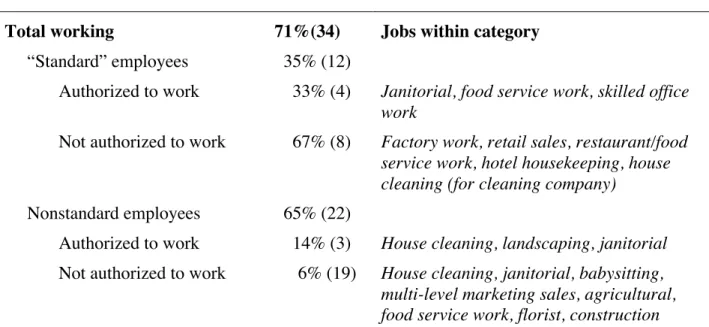
Table 5.1. Standard and non-standard employment at time of interview (n=48) ... 139
LIST OF FIGURES
LIST OF ABBREVIATIONS CBP U.S. Customs and Border Protection
CTC Child Tax Credit
DACA Deferred Action for Childhood Arrivals DAPA Deferred Action for Parents of Americans DHS Department of Homeland Security
ESF Earnings Suspense File
FBI Federal Bureau of Investigation
HB House Bill
ICE U.S. Immigration and Customs Enforcement IRCA Immigration Reform and Control Act (1986)
IIRIRA Illegal Immigration Reform and Immigrant Responsibility Act (1996) ITIN Individual Taxpayer Identification Number
MOA Memoranda/um of Agreement NAFTA North American Free Trade Area NELM New Economics of Labor Migration PEP Priority Enforcement Program
PRWORA Personal Responsibility and Work Opportunity Reconciliation Act (1996) SNAP Supplemental Nutrition Assistance Program
SSA Social Security Administration
CHAPTER 1: INTRODUCTION
When I was a girl, when I was around 9 or 10 years old, in the place where I lived were some mountains, and the clouds would come in very low because there was a river. And I would go walking and the clouds were low, and I
would go walking in the place where I could see the clouds low and I said, “Someday I will be able to go above these clouds.”
-Alejandra1
Undocumented people are often described as living and working “in the shadows.” This framing identifies the illegality of migrants as an individual characteristic. Yet federal, state, and local policies are structural forces that shape the meaning and consequences of lacking legal status in the United States. These policies have become particularly restrictive for migrants during the past three decades. During that time, economic restructuring has drawn Latina/o migrants to “new” destinations in the Southeast U.S. to work in a diverse economic landscape in industries like textile manufacturing, meat and poultry processing, and hospitality and service work.
In this dissertation, I identify the constraints and opportunities for immigrant workers in North Carolina, a new destination state, by examining the incorporation experiences of a particular group of migrants: Latina mothers, most of whom are unauthorized. Latinas and children have increasingly joined migration streams, and women now make up 46 percent of the unauthorized population in the United States.2
Although their labor force participation rates are
1
All names are pseudonyms. I translated all quotes from Spanish, except for those indicated with asterisks (*). Occasionally, I leave in un-translated, original portions of quotes when I feel they convey better in Spanish. In these cases, I provide parenthetical English translations.
2
low relative to their male counterparts, many immigrant Latinas have entered the U.S. labor market.
In fact, the “feminization” of migration has been associated not only with family
reunification but with a demand for migrant women’s labor in the secondary labor market. In the wake of deindustrialization during the late 20th
century, the growing service sector drew migrant women to low-wage, low-skill jobs in such industries as service, garment manufacturing, and healthcare (Sassen-Koob 1984; Hondagneu-Sotelo 1994). Demand for female migrant labor also grew in informal niches such as domestic work. As upper-middle-class and middle-class U.S. women—especially mothers—entered the paid labor force at higher rates, they hired immigrant women of color to care for their children and homes (Hondagneu-Sotelo and Avila 1997; Hondagneu-Sotelo 2001; Parreñas 2001; Ehrenreich and Hochschild 2002).
Latinas, particularly those of Mexican origin, represent the largest proportion of low-wage immigrant women workers in the United States (American Immigration Council 2017b). Many of these women are undocumented. Monica Boyd (1984) suggested that immigrant women experience a “double disadvantage” in the labor market because of their gender and nativity. I argue that undocumented women experience a three-fold disadvantage. They not only experience inequality associated with being female and foreign-born but must also contend with policies that seek to limit the rights of unauthorized migrants.
household standing (Goldring 1996; Grasmuck and Pessar 1991; Guendelman and Perez‐Itriago 1987; Hirsch 1999; Hondagneu-Sotelo 1994, 1995). Because of these gains, women, more than men, prefer U.S. settlement and are pivotal in deterring return migration (Goldring 1996;
Hondagneu-Sotelo 1994; Wampler, Chávez, and Pedraza 2009). In fact, they are less likely than men to return to their countries of origin (Hagan, Demonsant, and Hernández-León 2015; Hondagneu-Sotelo 1994; Reyes 1997; Ruiz-Tagle and Wong 2009).
Still, Latina women in the United States, even those who work, often remain embedded in families in which men’s paid labor is considered the dominant source of family income, while women’s ideal roles are to provide emotional labor for families (Dreby 2006; Grasmuck and Pessar 1991; Menjívar 1999; Parrado and Flippen 2005). Although employment opportunities for Latina women are expanded through migration (Parrado and Flippen 2005), they are still
burdened by a “second shift” of care work (Hochschild 1989). Compared with native-born women, immigrant women in the United States have lower labor force participation rates, particularly when they are wives and mothers (Bureau of Labor Statistics 2017; Donato, Piya, and Jacobs 2014; Read and Cohen 2007) and when they are undocumented (Brettell 2016; Pew Research Center 2015). Drawing on women’s accounts, I find that women’s family demands and the constraints associated with their status as foreign-born and undocumented are interconnected.
organizations in these areas. I also conducted a focus group and observed community meetings related to immigration policies and enforcement actions.
In their book on migrant women workers in the new economy, Barbara Ehrenreich and Arlie Russell Hochschild argue that to understand the experiences of “invisible” women workers, we must recognize them as “full human beings… strivers as well as victims, wives and mothers as well as workers” (2002:13). In this dissertation, I highlight both the constraints migrant women experience and the resilience they demonstrate through migrating, working, raising families, and becoming part of North Carolina communities. My analysis is guided by five sets of research questions:
1. What are the economic, political, and social contexts of reception for immigrants in new destination states and in North Carolina, specifically? How do migrants’ experiences in these contexts differ based on gender?
2. What are women’s experiences with work early in the life course and prior to U.S. migration? How do these experiences shape the formation of Latina workers’ identities?
3. How do household dynamics and life course stages shape the decisions women make regarding migration for work or family reunification?
4. Once in the United States, how is women’s labor force participation patterned by family formation and political contexts of reception? How is the experience of negotiating work-family conflict shaped by women’s status as foreign-born and undocumented?
5. Which labor market strategies do women employ to cope with family demands and policies that inhibit them from the formal labor market? What do these strategies suggest about perceptions of job quality and opportunities for mobility in a restricted market?
and Zhou 1993). In recent years, scholars have identified hostile immigration laws and policies as an axis of inequality shaping incorporation (Abrego 2006; Bacon 2008; Chavez 2012, 2013; Gonzales 2016; Menjívar 2006; Menjívar and Abrego 2012; Menjívar, Abrego, and
Schmalzbauer 2016). In answering these research questions, my findings add to this literature by examining how immigrant incorporation in restrictive contexts is gendered. Specifically, I identify how being foreign-born and undocumented exacerbates work-family conflict for women in the low-wage labor market. I also demonstrate how work-family conflict, in combination with restrictive employment policies, constrains women’s participation in the formal labor market and shapes the strategies they develop to maintain employment.
I continue this chapter by introducing the theory and literature that frames the findings of this dissertation. I then discuss my research methods in more detail and provide background information about the women I interviewed. Finally, I close by providing an overview of the dissertation chapters that follow.
THEORETICAL FRAMING
Immigrant Incorporation and Contexts of Reception
migrants’ incorporation since the mid-1990s with a focus on contexts in new destinations and in North Carolina, specifically.
In doing so, I add to the literature on immigrant incorporation in three ways. First, I extend this framework to include the roles of state and local political contexts. The political contexts of reception in this framework typically refer to the role of federal immigration policy. By drawing on legal theories related to the role of state and local “alienage” policies that seek to regulate the rights of immigrants (Motomura 2008, 2014), the literature on the particular—often, hostile—political contexts in new destination communities (Armenta 2017; Bada 2010; Lacy and Odem 2009; Nguyen and Gill 2016; Winders 2013), and by tracking the development of specific state-level policies targeting immigrants in North Carolina, I argue that incorporation scholars must consider not only federal but also state and local policy contexts. Second, I identify how political, economic, and social contexts are gendered by discussing how migrant men and women’s experience, in many cases, distinct interactions and outcomes with policies, labor markets, and social infrastructure. The dominant literature on contexts of incorporation does not consider the role of gender in incorporation (Portes and Böröcz 1989; Portes and Rumbaut 2014). Third, I demonstrate how economic, political, and social contexts overlap. That is, political contexts, vis-à-vis policies and legislation targeting the undocumented, are intertwined with migrants’ economic and social outcomes.
Life Course Theory, Labor Force Participation, and Migration Theory
To answer my second, third, and fourth sets of research questions, which examine
roles and status. These trajectories are shaped by the timing of transitions, social and historical contexts, “linked lives” to significant others, and by an individual’s agency (Elder 1998a; Mortimer and Shanahan 2003).
Life course theory is a useful framework to trace Latina migrants’ labor force and family transitions across their lives. I use this approach to examine my second research question, which considers the conditions under which women transition to work in their countries of origin. Here, I argue that women’s transitions to work early in the life course and prior to migration build strong worker identities that women maintain throughout later life stages.
I also draw on life course theory to answer my third research question, which considers the conditions under which women make migration decisions. In line with theories that explain international migration at the household level, such as the “New Economics of Labor Migration” (NELM) theory, I found that women’s migration decisions were frequently negotiated in
families. However, their life course stages, including marital and motherhood status, determined the gendered household power structures in which they negotiated these decisions and,
consequently, how they perceived and positioned their migration strategies. Drawing on this approach, I critique economic theories of migration like NELM that, while considering household dynamics, fail to consider that these dynamics are shaped by gender.
Work-Family Conflict and Intersectional Inequality
To delve further into my fourth set of questions regarding the family-related conditions and policy restrictions shaping women’s labor force participation, I draw on work and family literature and theories of intersectional inequality. A growing body of research has examined how work and family conflict for native-born U.S. women (Bianchi and Milkie 2010; Correll, Benard, and Paik 2007; Damaske 2011; Gerson 1986, 2011; Hochschild 1989; Jones 2012; Stone 2007; Williams 1999). A consistent finding in the literature is that women in the United States, across various social contexts, continue to disproportionately shoulder the burden of “second shift” care work, even when they are in the paid labor force or earn more than their male partners (Batalova and Cohen 2002; Bianchi et al. 2000, 2012; Brines 1994; Gerstel 2000; Hochschild 1989). This second shift creates particular challenges for poor women and women of color in the low-wage labor market who tend to have few structural supports such as access to paid family leave or affordable, quality childcare (Collins 1994; Damaske 2011; Dodson 2007; Perry-Jenkins 2012).
I find that Latina immigrants shared the work-family challenges faced by poor, native-born women, but experienced additional obstacles as migrants and undocumented
workers. Theories of intersectionality provide a lens for understanding the ways that Latina immigrants’ labor force participation came into conflict with their roles as mothers.
our understanding of the intersectional inequalities faced by women in the low-wage labor market.
Gendered Policy Outcomes
To explore how political contexts shape work-family conflict and employment strategies among undocumented women—my fourth and fifth research questions—I draw on literature examining the gendered impacts of employment policies targeting immigrants. Since the
Immigration Reform and Control Act of 1986 (IRCA), federal policies in the United States have been implemented and expanded to regulate the hiring process through the verification of worker employment eligibility and the enforcement of sanctions against hiring those who are
unauthorized (Donato et al. 2008; Donato, Durand, and Massey 1992; Hall, Greenman, and Farkas 2010; Kossoudji and Cobb-Clark 1996).
Such policies, although seemingly gender-neutral, often have gendered effects (Boyd 1989; Hagan 1998; Donato and Gabaccia 2015). During the period following IRCA, for
example, the consequences of being undocumented for employment have been especially bad for Mexican women (Donato et al. 2008). Moreover, undocumented women have disproportionately low labor force participation rates compared with undocumented men, native-born women, and authorized immigrant women (Pew Research Center 2015).
Employment Relations and Immigrant Self-Employment
My final set of research questions examines the labor market strategies women used to cope with work-family constraints and policy restrictions. Here, I draw on work scholarship to examine the conditions under which women’s labor in so-called “nonstandard” employment— classified as unregulated work with weak attachments to employers in arrangements including self-employment and sub-contracted work (Kalleberg 2009, 2011; Kalleberg, Reskin, and Hudson 2000). Scholars have associated concentration in non-standard employment with poor job quality and vulnerability for workers (Flippen 2012; Hudson 2007; Kalleberg et al. 2000; Raijman 2001; Valenzuela 2003). I identify the conditions under which women in these nonstandard employment relationships experienced exploitation and vulnerability but also identify how women achieved job quality through self-employment.
Migration scholars have long found that informal self-employment provides mobility pathways for immigrants who are blocked from standard employment relations (Light 1973; Light and Gold 2000; Portes, Castells, and Benton 1989; Raijman 2001; Raijman and Tienda 2000; Ramirez and Hondagneu-Sotelo 2009). Studies commonly focuses on men’s
self-employment or women’s work in family businesses. Attention to migrant women’s independent self-employment, meanwhile, has been limited (Brettell 2016). I contribute to this literature by highlighting the role of women’s self-employment not only as a survival strategy but a mobility pathway in a restricted market.
RESEARCH DESIGN, METHODS, AND ANALYSIS
inductive methods. I became especially interested in studying immigrant women’s experiences with work and family in 2014. In November that year, President Obama announced a new executive action that would provide undocumented immigrant parents of U.S. citizens and permanent residents an opportunity to “come out of the shadows and get right with the law.”3
The program, Deferred Action for Parents of Americans, or DAPA, would provide eligible undocumented parents with temporary legal authorization to live and work in the United States. I set out to study this policy in action through the experiences of applicants. As it happened, DAPA never materialized and was held up in court throughout my data collection. Twenty-six states, led by Texas and including North Carolina, filed a suit in federal court to oppose the executive action (Foley 2015). Ultimately, DAPA received a Supreme Court “indecision” with a tie vote resulting from Congress’s refusal to confirm Merrick Garland, President Obama’s Supreme Court justice nominee. Not long after, any hope of DAPA was dashed with the election of an avowed restrictionist Trump administration, which later revoked the program (Bendix 2017).
Despite the failure of this particular executive order, I was able to draw on women’s perspectives to study how they interpreted policy implications and how their behavior was
shaped by policy shifts. Just as state governments impeded the implementation of DAPA, I found that state-level policies, more so than federal, often shaped the consequences women faced as undocumented people in North Carolina. To examine how women made decisions about work and family in these restrictive policy contexts, I relied primarily on in-depth interviews, supplemented by a focus group and observation at community meetings.
3
In-Depth Interviews
Sampling and Recruitment Strategy
Between April 2015 and October 2016, I interviewed 48 Latina immigrants living in central North Carolina. I used sequential interviewing guided by case study logic, collecting data until I reached saturation (Small 2009; Yin 2013). Small (2009) argues that it is effective to view in-depth interview projects as a collection of multiple case studies, rather than a “small sample” study. Although a pre-determined sampling method is appropriate for studies that seek statistical generalizability to a population, case study logic is more appropriate for studies that seek to understand a process—those that ask how or why questions (Small 2009:25). Each case, or interview, yields findings that inform the next interview, and, “If the study is conducted properly, the very last case examined will provide very little new or surprising information. The objective is saturation.” (Small 2009:25). I drew on themes that emerged in my initial interviews to develop my interview guide in subsequent interviews until no new information emerged. For example, in discussing their jobs, predictability and consistency in work scheduling emerged as an area of concern for women. I then added questions specific to work scheduling in the
interview guide.
I recruited several women through referrals from social service and faith-based organizations as well as community leaders that serve the immigrant population in my target counties: Orange, Durham, Chatham, Alamance, and Wake. In some cases, these
I also recruited women to participate in the study through connections I had in these counties. This included recruiting participants through my volunteer work as a Spanish-language Client Interviewer at a local food pantry where I volunteered for three years and had established rapport with clients. During summer 2016, I volunteered with the Casa de la Comunidad Latina, a social service and advocacy organization that serves the Latina/o community. I led an English conversation class for parents—almost always mothers—who were waiting for their children in a tutoring program and later interviewed some of them. I also recruited interviews from a focus group I conducted at a workers’ center associated with the organization (see Focus Group section below).
Using these connections as a base for interview recruitment, I used snowball sampling, asking women to recommend relatives, friends, and neighbors. Snowball sampling is a common strategy for finding hard-to-reach populations like undocumented immigrants (Chavez 2012; Morgan 2008). While some women were shy or reluctant to recommend people, others enthusiastically identified possible participants from their social networks.
Interview Content and Procedures
In-depth, life history interviews covered topics related to family, work, and migration across a time period beginning with women’s childhood in their countries of origin until their present circumstances as international migrants settled in North Carolina communities. Interviews were semi-structured: I used an interview guide to organize themes of discussion, with a series of questions or “probes” to draw on in each section. Unlike questionnaires,
To begin each interview, I filled out a brief form with women’s demographic
information. During the first portion of in-depth interviews, I used a life-history approach in which I asked women about their pre-migration experiences in their countries of origin. Specific topics of discussion related to family, work, education, and migration. Kathleen Gerson
(1986:38) used a life history approach in her research on women’s decision-making related to career and family because it allows for examination of “the interplay between social constraints, psychological motivation, and the developing actor… to chart the variety of life paths women take and helps uncover the factors, both structural and psychological, that lead them down their divergent paths.” Next, I discussed with women their current experiences with work, family, and living in North Carolina communities, and their goals and intentions for the future. I also
discussed with women their perceptions of migration policies and new executive actions, including a focus on the proposed DAPA program (see Appendix A for interview guide). Following Institutional Review Board (IRB) guidelines, all participants provided
informed consent. All interviewees agreed to be recorded. Recorded interviews typically ranged between one and two hours in length, although informal conversations following the interviews frequently extended beyond this. I attempted to capture these conversations in field notes that I wrote after most interviews. I conducted all but two interviews in Spanish. Most interviews were conducted in women’s homes; some were held in cafés or other public spaces. Women were almost always the only adult in the room during the interview; small children were frequently present. As a token of appreciation for their time, I gave interviewees $10 grocery store gift cards at the end of the interview.4
4
Focus Group
I also volunteered with outreach efforts for the Centro de Trabajadores (CDT), a Workers Center under the umbrella of the Casa de la Comunidad Latina. Together with CDT’s lead organizer, Jazmin, we recruited participation for a focus group of women who had used the CDT’s services along with some of the mothers from Casa’s tutoring program. All were Latina migrants. We provided childcare and refreshments for participants. Four women participated. I developed the discussion guide with input from Jazmin, who included some questions for CDT’s use. We took turns leading the focus group, which we conducted in Spanish. With participants’ consent, the conversation was recorded and transcribed. Questions related to experiences in the U.S. labor force, including the opportunities and obstacles involved with finding jobs,
relationships with employers, workplace safety, balancing work and family, skills, and job goals (see Appendix B for focus group guide).
Observation at Community Meetings
Observation at community meetings represented an ancillary role in my data collection. In March 2015, I began attending information sessions about DAPA to observe how people were discussing the program in public settings. Local organizations, churches, and immigration
attorneys began holding information sessions about DAPA almost immediately after its announcement. I attended five information sessions in Orange, Durham, Wake, and Chatham counties. I observed who attended the meetings, the information disseminated, and the resources that organizations provided to applicants. I also observed how attendees perceived this
Policy Institute. I wrote field notes during each meeting. Because DAPA never came to fruition, I did not use these field notes directly for my analysis. But, they helped inform my interviews during this period as they provided me with greater knowledge and context for DAPA and immigrant families’ concerns more broadly.
By the winter of 2016, organizations that had been holding DAPA information sessions began to transition to holding “Conozca sus Derechos” (Know your Rights) workshops, a development I associated with two events. First, a preliminary injunction on DAPA seemed to have dimmed hopes of its implementation. Second, during this period, U.S. Immigration and Customs Enforcement conducted a series of raids targeting Central American mothers and children. These migrants had fled violence and instability, hoping to seek political asylum in the United States. However, their claims were denied and they were targeted for removal by the Obama administration (Musalo and Lee 2017). These raids created fear in immigrant
communities more broadly, including among the Mexican women I interviewed who were not targets. Observation at these meetings again provided context that informed my interviews. Analysis
2006). Finally, I used theoretical coding to conceptualize relationships between focused codes (Charmaz 2006; Glaser 1978). For example, codes like “Missing parents in origin Country” and “Supporting parents financially” led to the development of the theoretical code “Transnational daughterhood.”
I wrote analytic memos to organize ideas and “work with concepts rather than raw data” (Corbin and Strauss 2008:120). For grounded theorists, memo writing is a critical part of analysis that occurs between collecting data and writing papers (Charmaz 2006). I began writing memos during the data collection and coding process and used them to make comparisons between data, codes, and categories in order to identify patterns. These memos formed the building blocks of my analysis.
Protecting Participant Identities
To protect immigrants living in the United States without legal status, I have taken steps required by the IRB as well as those that were not required but that I felt were necessary. During my data collection, I avoided collecting last names of participants or storing participants’
addresses. Following IRB guidelines, I received consent from all participants for their
participation in the study and for their interviews to be recorded. With the permission of the IRB, I chose to obtain interviewee consent verbally—I believed written consent would create an unnecessary record and anticipated it would make participants nervous. I did obtain written consent from focus group participants.
do not identify participants’ employers (past or present) by name and have attempted to withhold any identifying details of employers. I typically only identify the community in which
participants live when it provides context important for the topic at hand, or when the community is easily identifiable by the industry in which the participant was employed. Among the counties I sampled, for example, Chatham County is particularly well known for its poultry plants. In these cases, I typically identify communities at the county level rather than at the city/town level. A Note on Reflexivity
It is important to recognize how my role as a researcher played a part in data collection and analysis. My position as a white, middle-class U.S. citizen pursuing a Ph.D. places me in a very different social location than the women in my study: Latina immigrants, most of whom had low levels of education and income and were unauthorized. My economic and social location, by and large, confers privileges, while my participants’ frequently confers disadvantages. My affiliation with a university also possibly shaped power dynamics in a research relationship with people who are often marginalized in their interactions with formal institutions (Deeb-Sossa and Bickham Mendez 2008). Being an outsider can create certain advantages for the researcher, such as questioning ideas that may be taken for granted by insiders (Emerson, Fretz, and Shaw 2011). However, I recognize that my outsider status, in some cases, may have caused women to feel guarded about sharing certain experiences.
same age. In addition, although I am not a native Spanish speaker, I speak Spanish fluently and was able to conduct interviews in the women’s primary language.5
Prior to interviews, I was clear about the basic goals of this study: examining the life, work, and migratory experiences of Latinas in the United States including the challenges they faced. Although the topics were emotionally trying for women—accounts of poverty or abuse, for example—most of the women were eager to tell their stories. Those who seemed nervous at the beginning of interviews typically became enthusiastic about sharing their experiences by the end. To my surprise, when I thanked participants after the interviews, they often thanked me in return, saying, “Sometimes, it’s good to talk,” or “I really enjoyed talking with you and
remembering my childhood.” Others expressed that they wished that more Americans knew their stories, which often go untold. Several women seemed happy to help a student and encouraged me in my educational pursuits.
On a few occasions, women reached out to me as a resource, such as asking for help finding legal services, dental care, financial assistance for medical care, or to write a letter attesting to a woman’s presence in the United States (in the case of applying for legal residency). I did my best to provide women with resources and information in these circumstances,
including the letter.
ABOUT THE WOMEN
Vanessa represents a “modal” woman in my study in terms of demographic, family, human capital, and labor force characteristics. I met Vanessa while teaching the conversational English class for immigrant parents mentioned earlier. Vanessa left Mexico to come to the
5
United States at age 20 and was 32 at the time of our interview. She is married, a mother of three, and undocumented. She lives with her husband and children in Orange County, North Carolina. Her children were born in the United States and range from five to 12 years old.
Vanessa completed secundaria in Mexico, the equivalent of ninth grade in the United States, and moved on to complete some vocational high school. Vanessa wanted to learn English, but her current abilities are low—she said during our interview, “I have been here many years and I don’t know how to speak English.” Pregnant upon arrival, Vanessa chose to delay getting a job until her children were in school, at which point she found a job preparing sandwiches in a small café.
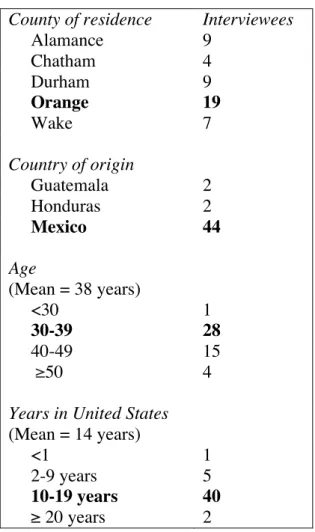
Table 1.1. Demographic and migration characteristics of interviewees (n=48; modal categories in bold)
County of residence Interviewees
Alamance 9
Chatham 4
Durham 9
Orange 19
Wake 7
Country of origin
Guatemala 2
Honduras 2
Mexico 44
Age
(Mean = 38 years)
<30 1
30-39 28
40-49 15
≥50 4
Years in United States (Mean = 14 years)
<1 1
2-9 years 5
10-19 years 40 ≥ 20 years 2 Employment and education
In general, women in the sample had low levels of formal education and English ability. Thirty-three women in the sample had less than a high school education. Women typically left school under three conditions (which sometimes overlapped): to work; when their parent—often fathers—did not support their education; or to get married. Vanessa, for example, said that while she was studying in her vocational high school, “My husband proposed that we get married and that we come [to the United States], and we came here.” Cristina explained why she left school after secundaria:
During that time… the company where my Dad worked went on strike—it closed. And he was the one who brought the money home. My mom didn’t work… And my two brothers also worked in that company. So there was no more income to keep studying. So, I went to work and since then, it’s just been work.
Even the few women with higher education credentials, including college degrees, were largely unable to capitalize on them because of their undocumented status and/or limited English ability. These characteristics are similar to those of the population of unauthorized migrants in the United States, about half of whom have less than a high school diploma and have low levels of English language ability.6
6
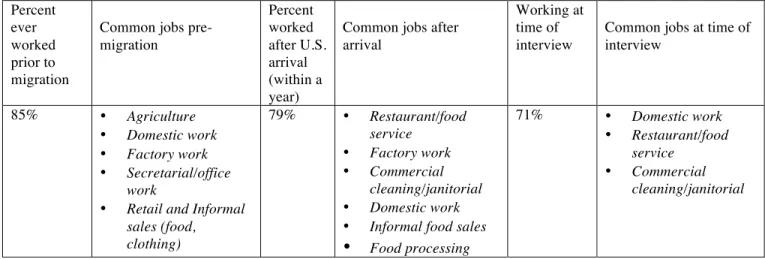
Table 1.2. Labor force participation pre-migration, upon arrival, and at time of interview (n=48) Percent ever worked prior to migration
Common jobs pre-migration Percent worked after U.S. arrival (within a year)
Common jobs after arrival
Working at time of interview
Common jobs at time of interview
85% • Agriculture
• Domestic work
• Factory work
• Secretarial/office
work
• Retail and Informal
sales (food, clothing)
79% • Restaurant/food
service
• Factory work
• Commercial
cleaning/janitorial
• Domestic work
• Informal food sales
• Food processing
71% • Domestic work
• Restaurant/food
service
• Commercial
cleaning/janitorial
Family characteristics
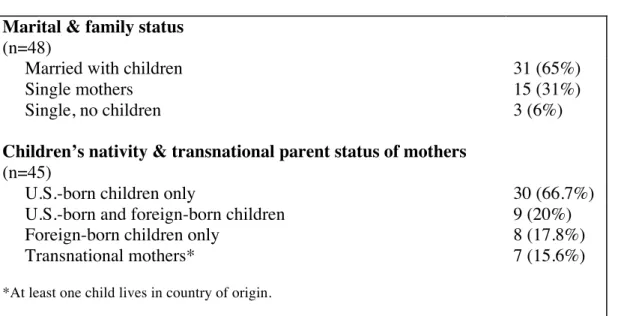
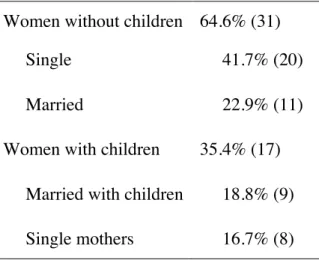
Like Vanessa, the majority of women I interviewed (31) identified either as married (casada) or juntada, a long-term relationship considered to be of equal status to marriage in many Latin American countries.7
All married/juntada women had co-resident male spouses and were mothers. Sixteen women identified as single, divorced, or separated; one was widowed. I oversampled women who were mothers but also interviewed three women who did not have children.
Seven women had at least one child living in their country of origin and can be classified as “transnational mothers”—however, each of these women also had co-resident children living in the United States. Miriam, for example, decided to migrate to support her young son when she became a single mother in Mexico. Later, in the United States, she re-married and had a
daughter.
7
Like Vanessa, most women’s children were born in the United States and living with them. Approximately 70 percent of all children born to interviewees were born in the United States. This meant that many women were in so-called “mixed-status” families, in which parents are undocumented and at least some children are citizens. The prevalence of mixed-status
families among the women in my sample is representative of immigrant families nationally: an estimated 79 percent of the children of undocumented parents are U.S. citizens (Capps, Fix, and Zong 2016).
Table 1.3. Family characteristics (at time of interview)
Marital & family status (n=48)
Married with children 31 (65%)
Single mothers 15 (31%)
Single, no children 3 (6%)
Children’s nativity & transnational parent status of mothers (n=45)
U.S.-born children only 30 (66.7%)
U.S.-born and foreign-born children 9 (20%)
Foreign-born children only 8 (17.8%)
Transnational mothers*
*At least one child lives in country of origin.
7 (15.6%)
CHAPTER OVERVIEW
chapter addresses my first set of research questions to consider the structural factors patterning new destination migrants’ labor force participation.
Chapter 3 uses a life course perspective to demonstrate how women formed attachments to work prior to migration and made migration decisions, addressing the second and third sets of research questions. To examine how Latina migrants formed attachments to work prior to migration, I draw on the life-history portion of interviews to analyze the conditions under which women joined the labor force in countries of origin. I found that for many, beginning to work and supporting themselves and family members represented a salient part of their transition to adulthood. Through this transition, women formed strong identities as workers and were socialized to make personal and family sacrifices. Next, I explore how women made migration decisions in gendered family contexts, both for labor migration and family reunification. Often, through migration, women negotiated household power dynamics and contested gendered socialization and norms. This chapter provides insight into the gendered nature of life-course transitions, both pre- and post-migration, for women’s work and migration trajectories.
experiences outlined in Chapter 3, and discuss the social and psychological consequences when intersectional constraints inhibit labor force participation.
Chapter 5 examines how women respond to the pull of family and push of policy restrictions in their employment relationships. In doing so, I uncover women’s labor market strategies in a restricted market. I find that increasingly, women turn to work in less regulated, so-called “nonstandard” employment relationships. Through nonstandard work, women demonstrate agency amid employment restrictions. In some cases, through self-employment, they achieve greater work-family balance. These findings have implications for understanding how women evaluate job quality in the secondary labor market and how they create mobility pathways amid labor market restrictions. But their accounts also indicate vulnerability through employment relationships where workers bear the majority of risks.
In Chapter 6, I summarize the findings and contributions from these substantive chapters and highlight the policy implications of this research. I also consider why, despite initial plans to remain in the United States temporarily and the barriers described in Chapters 4 and 5, women decide to stay in the United States for the long-term. These findings reveal the individual-level and gendered consequences of immigration and employment laws. I discuss how policies intended to discourage immigrant settlement and labor force participation are unrealistic in their intentions and instead result in economic and social vulnerability among individuals determined to provide a better future for their families. Drawing on these findings, I suggest future areas for research in a quickly changing policy environment.
***
Mexico to North Carolina to support her daughter when she became a single mother. She is now a re-married mother of two. Her time in the United States has been shaped by ongoing struggles to negotiate work and family in a labor market that severely limited her employment options due to her undocumented status. At the time of our interview, she had recently quit her physically demanding job in a laundry that she associated with detrimental impacts on her health and family wellbeing.
Alejandra recounted returning home in the evening after a 10-hour shift, finding herself incapable of caring for her young son, who, she said, “Asked his dad if I was going to die. Because instead of taking care of the child, he was taking care of me.” Quitting her job, she explained, was, “Not so easy… when there’s no Social Security number” to be able to apply for a new one. Surprisingly, however, Alejandra felt hopeful for her future in the United States, where she envisioned herself as an entrepreneur making and selling baked goods and tamales. She told me that, “[I]n five years, I’m going to have a business…a really established business…”
CHAPTER 2:
CONTEXTS OF RECEPTION IN THE NUEVO SOUTH
I was imagining a big city. I imagined it very beautiful… full of buildings—like, what you see on TV sometimes: Los Angeles, Miami… I imagined that Carolina was like that, but no. And since I arrived, I liked it, because it’s a
very beautiful place. -Lorena
Historically, Latina/o migrants in the United States settled in what scholars refer to as “traditional” receiving areas in the West and Southwest, including Texas, Arizona, and California, as well as large cities in the Midwest and along the East Coast, like Chicago, New York, and Miami (Singer 2004). Beginning in the 1980s and especially in the 1990s, the
landscape of Latin American-U.S. migration began changing. In addition to settling in places like Los Angeles or Houston, Latinas/os began coming to smaller cities, towns, and rural
communities in the Southeast and Midwest: places like Dalton, Georgia and Siler City, North Carolina (Massey 2008; Odem and Lacy 2009; Zúñiga and Hernandez-Leon 2005). “New” destinations states—which include South Carolina, Alabama, Tennessee, Delaware, Arkansas, South Dakota, Nevada, Georgia, Kentucky, North Carolina, Wyoming, Idaho, Indiana, and Mississippi—experienced twice as much growth in their foreign-born populations compared to the national rate in the first decade of the 2000s (Terrazas 2011).
destinations that have “little historical record of receiving immigrants, but in recent decades have experienced extraordinary growth in their foreign-born populations.” Minor emerging gateways experienced approximately three times the national rate of foreign-born population growth since about 1990 (Singer 2015).
The women in my sample represent this stream of migrants to new destinations. Nearly three-fourths (71 percent) emigrated directly to North Carolina from Mexico, Guatemala, and Honduras8
during the 1990s and early 2000s. Approximately 23 percent (11 women) migrated first to traditional gateways, including California, Texas, New York, and Florida. Three initially arrived in other new destination states in the Southeast, Midwest, and West. This is
representative of Latina/o migration patterns in the new destinations more generally: Mark Leach and Frank Bean (2008) found that about two-thirds of Mexican-origin arrivals in new
destinations in the 1990s arrived directly from abroad. Seventy-nine percent of the sample arrived between 1994 and 2004, reflecting a period in which North Carolina emerged as a “magnet state” for Latina/o migration (Johnson and Kasarda 2009). Between 1990 and 2012, the state experienced 550 percent growth in its foreign-born population (Johnson and Appold 2014).
Latina/o migration to new destinations has been shaped by a confluence of political and economic shifts in both sending countries and the United States. Many poor migrants were pushed from their countries of origin in Mexico and Central America beginning in the late 1980s due to economic crises, political upheaval, and economic repercussions from the North American Free Trade Agreement (NAFTA), which ushered in a period of economic integration between the two countries, but displaced Mexican agricultural workers from jobs (Hagan et al. 2015;
Hamilton and Chinchilla 1996; Massey 2008; Zúñiga and Hernandez-Leon 2005). NAFTA, in
8
conjunction with restructuring efforts following Mexico's 1980s economic crisis, led to Mexico’s dependence on external finance and investment, resulting in economic vulnerability and the collapse of the peso in the 1990s. Mexican unemployment increased because private firms were unable to compete with imported goods and manufacturing shifted away from traditional industrial cities to low-wage factories in border cities. NAFTA was especially detrimental to Mexican agricultural employment, as it allowed the free movement of U.S. agricultural goods across the Mexican border (Hamilton and Chinchilla 1996). In the United States, the increased militarization of the U.S.-Mexico border in traditional crossing areas as a result of the U.S. Immigration Reform and Control Act (IRCA) in 1986, in addition to anti-immigrant sentiment in traditional receiving areas, deterred these migrants from traditional receiving areas. Around the same time, economic restructuring created employer demand for immigrant labor in
construction, manufacturing, food processing, and service industries in the South (Massey 2008; Massey, Durand, and Malone 2002; Odem and Lacy 2009; Zúñiga and Hernandez-Leon 2005).
2011; Odem and Lacy 2009; Ribas 2015; Winders 2013). In this shifting context of reception, southern politicians have tended to conflate immigration with undocumented immigration, and being Latina/o with being “illegal,” a discourse that has been echoed by the public and in popular imagery (Armenta 2017; Chavez 2013; Lacy and Odem 2009).
***
In this chapter, I outline the shifting economic, political, and social contexts of reception for Latina/o migrants in this new gateway. “Contexts of reception” is a concept developed by international migration scholars that refers to how the structural and cultural conditions of receiving communities shape immigrant incorporation (Portes and Böröcz 1989; Portes and Rumbaut 2001, 2014). In general, studies focus on three dimensions of reception: economic, political, and social. I draw on this typology to outline the labor market conditions, state, federal, and local policies, and social infrastructure that have shaped interviewees’ incorporation since the mid-1990s.
In my analysis, I use economic contexts of reception as a category to refer to the process of U.S. economic restructuring which shaped the feminization of labor migration flows, the concentration of low-wage, non-union jobs in Southern states, and subsequent labor demand for migrant workers to fill jobs in particular industrial niches. Drawing a connection between political and economic contexts. I also describe how policies enacted at federal and state levels have increasingly restricted undocumented immigrants’ access to the labor market in North Carolina.
Social contexts of reception refer to the presence of an existing coethnic community in the receiving community. Scholars argue that recent arrivals may benefit from integration into ethnic enclaves, which can ease economic integration through access to jobs and training and pathways to entrepreneurship (Portes and Rumbaut 2014; Ramirez and Hondagneu-Sotelo 2009). However, exploitation may also exist in coethnic communities when individuals profit at the expense of others in their network; often this exploitation is a response to political circumstances that leave migrants ineligible for benefits and concentrated in unregulated work arrangements (Cranford 2005; Mahler 1995)—representing how policies shape economic and social contexts of reception (Portes and Rumbaut 2014). In new destinations, researchers have found that
immigrant communities have less developed networks and institutional support from community organizations compared with traditional destinations (Bada et al. 2010; Deeb-Sossa and Bickham Mendez 2008; Singer, Svajlenka, and Wilson 2015).
ECONOMIC CONTEXTS
Dual labor market theory provides a useful lens for examining the economic incorporation of international labor migrants. This theory identifies and describes two interdependent labor markets: the primary labor market, which consists of skilled,
well-compensated, upwardly-mobile “good” jobs and the secondary labor market, comprised of low-skilled, low-wage “bad” jobs with no benefits, poor working conditions, and little regulation (Doeringer and Piore 1985; Gordon, Edwards, and Reich 1982; Peck 1996). Jobs in the primary labor market typically include white-collar, managerial professional jobs as well as skilled trades, while jobs in the secondary labor market refer to more routinized production and service jobs. Concentration in the primary and secondary market is shaped by structural discrimination on the basis of race, sex, and immigrant status. Historically, as native-born and white workers have experienced upward mobility in the primary labor market, immigrant workers and workers of color have filled demand for jobs in the secondary labor market (Chomsky 2014; Morse 1969; Piore 1979).
The labor migration of Latinas/os to new destination areas is closely linked to these economic and institutional shifts. As corporations sought flexibility and low-wage, non-union sources of “labor made cheap” (Enloe 2004) in response to globalization and economic
competition, some went abroad, while others turned to workers in the U.S. South to fill demand for low-wage jobs in food processing, textile manufacturing, and construction (Massey 2008). Southern states have low rates of union coverage as a result of “right-to-work” laws and have state minimum wages set at or below the federal minimum—or no minimum wage at all.9
The poor wages and conditions of these jobs pushed away native-born workers. Instead, employers recruited international migrants from the global South. Charles Hirschman and Douglas Massey (2008:10) note that the undocumented, in particular, stepped in to fill jobs because their social locations left them with few options and greater willingness to tolerate instability and poor conditions compared with the native born. Immigrants’ concentration in low-wage jobs thus not only reflects native-born workers unwillingness to do them but employer preferences for a compliant workforce. Employers perceive foreign-born workers to be subordinate and willing to work hard in difficult jobs for little pay without complaint—
characteristics that stem from workers’ marginalized social locations that leave them with few job options (Donato and Bankston 2008; Hagan et al. 2015; López-Sanders 2009; Waldinger and Lichter 2003; Zamudio and Lichter 2008).
As dual labor market theory would predict, the polarization of jobs was racialized, with white workers experiencing job growth in higher-wage jobs as Latinas/os concentrated in low-wage jobs (Wright and Dwyer 2003). Erik Olin Wright and Rachel Dwyer’s (2003) analysis of the occupational structure in the 1990s found that immigrants—mostly Latinas/os—filled 64% of
9
jobs in the lowest quintile of median earnings in industries like retail and personal services. Economic restructuring and occupational polarization have also been associated with the “feminization” of migration flows, as women from the Global South migrated to fill demand in industries such as garment production, health care, and personal services (Fernández-Kelly 1983; Sassen-Koob 1984). The feminization of migration streams also reflects the privatization of household services during this period. Responding to cultural and economic shifts, native-born U.S. women increasingly entered the paid labor market during the second half of the 20th
century, which created demand for immigrant women’s labor in informal, unregulated labor markets such as domestic household services (Hondagneu-Sotelo and Avila 1997; Hondagneu-Sotelo 2001; Parreñas 2001; Ehrenreich and Hochschild 2002).
Latinas/os in the North Carolina Labor Force
Reflecting trends in other new destination states, growth in North Carolina’s Latina/o population is tied to labor demand for unskilled and low-skilled jobs with low wages and poor working conditions in agriculture, food processing, manufacturing, construction, and service work (Gill 2010; Griffith 2005; Johnson and Kasarda 2009; Kandel and Parrado 2005; Mohl 2003). Demand for immigrant labor was particularly strong during the 1990s under conditions of a tight labor market and low unemployment rates in the state and remained strong through the early 2000s (Johnson and Kasarda 2009). Immigrants’ ties to the North Carolina labor market are evident through their high labor force participation rate, which was 10% higher than that of native-born residents in 2012 (Johnson and Appold 2014).
Mexicans and Central Americans began filling labor demand for jobs historically done by African Americans, in manufacturing, agricultural work, and meat, poultry, and seafood processing (Griffith 2006; López-Sanders 2009; Ribas 2015). Scholars have documented the displacement and replacement of native-born workers by Latina/o migrants and intergroup relations during the process.10
As shown in Table 2.1, Latina/o immigrant workers in North Carolina are concentrated in a variety of new or expanded production and service industries that characterize the state’s economic landscape in a restructured economy. Often, in this economy, low-wage workers have little voice: North Carolina is a “right-to-work” state with a hostile climate for labor unions. In 2016, among all states, North Carolina had the second lowest rate of union affiliation, with only 3 percent of employed workers as union members.11
A notable exception includes the
unionization of meatpacking workers in the Smithfield Packing plant, which ratified a contract in 2009 after a 17-year battle (Geary 2009; Greenhouse 2008).
As demonstrated in Table 2.1, Mexican and Central American men are concentrated in construction, manufacturing—predominantly, animal slaughter and processing and furniture production—agriculture, landscaping, and waste management. Women are also concentrated in manufacturing but in broader categories—animal slaughter and processing and furniture
10
In his research on immigrant workers in rural industries, David Griffith (2005, 2006) found that in some cases, Latinas’/os’ concentration in jobs represents the replacement of Black workers who have moved into better jobs and/or are investing in education. In others, however, it represents displacement that has occurred when employers prefer Latina/o immigrants because they are more subordinate10. Similarly, drawing on ethnographic research in a
Southern factory, Laura López-Sanders found employers used racialized “labor queues” to rank employees and systematically replace Black workers in the lowest-status occupations with Latina/o migrants. Black men responded by antagonizing their Latino replacements to protect their low-level positions, essentially “trapping” themselves in the worst jobs. Drawing on participant observation in a North Carolina meatpacking plant, Vanesa Ribas (2015) found a combination of replacement and displacement. Those Black workers who continued to work in the plant did not express resentment toward their new Latina/o coworkers or perceive them as a threat. Rather, Latina/o workers in the plant were the ones who expressed animosity toward Black, native-born workers, perceiving a relative disadvantage.
11
production like men, as well as cut and sew apparel manufacturing and fabric mills—in addition to accommodation and food services, retail, health care, and service industries. Compared with their male counterparts, Latinas in North Carolina tend to be concentrated in smaller firms and more isolated work contexts, including hotel housekeeping, private household work, and “back of house” food service occupations like dishwashers (Deeb-Sossa and Bickham Mendez 2008; Flippen 2016; Gill 2010).
Table 2.1. Industry concentration of foreign-born Mexicans and Central Americans in North Carolina, 2015
All Men Women
Construction 25.4% 37% 1.8%
Manufacturing* 16.8% 14.7% 20.89%
Accommodation and food services 12% 7.7% 20.71%
Agriculture 7.8% 9.7% 3.9%
Retail trade 6.3% 4.4% 10.2%
Landscaping and waste management 5.8% 8.2% 0.9%
Other services 4.6% 3.3% 7.1%
Wholesale trade 4.3% 4.5% 3.8%
Services to buildings and dwellings 4.0% 1.68% 8.8% Health care and social assistance 3.1% .97% 7.5%
Other 9.9% 8% 14.4%
*Most common sub-categories include animal slaughter and processing, miscellaneous manufacturing, furniture manufacturing, and textile manufacturing
Source: American Community Survey/IPUMS
demands after having children, they face even more isolation in the home and become more dependent on men (Deeb-Sossa and Bickham Mendez 2008).
The women in my sample lived and worked in five new immigrant destination counties in North Carolina that experienced dramatic growth in their Latina/o populations during the past three decades: Alamance, Chatham, Durham, Orange, and Wake (see Table 2.2). As depicted in the map in Figure 2.1, these counties are centrally located in the state. It is important to note here that I incorporated multiple geographies to introduce variation in local contexts to diversify a relatively small overall sample of participants. While I consider some differences across these counties, particularly those related to economic contexts of reception, uneven sample sizes across these counties did not allow for reliable and systematic analytic comparisons. For example, nearly 40 percent of the sample lived in Orange County, while only eight percent lived in Chatham County.
Table 2.2. Hispanics/Latinos as percent of total population in five North Carolina counties: 1990-2010
County 1990 2000 2010
Alamance 0.7% 6.8% 11.0% Chatham 1.5% 9.6% 13.0% Durham 1.1% 7.6% 13.5% Orange 1.4% 4.5% 8.2%
Wake 1.3% 5.4% 9.8%
Figure 2.1: Map of North Carolina counties
Map courtesy of “Carolina Maps” at the University of North Carolina
In Chatham County, located in the Piedmont region, and encompassing towns Siler City and Pittsboro, Latina/o migrants began filling demand for low-wage jobs in the poultry
processing industry. The poultry industry in the area dates back to the mid-20th
century but did not begin recruiting Latina/o workers until the 1980s (Cravey 1997). As Americans’ preferences for processed meat grew, employers in North Carolina and other southern states actively
recruited laborers in Mexico as well as traditional gateways in the U.S. for jobs that the native-born increasingly eschewed because of low wages and dangerous conditions (Cravey 1997; Gill 2010; Stuesse 2016).
In rural communities like Siler City, the growing demand for poultry workers initially drew male migrants, but by the 1990s, women and children came as well (Cravey 1997; Cuadros 2009; Griffith 2005; Silver 2011). This reflects a broader pattern of Mexican migration at the end of the 20th
2002). The local poultry industry has since suffered significant losses, citing financial losses from the high cost of fuel and chicken feed by the end of the first decade of the 2000s. Two major plants closed in 2008 and 2011, resulting in the loss of approximately 1,500 local jobs (WRAL 2008, 2011). However, agriculture and agribusiness retain a strong presence in the county, accounting for 38 percent of income and a third of the county’s employment.12
Moving north in the Piedmont to Alamance County, Mexican laborers were recruited to work in the textiles industry, allowing factories “to stay competitive in a quickly expanding and competitive global market,” and have been credited with preserving the industry’s presence in the community (Gill 2010, 21). Textile manufacturing in the county dates back to the pre-Civil War era13
and continues today. Manufacturing employers in the county also include producers of processed plastics, medical equipment, and automotive and electrical equipment. Manufacturing accounted for the largest sector of employment (16%) in the county as of 2015.14 Like poultry in
Chatham County, the Alamance County textile industry has also experienced job loss because of plant and mill closures in recent years (Lavender 2013).
To the east of the Piedmont lies North Carolina’s “Research Triangle” of
Raleigh-Durham-Chapel Hill, representing, Wake, Durham, and Orange counties, respectively. As Table 2.2 shows, the Latina/o population in these counties grew significantly in the period between 1990 and 2010. These counties, each home to major universities, hospitals, and technology companies, have high proportions of skilled workers but also employ many people in service and construction industries. Studies of immigrant incorporation in these counties have documented the growth of Latinas/os in construction, hospitality, and other services (Gill 2010; Hagan, Lowe,
12
http://www.chathamnc.org/about-us/statistics-and-demographics/agriculture
13
https://www.alamance-nc.com/home-1/about-alamance-county/history/new-nation-new-county/
14
and Quingla 2011). To recruit workers, employers in these industries relied on labor contractors and advertised in Spanish-language newspapers in “traditional” U.S. destinations with large Latina/o populations, like Texas, as well as in sending states in Latin America (Gill 2010; Griffith 2005; Kandel and Parrado 2005).
Many of the immigrant workers laboring in North Carolina’s factories, plants,
construction sites, hotels, and private households are undocumented. According to estimates by the Migration Policy Institute, as of 2014, nearly half (45.6 percent) of the foreign-born
population in North Carolina was unauthorized and most (81 percent) were born in Mexico and Central America.15
Although employment sanctions against the undocumented have been in place since the mid-1980s, economic contexts of reception have become increasingly regulated and enforced by federal and state legislation that seeks to limit unauthorized workers’ access to jobs.
POLITICAL CONTEXTS
Undocumented people in the United States are subject to legislation at federal, state, and local levels that regulates their access to the labor market, presence in the country, and
integration and membership in states and communities. “Immigration outside the law” is policed not only through border and interior enforcement, but also by policies and bureaucratic practices shaping access to employment, driving, and education (Motomura 2008, 2014). Compared with traditional destinations, new destination states in the U.S. South tend to have more restrictive legislation and fewer policies promoting immigrants’ rights and integration (Bada 2010; Lacy and Odem 2009; Winders 2013)