Systematic Literature Review of AbobotulinumtoxinA
in Clinical Trials for Lower Limb Spasticity
Khashayar Dashtipour, MD, PhD, Jack J. Chen, PharmD, Heather W. Walker, MD,
and Michael Y. Lee, MD, MHA
Abstract: To elucidate clinical trial efficacy, safety, and dosing practices of AbobotulinumtoxinA (ABO) treatment in adult patients with lower limb spasticity.
A systematic literature review was performed to identify random-ized controlled trials of ABO in the treatment of adult lower limb spasticity.
Of the 295 records identified, 6 primary publications evaluated ABO for the management of lower limb spasticity of various etiologies and were evaluated. Total ABO doses ranged between 500 and 2000 U for lower limb spasticity, depending on the muscles injected. All studies in lower limb spasticity showed statistically significant reduction in muscle tone based on Modified Ashworth Scale of ABO versus placebo. Significant effects on active movement and pain were demonstrated albeit less consistently. ABO was generally well tolerated across the individual studies; most adverse events reported were considered unrelated to treatment. Treatment-related adverse events included but not limited to fatigue, local pain at injection site, hypertonia, dry mouth, weakness of the noninjected muscle, abnormal gait, and urinary tract infection.
These data from 6 randomized clinical studies provide the beginnings of an evidence base for the use of ABO to reduce lower limb spasticity. Ongoing studies in this area will add to this evidence base.
(Medicine95(2):e2468)
Abbreviations: ABO = AbobotulinumtoxinA, ALLS = adult lower limb spasticity, AULS = adult upper limb spasticity, BoNT = botulinum neurotoxin, MAS = Modified Ashworth Scale.
INTRODUCTION
A
dult lower limb spasticity (ALLS) is 1 of the disabling complications of multiple-neurological disorders such as stroke, multiple sclerosis, spinal cord injury, and even some central neurodegenerative disorders. People with ALLS can present with a variety of abnormal postures; the most common lower limb postures being spastic drop foot with hyper plantar flexion, equinovarus, knee flexion or hyperextension, and toe flexion.1 The increased tone due to spasticity can cause sig-nificant discomfort, and patients describe it as a leg spasm, cramp or dull pain. In many cases, ALLS can be more disabling than adult upper limb spasticity (AULS) because even mild spasticity can significantly affect patients’ stride, gait, and balance. If left unmanaged, patients with ALLS are often predisposed to secondary complications of reduced mobility such as tendon shortening, joint deformity, and eventually immobilization.2 These secondary complications can them-selves cause more systemic complications including deep vein thrombosis3and pressure ulcers.4The integral role of botulinum neurotoxin (BoNT) in the management of focal spasticity is recognized by guidelines from around the world.5 – 7At present, there is no FDA approved botulinum toxin for the treatment of lower limb spasticity in the United States. On the other hand, there is an accumulating body of evidence to support efficacy and safety of BoNT in managing ALLS. Although most literature reviews examine the effective-ness of all BoNT products as a class, the differences in dosing units and recommended schemes provide a clear rationale for Editor: Marco Onofrj.
Received: April 29, 2015; revised: September 24, 2015; accepted: November 30, 2015.
From the School of Medicine, Loma Linda University, Loma Linda, CA (KD, JJC); College of Pharmacy, Marshall B. Ketchum University, Fullerton, CA (JJC); and Department of Physical Medicine and Rehabilita-tion, School of Medicine, University of North Carolina at Chapel Hill, Chapel Hill, NC (HWW, MYL).
Correspondence: Khashayar Dashtipour, Department of Neurology/Move-ment Disorders, School of Medicine, Faculty of Medical Offices, Loma
lation—adult patients with LLS; treatment—ABO; and out-comes—primary and secondary efficacy, safety, and dosing.
Literature Search Strategy and Data Sources The literature search strategy was developed using a combination of Medical Subject Heading (MeSH) terms and keywords. Keywords of relevance to the review of ALLS were: AbobotulinumtoxinA (alternative spellings included: Abobotu-linumtoxin A and Abobotulinum toxin A), Dysport, spasticity, and clinical trial. Language (English only) and date limits (January 1991 to January 2013) were also applied.8 Sub-sequently, the search was updated to include ALLS papers published between January 2013 and April 2015. The search was performed in 3 foundational and comprehensive electronic medical literature databases (PubMed, Cochrane Library, and Embase). Bibliographic reference lists of systematic reviews identified during screening were searched to identify any relevant studies that were not identified through the electronic database searches.
Study Selection
At level 1 screening, all publications reporting preclinical, Phase 1, prognostic/biomarker, genetic retrospective, registry, case report, and/or noncomparative studies were excluded, as were letters, consensus reports, editorials, and nonsystematic reviews. Although, systematic reviews and meta-analyses were not included in their own right, they were used for identification of additional primary studies. At level 2 screening, all publi-cations that reported only biochemical or immunologic end-points were excluded. Also at this stage, nonrandomized, controlled Phase 2 or 3 clinical trials, comparative long-term follow-up studies (eg, open-label follow-up of randomized, controlled clinical trials) and comparative prospective Phase 4 postmarketing trials were excluded, provided that adequate information from randomized phase 2 and phase 3 trials had been identified. The systematic literature review process of study selection was depicted in a PRISMA flow diagram.
Data Extraction
Study methodology, patient, and treatment-level data were extracted from the full-text publications under predefined head-ings (eg, efficacy, safety, dosing). Each included study under-went quality assessment for risk of bias based on Cochrane metrics. The quality assessment for RCTs systematically addresses 6 types of bias: selection, performance, detection, attrition, reporting, and other sources of bias not covered by other domains. If non-RCTs or other study types were deemed relevant for data extraction, quality assessment was performed using Transparent Reporting of Evaluations with
Nonrando-RESULTS
Publications Identified
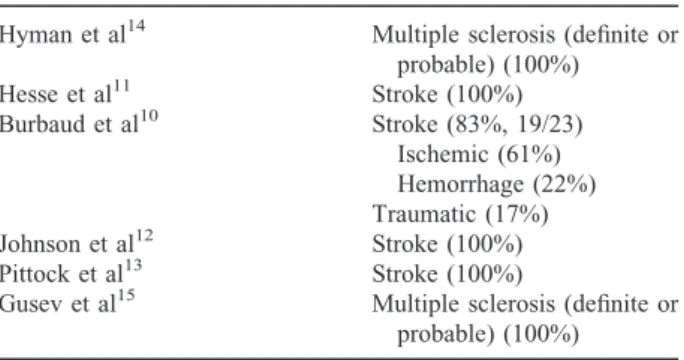
A total of 295 records were identified from the medical literature databases. Of these, 6 primary publications that evaluated ABO for the management of ALLS in adult patients were included in the final data report (Table 1).10– 15Figure 1 shows the PRISMA diagram for the full systematic review of all randomized controlled trials of ABO. With the exception of the study by Burbaud et al,10that was judged high risk, most of studies included in this report fulfilled criteria for low-risk selective reporting bias (Supplementary Table). Studies used a wide range of outcome measures including measures of spasticity (usually assessed with the Modified Ashworth Scale; MAS), range of movement (passive and active), walking parameters, pain, global clinical impression, activities of daily living, and goal attainment.
Efficacy in ALLS
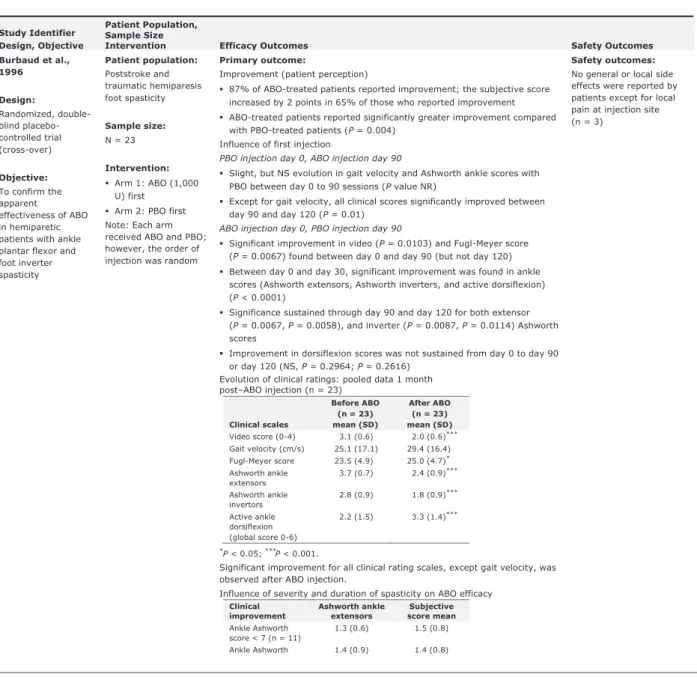
Statistically significant reductions in muscle tone versus baseline were reached for the majority of evaluations using MAS. When assessed, ABO treatment was consistently associ-ated with significant effects on pain. Effects on walking parameters were less consistent but generally favored ABO injections. Table 2 provides an overview of efficacy and safety outcomes from each of the studies.
Burbaud et al10evaluated the efficacy and safety of ABO in 23 hemiparetic patients with spasticity of the ankle plantar flexors and foot invertors due to stroke or traumatic hemiparesis in a randomized double blind, placebo controlled crossover study.10Patients received 1 injection of ABO and 1 of placebo in random order at day 0 and day 90. Injections were performed with electromyographic (EMG) guidance. Treatment efficacy was subjectively assessed by patients (on a scale of 0–3) and objectively assessed using clinical rating scales (assessing active dorsiflexion in the supine, sitting and standing position, and gait). The MAS and the Fugl–Meyer scale for the inferior limb were also applied. Treatment was with 1000 U ABO (diluted with 5 mL saline) and distributed among the various muscles according to their involvement in spasticity judged by the injector physician. The range of ABO dosages for individual muscles were as follows: triceps surae (500–1000 U), soleus
TABLE 1. Etiology of Lower Limb Spasticity
Hyman et al14 Multiple sclerosis (definite or
TABLE 2. Evidence Table of Completed Trials for Lower Limb Spasticity
Study Identifier Design, Objective
Patient Population, Sample Size
Intervention Efficacy Outcomes Safety Outcomes
Burbaud et al., 1996
Design:
Randomized, double-blind placebo-controlled trial (cross-over)
Objective: To confirm the apparent effectiveness of ABO in hemiparetic patients with ankle plantar flexor and foot inverter spasticity
Patient population: Poststroke and traumatic hemiparesis foot spasticity
Sample size: N = 23
Intervention: Arm 1: ABO (1,000 U) first
Arm 2: PBO first Note: Each arm received ABO and PBO; however, the order of injection was random
Primary outcome:
Improvement (patient perception)
87% of ABO-treated patients reported improvement; the subjective score increased by 2 points in 65% of those who reported improvement ABO-treated patients reported significantly greater improvement compared with PBO-treated patients (P= 0.004)
Influence of first injection
PBO injection day 0, ABO injection day 90
Slight, but NS evolution in gait velocity and Ashworth ankle scores with PBO between day 0 to 90 sessions (P value NR)
Except for gait velocity, all clinical scores significantly improved between day 90 and day 120 (P= 0.01)
ABO injection day 0, PBO injection day 90
Significant improvement in video (P= 0.0103) and Fugl-Meyer score (P= 0.0067) found between day 0 and day 90 (but not day 120) Between day 0 and day 30, significant improvement was found in ankle scores (Ashworth extensors, Ashworth inverters, and active dorsiflexion) (P< 0.0001)
Significance sustained through day 90 and day 120 for both extensor (P= 0.0067, P= 0.0058), and inverter (P= 0.0087, P= 0.0114) Ashworth scores
Improvement in dorsiflexion scores was not sustained from day 0 to day 90 or day 120 (NS, P= 0.2964; P= 0.2616)
Evolution of clinical ratings: pooled data 1 month post–ABO injection (n = 23)
Clinical scales
Before ABO (n = 23) mean (SD)
After ABO (n = 23) mean (SD) Video score (0-4) 3.1 (0.6) 2.0 (0.6)*** Gait velocity (cm/s) 25.1 (17.1) 29.4 (16.4) Fugl-Meyer score 23.5 (4.9) 25.0 (4.7)*
Ashworth ankle extensors
3.7 (0.7) 2.4 (0.9)***
Ashworth ankle invertors
2.8 (0.9) 1.8 (0.9)***
Active ankle dorsiflexion (global score 0-6)
2.2 (1.5) 3.3 (1.4)***
*
P < 0.05; ***P < 0.001.
Significant improvement for all clinical rating scales, except gait velocity, was observed after ABO injection.
Influence of severity and duration of spasticity on ABO efficacy
Clinical improvement
Ashworth ankle extensors
Subjective score mean
Ankle Ashworth score < 7 (n = 11)
1.3 (0.6) 1.5 (0.8)
Ankle Ashworth 1.4 (0.9) 1.4 (0.8)
Design, Objective
Sample Size
Intervention Efficacy Outcomes Safety Outcomes
Hesse et al., 1995
Design: Randomized, active controlled, clinical trial
Objective: To determine whether additional electrical stimulation enhances the effectiveness of ABO in the treatment of unilateral lower-limb spasticity following stroke
Patient population: Poststroke lower-limb spasticity
Sample size: N = 10
Intervention: Arm 1: EMG-guided ABO injection (2,000 U)
Arm 2: EMG-guided ABO (2,000 U for first patient only; 1,500 U for remaining patients) + neuromuscular stimulation Note: Due to AEs in Arm 2, patient 1, the dose for subsequent patients in Arm 2 was reduced
Primary outcomes: Muscle tone (MAS) Arm 1:ABO (2,000 U) only
25% (1 of 4) patients in the ABO alone reported a slight improvement in MAS—reduction of 1 point (Pvalues NR)
Minor qualitative improvement in cyclogram
No change was observed in other subjective or functional parameters (P values NR)
The toxin caused no plantar weakness in Arm 1 Arm 2: ABO (1,500 U) + neuromuscular stimulation
Reduction of 1 point in MAS was observed in 40% (2 of 5) of patients (P values NR)
Reduction of 2 points in MAS was observed in 60% (3 of 5) (Pvalues NR) Cyclogram showed qualitative improvement in all patients who received neuromuscular stimulation
The toxin caused plantar weakness in all patients Arm 2 Pre- and post-gait variables
Gait variables
Pre Mean (SD)
Post Mean (SD) Velocity (m/s)
ABO alone 0.28 (0.11) .30 (0.10)
ABO + neuromuscular stimulation
0.39 (0.37) 0.49 (0.40)*
Stride (m)
ABO alone 0.56 (0.11) 0.58 (0.14)
ABO + neuromuscular stimulation
0.64 (0.33) 0.77 (0.37)*
Cadence (steps/min)
ABO alone 60 (13.8) 62.1 (10.8)
ABO + neuromuscular stimulation
58.5 (31.2) 67.6 (29.0)
Stance symmetry (%)
ABO alone 72.6 (7.2) 68.0 (9.6)
ABO + neuromuscular stimulation
70.0 (14.5) 84.8 (6.8)*
Swing symmetry (%)
ABO alone 56.2 (16.4) 52.0 (23.6)
ABO + neuromuscular stimulation
56.0 (24.6) 65.2 (26.6)*
Double support (% cycle duration)
ABO alone 53.7 (13.8) 53.4 (16.9)
ABO + neuromuscular stimulation
54.9 (22.1) 44.9 (9.3)
* Significant group difference at P< 0.05.
Secondary outcomes:NR
Optimal dosing:
Due to AEs in the first patient in Arm 2 (ABO 2,000 U + neuromuscular
AEs believed to be drug-related: First patient treated in Arm 2 (ABO 2,000 U + neuromuscular stimulation)
Bladder pareses requiring catheterization for 14 days
AEs not confirmed to be drug-related:
TABLE 2. (Continued)
Study Identifier Design, Objective
Patient Population, Sample Size
Intervention Efficacy Outcomes Safety Outcomes
Johnson et al., 2004
Design: Non-blinded randomized controlled trial
Objective: To investigate the effect of combined ABO and functional electric stimulation (FES) treatment on spastic drop foot in stroke
Patient population: Poststroke spastic drop foot
Sample size: N = 21
Intervention: Arm 1: PT + ABO (1,200 U) + FES Arm 2: PT alone
Primary outcomes: Walking speed
Over the 12 weeks, walking speed increased for both control (P = 0.20) and treatment groups (PT + ABO + FES: P = 0.042; PT + ABO [nonstimulated]: P = 0.004)
The overall increase in mean walking speed at 12 weeks relative to controls was 0.09 m/s in the PT + ABO + FES group and 0.04 m/s in the PT + ABO (nonstimulated) group
Secondary outcomes:
A statistically significant downward trend in median PCI observed for treatment groups (PT + ABO + FES: P = 0.020; and PT + ABO
[nonstimulated]: P = 0.020), but not for the control group (NS, P = 0.292) A downward, but not significant, trend observed in the median MAS of the ankle plantar flexors in the treatment group (NS, P = 0.282); no trend evident in the control group (NS, P = 0.742)
From baseline to week 8, MAS was statistically significant in the treatment group (P = 0.022)
A downward but not significant trend observed in the median MAS of the quadriceps femoris in the treatment group (NS, P = 0.051); no trend evident in the control group (NS, P > 0.20)
No statistically significant change in median MAS of the hamstrings in either treatment group (NS, treatment, P = 0.326; control, P = 0.553) No change in median MAS of the dorsiflexors for either group, where there was a median score of 0, representing an absence of spasticity on clinical examination
A statistically significant upward trend in median RMA (mobile disability) total and gross scores was seen in the treatment group (P = 0.024, P < 0.001, respectively), but not in the control group (NS, P = 0.200, P > 0.200, respectively)
Leg and trunk sections of the RMA showed no significant difference between control or treatment groups (all P > 0.20)
No statistically significant trends in any dimension of the SF-36 in either control or treatment groups (NS, P value NR)
Few AEs reported, and those that were reported are not well described: PT-only group (control)
Stroke (n = 1) Minor health problems: lower back strain and seizure (n = 2) Treatment (undefined treatment group)
Headaches possibly due to stimulation (n = 1) Intercurrent illness (n = 3)
Fall, hearing loss, and cardiac problems (n = 1)
Study Identifier Design, Objective
Sample Size
Intervention Efficacy Outcomes Safety Outcomes
Pittock et al., 2003
Design: Prospective, randomized, double-blind, placebo-controlled, dose-ranging study
Objective: To assess the effects of three doses of ABO on calf spasticity causing spastic equinovarus deformity, and to evaluate its impact on walking
Patient population: Poststroke lower-limb spasticity
Sample size: N = 234
Intervention: Arm 1: PBO Arm 2: ABO (500 U) Arm 3: ABO (1,000 U)
Arm 4: ABO (1,500 U)
Primary outcome:
Distance covered during a 2-minute walking test (m)
Time points
PBO (n = 54)
Mean ABO 500 U (n = 55)
Mean ABO 1,000 U (n = 55) Mean
ABO 1,500 U (n = 57) Mean Baseline
4 weeks 8 weeks 12 weeks
41.4 46.5 48.5 50.5
41.4 44.3 49.0 49.5
42.9 46.6 47.8 50.6
40.5 46.0 48.2 48.9
Distance increased significantly (P 0.05) in each of the treatment groups, including PBO. No statistically significant difference was observed between groups (P> 0.05).
If distance at baseline was less than 30 m, only a small improvement was seen in Arms 1, 2, and 3 (~ 4 m), but a greater mean increase (~ 6 m) was seen in Arm 4 (Pvalue NR)
If distance at baseline was between 30 and 60 m, a more marked improvement was seen in all arms (~ 12 m) (Pvalue NR) If distance at baseline was > 90 m, only a small or no change was observed in Arm 1 (~ 3 m), Arm 3 (~ 5 m), and Arm 4 (–0.4 m), but a greater change was seen in Arm 2 (10 m) (Pvalue NR).
Secondary outcomes:
Stepping rate and step length discrepancy
Increased significantly in each treatment group (P< 0.05), but no statistically significant differences between groups (Pvalue NR).
Statistically significant correlation between the baseline discrepancy in step length (cm) and the change observed after treatment within each treatment group, including PBO, at each time point (4, 8, and 12 weeks: Arm 1,P= 0.001, P= 0.0014, P= 0.0002; Arm 2, P= 0.060, P< 0.0001, P= 0.0002; Arm 3, P< 0.0001, P< 0.0001, P< 0.0001; Arm 4, P= 0.0086, P= 0.0036, P= 0.0006)
The greatest reduction in the step length discrepancy was seen in Arm 3 at 8 weeks after treatment (P< 0.0001)
Rivermead Motor Assessment (RMA)
No statistically significant differences between groups (Pvalue NR). Use of walking aids
Greatest changes in the need of walking aids observed at 4 weeks after treatment in all groups
Statistically significant difference in number of patients reporting reduced dependence on aids in Arm 3 (P= 0.0100) and Arm 4 (P= 0.0000) compared with Arm 1
Calf spasticity (MAS scores differences at each assessment vs. baseline) In all groups, spasticity decreased throughout the 12-week study period Greatest improvements in spasticity vs. PBO in Arm 4, at all time points (4 weeks: P= 0.012; 8 weeks: P= 0.017; 12 weeks: P= 0.019)
Safety outcomes: AEs per group (PBO, 500 U, 1,000 U, 1,500 U):
29%, 29%, 25%, 33% Severe AEs per group:
PBO: 5 (1 pain, 1 edema, 1 paraesthesia, 1 hypertonia, and 1 pancreatitis) 500 U: 2 (1 pharyngitis, 1 Dysphagia) 1,000 U: 3 (1 headache, 1 somnolence, 1 dizziness) 1,500 U: 5 (2 pain, 1 asthenia, 1 somnolence, 1 abnormal gait) Mild to Moderate AEs per group (PBO, 500 U, 1,000 U, 1,500 U):not consistently related to treatment. Those occurring at a frequency of 5% or greater (3 patients per group)
Pain
(7.3%, 8.5%, 8.3%, 10%)
TABLE 2. (Continued)
Study Identifier Design, Objective
Patient Population, Sample Size
Intervention Efficacy Outcomes Safety Outcomes
Gusev et al., 2008
Design:
Randomized, double-blind, placebo-controlled trial
Objective: To assess the efficacy of ABO in the treatment of adults with adductor muscle spasticity due to definite or probable multiple sclerosis
Patient population: Hip adductor spasticity in MS
Sample size: N = 106
Intervention: Arm 1: PBO Arm 2: ABO (1,000 U or 1,500 U) Note: ABO dose modified according to degree of spasticity, asymmetry of spasticity, variations of body and muscle mass, and previous experience with BoNT
Primary outcome:
Improvement in patient-selected functional outcome measure at week 4 The outcome most patients (ABO and PBO groups) selected and wanted to most improve was “dressing of lower body”
Second and third patient choices were “maintenance of perineal hygiene” and “transfer to toilet”
The majority of patients in both treatment groups reported “great deal of difficulty” performing their chosen outcome measure (ABO 40% vs. PBO 39%, reports NS, Pvalue NR)
Secondary outcomes:
Key functional outcome measure (patient selected) at weeks 4, 8 and 12: Responder (showing an improvement in at least one point from baseline)
At week 4, 29% of patients in both treatment groups reported an improvement of 1 grade in their key functional outcome measure (NS, P= 0.745); significance was not reached by week 8 or 12 (NS, P= 0.469 andP = 0.497)
Treatment response for “maintenance of perineal hygiene” trended toward but did not reach significance (ABO 40% vs. PBO 24%, NS, P = 0.096) Changes in MAS in both legs
Some improvement in MAS response rates was seen at all time points (weeks 4, 8, and 12) for ABO-treated patients compared with PBO (NS, P value NR)
At week 8, the proportion of patients who had an improvement of 1 point on the MAS for leg adductor muscle tone approached but did not reach significance (NS, P = 0.067)
Changes in distance between knees under passive and active abduction Distance between knees increase under passive and active abduction for ABO-treated patients was greater than compared with PBO, but did not reach significance (NS, P value NR)
Retreatment
Retreatment was indicated or requested by more ABO treated patients compared with PBO (53% vs. 49%, Pvalue NR)
Safety outcomes: AEs observed in 53% of ABO treated patients compared with 27% of PBO treated patients; P value NR
Most AEs mild to moderate intensity and resolved in a few days
Most frequent AEs: Asthenia (ABO:22% vs. PBO: 6%; Pvalue NR) Pain, hypertonia and dry mouth reported more often in the ABO group compared with PBO (data and Pvalue NR)
Serious AEs possibly due to ABO:
Study Identifier Design, Objective
Sample Size
Intervention Efficacy Outcomes Safety Outcomes
Hyman et al., 2000
Design: Randomized, double-blind, placebo-controlled dose-ranging study Objective: To define a safe and effective dose of ABO for treating hip adductor spasticity
Patient population: Hip adductor spasticity in MS
Sample size: N = 74
Intervention: Arm 1: ABO 500 U Arm 2: ABO 1,000 U Arm 3: ABO 1,500 U Arm 4: PBO
Primary outcomes: Measure PBO ABO 500 ABO 1,000 ABO 1,500 Distance between knees (cm)
Week 0 median (SD) 28.2 (12.8) 29.8 (12.1) 24.9 (11.9) 28.5 (10.3) Week 4 median (SD) 32.1 (12.3) 36.7 (12.8) 31.9 (9.2) 39.2* (10.4)
Passive hip abduction (degrees) Week 0 median (SD) 42.6 (27.5) 39.4 (20.6) 39.4 (21.3) 48.2 (23.0) Week 4 median (SD) 53.9 (19.7) 56.5 (24.8) 63.4 (24.3) 61.3 (25.4) *
P= 0.02.
Distance from the knees and passive hip abduction improved in all groups from week 0 to week 4; however, statistically significant improvement was seen only for distance between the knees in the ABO 500 group compared with PBO (P= 0.02)
Secondary outcomes:
Active hip abduction improved minimally across treatment groups from week 0 to week 4 (NS, Pvalue NR)
MAS improved similarly across treatment groups from week 0 to week 4 (NS, Pvalue NR)
Muscle tone improved similarly across treatment groups, but more so with the increase in ABO dose (NS, Pvalue NR)
Spasm frequency reduced similarly across all treatment groups, but more so in the ABO 1,000 group (NS, Pvalue NR)
Clinical global rating improved by 1 point across treatment groups, but between-group comparisons, differences were not observed (NS, Pvalue NR)
The proportion of pain-free (upper leg) patients across groups increased from week 0 to week 4 (NS, Pvalue NR)
Hygiene improvement was not changed from week 0 to week 4 for PBO and ABO 500 groups; however, improvement by 1 point was seen in ABO 1,000 and ABO 1,500 U groups (NS, Pvalue NR)
Investigator and patient opinions of response to treatment were overall similar, with positive opinion for two-thirds of the ABO 500 U group and half of patients in the ABO 1,000 U and ABO 1,500 groups (NS, Pvalue NR) The highest percentage of PBO patients requested or had retreatment indicated before week 12 compared with the ABO-treated groups (NS, P value NR)
Time to retreatment was significantly longer for all ABO groups (ABO 500 U, P= 0.042; ABO 1,000 U, P= 0.017; ABO 1,500 U, P= 0.015) compared with PBO
Optimal dosing:
AEs:
55% of ABO-treated
patients
63% of PBO-treated
patients
Most frequent AEs in ABO-treated patients:
Hypertonia (22%)
Weakness of noninjected
muscles (14%)
Fatigue (7%)
Urinary tract infection (5%)
Headache (5%)
Micturition frequency (5%)
Back pain (5%)
Diarrhea (5%)
The PBO group reported similar AEs, with the exception of muscle weakening
2 times the number of AEs were reported by ABO 1,500 U group compared with the ABO 500 U and ABO 1,000 U groupsSAEs:
n = 6 reported for ABO and PBO
Not believed to be related to ABO:
n = 1 had diarrhea and
urinary tract infection, 36
days after receiving ABO
1,500 U
n = 1 had urinary tract
infection, chest infection
and hypothermia, 69
daysafter receiving ABO
1,000 U
The remaining 4 SAEswere in the PBO group and resulted in hospitalizations due to:
Bowel spasticity Gastropareses Pulmonary embolism
Act = active ankle dorsiflexion; ADL = activity of daily living; AE = adverse event; AR = associated reaction; ABO = AbotulinumtoxinA; FES = functional electrical stimulation; FM = Fugl-Meyer score; MAS = Modified Ashworth Scale; MS = multiple sclerosis; NR = not reported; PBO = placebo; PCI = physiological cost index; PT = physical therapy; ROM = range of motion; Vel = Gait velocity; Vid = Video score.
In an open-label study, Hesse et al11examined the effect of ABO with or without electrical stimulation (ES) treatment postinjection on ALLS in 10 hemiparetic subjects with the history of stroke. Five subjects were randomized into each treatment group: 2000 U ABO followed by ES treatment (30 min, 6 times/d during the 3 days following the injection), 2000 units ABO without ES. Injections were performed into the following muscles using EMG guidance: soleus, tibialis posterior, and both heads of gastrocnemius muscles. Study results indicated that there were no significant differences in MAS across groups. However, the group receiving ABOþES treatment demonstrated the greatest reduction in MAS (P¼0.011). The result of other measures, including limb position at rest and ability to perform 3 identified ADLs, were variable.
The effect of combined use of ABO and functional electric stimulation (FES) in the treatment of spastic drop foot following stroke was also investigated by Johnson et al.12Twenty-one subjects participated in this nonblinded randomized controlled study and 18 of them completed the study. Every subject received ABO injection into the medial and lateral heads of the gastrocnemius and tibialis posterior. Injections were per-formed with EMG guidance. Walking speed increased in both injection and control groups over 12 weeks study with statisti-cally significant difference in favor of the group with FES. Authors concluded that the combined treatment improved walking and function.
Pittock et al evaluated the effect of ABO injections on calf muscle hypertonicity following stroke in a prospective, multi-center, double-blind, placebo-controlled, and dose-ranging study. Two-hundred and thirty-four stroke patients were randomized into the ABO group and were dosed with 500, 1000, or 1500 U.13Within the calf, upper, and lower injection sites were determined by palpation of the femoral and calcaneal insertions of the gastrocnemius muscle; 1/4 and 1/3 of the total length from the femoral insertions, respectively, and EMG guidance was not used. The primary outcome measures, 2-min walking distance and stepping rate, increased significantly in each group with no significant difference between groups. There were also small, but statistically significant improve-ments in calf spasticity, limb pain, and reduction in the use of walking aids compared with placebo. Authors concluded that ABO injection resulted in a significant reduction in muscle tone, limb pain, and dependence on walking aids. The best benefit was achieved with 1500 U of ABO.
Hyman et al14investigated the effectiveness and safety of ABO for treating hip adductor spasticity. In this double-blind study, 74 patients with multiple sclerosis and spasticity affect-ing the hip adductor muscles of both lower limbs were recruited and randomized to 4 groups of ABO 500, 1000, and 1500 U or
lower limb (500–750 U/leg). ABO was shown to provide effective pain relief in patients with severe adductor spasticity. Other predefined outcome measures, including functional per-formance (primary outcome), did not reach statistical signifi-cance. However, there was a significant improvement in favor of ABO for maintenance of perineal hygiene (P¼0.0096) and there were trends to significance for MAS response rates and in the distance between knees under passive abduction.15
Table 3 shows the injection methodology and adjunct therapies that were used in each study.
Safety in ALLS
ABO was well tolerated across the individual studies.10 – 15 Most adverse events reported were considered unrelated to treatment. Adverse events considered associated with ABO treatment included: local pain at injection site, fatigue, asthenia, somnolence, hypertonia, dry mouth, bladder paresis, urinary tract infection, urinary frequency, diarrhea, weakness of non-injected muscles, headache, abnormal gait, and dysphagia. Most of the AEs were more common at higher doses of ABO.
Dosing Across Indications
Total ABO doses ranged between 500 and 2000 U for ALLS. The most commonly injected muscles were the triceps surae, soleus, tibialis posterior, flexor digitrom longus, adductor magnus, adductor longus, adductor brevis, and gastrocnemius. Dose ranges for different muscles are summarized overall in Table 4 and by each individual study in Table 5.
DISCUSSION
Likewise, all 6 studies preselected only a certain number of muscles for injection. Due to complexity of ALLS, it is vital that the injector has a proper understanding of the patients’ indi-vidual clinical needs. Clinical trials often prespecify muscles in an attempt to standardize findings, but it is likely that this restricted approach may have affected the outcome of the studies. When deciding on dosing strategies, the injector must consider multiple patient factors such as the muscles affected, patient functionality, size of the patient, residual deficit, and the etiology of the spasticity. For example, whereas some patients with poststroke spasticity may gradually improve their function with proper rehabilitation, patients with spasticity secondary to central neurodegenerative disorders will usually worsen. In
to remission and exacerbation. Each of these different disease states requires a different dosing approach. Overall, additional research is needed in order to better define the optimal ABO dose and dilution parameters for individual muscles, the number and location of injection sites, and the most suitable technique for injection localization (eg, surface anatomy, EMG guidance, ES, and ultrasonography).
The degree of functional impairment is 1 of the most important factors to consider for managing spasticity. Unfortu-nately, spasticity research is hampered by the lack of outcome measures that are able to properly assess functional impairment before and after toxin injection,17 and this methodological limitation was evident in these 6 studies as well. For many TABLE 3. Injection Methodology and Adjunctive Therapies
Author Dysport Injection Methodology Adjunct Therapy
Johnson et al12 Injections were given under EMG guidance Functional electric stimulation
The Oddstock Dropped Foot Stimulator Mark III was used
Hesse et al11 EMG-guided injections Dual channel stimulator for group B patients
Hyman et al14 Muscles were located by palpation and were injected
with EMG guidance
Oral antispastic and analgesic medications being taken by the patient at the time of entry was permitted at a constant dose throughout the study
Standard of care physiotherapy was also permitted to continue unchanged throughout the study
Other concomitant medications were permitted at the discretion of the investigator
Burbaud et al10 EMG guidance Physiotherapy allowed
Gusev et al15 Muscles were located by palpation and were injected
with EMG guidance
Intrathecal baclofen was not permitted for the duration of the study
Any existing oral antispastic medication was continued at the same dose throughout the study and no new therapies were started
Standard of care physiotherapy, speech therapy, and occupational therapy could be initiated at study entry, but wherever possible the regimen remained constant throughout the study period
Pittock et al13 Upper calf and lower calf injection sites were determined
by palpation of the femoral and calcaneal insertions of the gastrocnemius muscle; 1/4 and 1/3 of the total length from the femoral insertions, respectively. EMG guidance was not used
Use and nature of walking aids and orthoses were recorded Concomitant medication and adjunctive treatments (eg,
flexion.10Gusev and colleagues note that if toxin spreads and weakens muscles adjacent to leg adductors, it is conceivable that the weakness could have negative influenced the ability to perform functional tasks with the legs.15 Such observations confirm the need for a highly individualized and multidisci-plinary approach to manage ALLS, where functional outcomes and physical intervention are vital for achieving patient-specific treatment goals. Future research should also consider measure-ment of activity-based outcomes, such as total step count profiles, which have been found to be useful when assessing for meaningful changes in ambulatory performance in patients with spinal cord injury, spinocerebellar ataxias, and chronic stroke.19 – 21
This systematic literature review is part of a larger review where the use of ABO in other indications such as AULS has also been evaluated.8When comparing the present results with the strength of the literature for AULS, it is apparent that more high-quality studies are required to inform practice. This need for more research is not limited to the use of ABO in ALLS, but there is also a clear and urgent need to better understand the burden of the condition2 and also the effectiveness of other treatments (including other BoNT formulations).22Such work is ongoing and over 10 clinical trials of interventions for ALLS are listed on clinicaltrials.gov (including a double-blind study with ABO NCT01249404 and its open label extension study NCT01251367).
LIMITATIONS
This systematic review employed strict inclusion criteria as described in the Cochrane Handbook for Systematic Reviews of Interventions Version 5.1.0.23Based on our criteria a large number of uncontrolled, exploratory studies were excluded and affected our sample size. While this obviously eliminated some clinically relevant information, this estab-lished methodology is considered necessary to avoid bias by using explicit, systematic methods. A key aim of this systema-tic review was to produce a comprehensive, evidenced-based data report that provides information on the injection schema used and associated outcomes for ABO in ALLS. However, the substantial heterogeneity among patients included in these 6 studies regarding their geographical location, etiology and severity of spasticity significantly limits our ability to draw firm conclusions. The heterogeneity of outcome measures made it difficult to directly compare studies, and so we pre-ferred to review the effectiveness of ABO in each study separately. Another limitation is due to lack of long follow up after ABO injection.
ACKNOWLEDGMENTS
Thanks to Lee-Ann Braun (RTI Health Solutions funded by Ipsen) for assistance with conducting the literature search and Anita Chadha-Patel, PhD (ACP Clinical Communications Ltd funded by Ipsen), for editorial support, including referencing. Authors are also grateful to Professor Sherry Downie, PhD, who reviewed this manuscript before the final submission.
REFERENCES
1. Pathak M, Truong D. Anatomic correlation of common patterns of spasticity. In: Brashear A, Elovic E, eds.Spasticity Diagnosis and Management. New York: Demos Medical; 2011.
2. Martin A, Abogunrin S, Kurth H, et al. Epidemiological, humanistic, and economic burden of illness of lower limb spasticity in adults: a systematic review.Neuropsychiatr Dis Treat.2014;10:111–122.
3. Hara Y. Deep venous thrombosis in stroke patients during rehabilita-tion phase.Keio J Med.2008;57:196–204.
4. Atiyeh BS, Hayek SN. Pressure sores with associated spasticity: a clinical challenge.Int Wound J.2005;2:77–80.
5. Royal College of Physicians, British Society of Rehabilitation Medicine, Chartered Society of Physiotherapy, Association of Chartered Phy-siotherapists Interested in Neurology. Spasticity in adults: management using botulinum toxin. National guidelines. London: RCP, 2009.
6. Simpson DM, Gracies JM, Graham K, et al. Assessment: botulinum neurotoxin for the treatment of spasticity (an evidence-based review).Neurology.2009;73:736–737author reply 737–738.
7. Wissel J, Ward AB, Erztgaard P, et al. European consensus table on the use of botulinum toxin type A in adult spasticity.J Rehabil Med.
2009;41:13–25.
8. Dashtipour K, Chen JJ, Walker HW, et al. Systematic literature review of AbobotulinumtoxinA in clinical trials for adult upper limb spasticity.Am J Phys Med Rehabil.2015;94:229–238.
9. Des Jarlais DC, Lyles C, Crepaz N, et al. Improving the reporting quality of nonrandomized evaluations of behavioral and public health interventions: the TREND statement.Am J Public Health.
2004;94:361–366.
10. Burbaud P, Wiart L, Dubos JL, et al. A randomised, double blind, placebo controlled trial of botulinum toxin in the treatment of spastic foot in hemiparetic patients.J Neurol Neurosurg Psychiatry.1996;61:265–269.
11. Hesse S, Jahnke MT, Luecke D, et al. Short-term electrical stimulation enhances the effectiveness of botulinum toxin in the treatment of lower limb spasticity in hemiparetic patients.Neurosci Lett.1995;201:37–40.
12. Johnson CA, Burridge JH, Strike PW, et al. The effect of combined use of botulinum toxin type A and functional electric stimulation in the treatment of spastic drop foot after stroke: a preliminary investigation.Arch Phys Med Rehabil.2004;85:902–909.
13. Pittock SJ, Moore AP, Hardiman O, et al. A double-blind randomised placebo-controlled evaluation of three doses of botuli-num toxin type A (Dysport) in the treatment of spastic equinovarus deformity after stroke.Cerebrovasc Dis.2003;15:289–300.
14. Hyman N, Barnes M, Bhakta B, et al. Botulinum toxin (Dysport) treatment of hip adductor spasticity in multiple sclerosis: a prospective, randomised, double blind, placebo controlled, dose ranging study.J Neurol Neurosurg Psychiatry.2000;68: 707–712.
15. Gusev Y, Banach M, Simonow A, et al. Efficacy and safety of botulinum type A toxin in adductor spasticity due to multiple sclerosis.J Musc Pain.2008;16:175–188.
16. Hubble J, Schwab J, Hubert C, et al. Dysport (botulinum toxin type A) in routine therapeutic usage: a telephone needs assessment survey of European physicians to evaluate current awareness and adherence to product labeling changes.Clin Neuropharmacol.
2013;36:122–127.
17. Burridge JH, Wood DE, Hermens HJ, et al. Theoretical and methodological considerations in the measurement of spasticity.
Disabil Rehabil.2005;27:69–80.
18. McIntyre A, Lee T, Janzen S, et al. Systematic review of the effectiveness of pharmacological interventions in the treatment of spasticity of the hemiparetic lower extremity more than six months post stroke.Top Stroke Rehabil.2012;19:479–490.
19. Bowden MG, Behrman AL. ‘‘Step activity monitor’’ accuracy and test–retest reliability in patients with incomplete spinal cord injury. J Rehabil Res Dev. 2007;44:355–362.
20. Mudge S, Stott N. Test–retest reliability of the StepWatch activity monitor outputs in individuals with chronic stroke. Clin Rehabl. 2008;22:871–877.
21. Subramony SH, Kedar S, Murray E, et al. Objective home-based gait assessment in spinocerebellar ataxia. J Neurol Sci 2012;313: 95–98.
22. Esquenazi A, Albanese A, Chancellor MB, et al. Evidence-based review and assessment of botulinum neurotoxin for the treatment of adult spasticity in the upper motor neuron syndrome.Toxicon.
2013;67:115–128.