THE IMPACT OF CHILD MALTREATMENT ON THE DEVELOPMENT OF ALCOHOL AND SUBSTANCE USE: COMPARING TRAJECTORIES OF ALCOHOL AND
SUBSTANCE USE IN ADOLESCENCE AND YOUNG ADULTHOOD BETWEEN VICTIMS AND NON-VICTIMS OF MALTREATMENT
McLean Dickinson Pollock
A dissertation submitted to the faculty of the University of North Carolina at Chapel Hill in partial fulfillment of the requirements for the degree of Doctor of Philosophy in the Department
of Maternal and Child Health in the Gillings School of Global Public Health.
Chapel Hill 2015
Approved by: Sandra L. Martin
Chirayath M. Suchindran Sherri L. Green
ii ©2015
iii
ABSTRACT
McLean Dickinson Pollock: The Impact of Child Maltreatment on the Development of Alcohol and Substance Use: Comparing Trajectories of Alcohol and Substance Use in Adolescence and
Young Adulthood between Victims and Non-Victims of Maltreatment (Under the direction of Sandra L. Martin)
The purpose of this dissertation is to examine the impact of self-reported child
maltreatment and involvement of child welfare services (CWS) on alcohol, marijuana, and other substance use in adolescence and young adulthood. Using data from the National Longitudinal Study of Adolescent to Adult Health (Add Health), a nationally representative dataset, and hierarchical linear and generalized linear modeling, we first investigated the long-term impact of child maltreatment and involvement of CWS on alcohol, marijuana and other substance use in young adulthood. We found that experiencing poly-victimization impacted average monthly alcohol consumption when compared to non-victims of maltreatment. After conditioning on identified covariates and modification by biological sex, all measures of maltreatment except sexual abuse are associated with an increased odds of more frequent marijuana use, and poly-victimization is associated with an increased odds of more frequent use of other substances in adulthood.
iv
able to identify separate associations by specific measures of maltreatment and CWS
involvement. Developmental trajectories for all participants revealed patterns of increasing use of alcohol, marijuana, and other substances into late adolescence and emerging adulthood, followed by gradual decreases in use as participants aged into young adulthood; however, some differences by maltreatment or CWS status in the use of alcohol, marijuana, and other substances persisted into adulthood.
Substance use prevention and intervention efforts should consider the role of
v
ACKNOWLEDGEMENTS
It takes a village to write a dissertation. First, I want to thank my advisor and chair, Sandy Martin. She has been an incredible mentor, advisor, and source of support. She has challenged me, inspired me and exposed me to many opportunities to explore my research interests.
The members of the dissertation committee have also been incredible supports through the dissertation process. I have been so fortunate to work with and know Sherri Green. She is the ideal mentor who has been essential to my success in the doctoral program. Chirayath
Suchindran kindly guided me through the complex analyses of this dissertation through many meetings and emails. Carolyn Halpern has provided support and guidance throughout the doctoral program and the dissertation process, and I am incredibly grateful. Finally, Jon Hussey and Julie Daniels have enriched my research skills and conceptual understanding of my
dissertation research. Their time and guidance has been greatly appreciated.
I am also grateful for the financial and professional support I received through the
vi
being a remarkable role model and tireless advocate for her current and former students. I would also like to thank Rebecca J. Macy for inspiring me to return to academia to pursue my research interests and for involving me in her collaborative efforts to help children and families.
In particular, I am grateful to have had the opportunity to access the Add Health study for this dissertation research. This research uses data from Add Health, a program project directed by Kathleen Mullan Harris and designed by J. Richard Udry, Peter S. Bearman, and Kathleen Mullan Harris at the University of North Carolina at Chapel Hill, and funded by grant P01-HD31921 from the Eunice Kennedy Shriver National Institute of Child Health and Human Development, with cooperative funding from 23 other federal agencies and foundations. Special acknowledgment is due Ronald R. Rindfuss and Barbara Entwisle for assistance in the original design. Information on how to obtain the Add Health data files is available on the Add Health website (http://www.cpc.unc.edu/addhealth). No direct support was received from grant P01-HD31921 for this analysis.
vii
TABLEOFCONTENTS
LISTOFTABLES ... ix
LISTOFFIGURES ... xi
LISTOFABBREVIATIONS ... xii
CHAPTER1.INTRODUCTION ... 1
Alcohol and substance use ... 1
Child Maltreatment and Child Welfare Services Involvement ... 3
Relationship between Child Maltreatment and Alcohol or Substance Use ... 5
Theories Guiding the Dissertation Research ... 8
Coping Theory ... 8
Life course Perspective ... 9
Study Overview ... 9
CHAPTER2.THEIMPACTOFCHILDMALTREATMENTANDCHILD WELFARESERVICESINVOLVEMENTONALCOHOLAND SUBSTANCEUSEINYOUNGADULTHOOD ... 11
Introduction ... 11
Methods ... 17
Data source and analytic sample ... 17
Measures ... 18
Analytic Strategy ... 22
Results ... 24
Discussion ... 28
Limitations ... 33
Conclusions ... 35
CHAPTER3.THEIMPACTOFCHILDMALTREATMENTANDCHILD WELFARESERVICESINVOLVEMENTONTRAJECTORIESOF ALCOHOLANDSUBSTANCEUSEFROMADOLESCENCETOYOUNG ADULTHOOD ... 48
Introduction ... 48
viii
Data source and analytic sample ... 53
Measures ... 54
Analytic Strategy ... 58
Results ... 60
Discussion ... 70
Limitations ... 75
Conclusions ... 77
CHAPTER4.CONCLUSIONS ... 97
Overview of Findings ... 97
Use of the Add Health Dataset to Study the Impact of Child Maltreatment and CWS Involvement on Alcohol, Marijuana, and Other Substance Use ... 100
Concordance between the Findings, Theories and Existing Literature ... 101
Implications ... 105
ix
LIST OF TABLES
Table 2.1. Prevalence of Child Maltreatment and Child Welfare Services
(CWS) Involvement Experiences of the Study Population (N=9,885) ... 37 Table 2.2. Characteristics of the Study Population at Wave IV, National
Longitudinal Study of Adolescent to Adult Health (N=9,885) ... 38 Table 2.3. Descriptive statistics for monthly alcohol use, past 30-day marijuana
use, and past 30-day other substance use, National Longitudinal Study of
Adolescent to Adult Health, Wave IV ... 39 Table 2.4. Monthly Alcohol Use – Unadjusted Mean and Geometric Mean
(SE) by Maltreatment Status ... 40 Table 2.5. Marijuana and other substance use (Past 30 Days) – unadjusted OR
(95% CI) by maltreatment status ... 41 Table 2.6. Estimated HLM coefficients of the effects of child maltreatment on
monthly alcohol use (log-transformed), Wave IV of the National Longitudinal
Study of Adolescent to Adult Health ... 42 Table 2.7. Estimated HGLM coefficients of the effects of child maltreatment
on monthly marijuana use, Wave IV of the National Longitudinal Study of
Adolescent to Adult Health ... 44 Table 2.8. Estimated HGLM coefficients of the effects of child maltreatment
on monthly other substance use, Wave IV of the National Longitudinal Study
of Adolescent to Adult Health (N=9,842) ... 46 Table 3.1. Prevalence of child maltreatment and child welfare services
involvement experiences by gender ... 78 Table 3.2. Descriptive statistics for covariates by child maltreatment status ... 79 Table 3.3. Descriptive statistics for monthly alcohol use, past 30-day marijuana
use, and past 30-day other substance use, by maltreatment status and biological
sex (waves I-IV) ... 80 Table 3.4. Multilevel models for change by maltreatment and child welfare
services involvement on alcohol use (log-transformed) over time among males ... 81 Table 3.5. Multilevel models for change by maltreatment and child welfare
services involvement on alcohol use (log-transformed) over time among
x
Table 3.6. Multilevel models for change by maltreatment and child welfare
services involvement on past 30-day marijuana use over time among males ... 85 Table 3.7. Multilevel models for change by maltreatment and child welfare
services involvement on past 30-day marijuana use over time among females ... 87 Table 3.8. Multilevel models for change by maltreatment and child welfare
services involvement on past 30-day other substance use over time among
males ... 91 Table 3.9. Multilevel models for change by maltreatment and child welfare
services involvement on past 30-day other substance use over time among
xi
LIST OF FIGURES
Figure 2.1. Construction of analytic sample with detailed sample exclusions ... 36 Figure 3.1. Developmental Trajectories of Monthly Alcohol Use Among
Males: Physical Neglect (PN) and Child Welfare Services (CWS)
Investigation. ... 83 Figure 3.2. Developmental Trajectories of Monthly Alcohol Use Among
Females: Any Maltreatment (CM), Physical Neglect (PN), Sexual Abuse (SA), Poly-victimization, Child Welfare Services (CWS) Investigation, and
Removed from the Home and Child Welfare Services Investigation by
Biological Sex. ... 84 Figure 3.3.Developmental Trajectories of Predicted Probabilities of Past
30-Day Marijuana Use among Males: Any Maltreatment (CM), Physical Neglect
(PN), Emotional Abuse (EA), Sexual Abuse (SA), and Poly-victimization. ... 89 Figure 3.4. Developmental Trajectories of Predicted Probabilities of Past
30-Day Marijuana Use among Females: Any Maltreatment (CM), Physical Abuse
(PA), Poly-Victimization, and Removal from the Home. ... 90 Figure 3.5. Developmental Trajectories of Predicted Probabilities of Past
30-Day Other Substance Use among Males: Any Maltreatment (CM), Physical Neglect (PN), Emotional Abuse (EA), Sexual Abuse (SA), and
Poly-Victimization among Males. ... 95 Figure 3.6. Developmental Trajectories of Predicted Probabilities of Past
30-Day Other Substance Use among Females: Child Welfare Services (CWS)
xii
LIST OF ABBREVIATIONS
ACE Adverse Childhood Experiences
Add Health National Longitudinal Study of Adolescent to Adult Health CASI Computer-Assisted Self Interviews
CDC Centers for Disease Control and Prevention
CI confidence interval
CM child maltreatment
CWS child welfare services
GED General education development
GF graduated frequency
GLLAMM generalized linear latent and mixed model HLM hierarchical linear model
HGLM hierarchical generalized linear models
GM geometric mean
n number
NH non-Hispanic
NIS-4 National Incidence Study of Child Abuse and Neglect
OR odds ratio
p p-value
PN physical neglect
SE standard error
TEDS Treatment Episode Data Set
1
CHAPTER1.INTRODUCTION
Alcohol and substance use
Substance use and substance use disorders have been linked to numerous health, mental health, behavioral, and societal problems. Persons who abuse substances have a higher mortality rate and risk of premature death than the general population (1), and the total annual cost to society due to tobacco, alcohol, and illicit drug use and use disorders is estimated at
approximately $524 billion (2).
Use of alcohol and other substances typically begins during adolescence, a period of development marked by increased impulsivity and risk-taking behaviors, and extends into adulthood. In the general population, the average age of first use of alcohol is 14 years (3) and first use of marijuana is 18 years; for most other substances, the average age of first use occurs before the age of 26 (4). Over two percent of youths between 12 and 13 years of age use illicit substances, such as marijuana, cocaine, and nonmedical use of prescription medications but not including underage tobacco use, or alcohol (2.6% and 2.1%, respectively) (4), and the prevalence rate of both illicit substance use and alcohol use increases as youths age with a peak prevalence around late adolescence/emerging adulthood. The highest prevalence of illicit substance use is between the ages of 18 to 20 years (22.6%), which is followed by a steady decline in older adults (4). The prevalence of alcohol use follows a similar pattern with a slightly later peak at 69.3% between 21 and 25 years of age, followed by a gradual decline in prevalence as adults age (4).
2
have a similar prevalence rate of current alcohol use between 12 and 17 years of age (11.2% and 11.9%, respectively) (4), but as youths age, the differences in use widen. In emerging adulthood (18-25 years of age), 62.3% of males and 56.9% of females are current drinkers, and among adults ages 26 and older, the prevalence of use remains the same for males (62.2%) but declines for females (50.1%) (4). Additionally, a larger proportion of males than females use illicit substances. Among persons ages 12 and older, 11.5% of males and 7.3% of females use illicit substances (4). In 2013, approximately 21.6 million persons age 12 years and older met criteria for a substance use disorder, and the rate of use disorders was greater for males (10.8%) than females (5.8%) (4).
Substance use and use disorders in both adolescence and adulthood have been associated with increased risk of morbidity (5, 6), mortality (7, 8), and risk behaviors (9, 10). Youths who endorse problems related to substance use are more likely to engage in sexual risk behaviors, such as early onset of sexual activity, more sexual partners, and less consistent use of condoms (11). Marijuana use has been associated with impaired driving skills, chronic inflammation of the airways, precipitation of the onset or relapse of schizophrenia, and immediate cognitive
3
Past research has shown a link between child maltreatment and alcohol and substance use and misuse (16, 17), but findings vary based on measures of maltreatment and alcohol or
substance use.
Child Maltreatment and Child Welfare Services Involvement
Child maltreatment is a public health problem that involves the neglect or abuse of children by an adult caregiver. It has been associated with elevated risk of fatalities, physical and mental health morbidities, behavioral problems, negative educational consequences and criminal involvement (18). In 2008 alone, the total lifetime economic costs from new and existing cases of child maltreatment in the United States, including health care costs, productivity losses, child welfare and criminal or law enforcement costs, and special education costs, were estimated at $124 billion (19).
Estimates of the prevalence of child maltreatment vary based on how maltreatment is defined and assessed. In particular, estimates based on victim report of child maltreatment are higher than those based on records of child maltreatment incidents reported to or substantiated by Child Welfare Services (CWS) (20-22). One study found that prevalence estimates of child maltreatment are between four to six times higher when using adolescent self-report compared with determination of maltreatment through CWS (23), and another study found that CWS records identify only about one third of the maltreated children known to community
professionals (24). Based on estimates of CWS substantiated or indicated maltreatment, in 2012, 686,000 children or 9.2 per 1,000 children were victims of substantiated maltreatment (25).
4
reported but were identified by other human service professionals, such as teachers, social workers, and law enforcement officers, found that 1,256,600 children experienced maltreatment in the United States between 2005 to 2006, representing an annual rate of 17.1 children per 1,000 experiencing maltreatment (24). The differential rates of child maltreatment when using cases identified through child welfare services compared with estimates that identify maltreatment through self-report or cases known to community professionals indicate that children who are involved with CWS may be different from children who are maltreated but not involved with CWS. Thus estimates that rely only on CWS identification may not accurately represent the full scale of maltreatment.
Regardless of how child maltreatment is identified, all methods generally find that neglect is the most common form of child maltreatment. Most CWS substantiated cases are identified as neglect (71%), followed by physical abuse (16%), sexual abuse (9%), and emotional abuse (7%) (26). Among cases of maltreatment identified through the NIS-4, 61% are identified as neglect, followed by physical abuse at 26%, emotional abuse at 12%, and sexual abuse at 11% (24). Using retrospective, self-reported measures of maltreatment, 41.5% of young adults
reported experiencing supervisory neglect, 28.4% reported physical abuse, 11.8% reported physical neglect, and 4.5% reported experiencing sexual abuse at least once before the age of 18 (27).
5
that almost 35% of persons reporting any maltreatment experienced two or more types of child maltreatment (29). Among a sample of undergraduate students, 38.2% of respondents who reported any child maltreatment indicated that they experienced multiple forms of maltreatment (30). Previous studies have also shown an exposure response relationship between the number of different types of maltreatment and increased risk of adverse outcomes. A study of urban youth involved with CWS found that youths who experienced more types of maltreatment reported more aggression, lower self-esteem, and less optimal cognitive development when compared with youths who experienced fewer types of maltreatment (31). Another study examining ACE data found that as the number of types of childhood maltreatment increases, mental health functioning decreases (29). Thus, recent studies have called for increased attention to poly-victimization when studying relationships involving child maltreatment (30, 32, 33).
Relationship between Child Maltreatment and Alcohol or Substance Use
An important risk factor for substance use, substance use disorders, and related problematic behaviors in both adolescence and adulthood is child maltreatment (16, 17), involving an act or actions by a parent or caregiver that result in harm, potentially harm, or threats to harm a child (34). Hernandez and colleagues found that high school students who reported experiencing child sexual abuse had significantly higher levels of substance use and more problems related to substance use than students who reported no sexual abuse (35).
Another study of high school students found an association between child abuse and past 30 day alcohol and drug use, as well as initial use of alcohol and drugs before the age of 11 (36).
Similarly, another study of secondary school students found that experiencing physical or sexual abuse was associated with early initiation of alcohol use before age 13 (37). Childhood
6
youths receiving substance use treatment services (38). Finally, when examining this relationship among youths involved with child welfare, the number of out-of-home placements and the age of entry into the CWS are positively associated with the severity of substance involvement (39).
The impact of maltreatment on alcohol and substance use reaches into adulthood.
Research has shown that child maltreatment victimization is associated with an increased risk for alcohol and substance abuse in adulthood. One study based in an urban area found that adults who reported childhood sexual abuse were three times as likely to engage in past-month binge drinking than their non-maltreated counterparts (40). Among a sample of adults who actively used substances, those with a history of physical and sexual abuse were over three times more likely to report heavy inhalant use compared to persons who reported no maltreatment (41). A longitudinal study using a sample of racial minorities and economically disadvantaged families found that young adults who were victims of CWS-substantiated or indicated childhood
maltreatment were more likely to report substance misuse than non-maltreated adults (42). Another study that also relied on substantiated reports by CWS found that young adults who had experienced childhood maltreatment experienced higher frequencies of illicit substance use and problematic substance use compared with non-maltreated adults (43). Prior research has found that adults with a history of substantiated childhood maltreatment are more likely to report past-year use of any illicit drug and more problems related to illicit drug use, compared with non-maltreated adults (44).
Previous studies that have utilized nationally representative data have also found
7
and alcohol and substance use in emerging adulthood (ages 18-26 years) estimated that all four types of maltreatment were associated with an increased likelihood of regular alcohol use, binge drinking, and marijuana use (27). In addition, persons reporting supervisory neglect, physical abuse, and sexual abuse had a higher likelihood of lifetime use of inhalants compared to non-victims of child maltreatment (27). Shin and colleagues also conducted a retrospective cohort analysis and found that all types of maltreatment and all combinations of maltreatment were associated with an increased likelihood of binge drinking in adolescence compared with non-maltreated counterparts (45). In a subsequent study, the same researchers examined the developmental trajectories of binge drinking from early adolescence through young adulthood (ages 24-32) by comparing persons reporting neglect, physical abuse, or sexual abuse with non-maltreated participants. They found that persons reporting neglect or physical abuse and the combination of the two types experienced faster increases in binge drinking during adolescence and elevated rates of binge drinking in emerging adulthood compared with non-maltreated persons, but these differences in binge drinking did not persist into young adulthood (46).
Another study looked at maltreatment and its impact on past 30-day and past-year illicit drug use and drug related problems over the past year during emerging adulthood and found that victims of childhood physical abuse had a higher likelihood of using illicit drugs over the past 30 days and past year and a higher likelihood of reporting drug related problems over the past year compared with non-maltreated persons (47).
Thus, the existing literature provides substantial evidence that child maltreatment is associated with substance use, both in adolescence and adulthood, yet gaps in our understanding of this relationship remain. Most research studies investigating the relationship between
8
has utilized cross-sectional designs, clinical samples, or measure child maltreatment through CWS-identified cases. No studies to date have utilized a nationally representative dataset to examine the relationships between self-reported child maltreatment, as well as CWS
involvement, and the trajectories of alcohol, marijuana and other substance use from adolescence to young adulthood.
Theories Guiding the Dissertation Research
Two theories have informed the proposed research: coping theory and the life course perspective. Coping theory addresses the relationship between child maltreatment and later substance use. The life course perspective addresses the developmental trajectory of substance use from adolescence into young adulthood.
Coping Theory
Based on the foundational work of Lazarus and colleagues, the concept of coping is understood as a mechanism for the management of demands that stress or overwhelm the person’s existing resources (48-51). In terms of understanding the relationship between childhood maltreatment and substance use, coping theory posits that adolescents and young adults would use substances as a form of coping with the stress and trauma related to the maltreatment experience or that the use of substances serve as a way to avoid any unwanted emotions or reactions to the traumatic experience of maltreatment (52). If this coping strategy is successful at mitigating the negative experiences, then it will be used again as a continued means of coping (52). A review of preclinical research, clinical trials, and population studies shows that highly stressful situations, such as childhood neglect and abuse, increase vulnerability to
9
Other studies have shown that some persons are motivated to use alcohol in order to cope with problems (54), and a high dose of alcohol has a greater impact on attenuating the effect of stressors among persons at high-risk of alcoholism compared with low-risk individuals, which supports the reinforcing effect of alcohol on stressful situations (55). Accordingly, given that child maltreatment is considered a stressful experience that may be one of the most prominent causes of trauma and Post-Traumatic Stress Disorder among children and adolescents (56), it is highly plausible that maltreated children may use substances earlier and may use a greater number of substances in order to cope with their related emotions and reactions.
Life course Perspective
The life course perspective helps to explain how maltreatment experienced in childhood continues to affect health outcomes into adolescence and adulthood. Founded in developmental, social, and health sciences, the life course perspective postulates that experiences early in life, such as child maltreatment, can affect future outcomes through accumulation and interaction with other experiences or sequences of experiences (57). Much of the current literature related to the impact of child maltreatment on chronic diseases or impairments later in life is based on earlier research on the impact of ACEs on adult health (58). This research shows that childhood and adolescence offer an opportune time to prevent adult morbidities and mortality by preventing or reducing the harm of their social and health determinants (59). Therefore, by understanding the long-term impact of childhood maltreatment, substance use prevention efforts should focus the timing of these interventions to have the most impact.
Study Overview
10
maltreatment, poly-victimization, and CWS involvement on alcohol and substance use in adolescence and young adulthood. Informed by the Coping Theory and Life course Perspective, this research first examines the long-term impact of child maltreatment and CWS involvement on alcohol and substance use in adulthood. After examining the impact of maltreatment on alcohol and substance use in adulthood, this dissertation research studies the effect of maltreatment and CWS involvement on patterns of alcohol and substance use beginning in adolescence through young adulthood.
By assessing the relationship between maltreatment and alcohol or substance use through the use of a self-reported measure of maltreatment, instead of relying on CWS identification, and by comparing CWS involvement among victims of maltreatment, we are able to better
understand the full scale of the impact of maltreatment and CWS involvement on patterns of alcohol and substance use in adolescence and adulthood. Accordingly, the aims of this study were to:
1) Examine the impact of self-reported child maltreatment and CWS involvement on alcohol, marijuana, and other substance use in young adulthood, and
2) Examine the impact of self-reported child maltreatment and CWS involvement on patterns of alcohol, marijuana, and other substance use from adolescence into young adulthood.
11
CHAPTER2.THEIMPACTOFCHILDMALTREATMENTANDCHILDWELFARE
SERVICESINVOLVEMENTONALCOHOLANDSUBSTANCEUSEINYOUNG
ADULTHOOD
Introduction
Child maltreatment is a public health problem that involves the neglect or abuse of children by an adult caregiver. It has been associated with elevated risk of fatalities, physical and mental health morbidities, behavioral problems, negative educational consequences and criminal involvement (18). In 2008 alone, the total lifetime economic costs from new and existing cases of child maltreatment in the United States, including health care costs, productivity losses, child welfare and criminal or law enforcement costs, and special education costs, were estimated at $124 billion (19).
12
The differential rates of child maltreatment when using cases identified through CWS compared with additional cases known to community professionals indicate that children who are involved with CWS may be different from children who are maltreated but not involved with CWS. For instance, previous analyses examining reports of maltreatment to CWS have found that neglect is substantiated at a lower rate than abuse, and child and family characteristics, including the child’s age, sex, socioeconomic status, prior maltreatment reported and cooperativeness of the parent, are associated with the likelihood of substantiation (60). Additionally, other analyses found that professionals’ likelihood of reporting maltreatment to CWS was influenced by a history of maltreatment, severity of abuse, victim recantation of maltreatment, child age, socioeconomic status, perpetrator’s characteristics (61), race-ethnicity (62, 63), the type of abuse, mother’s role in the abuse (63), and socioeconomic status (61-63). This indicates that there are differences between children who are abused or neglected but are not reported to CWS and those children and families identified by CWS. Thus estimates that rely only on CWS identification may not accurately represent the full scale of maltreatment.
Most research on the impact of child maltreatment has focused on single forms of
13
compared with youths who experienced fewer types of maltreatment (31). Another study found that as the number of types of maltreatment increases, mental health functioning decreases (29). Thus, recent studies have called for increased attention to poly-victimization when studying the impact of child maltreatment (30, 32, 33).
Additionally, past research has found an association between child maltreatment and increases in the risk of substance use, substance use disorders, and related problematic behaviors (16, 17). Among adults who actively used substances, participants who reported a history of physical and sexual abuse were over three times more likely to report heavy inhalant use
compared to persons who reported no maltreatment (41). A longitudinal study using a sample of racial minorities and economically disadvantaged families found that young adults who had been victims of CWS-substantiated or indicated childhood maltreatment were more likely to report substance misuse than non-maltreated adults (42). Another study that also relied on substantiated reports by CWS found that young adults who had experienced childhood maltreatment
experienced higher frequencies of illicit substance use and problematic substance use compared with non-maltreated adults (43). Prior research has found that adults with a history of
14
Previous studies that have utilized nationally representative data have found increased risks for alcohol and substance use by both individual types of maltreatment and
poly-victimization. One retrospective cohort analysis looking at the relationship between individual types of maltreatment (supervisory neglect, physical neglect, physical abuse, and sexual abuse) and alcohol and substance use in emerging adulthood (ages 18-26 years) estimated that all four types of maltreatment were associated with an increased likelihood of regular alcohol use, binge drinking, and marijuana use, and persons reporting supervisory neglect, physical abuse, and sexual abuse had a higher likelihood of lifetime use of inhalants compared to non-victims of child maltreatment (27). Shin and colleagues also conducted a retrospective cohort analysis and found that all types of maltreatment and all combinations of maltreatment were associated with an increased likelihood of binge drinking in adolescence compared with non-maltreated
counterparts (45). The same researchers found and reported in a different publication that persons reporting all types and combinations of maltreatment, except physical abuse only, had a higher likelihood of binge drinking in emerging adulthood compared to non-victims; the
15
A recent study examined the developmental trajectories of binge drinking from early adolescence through young adulthood (ages 24-32) by comparing persons reporting neglect, physical abuse, or sexual abuse with non-maltreated participants. The researchers found that persons reporting neglect or physical abuse and the combination of the two types experienced faster increases in binge drinking during adolescence and elevated rates of binge drinking in emerging adulthood compared with non-maltreated persons, but these differences in binge drinking did not persist into young adulthood (46).
Substance use and substance use disorders have been linked to numerous health, mental health, behavioral, and societal problems. A literature review of the impact of marijuana use on adverse outcomes noted that research has found associations between marijuana use and
impaired driving skills, chronic inflammation of the airways, precipitation of the onset or relapse of schizophrenia, and immediate cognitive impairments (12). Young adults who endorse
16
Although past research has found associations between child maltreatment and substance use, there have been methodological limitations that hinder generalizability and do not address important questions concerning patterns of use over time among the general population who self-report childhood maltreatment. Most of the studies that have investigated this relationship measure maltreatment by CWS report or CWS substantiation, which likely does not capture a large proportion of individuals who were maltreated but not known to CWS. Additionally, most studies have used non-representative samples, which often exclude important subpopulations and can constrain the generalizability of the findings to groups other than the study sample. Finally, most research has relied on dichotomous measures of substance use, and very few studies have examined the impact of maltreatment on levels of alcohol and substance use over time. This study addresses these gaps through use of the National Longitudinal Study of Adolescent to Adult Health (Add Health) dataset, a longitudinal cohort study that includes both self-report measures of maltreatment as well as CWS involvement, which allows for the assessment of individual types of maltreatment as well as poly-victimization, and report of levels of alcohol, marijuana, and other substance use among a nationally representative sample followed from adolescence to young adulthood.
The primary aim of this study is to employ a nationally representative sample to assess the long-term impact of self-reported childhood maltreatment on alcohol, marijuana, and other substance use in young adulthood. Specifically, we investigated the effect of individual types of maltreatment, poly-victimization, CWS investigation, and removal from the home by CWS on levels of alcohol and substance use. Findings from this study will help inform alcohol and substance use prevention and intervention efforts to consider the impact of childhood
17
efforts to address the impact of maltreatment on the general population instead of focusing solely on providing these services to maltreated youths identified by child welfare.
Methods
Data source and analytic sample
Data for this study are drawn from the Add Health study, which is a nationally
representative probability sample of adolescents in school in the 1994-95 school year (65). The primary focus of the Add Health study was to examine influences on adolescents’ health and health-related behaviors. Study participants were drawn from an original sample of students from 80 high schools and 52 middle schools across the United States. The probability of selecting a school to be in the study was based on the school’s size. Schools were stratified by region, urbanicity, school type, ethnic mix, and size (65). The in-school surveys were then followed by a series of in-home surveys conducted in 1994-1995 (Wave I), 1996 (Wave II), 2001-2002 (Wave III), and 2007-2008 (Wave IV) with a core sample of adolescents from each community and selected oversamples, such as racial minorities and disabled persons. There were 20,745 adolescent in-home questionnaires completed at Wave I, followed by 14,738 questionnaires completed at Wave II (88% of eligible participants), 15,197 questionnaires completed at Wave III (76% of eligible participants), and 15,701 questionnaires (80% of eligible participants) completed at Wave IV. In-home questionnaires were conducted by Computer-Assisted Personal Interviews, and sensitive questions were administered through Computer-Assisted Self
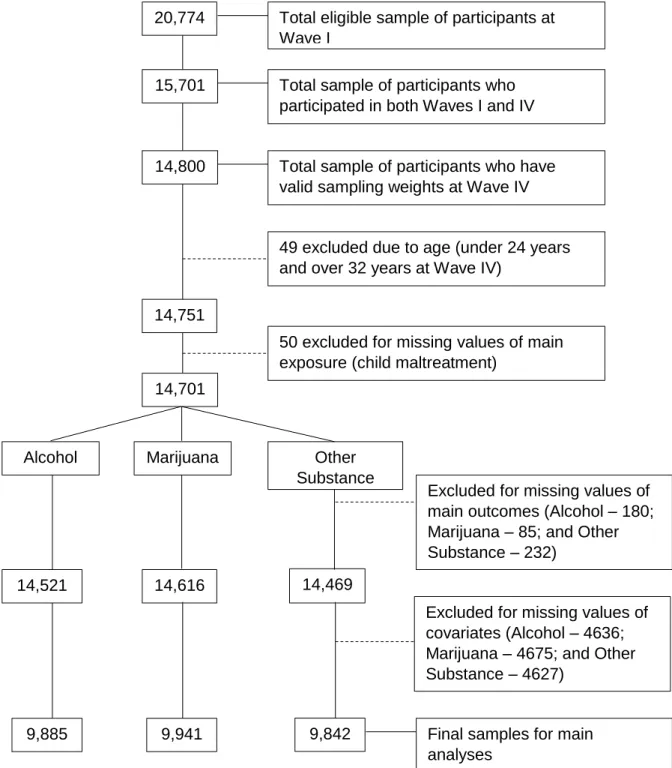
Interviews (CASI) (66), which have been shown to enhance disclosure of sensitive information. As shown in Figure 2.1, the analytic sample for this research study consists of
18
Additionally, those included in the sample had to have responses to questions about the main exposure of interest, child maltreatment, the outcomes of interest for at least one time point, alcohol, marijuana, and other substance use, and non-missing responses for all covariates. The final samples consisted of 9,885 individuals for alcohol use, 9,941 individuals for marijuana use, and 9,842 individuals for other substance use. All Add Health study procedures were approved by the Institutional Review Board for the Protection of Human Subjects at the University of North Carolina at Chapel Hill. Current analyses were deemed exempt from further review (Study # 13-1646).
Measures
Outcome variables
Three types of substance use were examined in this study: alcohol use, marijuana use, and other substance use.
Alcohol use. Monthly alcohol use during adulthood (Wave IV) was measured as a graduated frequency (GF) index, using a method described by Armor & Polich (67, 68). By including a separate measure of heavy alcohol or binge drinking, this index measure allows for a comprehensive estimate of the actual pattern and volume of alcohol consumption compared to measuring only typical or average drinking (69). Details regarding the creation of the graduated frequency index for this study are provided in Appendix A.
19
Marijuana use. The second outcome variable of interest is frequency of marijuana use over the past 30 days during adulthood (Wave IV). Respondents were asked about frequency of past 30-day use, and six possible responses were provided ranging from none to every day or almost every day. For this study, marijuana use was considered an ordinal variable with three categories: no use, occasional use from one to three times per month, and regular or frequent use from weekly to every day or almost every day. The proportional odds assumption of this three-category variable was confirmed using a Wald test.
Other substance use. The last outcome of interest is the frequency of use of other types of substances (i.e., substances other than alcohol or marijuana, such as cocaine, opioids, and amphetamines) over the past 30 days during adulthood (Wave IV). Participants were asked about frequency of use of their substance of choice, other than marijuana, over the past 30 days, and six possible responses were provided from none to every day or almost every day. For this study, other substance use was considered an ordinal variable with three categories: no use, occasional use from one to three times per month, and regular or frequent use from weekly to every day or almost every day. The proportional odds assumption of this three-category variable was confirmed using a Wald test.
Primary exposure variables
Child maltreatment. Six separate measures of child maltreatment were used in this study: any maltreatment, physical neglect, emotional abuse, physical abuse, sexual abuse, and poly-victimization (number of types of maltreatment experienced).
20
grade. Additionally, in young adulthood (ages 24-32; Wave IV), participants were asked about the frequency of a parent or adult caregiver perpetrating emotional abuse (“say things that really hurt your feelings or made you feel like you were not wanted or loved”), physical abuse (“hit you with a fist, kick you, or throw you down on the floor, into a wall, or down stairs”), and sexual abuse (“touch you in a sexual way, force you to touch him or her in a sexual way, or force you to have sexual relations”) before the age of 18; participants who reported any maltreatment were then asked how old they were when the abuse first happened. To be consistent with the measure of physical neglect in childhood, this analysis only included reported emotional, physical and sexual abuse that occurred before the age of 12.
Consistent with the Centers for Disease Control and Prevention (CDC) definition of child maltreatment and extant literature (34, 70-72), the exposure of child maltreatment was examined as a dichotomous variable in which participants who reported experiencing any of the four types of maltreatment assessed (physical neglect, emotional abuse, physical abuse or sexual abuse) were classified as being a victim of maltreatment, and persons who did not report experiencing any type of maltreatment were categorized as being a non-victim of child maltreatment.
The individual types of maltreatment were also examined for their specific impact on later alcohol and substance use, including any report of physical neglect, emotional abuse, physical abuse, and sexual abuse.
21
Involvement of Child Welfare Services (CWS). Lastly, we investigated whether the CWS investigation or removal from the home was associated with later alcohol or substance use. In addition to questions about maltreatment experiences, participants in emerging adulthood were ask about frequency of CWS investigation (“investigated how you were taken care of or tried to take you out of your living situation”) and removal of the home (“actually been taken out of your living situation by Social Services”) before starting the 6th grade. For this study, CWS
investigation was measured as a dichotomous variable with zero indicating a self-report of child maltreatment but no CWS investigation, and a value of one indicated self-report of any
maltreatment and any CWS investigation (i.e., a response of one or more times). Similarly, removal from the home was dichotomized with zero representing never being removed from the home and one indicating removal from the home at least once.
Covariates
Several covariates identified from the extant literature on child maltreatment and alcohol or substance use were included in this analysis.
Age. At Wave IV, participants were between 24 and 34 years of age, but we excluded data for five participants who were 34 years old given the small sample size for this age cohort.
Biological sex. Biological sex was measured as male or female. Information on intersex or transsexual status was not obtained.
Race/ethnicity. This study included four categories of race/ethnicity: Non-Hispanic Caucasian, Non-Hispanic African American, Hispanic, and Non-Hispanic Other race.
22
alcoholism, and parental alcoholism indicates that at least one parent had alcoholism. This classification was based on questions asked of parents/caregivers at Wave I.
Family structure. For the proposed research, family structure was defined by a nominal variable with four categories: two biological parents; two parents, other type; single parent; and other family structures. This measure was derived from information collected at Wave I of the Add Health study, in which participants listed all of the people with whom they lived and indicated their relationship with those people.
Parent’s educational attainment. For this study, the participant’s parent’s educational attainment was measured using the highest level of education of all parents or parental figures at Waves I and II as reported by either the parent or participant, and was measured as an ordinal variable with four levels: less than high school, high school graduate or GED, some college or an Associate’s degree, and college graduate or beyond.
Poverty status. We also included a measure of poverty at Wave I, which occurred in 1994. Categories of the poverty variable include: less than or equal to $15,000 (based on poverty level in 1994 for a family of four (73) and above $15,000, as was done in previous research (27).
Analytic Strategy
First, univariate analyses were conducted to examine the characteristics of the study sample (age, biological sex, race/ethnicity, family structure, parental alcoholism, parental educational level, and poverty). Continuous variables were summarized using means and standard deviations. Categorical variables were summarized with frequencies and percentages.
Next, bivariate analyses were conducted to compare values of the covariates and
23
tests and t-tests evaluated significant differences at p<0.05 for categorical and continuous variables, respectively.
We used multilevel modeling, specifically, hierarchical linear models (HLM) and hierarchical generalized linear models (HGLM), to examine the relationships between experiencing child maltreatment and involvement of CWS on alcohol and substance use in adulthood. For the multivariate models, biological sex was considered an effect measure
modifier since the relationship between child maltreatment and alcohol and substance use likely differs for males and females (44, 74, 75), and all other covariates were included as potential confounders. Our models included robust standard errors and rescaled sampling weights, which account for the unequal probability of selection into the Add Health study. Given the sampling scheme of the Add Health study in which participants were included in the study in part based on the school they attended, it was also important to account for clustering or nesting within
schools. In this case, participants from the same school may have more similar substance use patterns compared with students from other schools due to similar factors that may be
attributable to the school. The residuals of nested data tend to be autocorrelated and heteroscedastic, which violates the assumptions of independence and homoscedasticity of residuals for Ordinary Least Squares regression (76), and unlike traditional methods for analyzing data, HLMs and HGLMs can account for clustering of individuals within groups by adding random effects into the model, which corrects for the biases caused by autocorrelation (77). Not accounting for the clustering of study participants by sampling unit could result in biased estimates and standard errors (78).
24
for marijuana and other substance use since these outcomes are categorical variables with ordered categories. All analyses were run using Stata 13 (79); multilevel models were estimated using generalized linear latent and mixed model (GLLAMM) commands that allow for
estimation using sampling weights and clustering at multiple levels (80), which are important to consider given the sampling design of the Add Health study.
Results
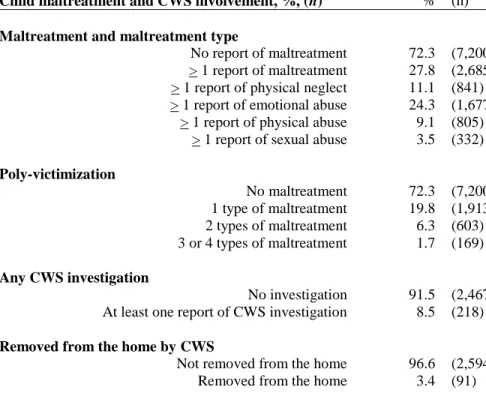
Table 2.1 presents estimates of the prevalence of early child maltreatment and CWS involvement experiences. Over one-quarter of the sample reported experiencing any type of maltreatment, with 11% experiencing physical neglect, almost 24% experiencing emotional abuse, 9% experiencing physical abuse, and 4% experiencing sexual abuse. Twenty percent of the sample experienced one type of maltreatment, 6% experienced two types, and almost 2% experienced three or four types of maltreatment.
Examination of CWS involvement showed that 9% of maltreatment victims experienced some form of CWS involvement and 3% were removed from their homes by CWS. Among those who reported CWS involvement, 28% reported experiencing physical neglect, 16% experienced emotional abuse, 34% experienced physical abuse, and 21% experienced sexual abuse, which was different than the experiences of maltreatment victims who did not report CWS
involvement, with 23% experiencing physical neglect, 40% experiencing emotional abuse, 25% experiencing physical abuse, and 11% experiencing sexual abuse (p<0.001).
Table 2.2 presents information on the participants’ characteristics, stratified by their maltreatment status. Percentages and mean scores are weighted to yield nationally representative estimates. Both victims and non-victims of maltreatment were similar in age at Wave IV
25
statistically significant differences between victims and non-victims for race/ethnicity (p<0.01), family structure (p<0.001), parental alcoholism (p<0.001), parent’s educational level at Wave I (p<0.01), and poverty status at the beginning of the Add Health study (p<0.001). More non-victims identified as non-Hispanic Caucasian than non-victims of maltreatment. Fewer non-victims of maltreatment lived with two biological parents, and more victims of maltreatment had a parent with alcoholism than non-victims. Fewer victims of maltreatment had a parent with a college degree or more, and more victims lived at or below the poverty line at Wave I than non-victims.
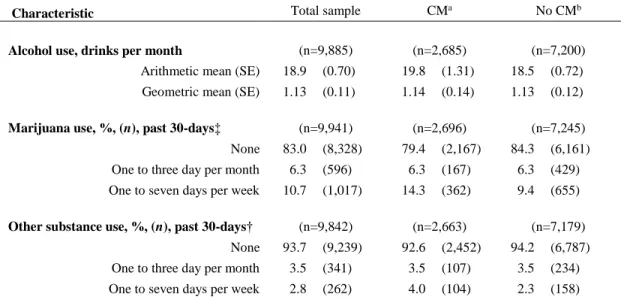
Table 2.3 provides the descriptive statistics of monthly alcohol use, past 30-day marijuana use, and past 30-day other substance use for the study sample. The maltreated and non-maltreated groups did not differ significantly in terms of their average number of drinks per month (maltreated 19.8 drinks per month and non-maltreated 18.5 drinks per month). Most study participants reported that they did not use marijuana during the past 30 days (83.0%). However, there was a statistically significant difference in marijuana use between victims and non-victims, with a larger percentage of victims reporting frequent use (one to seven days per week) than non-victims (p<0.001). Similarly, most participants reported no use of other substances (93.7%), and a larger percentage of victims of child maltreatment reported frequent use of other types of substances that non-victims (p<0.01).
26
who were not investigated (p<0.05), and victims of maltreatment who were removed from the home compared to those who were not removed (p<0.01).
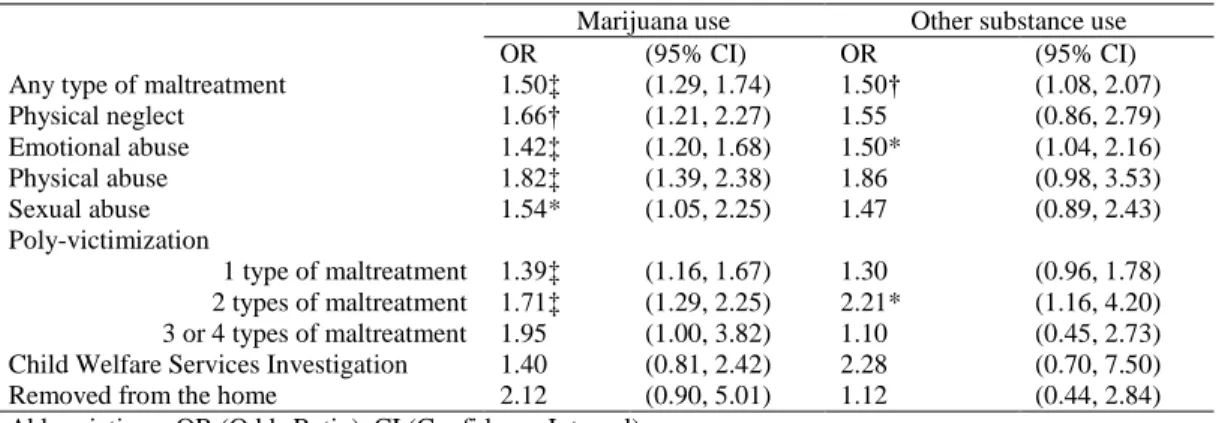
Table 2.5 provides unadjusted odds ratios for marijuana and other substance use for the different types of maltreatment and CWS involvement. We see statistically significant
differences in marijuana use for all measures of maltreatment and experiencing one and two types of maltreatment. All of these crude odds ratios indicate that the odds of marijuana use frequency increases with exposure to the different types of maltreatment and polyvictimization.
We see fewer statistically significant associations for other substance use. Experiencing any maltreatment, emotional abuse, and two types of maltreatment have statistically significant associations with other substance use. Each of these significant associations shows an increase in other substance use with experiencing maltreatment or polyvictimization.
non-27
Hispanic races drink 39% less than Caucasians (p<0.01). Compared with respondents who had a parent or caregiver who had earned a bachelor’s degree, respondents whose parents had not completed high school drink 62% less per month (p<0.001), and respondents whose parents completed high school but did not receive further education consume 43% less alcohol per month (p<0.001).
Table 2.7 presents the multivariate, multilevel models using ordinal logistic regression to estimate the effects of child maltreatment and CWS involvement on marijuana use. After
28
Family structures other than having two biological parents are associated with a higher odds of having higher frequencies of marijuana use for any maltreatment, physical neglect, emotional abuse, physical abuse and poly-victimization.
Table 2.8 presents the multivariate, multilevel models using ordinal logistic regression to estimate the effects of child maltreatment and CWS involvement on other substance use. After accounting for identified sociodemographic, and family factors, we see a statistically significant increase in the odds of other substance use by experiencing two types of maltreatment and CWS investigation, but biological sex does not modify these relationships. Experiencing two types of maltreatment is associated with a 128% increase (p<0.01) and CWS investigation is associated with a 150% increase (p<0.05) in the odds of using other substances at higher frequencies. We also see that as age increases above the youngest age of the cohort (26 years), the odds of using other substances at higher frequencies decreases by 21% for victims of two types of
maltreatment (p<0.01), indicating that the frequency of other substance use declines among older adults. The results also show that African Americans have a 63% decrease (p<0.001) in the odds of other substance use for victims of two types of maltreatment and a 65% decrease (p<0.05) for victims with a CWS investigation, and living in a single parent home in adolescence is associated with a higher odds of having higher frequencies of other substance use (50%, p<0.05) for victims of two types of maltreatment.
Discussion
29
biological sex, all measures of maltreatment except sexual abuse, which may be due to the small numbers of victims of sexual abuse in this dataset, are associated with an increased odds of marijuana use, and poly-victimization and CWS investigation are associated with increased odds of other substance use in adulthood.
Previous research has shown that child maltreatment has a lasting impact on health and risk behaviors into adulthood; however, this study utilized several measures of both maltreatment and alcohol and substance use that have not previously been used with a nationally representative sample. The Add Health study measured alcohol use over the past 12 months, which allows researchers to capture infrequent heavy or light alcohol use that is missed when only accounting for use over the past month (69). For this study, we took advantage of the numerous alcohol use measures in the Add Health study to formulate an index measure of alcohol consumption based on the graduated frequency index that incorporated both regular use and binge drinking (67, 68, 81). This method attempts to compensate for underreporting of average alcohol use that occurs when study participants do not incorporate binge drinking into their report of usual use (68, 82). Approximately 20-40% of adults ages 18-55 (83) and 22% of adolescents (84) engage in heavy drinking, but survey respondents typically exclude episodes of heavy or binge drinking from their estimates of usual alcohol use (85). Thus, measures that include only measures of typical alcohol use underestimate average consumption of alcohol by failing to account for binge drinking. Additionally, a number of studies that have researched the relationship between
30
For this study, the index measure we used allowed for an examination of typical drinking that may include binge drinking; thus we were able to capture a more accurate measure of monthly alcohol consumption.
We found that other than experiencing poly-victimization, maltreatment and CWS involvement experiences were not associated with alcohol use in adulthood. Female victims of two types of maltreatment consume more alcohol per month than non-victims while male victims consume less alcohol per month compared to male non-victims, but the relationship for three or four types of maltreatment was not significant, which may be due to small cell sizes at this level. Past research findings related to the impact of maltreatment on alcohol use have been equivocal. A study of young adults in Spain recruited from a university found no association between emotional or physical neglect and the number of drinks consumed (90). Another study that examined the impact of maltreatment on binge drinking in emerging adulthood (between 18 and 26 years of age) found that victims of supervisory and physical neglect had a 20% higher odds of reporting binge drinking than non-victims (64). However, a subsequent analysis examining binge drinking into young adulthood showed no difference in the frequency of use between victims of maltreatment and non-victims by the time adults reach the age of 32 (46), which may be a result of developmentally maturing out of problematic alcohol consumption in adulthood (91).
31
other than experiencing poly-victimization, the impact of childhood maltreatment experiences on alcohol consumption patterns may not persist into adulthood.
Another facet of the dynamics between child maltreatment and alcohol use is the impact of parental alcohol use disorders. The Add Health study measured parental alcoholism, and we see that a larger percentage of victims of childhood maltreatment (22.1%) than non-victims (13.8%) reported that at least one biological parent had alcoholism (p<0.001). Previous research has shown that some children of adults with alcoholism respond by avoiding alcohol as a result of experiencing or witnessing the consequences of their parents’ addiction and perceiving their own risk for developing alcoholism (92), which may have influenced the relationship between maltreatment victimization and later alcohol use.
In addition to the more expansive investigation of alcohol and substance use, this study also utilized different measures of child maltreatment that allowed for the examination of experiencing any maltreatment, individual types of maltreatment, and also met the call from previous research to examine the impact of poly-victimization on health outcomes (28, 29, 31, 33, 89). We also included measures of CWS investigation and removal from the home to determine if this population was different from self-reported victims of maltreatment. Previous research has used assessments of CWS involvement and removal from the home as a measure of severity of maltreatment based on the assumption that children who are removed from the home have experienced higher levels of maltreatment severity (46).
32
current study found associations with individual types of maltreatment for marijuana use, but for other substance use, the only significant relationships were with polyvictimization and CWS investigation; the difference in findings may be due to the measure of other substance use. Whereas Huang and colleagues (47) measured substance use as a dichotomous variable, for this study it was measured as an ordinal variable. Consistent with prior research, we also found an exposure-response relationship between experiences of maltreatment and both marijuana and other substance use. A study of rural high school students found that adolescents who self-reported emotional, physical, or sexual abuse had significantly higher levels of substance use, and there was a larger effect on substance use among those who experienced both physical and sexual abuse (93).
It is important to note that the similar findings for marijuana use and other substance use may be due to individuals who engage in poly-substance use and who would influence the estimates of the impact of maltreatment for both marijuana and substance use. An initial
assessment of the prevalence of substance use found that 21% of respondents who reported using marijuana in young adulthood also reported using another substance over the past 30 days, and over half of respondents who reported using other substances reported concurrent use of
marijuana over the past 30 days (58%). Marijuana is the most commonly used illicit substance in the United States; according to the National Survey on Drug Use and Health, in 2013,
33
Limitations
This study is subject to certain limitations. First, childhood maltreatment experiences and involvement with CWS are based on retrospective self-reports and require the respondents to remember and determine when those experiences first occurred. Even though self-reports of childhood maltreatment tend to be a better predictor of prevalence of maltreatment than CWS reports, previous studies have found that self-reported childhood physical abuse (94) and sexual abuse (95) tend to be underreported (96), which may be due to not remembering the abuse or not wanting to report it. The Add Health study utilized CASI when inquiring about sensitive topics, such as child maltreatment and alcohol and substance use, and the CASI has been shown to enhance disclosure of sensitive and stigmatized information (97, 98). One study that compared CWS reports with adolescent recall of psychological, physical and sexual abuse found that the estimated prevalence of maltreatment as determined by self-report was higher than the estimate from CWS reports, even though some adolescents who had experienced childhood maltreatment, as determined by CWS report, failed to self-report the maltreatment; however, use of CASI allowed for eliciting more new reports of abuse, especially psychological maltreatment, when compared with CWS substantiated cases (23). Additionally, while the Add Health study includes the measurement of multiple types of maltreatment, childhood exposure to intimate partner violence was not assessed. Witnessing intimate partner violence as a child is considered a form of child maltreatment in some states and has been linked to substance use in adolescence (99) and adulthood (100). The exclusion of this measure of maltreatment is a limitation to
34
of adult women, persons reporting more severe child sexual abuse were more likely to report problematic substance use and substance abuse (101), and among youths receiving treatment for alcohol or drug use disorders, respondents who reported more severe childhood maltreatment exhibited more symptoms of problematic substance use (102). Without a measure of the severity of maltreatment, the effect of maltreatment on substance may be diluted. Similarly, given the design of study questions, we were unable to distinguish between maltreatment that occurred only in early childhood and ongoing maltreatment into adolescence, which may differentially impact substance use in adulthood.
While there is no best measurement of alcohol consumption, past research has found that reports of alcohol use were more accurate if study participants were asked about consumption of specific categories of alcohol (e.g., beer, wine, and liquor) (103, 104). The Add Health study did not capture this specific information, thus, it is possible that this study is still capturing an underestimate of alcohol consumption. Additionally, the index measure used in this study does not allow for a measure of variability in drinking patterns since it creates and average
consumption rate.
35
other drug and 14.1% reporting concurrent use of alcohol and at least two other drugs (105). Our study attempted to counteract this weakness by examining substances separately in adulthood.
Future research should examine the longitudinal impact of child maltreatment on alcohol and substance use to better understand patterns of use from adolescence into adulthood. Some studies have conditioned on substance use in adolescence when studying the role of child maltreatment on substance use in adulthood (106), but none have examined levels of use from adolescence into adulthood using a nationally representative sample that incorporates multiple measures of maltreatment and CWS involvement.
Finally, these analyses are limited by sample attrition and missing data. In particular, this study conducted complete case analyses, and there was a high percentage of missingness for the variable measuring parental alcoholism and poverty since these measures relied on parent or caregiver response; thus, these results may be biased by the non-response. Future research using other datasets or methods for handling missing data should be conducted to replicate the findings from this study.
Conclusions
36
Figure 2.1. Construction of analytic sample with detailed sample exclusions
20,774
15,701
14,800
14,751
14,521 14,616 14,469
9,842 9,941
9,885
14,701
Alcohol Marijuana Other
Substance
Total eligible sample of participants at Wave I
Total sample of participants who participated in both Waves I and IV
Total sample of participants who have valid sampling weights at Wave IV
49 excluded due to age (under 24 years and over 32 years at Wave IV)
50 excluded for missing values of main exposure (child maltreatment)
Excluded for missing values of main outcomes (Alcohol – 180; Marijuana – 85; and Other Substance – 232)
Excluded for missing values of covariates (Alcohol – 4636; Marijuana – 4675; and Other Substance – 4627)
37
Table 2.1. Prevalence of Child Maltreatment and Child Welfare Services (CWS) Involvement Experiences of the Study Population (N=9,885)
Child maltreatment and CWS involvement, %, (n) % (n)
Maltreatment and maltreatment type
No report of maltreatment 72.3 (7,200) > 1 report of maltreatment 27.8 (2,685) > 1 report of physical neglect 11.1 (841) > 1 report of emotional abuse 24.3 (1,677)
> 1 report of physical abuse 9.1 (805) > 1 report of sexual abuse 3.5 (332)
Poly-victimization
No maltreatment 72.3 (7,200) 1 type of maltreatment 19.8 (1,913) 2 types of maltreatment 6.3 (603) 3 or 4 types of maltreatment 1.7 (169)
Any CWS investigation
No investigation 91.5 (2,467) At least one report of CWS investigation 8.5 (218)
Removed from the home by CWS
Not removed from the home 96.6 (2,594) Removed from the home 3.4 (91)
Note: percentages and means are weighted to yield nationally representative estimates. Percentages may not sum to 100% due to rounding.
38
Table 2.2. Characteristics of the Study Population at Wave IV, National Longitudinal Study of Adolescent to Adult Health
Characteristic
Total sample (n=9,885)
Any maltreatmenta
(n=2,685)
No maltreatmentb
(n=7,200)
Participant’s characteristics
Age, mean (SE), years 28.3 (0.13) 28.4 (0.14) 28.3 (0.13)
Biological sex, %, (n)
Female 48.9 (5,204) 48.3 (1,411) 49.2 (3,793)
Male 51.1 (4,681) 51.7 (1,274) 50.8 (3,407)
Race/ethnicity, %, (n) †
White, non-Hispanic 62.4 (5,754) 59.2 (1,495) 63.7 (4,259)
Black, non-Hispanic 14.4 (1,737) 14.0 (471) 14.5 (1,266)
Hispanic 14.1 (1,485) 14.8 (409) 13.8 (1,076)
Other race, non-Hispanic 9.1 (909) 12.0 (310) 8.0 (599)
Parent/Caregiver’s or Family’s characteristics
Family structure, %, (n) ‡
Two biological parents 60.4 (5,832) 49.3 (1,291) 64.6 (4,541)
Two parents 15.4 (1,570) 20.0 (541) 13.6 (1,029)
Single parent 21.0 (2,189) 26.6 (748) 18.9 (1,441)
Other 3.3 (294) 4.2 (105) 3.0 (189)
Parental alcoholism, %, (n) ‡
No 84.0 (8,238) 78.1 (2,078) 86.2 (6,160)
Yes 16.0 (1,647) 21.9 (607) 13.8 (1,040)
Educational level, %, (n) †
Less than high school 9.8 (986) 10.0 (277) 9.7 (709)
High school graduate or GED 25.9 (2,445) 26.1 (674) 25.8 (1,771)
Some college or Associate's degree 31.3 (3,097) 34.0 (896) 30.3 (2,201)
College graduate or beyond 33.1 (3,357) 29.9 (838) 34.3 (2,519)
Poverty, %, (n) ‡
Above the poverty line 85.5 (8,393) 82.1 (2,192) 86.8 (6,201)
At or below the poverty line 14.5 (1,492) 17.9 (493) 13.2 (999)
Note: percentages and means are weighted to yield nationally representative estimates. Percentages may not sum to 100% due to rounding. Abbreviations: %, weighted percent; SE, standard error of the mean.
* p<0.05; † p<0.01; ‡ p<0.001
39
Table 2.3. Descriptive statistics for monthly alcohol use, past 30-day marijuana use, and past 30-day other substance use, National Longitudinal Study of Adolescent to Adult Health, Wave IV
Characteristic Total sample CMa No CMb
Alcohol use, drinks per month (n=9,885) (n=2,685) (n=7,200)
Arithmetic mean (SE) 18.9 (0.70) 19.8 (1.31) 18.5 (0.72)
Geometric mean (SE) 1.13 (0.11) 1.14 (0.14) 1.13 (0.12)
Marijuana use, %, (n), past 30-days‡ (n=9,941) (n=2,696) (n=7,245)
None 83.0 (8,328) 79.4 (2,167) 84.3 (6,161)
One to three day per month 6.3 (596) 6.3 (167) 6.3 (429)
One to seven days per week 10.7 (1,017) 14.3 (362) 9.4 (655)
Other substance use, %, (n), past 30-days† (n=9,842) (n=2,663) (n=7,179)
None 93.7 (9,239) 92.6 (2,452) 94.2 (6,787)
One to three day per month 3.5 (341) 3.5 (107) 3.5 (234)
One to seven days per week 2.8 (262) 4.0 (104) 2.3 (158)
Note: percentages and means are weighted to yield nationally representative estimates. Percentages may not sum to 100% due to rounding.
Abbreviations: CM, child maltreatment; %, weighted percent; SE, standard error of the mean. * p<0.05; † p<0.01; ‡ p<0.001
40
Table 2.4. Monthly Alcohol Use – Unadjusted Mean and Geometric Mean (SE) by Maltreatment Status
Mean alcohol use (SE) a Geometric mean of alcohol use (SE) a
Type of maltreatment
Not a victim 18.53 (0.72) 1.13 (0.12)
Victim of any type of maltreatment 19.76 (1.31) 1.14 (0.14)
Victim of physical neglect† 19.99 (2.46) 0.64 (0.16)
Victim of emotional abuse 19.61 (1.40) 1.34 (0.16)
Victim of physical abuse 21.25 (1.92) 1.45 (0.22)
Victim of sexual abuse 21.56 (3.94) 1.12 (0.28)
Poly-victimization
Not a victim 18.53 (0.72) 1.13 (0.12)
Victim of 1 type of maltreatment 19.41 (1.45) 1.15 (0.16)
Victim of 2 types of maltreatment 20.53 (2.28) 1.29 (0.21)
Victim of 3 or 4 types of maltreatment 20.97 (4.99) 0.70 (0.24)
Child Welfare Services Investigation*
Not investigated 20.14 (1.32) 1.23 (0.15)
> 1 CWS investigation 15.62 (3.07) 0.51 (0.21)
Removed from the home†
Not removed by CWS 19.94 (1.30) 1.20 (0.14)
> 1 removal from home by CWS 14.61 (4.34) 0.27 (0.13)
Abbreviations: SE (Standard Error), CWS (Child Welfare Services)
a Coefficients based on weighted data.