48
ENERGY EFFICIENT AND CLUSTER BASED DATA AGGREGATION USING
ESTAR METHODOLOGY FOR WIRELESS SENSOR NETWORK
1P.Selvam, 2Mr. Kannan – M.E (Ph.D), 1PG Scholar, 2Assistant Professor, 1,2
Department Of Electronics and Communication Engineering, 1,2RVS College Of Engineering and Technology, Coimbatore. 1E-mail: [email protected], 2E-mail:[email protected].
ABSTRACT:
Wireless sensor networks (WSNs) are being envisioned for certain applications like habitat monitoring and environmental
sensing. Wireless sensors are deployed to achieve network load balancing, prolonging network lifetime, and improving network
coverage. To achieve these goals, energy estimation is one of the main constraints and concerns to consider, while deploying
wireless sensors in a WSN field. In this paper, we propose an Energy-efficient based Routing Algorithm to prolong lifetime
(E-STAR), which is able to dramatically prolong network lifetime while effectively reducing energy consumption. Through an
analytical study, we provide guidance on how to choose parameters in our scheme and demonstrate that the scheme is efficient
in both network lifetime and energy consumption. Simulation results show that, with the proposed Energy-efficient based
Maximal Lifetime Routing Algorithm in WSN energy consumption, network lifetime, energy consumption balance can be
improved in most of cases. It is an available approach to routing decision
Keywords: Wireless Sensor networks, E-STAR, anonymity, routing protocol, geographical routing.
1. INTRODUCTION
In the past decades, Wireless Sensor
Networks (WSN), one of the fastest growing research
areas, has been attracted a lot of research. Typically, a
WSN consists of a data collection unit (also known as node
or base station) and a large number of sensors that can
sense and monitor the physical world, and thus it is able to
provide rich interactions between a network and its
surrounding physical environment in a real-time manner
[2], [3]. The capacity-limited power sources of small
sensors constrain us from fully benefitting from WSNs.
Due to the unique many-to-one (converge-cast) traffic
patterns, the traffic of the whole network will be converted
to a specific set of sensor nodes (e.g., neighbouring nodes
of the node) and results in the hotspot problem [4]. In
multihop communications, nodes that are near a node tend
to become congested as they are responsible for forwarding
data from nodes that are farther away. For the controlled
mobility, the key problem is to deterministically schedule
the node to travel around the network to collect data. It is
shown that by properly setting the trajectory even limited
mobility would significantly improve the network
lifetime[5]. However, the mobility also brings new issue,
i.e., the delay of the data delivery caused by the movement
of the node. Some previous proposals tried to avoid this
issue by considering the so-called fast mobility, whereas
the speed of the node is sufficiently high so that the
resulting delay can be tolerated. To this end, we study the
delay-bounded node mobility problem of WSNs in this
paper. We assume that WSNs are deployed to monitor the
surrounding environment and the data generation rate of
sensors can be estimated accurately. We constrain the
mobile node to a set of node sites. First, we propose a path
selection strategy in the mobile node by establishment of
Energy efficient hybrid clustering Technique named as
E-STAR, which is an efficient routing protocol through
hybrid-based dynamic clustering mechanism to partition
the nodes into clusters and select the cluster head (CH)
among the nodes based on the energy, and non CH nodes
join with a specific CH based on the network life values.
Error recovery has been implemented during the
inter-cluster routing in order to avoid end-to-end error recovery.
The rest of the paper is organized as follows: We present
related work in Section 2. We describe and formulate the
49
Section 3. In Section 4, Simulations are reported with
performance evaluation graph and tables. Finally, Section 5
concludes the paper.
2. RELATED WORK
2.1 DELAY IN DATA GATHERING
KashifSaleem et.al presented aBiological
Inspired Self-Organized Secure Autonomous Routing
Protocol (BIOSARP) for improving the packet
delivery ratio[8]. A recent WSN routing protocol
defined as Secure Real-Time Load Distribution
(SRTLD) uses broadcast packets to perform
neighbour discovery and calculation at every hop
while transferring data packets. Thus, it has high
energy consumption. The proposed novel Biological
Inspired Self-Organized Secure Autonomous Routing
Protocol (BIOSARP) enhances SRTLD with an
autonomous routing mechanism. In the BIOSARP
mechanism, an optimal forwarding decision is
obtained using Improved Ant Colony Optimization
(IACO). In IACO, the probability is computed based
on the end-to-end delay, remaining battery power,
and link quality metrics. The proposed BIOSARP has
been designed to reduce the broadcast and packet
overhead in order to minimize the delay, packet loss,
and power consumption in the WSN. In this paper, it
is presented the architecture, implementation, and
detailed outdoor experimental testbed results of the
proposed BIOSARP.The empirical study confirmed
that BIOSARP offers better performance and can be
practically implemented in the WSN applications for
structural and environmental monitoring or battlefield
surveillance.
LjubicaBlazevic et.al presented a
Location-Based Routing Method for Mobile Ad Hoc Networks
[9]. Using location information to help routing is
often proposed as a means to achieve scalability in
large mobile ad hoc networks. However
location-based routing is difficult when there are holes in the
network topology and nodes are mobile or frequently
disconnected to save battery. Terminode Routing,
presented here addresses these issues. It uses a
combination of location-based routing (Terminode
Remote Routing, TRR) used when the destination is
far and link state routing (TLR) used when the
destination is close. TRR uses anchored paths a list of
geographic points (not nodes) used as loose source
routing information. Anchored paths are discovered
and managed by sources, using one of two low
overhead protocols: Friend Assisted Path discovery
and Geographical Map-based Path Discovery. Our
simulation results show that terminode routing
performs well in networks of various sizes. In smaller
networks the performance is comparable to MANET
routing protocols. In larger networks that are not
uniformly populated with nodes terminode routing
outperforms existing location-based or MANET
routing protocols.
Ryo et.al presented Data mule
scheduling approach for improving the data delivery
latency in the data mule approach [13]. Data mule
characterizes a mobile device that gathers data in a
field of sensor by actually meeting the nodes in a
sensor network. Data are gathered in data mule once
these data are in the proximity of a sensor node.
Hence this can act as option to multihop forwarding
of data once it may be employed by the mobility of
node in a sensor network. In general these data mule
approach necessitates reducing the data delivery
latency. The presented approach efficiently deals this
problem and minimizes the data delivery latency. The
presented work formulated the data mule’s optimal
50
DMS problem. After that the 1D (one dimentitional)
case of DMS problem has been studied and then
devised an efficient heuristic algorithm. By means of
analysing the numerical experiments and lower bound
it has been illustrated that the presented algorithm
runs faster and determines near optimal solutions
those are within 10 percent of the existing optimal
solution.
Chunsheng Zhu et.al presented a TPSDT
(Time
and
Priority
based
Selective
Data
Transmission) and PSS (Priority-Based Sleep
Scheduling) algorithm for transmitting a data in
reliable way[3]. The integration of ubiquitous
Wireless Sensor Network (WSN) and powerful
Mobile Cloud Computing (MCC) is a research topic
that is attracting growing interest in both academia
and industry. In this new paradigm, WSN provides
data to the cloud, and mobile users request data from
the cloud. This paper first identifies the critical issues
that affect the usefulness of sensory data and the
reliability of WSN, then proposes a novel WSN-MCC
integration scheme named TPSS, which consists of
two main parts: 1) TPSDT (Time and Priority based
Selective Data Transmission) for WSN gateway to
selectively transmit sensory data that are more useful
to the cloud, considering the time and priority
features of the data requested by the mobile user; 2)
PSS (Priority-Based Sleep Scheduling) algorithm for
WSN to save energy consumption so that it can
gather and transmit data in a more reliable way.
Analytical and experimental results demonstrate the
effectiveness of TPSS in improving usefulness of
sensory data and reliability of WSN for WSN-MCC
integration.
2.2 ENERGY EFFICIENCY
Ian et.al presented aEvent-to-Sink Reliable
Transport (ESRT) protocol to achieve minimum
energy consumption. Reliable event detection at the
sink is based on collective information provided by
source nodes and not on any individual report[12].
However,
conventional
end-to-end
reliability
definitions and solutions are inapplicable in the WSN
regime and would only lead to a waste of scarce
sensor resources. Hence, the WSN paradigm
necessitates
a
collective
event-to-sinkreliability
notion rather than the traditional end-to-end notion. A
new reliable transport scheme for WSN is proposed,
the Event-to-Sink Reliable Transport (ESRT)
protocol, is presented in this paper. ESRT is a novel
transport solution developed to achieve reliable event
detection in WSN with minimum energy expenditure.
It includes a congestion control component that
serves the dual purpose of achieving reliability and
conserving energy. Importantly, the algorithms of
ESRT mainly run on the sink, with minimal
functionality required at resource constrained sensor
nodes. ESRT protocol operation is determined by the
current network state based on the reliability achieved
and congestion condition in the network. This
self-configuring nature of ESRT makes it robust to
random, dynamic topology in WSN. Furthermore,
ESRT can also accommodate multiple concurrent
event occurrences in a wireless sensor field.
Analytical performance evaluation and simulation
results show that ESRT converges to the desired
reliability with minimum energy expenditure, starting
from any initial network state.
Charalampos et.al presented MobiCluster
protocol for minimizing the overall network
51
the data retrieval method by agreeing balanced
consumption of energy between Sensor Nodes (SNs)
and long-lasting network lifetime [2]. This is
accomplished by constructing the cluster structures
comprising of member nodes that direct their
calculated data to their assigned Cluster Head (CH).
The Cluster Head (CHs) execute data filtering ahead
of the unrefined data developing possible
spatial-temporal data redundancy and forward the sorted
information to their allotted rendezvous nodes RNs
usually positioned in closeness to the MS’s
trajectory. In addition to that a sophisticated method
is introduced for registering suitable nodes as RNs
taking into consideration for the density of sensor
nodes and deployment model. Finally by means of
extensive simulation tests performance gain has
been validated over other alternative approaches.
2.3 ENERGY HOLE PROBLEM
Xiaobing et.al presented non uniform node
distribution strategy in which its theoretical
characteristics addresses the energy hole problem in
Wireless sensor networks [15]. Even though it is
impracticable to attain balanced energy depletion
along with all the nodes by means of WSNs traffic
pattern the possibility of network can be attained by
the depletion of subbalanced energy in the network.
Because of this the presented method attains very
high energy efficiency. With this strategy the ratio
among the adjacent (i+1)
thcoronas node density and
i
thnode density has been formulated. After that an
algorithm of q-Switch Routing has been used for the
presented non uniform node distribution strategy.
Extensive results by means of simulations
demonstrate that once the network lifetime ends the
nodes in every inner corona nearly exploit their
energy at the same time even if nodes in the
outermost corona include sufficient residual energy.
Guoliang et.al presented Rendezvous-based
technique for gathering sensor data under temporal
constraints [4]. The presented approach initially
devises the Minimum-Energy Rendezvous Planning
(MERP) problem in which its objective is to
determine a set of RPs that can be visited by Mobile
Elements (MEs) within a considerable delay
whereas the network energy devoted in transmitting
data from sources to Rendezvous Points (Rps) is
reduced. The presented approach developed two
rendezvous planning algorithms namely RPUG and
RP-CP. RP-UG is a utility-based greedy heuristic
which determines RPs with fine ratios of saving
network energy to mobile elements travel distance
whereas RP-CP determines the best RPs at the time
MEs move with the data routing tree. At last
RendezvousBased Data Collection (RDC) protocol
has been presented and employed which facilitates
consistent data transfers at RPs by means of
efficiently organizing movement of MEs’ and
transmission of data transmission in the network.
With the extensive simulation result, the presented
approach outperforms with other traditional schemes
in high-bandwidth collection of data under temporal
constraints.
2.4 NETWORK LIFETIME
Degan Zhang et.al presented a
Forward-Aware Factor (FAF-EBRM) to improve the network
lifetime[3]. As an important part of industrial
application (IA), the wireless sensor network (WSN)
has been an active research area over the past few
years. Due to the limited energy and communication
52
to design a routing protocol for WSNs so that sensing
data can be transmitted to the receiver effectively. An
energy-balanced routing method based on
Forward-Aware Factor (FAF-EBRM) is proposed in this paper.
In FAF-EBRM, the next-hop node is selected
according to the awareness of link weight and
forward energy density. Furthermore, a spontaneous
reconstruction mechanism for local topology is
designed
additionally.
In
the
experiments,
FAFEBRMis compared with LEACH and EEUC,
experimental
results
show
that
FAF-EBRM
outperforms LEACH and EEUC, which balances the
energy consumption, prolongs the function lifetime
and guarantees high QoS of WSN.
Young Sang et.al presented Delay tolerant
mobile sink model (DT-MSM) for maximizing the
lifetime of a Wireless sensor network by taking
benefit of sink mobility when the existing
applications tolerate delayed information delivery to
the sink node [18]. Within a presumed level of delay
tolerance each node does not necessitate to forward
the data at once when it becomes presented. Instead
the node might temporarily accumulate the data and
broadcast it once the mobile sink is at the most
desirable location for attaining the maximized
lifetime of WSN. In order to find the optimal solution
within
the
underlying
structure.
optimization
problems has been formulated which exploit and
increases the lifetime of the WSN dependent on the
node energy constraints, delay bound constraints and
flow conservation constraints. At last with the
obtained simulation result on optimization problem
the presented method maximizes the lifetime of
network significantly.
3. SYSTEM SPECIFICATION
The energy protocol of E-STAR can take
advantage of the fact that the nodes within the cluster
communicate during the aggregator election procedure. In
particular, announcement messages containing the
identifier and the position information of their sources are
flooded in the cluster. This can be used to set up backward
pointers towards the sources of the announcement
messages in the routing tables of the nodes. More
specifically, in E-STAR, every node that hears an
announcement records the identifier and the position of the
originator of the announcement as destination, it records
the identifier of the node from which it received the first
copy of the announcement as the next hop towards the
recorded destination, and it computes and records the
power level needed to transmit to this next hop node. The
identifier of the next hop is obtained from the lower-layer
(e.g., MAC) header of the message encapsulating the
announcement.
E-STAR communications to establish routing tables
for intra-cluster routing.The intercluster routing protocol is
used to route messages to and from a distant cluster. These
messages can be queries from and responses to a distant
base station, as well as backup messages destined to distant
aggregators that contain replicated data. We recommend
using a position-based routing protocol as the intercluster
routing protocol for the following two reasons. First,
E-STAR already makes the assumption that the nodes are
aware of their positions, and therefore, this position
information can naturally be reused for routing purposes.
Second, intercluster routing is concerned with messages
that need to be routed (i) to the aggregator of a distant
cluster or (ii) to a distant base station. Regarding case (i),
in E-STAR, the identifier of the aggregator node is not
known explicitly outside the cluster, but, instead, one
knows only the reference point to which the aggregator
happens to be the closest node. Regarding case (ii), the
query messages can contain the geographical position of
53
Thus, in all cases, messages need to be routed towards a,
position-based routing seems to fit best for inter-cluster
routing in E-STAR.
4. MODULE DESCRIPTION
Node Creation
Route Discovery
Data Transmission
Clustering Mechanism
4.1 Node Creation
Node Creation is the first module of the Project.The sensor
nodes are to be deployed.The number of nodes should be
specified by the authorized person. The Size of the nodes
also specified at the same time of node creation. The nodes
positions identified using x and y-axis.This module is the
formation of nodes what all needed for sending and
receiving information. One node is assumed as sender node
and another node is assumed as receiver node. And some
nodes are assumed as information passing nodes.
4.2 Route Discovery
E-STAR provides route anonymity, identity, and
location anonymity of source and destination. Rather than
relying on hop-by-hop encryption and redundant traffic,
E-STAR mainly uses randomized routing of one message
copy to provide anonymity protection. Multiple mobile
sinks are allocated for every cluster for transferring data
from one cluster to another. It collects data from a feasible
site and reaches the destination.
4.3 Data Transmission
The sender node sends the information to the receiver node
through this module. This module has an option for
sending the data packets from one location to the other
location. Transmit the data from the source node to
destination node through the intermediate nodes which are
selected randomly in the network zones. This module is for
receiving the information. It checks whether the
information is coming from authorized sender and from the
correct path. After authentication, the receiver receives the
information through the authorized nodes. E-STAR has a
strategy to effectively counter intersection attacks, which
have proved to be a tough open issue. E-STAR can also
avoid timing attacks because of its non-fixed routing paths
for a source-destination pair. Using “Malicious node
detection” scheme to prevent the network from Active
attackers.
4.4 Clustering Mechanisms
It is the process of grouping the member's nodes,
where each node has an individual group head. Such that,
the base station no need to distribute thedata to many
members. The base station provides authorization data to
group head and the group head will distribute to all
members.Duetothe above process , efficiently manage the
confidential data distributed in the network .It proposes a
novel clustering algorithm called E-STARto limit the
number of member nodes for each cluster head by using a
threshold value. The proposed clustering approach selects a
cluster head based on a new cost function which considers
the residual battery level, transmission range, energy
consumption and distance to the mobile sink. Specifically,
sensor node(SN) located near the mobile sink trajectory are
grouped in small- sized clusters while SNs located farther
away are grouped in clusters of larger size.
4.4.1. Effective Nodes Selection
SNs guarantee connectivity of sensor islands with
MSs; hence, their selection largely determines network
lifetime. SNs lie within the range of traveling sinks and
their location depends on the position of the CH and the
sensor field with respect to the sinks trajectory. Suitable
SNs are those that remain within the MS's range for a
relatively long time, in relatively short distance from the
54
5. EXPERIMENTAL RESULTS
Implementation and Sensor Node Details:
The E-STAR protocol was implemented and
tested using construction of network model.
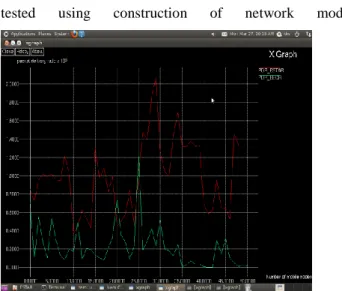
Figure 1: Packet delivery ratio vs. No. of mobile Nodes
against the Path Discovery
The performance has been explained through the two
important properties like node life time and delivery ratio.
In Figure 1, Experimental results show the used no. of
nodes and the delivery ratio of the mobile node in data
covering. The performance of the algorithms is measured
by the average convergence speed with respect to the
number of sensors while retaining the long lifetime state
and by the number of fitness evaluations. We presented a
mathematical formulation that jointly considers different
issues such as node scheduling, data routing, bounded
delay, and so on. The formulation is general and can be
extended. As a result, the performance of the algorithm can
be represented by the involving a mobile node and the
impact of network parameters (e.g., the number of sensors,
the delay bound) on the network lifetime. The linear
trajectory significantly outperforms the other two and
would save a relatively long computational time.
Figure 2: End to End Delay of the Mobile Sensor nodes
vs. Number of the node
In Figure 2, end to end delay and node life time has
been calculated based on the transmission distance of the
node. The protocol code is a simplified implementation of
all the modules except the cluster head (CH). Due to
physical limitations of sensor nodes and the difficulties in
diverse area deployment, it is extremely difficult to
perform as extensive evaluation as done in the simulation
study. The aim of this experiment is to practically
investigate the feasibility of the protocol. The motivation is
neither to evaluate the scalability of the protocol nor to
compare it with other protocols, which were already
carried out in the previous section. An experimental
network of 100 nodes was deployed with one source and
two nodes, where one acts as primary and the other as
secondary. We fixed the maximum transmission power to
2, resulting in a power range of a few tens of centimetres
(less than 1 m). The source node generated a 20 bytes
packet each second and transmitted it to the primary node
and possibly also to the secondary node. This depends on
the packet type, decided upon each transmission. 40
percent of the packets were regular, 20 percent were
delay-sensitive, 20 percent were reliability-delay-sensitive, and 20
55
6. Conclusion
In this paper, we introduced an energy model for
estimating energy consumption through power dissipation
for both static as well as sensors node in WSNs. This
model considers all aspect of energy consumption through
power dissipation, by deploying the sensors. In this paper,
we propose an Energy-efficient based Routing Algorithm
to prolong lifetime (E-STAR), which is able to
dramatically prolong network lifetime while effectively
reducing energy consumption. Last, we evaluate the
performance of various schemes through simulation. The
simulation results confirm the analytical study that our
scheme is efficient in energy consumption, network
lifetime, energy consumption balance in WSNs.
REFERENCE
[1] J. Burgess, B. Gallagher, D. Jensen, and B. N. Levine,
“Maxprop: Routing for vehicle-based disruption tolerant
networks,” in Proc. IEEE INFOCOM, 2006, pp. 1–11.
[2] M. Chuah and P. Yang, “Node density-based adaptive
routing scheme for disruption tolerant networks,” in Proc.
IEEE MILCOM, 2006.
[3] M. M. B. Tariq, M. Ammar, and E. Zequra, “Mesage
ferry route design for sparse ad hoc networks with mobile
nodes,” in Proc. ACM MobiHoc, 2006, pp. 37–48.
[4] S. Roy andM. Chuah, “Secure data retrieval based on
ciphertext policy attribute-based encryption (CP-ABE)
system for the DTNs,” Lehigh CSE Tech. Rep., 2009. [5] M. Chuah and P. Yang, “Performance evaluation of
content-based information retrieval schemes for DTNs,” in
Proc. IEEE MILCOM, 2007, pp. 1–7.
[6] M. Kallahalla, E. Riedel, R. Swaminathan, Q. Wang,
and K. Fu, “Plutus: Scalable secure file sharing on untrusted storage,” in Proc. Conf. File
Storage Technol., 2003, pp. 29–42.
[7] L. Ibraimi, M. Petkovic, S. Nikova, P. Hartel, and W.
Jonker, “Mediated ciphertext-policy attribute-based encryption and its application,” in
Proc. WISA, 2009, LNCS 5932, pp. 309–323.
[8] N. Chen, M. Gerla, D. Huang, and X. Hong, “Secure,
selective group broadcast in vehicular networks using
dynamic attribute based encryption,” in Proc. Ad Hoc
Netw. Workshop, 2010, pp. 1–8.
[9] D. Huang and M. Verma, “ASPE: Attributebased
secure policy enforcement in vehicular ad hoc networks,”
Ad Hoc Netw., vol. 7, no. 8, pp. 1526–1535, 2009.
[10] A. Lewko and B. Waters, “Decentralizing attribute-based encryption,” Cryptology ePrint Archive: Rep.
2010/351, 2010.
[11] A. Sahai and B. Waters, “Fuzzy identity-based encryption,” in Proc. Eurocrypt, 2005, pp. 457– 473.
[12] V. Goyal, O. Pandey, A. Sahai, and B. Waters,
“Attribute-based encryption for fine-grained access control of encrypted data,” in Proc. ACM Conf. Comput.
Commun. Security, 2006, pp. 89–98.
[13] J. Bethencourt, A. Sahai, and B. Waters,
“Ciphertext-policy attributebased encryption,” in
Proc. IEEE Symp. Security Privacy, 2007, pp. 321–
334.
[14] R. Ostrovsky, A. Sahai, and B. Waters,
“Attribute-based encryption with non-monotonic
access structures,” in Proc. ACM Conf. Comput.
Commun. Security, 2007, pp. 195–203.
[15] S. Yu, C. Wang, K. Ren, and W. Lou, “Attribute
based data sharing with attribute revocation,” in Proc.