Iranian journal of educational Sociology
(Interdisciplinary Journal of Education)Available online at: http://www.iase-idje.ir/
Volume 1, Number 2, May 2017
Comparing the optimal and existing framework of social
responsibility training in social studies curriculum of Iran
elementary school
Mahin Onagh1,Faezeh Nateghi2* ,Abbas Gholtash
1.Ph.D. Student, Curriculum Department, Faculty of Educational Sciences, Islamic Azad University, Arak, Iran. 2.Assistant Professor, Department of Educational Sciences, Islamic Azad University, Arak Branch, Arak, Iran.
3.Associate Professor in Curriculum Studies, Faculty of Educational Sciences and Psychology, Marvdasht Branch, Islamic Azad University, Marvdasht, Iran.
Article history:
Received date: 10 September 2017 Review date: 15 November 2017 Accepted date:28 December 2017 Printed on line: 5 May 2017
Abstract
Purpose: The present study was carried out with the aim to compare the optimal
and existing frameworks of social responsibility training in the social science curriculum of elementary school in Iran. Regarding this issue, in this study, data have been collected based on the expert opinions, related books, articles, etc. Methodology: The research method in this study included the applied and descriptive-survey methods with a combined (qualitative-quantitative) approach. The statistical population in the qualitative section, including the books of fourth, fifth, and sixth grades (examination of documents) and a number of 20 experts in curriculum planning, were selected through Judgmental Sampling method. In addition, in the quantitative section, the statistical population included all faculty members of the educational sciences from the Science and Research Unit of Islamic Azad University of Azad Shahr and Farhangian University of Gorgan, as 40 individuals (women and men), who were selected using available sampling method. The data collection tools included a researcher-made questionnaire, data collection questionnaire and the researcher-made checklists including: a checklist for the content analysis of textbooks on social studies in the elementary school of Iran, a content analysis checklist for the content analysis of guide to curriculum on social studies in the elementary school, and a checklist for the content analysis of the guide to teaching books. The face and content validity of the tool was approved by the experts. The reliability of the tools was calculated using Cronbach's alpha coefficient test, which was confirmed statistically.
Findings: The findings indicated that the optimal social responsibilities to be considered
in the social science curriculum of the elementary period in Iran included: social responsibility, religious responsibility, economic responsibility, cultural responsibility, political responsibility, environmental responsibility, and occupational responsibility.
Discussion:The study findings also revealed that the same attention has not been paid
to all types of social responsibilities and dimensions of elementary education, rather the cultural, religious, and political responsibilities and also the cognitive dimension of social responsibility training have been regarded. Moreover, the least attention was paid to environmental and economic responsibilities, and the functional dimension of training of the social responsibilities has been completely overlooked.
Keywords:
Social responsibility, Responsibility training, Curriculum of social science in elementary school
Please cite this article as: Onagh M. Nateghi F, Gholtash A. (2017). Comparing the optimal and existing framework of social responsibility training in social studies curriculum of Iran elementary school, Iranian journal of educational Sociology,1(2), 113-128.
1. Introduction
The social order based on the harmonization of all components of society, will be realized when individuals as members of the community know and perform their own tasks and responsibilities. The social planning and policy-making will lack any support without the individual’s sense of attachment to society, as the implementation of the programs and their implementation implies the individuals’ interest in sustaining social life and solidarity with the social (Cooley, 2017).
Social responsibility is a kind of sense of commitment to the progress of society, and as a social being, humans have duties to other members of society. This sense of commitment is a personality characteristic and usually manifests itself as fixed behaviors in the individual’s social behaviors. Social values, such as general welfare and participation in solving problems, are realized in a society where people feel more responsible (Ni and Van Wart, 2015: 182).
According to Glasser (1984: 14), responsibility has been formulated in three components: first, learning is the selection of behaviors that meet one's basic needs, second, the acceptance of the consequences of one's own behavior, and third, not impeding meeting the needs of others (Mohammadi and Hakimi, 2017: 20). Denesbry and Cates (2004) argued that social responsibility is applying the knowledge and skills that have been obtained through education and experience to advance society. Consideration and service to the humans are the characteristics of accountable individuals who have been well-nurtured socially. Given the abundance of opinions and interpretations of the concept of social responsibility, there are several perspectives on its dimensions. The common point of all studies in this area, is the comprehensive attention of the researchers to environmental, economic, political, and social requirements in social responsibility education. Several elements are involved in the formation of social responsibility in a person, with the family having the most effective role in this regard; in fact, family and parents are the first element effective in the development and formation of social responsibility. Based on the investigations in this area, the behavior of parents with the child in the first years of life has a lasting effect on the personality of the child. However, in the following years, beside the family members, the education system takes the role of training social responsibility (Shamir, 2017: 163).
2. literature Review
Education system is one of the important organizations playing a key role in the social development and growth of individuals. Accordingly, the performance of this institution is effective in the process of social growth and the full-scale development of capabilities of students. Today, the intense competition of societies, resource limitations, preservation of the value and cultural system of the predecessors, dynamic interaction with other nations and cultures, effective presence in national and international political scenes, preservation and development of the natural environment, and a set of such factors have surrounded the mankind, the negligence of which will cause the collapse of the political, social, economic, cultural, and even the environmental systems of national and international societies. This suggests that the current interconnected world requires more responsible and accountable people than ever before (Hashemi and Hashemi, 2016).
Schools have roles in social culture, one of the most important of which is the socialization of individuals through formal and informal curricula. In order to promote social responsibility against beneficiaries and other individuals of the society, the organizations have to focus on community concerns about the
environment, social affairs, and philanthropy, and depending on their own organizational culture, focus on developing policies on social responsibility (Huda et al., 2018: 146).
Since the educational system is centralized in Iran, certainly, some of the important components in training social issues is formal curriculum and, consequently, the textbook and documents of the curriculum and these are the most common resources and learning references, and teachers inevitably focus their educational activities based on them, and students also need to read and understand the content of the textbooks. The textbooks in the centralized educational system with the harmonized exams are of particular importance; in this type of educational system, learners must study all the content of the textbooks in order to be educationally successful (Hashemi and Hashemi, 2016).
Social responsibility is an important part of social development of individuals, in addition, developing a sense of responsibility is one of the goals of the education of the Islamic Republic of Iran. Therefore, it is necessary to pay great attention to this aspect of the characteristics of students in the educational system, especially in the curriculum and textbooks of the elementary school level, which is one of the most important periods of formation of personality among students, especially in social science curriculum, which has more potential for student social development. Furthermore, given the necessity and importance of social responsibility, if the educations systems aims for the training of the next generation as socially developed, it must inevitably take into account the issue of social responsibility as one of its fields of activity, and it is clear that the curriculum will be an appropriate platform for developing this type of social skills. Therefore, the inclusion of social responsibility components in curriculum elements, i.e. goals, content, teaching methods, and evaluation methods, is inevitable in order to enhance social responsibility in learners. It is clear that today the issue of the need to consider the social responsibility in the education system is acceptable and inevitable for all, in particular in this regard, the role of the curriculum is especially important. In general, based on the literature review, it was observed that the shallow investigation of the social responsibility and its components to improve social behaviors among students and, hence, the reduction of the indirect social costs of the community, necessitate performing studies with the findings applicable in order to evaluate the performance of teachers and schools to increase the social responsibility of elementary school students, in addition, the findings of the study can be used by other organizations and institutions involved in the affairs of children and adolescents in the country, and to familiarize with the fields of utilization of the participation of students in various social situations inside and outside the school; moreover, the dispersion of studies in the field of responsibility also requires the implementation of further studies and investigations in this area (Ramezani Nejad et al., 2016: 102). Mohseni et al. (2016) indicated that the themes and indicators of political education applied in the Social Science textbook of the sixth grade have been distributed in an unbalanced way in terms of the dimensions of learning and expression of the themes, which has led students to acquire a certain degree of insight in some indicators. However in the primary indicators of political education, such as mutual rights, counseling, and responsibility, due to the low and inadequate use, they did not benefited from a good level of political education, which has caused the improper political education of the students. Saleh Emran et al. (2016) declared in their study that the balanced and comprehensive attention has not been paid to the components of environmental education in the content of the social science textbook. Moreover, in a study, Mohammad Hassani et al. (2017) showed that the curriculum approach in social science in the elementary school is a mid-program or a compilation of several programs, in which the ethical goals have been placed alongside other goals of the curriculum, and depending on the goals, the
content of the textbooks has also been subject to the ethical themes. Gündüz (2017) in a study found that students need to trust their teachers in terms of their professional approach (knowledge, personality, etc.). The findings of the study revealed that the students’ confidence in their teachers increased proportional to the teachers’ sense of responsibility to train their students. Moreover, in a study Nelson and Bianco (2013) found that the responsibility is examined by the individuals through recognition and respect for their needs and the group in the school.
Therefore, taking into account the above cases and considering the importance of the elementary education course compared to other courses as well as the role of stability that may be along with their learning in later years of life, the question rises that how is the current status of responsibility training in the social science curriculum of the elementary period in Iran compared to the optimal situation?
The present study was performed to compare the optimal and existing frameworks of social responsibility training in the social science curriculum of elementary school in Iran. Thus the research method was combined based on the nature of the data (quantitative and qualitative), library-field type in terms of the environment, applied from the point of view of purpose, cross-sectional in terms of time, and descriptive-survey in terms of research method.
Qualitative: The statistical population in the qualitative section included the textbooks of the fourth, fifth, and sixth grades (review of documents) and experts in the curriculum planning as 20 individuals. The Judgmental Sampling method was employed in this study to determine the samples in which 10 people were considered as the sample size of the interviewees.
Quantitative: The second group of the statistical population of this study included all the faculty members of the educational sciences from the Science and Research Unit of Islamic Azad University of Azad Shahr and Farhangian University of Gorgan, as 40 individuals (women and men), who were selected using available sampling method.
The data collection tool was a researcher-made questionnaire which was utilized after determining its validity and reliability in order to answer the first question of the study. Regarding the second, third, fourth, and fifth questions of the study, a data collection form was used initially, and then a researcher-made questionnaire was exploited whose validity and reliability were calculated (It is noteworthy that in general, a question was provided to collect the necessary information about the response of the subjects to the first to fourth questions). In order to answer the last question of the study, the researcher-made checklists including: a checklist for the content analysis of textbooks on social science in the elementary school level in Iran, a content analysis checklist for the content analysis of guide to curriculum on social science in the elementary school level, and a checklist for the content analysis of the guide to teaching books.
In this study, the face, content, and structure validities were considered in the calculation of the validity. The face validity of the final questionnaire, apart from the editorial, form, spelling, etc. mistakes, was developed by the researcher, several sample members, supervisor professor, and counselor. The content validity ratio (CVR) and content validity index (CVI) forms were utilized to evaluate the content validity. It is worth noting that the content validity examination was performed by the experts prior to distribution of the questionnaire (interviewees, supervisors and counselors, Ph.D. student’s expert in this field, several subjects, etc.). Based on this type of validity, no questions needed to be eliminated and some questions were corrected.
In this study, the Cronbach's alpha coefficient was used to calculate the reliability. As it is demonstrated in table 1, the Cronbach's and combined alpha coefficients was higher than 0.7 for all study questions.
3. Methodology
Qualitative: In the qualitative section, data analysis was performed based on Delphi technique. Initially, the key points of each structured interview were marked by listening to the recorded interviews and reading notes taken during the interview, then the key and essential points were extracted from each interview. In the next step, labeling was performed using classification of the key words in the form of professional terms. Then, the labeled terms of each interviewee were organized in the form of a table and classified in accordance with their relationship and coordination, in terms of dimensions and components.
Quantitative: Descriptive and inferential statistics were used in the quantitative section according to the research questions. In the descriptive section, for demographic variables whose data were obtained from the questionnaire, mean, standard deviation (SD), frequency distribution tables, and graphs were presented for each variable; this process was conducted using the SPSS software.
In the inferential part, the research hypotheses were tested using the SPSS software and the single-sample t-test and independent t-test were exploited.
4. Findings
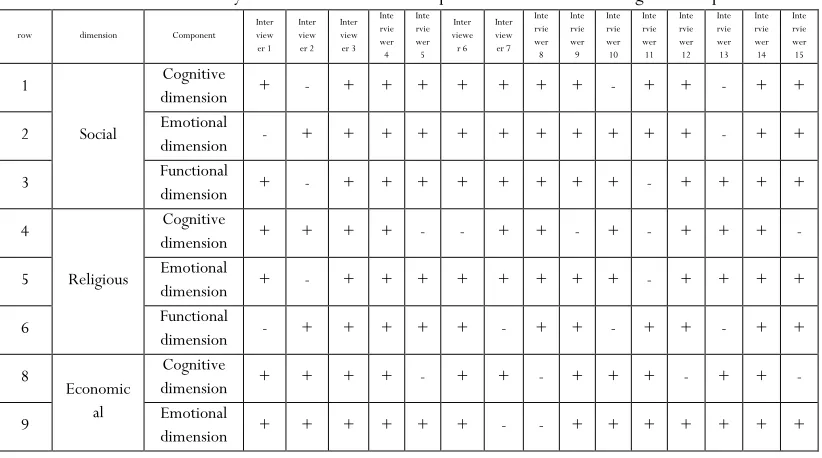
In this section, the research data will be analyzed and evaluated using scientific methods.What are the optimal social responsibilities for inclusion in the social science curriculum of the elementary period in Iran? In this study, based on the data extracted, the optimal social responsibilities to be considered in the social science curriculum of the elementary period in Iran included: social responsibility, religious responsibility, economic responsibility, cultural responsibility, political responsibility, environmental responsibility, and occupational responsibility.
Table 1. Summary of the dimensions and components extracted according to the experts
row dimension Component
Inter view er 1 Inter view er 2 Inter view er 3 Inte rvie wer 4 Inte rvie wer 5 Inter viewe r 6 Inter view er 7 Inte rvie wer 8 Inte rvie wer 9 Inte rvie wer 10 Inte rvie wer 11 Inte rvie wer 12 Inte rvie wer 13 Inte rvie wer 14 Inte rvie wer 15 1 Social Cognitive
dimension + - + + + + + + + - + + - + +
2 Emotional dimension - + + + + + + + + + + + - + +
3 Functional
dimension + - + + + + + + + + - + + + +
4
Religious
Cognitive
dimension + + + + - - + + - + - + + + -
5 Emotional
dimension + - + + + + + + + + - + + + +
6 Functional
dimension - + + + + + - + + - + + - + +
8
Economic al
Cognitive
dimension + + + + - + + - + + + - + + -
9 Emotional dimension + + + + + + - - + + + + + + +
10 Functional dimension + + + + + - + + + + - - + - + 12
Cultural
Cognitive
dimension + - + + + + + + - + - + + + +
13 Emotional
dimension + + - + + + + + + - - + + + +
14 Functional
dimension - + + + + + + - + + - + + + +
Political
Cognitive
dimension + - + - + + + - + + + - + + +
Emotional
dimension + + + + - + + + - + + - - + -
Functional
dimension - + - + + + + + + + + - + + +
environme ntal
Emotional
dimension + + + + - - + + - + - - + + +
Emotional
dimension + - + + + - + + + + - + + - -
Functional
dimension + + + + - + + + - + + + + - +
occupatio nal
Cognitive
dimension + - + + + + + + + - - + + + +
Emotional
dimension + + + + + + + + + - + + + + +
Functional
dimension + + + + + - + + - + + - + + +
The results of table 1 showed that the components were emphasized by interviewees at least 10 times and up to 14 times.
What are the components of the optimal social responsibilities of education in the curriculum of social science of the elementary period in Iran in the three cognitive, emotional, and functional aspects?
Table 2. Religious-social responsibility components based on the results of the qualitative section
Religious-social responsibility
Cognitive dimension Emotional dimension Functional dimension
1. Familiarity with the importance and necessity of counseling in social life in religious terms
Making interest in counseling in social life.
Consultation in social life affairs
2. Familiarity with the importance and necessity of trusteeship in social life in religious terms
Interest in trusteeship in social life Practicing interest in trusteeship in social life
3. Familiarity with the importance and necessity of good ethics in social life from a religious point of view
Creating an interest in good ethics in social life
Practicing and respecting good ethics in social life
4. Familiarity with the importance and necessity of good behavior in social life in religious terms
Interest in respect for ethics in social life Practicing and respecting good ethics in social life
5. Familiarity with the importance and necessity of helping and assisting the deprived from the religious point of view
Making interest and attention to helping the deprived of the community
Helping the deprived and the poor of the community
6. Familiarity with the importance of fulfillment from the religious point of view
Interest and attention to the importance and necessity of fulfilling the covenant
Fulfilling the covenant in social life
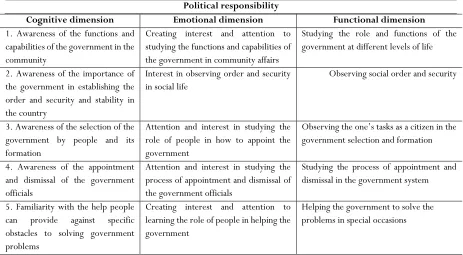
Table 3. Components of political responsibility based on the results of the qualitative section
Political responsibility
Cognitive dimension Emotional dimension Functional dimension
1. Awareness of the functions and capabilities of the government in the community
Creating interest and attention to studying the functions and capabilities of the government in community affairs
Studying the role and functions of the government at different levels of life
2. Awareness of the importance of the government in establishing the order and security and stability in the country
Interest in observing order and security in social life
Observing social order and security
3. Awareness of the selection of the government by people and its formation
Attention and interest in studying the role of people in how to appoint the government
Observing the one’s tasks as a citizen in the government selection and formation
4. Awareness of the appointment and dismissal of the government officials
Attention and interest in studying the process of appointment and dismissal of the government officials
Studying the process of appointment and dismissal in the government system
5. Familiarity with the help people can provide against specific obstacles to solving government problems
Creating interest and attention to learning the role of people in helping the government
Helping the government to solve the problems in special occasions
6. Understanding the benefits and services of the government to people
Interest in studying and learning the benefits of government services to people
Studying government services to the people
7. Understanding the duty of people in the continuation of the government
Interest in studying and learning the duties of people against the government
Performing one’s duties as a citizen against government
8. Familiarity with the demands and expectations of the people from the government
Interest and willingness to learn and study the demands of the people from the government
Expressing the demands and expectations from the government in social life
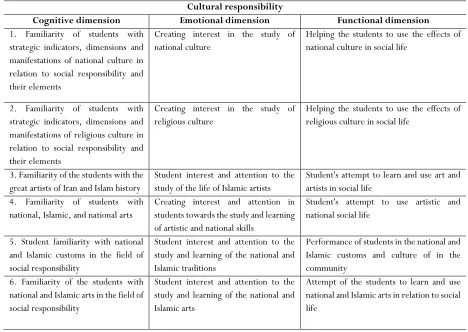
Table 4. Components of cultural responsibility based on the results of the qualitative section
Cultural responsibility
Cognitive dimension Emotional dimension Functional dimension
1. Familiarity of students with strategic indicators, dimensions and manifestations of national culture in relation to social responsibility and their elements
Creating interest in the study of national culture
Helping the students to use the effects of national culture in social life
2. Familiarity of students with strategic indicators, dimensions and manifestations of religious culture in relation to social responsibility and their elements
Creating interest in the study of religious culture
Helping the students to use the effects of religious culture in social life
3. Familiarity of the students with the great artists of Iran and Islam history
Student interest and attention to the study of the life of Islamic artists
Student's attempt to learn and use art and artists in social life
4. Familiarity of students with national, Islamic, and national arts
Creating interest and attention in students towards the study and learning of artistic and national skills
Student's attempt to use artistic and national social life
5. Student familiarity with national and Islamic customs in the field of social responsibility
Student interest and attention to the study and learning of the national and Islamic traditions
Performance of students in the national and Islamic customs and culture of in the community
6. Familiarity of the students with national and Islamic arts in the field of social responsibility
Student interest and attention to the study and learning of the national and Islamic arts
Attempt of the students to learn and use national and Islamic arts in relation to social life
Table 5. Components of economic responsibility based on the results of the qualitative section
Economic responsibility
Cognitive dimension Emotional dimension Functional dimension
1. Familiarity with the importance of job and earning money
Attention to and interest in various businesses in the society
Earning income
2. Familiarity with the importance of proper ways of consumption
Attention and willingness to study the proper ways of consumption
Observing the proper methods of consumption in social life
3. Familiarity with the importance of saving money
Interest and willingness to saving Saving in one’s life
4. Familiarity with the correct culture of work and production
Interest in learning the right culture of work and the production
Knowledge and acting on the right culture of work and production
5. Familiarity with the importance of national and domestic production
Creating interest and willingness to support national and domestic production
Use of national and domestic products in social life
6. Familiarity with the importance of active participation in the construction and development of the country
Interest and willingness to participate in the construction and development of the country
Contribution to the construction and development of the country
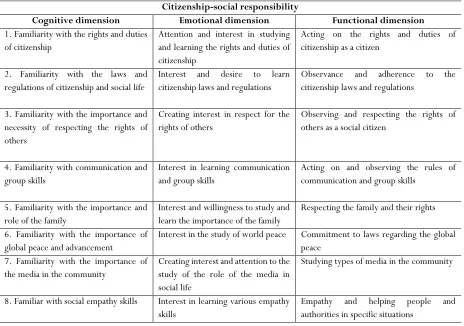
Table 6. Components of Citizenship-social responsibility based on the results of the qualitative section
Citizenship-social responsibility
Cognitive dimension Emotional dimension Functional dimension
1. Familiarity with the rights and duties of citizenship
Attention and interest in studying and learning the rights and duties of citizenship
Acting on the rights and duties of citizenship as a citizen
2. Familiarity with the laws and regulations of citizenship and social life
Interest and desire to learn citizenship laws and regulations
Observance and adherence to the citizenship laws and regulations
3. Familiarity with the importance and necessity of respecting the rights of others
Creating interest in respect for the rights of others
Observing and respecting the rights of others as a social citizen
4. Familiarity with communication and group skills
Interest in learning communication and group skills
Acting on and observing the rules of communication and group skills
5. Familiarity with the importance and role of the family
Interest and willingness to study and learn the importance of the family
Respecting the family and their rights
6. Familiarity with the importance of global peace and advancement
Interest in the study of world peace Commitment to laws regarding the global peace
7. Familiarity with the importance of the media in the community
Creating interest and attention to the study of the role of the media in social life
Studying types of media in the community
8. Familiar with social empathy skills Interest in learning various empathy skills
Empathy and helping people and authorities in specific situations
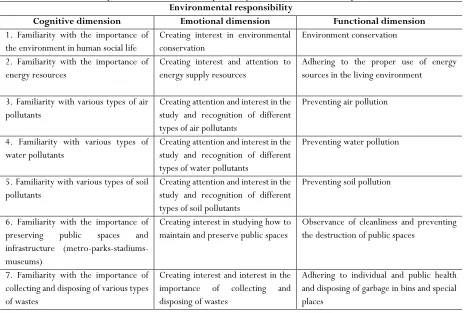
Table 7. Components of environmental responsibility based on the results of the qualitative section
Environmental responsibility
Cognitive dimension Emotional dimension Functional dimension
1. Familiarity with the importance of the environment in human social life
Creating interest in environmental conservation
Environment conservation
2. Familiarity with the importance of energy resources
Creating interest and attention to energy supply resources
Adhering to the proper use of energy sources in the living environment
3. Familiarity with various types of air pollutants
Creating attention and interest in the study and recognition of different types of air pollutants
Preventing air pollution
4. Familiarity with various types of water pollutants
Creating attention and interest in the study and recognition of different types of water pollutants
Preventing water pollution
5. Familiarity with various types of soil pollutants
Creating attention and interest in the study and recognition of different types of soil pollutants
Preventing soil pollution
6. Familiarity with the importance of preserving public spaces and infrastructure (metro-parks-stadiums-museums)
Creating interest in studying how to maintain and preserve public spaces
Observance of cleanliness and preventing the destruction of public spaces
7. Familiarity with the importance of collecting and disposing of various types of wastes
Creating interest and interest in the importance of collecting and disposing of wastes
Adhering to individual and public health and disposing of garbage in bins and special places
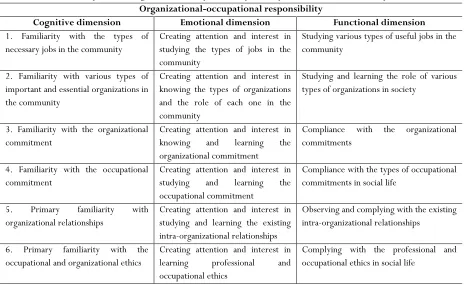
Table 8. Components of organizational-occupational responsibility based on the results of the qualitative section
Organizational-occupational responsibility
Cognitive dimension Emotional dimension Functional dimension
1. Familiarity with the types of necessary jobs in the community
Creating attention and interest in studying the types of jobs in the community
Studying various types of useful jobs in the community
2. Familiarity with various types of important and essential organizations in the community
Creating attention and interest in knowing the types of organizations and the role of each one in the community
Studying and learning the role of various types of organizations in society
3. Familiarity with the organizational commitment
Creating attention and interest in knowing and learning the organizational commitment
Compliance with the organizational commitments
4. Familiarity with the occupational commitment
Creating attention and interest in studying and learning the occupational commitment
Compliance with the types of occupational commitments in social life
5. Primary familiarity with organizational relationships
Creating attention and interest in studying and learning the existing intra-organizational relationships
Observing and complying with the existing intra-organizational relationships
6. Primary familiarity with the occupational and organizational ethics
Creating attention and interest in learning professional and occupational ethics
Complying with the professional and occupational ethics in social life
What is the current status of social science curriculum (goals, content, teaching methods, evaluation) of the elementary school level in Iran to teach the optimal social responsibilities and its components in the three cognitive, emotional, and functional dimensions?
A 96-item researcher-made questionnaire was employed to answer the last question of the study using the results of the qualitative section.
Table 9. Descriptive review of questions on family education Question
number
Question
code frequency minimum maximum mean
Standard deviation
Significance level
1 F1 40 1 5 3/53 1/151 0/000
2 F2 40 1 5 3/56 1/208 0/000
3 F3 40 1 5 3/63 1/209 0/000
4 F4 40 1 5 3/58 1/149 0/000
5 F5 40 1 5 3/69 1/217 0/000
6 F6 40 1 5 3/61 1/276 0/000
7 F7 40 1 5 3/74 1/106 0/000
8 F8 40 1 5 3/67 1/103 0/000
9 F9 40 1 5 2/94 1/231 0/000
10 F10 40 1 5 2/92 1/239 0/000
11 F11 40 1 5 3/53 1/195 0/000
12 F12 40 1 5 3/68 1/089 0/000
13 F13 40 1 5 3/75 1/176 0/000
14 F14 40 1 5 2/91 1/221 0/000
15 F15 40 1 5 3/71 1/056 0/000
16 F16 40 1 5 3/61 1/095 0/000
17 F17 40 1 5 3/59 1/097 0/000
18 F18 40 1 5 3/57 1/104 0/000
19 F19 40 1 5 3/65 1/130 0/000
20 F20 40 1 5 2/98 1/379 0/000
21 F21 40 1 5 3/75 1/136 0/000
22 F22 40 1 5 3/71 1/187 0/000
23 F23 40 1 5 3/76 1/073 0/000
24 F24 40 1 5 3/63 1/019 0/000
25 F25 40 1 5 2/89 1/177 0/000
26 F26 40 1 5 3/76 1/197 0/000
27 F27 40 1 5 3/59 1/199 0/000
28 F28 40 1 5 3/58 1/118 0/000
29 F29 40 1 5 3/67 1/215 0/000
30 F30 40 1 5 3/60 1/266 0/000
31 F31 40 1 5 2/95 1/243 0/000
32 F32 40 1 5 3/85 1/114 0/000
33 F33 40 1 5 3/51 1/089 0/000
34 F34 40 1 5 3/54 1/158 0/000
35 F35 40 1 5 3/53 1/174 0/000
36 F36 40 1 5 3/69 1/080 0/000
37 F37 40 1 5 3/68 1/182 0/000
38 F38 40 1 5 3/65 1/239 0/000
39 F39 40 1 5 2/91 1/198 0/000
40 F40 40 1 5 3/63 1/099 0/000
41 F41 40 1 5 3/61 1/103 0/000
42 F42 40 1 5 3/59 1/105 0/000
43 F43 40 1 5 3/74 1/120 0/000
44 F44 40 1 5 3/72 1/038 0/000
45 F45 40 1 5 3/76 1/136 0/000
46 F46 40 1 5 3/69 1/197 0/000
47 F47 40 1 5 3/82 1/068 0/000
48 F48 40 1 5 3/64 1/042 0/000
49 F49 40 1 5 3/50 1/145 0/000
50 F50 40 1 5 3/68 1/186 0/000
51 F51 40 1 5 2/88 1/355 0/000
52 F52 40 1 5 3/57 1/135 0/000
53 F53 40 1 5 3/66 1/229 0/000
54 F54 40 1 5 3/57 1/253 0/000
55 F55 40 1 5 3/70 1/096 0/000
56 F56 40 1 5 3/53 1/140 0/000
57 F57 40 1 5 3/48 1/128 0/000
58 F58 40 1 5 3/59 1/146 0/000
59 F59 40 1 5 3/80 1/248 0/000
60 F60 40 1 5 3/84 1/158 0/000
61 F61 40 1 5 3/88 1/204 0/000
62 F62 40 1 5 3/84 1/269 0/000
63 F63 40 1 5 4/01 1/042 0/000
64 F64 40 1 5 3/84 1/099 0/000
65 F65 40 1 5 3/85 1/084 0/000
66 F66 40 1 5 3/89 1/102 0/000
67 F67 40 1 5 4/00 1/092 0/000
68 F68 40 1 5 3/91 1/117 0/000
69 F69 40 1 5 3/96 1/141 0/000
70 F70 40 1 5 3/94 1/206 0/000
71 F71 40 1 5 4/12 0/959 0/000
72 F72 40 1 5 4/00 1/059 0/000
73 F73 40 1 5 3/85 1/132 0/000
74 F74 40 1 5 3/92 1/120 0/000
75 F75 40 1 5 3/97 1/130 0/000
76 F76 40 1 5 3/89 1/155 0/000
77 F77 40 1 5 3/95 1/174 0/000
78 F78 40 1 5 3/93 1/200 0/000
79 F79 40 1 5 3/96 1/056 0/000
80 F80 40 1 5 3/90 1/101 0/000
81 F81 40 1 5 3/57 1/253 0/000
82 F82 40 1 5 3/70 1/096 0/000
83 F83 40 1 5 3/53 1/140 0/000
84 F84 40 1 5 3/48 1/128 0/000
85 F85 40 1 5 3/59 1/146 0/000
86 F86 40 1 5 3/80 1/248 0/000
87 F87 40 1 5 3/84 1/158 0/000
88 F88 40 1 5 3/88 1/204 0/000
89 F89 40 1 5 3/74 1/106 0/000
90 F8 40 1 5 3/67 1/103 0/000
91 F90 40 1 5 2/94 1/231 0/000
92 F91 40 1 5 2/92 1/239 0/000
93 F92 40 1 5 3/53 1/195 0/000
94 F93 40 1 5 3/68 1/089 0/000
95 F94 40 1 5 3/75 1/176 0/000
96 F95 40 1 5 3/01 1/221 0/000
The results presented in table 9 indicated that the lowest and highest mean values of 2.88 and 4.12 were related to the questions number 51 and 71 with SDs of 1.355 and 0.959, respectively. Moreover, questions 1 to 24 were related to the variable of objectives of the social science curriculum for teaching social responsibilities. In this variable, questions 13 and 14 had the highest and lowest mean values of 3.75 and 2.91, respectively. Questions 25 to 48 were related to the content for teaching social responsibility. In this variable, questions 39 and 25 had the highest and lowest mean values of 3.85 and 2.89, respectively. Questions 49 through 72 related to teaching methods. In this variable, questions 71 and 51 had respectively the highest and lowest mean values of 4.12 and 2.88. Questions 73 to 96 were associated with the evaluation. In this variable, questions 75 and 92 had respectively the highest and lowest mean values of 3.98 and 2.92.
5. Discussion
The education department in a community should lead individuals to learn verbal, physical, scientific, and social skills in public education courses, and prepare the person to join the community. Socialization is a process in which the skills, motives, values, norms, and behaviors of individuals are formed so that they can play a proper and effective role in the present or future society. The socialization process begins with the birth of a child, and the mutual relationship between the individual and his/her relatives continues until the end of the individual’s life.
Textbooks and their content are the proper tools for providing knowledge, changes in beliefs and attitudes, training skills, creating commitment and civic spirit among students, and socializing them. The proper training of citizens is one of the most important concerns of many educational systems in many countries worldwide. Studies and investigations conducted in numerous developed and developing countries indicate that education authorities in these countries have determinedly put the proper training of the citizens at the forefront of their activities through developing various educational-curricular programs. Therefore, taking into account the importance of the issue, the comparison of the optimal and existing frameworks of social responsibility training in the social science curriculum of the elementary period in Iran has been performed. The findings revealed that the content of the social science course has mainly focused on the religious and cultural responsibilities. Meanwhile, the functional and emotional dimensions of social responsibility have been considered inadequately and its functional dimension has been neglected. This finding is in agreement with the results of the study by Saleh Emran et al. (2016), which showed that a balanced and comprehensive attention has not been paid to the components of environmental education in
content of these textbooks. Mohammad Hassani et al. (2017) showed that the curriculum approach in social science in the elementary school is a mid-program or a compilation of several programs, in which the ethical goals have been placed alongside other goals of the curriculum, and methods such as group discussion, discussion on the hypothetical moral positions, patterning, methodological explanation, and the role play method have been employed for the training-learning procedure. In addition, the forms of providing moral content mainly included text, images, and activities. Furthermore, besides the usual methods, methods such as self-assessment were also proposed for evaluation purposes.
The present study was confronted with some constraints, including the limited population size for the Golestan provincial educational and planning experts, the geographic scope of the study which was conducted in the Golestan province, poor cooperation of some subjects due to lack of sufficient opportunity, and low motivation and lack of the in-person access to many people of the statistical samples in the quantitative part and communication through phone or email. Taking into account these limitations, it is suggested that in future examinations, key components of social responsibility in higher education levels be considered. In addition, it is necessary to investigate the different dimensions of responsibility in other curricula in order to consider the psychological aspects in other educational concepts.
References
Cooley C. H. (2017). Human nature and the social order. Routledge.
Glasser T. L. (1984). Objectivity precludes responsibility. The Quill, 72(2), 13-16.
Gündüz M. (2017). Sınıf öğretmenlerinin değer öğretimine yönelik zihin haritaları. Bartın Üniversitesi Eğitim Fakültesi Dergisi, 6(2), 427-446.
Hashemi F and Hashemi F. (2016). Responsibility in Students: Dimensions and Strategies for Strengthening it. The 5th International Conference on Psychology and Social Sciences, Tehran, Mehr Ishraq Conferences
Hassani M and Vojdani F. (2017). Analyzing Qualitative Content of Social Science Textbooks in the Elementary Period from the Point of Ethical Education. Islamic Education, 12 (25), 29-54
Huda M., Jasmi K. A., Alas Y., Qodriah S. L., Dacholfany M. I., & Jamsari E. A. (2018). Empowering Civic Responsibility: Insights from Service Learning. In Engaged Scholarship and Civic Responsibility in Higher Education (pp. 144-165). IGI Global.
Mohammadi H and Hakimi A. (2017). Measuring the Social Responsibility Principles of Companies Using the ISO26000 Standard Approach (Case Study: Gas Company of Mazandaran Province). Standard and Quality Management, 7 (1), 16-33
Mohseni M, Hosseini S and Chamalnejad M. (2016). Analysis of the Social Science Textbook of the Sixth Grade in Terms of Focus on Students' Political Education Indicators. 2 (13), 209-223
Nelson D., & Bianco C. (2013). Increasing Student Responsibility and Active Learning in an Undergraduate Capstone Finance Course. American Journal of Business Education, 6(2), 267-278.
Ni A., & Van Wart M. (2015). Corporate Social Responsibility: Doing Well and Doing Good. In Building Business-Government Relations (pp. 175-196). Routledge.
Ramezani Nejad R, Nazari S and Mollayi K. (2016). Comparison of the Responsibility Levels among Athlete and Non-athlete Students based on the TPSR Model. Applied Research in Sports Management, 5 (18), 97-108
Salehi Emran I, Pahizkar L and Hatamifar K. (2016). Investigating the Position of the Main Components of Environmental Education in the Curriculum of Textbooks of Sixth Elementary School Grade. Environmental Education and Sustainable Development, 5 (2), 89-99
Shamir R. (2017). Between self-regulation and the Alien Tort Claims Act: On the contested concept of corporate social responsibility. In Crime and Regulation (pp. 155-183). Routledge