World Maritime University
The Maritime Commons: Digital Repository of the World
Maritime University
World Maritime University Dissertations
Dissertations
2001
Port state control : review and assessment
Shiming Xu
World Maritime University
Follow this and additional works at:
http://commons.wmu.se/all_dissertations
Part of the
Law of the Sea Commons
This Dissertation is brought to you courtesy of Maritime Commons. Open Access items may be downloaded for non-commercial, fair use academic purposes. No items may be hosted on another server or web site without express written permission from the World Maritime University. For more information, please [email protected].
Recommended Citation
Xu, Shiming, "Port state control : review and assessment" (2001).World Maritime University Dissertations. 426.
WORLD MARITIME UNIVERSITY
Malmö, Sweden
PORT STATE CONTROL
Review and Assessment
By
XU SHIMING
The People’s Republic of China
A dissertation submitted to the World Maritime University in partial fulfilment of the requirements for the award of the degree of
MASTER OF SCIENCE
In
MARITIME AFFAIRS
MARITIME ADMINISTRATION AND ENVIRONMENTAL PROTECTION
2001
ã ã ã
DECLARATION
I certify that all the material in this dissertation that is not my own work has been identified, and that no material is included for which a degree has previously been conferred on me.
The contents of this dissertation reflect my own personal views, and are not necessarily endorsed by the University.
(Signature) ...
(Date) ...
Supervised by:
Jan-Äke Jönsson Associate Professor,
Maritime Safety and Environment Protection World Maritime University
Assessor:
Dr. P.K. Mukherjee Professor,
Maritime Safety and Environment Protection World Maritime University
Co-assessor:
Capt. W.B. Rial
Office: The Government of Cayman Islands
ACKNOWLEDGEMENTS
I world like to extend my hearty gratitude to the Chinese Maritime Safety Administration and the Department of International Cooperation of the Ministry of Communications, which nominated me to pursue a course of study at the World Maritime University. I am also most grateful to the Norwegian Technical cooperation fellowship for its generous sponsorship during my study in WMU.
I would like to express my sincere thanks to Professor Jan-Ake Jonsson, my course professor and supervisor of this dissertation, for his insightful guidance and assistance; and to Professor Robert Mcfarland for his encouragement and support of my research on this topic.
My sincere appreciation also extended to all the staff of World Maritime University, especially the staff at the library of the University, without whose great help this dissertation could not have been completed.
I also appreciate all the friends who have given me assistance in different aspects of my studies.
My particular gratitude goes to my leaders and colleagues in the Hebei Maritime Safety Administration for their nomination and great support for me to study in World Maritime University.
ABSTRACT
Title of Dissertation: Port State control: Review and assessment Degree: MSc
The dissertation is a study of the effectiveness of port State control from a global perspective and its impact on the implementation of MARPLO and SOLAS, based on the information from IMO and several leading PSC MOUs as well as literatures from distinguished scholars.
A brief retrospect is taken at the background of the emergence and development of the international PSC regime. The definition of PSC and the main reasons, which triggered the development of the PSC regime all over the world, are examined. The legal basis for the port States to conduct PSC inspections is reviewed. The provisions included in various international conventions, such as UNCLOS, SOLAS, MARPOL, STCW and so on, are examined so that people may have a clear idea of the legitimacy of the international PSC regime.
The rationale, growth and development of regional PSC MOUs are investigated. Eight existing regional PSC MOUs and USCG are compared to gain a general view of their development status and performance. The problems and defects existed in these MOUs are also investigated.
The PSC inspection results from Paris MOU, Tokyo MOU and USCG are collated and evaluated in order to get a general idea of the world’s PSC regime performance. The effectiveness, limitation, fairness and cost-effectiveness of PSC are also examined.
The impact of PSC on the implementation of SOLAS and MARPOL is assessed mainly based on the inspection results from the Paris MOU during the last decades because of the limitation of availability of information.
The concluding chapter provide some recommendations and proposals, which may be useful in improving the effectiveness of the PSC regime. A conclusion was made that the PSC is a supplement to the flag State control. It is not yet effective enough to eliminate the substandard ships running around the world. The responsibility of flag States, shipowners and other industry players should never be neglected.
Table of Contents
Declaration ii
Acknowledgements iii
Abstract iv
Table of Contents v
List of Tables viii
List of Figures ix
List of Abbreviations x
1 Introduction 1
2 The background of port State control
2.1 Flag State Supremacy 4 2.2 Expansion of Coastal State Jurisdiction 6
2.3 Impetus for the emergence of PSC 7 2.31 Growth of flag of convenience 8 2.32 Failure of other checks on safety and pollution prevention 10
2.321 Flag State implementation 10 2.322. Failure of Owner/Operator control 11 2.323 Role of Classification Societies 12 2.324 Cargo interests/Charterers 13 2.325 Insurers, Ship Management Companies 14 2.33 Impetus from concerns over the marine environment 15 2.4 PSC entrenched through UNCLOS 16 2.5 Concept emerged as early as SOLAS 1929 16
2.6 Conclusion 17
3 The legal background of PSC
3.1 Introduction 18
3.2 UNCLOS 19
3.3 MARPOL 73/78 20
3.4 SOLAS 74 21
3.5 LL 1966 22
3.6 STCW 78/95 23
3.7 Tonnage 1969 23
3.8 ILO 147 24
3.11 Procedures for PSC 26 3.12 Implementation of international conventions 27
3.13 Conclusion 28
4 Comparison of regional PSC MOUs
4.1 Introduction 29
4.2 Rationale for growth in PSC regional agreements 29 4.3 Existing regional agreements on PSC 31
4.4 Paris MOU 31
4.4.1 General profiles of Paris MOU 31 4.4.2 Paris MOU structure 32 4.4.3 Regional information centre 32 4.4.4 Rationale of Paris MOU 33 4.4.5 Targeting system 34
4.5 Tokyo MOU 35
4.5.1 General profile of the Tokyo MOU 35 4.5.2 Rationale of Tokyo MOU 36 4.5.3 Regional database network 36 4.5.4 Targeting System 37 4.6 Viña del Mar MOU 37
4.7 Caribbean MOU 38
4.8 Mediterranean MOU 39 4.9 Indian Ocean MOU 40 4.10 West & Central Africa MOU 41 4.11 Black Sea MOU 42 4.12 Persian Gulf region 42
4.13 USCG 43
4.14 Conclusion 45
5 An assessment of the PSC regime
5.1 Introduction 46
5.2 General profile of PSC inspections 47 5.3 Concentrated Inspection Campaigns 53 5.4 Detention rate by ship types 55 5.5 Detention by flags 56
5.6 Case study 58
5.7 Effectiveness of PSC 59 5.8 Limitation of PSC 60
5.9 Targeting ships 62
5.10 Fairness of PSC 64 5.11 Cost Effectiveness of PSC 66
5.12 Conclusion 68
6 The impact of PSC regime on the implementation of SOLAS and MARPOL
6.2 Enforcement of MARPOL 73/78 standards under Paris MOU 70 6.3 Enforcement of SOLAS standards under Paris MOU 74 6.4 PSC impact on the implementation of SOLAS and MARPOL 78
7 Recommendations and conclusion
7.1 Introduction 79
7.2 Uniformity of PSC 79
7.3 Promoting the exchange of information 80
7.4 Promoting Transparency 83
7.5 Tougher target system 86
7.6 Maintain a balance 87
7.7 Human factor 87
7.8 Incentive to shipowners 88
7.9 Incentive to flag States 89
7.10 Implementing ISM Code 91
7.11 Conclusion 92
References 94
Appendices Appendix A Regional agreements on port State control 99
Appendix B Summary of status of conventions 100
Appendix C USCG Boarding Priority Matrix 101
Appendix D Port State control agreements: Comparative table 103
Appendix E Paris MOU structure 107
Appendix F Paris MOU targeting factor 108
Appendix G Qualiship 21 110
List of Tables
List of Figures
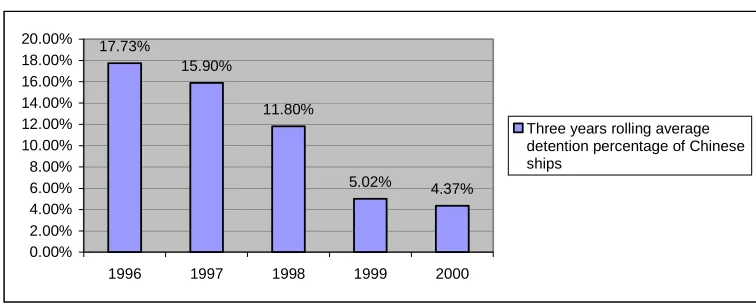
Figure 1 Number of inspections under Paris MOU 47 Figure 2 Number of inspections under Tokyo MOU 47 Figure 3 Deficiency rates in respect of inspections under Paris MOU 48 Figure 4 Deficiency rates in respect of inspections under Tokyo MOU 48 Figure 5 Detention rates in respect of inspections under Paris MOU 49 Figure 6 Detention rates in respect of inspections under Tokyo MOU 49 Figure 7 Detention rates in respect of individual ships under USCG 50 Figure 8 Ship rates found to have deficiencies under Paris MOU 50 Figure 9 Overall summary of total number of ships lost since 1994 51 Figure 10 Overall summary of total gross tonnage lost since 1994 51 Figure 11 Deficiency ratios for inspections in which deficiencies were found 52 Figure 12 Detention rate by ship type 55 Figure 13 Detention rate by flags 56 Figure 14 Three years rolling average detention percentage of Chinese ships in
Paris MOU 58
Figure 15 Deficiency rate by main categories in relation to inspections of ships
in Paris MOU 60
Figure 16 Ratio of deficiencies to individual ships x 100 marine pollution Annex
I 70
Figure 17 Ratio of deficiencies to individual ships x 100 marine pollution Annex
II 71
Figure 18 Ratio of deficiencies to individual ships x 100 MARPOL operational
control 71
Figure 19 Number of oil spill over 7 tons in the past 30 years 72 Figure 20 Annual quantity of oil spilt in the past 30 years 73 Figure 21 Ratio of deficiencies to individual ships x 100 fire fighting appliances 75 Figure 22 Ratio of deficiencies to individual ships x 100 life saving appliances
75
Figure 23 Ratio of deficiencies to individual ships x 100 safety in general 76 Figure 24 Ratio of deficiencies to individual ships x 100 navigational equipment
77
Figure 25 Ratio of deficiencies to individual ships x 100 SOLAS operational
List of Abbreviations
APCIS Asia-Pacific Computerized Information System BSIS Black Sea Information System
CCSS Caribbean Cargo Ship Safety CDI Chemical Distributions Institute CIC Concentrated Inspection Campaign
CIALA Information Centre of the Latin American Agreement CMSA Chinese Maritime Safety Administration
EU European Union FOC Flag of Convenience FSI Flag State Implementation GCC Gulf Cooperation Council GT Gross Tonnage
HS High Seas
IACS International Association of Classification Societies ICONS International Commission on Shipping ILO International Labour Organization IMO International Maritime Organization
INECE The International Network for Environmental Compliance and Enforcement
INTERCARGO International Association of Dry Cargo Shipowners INTERTANKO International Association of Independent Tanker Owners IOMOU The Indian Ocean Memorandum of Understanding ISM International Safety Management Code ITF International Transport Workers' Federation ITOPF International Tanker Owner Pollution Federation
LL Load Line
MARPOL73/78 International Convention for the prevention of pollution from ships 1973, as amended by the 1978 Protocol thereto
MEMAC Marine Emergency Mutual Aid Centre MOU Memorandum of Understanding
MSC Maritime Safety Committee NMFT No More Favourable Treatment
OECD Organization for Economic Co-operation and Development OCIMF Oil Companies International Marine Forum
OPA Oil Pollution Act
PMOU Paris Memorandum of Understanding on Port State Control PSC Port State Control
PSCO Port State Control Officer
Qualship 21 Quality Shipping for the 21st Century
ROCRAM Regional Maritime Co-operation among Maritime Authorities ROWA Regional Office for West Africa
SIReNaC Systeme d’Information Relatif aux Navires Controlles SMC Safety Management Certificate SMS Safety Management System
SOLAS74/78 Safety of Life at Sea Convention 1974, as amended by the 1978 Protocol thereto
SWG Standing Working Group
Chapter 1
Introduction
In the last several decades, the world has seen great advances in the public international law concerning safety at sea and marine environment protection. There exists a comprehensive legal regime regulating almost all aspects of the conduct of ships at sea. It has been developed mainly through conventions, such as UNCLOS 82, SOLAS74, MARPOL73/78, LL, Tonnage 69, STCW 95, ILO147, which are concluded by UN, IMO and ILO in order to improve the safety of ships, protecting the marine environment from ship-source pollution and raising the standards of crewing, training and accommodation on board ships. Conventions adopted in IMO account for the majority of conventions responsible for the safety at sea and marine environmental protection. A summary of status of IMO conventions is given in Table 1 in the Appendix B. It is generally agreed that conventions, even though they are widely accepted, would be effective only when they are effectively implemented and strictly enforced. (Sasamura, 2000)
down by the relevant international organization. Unfortunately, certain flag States fail to fulfil their commitments contained in agreed international legal instruments for various reasons. Other tiers of control, which are also responsible for the ship safety, such as shipowners, classification societies, charterers frequently fail their obligations in ensuring the safe operation of ships. Subsequently, some ships are sailing around the world in unsafe condition, threatening the lives of all those on board as well as the marine environment. The booming of flag of convenience, where the Flag States may neither have available resources nor have the true intention to enforce these conventions they have ratified, makes the situation even worse.
The failure of all these tiers of control in preventing the operation of substandard ships agonize the international maritime regime. People realized that a back up system has to be established to eradicate these substandard ships, which have escape from other tiers of control. Attention has thus increasingly been paid in the last two decades to the role that can be played by the port State, which means the State whose port a vessel voluntarily enters, in enforcing international conventions or regulations ratified by the State. Several major pollution accidents happened in the late 70s and early 80s triggered the emergence of port State control (PSC), which really has attracted the world attention since the establishment of Paris MOU.
It should be pointed out that the PSC is never meant to be the first line of defence for eliminating sub-standard ships but a supplement to what some flag States fail to achieve. It usually enforces the same requirements imposed by relevant international conventions as mentioned for the flag State control without adding any additional requirements on foreign flag merchant shipping. (Hoopen, 1998)
The legal basis of PSC has been incorporated in the provisions of UNCLOS and other major conventions developed mainly by IMO and ILO, which enable the port States to inspect foreign vessels entering their ports or offshore terminals.
approach on regional basis on the implementation of the control provisions under various conventions on maritime safety, pollution prevention and working and living condition on board ships. The first and most important regional PSC agreement concluded was the Paris MOU, which was signed on 26 January 1982 and came into operation on July 1982. Since then, the world PSC regime has been developed very rapidly. So far seven other PSC MOUs have been signed, which cover most coast States of the world, even though the performance of the different MOUs varies significantly.
Chapter 2
The Background of Port State Control
Introduction
Historically, the control over ships mainly relies on the flag State. The other tiers of control of ships, such as shipowners, classification societies and insurers are all responsible for the safe operation of ships. Theoretically, these several tiers of control should act as a perfect net in preventing substandard ships from operation. However, for various reasons, this net has not worked so well as was expected. A back up system, which is now widely known as PSC, was established in order to achieve the goal of “safer shipping and cleaner seas”.
2.1 Flag State Supremacy
jurisdiction and control in administrative, technical and social matters over ships flying its flag”. The flag state is required to take such measures that each ship is appropriately surveyed as to condition, equipment and manning to ensure ships flying its flag are safe at sea and environment friendly. In addition, a duty is imposed on flag States to take any steps necessary to secure observance with generally accepted international regulations, procedures and practices, which is further repeated in relation to oil pollution in Article 217. The concept of flag State control is also embodied in all of the 30-odd maritime conventions and 700 or so related codes and regulations, which have been developed by the International Maritime Organization (IMO) since its beginning in 1959 in response to the growing awareness of the need for internationally accepted, effective and enforceable maritime safety and environmental standards for shipping. (Williamson, 1996)
Article 5 of the UN Convention on the Conditions for Registration of Ships (1986) says that:
A flag state should have a competent and adequate national maritime administration…the maritime administration of the flag States shall ensure that ships flying the flag of such State comply with its laws and regulations concerning registration of ships and with applicable international rules and standards concerning, in particular the safety of ships and persons on board and the prevention of pollution of the marine environment.
Furthermore, its authorized surveyors should periodically survey such ships in order to ensure compliance with applicable international rules and standards.
international conventions by the flag State or organizations on behalf of the flag State. (Hare, 1995) Flag States must also ensure themselves that their own ships have priority, which means that flag States must keep their own fleets in compliance with the relevant international conventions and regulations before they check others. (Ulstrup, 2001)
Theoretically, flag State control was the ideal mechanism to implement those standards, which have been developed for the protection of seafarers, passengers, cargo owners, the environment and responsible ship owners. There will be no necessity for the PSC to back up the system if the flag States had really enforced the safe operation of the ships entitled to fly their flags. (Williamson, 1996)
2.2 Expansion of Coastal State Jurisdiction
Coastal State is the State within whose maritime zone a foreign ship is for the time being. According to international law, any state having a coastline is entitled to take certain limited steps to protect its own interests. (Hare, 1995)
customs, fiscal, immigration or sanitary laws and regulations of the coastal State. As far as pollution is concerned, the coastal State may regulate the preservation of the environment of the coastal State and prevention, reduction and control of pollution thereof. This authority provided to the coastal State may also extend to the EEZ according to the UNCLOS Article 211, provided that they conform to and give effect to generally accepted international rules and standards. All such laws and regulations must be given due publicity by the coastal State to enable foreign ships to comply with.
The coastal State may inspect foreign ships following generally accepted international regulations, procedures and practices according to Article 94. In exercising its rights, a coastal State should make sure that it does not go beyond internationally accepted norms of interference with foreign vessels, both from a perspective of comity and to remain within the limit of reality and practicality. Stopping a vessel during its voyage within the Territorial Sea is a drastic and potentially dangerous exercise. (Hare, 1995) On the whole, coastal state intervention to foreign ships within its maritime zone is limited in scope, and should be limited in use. However, some superpowers may challenge these norms in practice.
2.3 Impetus for the emergence of PSC
2.3.1 Growth of flag of convenience
The nationality of a vessel comes from the country under whose flag it is registered. According to the regulation stipulated by the 1958 High Seas (HS) Convention (1958), each State is entitled to set its own conditions of registry. There was not any international convention on the registration of, or on the granting of nationality to merchant vessels until the United Nations Convention on the Conditions for Registration of Ships was adopted in 1986. This lack of international law and control was one of the main elements in tempting some small countries to set up their open registry fleets in order to make revenue by attracting significant amount of tonnage to their registries without providing adequate administrative or governmental facilities for regulation and enforcing the necessary standards at sea. (Kasoulides, 1993, p76)
There are many factors promoting the growth of these flags of convenience (FOC). From the flag State point of view, there are three main reasons to set up open registry (Rial, 2000):
1. The State has the ability to offer fiscal/tax concessions;
2. Attracting foreign ships to be registered under its flag can be a good source of revenue, though the profits are often maximized at the expense of little or no resources returned to the system to implement flag State control effectively;
3. Initial ineffective PSC makes it possible to continue this situation.
The Owners’/Operators’ initiative in taking the advantage of open registry became the main impetus element in the growth of FOC. From the Owners’/Operator’ point of view, there are several reasons for them to shift their maritime activities from their own country to a FOC (Rial, 2000):
any nationality in the cheapest market; freedom in raising or transferring capital; freedom to buy, sell or charter ships;
2. Manning of ships by non-nationals is freely permitted;
3. No interest in exercising responsible and effective control over vessel construction, operation, certification of personnel qualifications, crew training and social conditions enables the less responsible operators to run substandard ships under FOC (Kasoulides, 1993, p76-88).
The Classification Societies also welcomed and promoted the development of the FOC in some way. It is the Classification Societies that provided most of the statutory survey and certification work, which most of the FOC States do not have the expertise and capacity to do so themselves. On the other hand, it is the Classification Societies that benefit from providing the service of survey and certification, which sustains and promotes the development of their own business.
The adoption of the UNCTAD Convention on Ship Registration in 1986 tried to regulate the registration of ships through the way of international legislation. However, its attempt to “grasp the nettle” regarding State responsibility and “genuine link” with the ship failed, (Rial, 2000) which makes the FOC continuing to exist.
2.3.2 Failure of other checks on safety and pollution
prevention
2.3.2.1 Flag State implementation
It is understood that the flag State has the primary responsibility to implement international standards, which is an obligation imposed upon the flag State when the State acceded or ratified international conventions. However, many flag States have failed to implement international standards either because some States do not have maritime administrations with systems in place to enforce the relevant conventions they have signed, or because other States simply lack the will to enforce the obligations they have signed up to. (Williamson, 1996) With regard to the FOC, the existing regime of registration of vessels permit registration in States with no genuine link with the vessels and no effective powers of enforcement, since these vessels hardly have the opportunity to call at ports of these States, nor has that State the necessary infrastructure, administrative power and resources to implement and enforce existing international obligations or punish offences committed elsewhere. (Kasoulides, 1993) The increasing failure of the flag State control regime has led to the increased strengthening of the role of the port State as a policing mechanism for the shipping industry and a back up system for flag State control.
Establishing an efficient and effective maritime administration is essential to fulfill the flag State obligations imposed by the relevant international conventions. In this respect, the European Commission has set a very good example by taking the initiative in trying to ensure that the necessary administrative structures for flag states are in place in the relevant applicant countries as part of the ongoing EU accession negotiations. In the year 2000, IMO introduced a Flag State Self Assessment Form to assist countries in determining weak points in their administrations (INTERTANKO, 2000). The establishment of the FSI sub-committee in IMO, which specifically addresses matters relating to the implementation of the IMO conventions, is also an important initiative from IMO to promote flag State implementation. All these initiatives will surely improve the performance of the FSI, which will in turn improve the whole quality level of the shipping industry.
2.3.2.2. Failure of Owner/Operator control
It is self-evident that the owners have a primary responsibility in keeping their vessels in good condition complying with relevant international standards and carrying the duty of care every day, around the clock. However, during the past 30 years, the world fleets have undergone a significant change. Today, there is a highly fragmented pattern of vessel operation and ownership. The fleet is ageing and more vulnerable, facing intense market pressures that often seem to favor not the “quality” operators, but the cheap carriers. (Mathiesen, 1998) Shipowners tend to pay more and more attention to the economical aspects rather than the safety of their ships. Furthermore, lots of shipowners choose to register their ships in FOC so that they can have a more free choice of manning and usually a looser flag State control, which may enable them to run their ships in a substandard manner. It is essential that measures should be taken so that shipowners will have their own initiatives to keep their ships complying with international standards.
safety of ships and pollution prevention for the first time on a statutory basis. At the same time, the code enables the port States to scrutinize the performance of the shipowner.
2.3.2.3 Role of Classification Societies
Classification rules started to be developed more than 200 years ago with the aims of providing service for the benefit of shipowners and insurance companies. They define the “fitness for purpose” design, construction and lifetime maintenance of standards for a ship’s structure and its essential engineering and electrical systems, which are an important foundation for all those concerned with safer ships and cleaner seas.
On the whole, classification societies, especially the members of IACS, do their job well and have gained world fame in the shipping industry in ensuring the safety and quality of shipping. However, experience shows that some classification societies failed to do their job properly for various reasons. One of the main reasons may be that they face high pressure in competing for their market shares. Some societies may be tempted to lower their class requirements in order to get more ships classed. Lots of accidents, which happened to ships classed by major members of the IACS, show that what they have done is not good enough. (Stoneley, 1999) Lloyds Register and DNV, BV and the Polish Register have sometimes faced (and hotly disputed) allegations that their surveyors sell forged safety certificates. (Hare, 1995) The accident of the Erika, which indicates the deficiencies in their routine jobs, makes people suspect their credibility in ensuring that ships are complying with international standards.
Something good to notice is that IACS has realized the seriousness of the situation and has taken some strong actions to improve the quality of the class regime, in which the most drastic action that has ever been taken is the suspending of the membership of the Polish Register who has been claimed being involved in some scandals and poor quality in fulfilling its jobs. The IACS member societies also agreed to implement a number of measures aimed at identifying substandard ships and removing them from service. These include more intensive inspection for older ships changing class; the computerization of class records and the transfer of these to new societies. (INTERTANKO, 2000) These measures have been welcomed by the industry and will surely improve its quality in ensuring the safety of ships and pollution prevention. However, there are still around 10 percent of the world fleets classed with non-IACS members and their quality systems are quite possibly worse.
2.3.2.4 Cargo interests/Charterers
The contribution of the Cargos/Charterers can be extremely significant in weeding out substandard ships if they can take more safety and quality consideration into account when they are considering their commercial interests. They can contribute to the safety regime by tightening their vetting and approval procedures. In addition, they can contribute in making a commitment to improved standards and criteria by introducing greater transparency into their chartering arrangements. (INTERTANKO, 2000) Without the cooperation of the Cargo interests/Charterers cooperation, the substandard ships can just not survive.
However, the real world does not seem to be so good as expected. Many Charterers are more interested in hiring the cheapest ship available in the market rather than the safety condition of the ship. As the shipping market has been in a quite bad situation most of the time during the last two decades, it is hardly possible to rely them to take too much attention to the quality. One feasible way of solving this problem is to expose the public to those Cargo interests/Charterers who have used or tried to use substandard ships or ships managed by poor quality shipping companies.
2.3.2.5 Insurers, Ship Management Companies
It is quite obvious that the insurers of ships should conduct proper inspection of the ships they want to insure, as this is for the benefit of the insurers themselves. Nevertheless, it looks like the insurers did not conduct their inspections properly, which has been indicated in lots of accident resulting in huge claims to insurers, partly because of the increasingly fierce market competition.
management of all these parties surely has a negative impact on the quality of the shipping industry.
2.3.3 Impetus from concerns over the marine environment
People’s concern towards the marine environment has increased especially during the last several decades. One reason is that the loss of one single oil tanker and its cargo can cause tremendous economic loss, such as the “Exxon Valdez” accident in Alaska in 1989, the most costly marine mistake that ever happened, where $5 billion claims have been generated so far. Another reason is that people care about the life at sea and the marine environment but often with decidedly misdirected priorities. There have been too many cases where people are outraged by the mess on their beaches and oil stained seabirds following a maritime casualty. But the tragic loss of life, which frequently accompanies pollution, is always neglected by much of the media in its quest for the most newsworthy elements of a marine disaster. (Williamson, 1996)
civil liability and compensation regime for oil pollution damage. Finally, in 1973 a significant breakthrough came when the international Convention for the Prevention of Pollution from Ships, usually referred to as MARPOL, was adopted by IMO, which enshrined the concept of Port State Control in international law. Following this convention, the port States were provided the right to inspect ships and report their deficiencies to the flag State and to detain ships until deficiencies were rectified (Williamson, 1996).
2.4 PSC entrenched through UNCLOS
The concept of PSC was finally entrenched in the part XII of UNCLOS. Article 25 of the UNCLOS (1982) empowered States whose ports were used by vessels to take necessary steps to prevent any breach of the conditions by vessels calling at their ports. Article 216 and 218 enable a port State to enforce international anti-dumping and anti-pollution measures. In addition, States are required by Article 219 to take administrative measures to prevent errant vessels from sailing. Legitimacy for PSC inspections may be found in these Articles of UNCLOS because a pollution threat always exists, although only bunkers from any unseaworthy ship. The only limitation is that the steps taken should be reasonable, public, and not discriminatory (Hare, 1994). Except UNCLOS, there are a lot of other conventions that provide most maritime authorities more modern, effective and direct powers of PSC inspection, which includes: SOLAS, MARPOL, the Loadline Convention, the Registration of Ships and the STCW Convention. All these conventions give powers (and duties) of inspection to ensure compliance.
2.5 Concept emerged as early as SOLAS 1929
decided to take advantage of PSC as an effective tool in eradicating substandard shipping and protecting their own interest.
2.6 Conclusion
Chapter 3
The legal background of PSC
3.1 Introduction
According to Hare (1997), the concept of PSC involves:
The powers and concomitant obligations vested in, exercised by, and imposed upon a national maritime authority (or its delegee) by international convention or domestic statute or both, to board, inspect and where appropriate detain, a merchant ship flying a flag foreign to that State in order to ensure compliance by that ship with all applicable international safety at sea instruments and with any domestic legislative maritime safety requirements.
The emergence of the PSC concept seems to give the international maritime community a hope for a possible solution to the problem of substandard ships. It may not be a real solution, but rather one of the more positive steps being taken. (Hare, 1994)
primarily exercised by inspection of certificates as a corrective measure, which aims at correcting non-compliance or non-effective flag State enforcement. Only if there are “clear grounds”, can physical inspection of a ship and its equipment may take place. However, according to the new SOLAS regulation, since 1996 operational requirements can be checked if there are clear grounds that the crew is not familiar with essential shipboard procedures. If any PSC actions need to be taken after inspection, the flag State must be informed especially in case of detention. Any undue delay of unjustified detention may lead to civil liability. (Mukherjee, 2000)
3.2 UNCLOS 82
UNCLOS (82) is recognized as the umbrella convention for most of the other conventions concerning maritime safety and marine environmental protection. There are a lot of creative contributions in its latest version especially in part XII regarding “Protection and preservation of the marine environment”, among which the most important innovations may be the entrenchment of the concept of PSC jurisdiction for the enforcement of international rules and standards concerning pollution of the marine environment from vessels. This innovation supplements the traditional jurisdiction of flag State and greatly strengthens the capability of the international community to enforce these rules and standards.
generally accepted international rules and standards or of any similar documents it is carrying”. However, further physical inspection may be undertaken when:
(i) there are clear grounds for believing that the condition of the vessel or its equipment does not correspond substantially with the particulars of those documents; (ii) the contents of such documents are not sufficient to confirm or verify a suspected violation; (iii) the vessel is not carrying valid certificates and records.
Further more, ship must not be released whenever it will present an unreasonable threat of damage to the marine environment, or made conditional upon proceeding to the nearest appropriate repair yard. The second part of this Article, which says that “States shall cooperate to develop procedures for the avoidance of unnecessary physical inspection of vessels at sea”, provides the legal basis of the regional PSC memorandum of understanding (MOU).
3.3 MARPOL 73/78
MARPOL 73/78 Convention covers all the aspects of pollution from ships, including pollution by oil, noxious liquid substances in bulk, harmful substances carried by sea in packaged forms, sewage, garbage and the control of air pollution, except disposal of land generated wastes into the sea by dumping and pollution arising out of the exploration and exploitation of sea-bed mineral resources. The Convention applies to all ships engaged in commercial trading.
that certificate. The “No more favourable treatment” (NMFT) Clause applies to ships of non-parties to the Convention.
The provisions of PSC on operational requirements are provided in respective Annex, which make it possible for a port State control officer (PSCO) to inspect operational requirements where there are clear grounds for believing that the master or crew are not familiar with essential shipboard procedures relating to the prevention of pollution of the marine environment.
3.4 SOLAS 74
SOLAS 74 Convention is recognized as the most important convention concerning the safety of ships and the people onboard. It lays down a comprehensive range of minimum standards for the safe construction of ships and for the basic safety equipment (e.g. fire prevention, navigational, life-saving and radio) to be carried on board. It also contains operational instructions, particularly on emergency procedures, and provides for regular surveys and certificates of compliance. The convention mainly applies to all passenger ships irrespective of size and all cargo ships of a gross tonnage of 500 and over engaged on international voyages. However, exceptions from the 500gt limit exist, for example, Chapter V concerning “Safety of Navigation” and Chapter VI concerning “Carriage of Cargoes” apply to all ships, and Chapter VII “Carriage of Dangerous Goods” also applies to ships with a gross tonnage less than 500.
According to the new Regulation 4 of Chapter XI of the Convention, it is now also possible for PSCOs to inspect foreign ships for checking operational requirements “when there are clear grounds for believing that the master or crew are not familiar with essential ship board procedures relating to the safety of ships”. The focus is on the crew's ability to carry out safety functions on board ships. This new idea is a deviation from the previous constraints of PSC inspection, which was that they should normally be limited to checking certificates and documents. (Hare, 1997) With respect to the ships of non-parties to the Convention, the NMFT Clause should be applied according to Article II of the Protocol of 1978.
3.5 LL 1966
The LL Convention establishes uniform principles and rules regarding the limits to which ships on international voyages may be loaded in the form of freeboard, which should ensure adequate stability and avoid excessive stress on the ship’s hull as a result of overloading. It deals with external weathertight and watertight integrity. Provisions are made for determining the freeboard of tankers including regulations for subdivision and damage stability calculations. For the structural strength requirement, the convention makes a reference to the requirements of the Classification Societies.
This Convention applies to all ships engaged in international voyages, except for ships of war, new ships less than 24 metres in length, existing ships of a gross tonnage less than 150, pleasure yachts not engaged in trade and fishing vessels.
3.6 STCW 78/95
The STCW78/95 Convention (1996) establishes comprehensive certification and qualification requirements for senior officers, all officers in charge of watches on the deck and engine departments and ratings forming part of a watch on an international level. All such seafarers are required to have a certificate endorsed in a uniform manner. The Convention applies to seafarers serving on board seagoing ships entitled to fly the flag of a party except for those serving on board warships, fishing vessels, pleasure yachts not engaged in trade and wooden ships of primitive build.
The control regulation is in Article X of the Convention, which authorizes PSCOs to verify that:
All seafarers serving on board who are required to be certificated by the Convention are so certificated or hold an appropriate dispensation. Such certificates shall be accepted unless there are clear grounds for believing that a certificate has been fraudulently obtained or that the holder of a certificate is not the person to whom that certificate was originally issued.
The NMFT clause is also included in this article. With the 1995 amendment, the general provisions of Chapter I provide enhanced procedures concerning the exercise of PSC, which have been developed to allow intervention in the case of deficiencies deemed to pose a danger to persons, property or the environment. (Ulstrup, 2001)
3.7 Tonnage 1969
The Tonnage (1969) Convention establishes a universal system of tonnage measurement for ships engaged in international voyage. It applies to ships of more than 24 metres in length engaged in international voyages except ships of war.
2001). However, as the ship’s tonnage is important to determine which convention regulations are applicable to a specific ship, the latest revision of resolution A.787 (19) concerning procedures for PSC added guidelines for PSC under the Tonnage Convention to the procedures.
3.8 ILO 147
The ILO 147 Convention is mainly a flag State instrument, which requires administrations to have effective legislation on safe manning standards, hours of work, seafarers’ competency, social security and sets of employment standards equivalent to those contained in a range of ILO instruments (covering eg. minimum age, medical examination, accident prevention, crew accommodation, repatriation, social security and training). (Ulstrup, 2001) The Convention applies to every sea-going ship engaged in the transport of cargo or passengers for the purpose of trade or is employed for any other commercial purpose.
The control provision is contained in Article 4, which allows an administration to apply its provisions (including the power of detention) to any ship, which calls at its ports, whether or not the ship’s flag State has ratified the Convention. Based on their professional judgement, PSCOs should decide whether clearly hazardous conditions on board warrant a detention of the ship until any deficiency is corrected, or allow it to sail with certain deficiencies that are not clearly hazardous to the safety of the ship or to the safety and health of the crew. In the case of detention, the port State authorities should, as soon as possible, notify the flag State through its nearest maritime consular of diplomatic representative of the action taken and, as far as possible, have such a representative present.
3.9 Ships of non-parties
States may issue, or authorize to issue certificates of compliance with the relevant provisions of conventions to their ships. The PSCO may take the form and content of these documents into account in the evaluation of these ships. An NMFT clause usually exists in a number of conventions, which have been mentioned above. In principle, the conditions of such ships and their equipment, the certification of the crew and the flag State’s minimum manning standard should be consistent with the aims of the provisions of the conventions, or the ships should at least have a comparable level of safety and protection of the marine environment. (Hoppe, 2000)
3.10 PSC on non-convention size ships
Most maritime conventions have progressive limits of application for each category of size of ships in terms of tonnage, length or other ship parameters, and also of the construction time of the vessel and the trading area in some conventions. The limits of application involve ships certificates or even their equipment, which means that some ships may not necessary hold certain kinds of certificate or even be exempted from some design or equipment requirements. However, these ships are not exempted from being safe and environmental friendly. PSCOs should use their professional judgement to assess these ships whether they are of an acceptable standard with regard to safety, health or the environment, taking due account of such factors as the length and nature of the intended voyage or service, the size and type of the ship, the equipment provided and the nature of the cargo. Usually these ships are constructed following the flag State requirements, which may not be familiar to the PSCO who may have to use his discretion in assessing these ships, possibly with the assistance of some forms of certification issued by the flag State or on its behalf. PSCOs should take due action including detention to make sure these ships will not be allowed to sail with unreasonable hazard to safety, health or the environment. (Hoppe, 2000)
Island countries. The Caribbean MOU has successfully developed the Caribbean Cargo Ship Safety Code, which is recognized by the United States Coast Guard (USCG). This is extremely important in maintaining the proper trading of those non-convention size ships between the Caribbean Islands and the United. In most of these processes, IMO has been actively involved and plays a key role in the success of these developments.
3.11 Procedures for PSC
In the early 1970, the United Nations Conference for Trade and Development (UNCTAD) and the Organization for Economic Co-operation and Development (OECD) recognized the seriousness of substandard ship problem, which had been mainly caused by the transfer of ships to the flag of convenience registries, and referred the question of sub-standard ships to IMO. Considering this matter, the Maritime Safety Committee (MSC) recognized that IMO is concerned with the elimination of sub-standard ships whatever flags they fly, and agreed that detailed procedures for PSC should be adopted. (Sasamura, 1997) The first PSC procedure was developed by the MSC and adopted by the Assembly in 1973 in Resolution A.321 (IX). After that, several PSC procedures under the SOLAS, Load Line and MARPOL Convention were adopted in Resolutions A.466 (XII), A.542(13) and MEPC.26(23). The PSC was further extended to cover operational requirements under Resolution A. 742(18). In 1995, these PSC procedures were amalgamated into a single document named “Procedures for Port State control” in Resolution A. 787(19) adopted by the Assembly, which was again amended by Resolution A. 882(21) to cover also the ISM requirements (See Appendix H for detail).
Procedures when exercising PSC, they have been interpreted and applied in different ways in practice. For example, if the convention control provisions were strictly interpreted, a routine or general inspection should be limited to an inspection on the validity of the ship's certificates, except in cases where clear grounds were found, which deserve a more detailed inspection. However, people often argued that the presence of certificates is only evidence of, and not conformation of convention standards being met. For this reason, some PSCOs may choose to inspect more than just the ship’s certificates while undertaking routine PSC inspections. (INTERCARGO, 2000)
The detailed procedures for PSC (1999) are described in the IMO Resolution A. 787(19) as amended by Resolution. A.882(21), which are mostly consolidated in all the regional PSC agreements. Generally, they can be summarized as follows: Selection of ship to be inspected; Initial inspection; Detailed inspection; Detention; Reporting; Follow-up action. These procedures should be observed in all the States carrying out PSC in order to achieve consistency all over the world. The detailed provisions regarding the procedure of port State control can be found in the Appendix H: Procedures for port State control.
3.12 Implementation of international conventions
International conventions are legally binding for member States who have ratified or acceded the conventions. They have an obligation to give effect to such conventions through national legislation. Obviously, with reference to a certain convention, the PSC is only possible if the port State itself is a party to it and has fully implemented the convention in question.
Many States have promulgated domestic legislation to give effect to the notion of PSC. It should be noted that for State parties to the various conventions mentioned above, implementing the requirements of the conventions is not an option, but an obligation in international law.
It is recognized that Parties may entrust surveys and inspections of ships entitled to fly their own flag either to surveyors nominated for this purpose or to recognized organizations, such as classification societies. However, according to applicable conventions, PSC inspections of foreign ships, including boarding, inspection, remedial action and possible detention, can only be conducted by officers duly authorized by the port State. The authorization of these PSCOs can be either a general grant of authority or may be specific on a case-by-case basis. (Hoppe, 2000 )
3.13 Conclusion
Chapter 4
Comparison of regional PSC MOUs
4.1 Introduction
Since the inception of Paris MOU in the early 1980s and the adoption of IMO resolution A.682(17) called “Regional Cooperation in the Control of Ships and Discharges” in 1991, the world PSC regime has been progressing steadily and has almost achieved a global coverage. This has been achieved largely through coordination by IMO and the dedicated commitments of responsible maritime authorities implementing PSC activities. PSC is now widely accepted as a major driving force in maritime safety and marine environment protection, and an effective method for eradicating substandard ships running around the world (AMSA, 2000).
4.2 Rationale for growth in PSC regional agreements
avoid this problem and to improve the effectiveness of inspections, many maritime authorities of the world have already entered or are about to enter into regional PSC agreements. Some countries even joined more than one MOU (e.g. Canada, Cuba, Australia) for various reasons, for example geography, language, culture, trading patterns.
According to Hoppe (2000), there are basically three benefits in reaching a regional agreement. The first is the exchange of information about ships, their records and the result of inspections carried out. This information is important as it enables subsequent ports of call to concentrate their limited resources on ships that have not been recently inspected, while ensuring ships of prudent shipowners will not be interfered by unnecessary multiple inspections. As a general principle, ships inspected within the last six months should not be re-inspected unless there are clear grounds to do so. The second benefit is that identified sub-standard ships are effectively monitored. This is important especially for ships allowed to sail with certain minor deficiencies on the condition that these are rectified in the next port of call, which may be successful only if effective information exchange is available between relevant ports. The third and also the most important benefit is ensuring that PSC inspections are conducted in a uniform and harmonized manner, especially with regard to applicable standards in the detention of ships and the training standards of PSCOs. Some MOUs has been successful in achieving this by conducting joint seminars for PSCOs in order to harmonize the procedures (Paris MOU Annul Report 2000).
4.3 Existing regional agreements on PSC
Eight regional PSC agreements have been signed around the world to date. The distribution of these regions can be seen in Appendix A. A general description of these MOUs is given in Appendix D Table 3. USCG is not really a regional MOU but may also be seen as, in essence, a regional MOU. The Persian Gulf region agreement is still under development.
Except the Paris MOU, most of the regions’ Maritime Administrations development levels are significantly different. There is no doubt that it is impossible to launch a PSC program without the necessary structures and expertise in place. However, though desirable, it does not mean each and every coastal State in a region has to have a fully developed maritime administration before a regional PSC program can start, as long as there is a “critical mass” of appropriately developed Administrations, strategically located geographically and lying within the main trading routes of the vessels to be inspected. For some regions, it may be desirable to pool the regional resources, with the more developed Administrations assisting and supporting the less developed ones for the purpose of bringing all the Administrations of the region to the required level within a reasonable time frame (Rial, 1999).
4.4 Paris MOU
4.4.1 General profiles of Paris MOU
Europe for far more stringent regulations with regard to the safety of shipping. The pressure finally resulted in the adoption of a more comprehensive Paris MOU covering safety of life at sea, prevention of pollution by ships and living and working conditions on board ships (Kumpumaki, 2001). The Paris MOU laid down for the first time the groundwork for effective international co-operation in PSC regime.
Since then, the Paris MOU has been amended several times to accommodate new safety and marine environment requirements stemming from the IMO as well as other important developments such as the various EU Directives addressing marine safety and environmental protection. The PSC in EU has now become a legal obligation, as EU Directive 95/21/EC now places a legal requirement on all EU member States to carry out PSC inspections.
The number of member States has also increased to 19 mainly due to the increase in the number of member States of the European Union (EU). Canada to the west and the Russian Federation to the east also participate as members of the Paris MOU (INTERCARGO, 2000). It now covers the European coastal States and the coastal States of the North Atlantic basin from North America to Europe.
4.4.2 Paris MOU structure
The executive body of the Paris MOU is the PSC Committee, which is composed of the representatives of the nineteen participating maritime authorities and the European Commission. The PSC Committee normally meets once a year with representatives of IMO, ILO, USCG, and with other regional PSC MOUs such as the Tokyo MOU and the Caribbean MOU as observers. The main role of the Committee is to deal with matters of policy, finance and administration with the assistance of technical bodies established within the organization. A diagram describing the Paris MOU organization can be found in Appendix E.
4.4.3 Regional information center
each inspection report will be entered in this system whether or not deficiencies are found. This database is accessible by all the PSCOs in the ports of the Paris MOU region to consult inspection files, to insert new inspection reports or to use the electronic mail facility. A detention list is published monthly on the Paris MOU website, which contains ship’s name, the owner, the classification society and the place and date of detention. This website also publishes a list of banned ships who run detention or fail to sail to the agreed repair port.
4.4.4 Rationale of Paris MOU
Recognizing the prime obligations of the owner and flag state, the Paris MOU (PMOU, 2000) realized that “effective action by port states is required to prevent the operation of sub-standard ships". This goal may be better achieved through an improved and harmonized system of PSC and through strengthening co-operation and exchanging information, while at the same time avoiding distorting competition between ports.
The PSC work in the Paris MOU region has been organized quite reasonably and consistently. According to the agreement, each contracting state is required to establish an effective system of PSC to make sure that foreign merchant ships calling in its ports comply with the international instruments listed in the MOU. They are also required to inspect a minimum of 25% of all foreign ships entering its ports in a year, which will in practice result in an inspection rate of approximately 90% of all foreign ships using the ports of the region (Hoopen, 1998). Each authority (PMOU, 2000) will “consult, co-operate and exchange information' with other authorities” and “seek to avoid inspecting ships that have been inspected by any of the other authorities within the previous six months unless they have clear grounds for inspection." Ships having been inspected in any participating port within the last six months will not be reinspected. No more favorable treatment will be given to ships flying the flag of a state not party to the memorandum.
detentions under the PSC procedures. This information is required not only to contain the name of the ship, but also the name of her owner and operator, her flag state and her classification society. The reasons for the detention are provided as well. The latest innovation introduced was the publication of “Rust Bucket of the Month”, which gives people an idea on how bad condition a ship can be operated despite the great effort of the world PSC regime.
It is interesting to notice that the PSC has been made mandatory under the EU legislation despite the fact that the Paris MOU itself is not a legally binding agreement. This has been done through the EU Directive 95/21/EC to achieve harmonization, which has been implemented in the national legislations of the EU Members. Consequently, the Paris MOU has been adjusted accordingly to meet the requirements of the Directive and to incorporate the relevant parts of the IMO Resolution 787 “Procedures for Port State Control”(Hoopen, 1998).
As most of the member States have well developed Administrations with relatively better funds and resources, the Paris MOU has been running quite well. Seminars within the Paris MOU have been organized regularly to discuss some specific problems and update information. A program of advanced training of PSCOs sponsored by the European Commission has been established in order to keep abreast of the technological change in the maritime area and of corresponding regulatory developments (Paris MOU Annual Report 2000). The PSC inspections have been conducted in the Paris MOU in a harmonized and consistent way during the last several years, thanks to the great effort of the Paris MOU in training and coordinating the PSCOs of different countries.
4.4.5 Targeting system
with a known poor history in July 1993, which is now quite popularly accepted by most regional MOUs as a normal practice. Certain flags were also targeted for special attention by means of a 3 year "rolling average" table of above average delays and detentions in the MOU's annual report. (Hare, 1995)
An enhanced targeting system was launched in 2000 in order to achieve a more selective targeting against potentially high-risk ships while at the same time ease the burden on bonafide shipping. Ships are now selected for inspection according to the targeting factor of the ship. The detailed targeting factor may refer to “Paris MOU targeting factor” in Appendix F. Statistics shows that this initiative has resulted in more inspections of high priority ships, in particular of ships registered with flag States considered as very high risk, and in a greater number of detentions. (Paris MOU Annual Report 2000)
4.5 Tokyo MOU
4.5.1 General profile of the Tokyo MOU
Following the lead of the Paris MOU, the Tokyo MOU for the Asian-Pacific Region was established in 1993. So far, the Memorandum has been accepted by 17 full member States of the Asia-Pacific region, which now covers much of the Far East and the Pacific and is in the pipeline for the Indian Ocean basins and for the South Atlantic. The Tokyo MOU is up-and-running even though many of the participating states have yet to establish effective PSC facilities and procedures. (Hare, 1997)
4.5.2 Rationale of Tokyo MOU
The Tokyo MOU closely follows the Paris MOU in general except that the target regional inspection rate is 50% of the foreign ships entering the Asia-Pacific region. (Sasamura, 1997) This goal was achieved in 1996. The PSC Committee considered and adopted a new set of amendments to the Memorandum, including the adjustment to the regional inspection percentage from 50% to 75% and a new annex of qualitative criteria for members in February 2000. The effective date of the amendments was 1 November 2000.
Recognizing the fact that many maritime authorities in the Asia-Pacific region are still in the early stage of development of PSC activities, the PSC Committee paid special attention towards the education and training of PSCOs, and approved the integrated strategic plan for training PSCOs in order to harmonize the PSC activities in the Asia-Pacific region. (Sasamura, 1997) This plan consisted of PSCO training program, PSCO exchange program and seminar for PSCOs. According to Tokyo MOU Annual Report (2000), this program goes quite well. A total of 216 PSCOs from 14 Authorities have received 3-week training course as well as some on-the-job training and technical visits. Seminars for PSCOs have been organized regularly. A new technical cooperation program, fellowship training, was initiated in 2000 in which two fellowship training courses were organized. In addition, three expert mission training programs were organized during the same year. Continuous progress has also been made in the PSCO exchange program. Four further PSCO exchange missions among the Authorities of Australia, Canada, Hong Kong (China), Japan and New Zealand were implemented in 2000. All these technical cooperation programs have greatly improved the PSCO’s professional ability especially those from developing PSC Authorities, while at the same time promoted the harmonization of PSC activities in the region.
4.5.3 Regional database network
established in accordance with the Memorandum on 1 January 2000. It is used for reporting and storing PSC inspection results and facilitating exchange of information in the region. Most of the member authorities have been connected to the system. The project of providing data to the EQUASIS and exchanging information with the Paris MOU and the United States Coast Guard is also progressing smoothly.
4.5.4 Targeting System
A ship targeting system under the Tokyo MOU is still in the process of development. The Committee established an inter-sessional group, led by the Republic of Korea, to pursue this matter further. The inter-sessional group would prepare proposals on development of the ship targeting system based on a study of the targeting systems used by the Paris MOU and the United States Coast Guard.
4.6 Viña del Mar MOU
The Viña del Mar MOU was signed when the regional meeting took place in Viña del Mar, Chile, in early November 1992. So far 12 member States have signed the MOU, most of which have a developing Maritime Administration and have a resource problem. (Rial, 2000) Some training programs for PSCOs in the region have been organized with the help of the Canadian Administration to improve their professional ability.
The executive body of the MOU is the PSC Committee. The Maritime Authorities of this Agreement pursue the objectives of the Operative Network of Regional Maritime Co-operation among Maritime Authorities (ROCRAM) strategy adopted in 1989 for the protection of the marine environment, and for adoption of an effective ship control system and development of a coordinated system of inspections.
Paris MOU to a large extent. However, the Viña del Mar MOU put some additions in Annex IV and Appendix I, which seek to establish a 'Trade data interchange director' and a computer system to include the data base records of the participating states. (Hare, 1997) The problem of incorporating the ILO 147 Convention in the agreement as a relevant instrument is still on the agenda. This is mainly due to the fact that many of the member States are not yet the party to ILO 147.
The Secretariat and the Information Center was established in Buenos Aires, Argentina. Daily PSC inspection results of the Member State Authorities are submitted to the Information Center of the Latin American Agreement (CIALA). The database is used by the Maritime Authorities of the region for permanent consultation and information purposes to co-ordinate and plan their supervisory activities. (Latin American Agreement Secretariat, 2000)
The MOU agreement requires each Maritime Authority to conduct a minimum of 15% of inspections of the total foreign ships entering their ports in a period of 12 months. There is also a very simple targeting system, the details of which can be found in Table 3 in Appendix D.
4.7 Caribbean MOU
The Caribbean MOU was concluded by the maritime authorities of twenty Caribbean States and territories in Barbados on 9 February 1996 in terms practically identical to the Paris MOU. There is a mixed level of development of the Maritime Administrations within the region, from fully developed to little developed. The funding of the secretariat is currently fairly well organized on an equal cost sharing among the full members, though some individual members/observers lack both fiscal and technical resources. (Rial, 2000) The Caribbean MOU has been working quite closely with the USCG.
cooperation with the USCG. The code was recognized by the USCG as an alternative to US requirements for such ships in the absence of the Convention requirements. (Rial, 1999) This code is intended to cover all aspects of commercial cargo ships of under 500 gross tonnage operating regionally.
The regional Secretariat is provided by Barbados and a regional information centre is set up in Curacao.
The Member States are expected to inspect 15% of visiting ships within 3 years after joining the MOU. The details of the targeting system can be found Table 3 in Appendix D.
4.8 Mediterranean MOU
The Mediterranean MOU on PSC was concluded on 11 July 1997 in Valletta, Malta, which basically follows the Paris MOU pattern. So far 11 Maritime Authorities have signed the MOU. The Mediterranean MOU and most of its member Maritime Authorities are still in the early developing stage. Expertise and resources are highly needed.
The executive body of the MOU is the PSC Committee, which is composed of the representatives of the participating maritime authorities and the European Commission. The Committee meets once year, or at shorter intervals if necessary. Representatives of IMO, ILO and the European Commission, as well as representatives of several cooperating maritime authorities and other regional MOU, participate as observers in the meetings of the Committee. The Committee deals with matters of policy, finance and administration and is assisted by technical bodies established within the organization.
PSCO training seminars have been organized to ensure that effective and harmonized inspection procedures are followed throughout the regions. These seminars keep PSCOs informed of new technical developments and amendments to the MOU.