267
Copyright © 2011-15. Vandana Publications. All Rights Reserved.Volume-5, Issue-1, February-2015
International Journal of Engineering and Management Research
Page Number: 267-272
Impact of Green Marketing Mix on Consumers’ Purchase Behaviour: A
Study in the Jalandhar Region of Punjab
Parveen Singh Kalsi1, Dr. Inderpal Singh2 1
Ph.D. Research Scholar, Punjab Technical University (Jalandhar) 1
Assistant Professor, KCL Institute of Management & Technology, Jalandhar 2
Associate Professor, KCL Institute of Management & Technology, Jalandhar
ABSTRACT:
The study determines the impact of green marketing mix on consumers’ purchase behaviour by elucidating consumers’ purchase intentions and their related purchase behaviour in the Jalandhar region of Punjab. A survey was conducted to gather and elicit responses, wherein one hundred and fifty respondents participated and responded to a structured questionnaire. The findings conclude that marketing mix and its variants (i.e. green product, green promotion, green price and green product availability) posses a significant influence on consumers’ purchase intensions and related purchase behaviour. Further the results indicates that nearly all of the consumers’ are aware about green marketing mix & related green marketing practices; and exhibit pro-green life styles for adoption of sustainable living across the globe.
Keywords- Consumer Behaviour, Consumer Psychology,
Decision Making, Green Cognition, Green Purchase Behaviour, Purchase Behaviour, Purchase Intentions.
Originality- The research paper provides an insight into
the role of green marketing mix inorienting marketers’ regarding consumers’ purchase psychology by elucidating consumers’ purchase intentions and related purchase behaviour. It presents a base for future studies on consumers’ green purchase behaviour in the Indian context, especially in the state of Punjab.
I.
INTRODUCTION
In this present era emphasis on green marketing has become critical, as it helps all the primary stakeholders (i.e. business organizations, government, regulatory authorities & consumers) to build a comprehensive understanding of all the holistic environmental concerns’ which affects human beings at large; and which if not
eradicated would certainly disrupt the societal well being. Thus, business organizations & marketers have realized that in order to remain viable, profitable & competitive in this multifaceted complex marketing environment; comprehension of consumers’ green purchase psychology & their related buying paradox is paramount.
Analyzing and understanding the influence of green marketing mix on consumers’ purchase psychology will certainly encourage the business organizations & marketers to formulate strategies conducive to promote and enhance pro-environmental consumer behaviour, which would indeed facilitate the consumers’ to adopt green consumerism and related pro-green life styles for sustainable living across the globe. Therefore, analyzing the influence of green marketing mix (i.e. green product, green price, green product availability & green advertising) on consumers’ purchase intentions and related purchase behaviour will help marketers to understand the buyer’s paradox more comprehensively.
Green Marketing:
According to Hartmann & Ibáñez (2006)[1] green marketing, generally focuses on the efficiency of cognitive persuasion strategies, and believes that the consumer’s high involvement concerning environmental issues is an effect of growing environmental knowledge; Polonsky (1994)[2] defines green marketing as all the activities designed to generate and facilitate any exchanges intended to satisfy human needs or wants, such that the satisfaction of these needs and wants occur, with detrimental impact on the natural environment.
Green Marketing Mix:
268
Copyright © 2011-15. Vandana Publications. All Rights Reserved.Green products according to Mishra & Sharma (2010)[3] are products which are originally grown with natural ingredients containing recycled contents and non-toxic chemicals which do not pollute the environment, as they are recyclable, reusable and biodegradable. Thus enhances their credibility vis-à-vis their counterparts.
Green advertising according to Zinkhan&Calson (1995)[4]is the advertising which uses the appeals that try to fulfill consumers’ needs and aspirations regarding environmental concern and health issues from different perspectives including ecology, sustainability and pollution-free messages and according to Banerjee et. al. (1995)[5], it can be seen as any advertisement that may explicitly or implicitly address the relationship between a product and the biophysical environment.
Green distribution believesin creating the distribution effectivenessby ensuring the availability of green product at the right time at the right place as per the demand indicators.
Green price is the price attached to the environmental oriented products which are high value orientation as compared to traditional counterparts because of their environmental friendly features and perspectives.
II.
LITERATURE REVIEW
Khandelwal&Bajpai (2011)[6]revealed that purchase intention develops through the dimensions of green advertising, such as viewers’ attitudes, brand image, the media, green education, reference group influence and perceived effectiveness of environmental behaviour have a significant difference in metro and non metro. Research concluded a significant positive linear relationship between green advertising and purchase intention.
Rahbar& Wahid (2011)[7]established a positive and significant association between eco-brand and consumer’s actual purchase behaviour, however no significant effect on consumer’s actual purchase behaviour was determined for eco-label & environmental advertisement.
Boztepe, A. (2012)[8]explained that green purchase behaviour increases as environment consciousness, green product features, green promotion and green price increases.
Hindol R. (2012)[9]explained that consumers with positive attitude towards advertising respond positively to advertising of green products, consumers willing to seek information for environmental advertisements intend to purchase green products and perceived effectiveness of environmental behaviour increase the intention to purchase green products.
Rahim et. al. (2012)[10]concluded that Malaysian youth exhibit positive perception towards green advertising. However, proposes that the advertisements ought to improve message delivery, creativity and
information disseminated through advertisements to promote green living.
Ansar, N. (2013)[11]concluded that environmental advertisements, price and ecological packaging were found to be positively related with green purchase intention. They further inferred that age and education were found to be positively related with eco-literacy.
III.
METHODOLOGY
Research Design
This study uses descriptive research which attempts to investigate the influence of green marketing mix on consumers’ purchase intentions and related purchase behaviour.
Sampling Design
The sampling design helps in decision making in the following areas:
a) Universe of the Study
Theoretical Universe: It includes all the consumers’ age greater than 18 years within the municipal limits of Jalandhar City.
Accessible Universe: It includes all the consumers’ age greater than 18 years of three localities which were selected randomly through draw of lots from all the localities of Jalandhar City within its municipal limits.
b) Sampling Unit
It indicates who is to be surveyed and in this present study the sampling unit has been a consumer having age greater than 18 years.
c) Sample Size
It refers to the elements to be included in the study. In order to have a conceptualized view point of all the consumers from the accessible universe, a sample of 150 (one hundred & fifty) respondents from the selected three localities (i.e. Defence Colony, Master Tara Singh Nagar, Urban Estate Phase – II) is selected in totality for this study.
d) Sampling Technique
The Random Sampling is used for selecting the three localities (i.e. Defence Colony, Master Tara Singh Nagar, Urban Estate Phase – II) through draw of lots from the accessible universe. Furthermore, consumers / respondents from these localities were selected randomly for collection of data.
Data Collection
For systematic research, information has been collected form both sources of data i.e. Primary Source & Secondary Source.
a) Primary data
269
Copyright © 2011-15. Vandana Publications. All Rights Reserved. b) Secondary DataThe secondary data is the data collected by someone other than the user.Common sources of secondary data for the current study have been books, newspapers, research articles and journals.
Objectives of the study
a) To determine the level of awareness regarding green marketing mix.
b) To ascertain the impact of green marketing mix on consumers’ purchase intentions and related purchase behaviour.
Research Hypothesis
Green marketing mix exhibits a significant impact on consumers’ purchase intentions and related purchase behaviour.
IV.
DATA ANALYSIS
Respondents Demographic Profile:
The tabulated information for the four demographic factors age, gender, education level and household income level is given below:
Table 1: Demographic Statistics
Age Frequency Percentage
≥ 18 Years but < 28 Years 43 29%
≥ 28 Years but < 38 Years 68 45%
≥ 38 Years 39 26%
Gender Frequency Percentage
Male 85 57%
Female 65 43%
Educational Qualification Frequency Percentage
Graduation 91 61%
Post Graduation 59 39%
Household Income Frequency Percentage
≥ 1 Lacs but < 6 Lacs 41 27%
≥ 6 Lacs but < 11 Lacs 96 64%
≥ 11 Lacs 13 9%
From the aforesaid it is evident that most of the respondents (i.e. 74% of the respondents) are less than 38 years of age and all the respondents have graduation as the minimum educational qualification which means that they are well knowledgeable with the continuous changes & trends taking place in the marketing environment.
There is a substantial comprehensive composition of both the genders (i.e. male and female respondents with 57% and 43%, respectively). Further, there exist a sizeable
number of respondents belonging to the upper middle class segment, as 64% of the respondents have household annual income greater between 6 lacs and 11 lacs.
Awareness Level:
For analyzing the awareness level of the consumers, three statements have been considered which are as follows and their dichotomous response have been solicited:
Statement 1:Awareness regarding green marketing concept & related pro-environmental campaigns.
Statement 2: Awareness regarding green marketing mix elements.
Statement 3: Awareness regarding organizations using green marketing mix and emphasizing on green marketing practices.
Table 2: Statistics depicting Awareness Level
Parameter Yes No Freq. % Freq. %
Statement 1 138 92 12 8
Statement 2 129 86 21 14
Statement 3 133 89 17 11
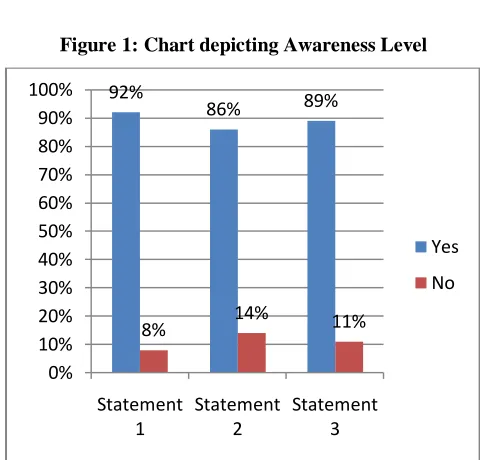
Figure 1: Chart depicting Awareness Level
From the aforesaid data, it is evident that almost all the respondents (i.e. 92% of respondents) have awareness regarding the concept of green marketing and are familiar with green marketing practices. Most of the respondents (i.e. 86% of respondents) are aware of the concept of green marketing mix and its components. 89% of the respondents are aware of several organizations which are using green marketing mix & emphasizing on green marketing practices. Thus there are substantial
92%
86% 89%
8% 14% 11%
0% 10% 20% 30% 40% 50% 60% 70% 80% 90% 100%
Statement
1 Statement 2 Statement 3
270
Copyright © 2011-15. Vandana Publications. All Rights Reserved.respondents which possess awareness towards several green marketing practices.
Consumers’ perception regarding usefulness of green marketing mix
For analyzing the consumers’ perception regarding usefulness of green marketing mix, five statements have been considered which are as follows and their response have been solicited on a five pointer likert scale:
Statement 1: Green marketing mix enhances the decision making abilities of consumers’ as they help them to make conducive environment friendly purchases.
Statement 2: Green product positively influences and affects the consumers’ imagery and enhances the brand recall and recognition.
Statement 3: Green price positively contributes to the reasoned cognition of the consumers by making them aware regarding the value or utility of extra money being given by them.
Statement 4: Green advertising enhances the credibility of information disseminated by related brands and positively builds the buying intention of the consumers.
Statement 5: Green product availability enhances the probability of potential product purchase as compared to conventional products.
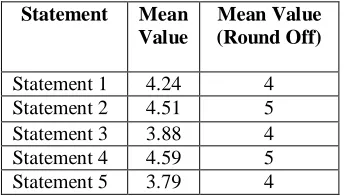
Table 3: Statistics depicting consumers’ perception regarding usefulness of Green Marketing Mix
Statement Mean Value
Mean Value (Round Off)
Statement 1 4.24 4 Statement 2 4.51 5 Statement 3 3.88 4 Statement 4 4.59 5 Statement 5 3.79 4
Figure 2: Chart depicting consumers’ perception regarding for usefulness of Green Marketing Mix
The data for the aforementioned statements pertaining to usefulness on green marketing mix has been obtained using five pointer likertscale (where 1 signify “Strongly Disagree” and 5 signify “Strongly Agree"). The lower limit of the mean score is 3.88, the upper limit of the mean score is 4.59 and further, the lower limit of approximate mean score (round-off) obtained is 4.0. Therefore, it can be inferred that the consumers agree in holistic way to all the aforementioned statements pertaining to usefulness of green marketing mix.
Hence from the above it can be summarized that green marketing mix enhances the decision making abilities of consumers, thus prepares them for various environment friendly purchases. Further, green product positively influences the consumers’ imagery, thus adds to the brand recall; whereas green price enhances the consumer’s reasoned cognition to make them aware regarding the value or utility of extra money being given by them. Furthermore, green advertising heightens the reliability of information disseminated by related brands & positively molds the buying intention of the consumers; and green product availability improves the probability of pertinent product purchase.
Consumers’ perception regarding potential purchase intentions & buying behaviour
For analyzing the consumers’ perception regarding potential purchase intentions & buying behaviour, five statements have been considered which are as follows and their response have been solicited on a five pointer likert scale:
Statement 1: Consumers intentions are positively inclined for products which use green marketing mix with an aim to preserve the environment.
4.24 4.51 3.88
4.59 3.79
4 5 4 5 4
0 1 2 3 4 5 6
Sta
te
m
en
t 1
Sta
te
m
en
t 2
Sta
te
m
en
t 3
Sta
te
m
en
t 4
Sta
te
m
en
t 5
Mean Value
271
Copyright © 2011-15. Vandana Publications. All Rights Reserved.Statement 2:Consumers respond positively through their buying purchase patterns for the green commitments made by organizations.
Statement 3: Consumers are enhancing their living standards and consumption patterns to synchronize themselves with the green living standards being promoted worldwide.
Statement 4: Consumers are eager to invest additional time and effort in extracting information; and are further prepared to pay premium price for related green products. Statement 5: Consumers’ own endeavour to deter environmental upheaval encourages them to go for conspicuous green purchase behaviour.
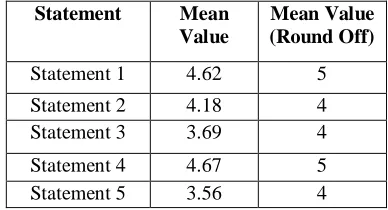
Table 4: Statistics depicting consumers’ perception regarding potential purchase intentions & buying behaviour
Statement Mean Value
Mean Value (Round Off)
Statement 1 4.62 5
Statement 2 4.18 4 Statement 3 3.69 4
Statement 4 4.67 5 Statement 5 3.56 4
Figure 3: Chart depicting consumers’ perception regarding potential purchase intentions & buying behaviour
The data pertaining to the aforementioned statements regarding consumers’ potential purchase intentions & buying behaviour have been obtained from them using five pointer likert scale (where 1 signify “Strongly Disagree” and 5 signify “Strongly Agree”). The lower limit of the mean score is 3.56, the upper limit of the mean score is 4.67 and further, the lower limit of approximate mean score (round-off) obtained is 4.0.
Therefore, it can be inferred that the consumers agree in wholesome way to all the aforementioned statements regarding consumers’ potential purchase intentions & buying behaviour.
Further, consumers’ intentions are positively inclined for products which use green marketing mix, as they aim to preserve and contribute towards to the progression of green sustainability. Further, they respond favorably in their buying purchase patterns to the green commitments made by organizations through and are synchronizing themselves with the green living standards being promoted worldwide.
Furthermore, they are going for conspicuous green product purchase; and are also prepared to invest additional time &are willing to pay additional price for purchase of green products.
Regression analysis between green marketing mix and consumers’ purchase intentions & buying behaviour
Table 5: Statistics of regression
Variables Beta Value t-value Sig.
Green Marketing Mix
0.081** 2.09 0.012
R2 = 0.0342 F = 3.57**
Note: ** p < 0.05
The aforesaid table summarizes the regression between green marketing mix and consumers’ purchase intentions & buying behaviour.
It is evident that green marketing mix exhibits a significant impact on consumers’ purchase intentions and buying behaviour, at β = 0.081, t = 2.09 where p < 0.05 and green marketing mix explained 3.42% of variation with consumers’ purchase intentions and buying behaviour (i.e. R2
V.
FINDINGS
= 0.0342).Hence, it supports the research hypothesis that green marketing mix exhibits a significant impact on consumers’ purchase intentions and buying behaviour.
a) Green marketing mix exhibits a significant impact on consumer’ purchase intentions and buying behaviour. b) 92% of the respondents have awareness regarding
green marketing concept & related pro-environmental campaigns.
4.62 4.18
3.69 4.67
3.56
5
4 4
5 4
0 1 2 3 4 5 6
Sta
te
m
en
t 1
Sta
te
m
en
t 2
Sta
te
m
en
t 3
Sta
te
m
en
t 4
Sta
te
m
en
t 5
Mean Value
272
Copyright © 2011-15. Vandana Publications. All Rights Reserved.c) 86% of the respondents have awareness regarding green marketing mix elements.
d) 89% of the respondents have awareness regarding organizations using green marketing mix and emphasizing on green marketing practices.
e) Green marketing mix enhances the decision making abilities of consumers’ and positively affects the consumers’ imagery which results in enhancement of brand recall and recognition.
f) Green advertising positively builds the buying intention of the consumers, whereas green price supplements their reasoned cognition for the extra value or utility being earned by them.
g) Green product availability enhances the probability of potential product purchase.
h) Consumers are willing to spend additional time and money for the purchase of green products.
VI.
CONCLUSION
For organizations green marketing mix elements are the strategic competencies available with them, which help them to analyze the multifaceted consumers’ green purchase psychology more effectively to deduce appropriately the favourable consumers’ purchase intentions by removing their decision making paradoxes. Further, it help organizations to synchronize their offerings more efficiently and strategically in the consumers’ mindset by nurturing their reasoned cognition; thus enhancing consumers’ pro-environmental preferences which results in formation of conducive attitudes and purchase intentions helpful for conspicuous green purchase.
REFERENCES
[1] Hartmann P. & Ibáñez V.A., “Green value added”, Marketing Intelligence & Planning, Vol. 24, pp. 673-80, 2006
[2] Polonsky M. J.,“An introduction to green marketing”, Electronic Green Journal, Vol. 1(2), pp. 1-10, 1994
[3] Mishra, P. & Sharma, P., “Green Marketing in India: Emerging opportunities and challenges”, Journal of Engineering, Science & Management Education, Vol. 3, pp. 9-14, 2010
[4] Zinkhan G. M. &Calson L., “Green advertising and the reluctant consumer”, Journal of Advertising, Vol. 24 (2), pp. 1-6, 1995
[5] Banerjee S., Gulas C.S. &Iyer E., “Shades of green: A multidimensional analysis of environmental advertising”, Journal of Advertising, Vol. 24 (2), 1995
[6] Khandelwal, U. &Bajpai, N., “A Study on Green Advertisement and its Impact on Consumer Purchase Intention”, Journal of Creative Communications, Vol. 6, No. 3, pp. 259-276, 2011
[7] Rahbar, E. & Wahid, N.A., “Investigation of green marketing tools’ on consumers’ purchase behaviour”, Business Strategy Series, Vol. 12, No. 2, pp. 73-83, 2011 [8] Boztepe, A., “Green marketing and its impact on consumer buying behaviour”, European Journal of Economic and Political Studies, Vol. 5(1), pp. 5-21, 2012 [9] Hindol R., “Environmental advertising and its effects on consumer purchasing patterns in West Bengal”, Research Journal of Management Sciences, Vol. 1(4), pp. 16-20, 2012
[10] Rahim M. H. A., Zukni R. Z. J. A., Ahmad F. & Lyndon N., “Green advertising & environmentally responsible consumer behaviour: The level of awareness and perception of Malaysian youth”, Asian Social Science, Vol. 8 (5), pp. 46-52, 2012
[11] Ansar, N., “Impact of green marketing on consumer purchase intention”, Mediterranean Journal of Social Sciences, Vol. 4, No. 11, pp. 650-655, 2013
BIBLIOGRAPHIC REFERENCES
[1] Malhotra, N.K. & Dash, S., “Marketing Research”, Pearson Education, New Delhi, 5th
[2] Schiffman, L.G. &Kanuk, L.L., “Consumer Behaviour”, Prentice Hall of India Pvt. Ltd., New Delhi, 9
Edition, 2010
th