Sociedad Química de México, A.C.
Barranca del Muerto 26, Col. Crédito Constructor, Del. Benito Juárez, C.P. 03940, Mexico City Phone: +5255 56626837; +5255 56626823
Contact: [email protected] www.sqm.org.mx
ISSN 1870-249X
(J. Mex. Chem. Soc.)
JANUARY - MARCH - 2017J. Mex. Chem. Soc.
2017,
61(1)
REVISTA de la SOCIEDAD QUÍMICA de MÉXICO
former (Rev. Soc. Quím. Méx.)
Pages 1-73 Preprint Quarterly publication www.jmcs.org.mx Mexico City
J. M
ex
. C
he
m
. S
oc
. 2
01
7,
61
(1
)
JOU
R
N
A
L
of th
e M
E
X
IC
A
N C
H
E
M
IC
A
L S
O
C
IE
T
ISSN 1870-249X www.jmcs.org.mx
Instructions for Authors
J. Mex. Chem. Soc. 2017
Journal of the Mexican Chemical Society (J. Mex. Chem. Soc.) Quarterly publication. Editor-in-Chief: Ignacio González
Indexed Journal
Certificate of reserved rights granted by the Instituto Nacional del Derecho de Autor (INDAUTOR): 04-2005-052710530600-102 Certificate of lawful title and content: Under procedure
Postal registration of printed matter deposited by editors or agents granted by SEPOMEX: IM09-0312
Copyright © Sociedad Química de México, A.C. Total or partial reproduction is prohibited without written permission of the right holder.
The Figures/schemes quality and the general contents of this publication are full responsability of the authors. Edited and distributed by Sociedad Química de México, A.C.
Barranca del Muerto 26, Col. Crédito Constructor, Del. Benito Juárez, C.P. 03940, Mexico City. Phone: +5255 56626837; +5255 56626823 Contact: [email protected] http://www.sqm.org.mx
Technical Editor: Formas e Imágenes, Av. Universidad 1953, Edif. 2 local E, Col. Copilco el Bajo, México, D.F. Phone: +5255 55501784; +5255 56167117 Contact: [email protected]
The Journal of the Mexican Chemical Society (former Revista de la Sociedad Química de México) is a peer reviewed trimonthly journal which publishes original contributions and critical reviews in all areas of chemical sciences. It will publish fundamental work on physical, organic, inorganic, theoretical, analytical and biological chemistry, as well as aspects of supramolecular chemistry, electrochemistry, polymer chemistry, natural products chemistry, oil chemistry, organometallic chemistry, medical chemistry, biochemistry, chemical ecology, green chemistry, environmental chemistry, macromolecular chemistry, nuclear chemistry, chemistry of materials, and catalysis, among other topics. Full detailes on how to submit material to publication are given in Instructions for Authors on the printed journal, on the website: www.jmcs.org.mx or via e-mail to: editor. [email protected]
Ignacio González (Editor); [email protected]
Associated Editors
Miguel Antonio Costas Basín; [email protected] Gabriel Eduardo Cuevas González Bravo; [email protected] Guillermo Delgado; [email protected]
Bernando Frontana Uribe; [email protected] Annia Galano Jiménez; [email protected] Enrique Lima Muñoz; [email protected] Víctor Loyola Vargas; [email protected] Antonio Martínez Richa; [email protected] Rachel Mata Essayag; [email protected]
José L. Medina-Franco; [email protected] Mercedes Teresita Oropeza-Guzmán; [email protected] Gerko Oskam; [email protected]
Joaquín Tamaríz Mascarúa; [email protected] Hugo Torrens Miquel; [email protected]
Alberto Vela Amieva; [email protected] Carlos Velazquez Martínez; [email protected] Margarita Viniegra Ramírez; [email protected] Katarzyna Wrobel; [email protected]
Francisco Yuste López; [email protected] TECHNICAL EDITOR
Formas e Imágenes; [email protected]
Adriana Vázquez Aguirre; [email protected]
Francisco Bolívar; [email protected] Guillermina Burillo; [email protected] Luis Echegoyen; [email protected]
Nikolaus H. Fischer; [email protected] Eusebio Juaristi; [email protected]
Pedro Joseph Nathan; [email protected] Mario J. Molina; [email protected]
Heinrich Nöth; [email protected] Keith Pannell; [email protected]
Ratnasamy Somanathan; [email protected]
José I. Bolívar Goyanes, Manuel Ulacia Esteve, Elvira Santos de Flores, Federico García Jiménez, Guillermo Delgado Lamas, Joaquín Tamariz Mascarúa, Juvencio Robles García
EDITORIAL ASSISTANCE
FORMER EDITORS
ADVISORY EDITORIAL BOARD 2016 EDITORIAL BOARD 2016
Editorial Policy
The Journal of the Mexican Chemical Society (J. Mex. Chem. Soc.), former Revista de la Sociedad Química de México (Rev. Soc. Quím. Méx.), from 1957 is devoted to facilitate the advancement of our understanding of chemistry. It will publish original contributions of research in all areas of the theory and practice of chemistry in its broadest context, as well as critical reviews in areas where the author has published significant scientific contributions. The language of submission and publication is English. Papers are submitted on the understanding that the subject matter has not been previously published or submitted for publication elsewhere. Editors, referees and authors have to follow and maintain the ethical standards widely accepted in chemical research (see for example: the ACS guidelines or the RSC guidelines). Authors must accept full responsability for the accuracy, content and selection of the data presented. All papers are sent to referees who recommend the Editor on the acceptance or rejection of the script. Referee’s names are not disclosed, but their comments are forwarded to the authors. Authors submitting a manuscript do so on the understanding that if it is accepted for publication, copyright of their article is transferred to the Sociedad Química de México.
General Guidelines for Manuscript Preparation
Authors are encouraged to send contributions in electronic form as MS Word file [email protected]. On submitting their manuscripts, authors are encouraged to supply a cover letter suggesting the names and e-mail addresses of at least four potential referees. The cover letter may include the name of a member of the Editorial Board or the Advisory Editorial Board for manuscript assignment. If no acknowledgement receipt has been received after five working days, authors should contact the editor. All pages of the manuscript should be consecutively numbered. Accepted manuscripts should be resubmitted as MS Word file and separate files of the artwork in .TIFF, .JPG or PostScript formats. Black and white photographs must be scanned with a resolution of no less than 600 dpi. It is advisable to provide illustrations (figures, schemes, charts, tables, graphics) in the actual size at which they should appear in the printed version and should be designed to fit in one- or two-columns format. The journal will publish a graphical abstract which includes the title and the author list, and illustrates the content of the paper in a pictorial form. The graphical abstract is limited to 9.0 cm wide and 4.5 cm tall, and authors may examine J. Mex. Chem. Soc. 2005, 49, 55-60 (joint issue with the J. Braz. Chem. Soc.) for appropriate examples. Page 1 should contain the article title (brief and informative), author(s) name(s) (first names and surnames, do not use initials for names, the corresponding author(s) should be indicated with an asterisk, use superscripts to indicate different addresses), complete affiliation(s) (the corresponding author’s mailing address, phone number, fax number or e-mail address should be included). Page 2 should contain an abstract (both in English and Spanish, about 80 words) and five to eight key words in both languages.
A suggested organization of an article is: Introduction, Results and Discussion, Experimental, Acknowledgements and References. All the sections of the paper must be presented with the utmost conciseness and clarity. The measurements and data should be given in the International Units System (SI), and abbreviations should be used consistently through the text. Avoid reiteration of information. The discussion should present only the new results and relate them to existing knowledge in the field, and a paragraph summarizing the principal conclusion of the article is recommended. Complete X-ray data should be deposited at the Cambridge Crystallographic Data Centre (http://www.ccdc.cam.ac.uk/products/csd/faqs/#deposition_scheme)
or to Fachinformationszentrum Karlsruhe (FIZ), which will provide codes for each data set, which are then cited in a reference in the manuscript. If a representation of the crystal structure is to be included, it should be accompanied by pertinent crystallographic data, method of collection, and methods of structure solution and refinement. The experimental section must contain all the information necessary for reproducibility. Convincing evidence to confirm the identity of a compound should be provided. All new compounds should be fully characterized with relevant and detailed spectroscopic data. For physical and spectroscopic data, the following general style must be used:
(3S)-7-Hydroxy-2’,3’,4’,5’,8-pentamethoxyisoflavan (1). Amorphous
powder: mp 125-126ºC; [a]D + 3.12 (c 0.320, MeOH); UV (MeOH) lmax (log e) 218 (3.91); 284 (2.89) nm; CD (c 0.0136, MeOH): [q]210 -2.699, [q]226 0.4130, [q]256 -0.8567, [q]265.5 -0.6865; IR (CHCl3) νmax 3530, 2939, 2840, 1603, 1494, 1193, 1040 cm-1; 1H NMR (CDCl3, 500 MHz) d 6.72 (1H, dd, J5,6 = 8.5, J4a,5 = 1.0 Hz, H-5), 6.53 (1H, dd, J5,6 = 8.5 Hz, H-6), 6.40 (1H, s, H-6’), 5.80 (1H, brs, OH), 4.39 (1H, ddd, J2b,2a = 10.5, J2b,3b = 3.5, J2b,4b = 1.0 Hz, H-2b), 4.05 (1H, dd, J2b,2a = J2a,3b 10.5, Hz, H-2a), 3.95 (3H, s, CH3 O-C-3’), 3.92 (3H, s, CH3O-C-8), 3.89 (3H, s, CH3O-C- 4’), 3.83 (3H, s, CH3O-C-2’), 3.79 (3H, s, CH3O-C-5’), 3.61 (1H, dddd, J = 10.5, 3.5, 5.5, 10.5 Hz, H-3), 2.96 (1H, ddd, J4a,4b = 16.0, J4a,3b = 10.5,
J4a,5 = 1.0 Hz, H-4a), 2.90 (1H, ddd, J = 16.0, J3b,4b = 5.5, J2b,4b = 1.0 Hz, H-4b); 13C NMR (CDCI3, 125 MHz, assignments by APT and HMQC) d 149.67 (C-5’), 147.60 (C-7), 147.15 (C-3’), 147.12 (C-8a), 145.50 (C- 2’), 141.95 (C-4’), 134.80 (C-8), 128.90 (C-1’), 124.20 (C-5), 115.00 (C- 4a), 107.10 (C-6), 70.28 (C-2), 61.89 (OCH3-C-4’), 61.51 (OCH3-C-2’), 61.00 (OCH3-C-3’), 60.90 (OCH3-C-8), 56.25 (OCH3-C-5’), 31.85 (C-3), 31.32 (C-4); EIMS mlz (rel. int.): 376 [M]+ (73), 224 (100), 209 (42), 152 (16), 151 (38), 121 (14). Anal. C 63.65%, H 6.68%, calcd for C20H24O7, C 63.82%, H 6.43%.
For computational results, pertinent data such as force field parameters and equations should be included, to allow readers to repeat and reproduce the calculations. References to the literature should be noted in the text in order of appearance with numerals between brackets and should coincide with entries in the References section. It is not recommended to include bibliography of difficult access (theses, abstracts of meetings, unpublished material, technical reports, work in press, etc.) as references. The style and punctuation should rigorously conform to the format in the following examples:
1. Kingsbury, J. S.; Corey, E. J. J. Am. Chem. Soc. 2005, 127, 13813-13815
2. Vanden Berghe, D. A.; Vlietinck, A. J., in: Methods in Plant Biochemistry, Vol. 6, Hostettmann, K., Ed., Academic Press, London, 1991, 47-70.
3. Lehn, J.-M. Supramolecular Chemistry. VCH, Ed. Weinheim, 1995. 4. Kadin, S.B. US patent 4,730,004 1988. (CA 110, P23729y) 5. http://www.jmcs.org.mx, accessed in January, 2005
6. Sheldrick, G. M. SHELXL-93. Program for Crystal Structure Refinement. University of Göttingen, Germany. 1993.
Journal abbreviations, technical terms and nomenclature should be those used by Chemical Abstracts. Figures and tables must not be included in the body of the text. Tables and figures with their respective legends, each on an individual page, should be added after references.
The galley proofs of the accepted paper in PDF format will be sent to the author who submitted the script. Corrected galley proofs should be returned preferably within 48 hrs. by e-mail.
For more information, write to: [email protected]
ISSN 1870-249X
(J. Mex. Chem. Soc.)
REVISTA de la SOCIEDAD QUÍMICA de MÉXICO
former (Rev. Soc. Quím. Méx.)
J. Mex. Chem. Soc
. 2017,
61
(
1
)
Pages 1-73 Quarterly publication www.jmcs.org.mx Mexico City
Sociedad Química de México, A.C. Barranca del Muerto 26,
Col. Crédito Constructor,
Del. Benito Juárez, C.P. 03940, Mexico City. Phone: +5255 56626837; +5255 56626823 Contact: [email protected] http://www.sqm.org.mx
The Sociedad Química de México was founded in 1956 as a non-profit associa-tion to promote the development of the professionals and students of chemistry in education, research, services and industry, and for the diffusion of chemical knowledge. The Sociedad Química de México organizes annually the Mexican Congress of Chemistry and the National Congress of Chemical Education, both congresses include activities of current interest for professionals and students of the chemical sciences. It grants annually the “Andrés Manuel del Río” National Award of Chemistry in the Academic area (field of research and field of educa-tion) and in the Technological area (field of technological development). It also grants each year the Rafael Illescas Frisbie Best Bachelor, Master and Doctoral Thesis in Chemical Sciences Awards and the biennial Award of the Sociedad Quí-mica de México in honor of the Doctor Mario J. Molina, directed to the profes-sionals in Chemistry Sciences.
The Journal of the Mexican Chemical Society (J. Mex. Chem. Soc) is the official journal of the Sociedad Química de México, it was published as Revista de la Sociedad Química de México (Rev. Soc. Quím. Mex.) from 1957 to 2003, changing its name in 2004. The Journal of the Mexican Chemical Society is a quarterly publication, devoted to the advancement of the understanding of chemistry by means of publication of research papers and critical reviews; the instructions for authors appear in each issue. The Sociedad Química de México also publishes since 2007 articles of general interest in the Boletín de la Socie-dad Química de México.
La Sociedad Química de México fue fundada en 1956 como una agrupación sin fines de lucro para promover el desarrollo de los profesionales y estudiantes de la química en las áreas educativa, investigación, servicios e industria, y para difundir el conocimiento de la química. La Sociedad Química de México organi-za anualmente el Congreso Mexicano de Química y el Congreso Nacional de Educación Química, en los cuales se desarrollan diversas actividades de interés para los profesionales y estudiantes de las ciencias químicas. Asimismo, otorga anualmente el Premio Nacional de Química “Andrés Manuel del Río” en el área Académica (campos de docencia e investigación) y en el área Tecnológica (campo de Desarrollo Tecnológico). También otorga anualmente el Premio a las Mejores Tesis de Licenciatura, Maestría y Doctorado en Ciencias Quími-cas, Rafael Illescas Frisbie. De manera bienal otorga el Premio de la Sociedad Química de México en Honor al Doctor Mario J. Molina, dirigido a los profe-sionistas de las Ciencias Químicas.
El Journal of the Mexican Chemical Society (J. Mex. Chem. Soc.), es la revista oficial de la Sociedad Química de México. Desde 1957 y hasta 2003 fue publicada como Revista de la Sociedad Química de México (Rev. Soc. Quím. Mex.), cambiando su nombre en 2004. Es una publicación trimestral que tiene como objetivo coadyuvar al avance del entendimiento de la quími-ca; las instrucciones para los autores aparecen en cada fascículo. La Sociedad Química de México también publica desde 2007 artículos de interés general en el Boletín de la Sociedad Química de México.
Journal of the Mexican Chemical Society
(J. Mex. Chem. Soc.) ISSN 1870-249X
former
Revista de la Sociedad Química de México
(Rev. Soc. Quím. Mex.) ISSN 0583-7693
Journal of the Mexican Chemical Society (J. Mex. Chem. Soc.) Quarterly publication.
Editor-in-Chief: Ignacio González
Indexed Journal
Certificate of reserved rights granted by the Instituto Nacional del Derecho de Autor (INDAUTOR): 04-2005-052710530600-102
Certificate of lawful title and content: Under procedure
Postal registration of printed matter deposited by editors or agents granted by SEPOMEX: IM09-0312
Copyright © Sociedad Química de México, A.C.
Total or partial reproduction is prohibited without written permission of the right holder.
The Figures/schemes quality and the general contents of this publication are full responsability of the authors.
Edited and distributed by Sociedad Química de México, A.C. Barranca del Muerto 26, Col. Crédito Constructor,
Del. Benito Juárez, C.P. 03940, Mexico City. Phone: +5255 56626837; +5255 56626823
Contact: [email protected] http://www.sqm.org.mx
Technical Editor Formas e Imágenes, S.A. de C.V.
Av. Universidad 1953, 2-E, Col. Copilco el Bajo, Coyoacán, Mexico City Phone: +5255 55501784; +5255 56167117
ISSN 1870-249X
(J. Mex. Chem. Soc.)
REVISTA de la SOCIEDAD QUÍMICA de MÉXICO former (Rev. Soc. Quím. Méx.)
T a b l e o f C o n t e n t s
Articles
1-13 Cluster modeling and coordination structures of Cu+
ions in Al-incorporated Cu-MEL catalysts – a density functional theory study
Mehdi Ghambarian, Zahra Azizi, and Mohammad Ghashghaee*
14-22 Policy Proposal for Metals Speciation in Tailings Contaminated Soils: A Case Study in Chihuahua, Mexico
Irma Cruz Gavilán García,* Georgina Fernández Villagómez, Alejandro Menchaca Pérez, Luis Adrian Barraza Torres and Arturo Gavilán García
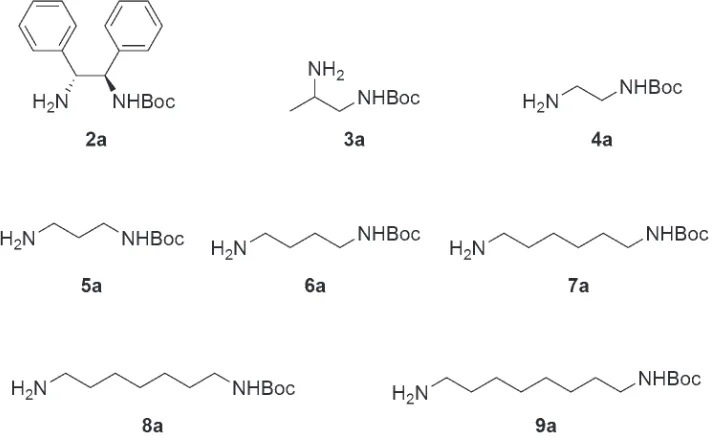
23-27 General Method for Selective Mono-Boc Protection of Diamines and Thereof
Felipe Antonio Servín, José Alfonso Romero, Gerardo Aguirre, Douglas Grotjahn, Ratnasamy Somanathan, and Daniel Chávez*
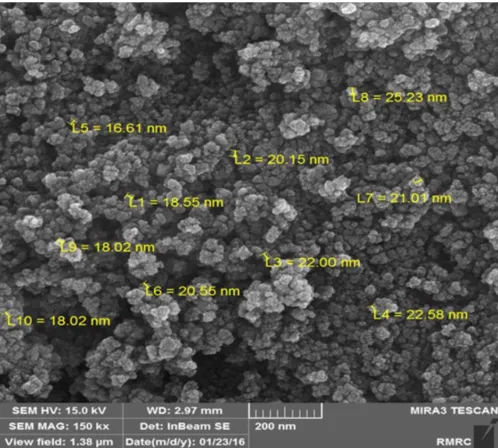
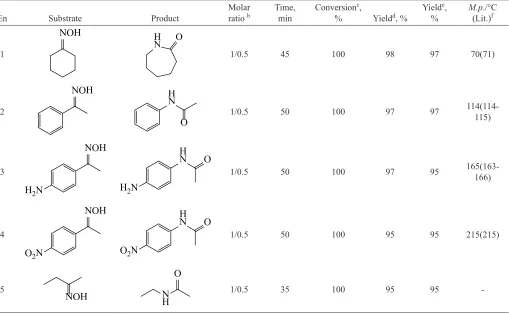
28-34 Nano Fe3O4 as Green Catalyst for Beckmann Rearrangement under Ultrasound Irradiation
Mostafa KarimKoshteh* and Marziyeh Bagheri
35-40 Fast and Green Method to Synthesis of Quinolone Carboxylic Acid Derivatives Using Giant-Ball Nanoporous Isopolyoxomolybdate as Highly Efficient Recyclable Catalyst in Refluxing Water
Yahya Mirzaie, Jalil Lari, Hooshang Vahedi, Mohammad Hakimi, Ahmad Nakhaei* and Abdolreza Rezaeifard
41-49 Synthesis and Biological Evaluation of New 3,4-diarylmaleimides as Enhancers (modulators) of Doxorubicin Cytotoxic Activity on Cultured Tumor Cells from a Real Case of Breast Cancer
Jessica R. Gutierrez-Cano, Pradip D. Nahide, Velayudham Ramadoss, Yuvraj Satkar, Rafael Ortiz-Alvarado, Clara Alba-Betancourt,* Claudia L. Mendoza-Macías* and César R. Solorio-Alvarado*
50-53 Microwave-assisted synthesis of ethyl 7-chloro-4-oxo-l,4-dihydro-1,8-naphthyridine-3-carboxylate by the Grohe-Heitzer reaction
Socorro Leyva-Ramos,* Elisa Leyva, Jaime Cardoso-Ortiz and Hiram Hernández-López
54-59 Transformation of Ferulic Acid and Vanillin by Isolated Placentas of Capsicum chinense and Capsicum annuum
Felipe Vázquez-Flota,* Miriam Monforte-González, María de Lourdes Miranda-Ham and Lizbeth A. Castro-Concha
60-66 GPU Algorithm for the Scaled Opposite-Spin (SOS) MP2 Energy Evaluation
Luis Ángel Martínez-Martínez and Carlos Amador-Bedolla*
67-74 Tonantzitlolone A and other cytotoxic constituents of
Sapium macrocarpum (Euphorbiaceae)
Fernando Novillo, Verónica Rosero, María Isabel Chávez, Simón Hernández-Ortega, Esteban M. Martínez and Guillermo Delgado*
Article
© 2017, Sociedad Química de MéxicoJ. Mex. Chem. Soc.2017, 61(1), 1-13 ISSN 1870-249XCluster modeling and coordination structures of Cu
+ions in Al-incorporated
Cu-MEL catalysts – a density functional theory study
Mehdi Ghambarian,
1Zahra Azizi,
2and Mohammad Ghashghaee,
3*1 Gas Conversion Department, Faculty of Petrochemicals, Iran Polymer and Petrochemical Institute, P.O. Box 14975-112,
Tehran, Iran.
2 Department of Chemistry, Karaj Branch, Islamic Azad University, P.O. Box 31485-313, Karaj, Iran 3 Faculty of Petrochemicals, Iran Polymer and Petrochemical Institute, P.O. Box 14975-112, Tehran, Iran
* Corresponding author. Tel.: +98 21 48662481; fax: +98 21 44787032. E-mail address: [email protected] Abbreviated running title: DFT modeling of Cu-ZSM-11 catalysts
Received July 8th, 2016; Accepted December 2nd, 2016.
Resumen: El modelado de closters empleando métodos derivados de la teoría de funcionales de la densidad fue aplicado al catalizador Cu-MEL ceolita que incorpora aluminio (Cu-ZSM-11) para probar las ca-racterísticas electrónicas, energéticas y estructurales del sitio activo del catalizador con los niveles de teoría B3LYP/6-311+G* y M06/ Def2-TZVP. La separación energética entre los orbitales HOMO y LUMO se encontró en el rango de 3.31 a 5.15 eV a nivel BH&HLYP/6-311+G, teniendo el menor valor para los closters I-Cu y M1-Cu. Tam-bién se determinaron los valores promedio de la población para la entalpía de intercambio y la energía de unión, con valores de 125 y 171 kcal/mol respectivamente.
Palabras clave: cobre; MEL ceolita; modelado empleando DFT; cata-lizador ZSM-11; QTAIM.
Abstract. A density-functional-based cluster modeling was imple-mented on the Al-incorporated Cu-MEL zeolite catalyst (Cu-ZSM-11) to probe the electronic, energetic and structural features of the active sites of the catalyst at the B3LYP/6-311+G* and M06/Def2-TZVP lev-els. The HOMO–LUMO energy gap fell into the range of 3.31–5.15 eV at TD-BH&HLYP/6-311+G* with the lowest magnitude for the I– Cu and M1–Cu clusters. Population-averaged values for the exchange enthalpy and binding energy were also calculated, being approximate-ly 125 and 171 kcal/mol, respectiveapproximate-ly.
Keywords: Copper; MEL zeolite; DFT modeling; ZSM-11 catalysts; QTAIM.
Introduction
Transition-metal ions (TMIs) incorporated into zeolitic frame-works are known as active heterogeneous catalysts for numer-ous applications [1-3]. There has been fairly extensive research into copper ions impregnated over different supports [1, 4-17], which serve as efficient catalysts for a wide range of reactions, such as, methanol synthesis, oxidation of hydrocarbons, carbo-nylation of methanol, pollutant abatement, and hydrogenation reactions [4-6, 18]. Among different metal exchanged zeolites, e.g., Cu–ZSM-5 proved to be the most active catalyst for direct decomposition of NO [8].
There exist several reports on the experimental identifica-tion as well as theoretical modeling of copper ions in porous materials [2, 4, 6-7, 17-38]. Meanwhile, the monovalent copper ion has received substantial interest. The adsorption of various probe molecules such as NOx, COx, N2, O2, and H2O on the
Cu+ ions exchanged into an MFI zeolite has been the subject
of several studies [1, 7-9, 13-14, 20, 22, 37, 39-51]. The quantum chemical calculations have shown in accordance with IR measurements that the NO molecule is more freely activated on Cu+ centers than on Cu2+ as evinced by the
re-markably higher HOMO level of the former [20]. Unusual
σ-type adsorption complexes with both hydrogen molecule and
light alkanes have been indicated for the Cu+ ion, compared to
other cations (e.g., Li+ or Mg2+) [17]. The Cu+-exchanged
zeo-lites are very promising adsorbents for the separation of olefins and desulfurization of fossil fuels [18].
Zeolite ZSM-11 is the most symmetrical pentasil observed so far [52]. The framework of ZSM-11 (MEL type) involves pentasil layers joined enantiomerically through σ-reflection, forming a two-dimensional network of straight channels with perpendicular intersections [52-54]. Experimental studies have demonstrated that both Cu-ZSM-11 (with MEL structure type with two-dimensional 10T-ring pores) and Cu-ZSM-12 (MTW structure of one-dimensional 12T-ring pores) are about twice as active as the most investigated zeolite Cu-ZSM-5 (MFI struc-ture with straight and zig-zag/sinusoidal channels) in direct de-composition of NO [11, 27]. It was suggested that there must be a preferential formation of active sites and/or better accessibil-ity in the straight channels compared to the sinusoidal ones, which explains the higher activity of ZSM-11 material [11]. Analogously, the Cu-ZSM-11 catalyst has been applied to
di-rect N2O decomposition where it was obviously more active
2 J. Mex. Chem. Soc. 2017, 61(1) Mehdi Ghambarian et al. It is believed that the coordination of the cation by the
ze-olite framework is vital for the catalytic properties of copper ions as the counterpart gas-phase ions do not confer such an activity [18]. DFT calculations have shown, e.g., that the interac tions of NO with the gas-phase isolated Cu+ ions are
es-sentially different from those inside a zeolite structure. The for-mer system showed interactions of the a’ singly occupied orbital (SOMO) of NO with the unoccupied 4s and the
occu-pied 3d orbitals of Cu+ which depopulated the antibonding
SOMO thus reinforcing the NO bond. In contrast, the Cu-zeo-lite system showed increased Pauli repulsions due to electro-static attractions which led to higher level (occupied) 3d orbitals interacting with the a” LUMO of NO molecule; these interac-tions populated the antibonding LUMO of NO and, hence, weakened the NO bond [7].
Despite the relative importance of the MEL-type materials, really scant attention has been directed in theoretical studies toward these catalysts [57-59]. The purpose of this paper is then to investigate the coordination, local structure and properties of Cu+ ions at different positions within a ZSM-11 lattice.
Knowl-edge of the properties of these cationic sites would be essential for a better understanding of their catalytic behaviors which facilitates their improvement and replacement with new zeo-lite-based catalysts.
Results and discussion
The overview of possible exchange sites in the porous network of an MEL-type zeolite is shown in Fig. 1, which illustrates an intersection site I, ring sites of M1, M2, M3, and M4 located in
the main channels with an increasing number of T atoms from left to right, and cage-like positions C1 and C2 that resemble a curved 6T-ring site inside the walls of ZSM-11 composed of several fused 5T-rings.
As also mentioned above, the quantum-chemical studies of the deposition and binding of small metal particles on ox-ide surfaces are very important for obtaining an accurate de-scription of the catalyst interface [4]. A major challenge concerning the structural characterization of metal-ion-ex-changed zeolites, in general, is to find out where the cation substitution takes place and how metal ions are coordinated to the substituted sites [28]. As can be seen in Table 1 and Fig. 1, total of 7 sites were considered for Cu+ exchange in
ZSM-11, together with a representative A site from an MFI structure for comparison. The exchange sites of C1 and C2 have the same local environment in the solid matrix, but with Al incorporation at the T6 and T1 positions, respective-ly. The C sites in ZSM-11 are the most similar to the A site in ZSM-5, except that the C sites are not as readily accessi-ble to guest molecules as the A site is. This subtle difference and similar differences in the accessibility and local config-urations can evidently cause discrepancies in the bulk cata-lytic behavior of the two pentasil solids, even if the shape and population of exchange sites were identical in both cas-es. The other sites of the ZSM-11 catalyst are accessible to the coming molecules almost identically, provided that the pore diffusion effects in the similar cavities are the same.
At the first sight, one may think that few Al atoms have been considered here with respect to the framework Si atoms. Therefore, in reality, there must be some other Al atoms as well that influence the local environment of the Cu ions and
Fig. 1. Different positions for the placement of the Cu+ ions in the ZSM-11 zeolite framework viewed at the (010) layer. The 10T-rings represent
Cluster modeling and coordination structures of Cu+ ions in Al-incorporated Cu-MEL catalysts – a density functional theory study 3
the considered intra-framework Al ones. However, we consid-ered only one Al ion at each site. This is an assumption that is made not only for the simplicity of the calculations, but rather from a realistic point of view. In theory, the number of Al atoms in a zeolitic material is only limited by the Loewenstein rule (no adjacent Al tetrahedra) which requires Si/Al ratios larger than 1. However, the MEL and MFI structures are normally listed as high-silica materials with a lower practical limit of 10 or 11 for the Si/Al ratio [60-64]. Moreover, most of catalytic applications require moderate Si/Al ratios to ascertain a bal-ance between the number of acidic sites and the acid strength and hence for an optimum performance [60, 62, 65-66]. The local Si/Al ratios obtained from the atomic population in the isolated clusters lie in the range of 3–8, which are quite smaller than the observed lower limit above for an entire unit cell. Also worth noting is that the simulated acidic sites have a number of shared silicon atoms, making the average Si/Al ratio further smaller. The possibilities for Al substitution and the subsequent models simulated here are then realistic and comprehensive enough, assuming a uniform substitution of the Al atoms. Ze-olite samples with higher Si/Al ratios can be modeled system-atically by reducing the Al substitution sites according to their thermodynamic favorability. The same discussion holds for the Cu atoms assuming a one-by-one stoichiometric substitution of the exchangeable protons with the Cu+ ions. In addition, our
preliminary studies [67-68] indicated the suitability of the cut-out clusters in modeling of the Cu-ZSM-11 catalyst in terms of thermodynamics, geometrical features, and HOMO–LUMO
gaps and in addressing the border and confinement effects [69-74] normally contributing in microporous materials.
The optimized geometries of the Cu+ active sites are
shown in Fig. 2 for which Table 1 presents the highest occu-pied molecular orbital (HOMO) and the lowest unoccuoccu-pied molecular orbital (LUMO) energy levels and their corre-sponding HOMO–LUMO gaps. The coordination states of copper in the cluster models shown in Fig. 2 have been de-termined from the electronic data reported in Table 3 (vide infra). Overall, the coordination of the copper ion is twofold in I–Cu, M1–Cu, and M4–Cu, threefold in C1–Cu, and four-fold in M2–Cu, M3–Cu, C2–Cu, and A–Cu. As it is seen, the incorporation of Al atom at the T1 position in the cage-like
C2 site provides a higher coordination number for the Cu+
ion than that encompassing the Al atom at the T6 position (C1). Moreover, the corresponding site from ZSM-11 (C2) that resembles the alpha-site of ZSM-5 (A) has the same co-ordination number of four.
Table 1 may be used to draw some information about the available sites of the Cu-ZSM-11 in terms of reactivity. It has to be mentioned, however, that the exchange reactions and the catalysis events over the formed active sites are all of a transient nature where the reactants interact and their prop-erties change continually upon approaching the active site. These aspects are normally studied using molecular dynamics simulations at the first-principles level [75-79]. For the com-parisons made herein, it will be assumed that the distribution of the Cu+ ions at the exchange locations and the following
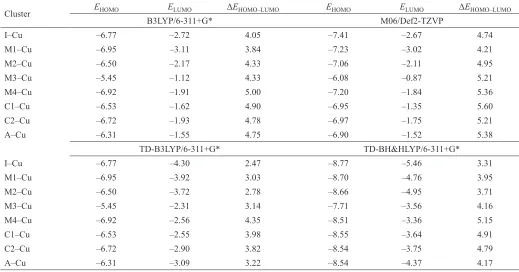
Table 1. Calculated HOMO and LUMO energy levels and HOMO–LUMO energy gaps (eV) at B3LYP/6-311+G*, M06/Def2-TZVP, TD-B3LY-P/6-311+G*, and TD-BH&HLYP/6-311+G* for the Cu+ active sites where the LUMO eigenvalue for the two latter was calculated by subtracting
the HOMO eigenvalue from the HOMO–LUMO gap.
Cluster EHOMO ELUMO ΔEHOMO–LUMO EHOMO ELUMO ΔEHOMO–LUMO
B3LYP/6-311+G* M06/Def2-TZVP
I–Cu –6.77 –2.72 4.05 –7.41 –2.67 4.74
M1–Cu –6.95 –3.11 3.84 –7.23 –3.02 4.21
M2–Cu –6.50 –2.17 4.33 –7.06 –2.11 4.95
M3–Cu –5.45 –1.12 4.33 –6.08 –0.87 5.21
M4–Cu –6.92 –1.91 5.00 –7.20 –1.84 5.36
C1–Cu –6.53 –1.62 4.90 –6.95 –1.35 5.60
C2–Cu –6.72 –1.93 4.78 –6.97 –1.75 5.21
A–Cu –6.31 –1.55 4.75 –6.90 –1.52 5.38
TD-B3LYP/6-311+G* TD-BH&HLYP/6-311+G*
I–Cu –6.77 –4.30 2.47 –8.77 –5.46 3.31
M1–Cu –6.95 –3.92 3.03 –8.70 –4.76 3.95
M2–Cu –6.50 –3.72 2.78 –8.66 –4.95 3.71
M3–Cu –5.45 –2.31 3.14 –7.71 –3.56 4.16
M4–Cu –6.92 –2.56 4.35 –8.51 –3.36 5.15
C1–Cu –6.53 –2.55 3.98 –8.55 –3.64 4.91
C2–Cu –6.72 –2.90 3.82 –8.54 –3.75 4.79
4 J. Mex. Chem. Soc. 2017, 61(1) Mehdi Ghambarian et al.
I–Cu M1–Cu M2–Cu
M3–Cu M4–Cu
C1–Cu C2–Cu A–Cu
reactivity-related consequences are determined by their ther-modynamic favorability rather than by any kinetic events as also adopted earlier [57, 80-82]. Supplementary comments will be made on the accessibility of the active sites for the reac-tant molecules, however. Although hybrid functionals (such as
B3LYP and M06) generally predict accurate HOMO–LUMO gaps in transition-metal exchanged zeolites [83-84], Zhang and Musgrave [85] reported after careful analysis against exper-imental lowest excitation energies of a number of molecules that only time-dependent (TD) DFT methods accurately predict
Cluster modeling and coordination structures of Cu+ ions in Al-incorporated Cu-MEL catalysts – a density functional theory study 5
the HOMO–LUMO gaps. Therefore, we included also the TD-B3LYP and TD-BH&HLYP [86-87] functionals in evaluating the frontier orbital energy data. Moreover, the discussion made here on the reactivity-driven electron transfer tendency of the CuZ sites with respect to an adsorbate should not be confused with the standard definitions of electrodonating and electroac-cepting powers [88-91].
Wherever the Cu-MEL catalyst can play the role of an electron donor with respect to an adsorbate species, a higher HOMO energy level of the CuZ means a higher propensity for electron donation to the LUMO of the guest molecule. Here, the M3–Cu structure (with the HOMO levels of –6.08 eV at M06/Def2-TZVP and –7.71 at TD-BH&HLYP/6-311+G*) presents the highest reactivity towards a stronger electron-acceptor species/ligand. In contrast, the I–Cu and M1–Cu sites were presented by different methods to be the least reactive sites in terms of the HOMO level; the coordina-tion number of copper in both of them is two while in M3–Cu is four (Fig. 2), however. The findings are then generally consistent with the trends reported in the literature [48-49] stating that the electron-donation power of the active site cor-relates well with the degree of coordination. The HOMO en-ergy level of A–Cu differed from –8.54 eV to –6.31 eV which was slightly lower than the previously reported magnitude of –5.17 eV by Broclawik et al. [20] for Cu+ exchanged into an
alpha-site of ZSM-5. Apart from a difference in the level of the computations or the computational methods, the differ-ences may be attributed to the fact that two Al atoms were present at the T1 and T4 positions in that paper.
When CuZ clusters can accept electrons from a stronger donor, such as ammonia [19], a lower LUMO energy level translates into an easier reaction with the guest molecule. As apparent from Table 1, a reverse trend compared to what ex-plained for the HOMO level is true for the LUMO level, i.e., the I–Cu and M1–Cu sites are predicted to be the best elec-tron acceptors from the HOMO of a guest molecule within the framework of the frontier molecular orbital (FMO) theo-ry [92]. On the contratheo-ry, the LUMO level of the M3–Cu site stands higher than any other site according to most of the methods, indicating its weakest electron-accepting property. Comparing the HOMO and LUMO levels of the A–Cu site with those of its equivalent in MEL structure (C2–Cu), one may conclude that the resemblance of the geometries from two similar pentasil materials in terms of the ring size will not assure similarities between all of their properties. The same issue holds true for the two cage-like structures with Al replacement at T1 or T6 positions.
As it is well-known [93-97], a relatively small gap be-tween the HOMO and LUMO energy levels reflects a high polarizability, less significant hardness, and higher reactivi-ty. Whereas most of the methods predicted M4–Cu as the most stable site, the I–Cu and M1–Cu clusters were estimat-ed as the most reactive. Despite the general trends observestimat-ed, no significant correlation could be established between the HOMO–LUMO gaps by methods of different category. We note, however, that some linear correlations exist between the
frontier orbital energy levels predicted by the two methods within each category (see Supporting Information, Fig. S1).
The bond critical point properties determined for the CuZ clusters are shown in Table 2 which indicates low elec-tron densities with a local depletion of the internuclear den-sities for all of the investigated sites. This agrees with the general expectation that metal–oxygen interactions are nor-mally characterized through positive values of ∇2ρ at the
BCP [13]. According to the quantum theory of atoms in mol-ecules (QTAIM) [98-99], the existence of a (3, –1) critical point in the electron density distribution along the path be-tween a pair of atoms indicates that the electron density is localized in the binding region between the nuclei, thus be-ing an indicator of the presence of a chemical bond. More-over, the electron density at BCP may be regarded as a direct indicator of the bond order. Based on the QTAIM calcula-tions, the nature of the chemical bonds may be described in terms of electron density ρ(r) and the corresponding Lapla-cian ∇2ρ(r) at the bond critical point (BCP). According to
this theory, ∇2ρ(r) provides information about the electronic
charge and the degree of local depletion or concentration of the interatomic densities [13, 99]. The positive values of ∇2ρ(r) point to closed-shell electrostatic interactions,
partic-ularly because the |λ1|/λ3 ratio is much smaller than 1.
How-ever, the intrinsic nature of the electron density distributions in the interatomic region of the interactions entail that the positive eigenvalue of the Hessian matrix at the BCP de-creases with increasing the Cu–O bond distances, thus ren-dering systematic reductions in ∇2ρ(r) (vide infra). The
QTAIM calculations led to no BCP data for the copper–sili-con or copper–aluminum interactions.
Table 3 reports the NBO charges of Cu, Al, and O atoms in the CuZ clusters where a partial charge transfer from the zeolite substrate to the orbitals of the metal is clear. Earlier studies have also shown that the positive charge of the Cu ion shrinks upon adsorption on a zeolite surface owing to remarkable charge transfers from the siloxy groups of the surface to the metal ion [33, 100-101]. An opening (hybridization) of the
d-shell on the Cu+ is a requisite for this electron transfer [7].
The most positive charge on Cu+ is observed for the I–Cu
clus-ter (0.898 e) while the highest deviation from the formal cation-ic charge of +1 is found on C1–Cu and C2–Cu with interestingly similar charges (0.672 e). As a result, the highest charge transfer from the surface to the cation occurs at the cage-like positions as comprehended from a shrinkage of the positive charge of Cu cation with respect to its formal charge. This charge transfer varied from 0.10 e to 0.33 e; these values were in agreement with the lower limit (0.33 e) reported for the CunO
clusters [102] and very similar to the values obtained for other complexes of Cu(I) [103-104]. At the same time, no one-to-one relationship could be established between the amount of charge transfer and coordination number of Cu ion.
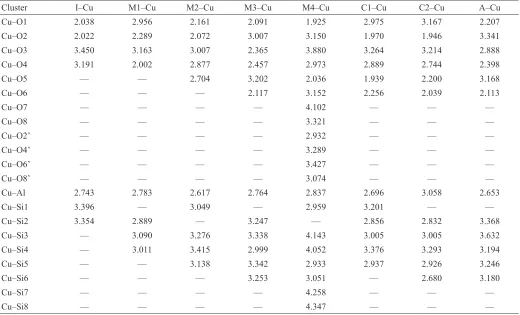
Table 4 contains the bond lengths for all of the Cu-ZSM-11 cluster models. The three smallest Cu–O bond lengths (1.925, 1.939, and 1.946 Å) belong to the M4–Cu, C1–
6 J. Mex. Chem. Soc. 2017, 61(1) Mehdi Ghambarian et al.
was observed for the M2–Cu site. However, the r(Cu–Al) in
C2–Cu was the maximum r(Cu–Al) observed and the other
r(Cu–O) values in C2–Cu were large. The results of Table
4 can also show that no perfect symmetrical configurations (with identical Cu–O bond lengths) as observed in the case of Zn cation interactions with an all-silica MEL structure [57] are found here for the CuZ clusters because of the pres-ence of an Al atom in the ring sites. Table 4 also signifies a
correspondence between the values of r(Cu–O) and r(Cu–
Si), which is anticipated.
As expressed by Šponer et al. [38], the coordination of metal cations such as Cu+ in zeolites involves an electronic
per-turbation of the charge distribution over the binding sites where the extent of charge transfer should correlate with the formal charge of the ion and the bond length parameters. Such a
correlation was reported previously for the interactions of Zn2+
adsorbed on a silicalite-2 structure [57]. Comparing the data reported in Tables 3 and 4 along with an account of the coordi-nation numbers in Fig. 2, however, no well-developed correla-tions could be obtained here between the bond length parameters
and the NBO charge data including q(Cu–O). Instead, some
excellent correlations are displayed between some of the bond critical point properties and the corresponding bond lengths (Fig. 3). All of the Cu–O bonds recognized by the QTAIM ap-proach were used to assert these correlations. The exchange and binding energies and the reported HOMO, LUMO, and HOMO–LUMO gap were independent of the bond length or the bond critical point data. The third (positive) eigenvalue of the Hessian matrix of the electron distribution at the BCP de-scribes the local depletion of the electron density in the binding
Table 2. Topological properties of the Cu–O bonds at the bond critical point for the investigated Cu/ZSM-11 catalysts at the B3LY-P/6-311+G* level.
Cluster Cu–O1 Cu–O2
ρ λ1 λ2 λ3 ∇2ρ ρ λ1 λ2 λ3 ∇2ρ
I–Cu 0.069 –0.084 –0.083 0.528 0.362 0.072 –0.089 –0.088 0.561 0.384
M1–Cu — — — — — 0.043 –0.043 –0.040 0.242 0.159
M2–Cu 0.055 –0.061 –0.056 0.361 0.245 0.065 –0.077 –0.074 0.477 0.326
M3–Cu 0.062 –0.074 –0.070 0.450 0.306 — — — — —
M4–Cu 0.090 –0.125 –0.123 0.772 0.523 — — — — —
C1–Cu — — — — — 0.080 –0.104 –0.104 0.681 0.473
C2–Cu — — — — — 0.085 –0.115 –0.114 0.735 0.505
A–Cu 0.049 –0.052 –0.047 0.306 0.207 — — — — —
Cu–O3 Cu–O4
ρ λ1 λ2 λ3 ∇2ρ ρ λ1 λ2 λ3 ∇2ρ
I–Cu — — — — — — — — — —
M1–Cu — — — — — 0.077 –0.098 –0.095 0.600 0.408
M2–Cu — — — — — 0.014 –0.011 –0.008 0.064 0.045
M3–Cu 0.034 –0.035 –0.032 0.196 0.129 0.029 –0.028 –0.025 0.155 0.102
M4–Cu — — — — — — — — — —
C1–Cu — — — — — — — — — —
C2–Cu — — — — — 0.019 –0.015 –0.007 0.084 0.062
A–Cu 0.013 –0.010 –0.005 0.059 0.044 0.032 –0.032 –0.030 0.178 0.116
Cu–O5 Cu–O6
ρ λ1 λ2 λ3 ∇2ρ ρ λ1 λ2 λ3 ∇2ρ
I–Cu — — — — — — — — — —
M1–Cu — — — — — — — — — —
M2–Cu 0.019 –0.016 –0.008 0.088 0.064 — — — — —
M3–Cu — — — — — 0.059 –0.067 –0.064 0.410 0.279
M4–Cu 0.068 –0.083 –0.083 0.544 0.377 — — — — —
C1–Cu 0.088 –0.118 –0.118 0.743 0.506 0.046 –0.046 –0.042 0.269 0.181
C2–Cu 0.050 –0.052 –0.047 0.316 0.217 0.072 –0.086 –0.084 0.539 0.369
Cluster modeling and coordination structures of Cu+ ions in Al-incorporated Cu-MEL catalysts – a density functional theory study 7
region. As evident, this eigenvalue which is a measure of the curvatures parallel to the bond path has a descending power-law relationship with the corresponding Cu–O bond length. This inverse interconnection reflects [105] an increase in the force constant of the bond that makes the shorter Cu–O bonds more resistant to the changes due to compactions. Both of the elec-tron density and its Laplacian show similar power-type correla-tions with the Cu–O bond length in the metal–zeolite system at hand, indicating that the electronic features of the Cu–O bonds in this system can be adequately determined from the bond dis-tances (Fig. 3). The calculated bond lengths evidently correlate with |λ1,2| as well, which is not shown here for the sake of
brevity. Similar trends have been reported for the Si–O bonds in silica polymorph materials [105-106], hydrogen bonds in cyclic dimers [107], O–H interactions between interactions between
N-butylpyridinium nitrate and thiophenic compounds [108],
and Ni–Ni and Ni–S bonds [109].
Table 5 lists some important bond angles for the investi-gated sites. As evident from this table, the O–Cu–O bond angles vary from the largest to the smallest in the following order: C2–Cu, C1–Cu, M4–Cu, M3–Cu, M2–Cu, M1–Cu, and I–Cu. As also evidenced from the O–O–Cu bond angles
in C2–Cu through M2–Cu, the Cu+ ion prefers an
arrange-ment as more flattened as possible in the available ring sites.
Table 3. Partial charge of the Cu ion, Al atom and lattice O atoms in the investigated cluster models of Cu/ZSM-11 at the B3LYP/6-311+G* level.
Cluster Cu Al O1 O2 O3 O4 O5 O6 O7 O8 O2’ O4’ O6’ O8’
I–Cu 0.898 2.109 –1.367 –1.376 –1.135 –1.139 — — — — — — — —
M1–Cu 0.835 2.047 –1.272 –1.275 –1.243 –1.351 — — — — — — — —
M2–Cu 0.816 2.017 –1.320 –1.380 –1.267 –1.276 –1.269 — — — — — — —
M3–Cu 0.781 2.069 –1.359 –1.273 –1.279 –1.269 –1.269 –1.347 — — — — — —
M4–Cu 0.731 2.077 –1.328 –1.322 –1.281 –1.275 –1.294 –1.272 –1.280 –1.260 –1.332 –1.267 –1.262 –1.283
C1–Cu 0.672 2.055 –1.270 –1.307 –1.246 –1.282 –1.360 –1.347 — — — — — —
C2–Cu 0.672 2.078 –1.269 –1.316 –1.248 –1.269 –1.299 –1.367 — — — — — —
A–Cu 0.792 2.069 –1.341 –1.287 –1.265 –1.279 –1.281 –1.345 — — — — — —
Table 4. Copper–framework atom bond lengths obtained for the optimized Cu/ZSM-11 cluster models (Å) at the B3LYP/6-31+G* level.
Cluster I–Cu M1–Cu M2–Cu M3–Cu M4–Cu C1–Cu C2–Cu A–Cu
Cu–O1 2.038 2.956 2.161 2.091 1.925 2.975 3.167 2.207
Cu–O2 2.022 2.289 2.072 3.007 3.150 1.970 1.946 3.341
Cu–O3 3.450 3.163 3.007 2.365 3.880 3.264 3.214 2.888
Cu–O4 3.191 2.002 2.877 2.457 2.973 2.889 2.744 2.398
Cu–O5 — — 2.704 3.202 2.036 1.939 2.200 3.168
Cu–O6 — — — 2.117 3.152 2.256 2.039 2.113
Cu–O7 — — — — 4.102 — — —
Cu–O8 — — — — 3.321 — — —
Cu–O2’ — — — — 2.932 — — —
Cu–O4’ — — — — 3.289 — — —
Cu–O6’ — — — — 3.427 — — —
Cu–O8’ — — — — 3.074 — — —
Cu–Al 2.743 2.783 2.617 2.764 2.837 2.696 3.058 2.653
Cu–Si1 3.396 — 3.049 — 2.959 3.201 — —
Cu–Si2 3.354 2.889 — 3.247 — 2.856 2.832 3.368
Cu–Si3 — 3.090 3.276 3.338 4.143 3.005 3.005 3.632
Cu–Si4 — 3.011 3.415 2.999 4.052 3.376 3.293 3.194
Cu–Si5 — — 3.138 3.342 2.933 2.937 2.926 3.246
Cu–Si6 — — — 3.253 3.051 — 2.680 3.180
Cu–Si7 — — — — 4.258 — — —
8 J. Mex. Chem. Soc. 2017, 61(1) Mehdi Ghambarian et al.
No exact connection could be established between the ar-rangement of the Cu ion and the degree of coordination or the reactivity of the CuZ cluster in terms of the HOMO– LUMO gaps.
Table 6 reports the enthalpy and Gibbs free energy change for the exchange reaction, Eq. (2), and the energy for the metal ion binding as in Eq. (1). As evident, the enthalpy of Cu graft-ing for the investigated clusters ranged from 108.93 kcal/mol (M3–Cu) to 141.14 kcal/mol (M1–Cu). This indicates that the ion exchange on all of the acidic sites of ZSM-11 would be endothermic. Overall, the sequence of the thermodynamic priv-ilege for the ion exchange is M3 > C1 > I > A > C2 > M2 > M4 > M1 as found from the Gibbs free energies of the exchange reaction. The most thermodynamically favored cluster to be formed is therefore the M3–Cu site followed by C1–Cu and I– Cu which cover coordination numbers of 2–4. This means that the thermodynamic favorability of the exchange reaction is not determined by the final coordination of the cation. Moreover, the data show that the ion exchange reaction is non-sponta-neous at 298 K and 1 atm. Comparing the alpha site with C2 as its counterpart from ZSM-11 in terms of geometry, one can in-terestingly notice their close favorability for a copper/proton
Table 5. Selected bond angles for the Cu/ZSM-11 clusters (in de-grees) at the B3LYP/6-31+G* level.
Cluster Angle (°) Angle (°)
I–Cu O1–Cu–O2 77.97 — —
M1–Cu O2–Cu–O4 100.48 — —
M2–Cu O2–Cu–O5 110.88 O2–O4–Cu 55.82
M3–Cu O1–Cu–O4 147.53 O1–O2–Cu 43.61
M4–Cu O1–Cu–O5 153.05 O1–O2–Cu 37.61
C1–Cu O2–Cu–O5 158.26 O1–O4–Cu 29.78
C2–Cu O2–Cu–O5 166.10 O1–O4–Cu 29.11
A–Cu O3–Cu–O6 145.06 O3– O6–Cu 20.26
Fig. 3. Significant correlations observed between the electronic features and structural properties of the molecular models of the Cu-MEL zeolite catalyst. The fitting curves obeyed power-law functions with the exponents of –6.3, –6.2, and –4.6 for the correlations of λ3, ρbcp,
and ∇2ρ
Cluster modeling and coordination structures of Cu+ ions in Al-incorporated Cu-MEL catalysts – a density functional theory study 9
exchange (Table 6). The results presented here also show that the cage-like locations with the Al atom at the T1 position are less prepared for a copper exchange than those with Al atom at the T6 position. As far as the most accessible sites for a coming molecule are concerned, however, both I and M3 positions are readily exchanged.
Table 6. The exchange and binding energies of the Cu+ ions in the
active sites of ZSM-11 at the B3LYP/6-311+G* level [Please see re-actions (1) and (2) in the text, respectively, for the calculation of the binding and exchange energies].
Cluster Population (%) (kcal/mol)ΔEb (kcal/mol)ΔHex (kcal/mol)ΔGex
I–Cu 48.1 174.01 121.11 128.73
M1–Cu 11.1 146.99 141.14 149.01
M2–Cu 14.8 173.04 129.29 138.73
M3–Cu 7.4 195.45 108.93 114.47
M4–Cu 7.4 161.24 132.41 144.08
C1–Cu 5.6 a 174.99 120.47 127.11
C2–Cu 5.6 a 158.08 128.11 137.82
Overall b 100 170.68 124.84 132.96
A–Cu — 179.71 126.17 133.32
a The population of the C positions was equally distributed between
the C1–Cu and C2–Cu sites.
b The overall values were obtained assuming a uniform monolayer
coverage on all sites considering the population of each site as its weight factor.
Also listed in Table 6 are the overall values of the ener-getic data which were obtained through averaging of the indi-vidual values of the available sites according to their population contributions in the zeolite matrix. The populations were found by counting the number of each site in a doubled unit cell. Table 6 also reports the Cu+ binding energy for the studied
CuZ clusters. As evident, the binding energy ranged from 146.99 to 195.45 kcal/mol where the highest and the lowest values were assigned to the M3–Cu and M1–Cu sites, re-spectively. This strongest binding is followed by the A–Cu, C1–Cu and I–Cu sites, with the Cu–Z dissociation energies of 179.71, 174.79, and 174.01 kcal/mol, respectively, such that the overall sequence becomes M1 < C2 < M4 < M2 < I < C1 < A < M3. Indeed, the Cu+ ion is most strongly bound
in the 6T rings of the zeolite network. As mentioned previ-ously, the 6T ring of the ZSM-11 structure (M3) is also the most reactive position to the Cu cation and a relatively small reaction heat is required for an exchange at this location. These findings partially resemble the data reported
previ-ously by Nachtigallova et al. [31] for the Cu2+ ion which
was observed to bind more strongly to the 6T-rings of an Al-containing MFI structure. Similar findings have been re-ported by Rejmak et al. [18] for the exchanged Cu+ ions in an
Al-incorporated faujasite. As far as we know, however, the relatively similar preference of the copper ion for the intersec-tion sites of ZSM-11 is a new finding. The relatively strong bindings offered by the intersection sites to the impregnat-ing copper ion finds more importance when takimpregnat-ing into consideration that this site constitutes a large portion of the available positions of the zeolite structure (Table 6). The di-coordinated Cu+ ions at the intersection sites have a high
accessibility and are expected to be involved in the catalytic activity of the copper-exchanged zeolite [28]. However, the overall behavior of the solid matrix as estimated from a pop-ulation average of the energetic data lies between the values obtained for M3–Cu and I–Cu when the exchange enthalpies are compared and would be closest to the corresponding val-ues of M2–Cu, I–Cu, and C1–Cu in terms of the binding energy. Therefore, the mentioned sites might be chosen as a representative of the whole material in possible required simplifications depending upon which energetic property has to be assessed.
All but one of the sites available in the ZSM-11 struc-ture (M3) provide a weaker binding for Cu+ than the alpha
site (A). However, both the Cu+/H+ exchange enthalpies of
the A–Cu site (126.17 kcal/mol) and that of a typical ZSM-11 matrix (124.84 kcal/mol) are interestingly higher than the exchange energies of 43.0–102.2 kcal/mol calculated for
Cu2+ ions exchanged to H–ZSM-5 [31] but closer to other
values reported earlier such as a 96.3–124.6 kcal/mol for Cu+ in ZSM-5 by Blint [46]. The observed differences can be
only partially attributed to the oxidation state of the copper in the work by Nachtigallova et al. [31] which replaces two
protons with a strongly bound Cu2+ ion as a [Z–O]–Cu–[O–
Z] complex and, therefore, reduces the exchange energy with respect to that of a Cu+ ion. The aliasing effect of the
computational method employed is worth attention as well which calls for further theoretical research in this respect. However, the main source of difference might be the effect of framework type assuming that the effects of method and the cluster size are negligible.
The binding energies reported in Table 6 can also be compared against similar magnitudes from the literature
in-cluding 482–715 kcal/mol for the optimized Cu2+
coordina-tion in ZSM-5 [24], about 139 kcal/mol for Cu+ ions in
ZSM-5 [28], 109.6–136.9 kcal/mol for Cu+ ions in ZSM-5
[110], 169.5 kcal/mol for Cu–Y [14], 106.1–146.7 kcal/mol for Cu+ binding in FER [29], and a 163.9 kcal/mol binding
energy for Cu+ in ZSM-5 [15]. As can be seen, all of the
previously reported data for the binding energy of Cu+ ion
particularly the last report are very close to the range ob-tained here for the various sites of ZSM-11. The
correspond-ing magnitudes reported by Groothaert et al. [24] for Cu2+
ions bound to the oxide surface of ZSM-11 with two Al at-oms incorporated have been significantly larger than those
of Cu+ ion. Rejmak et al. [18] have also found that the
10 J. Mex. Chem. Soc. 2017, 61(1) Mehdi Ghambarian et al. confirm our discussion just presented above to explain the
source of differences in the energetic data.
Also worth noting is that the average of the energetic data for a Cu-ZSM-11 catalyst is slightly smaller than that of the alpha site from a Cu-ZSM-5 catalyst. It might be con-cluded with some caution that the chemical or geometrical nature of the available sites in ZSM-11 would only partially account for the experimentally observed higher sorption power and reactivity of the MEL structure in the
decomposi-tion of NO and N2O molecules with respect to those of
Al-containing MFI zeolites (if can be compared on a sound basis). Then, it appears up to now that the main factor which plays the role in this privilege is the better accessibility of the reactant/template molecules to the available sites. How-ever, the superior activity of Cu-ZSM-11 relative to Cu-ZSM-5 in direct N2O decomposition has been attributed to both a
high-er accessibility and a betthigh-er reducibility of Cu+ species,
imply-ing that the framework topologies of the zeolites would influence the reducibility of Cu+ species present on the
cop-per-ion-exchanged zeolites [55]. A more precise evaluation of the two catalysts requires, at least, a similar systematic study of the MFI zeolite to be implemented with the energy of binding or the exchange energy averaged over the available sites as it was conducted for MEL, however. Further works in the same line are then required to gain a more detailed and deeper insight into the mechanistic role of the active site for the design and development of selective catalysts.
Conclusion
This paper investigated the geometrical, electronic, and ener-getic properties of Cu+ monoatomic centers in Cu-ZSM-11
cat-alysts using the cluster modeling approach through density functional theory. Total of 7 sites for Cu+ exchange to
H–ZSM-11 were considered and compared with an alpha-site from an MFI structure. The coordination numbers differed from two to four, with the former observed at the intersections, the 4T-rings, and the basket-like positions of ZSM-11 and the latter in the other ring sites and cage-like locations. The HOMO–LUMO energy gaps of the copper-exchanged clusters fell into the range of 3.31–5.15 eV at the TD-BH&HLYP/6-311+G* lev-el. Overall, the I–Cu and M1–Cu clusters were the highest polarizable sites and M4–Cu was found to be the most stable site as indicated from the HOMO–LUMO gaps. In total, the QTAIM results manifested closed-shell electrostatic interac-tions for all of the sites. The charge transfer varied from 0.10 e to 0.33 e with the highest value belonging to the cage-like positions which provided weakly bounded tri- and tetra-co-ordinated planar configurations with the nearest-neighbor ox-ygen atoms of the surface. Excellent power-type correlations were observed between the electronic properties and the bond distances. The exchange enthalpy ranged from 108.93 to 141.14 kcal/mol. The 6T-ring was the most readily ex-changeable site while the 4T-ring site was the least favorable thermodynamically. As far as the most accessible sites for a
coming molecule are concerned, both M3 and I positions are adequately readily exchanged, however. The binding energy was found to alter in the range of 146.99–195.45 kcal/mol. As revealed from the energetic data, the Cu+ ion most
strong-ly bound in the 6T rings followed by the cages and the inter-sections of the zeolite matrix.
Computational method
The cluster modeling method was employed for the molecular simulations. As a common approach to mimic the influence and rigidity of the surrounding framework [4, 15, 20, 24, 31, 33, 110-120], all of the dangling bonds at the boundaries of every cluster were terminated by link hydrogen atoms placed in the same bond direction as would be found in a perfect crystal for the next oxygen or silicon atom removed from the cluster. The boundary H atoms were placed at 0.960 and 1.550 Å from the oxygen and silicon atoms, respectively, with the values determined from preliminary optimizations. In total, the size of the clusters ranged from a T5 to a T10 unit. Here, every cluster model incorporates an aluminum atom that requires a compen-sating ion on one of the adjacent oxygen atoms. The crystallo-graphic data for the frameworks of ZSM-11 and ZSM-5 can be found elsewhere [121-122]. In addition to the exchange posi-tions introduced in Fig. 1, a separate fragment from an MFI structure was also modeled for comparison. This cluster was taken from an alpha position —an effective 6T-ring on the wall of straight channel, formed by two interconnecting 5T-rings, and readily available to reagents— which appears to be of spe-cial interest with respect to catalytic actions [17, 20, 24, 119-120, 123-125]. The exchanged/compensating ion was taken here to be a Cu+ or an H+ ion as the key element of the active
site. These cluster models are adequate to explain the interac-tions of the metal ion with the oxide surface within a precise local picture of the active site [33, 126-127]. A two-step opti-mization procedure was used. At the first stage, all of the atoms in the cluster except the Cu ion, proton, and Al atom were fixed during the geometrical optimizations to simply represent the mechanical embedding of the solid matrix. At the second step, the nearest interacting oxygen atoms were also relaxed to include possible alterations in the skeletal vibrations due to the Al substitution or the Cu exchange.
The molecular geometries of the structures were opti-mized using the functional B3LYP method [86-87, 128] which has been reported to yield reliable data on both oxides and metal clusters [4, 23, 129]. The Pople’s standard 6-31+G* basis set [130-133] was employed for all of the atoms. The single-point calculations were implemented with a larger ba-sis set at B3LYP/6-311+G* [134] for improved energetic data. Calculations were also made with the M06/Def2– TZVP method. The atomic charges for the optimized struc-tures were obtained through the natural bond orbital (NBO) calculations. The energetic calculations were performed on the zeolite surface (Z–) excluding the metal ion (Cu+) to
Cluster modeling and coordination structures of Cu+ ions in Al-incorporated Cu-MEL catalysts – a density functional theory study 11
every site [24], which was defined as the energy of the fol-lowing reaction with a negative sign [18, 29, 110]:
Cu–Z → Cu+ + Z– (1)
The Cu+/H+ exchange enthalpy (ΔH
ex) was defined as the
en-thalpy change of the reaction [31]:
H–Z + Cu+ → Cu–Z + H+ (2)
where symbols Cu–Z and H–Z refer to the copper-exchanged cluster and the acidic surface of the zeolite, respectively.
The NBO population [135] and the QTAIM [98-99, 136-139] assessments were done at the B3LYP/6-311+G* level of theory. The calculations were implemented using NWChem 6.5 [140] and Multiwfn 3.3.8 [141]. The graphi-cal outputs were drawn by the molecular visualization pro-gram Mercury 3.3 [142-145].
References
1. Smeets, P. J., et al. Inorganic Chemistry. 2010, 49, 3573-3583. 2. Delabie, A., et al. European Journal of Inorganic Chemistry.
2002, 2002, 515-530.
3. Pidko, E. A.; Hensen, E. J. M.; van Santen, R. A. Proceedings of the Royal Society A: Mathematical, Physical and Engineering Sci-ence. 2012, 468, 2070-2086.
4. Ferullo, R. M., et al. Journal of Molecular Structure: THEO-CHEM. 2006, 769, 217-223.
5. Woertink, J. S., et al. Proc Natl Acad Sci USA. 2009, 106, 18908-18913.
6. Gao, Y.; Kispert, L. D. Dalton Transactions. 2014, 43, 6221-6228. 7. Davidová, M., et al. The Journal of Physical Chemistry B. 2004,
108, 13674-13682.
8. Solans-Monfort, X., PhD Dissertation, in: Departament de Quími-ca, Universitat Autònoma de Barcelona, Bellaterra, 2003. 9. Sengupta, D., et al. Catal Lett. 2001, 74, 193-199.
10. Kim, S. J., et al. Journal of Nanoscience and Nanotechnology.
2010, 10, 147-157.
11. Kustova, M. Y., et al. Applied Catalysis B: Environmental. 2006, 67, 60-67.
12. Mitra, S., MSc Thesis, in: Department of Chemical Engineering, National Institute of Technology, Rourkela, 2014.
13. Sierraalta, A.; Añez, R.; Brussin, M.-R. Journal of Catalysis.
2002, 205, 107-114.
14. Sung, C.-Y., et al. The Journal of Physical Chemistry C. 2011, 116, 3561-3575.
15. Treesukol, P.; Limtrakul, J.; Truong, T. N. The Journal of Physical Chemistry B. 2001, 105, 2421-2428.
16. Ahmed, A. H. Journal of Applied Sciences Research. 2007, 3, 1663-1670.
17. Pidko, E.; Kazansky, V. Physical Chemistry Chemical Physics.
2005, 7, 1939-1944.
18. Rejmak, P.; Sierka, M.; Sauer, J. Physical Chemistry Chemical Physics. 2007, 9, 5446-5456.
19. Berthomieu, D., et al. The Journal of Physical Chemistry B. 2001, 105, 1149-1156.
20. Broclawik, E., et al. Catalysis Today. 2002, 75, 353-357. 21. Bulanek, R., et al. Physical Chemistry Chemical Physics. 2004, 6,
2003-2007.
22. Davidová, M., et al. The Journal of Physical Chemistry B. 2003, 107, 2327-2332.
23. Ferullo, R. M.; Castellani, N. J. Journal of Molecular Catalysis A: Chemical. 2004, 221, 155-162.
24. Groothaert, M. H., et al. Physical Chemistry Chemical Physics.
2003, 5, 2135-2144.
25. Hagelberg, F.; Xiao, C.; Lester, W. A. Physical Review B. 2003, 67, 035426-1-035426-9.
26. Kamarudin, K. S. N., PhD Dissertation, Universiti Teknologi Malaysia, 2009.
27. Kustova, M. Y., et al. Catalysis Communications. 2006, 7, 705-708. 28. Morpurgo, S.; Moretti, G.; Bossa, M. Theor Chem Account. 2012,
131, 1-12.
29. Nachtigall, P.; Davidová, M.; Nachtigallová, D. The Journal of Physical Chemistry B. 2001, 105, 3510-3517.
30. Nachtigall, P.; Nachtigallová, D.; Sauer, J. The Journal of Physical Chemistry B. 2000, 104, 1738-1745.
31. Nachtigallova, D.; Nachtigall, P.; Sauer, J. Physical Chemistry Chemical Physics. 2001, 3, 1552-1559.
32. Pierloot, K., et al. Physical Chemistry Chemical Physics. 2001, 3, 2174-2183.
33. Pietrzyk, P. The Journal of Physical Chemistry B. 2005, 109, 10291-10303.
34. Ramstad, A. L.; Mikkelsen, Ø. Journal of Molecular Structure.
2004, 697, 109-117.
35. Rice, M. J.; Chakraborty, A. K.; Bell, A. T. The Journal of Physi-cal Chemistry B. 2000, 104, 9987-9992.
36. Rice, M. J.; Chakraborty, A. K.; Bell, A. T. Journal of Catalysis.
2000, 194, 278-285.
37. Sierraalta, A.; Bermudez, A.; Rosa-Brussin, M. Journal of Molec-ular Catalysis A: Chemical. 2005, 228, 203-210.
38. Šponer, J. E., et al. The Journal of Physical Chemistry B. 2001, 105, 8285-8290.
39. Rodriguez-Santiago, L., et al. Journal of the American Chemical Society. 1998, 120, 1545-1551.
40. Sengupta, D., et al. Catal Lett. 1999, 61, 179-186.
41. Schneider, W. F., et al. The Journal of Physical Chemistry B. 1998, 102, 3692-3705.
42. Tajima, N., et al. Physical Chemistry Chemical Physics. 1999, 1, 3823-3830.
43. Hass, K. C.; Schneider, F. W. Physical Chemistry Chemical Phys-ics. 1999, 1, 639-648.
44. Schneider, W. F., et al. The Journal of Physical Chemistry B. 1997, 101, 4353-4357.
45. Goodman, B. R., et al. The Journal of Physical Chemistry B. 1999, 103, 10452-10460.
46. Blint, R. J. The Journal of Physical Chemistry. 1996, 100, 19518-19524.
47. Yokomichi, Y., et al. The Journal of Physical Chemistry. 1996, 100, 14424-14429.
48. Ramprasad, R., et al. The Journal of Physical Chemistry B. 1997, 101, 1940-1949.
49. Schneider, W. F., et al. The Journal of Physical Chemistry. 1996, 100, 6032-6046.
50. Hass, K. C.; Schneider, W. F. The Journal of Physical Chemistry.


![Figure 1. Geographic location of tailing contaminated soil in Hidalgo del Parral, Chihuahua [4].](https://thumb-us.123doks.com/thumbv2/123dok_us/8872315.1814729/23.612.46.297.465.717/figure-geographic-location-tailing-contaminated-hidalgo-parral-chihuahua.webp)