Iranian Chemical Society
Anal. Bioanal. Chem. Res., Vol. 7, No. 2, 161-170, June 2020.
Highly Electrocatalytic Oxidation of Bisphenol A at Glassy Carbon Electrode
Modified with Metal-organic Framework MOF-508a and its Application in Real
Sample Analysis
Peyman Mohammadzadeh Jahani
a, Somayeh Tajik
b,*, Reza Alizadeh
c, Mojtaba Mortazavi
dand Hadi
Beitollahi
e,*
a
School of Medicine Bam University of Medical Sciences, Bam, Iran b
Research Center for Tropical and Infectious Diseases, Kerman University of Medical Sciences, Kerman, Iran c
Department of Chemistry, Faculty of Science, Qom University, Qom, Iran d
Department of Biotechnology, Institute of Science, High Technology & Environmental Science, Graduate University of Advance Technology, Kerman, Iran
e
Environment Department, Institute of Science and High Technology and Environmental Sciences, Graduate University of Advanced Technology, Kerman, Iran
(Received 18 May 2019 Accepted 11 August 2019)
The use of MOF-508a as a sensing component for the precise discerning of bisphenol A via the electrochemical technique, and its synthesis by a simple method are reported in the present study. Scanning electron microscopy (SEM) and x-ray diffraction (XRD) were applied to describe the MOF-508a’s composition and structure. In addition, MOF-508a was employed so that the glassy carbon electrode could be altered for the electrochemical oxidation of bisphenol A. The results were indicative of illustration of obvious oxidation peak with lowering over-potential by the designed MOF-508a/GCE. In addition, there was a greater signal response compared to the unmodified electrode which was primarily attributed to the large active surface area provided by MOF-508a. As such, this process led to a considerable improvement in the electrochemical surface area. Moreover, adding the elevating bisphenol A concentration resulted in a severe elevation in the anodic peak, presented by the measurements of differential pulse voltammetry (DPV). Furthermore, excellent sensitivity (0.0564 µA µM-1) with a low limit of detection (0.03 µM), a wide linear range (0.1-700.0 µM), and a high selectivity were found for the analytical performance of the modified electrode.
Keywords: MOF-508a, Glassy carbon electrode, Bisphenol A, Electrochemical method, Modified electrode
INTRODUCTION
In the food and analytical chemistry, significant attention has been paid to the precise and sensitive discovery of contaminants in food samples [1]. In the synthesis of polycarbonate (PC) and epoxy resins, bisphenol A (BPA) is applied specifically and broadly as a monomer. In addition, it is exploited to manufacture plastics along with other compounds [2,3]. BPA normally exists in food
*Corresponding authors. E-mail: tajik_s13652yahoo.com
;
packages, metal food containers, the lining of beverage
cans, and clear shatterproof plastics exploited in rigid water bottles, tableware, small kitchen accessories, and baby bottles [4,5]. As such, the health of people might be
negatively affected by BPA penetrating into the drinking
water and food from product packaging [6]. Some of the adverse impacts of low volumes of BPA include the
formation of reproductive disorders, (such as the impaired brain development in humans, birth defects, and reduced sperm quality level) and different cancer types (such as
Mohammadzadeh Jahani et al./Anal. Bioanal. Chem. Res.,Vol. 7, No. 2, 161-170, June 2020.
to diminish BPA contamination, it is vital to find an effective method to detect and degrade this compound.
Currently, electrochemical methods, gas
chromatography, high performance liquid chromatography, spectrometry, fluorescence, mass, and chemiluminescence have been applied to determine BPA level in various samples [8-15]. However, the most efficient results for determining some environmental, pharmaceutical, and
biological compounds have been obtained by
electrochemical sensing techniques, which have many advantages, including the possibility to perform on-site measurement, portability, simple sample preparation, fast response, high sensitivity and low cost [16-27]. Given the fact that BPA encompasses two electrochemical-active phenolic hydroxyl groups, it must have electrochemical activity. As such, electrochemistry method can be employed to measure BPA in various samples.
On the other hand, one of the disadvantages of electrochemical sensors for determining the BPA volume is the low oxidation/reduction signals of electroactive compounds. Therefore, in order to enhance the sensitivity of analytical sensors in analysis, modified electrochemical sensors are applied by electrochemists [28]. Owing to their precise characteristics, such as good stability, high effective surface-to-volume ratio, good biocompatibility, unique catalytic activity, and high conductivity, nanomaterials are currently as one of the most exhilarating forefront fields in analytical chemistry. As such, the electron transfer between redox centers in the analytic and electrode surfaces is improved by nanomaterials acting as a “modifier” [29-39].
In electrochemical sensors, glassy carbon, which is an electrically conductive and gas-impermeable material and extremely resistant to chemical attack, has been employed as a working electrode. This is an appropriate material in high voltages ranging from about +1.2 to -0.8 volts vs. S.C.E. in acid medium [40-43].
Because of their special physical and chemical characteristics, such as high thermal and chemical stability, large surface area, ultrahigh porosity, and tunable structure, metal organic frameworks (MOFs), which are a type of porous material initially comprised of metal ions and organic ligands, have been recently assessed in an extensive research field, including drug delivery, sensors, gas storage and separation, and catalysis [44-46]. In addition,
researchers have mainly focused on the design and synthesis of various forms of MOFs for electroanalysis application.
In this study, we attempted to detect BPA by
voltammetry methods through developing an
electrochemical sensor based on 508a/GCE. MOF-508a is the microporous compound Zn-(BDC) (4,4’-Bipy)0.5, where BDC is1,4-benzenedicarboxylic acid and 4,4’-Bipy is 4,4’-bipyridine. The BPA’s electrochemical response was promoted by excellent electron transfer capability and the large surface area of MOF-508a. In addition, high sensitivity and proper reproducibility were demonstrated by the proposed sensor, which was effectively used to find BPA in real samples with suitable recoveries.
EXPERIMENTAL
Chemicals and Apparatus
Electrochemical measurements were done by an autolab potentiostat/galvanostat (PGSTAT 302N, Eco Chemie, the Netherlands). Experimental conditions were controlled through general purpose electrochemical system (GPES) software. A conventional three-electrode cell was used at 25 ± 1 °C. An Ag/AgCl/KCl (3.0 M) electrode, a platinum wire, and the MOF-508a/GCE were used as the reference, auxiliary and working electrodes, respectively.
The solutions were freshly prepared with double distilled water. Bisphenol A and all other reagents were of analytical grade and were purchased from Merck chemical company (Darmstadt, Germany). The buffer solutions were prepared from orthophosphoric acid and its salts in the pH range of 2.0-9.0.
Synthesis of MOF-508a
It was synthesized according to the literatures [47]. Briefly, by dissolving benzne dicarbocsilic acid, bypyridin and zinc nitrate with ratio of 1:0.5:1 in 50 ml of DMF, MOF-508a was synthesized. Afterwards, the solution was refluxed at 150 °C for 24 h. Following that, DMF was used to filter and wash the precipitated white powder. In the next stage, the desiccator was applied to dry the powder at the room temperature.
Preparation of the Electrode
electrode. A stock solution of MOF-508a in 1 ml of aqueous solution was prepared by distributing 1 mg of MOF-508a via ultra-sonication for 30 min, whereas 5 µl of aliquots of the MOF-508a suspension solution was cast on carbon working electrodes. Then, we waited until the solvent is evaporated at room temperature.
Preparation of Real Samples
Fifteen cans of each group of foods (stew and water bottle), all bearing the same batch number and near their expiration date, were purchased from local shops in Kerman. The distribution of types of samples tested in this survey was similar across Iran. Purchasing the samples was carried out in December 2018. Samples were stored and sealed at room temperature. After opening the cans, the total contents of each can were homogenized and an aliquot was taken for analysis. The remaining contents of each can were then frozen and stored in a freezer at 4 °C. Water samples were analyzed without any pretreatment for real sample analysis.
RESULTS AND DISCUSSIONS
Morphology and Structure of MOF-508a
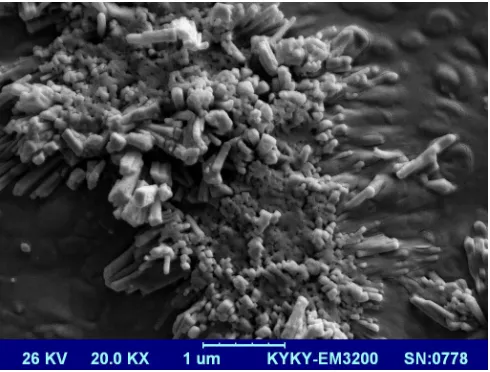
The morphology of as-synthesized product was characterized by scanning electron microscopy (SEM) (Fig. 1). The SEM image of MOF-508a shows the nano rods of synthesized MOF below 100 nm. Also, the nano rods
were aligned successfully. The result shows a high surface area is achieved because of nano porous of MOF structure and nano rods of MOF-508a.
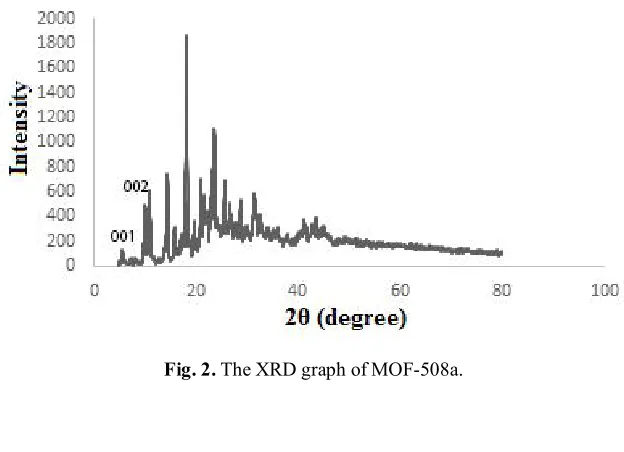
The powder XRD pattern of MOF-508a is illustrated in Fig. 2. The result shows some sharp peaks that confirm the formation of nano structure MOF-508a. Also, the comparison of XRD pattern of synthesized MOF-508a with simulated patterns in the literature demonstrates the D-MOF-1 has been synthesized correctly.
Electrochemical Behaviour of BPA at the Surface
of Different Electrodes
The electrochemical behaviour of BPA depends on the pH value of the aqueous solution (Fig. 3). Thus, it is essential to optimize the solution pH in order to gain more useful results for electro-oxidation of BPA. For doing so, BPA electrochemical behaviour was examined in 0.1 M PBS at distinct pH numbers (2.0-9.0) on the MOF-508a/GCE surface by voltammetry. The results indicated more advantageousness of neutral conditions for BPA electro-oxidation at MOF-508a/GCE surface in comparison to the basic or acidic medium (Fig. 4). Here, pH 7.0 was selected as an optimal pH for BPA electro-oxidation on the MOF-508a/GCE surface.
Mohammadzadeh Jahani et al./Anal. Bioanal. Chem. Res.,Vol. 7, No. 2, 161-170, June 2020.
Fig. 2. The XRD graph of MOF-508a.
Fig. 3. Electrochemical oxidation mechanism of BPA at the surface of MOF-508a/GCE.
than the unchanged GCE. Furthermore, MOF-508a/GCE exhibits very high anodic peak currents for BPA oxidation than that of the unchanged GCE. This showed a significant improvement of the electrode performance toward BPA oxidation by changing the constant GCE with MOF-508a. Also, MOF-508a/GCE in the absence of BPA in 0.1 M PBS pH 7.0 (Curve c) showed no peak current.
Impact of Scan Rate
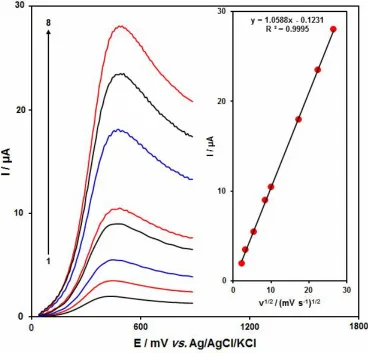
The impact of the rates of potential scan on BPA oxidation current was investigated (Fig. 6). Findings indicated induction of enhancement in the current of the peak by the increased potential scan rate. Additionally,
diffusion in oxidation processes was monitored, as inferred by the linear dependence of the anodic peak current (Ip) on
the square root of the potential scan rate (ν1/2) for BPA.
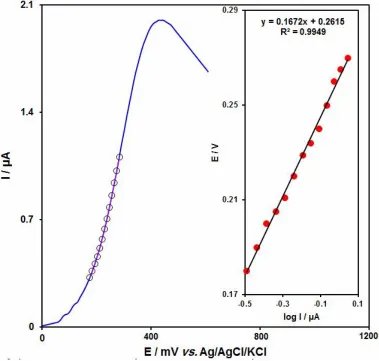
Data of the ascending section of the current-voltage
curve, which has been registered at a scan rate of 5 mV s-1
for BPA, was used for drawing Tafel plot (Fig. 7). Electron
transfer kinetics between MOF-508a/GCE and substrate
(BPA) affect this voltammogram that is called Tafel region.
The study achieved Tafel slope of 0.1672 V. This finding is compatible with the engagement of one electron at the rate
that determines the electrode process phase, providing that charge transfer coefficient is α = 0.65 for BPA.
Mohammadzadeh Jahani et al./Anal. Bioanal. Chem. Res.,Vol. 7, No. 2, 161-170, June 2020.
Calibration Plot and Limit of Detection
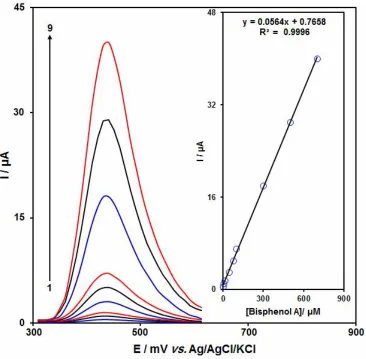
The electro-oxidation peak currents of BPA on the MOF-508a/GCE surface can be applied to define BPA in the solution. Since the increased sensitivity and more suitable properties for analytical utilizations are considered as the benefits of differential pulse voltammetry (DPV), MOF-508a/GCE in 0.1 M PBS consisting of different distinct concentrations of BPA was used to conduct DPV experiments (Fig. 8). It was found that the electrocatalytic peak currents of BPA oxidation on the MOF-508a/GCE surface linearly depend on BPA concentrations above the range of 0.1-700 µΜ, while determination limit (3σ) was
achieved to be 0.03 µΜ.
The Repeatability and Stability of MOF-508a/GCE
Testing stability of MOF-508a/GCE was performed by keeping the suggested sensor at pH = 7.0 in PBS for 15 days and then recording cyclic voltammogram of the solution containing 30.0 µM of BPA for comparison with cyclic voltammogram obtained before immersion. Oxidation peak of BPA was not modified, and the current showed a less than 2.1% decline in signals in comparison to the initial response, suggesting that MOF-508a/GCE have a good stability.
Examining the anti-fouling characteristic of the modified GCE towards BPA oxidation and the respective products was also performed by cyclic voltammetry for the modified GCE in the absence and presence of BPA. Recording the cyclic voltammograms was done in the presence of BPA after cycling the potential for fifteen times at a 50 mV s-1. The currents declined by less than 2.3%, and the peak potential did not alter.
Interference Studies
The impact of different substances as potentially interfering compounds with BPA determination was examined under optimal conditions. Substances containing
BPA, typically found in biological fluids and/or pharmaceuticals, were used to select potentially interfering
substances. The maximum interfering substance
concentration causing an error under ±5% to determine BPA was set as the tolerance limit. Based on the results obtained, Mg2+, Al3+, NH4 +, F-, SO42-, S2-, caffeine, urea,
ethanol, methanol, benzoic acid, fructose, saccharose, tyrosine, lactose, L-phenylalanine, L-tryptophan, L-glycine, L-histidine, L-proline, L-threonine, L-serine, L-asparagine, uric acid, acetaminophen, NADH, dopamine, ascorbic acid, epinephrine, norepinephrine, glucose, hydrazine, hydroxylamine and L-lysine did not interfere in BPA determination.
Mohammadzadeh Jahani et al./Anal. Bioanal. Chem. Res.,Vol. 7, No. 2, 161-170, June 2020.
Analyzing Real Sample
The method illustrated above was used to evaluate MOF-508a/GCE usability for determining BPA in real samples. To do so, the standard addition technique was applied. Table 1 reports the results. Acceptable recoveries of BPA were observed, and reproducible results were found with regard to the mean relative standard deviation (R.S.D.).
CONCLUSIONS
After synthesizing MOF-508a in our laboratory, we
produced a modified GSPE to measure BPA in an electrocatalytic manner. According to the results, the
MOF-508a/GCE demonstrated significant electrocatalytic
capability in the oxidation of BPA, due to the special characteristics of MOF-508a, including subtle electronic properties and high specific surface area. Therefore, high sensitivity toward determining the BPA and proper electrocatalytic efficiency were shown by this modified electrode. Moreover, desirable electrochemical features, such as wide linear dynamic range, high sensitivity, low detection limit, and high stability, were presented by the Fig. 8. DPVs of MOF-508a/GCE in 0.1 M PBS (pH 7.0) composing of various concentrations of BPA.
sensor offered. Because of these properties, this electrode is an appropriate candidate for application with real samples for BPA detection.
ACKNOWLEDGEMENTS
The authors acknowledge the financial support provided for this project (No. 98000009) by the Bam University of Medical Sciences, Bam, Iran and Kerman University of Medical Sciences, Kerman, Iran.
REFERENCES
[1] S. Palanisamy, T. Kokulnathan, S.M. Chen, V.
Velusamy, S.K. Ramaraj, J. Electroanal. Chem. 794 (2017) 64.
[2] H. Beitollahi, S. Tajik, Environ. Monit. Assess. 187 (2015) 257.
[3] Y.U. Hao, F.E.N. G. Xiao, C.H.E.N. Xiao-Xia, Q.I. A. O. Jin-Li, G.A.O. Xiao-Ling, X.U. Na, G.A.O. Lou-Jun, Chinese. J. Anal. Chem. 45 (2017) 713.
[4] M.S. Cosio, A. Pellicanò, B. Brunetti, C.A.
Fuenmayor, Sens. Actuators B Chem. 246 (2017) 673.
[5] B. Ntsendwana, B.B. Mamba, S. Sampath, O.A.
Arotiba, Int. J. Electrochem. Sci. 7 (2012) 3501.
[6] N.B. Messaoud, M.E. Ghica, C. Dridi, M.B. Ali, C.M.
Brett, Sens. Actuators B Chem. 253 (2017) 513. [7] E.R. Santana, C.A. de Lima, J.V. Piovesan, A.
Spinelli, Sens. Actuators B Chem. 240 (2017) 487. [8] T. Yoshida, M. Horie, Y. Hoshino, H. Nakazawa,
Food Addit Contam. 18 (2001) 69.
[9] H.S. Shin, C.H. Park, S.J. Park, H. Pyo, J.
Chromatogr. A 912 (2001) 119.
[10] X. Cao, F. Shen, M. Zhang, J. Bie, X. Liu, Y. Luo, J. Guo, C. Sun, RSC Adv. 4 (2014) 16597.
[11] C. Lu, J. Li, Y. Yang, J.M. Lin, Talanta 82 (2010) 1576.
[12] M. Del Olmo, A. Gonzalez-Casado, N.A. Navas, J.L. Vilchez, Anal. Chim. Acta 346 (1997) 87.
[13] T. Zhan, Y. Song, Z. Tan, W. Hou, Sens. Actuators B Chem. 238 (2017) 962.
[14] H. Beitollahi, H. Mahmoudi-Moghaddam, S. Tajik, Anal. Lett. (2018).
[15] M. Portaccio, D. Di Tuoro, F. Arduini, D. Moscone, Table 1. Determination of BPA in Real Samples at MOF-508a/GCE.
Concentrations are in μM (n = 5)
Sample Spiked Found Recovery
(%)
R.S.D.
(%)
- 2.8 - 3.3
2.5 5.4 104.0 1.8
5.0 7.6 96.0 2.8
7.5 10.1 97.3 2.3
Stew
10.0 12.9 101.0 2.4
- 1.4 - 1.7
5.0 6.3 98.0 2.9
10.0 11.6 102.0 3.4
15.0 16.3 99.3 2.3
Water bottle
Mohammadzadeh Jahani et al./Anal. Bioanal. Chem. Res.,Vol. 7, No. 2, 161-170, June 2020.
M. Cammarota, D.G. Mita, M. Lepore, Electrochim. Acta 109 (2013) 340.
[16] F.A. Harraz, M. Faisal, A.A. Ismail, S.A. Al-Sayari, A.E. Al-Salami, A. Al-Hajry, M.S. Al-Assiri, J. Electroanal. Chem. 832 (2019) 225.
[17] B. Rafiee, R. Fakhari, Biosens. Bioelectron. 46 (2013) 130.
[18] H. Soltani, H. Beitollahi, A.H. Hatefi-Mehrjardi, S.
Tajik, M. Torkzadeh-Mahani, Anal. Bioanal.
Electrochem. 6 (2014) 67.
[19] R.M.A. Tehrani, H. Ghadimi, Anal. Bioanal. Chem. Res. 3 (2016) 111.
[20] H. Karimi-Maleh, M. Keyvanfard, K. Alizad, M. Fouladgar, H. Beitollahi, A. Mokhtari, F. Gholami-Orimi, Int. J. Electrochem. Sci. 6 (2011) 6141. [21] N. Ermiş, N. Tınkılıç, Int. J. Electrochem. Sci. 13
(2018) 2286.
[22] A.H. Touny, R.H. Tammam, M.M. Saleh, Appl.
Catal-B Environ. 224 (2018) 1017.
[23] M.M. Motaghi, H. Beitollahi, S. Tajik, R.
Hosseinzadeh, Int. J. Electrochem. Sci. 11 (2016) 7849.
[24] T. Alizadeh, M.R. Ganjali, M. Akhoundian, P.
Norouzi, Microchim. Acta 183 (2016) 1123.
[25] X. Hou, G. Shen, L. Meng, L. Zhu, M. GuoRuss. J. Electrochem. 47 (2011) 1262.
[26] H. Beitollahi, S. Mohammadi, Mater. Sci. Eng. C 33 (2013) 3214.
[27] T. Rohani, A. Ghaderi, J. Anal. Chem. 73 (2018) 277. [28] F. Hosseini, M. Ebrahimi, H. Karimi-Maleh, Int. J.
Electrochem. Sci. 13 (2018) 4923.
[29] M. Khairy, A.A. Khorshed, F.A. Rashwan, G.A.
Salah, H.M. Abdel-Wadood, C.E. Banks, Sens. Actuators B Chem. 252 (2017) 1045.
[30] H. Beitollahi, Z. Dourandish, S. Tajik, M.R. Ganjali, P. Norouzi, F. Faridbod, J. Rare Earth 36 (2018) 750. [31] Z. Wen, W. Zhao, X. Li, X. Niu, X. Wang, L. Yan, X.
Zhang, G. Li, W. Sun, Int. J. Electrochem. Sci. 12 (2017) 2306.
[32] M.R. Ganjali, Z. Dourandish, H. Beitollahi, S. Tajik, L. Hajiaghababaei, B. Larijani, Int. J. Electrochem. Sci. 13 (2018) 2448.
[33] G.K. Ziyatdinova, S.A. Romashkina, E.R. Ziganshina, H.C. Budnikov, J. Anal. Chem. 73 (2018) 63.
[34] K. Asadpour-Zeynali, F. Mollarasouli, Biosens.
Bioelectron. 92 (2017) 509.
[35] H. Mahmoudi-Moghaddam, S. Tajik, H. Beitollahi, Food Chem. 286 (2019) 191.
[36] T. Rohani, A. Ghaderi, J. Anal. Chem. 73 (2018) 277. [37] V. Arabali, M. Ebrahimi, M. Abbasghorbani, V.K.
Gupta, M. Farsi, M.R. Ganjali, F. Karimi, J. Mol. Liq. 213 (2016) 312.
[38] H. Beitollahi, H. Karimi-Maleh, H. Khabazzadeh, Anal. Chem. 80 (2008) 9848.
[39] F. Arduini, C. Zanardi, S. Cinti, F. Terza, D. Moscone, G. Palleschi, R. Seeber. Sens. Actuator B Chem. 212 (2015) 536.
[40] H.E. Zittel, F.J. Miller, Anal. Chem. 37 (1965) 200. [41] S.E. Esfandiari-Baghbamidi, H. Beitollahi, S. Tajik, R.
Hosseinzadeh, Int. J. Electrochem. Sci. 11 (2016) 10874.
[42] A. Sudarvizhi, K. Pandian, O.S. Oluwafemi, S.C. Gopinath, Sens. Actuators B Chem. 272 (2018) 151. [43] M.R. Ganjali, H. Beitollahi, R. Zaimbashi, S. Tajik,
M. Rezapour, B. Larijani. Int. J. Electrochem. Sci. 13 (2018) 2519.
[44] S. Gao, Y. Sui, F. Wei, J. Qi, Q. Meng, Y. Ren, Y. He, J. Colloid. Interface. Sci. 531 (2018) 83.
[45] L. Liu, Y. Zhou, S. Liu, M. Xu, Chem. Electro Chem. 5 (2018) 6.
[46] N. Farzi, N. Salehi, A. Mahboubi, Microporous Mesoporous Mater. 248 (2017) 246.