Charlotte, NC, USA, August 4
THE COMBINATION OF MODULAR AND COMPOSITE
CONSTRUCTION TECHNOLOGY
IN GENERATION III NPP DESIGN
(
1: General Perspectives and
Ziduan Shang
Chunhua Wu
1
Chief Technology Expert, SNERDI of SPIC
2
Senior Structural Engineers, SNERDI of SPIC
3
Structural Engineers, SNERDI of SPIC
ABSTRACT
As we are aware of that nuclear power plant (
challenges on new technology application, cost reduction, resources management and scheduling assurance etc. If we look at the all new GEN III reactors construction (such as AP1000, EPR etc. ), you will find that apart from new equipments/systems design
are facing many challenges, this is one of the reasons that GEN III reactors cost too much. So to solve this issue and advance construction, it is urgent to do more
experiences and lessons-learned from current GEN III reactors construction. This is important mainly because construction is the critical phase in which we can ensure the safety and quality and cut the cost a reasonable range. This will give GEN III Nuclear Power good initiatives, privileges in current power industry.
Composite construction, as a very mature technology, has been using for commercial structures. Modular construction
consideration already start to gain more applications in safety combination of modular and composite construction can create a bett
plant constructions, especially for generation III plant. This paper is focusing on the research of combination and application of these two construction technologies, and will give summary on the latest research results.
THE EMERGING AND DEVELOPING OF MODULAR CO PROJECTS
Steel concrete composite wall (SC
introduced as a new construction technique in recent decades to substitute the RC wall in some GEN III NPP design-construction to satisfy new safety
advancement of conventional composite structure
Wall is comprised of two face-plates on both sides, concrete as infill is poured in between to become a “sandwich” type component.
construction is simplified, faster and can be executed in a way of modularization. This greatly save on works and total construction time; also
it can resulting in high quality of structural components.
Transactions, SMiRT-25 Charlotte, NC, USA, August 4-9, 2019
Division XII
THE COMBINATION OF MODULAR AND COMPOSITE
CONSTRUCTION TECHNOLOGY
IN GENERATION III NPP DESIGN-BUILD
1: General Perspectives and Constructability
)
Ziduan Shang 1, Yugang Sun2, Xiao Huang3, Hongliang Gou2
Chunhua Wu2, Chenyu Chang3, Boyu Han3
SNERDI of SPIC, Shanghai, China ([email protected] SNERDI of SPIC, Shanghai, China
SNERDI of SPIC, Shanghai, China
nuclear power plant (NPP) construction in 21st century is experiencing challenges on new technology application, cost reduction, resources management and scheduling assurance etc. If we look at the all new GEN III reactors construction (such as AP1000, EPR etc. ), you ew equipments/systems design - manufacture, the GEN III plants construction are facing many challenges, this is one of the reasons that GEN III reactors cost too much. So to solve this issue and advance construction, it is urgent to do more studies and especially summarize the successful learned from current GEN III reactors construction. This is important mainly because construction is the critical phase in which we can ensure the safety and quality and cut the cost a reasonable range. This will give GEN III Nuclear Power good initiatives, privileges in current power Composite construction, as a very mature technology, has been using for many years in types of commercial structures. Modular construction due to its simplicity high quality and economic consideration already start to gain more applications in safety-related facility construction. The combination of modular and composite construction can create a better technology for nuclear power structions, especially for generation III plant. This paper is focusing on the research of combination and application of these two construction technologies, and will give summary on the latest
THE EMERGING AND DEVELOPING OF MODULAR CONSTRUCTION IN LARGE NPP
SC-Wall), as a new emerged lateral load bearing
construction technique in recent decades to substitute the RC wall in some GEN III construction to satisfy new safety requirements and reduces the cost as well. As an advancement of conventional composite structure (precast & composite, decking steel floor system
plates on both sides, concrete as infill is poured in between
” type component. The advantages of using SC-Wall come from the fact that the construction is simplified, faster and can be executed in a way of modularization. This greatly save on
also through the way of using workshop manufacturing and installation resulting in high quality of structural components.
25
THE COMBINATION OF MODULAR AND COMPOSITE
.com.cn)
construction in 21st century is experiencing challenges on new technology application, cost reduction, resources management and scheduling assurance etc. If we look at the all new GEN III reactors construction (such as AP1000, EPR etc. ), you manufacture, the GEN III plants construction are facing many challenges, this is one of the reasons that GEN III reactors cost too much. So to solve this studies and especially summarize the successful learned from current GEN III reactors construction. This is important mainly because construction is the critical phase in which we can ensure the safety and quality and cut the cost to a reasonable range. This will give GEN III Nuclear Power good initiatives, privileges in current power many years in types of icity high quality and economic related facility construction. The er technology for nuclear power structions, especially for generation III plant. This paper is focusing on the research of combination and application of these two construction technologies, and will give summary on the latest
NSTRUCTION IN LARGE NPP
structural type, is construction technique in recent decades to substitute the RC wall in some GEN III and reduces the cost as well. As an decking steel floor system), SC-plates on both sides, concrete as infill is poured in between,and hardened
The Early Application of Modular Construction in NPP Projects
Developed from precast technology
in new NPP constructions. Refer to its development and history, t construction were used in the NPP
approaches which were utilized in new plants construction in Japan.
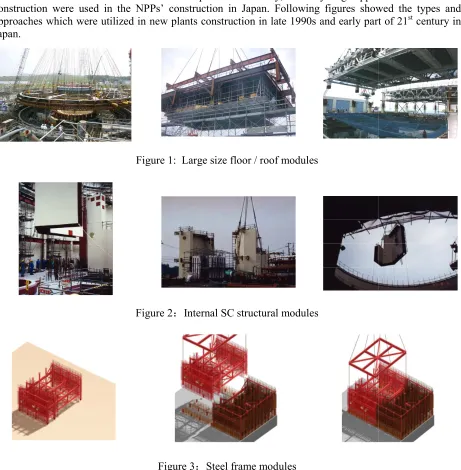
Figure 1:
Figure 2
Figure 1 shows the method how to arrange
into large modules, and then lift the whole module to
the new construction method developed for nuclear island (NI) containment internal structure constructions. Generally the CIS are located in an i
structural components are all come together to perform their designated
demonstrates the effective ways for steel constructions where all steel members / components are pre assembled into large frame modules, and then lifted up as a whole to complete the installations.
The Early Application of Modular Construction in NPP Projects
Developed from precast technology, modular construction method is obtaining more and more application Refer to its development and history, the early stage applications
in the NPPs’ construction in Japan. Following figures showed the types and es which were utilized in new plants construction in late 1990s and early part of 21
Figure 1: Large size floor / roof modules
Figure 2:Internal SC structural modules
Figure 3:Steel frame modules
how to arrange small steel reinforcement cage and floor / roof components large modules, and then lift the whole module to fulfil the installation processes. Figure 2 illustrates
method developed for nuclear island (NI) containment internal structure Generally the CIS are located in an internal environment where equipments, systems and structural components are all come together to perform their designated design function
for steel constructions where all steel members / components are pre led into large frame modules, and then lifted up as a whole to complete the installations.
method is obtaining more and more application early stage applications of modular s showed the types and early part of 21st century in
25th Conference on Structural Mechanics in Reactor Technology Charlotte, NC, USA, August 4-9, 2019 Division XII
The Employment of Modular Approach in AP1000 Design and Construction
AP1000 as GEN III technology, its innovation not only represented by the greatly
optimized-simplified systems and components, but also through the concept of modularization which is
utilized in both design and construction processes. With the completely re-designed
structure-system-component (SSCs), the construction and installation process are improved in a manner
that the SSCs can be built in parallel or alternative ways. Whereas the old construction approach
tends to complete all primary structures first, and then commences the installation of major
equipment system and component. This new concept of modularization can greatly simplified
the on-site construction processes, improved quality and shortened the construction time. By
putting all these advantages together, the cost for building GEN III reactor could be reduced.
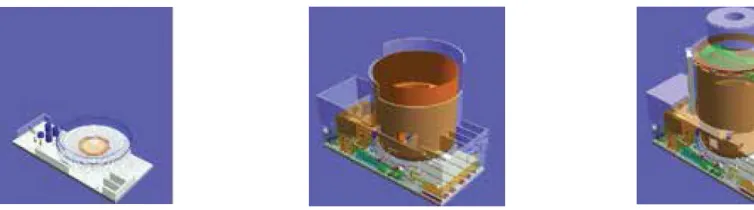
Figure 4 illustrates the AP/CAP plant SSCs construction processes based on the concept of modularization.
Figure 4: Modularization process for AP/CAP plant design-construction
Figure 5 and Figure 6 showed how this method is used in the constructions of containment internal structures and the containment systems, which rigorously speaking shall include steel containment vessel (SCV) and shield building.
Figure 5: Constructions of containment internal structures
THE APPLICATION OF PRECAST CONCRETE COMPOSITE STRUCTURES
Precast concrete composite construction and structures are based on the precast concrete assembling structure type used in later half of 20th century. Precast composite structures are comprised of precast parts (or units), this will be assembled firstly in early construction phase to serve as formworks; then commercial concrete be poured above precast parts to designed thickness; rebars at jointing points or layers will be specially treated to assure they can perform in the similar way as to full cast-in-place case.
The Advantages of Precast and Cast-in-Place Composite Design
The advantages of precast composite structures can be summarized as following: (1) it eliminates the complicated and time consuming formworks at the site; (2) precast parts manufactured by the shop can improve the quality of structural members; (3) the inducing of pre-stressing force on precast part can effectively control the cracking and deflection of structure; (4) precast composite construction possesses both the features which full cast-in-place construction and full precast & assembled construction and thus is highly recommended for the applications in nuclear structures.
The Types of Structural Configuration and Utilization in NPP Projects
Following Figure 7 & 8 showed some of the precast composite construction application in NPP projects.
Figure 7: Precast units and joint configurations
Figure 8: Precast units installations
THE APPLICATION OF STEEL-DECKING CONCRETE COMPOSITE SLAB
SYSTEM
The Popularity of Steel-Decking Concrete in Commercial Industry
25th Conference on Structural Mechanics in Reactor Technology Charlotte, NC, USA, August 4-9, 2019 Division XII
The Advantages of Applying Steel-Decking Concrete Composite Slab System in NPP Design-Build
Compared to precast composite, decking steel composite members possesses some unique features and advantages when applied properly in structural floor system design and constructions, which can be summarized as following: (1) Decking steel units are very easy to manufacture and transport; (2) it is easy to cut and re-arranged to fit the construction change; (3) it is easy to be installed at the place, in many cases, there is no need to use heavy lifting crane; (4) almost no need for any supports, it can be welded or bolted to the right place before construct the upper concrete layer. But on the other hand, decking steels also have some disadvantages which in some cases limit its application. Such as to illuminate construction supports the unit spans oftentimes are strictly limited to assure there will be no excessive deflection occurred before concrete develops any strength. This will limit its application in some large span structures unless mid-span supports are provided. So in some new NPPs’ construction, decking steels are frequently used for some small/medium span buildings with relatively high floor height.
THE RECOMMENDATION OF COMBINATION OF MODULAR AND COMPOSITE CONSTRUCTION APPROACH
The Challenges of GEN III Plant Design-Build in 21st Century
As stated in the beginning of this paper, nuclear power plant (NPP) construction in 21st century is experiencing challenges on new technology application, cost reduction, resources management and scheduling assurance. Follows are brief discussions on three most considered aspects:
(1) Management & Scheduling: The conventional NPP primary structures construction approach is based on on-site construction method (or called wet-construction). In this method almost all concrete works are done through a way of cast-in-place; that means the constructor will have to do basically the “formworks →reinforcement cage →cast of concrete” … concrete hardening; and then next step of the same procedure; wet-construction here refers to the handling of fresh concrete. The advantage of this construction method is that it can guarantee the construction results highly reflecting the criteria that the engineer designed: such as the physical criteria of continuity and homogeneous, these are significant features required for assuring the structural integrity. Such method involves the handling and application of numerous loose materials members and components etc. the on-site construction management and scheduling are very complicated, trivial and time consuming.
(2)
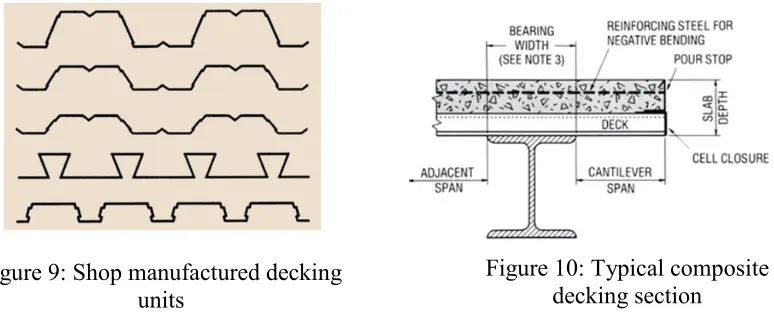
Quality & Cost: Based on the above analysis, the conventional construction method unavoidably cost many time (man-hours) and resources to satisfy the safety and quality requirements which were defined in the engineering documents. The human factor / errors and engineering changes could further result in problems / issues which oftentimes are the main reason lead to delays.Figure 9: Shop manufactured decking
units
The Combination of Modular and Composite Construction
Composite construction, as a very mature technology, has been using for many years in types of commercial structures. Modular construction, due to its simplicity high quality and economic consideration, already start to gain some applications in safety-related facility construction. The combination of modular and composite construction can create a better technology for nuclear power plant constructions, especially for generation III plant.
The recommended ways for the combination of modular and composite construction (1) For lateral force resistance primary structures – “shear wall”
For lateral force resistance primary structures, such as containment internal structure (CIS), steel containment vessel (SCV), shield building (SB) etc. it is recommended to utilize modular construction -such as steel concrete composite.
(2) For vertical force bearing structural systems – “structural floor system”
Vertical force bearing structural systems such as floor systems normally have large areas at different elevations. Based on their seismic design categories and structural features (e.g. span etc) precast composite and steel decking composite approaches are highly recommended.
(3) For primary structures both considering lateral force and vertical force
It is better to utilize the combination of modular method and precast /steel decking composite method to fulfil the construction processes. In reality, some CIS structures, auxiliary building can be classified in this category.
The construction feasibility study
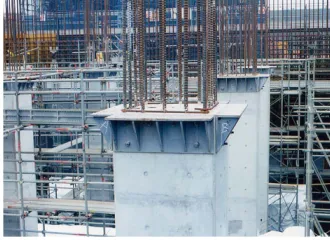
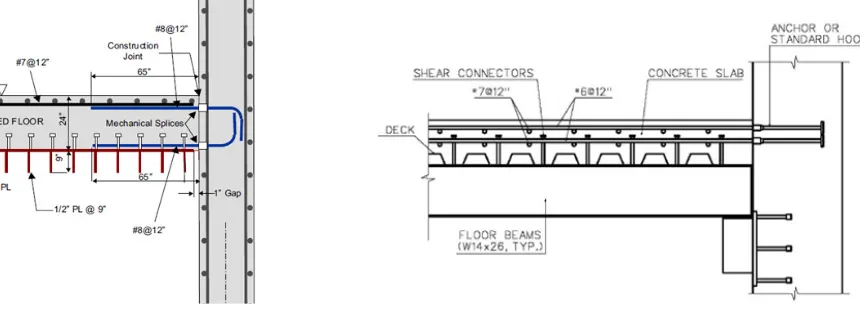
Figure 2, 4, 5, 6 of this paper showed the kinds of detailed approaches which can be used to
perform modular construction. Figure 7, 8 provided the configuration and details for precast
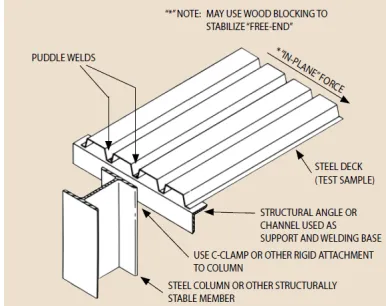
composite construction method. Figure 1, 3, 9, 10, 11 and 12 illustrate the configuration detail
and processes used for steel decking composite technique.
25th Conference on Structural Mechanics in Reactor Technology Charlotte, NC, USA, August 4-9, 2019 Division XII
CONCLUSION
Based on the reviews of existing composite and modular construction technologies, new applications and design-build methods are recommended for nuclear power plant construction, especially for AP and CAP reactors, regarding of the design and constructions of CIS, SB and other safety-related structures within nuclear island.
REFERENCES
Shang, Z., Zhu, J. and Zheng, M. (2013). “CONSIDERATIONS AT BEYOND DESIGN-BASIS PHENOMENON DESIGN FOR NEW NUCLEAR POWER PLANT - Seismic and Tsunami”, SMiRT22, San Francisco, USA
Shang, Z., Chu, M., Sun, Y., Huang, X. and Yang Y. (2015). “SEISMIC SHEAR STRENGTH INVESTIGATION AND COMPARISON OF RC WALL AND SC WALL IN SHIELD BUILDING DESIGN OF GEN III NUCLEAR POWER PLANT”, SMiRT23, Manchester, UK
Shang, Z., Ohno, Y. and Li, Z. (2001), “Flexural behaviors of PPC composite beams with precast units cracked due to construction load (Short-term flexural behavior)”, JOURNAL OF STRUCTURAL AND CONSTRUCTION ENGINEERING (Transaction of AIJ) Architectural Institute of Japan, No.542, pp. 131-138.
Shang, Z., Ohno, Y., Li, Z. and Li, W. (2006), “Flexural behaviors of reinforced concrete composite beams with precast elements cracked due to construction load (long-term flexural behaviors)”, Proceedings of the 2nd fib International Congress, Session 15-23, Durability of Concrete Structures, Naples, Italy
Shang, Z., Lv, Z. and Wang, X. (2005), “Investigation of stiffness evaluation and deflection calculation of PCaPPC members”, JOURNAL OF ARCHITECTURAL STRUCTURE, Architectural Institute of China ACI 349, Code Requirements for Nuclear Safety Related Concrete Structures.
ASME Boiler and Pressure Vessel Code Section III Div.2,Code for Concrete Containment
Shang, Z., Huang, X., Chu, M., Zhang, L., Wu, C. and Chang, C. (2016), “THE APPLICATION OF PSHA METHOD IN THE DETERMINATION OF BEYOND DESIGN BASIS EARTHQUAKE FOR NEW NPP DESIGN”, ICONE24, Charlotte, USA
Shang, Z., Huang, X., Sun, Y. and Chu, M. (2018), “A RECOMMENDED METHOD FOR SC WALL DESIGN-EVALUATION REGARDING THE ELASTO-PLASTIC BEHAVIOR UNDER BEYOND DESIGN BASIS SEISMIC LOADING”, ICONE26, London, UK