International Journal of COPD 2018:13 2805–2819
International Journal of COPD
Dove
press
submit your manuscript | www.dovepress.com 2805
R e v I e w
open access to scientific and medical research
Open Access Full Text Article
New developments in optimizing bronchodilator
treatment of COPD: a focus on glycopyrrolate/
formoterol combination formulated by
co-suspension delivery technology
Anthony D D’Urzo1
Mario Cazzola2
Nicola A Hanania3
Roland Buhl4
M Reza Maleki-Yazdi5
1Department of Family and Community Medicine, Faculty of Medicine, University of Toronto, Toronto, ON, Canada; 2Department of experimental Medicine and Surgery, Tor vergata University of Rome, Rome, Italy; 3Section of Pulmonary and Critical Care Medicine, Baylor College of Medicine, Houston, TX, USA; 4Pulmonary Department, Mainz University Hospital, Mainz, Germany; 5Division of Respiratory Medicine, women’s College Hospital, University of Toronto, Toronto, ON, Canada
Abstract: COPD causes considerable health and economic burden worldwide, with incidence of
the disease expected to continue to rise. Inhaled bronchodilators, such as long-acting muscarinic antagonists (LAMAs) and long-acting β2-agonists (LABAs), are central to the maintenance treat-ment of patients with COPD. Clinical studies have demonstrated that combined LAMA + LABA therapies improve efficacy while retaining a safety profile similar to LAMA or LABA alone. This has led to the development of several LAMA/LABA fixed-dose combination (FDC) thera-pies, which provide patients with the convenience of two active compounds in a single inhaler. GFF MDI (Bevespi Aerosphere®) is an FDC of glycopyrrolate/formoterol fumarate 18/9.6 µg
formulated using innovative co-suspension delivery technology for administration via metered dose inhaler (MDI). GFF MDI was developed to make a treatment option available for patients who have a requirement or preference to use an MDI, rather than a dry powder or soft mist inhaler. Now that several LAMA/LABA FDCs have been approved for use in COPD, we review the impact of dual-bronchodilator treatment on COPD therapy and discuss recent clinical studies that are helping to develop a more comprehensive understanding of how LAMA/LABA FDCs can improve patient outcomes.
Keywords: long-acting bronchodilator, LAMA, LABA, chronic obstructive pulmonary disease,
fixed-dose combination, GFF MDI
Abbreviations
ACL, aclidinium bromide; AUC0–12, area under the curve from 0 to 12 hours; BID, twice daily; BUD-FF, budesonide–formoterol fumarate; CAT, COPD Assessment Test; CID, clinically important deterioration; DPI, dry powder inhaler; FDC, fixed-dose combination; FEV1, forced expiratory volume in 1 second; FVC, forced vital capacity; GFF, glycopyrrolate/formoterol fumarate; GOLD, Global Initiative for Chronic Obstructive Lung Disease; GP, glycopyrrolate; IC, inspiratory capacity; ICS, inhaled corticosteroid; IND, indacaterol; LABA, long-acting β2-agonist; LAMA,
long-acting muscarinic antagonist; LSM, least squares mean; MDI, metered dose inhaler; mMRC, modified Medical Research Council (scale); MSCT, multislice computed tomography; OLO, olodaterol; PRO, patient-reported outcome; QD, once daily; SAL, salmeterol; SD, standard deviation; SGRQ, St George’s Respiratory Questionnaire; SMI, soft mist inhaler; TDI, Transition Dyspnea Index; TIO, tiotropium; UMEC, umeclidinium; VIL, vilanterol.
Correspondence: Anthony D D’Urzo Department of Family and Community Medicine, Faculty of Medicine, University of Toronto, 500 University Avenue – 5th floor, Toronto, ON M5G 1V7, Canada
Tel +1 416 652 9336
email [email protected]
Journal name: International Journal of COPD Article Designation: Review
Year: 2018 Volume: 13
Running head verso: D’Urzo et al
Running head recto: Developments in treatment of COPD: GFF MDI DOI: 113306
International Journal of Chronic Obstructive Pulmonary Disease downloaded from https://www.dovepress.com/ by 118.70.13.36 on 22-Aug-2020
For personal use only.
Dovepress
D’Urzo et al
Introduction
COPD is an umbrella term that encompasses different pathophysiological processes in the lung (eg, emphysema and chronic bronchitis) that result in decline in pulmonary function.1 The condition, which is associated with smoking or
exposure to biomass-fuel smoke/air pollution,1 can also occur
in people not exposed to these risk factors, highlighting that there are many underlying mechanisms driving the develop-ment of the disease and its progression.1 Due to increasing
exposure to risk factors and aging populations, COPD rates are projected to continue to rise.1,2 Here, we review the
impact of dual-bronchodilator therapies on COPD therapy and how current clinical studies may further our understand-ing of how to optimize bronchodilator use in reducunderstand-ing the burden of COPD for patients, since improvements in lung function are linked with greater benefits in patient-reported outcomes (PROs).3
Burden of disease
In the Continuing to Confront COPD International Patient Survey across North and South America, Asia, and Europe in 2012–2013, approximately 7%–9% of people $40 years of age in all the countries included, except Brazil (12%), fulfilled the case definition of COPD.4 For the countries that
participated in the corresponding study in 1999–2001, this represented an absolute increase of 1%–4%.4,5 Case-finding
studies have demonstrated that the majority of individuals with COPD have not previously received a diagnosis, so the reported rates of COPD are likely to be an underestimation of actual prevalence.6–9
An international survey conducted in 14 countries in 2010 demonstrated that $78% of patients with COPD, chronic bronchitis, and/or emphysema experienced symptoms of breathlessness on exertion, with the majority of patients reporting fatigue, mucus/sputum/phlegm production, or chronic/troublesome cough.10 The same study found that
77% of patients were worried about their long-term health, and many (38% with a Medical Research Council [MRC] dyspnea-scale score #2 and 59% with an MRC score $3) feared premature death due to COPD.10 COPD symptoms
are associated with reduced physical activity levels and sleep disturbance.11,12 The BREATHE study conducted
in eleven countries across the Middle East, north Africa, and Pakistan also found that psychological distress was reported by a substantial proportion of patients with COPD (42.3%–53.2%).13 The combination of the negative physical
and mental impact of COPD results in reduced quality of life for patients suffering with the disease.14,15 Despite treatments
available for COPD, a survey conducted in 2013 reported that the symptom burden remained high for .80% of patients,16
and few patients in a 2010 survey considered their COPD to be “very well” controlled.10
Evolution of bronchodilators in the
management of COPD
Long-acting muscarinic antagonists (LAMAs) and long-acting
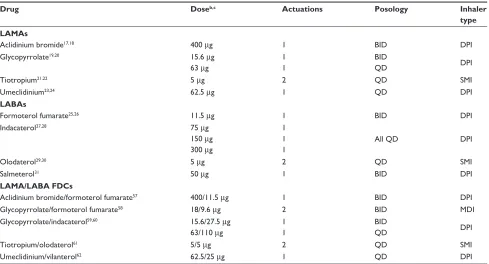
β2-agonists (LABAs) have for many years been a cornerstone of pharmacotherapeutic maintenance treatment options for patients with COPD1 (Table 117–31).The delivery method for
the different LAMAs and LABAs varies, but includes pres-surized metered dose inhalers (MDIs), dry powder inhalers (DPIs), soft mist inhalers (SMIs), and nebulizers.32
The LABA formoterol fumarate (FF)25,26 has been a
maintenance treatment for COPD since the early 1990s. Other LABAs now commonly used as monotherapies1 include
salme-terol (SAL),31 indacaterol (IND),27,28 and olodaterol (OLO).29,30
In the mid-2000s, the LAMA tiotropium (TIO)21,22 became
the first of its class to be available as an inhaled therapy for treatment of COPD, with long-term benefits on lung function, quality of life, and exacerbations demonstrated by the 4-year UPLIFT trial.33 Since then, three other LAMAs that have
been developed as inhaled monotherapies for the manage-ment of COPD are aclidinium bromide (ACL),17,18
umecli-dinium (UMEC),23,24 and glycopyrrolate (GP).19,20 A previous
literature review34 and a recent network meta-analysis35 found
that these newer LAMAs had comparable effectiveness to TIO and one another. Another large network meta-analysis demonstrated that overall, LAMAs and LABAs had similar effects on lung function (trough forced expiratory volume in 1 second [FEV1]) compared with placebo at 6 and 12 months, with little difference in effect between the treatments within each drug class.36 The meta-analysis ranked the LAMA drug
class above LABAs for improvements in quality of life (St George’s Respiratory Questionnaire [SGRQ] score) vs placebo at 6 months, but there was no notable class difference at 12 months.36 Few studies have examined the efficacy of
LAMAs and LABAs head to head. In a 52-week, random-ized, parallel-group study in patients with severe COPD and history of one or more moderate-to-severe exacerbation in the previous year, the LABA IND demonstrated noninferi-ority to the LAMA TIO for improvements in trough FEV1 at week 12.37 However, in terms of annualized exacerbation
rates over 52 weeks, IND (0.79) did not show noninferiority to TIO (0.61; ratio 1:29).37 There were no treatment-related
differences in the number of patients who reported adverse events or serious adverse events.37
International Journal of Chronic Obstructive Pulmonary Disease downloaded from https://www.dovepress.com/ by 118.70.13.36 on 22-Aug-2020
Dovepress Developments in treatment of COPD: GFF MDI
Due to the distinct mechanisms of action of LAMAs and LABAs, the potential additive/synergistic effects of using these drug classes together have been studied extensively.38,39 LAMAs and LABAs are thought to elicit
their bronchodilator effects via interactions with muscarinic acetylcholine receptors and β2-adrenoceptors, respectively, with both receptor types located on airway smooth muscle cells and presynaptic parasympathetic nerves.40 The
presyn-aptic action of both LAMAs and LABAs may modulate the release of acetylcholine into the synaptic space.40 On airway
smooth muscle cells, LAMAs block the interaction between acetylcholine and muscarinic receptors to prevent cell con-traction, while LABAs bind to β2-adrenoceptors to stimulate relaxation of airway smooth muscle.40
Cross talk between β2-adrenoceptors and muscarinic receptors on smooth muscle cells further potentiates the collective relaxation effect of LAMAs and LABAs.40 The
differential expression of muscarinic acetylcholine-receptor and β-adrenoceptor subtypes throughout the lungs41 may also
contribute to the benefits observed when LAMAs and LABAs are combined. Therefore, when used together, LAMAs and LABAs improve lung function compared with a LAMA or LABA alone, while both monotherapies and dual therapies are generally well tolerated.38,39 The Global Initiative for
Chronic Obstructive Lung Disease (GOLD) reports provide an excellent narrative for how bronchodilator treatment recommendations have evolved over time. From the incep-tion of GOLD, when treatment choices were based mainly on lung-function impairment, bronchodilators have been central to an overall approach for managing stable COPD.42
Since the introduction in the 2011 GOLD report of the ABCD assessment tool that stratified COPD severity based on COPD symptoms and risk, recommendations for bronchodilator use have remained largely unchanged for 5 years.43,44 However,
as a result of accumulating clinical evidence, from 2017 the GOLD report has placed additional emphasis on LAMA +
LABA dual therapy in the treatment paradigm.1,45
In contrast to the treatment recommendations in the 2016 GOLD report, which suggested the combined use of LAMAs + LABAs for GOLD group B (high symptoms/ low risk) patients if symptoms do not improve with single agents, GOLD now recommends that initial therapy with two long-acting bronchodilators can be considered for group B patients with severe breathlessness.1,45 Dual LAMA + LABA
therapy is also now the preferred second-line treatment option for patients in GOLD group C (low symptoms/high risk), whereas no preference was stated for the alternative treatments listed in GOLD 2016.1,45
Table 1 LAMAs, LABAs, and LAMA/LABA FDCs commonly used for maintenance treatment of COPDa
Drug Doseb,c Actuations Posology Inhaler
type LAMAs
Aclidinium bromide17,18 400 µg 1 BID DPI
Glycopyrrolate19,20 15.6 µg
63 µg
1 1
BID
QD DPI
Tiotropium21,22 5 µg 2 QD SMI
Umeclidinium23,24 62.5 µg 1 QD DPI
LABAs
Formoterol fumarate25,26 11.5 µg 1 BID DPI
Indacaterol27,28 75 µg
150 µg 300 µg
1 1 1
All QD DPI
Olodaterol29,30 5 µg 2 QD SMI
Salmeterol31 50 µg 1 BID DPI
LAMA/LABA FDCs
Aclidinium bromide/formoterol fumarate57 400/11.5 µg 1 BID DPI
Glycopyrrolate/formoterol fumarate58 18/9.6 µg 2 BID MDI
Glycopyrrolate/indacaterol59,60 15.6/27.5 µg
63/110 µg
1 1
BID
QD DPI
Tiotropium/olodaterol61 5/5 µg 2 QD SMI
Umeclidinium/vilanterol62 62.5/25 µg 1 QD DPI
Notes: aNot all doses available in all countries; bDPI doses represent predispensed amount, whereas SMI and MDI doses are amount dispensed from mouthpiece; cDoses of
glycopyrronium and formoterol fumarate dihydrate expressed as equivalent doses of glycopyrrolate and formoterol fumarate, respectively.
Abbreviations: BID, twice daily; DPI, dry powder inhaler; FDC, fixed-dose combination; LABA, long-acting β2-agonist; LAMA, long-acting muscarinic antagonist;
MDI, metered dose inhaler; QD, once daily; SMI, soft mist inhaler.
International Journal of Chronic Obstructive Pulmonary Disease downloaded from https://www.dovepress.com/ by 118.70.13.36 on 22-Aug-2020
Dovepress
D’Urzo et al
A recent study that demonstrated LAMA + LABA dual therapy was superior to inhaled corticosteroid (ICS) + LABA dual therapy at preventing exacerbations in patients with a history of one or more COPD exacerbations during the previous year and a blood eosinophil count #600 cells/µL supports the recommendation that patients in GOLD group D (high symptoms/high risk) are started on a LAMA + LABA combination, rather than an ICS + LABA.1,45,46 However,
whether LAMA + LABA dual therapy improves exacerba-tion risk compared with ICS + LABA in patients with two or more COPD exacerbations in the previous year or with a blood-eosinophil count $150 cells/µL or $3% requires further investigation, as the results in these subgroups did not demonstrate a clear treatment difference.46,47 Prospective
clinical trials examining the role of eosinophil levels and exacerbation risk are required, as most current analyses in this area have been based on retrospective data.47–49 Triple
therapy with LAMA + LABA + ICS is recommended for patients in GOLD group D who continue to experience exac-erbations despite receiving dual therapy (LAMA + LABA or LABA + ICS) or have persistent symptoms while receiving LABA + ICS.1 Studies that will determine the relative
benefits of these LAMA + LABA + ICS, LAMA + LABA,
and LABA + ICS on exacerbation prevention are ongoing or have recently been completed.50–53
From 2017, GOLD suggested ICS withdrawal may be considered for patients in GOLD group D treated with LAMA + LABA + ICS who still have exacerbations or an elevated risk of adverse events (eg, pneumonia).1,45 Evidence
that ICS withdrawal may not increase exacerbation risk supports the notion that some patients could be treated with LAMA + LABA dual therapy after careful withdrawal of ICSs,54,55 though further studies in this regard are required.
With the adoption of LAMA + LABA dual therapy, LAMA/ LABA fixed-dose combinations (FDCs) have become avail-able for patient convenience and ease of use, which may also help to improve treatment adherence compared with LAMA +
LABA treatment with two separate inhalers.56
Pivotal studies for dual LAMA/
LABA FDCs versus monotherapy
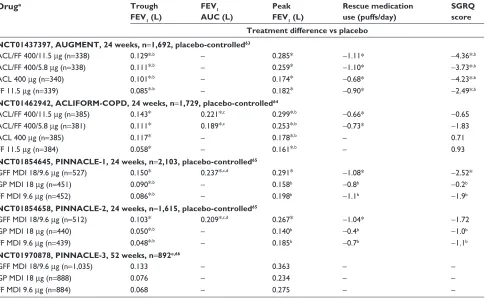
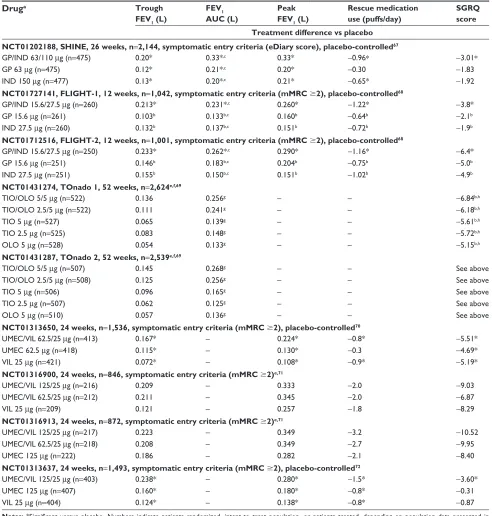
Currently there are five LAMA/LABA FDCs licensed for maintenance treatment of COPD (Table 1).57–62 Results ofthe pivotal studies of these LAMA/LABA FDCs are shown in Table 2.63–72 These studies ranged from 12 to 52 weeks
in length, and each included trough FEV1 as a primary or
Table 2 Pivotal studies with LAMA/LABA FDCs
Druga Trough
FEV1 (L)
FEV1 AUC (L)
Peak FEV1 (L)
Rescue medication use (puffs/day)
SGRQ score Treatment difference vs placebo
NCT01437397, AUGMENT, 24 weeks, n=1,692, placebo-controlled63
ACL/FF 400/11.5 µg (n=338) 0.129*,b – 0.285* -1.11* -4.36*,b
ACL/FF 400/5.8 µg (n=338) 0.111*,b – 0.259* -1.10* -3.73*,b
ACL 400 µg (n=340) 0.101*,b – 0.174* -0.68* -4.23*,b
FF 11.5 µg (n=339) 0.085*,b – 0.182* -0.90* -2.49*,b
NCT01462942, ACLIFORM-COPD, 24 weeks, n=1,729, placebo-controlled64
ACL/FF 400/11.5 µg (n=385) 0.143* 0.221*,c 0.299*,b -0.66* -0.65
ACL/FF 400/5.8 µg (n=381) 0.111* 0.189*,c 0.253*,b -0.73* -1.83
ACL 400 µg (n=385) 0.117* – 0.178*,b – 0.71
FF 11.5 µg (n=384) 0.058* – 0.161*,b – 0.93
NCT01854645, PINNACLE-1, 24 weeks, n=2,103, placebo-controlled65
GFF MDI 18/9.6 µg (n=527) 0.150* 0.237*,c,d 0.291* -1.08* -2.52*
GP MDI 18 µg (n=451) 0.090*,b – 0.158b -0.8b -0.2b
FF MDI 9.6 µg (n=452) 0.086*,b – 0.198b -1.1b -1.9b
NCT01854658, PINNACLE-2, 24 weeks, n=1,615, placebo-controlled65
GFF MDI 18/9.6 µg (n=512) 0.103* 0.209*,c,d 0.267* -1.04* -1.72
GP MDI 18 µg (n=440) 0.050*,b – 0.140b -0.4b -1.0b
FF MDI 9.6 µg (n=439) 0.048*,b – 0.185b -0.7b -1.1b
NCT01970878, PINNACLE-3, 52 weeks, n=892e,66
GFF MDI 18/9.6 µg (n=1,035) 0.133 – 0.363 – –
GP MDI 18 µg (n=888) 0.076 – 0.234 – –
FF MDI 9.6 µg (n=884) 0.068 – 0.275 – –
(Continued)
International Journal of Chronic Obstructive Pulmonary Disease downloaded from https://www.dovepress.com/ by 118.70.13.36 on 22-Aug-2020
Dovepress Developments in treatment of COPD: GFF MDI
coprimary end point, with the exception of the FLIGHT-1 and FLIGHT-2 studies, which both had FEV1 area under the curve from 0 to 12 hours (AUC0–12) at week 12 as the primary end point.63–72 Although the results of these separate studies cannot
be compared directly with each other, in general the magnitude of improvements in lung function, rescue medication use and quality of life scores was greatest in patients treated with the LAMA/LABA FDCs compared with the corresponding
Table 2 (Continued)
Druga Trough
FEV1 (L)
FEV1 AUC (L)
Peak FEV1 (L)
Rescue medication use (puffs/day)
SGRQ score Treatment difference vs placebo
NCT01202188, SHINE, 26 weeks, n=2,144, symptomatic entry criteria (eDiary score), placebo-controlled67
GP/IND 63/110 µg (n=475) 0.20* 0.33*,c 0.33* -0.96* -3.01*
GP 63 µg (n=475) 0.12* 0.21*,c 0.20* -0.30 -1.83
IND 150 µg (n=477) 0.13* 0.20*,c 0.21* -0.65* -1.92
NCT01727141, FLIGHT-1, 12 weeks, n=1,042, symptomatic entry criteria (mMRC $2), placebo-controlled68
GP/IND 15.6/27.5 µg (n=260) 0.213* 0.231*,c 0.260* -1.22* -3.8*
GP 15.6 µg (n=261) 0.103b 0.133b,c 0.160b -0.64b -2.1b
IND 27.5 µg (n=260) 0.132b 0.137b,c 0.151b -0.72b -1.9b
NCT01712516, FLIGHT-2, 12 weeks, n=1,001, symptomatic entry criteria (mMRC $2), placebo-controlled68
GP/IND 15.6/27.5 µg (n=250) 0.233* 0.262*,c 0.290* -1.16* -6.4*
GP 15.6 µg (n=251) 0.146b 0.183b,c 0.204b -0.75b -5.0b
IND 27.5 µg (n=251) 0.155b 0.150b,c 0.151b -1.02b -4.9b
NCT01431274, TOnado 1, 52 weeks, n=2,624e,f,69
TIO/OLO 5/5 µg (n=522) 0.136 0.256g – – -6.84b,h
TIO/OLO 2.5/5 µg (n=522) 0.111 0.241g – – -6.18b,h
TIO 5 µg (n=527) 0.065 0.139g – – -5.61b,h
TIO 2.5 µg (n=525) 0.083 0.148g – – -5.72b,h
OLO 5 µg (n=528) 0.054 0.133g – – -5.15b,h
NCT01431287, TOnado 2, 52 weeks, n=2,539e,f,69
TIO/OLO 5/5 µg (n=507) 0.145 0.268g – – See above
TIO/OLO 2.5/5 µg (n=508) 0.125 0.256g – – See above
TIO 5 µg (n=506) 0.096 0.165g – – See above
TIO 2.5 µg (n=507) 0.062 0.125g – – See above
OLO 5 µg (n=510) 0.057 0.136g – – See above
NCT01313650, 24 weeks, n=1,536, symptomatic entry criteria (mMRC $2), placebo-controlled70
UMeC/vIL 62.5/25 µg (n=413) 0.167* – 0.224* -0.8* -5.51*
UMeC 62.5 µg (n=418) 0.115* – 0.130* -0.3 -4.69*
vIL 25 µg (n=421) 0.072* – 0.108* -0.9* -5.19*
NCT01316900, 24 weeks, n=846, symptomatic entry criteria (mMRC $2)e,71
UMeC/vIL 125/25 µg (n=216) 0.209 – 0.333 -2.0 -9.03
UMeC/vIL 62.5/25 µg (n=212) 0.211 – 0.345 -2.0 -6.87
vIL 25 µg (n=209) 0.121 – 0.257 -1.8 -8.29
NCT01316913, 24 weeks, n=872, symptomatic entry criteria (mMRC $2)e,71
UMeC/vIL 125/25 µg (n=217) 0.223 – 0.349 -3.2 -10.52
UMeC/vIL 62.5/25 µg (n=218) 0.208 – 0.349 -2.7 -9.95
UMeC 125 µg (n=222) 0.186 – 0.282 -2.1 -8.40
NCT01313637, 24 weeks, n=1,493, symptomatic entry criteria (mMRC $2), placebo-controlled72
UMeC/vIL 125/25 µg (n=403) 0.238* – 0.280* -1.5* -3.60*
UMeC 125 µg (n=407) 0.160* – 0.180* -0.8* -0.31
vIL 25 µg (n=404) 0.124* – 0.138* -0.8* -0.87
Notes: *Significant versus placebo. Numbers indicate patients randomized, intent-to treat population, or patients treated, depending on population data presented in
the source. aDoses of glycopyrronium and formoterol fumarate dihydrate expressed as equivalent doses of glycopyrrolate and formoterol fumarate; bApproximate value
calculated based on data presented in source, so no statistical analysis available; cFev
1 AUC0–12; dAt week 12; eReported as change from baseline, as study did not include
placebo control; fend points presented at week 24; gFev
1 AUC0–3; hData reported for pooled studies.
Abbreviations: ACL, aclidinium bromide; AUC, area under curve; Fev1, forced expiratory volume in 1 second; FF, formoterol fumarate; GFF, glycopyrrolate/formoterol
fumarate; GP, glycopyrrolate; IND, indacaterol; MDI, metered dose inhaler; OLO, olodaterol; SGRQ, St George’s Respiratory Questionnaire; TIO, tiotropium; UMeC, umeclidinium; vIL, vilanterol.
International Journal of Chronic Obstructive Pulmonary Disease downloaded from https://www.dovepress.com/ by 118.70.13.36 on 22-Aug-2020
Dovepress
D’Urzo et al
monotherapies or placebo. When interpreting the rescue medication use and SGRQ score data reported in these dif-ferent studies, it is important to consider whether the study entry criteria set a minimum baseline-symptom burden, such as modified MRC (mMRC) score $2,68,70–72 since the
magnitude of improvement in these end points may increase as a function of baseline symptom burden.73 Both onset of
action and exacerbation end points have not been included here, as these end points were not reported consistently or at all in many of these pivotal studies,63–72 which highlights a
gap that could be addressed in future studies.
Meta-analyses of LAMA/LABA FDC studies have con-firmed that overall LAMA/LABA FDC therapy improves lung function (trough FEV1), symptoms (transition dyspnea index [TDI] score), and quality of life (SGRQ score) com-pared with the constituent monocomponents.74,75 The safety
profiles of LAMA/LABA FDCs are largely similar to their monocomponents, with little difference in the rate of adverse events, treatment-related adverse events, serious adverse events, and patient discontinuation observed between treat-ment groups in pivotal studies.63–72
LAMA/LABA FDC head-to-head
studies
Recently, three studies reported direct head-to-head efficacy and safety assessments of LAMA/LABA FDCs.76,77 UMEC/
vilanterol (VIL) was compared to TIO/OLO (both once daily [QD]) in an 8-week, randomized, crossover, open-label study in patients with symptomatic COPD (mMRC $2) and postbron-chodilator FEV1 50%–70% predicted normal, the majority of whom (95%) were classified as GOLD group B at baseline.76
UMEC/VIL demonstrated statistically significant increases vs TIO/OLO across lung-function end points examined at weeks 4 and 8 (trough FEV1, forced vital capacity, and inspiratory capacity [IC]).76 However, PROs showed similar improvements
with both UMEC/VIL and TIO/OLO, except for change from baseline in rescue medication use (weeks 1–8) and change from baseline in COPD Assessment Test (CAT) score at week 4.76
Safety profiles of the two treatments were similar.76
Two replicate, 12-week, randomized, blind, double-dummy, crossover trials compared GP/IND (twice daily [BID]) to UMEC/VIL (QD) in patients with moderate-to-severe COPD and an mMRC score $2.77 The primary efficacy
objective of noninferiority of GP/IND to UMEC/VIL for change from baseline in FEV1 AUC0–24 at week 12 was not met in either study (least squares mean [LSM] treatment dif-ferences [95% CI] -11.5 mL [-26.9 to 3.8 mL] and -18.2 mL [-34.2 to -2.3 mL]).77 No clinically meaningful differences
between treatments were reported for rescue medication use or
diary-recorded total symptom scores.77 The overall incidence of
adverse events was similar between treatment groups.77 A
ran-domized, double-blind, double-dummy, parallel-group study is ongoing to compare glycopyrrolate/formoterol fumarate metered dose inhaler (GFF MDI) BID with UMEC/VIL QD over 24 weeks in patients with moderate-to-very severe COPD.78
If LAMA/LABA FDCs demonstrate similar efficacy and safety in the clinical trial setting, it will be important to consider optimizing their use in real-world situations by considering factors that can influence effective dose admin-istration, such as patient preferences for a particular device and their ability to handle the device correctly.79,80
Highlighting the clinical benefits of
dual bronchodilation: insights from
GFF MDI
Development of GFF MDI
GFF MDI (Bevespi Aerosphere®, AstraZeneca, Wilmington,
DE, USA) is an FDC of glycopyrrolate/formoterol fumar-ate 18/9.6 µg (equivalent to glycopyrronium/formoterol fumarate dihydrate 10–14.4 µg) delivered by MDI using innovative co-suspension delivery technology. For a com-prehensive review of the clinical development program, see Rabe.81 GFF MDI provides a further treatment option
for patients with a requirement or preference to use an MDI, rather than a DPI or an SMI, eg, patients who may struggle to achieve the inspiratory flow rate necessary to use a DPI.82,83
Combining respiratory drugs in a suspension-based MDI has been associated with formulation challenges, leading to poor colloidal stability and dosing variability.84
Co-suspension delivery technology overcame these chal-lenges by including spray-dried phospholipid porous par-ticles with drug crystals and propellant.85 As a result, MDIs
formulated with co-suspension delivery technology have consistent aerosol performance with single drugs, dual, or triple FDCs,86,87 and overcome the dosing variability
associ-ated with simulassoci-ated patient-handling errors.88 An extensive
clinical development program, including nine double-blind studies, was undertaken to establish the dose response for GP and FF alone and in FDC as GFF MDI, in order to identify doses that achieve optimal bronchodilation with this innova-tive formulation, which could then be taken forward into the pivotal Phase III trials described.89–98
Looking beyond Fev
1To date, Phase III studies of the available LAMA/LABA FDCs have characterized traditional lung-function benefits for the FDCs over LAMA or LABA monotherapies in
International Journal of Chronic Obstructive Pulmonary Disease downloaded from https://www.dovepress.com/ by 118.70.13.36 on 22-Aug-2020
Dovepress Developments in treatment of COPD: GFF MDI
patients with COPD. In this section, we describe recent studies that have sought to define what could be meant by optimal bronchodilation, in order to gain a more compre-hensive understanding of how LAMA/LABA FDCs can improve patient outcomes. We first look at lung deposition and examine aspects of lung function beyond FEV1. Then, we look at patient stratification as a step toward personalizing therapies, with the aim of maximizing the bronchodilation effect for each patient, and lastly whether LAMA/LABA FDCs may potentially slow disease progression.
Lung deposition
Both the large proximal and small distal airways in the lung dis-play pathophysiological changes associated with COPD,99,100
so it is important to characterize the distribution of active compound delivered by a particular inhalation platform to ensure that it reaches the central and peripheral regions.
γ-scintigraphy is an established technique for quantifying total lung deposition of inhaled drugs and also regional lung deposition, ie, outer lung versus inner lung.101–104 Taylor et al
used γ-scintigraphy to assess the lung deposition of GFF MDI and placebo MDI (porous particles only) in ten healthy male volunteers.105 Both GFF MDI and placebo MDI delivered a
similar proportion of the emitted dose to the lungs (mean [SD] 38.4% [10.0] and 32.8% [10.2], respectively), with a very low amount of the dose subsequently exhaled (mean [SD] 0.25% [0.26] and 0.24% [0.13], respectively).105 The
proportion of GFF MDI and placebo MDI delivered to the lungs was similar to the result in healthy volunteers who received an ICS/LABA FDC delivered by MDI (mean [SD] 34.1 [9.3]).106 In relation to the regional
distribu-tion of GFF MDI and placebo MDI, doses emitted were deposited in both central and peripheral lung regions, with similar mean regional airway-deposition ratios (standardized central/peripheral [SD]) observed for GFF MDI and placebo MDI (1.85 [0.72] and 1.94 [1.15], respectively).105 de Backer
et al reported a numerically greater central:peripheral ratio in patients with COPD vs healthy subjects,106 which is
con-sistent with the disease causing deterioration of function in the distal airways of the lung.
Lung volumes
COPD is characterized by airflow limitation and defined by postbronchodilator FEV1:forced vital capacity ratio ,0.7.1
However, FEV1 deterioration represents only part of the pathophysiology of COPD. Reduced expiratory airflow in patients with COPD, insufficient expiration during cycles of breathing, and decreased lung elasticity due to emphysema can lead to air becoming trapped, which contributes to lung
hyperinflation.107,108 Lung hyperinflation can worsen at times
when expiratory flow is suddenly reduced, such as during an exacerbation or bronchospasm, or when the rate of breathing is accelerated, such as during exercise.107,109
Lung hyperinflation is linked with reduced exercise capacity,110 both of which are independent predictors of
increased mortality in COPD.111,112 Reducing lung
hyperin-flation has also been proposed to be one of the mechanisms by which bronchodilators reduce exacerbations.113 IC is an
indirect measure of lung hyperinflation, since it decreases as more air becomes trapped in the lungs.107 Therefore, therapies
that increase IC may help improve exercise tolerance, lower exacerbation risk, and ultimately result in a better prognosis for patients with COPD.
It has been established that long-acting bronchodilators can improve IC in patients with COPD,109 but relatively little
is known about the magnitude of effect of LAMA/LABA FDCs on IC. In two 4-week, 24-hour lung-function studies in patients with COPD, GFF MDI significantly improved the peak change from baseline in IC compared with placebo MDI following both the evening and morning doses on day 29 (LSM difference 248–381 mL, all P,0.0001.)114 GFF MDI
administered BID also significantly increased IC in both the evening and the morning relative to open-label TIO SMI QD (LSM differences 124 mL [P=0.0035] and 80 mL [P=0.0287], respectively).114
A post hoc IC-responder analysis of pooled data from the two 24-hour lung-function studies demonstrated that at both morning and evening assessments, treatment with GFF MDI had resulted in higher proportions of patients achieving a response in peak IC across all thresholds (.10%, .15%, .20%, .200 mL, .300 mL, and .400 mL increase from baseline) compared with patients treated with placebo MDI or open-label TIO SMI.114 For example, in the
evening on day 29, 46.5% of patients treated with GFF MDI had achieved a .400 mL peak increase from baseline in IC vs 10.3% of patients treated with placebo MDI and 20.9% of patients treated with open-label TIO SMI.114 The results
of these studies demonstrated that GFF MDI treatment led to improvements in IC that were sustained over 24 hours.114
Several other studies have examined the effect of LAMA/ LABA FDCs on IC in patients with moderate-to-severe COPD.115–118 GP/IND significantly improved IC preexercise
(75±15 minutes postdose) compared with placebo or TIO following 3 weeks of treatment (LSM treatment difference 0.34 L vs placebo and 0.15 L vs TIO [both P,0.001]).115After
6 weeks of treatment, TIO/OLO significantly improved IC pre-exercise (2 hours postdose) by 0.25, 0.10, and 0.10 L compared with placebo, OLO, and TIO, respectively (all P,0.0001).117
International Journal of Chronic Obstructive Pulmonary Disease downloaded from https://www.dovepress.com/ by 118.70.13.36 on 22-Aug-2020
Dovepress
D’Urzo et al
A post hoc analysis of pooled data from two 12-week studies showed that UMEC/VIL significantly improved the percent-age change from baseline of trough IC and 3-hour postdose IC vs monocomponents or placebo (all P,0.001).118 A
recent meta-analysis has also shown that the combination of a LAMA + LABA is superior at increasing IC at exercise
isotime compared with LAMA or LABA alone.119
Further-more, in a 12-week study UMEC/VIL significantly improved trough IC on day 84 compared with the ICS/LABA fluticasone propionate/SAL (treatment difference 0.10 L [P,0.001]).116
Therefore, LAMA/LABA FDCs may relieve lung hyperinfla-tion more effectively than an ICS/LABA FDC.
Functional respiratory imaging
Although measures of lung function (FEV1 and IC) provide an overall indication of the extent of bronchodilation, they provide no information about the specific regions of the lungs in which bronchodilation occurs following administration of LAMAs and/or LABAs. Using multislice computed tomog-raphy (MSCT) in combination with airway segmentation and computational fluid dynamics enables researchers to generate functional data about airflow throughout the lobes of the lungs in terms of airway volume and airway resistance.120,121
In a study that examined the effect of an inhaled FDC of budesonide/FF (BUD/FF) vs placebo 4 hours postdose in patients with COPD, MSCT revealed changes in airway geometry that were not evident in the spirometry data.121 The
results of this study demonstrated that MSCT is a sensitive tool to measure bronchodilator effects in the lungs.121
In a 2-week dosing, double-blind study in patients with moderate-to-severe COPD (NCT02643082), GFF MDI increased specific image-based airway volume at the end of the treatment period by 75% relative to placebo MDI (P,0.0001), whereas specific image-based airway resis-tance was reduced by 71% with GFF MDI compared with placebo MDI (P,0.0001).122 Significant improvements in
FEV1, IC, residual volume, and functional residual capacity were also observed for GFF MDI relative to placebo MDI (all P#0.0006).122 These results indicate that in addition
to spirometry and body plethysmography end points, GFF MDI provides significant benefits on functional respiratory imaging-based airway volume and resistance throughout the whole lung in patients with COPD.
As muscarinic acetylcholine-receptor and β-adrenoceptor subtypes are differentially expressed throughout the airways,41
it would be of interest to examine whether (through their dis-tinct mechanisms of action) LAMAs and LABAs provide similar structural and airflow changes across lung regions.
In this regard, a study using functional respiratory imaging to investigate the effect of monocomponent cosuspension-delivery technology MDIs, GP MDI, and FF MDI on bronchodilation throughout the airways is ongoing.123
Patient stratification
Stratifying patients by the characteristics of their disease is a method by which physicians can ensure that patients receive the most appropriate treatments based on the clinical evidence available, resulting in the greatest potential benefit to the patient. GOLD currently recommends patients in group A (low symptoms, low risk) and group B (high symptoms, low risk) receive a single bronchodilator, unless their symptoms persist following treatment.1 However, little is known about
the efficacy of LAMA/LABA FDCs in these specific patient subpopulations.
Post hoc analyses of pooled data from two pivotal Phase III studies (PINNACLE-1 and PINNACLE-2) exam-ined lung-function response in GOLD group A and group B patients (based on the GOLD 2015 ABCD assessment, which included airflow limitation and exacerbation history to classify risk) who received GFF MDI, GP MDI, FF MDI, or placebo MDI for 24 weeks.124,125 GFF MDI increased the
change from baseline in morning predose trough FEV1 and peak change in FEV1 within 2 hours postdose compared with monocomponent and placebo MDIs in both the A and B groups, with the treatment effect at least as large in group A patients as in group B.124,125 These results suggest
that prospective analyses of LAMA/LABA FDCs in these patient populations are merited, to elucidate whether earlier intervention with dual-bronchodilator therapy may result in additional clinical benefit compared with the current recommendations.
The current GOLD ABCD assessment tool uses a base-line symptom threshold of a CAT score $10 or an mMRC grade $2 to classify a patient as having high symptom burden,1 although few studies of bronchodilator therapy
have stratified measures of efficacy by baseline symptom burden, in order to determine which patient subgroups may benefit the most from a particular therapy.73 This may in part
be due to randomized clinical trials in patients with COPD often setting a minimum baseline symptom burden as part of the entry criteria, eg, mMRC score $2.68,70–72 In contrast,
the recruitment criteria for the GFF MDI PINNACLE studies did not specify a minimum symptom score, so the studies included patients with a broad-range COPD symptom burden, as assessed by CAT score.65,73 In the resultant patient
popula-tion, 87.2% of patients had a baseline CAT score $10% and
International Journal of Chronic Obstructive Pulmonary Disease downloaded from https://www.dovepress.com/ by 118.70.13.36 on 22-Aug-2020
Dovepress Developments in treatment of COPD: GFF MDI
57.1% had an mMRC grade $2.65 This provided the
oppor-tunity to examine the relationship between patient symptom scores at baseline and response to GFF MDI.73
In a post hoc analysis of pooled data from PINNACLE-1 and PINNACLE-2, Martinez et al stratified the patient popu-lation based on baseline CAT scores (CAT $10, CAT $15, and CAT $20) and examined lung function and PROs across these subgroups.73 The magnitude of lung-function benefits
with GFF MDI at week 24 (morning predose trough FEV1 and peak FEV1) was independent of baseline symptom burden.73 However, for SGRQ total score, rescue medication
use, and moderate or severe exacerbations, most treatment comparisons of GFF MDI vs placebo or monocomponent MDIs exhibited a trend of greater improvement as symptom scores increased, which was most noticeable in patients with baseline CAT scores $20.73
The relationship between COPD symptom burden and PROs was also investigated in a post hoc analysis of daily, daytime, and nighttime symptom-score data that were pooled from PINNACLE-1 and PINNACLE-2.126 Patients recorded
daytime and nighttime symptoms (cough, shortness of breath,
sputum volume, and rescue medication use) in an “eDiary” and responses for each of these clinical manifestations were allocated numeric scores, the sum of which provided the total symptom score.126 Improvements in total symptom
scores for GFF MDI compared with FF MDI or placebo MDI increased numerically as baseline CAT score increased, with the largest improvements in the baseline CAT $20 subgroup.126 Therefore, although several limitations apply
to these findings, due to the analyses being conducted post hoc, the results may indicate that symptomatic patients gain more clinical benefit from dual bronchodilators than those with lower symptom burden.73,126
Clinically important deterioration
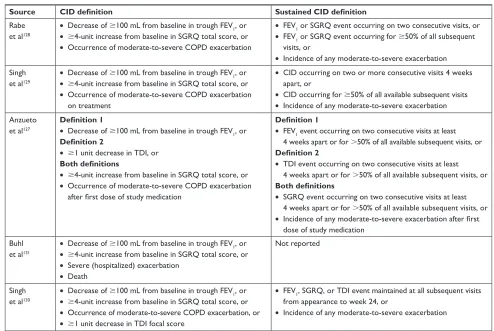
It will be of great interest to determine whether bronchodila-tor therapies may provide benefits to patients in terms of the deterioration of their disease over time. Clinically important deterioration (CID) is a composite end point that provides an indication of the progression of COPD. The different criteria that have been used to define CID are shown in Table 3.127–131
Table 3 Definitions of CID and sustained CID
Source CID definition Sustained CID definition Rabe
et al128
• Decrease of $100 mL from baseline in trough Fev1, or • $4-unit increase from baseline in SGRQ total score, or • Occurrence of moderate-to-severe COPD exacerbation
• Fev1 or SGRQ event occurring on two consecutive visits, or • Fev1 or SGRQ event occurring for $50% of all subsequent
visits, or
• Incidence of any moderate-to-severe exacerbation Singh
et al129
• Decrease of $100 mL from baseline in trough Fev1, or • $4-unit increase from baseline in SGRQ total score, or • Occurrence of moderate-to-severe COPD exacerbation
on treatment
• CID occurring on two or more consecutive visits 4 weeks apart, or
• CID occurring for $50% of all available subsequent visits • Incidence of any moderate-to-severe exacerbation Anzueto
et al127
Definition 1
• Decrease of $100 mL from baseline in trough Fev1, or Definition 2
• $1 unit decrease in TDI, or Both definitions
• $4-unit increase from baseline in SGRQ total score, or • Occurrence of moderate-to-severe COPD exacerbation
after first dose of study medication
Definition 1
• Fev1 event occurring on two consecutive visits at least 4 weeks apart or for .50% of all available subsequent visits, or Definition 2
• TDI event occurring on two consecutive visits at least 4 weeks apart or for .50% of all available subsequent visits, or Both definitions
• SGRQ event occurring on two consecutive visits at least 4 weeks apart or for .50% of all available subsequent visits, or • Incidence of any moderate-to-severe exacerbation after first
dose of study medication Buhl
et al131
• Decrease of $100 mL from baseline in trough Fev1, or • $4-unit increase from baseline in SGRQ total score, or • Severe (hospitalized) exacerbation
• Death
Not reported
Singh et al130
• Decrease of $100 mL from baseline in trough Fev1, or • $4-unit increase from baseline in SGRQ total score, or • Occurrence of moderate-to-severe COPD exacerbation, or • $1 unit decrease in TDI focal score
• Fev1, SGRQ, or TDI event maintained at all subsequent visits from appearance to week 24, or
• Incidence of any moderate-to-severe exacerbation
Abbreviations: CID, clinically important deterioration; Fev1, forced expiratory volume in 1 second; SGRQ, St George’s Respiratory Questionnaire; TDI, transition
dyspnea index.
International Journal of Chronic Obstructive Pulmonary Disease downloaded from https://www.dovepress.com/ by 118.70.13.36 on 22-Aug-2020
Dovepress
D’Urzo et al
In a post hoc analysis of pooled data from PINNACLE-1 and PINNACLE-2, GFF MDI significantly decreased the risk of patients experiencing a CID over 24 weeks compared with GP MDI, FF MDI, or placebo MDI (time-to-event HR [95% CI] 0.76 [0.68–0.85], 0.83 [0.74–0.93], and 0.56 [0.49–0.64], respectively; all P#0.0011).128 This reduction
in CID risk was in the same range reported by Singh et al for UMEC/VIL vs monocomponents (UMEC HR [95% CI] 0.80 [0.65–0.97], P,0.05; and VIL HR 0.67 [0.55–0.81],
P,0.001) over 24 weeks.129 Based on a CID definition very
similar to the definitions used by Rabe and Singh in these studies (Table 3), GP/IND also significantly reduced the risk of a CID over 26 weeks compared with the LAMA TIO (HR [95% CI] 0.72 [0.61–0.86]; P=0.0003).127 In GOLD
group B (symptomatic COPD and low risk of exacerbations) patients with COPD, time to CID was significantly longer with TIO/OLO 5/5 µg than TIO monotherapy (HR [95% CI] 0.65 [0.52–0.81]; P,0.0001), although the definition of CID used in this study did not include moderate-exacerbation occurrences in their assessment of exacerbation risk.131
Using another slightly different approach to assessing CID, two studies included a change in TDI score ($1 unit) in the definition of CID, as well as/instead of a $100 mL decrease in trough FEV1.127,130 In the first of these analyses,
ACL/FF significantly reduced the risk of a CID over 24 weeks compared with Acl, FF, or placebo (HR 0.85, 0.82, and 0.55 respectively; all P,0.05).130 When Anzueto et al replaced
the $100 mL decrease in trough FEV1 in the CID defini-tion with the $1 unit change in TDI score (definition 2),127
a significant decrease in the risk of a CID was maintained for GP/IND vs TIO (HR [95% CI] 0.80 [0.64–0.99];
P=0.0359).127
In addition to assessing the risk of a CID occurring during the treatment period, these post hoc analyses of COPD pro-gression also determined the risk that the CID experienced by a patient was “sustained”, eg, an FEV1 or SGRQ event observed on two consecutive visits or on $50% of subse-quent visits or any occurrence of a moderate or severe COPD exacerbation128 (for other definitions of sustained CID, see
Table 3). For almost all of these treatment comparisons, if sustained CID data were also reported, the pattern of risk reductions in patients experiencing a CID were maintained in the assessments of the risk of a sustained CID, ie, a sig-nificantly lower HR for LAMA/LABA FDC therapy versus comparator.127–130 Exceptions in which there was no
signifi-cant difference in the risk of sustained CID were ACL/FF vs ACL,130 UMEC/VIL vs UMEC,129 and GP/IND vs TIO
using CID definition 2.127
Overall, these post hoc analyses suggest that LAMA/ LABA FDC therapies may slow the progression of COPD in terms of declining lung function and quality of life and reduce the risk of clinically significant events, such as exac-erbations, in these patient populations over the time scales examined here. It will be important to determine if this effect of LAMA/LABA FDC therapies on disease progression is maintained over a longer time frame and in a real-world setting. For example, a recent meta-analysis by Calzetta et al suggested that the benefits of LAMA/LABA FDCs compared with monocomponent therapies in terms of lung function, dyspnea, and quality of life were retained at 3, 6, and 12 months of treatment.74 However, the relative
magni-tude of treatment difference between LAMA/LABA FDCs and monocomponents appeared to be greatest at 3 months and reduced by 6 and 12 months.74 It will also be interesting
to establish whether early intervention with LAMA/LABA FDCs may improve disease progression, as a recent 24-month study in patients with mild or moderate COPD demonstrated that TIO monotherapy improved annual decline in FEV1 compared with placebo.132
Clinical decision-making
Many patients with COPD have not received a formal diagnosis,6–9 so it is necessary to raise awareness of the
dis-ease among physicians and devise methods that encourage people with COPD symptoms or a history of exposure to risk factors to seek medical advice. Encouraging early interven-tion is particularly important, since it has been hypothesized that individuals with typical COPD symptoms, but who do not yet fulfill the spirometric definition of COPD, may still benefit from treatment with bronchodilators.133,134 Given the
new focus of ensuring appropriate use of ICSs and initiating LAMA/LABA FDCs in COPD, correct diagnosis is also important to ensure that cases of adult-onset asthma are distinguished from COPD in patients presenting with airflow limitation. Overall, timely diagnosis of patients with COPD will enable the early initiation of bronchodilator therapy, which has been shown to improve patients’ long-term health and quality of life.135
Combining bronchodilator therapy with pulmonary rehabilitation programs may provide another approach by which optimal bronchodilation can lead to improved PROs. For example, the addition of TIO to pulmonary rehabilita-tion leads to improvements in dyspnea and quality of life for patients with COPD compared with those who receive pulmonary rehabilitation plus placebo.136,137 Additional
research is required to determine whether LAMA/LABA
International Journal of Chronic Obstructive Pulmonary Disease downloaded from https://www.dovepress.com/ by 118.70.13.36 on 22-Aug-2020
Dovepress Developments in treatment of COPD: GFF MDI
FDC therapies in combination with pulmonary rehabilitation can provide additional benefits vs a single bronchodilator plus pulmonary rehabilitation.
Recent studies have suggested that a LAMA/LABA FDC may provide further clinical benefits compared to ICS/ LABA FDCs.46,138 However, although LAMA + LABA dual
therapy consistently improved the change from baseline in trough FEV1 compared with LABA + ICS, results obtained for exacerbation and health-related quality of life end points were not consistent between the different studies of LAMA +
LABA and ICS + LABA combinations.138,139 Therefore, more
prospective studies are required to determine the particular patient subgroups that may benefit from ICS-containing ther-apies, eg, patients who report frequent exacerbations or those with asthma–COPD overlap syndrome, and to identify patient subgroups in which ICS withdrawal may be recommended.54
The role of eosinophils in COPD and whether patients with eosinophil counts above specific cutoffs may benefit from ICS therapy is also yet to be extensively investigated.
Conclusion
It is important that clinical trials are designed so that they can inform clinical decisions. Clinical trials in which patients are stratified by disease phenotype or endotype will help to delineate optimal treatment for patients in particular pathophysiological subgroups, although it must be high-lighted that clinical phenotypes do not necessarily describe the underlying pathophysiology, and consequently may not predict response to potential, ideally curative, therapies.
COPD is a therapy area in which the incidence of disease is expected to continue to rise, and so it is crucial that treat-ments are optimized to meet the growing health and economic burden. While lung-function response to bronchodilators continues to be characterized, other studies are examining how bronchodilation ultimately translates into benefits in different patient subpopulations to ensure that optimal per-sonalized therapeutic management of COPD can be realized. In particular, we must consolidate the emerging evidence and clarify which characteristics of patients with COPD can assist in selecting the most appropriate therapy.
Acknowledgments
The PINNACLE studies were supported by Pearl, a mem-ber of the AstraZeneca Group. Medical writing support, under the direction of the authors, was provided by Thomas Owens, PhD of CMC CONNECT, a division of Complete Medical Communications, Manchester, UK, funded by AstraZeneca, Cambridge, UK in accordance with Good
Publication Practice (GPP3) guidelines. Bevespi Aerosphere is a trademark of the AstraZeneca group of companies. This review was supported by AstraZeneca. The sponsor did not place any restriction on authors about the statements made in the final article.
Author contributions
All authors contributed toward interpreting, critically revis-ing, and providing final approval of the manuscript, and agree to be accountable for all aspects of the work.
Disclosure
ADD has received research, consulting, and lecturing fees from Almirall, Altana, AstraZeneca, Boehringer Ingelheim (Canada), Forest Laboratories, GlaxoSmithKline, KOS Phar-maceuticals, Merck Canada, Methapharm, Novartis Canada/ USA, Ono Pharmaceutical, Pfizer Canada, Schering-Plow, Sepracor, and Skyepharma. MC has participated as a speaker and/or advisor in scientific meetings and courses under the sponsorship of Almirall, AstraZeneca, Biofutura, Boehringer Ingelheim, Chiesi Farmaceutici, GlaxoSmithKline, Lallemand, Menarini Group, Mundipharma, Novartis, Pfizer, Verona Pharma, and Zambon, and is or has been a consultant to ABC Farmaceutici, Chiesi Farmaceutici, Lallemand, Novartis, Recipharm, Teva, Verona Pharma, and Zambon. His insti-tution has received grants on his behalf from Almirall, Boehringer Ingelheim, Novartis, Verona Pharma, and Zambon. NAH has participated in scientific advisory boards and consulted for AstraZeneca, Genentech, GlaxoSmithKline, Mylan, Novartis, Roche, Sunovion, and Sanofi. His institu-tion has received grants on his behalf from AstraZeneca, Boehringer Ingelheim, Chiesi, Genentech, GlaxoSmithKline, Mylan, and Sunovion. RB reports personal fees from Astra-Zeneca, Chiesi, GlaxoSmithKline, and Takeda, and grants and personal fees from Boehringer Ingelheim, Novartis, and Roche. MRMY has received research funding, consulting fees, and speaker honoraria from Almirall, AstraZeneca, Boehringer Ingelheim, Forest Laboratories, GlaxoSmith-Kline, Novartis, Merck, Ono Pharmaceuticals, and Pfizer. The authors report no other conflicts of interest in this work.
References
1. Global Initiative for Chronic Obstructive Lung Disease. Global
Strat-egy for the Diagnosis, Management, and Prevention of COPD. COPD
[updated 2018]. Available from: http://www.goldcopd.org. Accessed February 18, 2018.
2. World Health Organization. Chronic obstructive pulmonary disease (COPD). Updated 2017. Available from: http://www.who.int/media-centre/factsheets/fs315/en. Accessed February 18, 2018.
International Journal of Chronic Obstructive Pulmonary Disease downloaded from https://www.dovepress.com/ by 118.70.13.36 on 22-Aug-2020
Dovepress
D’Urzo et al
3. Jones PW, Donohue JF, Nedelman J, Pascoe S, Pinault G, Lassen C. Correlating changes in lung function with patient outcomes in chronic obstructive pulmonary disease: a pooled analysis. Respir Res. 2011; 12:161.
4. Landis SH, Muellerova H, Mannino DM, et al. Continuing to Confront COPD International Patient Survey: methods, COPD prevalence, and disease burden in 2012–2013. Int J Chron Obstruct Pulmon Dis. 2014;9:597–611.
5. Rennard S, Decramer M, Calverley PM, et al. Impact of COPD in North America and Europe in 2000: subjects’ perspective of Confronting COPD International Survey. Eur Respir J. 2002;20(4):799–805. 6. Fukuchi Y, Nishimura M, Ichinose M, et al. COPD in Japan: the Nippon
COPD Epidemiology study. Respirology. 2004;9(4):458–465. 7. Miravitlles M, Soriano JB, García-Río F, et al. Prevalence of COPD in
Spain: impact of undiagnosed COPD on quality of life and daily life activities. Thorax. 2009;64(10):863–868.
8. Nascimento OA, Camelier A, Rosa FW, et al. Chronic obstructive pulmonary disease is underdiagnosed and undertreated in São Paulo (Brazil): results of the PLATINO study. Braz J Med Biol Res. 2007; 40(7):887–895.
9. Shahab L, Jarvis MJ, Britton J, West R. Prevalence, diagnosis and rela-tion to tobacco dependence of chronic obstructive pulmonary disease in a nationally representative population sample. Thorax. 2006;61(12): 1043–1047.
10. Barnes N, Calverley PM, Kaplan A, Rabe KF. Chronic obstructive pulmonary disease and exacerbations: patient insights from the global Hidden Depths of COPD survey. BMC Pulm Med. 2013;13:54. 11. Miravitlles M, Worth H, Cataluña JJ, et al. Observational study to
characterise 24-hour COPD symptoms and their relationship with patient-reported outcomes: results from the ASSESS study. Respir Res. 2014;15:122.
12. Price D, Small M, Milligan G, Higgins V, Gil EG, Estruch J. Impact of night-time symptoms in COPD: a real-world study in five European countries. Int J Chron Obstruct Pulmon Dis. 2013;8:595–603. 13. Uzaslan E, Mahboub B, Beji M, et al. The burden of chronic
obstructive pulmonary disease in the Middle East and North Africa: results of the BREATHE study. Respir Med. 2012;106 Suppl 2: S45–S59.
14. Jones PW, Brusselle G, dal Negro RW, et al. Patient-centred assessment of COPD in primary care: experience from a cross-sectional study of health-related quality of life in Europe. Prim Care Respir J. 2012;21(3): 329–336.
15. Tsiligianni I, Kocks J, Tzanakis N, Siafakas N, van der Molen T. Factors that influence disease-specific quality of life or health status in patients with COPD: a systematic review and meta-analysis of Pearson correla-tions. Prim Care Respir J. 2011;20(3):257–268.
16. Ding B, Small M, Holmgren U. A cross-sectional survey of current treatment and symptom burden of patients with COPD consulting for routine care according to GOLD 2014 classifications. Int J Chron
Obstruct Pulmon Dis. 2017;12:1527–1537.
17. AstraZeneca. Tudorza Pressair [prescribing information]. 2016. Available from: https://www.accessdata.fda.gov/drugsatfda_docs/ label/2016/202450s006lbl.pdf. Accessed February 18, 2018. 18. AstraZeneca. Eklira Genuair [summary of product characteristics] 2017.
Available from: http://www.ema.europa.eu/docs/en_GB/document_ library/EPAR_-_Product_Information/human/002211/WC500132661. pdf. Accessed December 11, 2017.
19. Novartis. Seebri Neohaler [prescribing information]. 2017. Avail-able from: https://www.accessdata.fda.gov/drugsatfda_docs/ label/2017/207923s002lbl.pdf. Accessed February 18, 2018. 20. Novartis Europharm. Seebri Breezhaler [summary of product
character-istics]. 2017. Available from: http://www.ema.europa.eu/docs/en_GB/ document_library/EPAR_-_Product_Information/human/002430/ WC500133769.pdf. Accessed December 11, 2017.
21. Boehringer Ingelheim International GmbH. Spiriva Respimat [summary of product characteristics]. 2017. Available from: https://www.spiriva. com/global/sites/default/files/Spiriva%20Respimat%20SmPC%20 13%20Jan%202017.pdf. Accessed February 18, 2018.
22. Boehringer Ingelheim. Spiriva Respimat [prescribing information]. 2017. Available from: http://docs.boehringer-ingelheim.com/ Prescribing%20Information/PIs/Spiriva%20Respimat/spirivarespimat. pdf. Accessed February 18, 2018.
23. GlaxoSmithKline. Incruse Ellipta [prescribing information]. 2017. Available from: https://www.accessdata.fda.gov/drugsatfda_docs/ label/2017/205382s008lbl.pdf. Accessed February 18, 2018. 24. Glaxo Group. Incruse Ellipta [summary of product characteristics].
2017. Available from: http://www.ema.europa.eu/docs/en_GB/ document_library/EPAR_-_Product_Information/human/002809/ WC500167430.pdf. Accessed December 11, 2017.
25. Schering. Foradil Aerolizer [prescribing information]. 2012. Available from: http://www.accessdata.fda.gov/drugsatfda_docs/ label/2012/020831s028lbl.pdf. Accessed February 18, 2018. 26. Novartis Pharmaceuticals. Foradil [summary of product
character-istics]. 2016. Available from: https://www.medicines.org.uk/emc/ medicine/1286. Accessed February 5, 2018.
27. Sunovion Pharmaceuticals. Arcapta Neohaler [prescribing information]. 2017. Available from: https://www.arcapta.com/Arcapta-Prescribing-Information.pdf. Accessed January 19, 2018.
28. Novartis Europharm. Onbrez Breezhaler [summary of product character-istics]. 2017. Available from: http://www.ema.europa.eu/docs/en_GB/ document_library/EPAR_-_Product_Information/human/001114/ WC500053732.pdf. Accessed December 11, 2017.
29. Boehringer Ingelheim. Striverdi Respimat [summary of product char-acteristics]. 2016. Available from: https://www.medicines.org.uk/emc/ medicine/28992. Accessed February 18, 2018.
30. Boehringer Ingelheim. Striverdi Respimat [prescribing information]. 2016. Available from: https://www.accessdata.fda.gov/drugsatfda_docs/ label/2016/203108s003lbl.pdf. Accessed February 18, 2018. 31. Glaxo Wellcome. Serevent Accuhaler [summary of product
charac-teristics]. 2014. Available from: https://www.medicines.org.uk/emc/ medicine/91. Accessed February 18, 2018.
32. Laube BL, Janssens HM, de Jongh FH, et al. What the pulmonary spe-cialist should know about the new inhalation therapies. Eur Respir J. 2011;37(6):1308–1417.
33. Tashkin DP, Celli B, Senn S, et al. A 4-year trial of tiotropium in chronic obstructive pulmonary disease. N Engl J Med. 2008;359(15):1543–1554. 34. D’Urzo A, Kardos P, Wiseman R. Practical considerations when pre-scribing a long-acting muscarinic antagonist for patients with COPD.
Int J Chron Obstruct Pulmon Dis. 2018;13:1089–1104.
35. Ismaila AS, Huisman E, Punekar Y, Karabis A. Comparative efficacy of long-acting muscarinic antagonist monotherapies in COPD: a systematic review and network meta-analysis. Int J Chron Obstruct Pulmon Dis. 2015;10:2495–2517.
36. Kew KM, Dias S, Cates CJ. Long-acting inhaled therapy (beta-agonists, anticholinergics and steroids) for COPD: a network meta-analysis.
Cochrane Database Syst Rev. 2014;3:CD010844.
37. Decramer ML, Chapman KR, Dahl R, et al. Once-daily indacaterol versus tiotropium for patients with severe chronic obstructive pulmonary disease (INVIGORATE): a randomised, blinded, parallel-group study.
Lancet Respir Med. 2013;1(7):524–533.
38. Cazzola M, Molimard M. The scientific rationale for combining long-acting β2-agonists and muscarinic antagonists in COPD. Pulm Pharmacol Ther. 2010;23(4):257–267.
39. Cazzola M, Page CP, Calzetta L, Matera MG. Pharmacology and thera-peutics of bronchodilators. Pharmacol Rev. 2012;64(3):450–504. 40. Calzetta L, Matera MG, Cazzola M. Pharmacological interaction
between LABAs and LAMAs in the airways: optimizing synergy. Eur
J Pharmacol. 2015;761:168–173.
41. Ikeda T, Anisuzzaman AS, Yoshiki H, et al. Regional quantification of muscarinic acetylcholine receptors and β-adrenoceptors in human airways. Br J Pharmacol. 2012;166(6):1804–1814.
42. Pauwels RA, Buist AS, Calverley PM, Jenkins CR, Hurd SS. Global strategy for the diagnosis, management, and prevention of chronic obstructive pulmonary disease. NHLBI/WHO Global Initiative for Chronic Obstructive Lung Disease (GOLD) workshop summary. Am
J Respir Crit Care Med. 2001;163(5):1256–1276.
International Journal of Chronic Obstructive Pulmonary Disease downloaded from https://www.dovepress.com/ by 118.70.13.36 on 22-Aug-2020