An Efficient Virtual Machine Placement for Load
Balancing in Cloud Computing
B.Thikkanna & R.R.S.Ravi Kumar
Asst.Professor, Dept. of CSE,Vidya Jyothi Institute Of Technology, Hyderabad.
Abstract - Because of adaptability and
opportune accessibility of desired
resources, cloud computing is getting
increasingly prevalent step by step. By
giving the predefined virtual machine
according to prerequisite, demands are
engaged. There will be infringement of
service level agreement if virtual machine
position will surpass the predetermined
time or wanted virtual machine isn't
accessible. In the progressively evolving
condition, it is exceptionally hard to
anticipate the quantity of client and their
necessities. Virtual machine is the prime
resource. So position of virtual machine
will be done such that resources ought to
be used productively and there ought to be
no infringement of service level agreement.
In the present work, author has given a
binarysearch tree based virtual machine
position way to deal with advance the
resource usage, limit the resource
distribution time and limit the service level
agreement infringement. Cloudsim test
system has been utilized to dissect and
analyse the consequences of binarysearch
tree based virtual machine situation
methodology with different techniques
found in literature.
IndexTerms:Cloud Computing,Cloudsim,
Load Balancing, Virtual Machine
Placement
1. Introduction
Cloud computing might be characterized
as the manner by which we can store
information or data for all time on servers
and incidentally reserve them on the
customer side through computers, laptops,
sensor, and so forth.”
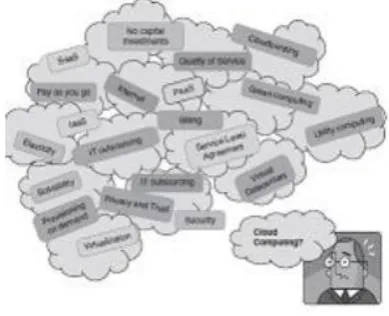
Fig -1:Cloud computing
Figure 1 demonstrates that the cloud
computing go about as a utility where
clients can get to services from anyplace
on the planet. Cloud computing is
energetically turning the tables towards
thriving the product for many clients to
drain it like a service, rather than keep
running on their individual PCs.
Xu Gaochao et al. have exhibited a novel
heuristic based live virtual machine
relocation arrangement for cloud condition
by joining the artificial bee colony (ABC)
thought with the uniform arbitrary
instatement thought, the binarysearch
thought, and Boltzmann choice strategy to
accomplish an enhanced ABC-based
approach with better worldwide
investigation's capacity and nearby
misuse's capacity. They have additionally
utilized the Bayes hypothesis to
additionally advance the enhanced
ABC-based procedure to speedier get the last
ideal arrangement. Thus, the entire
approach accomplishes a more drawn out
term productive improvement for control
sparing. The exploratory outcomes exhibit
that PS-ABC clearly lessens the aggregate
incremental power utilization and better
ensures the execution of VM running and
relocating contrasted and the current
research. It makes the aftereffect of live
VM movement all the more high-viable
and significant.
A. Mevada et al. have displayed an
Enhanced Energy Efficient Virtual
Machine Placement Policy for Load
Balancing in Cloud Environment. Authors
have proposed an adjusted form of energy
based VM position algorithm for decrease
vitality utilization, better load adjusting
and enhanced VM situation. The proposed
algorithm is yet to be executed and tried
under different on-going or recreation
condition.
S. Bose et al. have introduced a vitality
mindful cloud stack adjusting system
utilizing dynamic arrangement of
virtualized resources. Their algorithm
limits the aggregate number of running
servers and enhances the resource usage.
Likewise they have presented a technique
for managing the issue of over-burdening
while at the same time decreasing the
vitality utilized. Through exploratory
assessments it is exhibited that the
proposed algorithm can accomplish the
generous decrease in vitality utilization
and enhances the general resource use.
3. Resource Allocation
Idea of resource allocation is main issue of
fascination in binary and cloud computing.
The prime point of resource distribution is
to guarantee the allocation of right
resource to undertaking at ideal time.
While it additionally consider the improve
usage of resources. It additionally
guarantees that no resource is finished and
under-used. Different issues related with
resource assignment are the minimization
of cost and vitality utilization. Resource
allotment is actualized to accomplish stack
condition are the prime resources. Their
mapping with have machine includes the
resource assignment. In the event that
there are x number of virtual machine
whenever interim (0,t] and number of host
machine are y, at that point among the
aggregate xy number of VM have blend,
we need to picked that one which will be
the best. Higher the quantity of blend,
additional time will be required to pick the
best mix. So point of resource allotment
algorithm is to limit the quantity of mix to
be tried while additionally fulfilling every
one of the requirements.
3.1 VM Placement Algorithm
Classifications
Virtual machine arrangement is the
method for setting wanted virtual machine
on the appropriate physical machine. The
objective behind virtual machine and host
mapping is to streamline the resources,
limit the VM development, vitality
utilization and service level understanding
infringement. In light of the objective of
VM position, situation algorithm can be
partitioned into three classifications:
Quality of service based approach: When
the objective of VM position approach is
to enhance the nature of services i.e. limit
the service time, expand the throughput
and limit the service level understanding
infringement then that VM position
approach is called nature of service based
approach. This kind of approach brings
about proficient usage of resources.
Power based approach: When the objective
of VM position approach is to limit the
power utilization then that VM
arrangement approach is called control
based approach. This is required because
of following variables:
More power utilization will bring about all
the more cooling cost.
Price of energy is expanding step by step.
Computation based approach: Depending
upon the idea of algorithm condition, we
can have static or dynamic VM situation
approach. At the point when the VM
arrangement is finished by some
predefined lead, at that point it is called
static VM position approach. While, when
it depends on the current conditions then it
is known as the dynamic VM position
approach.
3.2 VM Placement Approaches
Rank Based Approach: This approach is
utilized by open source cloud stage Open
Nebula. Host machines are doled out some
pre characterized need. While mapping
VM with have machine, scheduler thinks
about the need of host machine.
Contribution to this algorithm is
predefined rank and undertaking necessity
Greedy Algorithm: This approach is
utilized by open source cloud stage
Nimbus and Eucalyptus. This approach is
exceptionally straightforward in nature and
simple to actualize. The host machine
which can run the client characterized
arranged virtual machine discovered first
is chosen to outline virtual machine.
Contribution to this algorithm is virtual
machine necessity and yield is having
machine id.
Round Robin Algorithm: This approach is
utilized by open source cloud stage
Nimbus and Eucalyptus. In this approach
errand necessity isn't considered. VM
supervisor stores the id of host which has
been mapped with VM. On landing of next
errand, VM is mapped with the following
host in the rundown.
4. Cloudsim Simulator
Cloudsim is free and open source software.
It is a code library in light of Java. This
library can be straightforwardly utilized by
coordinating with the JDK to order and
execute the code. To create and test the
applications rapidly, Cloudsim is joined
with Java-based IDEs (Integrated
Development Environment) including
Eclipse or NetBeans. Utilizing Eclipse or
NetBeans IDE, the Cloudsim library can
be gotten to and the cloud algorithm can be
executed. The Cloudsim library is utilized
for the reproduction of the accompanying
operations:
Large scale cloud computing at server
farms
Virtualized server has with adaptable
arrangements.
Support for demonstrating and recreation
of substantial scale cloud computing server
farms.
Support for demonstrating and recreation
of virtualized server has, with adjustable
arrangements for provisioning host
resources to VMs.
Support for displaying and reproduction of
vitality mindful computational resources.
Provide office of reproduction and
displaying of server farm arrange
topologies and message-passing
applications.
Support for displaying and reproduction of
combined mists.
Support for dynamic inclusion of
reproduction components, and in addition
ceasing and continuing reenactment.
Support for client characterized
arrangements to assign hosts to VMs, and
approaches for allocating host resources to
VMs.
User-characterized arrangements for
assignment of hosts to virtual machines.
A binarysearch tree based virtual machine
have mapping plan has been proposed to
improve the resource use alongside
limiting the infringement of service level
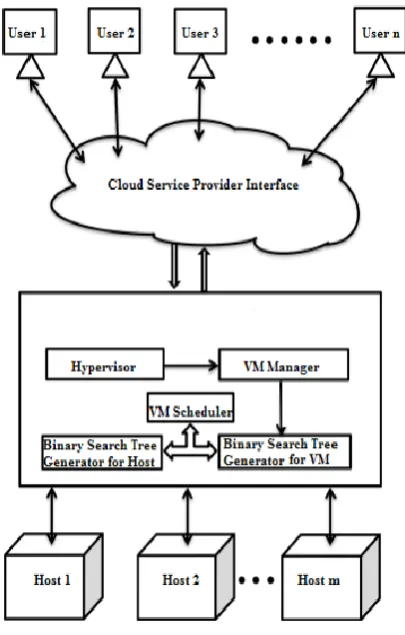
agreement. Figure 2 demonstrates the
structure for proposed conspire.
Fig -2:Framework for binary search tree
based VM host mapping approach
User forwards their task through interface
of cloud service provider over internet
towards CSP. Contingent on the
prerequisites of errand got by Hypervisor
module, virtual machine with wanted
determination is created. VM supervisor
monitors all live virtual machines.
Through VM supervisor, binarysearch tree
containing the rundown of all pending VM
is created. Resource Requirement to a VM
is utilized to produce the binarysearch tree.
This binary tree is sent towards VM
scheduler. VM scheduler chooses the most
elevated resource required virtual machine.
As binarysearch tree has been utilized to
keep up the rundown of accessible VM, so
it will require at most log (N) time to look
through the hub. Here N is the quantity of
hubs in binarysearch tree. Binary look tree
for accessible host machines is likewise
produced in view of the accessibility of
resources. This will guarantee the best
mapping of VM with wanted host in log
(M) time where M is the quantity of host
machine. Subsequent to finding the
reasonable host machine, its id is come
back to VM supervisor which at that point
maps the VM with have. Both the
binarysearch tree will be refreshed after
each fresh introduction or flight of errand.
VM resource requirement (VMR) and host
resource availability (HR) is
communicated as numeric esteem.
Coordinating variable M is ascertained
utilizing the accompanying formula:
So while looking through the host machine
tries to find that host which makes the
coordinating variable value1 or <1.
Algorithmic portrayal of proposed work is
as per the following:
AlgorithmBST_VMH_Mapping()
{
Initialize the set H with accessible
arrangement of host machines alongside
accessible resources;
Construct the binarysearch tree comparing
to have machines;
While (task is there)
{
Distinguish the necessities of
assignment;
Produce the VM with the
predefined resource necessities;
Develop the binarysearch tree
relating to virtual machines;
Presently look through the both binary
search tree with the goal that Matching
element (M) for VM have mapping will
move toward becoming 1 or <1;
Do the mapping;
Refresh both the binary search tree;
}
}
Time Complexity Analysis: If there are N
number of virtual machines and M number
of hosts, at that point time intricacy for
developing and looking of binary scan tree
for Host resource accessibility will be
log(M). So add up to time required to
outline virtual machines with have
machine of required particular will be
N(log(M)), which is direct in nature. So
time many-sided quality of proposed
approach isn't just direct in nature yet it
likewise maps the VM with best host
machine.
6. Results
To test and contrast the proposed approach
and the current one, three distinct
situations have been produced. Proposed
approach has been contrasted and rank
based, voracious first fit and round robin
based approach.
In the situation 1, 10 diverse VM whose
resource prerequisites are differing from
256 to 2048 have been created. Likewise
10 Host machines are produced which
have resources fluctuating from 512 to
2048.
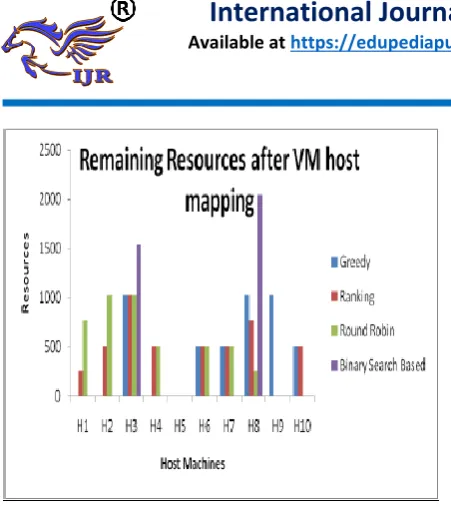
Figure 3 demonstrates the powerful use of
resources in various procedures. It has
been discovered that in proposed
binarysearch based approach resources are
not squandered as lumps while in different
methodologies, resources at various hosts
are squandered as pieces. Additionally
from figure 4, it has been discovered that
rank based approach takes additional time
in contrast with other VM have mapping
Fig -3: Usage of resources for different
VM host mapping approach
Fig -4: Comparison of different VM host
mapping approach with respect to time
In the situation 2, 20 diverse VM whose
resource prerequisites are fluctuating from
256 to 4096 have been created. Likewise
10 Host machines are produced which
have resources changing from 1024 to
4096.
From figure 5, it can be inferred that on the
off chance that we take after the
binarysearch based, at that point most
extreme number of VM have mapping is
done with respect to other VM have
mapping strategies. This demonstrates the
adequacy of the proposed approach.
Fig -5: Comparison of different VM host
mapping approach with respect to number
of VM allocated
Fig -6: Usage of resources for different
VM host mapping approach
Also from figure 6, it has been discovered
that in proposed binarysearch based
approach resources are not squandered as
pieces while in different methodologies,
resources at various hosts are squandered
as lumps.
In the situation 3, 50 distinctive VM
fluctuating from 512 to 2048 have been
produced. Likewise 30 Host machines are
created which have resources shifting from
1024 to 4096.
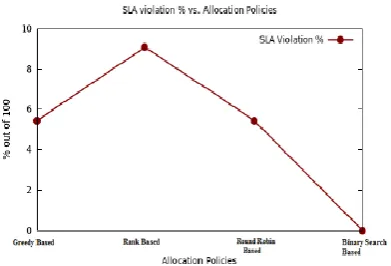
Following equation is utilized to ascertain
the SLA infringement: (100-(Service
conveyed/Service Requested)100).
Diagram of figure 7 demonstrates that
SLA infringement is zero if there should
arise an occurrence of binarysearch based
VM have mapping, while it was non zero
in other mapping.
Fig -7: Comparison of different VM host
mapping approach with respect to SLA
violation
7. Conclusion
Among the distinctive issues of cloud
computing, organization of virtual
machine is significant issue. It is so as
various clients are requesting diverse
resources at various time from various
areas. Their solicitations are engaged as far
as determined virtual machines inside the
particular time. So a proficient virtual
machine position approach is the need of
cloud condition. It must be with the end
goal that it enhances the resource use as
well as limit the resource portion time and
limit the service level agreement
infringement.
In the present paper, diverse virtual
machine organization approaches utilized
by various cloud specialist co-op has been
examined. At that point the new strategy
has been talked about and contrasted and
existing utilizing cloudsim test system. It
has been distinguished that proposed
approach beats the current one on every
pertinent parameter.
Usefulness of proposed work can be
additionally upgraded by consolidating the
element of virtual machine movement with
proposed virtual machine arrangement
approach.
References
[1] M. Sharma and P. Sharma,
“Performance Evaluation of Adaptive
Virtual Machine Load Balancing
Algorithm,” International Journal of
Advanced Computer Science and
Applications, vol. 3, no 2, pp. 86-88,
ISSN: 2156-5570, 2012.
[2] M. Sharma, P. Sharma and S. Sharma,
“Efficient Load Balancing Algorithm in VM Cloud Environment,” International
Journal of Computer Science and
ISSN: 0976- 8491[online], ISSN:
2229-433[print], Jan-March 2012
[3] J. James and B.Verma, "Efficient VM
Load Balancing Algorithm for a Cloud
Computing Environment," International
Journal on Computer Science &
Engineering, vol. 4,pp. 1658-1663, ISSN:
0975-3397, September 2012.
[4] M. M. Ladani and Vinit Kumar Gupta,
"A Framework for Performance Analysis
of Computing Clouds," International
Journal of Innovative Technology and
Exploring Engineering (IJITEE), vol. 2, no
6, pp. 245-247, ISSN: 2278-3075, May
2013.
[5] M. Vaidehi, K.S. Rashmi and V. Suma,
“Enhanced Load Balancing to Avoid
Deadlock in Cloud,” International Journal
of Computer Applications on Advanced
Computing and Communication
Technologies for HPC Applications, pp.
31-35, June 2012
[6] http://www.internetworldstats.com as
on Aug. 2015G. Eason, B. Noble, and I. N.
Sneddon, “On certain integrals of
Lipschitz-Hankel type involving products
of Bessel functions,” Phil. Trans. Roy.
Soc. London, vol. A247, pp. 529–551,
April 1955.
[7] P. Sasikala, “Cloud computing: Present
Status and Future Implications,”
International Journal of Cloud Computing,
vol. 1, no. 1, 2011, pp. 23-36.
[8] A. Jain and R. Kumar, “A Taxonomy
of Cloud Computing,” International
Journal of Scientific and Research
Publications. vol. 4(7), Jul. 2014, pp. 1-5.
[9] P. Patel and A. K. Singh, “A survey on
resource allocation algorithms in cloud
computing environment,” In Golden
Research Thoughts, vol. 2(4), 2012.
[10] A. Jain and R. Kumar, “A
Comparative Analysis of Task Scheduling
Approaches for Cloud Environment,”
International Conference On Computing
for Sustainable Global Development,
2016, pp. 2602-2607.
[11] N. Bobro, A. Kochut and K Beaty,
“Dynamic placement of virtual machines for managing sla violations,” In 10th
IFIP/IEEE International Symposium on
Integrated Network Management, IM'07.,
2007,pp. 119-128.
[12] B. Sotomayor, R. S. Montero, I. M.
Llorente and I. Foster, “Virtual
infrastructure management in private and
hybrid clouds,” Internet Computing, vol.
13(5), 2009, pp.14-22.
[13] H. Zhong, K. Tao and X. Zhang, “An
approach to optimized resource scheduling
algorithm for open-source cloud systems,”
In China Grid Conference (China Grid),
[14] G. Xu, Y. Ding, J. Zhao, L. Hu and X.
Fu, “A novel artificial bee colony
approach of live virtual machine migration
policy using bayes theorem,” The
Scientific World Journal. 2013.
ABOUT AUTHORS:
B.Thikkanna is currently working as
Asst.Professor in CSE department,Vidya
Jyothi Institute of Technology,Hyderabad..
He received his B.Tech in Sri
Vidyaniketan Engineering
College.Tirupati and M.Tech from
SIT,JNTUH,Hyderabad. His research
includes Cloud Computing and Mobile
Computing.
R.R.S.Ravi Kumar is currently working as
Asst.Professor in CSE department,Vidya
Jyothi Institute of Technology,Hyderabad..
He received his B.Tech in Regency
Institue of Technology,Yanam.and M.Tech
from Acharya Nagarjuna
University,Guntur. His research includes