313 | P a g e
COMPARATIVE ANALYSIS OF LEMONGRASS OIL
APPLICATION ON TEXTILE SUBSTRATE
THROUGH MICROENCAPSULATION AND
EXHAUST METHOD
L. Bhatt
1, S. S. J. Singh
21
Department of Fibres and Textile Processing Technology, I.C.T., Mumbai, (India)
2
Department of Textile and Apparel Designing,
ICCOHS, CCSHAU, Hisar, Haryana, (India)
ABSTRACT
In this study application of lemongrass oil on fabric was done via two methods: oil microcapsules applied through padding and exhaust method. Lemongrass oil microcapsules were prepared using complex coacervation technique and applied on fabric using pad dry cure technique. The retention of aroma on the samples treated with both techniques was assessed before and after washing and the one giving better results was subjected to further testing i.e. SEM analysis and antimicrobial efficacy. The antimicrobial assessment of the control and treated fabric was done through AATCC-100. The results revealed that fabrics treated with lemongrass oil microcapsules were more effective in fragrance retention as compared to the fabrics treated with exhaust method. The lemongrass oil microcapsules treated fabric showed 80% bacterial reduction. SEM micrographs revealed that the microcapsules were spherical in shape and the fabrics were able to retain microcapsules till 30 washes.
Keywords:
Aroma Finish, Antimicrobial, Exhaust, Microencapsulation, Textile Finishing, Wash
Durability
I.INTRODUCTION
Essential oils are the highly concentrated extracts from herbs, plants and flowers [1]. They are used in single or
in combination to bring about soothing and curative process in mind and body. They have calming, stimulating,
pain reducing and mood enhancing effects. [2]. Recently consumers‟ expectations are very much higher, they
expect their clothing to perform multiple functions from aesthetic to basic protection.Garments act as second
skin so they are the excellent media to transfer wellness effect too. The addition of fragrances to textiles has
been carried out for many years in the form of fabric conditioners in the wash and tumble drying process but the
effect was short lived. To achieve durable aroma finish on textiles has been a long time dream for textile
chemists. As fragrances are volatile so they evaporate away and do not stay for long periods and are not resistant
314 | P a g e
Microencapsulation can effectively control the release rate of fragrance compounds and essential oils asrequired which ensures the storage life of volatile substance [3] Microencapsulation is a technique to prepare
microcapsules, small particles that contain an active agent or core material surrounded by coating or shell of
limited permeability [4]. Microencapsulation is an innovation wherein active material is enveloped in a coating
or capsule which protects it from external environment. The aroma capsule is a kind of container that provides
both space for storing a certain amount of aromatic matter and a protective shield from the effects of sunlight,
moisture and oxygen. Release of aroma is by diffusion of the fragrance through the capsule wall and rupture of
the capsules [5]. These capsules can be applied to fabric through simple pad-dry sequence. During wear, simple
mechanical rubbing of fabric gradually ruptures the membrane releasing active ingredient as moisturising or
deodorising effects.
The wellness business is proactive. People voluntarily become consumers to feel fresh, to reduce the effects of
odour and to alleviate there moods. Aroma textiles offer a new challenge and field is wide open to innovation.
As well they can also act a antibacterial, mosquito repellent, insect repellent etc. The present work aimed to
develop lemongrass oil microcapsules and to analyse the effect of application method on durability of finish.
II.MATERIALS AND METHODS
Cotton Fabric 200 thread count was sourced from local market of Haryana. Lemongrass oil was purchased from
Fine fragrances, Mumbai. Gum Acacia, Gum Arabic, Gelatine, Acrylic Binder ST and alcoholic formalin was
procured from Dalton Chemicals, New Delhi
1.1 Preparation of Fabric
The cotton fabric was desized, bleached and scoured to make it ready for treatment.
2.2 Application of Lemongrass oil by Exhaust Method
Cotton the fabric finished by exhaustion method with 5% acrylic binder ST which is used as cross-linking agent.
The fabrics were kept immersed in the solution containing 10 % lemongrass oil, (ML ratio – 1: 10) for 20-30
minutes at 40 ºC in water bath. After finishing, the fabrics were removed, squeezed and dried at 100 ºC in the
oven for 5 minutes and then cured at 120 ºC for 2 minutes. [6]
2.3 Preparation of lemongrass oil microcapsules
Complex coacervation technique was used to prepare microcapsules. 12 g of gelatin was dissolved in warm
water and stirred at high speed for 10 minutes. 4 g of core material was added to the solution at 40ºC. 12 g of
gum acacia was dissolved in water separately and was added to the gelatine solution and the temperature of the
solution was maintained at 40ºC. The pH of the solution was decreased to 4.5. The solution was stirred at high
speed for 20 minutes and the temperature was lowered to 5ºC for gel formation. The pH was increased to 8.5 to
315 | P a g e
The resultant precipitate obtained was analyzed under inverted microscope to ensure the formation ofmicrocapsules. [7]
2.4 Application of Microcapsules on Fabric
The cotton fabric sample was immersed in the padding solution with 110-120 expression using pneumatic
padding mangle, squeezed and cured at 80-85ºC for few minutes. [8]
2.5 Assessment of Finished Fabrics for Wash Durability
Wash durability test was carried out as per the recommendation of IS: 3361-1979 (ISI handbook of textile
testing, 1982e) in a „laundrometer‟ using 5gpl of soap and M:L ratio 1:50 for 45 minutes at 50 ± 2º C. After
removing fabric specimen from laundrometer after 5, 10, 15, 20, 25 and 30 wash cycles it was rinsed twice in
cold water and then in running tap water for 10 min and squeezed. The finished specimen was dried in air at a
temperature not exceeding 60 ºC.
2.6 SEManalysis of treated and washed fabrics
Scanning electron microscope was used to ensure the presence of microcapsules in the treated samples and
samples after different number of washing. The treated fabric samples of 10 mm diameter were mounted on the
circular metallic sample holder and samples were analyzed at a magnification of 1200 x and images were
captured
.
2.7 Retention of aroma after wash
The treated samples and washed samples were evaluated against aroma retention by 20 experts through survey
technique using olfactory analysis. The aroma assessment was based on Lewis‟s procedure [9]. A portion of
each fabric was removed after 5, 10, 15, 20, 25 and 30 wash cycles, tested for the presence of fragrance by the
experts. To detect odour, a specimen was put on a desk and the expert used a fingernail to scratch “X” on the
specimen to rupture some capsules and smell the swatch. The size of “X” was about 3x3 cm. The responses
were recorded as „Yes‟ or „No‟. If the aroma was judged to be present by majority of experts, the condition was
noted as passing.
2.8 Antimicrobial Assesment of Treated Fabrics
AATCC 100 was used for antimicrobial testing. Treated test samples and untreated control samples were
inoculated with a representative test organism. The test organism is allowed to expose to the test material at an
elevated temperature, typically for 24 hours. Following exposure, the samples are neutralized and quantitatively
assayed for survivors. The resulting plates are incubated, the number of survivors is enumerated and a
percentage reduction is determined for the treated test material as compared to the untreated control material.
[10]
316 | P a g e
3.1 Selection of Oil
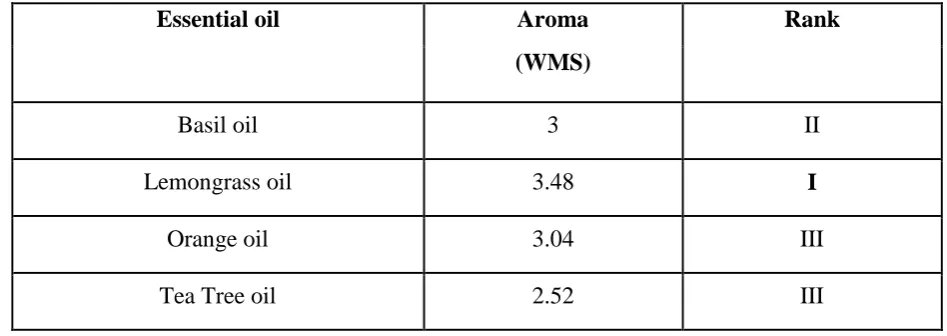
Table 1 shows that the survey results and reveals that Lemongrass oil was the most preferred essential oil on the
basis of frangrance preferred by people, therefore it was used for further experimental work
3.2 Microcapsule Formation
The precipitate obtained through complex coacervation technique was analysed under inverted microscope and
it was observed that several spherical shaped microcapsules were formed. (Fig 1).
3.3 Wash Fastness of Treated
Fabric
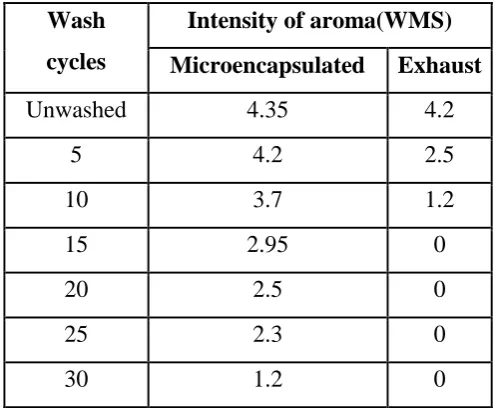
Table 2 and Fig 2 shows the olfactory analysis results of the washed samples revealed that the fabric treated
through exhaust method retained fragrance only till 10 washes while the fabric treated through the oil
microcapsules retained fragrance till 30 washes.
3.4 Intensity of Aroma after Wash
The treated and washed samples were evaluated against intensity of aroma by 20 respondents on a 5 point scale.
Table 3 and Fig. 3 clearly depicts that the intensity of aroma is strong during the first few washes and then it
decreases gradually, but faint aroma is present even after 30 washes in the fabric treated with oil microcapsules
while the fabrics treated by exhaust method retained faint aroma only till 10 washes.
3.5 SEM Analysis of Microencapsulated Fabrics
Fig. 4 shows the SEM analysis of microencapsulated fabric depicts the presence of too many microcapsules the
treated fabric and few microcapsules can be seen in the fabric with 30 washes. As the number of washes
increases the number of microcapsules on fabric decreases
.
3.6 Antimicrobial Assessment of Microcapsule treated fabric
As the wash fastness of microcapsule treated fabric samples was better than the one‟s treated with exhaust
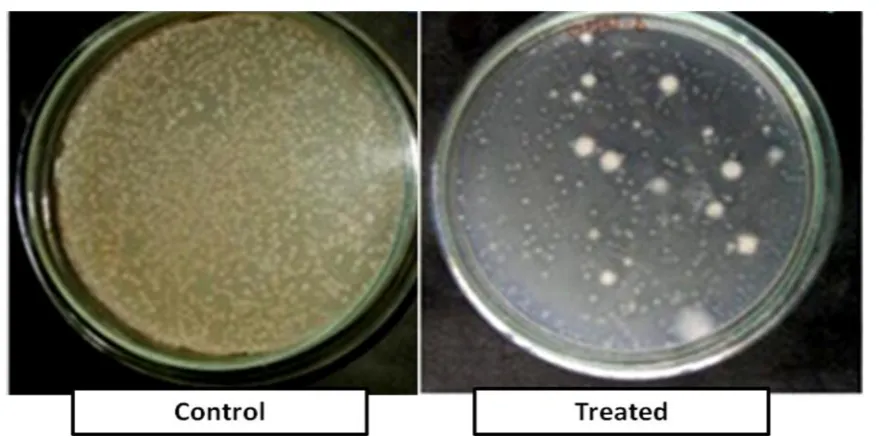
therefore the microcapsule treated samples were further tested for the antimicrobial efficacy using the AATCC
100 method. The treated fabric showed 80% reduction in bacterial colonies as compared to control. (Fig 5)
IV.CONCLUSION
Spherical shaped stable microcapsules can be prepared with complex coacervation technique. The wash
durability results revealed that the finishing done on fabrics with exhaust method are less durable as compared
to the ones treated with microcapsules. SEM analysis of the microencapsule treated fabric also revealed the
presence of large number of microcapsules in the treated fabric and the number gradually decreased with the
increase in the number of wash cycles. Microencapsulation technique can be used to apply essential oils on the
317 | P a g e
treated fabric. Further studies can be done to increase the wash durability of the finish and application ofdifferent oils.
REFERENCES
[1] Thilagavathi G & Kannaian T, Combined antimicrobial and aroma finishing treatment for cotton, using
microencapsulated geranium (Pelargonium graveolens L.) leaves extract. Indian J Natural Products Resources, 1 (3) (2011) 348-352.
[2] Vijaylakshami D & Ramchandran T, Application of natural oil on light weight denim garment and analysis
of its multi-functional performances, Indian Journal of Fibre & Textile Research, 38, (2013 ) 309-312. [3] Slavica S.M., Dejan B. and Petar S..Microencapsulation in the textile industry. CI & CEQ. 12(1), (2005)
58-62.
[4] Benita, S. Microencapsulation: methods and industrial applications (Marcel Dekker, Inc., New York 1996)
[5] Nelson, G. Application of microencapsulation in textiles. International Journal of Pharmaceutics. 221, (2002) 35–42.
[6] Kumar D.V. et. al. Aesthetic Finishes for Home Textile Materials, International Journal of Textile Science. 1(3), (2012) 5-9.Teli, M. D., Adivarker et a
[7] Teli, M. D., Adivarker R. V. and Kumar A. Ramesh. Microencapsulation of Disperse dyes by coacervation
methods. Journalof Textile Association.66(1), (2005) 27-34.
[8] Sukumar, N. and Laxmikantha, C.B.. Methods of encapsulation and their evaluation of the natural aromatic
oils in textile material. Ind. J. Applied Sci. 56(11) (2008) 56-69.
[9] Lewis, E. Washing durability of microencapsulated aroma finish. Tex. Res. J. 76(14) (2006) 29-36. [10] http://www.accuratuslabs.com/aatcc-100-assessment-of-antibacterial-finishes-on-textile-materials-3/