Performance Evaluation of Color filter array Using Ant
Colony Based Color Filter Array
Er.Simranpreet Kaur Er.Richa Sharma
Computer Science and Engineering AP of department (Information Technology)
Global Institute Of Management and Emerging Global Institute Of Management and Emerging
Technologies Amritsar Technologies Amritsar
[email protected] [email protected]
Abstract: :-
A demosaicing algorithm is a digital imageprocess used to reconstruct full color image from the incomplete color samples output from an image sensor overlaid with a color filter array (CFA). Most modern digital cameras acquire images using a single image sensor overlaid with a CFA, so demosaicing is part of the processing pipeline required to render these images into a viewable format. Many modern digital cameras can save images in a raw format allowing the user to demosaicing using software, rather than using the camera's built-in firmware. Thus demosaicing becomes and major area of research in vision processing applications. This research work deals with improving the content based color filter array further by using Ant colony algorithm based interpolation of green channel. This work has focused on reducing the problem of color artefacts by using the color channel normalization.
KEYWORDS:- CFA, DEMOSAICING, COLOR
CHANNELS, ANT COLONY OPTIMIZATION.
I. INTRODUCTION
A demosaicing [1]- [4] is just a digital image process used to reconstruct full color image from incomplete color samples output from image sensor overlaid with a shade filter array (CFA). It's also referred to as CFA interpolation. Usage of digital cameras is spreading widely because they are easy image input devices. The increasing popularity of digital cameras has provided motivation to boost all elements of the digital photography signal chain. To lower cost, digital color cameras typically work with a single image detector. Color imaging with an individual detector requires the utilization of a Color Filter Array (CFA) which covers the detector array. In this arrangement each pixel in the detector samples the intensity of one of the many-color separations. The recovery of full-color images from a CFA-based detector requires a method of calculating values of another color separations at each pixel..
In a single-detector camera, varying intensities of light are measured at an rectangular grid of image sensors.
Figure 1: Bayer Filter Sample (adapted from [9])
A digital camera typically has means to reconstruct a whole RGB image using the above information. A color filter array is really a mosaic of color filters facing the image sensor. Commercially, the most commonly used CFA configuration is the Bayer filter illustrated here. This has alternating red(R) and green (G) filters for odd rows and alternating green (G) and blue (B) filters for even rows .There are twice as many green filters as red or blue ones, catering to the human eye's higher sensitivity to green light. The filter pattern is 50% green, 25% red and 25% blue, hence can be called RGBG , GRGB or RGGB. The raw output of Bayer-filter cameras is referred to as a Bayer pattern image. Since each pixel is filtered to record only one of three colors, the info from each pixel cannot fully determine color on its own.
Lu Fang, Au.Oc and Katsaggelos A.k (2012) [10] presents an Adaptive Joint Demosaicing and Sub pixel-based Down-sampling scheme (AJDSD) for single-sensor camera image, where the sub pixel-based down-sampling is adaptively and directly applied in Bayer domain, without the process of demosaicing.Azgin H, Yaliman S and Hamzaoglu.I 2014 [2] presents that the images pass through a color filter array before being captured by the image sensor. Yung-Hsiang Chiu, Kuo-Liang Chung (2014) [6] has proposed a greater version of Yang et al.' s universal sub-sampling technique for compressing mosaic videos with arbitrary red–green–blue
(RGB) color filter arrays in H.264/AVC. Chi-Yi Tsai and Kai-Tai Song (2007 )[5] has reduced the aliasing error in red and blue channels by exploiting high-frequency information of the green channel. Jimmy Li et al. (2012) [8] has proposed an adaptive method in order to avoid inclusion of the bad pixels in the interpolation process has proposed. Bayram and Husrev T. Sencar (2008) [3] employ two methods and define some image characteristics which are utilized as features in designing classifiers that distinguish between digital camera models. The very first method tries to estimate demosaicing parameters assuming linear model while the second one extracts periodicity features to detect simple forms of demosaicing. Barbara Daja and Mirjana Bonkovic (2013) [9] show that correct modeling of the Bayer pattern in the generative process improves the super resolution performance for colour images. Sebastien Courroux and Stephane Chevobbe (2013) [7] have investigated the chance to utilize the wavelet representation to perform high quality image processing algorithms at a lowered computational complexity than utilising the spatial representation. Shan Baotanga, Shen Tingzhib(2012) [4] In order to improve the compression performance of Bayer CFA images exposed continuously, a new high performance remainder set near-lossless compression method is presented
II. PROPOSED ALGORITHM
Input: Instance x ԑ I of П𝑜𝑝𝑡
Set algorithm parameters ()
I , j ← 0
for j=1 to colonies do
Ant 𝑠0← Create sub colony and release agent
while not-termination conditions
on sub-colony do
i = i+1
Manage_ants activity ()
Manage_Pheromone ()
Manage_Demon Action ()
Selection Procedure ()
Compute Solution Quality ()
end while
j = j+1
𝑆𝑏𝑒𝑠𝑡← candidate to be optimal solution
Update pheromone on arc ()
end for
Output: 𝑆𝑏𝑒𝑠𝑡 “candidate“ to be the best found solution x ∈ I
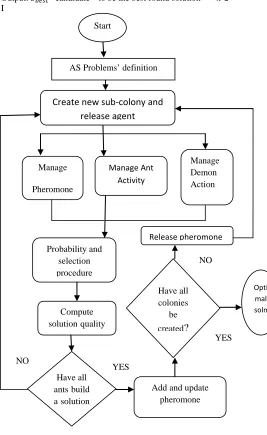
Figure 2:- Flow chart of proposed algorithm Start
AS Problems’ definition
Manage
Pheromone
Manage Ant Activity
Manage Demon Action
Probability and selection procedure
Release pheromone
Compute solutionquality
Have all antsbuild asolution
Have all colonies
be
created
?
Add and update pheromone
Create new sub-colony and
release agent
Opti mal soln
NO
YES
NO
YES
III.FLOW CHART OF PROPOSED METHODOLOGY
Figure 3:- Flow chart of proposed methodology.
Step 1:- Color image is given as input in order to find out the missing pixels.
Step 2:- Bayer layer is applied on the input image. A Bayer filter mosaic is a color filter array (CFA) for arranging RGB color filters on a square grid of photo-sensors. The filter pattern is 50% green, 25% red and 25% blue, hence is also called RGBG GRGB, or RGGB.
Step 3:- Differentiate each channel i.e red, green and blue channels.
Step 4:- Red channel is evaluated linearly and then missing red values are find out at the missing pixels. The green channel is evaluated using Ant Colony Based CFA(color filter array) and the corresponding missing pixels generated. Blue channel is evaluated linearly and then missing blue values are find out at the missing pixels.
Step 5:- Color normalization is performed on the image obtained in which the fakse color artifacts are remove.
Step 6:- Finally, the complete R,G,B image is generated.
Step 7:- The comparison of content based color filter array with proposed color filter array based on the following parameters:-i.e Peak signal to noise ratio , Mean square error , Bit error rate , Root mean square error and Average error.
IV. EXPERIMENT RESULTS
Figure 4:- This is the screenshot of the input image on which the ant colony algorithm is to be applied to find out the missing
values.
Figure5:- This is the screenshot of the compressed image when bayer pattern is placed over the input image
Figure 6:- This is the screenshot of the image that has been billinearly interpolated .(for eg) red value of non-red pixel is computed as the average of two or four adjacent red pixels.
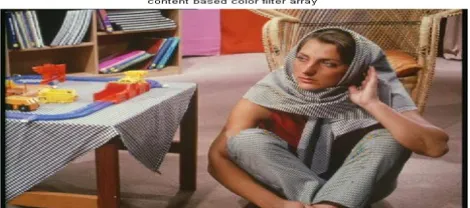
Figure 7:- This is the screenshot of content based color filter array (CFA).
Figure 8:- This is the screenshot of the resultant image which is obtained after applying the ant colony algorithm.
Table 1:- MSE (Mean square Error) ANALYSIS
Image Bilinear Interpolation
Content Based CFA
Proposed
1 81 42 42
2 5 4 2
3 67 36 36
4 11 8 7
5 66 24 23
6 62 22 18
7 130 42 39
8 21 10 9
9 161 49 29
10 3 1 1
This table shows the Mean Square Error (MSE) values of bilinearly interpolated image, content based CFA and proposed method(Ant Colony).This table clearly shows the values of MSE is clearly less than the other existing methods
Fig 9 :- Mean Square Error (MSE) Analysis
Table 2:- PSNR (Peak signal to noise ratio) ANALYSIS
Image Bilinear Interpolation
Content Based CFA
Proposed
1 29.046 31.898 31.898
2 5.993 4.353 2.855
3 29.870 32.567 32.567
4 37.716 39.099 39.679
5 29.935 34.328 34.513
6 62.104 22.869 18.839
7 26.991 31.898 32.220
8 34.908 38.130 38.588
9 26.062 31.228 31.228
10 43.359 48.130 48.130
This table shows the Peak Signal To Noise Ratio (PSNR) values of billinearly interpolated image, content based CFA and proposed method(Ant Colony).This table clearly shows the values of PSNR is clearly more than the other existing methods.
Fig 10:- Peak Signal To Noise Ratio (PSNR) Analysis
Table 3:- AVERAGE DIFFERENCE ANALYSIS
Image Bilinear Interpolation
Content Based CFA
Proposed
1 81.573 42.65 42.720
2 41.141 42.110 45.120
3 67.787 36.914 36.887
4 11.999 8.134 7.435
5 66.597 24.008 23.304
6 30.2069 34.706 35.573
7 130.432 42.757 39.855
8 21.212 10.177 9.772
9 161.566 49.170 49.555
10 3.518 1.373 1.369
This table shows the Average Difference of billinearly interpolated image, content based CFA and proposed method(Ant Colony).This table clearly shows the values of average difference is clearly less than the other existing methods.
Fig 11:- Average difference Analysis
Table 4:- RMSE (Root Mean Square Error) ANALYSIS
Image Bilinear Interpolation
Content Based CFA
Proposed
1 9 6.480 6.472
2 2.236 2 1.414
3 8.185 6 6
4 3.316 2.824 2.645
5 8.124 4.899 4.795
6 7.874 4.690 4.242
7 11.401 6.480 6.425
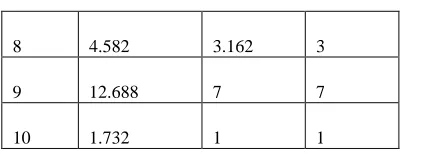
8 4.582 3.162 3
9 12.688 7 7
10 1.732 1 1
This table shows the Root Mean Square Error (RMSE) values of bilinearly interpolated image, content based CFA and proposed method(Ant Colony).This table clearly shows the values of RMSE is clearly less than the other existing methods.
Fig 12:- Root Mean Square Analysis(RMSE) Analysis
Table 6:- BER (Bit Error Rate) ANALYSIS
Image Bilinear Interpolation
Content Based CFA
Proposed
1 0.0344 0.0313 0.0313
2 0.0243 0.0237 0.0222
3 0.0335 0.0307 0.0307
4 0.0265 0.0256 0.0252
5 0.0334 0.0291 0.0290
6 0.0331 0.0288 0.0281
7 0.0370 0.0313 0.0310
8 0.0286 0.0262 0.0259
9 0.0384 0.0320 0.0320
10 0.0231 0.0208 0.0208
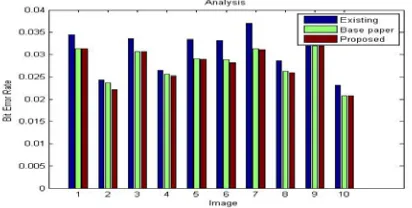
This table shows the Bit Error Rate (BER) values of billinearly interpolated image, content based CFA and proposed method(Ant Colony).This table clearly shows the values of BER is clearly less than the other existing methods.
Fig 13:- Bit Error Rate (BER) Analysis
V. CONCLUSION
A demosaicing algorithm is a digital image process used to reconstruct full color image from the incomplete color samples output from an image sensor overlaid with a color filter array CFA. It is also known as CFA interpolation or color reconstruction. Most modern digital cameras acquire images using a single image sensor overlaid with a CFA, so demosaicing is part of the processing pipeline required to render these images into a viewable format. Many modern digital cameras can save images in a raw format allowing the user to demosaicit using software, rather than using the camera's built-in firmware. Thus demosaicing becomes and major area of research in vision processing applications. This research work deals with improving the content based color filter array further by using Ant colony algorithm based interpolation will be used. This work has focused on reducing the problem of color artefacts by using the color channel normalization. The proposed technique is tested on some standard images, experimental results has shown the significance improvement of the proposed technique over the available one.
REFERENCES
[1] Alvarez, Luis, Pierre-Louis Lions, and Jean-Michel
Morel. "Image selective smoothing and edge detection by nonlinear diffusion. II." SIAM Journal on numerical analysis 29, no. 3 (1992): 845-866.
[2] Azgin, Hasan, Serkan Yaliman, and Ilker Hamzaoglu. "A
high performance alternating projections image demosaicing hardware." In Field Programmable Logic and Applications (FPL), 2014 24th International Conference on, pp. 1-4. IEEE, 2014.
[3] Bayram, Sevinc, Husrev T. Sencar, and Nasir Memon.
"Classification of digital camera-models based on demosaicing artifacts." digital investigation 5, no. 1 (2008): 49-59.
[4] Baotang, Shan, Shen Tingzhi, and Wang Weijiang. "A
Remainder Set Near-Lossless Compression Method for Bayer Color Filter Array Images." Physics Procedia 25 (2012): 1794-1801.
[5] Chen, Wen-Jan, and Pei-Yu Chang. "Effective
demosaicking algorithm based on edge property for color filter arrays." Digital Signal Processing 22, no. 1 (2012): 163-169.
[6] Chiu, Yung-Hsiang, Kuo-Liang Chung, and
Chien-Hsiung Lin. "An improved universal subsampling strategy for compressing mosaic videos with arbitrary RGB color filter arrays in H. 264/AVC." Journal of Visual Communication and Image Representation 25, no. 7 (2014): 1791-1799.
[7] Courroux, Sébastien, Stéphane Chevobbe, Mehdi
Darouich, and Michel Paindavoine. "Use of wavelet for image processing in smart cameras with low hardware resources." Journal of Systems Architecture 59, no. 10 (2013): 826-832.
[8] Criminisi, Antonio, Patrick Pérez, and Kentaro Toyama.
"Region filling and object removal by exemplar-based image inpainting." Image Processing, IEEE Transactions on 13, no. 9 (2004): 1200-1212.
[9] Džaja, Barbara, Mirjana Bonković, and Ljubomir
Malešević. "Solving a two-colour problem by applying probabilistic approach to a full-colour multi-frame image super-resolution." Signal Processing: Image Communication 28, no. 5 (2013): 509-521.
[10] Fang, Lu, Oscar C. Au, Yan Chen, Aggelos K.
Katsaggelos, Hanli Wang, and Xing Wen. "Joint Demosaicing and Subpixel-Based Down-Sampling for Bayer Images: A Fast Frequency-Domain Analysis Approach." Multimedia, IEEE Transactions on 14, no. 4 (2012): 1359-1369.
![Figure 1: Bayer Filter Sample (adapted from [9])](https://thumb-us.123doks.com/thumbv2/123dok_us/7842140.1299913/1.612.323.552.287.357/figure-bayer-filter-sample-adapted-from.webp)