50
The Effect Of A Flipped Learning Pedagogical
Model Enhanced With A Mobile Application On
Students’ Performance And Motivation
Walid A. Aboraya, Mohamed A. Elkot
Abstract: Flipped learning is an effective pedagogical model that has recently gained momentum among educators and educational researchers worldwide. The main goal of the current research was to assess if using a developed smart tool or mobile app will help with increasing learners’ motivation in order to accomplish the intended learning outcomes of a course in ―Web programming‖ within a flipped learning environment. In addition, the study sought to measure students’ attitudes towards employing the developed app in supporting learning. Under the flipped model, students enrolled in the ―Web programming‖ course were divided into two groups and examined: (1) an experimental group which learned using the developed mobile app, and (2) a control group, learned through the classical flipped model. Post-administration scores of a motivation scale and skills test were used to compare between the two research groups. Besides, interviews were applied to the experimental group so as to reach deeper understanding of students’ attitudes towards using the app in supporting their learning. Statistical treatment of the motivation scale scores revealed significant differences in favour of the experimental group. But no significance was found out in raising web programming skills between the groups. Moreover, interviews’ analysis showed that learners highly favoured using the developed app. Finally, pedagogical and methodological implications were introduced.
Index Terms: flipped learning, motivation, Web programming, mobile application.
—————————— ——————————
1.
INTRODUCTION
The flipped learning model is viewed as an approach that assists in managing structure and time since it turns students into active learners, not mere receptors of knowledge. In this sense, it is perceived more as an application of a learner-centered instructional model, and less as a direct model of instruction that is based mainly on a constructivist learning theory, where knowledge is socially and collaboratively constructed [1]. Thus, practices associated with collaborative interaction, problem and inquiry-based learning occur in that new learning context [2], [ 4]. Therefore, flipped learning may be simply viewed as a pedagogical approach in which teachers invert conventional activities associated with lectures versus home assignments [5, 6]. According to this approach, learners are provided with lecture content (in the form of videos) to be watched at home and dealt with in advance before attending class. Then, the time allocated for lectures is employed in working on in-class activities designed to allow learners to practice what they have already managed and learned at home [4]. In this context, [7] found that the advantages of the flipped learning model lie mainly in the time spent while employing and dealing with active-learning strategies, rather than just acquiring or learning conceptual knowledge. That way, students are likely to accomplish higher levels of thinking and improve problem-solving and skills modeling. Although flipped learning has many advantages, there exist some drawbacks and challenges. For example, it is claimed by some researchers that learners’ motivation to learn can passively influence their academic achievement in constructivist learning settings [8], [9]. Undoubtedly, this may apply to the constructivist flipped learning model. Moreover, [10] claims that one a challenge connected with flipped
learning is learners’ motivational level and the resistance expressed by students to get really engaged in learning, in which case some students are not well-prepared to attend any lectures. This resistance – as Greener [10] argues – is likely to force the classroom teacher to handle two different groups, some of whom might be unenthusiastic to take part actively in classroom activities. However, the teacher might consider and use some practical strategies in order to increase and maximize the learners’ motivation level in the process of doing pre-class work. A proper practice that might lead to motivation improvement is increasing pre-class activities, while including formative testing or quizzes [11]. Currently, with the emergence of web 3.0 and web 4.0 technologies, facilities and applications, delivering any instructional content before the lecture has become much easier and more effective than before. For example, employing the Internet of Things and using metadata cloud computing as well as many smart applications have been very effective web-based tools in the flipped learning contexts [3], [12]. These tools have recently increased both the quality and effectiveness of the produced or created materials as well as the delivery method. New technologies (e.g. smart phones and their applications) can significantly support learners in order to achieve the intended learning goals, objectives and outcomes [11], [13]. The power of these technologies does not lie only in becoming part and parcel of learners’ daily lives, but also lies in its potential capacity of running both modes (i.e. synchronous and asynchronous) of online communication[14], along with the stimulated, animated and interactive multimodal capabilities it can afford. Such technology type fits quite well in our flipped learning model, in which learners bear more responsibility for uncovering, digesting, internalizing and learning new materials – both individually (self-learning) and in groups (collaborative learning) - prior to formal classroom face-to-face sessions. Using smart-phone capabilities in that specific component of the flipped learning process should definitely raise learners’ engagement and encourage them to delve deeper into new materials so as to explore them, and subsequently get ready very well just far ahead of the lecture time when they are required to attend many discussions, deliberations, and activities [15]. Thus, teachers are strongly advised to use such ______________________
Walid A. Aboraya is an assistant professor at the Master of Instructional Technology Program ,Arab Open University, Sultanate of Oman & Cairo University, Egypt , Email: [email protected]
Mohamed A. Elkot is an assistant professor at Computer
51 mobile applications while offering continuous support to
learners during the learning process, and compose and deliver short messages, which might develop plausible study habits when they study independently outside the classroom. Strictly speaking, the flipped learning model has proved to be a prosperous and effective method of instruction and content delivery, which may turn students into active participants in formal classroom activities. However, still there are so many students who are not able to benefit under that approach. They might feel that they are not well-prepared just before the lecture. This problem can be attributed to many reasons, such as: (1) the learning allocated time and duration; (2) the quality of videos and/or materials provided to learners in out-of-class activities; (3) the extent to which students should be responsible for exploring, discovering and investigating new instructional materials on their own employing the counter didactic approach they have been using for so many years. In addition, this problem will be very clear and evident when we try to teach any Web programming course.
2
LITERATURE
REVIEW
2.1 Mobile application and the motivational factors: Motivation is the internal state that activates, directs and maintains human behavior [16]. Therefore, it is necessary for educational institutions to understand that their role is not only to provide quality education, but also to enhance the motivational factors for students to their participation in education [17]. Thus, students' motivational needs must be known in order to enhance and support the learning process. Motivation among students is the basis for the educational process [18]. In this regard, [16] stated that one of the important factors to increase motivation among students is to emphasize personal support in providing guidance through the individual interaction between the teacher and the student. On the other hand, lack of motivation is one of the important factors that contribute to dropout and weaken participation in learning [4]. Therefore [17] strongly emphasizes that one of the motivational factors, that teachers must provide for their students is to communicate and interact with them directly to guide and facilitate the learning process. Interaction and synchronous e-discussions among students play a pivotal role in the learning process, especially with those learners who feel shy in face-to-face discussions. They provide them with an encouraging environment to express their opinions and ideas which, in turn, helps to activate the learning process and raise students' motivation. The feedback provided during discussions represents the information directed to the learner, in order to modify thinking or behavior, with the aim of improving the level of learning [19]. Hence, feedback is considered one of the most important tools that support student learning, as it has the ability to improve knowledge and skills acquisition [20]. In addition, feedback must be provided in a timely and immediate way. One of the factors that lead to poor feedback is the delay in providing it to learners. Consequently, feedback must be immediate and linked to what is expected from the learner [21]. From the aforementioned, it may be deduced that the availability of the motivational factors within the learning environment is important. Otherwise, the motivational factors constitute the main and important aspects of the learning process. Whereas if we look at the reality of flipped learning, we find that it may miss many of the previous motivational factors, especially if
there is no interaction and participation between the teacher and students.
Hence, the motivational factors that will be relied upon in the design of the mobile application can be summarized as follows:
Providing direct feedback to each learner via the developed mobile app.
Providing synchronous and asynchronous discussion environment for students under the supervision of teachers via the developed mobile app.
52 achievement level of the experimental group compared to the
students of the control group, which were not exposed to the independent variable. [26] developed an educational application on mobile devices called Vocab Game to verify the impact of this application on increasing the motivation of students to learn English as a second language. The results showed that the application was useful for those students who had poor performance at the beginning with a noticeable increase in motivation. Also, [27] aimed to investigate the impact of the use of mobile applications on the educational motivation, social interaction and academic performance of nursing students. The findings showed students' satisfaction with the use of mobile applications for supplementary courses as well as effective participation in class activities, with the emergence of a high level of motivation at the level of performance. The study of [28], aimed to explore the effectiveness of using students-centered online/in-class activities to improve learning performance. A classroom model called ―SPOC-Flipped‖ through the mobile app is designed to improve online learning experience for learners as many mobile learning tools have been adopted. The results indicated that there is a positive relationship of learners’ online/in-class participation with their overall learning performance. Also, m-learning has increased learners’ in-class engagement. In addition, [29] tested the relationships among the intrinsic motivation and students’ behavioral intention via a mobile application. Although there was no direct impact of the independent variable on the dependent variable, the use of the mobile application was found to be helpful in the learning process and had a positive effect on students. To sum up, in order for mobile applications to be used in an effective educational manner, it must involve several specifications. First, it should provide a solution to problems that are difficult to solve in the classroom, such as the issue of interaction and participation between the teacher and students. Second, it should focus on a specific educational goal. Third, it should present content in an attractive and enjoyable way. Fourth, it should provide synchronous and asynchronous discussions among students. Finally, it should provide immediate feedback to each learner individually. Therefore, the present study aims to explore and investigate the potential effect of developing mobile application based on some motivational factors to be employed in external out-of-class activities with the goal of creating and sustaining a constructivist-learning environment as well as providing continuous support to learners. This should raise learners’ engagement along with their learning motivation just before attending the formal class activities. In flipped learning settings, this is also expected to raise their programming skills. Moreover, the study aims to assess learners’ opinions on using the developed app for the purpose of supporting their own learning.
Therefore, the aim of the current study is to answer the following questions:
1. What is the effect of a flipped learning pedagogical model enhanced with a mobile application on students’ performance?
2. What is the effect of a flipped learning pedagogical model enhanced with a mobile application on students’ motivation?
3. What are the learners’ opinions on using the developed application for the purpose of supporting their learning?
3
METHOD
3.1 Research design and participants
The participants consisted of 20 male students, whose ages ranged between 17 to 19. Those students were enrolled in the Computer Department at the College of Science and Arts (Qassim University, KSA). They were divided into two groups: (1) an experimental group, which studied via the mobile application within a flipped learning context; and (2) a control group that studied in the traditional context of flipped learning. The current study used a quasi-experimental design methodology. The design comprised the following variables (Figure 1): The independent variable :( FL enhanced with mobile app). The dependent variables :( students’ performance, students’ motivation to learn, and students’ attitudes towards using the mobile app).
Figure (1) shown the study design
3.2 Instrument
Motivation scale:
The motivation scale towards using the mobile app within a flipped learning pedagogical model was applied to the students (Appendix 1). The motivation scale consisted of (15) phrases. It was applied as a pre-post scale for both research groups: experimental and control. The researchers developed the students’ motivation scale based on a motivation scale. All constructs were measured on (5 points) from (1 = strongly disagree, 2= disagree, 3= neutral, 4= agree, 5=strongly agree). The content validity of the motivation scale was conducted by the study, which included three faculty members from education department and three graduate students. Those members modified some items to help obtaining accurate scores. Using Cronbach's alpha equation by SPSS statistical analysis software, the reliability coefficient was calculated, it was obtained by two groups of students (n=20). The Cronbach's alpha coefficient was (0.841).
Web programming skills test:
The authors developed a web programming skills test consists of (15) items and including the main programming skills.
Interview:
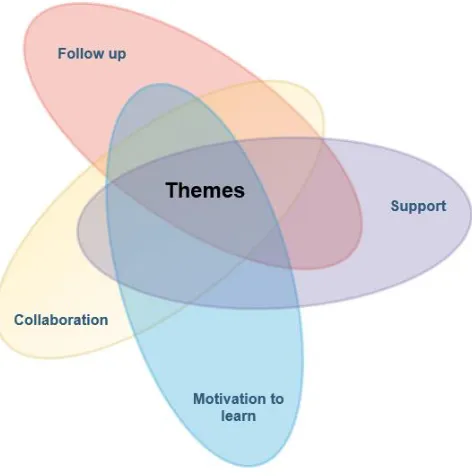
The researchers administered semi-structured interviews on all research (experimental) group students (n=10) after the end of the treatment. The interview questions were divided into four sections: follow up - Support - Collaboration - Motivation to learn - as shown in the results section.
Mobile app:
53 and supporting learners while working at home in checking
and assessing learning materials in order to be ready to take part in lecture activities. In addition, this app is utilized as a platform that facilitates instant support, peer interaction, cooperative activities and instructor-student communication. It also enables easy access to videos as well as other learning materials (see Figure 2).
Figure (2) shown the mobile app
Context and procedures:
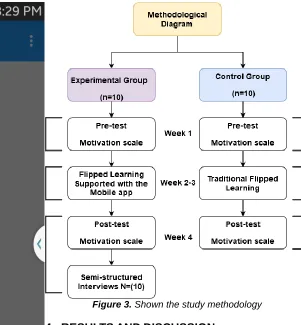
In the first week, pre-study tools were applied to the control and experimental groups, which included the ―web programming skills‖ test and the motivation scale. They were also applied as a pre-post scale for both research groups. In the second-third week, the educational unit for the ―web programming skills‖ course was taught to the control group, using the traditional flipped learning, by providing videos on the closed Facebook page for the students, and after urging students to watch the video outside the lecture time, the content is then discussed during the lecture. On the other hand, the mobile application was available to the experimental group, which contains a link to view the videos of the lessons, and are available to watch at any time, and specific times were set to discuss the lessons, as well as the asynchronous discussion that is also available between students under the supervision of the professor. Besides, the students were urged to interact, discuss, and ask questions directly to the
professor. In the fourth week, post-tools were applied, which included the ―web programming skills‖ test and motivation scale, as well as Semi-structured interviews, which were administered with students of the experimental group to discuss their experience with the application and their views regarding the tool used. Figure (3) illustrates the procedures followed during practical application.
Figure 3. Shown the study methodology
4 RESULTS
AND
DISCUSSION
Using (SPSS) software, the authors adopted a descriptive statistical analysis to answer the study questions. Accordingly, the first question, which sought whether there is an effect of the flipped learning pedagogical model enhanced with a mobile application on students’ performance. To examine whether there are any differences between the pre and post-test for research group, the Wilcoxon Signed Ranks Test with alpha set at (0.05) was applied. In addition, to compare between both groups in the post-test, the Mann-Whitney Ranks Test was used.
TABLE (1)COMPARISON BETWEEN PRE AND POST-TEST IN MEAN RANKS FOR WEB PROGRAMMING SKILLS IN THE CONTROL GROUP,
USING THE WILCOXON RANKS TEST
web programming N Mean Rank
Sum of
Ranks Z Sig
Negative Ranks 0 0 0
2.812 0.005 Positive Ranks 10 5.50 55.00
54 TABLE (2)THE DIFFERENCE BETWEEN PRE AND POST-TEST IN MEAN
RANKS FOR WEB PROGRAMMING SKILLS IN THE EXPERIMENTAL GROUP, USING THE WILCOXON RANKS TEST
web programming N Mean Rank
Sum of Ranks
Z Sig
Negative Ranks 0 0 0
2.809 0.005 Positive Ranks 10 5.50 55.00
According to table 2, there are significant differences between mean ranks in the web programming skills for the sake of the post-test, where Z value was (2.809) with significance level at (.005). This result also refers to the improvement in the web programming skills for students of the experimental group after exposure to the mobile app.
TABLE (3)THE RESULT OF MANN-WHITNEY RANKS TEST MEASURING THE MEAN RANKS IN THE WEB PROGRAMMING SKILLS
BETWEEN THE POST-TESTS OF THE TWO GROUPS
G N Mean
Rank
Sum of Ranks
U W Z Sig
C G 10 9.10 91.00 36.0 91.0 1.062 0.315 EG 10 11.90 119.00
The result in table 3 shows no significant difference in web programming skills between the post-tests of both research groups, where U (10) = 36.000, Z= 1.062, p>.05, r=0.315. Consequently, there was no priority of significance for a type more than the other in developing web programming skills for the students. According to the previous results, the effect of using the flipped learning pedagogical model was apparent on raising students’ performance in web programming skills. This specific result is consistent with many previous studies that confirmed the feasibility and impact of using the flipped learning strategy in the learning process such as [23], [24], [27]. In contrast, there was no significant differences in web programming skills between both research groups in the pre-post test, where p = 0.315, a value that is greater than 0.005. However, the experimental group mean rank was 11.90, a value that is quite higher than that of the control group, which is 9.10. The reason for this may be attributed to the small sample size. Thus, its’ statistical impact is weak and not significant. To answer the second question, if there was an effect of the flipped learning pedagogical model enhanced with a mobile application on students’ motivation, the Wilcoxon Signed Ranks Test with alpha set at (0.05) was applied to investigate whether there are preliminary differences between the pre and post-test for each single group. In addition, to compare between the two research groups in the post-test, the Mann-Whitney Ranks Test was used.
TABLE (4)THE DIFFERENCES BETWEEN PRE AND POST-TEST IN MEAN RANKS FOR THE MOTIVATION SCALE IN THE CONTROL GROUP,
USING THE WILCOXON RANKS TEST
Motivation N Mean Rank Sum of
Ranks Z Sig
Negative Ranks 0 0 0
2.810 .005 Positive Ranks 10 5.50 55.00
As shown in table (4), there are significant differences between mean ranks in the motivation using the flipped learning pedagogical model for the sake of the post-test, where Z value was (2.810) with significance level at (.005).
The result indicates a noticeable improvement in students' motivation towards learning using the flipped learning model.
TABLE (5)THE DIFFERENCE BETWEEN PRE AND POST-TEST IN MEAN RANKS FOR THE MOTIVATION IN THE EXPERIMENTAL GROUP, USING
THE WILCOXON RANKS TEST
Motivation N Mean Rank
Sum of
Ranks Z Sig
Negative Ranks 0 0 0
2.807 .005 Positive Ranks 10 5.50 55.00
According to table 5, there are significant differences between mean ranks in the motivation scale towards using the mobile app within a flipped learning pedagogical model for the sake of the post-test, where Z value was (2.807) with significance level at (.005). This result also refers to the improvement in the web programming skills for students of the experimental group after exposure to the mobile app.
TABLE (6)THE RESULT USING MANN-WHITNEY RANKS TEST TO MEASURE THE MEAN RANKS IN THE MOTIVATION BETWEEN THE POST
-TESTS OF THE TWO GROUPS. G N Mean
Rank
Sum of Ranks
U W Z Sig
C G 10 5.50 55.00 .000 55.000 3.794 .000 E G 10 15.50 155.00
55 Figure (4) shown the themes of Semi-structured interviews
The initial theme that emerged from the qualitative analysis was represented in the instant support received by learners from their instructor that helped with easing and clarifying some difficult issues that emerged while learners were studying on their own. Rapid and needed support from the teacher in solving small problems facing students, led the students to feel more comfortable and progress in programming skills. While the second theme that emerged was related to the continuous follow-up made by the instructor with the students. The encouraging messages and continuous communication with individual students raised the students’ commitment to learn and watch videos before lectures. They felt more responsible to do the required tasks. A third theme that emerged from the analysis was about students working collaboratively with each other. Most participants thought that working with their peers was so beneficial and useful to them, and that it was helpful to have the tutor online with them to discuss difficult points and facilitate understanding of some confusing issues in the leaning materials. Most of them referred to it as the power of ―working together‖ especially in understanding the logic of programming. The last theme that emerged concerns learners’ motivation to learn, where most participants felt motivated to carry on with the required tasks and review the relevant materials. This allowed them to get ready to take part in lecture activities.
5 CONCLUSION
The present study investigated the effect of a flipped learning pedagogical model enhanced with a mobile application based on some motivational factors on students’ performance and motivation. This model can be used in external out-of-class activities so as to create and sustain a constructivist-learning environment where students are provided with continuous and due support. Besides, the study assesses students’ opinions on using the developed smart app in supporting their learning. Our findings revealed that employing the flipped model,
pedagogical model, in general, did really increase students’ motivation to learn, particularly when smart mobile app support is provided, rather than just tutor’s preparation and sharing of videos to be dealt with by students out of class. In addition, it was quite evident that utilizing the developed smart app as a platform for providing learning materials – both online and offline - and for supporting students’ learning has raised and increased their engagement. It was clear that the method itself could help students to be linked and stay connected, take personal responsibility to undertake and complete tasks, and be self-confident while doing in-class activities. Establishing such learning community and keeping students informed that there is instant support which is available at any time did help with increasing their motivation, especially for beginners at the early stages. Thus, the potential power of that experiment lies in its mobility and using smart apps that are familiar to students (e.g. Facebook and YouTube). Moreover, following some motivational strategies in order to increase students’ motivation and keep them always linked with each other and connected to learning had a great effect on doing more progress in that module, which in turn did help with meeting the intended learning goals, objectives and outcomes.
6 RECOMMENDATIONS
In order to increase learners’ engagement and enrich their knowledge, it is highly recommended that students should always have the ability to access communities – both online and offline (face-to-face), as this will surely provide them with the needed guidance, instant and continuous support, and opportunity for collaborative/social work. Also, it is recommended that selecting a bigger sample in future research studies to assess the increase in knowledge associated with programming skills will be significantly useful. Finally, using a mixed-method approach as a main research methodology is highly recommended so as to gain deeper and more thorough understanding of the target phenomenon.
REFERENCES
[1] J. F. Strayer, ―How learning in an inverted classroom influences cooperation, innovation and task orientation,‖ Learn. Environ. Res., vol. 15, no. 2, pp. 171–193, 2012, doi: 10.1007/s10984-012-9108-4.
[2] S. A. Nikou and A. A. Economides, ―Motivation related predictors of engagement in mobile-Assisted inquiry-based science learning,‖ IEEE Glob. Eng. Educ. Conf. EDUCON, vol. 2018-April, pp. 1222–1229, 2018, doi: 10.1109/EDUCON.2018.8363369.
[3] C. Freeman and N. A. S. Herreid, ―Case Studies and the Flipped Classroom,‖ J. Coll. Sci. Teach., vol. 42, no. 5, pp. 62–66, 2013.
[4] B. F. Hantla, ―Book Review: Flip your classroom: Reach every student in every class every day.,‖ Christ. Educ. J. Res. Educ. Minist., vol. 11, no. 1, pp. 183–188, 2014, doi: 10.1177/073989131401100120.
[5] D. Zou, ―Gamified flipped EFL classroom for primary education : student and teacher perceptions,‖ J. Comput. Educ., no. 0123456789, 2020, doi: 10.1007/s40692-020-00153-w.
[6] J. Cai, H. H. Yang, and D. Gong, ―Understanding Undergraduates’ Adoption of Flipped Learning: Integrating UTAUT and Social Presence,‖ vol. 11546, Springer International Publishing, 2019, pp. 9–21.
56 classroom strategies and tools for computer engineering,‖
ASEE Annu. Conf. Expo. Conf. Proc., 2013.
[8] O. L. Liu, B. Bridgeman, and R. M. Adler, ―Measuring Learning Outcomes in Higher Education: Motivation Matters,‖ Educ. Res., vol. 41, no. 9, pp. 352–362, 2012, doi: 10.3102/0013189X12459679.
[9] M. V. López-Pérez, M. C. Pérez-López, and L. Rodríguez-Ariza, ―Blended learning in higher education: Students’ perceptions and their relation to outcomes,‖ Comput. Educ., vol. 56, no. 3, pp. 818–826, 2011, doi: 10.1016/j.compedu.2010.10.023.
[10] S. Greener, ―Flipped or blended? What’s the difference and does it make a difference to learning in HE?,‖ Proc. Int. Conf. e-Learning, ICEL, vol. 2015-Janua, pp. 146– 151, 2015.
[11] F. E. Louhab, A. Bahnasse, and M. Talea, ―Considering mobile device constraints and context-awareness in adaptive mobile learning for flipped classroom,‖ Educ. Inf. Technol., vol. 23, no. 6, pp. 2607–2632, Nov. 2018, doi: 10.1007/s10639-018-9733-3.
[12] T. Demir and O. Deperlioglu, ―Contribution of improvements to E-learning systems while going from web 3.0 to web 4.0: Programming education example,‖ pp. 917–922, 2017, doi: 10.1109/ubmk.2017.8093555.
[13] B. Whalley, D. France, J. Park, A. Mauchline, and K. Welsh, Developing Active Personal Learning Environments on Smart Mobile Devices, vol. 1. Springer International Publishing, 2020.
[14] M. A. Elkot, ―Embedding Adaptation Levels within Intelligent Tutoring Systems for Developing Programming Skills and Improving Learning Efficiency,‖ vol. 10, no. 12, pp. 82–87, 2019.
[15] W. C. Hsu, H. C. K. Lin, and Y. H. Lin, ―The research of applying Mobile Virtual Reality to Martial Arts learning system with flipped classroom,‖ Proc. 2017 IEEE Int. Conf. Appl. Syst. Innov. Appl. Syst. Innov. Mod. Technol. ICASI
2017, pp. 1568–1571, 2017, doi:
10.1109/ICASI.2017.7988228.
[16] C. M. Kim, ―The role of affective and motivational factors in designing personalized learning environments,‖ Educ. Technol. Res. Dev., vol. 60, no. 4, pp. 563–584, 2012, doi: 10.1007/s11423-012-9253-6.
[17] H. B. Lijano, ―Motivational Factors on Learning in a Constructivist Classroom: A Strategy on Learning from 21st Century Learners,‖ Int. J. Humanit. Arts Soc. Sci., vol. 4, no. 2, pp. 85–95, 2018, doi: 10.20469/ijhss.4.10004-2. [18] N. Sant and M. A. Elt, ―A Study on Factors Affecting
Students ’ Motivation in the English Language Classrooms at Maija Yang Institute of Education , Kachin State , Myanmar,‖ vol. 18, no. 49042, pp. 199–221, 2018.
[19] K. Tuamsuk, A. Jatowt, and E. Rasmussen, ―The emergence of digital libraries – research and practices: 16th international conference on Asia-Pacific digital libraries, ICADL 2014 Chiang Mai, Thailand, November 5-7, 2014 proceedings,‖ Lect. Notes Comput. Sci. (including Subser. Lect. Notes Artif. Intell. Lect. Notes Bioinformatics), vol. 8839, no. November 2014, 2014, doi: 10.1007/978-3-319-12823-8.
[20] M. Alket, ―A Network-Based Peer Evaluation Strategy,‖ Int. J. Mod. Educ. Comput. Sci., vol. 9, no. 4, pp. 32–42, 2017, doi: 10.5815/ijmecs.2017.04.04.
[21] J. Ran, H. Han, and D. Wang, ―RETRACTED ARTICLE: ITutor: Taking formative assessment and interactive
feedback as teaching and learning strategies for improving students’ skill learning effectiveness,‖ 2011 Int. Conf. Electr. Control Eng. ICECE 2011 - Proc., pp. 6653–6656, 2011, doi: 10.1109/ICECENG.2011.6056951.
[22] R. H. Shroff and C. J. Keyes, ―a proposed framework to understand the intrinsic motivation factors on university students' behavioral intention to use mobile a pplication for learning,‖ vol. 16, pp. 143–168, 2017.
[23] B. Oberer, ―Mobile devices and flipped classrooms in higher education: An impact analysis on the educational landscape in a Turkish University,‖ Proc. - 8th Int. Conf. u- e-Service, Sci. Technol. UNESST 2015, pp. 81–84, 2016, doi: 10.1109/UNESST.2015.27.
[24] W. Barber, ―Building community in flipped classrooms: A narrative exploration of digital moments in online learning,‖ Proc. Int. Conf. e-Learning, ICEL, vol. 2015-Janua, pp. 24–30, 2015.
[25] Y. A. Abuhmaid and I. Abu-khalifeh, ―Flipped Learning and Smartphones : Their Impact on Students ’ Achievement and Performance,‖ vol. 4, no. 2, pp. 770–781, 2019. [26] M. M. Elaish, N. A. Ghani, L. Shuib, and A. Al-Haiqi,
―Development of a Mobile Game Application to Boost Students’ Motivation in Learning English Vocabulary,‖ IEEE Access, vol. 7, pp. 13326–13337, 2019, doi: 10.1109/ACCESS.2019.2891504.
[27] K. C. Li, L. Y. K. Lee, S. L. Wong, I. S. Y. Yau, and B. T. M. Wong, ―Effects of mobile apps for nursing students: learning motivation, social interaction and study performance,‖ Open Learn., vol. 33, no. 2, pp. 99–114, 2018, doi: 10.1080/02680513.2018.1454832.