Licensed under Creative Common Page 1
http://ijecm.co.uk/
ISSN 2348 0386
AN ECONOMETRIC ANALYSIS OF EFFECT OF CHANGES
IN INTEREST RATES ON INFLATION IN NIGERIA
Raymond, Adegboyega R
Department of Accounting, Banking And Finance, Faculty of Social And Management Sciences Olabisi Onabanjo University, Ogun State, Nigeria
Abstract
Given the fact that if inflation is not properly controlled in the economy it may disrupt the
economy, cause uncertainty in financial decision, redistribute wealth unevenly etc. Therefore,
government needs to control high level of unpredictable inflation through monetary and fiscal
policies. One of the important tools used under monetary policy is interest rate. This study
examines the effect of changes in interest rates on inflation (measured by consumer price index
(CPI) in Nigeria using both descriptive and econometric methods. Four sets of hypotheses were
tested by examining the impact of four variables that is prime lending rate; minimum rediscount
rate; money supply and treasury bills rate on inflation. The empirical results confirm that
changes in interest rates and increase in the level of money supply were associated with rise in
inflationary pressures. In concluding, the study notes the need for the relevant authority to
correct abnormality in inflation rate through the introduction of appropriate interest rates from
time to time.
Keywords: Econometric, Interest rate, money supply, Inflation, Treasury bills, Prime lending rate
INTRODUCTION
Licensed under Creative Common Page 2
purchase more goods and services than can be produced with current resources (labour, materials, etc.) causing upward pressures on prices. Over a short term, inflation can occur from various shocks in the economy. Food and energy price shocks are common examples of this type of inflation in Nigeria. A price of a commodity such as fuel may rise suddenly and sharply, relatively to other commodities prices response, may result to short term increase in overall prices
Inflation in Nigeria has been accelerating since 1960s and has become a major concern to the government. Several policies were introduced to control inflation in the economy and despite these policies, inflationary trends continue to fluctuate. Government needs to control high levels of unpredictable inflation since it can severally disrupt the economy. The tools governments normally use include monetary policy (i.e. increase or decrease in the money supply and interest rate), fiscal policy (changes in the amount of taxes and government spending) and various controls on prices, tariffs, etc. Many nations choose monetary policy as their primary tool since it has proven to be effective, less disruptive to the market operations and easier and quicker to implement since adjusting the money supply does not require legislative approval as would be for instance changing the tax structure.
Monetary policy function is solely carried out by the government controlled central bank that is responsible for the maintaining an orderly market, steady growth, low employment and low inflation. Some governments do require the central bank to maintain a low and positive rate of inflation (usually well under 3%) as the overriding goal of their monetary policy. They must keep the money supply at a level that accommodates steady growth, but it should not be so high as to cause excessive inflation or so low that deflation (an overall decrease in prices) results. When central bank wants to increase money supply (money in circulation) and by stimulating the economy, they buy treasury bills in the open markets and this makes credit readily available at low interest rates. While in the period of high inflation the central bank sells the treasury bills so as to reduce money supply.
Licensed under Creative Common Page 3
Monetary policy may be inflationary or deflationary depending upon the economic condition of the country. Contractionary policy is enforced to squeeze down the money supply to curb inflation and expansionary policy is to stimulate economic activity to combat unemployment in recession (Hall, 2010).
Inflation imposes a number of true cost on the economy, which are sometimes of real resources that are wasted as people try to economize on cash holding in the price distortion in the tax system, unexpected redistribution of wealth and interference with long run planning because of this cost, most economists agree that sustained economic growth is more likely if inflation is low and stable. In Nigeria inflation rates are measured with the consumer price index (CPI) which tracks the total cost of a market basket of retail goods and services, is easily and currently available on monthly, quarterly and annual basis.
Over the years, the spread between bank’s deposit and lending rates has remained unacceptably wide with adverse implications for savings mobilization and investment promotion. To achieve the desired level of interest rate, the Central Bank of Nigeria (CBN) adopts various monetary policy tools, key among which is the Monetary Policy Rate (MPR). This rate, which until 2006 was known as the Minimum Rediscount rate (MRR), is the rate at which the CBN is willing to rediscount first class bills of exchange before maturity (Onoh 2007). He further opined that by raising or lowering this rate the CBN is able to influence market cost of funds. If the CBN increases MPR, banks’ lending rates are expected to increase with it, showing a positive relationship. In recent past, the need to possess certain class of assets as collateral to assess the CBN’s discount window was dispensed with due to global crisis (Business Day, 2009). The CBN now anchors its Monetary Policy Rate (MPR), on the year-to-year inflation rate fundamental policy changes in the economy. The year-to-year inflation rate for December 2010 was about 11.8% while MPR was 6.25% in the second quarter of 2010. Nigeria inflation rate in 2013 continues to be below 10 percent for the fourth month in a role. According to the National Bureau of Statistics (NBS), the 2013 April inflation rate stood at 9.1 per cent, much higher that of March 2013 which was 8.6 percent. The emphasis on the indirect forms of control policy is still obviously the preferred choice of managing monetary policy in Nigeria.
Licensed under Creative Common Page 4
LITERATURE REVIEW
Theoretical Framework
Theories of interest rates
Various theories of interest rates put together explain variables which determine interest rates; these theories differ because of differences of opinion as to whether interest rates are monetary or real phenomenon. According to the classical theory, the interest rate is determined by the intersection of the investment-demand schedule i.e. schedule disclosing the relationship of investment and savings to the rate of interest. However, no solution is possible because the position of the saving-schedule will vary with the level of real income. In the view of classical economists, level of savings is determined by savings rate of interest (Olusoji, 2003). This view holds that increase in this interest rate will lead to increased savings and hence a positive relationship. It is this view that must have encouraged the Nigerian authorities to abandon administratively fixed interest rates for market determined ones. In the words of Ahmed (2003), deregulated interest rate is believed to be critical for both economic stabilization and development. Hence the Keynesian attack of the classical theory of interest on the ground that it is indeterminate, that is, as income rises, the saving-schedule will shift to the right, hence we cannot know what the rate of interest will be unless we already know the income level. But we cannot know the income level without already knowing the rate of interest, since a lower rate will mean a larger volume of investment and so, via the multiplier, a higher level of real income. Thus the classical theory fails to offer a solution. The implication of Ahmed’s position above covers the relationship between interest rate and investment. In this case, it has been established that high lending rates discourage borrowing for investment and vice versa (Lawal, 1982; Anyanwu and Oaikhenan, 1995). Since economists hold that investment plays a fundamental role in capital formation, and hence on economy’s growth and developments, it becomes obvious that lending rates through perceived influence on investment plays a developmental role. That is, a decrease in lending rate is theorized to cause investment borrowing to rise which leads to increased capital formation and eventually to economic growth (Onoh, 2007).
Licensed under Creative Common Page 5
hence, the same criticism of indeterminacy Keynes leveled against the classics is applicable to his theory.
According to the loanable funds theory of Dennis H. Robertson, the rate of interest is determined by the intersection of the demand-schedule for loanable funds with the supply-schedule, here the supply-schedule is compounded of savings (in the Robertson sense voluntary savings) plus net additions to loanable funds from new monies (change in money supply) and the discharging of idle balance. However, since the savings portion of the schedule varies with the level of disposable income (i.e. yesterday’s income) it follows that the total supply schedule of loanable funds also varies with income, therefore this theory is also indeterminate.
In the Pigouvian parlance, interest rate is determined by the intersection of the demand-schedule for money with supply-demand-schedule of savings. Here the revenant supply-demand-schedule is conceived in terms of saving out of current income i.e. the excess of total income received over income received for services in providing for consumption. This income, consumption and savings, all apply to the same period however, whether or not current income is fed in the past from the injection of new money or from the stand point of the pigouvian or neo-classical definition, that is income whether it springs from the spending of funds borrowed from banks credit played a role in the process of income creation. Thus in the neo-classical or pigouvian theory “savings” is in effect the same thing as loanable funds hence the same criticism applies to them.
The Keynesian and neoclassical propositions, taken together supply us with a theory of the interest rate of J. R. Hicks. From the Keynesian view, we get a family of liquidity preference schedule at various income levels. These together with the supply of money fixed by the monetary authorities, gives us the Hicksian LM curve, which tell us what the various rates of interest will be (given the quantity of money and the family of liquidity preference curves) at different levels of income. On the other hand, the neoclassical formulation provides us family saving-schedules at various income levels. These together with the investment demand schedule give us the Hicksian IS-Curve, meaning that the neoclassical framework tells us what the various levels of income will be given the investment-demand schedule and family of saving-schedule at different rates of interest. Thus the IS-Curve and the LM-C refer to functions relating the two variables. Income and the rate of interest are determined together at the point of intersection, income and the rate of interest stand in a relation to each other such that:
- Investment and saving are in equilibrium (i.e. actual saving equals desired saving).
Licensed under Creative Common Page 6
In the monetarists view of interest rate determination even though they accept that interest rate is a monetary phenomenon, they reject the Keynesian analysis that it is determined by money supply and money demand. They had and in fact emphasize another factor; the price expectations/anticipation factor. To the monetarists led by Milton Friedman, an increase in money stocks has three major effects: Liquidity effect, income effect and price expectation/anticipation effect. To them, an increase in money supply initially (immediate observational impact) the interest rate falls i.e. the Keynesian liquidity preference effect. Due to this increase in liquidity position, people go into the market to increase demand resulting in the expansion of the economy (the income effect). This increase in income will put pressure on goods and services and hence prices will rise. As prices increase (due to expectation effect) people will build up an inflationary psychology, i.e. they expect more inflationary effect in future. Suppliers will expand their investment outlet to supply more and this expansionary investment demand will make price to rise more. Also financial institutions expect price to rise more and therefore increase interest rate on their liabilities. Even among consumers, they want to spend more now because they expect higher prices in future hence for durable materials they would demand for more credit and this leads to an increase in interest rate (price expectations/anticipations effect). Because of these effects and more so because of the price expectations effect, when money supply is increased the ultimate result is an increase in interest rate rather than the Keynesian decrease in interest rate. This what Friedman (1976) linked with the Gibson Paradox since prices and interest rates move together from empirical evidence, to them therefore interest rate is not only determined by money supply and money demand but also by price expectations factors.
The theories of inflation
Licensed under Creative Common Page 7
social tensions in those nations, relative elasticity of the food supply, foreign exchange constraint, protective measures, rise in the demand for food, fall in export earnings hoarding, import substitution industrialization, political instability, etc. Monetarists opine that inflation is always and everywhere a monetary phenomenon; (Friedman, 1966) hence prices tends to rise when the rate of increase in money supply is greater than the rate of increase in real output of goods and services (Johnson, 1973). The monetarists hypothesize that inflation is always and everywhere a monetary phenomenon, and maintain that a policy monetary and financial stability is a necessary pre-requisite for rapid economic development. Therefore, monetarism stresses that, for demand or structurally motivated inflation to hold, expansion of money supply would be required to finance the increasing nominal national income brought about by rising prices. The consequent expansion of money supply outstripping demand for money gives rise to inflation, especially if output does not expand as much as money supply.
Causes of inflation can however be broadly categorized into ‘fiscal’ and ‘balance of payment’ views. Proponents of the fiscal view have argued that continuous expansion of base money essentially arises from a fiscal disequilibrium. Attempts have been made to show that the economy will be characterized by the two inflation equilibria if there is an exogenous real fiscal deficit; a change in Cagan semi-logarithmic money demand function and rational expectations. The high inflation equilibrium will be stable and the low inflation equilibrium unstable (Montel, 1989) as cited in (Afolabi and Efunwoye, 1995).
In their efforts to maintain low inflation, policy makers pay relatively little attention to the growth rate of the money supply. Yet many studies have found a close relationship between money growth and inflation, at least in the long run. But how long must money growth be strong before it should be of concern to policy makers? That is, what is the shortest period of time over which money growth seems to be reliably associated with inflation? Accordingly, the inflation rate is expected to vary ceteris paribus, positively in relation to the rate of change in money supply and negatively with respect to the growth rate of real income. Since all the effects may not be contemporaneous, lagged values of money supply are included in the specification to account for lags in effect of changes in money supply. On the other hand, imported inflation arises from international trade whereby inflation is transmitted from one country to another and this is more so during a period of rising prices all over the world (Harberger, 1978).
Conceptual Framework
Licensed under Creative Common Page 8
Interest rate is a factor of demand and supply of loanable funds by lenders and demand by borrowers. This factor is determined by the government and the Central bank. The equilibrium interest rate can be defined as the intersecting point of the supply and demand where the quantity of lenders is equal to the quantity of borrowers. It hardly stays at equilibrium, it fluctuates like any other competitive prices because shifts in the demand and supply curve could increase or decrease at each interest rate, this is referred to as change in amount demand or change in amount supplied. When interest rate fall borrowers (households) demand more money (inflation period) because they can afford the new interest rate, while increase in interest rate will make households not want to borrow but rather will want to keep to what’s available to them, though it increases profit made by firms and expectation of higher income by consumers.
Individuals must be concerned with both the expected return and the risk of the assets that might be included in their portfolios. Interest rates and forecasts of their future values are among the most important inputs into an investment decision (Bodie, Kane and Marcus, 2005). Banks pay variable interest rate on savings, while fixed interest rate might be paid on long term financial investment like certificate of deposit.
Interest rate structure in Nigeria has been controlled and managed by Central Bank of Nigeria (CBN). Every year, the CBN fixes the range within which both the deposit and lending rates are to be maintained. According to Jhingan (1997), interest rate can be classified into various categories; Deposit rates, Lending rates, Treasury bill rate, Inter-Bank rate and Minimum Rediscount rate. The Minimum Rediscount Rate (MRR), which previously served as the nominal anchor for interest rates in the economy, was replaced with the Monetary Policy Rate (MPR) in 2006. The new framework was aimed at ensuring stability in short-term interest rates to engender efficient liquidity management and encourage inter-bank trading. Apart from this, interest rate can also be categorized as nominal or real. This categorization credited to Irvin Fisher tries to accommodate the moderating influence of inflation on interest rate. Nominal interest rate is the observed rate of interest incorporating monetary effects while real interest rate is arrived at by considering the implications of inflation on nominal interest rate (Uchendu, 1993; Essia, 2005).
Oresotu (1992) explains that the basic functions of interest rates in an economy in which individual economic agents take decisions as to whether they should borrow, invest, save and/or consume, are summarized by International Monetary Fund (IMF) under three aspects; namely
Licensed under Creative Common Page 9
- interest rates being a component of cost of capital affect the demand for and allocation of loanable funds; and
- the domestic interest rate in conjunction with the rate of return on foreign financial assets and goods are hedged against inflation.
These broad roles of interest rates according to Oresotu (1992) emphasize their significance in the structure of basic prices and indicate the need for study about their determinants under a flexible regime. During the periods of rapidly changing prices, interest rate may be a poor index of the return due to an investor. Too expensive interest rate may choke off investment; Ogiogio (1988), Alile (1992) explain that interest rate in Nigeria would significantly influence the holding of financial assets by investors.
Inflation was defined by Morris and Morris (1999) as the pervasive and sustained rise in the aggregate price level for goods and services. Inflation on the other hand, depicts an economic situation where there is a general rise in the prices of goods and services continuously. It could also be defined as a continuing rise in the prices as measured by an index such as the consumer price index (CPI) or by the implicit price deflator to Gross National Product (GNP) (Amassoma, Wosa and Olaiya 2011). Akinbobola (2012) brought out the three major explanations of inflation include fiscal, monetary and balance of payments aspects. While in the monetary aspect, inflation is considered to be due to an increase in money supply, in the fiscal aspect, budget deficits are the fundamental cause of inflation in countries with prolonged high inflation. In the balance of payments aspect, emphasis is placed on the exchange rate. The effect of changes in interest rates on inflation occurs with a lag and may vary in intensity, the time it takes interest rate to feed through. Other factors will also have impact, resulting in changes in inflation and output; the various relationships will not be stable over time, as interest rate fall. Household and government consumption and investment will tend to increase because they have more money left over after servicing their debt and because borrowing becomes less expensive, corporate finances are strengthened and investment may become more attractive. Higher demand leads to higher output and employment. Wage growth may pick up; higher wage growth combined with higher profit margins will result in higher inflation.
Licensed under Creative Common Page 10
Also according to Jhingan (2004) a policy of high interest rate in an underdeveloped country like Nigeria also act as an incentive to higher savings, develops banking habits and speed up the magnetization of the economy which are essential for capital formation and economic growth. A high interest rate policy is also anti-inflationary (control inflation) in nature, for it discourages borrowing and investment for speculative purposes and in foreign currencies. Further it promotes the allocation of scarce resources in more productive channels. Certain economists favour a low interest rate policy in such countries because high interest rate discourages investment, but emphatically evidence suggests that investment in business and industry is interest inelastic in underdeveloped countries because interest forms a very low proportion of the total cost of investment. Despite these opposite views, it is advisable for the monetary authority to follow a policy of discriminatory interest rate, charging high interest rate for non-essential and unproductive uses and low interest rate for productive uses.
The effect of interest rate changes may be amplified because the interest rate affects the Naira exchange rate. When interest rate is lower more people will borrow money and few will invest, lower interest rate will lead to depreciation in Naira value, imported goods will then become more expensive and inflation will accelerate. A weak Naira will also boast exports and improve profitability in the business sector. The effect on the exchange rate of a change in interest rate will vary as there is shift in the foreign exchange market. Banks believe that expectations play an important role when prices and wages are set, expectations concerning inflation and economic stability are of crucial importance for foreign exchange market. Inflation expectation also influence wage demands and have an effect when companies adjust their prices, it may be difficult to form an opinion about how expectations are generated. Confidence in the inflation target may provide an anchor; past inflation rates may also influence what we think will be in the future thus there is an interaction between inflation expectations and inflation.
Empirical Studies
Licensed under Creative Common Page 11
growth of real income, the level of anticipated inflation, which is based on the previous year’s level of inflation. Other studies on the relationship between inflation expectations and interest rate variations are: Dornbusch et al. (1991), Dornbusch et al. (1993), Rudiger and Fischer (1993), Mahdavi and Zhou (1994), Adam (1995), Mark De Broeck et al.(1997), Kevin (1998), Durevall et al (1998), Atish and Steven (1998), Gunnar (1999), Njuguna and Dick (1999), Gunnar (1999), Moll (1999), Senhadji et al. (2000), Khan and Abdelhak (2001) and Fedderke and Schaling (2005). The empirical results of these studies have shown some disparity in the relationship between changes in inflationary expectations and interest rate.
METHODOLOGY
The paper used the data collected from the statistical bulletin of the Central Bank of Nigeria (CBN) from 1980-2010 and analyzed the collected data by using both bi-variate and Multiple regression analysis methods. Using both descriptive and econometric methods, four hypotheses were tested by using bi-variate analysis to assess the influence of three types of interest rates and money supply on consumer price index (1985 = 100 and 2003 = 100): prime lending rate (Prime); minimum rediscounting rate (MRR), monetary policy rate (MPR); treasury bills rate (TBR) and money supply (Mi) has significant effect on consumer price index (CPI). While multiple regression was used to determine the effect of these four variables (Prime, MPR (MRR), TBR and Mi) on consumer price index (CPI).
Model Specification
Based on the conceptual framework calibration of some economic variables and the theoretical arguments, we specify our equations based on extension of the works of Jhighan (1999) and Schaling (2005) by including prime lending rate, minimum policy rate (minimum rediscounting rate), treasury bills rate, money supply and consumer price index as the case may be. The model in its implicit form can be rendered as:
Ln CPI = ƒ (Ln prime)………... …. (i)
Ln CPI = a0 + lnx1 + μ……… (ii)
Ln CPI = ƒ (Ln Mrr)………...(iii)
Ln CPI = a0 + lnx2 + μ……… (iv)
Ln CPI = ƒ (Ln Trb)……….... (v)
Ln CPI = a0 + lnx3 + μ……… (vi)
Ln CPI = ƒ (Ln Mi)………... (vii)
Ln CPI = a0 + lnx4 + μ………... (viii)
Ln CPI = ƒ (Ln prime, Ln Mrr, Ln Trb, Ln Mi)…..(ix)
Licensed under Creative Common Page 12
In the above model:
CPI = Consumer Price Index (Inflation rate)
Prime (x1) = Prime lending rate Mpr (Mrr) (x2) = Minimum rediscounting rate Tre (x3) = Treasury bills rate Mi (x4) = Money supply
ANALYSIS & FINDINGS
Descriptive Analysis
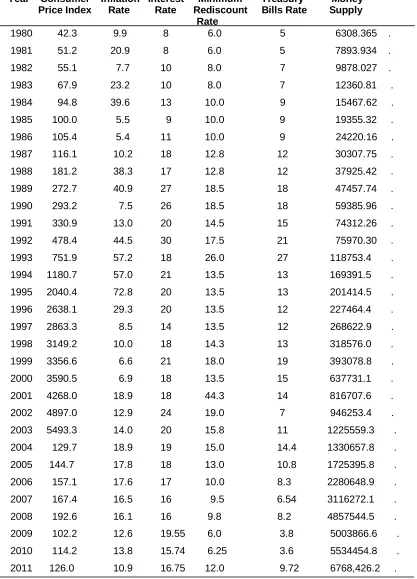
Between 1960 and 1970 the inflation rate averaged to 4.0% as measured by the consumer price index (CPI), it was 10% in 1969 which was Nigerian civil war period. The reason for the rise in inflation rate was due to curtailment of income as a result of compulsory savings for financing the war and other restrictive economic, fiscal and political measures. These reconstruction measures and repayment of war bonds after 1970 resulted in the injection of massive private and public nominal expendi1tures into the economy. This led to sharp increase in government revenue in foreign exchange from oil exports thus inflation in that year continues to increase. The monetization of the “Petronaira” foreign exchange revenue expands pressure on money supply whose annual growth rate for the 1970s was 32.5% compare to 7.5% in the 1960s. Inflation rate grew from 9.9% in 1980 to 20.9% in 1981 this fluctuation continued from single to double digits averaging 20.16% in 1980s and money supply growth averaged 14.7%.
Licensed under Creative Common Page 13
Licensed under Creative Common Page 14
Table 1. Data Presentation
Year Consumer Inflation Interest Minimum Treasury Money Price Index Rate Rate Rediscount Bills Rate Supply
Rate 1980 42.3 9.9 8 6.0 5 6308.365 .
1981 51.2 20.9 8 6.0 5 7893.934 .
1982 55.1 7.7 10 8.0 7 9878.027 .
1983 67.9 23.2 10 8.0 7 12360.81 .
1984 94.8 39.6 13 10.0 9 15467.62 .
1985 100.0 5.5 9 10.0 9 19355.32 .
1986 105.4 5.4 11 10.0 9 24220.16 .
1987 116.1 10.2 18 12.8 12 30307.75 .
1988 181.2 38.3 17 12.8 12 37925.42 .
1989 272.7 40.9 27 18.5 18 47457.74 .
1990 293.2 7.5 26 18.5 18 59385.96 .
1991 330.9 13.0 20 14.5 15 74312.26 .
1992 478.4 44.5 30 17.5 21 75970.30 .
1993 751.9 57.2 18 26.0 27 118753.4 .
1994 1180.7 57.0 21 13.5 13 169391.5 .
1995 2040.4 72.8 20 13.5 13 201414.5 .
1996 2638.1 29.3 20 13.5 12 227464.4 .
1997 2863.3 8.5 14 13.5 12 268622.9 .
1998 3149.2 10.0 18 14.3 13 318576.0 .
1999 3356.6 6.6 21 18.0 19 393078.8 .
2000 3590.5 6.9 18 13.5 15 637731.1 .
2001 4268.0 18.9 18 44.3 14 816707.6 .
2002 4897.0 12.9 24 19.0 7 946253.4 .
2003 5493.3 14.0 20 15.8 11 1225559.3 .
2004 129.7 18.9 19 15.0 14.4 1330657.8 .
2005 144.7 17.8 18 13.0 10.8 1725395.8 .
2006 157.1 17.6 17 10.0 8.3 2280648.9 .
2007 167.4 16.5 16 9.5 6.54 3116272.1 .
2008 192.6 16.1 16 9.8 8.2 4857544.5 .
2009 102.2 12.6 19.55 6.0 3.8 5003866.6 .
2010 114.2 13.8 15.74 6.25 3.6 5534454.8 .
2011 126.0 10.9 16.75 12.0 9.72 6768,426.2 .
Source: CBN Annual Report various issues
Licensed under Creative Common Page 15
Interpretation of the log of the data presented
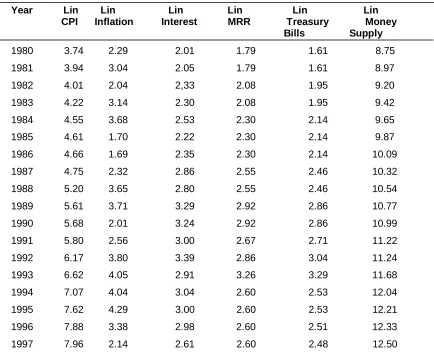
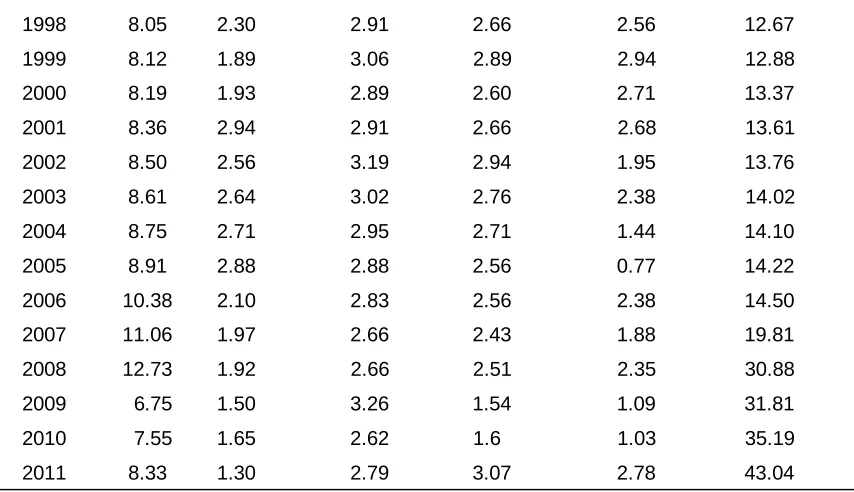
The log table (2) below shows the trend of the effect of different interest rates on inflation has measured by consumer price index (CPI). In 1980 inflation rate was 2.29% increased to 3.04% in 1981 only prime lending rate increased by 0.04% while other interest rates remained static. During the 1980s inflation was in its highest at 3.71% in 1989, lending rate, minimum rediscounting rate and treasury rate were also in there highest rate. In the 1990s inflation was in its highest in 1995 at 4.29%, while prime lending rate was at its highest at 3.39% in 1992 and was 3.0% in 1995, minimum rediscounting rate was static between 1994 and 1997 at 2.6%. Between 2000 and 2007, inflation and treasury bills rate were at their highest at 2.94% and 2.68% respectively in 2001, while lending rate and minimum rediscount rate reflected their highest in 2002 at 3.19% and 2.94% respectively. Between 2008 and 2010, inflation rate and treasury bills rate were drastically reduced during the period this as a result of the Central Bank of Nigeria (CBN) has made it an agenda to lower inflation rate below 10 percent, which CBN nearly achieved in 2011 at 10.9%.
Table 2. Log of the Table
Year Lin Lin Lin Lin Lin Lin CPI Inflation Interest MRR Treasury Money Bills Supply
1980 3.74 2.29 2.01 1.79 1.61 8.75
1981 3.94 3.04 2.05 1.79 1.61 8.97
1982 4.01 2.04 2,33 2.08 1.95 9.20
1983 4.22 3.14 2.30 2.08 1.95 9.42
1984 4.55 3.68 2.53 2.30 2.14 9.65
1985 4.61 1.70 2.22 2.30 2.14 9.87
1986 4.66 1.69 2.35 2.30 2.14 10.09
1987 4.75 2.32 2.86 2.55 2.46 10.32
1988 5.20 3.65 2.80 2.55 2.46 10.54
1989 5.61 3.71 3.29 2.92 2.86 10.77
1990 5.68 2.01 3.24 2.92 2.86 10.99
1991 5.80 2.56 3.00 2.67 2.71 11.22
1992 6.17 3.80 3.39 2.86 3.04 11.24
1993 6.62 4.05 2.91 3.26 3.29 11.68
1994 7.07 4.04 3.04 2.60 2.53 12.04
1995 7.62 4.29 3.00 2.60 2.53 12.21
1996 7.88 3.38 2.98 2.60 2.51 12.33
Licensed under Creative Common Page 16 Table 2 continued…
1998 8.05 2.30 2.91 2.66 2.56 12.67
1999 8.12 1.89 3.06 2.89 2.94 12.88
2000 8.19 1.93 2.89 2.60 2.71 13.37
2001 8.36 2.94 2.91 2.66 2.68 13.61
2002 8.50 2.56 3.19 2.94 1.95 13.76
2003 8.61 2.64 3.02 2.76 2.38 14.02
2004 8.75 2.71 2.95 2.71 1.44 14.10
2005 8.91 2.88 2.88 2.56 0.77 14.22
2006 10.38 2.10 2.83 2.56 2.38 14.50
2007 11.06 1.97 2.66 2.43 1.88 19.81
2008 12.73 1.92 2.66 2.51 2.35 30.88
2009 6.75 1.50 3.26 1.54 1.09 31.81
2010 7.55 1.65 2.62 1.6 1.03 35.19
2011 8.33 1.30 2.79 3.07 2.78 43.04
Correlation Analysis
Licensed under Creative Common Page 17
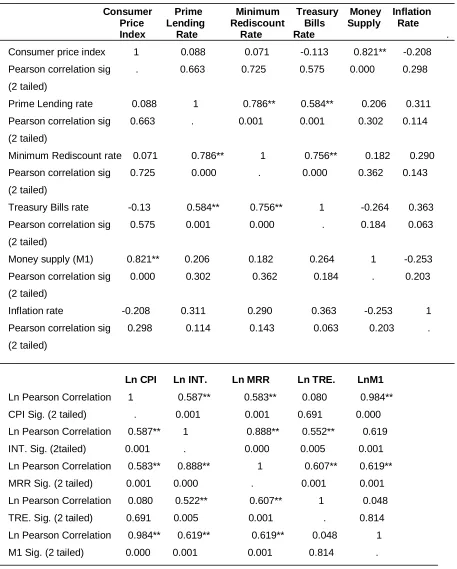
Table 3. Correlation Result
Consumer Prime Minimum Treasury Money Inflation Price Lending Rediscount Bills Supply Rate
Index Rate Rate Rate .
Consumer price index 1 0.088 0.071 -0.113 0.821** -0.208
Pearson correlation sig . 0.663 0.725 0.575 0.000 0.298
(2 tailed)
Prime Lending rate 0.088 1 0.786** 0.584** 0.206 0.311
Pearson correlation sig 0.663 . 0.001 0.001 0.302 0.114
(2 tailed)
Minimum Rediscount rate 0.071 0.786** 1 0.756** 0.182 0.290
Pearson correlation sig 0.725 0.000 . 0.000 0.362 0.143
(2 tailed)
Treasury Bills rate -0.13 0.584** 0.756** 1 -0.264 0.363
Pearson correlation sig 0.575 0.001 0.000 . 0.184 0.063
(2 tailed)
Money supply (M1) 0.821** 0.206 0.182 0.264 1 -0.253
Pearson correlation sig 0.000 0.302 0.362 0.184 . 0.203
(2 tailed)
Inflation rate -0.208 0.311 0.290 0.363 -0.253 1
Pearson correlation sig 0.298 0.114 0.143 0.063 0.203 .
(2 tailed)
Ln CPI Ln INT. Ln MRR Ln TRE. LnM1
Ln Pearson Correlation 1 0.587** 0.583** 0.080 0.984**
CPI Sig. (2 tailed) . 0.001 0.001 0.691 0.000
Ln Pearson Correlation 0.587** 1 0.888** 0.552** 0.619
INT. Sig. (2tailed) 0.001 . 0.000 0.005 0.001
Ln Pearson Correlation 0.583** 0.888** 1 0.607** 0.619**
MRR Sig. (2 tailed) 0.001 0.000 . 0.001 0.001
Ln Pearson Correlation 0.080 0.522** 0.607** 1 0.048
TRE. Sig. (2 tailed) 0.691 0.005 0.001 . 0.814
Ln Pearson Correlation 0.984** 0.619** 0.619** 0.048 1
M1 Sig. (2 tailed) 0.000 0.001 0.001 0.814 .
Licensed under Creative Common Page 18
Regression Analysis
Table 4.a (i) Prime Lending Rate and Inflation (CPI)
Unstandardized Coeff. Standardized Coeff.
Model B Standard error Beta t significance
Constant -1.809 2.338 -0.774 0.446
Ln Int. 3.001 0.828 0.587 3.624 0.001
R 0.587 Standard error 1.57263
R2 0.344 Durbin Watson 0.282 Adjusted R2 0.318
Table 4.b ANOVA
Model Sum of Square df Mean square F significance
Regression 32.473 1 32.473 13.130 0.001
Residual 61.829 25 2.473
Total 94.302 26
From the tables (4.a & 4.b) above since the calculated F-value (13.13) is greater than the tabulated F-value (4.24) at 5% level of significance; this shows that there is significant relationship between prime lending rate and consumer price index (inflation) in Nigeria. The coefficient of determination (R2) of 0.334 shows that about 34% of the increase in consumer price index is caused by changing in prime lending rate. This is supported by the t-calculated (3.62) which is greater than t-tabulated of 2.485 at 5% level of significance, and also the coefficient Ln prime lending rate of 3.001 shows that 1% increase in prime lending rate results to about 3.0% increase in consumer price index. Thus increase in prime lending rate results in significant increase in consumer price index (CPI).
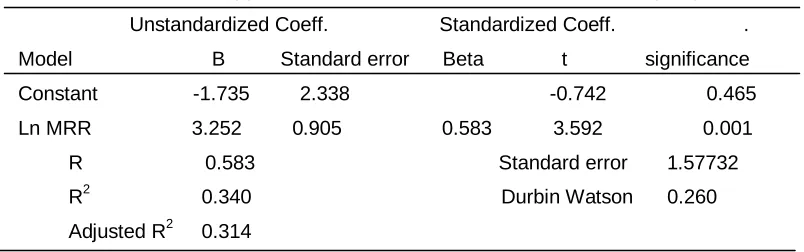
Table 5.a (ii) Minimum Rediscount Rate and Inflation (CPI)
Unstandardized Coeff. Standardized Coeff. .
Model B Standard error Beta t significance
Constant -1.735 2.338 -0.742 0.465
Ln MRR 3.252 0.905 0.583 3.592 0.001
R 0.583 Standard error 1.57732
Licensed under Creative Common Page 19
Table 5.b ANOVA
Model Sum of Square df Mean square F significance
Regression 32.104 1 32.104 12.904 0.001
Residual 62.198 25 2.488
Total 94.302 26
From the above tables (5.a & 5.b) the F-calculated of 12.904 is greater than the F-tabulated value of 4.24 at 5% level of significant; this shows that there is significant relationship between minimum rediscount rate and consumer price index (inflation) in Nigeria. The coefficient of determination (R2) of 0.340 shows that about 34% of the increase in consumer price index is caused by change in minimum rediscount rate. This is confirmed by the coefficient of Ln MRR of 3.252 and t-calculated value (3.592) which is greater than t-tabulated value (2.485) at 5% level of significance; shows that 1% increase in minimum rediscount rate lead to about 2% increase in consumer price index. Thus increase in minimum rediscount rate result in significant increase in consumer price index.
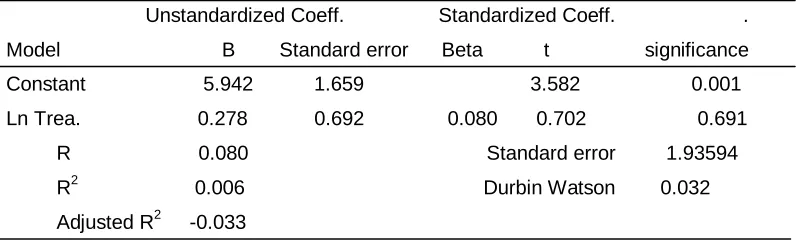
Table 6.a (iii) Treasury Bills Rate and Inflation (CPI)
Unstandardized Coeff. Standardized Coeff. .
Model B Standard error Beta t significance
Constant 5.942 1.659 3.582 0.001
Ln Trea. 0.278 0.692 0.080 0.702 0.691
R 0.080 Standard error 1.93594
R2 0.006 Durbin Watson 0.032 Adjusted R2 -0.033
Table 6.b ANOVA
Model Sum of Square df Mean square F significance
Regression 0.605 1 0.605 0.161 0.691
Residual 93.697 25 3.748
Total 94.302 26
Licensed under Creative Common Page 20
The coefficient of Ln Treasury bill rate of 0.278 and t-calculated value of 0.702 which is less than t-tabulated value of 2.485 shows that 1% change or increase in treasury bills rate lead to about 0.4% increase in consumer price index. Thus increase in treasury bills rate does not have any significant effect in consumer price index.
Table 7.a (iv) Money Supply and Inflation (CPI)
Unstandardized Coeff. Standardized Coeff.
Model B Standard error Beta t significance
Constant -5.682 0.444 -12.975 0.000
Ln M1 1.052 0.038 0.984 27.947 0.000
R 0.984 Standard error 0.34204
R2 0.969 Durbin Watson 0.743 Adjusted R2 0.96
Table 7.b ANOVA
Model Sum of Square df Mean square F significance
Regression 91.377 1 91.377 781.044 0.000
Residual 2.925 25 0.117
Total 94.302 26
From the tables (7.a & 7.b) above the F-calculated (781.044) is greater than F-tabulated (4.24) at 5% level of significance; this shows that there is significant relationship between Money supply and consumer price index (inflation) in Nigeria. The coefficient of determination (R2) of 0.969 shows that about 96% of the increase in consumer price index is caused by change in money supply.
Licensed under Creative Common Page 21
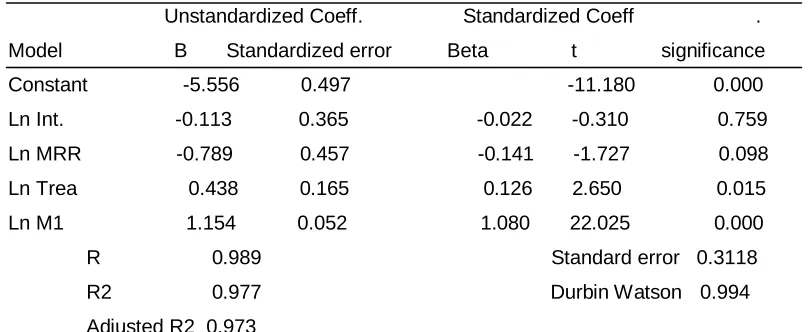
Table 8.a (v) Lending Rate, Minimum Rediscount Rate, Treasury Bills rate, Money Supply and Inflation (CPI)
Unstandardized Coeff. Standardized Coeff .
Model B Standardized error Beta t significance
Constant -5.556 0.497 -11.180 0.000
Ln Int. -0.113 0.365 -0.022 -0.310 0.759
Ln MRR -0.789 0.457 -0.141 -1.727 0.098
Ln Trea 0.438 0.165 0.126 2.650 0.015
Ln M1 1.154 0.052 1.080 22.025 0.000
R 0.989 Standard error 0.3118
R2 0.977 Durbin Watson 0.994
Adjusted R2 0.973
Table 8.b ANOVA
Model Sum of Square df Mean square F significance
Regression 92.163 4 23.041 236.933 0.000
Residual 2.139 22 0.097
Total 94.302 26
From the above tables (8.a & 8.b) the calculated (236.933) which is greater than the F-tabulated (2.87) at 5% level of significance shows that there is significant relationship among prime lending rate, minimum rediscount rate, treasury bills rate, money supply and consumer price index (inflation) in Nigeria. The coefficient of determination (R2) of 0.977 shows that about 97% of the consumer price index (inflation) is caused by changes in prime lending rate, minimum rediscount rate, treasury bills rate and money supply. The coefficients of Ln prime lending rate of -0.113 and t-calculated value of 0.310 less than t-tabulated value of 2.074; Ln MRR of -0.789 and t-calculated value of 1.727 less than t-tabulated value of 2.074; Ln Trea. of 0.438 and t-calculated value of 2.650 greater than t-tabulated value of 2.074 and Ln M1 of 1.154 and t-calculated value of 22.05 greater t-tabulated value of 2.074 show that 1% increase in prime lending rate, minimum rediscount rate, treasury bills rate and money supply will lead to 0.3%, 1.7%, 2.6% and 22% in consumer price index respectively.
Licensed under Creative Common Page 22
CONCLUSION
The high level of inflation started in Nigeria as a result of government effort in the post civil war era of 1970s to reconstruct the economy from its downturn, money was pumped into economy, that is Petronaira, this exacerbate the problem of inflation. Also the introduction of Structural Adjustment Programme (SAP) into the Nigerian economy brought about its own rounds of effects of increasing inflationary rate as a result of the conditionality given by the World Bank which did not go well with the economy. Several measures have been put in place by the authorities to control inflation in Nigeria as it is known fact that in the period of inflation that lenders suffer loss while the borrower gain because of the loss in the value of money. This abnormality is corrected through the introduction of high interest rate so as to encourage savings and curb inflation while other factors such as the monetary and fiscal policies were introduced. From the study it is concluded that high level of inflation in Nigeria was caused by many factors such as increase in the level of money supply without correspondent increase in investment, excessive bank lending, inconsistence in interest rates policy, etc.
RECOMMENDATION
Based on the findings of the study, the following recommendations are made for effective policy formulation and implementation of interest policy in Nigeria:
Increase in money supply should be used for productive investment purposes.
Low and stable inflation rate should be maintained in the economy couple with strict monitoring of price control system.
Authorities should encourage investors and producers through the introduction of reasonable interest rates.
Government should introduce policies that will promote the production of basic goods within the economy rather than their importation.
Naira exchange rate should be revalued in other to have real value for the Naira.
Mismanagement and misappropriation of government funds need to be discouraged, while deficit financing must be reduced.
LIMITATIONS & SCOPE FOR FURTHER RESEARCH
Licensed under Creative Common Page 23
REFERENCES
Adebiyi, M. A. (2001): “Can High Real Interest Rate Promote Economic Growth Without Fuelling Inflation in Nigeria? Journal of Economics and Social Studies, Maiden Edition, pp. 86 – 100.
Addisson, J.T. et al, (1980): The calculation of inflation. The Manchester School of Economics and Social Studies Journal, No. 2, pp. 140p156.
Afolabi, J.A. and B. Efunwoye (1995): “Causes of High Inflation in Nigeria”.Nigerian Deposit Insurance Corporation (NDIC) Quarterly, Vol. 5, No. 4, pp. 14-20.
Ahmed, A. (2003): Trends in Profitability of Banks in Nigeria: Before and During Interest Rate Deregulation a Comparative Analysis NDIC Quarterly, 12, September, 59-83.
Akinbobola, T. O (2012): The dynamics of money supply, exchange rate and inflation in Nigeria. J. Applied Fin. Bank. 2(4): 117-141.
Alesina, A. and Arazen, A. (1991): Why is Stabilization Delayed? American Economic Review, 81:1170 – 118
Alile, H.I. (1992): “Establishing a Stock Market – Nigerian Experience,” Paper presented at the conference on Promoting and Developing Capital Markets in Abuja (November 11-13).
Anyanwu, J.C. (1992): The Effect of Monetary and Fiscal Policies under Rational Expectations: The Nigerian case, 1970-1988, University of Ibadan.
Anyanwu, J. C. and Oaikhenan, H. E. (1995): Modern Macroeconomics: Theory and Applications in Nigeria. Onitsha: Joanee Educational Publishers Ltd.
Asoguo, J.O. (1991): An Econometric Analysis of the Nature and Causes of Inflation in Nigeria, CBN Economics and Financial Review, vol. 29, No.3, pp. 12-39.
Berry, A.; P. Karam and D.Lexton (2006): A Practical Approach to Monetary Policy Analysis Overview. Washington International Monetary Fund, USA.
Blejer, M. and P.M. Fernandex (1980): The Effect of Unanticipated Mooney Growth on Prices and on Output and its Composition in a Fixed Exchange Rate Open Economy. Canadian Journal of Economics, vol.13, February, pp. 82-85.
Bodie, Z.; A. Kanae andA.T. Marcus (2005): Investment. Tata McGraw-Hill Publishing Company Limited, New Delhi, India.
BusinessDay (2009): “Outrage as CBN Lends to some Banks at 11%” Wednesday 18, February.
CBN (2000): The Changing Structure of the Nigerian Economy and Implications for Development. Lagos: Realm Communications
Charles, W.S and R.L Sprinkle (2006): International economics, 2nd Edition. Pearson Education Incorporation, USA.
Essia, U. (2005): Macro Economic Theory. Calabar:Saesprint (Nig) Co.
Friedman, B.M. (1956): The Quality Theory of Money – A Restatement in Friedman, B.M. (eds.) Studies in the Quantity theory of money, Chicago, The University of Chicago Press
Friedman, B.M. (1968): “The Role of Monetary policy”. American Economic Review, 1 - 17.
Friedman, B.M. (1990): Targets and Instruments of Monetary Policy. Handbook of Monetary Economics, Vol.11, B.M. Friedman and F.H. Hahn, eds., New York: Elsevier Science Publishers, 1185 – 1230.
Gylfason, T. (1981): “Interest Rates, Inflation and the Aggregate Consumption Function”, Review of Economics and Statistics, Vol. LXII, No. 2 (May) pp. 233-245.
Hall, S. (2010): Definition of a restrictive monetary policy, eHow Contributor.
Licensed under Creative Common Page 24 Jhingan, M.L (2004): Money, Banking, International Trade and Public Finance, 6th Edition, Vrinda Publishing Limited, India.
Keynes, J. (1936): The General Theory of Employment, Interest and Money. Harcourt, Brace and World, New York.
Khan, S. M (2010): The Design and Effects of Monetary Policy in Sub-Saharan African Countries, Working Paper, Series Peterson Institute for International Economics.
Lawal, S. A. (1982): Economics for Nigeria, New York: Macmillan Publishing Company.
Lawrence, S.R.; William S.L. and F.U. Gregory (2000): Principles of Money, Banking and Financial Markets, 10th Edition, Wesley Longman, Inc U.S.A.
Masha, I. (2000): “New Perspective on Inflation in Nigeria”. Central Bank of Nigeria (CBN), Economic and Financial Review, Vol. 38, No. 2. pp. 34-42.
Mordi, C. N. O. (2009): Overview of Monetary Policy Framework in Nigeria. In CBN Bullion 33(1): 1-10.
Musgrave, R.A. and P.B. Musgrave (2005): Public Finance in Theory and Practice, 5th Edition, Tata McGraw-Hill Company Inc. US Norges Bank Articles, www.norges-bank,2005.
Ogiogio, G.O. (1988): “Behaviour of Interest Rate Differential: An Evidence of Significant Response to Monetary Policy”. Nigerian Journal of Economic and Social Studies, Vol. 30, No. 1, pp. 59-66.
Olusoji, M. O. (2003): Determinants of Private Savings in Nigeria: An Error Correction Approach. NDIC Quarterly, 13 September, 85-96.
Onoh, J. K. (2007): Dimensions of Nigeria’s Monetary Policies – Domestic and External. Aba:Astra Meridan Publishers.
Oresotu, F.O. (1992): “Interest Rates Behaviour under a programme of Financial Reform: The Nigerian case”. Central Bank of Nigeria (CBN) Economic and Financial Review, Vol. 30, No. 2, pp. 109-118.
Orubu, C. O. (2009): Inflation in Nigeria: Concept, Measurement and Control". In CBN: Bullion, 33(1): 19- 30.
Robert, F. and B. Bernonke (2001): Principles of Economics, McGraw-Hill and Irwin, USA.
Todaro, M.P. and C.S. Stephen (2004): Economic Development, 8th Edition, Pearson Education Plc Limited, India.
Uchendu, O. (1993): Interest rate Policy, Savings and Investment in Nigeria. CBN Quaterly Review 31(1), 34-52.