58
EEG Based Brain Computer Interface Hand Grasp Control:
Feature Extraction Method MTCSP
Nazlar Ghassemzadeh and Siamak Haghipour
International Journal of Advanced Biological and Biomedical Research
Journal DOI: 10.18869/IJABBR
ISSN: 2322-4827
CODEN (USA): IJABIS
http://ijabbr.com
Copyright © 2018 by authors and the Sami Publishing Corporation(SPC). This work is licensed
under the Creative Commons Attribution International License (CC BY4.0).
58
Available online at http://ijabbr.com
International Journal of Advanced
Biological and Biomedical Research
6(1) (2018) 58–65
Original Article Open Access
EEG Based Brain Computer Interface Hand Grasp Control: Feature Extraction
Method MTCSP
Nazlar Ghassemzadeh
1and Siamak Haghipour
2,∗1MS Student, Department of Biomedical Engineering, Tabriz Branch, Islamic Azad University, Tabriz, Iran. 2Assistant Professor, Department of Biomedical Engineering, Tabriz Branch, Islamic Azad University, Tabriz, Iran.
Abstract
Brain-Computer Interfaces (BCIs) are communication systems, which enable users to send commands to computers by using brain activity only; this activity being generally measured by Electroencephalography (EEG). BCIs are generally designed according to a pattern recognition approach, i.e., by extracting features from EEG signals, and by using a classifier to identify the user’s mental state from such features. In this study, we have considered the BCI Competition data sets 2b-2008; additionally, Multi-Taper Common Spatial Pattern (MTCSP) feature extraction method is used for extracting the features of right and left hand data, Logistic Regression (Logreg) classifier is chosen to classify the data sets. In this paper, TPR, FPR, ACC and k function are used as evaluation criteria. The comparison of the results with the results of the BCI competition 2008 has proved the effectiveness, high accuracy and resolution of the proposed method. The results have shown that MTCSP method provides even higher classification accuracy. It points out that utilizing suitable preprocessing to keep the EEG signal free of redundant information is for sure a very important in the BCI development.
© 2018 Published by CASRP Publishing Company Ltd. UK. Selection and/or peer-review under responsibility of Center of Advanced Scientific Research and Publications Ltd. UK.
Keywords: Brain-Computer Interfaces (BCI), Feature extraction, Multi-Taper Common Spatial Pattern (MTCSP)
*Corresponding author: [email protected]
© 2018 The Authors. This is an open access article under the terms of the Creative Commons Attribution-Non Commercial- No Derives License, which permits use and distribution in any medium, provided the original work is properly cited, the use is non-commercial and no modifications or adaptations are made.
Nazlar Ghassemzadeh and Siamak Haghipour / International Journal of Advanced Biological and Biomedical Research (2018) 7(1) 58-65
59
1. IntroductionFor several years, many efforts have been done to use the electro-encephalogram (EEG) as a new communication channel between human brain and computer. This new communication channel is called EEG-based brain-computer interface (BCI). Most of these efforts have been dedicated to the improvement of the accuracy and capacity of this EEG-based communication channel. Several factors may affect the performance of the BCI. These factors include the brain signal used as the input of the BCI, the signal processing methods used for feature selection and classification, cognitive tasks to be intended, and subject training. Different types of brain signals are used to detect the subjects’ intention. Thus far, slow cortical potentials (Hinterberger et al., 2004), oscillatory EEG activity (Mason and Brich, 2000; Pfurtscheller and Neuper, 2001; Wolpaw et al., 2000) and various types of event-related potentials including readiness potential (Barke et al., 2005), steady-state visual-evoked potential (SSVEP) (Pfurtscheller et al., 1998) and P300 (Serby et al., 2005) have been utilized in different BCI systems (Erfanian and Erfani, 2004).
To classify the EEG patterns, feature vectors must be created. The classification performance is profoundly affected by the choice of feature set. Even when the features presented contain enough information about the output class, they may not predict the output correctly because the dimension of feature space may be so large that it may require numerous instances to determine the relationship. It was reported that the performance of classifier systems deteriorates as new irrelevant features are added (Erfanian and Erfani, 2004; Kwak, 2003). The process of BCIs systems have been shown in Fig. 1.
Fig. 1. BCI block diagram (Kolodziei et al., 2012).
EEG-based BCIs systems measure specific features of EEG activity and translate these features into device commands. One of the most difficult problems in BCI development is the restricted data throughput that can be achieved (Wolpaw, 2002). This information transfer rate needs to be improved, and often a balance must be maintained between accuracy and speed one way for improving this problem is to consider the use of multiple classes. Furthermore, there is always a search for a method which can lead to a better result and higher accuracy (Manoochehri, 2010). BCI is composed of signal collection and processing, pattern identification and control systems (Liu et al., 2005; Suleiman et al., 2010). The purpose of this study is to control the hand grasp for both right and left hand. We have used BCI Competition data sets 2b-2008 and Multi-Taper Common Spatial Pattern (MTCSP) feature extraction method has been used for extracting the features of right and left hand data. Logistic Regression classifier (Logreg) has been chosen to classify the data. Results of this methods have been compared with the results of the BCI Competition 2008 data sets 2b. The MTCSP method was originally proposed (Muller-Gerking et al., 1999; Ramoser et al., 2000). This method leads to a projection matrix, the rows of which function as discriminative spatial filters only distinguishing between two conditions.
60
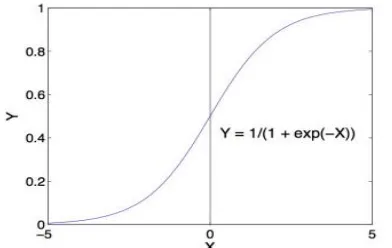
functions of the form f: X→Y, or P(Y/X) in the case where Y is discrete-valued, and X= ˂X1...Xn˃ is any vector containing discrete or continuous variables (Mitchell, 2015) (Fig. 2).
Fig. 2. Form of the logistic function. In Logistic Regression, P(Y/X) is assumed to follow this form (Mitchell, 2015).
2. Methods
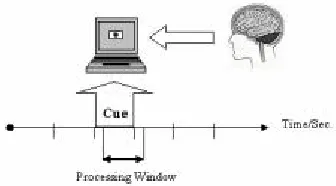
In this paper, at first, data sets were collected, subsequently, eye artifacts were removed by Adaptive Noise Canceller (ANC). Multi-Taper Common Spatial Pattern (MTCSP) is used for feature extraction. Finally, Logreg classifier is used for classification and evaluation (Fig. 3).
Fig. 3. BCI block diagram.
2.1. Datasets
Nazlar Ghassemzadeh and Siamak Haghipour / International Journal of Advanced Biological and Biomedical Research (2018) 7(1) 58-65
61
Fig. 3. Imagination of hand movement.2.2. Multi-Taper Common Spatial Pattern (MTCSP)
In this study we used BCILAB for applying MTCSP algorithm and Logreg classification. MTCSP is a experimental paradigm for all-frequency Common Spatial Patterns. The basic idea is to calculate CSP for each covariance matrix in the cross-spectrum, and to use multi-taper spectral estimation to ensure an optimal tradeoff between spectral precision and estimation noise. The default classifier is sparse logistic regression with elastic-net penalty. This paradigm also implements a second approach in which the cross-spectrum is not spatially filtered, but directly submitted to the classifier (Disciplined Cross-Spectral Regression). Table 1 indicates the parameters of BCILAB.
Table 1
Parameters of BCILAB.
data = io_loadset('data sets/mary/nback.eeg')
My approach MTCSP
Sampling rate after resampling 250 Epoch window relative to the target markers [0.5 3.5] Type of window function Rect Frequency range of interest [1 45]
Spectral smoothing 5
Sub-sample the spectrum 1
Target markers {'769 ','768'} CSP pattern per band (times two) 3
Machine learning function Logreg
2.3. Evaluation criteria sample to sample
We use this method to evaluate the performance of the classifier to estimate the classifier accuracy. This method is suitable for dividing different imagination each one another. In this work we use it for dividing imagination of right hand and left hand movement. There are two criteria TPR and FPR.
FPR = FP FP + TP
(1) TPR = TP
TP + FN
62
2.3.1. Classification Accuracy and Error Rate (ACC and ERR)The Classification Accuracy (ACC) or the error rate are the most widely used evaluation criteria in BCI research. Nine out of fourteen datasets in the BCI competitions 2003 and 2005 used the accuracy or the error rate as the evaluation criterion. One possible reason for its popularity is that it can be very easily calculated and interpreted. However, it is important to note that the accuracy of a trivial (random) classifier is already 100%/M, (e.g. for M = 2 classes 50% are correct just by chance). If the ACC is smaller than this limit, an error occurred and further exploration is required. On the other hand, the maximum accuracy can never exceed 100%. Sometimes, this could be a disadvantage, especially when two classification systems should be compared and both provide a result close to 100% (Guyton, 1956).
ERR = 1 - ACC (2)
ACC = P0= ∑ M
i=1 nii (3)
N
N = ∑M
i=1 ∑Mj=1nij (4)
Where N, is the number of the total samples and nii is the total number of samples which were detected
correctly (Guyton, 1956).
2.3.2. Cohen’s Kappa Coefficient (k)
Cohen’s kappa coefficient k addresses several of the critiques on the accuracy measure. The calculation of k
uses the overall agreement P0 = ACC, which is equal to the classification accuracy, and the chance agreement Pe.
k = P0 - Pe (5)
1 - Pe
Pe = ∑ M
i=1 n:in:i (6)
N2
With n:i and ni: being the sum of the ith column and the ith row, respectively. The kappa coefficient is zero if
the predicted classes show no correlation with the actual classes. A kappa coefficient of 1 indicates perfect classification. Kappa values smaller than zero indicate that the classifier suggests a different assignment between output and the true classes (Guyton, 1956).
3. Results
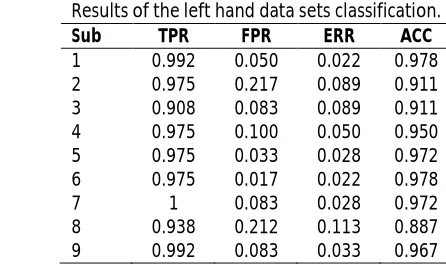
Tables 1 and 2 show the results of the classification of suggested method in BCILAB and evaluating k for left hand data sets. Tables 3 and 4 show the results of the classification and evaluating k for right hand data sets .
Table 1
Results of the left hand data sets classification.
Sub TPR FPR ERR ACC
Nazlar Ghassemzadeh and Siamak Haghipour / International Journal of Advanced Biological and Biomedical Research (2018) 7(1) 58-65
63
Table 2Results of evaluating k for left hand data sets.
Sub P0 = ACC k =
P0 - Pe P
e= 1
1 - Pe M = 2
1 0.978 0.96
2 0.911 0.82
3 0.911 0.82
4 0.95 0.90
5 0.972 0.94
6 0.978 0.96
7 0.972 0.94
8 0.887 0.77
9 0.967 0.93
Table 3
Results of the right hand data sets classification.
Sub TPR FPR ERR ACC
1 0.992 0.067 0.028 0.972 2 0.967 0.250 0.106 0.894 3 0.908 0.150 0.111 0.889 4 1 0.014 0.005 0.995
5 1 0 0 1
6 0.967 0.067 0.044 0.956
7 1 0 0 1
8 0.967 0.100 0.056 0.944 9 0.975 0.167 0.072 0.928
Table 4
Results of evaluating k for right hand data sets.
Sub P0 = ACC k =
P0 - Pe P
e= 1
1 - Pe M = 2
1 0.972 0.94
2 0.894 0.79
3 0.889 0.78
4 0.995 0.99
5 1 1
6 0.956 0.91
7 1 1
8 0.944 0.89
9 0.928 0.86
4. Conclusion
64
Nazlar Ghassemzadeh and Siamak Haghipour / International Journal of Advanced Biological and Biomedical Research (2018) 7(1) 58-65
65
ReferencesBlinowska, K.J., Zygierewicz, J., 2012. Practical biomedical signal analysis using Matlab. University of Warsaw, Poland.
Burke, D.P., Kelly, S.P., Chazal, P., de Reilly, R.B., Finucane, C., 2005. A parametric feature extraction and classification strategy for brain-computer interfacing. IEEE Trans. Neural Syst. Rehabil. Eng., 13, 12-17. Erfanian, A., Erfani, A., 2004. EEG-based brain-computer interface for hand grasp control: feature extraction by
using ICA. Proceeding of 9th Annual Conference, International Functional Electrical Stimulation Society. Guyton, A., 1956. Guyton and Hall Textbook of Medical Physiology.
Hinterberger, T., Schmidt, S., Neumann, N., Mellinger, J., Blankertz, B., Curio, G., Birbaumer, N., 2004. Brain-computer communication and slow cortical potentials. IEEE Trans. Biomed. Eng., 51, 1011-1018.
Kolodziej, M., Majkowski, A., Rak, R.J., 2012. Linear discriminate analysis as EEG features reduction technique for brain-computer interfaces. ISSV 0033-2097, R.88NR 3a.
Kwak, N., 2003. Feature extraction based on ICA for binary classification problems. IEEE Trans. Knowl. Data Eng., 15(6), 1374-1388.
Leeb, R., Brunner, C., Muller-Putz, G.R., Pfurtscheller, G., 2008. BCI Competition 2008-Graz data set B.
Liu, B., Wang, M., Yu, L., Liu, Z., Yu, H., 2005. Study of feature classification methods in BCI based on neural networks. In Proceedings of the 2005 IEEE Engineering in Medicine and Biology 27th Annual Conference
Shanghai, China, September 1-4.
Manoochehri, M., Moradi, M.H., Pfurtscheller, G., 2010. Are all features extraction methods subject-independent. (ICBME2010), 3-4 November.
Mason, S.G., Birch, G.E., 2000. A brain-controlled switch for asynchronous control applications. IEEE Trans. Biomed. Eng., 47, 1297-1307.
Mitchell, T.M., 2015. Generative and discriminative classifiers: Naive bayes and logistic regression. January 31. Müller-Gerking, J., Pfurtscheller, G., Flyvbjerg, H., 1999. Designing optimal spatial filters for single-trial EEG
classification in a movement task. Clin. Neurophysiol., 110, 787-798.
Pfurtscheller, G., Neuper, C., 2001. Motor imagery and direct brain-computer communication. Proc IEEE, 89, 1123-1134.
Pfurtscheller, G., Neuper, C., Schlögl, A., Lugger, K., 1998. Separability of EEG signals recorded during right and left motor imagery using adaptive autoregressive parameters. IEEE Trans. Rehabil. Eng., 6, 316-325.
Ramoser, H., Muller-Gerking, J., Pfurtscheller, G., 2000. Optimal spatial filtering of single trial EEG during imagined hand movement. IEEE Trans. Rehabil. Eng., 8(4), 441-446.
Serby, H., Yom-Tov, E., Inbar, G.F., 2005. An improved P300-based brain-computer interface. IEEE Trans. Neural Syst. Rehabil. Eng., 13, 89-98.
Singh, A., 2001. Adaptive noise cancellation. Department of Electronics & Communication Netaji Subhas Institute of Technology, February to May.
Suleiman, A.B., Toka, S., Fatehi, A.H., 2010. Features extraction techniques of EEG signal for BCI applications. University of Mosul, Iraq.
Wolpaw, J.R., Birbaumer, N., McFarland, D.J., Pfurtscheller, G., Vaughan, T.M., 2002. Brain-computer interfaces for communication and control. Clin. Neurophysiol., 113(6), 767-791.