University of Pennsylvania
ScholarlyCommons
Publicly Accessible Penn Dissertations
1-1-2015
Short-Circuiting Neoliberal Development: A Case
Study of the Usha Multi-Purpose Cooperative
Megan Stanton
University of Pennsylvania, [email protected]
Follow this and additional works at:http://repository.upenn.edu/edissertations Part of theSocial Work Commons
This paper is posted at ScholarlyCommons.http://repository.upenn.edu/edissertations/1146
For more information, please [email protected].
Recommended Citation
Stanton, Megan, "Short-Circuiting Neoliberal Development: A Case Study of the Usha Multi-Purpose Cooperative" (2015).Publicly Accessible Penn Dissertations. 1146.
Short-Circuiting Neoliberal Development: A Case Study of the Usha
Multi-Purpose Cooperative
Abstract
Background: While economic insecurity adversely affects the well-being of sex workers, few studies examine economic interventions in this community. Extant interventions employ microfinance approaches and are limited in scope, scale, and sustainability. Critiques of microfinance initiatives highlight their inability to achieve economic and gender empowerment. Moreover, microfinance interventions among sex workers often fail to address structural causes of economic disempowerment, and do not increase economic agency. This dissertation examines an alternative economic intervention: the Usha Multi-purpose Cooperative Society (Usha), a bank operated by a sex workerâ??s union in Kolkata, India. Examining the organizational structure, culture, and operations of the bank I explore the manner in which Usha addresses the critiques aimed at microfinance initiatives, and the manner in which it cultivates economic and political agency in the sex work community.
Methods: Utilizing a mixed-methods case study design, I conducted 80 semi-structured interviews with Usha members (n=60) and staff (n=20), participant observation and document analysis. Additionally, I conducted quantitative analyses of the bankâ??s administrative database (N=14,382). Modified grounded theory and regression models were utilized to analyze the qualitative and quantitative data, respectively.
Results: Usha facilitates empowerment through two intersecting operational approaches: its interventions operate at the individual and community levels, while targeting logistical as well as political outcomes. Specifically, Usha offers individual logistical financial support to sex workers through savings and loans programs which reverse predatory practices used by other microfinance initiatives. Community-level logistical financial support is provided by investing in businesses and social programs which benefit the sex worker community. Usha fosters individual sex worker political agency by supporting professional identity,
independent decision-making, and sex worker leadership. Community-level political agency is developed by undermining the influence of financially coercive community power-brokers such as madams and pimps, providing labor protections, and facilitating access to civil society institutions.
Conclusion: Usha challenges neoliberal approaches that attribute poverty to individual shortcomings, and resists the neocolonial framing of sex workers as victims. These results advance our understanding of how microfinance interventions can support social movements and effect structural change.
Degree Type
Dissertation
Degree Name
Doctor of Philosophy (PhD)
Graduate Group
Social Welfare
First Advisor
Toorjo Ghose
Keywords
Cooperative Banking, Grassroots Development, Microfinance, Sex Work, Social development
Subject Categories
Social Work
SHORT-CIRCUITING NEOLIBERAL DEVELOPMENT: A CASE STUDY OF THE
USHA MULTI-PURPOSE COOPERATIVE
Megan Stanton
A DISSERTATION
in
Social Welfare
Presented to the Faculties of the University of Pennsylvania
in
Partial Fulfillment of the Requirements for the
Degree of Doctor of Philosophy
2015
Supervisor of Dissertation
__________________________ Toorjo Ghose, Ph.D
Associate Professor, School of Social Policy and Practice
Graduate Group Chairperson
___________________________ Susan Sorenson, Ph.D.
Associate Professor, School of Social Policy and Practice
Dissertation Committee:
Lisa Mitchell, Ph.D., Associate Professor, School of Arts and Sciences
ii
ABSTRACT
SHORT-CIRCUITING NEOLIBERAL DEVELOPMENT: THE CASE OF THE USHA
MULTI-PURPOSE COOPERATIVE
Megan Stanton
Toorjo Ghose, Ph.D.
Background: While economic insecurity adversely affects the well-being of sex workers,
few studies examine economic interventions in this community. Extant interventions
employ microfinance approaches and are limited in scope, scale, and sustainability.
Critiques of microfinance initiatives highlight their inability to achieve economic and
gender empowerment. Moreover, microfinance interventions among sex workers often
fail to address structural causes of economic disempowerment, and do not increase
economic agency. This dissertation examines an alternative economic intervention: the
Usha Multi-purpose Cooperative Society (Usha), a bank operated by a sex worker’s
union in Kolkata, India. Examining the organizational structure, culture, and operations
of the bank I explore the manner in which Usha addresses the critiques aimed at
microfinance initiatives, and the manner in which it cultivates economic and political
agency in the sex work community.
Methods: Utilizing a mixed-methods case study design, I conducted 80
semi-structured interviews with Usha members (n=60) and staff (n=20), participant
observation and document analysis. Additionally, I conducted quantitative analyses of the
bank’s administrative database (N=14,382). Modified grounded theory and regression
iii
Results: Usha facilitates empowerment through two intersecting operational
approaches: its interventions operate at the individual and community levels, while
targeting logistical as well as political outcomes. Specifically, Usha offers individual
logistical financial support to sex workers through savings and loans programs which
reverse predatory practices used by other microfinance initiatives. Community-level
logistical financial support is provided by investing in businesses and social programs
which benefit the sex worker community. Usha fosters individual sex worker political
agency by supporting professional identity, independent decision-making, and sex worker
leadership. Community-level political agency is developed by undermining the influence
of financially coercive community power-brokers such as madams and pimps, providing
labor protections, and facilitating access to civil society institutions.
Conclusion: Usha challenges neoliberal approaches that attribute poverty to
individual shortcomings, and resists the neocolonial framing of sex workers as victims.
These results advance our understanding of how microfinance interventions can support
iv
TABLE OF CONTENTS
ABSTRACT ... II
LIST OF TABLES ... V
LIST OF ILLUSTRATIONS ... VI
CHAPTER ONE ...1
CHAPTER TWO ...6
CHAPTER THREE ... 21
CHAPTER FOUR ... 34
CHAPTER FIVE ... 41
CHAPTER SIX ... 53
CHAPTER SEVEN ... 89
CHAPTER EIGHT... 97
CHAPTER NINE... 114
CHAPTER TEN ... 131
CHAPTER ELEVEN ... 137
CHAPTER TWELVE ... 147
CHAPTER THIRTEEN ... 155
APPENDICES ... 157
v
LIST OF TABLES
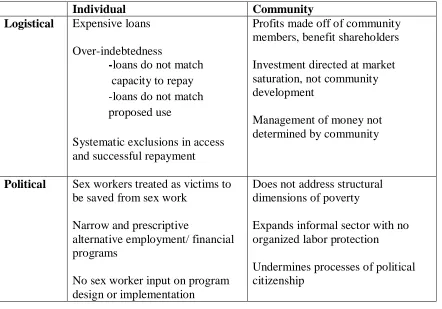
Table 4.1:Critiques of Existing Microfinance Organizations and Economic Interventions
for Sex Workers……….36
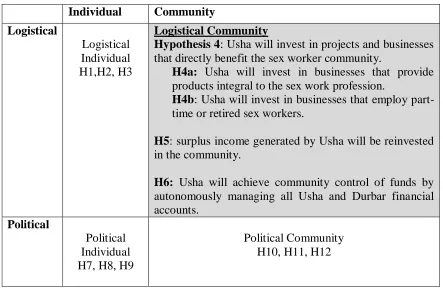
Table 4.2: Multi-Level Multi-dimensional Framework for Community-Led Economic Intervention………36
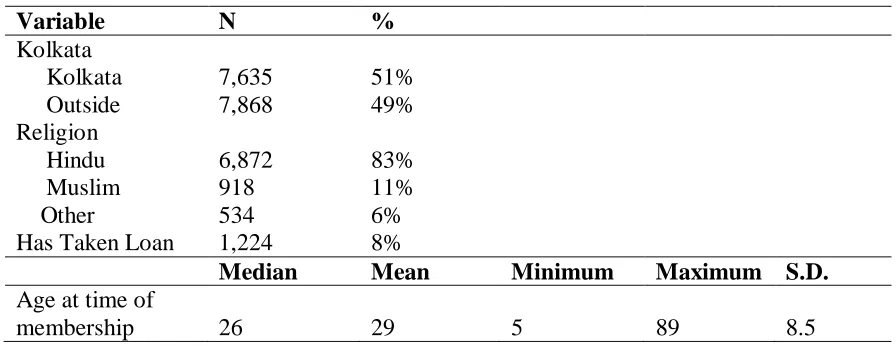
Table 5.1: Member Descriptive Statistics from Administrative Database (N-14,382)…..53
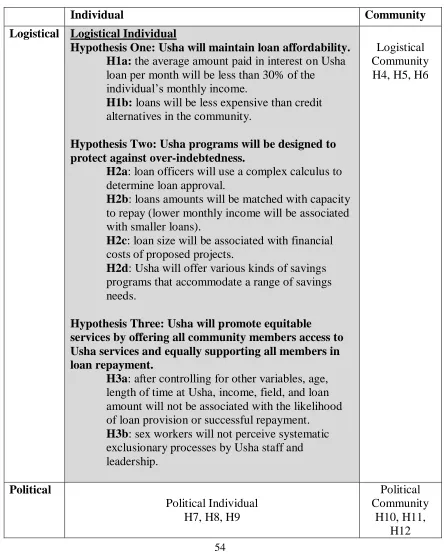
Table 6.1:Logistical Individual Hypotheses………...54
Table 6.2: Comparison of Official Credit Options in West Bengal.………...……...55
Table 6.3: Loan Cost Relative to Income………..56
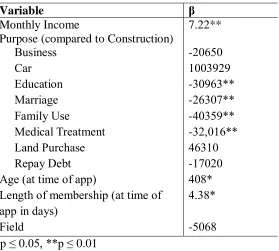
Table 6.4: Predictors of Loan Size……….68
Table 6.5: Types of Savings Accounts………..69
Table 6.6: Predictors of Taking a Loan……….71
Table 6.7: Predictors of Overdue Loans………....71
Table 7.1: Logistical Community Hypotheses………..89
Table 8.1: Political Individual Hypothesis………....97
vi
LIST OF ILLUSTRATIONS
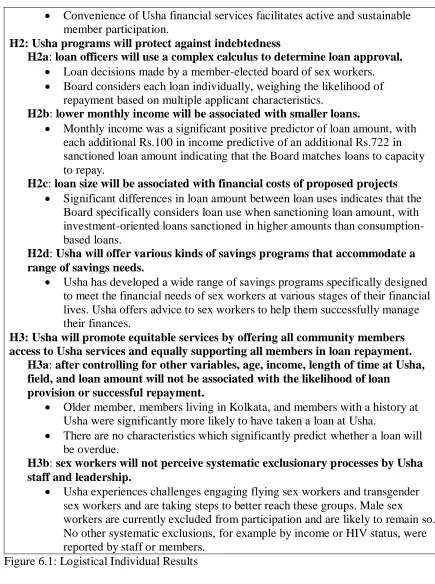
Figure 6.1: Logistical Individual Results………88
Figure 7.1: Logistical Community Results………96
Figure 8.1: Use of Usha Loans………108
Figure 8.2: Political Individual Results………...113
Figure 9.1: Political Community Results……….129
Figure 9.2: Full Conceptual Model Results Summary……….130
Figure 10.1: Organizational Conceptual Model: Banking Intervention and Worker’s Collective Partnership………..134
1
CHAPTER ONE
Introduction
There are thousands of organizations and institutions world-wide whose mission is to
fight global poverty. These organizations are united in the way they conceptualize
poverty and its solutions. For most organizations, the solution to poverty lies in achieving
the correct balance of macro and micro economic growth, a goal attained by
implementing various development programs. According to this mainstream view of
development, such programs are best created in the ‘developed’ world, which possesses
an advanced understanding of economics, and implemented in the ‘Third World’ which,
for various reasons, has lagged in generating economic prosperity. Development
programs are overseen by a cadre of experts who skillfully deploy the tools of capital,
science, and technology to combat global poverty. Recipients of poverty interventions,
though often asked to participate in local program implementation, generally must trust
the guidance of development experts.
Arturo Escobar (1995) suggests that this vision of economic development has
reached a hegemonic status such that the need for ‘development’ is self-evident. He
argues, however, that the modern definition of development is not self-evident. It is a
discourse and as such is constructed and reconstructed by the production and
dissemination of knowledge and the implementation of action. Escobar’s formulation
indicates that a discourse which is constructed, can also be deconstructed, interrogated,
2
hegemonic discourse (Hickey& Mohan, 1995; Mohanty, 1988; Pogge, 2010) and there is
strong evidence to suggest that alternatives to mainstream development must be sought.
Despite the massive amount of resources dedicated to mainstream development in
its post-World War Two inception, the situation of the world’s poor remains deeply
troubling. About a third of all human deaths annually are attributable to poverty-related
causes, and about half of those poverty deaths are children (Pogge, 2010). Global
inequality is widening, with the ratio of income between the top and bottom decile at
273:1 (Pogge, 2010). Whatever economic growth might be occurring is clearly not
proportionally benefiting the resource poor people of the world. Many have deemed
mainstream economic development a monumental failure with fatal outcomes (Pogge,
2010).
There are myriad potential questions to investigate regarding the development
discourse and its impact on communities and individuals. As a scholar of social welfare I
am interested in praxis; how the theoretical is applied to the lived experience. I am
interested in alternative development discourses, but, importantly, also alternative
actions. However, Escobar suggests that there is limited utility in seeking generalizable
models to solve the development puzzle. He writes, “instead of searching for grand
alternative models or strategies, what is needed is the investigation of alternative
representations and practices in concrete local settings, particularly as they exist in
context of hybridization, collective action, and political mobilization (1995, p. 19).”
This dissertation is one such investigation. I will explore these issues through the
systematic analysis of a single case- the Usha Multipurpose Cooperative Society (Usha),
3
community-led economic intervention that provides banking services to the sex work
communities of Kolkata (ushacoop.org, 2014). Usha is also the financial arm of the
Durbar Mahila Samanwaya Committee (DMSC), a worker’s rights collective organized
by sex workers in Kolkata and surrounding areas (Durbar.org, n.d.). As I will argue, the
Usha cooperative stands in contrast to interventions supported by the mainstream
development discourse. Specifically, the Usha organization is run collectively by the
members of the community it serves, not by outside ‘experts.’ Additionally, Usha is a
part of a worker’s collective and as such is in tune with the social and political
circumstances of its members, not just their immediate needs. The study will examine
how this unique organization fits into and resists the development status quo.
In Chapter Two I examine how the theory and practice of neoliberalism has
dictated the terms of contemporary economic development. Reviewing the literature in
the field, I argue that the ethos of neoliberalism has permeated the social imaginary to
bring all aspects of society into the fold of individual market rationality. Microfinance, a
major tool of economic development of the last twenty years, is an illustrative example of
neoliberal development. There has been a growing body of literature critiquing
microfinance which exposes the ways microfinance does not meet the economic needs of
poor people and in many cases has detrimental effects. I examine how these critiques
draw on the neoliberal logic of mainstream microfinance. In this chapter, I situate
microfinance as a form of what Foucault (2003) defines as governmentality, a form of
management and surveillance that originates in bureaucratic machinery, and has a
stunting effect on political mobilization, socially transformative action, and structural
4
Chapter Three extends this analysis to mainstream economic interventions
available for sex worker groups. I argue that under the prevailing terms of these
interventions, sex worker economic agency is only conceptualized as part of a neoliberal
market enterprise that “rescues” sex workers and channels them into the formal market
system. I conclude Chapter Two by introducing the Usha cooperative. Given its location
as a collective and part of a self-identified union, and the fact that it inhabits the
intersection of the competing discourses I have described above, I argue that a study of
the cooperative will shed light on the manner in which its economic development
initiatives counters, or is subsumed by, the neoliberal market agendas that are prevalent
in the field of microfinance.
In Chapter Four I present the research questions and hypotheses that will drive my
data collection and analysis. These hypotheses were derived from the literature and my
preliminary work in the field. The hypotheses describe the manner in which Usha
influences development outcomes at individual and community levels, through logistical
and political pathways.
Chapter Five outlines the specific methods I will use to empirically investigate
these hypotheses. Using case study method (Yin, 2008) I will draw from quantitative and
qualitative primary and secondary data to analyze the Usha organization in relationship
with my research questions. Scholars and activists have contributed thoughtful critiques
of both microfinance and abolitionist sex work interventions; however, there is almost no
research on community-based microfinance alternatives or on economic interventions
5
gap, thereby contributing to a growing body of critical development literature that
challenges hegemonic modes of development.
Chapters Six through Nine detail the results of the mixed-method case analysis.
These results chapters analyze the organizational structure and culture of Usha with
respect to the overarching research questions. The final chapters bring these findings
back into conversation with prevailing modes of neoliberal development and discourses
of empowerment, examining the extent to which Usha short-circuits mainstream
6
CHAPTER TWO
Microfinance: Concepts and Critiques
Neoliberalism and social welfare.
Neoliberal economic theory champions the extraction of the state from the functions of
the market (Harvey, 2005). Economic growth and stability, it is claimed, is achieved by
freeing restraints on trade and creating a healthy ‘business climate’ by reducing
regulation and tax on businesses. According to this paradigm, the state is the only
institution possessing the legitimate use of violence and the power to define law and
should use both of these powers to support and protect individual, market-based freedoms
(Harvey, 2005). With these individual freedoms protected, the individual is, in theory, in
a position to maximize their own welfare in the market system. Success or failure in
personal welfare, therefore, results from “entrepreneurial virtues or personal failings
(such as not investing in one’s own human capital enough through education) rather than
being attributed to any systemic property (such as class exclusions attributed to
capitalism) (Harvey, 2005, p.65-66).”
Neoliberalism in practice. Key tactics of neoliberalism include the privatization
of once communally or state owned resources, rolling back the welfare state,
undermining union or other collective power, opening trade to encourage foreign
investment, promotion of proprietary law (such as intellectual property rights),
implementation of regressive tax codes, maximization of competition and flexible
7
capital, encouraging entrepreneurial innovation, and, supposedly, wide-spread economic
growth and wealth generation (Brown, 2003; Harvey, 2005).
Neoliberalism, however, is a construct rather than ontological fact; neither the
market, nor competition, nor rational economic behavior is the natural state of human
existence (Brown, 2003). Neoliberalism, therefore, must be actively facilitated. In fact,
Brown argues, neoliberalism has become such a core part of our current understanding of
the structure of society that it is not simply that the state supports the market, but the
market legitimizes, and in many ways controls, the state (2003). Additionally, the state
itself must operate according to the entrepreneurial ethos of market rationality; all state
actions must survive the market calculus of strict cost/benefit analysis, maximum
efficiency, and profitability (Brown, 2003). Neoliberal ideology does not just concern
itself with the market, but applying market rationality to all aspects of social life (Brown,
2003). Through the promulgation of market ethics and the power of governmentality
citizens are manufactured as neoliberal subjects, bound within the limits of constructed
social potentialities.
Though neoliberal mandates have shaped many aspects of international
development, I will specifically consider microfinance. I argue that microfinance is an
instantiation of neo-liberal development. However, as we will see, microfinance, with its
roots in community centered work, is a potential point of access for alternative paradigms
of community-centered economic intervention that can rupture the narrative of rugged
individualism and reconnect microeconomics with the politics of structural inequality.
8
Microfinance institutions (MFIs) take many different forms, but the common goal
of all MFIs is to provide financial services, of various kinds, to people who otherwise
would not have access to a formal banking system, particularly women (Armendariz &
Morduch, 2010). Muhammad Yunus of the Grameen Bank, considered by many to be the
father of microcredit, envisioned a banking system that would end poverty and create a
more just society (Rutherford, 2009). Several characteristics are specific to the Grameen
lending approach. Loans are targeted at the poorest sectors of the population, given
without collateral, rely on lending groups to exert social pressure to enhance loan
repayment, are repaid in regular installments, are based on group trust and accountability,
and have bank branches that are located within the community (Armendariz and
Morduch, 2010; Grameen Bank, 2011). Additionally, the original Grameen approach
encourages members to take advantage of the lending group community structure to
pursue social development goals including literacy, health education, and environmental
stewardship programs (Grameen Bank, 2011).
Research throughout the 1990’s provided evidence of the successes of
microcredit as a tool of poverty alleviation and women’s empowerment (Amin, Becker,
& Bayes, 1998; Cheston & Kuhn 2002; Hashemi, Schuler, & Riley, 1996; Pitt, Khandker,
& Cartwright, 2003). By the turn of the millennium the development world had embraced
microcredit as a near panacea of economic and social development (Ghosh, 2013). The
United Nations declared 2005 the “Year of Microcredit” and in 2006 the Nobel Peace
Prize was award to Muhammad Yunus and the Grameen Bank (Sengupta, 2013).
The rise of commercialism. Interestingly, just as Yunus was receiving these
9
microcredit was built was being fundamentally undermined by a ‘new wave’ of
microcredit programs emphasizing ‘full cost recovery’ over social development (Ghosh,
2013). After the successes of microfinance became apparent, major institutions such as
the World Bank became interested in the potential of microfinance, but criticized the use
of donor subsidies and promoted the liberalization, commercialization and privatization
of microcredit (Cull, Demirgüç-kunt, & Morduch, 2008). BRI in Indonesia and BancoSol
in Bolivia were some of the first microcredit institutions to undergo neoliberal reform,
rejecting supportive subsidies, adopting market interest rates, setting broad outreach and
expansion goals, generating profit, and highly compensating managerial staff, including
the option of shareholding (Bateman, 2010). The emergence of a commercial market for
microfinance revealed the potential of for-profit companies to make money while
providing a social good; an appealing proposition for the business world (Cull,
Demirgüç-kunt, & Morduch, 2008). The focus of microfinance shifted from social
development to the provision of bare financial services, the minimization of risk, and the
maximization of scale, efficiency and reward (Rankin, 2002). Proponents of
commercialization claim that the ‘financialization’ model encourages accountability not
found in donor based social programs (Cull, Demirgüç-kunt, & Morduch, 2008). This
new form of microfinance saw a flood of support from private investors and commercial
banks. An executive from ING was quoted as calling microfinance the ‘new financial
frontier,’ stating that banking to the extremely poor would create a ‘niche market with
competitive profits in ten years (ING 2008, p 35 quoted in Roy, 2010, p. 30).”
As the commercialization model began to take off, Bangladesh-style social
10
Though still critical of fully commercial banks (Hudon & Sandberg, 2013) NGOs began
to take on the traits of private banks such as increased flexibility, higher interest rates,
and increased pressure to take or ‘top off’ loans (Augsburg & Fouillet, 2010; Rutherford,
2009).
Creating a discourse. The acceptance and promotion of microfinance as an effective
development tool has been supported by major knowledge producing organizations such
as the Consultative Group to Assist the Poor (CGAP), a World Bank group whose
mission includes the development of ‘responsible’ markets and to “increase access to the
financial services the poor need to improve their lives (CGAP, 2014).” The World Bank,
CGAP, and other institutions have invested considerable resources in the research and
development of ‘best practices’ in line with the commercial model (Karim, 2011).
Microfinance as an Instantiation of Neoliberal Development
Microfinance relies on the assumed latent entrepreneurial talent of the poor which can
be unlocked with the appropriate set of conditions and supports. The goal of most
microfinance projects is to provide sufficient start-up capital for poor people to invest in
individual income generating projects. Microfinance institutions assert that they provide
capital that is free from the regulations of corrupt governments and the restrictions of
donor subsidized NGOs, who condescend to their clients by demanding paternalistic
rituals, meetings, and rules (Roy, 2010).
Some have argued, however, that microfinance has been promoted to ameliorate and
distract from the consequences of the aggressive financial liberalization policies exacted
on post-colonial countries at the end of the 20th century (Rankin, 2002; Sengupta, 2013;
11
globalization and free-market ideologies, microfinance serves as the safety net for the
devastating programs of structural adjustment (p. 29, 2010).” This safety-net is imbedded
in individualistic free-market principles of self-help and entrepreneurialism (Weber,
2001). The flip side of the promise of individual success is the individuation of failure
and responsibility (Sengupta, 2013).
Outcomes of microfinance participation. Individuals are expected use the tools
provided by microfinance to accrue sufficient human, social, and financial capital to
thrive in society. However, as studies evaluating the economic effectiveness of
microcredit interventions become more rigorous, evidence of economic transformation is
scant. Most studies find, at best, modest financial gain in treatment groups (Angelucci,
Karlan & Zinman, 2013; Banerjee & Duflo, 2011).
So why isn’t microfinance the magic bullet so many had hoped it would be? Firstly,
the project relies on the assumption that poor people want to start a business. In their
extensive research on the financial decision making processes of poor people, Banerjee
and Duflo found that many poor people are not interested or able to start a business
(2011). Many people would rather have a steady job with a steady wage and predictable
hours than become an entrepreneur.
Bateman (2010) discusses the trap of informal sector employment in general. He
argues that the informal market has been used since the Industrial Revolution to keep
poor people actively engaged in petty survival-based trades and out of transformational
activities that would “upset the social order (p. 32).” Microenterprises taken on today
with the help of microfinance are largely unregulated and un-protected businesses that do
12
direct demands. Participation in an uncertain and unregulated informal sector is positively
reframed as ‘flexibility’ of labor and ‘entrepreneurialism’ in the neoliberal discourse
(Harvey, 2005).
Many people choose not to participate in microfinance even when they have access to
it. People cite the rigid lending and repayment rules (Augsburg & Fouillet, 2010;
Banerjee & Duflo, 2011), program structures that are unresponsive to client need
(Mahajan, 2007), and limited services into which clients with various needs are forced
(World Bank, 2009) for this lack of interest. Furthermore, rhetoric suggesting that
microfinance improves the lives of the poorest members of society has proven to be
largely fallacious. There is evidence that many commercial microfinance organizations
find it challenging to lend to poorer segments of the population (Cull, Demirgüç-kunt, &
Morduch, 2008) and those who successfully benefit from microloans tend to be women
who already enjoyed higher levels of education, business experience and autonomy
outside the home (Angelucci, Karlan, & Zinman, 2013; Karim, 2011).
Empowerment outcomes. The effectiveness of microfinance for the empowerment of
women is a widely believed narrative (Weber, 2001). However, research questioning the
empowerment thesis began to emerge fairly early in the microfinance literature. For
example, there is evidence of an increase in intimate partner violence experienced by
women obtaining MFI services (Rocca, Rathod, Falle, Pande, & Krishnan, 2006; Schuler,
Hashemi, Riley, Akhter, 1996) and the extortion and misuse by male family members of
loans disbursed to women (Fernando, 1997; Garikipaki, 2008; Goetz & Sen Gupta, 1996;
Rahman, 1999). Others have found that microfinance participation may exacerbate, rather
13
Karim (2011) found that microfinance organizations rely on an “economy of shame”
in which loan repayment is enforced through leveraging the negative social consequences
of shaming one’s family and community through loan default. Fear of such consequences
led to intense intra-community policing (Augsburg & Fouillet, 2010; Rahman, 1998).
Microfinance has been generally criticized for having weak systems in place to monitor
accountability of loan officers and bank mangers (Dixon, Ritchie & Siwale, 2006).
Notwithstanding the price borrowers pay in terms of social pressure and shame,
microloans themselves are expensive. D'Espallier, Hudon, and Szafarz (2013) found that
to compensate for lack of subsidies, commercial microfinance organizations raised
interest rates and, overall, lack of subsidies worsened social performance. Though many
dispute that high interest rates and commercialization necessarily lead to negative social
outcomes (Karlan & Zinman, 2010; Mersland & Strøm, 2010; Rosenberg, Gonzalez &
Narain, 2009) the debate around interest rates and microfinance revenue has grown more
heated in the last five years. High interest rates are justified by microfinance groups
because profits supposedly increase the money available for lending (Rosenberg, 2007).
Put another way, poor people are not only responsible for overcoming their own poverty-
they are paying high interest rates to support the welfare of other poor people, without
community-level protections (Bateman, 2010). Making loan payments has proven
difficult for microfinance participants and microfinance has been shown to promote
over-indebtedness in clients (Ghate, 2007).
In light of the critiques and limitations of microfinance, how has it maintained its
position as a quintessential tool of poverty alleviation in the modern era? I argue that
14
few options for individuals to assist themselves in securing their own welfare. In the
following section I provide a brief overview of the power of governmentality, consider
how governmentality moves through microfinance, and explore the de-politicizing effect
of microfinance on the potential collective action of microfinance recipient populations.
Governmentality: An Overview
Foucault identifies governmentality as a modern mechanism of state power and situates it
in relation to two other mechanisms of state power, sovereignty and discipline, which he
had analyzed in previous works. The apparatus of the power of government, articulated
by Foucault as security, is directed not at individual bodies, but at the multiplicity of
people as a generalization; the population (Foucault, 2003). Birth rate, death rate, health
and longevity reflect trends in a population and are the objects of knowledge and targets
for the biopolitics of security (Foucault, 2003). Foucault argues that government is
involved in arranging the “complex of men and things (2007, p. 97).” These
relationships shape the processes by which the government exercises the technology of
security. The goal of security is not to “modify a given individual insofar as he is an
individual, but, essentially, to intervene at the level at which these general phenomena are
determined, to intervene at the level of their generality (2003, p.246).” Foucault goes on
to say, “We now have the emergence, with this technology of biopower, of this
technology of power over ‘the’ populations as such, over men insofar as they are living
beings. It is continuous, scientific, and it is the power to make live (p.247).”
Governmentality is therefore the power to set conditions such that some life, or aspects of
15
The governor must rule through “the delimitation of phenomena within acceptable
limits (Foucault, 2007, p. 66).” Foucault outlines three key characteristics of a proper
governor; patience, wisdom, and diligence. Patience is the ability to deploy mechanisms
of power without force and willingness to tolerate the slow pace of governmental power.
Wisdom indicates knowledge about the myriad ‘things’ with which men are involved,
and ways that different situations and dispositions can be constructed to obtain the
objective of government through the arrangement of men and things. Finally, the quality
of diligence implies that the governor should act in the best interest of the population.
The population should therefore feel as though the mechanisms of security are working in
their interest; a situation that lends an essence of voluntariness to the process of being
subjected to governmentality. Governmentality is not just concerned with governing, but
guiding the ways one governs oneself (Lemke, 2001).
Governmentality as a tool of neoliberal power. Under neoliberalism individuals
‘choose’ the ways in which they will provide for their own welfare. It is through this
freedom of ‘choice’ that the power of neoliberal governmentality operates. Neoliberal
governance constructs the world of rational choice options for individuals in the market,
actively shaping the relationships between ‘men and things.’ Brown writes,
“neoliberalism does not simply assume that all aspects of social, cultural, and political
life can be reduced to such a calculus (of rational choice analysis), rather it develops institutional
practices and rewards for enacting this vision. That is, through discourse and policy promulgating its criteria,
neo-liberalism produces rational actors and imposes market rationale for decision-making
16
Thus, by delimiting choices available to populations, neoliberal governing institutions
can control individuals while avoiding responsibility for them (Lemke, 2001). In this way
“neo-liberalism encourages individuals to give their lives a specific entrepreneurial form
(Lemke, 2001, p.202).” In short, the state and other powerful institutions, through
neoliberal governmentality, lead individuals to live according to entrepreneurial values of
self-help while simultaneously obscuring their role in the process and absolving
themselves of responsibility for failure.
Microfinance and governmentality. Microfinance is an effective conduit of the
power of neoliberal governmentality and has therefore been protected and promoted. The
overarching governance goal of microfinance is to shape the choices of poor people by
encouraging the characteristics of entrepreneurialism, thrift, and investment to thrive in
the population. The cultivation of these characteristics is achieved through shaping the
options available to poor people. By constructing microfinance as one of limited options,
the population is driven to act in a way that supports the project. In this way,
governmentality shapes the wants and needs of the population. The intervention is
therefore justified by the ‘needs’ of the population (Bateman, 2010) and the population is
shaped by the intervention.
Processes of governmentality also dislocate the management of the population
from the lived experience of the population by necessitating a specific and technical
knowledge. The supremacy of the neoliberal microfinance intervention is protected by
institutions designed to produce and disseminate certain forms of ‘truth’ regarding
‘effective’ poverty alleviation programs (Karim, 2011). Organizations like CGAP are
17
(Weber, 2001). A Senior C-Gap official was quoted as saying, “What is measured, is
what is managed. We script. We manage. We control (p. 46, Roy, 2010).”
There are several ways the production and control of technical knowledge
regarding microfinance aides the process of neoliberal governance. Firstly, the
knowledge that is created, mostly positivist in nature, captures rates and commercial
outcomes but cannot capture social processes, dynamics of power, and political
consequences of microfinance programs (Meyer, 2007). Because these forms of
knowledge are denied relevance, microfinance is encouraging characteristics of
entrepreneurialism in the informal sector, while allowing collective forms of social
welfare activities, such as labor organization or communal forms of resource
management and production, to die. Secondly, the technical knowledge used to manage
the population rests exclusively with the expert class. Microfinance participants do not
understand the statistical analysis of the population as a whole and therefore, even in
groups, can’t be trusted to manage themselves appropriately. Non-experts are not
equipped and therefore are excluded from the decision-making processes. This is made
clear in major microfinance training conferences that are conducted in English even when
taking place in the global South (Karim, 2011) and ethnographic work demonstrating that
‘local’ opinions, even the perspectives of local ‘experts’, are often dismissed in favor of
the thoughts and opinions of the leaders of major Western governing bodies such as
CGAP (Karim, 2011; Roy, 2010). The population, therefore, must rely on the good
intentions of the governor because it is denied its own voice. The governor promotes the
acquiescence of the population by 1) promising to work in its best interest and 2)
18
Some have argued that through neoliberal governance, microfinance and other
development interventions have led to the ‘depoliticization’ of development (Bateman,
2010; Murray, 2007). There is no mention in the mainstream microfinance discourse of
structural inequalities that systematically reproduce poverty or macro-economic policies
that could address this intractable problem (Pogge, 2012; Rankin, 2002; Sengupta, 2013).
Abuse of power in the formal sector, lack of protection in the informal sector,
vulnerability in migrant labor, government regulation of trans-national business, the
impact of trade agreements on the bottom of the supply chain, and many other issues that
affect the livelihoods of the world’s poorest are whitewashed by the eternal optimism of
individual entrepreneurialism. The acceptable discourse of poverty and development has
been removed from the context of the political economy and into the realm of technical
intervention. Microcredit, then, becomes a ‘political safety net’ to mitigate resistance to
the implementation of neoliberal policy and the consequences thereof (Weber, 2001).
Brown describes this process,
“The rationally calculating individual bears full responsibility for the
consequences of his or her action no matter how severe the constraints on this action, e.g., lack of skills, education, and childcare in a period of high
unemployment and limited welfare benefits. Correspondingly, a "mismanaged life" becomes a new mode of depoliticizing social and economic powers and at the same time reduces political citizenship to an unprecedented degree of
passivity and political complacency…A fully realized neo-liberal citizenry would be the opposite of public-minded, indeed it would barely exist as a public. The body politic ceases to be a body but is, rather, a group of individual entrepreneurs and consumers (2003, np).”
Economically marginalized groups, therefore, become occupied with self-managing their
19
public to change structures of social inequality through collective action and/or civic
participation (Chatterjee, 2004; Weber, 2001).
Potential alternatives to neoliberal microfinance.
The dominant neoliberal discourse obscures the great heterogeneity of economic
interventions developed in communities to protect against financial uncertainty such as
rotating savings and credit associations (Anderson & Baland 2002; Donoso, Altunbas,
Kara, 2011; Gugerty, 2007; Handa & Kirton 1999) and cooperative banks (Ghosh, 2013)
that have all but disappeared from the discussion of economic interventions for the poor.
Credit cooperatives are member-owned, not-for-profit banks. These banks mobilize
member savings to generate funds that are invested back in the community in the form of
loans and sometimes other income generating projects (Bateman, 2010; Ferguson &
McKillop, 2000).
Sengupta (2013) envisions a model in which economic interventions are but one
of many tools used by larger member-run organizations aimed at addressing structural
inequalities at the root of poverty. Reclaiming the social-transformative definition of
solidarity, an economic intervention could be a springboard to political conscientization
(Rakin, 2002). Several studies suggest that such an organizational model could be a
powerful point of resistance to the dominant paradigm of microfinance and open up new
ways of conceptualizing empowerment in a neoliberal development environment
(Achwan, 2012; Sengupta, 2013). Could such model short-circuit the neoliberal
governance of microfinance and reclaim the social development potential of the
20
The Usha cooperative bank incorporates many of these alternative ways of
conceptualizing economic interventions and the investigation of Usha will pose this very
question. Before turning to the specific research questions that guide the current study,
however, I will transition from theory to praxis and examine how neoliberal
governmentality becomes operationalized through interventions that have been
21
CHAPTER THREE
Sex Worker Economic Interventions:Current State and Alternative Models
The previous chapter examined logistical and political critiques of microfinance,
positing the intervention as a tool of neoliberal governmentality. The microfinance
discourse suggests that participants, particularly women, are liberated from poverty and
reclaim their agency through free market participation. This specific form of economic
agency becomes the working definition of ‘empowerment’ in neoliberal development. In
this chapter I will specifically examine microfinance as it has been implemented on sex
work populations as a part of the popular ‘raid, rescue, and rehabilitate’ intervention
model. This analysis illuminates the limitations of ‘agency’ and ‘empowerment’ under
neoliberal development.
Microfinance with Sex Workers: Rehabilitative Alternative Employment Schemes.
Microfinance is most often introduced to sex workers as a vehicle for alternative
employment. Such interventions could be categorized as part of the raid, rescue and
rehabilitate (RR&R) approach to intervening with sex works. RR&R interventions are
organized by the state or an NGO, often enlisting the help of local law enforcement for
the ‘raid’ portion of the program (Ahmed & Seshu, 2010; Magar, 2012). Sex workers are
ostensibly ‘rescued’ because it is assumed that the women do not want to be sex workers.
Detained workers are sent to either a non-profit run rehabilitation center or a state run
safe-house (Ahmed & Seshu, 2010; Magar, 2012; Soderlund, 2005). Women then engage
in rehabilitative activities, such as learning to make canvas bags or other small trades, as
a pathway to alternative employment (Ahmed & Seshu, 2010).Several such alternative
22
Ngugu, Ferguson, 2009; Sherman, German, Cheng, Marks, and Bailey-Kloche, 2006;
Sherman, Srikrishnan, Rivett, Liu, Solomon, and Celentano, 2010; Tsai, Witte, Aira,
Altantsetseg, and Riedel, 2011) and constitute the bulk of the economic intervention
research for sex workers.
RR&R and neoliberalism. RR&R interventions are promoted by a network of
organizations supporting the abolition of sex work as a part of the modern-day
anti-slavery movement (Bernstein, 2007). The abolitionist perspective asserts that all
exchange of sexuality for money or material good is an inherent act of violence against
women and forecloses the potential for consenting sex work (Farley, 2006; Jeffries,
2009). Thus, according to abolitionist theory, the RR&R model extracts women from an
environment of inherent exploitation to one of legitimate entrepreneurial activity. The
imagery employed by abolitionists contrasts the oppressed third world sex slave with the
liberated artisan working to produce goods for mainstream consumption (Bernstein,
2010).
Bernstein (2010) highlights how the options available for public participation in
the anti-slavery movement promote a very specific vision of carceral and neoliberal
solutions to the problem of prostitution. Individuals can give money to an organization
that runs raids, allowing the donor to live vicariously through the rescue of a sex worker
and the incarceration of her enslaver. An individual can also purchase items made by
former sex workers participating in aforementioned alternative employment schemes,
thereby playing a personal role in the sex worker’s economic salvation through the
liberating power of the free market. Bernstein argues that the abolitionist coalition
23
global social justice. The use of free market ideology and the power of individual
consumer-activism assert the superiority of Western, market-based approaches and
justifies its imperialism. The RR&R model has been heavily publicized and dominates
public common knowledge about sex work (see, for example, the ‘Half the Sky’
Movement, halfthesky.org). However, research investigating the experiences of sex
workers themselves highlights important limitations and critiques of this model.
Logistical Critiques of the Raid Rescue and Rehabilitate Model
Evidence suggests that raids are often conducted based on faulty information, at times
incorrectly citing underage workers on the premise (Ahmed & Seshu, 2010; Kinney,
2006). Raid violence has been reported including the assault of sex workers by raiding
police (Ahmed & Seshu, 2010; Busza, 2004; Magar, 2012). Rehabilitation centers to
which sex workers are sent vary greatly, with reports of some safe homes described as
“jail like” by sex workers (Ahmed & Seshu, 2010; Jayasree, 2004; Misra, Mahal, Shah,
2000). Forced rescue impedes workers’ ability to make money and workers are not
compensated for lost time due to raid and relocation (Ahmed & Seshu, 2010). This may
lead to increased risk taking in sex work later to make up for lost money (Busza, 2006).
Alternative employment’ opportunities are constructed for the sole purpose of
exiting from sex work. This is not a problem in and of itself. Many sex workers might
prefer to leave sex work if lucrative employment options were available. However, this
approach has several limitations and consequences. Alternative employment programs
often have limited and unstable funding (Chapkis, 2003; Vuylsteke & Jana, 2001).
Employment programs, therefore, have questionable sustainability and rarely offer
24
dependent on capacity of the NGO to support manufacturing production, in that instance
offering a maximum of 20 hours a week to former sex workers. Additionally, many of
these programs are highly restrictive about what women can and cannot do with their
money, which can be interpreted as paternalistic and further stigmatizing of sex workers
(Canadian HIV/AIDS Legal Network, 2007; Jayasree, 2004)
Perhaps the most telling critique of the RR&R model is the rate at which rescued
workers return to sex work (Busza, 2006). A Human Rights Commission Report from
the government of India reported that over 25% of those who were ‘rescued’ in a RR&R
program had been rescued at least once before (Magar, 2012). As noted above, many
women cannot provide for their families based on what they make in supported
employment programs. Other women prefer sex work to other options open to them
(Augustin, 2007). Domestic workers, for example, also face potential labor and sexual
exploitation but have less freedom over work-life, mobility, and significantly lower
earning capacity than sex workers. This last point is particularly important as many
women are keenly aware of the reliance of family members on remittances from their
earnings (Kinney, 2006). There is a mounting body of evidence therefore that, for many
sex workers, their participation in sex work is not forced or coerced, it is a decision made
within a constrained set of choices (Agustin, 2007; Doezema, 2002; Ghose, Swendeman,
George, Chowdhury, 2008; Jayasree, 2004; Sanders, 2008; Saunders 2005).
Economic needs of active sex workers. Research has shown that almost all sex
workers enter the profession to make money, citing reasons such as economic need and
higher wages of sex work compared to other professions (Basu, Jana, Rotheram-Borus,
25
Chen, Bradshaw, Fairley, 2011; Booranapim & Mainwaring, 2002; Chipamaunga,
Muula, Mataya, 2012; Devine, Bowen, Dzuvichu, Rungsung, Kermode 2010; Reed,
Gupta, Biradavolu, Devireddy, Blankenship, 2010). When asked, sex workers cite
economic independence and access to banking as some of their most pressing goals
(Ghose et al., 2008; Mahal, Seshu, Mane & Lal 2012). The few extant studies examining
active sex workers’ economic experiences found that while most sex workers have
savings goals (Booranapim and Mainwaring, 2002; Tsai et al., 2013), few had access to
secure mechanisms to save (Mahal et al., 2012; Tsai et al., 2013). Sex workers also
lacked access to affordable credit (Mahal et al., 2012; Tsai et al., 2013), had little
protection from microeconomic shocks such as missed work (Booranapim and
Mainwaring, 2002; Mahal et al., 2012), and were particularly economically unstable as
they aged (Mahal et al., 2012). This evidence suggests a need for economic interventions
supporting sex workers while they engage in sex work, especially in light of the effect of
economic instability of sex worker health and well-being.
Economics and the well-being of sex workers. Research has linked HIV risk with
unsupported indebtedness (Reed, Gupta, Biradavolu, Devireddy, & Blankenship, 2010;
Tsai et al, 2013) and economic dependence (Blankenship, West, Kershaw, Biradavolu,
2008; Tsai et al, 2013). It has been documented that clients are willing to pay more for
unprotected and risky sex (Deering et al., 2013; Gertler, Shah, Bertozzi, 2005; Karim,
Karim, Soldan, Zondi, 1995; Kerrigan, Moreno, Rosario, Gomez, Jerez, Barrington,
Weiss, Sweat, 2006; Rao, Gupta, Lokshin, Jana, 2002) and that economic need drives sex
workers to take more money for riskier sex (Chipamaunga, Muula, Mataya, 2012; Karim,
26
interventions, such as savings programs, that help sex workers build assets and regulate
money available for consumption needs could help reduce HIV risk (Rao Gupta,
Parkhurst, Ogden, Aggleton, Mahal 2008; Blankenship, West, Kershaw, Biradavolu,
2008). Despite the relationship between economic security and health there is no
research, to my knowledge, examining the potential for an economic intervention
supporting active sex workers.
The previous section outlined the practical limitations of the RR&R model as well
as the need for an intervention that financially supports active sex workers. As we saw in
the broader discussion of microfinance, there are also political critiques of the RR&R
model with sex worker groups.
Political Critiques of the RR&R Model
The RR&R model and sex worker agency. The RR&R model does not leave
space for sex workers’ agency in the decisions made about their futures. Sex workers are
seen as victims in need of rescue and redirection, not rational actors navigating a
complicated and challenging labor market to maximize the welfare of themselves and
their families. The sex worker’s economic agency is only legitimate when it is exercised
to take advantage of restrictive rehabilitative alternative economic programs designed for
exit out of sex work. Then, it is lauded as the very definition of ‘freedom’ (Bernstein,
2010).
RR&R and de-politicization. The abolitionist anti-slavery movement has defined
‘sex slavery’ as an individual and technical problem, not a structural economic one.
27
preservation of this binary plays an important political role in the larger neoliberal
project. Bernstein writes,
“the dichotomy between slavery and freedom poses a way of addressing the ravages of neoliberalism that effectively locates all social harm outside of the institutions of corporate capitalism and the state apparatus. In this way, the masculinist institutions of big business, the state, and the police are reconfigured as allies and saviors, rather than enemies, of unskilled migrant workers, and the responsibility for slavery is shifted from structural factors and dominant
institutions onto individual, deviant men (2007, p.144).”
By framing sex work as a moral problem caused by individuals, rather than a complex
and global issue of income, labor, and livelihood, the abolitionist movement has
privileged a simplistic conversation of individual protection (Bernstein, 2010). The
abolitionist discourse does not entertain the potential for an alternative path to sex worker
empowerment through collective rights-seeking, political action, or other forms of
structural change. The RR&R model therefore, like microfinance interventions more
broadly, can be seen as a tool of governmentality. The intervention guides sex workers to
engage in entrepreneurialism as governing institutions (NGOs and the state) see fit by
forcibly limiting the option available to them. This is done in the sex worker’s best
interest, securing her ‘freedom’ for her and capping the terms of her agency. A hallmark
of depoliticizing forms of development, the RR&R model puts leadership in the hands of
outside ‘experts’ who are trained to manage sex worker populations.
Not all sex work interventions in the literature fit the RR&R model, however.
Community-led structural interventions (CLSI) have become the gold standard in public
28
how community approaches have resisted mainstream narratives of sex worker
victimhood.
Community-Led Structural Interventions with Sex Workers
Broadly defined, structural interventions in the field of public health are
interventions that alter the contextual and environmental factors that influence health and
health behavior (Blankenship, Friedman, Dworkin, Mantell, 2006; Rao et al., 2008). To
be effective, relevant, and sustainable, interventions designed to alter structure must work
within a complex understanding of context (Rao et al., 2008). For this reason,
community-led structural interventions (CLSI) have gained traction in the last several
decades as a critical piece of the HIV prevention puzzle (Blankenship et al., 2006). A key
component of the CLSI is community mobilization, which aims to “alter the power
relations between marginalized and dominant groups (Blankenship et al., p. 63, 2006).”
This is accomplished through activities that assist groups in identifying and demanding
their rights and addressing socio-political barriers to positive health behaviors
(Blankenship et al., 2006).
Community-led structural interventions with sex workers. Over the last
decade there has been increasing documentation of the use of CLSI to address HIV risk
and prevention with commercial sex workers (Blankenship, West, Kershaw, Biradavolu,
2008; Ghose, Swendeman, George, Chowdhury, 2008; Kerrigan, Moreno, Rosario,
Gomez, Jerez, Barrington, Weiss, Sweat, 2006; Shahmanesh et al., 2008). Positive HIV
health outcomes of such interventions have been well documented (Blankenship et al.,
2008; Halli, Ramesh, O'Neil, Moses, Blanchard, 2006; Kerrigan, et al., 2006;
29
Research suggests several explanations for these positive outcomes. Firstly, CLSI
can lead to a sense of professional identity in workers (Ghose et al., 2008). In stark
contrast to the stigma and social marginalization most sex workers regularly face from
both health intervention organizations and the society at large, pride in work fostered by
CLSI can inculcate condom use as professional conduct (Basu & Dutta, 2008; Ghose et
al., 2008). Interventions led by sex workers also develop trust within the community
more readily than outside organizations (Basu & Dutta, 2008; Blankenship, Biradavolu,
Jena, George, 2010). CLSI address issues according to community priority.
Context-specific barriers are therefore foregrounded and underlying structures central to HIV risk,
such as power imbalances within the community or tenuous police relations, are
recognized and addressed (Blankenship et al., 2010). Finally, a discursive reframing of
agency happens in sex worker-led structural interventions. Community members are
encouraged to reject outside judgments of sex workers as vectors of disease and instead
are galvanized to act as key agents of change in the fight against HIV (Blankenship et al.,
2010). Raid, rescue and rehabilitate interventions are not only the antithesis of the CLSI
model, but they directly undermine the work of CLSI with sex workers through diverting
resources (Busza, 2006; Kinney, 2006), destroying hard won and precarious stakeholder
relationships (Busza, 2006), and creating mistrust in the community (Magar, 2012).
Sex worker groups have struggled to invert deficit narratives in economics as they
have in public health. Despite a call for research examining the potential of community
led economic structural interventions (Blankenship et al., 2008; Rao et al, 2008;
Vuylsteke & Jana, 2001) there is no literature, to my knowledge, which addresses
30
when money is addressed in relation to sex work the discussion generally re-inscribes the
victim archetype by painting a picture of sheer economic desperation. She goes on to say,
“the financial experience the women are having is often assumed to be completely
irrelevant compared to the sexual experience the men are having; the experience of the
men is taken to define the exchange” The majority of researchers focus on the “sex” and
ignore the “work” (Weldon, 2010). Koken, (2010) refers to this discursive limit as what
remains “unknowable” when one subscribes to an abolitionist paradigm in which
consensual sex work does not exists. Agustin (2010) notes that the majority of research
is forced to fit into three conceptual molds: “AIDS prevention”, “violence against
women” and “trafficking.” Work that tries to go beyond these boundaries struggles to
access material and symbolic support.
Potential alternatives to the dominant discourse. Research examining the lived
economic realities of sex workers could create room for multiple truths that dismantle the
imagined victim of the abolitionist paradigm. This is an act of resistance against the
“post-colonial erasure” perpetrated by media and academic research that ignores
economic agency in their portrayals of sex workers (Shah, 2013; Sircar & Dutta, 2011).
Research on sex workers’ economic experiences would join a small but growing field of
literature that does not deny workers their agency, hide the benefits they receive from sex
work, or maintain centuries-old “acceptable” theoretical frameworks for discussion of sex
work; disease, violence, and salvation.
Pushing past individual experience, research can follow the trail blazed by sex
worker-led groups that have subverted the mainstream public health agenda to mobilize
31
the economic challenges they face as individuals, communities, and members of a
stratified society? In doing so, could they create programs that offer an alternative to
neoliberal and neocolonial rehabilitative schemes that aim to govern their actions? Such
interventions could relocate the power to define the experiences of sex workers away
from outside ‘experts’ and back in the community.
To do this would necessitate the development of an economic intervention other
than traditional microfinance, for the reasons articulated in Chapter Two. Put simply, the
collective social, political, and economic good will not be achieved through neoliberal
technical development interventions. Brown theorizes how an alternative vision of ‘the
good’ might look.
“In its barest form, this would be a vision in which justice would not center upon maximizing individual wealth or rights but on developing and enhancing the capacity of citizens to share power and hence, collaboratively govern
themselves… However differently others might place the accent marks, none of these values can be derived from neo-liberal rationality nor meet neo-liberal criteria for the good (2003, np).”
Brown submits a tall order in this vision of the public good. However, there are
organizations that are making inroads to a different form of collective social welfare. The
final section of this chapter will describe one such group, the Durbar Mahila Samanwaya
Committee, a sex worker’s collective in Kolkata, India working to creatively fulfill the
needs and goals of the sex worker community through the activities of a
community-based organization. This organization is also the setting of my dissertation research.
The Durbar Mahila Samanwaya Committee.
The work of the DMSC and its precursor, the STD/HIV Intervention Project (SHIP), has
32
the traditional focus on the individual, SHIP took a multi-level approach to HIV
prevention and intervention by considering the ways that HIV risk played out at the
individual, social network, community, and structural/environmental levels (Jana et al.,
2004; Swendeman et al., 2009). Positive HIV health outcomes of SHIP have been well
documented in the public health literature (Basu, Jana, Rotheram-Borus, Swendeman,
Lee, Newman, Weiss, 2004; Swendeman et al., 2009; Ghose et al., 2008) and the
program has been used as a model to replicate elsewhere in India (Swendeman et al,
2009).
Once under community leadership, the original HIV focus expanded to include
other issues that affected working conditions such as stigma, community violence, and
community political disenfranchisement. The resulting organization is the Durbar Mahila
Samanwaya Committee (DMSC), a sex worker-led trade union (Ghose et al., 2011). The
DMSC currently continues its political lobbying work, including sex worker’s rights
advocacy and the development of creative community approaches to local challenges
(Evans & Lambert, 2008). The organization has also developed branches to address other
relevant aspects of sex worker’s experiences. The Usha Multipurpose Cooperative
Society (Usha) is a cooperative bank that was developed as the financial arm of the
Durbar sex workers collective.
The Usha Multipurpose Cooperative Society. Usha is a community-led
economic intervention run by and for sex workers and is borne out of this rights based
movement. As such, it may provide insight into potential alternatives to the neoliberal
governance of microfinance and ‘rehabilitative’ alternative employment interventions
33
study of the Usha Cooperative of Society and will be guided by the following central
research question; does Usha, a sex worker-led cooperative bank situated within a
worker’s rights collective, short circuit the neoliberal economic development agenda?
Specifically: Does the Usha bank address critiques aimed at microfinance initiatives?
Does the Usha organization engender individual and collective economic agency in the
34
CHAPTER FOUR
Research Questions and Hypotheses
Before turning to the specific hypotheses that will guide my data collection and analysis,
it is worth distilling the preceding chapters to the core logic of their arguments.
Microfinance
In Chapter One, I argued that, as an economic development intervention, mainstream
microfinance is a vehicle of neoliberal governance. The mechanisms of neoliberal
development, such as profit-motive, privatization, and financialization, have impacted the
priorities and processes of microfinance interventions. Research has shown that these
modern, mainstream microfinance organizations do not adequately or appropriately
address the economic needs of their clients and client communities. Additionally,
microfinance individuates poverty and treats poverty as a technical problem. The
abundance of microfinance programs and the lack of banking and employment
alternatives have trapped poor people in an informal sector. This trap undermines
collective social and political mobilization for structural change. Some have argued that
collectively-run cooperative banks could provide an alternative to the microfinance
paradigm. Usha is one such bank and my study will ask: Does the Usha bank address
critiques aimed at microfinance initiatives?
To answer this question I will look at how Usha programs answers both the
logistical and political critiques of microfinance. Logistically, I will examine the specific
ways in which Usha programs serve members and support their financial goals and needs.
Politically, I will examine the extent to which Usha programs address structural poverty,
35
Sex Work and Economics
In Chapter Two I argued that the economic interventions that have derived from the
dominant abolitionist sex work discourse are ineffective and harmful for sex workers. I
also highlighted the importance of reclaiming sex worker individual and collective
agency for successful intervention programming with sex workers. This has been
documented in the dramatic success of sex worker community-led structural interventions
in public health. Some have argued that sex worker-led economic interventions could see
similar successes. This leads me to a second research question: Does the Usha
organization engender individual and collective economic agency in the sex work
community?
To address this question I will consider the extent to which Usha works with sex workers
as individuals capable of making personal financial decisions and as a community able to
collectively care for their own economic well-being without paternal outside intervention.
Conceptual Model
Taken together, what emerges from these arguments is a multi-level (individual and
community), multi-dimensional (logistical and political) critique of contemporary
microfinance organizations and economic interventions available to sex workers. This
critique is summarized in Table 4.1. Table 4.2 summarizes the hypothesized ways in
which the Usha Multipurpose Cooperative Society, as a sex worker community-led