Lincoln
University
Digital
Thesis
Copyright
Statement
The
digital
copy
of
this
thesis
is
protected
by
the
Copyright
Act
1994
(New
Zealand).
This
thesis
may
be
consulted
by
you,
provided
you
comply
with
the
provisions
of
the
Act
and
the
following
conditions
of
use:
you
will
use
the
copy
only
for
the
purposes
of
research
or
private
study
you
will
recognise
the
author's
right
to
be
identified
as
the
author
of
the
thesis
and
due
acknowledgement
will
be
made
to
the
author
where
appropriate
you
will
obtain
the
author's
permission
before
publishing
any
material
from
the
thesis.
Robust Semi-Quantitative Fuzzy Cognitive Map Model for Complex
Systems and Case Study: Mitigating the Water Scarcity Problem in
Jordan
A thesis
submitted in partial fulfilment
of the requirements for the Degree of
Doctor of Philosophy
at
LincolnUniversity
by
Mamoon Obiedat
LincolnUniversity
ii
Abstract of a thesis submitted in partial fulfilment of the
requirements for the Degree of Doctor of Philosophy
Abstract
Robust Semi-Quantitative Fuzzy Cognitive Map Model for Complex
Systems and Case Study: Mitigating the Water Scarcity Problem in
Jordan
by
Mamoon Obiedat
iii The first part of this thesis proposes the development of a robust semi-quantitative FCM model consisting of robust methods for adequately and accurately collecting, representing and manipulating imprecise data describing a complex problem. This model uses in-depth qualitative interviews based on open-ended questions to collect qualitative data about the problem from relevant stakeholders. These data are then transformed into factors and imprecise (linguistic expressions such as 'high', 'medium', 'low’, etc. or numeric expressions) connection values among these factors to produce different stakeholder FCMs. These FCMs could be further updated based on a review of their corresponding interviews. To deal with the different FCMs expressed by different imprecise values appropriately, they are represented in a unified format using a robust representation approach called 2-tuple fuzzy linguistic representation model. With this representation, it can combine imprecise linguistic and numeric values with different granularity and/or semantic without loss of information.
To condense a large FCM, this thesis uses a semi-quantitative FCM condensation method that allows multi-level condensation. In each level of condensation, groups of similar variables are subjectively condensed and the corresponding imprecise connections are computationally condensed. In this regard, the credibility weights assigned to variables based on Consensus Centrality Measure (CCM) values of these variables are used. CCM is used to reflect variables’ importance and obtained based on the most common centrality measures of a variable in a directed network – Degree, Closeness and Betweenness. To obtain a realistic group FCM, this thesis uses a quantitative fuzzy method for FCM aggregation based on the 2-tuple model and the credibility weights of FCMs assigned based on their CCM values. These credibility weights reflect the importance of different levels of knowledge of stakeholders developed these FCMs. This thesis uses graph theory indices to analyse the structure of individual and group FCMs. It also makes comparisons between theses FCMs to examine different perceptions. This could be useful for planning simulations and understanding and interpreting simulation results. For FCM simulation, Auto-associative Artificial Neural networks (AANN) are used to implement various what-if policy scenarios on condensed or non-condensed group FCMs. This thesis also uses a number of criteria to select the most effective policies before making recommendations to decision makers.
iv to face recorded interviews were conducted in Jordan with 39 participants from 5 stakeholder groups consisting of private sector, local people, water experts, managers and farmers. A well prepared questionnaire was used in the interviews to motivate the stakeholders in identifying relevant factors and connections. This data collection part lasted about five months and produced 35 original FCMs developed by the stakeholders. The recorded interviews and FCMs were reviewed one to three times to obtain comprehensive FCMs that include all important factors and connections mentioned in the interviews. The resulting FCMs included 186 different factors as original variables in total. These FCMs were condensed in two levels of condensation and then aggregated into five group FCMs and one social FCM using the proposed FCM model.
The analysis of the interviews and the structures of the FCMs revealed a high level of agreement between stakeholder and group perceptions. The stakeholders defined many similar important original variables and drew relatively similar connections between them. The stakeholder perceptions for ending or alleviating the water scarcity focused toward increasing water supply and decreasing water demand. The stakeholder group FCMs and the overall social group FCM at the higher (second) level of condensation were used to simulate different policy scenarios. According to the analysis of the results of these simulations, an investigation process was carried out at the lower levels (first level of condensation and the original FCMs) based on some novel criteria to assess the appropriateness of variables at these levels to address the problem. Accordingly, this thesis recommends the following towards mitigating water scarcity in Jordan: a) implement rainwater harvesting, Disi and Red Sea-Dead Sea Water Conveyance projects as regardless of their high cost they would greatly help alleviate the problem b) improve water treatment technologies, especially wastewater treatment, c) implement effective management strategies and policies such as integrated and reformed management, effective and deterrent laws, stable plans and policies, regular maintenance of water networks, irrigation technologies, and securing rights to shared water with Israel and Syria, and d) involve the private sector in water management.
v
Acknowledgements
First of all, all praise and thanks are due to Allah, the Almighty, having made everything possible by
giving me strength and patience to accomplish this work. I must acknowledge and thank the Almighty
Allah for blessing and grace.
I would like to thank and express my sincere gratitude and respect to my supervisor, Professor
Sandhya Samarasinghe, for her motivation, assistance and immense knowledge. Her guidance and
moral and technical support helped me in all aspects and stages of research.Without her supervision
and constant help this research would not have been possible. I could not have imagined having a
better Supervisor. Besides my advisor, I would like to thank my Associate Supervisor, Senior Lecturer
Dr. Magdy Mohssen, for his encouragement, insightful comments, and important questions.
I would like to express the deepest appreciation to Lincoln University and its staff. This university
offered me all facitilties and services I needed during my PhD thesis without any difficulties. The staff
were very friendly and helpful. They deserve all the respect. In addition, I would like to thank all who
provided me with the information and data for the research study on, "Mitigating the Water Scarcity Problem in Jordan", through formal interviews or informal conversations. Their perceptions identified many important factors and connections that are required to represent, address, anaylse and
simulate the complex water system (problem); without their participation this work could not have
been completed.
I would like to thank my whole family for encouraging me to pursue this dream. Significant thanks
goes to my father and my mother for supporting and helping me not only throughout the PhD, but
the whole life. Despite my father passing away before the completion of this work, he and my
mother were my inspiration to finish it. In addition, I would like to thank my brothers, sisters and
friends for their continuous encouragement and support. Last but not least, great thanks go to my
wife, Rania, for sharing with me the hardships and sorrow of being apart during much of my study
and for her patience. She carried the responsibility for our children when I was away from them. I will
always very mcuh appreciate this and her moral support, encourgement and undying frendship. I
would like to include my beautiful children (Anoud, Hamzeh, Raneem and Sara) in this
acknowledgement. They were part of my inspiration to pursue this work. Finally, I dedicate this work
vi
Publications
This thesis has published the following papers:
Obiedat, M., Samarasinghe, S., & Strickert, G. (2011). A New Method for Identifying
the Central Nodes in Fuzzy Cognitive Maps using Consensus Centrality Measure.
Proceedings of the 19th International Congress on Modelling and Simulation (MODSIM2011), Perth, Australia. http://mssanz.org.au/modsim2011.
Obiedat, M. & Samarasinghe, S. Fuzzy Representation and Aggregation of Fuzzy
Cognitive Maps. Proceedings of the 20th International Congress on Modelling and
Simulation (MODSIM2013), Adelaide, Australia. http://mssanz.org.au/modsim2013.
Following journal articles are in preparation from the thesis research:
Robust Semi-Quantitative Fuzzy Cognitive Map Model for Complex Qualitative
Systems.
Addressing and Analysis of the Water Scarcity Problem in Jordan based on the
Perceptions of Multi Stakeholder Groups and a Robust Fuzzy Cognitive Map Model.
Various Policy Scenario Simulations for Decision Makers based on a Robust Fuzzy
Cognitive Map Model using Stakeholder Perceptions for Mitigating the acute Water
Scarcity Problem in Jordan.
We intend to publish the first paper in Applied Soft Computing journal
(www.elsevier.com/locate/asoc/) and the second and third papers in Environmental
vii
Table of Contents
Abstract ... ii
Acknowledgements ... v
Publications ... vi
Table of Contents ... vii
List of Tables ... x
List of Figures ... xii
Chapter 1 Introduction ... 1
1.1 Overview ... 1
1.2 Fuzzy Cognitive Maps (FCM) ... 3
1.2.1 FCM Overview ... 3
1.2.2 Why FCM Model? Advantages and features of FCM and Research aims ... 5
1.3 Significane of Water and Management; Addressing Challenging Water Problems; Case Study: Mitigating the Water Scarcity Problem in Jordan... 8
1.3.1 Significance of Water ... 9
1.3.2 Water Management ... 9
1.3.3 Addressing Challenges of Water Problems; Case Study: Mitigating the Water Scarcity Problem in Jordan ... 10
1.4 Goals and Objectives ... 11
1.5 Summury of Goals and Objectives ... 16
1.6 Structure of the Thesis ... 16
Chapter 2 Background and Literature Review – Towards new research approaches to enhance Fuzzy Cognitive Maps ... 18
2.1 Background to FCM Model ... 18
2.1.1 Historical Overview ... 18
2.1.2 FCM Construction ... 24
2.1.3 FCM Inference ... 25
2.1.4 FCM Aggregation ... 29
2.1.5 FCM Condensation ... 31
2.2 Main Components of FCM - Fuzzy Logic and Auto-associative Artificial Neural Networks ... 33
2.2.1 Fuzzy Logic... 33
2.2.2 Auto-associative Artificial Neural Networks (AANN) ... 36
2.3 Developments in FCM Approach ... 37
2.3.1 Fuzzy Representation Method ... 44
2.3.2 Fuzzy Aggregation Method ... 44
2.3.3 Semi-Quantitative Condensation Method ... 45
2.3.4 Credibility Weights ... 46
2.4 Complex Dynamical Systems- Social-Ecological Systems ... 47
2.5 Research Methods ... 52
2.5.1 2-Tuple Fuzzy Linguistic Representaion Model ... 53
2.5.2 Social Network Centrality Measures ... 60
viii Chapter 3 A Robust Semi-Quantitative Fuzzy Cognitive Map Model for Qualitative Complex
Dynamical Systems ... 69
3.1 The Interview Process ... 70
3.2 The FCM Development Process ... 71
3.3 The FCM Review Process ... 72
3.4 The Proposed Fuzzy Representation of FCM Data... 72
3.5 The Proposed Consensus Centrality Measure (CCM) ... 77
3.5.1 Calculating CCM for nodes in an FCM ... 77
3.5.2 Calculating CCM for FCMs in the System ... 81
3.6 The Credibility Weights for Nodes and FCMs ... 83
3.7 The Proposed FCM Condensation Process ... 86
3.8 The Proposed FCM Fuzzy Aggregation Process ... 91
3.9 The FCM Analysis Process ... 96
3.10 The FCM Simulation Process ... 96
3.11 Chapter Summary ... 97
Chapter 4 Study and Understanding of Socio-Ecological Systems Case Study: Mitigating the Water Scarcity Problem in Jordan...101
4.1 Introduction ... 101
4.2 The Hashemite Kingdom of Jordan ... 104
4.3 Water Background in Jordan ... 106
4.3.1 Rainfall... 106
4.3.2 Water Resources ... 107
Groundwater Resources ... 110
4.3.3 Water Supply vs Water Demand ... 113
4.4 "Mitigating theWater Scarcity Problem in Jordan": Project Case Study ... 118
4.4.1 Introduction ... 118
4.4.2 Semi-Structured Qualitative Interviews ... 121
4.4.3 Stakeholder FCMs ... 123
4.4.4 Condensed FCMs ... 140
4.4.5 Aggregated FCMs ... 144
4.4.6 Results ... 148
Chapter 5 Policy Scenario Simulations for determining effective solutions for Mitigating the Water Scarcity Problem in Jordan and Recommendations for Decision Makers ...150
5.1 The Simulation Process ... 151
5.2 Analysis of the Outcomes of the Group FCMs and social FCM: First Phase of Simulation ... 153
Chapter 6 Model Verification and Validation, Summary and Conclusions ...187
6.1 Model Verification a1nd Validation ... 187
6.2 Summary and Conclusions ... 191
6.3 Contributions ... 196
6.4 Future Work ... 197
Appendix A MATLAB Code for FCM Processes ...199
A.1 MATLAB code for FCM fuzzy representation process ... 199
ix
A.2.1 MATLAB code for obtaining CCM for nodes ... 204
A.2.2 MATLAB code for obtaining CCM for FCMs ... 205
A.3 MATLAB code for obtaining credibility weights for nodes and FCMs ... 208
A.4 MATLAB code for FCM condensation and refinement processes ... 209
A.4.1 MATLAB code for FCM condensation process ... 209
A.4.2 MATLAB code for FCM refinement process ... 212
A.5 MATLAB code for FCM fuzzy aggregation process ... 213
Appendix B Consent Form, Questionnaire and Research Information Sheet ...217
B.1 Consent Form...217
B.2 Questionnaire Form ...219
B.3 Research Information Sheet ...225
Appendix C General Information about Stakeholders, Interviews and FCMs ...231
Appendix D The Original Variables Defined by the stakeholders...232
Appendix E The CCM values of the 35 FCMs and the top 5 nodes with the highest CCM values in every original FCM ...236
Appendix F The variables suggested by stakeholders for improving water situation in Jordan ...237
Appendix G The two levels of condensation, level one includes the Key Variables, and level two includes the Key Concepts ...242
Appendix H The CCM values of 35 FCMs and highest 5 CCM values of 5 nodes in every FCM at the first level of condensation (level of key variables) ...248
Appendix I The CCM values of 35 FCMs and highest 5 CCM values of 5 concepts in every FCM at the second level of condensation (level of concepts / key consideration) ...249
Appendix J The original variables and their CCM values in group FCMs after aggregating the stakeholder FCMs into their corresponding group FCM ...250
Appendix K The key variables and their CCM values in group FCMs after aggregating the stakeholder FCMs with key variables into their corresponding group FCM ...252
Appendix L The concepts and their CCM values in group FCMs after aggregating the stakeholder FCMs with concepts into their corresponding group FCM ...253
x
List of Tables
Table 2.1 The adjacency matrix of the cognitive map in Figure 2.1. The –, + and no causal in
CM are represented by -1, 1 and 0 in the adjacency matrix, respectively ... 20
Table 2.2 The adjacency matrix of FCM in Figure 2.2; it shows the imprecise weights of connections and their signs ... 23
Table 2.3 The calculations of steady state from the FCM in Figure 2.2 by using the suggested initial state vector, Equation 2.1 and the logistic function f(x)1/(1ex), where xis the weighted sum of inputs. Note: Values are rounded to three decimal places . 28 Table 2.4 The representation of connection weights of ‘expert’ and ‘local people’ FCMs in β values using 2-tuple representation model ... 58
Table 3.1 The βvalues representing the adjacency matrix of FCM connection weights in the example ... 75
Table 3.2 The 2-tuple values that are equivalent toβvalues of weights in Table 3.1 ... 76
Table 3.3 Theβand 2-tuple values of weights expressed in linguistic values for Example 3.1 ... 76
Table 3.4 The β values for Degree, Closeness, Betweenness, and CCM centrality measures of FCM nodes considered in Example 3.1 ... 79
Table 3.5 Theβvalues of Degree, Closeness, Betweenness and CCM centrality measures of the FCM considered in Example 3.1 ... 83
Table 3.6 The credibility weight values of nodes of the example FCM... 85
Table 3.7 Theβvalues of the group FCM resulting from the fuzzy aggregation of the ‘expert’ and ‘local people’ FCMs presented in Chapter 2 ... 95
Table 4.1 Available water resources in Jordan ... 107
Table 4.2 Annual discharges of surface water basins in Jordan in MCM (Source: Ministry of Water and Irrigation in Jordan, 2011) ... 109
Table 4.3 Annual safe yields of groundwater basins in Jordan in MCM (Source: Ministry of Water and Irrigation in Jordan, 2011). * Safe yield is the annual amount of water that can be withdrawn from basin without endangering future groundwater supply, ** Non-renewable groundwater basin ... 111
Table 4.4 Projection of Water Demand, Supply and Deficit up to 2020 in MCM, (Jiries, 2011) .. 114
Table 4.5 Challenging water issues in Jordan and suggested responses from government in Jordan, as outlined in (Sommaripa, 2011) ... 117
Table 4.6 The participants of stakeholder groups, * A group of 5 participants in one interview 122 Table 4.7 The average, minimum and maximum measures for the graph theory indices and completion times for the 35 updated stakeholder FCMs ... 125
Table 4.8 Top 5 important stakeholder FCMs according to their CCM values and their top 5 important original variables ... 126
Table 4.9 The most mentioned original variables in stakeholder FCMs ... 127
Table 4.10 The most frequently mentioned variables by stakeholders in their FCMs relating to the Government in order to alleviate water scarcity in Jordan. Each one of them was mentioned in more than half the stakeholder FCMs ... 139
Table 4.11 Some graph theory indices of the 35 FCMs at the level of key variables ... 141
Table 4.12 The top 5 important FCMs and their top 5 important variables at the level of key variables ... 141
Table 4.13 Some graph theory indices of the 35 FCMs at the level of concepts ... 142
Table 4.14 The top 5 important FCMs and their top 5 important variables at the level of concepts ... 143
Table 4.15 Some indices of the group FCMs at the level of the original variables ... 145
Table 4.16 Some indices of the group FCMs at the level of the key variables ... 146
xi Table 4.18 Some indices of the social FCMs at the levels of the original variables, key variables
and concepts ... 148 Table 5.1 The initial state of concepts ... 154 Table 5.2 The outcomes of the group FCMs and social FCM resulting from the phase one of
the simulation process ... 155 Table 5.3 The three criteria to assess the "Appropriateness" of a key or original variable ... 163 Table 5.4 The "Appropriateness" values of key variables belonging to 'Water Projects' (F)
concept ... 166 Table 5.5 The "Appropriateness" percentage values of original variables belonging to 'Water
and Rain Harvesting Projects' and 'Water Strategic Projects' key variables ... 168
Table 5.6 The "Appropriateness" values of key variables belonging to 'Integrated
Management and Laws' (G) concept ... 172
Table 5.7 The "Appropriateness" value of original variables belonging to 'Management
Reform', 'Legislations, Laws and Regulations' and 'Plans, Programs and Solutions'
key variables... 173 Table 5.8 The "Appropriateness" values of key variables belonging to 'Technology' (I) concept176 Table 5.9 The "Appropriateness" values of original variables belonging to 'Water Re-Use
Technology', 'Modern Technology’ and ' Research & IT' key variables ... 178
Table 5.10 The "Appropriateness" value of key variables belonging to 'Community
Participation' (K) concept ... 180
Table 5.11 The "Appropriateness" value of original variables belonging to 'Farmer Role', and
xii
List of Figures
Figure 2.1 A CM constructed from Henry Kissinger’s article; it depicts the causal knowledge on
the Middle East peace policy, (from Kosko, 1986a)... 19
Figure 2.2 A condensed FCM constructed from the thesis research case study, "Mitigating the Water Scarcity Problem in Jordan"; red arrow indicates negative effect, green arrow indicates positive effect and bidirectional arrows indicate two bidirectional connections ... 21
Figure 2.3 A graphical representation of calculation of new state value of variable i using AANN. The neuron represents the variable. The inputs represent the state values of all variableslinked to variableiin FCM ... 26
Figure 2.4 A simple example of a graphical representation of aggregating two different individual FCMs into one group FCM ... 29
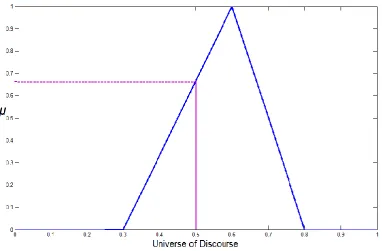
Figure 2.5 Graphical representation of a triangular membership function ... 35
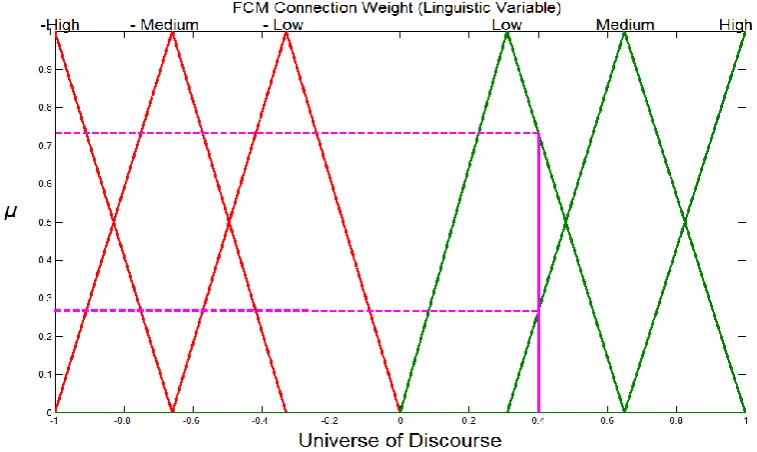
Figure 2.6 An example of a linguistic variable consisting of six fuzzy subsets represented by six triangular membership functions ... 36
Figure 2.7 The membership functions of the nine linguistic terms of the linguistic variable, Influence. The figure shows the corresponding membership functions of these terms from left to right as declared in T(Influence) ... 42
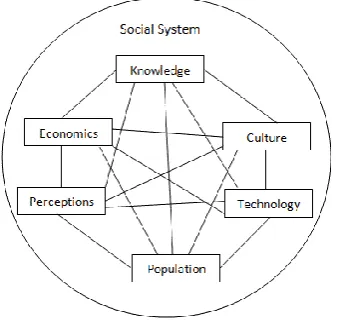
Figure 2.8 A simple example of a social system ... 48
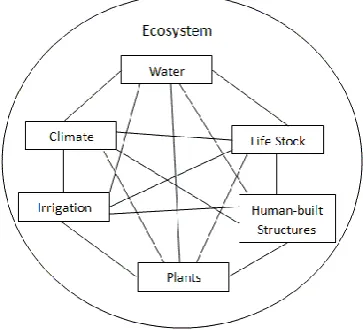
Figure 2.9 A simple example of an ecosystem ... 49
Figure 2.10 An interaction between a social system and an ecosystem ... 50
Figure 2.11 A socio-ecological system representation of water scarcity situation in Jordan based on the FCM in Figure 2.2; the figure shows how much the components of the system are interconnected and mutually dependent ... 52
Figure 2.12 A graphical representation of the 13 triangular membership functions used to represent the 13 terms in the linguistic term set Sover [-1, 1] universe of discourse .. 58
Figure 2.13 The representation of connection weights of ‘expert’ and ‘local people’ FCMs in 2-tuple values using 2-2-tuple representation model ... 59
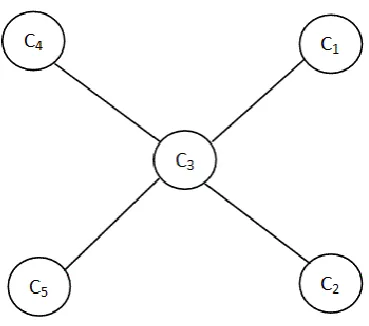
Figure 2.14 A star network consisting of five nodes and four connections, where the hub of the network, node C3, is the most central node ... 62
Figure 3.1 The configuration the eight processes of the proposed FCM model ... 70
Figure 3.2 An example FCM developed from an interview with a stakeholder in the study on "Mitigating the Water Scarcity Problem in Jordan". (Translated from the Arabic version of the original FCM) ... 71
Figure 3.3 A graphical representation of the triangular membership functions of the 13 linguistic symbolic terms ... 74
Figure 3.4 A graphical representation of aggregating ‘expert’ and ‘local people’ FCMs presented in Chapter 2. The connection weights of all FCMs are represented by 2-tuple values ... 95
Figure 4.1 Map of the Hashemite Kingdom of Jordan. Source: (http://www.terhaal.com/jordan-map) ... 104
Figure 4.2 Rainfall distribution in Jordan, (Al-Jaloudy, 2006) ... 106
Figure 4.3 Percentage of water use in Jordan by sector ... 108
Figure 4.4 Surface water basins in Jordan (Source: Ministry of Environment in Jordan, 2011) .... 109
Figure 4.5 Groundwater basins in Jordan (Source: Ministry of Environment in Jordan, 2011) ... 111
Figure 4.6 Water demand vs water supply for Jordan up to 2020 ... 113
xiii Figure 4.8 The projected water resources, water supply and total water deficit in 2022 based
on MWI’s 'Jordan’s Water Strategy 2008 – 2022' (JoRIEW, 2009) ... 116
Figure 4.9 The number of original variables vs the number of FCMs... 122
Figure 4.10 The number of new variable vs the number of FCMs ... 123
Figure 5.1 The architecture of the simulation process used in the proposed FCM model ... 152
Figure 5.2 A graphical representation of calculating the new state value of the concept ... 153
Figure 5.3 Simulation of the private sector FCM system based on the current policy option ... 155
Figure 5.4 The impact on the target and other concepts in the social FCM under the new policy scenario involving a high level of improvements to 'Water Projects' (F) (results shown are the difference between the steady state for concepts under the targeted or new policy and status quo (default) current policy). The concept F was clamped at the level of 1.0 throughout the simulation and the system reached steady state in 11 iterations. ... 158
Figure 5.5 The impact on the target and other concepts in the social FCM under the new policy scenario involving a high level of 'Integrated Management and Laws' (G) (results shown are the difference between the steady state for concepts under the new policy and status quo (default) current policy. The concept G was clamped at the level of 1.0 throughout the simulation and the system reached steady state in 10 iterations ... 159
Figure 5.6 The impact on the target and other concepts in the social FCM under the new policy scenario involving a very low level of 'Development and Urbanization' (H) (results shown are the difference between the steady state for concepts under the new policy and status quo (default) current policy. The concept H was clamped at the level of 0 throughout the simulation and the system reached steady state in 11 iterations ... 159
Figure 5.7 The impact on the target and other concepts in the social FCM under the new policy scenario involving a very high level of 'Technology' (I) (results shown are the difference between the steady state for concepts under the new policy and status quo (default) current policy. The concept (I) was clamped at the level of 1.0 throughout the simulation and the system reached steady state in 10 iterations ... 160
Figure 5.8 The impact on the target and other concepts in the social FCM under the new policy scenario involving a very high level of 'Community Participation' (K) (results shown are the difference between the steady state for concepts under the new policy and status quo (default) current policy. The concept K was clamped at the level of 1.0 throughout the simulation and the system reached steady state in 10 iterations ... 161
Figure 5.9 Change of concept steady states due to integration of five policy scenarios into one scenario, (9 iterations to reach steady state) ... 162
Figure 5.10 Change of concept steady states due to integration of all but scenario 3 'Development and Urbanization' (H) into one scenario, (7 iterations to reach steady state) ... 162
Figure 5.11 The configuration of sub levels of 'Economic Situation' (D) concept ... 165
Figure 5.12 Graphs A, B and C depicting the configurations of sub levels of 'Water Situation' (A), 'Water Resources' (B) and 'Water Demand' (C) concepts, respectively ... 165
Figure 5.13 The configuration of sub levels of 'Water Projects' (F) concept ... 166
Figure 5.14 Changes to steady state values of AA, AB, AC, BA, CA and DA key variables of target concepts A, B, C and D (see Figures 5.10 and 5.11) resulting from four scenarios of clamping FA, FB, FC and FD key variables of 'Water Projects' concept at a high level . 167 Figure 5.15 The "Appropriateness" of key variables of 'Water Project' concept ... 167
Figure 5.16 Changes to steady state values of target original variables (in A,B,C,D) resulting from four scenarios of clamping FA1, FA2, FA3 and FA4 variables at a high level (1) .. 169
xiv Figure 5.18 Changes to the steady state values of key variables AA, AB, AC, BA, CA and DA in
the three target concepts resulting from six scenarios of clamping GA, GB, GC, GD, GE and GF key variables belonging to 'Integrated Management and Laws' (G) at a
high level (1) ... 171
Figure 5.19 The "Appropriateness" of key variables of 'Integrated Management and Laws' (G) concept ... 172
Figure 5.20 Configuration of sub levels of 'Technology' (I) concept ... 175
Figure 5.21 Changes in the steady state values of AA, AB, AC, BA, CA and DA key variables resulting from three scenario simulations of clamping IA, IB and IC key variables of ‘Technology’ concept (I) at a high level (1) ... 176
Figure 5.22 The "Appropriateness" of key variables of 'Technology' (I) concept ... 177
Figure 5.23 The configuration of sub levels of 'Community Participation' (K) concept... 179
1
Chapter 1
Introduction
1.1
Overview
Humans have been interacting with nature from time immemorial. In recent decades, the interaction between humans and nature has grown extensively with increasing complexity. Complexity is a result of many factors and participants interacting with each other in a dynamic way within an environment of uncertainty. Increasing complexity and imprecision of problem domains, resulting from ever increasing and expanding human-nature interactions in contemporary real-world natural/environmental problems, have become a major challenge for solving them in a satisfactory manner. The complexity and imprecision are due to a number of factors, such as uncertainty, ambiguity, ill definition, inconsistency, multiple players or participants with diverse experiences and knowledge, a large number of influencing factors and relationships between them, and multiple dimensionality (social, political, economic, ecological etc.). The problems that include some or all of these characteristics are considered complex and dynamic. Most real-life problems share the above stated attributes and characteristics. Therefore, in order to study, address, synthesise, manage and/or control these attributes and characteristics, there is a need for computational systems that have the capability to mimic human thinking, understanding, and decision making. This entails the ability to identify and extract relevant knowledge from complex dynamic problems of human-nature interactions, which is predominantly experiential or heuristic, and integrate them in a comprehensive model that allows simulation of the system behaviour that enables informed decision making. This research intends to produce a robust approach to deal with and model complex real-life problems and examine its utility in addressing one such problem.
2 rather than using the discrete or quantitative values. Therefore, it is essential to shift the problem solving to holistic integrated approaches to cope with the attributes and characteristics that the present day problems are confronted with.
Soft computing approach is an alternative to the hard computing approach. Soft computing approach, coined by Zadeh in (1994), was proposed to deal with the reasoning and approximation of complex problems. Zadeh (1994), in his article, defined the term of soft computing as:
"Using soft computing rather than hard computing exploits the tolerance for imprecision and uncertainty to achieve tractability, robustness and low solution-cost. The soft computing mimics the ability of the human mind and learns in an environment of uncertainty and imprecision to effectively employ modes of reasoning that are approximate rather than exact".
Zadeh (1994) also pointed the key techniques of soft computing: fuzzy logic, neural network theory and probabilistic reasoning, with emphasis on fuzzy logic technique for approximate decision making. Any combination of these techniques and other recently published techniques, such as genetic algorithm and Bayesian networks, with integrated domain knowledge constitute a hybrid soft computing approach such as intelligent systems and expert systems. Soft computing techniques have been applied to several problems and have proved their success in addressing and modelling several real-life problems such as finance applications (Mochón et al., 2008), predicting stock-market trends (Mansukhbhai & Patel, 2012; Rahamneh et al., 2010), and practical environmental solutions (Gestal Pose & Rivero Cebrián, 2010).
Some environmental problems, such as global water problems, are complex and require a wide range of human knowledge/expertise to adequately address them and as such demand a significant soft computing approach to extract such knowledge/expertise. Fuzzy Cognitive Map (FCM) is a soft computing approach in the form of sufficient, flexible, and adaptable system models that can reflect the reality of various real-life problems and handle their complexity (Papageorgiou et al., 2010).
3 insights from and predict the corresponding system behaviour, where the FCM model is very useful. These problems are: human behaviour and the impact of human actions on ecosystems, lack of scientific data but availability of peoples’ knowledge and experience, environmental problems with several dimensions and no accurate solutions, and finally public involvement is desired or even mandated by law in solving the problem (Ozesmi & Ozesmi, 2004).
This research proposes a robust semi-quantitative FCM model for addressing and modelling complex real-life problems (complex systems) and applies the proposed model to mitigate
the "Water Scarcity Problem in Jordan". The rest of this chapter is structured as follows:
Section 2 gives a brief introduction to the general definition and structure of FCM. This section also highlights the advantages of FCM system over other soft computing systems, and presents the overall plan of the research. Section 3 briefly describes the significance of water and global water problems. After defining the goals and objectives of the thesis in Section 4, the structure of the rest of the chapters of the thesis is presented in Section 5.
1.2
Fuzzy Cognitive Maps (FCM)
FCM is a hybrid soft computing model incorporating robust properties of fuzzy logic, nonlinear systems dynamic models and neural networks techniques. The structure of FCM allows feedback loops. This structure gives the FCM approach significant capability to represent the domain knowledge of qualitative complex problems, capture their nonlinear systems dynamics, and help generate potential solutions to these problems.
1.2.1 FCM Overview
In his famous article, Kosko (1986a) presented the notion of fuzzy cognitive maps (FCMs) as an extension of cognitive maps (CMs) introduced by Axelrod (1976). Since then, researchers have considered FCM as a useful approach for modelling and controlling complex systems (Chun-Mei, 2008; Dickerson et al., 1994; Le et al., 2010; Mago et al., 2012; Stylios & Groumpos, 1999, 2004).
4 feedback loops to allow for complex nonlinear systems dynamics. The significance of the FCM model lies in representing the factors and relationships of the problem in a fuzzy (imprecise) way (Kosko, 1986a). In other words, FCM consists of nodes, also known as variables or concepts, and imprecise causal connections, also known as cause-effect relationships among nodes. The nodes represent the related causal factors that describe the states, behaviours or characteristics of the domain knowledge. These factors correspond to variables, concepts, events, input, output, trends and other characteritics of the domain knowledge being modelled (Dickerson & Kosko, 1994). The imprecise connections among nodes represent their cause and effect relationships. A connection between two nodes has a sign, magnitude and arrow to express type, strength and direction of the connection, respectively. The experts/designers draw their FCMs to model a variety of domain problems. This process is called FCM development or domain knowledge representation.
5 1.2.2 Why FCM Model? Advantages and features of FCM and Research aims
Why FCM Model?
FCM model can represent the knowledge of various complex problems and solve them in an appropriate way that other intelligent systems cannot. It can also play a significant role in helping the decision-maker in modelling the complex dynamics of the system, particularly if the system consists of different participants and stakeholders. Importantly, FCM model can combine different perceptions of stakeholders into a Group stakeholder map that represent overall perception. This process is called an FCM combination or aggregation. The aggregation process, usually, produces a large complex FCM with large numbers of nodes and connections. FCM model allows simplification of the large complex FCM into a simple one with a small number of nodes and connections (Ozesmi & Ozesmi, 2004). This process is called FCM condensation. Furthermore, FCM model can utilize graph theory indices and/or statistical methods to analyse the structure of the FCM (Ozesmi & Ozesmi, 2003, 2004). This process is called statical analysis of the structure of the FCM. FCM model can reveal the effects of nodes on each other and the whole system by simulating the FCM based on known initial state of nodes to find the final state of the nodes in the system. This process is called FCM inference. Finally, it can perform different scenario simulations using several "what if" questions to see what state the model will reach if the initial state of some specific nodes are altered (Kosko, 1988b) in order to help in decision making to find more desirable outcomes for the system concerned.
Advantages and features of FCM
In some complex problems such as socio-ecological problems, it is useful to integrate varied types of knowledge (i.e, from lay experts to experts) and different kind of perceptions (i.e,
6 of them in a fuzzy way. It also allows feedback loops to model dynamical interactions, can extract different types of knowledge from experts as well as from lay experts, easily combines the knowledge/perceptions of different stakeholder groups and allows statistical anaylsis and comparisons between them, and last but not least applies to test the dynamic effects of variables on each other and the resulting overall system state or temporal response under given initial conditions of the system.
Moreover, a well developed FCM model can predict how external actions affect the system. This would help in assessing what would happen if some of the variables of the system have been changed (i.e, policy options (what-if scenarios)); in other words, what would be the results of model implemented scenarios. This is useful for developing new policies for managing or imporving the actual system. Another interesting feature of the FCM model is the flexibility of the FCM development process: there are no restrictions on the number of FCMs in a knowledge domain or on the number of variables and connections within any FCM. Moreover, an FCM can be easily updated at any time (van Vliet et al., 2010). This means that the simple/flexible structure of FCM model allows to add and remove variables and connections as well as to modify the strength and sign of these connections (Eden et al., 1992).
Research Aims
Despite its advantages and capabilities, FCM model still faces some limitations and building a robust and comprehensive model is still a challenge. The customary reliance on the knowledge of experts alone while ignoring other types of related knowledge is not the appropriate way in all applications. As stated earlier, the participatory or community applications such as ecological applications involve human participation. To develop a successful system for these applications, the knowledge of the experts and that of normal people (lay experts) should be included. Ozesmi and Ozesmi (2004) suggested a multi-step fuzzy cognitive mapping approach for ecological problems in order to overcome the limitation of the dependency on experts’ knowledge alone. The approach has proven to be useful and gained good results in addressing many of the environmental problems (Ozesmi, 2006; Tan & Ozesmi, 2005).
7 researcher (system developer). Consequently, lack of an effective way to represent and deal with imprecise numeric values and/or linguistic expressions, and lack of satisfactory mathematical methods are still limiting the building of robust FCM models. To cope with these limitations, this research intends to advance the FCM development process. In terms of FCM representation, this research intends to use an appropriate fuzzy representation method to deal with imprecise numeric values as well as linguistic expressions, individually or together. In terms of mathematical computations, the research intends to use a fuzzy representation of the FCM and benefit from various intelligent systems, especially graph theory and fuzzy logic approaches, to handle imprecise data during the calculations.
However, the difficulties are magnified in the event that the FCM approach deals with different perceptions of various participants and stakeholders and there is a need to combine these perceptions in order to obtain a group or social perception (Kosko, 1988b; Ozesmi & Ozesmi, 2003, 2004). There are two limitations in the FCM approach in relation to this. The first one is the lack of fuzzy persuasive method to aggregate the conflicting and shared perceptions in order to reach successful group consensus without loss of information. The second limitation is the inability to assign acceptable credibility weights to these perceptions that are more likely obtained from different levels of experiences. To overcome these two limitations, this research intends to enhance the FCM aggregation process by, firstly, using an appropriate fuzzy aggregation method, secondly, proposing a new method for calculating the credibility weights for FCMs and then using these credibility weights in the aggregation process.
semi-8 quantitative or subjective-objective condensation method and to use more than one level of condensation. The subjective part of the proposed condensation method is identification of the condensed variables in the higher levels, and this is based on the knowledge of the system developer about the concerned problem. The objective part is to use suitable calculation methods to condense the value of connections in order to transfer them reasonably and transparently from the level of original variables to the level of high abstraction or key themes at higher levels. The condensation method should also keep the meaning of condensed variables and connections among them and not distort their values in the higher levels of condensation.
The fundamental aim of developing FCM models is to help understand a complex system and its behaviour better in order to improve its sustainable use and management. Therefore, the next part of the research involves analysis of the structure of individual, stakeholder group and combined total (Social) FCMs using graph theoretic measures. These would reveal the level of FCM complexity, density and important or central nodes and connections. The final part would involve approaches to make the map useful in decision making. For this purpose, FCM is treated as an Auto-associative Artificial Neural Network (AANN) where nodes pass information to each other dynamically through weighted feed forward and feedback connections displaying the dynamics of the system behaviour. In particular, the model allows simulation of effective policy scenarios that would lead to better system outcomes in terms of improved or more desirable states of nodes reflecting a better overall state of the system compared to the default or current state. The model’s utility in addressing a challenging complex problem can be used to ascertain its effectiveness and this research has selected the problem of mitigating acute water crisis in Jordan as the case study. Finally, the issue of model validation is discussed, first, in the broader context of complex socio-ecological systems and use this context as the backdrop to address validation of the proposed FCM model. Next section provides details of the case study.
1.3
Significane of Water and Management; Addressing Challenging Water
Problems; Case Study:
Mitigating the Water Scarcity Problem in Jordan
9 their water resources, and finally proposes a case study of a challenging real-life water problem - "Mitigating the Water Scarcity Problem in Jordan".
1.3.1 Significance of Water
We start the discussion on the significance of water with some excerpts from the foreword of the Secretary-General of the United Nations, Ban Ki-moon, in the 2009 UNESCO report (UNESCO, 2009):
“It is well known that water is life; what this Report shows is that water also means livelihoods. It is the route out of poverty for individuals and communities. Managing water is essential if the world is to achieve sustainable development. This challenge is even more pressing as the world confronts the triple threats of climate change, rising food and energy costs, and the global economic crisis. Developing countries and countries in transition are striving to manage their water resources more effectively. This is important not only for development; it is a matter of security, too. Lack of basic services can contribute to political instability. There has been a widespread failure to recognize water’s vital role in providing food, energy, sanitation, disaster relief, environmental sustainability and other benefits. This has left hundreds of millions of people suffering from poverty and ill health…. Governments ….must make more and immediate investments in water management and related infrastructure. We must all work together to address this matter of life and livelihoods.”
The above statement refers to the importance of the role of water as a major determinant of life and livelihoods. It is a key foundation not only for life and food security, but also for development, economy and security. In fact, the scarcity of water leads to poverty, diseases, political and social instability, and national and international conflicts. We cannot count the benefits and advantages of water, particularly fresh water. Some of the basic and essential uses of water are drinking, cleaning, irrigation (largest consumer use), greening, as well as water for health, energy, development, investment, urbanization, and maintaining environmental sustainability.
1.3.2 Water Management
10 concerned with what can be done to improve water supply, and on the other hand, with what can be done to manage water demand. Such complex optimisation problems can benefit from advanced computing methods. Several soft computing techniques have been carried out and proved effectiveness in water resources management and engineering and they include artificial neural networks, fuzzy logic, genetic algorithm, neuro-fuzzy, etc. (Jaiswal et al., 2010; Kisi & Shiri, 2012; Tayfur, 2012). However, it is clear from literature that FCM approach has not been widely used in water applications. Kafetzis et al. (2010) used an FCM approach to analyse conflicts of stakeholder views on water use and water use policy in relation to a regional Pinios river basin located in Greece, and in trans-boundary rivers in Maritza river basin shared between Bulgaria, Greece and Turkey (Glykas, Kafetzis, et al., 2010). Ozesmi and Ozesmi applied their suggested multi-step fuzzy cognitive mapping approach to study and analyse the desires and conflicts of different stakeholder perceptions on different lakes and water bodies in Turkey (Ozesmi & Ozesmi, 2004). These efforts have shown the effectiveness of FCM in addressing these challenging problems; however, they suffer from the limitations highlighted earlier in this Chapter. Therefore, the improvements proposed in this study should make the method more capable, effective and useful.
1.3.3
Addressing Challenges of Water Problems; Case Study: Mitigating the Water Scarcity Problem in JordanIncreased growth of population, development, life-style, expectation horizons and urbanization accompanied with accumulated shrinking of water resources have created several challenges to national water security in most nations of the world. There is no doubt that water is one of the most important sources of lifelines for humans as well as governments. However, countries vary in their abundance of water resources. Some countries are fortunate to have adequate traditional water resources, and some have good economic conditions and access to water bodies such as seas to produce non-traditional fresh water resources through wastewater treatment and desalination projects. Some countries have both these options available to them. However, a country like Jordan lacks both. It is, in fact, a critical challenge. Jordan is considered the fourth water poorest country in the world (World-Bank, 2012). This problem poses a real threat to Jordanian society and consequently to the safety and stability of the country.
11 or the other, all efforts from all members of the community with various levels of knowledge should be concentrated through encouraged participation to meet this crucial challenge. It is clear that addressing this problem requires a pluralistic approach incorporating diverse perceptions of different stakeholder groups. This would lead to identification of many factors relevant to water scarcity and relationships among these factors. Finally, this problem involves humans, and thus, uncertainty and ambiguity will invariably dominate the perceptions. Accordingly, to mitigate this problem and its risks, a suitable approach, such as FCM, should be used. This research intends to address this issue. For this purpose, it intends to collect the knowledge and perceptions on "Mitigating the Water Scarcity Problem in
Jordan" from the perspective of different stakeholders and shed light on the situation by
developing and analysing FCMs. It also intends to benefit from the collected knowledge/perceptions to offer several meaningful recommendations for managing and improving the water scarcity situation in Jordan based on well-studied scenarios simulations carried out using the proposed FCM model.
1.4
Goals and Objectives
The research aims to achieve two key goals. The first goal is to provide a robust
semi-quantitative FCM model that is capable of modelling various qualitative, dynamical and
participatory complex systems that represent many real-life problems. This goal highlights the following questions, and beyond these questions are a set of respective objectives to be investigated in order to achieve this goal:
1. How can the FCM model be made able to obtain a wide range of perceptions?
The first specific objective of the research is to collect a comprehensive set of data. To
12 2. How can the FCM model represent and deal with different types of qualitative data?
Some stakeholders tend to assign values for the strength of the connections by using vague linguistic expressions such as ‘low’, ‘medium’, ‘high, etc., rather than using imprecise numeric values, and vice versa. Incorporating these is a challenge to current FCMs. The second specific objective of this research is to make the proposed FCM approach able to deal with linguistic and/or numeric imprecise values in the
representation and calculation processes. To achieve this, a 2-tuple fuzzy representation
method is used to deal with the imprecise/vague values. The main advantage of this method is that it is a proper method for representing and dealing with imprecise numeric values and linguistic expressions without loss of information. In brief, the whole range possible for an imprecise value, be it numeric or linguistic, is first represented by a number of fuzzy subsets. A fuzzy subset can be described as having a mean and a limited spread around the mean and a popular example is triangular fuzzy subsets with labels
‘very low’, ‘medium’, ‘high’, ‘very high’ etc. Typically, fuzzy subsets overlap making it
possible to develop a continuous spectrum for the variable that makes dealing with imprecision easier. Fuzzy 2-tuple method translates each imprecise value into a pair of attributes (2-tuple) in relation to the fuzzy subset that most closely matches the imprecise value, out of the total number of sets that together define the whole range possible for the imprecise value. Chapter 2 gives further description of this method and Chapter 3 shows how the research utilizes this method to serve the proposed FCM approach.
3. How can the FCM model differentiate the FCMs obtained from different levels of user knowledge and assess the importance of variables in each FCM?
The third specific objective of the research is to assign nonnegative credibility weights
to FCMs and variables in FCMs according to their importance. These weights are used in
further calculations. This is particularly relevant in participatory systems where participants’ knowledge of the system can vary greatly and an objective measurement of credibility of such knowledge/perception can provide more accurate insights and final recommendations from the modelled system. The way to achieve this specific objective is through the achievement of the fourth specific objective of this research which is
13 uses the 2-tuple fuzzy representation model and utilizes the following centrality measures from social networks theory: degree, closeness and betweeness measures to provide a novel approach to calculating CCM values of FCM variables. The values of degree, closeness and betweeness of variables in an FCM will be used to calculate the CCM value of the particular FCM. This process is repeated to calculate the CCM values of all variables and respective FCMs. Finally, the calculated CCM values of FCM variables and those of FCMs are exploited to define credibility weights of FCM variables and credibility weights of FCMs, respectively. Further explanation of these centrality measures is given in Chapter 2 with demonstrations. A detailed clarification and description of the calculations involved in the methodology along with how these novel methods serve the proposed FCM approach are presented in Chapter 3.
4. What can be done to simplify a large FCM? And beyond this question arises another question: Does the simplified FCM still contain the original meaning and value or does it loose some of its meaning and value?
The fifth specific objective of this research is to propose a novel semi-quantitative
condensation method. The proposed method consists of one or more levels of
condensation and has two parts. The first part is subjective and the second one is objective. In the subjective part and at any level of condensation, the selection of group variables to be condensed into a higher level category and assignment of the names for the new condensed variables are carried out by the developers of the whole system. The developers depend on their knowledge of the concerned problem to define, qualitatively, the condensed variables at a higher level of condensation. In the objective part and at any level of condensation, the calculation of the values of the condensed connections is done by a deliberate mathematical operation. This operation uses the credibility weights of variables being condensed and the 2-tuple fuzzy representation method to get straightforward connection values among condensed variables of the condensed FCM. A comprehensive description of condensation process is given in Chapter 3.
14
The sixth specific objective of the research is to enhance the aggregation process of the
proposed FCM approach by using an adequate fuzzy aggregation method. To achieve
this, the research uses 2-tuple fuzzy representation method to represent the different values (connection strengths, credibility weights etc.) in FCMs by different fuzzy sets. These different sets are standardized into a standard fuzzy set before they are aggregated to each other. Finally, the proposed model augments each FCM with the inclusion of the distinct variables in all FCMs to make them compatible before aggregation. Then the method multiplies connection weights by the map’s credibility weight when combining it with other FCMs. Chapter 3 discusses and describes in detail the proposed fuzzy aggregation method.
The second goal of the research is to investigate the applicability of the proposed model to
the "Mitigating the Water Scarcity Problem in Jordan" case study. Modelling the "Water
Scarcity Problem in Jordan" with its social, economic, political and environmental dimensions
is a challenge. In such a comprehensive problem and to represent its knowledge appropriately, suitably selected representative samples of different stakeholder groups such as private sector, local people, water experts, managers and farmers must be considered. In addition, a well-prepared questionnaire consisting of several open-ended questions is used to urge and encourage participants to express their perceptions and help in data/perceptions extraction. Then, the proposed FCM approach is used to model this problem by firstly conducting interviews and then developing, representing, condensing and aggregating the perceptions/FCMs followed by map analysis and scenario simulations.
The achievement of this goal is proof of the success of the research approach and requires answering the following questions:
6. What can be done to study and analyse the perceptions?
Answering this question achieves the seventh specific objective -Studying and analysing the water situation in Jordan based on the perceptions of multiple stakeholder groups
on water scarcity issues in Jordan. The proposed FCM model intends to analyse the
15 between various FCMs or group FCMs, characterising the similarities and dissimilarities of the perceptions of stakeholder groups, and identifying the important variables in FCMs can be done. Chapter 4 presents the case study and quotations from the conducted interviews as well as explains in detail the process used to analyse the structure of FCMs.
7. What can be done to investigate the current situation and obtain potential solutions through model simulations, and what benefits and opportunities does this deliver?
Answering this question achieves the eighth specific object - Several helpful recommendations and suggestions for decision makers for mitigating stressful water
16
1.5
Summury of Goals and Objectives
The research aims to addresses some crucial limitations of existing FCM models, in particular, the inadequacy in the representation of qualitative data/perceptions on the FCMs and the limitations in FCM aggregation and condensation processes. Thus, this research intends to provide an enhanced FCM model that is easy to use, robust and applicable to representing in a proper way and handle any kind of qualitative perceptions describing various types of knowledge at any level of peoples’ experience. The enhancement of the approach comes from either improving the processes of existing FCM models themselves or by adding new computational techniques such as fuzzy methods to enhance the robustness and capability of the approach. Also, the research aims to study and address the views and perceptions of the stakeholders of a complex real-life problem, which is "Mitigating the
Water Scarcity Problem in Jordan". The proposed FCM approach is presented demonstrating
all aspects of its implementation, from problem understanding and collecting data to obtaining dynamic simulations based policy outcomes. Last but not least, the study intends to provide some recommendations or solutions that would help the decision makers take appropriate and effective decisions to alleviate the critical situation of water scarcity in Jordan.
1.6
Structure of the Thesis
The thesis is divided into six chapters. Chapter 1, the current chapter, starts with an overview of the present-day complex problems and the role of soft computing and FCM approaches in addressing these problems. It also handles, in brief, the importance of water in our daily life and the potential consequences of water scarcity problems, with an example of Jordan. Ultimately, the current chapter ends with determining the goals and objectives of this thesis followed by an overview of the organization of chapters in the thesis.