Research Article
CODEN: IJPNL6
SPECTROPHOTOMETRIC METHOD FOR DETERMINATION OF RISPERIDONE IN
PHARMACEUTICAL BULK AND DOSAGE FORMS
Akachukwu I, Nwodo N.J* and Mbah C. J
Faculty of Pharmaceutical Sciences, Department of Pharmaceutical and Medicinal Chemistry,
University of Nigeria, Nsukka, Nigeria
*Corresponding author e-mail:
[email protected]
ABSTRACT
A simple, accurate and sensitive spectrophotometric method for determination of Risperidone has been developed. The method was based on the charge – transfer complexation reaction of Risperidone with chloranilic acid to form a violet – coloured complex having absorption maximum at 500 nm. Different variables affecting the reaction conditions such as the concentration of chloranilic acid, reaction time, diluting solvents were studied and optimized. Under the optimal conditions, linear relationship with good correlation coefficient (0.9979) was found between absorbance and the concentrations of Risperidone in the range of 2 – 12 µg/ml. The assay limits of detection and quantitation were 0.979 and 2.97 µg/ml respectively. The precision of the method and the values of relative standard deviation never exceeded 1.19%. No interference could be observed from the excipients commonly present in dosage forms. The proposed method was successfully applied to the analysis of Risperidone in pure and pharmaceutical dosage forms with good accuracy and precision; the recovery percentage ranges from 99.02 to 101.88 ± 0.54 to 1.19%. The proposed spectrophotometric method gives accurate and reproducible results besides being much more sensitive than the British Pharmacopoeia method that uses a larger amount of Risperidone.
Keywords: Risperidone; chloranilic acid; spectrophotometry.
INTRODUCTION
Risperidone, 4-[2-[4-(6-fluorobenzo [d] isoxazol-3-
yl)-1-piperidyl]ethyl]-3-methyl-2,6-diazabicyclo[4.4.0]deca-1,3-dien-5-one (Figure 1) belongs to the chemical class of benzisoxazole derivatives. It is an atypical antipsychotic agent and acts through selective antagonism of serotonin 5HT2,
dopamine D2 receptors [1]. Clinically, it is used in the
treatment of schizophrenia and other psychoses [2]. The therapeutic importance of the drug has promoted the development of several analytical methods for its quantitative determination. The British Pharmacopeia adopts a non-aqueous titrimetric method for the determination of Risperidone[3]. Other analytical techniques include chemical luminescence assay, chiral chromatography, HPLC, LC/MS and HPLC – ESI/Ms, pulse polarography [4-12]. The chromatographic method/MS is tedious and difficult to perform or require selective and expensive
detectors that might not be accessible to many laboratories. Spectrophotometric method is considered more convenient alternative technique because of its inherent simplicity and availability. Unfortunately few spectrophotometric methods have been reported for determination of Risperidone in its pharmaceutical dosage forms [13,14]. Chloranilic acid, 2,5-dichloro-3,6-dihydroxy-1,4-benzoquinone has been used for the determination of some organic compounds containing lone pair of electrons [15 – 17]. These complex reactions were the basis of the development of sensitive spectrophotometric method for the determination of Risperidone. In the present study, a simple and sensitive spectrophotometric method for the determination of Risperidone has been developed and validated. The method is based on the chloranilic acid complexation with Risperidone and subsequent monitoring the absorbance of the formed complex at λmax 500 nm.
MATERIALS AND METHODS
Apparatus: UV-Visible spectrophotometer (Jenway 6305) with 1 cm quartz cells was used for all measurements.
Materials and reagent solutions: Risperidone (Teva Ltd, UK), chloranilic acid (Sigma – Aldrich Co. Ltd., USA). The chloranilic acid was prepared in dioxan at concentration of 0.05 % (w/v). All solvents and other chemicals used throughout this study were of analytical grade.
Pharmaceutical dosage forms: Risperidone tablets were labelled to contain 2 mg Risperidone per tablet.
Preparation of standard stock solution: Accurately weighed amount (20 mg) of Risperidone was transferred into a 100 ml volumetric flask and dissolved in 60 ml of methanol and diluted to volume with methanol to provide a stock solution of 200 µg/ml. The stock solution was diluted with methanol to obtain the suitable working concentrations.
Preparation of sample for analysis: Ten tablets were weighed, finely powdered. An accurately weighed quantity (0.208 g) of the powdered ingredient was transferred into a 10 ml volumetric flask, dissolved in about 6 ml of methanol. The contents of the flask were swirled, sonicated for 20 minutes and then diluted to volume with methanol. The mixture was mixed well, filtered through Whatman paper (No 41) and the first portion of the filtrate was rejected. A measured volume (1 ml) of the filtrate was transferred to a 10 ml volumetric flask and diluted quantitatively with methanol to give a working solution containing 20 µg/ml.
General assay procedure: Aliquots of standard or sample solution were transferred into a 10 ml volumetric flask. Then 2 ml of chloranilic acid (0.05% w/v) was added. The reaction solution were mixed well and allowed to stand at room temperature for 20 minutes. The solutions were completed to volume with dioxan. The absorbance readings were measured at λmax 500 nm against reagent blank treated similarly.
Stoichiometry of the complex species: The Job’s
method of continuous variation was employed [18]. Equimolar solutions (9.75 10-5 M) of Risperidone and chloranilic acid were prepared. The drug was prepared in methanol and in dioxan for chloranilic acid. Series of 10-ml portions master solutions of the drug and the reagent were made up comprising different complimentary ratios (0:10, 1:9 … 9:1, 10:0
inclusive) in 10-ml volumetric flasks. The reactions were allowed to proceed under the optimum conditions reported under the general assay procedure. The absorbance readings of the resulting solutions were measured at λmax 500 nm against reagent blank treated similarly. The composition of the system was further ascertained by slope ratio method wherein two series of solutions were prepared with a constant concentration of chloranilic acid solution and the other containing varying amounts of Risperidone and vice versa.
RESULTS AND DISCUSSION
The reaction of chloranilic acid with Risperidone possessing a lone pair of electrons results in the formation of a charge-transfer complex of the n- type. The formation of the complex is assumed to occur through a partial ionic bond (D+A-).
D + A [D+A-] D+ + A-
Donor Acceptor Donor-acceptor Radical anion Complex
In the above reaction, chloranilic acid acts as electron acceptor and Risperidone (containing tertiary amine) as electron donor. Previous report has suggested the reaction between quinonones (acting as electron acceptor) and tertiary amines to involve quanternization reaction with liberation of chloride[19]. Thus scheme 1 illustrates the reaction between chloranilic acid and tertiary amine, while Figure 2 depicts the spectrum of chloranilic acid and the complex respectively.
Optimization of reaction conditions: A series of experiments were performed to establish the optimum experimental conditions for the charge-transfer complexation of Risperidone with chloranilic acid. The variables affecting the reaction were concentration of chloranilic acid solution, reaction time and diluting solvents. These variables were optimized, by altering each variable in turn while keeping the other constant.
Concentration of chloranilic acid: The effect of chloranilic aicd solution was investigated by carrying out the reaction using 1 ml of chloranilic acid solution of different concentrations varying from 0.01 – 1.0 % (w/v). It was found that the absorbance increased by increasing the concentration of chloranilic acid up to 0.05% w/v. Higher concentrations of chloranilic acid solution had no effect on the values of absorbance readings in all cases.
Reaction time: The effect of time on the complexation of Risperidone with chloranilic acid was studied by carrying out the reaction for different periods of time ranging from 5 to 40 minutes. The results revealed that the optimum time (for complete reaction) was 20 minutes and longer time had neither enhancement nor negative effect on the reaction time. For precision considerations, 20 minutes was selected for subsequent studies. Developed colour was stable for more than 1 h, which was considered sufficient time for an analyst to carry out analysis.
Diluting solvents: Dilution with different solvents: methanol, ethanol, acetonitrile and dioxan, showed that dioxan was the optimum solvent for dilution as highest absorbance and lowest blank readings were obtained.
Stoichiometry of the reaction: The stoichiometry of the charge-transfer complex was established by the slope molar ratio and Job’s method of continuous variation using equimolar solutions of the drug and the reagent. The result obtained is shown in Fig. 3 and indicates that the composition of charge-transfer complex was (1:1) drug to reagent. The center was postulated to be the more basic tertiary amino group in the drug molecule.
Validation of the proposed method
Linearity, detection and quantitation limits: Under the specified optimum reaction conditions, the calibration curve for the reaction of Risperidone with chloranilic acid was constructed by analyzing a series of concentrations of the standard solution of the drug. A linear relationship was observed between the absorbance and the concentrations of the drug. The regression equation for the results was derived using the least square method. The plot (n = 3) was linear with very small intercept (0.004) and good correlation coefficients (0.9989) in the concentration range of 2 -12 µg/ml. The limit of detection (LOD) and limit quantitation (LOQ) were determined using the formula: LOD or LOQ = xSD/S , where x = 3 for LOD and 10 for LOQ. SD is the standard deviation of the intercept and S is the slope. The LOD and LOQ values were 0.979 µg/ml and 2.97 µg/ml respectively. The results are given in Table 1.
Precision: The precision of the proposed method was determined by replicate analysis of five separate samples of the standard solutions at a concentration level of 8 µg/ml. The relative standard deviation (RSD) was not more than 1.19%. This good precision level was suitable for quality control analysis of Rsperidone in its pharmaceutical dosage forms.
Interference studies: To explore the effect of some common excipients for the tablets on the analytical performance of the proposed method, samples were prepared by mixing known amount of Risperidone with various amounts of the excipients (Table 2). The analysis of these samples showed no interference was found from the tested excipients with the proposed method. The recovery values were 99.78±0.39 – 103.42±0.91 (Table 2). The obtained good recoveries ensured the suitability of the method for the analysis of dosage forms without interference from the common excipients.
Robustness and ruggedness: Robustness was determined by evaluating the effect of small variation in the experimental parameters on the analytical performance of the proposed method. In the study, one parameter was changed while others were kept constant and the recovery percentage was calculated each time. It was observed that none of these variables significantly affected the performance of the method. The recovery values 98.87±0.42 – 100.43±0.92 are shown in Table 3. This shows the reliability of the proposed method during routine application of the method. Ruggedness was assessed by applying the proposed method to the assay of Risperidone using the same operational conditions on different days. Results obtained from day–to–day variations were reproducible as the RSD never exceeded 1%.
Assay of pharmaceutical bulk and dosage forms:
CONCLUSION
The proposed spectrophotometric method has the requisite accuracy, precision and sensitivity to assay Risperidone in bulk and pharmaceutical solid dosage forms. The method lacks interferences from common excipients. Statistical evaluations of results in terms of t – and F– tests showed that the differences
between the methods were insignificant and therefore the proposed method can be recommended for the routine analysis of Risperidone in quality control laboratory. Finally, the proposed method was found to be much more sensitive than the official BP method which requires a larger amount (160 mg) of Risperidone.
Scheme 1:
Cl
l O
O
C O H
O H
Cl
l O
O
C O H
O H
R N3+
Figure 1. Chemical structure of Risperidone
Fig. 2: Absorption spectra of chloranilic acid (a) and Risperidone-chloranilic acid complex (b)
Figure 3: Job’s continuous variation plot for the charge – transfer complex, λmax = 500 nm,
where, Vd and Vr are the volumes of added drug and reagent respectively.
Table 1: Characteristics and statistical data for the regression equation of the proposed method
Parameter Values
max (nm) 500 Beer’s law limit (µg/ml) 2-12 Molar Absorptivity (L/mole/cm) 4.312 x 10³ Colour Stability (h) 2
Regression equation (Y*)
Slope (b) 0.0109 Intercept (a) -0.0095 Correlation coeffiecient (r) 0.9989 Limit of detection (µg/ml 0.979 Limit of quantitation (µg/ml) 2.97
*Y = a + bc, where c is the concentration of analyte (µg/ml) and Y is the absorbance unit.
Table 2: Analysis of Risperidone in the presence of common excipients by the proposed
method.Excipients(*) Recovery (%)±SD Lactose (100) 100.35±0.39 Microcrystalline cellulose (10) 99.78±0.91 Magnesium sterate (10) 103.42±0.67 Sodium laury sulphate (10) 101.61±0.84 Starch (90) 101.21±0.51
Figures in parenthesis are the amounts in mg added per 2 mg of Risperidone.
Table 3: Effect of small variation in the assay conditions on the analytical performance of the proposed spectrophotometric method for analysis of Risperidone.
Parameter Recovery (%)±SD
No variation 100.27±0.56
Chloranilic acid
0.045 100.43±0.62 0.050 100.14±0.92 Reaction time (min)
20 99.62±0.42 30 98.87±0.57
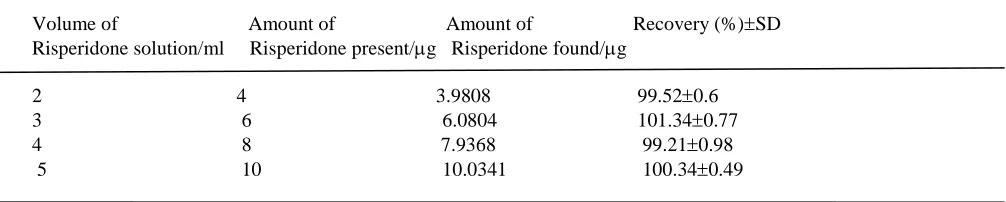
Table 4: Determination of Risperidone in pharmaceutical formulations (tablets) by the proposed method.
Volume of Amount of Amount of Recovery (%)SD
Risperidone solution/ml Risperidone present/g Risperidone found/g
2 4 3.9808 99.520.6 3 6 6.0804 101.340.77 4 8 7.9368 99.210.98 5 10 10.0341 100.340.49
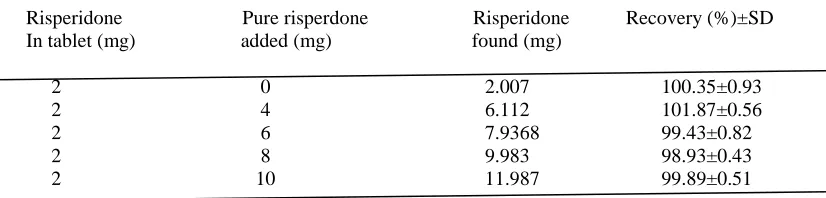
Table 5: Recovery of risperidone in tablet – pure sample mixtures by the proposed method.
Risperidone Pure risperdone Risperidone Recovery (%)±SD In tablet (mg) added (mg) found (mg)
2 0 2.007 100.35±0.93
2 4 6.112 101.87±0.56 2 6 7.9368 99.43±0.82 2 8 9.983 98.93±0.43 2 10 11.987 99.89±0.51
Values are mean of three determinations ± SD
REFERENCES
1. Hardman G, Limbid IE, Gilman AG. The Pharmaceutical Basis of Therapeutics, 10th ed, McGraw Hill, 2001, pp. 279.
2. Physicians’ Desk Reference, 59th ed, Thomson PDR, New Jersey, 2005, pp. 1742 3. British Pharmacopeia, 2, 2008, pp.1898.
4. Song Z, Wang C. J Pharm Biomed Anal, 2004; 36: 491.
5. Daniel C, Barthelemy C, Azarzar D, Robert H, BonteJ P, Odou P Vaccher C. J. Chromatogr A, 2007; 1163: 228.
6. Baldaniya SL,.Bhatt KK, Mehta RS, Sha DA. Indian J Pharm Sci, 2008; 70: 494. 7. Schatz DS, Saria A. Pharmacognosy, 2000; 60: 51.
8. Zhou ZI, Kunyan I, Zhihong X, Zeneng C, Wnexin P, Wang F, Zhu R, Huande I, J Chromatogr B. 2004; 802: 257.
9. Huang MZ, Shenta JZ, Chen JC, Lin J, Zhou H, Zhejieng J. Uni Sci, B 9 10. Bartlett MG, Zhang G, Terry AV (Jr). J Chromatogr, 2007; 856: 20. 11. Sabbaiah G, Singh S, Bhatt J Rapid Com Mass Spectrum, 2006; 20: 2109. 12. Josh A, Jayaseelan C, Jugade R. Croat Chem Acta, 2006; 79: 541.
13. Kumar MS, Smith AA, Vasagam, Muthu AK Manavalan R. Int J Pharm Sci Res, 2010; 1: 122. 14. Hassan WES. Chem. Pharm. Bull. 2008; 56(8): 1092.
15. El–Sayed MA, Agarwal SP, Talanta. 1982; 29: 535.
16. Adikwu MU, Ofokansi KC, Attama AA. Chem Pharm Bull, 1999; 47: 463. 17. Okorie HN, Mbah CJ, Int J Curr Res Rev 2010; 2: 27.
18. Job P, Ann Chim, 1929; 9: 113.
19. Sass S, Kaifman JJ, Gardenas AA, Martin JJ. Anal Chem, 1958; 30: 529.