1
International Journal of Research in Social Sciences http://www.ijmra.us, Email: [email protected] A STUDY OF FAITH AND CHANCE IN THE MAYOR AND TESSDr.Sitender Kumar
H.No.2001,HBC,Sector-4, Kurukshetra
Abstract
Hardy has been labled as a pessimist novel but in the literal sense he chose most of his theme and subject matter from those human action and desting which are not under the control of any human being . He takes up the same theme in the Mayor and Tess and tries to establish that fate is all powerful in our lives .The present paper attempts to study and evaluate the elements governed by fate in these two novels.
Keywords:-Fate and chance
2
International Journal of Research in Social Sciences http://www.ijmra.us, Email: [email protected] discarding the shabby genteel suit of cloth and the rusty silk hat which had the emblem of his illegitimate power, taking again to the drink he had twenty years before his repudiated, leaving exactly as he had entered it, revisiting Waydon-Priors. The scene of the original crime and dying at last, broken in body and spirit, on the barren wastes of Edgon Heath, Henchard travels with every stage of his decline and fall the road by which he had come, embraces with every step the past he had denied…" (161). Despite all the impossibilities, Hardy's genius asserted itself in the making of a Michael Henchard as a man of strong will. Having suffered odds and vicissitudes, he moves closer to Aristotle's definition of a tragic hero. Henchard undergoes rebuffs that appear in excess of what his original crime demands, and his punishment appears more than what a basically descent man deserves. I can go alone as I deserve an outcast and a vagabond. But my punishment is not greater than I hear (The Mayor, 325). In this way, the preceding argument establishes that the nail, portrays a battle between man's will and the nature because man can never be sure of himself like the Greek hero. Like that of The Mayor Hardy has been successful in portraying Tess as a girl who fights withher circumstances but gets defeated by the fate in Tess of D‘urberville. Douglas Brown says, ―Here is not merely the tragedy of a heroic girl, but the tragedy of a proud community baffled and defeated by a process beyond its understanding control‖. (90). What makes this novel a tragic story is not the involvement of Tess's fine spirit in a degrading story of reduction and revenge. Rather, it is the meaningfulness of life considered as the story of a victim of her will and a scapegoat. J.R. Brooks places the story as, "the surface story of Tess narrates the events that defeat her struggle for the personal happiness. But the poetic under-pattern reveals the resolute purpose of the victim of circumstances and the doomed or sanctified being a more archetypal direction to her life hostile to personal claims" (439). In considering Tess as a victim of her own will and circumstances, the following pattern needs to be considered:
3
International Journal of Research in Social Sciences http://www.ijmra.us, Email: [email protected] that society, at large, will follow Angel's example in accord with Hardy's general philosophy of evolutionary meliorism. Like the traditional scapegoat, Tess is neither guilty nor innocent. "She is a purely typically or random victim of the circumstances her will framed around her", remarks Northrop Frye. (41). To sum up, it may be said that one has not a ward to say against the concept of will and force working behind the aspirations of The Mayor of Casterbrige and Tess of D‘Urbervilles in the respective stories. The Mayor's rise and fall suggests that if one is an idealist, trying to exert his will in an antagonistic or indifferent world, then this action creates a Promethean conflict. And if one is realist and does not attempt to change himself, his chances of destruction one minimized. In the same way, the character of Tess, up to her last downfall with some curious exceptions, is consistent enough. Tess is the epitome of pure minded girl in whom lie the noblest possibilities of womanhood to carry out her will. But both of the characters seem to be wronged by their fate.REFERENCES:
Brooks, J.R. Thomas Hardy: Poetic Structure ( London : Elek, 1971)
Brown, Doughlas. Thomas Hardy ( London: Longman Green Company, 1967) Frye, Northrop. Anatomy of Criticism (London: Princeton, 1957)
Hardy, Thomas. Tess of D'Urbervilles. Ed. Dale Skilton (London: Penguine, 1973)
Hardy, Thomas. The Mayor of Casterbridge. Ed. Dale Crammer (London: Oxford University Press, 2004)
Millgate, Michael. Thomas Hardy: His Career as A Novelist (London: Macmillan, 1971) Spivey, Ted R. "Thomas Hardy's Tragic Heroes". Nineteenth Century Fiction, IX (1954) International Journal of Research in Engineering & Applied Sciences 47
4
International Journal of Research in Social Sciences http://www.ijmra.us, Email: [email protected] EFFECTS OF CLIMATE CHANGE ON AGRICULTUREDr. Anita Rathi, Associate Professor
Dept. of History, R.G. P.G. College, Meerut
As global warming and other related phenomena on climate change are gaining importance and awareness day by day, it is time to explore the possible effect of climate variation on agriculture. Although climate and agriculture as separate subjects attained significant importance, yet the efforts to link these two subjects and to predict their possible interactions have not been sufficient. Sustainability concerns us today and for achieving this, we must understand the intimate relationship between cropping systems and management practices and the specific soil-climate conditions under which they are developed and practised.
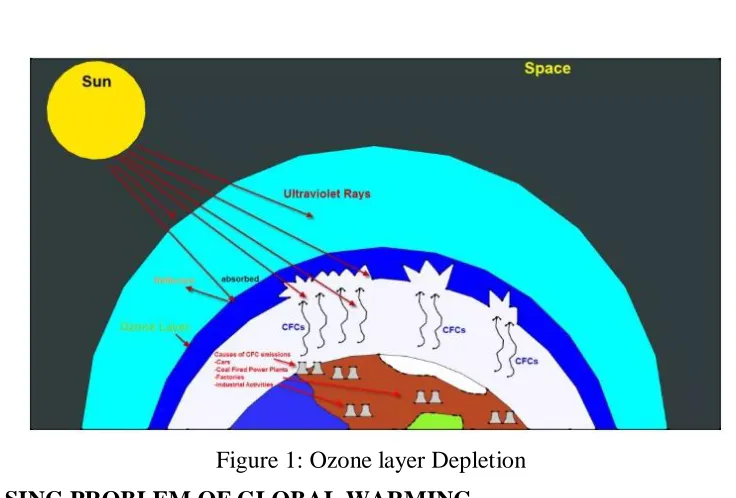
Climate change has been taking place since the dawn of earth, but anthropogenic factors are influencing climate for more than a century, the most prominent being greenhouse gas emission and its effect on global warming. In a greenhouse, glass allows sunlight in but keeps some infrared radiation from escaping. The gases in our atmosphere with similar effect are often called greenhouse gases. These are not nitrogen and oxygen only the bulk of atmosphere, but trace gases including, for example, water vapour and carbon – dioxide. If greenhouse gas emission continues at the present rate, it is assumed that the average temperature of the earth will increase between 1.5 to 3.00C during the next decade. Water vapour is, by far the most important natural greenhouse gas in the atmosphere followed by Carbon dioxide of man – made greenhouse gases, the most important are carbon dioxide, methane, nitrous – oxide and halocarbons, of which chlorofluorocarbons (CFCs) are the most significant. Ozone (O3) in the lower atmosphere, whose concentration is affected by man's activities, is also an important secondary greenhouse gas. Except water vapour, other gases absorb some of the infrared radiation emitted from the surface. As a result, the atmosphere gains heat and the earth becomes warmer. The concentration of water vapour is linked with other gases through a feedback mechanism. Warming caused by other gases increases evaporation and allows the atmosphere to hold more water vapour which in turn enhances the warming process. Residing time of CFCs in the atmosphere being more than 100 years, they cause considerable effect, through their emission rate is much less than CO2. Although CO2 is less potent greenhouse gas on an equal mass basis, its high emission rate ensures that it is most important. Since the industrial revolution, its total contribution to the man made greenhouse effect has been about 60% as against 12% by CFCs. Ozone absorbs both solar (short wave) and infrared (long wave) radiation. So their changes in concentration influence global warming.
Greenhouse gases are important in the sense that the earth, without these gases, would have a temperature around 300C lower than what it is today. It is these gases which keep our earth worth living. Then increase, on the other hand, works in a negative way i.e. makes the earth warmer than before.
5
International Journal of Research in Social Sciences http://www.ijmra.us, Email: [email protected] in good agreement. There are a few areas where these agreements on possible impacts of climate change on agriculture hold true. These are warming of higher latitudes, northern advances of monsoon rainfall and reduced soil water availability.Warming of Higher Latitudes : With the increase in temperature in the higher latitudes, agriculture can flourish and the southern region of boreal forest will retreat northward due to competition for land to cultivate.
Northern Advances of Monsoon Rainfall : As the Intertropical convergence Zone (ITCZ) is likely to be advanced northward with global warming. India is expected to receive more rainfall to cause flood and erosion.
Reduced soil Water Availability : GCMs predict a reduction is soil water in Africa, parts of South East Asia and Arabian Peninsula, Eastern Australia and the Southern half of North America (between December and February), in West Africa, Western Europe, China and Soviet Central Asia, Mexico and Central America, Brazil and North – Eastern and Western Australia (June to August). This will lead to a negative impact on agriculture.
Indian subcontinent has a complex Weather system with the spectacular phenomenon of monsoon. There are four possible rain belts over the Indian longitudes of which three are predicted by three different atmospheric GCMs. The presence of so many rain belts makes makes it extremely difficult for simulating the rainfall pattern in a realistic manner. Even if the rain belts are simulated and the average pattern is developed, it is more difficult to simulate and predict the inter seasonal or yearly variation of the rainfall pattern.
The strong links between monsoon rainfall and agricultural productivity in our country are well known South – West or summer monsoon brings about 80% of rainfall in India and is of paramount importance to Indian agriculture. But the spatial and temporal distribution of summer monsoon vary widely. Hence, it is a very difficult and challenging task for the meterologist to understand and forecast monsoon variabilities. A vast amount of work has been done in the last two decades regarding the spatial and temporal variability of monsoon. Based on these experiments and research (IMD), and the National centre for Medium Range Weather Forecasting (NCMRWF) are engaged in forecasting the weather situation from small to seasonal ranges. For the forecasting, they employ previous experience and knowledge, synoptic and numerical models involving past weather data as well as wind, pressure, moisture and temperature data and modern tools like satellites. Agricultural scientists and and meteorologists are working closely to forecast weather and advise farmers for the betterment of their crop production.
The components of natural ecosystem are very much sensitive to changes in weather and climate, particularly to extreme weather events, decreased soil moisture, temperature change and increases in carbon dioxide in the atmosphere, so, vegetation as well as agriculture are likely to be affected from such changes in weather and atmosphere.
6
International Journal of Research in Social Sciences http://www.ijmra.us, Email: [email protected] Increased level of CO2 and other greenhouse gases results in climate change like temperature increase, more erratic pattern of rainfall etc. This certainly has an impact on agriculture and this impact manifests itself in a number of ways namely, changes in the length of growing season. It is obvious that in a warmer world the growing season for the crops grow in cool temperature like in Northern Europe, will lengthen leading to an increase in plant growth rates. For warmer climate region like the Mediterranean still increase in temperature will reduce the growing season, particularly in the spring and autumn. Scientists suggest that a 10C increase in average temperature would tend to advance the thermal limit of cereal cropping in mid – latitude northern hemisphere and would bring more land under cool climate. Changes in mean crop yield – several case studies were done in different regions for different crops. They yielded mixed results and it is quite difficult to summarise them and come to conclusion as they are crop – specific because of use of different models. In cool temperature and cold regions, the yield is expected to provide soil moisture is optimum. But global warming causes soil moisture depletion and this has serious effects on crop yield. A study predicts that maize yield will reduce by 20% even if the crop is irrigated due to severe depletion of soil moisture with increase in temperature. In another study, it is revealed that increase in rainfall may be beneficial to yield of crops. It is assumed that with 10C temperature rise, precipitation will increased by at least 100 mm and this increased precipitation will enhance yield of rice, wheat, maize to the tune of 10%. On the other hand , yield of cereals and other agricultural produce will come down heavily, particularly in warmer regions, as revealed in studies.Some studies even predict severe drought in places in lower latitudes. Thus, whether the effect of enhanced level of greenhouses gases will be beneficial or not, as far as yield is concerned, is not clear even today.
As there is intimate relation between occurrence and distribution of pests and diseases and the temperature, any change in temperature will have significant effect on pest and disease development and their interaction with agricultural crops. A number of effects of global warming on insects, pests and disease causing organisms have been identified. These are increase in number and the rate of development in a season, expansion of area of distribution, earlier establishment in their population in a favourable season, and more intense attack, particularly by midnight and exotic species. Thus, the damage caused is likely to increase. Again with the shifting of agricultural production to new areas and changing of the agro-climatic regions, the emergence of new insect species is very well possible which will send an additional threat to agricultural production.
Though evidences are not enough, agriculture is likely to adjust itself to the global change. These adjustments will be manifested in changes in crop varieties and management practices. On an average global scale, the food production is not likely to alter too much and the harmful effect of increase in temperature and depletion of soil moisture will be compensated by some other factors. However, we must understand the changed climate in a more intense way and its implications in agriculture in order to adjust our crop management practices to cope up with the global climate change. There is nothing to be feared about but there is need to study climate and agriculture in a more integrated way so as to sustain in future, the adverse situations, if any.
REFERENCES
1. Cline, W.R. (March 2008) "Global Warming and Agriculture", Finance and Development, 45, 45(1), Archived from the original on 17 August 2014, Archived
7
International Journal of Research in Social Sciences http://www.ijmra.us, Email: [email protected] 3. Hoffmann, U. ed. (2013) Trade and Environment Review 2013; Wake up before it is too late. Make agriculture truly sustainable now for food security in a changing climate Geneva, Switzerland: United Nations Conference on Trade and Development (UNCTAD), ISSN 1810-5432 Archived from the original on 28 November 2014. Archived4. Lobell, D: et al (2008b), Prioritizing climate change adaption needs for food Security Policy Brief, Center on Food Security and the Environment, Stanford University. Archived 27 September 2014.
8
International Journal of Research in Social Sciences http://www.ijmra.us, Email: [email protected] GORDON, BINGLEY,PAYNE : AN ATTEMPT TO RECONCILIATE THE SIKHSDr. Anita Rathi, Associate Professor
Dept. of History, R.G. P.G. College, Meerut
British administrators and army officers continued to write about the Sikhs after the annexation of the Kingdom of Lahore in 1849. They were interested more in the contemporary Sikhs than in their past. How to handle them as a subject people and how to use their support and services was the main concern. Lepel Griffin published three books from 1865 to 1870 and a fourth one in 1892. It was followed by A.H. Bingley's Sikhs in 1899. John J.H. Gordon published his Sikhs in 1904 followed by C.H. Payne's Short History of the Sikhs in 1915.
After the publication of Ethnography of the Punjab by Denzil Ibbeston which furnished very valuable information about the peoples of the Punjab, a serious study of communities in context to political relevance began to be made study of local history or that of a community was never an end in itself, more so with the European historian on the Sikhs. This presumption is based on the fact that such a history distinguishes members of one community from another irrespective of time and space as ethnography transcends both these barriers. In this study, the writings of Gordon. Bingley and Payne have taken up, comparatively less trained historians than Cunningham and Lepel Griffin yet important for writing extremely divided and schizophrenic kind of history. In this context it may be right to say that no other State of India has attracted so much of attention as the Punjab for writing this kind of history.
Sir John James Hood Gordon who wrote. The Sikhs in 1904, born on 12 January 1832 at Aberdeen, was twin son of captain /William Gordon (1788-1834), 2nd Queen's royal regiment. His twin brother is general Sir Jhomas Edward Gordon, K.C.B. the twins were the youngest children in a family of four sons and a daughter. John was educated at Dalmeny and at the Scottish Naval and Military Academy, Edinburgh and with his twin brother entered the army, joining the 29th foot on 21 Aug. 1849, and becoming lieutenant on 9 Jan. 1854. He served in the Indian Mutiny Campaign 1857-58 with the Jaunpur field force, attached to 97th regiment.
Gordon's The Sikhs contains fourteen chapters and covers the events from the origin of Sikhism to the passing of Sikhs under the British crown. Praising the martial qualities of Sikhs Gordon writes : "Conspicuous among them were the Sikhs, tall, bearded, dignified looking men, intelligent and keen observers, - whose soldierly bearing was the admiration of all who beheld them. The name Sikh is reminiscent of very hard fighting against us fifty years ago, and of equally hard fighting for us on many a field since. Belonging to an exceptional as well as a fine martial race, more than ordinary interest is attached to them on account of their origin and religion".
In chapter first Gordon gives the account of their origin. Gordon sets out to prove that the Sikhs "have preserved inherited racial characteristic foreign to Orientals". He identified the origin of the Jats with the Scythians. There are as many conjectives about the etymology of the word Jat as there are of the origin of the race. It is now generally accepted that the Jats who made the northern plains of India their home were of Aryan stock. Gordon further writes that except the language, the Jats continued their Scythian customs, habits and indulgences.
9
International Journal of Research in Social Sciences http://www.ijmra.us, Email: [email protected] political constitution and ambition as well as in religious tenets, leading them to reject caste and to abandon the institutes of Hinduism for a fraternity of arms and military daring. He gives reference the 'Dasam Granth' and "Guru Mata". Govind Singh wrote an additional book for his followers which should rouse their military valour and inflame them to deeds of courage. He completed it in 1696, calling it the 'Granth of the tenth king, or reign as the rule of the Gurus is termed – the 'Granth of the Govindi Sikhs', as distinguished from the 'Adi Granth', the first book. He also instituted the "Guru Mata", or National Council, to which all Sikhs were admitted and given the opportunity to express their opinions on political matters. This with the 'Granth' for guidance formed the Sikh constitution.Chapter VII and VIII deals with Maharaja Ranjit Singh. Gordon mentions that prophecy of Guru Govind Singh "was fulfilled when the Sikhs became powerful. "The Sikhs had now reached nationhood under an able king fully equipped with confidence and energy, who, by transforming the Khalsa into a territorial power, decided once and for all whether the Sikh or the Afghan was to rule the Punjab. Thus, after a hundred years of unflinching struggle, was fulfilled the prophecy of the martial Guru Govind Singh". Ranjit Singh appreciated the value of European officers. So about twenty foreign officers of various nationalities were employed in the Sikh army. With their aid he put into execution his cherished design to convert his horde of horsemen into a trained regular army, and established arsenals for the manufacture of cannon, small-arms, ammunition, and military stores. The ablest and most important among them were – general Ventura, Allard, court and Avitabile.
In chapter XIII Gordon writes about the Sikh sacred book – The Adi Granth. It is the most sacred for Sikhs. Sikh religion was a pure monotheism, the chief point in Guru Nanak's doctrine was unity of the Supreme Being. Gordon points out the changes made by Guru Govind Singh. He did not make any change in the teaching of Nanak and made the worship of the one supreme obligatory and denounced idolatry. The additions he made in his 'Granth' are mainly regarding the duties of the Khalsa – the commonwealth which he established. Gordon further says that all the Gurus denounced caste and saw all men equal. Guru Nanak received all men as his disciples on an equality regardless of caste.
In the last chapter 'The Sikhs under the British crown', Gordon provides an explanation to the knottiest problem viz., inconsistency between emerging nationality or identity of the Sikhs and British imperialism. Gordon is of the opinion that the Sikh could maintain their sentiment of nationality in the form of subordinate patriotism for the British rule which had contributed towards the moral strength of the Sikh nation to such an extent as its own nation would not do.
Bingley published his book The Sikhs, around 1900. According to S.K. Bajaj the main aim of his book to emphasise the need to recruit more Jat Sikhs in the army. The purpose before bringley is very limited i.e., to explain circumstances "which caused the race of peaceful cultivators to be transformed into a fraternity of warriors". Although Bingley claims to have studied variety of sources like Crowther's Notes on Sikhs, Osthehan's Notes on Jats, Cunningham's History of Sikhs etc. but he heavily depends on Danzil Ibbetson's Ethnography of the Punjab and Lepel Griffin's Ranjit Singh and blends them so nicely that he could make a strong case in favour of recruitment of the Jat Sikhs.
10
International Journal of Research in Social Sciences http://www.ijmra.us, Email: [email protected] the 'elect', and the 'liberated'. He openly attacked all distinctions of caste, and insisted on the equality of all who would join him.In chapter II, 'Classification and Geographical Distribution', Bingley describes in detail the Sikh recruiting ground and the races that embrace Sikhism. The sikh recruiting – ground extends from the Indus on the west to the Jamna in the east, and from the Bikaner desert in the south to the lower ranges of Himalayas in the north. It thus includes the whole of the Punjab plains, except the country lying between the hills and the Indus.
Bingley believes that like Islam, Sikhism, being a religion open to all classes, includes amongst its adherents members of many races and castes. Of these by far most important and numerous are the Jats.
In Chapter III Bingley presents the graphic picture of the Sikh religion, customs and festivals. Discussing the influence of Hinduism on Sikhism, he reiterates the arguments of Lepel Griffin while explaining the adverse effects of Hinduism on the Sikhs.
C.H. Payne wrote A Short History of the Sikhs. He traces the history of the Sikhs from Baba Nanak to the Annexation. He writes that, '1469 A.D. is the first date in Sikh history'. Guru Nanak, the founder of the Sikhs community, was born. This event, so small in itself, yet fraught with such far-reaching consequences, took place at Talwandi. Like all other historians writing on local history, Payne also sets his pattern or format synchronising with the provincial political pattern. The shock of the First World War, the Gadar Movement, the Russian Revolution and stimulation which Nationalist movement received in the Punjab were enough factors for a historian to change his outlook.
In fact, the whole book is an attempt to establish that though the interests of the British and the Sikhs were different in nature and character yet their welfare was interdependent. Separating the Sikhs from the Muslims and the Hindus, Payne tries to inspire mutual confidence through history. For this purpose, he culled out information from the sorts of writings, sometimes without acknowledging them. Basing his hypothesis on the fact, that contemporary social milieu was that of tolerance and intimacy, that Mughals and Pathans had developed the exclusiveness of Rajputs, Sheikhs and Sayyads of the Brahimns, that there was intermingling of two communities at festivals, which infact a later phenomenon, Guru Nanak like Luther tried to restore Hinduism "to its ancient purity". His purpose was ethical, not political.
Payne notices the liberal policy of Ranjit Singh and following this policy he gave very high offices to Hindus and Muslims. Commenting on this, he writes, "thus liberal policy, though it helped to heel the wounds of the conquered, was viewed witth considerable alarm by the Sikh Sirdas, who remembered the warnings of Guru Gobind Singh, and looked upon the advancement of the Brahmin, the Rajputs and the Mussalman as a violation of the fundamental principles of their faith, and menace to the very existence of Khalsa as a brotherhood of the Sikhs. Even Ranjit Singh found it difficult to control the diversified and antagonistic elements of which his count was composed; and when the reins of government passed from his hands to those of his incompetent successor, order speedily gave way to anarchy and bloodshed.
11
International Journal of Research in Social Sciences http://www.ijmra.us, Email: [email protected] which prevailed after the death of Ranjit Singh, originated with the antagonistic elements of which his court was composed. Squarely placing blame on the nobility, Payne absolved the army of having any animosity for the British. "Consistent misunderstanding of the aims and actions of the British authorities led the Khalsa army to wage war against the British for that was considered to be the only remedy to meet the situation.The main aim of Gordon, Bingley and Payne for writing the history of Sikhs was political. They felt the need to extol the Jat Sikhs generally for their preponderance in the Indian army which was considered as sole instrument for maintaining political power. To meet the challenge of nationalism, they assiduously percolated or weaved communal anatonism in the history and as a natural corollary they established that the welfare of Sikhs was bound up with their unconditional support to the British in India.
Later, European historians' writings correspond to the demands of the situation. Gordon inspired by ethnographic researches, tries to impart separate identity to the Sikhs more particularly to Jat Sikhs on racial and religious basis. Bingley, writing before the First World War when Muslims were not very hostile to the English and loyalty of the army appeared to be in test, dialects upon the military qualities of the Jat Sikhs and adds a new dimension i.e. Hindu Sikh antagonism. Payne, having seen the War and the rise of Khilafat movement, makes attempt to project the Hindus and Muslim as inveterate enemies of the Sikhs. With the emergence of nationalist and revolutionary movements among the Sikhs, the interest of the British in their history ceases, as we do not find any serious study of the Punjab history being made by them till 1947.
REFERENCES
1. Binglay, A.H. Sikhs (First ed. 1899) Reprint, Patiala, 1970.
2. Fauja Singh and A.C. Arora, eds. Maharaja Ranjit Singh : Politics, Society and Economy, Patiala : Punjabi University, 1984.
3. Ganda Singh, Bibliography of the Punjab. Patiala : Punjabi University, 1966. 4. Gordon, General John J.H. The Sikhs. London, 1904.
5. Grewal, J.S. Contesting Interpretations of the sikh Tradition, New Delhi : Manohar, 1998.
6. Grewal, J.S. Essays in Sikh History from Guru Nanak to Maharaja Ranjit Singh, Amritsar, 1972.
7. Gupta, H.R. History of the Sikhs, Vol. – 1, 1739-68, Calcutta, 1939.
8. Harbans Singh Singh & N.G. Barrier, ed, Essays in Honour of Dr. Ganda Singh, Patiala, 1976.
9. Khurana, G. Historiography on the Sikh Power in the Punjab. New Delhi : Allied Publishers, 1985.
10.Khushwant Singgh. Ranjit Singh : Maharaja of the Punjab. London : George Allen and Unwin, 1962.
11.M. 'Gregor, W.L. The History of the Sikhs (rpt. First Published 1846), 2 vols., Patiala, 1970.
12.McLeod, W.H. Sikhism. Penguin Books, 1997.
13.Mill, James, The History of British India from 1809 to 1835 (ed. H.H. Wilson), London, 1844
14.Narang, G.C. Transformation of Sikhism, 5th Ed. New Delhi, 1960.
12
International Journal of Research in Social Sciences http://www.ijmra.us, Email: [email protected] MEDIA, JUDICIARY AND TRANSPARENCY: A QUALITATIVE APPROACHVineet Punia, Research Scholar,
Dept. of Communication Management and Technology, GJUS&T,Hisar Prof. Manoj Dayal,
Professor,
Dept. of Communication Management and Technology, GJUS&T,Hisar
Abstract:
It is assumed that media has power and ofcourse the duty to keep eyes on the executive, judiciary and the legislature. The judiciary and media can‘t afford to stick to the post. It is time for both to be honest and fearless.The present study is an attempt to understand the perception gap between the media person and the members of the judicial system. Interviews of media persons, judges and advocates are conducted. The resultindicate that both Journalists and judges/lawyers think that the media should report fact and true news on judicial proceeding. But, they have a very separate opinion onthe laws like contempt of court. There is a big difference in the opinion between the media person and lawyers/judges on the relaxation in the contempt of court. Journalists need some relaxation but judges and lawyers think that law should treat equally.
Keywords: Media, Judiciary, fair reporting, Transparency and Contempt of court.
1.0 Introduction
Media acts as a watchdog which keeps eyes on the judiciary,executive and the legislature.If both media and judiciarywork truly and fairlythan it helps to makethe systemmore transparent. Media can support judiciary by doing responsible journalism. During the hearing of a case, former Chief Justice Deepak Mishra once said that electronic media like TV and Radio and new media like web portals require to be extremely careful about facts.They can‘t publish any information or misinformation because they have some web portals.
The culture of journalism is not to write anything or about anyone without fact and cross verified information. There is no such body like press council of India, RNI for news websites owners who are publishing news, but it does not mean that they are free to publish anything about judicial proceeding. They may face contempt of court and defamation case for these illegalactivities.News should be based on some fact and should not publish anything that comes to a journalist‘s heart and mind.
Edmund Burkeonce said that there are three estates in parliament but the journalists are the persons who sat there as the fourth estate and most powerful than previous three estates. Later, Thomas Babington Macaulay explained that the gallery where journalists sit has become the fourth estate of the empire. In the book ―Judges on trial‖,ShimonShetreat (1977) posited that the media plays a major role in controlling judicial behaviour. Media acts as a guard dog to control the behaviour of the judicialsystem.For being a watchdog or guard dog, the primary demand of objectivity and become fair. Lard Denning wrote that newspaper reporter report court happening in a fair and accurate manner. He believed as the watchdog on justice. Fair reporting puts pressure on judges to take a correct decision. The important role of the media person is to keep vigil on judicial conduct.
13
International Journal of Research in Social Sciences http://www.ijmra.us, Email: [email protected] very commonly used against media person who collects report on legal matters. Contempt of court is denying the verdict or ruling of the court.Any personal comment or inappropriate statement against a judge can also be considered as contempt of court.The reason behind having contempt of court law is to secure the dignity of the court so that belief in the institution can‘t be lowered.There are mainly two types of contempt of court that is civil contempt and criminal contempt.Civil contempt of court has the main purpose to implement the verdict not to punish but criminal contempt has the purpose of maintaining the dignity of the institution by giving punishment. It is the court who decides theaction is a contempt of court or not.Contempt of court is an importantmeasurementto maintain the power and dignity of the institution. As if a person tries to disobey any ruling, it may lead to mass disobedience in future.Which is very dangerous not only for the judiciary but whole democracy.Contempt of court is the essential tool to stop any misadventure by extremists and separatist groups to harm this essential institution of democracy. The person that is imposed by contempt of court if fulfils the wishes of court than he usually let out from jurisdiction.
Contempt of court may have certain backdrops there are some cases in many countries that lower benches had used the law in the crackdown of their critics.SC has ruled in one of its hearing that criticism of can‘t be the amount as contempt of court.Contempt of court may sometime limit the fundamental rights of the individual. It is one of the mainreason for its criticism.The courtis given the right to force contempt of court by their one, which is the main vulnerability of the law. Many legal experts suggest that it was introduced by Britishersto curtail the revolutionary freedom fighter. But, the question arises that after independence it is the duty of the state to maintain democracy and its existence.
2.0 Review of Literature
Reviewing literature is an important part of the study. Present part of study consists of the theoreticaland practical framework on the topic ―Media, Judiciary and Transparency: A Qualitative Approach‖. The present review of the literaturefollowsa chronological order. Media is an agent who makes people aware ofthe law, court proceeding and finally helps in the deliverance of justice. In the study ―Law and the media: An overview and introduction‖, Hans (1990) established the relationship between media and judiciary. Media inform people about the law and this attempt helps in the deliverance of justice. In a research work ―Media coverage of law: Its impact on juries and the public‖, Hans & Dee (1991) analysed the impact of news coverage on law, crime and justice and how media present these facts. Content analysis method has been used to meet the result. The result indicates that media present a distorted view of the law. People‘s representation in court is directly associated with the media coverage of courtroom trials.
In a research work ―Does the Australian Competition and Consumer Commission Engage in ―Trial by Media‖?‖, Yeung (2005) examine the trial by media. The researcheranalysedthe Australian Competition and Consumer Commission issue and find out that media trial is not always productive for society. Media trail gives information on acertain issue as ACCC‘s case. The resultindicates that the media played a biased role in this case. In a study ―Trial by media: The betrayal of the First Amendment's purpose‖, Phillipson (2008) analysed the role of media in opinion-making of a judicial issue. Researcher finds out that a media trial helps in the deliverance of justice. Because it helps in raising an issue which affects the public sentiments and fair trial or judicial proceeding.
14
International Journal of Research in Social Sciences http://www.ijmra.us, Email: [email protected] social networking sites, jurors have committed measurable misconduct. Social media put outside pressure on jurors. In the study ―Avoiding the perfect storm of juror contempt‖, Thomas (2013) analysed the contempt of court and its impact of reporting. The researcher conducted interviews with juries. The result indicates that people are misguided on the issue of contempt of court. People‘s adverse opinion on contempt of court is based on myth propagated by media.3.0 Methodology
This part of the study contains the research questions, objectives and methodology. This study basically deals with the issue of perception of journalists, lawyers and judges. This is an attempt to explore the opinion of mediapersonnel and members of the judicial system on the issues related to media coverage of judicial proceeding in special reference of contempt of court and free and fair reporting. Judiciary and media both are the pillars of a democratic system. Therefore, it is very important to know the opinion of judges, lawyers and media person on acertain issue.
The research questions of the present study are as follows:-
1. What should be the role of media while covering a criminal or judicial proceeding with respect to the deliverance of justice?
2. What are the expectations and professed needs journalists and members of the judicial system have from the judiciary/media?
3. Due to the threat of contempt of court, does journalist face difficulties in fair reporting of judicial or criminal proceeding?
4. Is there any relaxation in laws like contempt of court should be given to journalist? 5. Can media play an important role in biasing the public opinion against judiciary?
6. Is there any need that the media should be informed about the daily proceedings of different courts?
To answer the above questions, a quantitative approach has been taken through conducting interviews of Journalists, judges and lawyers.
3.2 Objectives of the Study
The present study is an attempt to know the relationship between media, judiciary and transparency in special reference to the deliverance of justice. The specific objectives are as follows
RO1: To know the perception of judges, lawyers and journalists about the role of media while covering a criminal or judicial proceeding with respect to the deliverance of justice.
RO1: To know the perception of judges, lawyers and journalists about the expectations and professed needs journalists and members of the judicial system have from the judiciary/media. RO1:To know the perception of judges, lawyers and journalists about the threat of contempt of court in fair reporting of a judicial or criminal proceeding.
RO1:To know the perception of judges, lawyers and journalists about the relaxation in laws like contempt of court should be given to a journalist.
RO1: To know the perception of judges, lawyers and journalists about the role of media in biasing the public opinion against the judiciary.
RO1:To know the perception of judges, lawyers and journalists on the issue that media should be informed about the daily proceedings of different courts.
15
International Journal of Research in Social Sciences http://www.ijmra.us, Email: [email protected] In this research, the opinion of journalists, advocates, and judges have been considered as the predictive variable.The opinion of lawyers, judges and journalists are measured with the help of CAPI (Computer-assisted personal interview).3.4 Research Design
The research design of this study is exploratory in nature. The study aims to achieve the relation of media and judiciary in the special reference to contempt of court and transparency via understanding the opinions of journalists, judges and advocates. The researcher conducted an interview in order to fulfil research objectives.
3.5 Sample Design
Universe – All lawyers and judges of courts and journalists of media organizations constitute the universe.
Sampling Element: Journalists of print, electronic, and digital media have been selected as the sampling frame. While, the advocates and judges of Supreme Court, High Court, Appellate Boards and Tribunals and District Courts have been selected as the sampling element.
Sampling Unit: Sampling unit of present study consists of journalists of print, electronic and digital media organizations who are directly or indirectly related to court reporting, Lawyers and judges of various courts are under consideration as the sampling unit.
Sampling Technique: Judgment sampling technique has been used to collect the data from the targeted respondents.
3.6 Nature and Sources of Data
The primary data for the present study has been collected by conducting a computer-assisted personal interview (CAPI) of Judges, Advocates and Journalists.
3.7 Period of Data Collection
Interview of lawyer, judges and media persons have been conducted from December 2016 to February 2017.
3.8 Data Collection
Total 31 members of the judicial system i.e. Judges and Lawyers have interviewed by the researcher. While 43 media person of various organizations have been interviewed to get their response.
4.0 Analysis
This part of the studyconsists of qualitative data based on interviews of journalists, judges and lawyers. Interviews of mediapersonnel and members of the judicial system were conducted with the help of a computer. The same question was asked to media person as well as judges and lawyers. Most common/repeated answer and response were collected and analysed. There is a big gap in the opinion of this person found.
4.1What should be the role of media while covering a criminal or judicial proceeding with respect to the deliverance of justice?
The most common and repeating response of Journalists:-
A journalist should be impartial and stick to the facts.
S/heshould beobjective and fair towards fact and information.
16
International Journal of Research in Social Sciences http://www.ijmra.us, Email: [email protected] Should report the proceeding without any inferences.The most common and repeating response of the members of the judicialsystem:-
a. News should be reported in an objective manner.
b. Neutral reporting and not should be media trial
c. Media should not be partial and show the truth to the public.
d. True reporting of the proceedings and balance fact should be present.
Analysis:Most of the Journalists think that media‘s while covering a criminal or judicial proceedingshould be objective. Media should do true and balance reporting of a court proceeding. While lawyers and judge think that the media should report news in an objective manner. They support natural reporting but against media trail of court issues.
4.2As a part of the media system/judiciary system,what are the expectations and professed needs you have from the judiciary/media?
The most common and repeating response of Journalists:-
A system should be developed for complete information sharing regarding court.
Judiciary must provide information on court proceeding to media so that balanced news can be written.
Judiciary should provide complete information about their day-to-day operations to the public domain and exercise their function with complete transparency.
Information should be provided easily. A copy of the decision should be available for journalists.
The most common and repeating response of the member of the judicialsystem:-
a. Mediashould cover the case in the right mannerand become impartial.
b. Mediashouldco-operate in the proceeding of criminal cases and should not publish the wrong report.
c. Media is a medium to aware of people what is going around. Media is expected to be fair.
d. Media should represent the whole report in full explanation.
Analysis:Journalists think that judiciary mustprovide information on court proceeding to media so that balanced news can be written.An information sharing system should bedeveloped by the judiciary system. Media person thinks that judiciary should provide day-to-day operations of courts in public domain for transparency.Most judges and lawyers think that the media should cover judicial proceeding in the right manner.Mediashould co-operate in the proceeding of criminal cases by objective reporting and should be fair.
4.3 Due to the threat of contempt of court,does journalist face difficulties in fair reporting of judicial or criminal proceeding?What do you think?
The mostcommon andrepeatingresponse ofJournalists:-
a.Contempt of court is a threat in free and fair reporting.
b. Yes. It is difficult in front of those who cover legal events. But this limit is helpful for journalists to make his/her report under ethics.
17
International Journal of Research in Social Sciences http://www.ijmra.us, Email: [email protected] d. Many times free and fair reporting become the cause of contempt of court.The most common and repeating response of the member of the judicialsystem:-
a. Not at all. Contempt of court is not a threat for Journalist.
b. No, Due to contempt of court journalist face no difficulty.
c. If the reporting is fairthen there is no threat of contempt of court.
d. The contempt of court should be more stringent particularly in the current scenario of competition between media groups.
Analysis: Journalists thinkthatcontempt of court is a threat in free and fair reporting. Most of the journalist face difficulty due to contempt of court while reporting legal events. However, few of them think that this kind of limitation is essential for reporting.Sometimes they face contempt of courts casesduring fair and deep reporting. Most of Judge and lawyer thinks that contempt of court is not a threat for Journalist who report news in a fair manner. The law like contempt of court should be more stringentparticularly in the current scenario of competition between media groups.
4.4Some relaxation in laws like contempt of court should be given to a journalist, what do you think?
The most common and repeating response of Journalists:-
a. Yes.Some relaxation in the law like contempt of court should be given.
b. No relaxation. Law is equal for all.
c. Yes.Journalist work as a bridge between common people and judiciary, so they need some relaxation in news coverage.
d. Contempt is a vaguely defined law and sparingly used the weapon by courts.
The most common and repeating response of the members of the judicialsystem:-
a. No any relaxation in court laws should be given to Journalist.
b. No relaxation. It will weaken the judicial organization.
c. No relaxation required, journalists are not trained as for how a judicial matter can be reported.
d. Contempt proceeding of any judicial proceedings is not influenced by the profession of the offender. Law should be equal for all.
Analysis:
Most of the Journalists think that some relaxation in the law like contempt of court should be given to media person who covers court proceeding. They have the opinion that journalist work as a bridge between common people and the judicial system, so some relaxation in news coverage is required. While judges and lawyers think that norelaxation in court laws like contempt of court should be given to media persons. They think that this kind of relaxation will affect the judicial organization. Law should be equal for all.
4.5Can media play an important role in biasing the public opinion against judiciary? What is your opinion?
The most common and repeating response of
Journalists:-a. Yes.Media can playan important role in biasing the public opinion against the judiciary.
18
International Journal of Research in Social Sciences http://www.ijmra.us, Email: [email protected] c. Media swings public opinion and together both to create an atmosphere for judicial dispensation.d.Yes, it can.Media is able to raise a central issue of discussion.
The most common and repeating response of the member of the
judicialsystem:-a. Yes, it can,because most people are not able to understand the legal system.
b. Yes.It is observed that at times the reporter covering the incident has zero legal knowledge.False and biased reports are dished out the public who are unable to understand the justification behind order and think adverse of the judiciary.
c. It is true that people shape their opinion based on media reporting. And, therefore media plays a vital role in forming public opinion. But, it is ‗handle with care‘thing because media is an important part of the democratic country.
d. It can, media can do it.
Analysis:
Mostjournalists andjudges/lawyers think that media is able to play animportant role in biasing the public opinion against the judiciary. Journalists think that media swing public opinion and together both to create an atmosphere for judicial dispensation. People shape their opinion on the basis of information they got from the media. It is able to raise a central issue of discussion among the public. While judges and lawyers think that media can make a biased opinion of the public because most people are not able to understand the legal system. It is observed that at times the reporter covering the incident has zero legal knowledge. False and biased reports are dished out the public who are unable to understand the justification behind order and think adverse of the judiciary.
4.6 Whether the media should be informed about the daily proceedings of different courts, what is your observation?
The most common and repeating response of Journalists:-
a. Yes. Media should be informed about the daily court proceeding.
b. Off course, it will help to make the system transparent.
c. It is important in favour of the public.
d. Information should be provided on the demand of journalists.
The most common and repeating response of the member of the judicialsystem:-
a. No, not at all. It can be a license to media trail and can affect the judicial verdict.
b. Not required. Media should not be given information about daily proceeding of courts.
c. No. there is no need to inform media about daily proceeding of different courts.
d. Norequirement as it only aims at interference in judiciary proceeding which is not required. Judiciary is an independent institution in itself.
Analysis:
19
International Journal of Research in Social Sciences http://www.ijmra.us, Email: [email protected] media because it can be a license to media trail and can affect the judicialverdict.They think that it only aims at interference in judiciary proceeding which is not required.Judiciary is an independent institution in itself.5.0Results of the Study
1. Both Journalist and member of the judicial system agree that media should report fact and true information in news. Journalists should follow the principle of objectivity. Lawyers and judges are in support of true reporting but against of media trial.
2. Journalists think that judiciary must provide basic information about court proceeding to media. If the judicial system makes an information sharing system than true and more mistake less reporting can be possible. Most judges and lawyers think that the media should cover judicial proceeding in the right manner. Media can co-operate in the court proceeding by objective reporting.
3. Journalists have a different opinion on the law like contempt of court in comparison to lawyers and judges. Journalist thinks that contempt of court is a threat in free and fair reporting. They face difficulty due to contempt of court while reporting legal news. While most judges and lawyers think that contempt of court is not a threat for Journalist who report news in a fair manner.
4. There is a huge difference in the opinion between the media person and lawyers/judges on the relaxation in the contempt of court. Journalists think that some relaxation in the laws like contempt of court should be given to the media person who covers legal proceeding. While judges and lawyers think that no relaxation in court laws like contempt of court should be given to media persons. Law should be equal for all person.
5. Both and journalists and judges/lawyers have the same opinionthatmedia can play an important role in biasing the public opinion against the judiciary.Journalists think that media swing public opinion and together both to create an atmosphere for judicial dispensation.Judges and lawyers think that media is able to makea biasedopinion of the public because most people are not able to understand the legal system.False and biased reports can make people think adverse of the judiciary.
6. There is a big difference in the thinking of media person and lawyers/judges on the issue of daily reporting of a court proceeding. Journalists think that media should be informed about the daily court proceeding and it will help to make the system transparent. While lawyers and judges think thatthere is no need to give day-to-day information to the media because it can be a license to media trail and can affect the judicial verdict.
6.0References
Journals.
Chesterman, M. (1997). OJ and the dingo: How media publicity relating to criminal cases tried by jury is dealt with in Australia and America. The American Journal of Comparative
Law, 45(1), 109-147.
Dobbs, D. B. (1970). Contempt of court a survey. Cornell L. Rev., 56, 183.
Evans, T. J. (1995). Fair Trial vs. Free Speech: Canadian Publication Bans Versus the United States Media. Sw. JL & Trade Am., 2, 203.
20
International Journal of Research in Social Sciences http://www.ijmra.us, Email: [email protected] Goldstein, A. S. (1993). Jury Secrecy and the Media: The Problem of PostverdictInterviews. U. Ill. L. Rev., 29
Hans, V. P. (1990). Law and the media: An overview and introduction. Law and Human Behavior, 14(5), 399.
Hans, V. P., & Dee, J. L. (1991). Media coverage of law: Its impact on juries and the public. American Behavioral Scientist, 35(2), 136-149.
Kim, W. L. (2001). Media and democracy in Malaysia. Javnost-The Public, 8(2), 67-88.
Krause, S. J. (1996). Punishing the Press: Using Contempt of Court to Secure the Right of a Fair Trial. BUL Rev., 76, 537.
Landau, J. C. (1976). Fair Trial and Free Press: A Due Process Proposal-The Challenge of the Communications Media. ABAJ, 62, 55.
Phillipson, G. (2008). Trial by media: The betrayal of the First Amendment's purpose. Law & Contemp. Probs., 71, 15.
St Eve, A. J., & Zuckerman, M. A. (2012). Ensuring an impartial jury in the age of social media. Duke L. & Tech. Rev., 11, 1.
Thomas, C. A. (2013). Avoiding the perfect storm of juror contempt. Criminal Law Review, 6.
Walker, S. (1991). Freedom of speech and contempt of Court: the English and Australian approaches compared. International & Comparative Law Quarterly, 40(3), 583-606.
Yeung, K. (2005). Does the Australian Competition and Consumer Commission Engage in ―Trial by Media‖?. Law & Policy, 27(4), 549-577.
Young, J. (1981). The contempt of court act 1981. Brit. JL & Soc'y, 8, 243.
Book
Burrows, J. F., & Cheer, U. (1999). Media Law in New Zealand. Oxford University Press.
Butler, D. A., & Rodrick, S. (2015). Australian media law. Thomson Reuters (Professional) Australia Limited.
Carey, P., & Sanders, J. (2004). Media law. Sweet & Maxwell.
Crone, T., Alberstat, P., Cassels, T., & Overs, E. (2002). Law and the Media. Taylor & Francis.
Curriden, M., & Phillips Jr, L. (1999). Contempt of Court. Faber and Faber, New York.
Leishman, F., & Mason, P. (2012). Policing and the Media. Willan.
Miller, C. J., & Miller, C. J. (2000). Contempt of court (p. 207). Oxford University Press.
Nicol, A. G., Millar, G., & Sharland, A. (2009). Media law and human rights (p. 25). Oxford University Press.
Pearson, M. (2004). The journalist's guide to media law: dealing with legal and ethical issues. Allen & Unwin.
Pember, D. R., & Calvert, C. (1990). Mass media law (pp. 350-89). WC Brown.
21
International Journal of Research in Social Sciences http://www.ijmra.us, Email: [email protected] JUSTICE ADMINISTRATION IN HARSHA PERIODDr. Anita Rathi, Associate Professor
Dept. of History, R.G. P.G. College, Meerut
In an oriental despotism the sovereign is the centre of the state and the success of the administration depends on his ability and benevolence.
The success of Harsha's administration is testified by Hiuen- Tsang. He was highly impressed by the character of Harsha's civil administration, which he considered to be founded on benign principles. Instead of relying on the services of trained bureaucracy, the king personality supervised the administration, constantly toured the provinces and extended justice to all.
The royal tours were not merely confined to urban areas, but rural areas also received equal attention. The tours were conducted in the manner of state processions accompanied by music and drums during marching. No other king was allowed to use such "music pace drums".
During the tours he punished the evil doers and established contact with the people. The tours were only suspended during rainy season. In this way he need to keep contact with public opinion. He took upon himself the duties of a royal inspector and listened to complaints inspected general working of the administration and also made donations.
King occupied the highest position in the administration. King used to adopt the titles of 'Param-Bhattarak', 'Parmeswar' 'Paramdevta', 'Maharajadhiraj' etc. The king was despot and absolute and enjoyed the supreme position in the state. But in practice, he enjoyed limited power, being subject to the rules of the Dharma, the laws and customs of the land, and to the wise advice of the ministers and courters.
He had also to respect the wishes of the subjects. The king was no doubt the supreme law-marker, the chief executive, and the fountain of justice. He was the central figure of the entire administrative machinery working like its pivot. But they never misused their unlimited power.
SometimeDharma used for metaphysical and psychological portions of a doctrine as distinguished from the codes of discipline. In Dharmasastra literature, Dharma denotes civil and criminal law and social conduct in a restricted sense. Dharmaflowed the idea of justice in Harsha age. Therefore the rational approach to the problem of the origin and concept of law in ancient India would be to consider it purely from the Indian point of view. The term Danda with military, Judicial or police connotations, is used in the latter sense in the Harshacharita.
Danda means in physical punishment.Dandaas also form the description of king as the wielder of the sceptre of punishment, Danda. It is generally presumed that Dharma or law is the creation of the state and the state as such has the sanction of Danda.
22
International Journal of Research in Social Sciences http://www.ijmra.us, Email: [email protected] anywhere, and kept the king informed of public opinion. Dandaharsh was guards. His duty was the safety of all subjects. Chatas-Bhatas who must likely performed police duties. Harshacharita mention chata-bhatas as soilders in the vanguard of the infantry.In the field of liberality and charity on king can equal him much less surpass him. The king appointed Samantas and other officers. Bana has described Harsha as the incarnation of all the Gods. He led the army in the battle field. Harsha made a tour of the whole country for the welfare of the people.
He travelled frequently in order to keep himself informed about the condition of the people and to make himself accessible to them.These tours also gave him opportunity to supervise the administration. In the latter half of his reign, he spent most of his time in these tours from place to place.He took upon himself, as-it were, the duties of a royal inspector Hiuen-Tsang writes that "he was indefatigable and the day was too short for him. Like Ashoka, he was ever prepared to work for the good and welfare of the people.
The Police Department of Harsha was very efficient. It worked like modern police department. The names of the officers of this department are somewhat similar to the officers of the Gupta period. Following were some of the officers of the police department:
(1) Dandapashika.
(2) Dandika.
(3) Chaurodvaranika.
(4) Yama Cheti
There was fine system of spies who turned throughout the state and secretly detected the crimes. The criminal law was more severe than that of the Guptas. The criminals were punished with imprisonment or, mutilation of limbs. Ordeals by fire, water and poison were restored to determine the guilty of innocence of accused persons.
The penal system under Harsha was a curious mixture of both the Maurya severity and the Gupta leniency. It may be noted that Harsha consolidated his power by putting down anarchical conditions under petty rulers. He had to win the people‘s confidence by a forceful penal system. The Penal Code, therefore, was made severe, though applied with moderation.
Treason against the state and the king was considered a great crime and traitors were punished by life-long imprisonment. For crimes against the society, for immorality, and for anti-social conduct, the offenders suffered mutilation of limbs, or deportation to an outside country, or into wild forests.
Hiuen Tsang informs that the criminals and rebels were very few in number. But, the crime was there nevertheless. For example, Hiuen Tsang himself suffered in hands of the robbers at some distance from the capital itself. He faced the same misfortune more than once. While in the days of the Guptas, the Chinese traveller Fa-Hien moved freely and suffered no attack, in the days of Harsha, Hiuen Tsang did not find travelling safe.
The nature and severity of punishment differed not only with the gravity of the crime but also with the object with which it was committed. When deciding upon punishment, the judge was to take into consideration the nature of crime, the motive of the accused, his age and status in society. Usually Harsha‘s law was based on the principal that punishment must not exceed the requirement of the community.
23
International Journal of Research in Social Sciences http://www.ijmra.us, Email: [email protected] was exceptionally severe. Imprisonment for life was the ordinary penalty for transgressions of the statute law and conspiracy against the sovereign. Fine, imprisonment, banishment, mutilation and death sentence were in vogue.Hiuen-tsang says the government was honestly administered the people lived on good terms and the criminal class was very small. The village had their own local court of justice, the Panchayats. The Harshacharita refer to the Panchayats, probably in this sense. The rule of high appeal extended to these institutions as well. A large number of their seals have been unearthed. The vishayas had their own law courts. Some of their seals of authority have survived. There were also special courts, fixed and mobile for members of specific professions but appeal might made to higher court as for as the king. Hiuen- tsang tell us that caste system dominated the hindu society. While the Brahmanas performed religious duties, the Kshatriyas comprised the governing class, the Vaisyas were engaged in trade commerce and industry, theSudras did the work of cultivation and menial work.
The caste system played a very important role in providing law and justice. Upper caste people have more rights than lower caste. About the general nature of the people Hiuen-tsang remarked that Brahman, Kshatriyas and Vaisyas were naturally light-minded but were upright and honourable. In money matters they were without craft and in the administration of justice they were judicious and considerate and they are not deceitful in their conduct. They were faithful to their oaths and promises and follow the government rules. The punishment imposed according to the system. The Brahmans were highly honoured in this time. In this period Brahman were exempted from corporal punishment and death sentence.If upper caste person abusing the Brahmana, maximum fine was imposed on the accused. IfSudra abusing the Brahamana, then he should be deprive of limb. If any person murdered the Brahmin, he was punished with death sentence. The members of three Varnas, received many type of corporal punishment but the Brahmana was immune from these. If he commits severe crime, he was to be banished from the country. A Brahmana found guilty of grave crimes such as revolting against the king, robbery and the like deserved capital punishment. In this period Sudra had no right. Sudra was not allowed to read Vedas. If accidently he reads the Veda his tongue shall be cut off. If Sudra loved the high caste women, his organ shall be cut off. The penal code was very severe. In fact, penalising the offenders by severing hand, cutting ears, nose etc. was not remote. For treason, the offenders were either imprisoned for life or deported to wilderness. Fine was imposed and trial by ordeal.
Harsha was an efficient administrator. He successfully established a strong and efficient justice administrative system in whole of north India. The contemporary references suggest that peace and stability prefilled in north India. Harsha was a true representative of ancient monarchy in its finest aspects. In theory, the king was absolute and all powerful. The king maintains law and order, and executive officer and military. The king enjoyed limited power, being subject to rules of the Dharma, the law and custom. The king was no doubt the supreme lawmaker, the chief executive and the fountain of justice. The king was also the central figure of the entire administrative machinery.
24
International Journal of Research in Social Sciences http://www.ijmra.us, Email: [email protected] REFERENCEAgarwala, VS - Harscharita (in Hindi), Patna, 1953
Altekar, AS - History of village Communities in Western
India, Bombay, 1926.
Birendra, Nath - Judicial Administration in Ancient India, 1979.
Devahuti, D - Harsha A Political Study, Oxford, 1970.
Kane, PV - Hindu Customs and Modern Law, Bombay, 1950.
Law NN - Studies in Ancient Hindu Polity, Calcutta, 1914.
Senugupta NC - Evolution of Ancient Indian Law, Calcutta, 1953.
Sternbach, L - Juridical Studies in Ancient Indian Law.
Stokes W - Hindu Law, 1836.
Journals Etc.
Archaeological Survey of India, Reports.
Indian Antiquary, Bombay.
Indian Historical Quarterly, Calcutta.
Journals of Oriental Research, Madras.
Journal of the American Oriented Society,
Journal of the Bombay Historical Society.
Journal of the Royal Asiatic Society, London
Journal of the GanganathJha Research Institute, Allahabad
Journal of the Bihar Research Society, Patna.