R E V I E W
Effectiveness of Exercise Therapy on Gait
Function in Diabetic Peripheral Neuropathy
Patients: A Systematic Review of Randomized
Controlled Trials
This article was published in the following Dove Press journal: Diabetes, Metabolic Syndrome and Obesity: Targets and Therapy
Haimanot Melese Abayneh Alamer
Melaku Hailu Temesgen Gebresilassie Kahsay
Department of Physiotherapy, School of Medicine, College of Health Sciences and Ayder Comprehensive Specialized Hospital, Mekelle University, Mekelle, Ethiopia
Abstract:The purpose of this study was to review the current evidence on the effectiveness of exercise therapy on gait function in patients with diabetic peripheral neuropathy. A comprehensive search of literature published between October 2010 and May 2020 was conducted using the following electronic databases; PubMed, AMED, CINAHL, ScienceDirect, Cochrane Library, PEDro and Google Scholar. Randomized control trials conducted to determine the effectiveness of exercise therapy on gait function in patients with diabetic neuropathy were included in this review. Non-English language published papers were excluded. This review was done in compliance with the Preferred Reporting Items for Systematic Reviews and Meta-analyses (PRISMA) guidelines. Data extraction and risk of bias assessment of the studies were carried out independently by two authors. The methodological quality of the studies was evaluated using the PEDro scale and GRADE approach. The overall methodological quality of studies rated from moderate to high. Meta-analysis was not carried out due to the heterogeneity of included trials. The primary outcome measures of gait functions were the six-minute walk test, 10-meter walk test and Tinetti scale. Nine randomized controlled trials with 370 participants were analyzed. Out of them, eight studies proved its effectiveness on gait function on individuals with diabetic peripheral
neuropathy. The finding of this study suggested that multi-component exercise therapy
consisted of strength, ROM exercise, balance, flexibility and stretching exercises, circuit
exercise training, and gait training found to enhance gait function for individuals suffering with diabetic peripheral neuropathy compared to control groups.
Keywords:exercise therapy, diabetic pain, functional training, gait, peripheral neuropathy, systematic review
Introduction
Diabetic peripheral neuropathy (DPN) is one of the long-term complications of diabetes caused by peripheral sensory and motor nerve dysfunction due to the
disease sequelae.1,2This is the most common chronic complication, which could
lead to morbidity and mortality in individuals with diabetes and that contributed a
large economic burden for diabetes care.3,4 Globally the estimated prevalence of
DPN was 15.3–72.3/100,000 person-years.5In developing countries the prevalence
of peripheral polyneuropathy in individuals with diabetes was approximately
25–50%.4,6
Correspondence: Haimanot Melese Tel +2510927608383
Fax +2510344416681/91 Email [email protected]
Diabetes, Metabolic Syndrome and Obesity: Targets and Therapy
Dove
press
open access to scientific and medical research
Open Access Full Text Article
Diabetes, Metabolic Syndrome and Obesity: Targets and Therapy downloaded from https://www.dovepress.com/ by 118.70.13.36 on 27-Aug-2020
DPN is a progressive degeneration of the peripheral
nerves, particularly in the lower limbs,7which affects the
sensory, motor, and autonomic components of the periph-eral nerves, resulting in loss of protective sensation,
intrin-sic foot muscle dysfunction and anhydrosis of the foot.8
DPN induces changes to the sensory and motor control system that affects the quantity and quality of the sensory information that is involved in the generation and control of
the gait.9This can lead to reduced mobility and increases
fall risk, which is related to reduced range of motion, muscle strength and changes in gait mechanics (gait cycle,
decreased walking cadence and gait speed).10–14
Nowadays, several rehabilitation approaches were used for the treatment of DPNs. These include pharmacological drugs, manual therapy, electrotherapy modalities,
acupunc-ture, and exercise therapy.15–19 However; exercise therapy
had great attention on improvement of gait function for
individuals suffering with DPN.20–22 Therapeutic exercise
protocol, including range of motion exercise, muscle strengthening, circuit exercise training, gait and balance training. A prior review done on different exercise therapy had showed enhancements in the gait ability of physically
frail older adults.23Moreover, Allet et al,24studied the
inter-vention effect consisted of physiotherapeutic training, including gait and balance exercises with function orientated strengthening program geared to concurrently improving the balance and gait of diabetic patients. In contradiction to this,
Sartor et al,25 reported that a combination of stretching,
strengthening, and functional foot and ankle exercises
(twice a week over 12 weeks) had no significant
improve-ment on foot function in subjects with DPN. Nonetheless, the
efficacy of exercise therapy on gait function of individuals
suffering with DPNs remains questionable.
Thus, to the extent of the authors’knowledge, there is a
paucity of evidence on the effectiveness of exercise ther-apy on the gait function in patients with DPN in a sys-tematic way. Therefore, the purpose of this review was to systematically summarize the recent randomized con-trolled trials (RCTs) on the effectiveness of exercise ther-apy programs on gait function in patients with DPN.
Methods
Design
This systematic review was conducted and reported in compliance with the Preferred Reporting Items for
Systematic Reviews and Meta-analyses (PRISMA)
guidelines.26
Searching Strategy
An electronic database, search by title and abstract was conducted in between October 2010 and May 2020 on the following databases: (1) PubMed, (2) the Cumulative
Index to Nursing and Allied Health Literature
(CINAHL), (3) The Allied and Complimentary Medicine Database (AMED), (4) Physiotherapy Evidence Database (PEDro), (5) ScienceDirect, (6) Google Scholar and (7)
Cochrane Library. Specific search strategies depended on
the particular database being searched. For the keywords and database search strategy we used the following:
“Diabetic neuropathy”/“peripheral neuropathy” AND
“gait function”;“gait therapy”/“gait rehabilitation”;/“
mus-cles strengthening exercises”/“exercise therapy”/“range of
motion exercises”/“balance training”/“gait training”/
“Circuit training”/“sensor-based interactive exercise
train-ing”AND“RCTs”. Hand searches of the reference list of
included articles were also performed.
Eligibility Criteria
RCTs conducted to determine the effectiveness of exercise therapy on gait function in patients with DPN were included in this review. Only full-text articles published in English were included. Observational studies, quasi-experimental studies and conference abstracts were excluded from this review. Adult diabetic mellitus (DM) patients with peripheral neuropathy were considered. RCTs comparing the effectiveness of exercise therapy with the conventional therapy and/usual medical care/no
intervention were included. Exercise therapy is defined as
all rehabilitative exercise programs given to the DPN patients, which included at least one and or combination of two or more exercises of the following: muscle strengthening training, circuit exercise training, range of
motion exercise, balance training exercise,flexibility and
stretching exercises, gait exercise training, and sensor-based interactive exercise training.
Study Selection
One reviewer (HM) conducted the electronic database searches and screened the title and abstracts. Full texts of potential eligible articles were retrieved and independently screened by two reviewers (HM and AA). Disagreements were resolved by consensus without the need for a third reviewer (MH), who was available. Initial disagreements
were due to intervention criteria,27 study population,28
study design.29,30
Diabetes, Metabolic Syndrome and Obesity: Targets and Therapy downloaded from https://www.dovepress.com/ by 118.70.13.36 on 27-Aug-2020
Risk of Bias in Individual Studies
The methodological quality of each of the included studies
was evaluated using the PEDro scale,31,32and graded by two
independent reviewers (HM and AA). The disagreement between the two authors was settled by consensus. PEDro scale is the most commonly used tools for quantifying the
methodological quality of RCTs in physiotherapy.33,34 It
consists of a checklist of 10 scored yes-or-no questions
pertaining to the methodological quality of RCTs.32 It
includes eligibility criteria, random allocation, concealed allocation, outcome measurement, similarity at baseline, greater than 85% follow-up for at least one outcome measure, intention-to-treat analysis, between-group statistical compar-ison and blinding (subject, assessor, and therapist). The
over-all quality of the evidence and the strength of
recommendations were also evaluated using the GRADE
approach.35 The GRADE approach specifies four quality
levels (high, moderate, low, and very low). The overall evidence was downgraded depending on the presence of
five factors: limitations (due to risk of bias); consistency of
results; directness (eg, whether participants are similar to those about whom conclusions are drawn); precision (ie,
sufficient data to produce narrow confidence intervals); and
other (eg, publication bias). (Table 1)
Data Extraction
The data extraction sheet has been developed based on the data retrieval template of the Cochrane Consumer and Communication Review Group. Two reviewers (HM and AA) extracted the data independently and the third author (MH) checked the extracted data. Disagreements were resolved by discussion between the review authors. The data were extracted from each RCT by using the following items: authors name and year of publication, diabetic
neuro-pathy definition (Questionnaire of the Michigan Neuropathy
Screening Instrument score, ability to walk, type of DM and duration), number of participants in both experimental and control groups, types of interventions in both experimental and control groups, mean follow-up time, mean age of the participants, treatment outcomes (baseline, follow-up and end of treatment), primary outcome measures, study design, study results, and conclusions.
Results
Study Selection
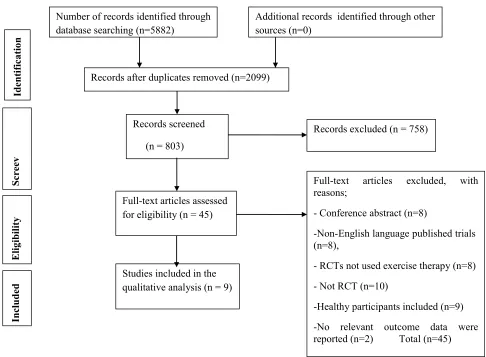
A search strategy of an electronic database found a total of 5882 articles. After adjusting for the duplicates, 2099 have
remained. After the title and abstract screening among 803 studies, 758 studies were excluded. After full text screen-ing out of 45 articles, 9 RCTs were included in this review (Figure 1).
Characteristics of the Included Studies
The detailed summary of the included trials is presented in
Table 2. All selected studies were RCTs published in English.
These studies have been published in Switzerland,21
Netherlands,36 Brazil,25 Japan,22 Italy,37 USA,38,39 and
Egypt40,41between 2010 and 2019.
Nine RCTs with a total of 370 participants were ana-lyzed. The mean age of participants in the experimental
groups ranged from 65.2 (12.8)38to 73 (10)37and from 59
(11)22 to 65.5 (13)36in the control groups. The minimum
duration of DM since diagnosed was 2.422 and the
max-imum 27.2 years.39 The primary outcomes were the
six-minute walk test, 10-meter walking test, and Tinetti scale walk. The sample size of the participants in the included
studies ranged from 27–71 individuals, in both the
experi-mental and control groups.21,37The duration of the
inter-vention ranged from 30–60 minutes for each
session,20,21,25,40 2–5 times per week,21,25,37 2 to 24
weeks for both experimental and control groups.22,36
Risk of Bias of Included Studies
The risk of bias and methodological quality of the
included studies are described in the Table 1.
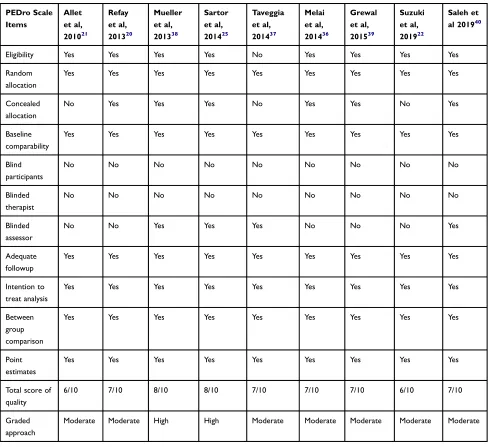
Randomization, baseline similarity, intention to treat ana-lysis, between group comparison and point measures were assessed in all of the included studies. However, not all studies have reported on concealment allocations, blinding of therapists and patients. Four of the included trials have
blinded the assessor.25,37,38,41 The PEDro score of the
included studies ranged from six to eight, with a mean score of seven that suggested the overall quality of studies. Based on the quality of the evidence and the strength of the recommendations, GRADE approach and PEDro score, the overall quality of the trails were ranged from
moderate to high. (Table 1)
Interventions
The studies compared the effectiveness of exercise therapy and comparison/control group: pharmacological treatment and/self-care instructions and/neither treatment, nor
speci-fic advices were reviewed.
Diabetes, Metabolic Syndrome and Obesity: Targets and Therapy downloaded from https://www.dovepress.com/ by 118.70.13.36 on 27-Aug-2020
Outcome Measures
Among the included trials four studies20,25,36,40 measured
gait function by using gait velocity and four studies20–22,40
used cadence. Two studies37,38used ROM, 10-meter
walk-ing test and Tinetti scale to measure physical function and walking endurance. Only one study measured the gait function by using time spent in sitting, standing and
walk-ing (Appendix).39
Effects of Exercise Therapy on the Gait
Function
Data extracted from the papers are summarized and
pre-sented in Table 2. Overall, all nine studies with 370
participants of DPN had investigated the effect of exercise therapy compared to control groups (no interventions/
pharmacological treatment/usual self-care on gait
function.20–22,25,36-40Out of the included studies, eight of
them (n=315) had confirmed that exercise therapy is
effec-tive on gait function for individuals suffering with DPN
compared to the control groups.20–22,36–40 But one study
(n=55) reported that a combination of stretching, strength-ening, and functional range of motion exercises (twice a
week over 12 weeks) had no significant improvement on
foot function in subjects with DPN.25
A total of seven studies (n=311) assessed gait function using gait assessment parameters (velocity (m/s), stride
Table 1Methodological Quality of Included RCTs
PEDro Scale Items
Allet et al, 201021
Refay et al, 201320
Mueller et al, 201338
Sartor et al, 201425
Taveggia et al, 201437
Melai et al, 201436
Grewal et al, 201539
Suzuki et al, 201922
Saleh et al 201940
Eligibility Yes Yes Yes Yes No Yes Yes Yes Yes
Random allocation
Yes Yes Yes Yes Yes Yes Yes Yes Yes
Concealed allocation
No Yes Yes Yes No Yes Yes No Yes
Baseline comparability
Yes Yes Yes Yes Yes Yes Yes Yes Yes
Blind participants
No No No No No No No No No
Blinded therapist
No No No No No No No No No
Blinded assessor
No No Yes Yes Yes No No No Yes
Adequate followup
Yes Yes Yes Yes Yes Yes Yes Yes Yes
Intention to treat analysis
Yes Yes Yes Yes Yes Yes Yes Yes Yes
Between group comparison
Yes Yes Yes Yes Yes Yes Yes Yes Yes
Point estimates
Yes Yes Yes Yes Yes Yes Yes Yes Yes
Total score of quality
6/10 7/10 8/10 8/10 7/10 7/10 7/10 6/10 7/10
Graded approach
Moderate Moderate High High Moderate Moderate Moderate Moderate Moderate
Diabetes, Metabolic Syndrome and Obesity: Targets and Therapy downloaded from https://www.dovepress.com/ by 118.70.13.36 on 27-Aug-2020
length, step length, cadence (steps/min), step time (s), time-to-peak pressure (PP) and double support time
(s),20–22,25,36,39,40 and other two studies measured using
the six-minute walk test, 10-meter walking test and
theTinetti scale walk.37,38
Discussion
This systematic review evaluated the current evidence on the effectiveness of exercise therapy on gait function in
patients with DPN. To the extent of the authors’
knowl-edge, a systematic review of RCTs about exercise therapy in patients with DPN has not been performed yet. Therefore, the purpose of this review was to synthesize the effectiveness of exercise therapy on gait function in
patients with DPN. The findings of this review
demon-strated that exercise therapy had a beneficial effect in
patients with DPN compared to the control groups. Out
of nine studies, eight RCTs confirmed the effectiveness of
exercise therapy on gait function in patients with diabetic
neuropathy with a high methodological quality. The amount of exercise (dose) needed to achieve the desired improvements in gait function has not been determined and may vary from one patient to the next. In the reviewed studies, the time that participants engaged in exercise therapy ranged from 30 minutes to one hour at a time,
twice tofive times a week, and four weeks to 24 months
duration. Due to the heterogeneity of the interventions, the gait functions of the participants were assessed using dif-ferent outcome measures. All included studies investigated the posttreatment effect of exercise therapy on gait
func-tions. For instance, the Refay et al,20study indicated that
combinations of range of motion (ROM) exercises of lower extremity, muscle strengthening exercise for toes
flexor/extensor and foot intrinsic muscle, balance training
and gait training exercises improved walking speed,
cadence and ankle range of motion with significant
decrease of step time, while for the control group, no
significant difference were noted. This might be due to
Number of records identified through database searching (n=5882)
Additional records identified through other sources (n=0)
Records after duplicates removed (n=2099)
Records screened
(n = 803)
Full-text articles assessed for eligibility (n = 45)
Studies included in the qualitative analysis (n = 9)
Records excluded (n = 758)
Full-text articles excluded, with reasons;
- Conference abstract (n=8)
-Non-English language published trials (n=8),
- RCTs not used exercise therapy (n=8)
- Not RCT (n=10)
-Healthy participants included (n=9)
-No relevant outcome data were reported (n=2) Total (n=45)
In
clu
d
ed
E
li
g
ibil
ity
S
creev
Identification
Figure 1Preferred Reporting Items for Systematic Reviews and Meta-analyses (PRISMA) diagram.
Diabetes, Metabolic Syndrome and Obesity: Targets and Therapy downloaded from https://www.dovepress.com/ by 118.70.13.36 on 27-Aug-2020
T able 2 Summar y of the Included Studies in this Rev ie w
Author/ Years Characteristics of the P articipants Outcome Measur es Inter ven tions (F requency , T ype and P eriod of F ollo w-up) Results Conclusions Allet et al, 2010 21 Sample size: EG, n=35, CG, n=36 Mean age/y ears (SD): EG; n=63 (8), CG=64 (8.9) Sex (male %): not stated Speed (ms − 1 )
Cadence (stride min
− 1 ) Gait cycle time (s) Stride length (m) EG= cir cuit training, including gait and balance ex er cises, twice a w eek for 60 min, ov er 12 w eeks CG= re ceiv ed neither tre atment, nor speci fi c advice. After inter vention the IG incr eased their habitual walking speed by 0.149 ms 1 (0.54 km/h − 1 )o n tarr ed terrain and by 0.17 ms − 1 (0.61 km/h − 1 )o n the cobblestones. This signi fi cant tr eatment effect ( P <0.004) decr eased slightly in the six-month follow-up , but re mained signi fi cant ( P <0.004). In a similar manner signi fi cant impr ov ement could be obser ved for cadence, GCT and stance time on both terrains. All, except stance time on the tarr ed terrain, remained signi fi cant at the six-month follow-up . Stride length show ed a P -value <0.05, but failed to be signi fi cant at the corr ected signi fi cance le vel of P <0.004. No signi fi cant effect was obser ved for coef fi cient of variation of gait cycle time on either surface Gait, cir cuit, and balance training ex er cise combined with function-oriented str engthening can impr ov e diabetic patients ’ gait Refa y et al, 2013 20 Sample size: EG, n=15, CG, n=15 Mean age/y ears (SD): EG56.7 (0.3), CG=57.7 (4.2), =60; CG=46. V
elocity (m/s) Cadence (steps/min) Step
time
(s) Double support time
(s) Ankle R OM (º) EG=ex er cise inter vention included: R OM ex er cises, muscles str engthening ex er cises, balance training and gait training thr ee times a w eek, 45 – 60 min per session for eight w eeks. CG=the usual recommended medical car e, which included pharmacological tr eatment and self-car e instructions, thr ee times a w eek, 45 – 60 min per session for eight w eeks. In the EG, walking velocity , cadence was incr eased signi fi cantly ( P =0.01, and 0.001 respectiv ely) with per centage of change w er e 22.54% of ve locity and 8% for cadence. step time was signi fi cantly decr eased ( P =0.03) with per centage of change was ( – 26.7%). In the CG, ther e was no signi fi cant change in an y of the measur ed variables ( P =0.2, 0.8, 0.1, and 0.8 re spective ly). R OM, muscle str engthening, gait and balance ex er cises can impr ov e gait of diabetic patients with peripheral neur opath y.
Diabetes, Metabolic Syndrome and Obesity: Targets and Therapy downloaded from https://www.dovepress.com/ by 118.70.13.36 on 27-Aug-2020
Mueller et al, 2013 38 Sample size: EG, n=15, CG, n=14 Mean age/y ears (SD): EG=65.2 (12.8), CG=63.9 (12.5) Sex (male %): EG=66.6; CG=50 6MWD (m) A verage daily step count (steps) EG=r eceiv ed body-w eight for re sistance ex er cises (ie, sit to stand, stair climbing), and a tr eadmill or walking ar ound a large cir cular hallwa y for aer obic ex er cise, one-hour per sessions thr ee times/we ek for 12 w eeks. CG=r eceiv ed all ex er cises in a sitting or lying position. The y used elastic resistance bands with incr easing stiffness for load re sistance and a stationar y upright or recumbent cycle ergometer for aer obic ex er cise. The WB gr oup show ed gr eater gains than the NWB gr oup ov er time on the 6MWD and ave rage daily step count ( P <0.05). The mean and 95%CIs betw een-gr oup differ ence ov er time was 29 m (95%CI, 6 – 51) for the 6MWD and 1178 (95%CI, 150 – 2205) steps for the av erage daily step count. The NWB gr oup show ed gr eater impr ov ements than the WB gr oup ov er time in hemoglobin A1c values ( P <0.05). The re sults of this study indicate to incr ease 6MWD and daily step count with a WB ex er cise pr ogram compared with an NWB ex er cise pr ogram. Melai et al, 2014 36 Sample size: EG, n=23, CG, n=30 Mean age/y ears (SD): EG=68.2 (12.9); CG=65.5 (13) Sex (male %): EG=83, CG=78 Gait velocity (m/
s) Stride length Stride
time EG= receive d a warm-up with simple ex er cises during gait, follow ed by low er extr emity muscle str ength training thr ee sets of 10 repetitions w er e performed for 24 w eeks. CG=r eceiv ed no inter ve ntion Experimental gr oups had a signi fi cant incr ease in stance phase duration, stride time and stride length of appr o ximately 5%, during the imposed gait velocity . In both gr oups incr eased their pr eferr ed gait velocity ov er one ye ar was obser ved. Str ength ex er cise show ed changes in gait ve locities and the pr ogr essive low er extr emity pr oblems in patients with polyneur opath y. T av eggia et al, 2014 37 Sample size: EG, n=13, CG; n=14 Mean age/y ears (SD): EG=73 (10) CG=71 (7) Sex (male %): EG=38.5, CG=35.7 Six-minute walk test,
10-meter walking test, Tinetti scale
walk EG=r eceiv ed a multimodal tre atment consisting of 20 min of analyzing tr eadmill with feedback focused on symmetr y and length of stride, 20 min of isokinetic dynamometric muscle str engthening 20 min of balance retraining on the dynamic balance platform, fi ve da ys per w eek, for four w eeks. CG=r eceiv ed activities targeted to impr ov e the endurance, manual ex er cises of low er limb muscle str engthening and str etching ex er cises, fi ve da ys per w eek, for four w eeks. The experimental gr oup show ed a signi fi cant incr ease in gait endurance in a six-minute walk test, 65.6 m; P =0.001). Six-minute walk test incr eased after the inter vention, and an e ve n gr eater differ ence was found at follow-up ( P =0.005) for the standard care gr oup . The Functional Independence Measur e in both gr oups incr eased ( P =0.01) and continued until the follow-up in the standar d car e gr oup ( P =0.003). The re sults suggest that the experimental re habilitation pr ogram show ed positiv e effects on the gait endurance after four w eeks of tre atment, wher eas it did not pr oduce signi fi cant impr ov ements of the gait speed. ( Continued )
Diabetes, Metabolic Syndrome and Obesity: Targets and Therapy downloaded from https://www.dovepress.com/ by 118.70.13.36 on 27-Aug-2020
T
able
2
(Continued).
Author/ Years Characteristics of the P articipants Outcome Measur es Inter ven tions (F requency , T ype and P eriod of F ollo w-up) Results Conclusions Sartor et al, 2014 25 Sample size: EG, n=26; CG,; n=29 Mean age/y ears (SD): EG=59 (4), CG=60 (12) Sex (male %): EG=58, CG=48
Time-to- peak pressur
e
(PP) Velocity (m/s) Total pressur
e
–
time integral (PTI) Functional tests
EG=started with passiv e ex er cises, pr ogre ssed to active ones, and fi nished with walking and functional skills, 40 – 60 min per session, twice a w eek, for 12 w eeks. CG=r eceiv e customized medical care and foot car e instructions, 40 – 60 min per session, twice a w eek, for 12 w eeks Stride velocity was not statistically differ ent betw een gr oups and assessments (gr oup effect: P =0.57; time effect: P =0.13; interaction effect: P =0.61). After 12 w eeks, ther e w er e incr eases in PTI in all foot regions, signi fi cant in the medial for efoot and hallux. The heel and toe ar eas displa yed a medium effect size, and also show ed incr eased PTI values after 12 w eeks. An ov erall incr easing tendency in PP was found in all foot regions after 12 w eeks, but the incr ease was statistically signi fi cant only ove r the hallux. The combination of str etching, str engthening and functional foot and ankle ex er cises pr ovided modest changes in foot rollov er . Pre ssure re distribution occurred in foot ar eas that ar e known to exhibit re duced participation in patients with DPN. Gr e wal et al, 2015 39 Sample size: EG, n=16, CG; n=19 Mean age/y ears (SD): EG=62.6 (7.9), CG=64.9 (8.5) Sex (male %): EG=50, CG=42.1 Time spent sitting, time
spent standing, time
spent walking Total steps EG=r eceiv ed sensor -based interactiv e ex er cise training 45 min per session twice a w eek for four w eeks. -CG=did not participate in any form of ex er cise Compar ed with the CG, the patients in the IG show ed a signi fi cantly reduced CoM swa y (58.31%; P =0.009), ankle swa y (62.7%; P =0.008) and hip joint swa y (72.4%; P =0.017) during the balance test with open e yes. The ankle swa y was also signi fi cantly reduced in the IG gr oup (58.8%; P =0.037) during measur ements while the e ye s w er e closed. The number of steps walk ed show ed a substantial, but nonsigni fi cant incr ease (+27.68%; P =0.064) in the IG following training. P eople with DPN can signi fi cantly impr ov e their postural balance with diabetes-speci fi c, tailor ed, sensor -based ex er cise training. The results pr omote the use of w earable technology in ex er cise training. Suzuki et al, 2019 22 Sample size: EG,; n=20, CG,; n=20 Mean age/y ears (SD): EG=59 (6), CG=59 (11) Sex (male %): EG=50, CG=65 Gait speed (m/s) Step length
(m) Cadence (step/min)
EG=r eceiv ed a set of ex er cises aimed to muscle str ength, balance , and ph ysical endurance, as w ell as speci fi c gait training, tw o w eeks, (40 min/da y) CG=did the same amount of walking as the RAS gr oup , albeit without the metr onome tw o w eeks, (40 min/da y). RAS was associated with signi fi cant impr ov ement in all parameters. In the contr ol gr oup , ther e was no impr ove ment in cadence, co-contraction, or gait stability (v ertical) . Compar ed with the contr ol gr oup , the RAS gr oup show ed impr ove ment in co-contraction and gait stability . RAS ma y be helpful for impr oving the low er limb muscle coor dination and gait function of DPN patients.
Diabetes, Metabolic Syndrome and Obesity: Targets and Therapy downloaded from https://www.dovepress.com/ by 118.70.13.36 on 27-Aug-2020
exercise training, be able to improve macro and
micro-vascular factors in diabetes.42,43Therefore, vascular
adap-tations caused by exercise may facilitate blood flow to
peripheral nerves, moreover, it could improve gait
func-tion. Similarly, the study by Allet et al,21showed that gait
and balance exercises with function-oriented
strengthen-ing, improved diabetic patients’ gait functions compared
with a control group of no treatment. Cadence contributed 80%, whereas stride length only contributed 20% to the change of gait velocity. This result was also supported by a
study by Saleh et al.40This may be due to the treatment or
to diabetic patients’potential to regulate their cadence and
stride length. Stride length also tended to increase after the
intervention, but was not significant at the corrected
sig-nificance level. Whereas the study by Melai et al,36stated
that stride length increases by 5% approximately in the
exercise therapy group. It is supported by Gholami et al,44
which found 7% improvement in HbA1c content follow-ing 12-week exercise trainfollow-ing. Hence, it may be attributed to improved glucose control as a result of exercise
inter-vention which could benefit gait function of subjects with
DPN.45
Despite this, the study done by Sartor et al,25 on the
effects combination of strengthening, stretching and func-tional training on foot function in patients with diabetic neuropathy in intervention group primary outcome peak pressure (PP) reported that there was no statistically signif-icant change under the six foot areas. The intention-to-treat comparisons yielded softening of heel strike (delayed heel time-to-peak pressure (TPP), better eccentric control of forefoot contact (decrease in ankle extensor moment,
increase in function of ankle dorsiflexion), earlier lateral
forefoot contact with respect to medial forefoot (TPP antici-pation), and increased participation of hallux (increased PP)
and pressure–time integral (PTI), and toes (increase in PTI,
medium effect size). A slower COP mean velocity, and an increase in overall foot and ankle function were also observed, which may result from changes in the pressure variables in the foot.
Taveggia et al,37indicated that a combination of
tread-mill gait training, muscle strengthening and balance retraining showed a substantially greater improvement in gait endurance after four weeks compared to standard care.
However, there was no significant improvement in gait
speed.
Mueller et al38 indicated that the weight-bearing
exer-cise showed greater gait function improvement compared to the non-weight-bearing exercise group over time
Saleh et
al,
2019
40
Sample
size:
EG,;
n=15,
CG,;
n=15
Mean
age/y
ears
(SD):
EG=57.6
(4.9),
CG=59.1
(4.2) Sex
(male
%):
EG=46.6,
CG=40
Step
length
(cm) Step
time
(sec) Double support time
(sec)
V
elocity (cm/sec) Cadence (step/min)
EG=r
eceiv
ed
the
following
ex
er
cises,
activ
e
range
of
motion
ex
er
cises
for
ankle
and
subtalar
joints,
functional
balance
training,
gait
training,
30
min
per
session
thr
ee
times
a
w
eek
for
eight8
w
eeks.
CG=r
eceiv
ed
traditional
ph
ysical
therap
y
ex
er
cises
only
30
min
per
session
thr
ee
times
a
w
eek
for
eight
w
eeks.
Ther
e
was
no
signi
fi
cant
differe
nce
betw
een
both
gr
oups
in
the
pr
etr
eatment
mean
values
of
all
measur
ed
variables.
Signi
fi
cant
impr
ove
ment
was
obser
ve
d
in
the
tw
o
gr
oups
betw
een
pr
e-and
posttr
eatment
measur
ed
outcomes.
Furthermore,
the
study
gr
oup
recor
ded
signi
fi
cantly
better
impr
ove
ment
in
all
measur
ed
variables
compar
ed
with
the
contr
ol
gr
oup
with
diabetic
neur
opath
y
Ankle
pr
oprioceptive
training
could
be
an
excellent
supplement
to
traditional
ph
ysical
therap
y
ex
er
cises
used
for
impr
oving
gait
and
re
ducing
risk
of
falling
in
patients.
Abbre
viations:
EG,
experimental
gr
oups;
CG,
contr
ol
gr
oups;
IG,
inter
ventional
gr
oups;
WB,
w
eight
bearing;
NWB,
non-w
eight-bearing;
6MWD
,
6-minute
walk
distanc
e;
CoM,
center
of
mass;
GCT
,
gait
cycle
time;
RAS,
rh
ythmic
auditor
y
stimulations;
PTI,
pres
sur
e
time
integral;
R
OM,
range
of
motion;
DNP
,
diabetic
peripheral
neur
opath
y.
Diabetes, Metabolic Syndrome and Obesity: Targets and Therapy downloaded from https://www.dovepress.com/ by 118.70.13.36 on 27-Aug-2020
(significant interactions) in the primary outcomes of the six-minute walk distance (6MWD) and average daily step count. The mean between-group difference over time was
29 m (95%CI, 6–51) for the 6MWD and 1178 steps (95%
CI) for the average daily step count. However, non-weight-bearing exercises showed greater improvements
than the weight-bearing group over time (significant
inter-action) in hemoglobin A1C values. Nevertheless Grewal
et al39 stated that the number of steps walked showed a
substantial, but nonsignificant increase (27.68%) in the
intervention group following weight-bearing exercise training.
A study done by Suzuki et al,22 showed that gait
training exercises supported by rhythmic auditory stimula-tion over the two weeks of treatment improved gait para-meters (ie, gait speed, step length, cadence) of DPN patients.
Taken together, most of the included studies
high-lighted that exercise therapy had significant improvement
on gait function among subjects with DPN compared to the control groups.
Limitations of the Study
This review had the following limitations: this review
included only English language published articles.
Hence, there might be a chance of missing articles pub-lished in non-English languages. Due to the heterogeneity across the included studies, meta-analysis was not car-ried out.
Clinical Implication
This review indicates that, exercise therapy improved in gait parameters and physical function of patients with DPN. This systematic review suggests including exercise therapy in the rehabilitation programs, since it is feasible
and beneficial for patients with DPN.
Conclusion
Exercise therapy is found to improve gait function of
patients with DPN. Specific exercise training programs,
including range of motion, muscle strengthening, circuit training, stretching exercise, gait, and balance exercises can improve gait of diabetic patients with peripheral neu-ropathy. Clinical decision-making should take into account
the type and intensity of exercise and patient’s tolerability
related to each exercise.
Ethical Approval
Ethical approval or patient consent was not required, since the present study was a review of previously published literature.
Author Contributions
All authors’have contributed to the work reported, in the
conception, study design, execution, acquisition of data, analysis and interpretation, drafted or written, or substan-tially revised or critically reviewed the article, agreed on the journal to which the article was submitted, reviewed and agreed on all versions of the article before submission,
during revision. Finally, in any significant changes
intro-duced at the proofing stage, the authors agree to take
responsibility and be accountable for the contents of the article.
Funding
There was no provided financial support to conduct this
review.
Disclosure
The authors report no conflicts of interest in this work.
References
1. Callaghan BC, Cheng HT, Stables CL, et al. Diabetic neuropathy: clinical manifestations and current treatments. Lancet Neurol. 2012;11(6):521–534. doi:10.1016/S1474-4422(12)70065-0
2. Said G. Diabetic neuropathy—a review. Nat Clin Pract Neurol. 2007;3(6):331–340. doi:10.1038/ncpneuro0504
3. Vinik AI, Nevoret M-L, Casellini C, et al. Diabetic neuropathy. Endocrinol Metab Clin. 2013;42(4):747–787. doi:10.1016/j. ecl.2013.06.001
4. Harris M, Eastman R, Cowie C. Symptoms of sensory neuropathy in adults with NIDDM in the US population.Diabetes Care.1993;16 (11):1446–1452. doi:10.2337/diacare.16.11.1446
5. Van Hecke O, Austin SK, Khan RA, et al. Neuropathic pain in the general population: a systematic review of epidemiological studies. PAIN®.2014;155(4):654–662. doi:10.1016/j.pain.2013.11.013 6. Boulton AJ, Malik RA, Arezzo JC, et al. Diabetic somatic
neuropa-thies. Diabetes Care. 2004;27(6):1458–1486. doi:10.2337/ diacare.27.6.1458
7. Nozabieli AJL, Martinelli AR, de Camargo MR, et al. Diabetic peripheral neuropathy in ankles and feet: muscle strength and plantar pressure.Int J Diabetes Dev Ctries.2014;34(2):82–88.
8. Shenoy AM. Guidelines in practice: treatment of painful diabetic neuropathy.Continuum.2012;18(1):192–198.
9. Varraine E, Bonnard M, Pailhous J. Interaction between different sensory cues in the control of human gait.Exp Brain Res.2002;142 (3):374–384. doi:10.1007/s00221-001-0934-3
10. Fernando M, Crowther R, Lazzarini P, et al. Biomechanical charac-teristics of peripheral diabetic neuropathy: a systematic review and meta-analysis offindings from the gait cycle, muscle activity and dynamic barefoot plantar pressure.Clin Biomech.2013;28(8):831– 845. doi:10.1016/j.clinbiomech.2013.08.004
Diabetes, Metabolic Syndrome and Obesity: Targets and Therapy downloaded from https://www.dovepress.com/ by 118.70.13.36 on 27-Aug-2020
11. Andersen H. Motor dysfunction in diabetes.Diabetes Metab Res Rev. 2012;28:89–92. doi:10.1002/dmrr.2257
12. Gomes AA, Onodera AN, Otuzi MEI, et al. Electromyography and kinematic changes of gait cycle at different cadences in diabetic neuropathic individuals. Muscle Nerve. 2011;44(2):258–268. doi:10.1002/mus.22051
13. Foss-Freitas MC, Marques WJ, Foss MC. Autonomic neuropathy: a high risk complication for type 1 diabetes mellitus. Arq Bras Endocrinol Metabol. 2008;52(2):398–406. doi:10.1590/S0004-27302008000200028
14. Mustapa A, Justine M, Mohd Mustafah N, et al. Postural control and gait performance in the diabetic peripheral neuropathy: a systematic review.Biomed Res Int.2016;2016:1–14. doi:10.1155/2016/9305025 15. Weintraub MI, Herrmann DN, Smith AG, et al. Pulsed electromag-neticfields to reduce diabetic neuropathic pain and stimulate neuro-nal repair: a randomized controlled trial.Arch Phys Med Rehabil. 2009;90(7):1102–1109. doi:10.1016/j.apmr.2009.01.019
16. Streckmann F, Zopf EM, Lehmann HC, et al. Exercise intervention studies in patients with peripheral neuropathy: a systematic review. Sports Med.2014;44(9):1289–1304. doi:10.1007/s40279-014-0207-5 17. Amato Nesbit S, Sharma R, Waldfogel JM, et al. Non-pharmacologic treatments for symptoms of diabetic peripheral neuropathy: a sys-tematic review.Curr Med Res Opin.2019;35(1):15–25. doi:10.1080/ 03007995.2018.1497958
18. Zhang Y-J, Liu F-R, Ri H-S, Choi E-J, Choi YM, Yoon J-U. Effectiveness of acupuncture for treatment of diabetic peripheral neuro-pathy.Medicine.2019;98(39). doi:10.1097/MD.0000000000017634 19. Waldfogel JM, Nesbit SA, Dy SM, et al. Pharmacotherapy for
dia-betic peripheral neuropathy pain and quality of life: a systematic review. Neurology. 2017;88(20):1958–1967. doi:10.1212/ WNL.0000000000003882
20. EL-REFAY BH, ALI OI. Efficacy of exercise rehabilitation program in improving gait of diabetic neuropathy patients. Assessment. 2014;2013.
21. Allet L, Armand S, Aminian K, et al. An exercise intervention to improve diabetic patients’ gait in a real-life environment. Gait Posture.2010;32(2):185–190. doi:10.1016/j.gaitpost.2010.04.013 22. Suzuki K, Niitsu M, Kamo T, et al. Effect of exercise with rhythmic
auditory stimulation on muscle coordination and gait stability in patients with diabetic peripheral neuropathy: a randomized controlled trial. Open J Ther Rehabil. 2019;7(03):79. doi:10.4236/ ojtr.2019.73005
23. Cadore EL, Rodríguez-Mañas L, Sinclair A, et al. Effects of different exercise interventions on risk of falls, gait ability, and balance in physically frail older adults: a systematic review.Rejuvenation Res. 2013;16(2):105–114. doi:10.1089/rej.2012.1397
24. Allet L, Armand S, de Bie RA, et al. The gait and balance of patients with diabetes can be improved: a randomised controlled trial. Diabetologia.2010;53(3):458–466. doi:10.1007/s00125-009-1592-4 25. Sartor CD, Hasue RH, Cacciari LP, et al. Effects of strengthening,
stretching and functional training on foot function in patients with diabetic neuropathy: results of a randomized controlled trial.BMC Musculoskelet Disord. 2014;15(1):137. doi:10.1186/1471-2474-15-137
26. Shamseer L, Moher D, Clarke M, et al. Preferred reporting items for systematic review and meta-analysis protocols (PRISMA-P) 2015: elaboration and explanation. BMJ. 2015;349(jan02 1):g7647. doi:10.1136/bmj.g7647
27. Lee K, Lee S, Song C. Whole-body vibration training improves balance, muscle strength and glycosylated hemoglobin in elderly patients with diabetic neuropathy. Tohoku J Exp Med. 2013;231 (4):305–314. doi:10.1620/tjem.231.305
28. Sacco IDCN, Amadio AC. Influence of the diabetic neuropathy on the behavior of electromyographic and sensorial responses in tread-mill gait. Clin Biomech. 2003;18(5):426–434. doi:10.1016/S0268-0033(03)00043-3
29. Salsabili H, Bahrpeyma F, Esteki A. The effects of Task-Oriented Motor Training on gait characteristics of patients with type 2 diabetes neuropathy.J Diabetes Metab Disord. 2015;15(1):14. doi:10.1186/ s40200-016-0236-8
30. Zange L. Effects of a combined strengthening, stretching, and func-tional training program versus usual care on gait biomechanics and foot function for diabetic neuropathy: a randomized controlled trial.J Am Chiropractic Assoc.2012;29–30.
31. Maher CG, Sherrington C, Herbert RD, et al. Reliability of the PEDro scale for rating quality of randomized controlled trials.Phys Ther.2003;83(8):713–721. doi:10.1093/ptj/83.8.713
32. de Morton NA. The PEDro scale is a valid measure of the methodo-logical quality of clinical trials: a demographic study. Aust J Physiother. 2009;55(2):129–133. doi:10.1016/S0004-9514(09) 70043-1
33. Yamato TP, Maher C, Koes B, et al. The PEDro scale had acceptably high convergent validity, construct validity, and interrater reliability in evaluating methodological quality of pharmaceutical trials.J Clin Epidemiol.2017;86:176–181. doi:10.1016/j.jclinepi.2017.03.002 34. Moseley AM, Elkins MR, Herbert RD, et al. Cochrane reviews used
more rigorous methods than non-Cochrane reviews: survey of sys-tematic reviews in physiotherapy. J Clin Epidemiol. 2009;62 (10):1021–1030. doi:10.1016/j.jclinepi.2008.09.018
35. Guyatt GH, Oxman AD, Kunz R, et al. GRADE guidelines: 7. Rating the quality of evidence—inconsistency.J Clin Epidemiol. 2011;64 (12):1294–1302. doi:10.1016/j.jclinepi.2011.03.017
36. Melai T, Schaper NC, IJzerman TH, et al. Strength training affects lower extremity gait kinematics, not kinetics, in people with diabetic polyneuropathy.J Appl Biomech.2014;30(2):221–230. doi:10.1123/ jab.2013-0186
37. Taveggia G, Villafañe JH, Vavassori F, et al. Multimodal treatment of distal sensorimotor polyneuropathy in diabetic patients: a randomized clinical trial. J Manipulative Physiol Ther. 2014;37(4):242–252. doi:10.1016/j.jmpt.2013.09.007
38. Mueller MJ, Tuttle LJ, LeMaster JW, et al. Weight-bearing versus nonweight-bearing exercise for persons with diabetes and peripheral neuropathy: a randomized controlled trial.Arch Phys Med Rehabil. 2013;94(5):829–838. doi:10.1016/j.apmr.2012.12.015
39. Grewal GS, Schwenk M, Lee-Eng J, et al. Sensor-based interactive balance training with visual joint movement feedback for improving postural stability in diabetics with peripheral neuropathy: a rando-mized controlled trial. Gerontology. 2015;61(6):567–574. doi:10.1159/000371846
40. Saleh MS, Rehab NI. Effect of ankle proprioceptive training on gait and risk of fall in patients with diabetic neuropathy: A randomized controlled trial.Int J Diabetes Res.2019;2(1):40–45.
41. Saleh MSM, Rehab NI, Aly SMA. Effect of aquatic versus land motor dual task training on balance and gait of patients with chronic stroke: A randomized controlled trial. NeuroRehabilitation. 2019;44:1–8.
42. El-Sayed MS, Ali N, Ali ZE-S. Haemorheology in exercise and training. Sports Med. 2005;35(8):649–670. doi:10.2165/00007256-200535080-00001
43. Higashi Y, Sasaki S, Kurisu S, et al. Regular aerobic exercise aug-ments endothelium-dependent vascular relaxation in normotensive as well as hypertensive subjects: role of endothelium-derived nitric oxide. Circulation. 1999;100(11):1194–1202. doi:10.1161/01. CIR.100.11.1194
44. Gholami F, Nikookheslat S, Salekzamani Y, et al. Effect of aerobic training on nerve conduction in men with type 2 diabetes and per-ipheral neuropathy: A randomized controlled trial.Neurophys Clin. 2018;48(4):195–202. doi:10.1016/j.neucli.2018.03.001
45. Boulé NG, Haddad E, Kenny GP, et al. Effects of exercise on glycemic control and body mass in type 2 diabetes mellitus: a meta-analysis of controlled clinical trials. JAMA. 2001;286 (10):1218–1227. doi:10.1001/jama.286.10.1218
Diabetes, Metabolic Syndrome and Obesity: Targets and Therapy downloaded from https://www.dovepress.com/ by 118.70.13.36 on 27-Aug-2020
Diabetes, Metabolic Syndrome and Obesity: Targets and Therapy
Dove
press
Publish your work in this journal
Diabetes, Metabolic Syndrome and Obesity: Targets and Therapy is an international, peer-reviewed open-access journal committed to the rapid publication of the latest laboratory and clinicalfindings in the
fields of diabetes, metabolic syndrome and obesity research. Original research, review, case reports, hypothesis formation, expert opinion
and commentaries are all considered for publication. The manu-script management system is completely online and includes a very quick and fair peer-review system, which is all easy to use. Visit http://www.dovepress.com/testimonials.php to read real quotes from published authors.
Submit your manuscript here:https://www.dovepress.com/diabetes-metabolic-syndrome-and-obesity-targets-and-therapy-journal
Diabetes, Metabolic Syndrome and Obesity: Targets and Therapy downloaded from https://www.dovepress.com/ by 118.70.13.36 on 27-Aug-2020