University of Pennsylvania
ScholarlyCommons
Publicly Accessible Penn Dissertations
2017
Data Privacy Beyond Differential Privacy
Zhiwei Steven Wu
University of Pennsylvania, [email protected]
Follow this and additional works at:
https://repository.upenn.edu/edissertations
Part of the
Computer Sciences Commons
This paper is posted at ScholarlyCommons.https://repository.upenn.edu/edissertations/2645 For more information, please [email protected].
Recommended Citation
Data Privacy Beyond Differential Privacy
Abstract
Computing technologies today have made it much easier to gather personal data, ranging from GPS locations to medical records, from online behavior to social exchanges. As algorithms are constantly analyzing such detailed personal information for a wide range of computations, data privacy emerges as a paramount concern. As a strong, meaningful and rigorous notion of privacy, Differential
Privacy has provided a powerful framework for designing data analysis algorithms with provable privacy guarantees. Over the past decade, there has been tremendous progress in the theory and algorithms for differential privacy, most of which consider the setting of centralized computation where a single, static database is subject to many data analyses. However, this standard framework does not capture many complex issues in modern computation. For example, the data might be distributed across self-interested agents, who may have incentive to misreport their data; and different individuals in the computation may have different expectations to privacy.
The goal of this dissertation is to bring the rich theory of differential privacy to several computational
problems in practice. We start by studying the problem of private counting query release for high-dimensional data, for which there are well-known computational hardness results. Despite the worst-case intractability barrier, we provide a solution with practical empirical performances by leveraging powerful optimization heuristics. Then we tackle problems within different social and economic settings, where the standard notion of differential privacy is not applicable. To that end, we use the perspective of differential privacy to design algorithms with meaningful privacy guarantees.
(1) We provide privacy-preserving algorithms for solving a family of economic optimization problems under a strong relaxation of the standard definition of differential privacy---joint differential privacy.
(2) We also show that (joint) differential privacy can serve as a novel tool for mechanism design when solving these optimization problems: Under our private mechanisms, the agents are incentivized to behave truthfully.
(3) Finally, we consider the problem of using social network metadata to guide a search for some class of targeted individuals (for whom we cannot provide any meaningful privacy guarantees). We give a new variant of differential privacy---protected differential privacy---that guarantees differential privacy only for a subgroup of protected individuals. Under this privacy notion, we provide a family of algorithms for searching targeted individuals in the network while ensuring the privacy for the protected (un-targeted) ones.
Degree Type
Dissertation
Degree Name
Doctor of Philosophy (PhD)
Graduate Group
First Advisor
Michael Kearns
Second Advisor
Aaron Roth
Subject Categories
DATA PRIVACY BEYOND DIFFERENTIAL PRIVACY
Zhiwei Steven Wu
A DISSERTATION
in
Computer and Information Science
Presented to the Faculties of the University of Pennsylvania in Partial Fulfillment of the Requirements for the Degree of Doctor of Philosophy
2017
Co-Supervisor of Dissertation
Michael Kearns, Professor and National Center Chair, University of Pennsylvania
Co-Supervisor of Dissertation
Aaron Roth, Associate Professor, University of Pennsylvania
Graduate Group Chairperson
Lyle Ungar, Professor, University of Pennsylvania
Dissertation Committee
Sampath Kannan, Henry Salvatori Professor, University of Pennsylvania
Alexander Rakhlin, Associate Professor, University of Pennsylvania
Tim Roughgarden, Professor, Stanford University
DATA PRIVACY BEYOND DIFFERENTIAL PRIVACY
© COPYRIGHT
2017
Zhiwei Steven Wu
This work is licensed under the
Creative Commons Attribution
NonCommercial-ShareAlike 3.0
License
To view a copy of this license, visit
ACKNOWLEDGEMENT
First and foremost, I must begin by thanking my advisors Michael Kearns and Aaron Roth.
Without their guidance and support, the work contained in this dissertation wouldn’t have
been possible and my journey through graduate school wouldn’t have been such an
enjoy-able ride. Michael and Aaron are thedream team of advisors that I could ever wish for.
Their knowledge, genius, and eloquence have been my perpetual source of inspiration.
Their keen intuition for important problems and elegant solutions have helped me shape
my own research style. Their constant challenge and encouragement have given me the
confidence to be an independent researcher. I will always be proud to be one of the first
students co-advised by Michael and Aaron.
I am also deeply grateful to have many other mentors during graduate school. Thanks to
Nicole Immorlica, Bobby Kleinberg, Brendan Lucier, Yishay Mansour, Alex Slivkins, and
Vasilis Syrgkanis, I had the opportunity to explore other topics outside of my dissertation
research during my internships at Microsoft Research. I especially want to thank Alex for
his timely advices on different aspects of my career. I also want to thank Jonathan Ullman
for teaching me the importance of clarity in thinking, writing, and speaking.
Other than my mentors, I am also indebted to my numerous terrific collaborators, some of
whom have also become my closest friends: Rachel Cummings, Marco Gaboradi, Emilio
Jes ´us Gallego Arias, Paul Goldberg, Justin Hsu, Zhiyi Huang, Shahin Jabarri, Sampath
Kannan, Katrina Ligett, Francisco Javier Marmolejo Coss´ıo, Jamie Morgenstern, Seth Neel,
Kobbi Nissim, Mallesh Pai, Jaikumar Radhakrishnan, Ryan Rogers, Tim Roughgarden,
Sam Taggart, Rakesh Vohra, Bo Waggoner, Grigory Yaroslavtsev, and Juba Ziani.
Many thanks to my parents– Wang Wu and Xiaozhen Qin – for all of their unconditional
love and support. Finally, to my dearest girlfriend Veronica for her enormous support
throughout graduate school. She is clearly my most important finding in this wonderful
ABSTRACT
DATA PRIVACY BEYOND DIFFERENTIAL PRIVACY
Zhiwei Steven Wu
Michael Kearns and Aaron Roth
Computing technologies today have made it much easier to gather personal data,
rang-ing from GPS locations to medical records, from online behavior to social exchanges. As
algorithms are constantly analyzing such detailed personal information for a wide range
of computations, data privacy emerges as a paramount concern. As a strong, meaningful
and rigourous notion of privacy,Differential Privacyhas provided a powerful framework
for designing data analysis algorithms with provable privacy guarantees. Over the past
decade, there has been tremendous progress in the theory and algorithms for differential
privacy, most of which consider the setting of centralized computation where a single,
static database is subject to many data analyses. However, this standard framework does
not capture many complex issues in modern computation. For example, the data might be
distributed across self-interested agents, who may have incentive to misreport their data;
and different individuals in the computation may have different expectations to privacy.
The goal of this dissertation is to bring the rich theory of differential privacy to several
computational problems in practice. We start by studying the problem of private counting
query release for high-dimensional data, for which there are well-known computational
hardness results. Despite the worst-case intractability barrier, we provide a solution with
practical empirical performances by leveraging powerful optimization heuristics. Then we
tackle problems within different social and economic settings, where the standard notion
of differential privacy is not applicable. To that end, we use the perspective of differential
privacy to design algorithms with meaningful privacy guarantees.
opti-mization problems under a strong relaxation of the standard definition of differential
privacy—joint differential privacy.
• We also show that (joint) differential privacy can serve as a novel tool for mechanism
design when solving these optimization problems: Under our private mechanisms,
the agents are incentivized to behave truthfully.
• Finally, we consider the problem of using social network metadata to guide a search
for some class of targeted individuals (for whom we cannot provide any meaningful
privacy guarantees). We give a new variant of differential privacy—protected diff
er-ential privacy—that guarantees differential privacy only for a subgroup of protected
individuals. Under this privacy notion, we provide a family of algorithms for
search-ing targeted individuals in the network while ensursearch-ing the privacy for the protected
TABLE OF CONTENTS
ACKNOWLEDGEMENT . . . iv
ABSTRACT . . . v
LIST OF TABLES . . . x
LIST OF ILLUSTRATIONS . . . xi
LIST OF ALGORITHMS . . . xii
CHAPTER 1 : Introduction . . . 1
1.1 Differential Privacy . . . 3
1.2 Beyond Differential Privacy . . . 5
1.3 Outline of Results . . . 8
CHAPTER 2 : Background . . . 10
2.1 The Definition of Differential Privacy . . . 10
2.2 Properties of Differential Privacy . . . 12
2.3 Basic Tools . . . 15
CHAPTER 3 : Private Counting Query Release . . . 18
3.1 Introduction . . . 18
3.2 Related Work. . . 20
3.3 The Query Release Game . . . 21
3.4 Dual Query Release . . . 25
3.5 Case study: 3-way marginals . . . 30
3.6 Case study: Parity queries . . . 32
3.8 Discussion and Conclusion . . . 38
CHAPTER 4 : Jointly Private Matchings and Allocations . . . 40
4.1 Introduction . . . 40
4.2 Preliminaries . . . 46
4.3 Private Max-Weight Matching . . . 49
4.4 Extension to Gross Substitute Valuations . . . 66
4.5 Lower Bounds . . . 74
4.6 Privacy Analysis for Counters . . . 83
CHAPTER 5 : Jointly Private Convex Programming . . . 88
5.1 Introduction . . . 88
5.2 Preliminaries . . . 92
5.3 Private Dual Decomposition . . . 98
5.4 Examples . . . 113
5.5 Achieving Exact Feasibility . . . 119
CHAPTER 6 : Privacy as a Tool for Mechanism Design . . . 128
6.1 Introduction . . . 128
6.2 Achieving Approximate Truthfulness . . . 129
6.3 Adding Exact Feasibility . . . 137
CHAPTER 7 : Privacy for the Protected (Only) . . . 145
7.1 Introduction . . . 145
7.2 Preliminaries . . . 150
7.3 Algorithmic Framework . . . 156
7.4 Privacy Analysis: Proof of Theorem 7.3.3 . . . 163
7.5 Experimental Evaluation . . . 165
7.6 Conclusion . . . 169
LIST OF TABLES
TABLE 1 : Test Datasets forDualQuery . . . 34
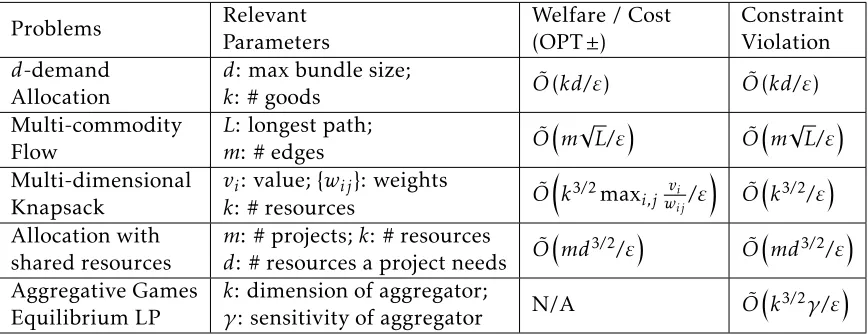
TABLE 2 : Instantiations ofPrivDudeto different optimization problems.. . . . 114
LIST OF FIGURES
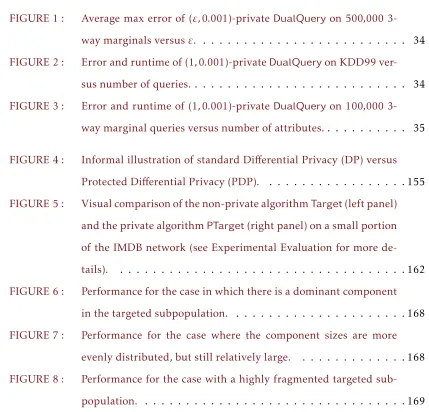
FIGURE 1 : Average max error of (ε,0.001)-private DualQueryon 500,000
3-way marginals versusε. . . 34
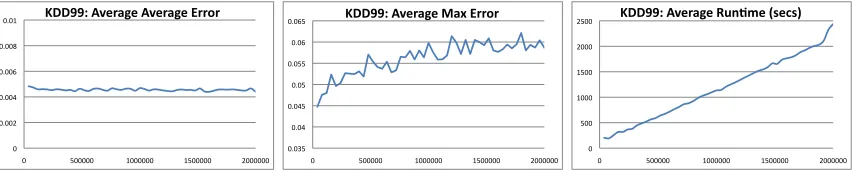
FIGURE 2 : Error and runtime of (1,0.001)-privateDualQueryon KDD99
ver-sus number of queries. . . 34
FIGURE 3 : Error and runtime of (1,0.001)-private DualQueryon 100,000
3-way marginal queries versus number of attributes.. . . 35
FIGURE 4 : Informal illustration of standard Differential Privacy (DP) versus
Protected Differential Privacy (PDP). . . 155
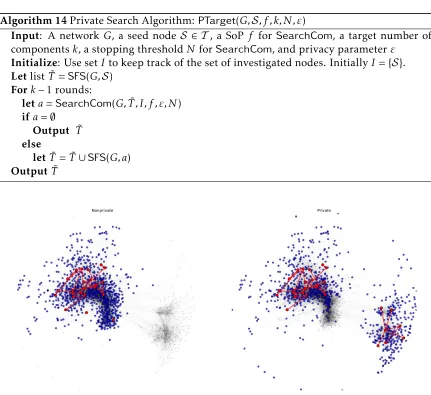
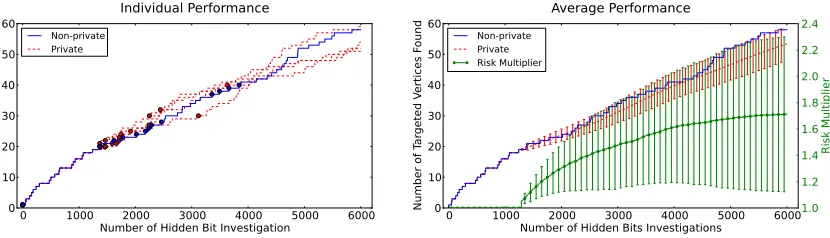
FIGURE 5 : Visual comparison of the non-private algorithmTarget(left panel)
and the private algorithmPTarget(right panel) on a small portion
of the IMDB network (see Experimental Evaluation for more
de-tails). . . 162
FIGURE 6 : Performance for the case in which there is a dominant component
in the targeted subpopulation. . . 168
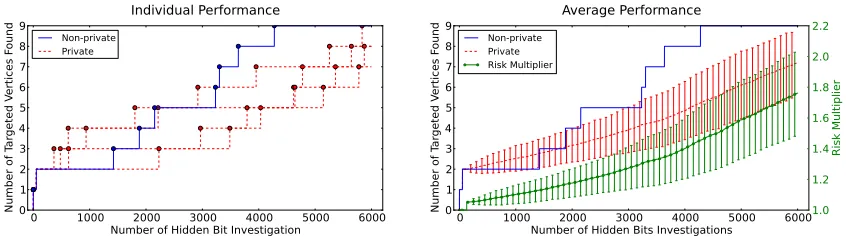
FIGURE 7 : Performance for the case where the component sizes are more
evenly distributed, but still relatively large. . . 168
FIGURE 8 : Performance for the case with a highly fragmented targeted
List of Algorithms
1 Sparse vector mechanismSparse(ε, T) . . . 16
2 The Multiplicative Weights Algorithm . . . 24
3 DualQuery . . . 26
4 PMatch(α, ρ, ε) . . . 52
5 Modified Halting ConditionCountBids . . . 62
6 PAlloc(α, ρ, ε) (with Gross Substitute Valuations). . . 68
7 Counter(ε, T) . . . 84
8 Joint Differentially Private Convex Solver: PrivDude(O, σ , τ, w, ε, δ, β) . . . 103
9 RoundDude(O, σ , τ, w, ε, δ, β) . . . 121
10 TrueDude(O, σ , τ, w, ε, δ, β) . . . 132
11 TightDude(O, σ , τ, w, ε, δ, β) . . . 144
12 SFS(G, t) Statistic-First Search . . . 159
13 SearchCom(G,T , I, f , ε, K˜ ) Search for a New Component . . . 161
14 Private Search Algorithm:PTarget(G,S, f , k, N , ε) . . . 162
15 infect(G, s, p, q, k) . . . 171
CHAPTER 1
Introduction
People are producing more information than ever. Algorithms today have access to an
su-perabundance of fine-grained personal data, including everything from medical records to
GPS locations, from online behaviors to social exchanges. By analyzing such a wide range
of information, powerful algorithms have been making tremendous impact on many
do-mains as diverse as academic research, policy making and electronic commerce. However,
in reality many of the most informative data sets happen to contain the most sensitive
personal information. As a result, the tension between theprivacyof the individuals and
theusefulnessof the analysis on their data is inevitable: on the one hand, revealing the
in-dividuals’ private information (directly or indirectly) raises moral and legal concerns; but
on the other hand, analyzing data in aggregate can provide insights that largely benefit
the society.
This thesis studies on the problem of privacy-preserving data analysis that focuses on the
following question: How can we perform useful analysis on sensitive data while preserving
the privacy of the individuals? A key step in tackling this problem is to first understand
what it means to protect the individuals’ privacy in a computation. One tempting privacy
measure is the so-called “data anoymization” or “de-identification,” where the basic idea is
to “de-identify” the dataset by removing personally identifiable information (for example,
name, gender, and age), and then publish the “anonymous” dataset. Ironically, these
de-identification mechanisms are not resilient to the so-called “re-de-identification attacks.” One
notable example is the attack on Netflix challenge dataset. During the Netflix challenge
machine learning contest, the company released its users’ movie rating dataset with all
of the user names removed, so researchers could study the datasets in order to design
itself was a huge success, the allegedly anonymous data sets was far from private. By
cross-linking the Internet Movie Database (IMDb), two researchers were able to to de-anonymize
most of the users in the dataset [Narayanan and Shmatikov,2008]. As a result, Netflix was
faced with a costly lawsuit and had to cancel all subsequent contests. Other examples of
re-identification attacks abound, including the one on the AOL search logs [Barbaro and
Zeller, 2006] (see Ohm[2009] for a survey on the failure of anonymization). As Cynthia
Dwork put it, “de-identified data isn’t,” and de-identification is simply not a solution for
privacy-preserving data analysis.
Privacy risk arises even when we never publish the data. For example, it may seem
in-nocuous to release aggregate statistics (that are not specific to any individual), but all of
the statistics in combination can reveal a great deal about a single individual in the dataset.
A striking example is the application of a statistical method, originally developed to
deter-mine whether an individual is contributing trace amounts of genomic DNA to a complex
forensic mixture, to data from Genomic Wide Association Study (GWA) genetic studies. In
particular, the genetic studies contain the allele frequencies of certain case groups for large
numbers of single nucleotide polymorphisms (SNPs), which are essentially a large
collec-tion of summary statistics that are not about any single individual. Researchers
demon-strate that given the genomic data of any single individual they can accurately determine
whether the individual participated in the study or not, and can therefore further infer
whether the individual has disease associated with the study [Homer et al.,2008]. As a
result, the GWA genomic dataset was removed from the public domain. In general, such
privacy risk persists whenever too many summary statistics that are overly accurate are
released (seeDwork et al.[2017] for a survey of privacy attacks on aggregate data).
Privacy attacks have taught us a valuable lesson: Protecting privacy is a delicate task, and
ad-hoc privacy measures have proven to be problematic. Privacy-preserving data analysis
calls for a more principled approach that is based on a strong, meaningful, and
for a meaningful privacy notion are three-fold.
• First, it is crucial to work with a stringent and worst-case privacy guarantee. The
privacy notion should be a property of thealgorithm, with no assumption on what
the data “looks like” or what knowledge the adversary has. As a result, privacy
preservation will be a provable mathematical guarantee.
• Second, it is important that such notion enables effective use of data. One potential
disadvantage of working with a stringent privacy notion is that it may rule out all
algorithms with non-trivial utility guarantee. Thus, a meaningful privacy notion
should allow one to effectively acquire useful aggregate information while revealing
nothing about any single individual.
• Lastly, a meaningful notion should also facilitate private algorithm design. In
par-ticular, it should also come with a collection basic principles and tools for reasoning
and designing private algorithms, so that we can build algorithmic solutions for a
broad class of data analysis tasks.
As we will see,Differential Privacyis such a definition.
1.1. Di
ff
erential Privacy
The notion of differential privacy was first proposed by the seminal work of Dwork,
McSh-erry, Nissim, and Smith [Dwork et al.,2006]. Informally, differential privacy is astability
constraint on algorithms—it requires that no single individual’s data in the input data set
has a significant influence on the output information. The promise of such stability
guar-antee is that no data subject will be affected for contributing her private data to any study
or data analysis subject to differential privacy. The exact definition of differential privacy
formalizes such stability notion in a mathematical and quantifiable way, and provides a
privacy measure “epsilon”, which allows algorithm designer to reason about privacy loss
To understand the strength of this privacy notion, imagine an adversary who is trying to
learn about the private information of “Bobby”, whose data may or may not be part of the
database in the computation. The adversary gets to observe the algorithm’s output (as a
function of the input database), and may also has access to any arbitrary side information.
For example, he might even know the private data of every other individual except Bobby,
and quite a bit about Bobby. Differential privacy guarantees that no matter what such side
information might be, the adversary will learnalmost nothing newabout Bobby whether or
not his data is in the database.
Despite being a stringent privacy notion, differential privacy does not prevent useful data analysis. To illustrate the compatibility between learning and differential privacy, consider
a medical study releases that smokers have much higher chances of getting lung cancer.
Suppose that our protagonist Bobby happens to be a smoker. After learning his health risk,
his insurance company decides to raise his insurance premium. In this case, is Bobby’s
pri-vate information “leaked” from this study? Differential privacy takes the stance that this is not a privacy violation: if the medical study is carried out subject to differential privacy,
then the correlation between smoking and lung cancer will still be released whether or not
Bobby’s data is in the study.
Differential privacy as an algorithmic stability notion is not only a desideratum, but also
a useful tool for data analysis. There is a intimate connection between differential
pri-vacy and generalization in adaptive analysis (formally established in [Dwork et al.,2015]).
One way to interpret the guarantee of differential privacy is the following: if we replace
any single data record in the database by a random person from the population, the
out-put (in distributional sense) will be approximately the same. As a result, any statistical
claim derived from a differentially private analysis also generalizes to the underlying dis-tribution from which the data is drawn. Therefore, techniques in differential privacy can
serve as a tool to prevent over-fitting for adaptive data analysis even when privacy is not
incentives involved in the computation. In a strategic environment, we can interpret the
stability guarantee of differential privacy as follows: if any self-interested agent
manip-ulate his or her private data input to the mechanism, the agent will not be able to affect
the outcome (e.g. the set of prices imposed on the goods) by much. Consequently,
ev-ery agent participating in the computation has almost no incentive to misreport the data.
In Chapter6, we will leverage this connection between differential privacy and
truthful-ness to develop incentive-compatible mechanisms that truthfully elicit private data from
self-interested agents for computation.
Differential privacy also admits a powerful algorithmic framework. There are two im-portant features that allow a rich class of differentially private algorithms. The first one
isrobustness to post-processing: any data-independent post-processing procedure on a
dif-ferentially private output continues to satisfy differential privacy. In other words, if we
promise differential privacy in the algorithm’s output, no data analyst can incur more
pri-vacy loss by running further analysis on the output. The second one is itscompositional
property: the composition of any two private algorithms remains private with the privacy
loss parameter increasing gradually. This compositional reasoning greatly facilitates
al-gorithm design—we can divide the computation into different building blocks and design
private solutions for these parts in isolation. We will provide more details in Chapter2.
1.2. Beyond Di
ff
erential Privacy
Most work in differential privacy literature focuses on the setting of centralized
compu-tation: given access to a private static database, the algorithm performs its data analysis
and outputs aggregate information (e.g. summary statistics) in privacy-preserving
man-ner. While this is a powerful framework that allows us to develop meaningful private
algorithms for optimization, statistical analysis, and machine learning, it has limitations
1.2.1. Privacy in Economic Environments
Let us consider the following simple allocation problem that the centralized framework
does not capture. There is a collection of goods and a group agents with their private
values over the goods. Our goal is to compute a feasible allocation to maximize the
so-cial welfare—the sum of the values over the assigned items across all buyers. The private
values might be related to treatment of some embarrassing disease or indicative of some
business strategy, so we wish to compute the allocation while protecting the agents’
pri-vate values. However, it is impossible to compute an allocation with high welfare under
the standard definition of differential privacy. The intuition is quite simple: if we view the entire assignment as the output by the algorithm, differential privacy requires that the
as-signment to each agent to be insensitive to the change of his own private values. However,
if we want to achieve high-welfare, we must give each agent what he prefers! As a result,
there is a direct contradiction between differential privacy and high welfare.
The incompatibility between differential privacy and useful algorithms is common in other
domains including driving route suggestion and residency matching assignment. Can we
use perspective of differential privacy to provide meaningful private algorithms in these
domains despite the obvious incompatibility? To answer this question, let us take the
special structure of this type of problems—both the input and the output to the algorithm
is naturally partitioned amongst the participants in the problem. For example, in the
allocation problem we can view the agents individually submitting their private values to
the algorithm, and then the algorithm separately tell each agent what item they get. Taking
this distributed view, we can reformulate the goal of privacy protection differently. Since
the assignment is no longer publicly visible, we can allow the each agent’s assignment to
be sensitive to his private information. However, we still need to protect any single agent’s
private information from the output assignment to all the other agents: fix any agenti, we
would like the assignment to all the other agents exceptito reveal little information about
We can formulate such privacy desideratum as a relaxation of the standard notion of
differ-ential privacy—joint differential privacyfirst proposed byKearns et al.[2014]. Informally,
it requires that the output to all the other agents to be insensitive to the change of any
single agent’s private data. Despite being a relaxation, joint differential privacy is still
extremely strong: it implies that for any agenti in the computation, even if all the other
agents excepticollude and share their information, they would not be able to learn about
agenti’s private information!
Now that we have a meaningful privacy notion for this large class of economic
optimiza-tion problems, how do we design algorithms subject to this new privacy constraint? Do
we need to “re-invent” all the powerful tools we have for the standard notion of
differen-tial privacy, including all the basic algorithms and the composition theorem? Fortunately,
we give a remarkable structural result that allows us to “stand on the shoulders of the
giants” of (standard) differential privacy. We present a algorithmic framework, termed
as thebillboard model, under which the algorithm publishes signals that satisfiesstandard
differential privacy to all the agents, and each agent is able to compute his or her part of
the output solution based on the private signal and the agent’s private data. The billboard
model is in fact very compatible with many distributed computing protocols, including
the deferred acceptance algorithm [Kelso and Crawford,1982], and the dual
decomposi-tion optimizadecomposi-tion algorithm [Boyd et al.,2011]. To design algorithms under the billboard
model, we can simply focus on computing a private version of the signal (e.g. prices on
the goods), and demonstrate that the resulting solution has good quality despite the noise
we introduce in the computation. Based on this powerful framework, we will provide
al-gorithms for a family of economic optimization problems under this strong notion of joint
differential privacy in Chapters4and5,
1.2.2. Heterogeneous Privacy Guarantees Across Populations
The standard framework of differential privacy aims to provide privacy guarantee for
appro-priate if not all members of the population have an equal right to, or demand for, privacy.
Consider the problem of using social network metadata to guide a search for some class
oftargeted individualssuch as terrorists and organized criminals. Since the goal of the
net-work search is to identify members of the targeted class in the netnet-work, we cannot possibly
provide any meaningful privacy guarantees to the targeted individuals (and few would
ar-gue that actual criminals have the same right to privacy). However, since the network
search will eventually encounter members not in the targeted class, we do wish to provide
privacy for the private network data of suchprotected individuals.
A natural question arises: how can we balance the privacy guarantee for the protected
indi-viduals while allowing effective search for the targeted?To address this question, we propose
another relaxation of differential privacy—protected differential privacyproposed byKearns
et al.[2016]. Under this relaxation, we aim to provide differential privacy guaranteeonly
to the protected individuals. However, the reformulation of the privacy guarantee is not
the end of the story. The critical technical challenge in this graph search problem is that
we don’t know who the targeted individuals are a-priori.1
More generally, the notion of protected differential privacy is an important step towards a more general computational framework that manages the different privacy guarantees we wish to provide to different sub-groups in the population. This additional degree of
freedom is very desirable and opens up more possibility of designing meaningful
privacy-preserving algorithms when the underlying population may have different expectations to
privacy.
1.3. Outline of Results
In the remainder of this thesis, we will structure the contents as follows.
In Chapter 2, we will provide the basic definition of differential privacy along with the
basic algorithmic tools for designing private algorithms.
In Chapter3, we will focus on a fundamental problem in privacy-preserving data analysis—
private counting query release. For this problem in (standard) differential privacy, our goal
is to overcome thecurse of dimensionalityin practice and provide an algorithm with
prac-tical empirical run-time performance. The result is based on a joint work with Gaboardi,
Gallego Arias, Hsu, and Roth [Gaboardi et al.,2014].
In Chapter 4, we will introduce the constriant of joint differential privacy, a
meaning-ful privacy guarantee for a wide range of problems in economic environments, including
distributed optimization and equilibrium computation. In particular, we will focus on
solving the allocation problem under the billboard model. This result is based on a joint
work with Hsu, Huang, Roth, and Roughgarden [Hsu et al.,2014a].
In Chapter5, we will provide a general algorithm for solving a family of convex programs
under the constraint of joint differential privacy. In particular, the algorithm can be used
to solve allocation problems with more a more general class of valuation functions, which
gives an improvement over the result in Chapter4. We will continue to study the same
class of optimization problems in Chapter6, but from the angle of mechanism design. In
particular, we will demonstrate how (joint) differential privacy can be used as a tool to
obtain incentive-compatible mechanisms. This is based on a joint work with Hsu, Huang,
and Roth [Hsu et al.,2016].
Finally, in Chapter7, we will focus on a graph search problem for which we only seek to
provide differential privacy guarantee for a subgroup in the population. In particular, we
will provide a family of graph search algorithms under the constraint ofprotected diff
er-ential privacy. This is based on a joint work with Kearns, Roth, and Yaroslavtsev [Kearns
CHAPTER 2
Background
I am in the database, but nobody knows.
Cynthia Dwork
2.1. The Definition of Di
ff
erential Privacy
Differential Privacy is an algorithmic property, specifically for randomized algorithms.1
Roughly speaking, it requires that the any single individual in the data set has little
influ-ence on the information output by the algorithm. More concretely, it is a stability notion
on (randomized) algorithms such that the change to any single data record in the dataset
does not change the probability of any event (based on the output) by much.
In this chapter, we will mostly focus on the standard setting of centralized computation
and formalize the guarantee above. We assume the existence a trusted and trustworthy
curator who has access to a sensitive database D that contains the private data records
of nindividuals. We also assume a data universeX, which is the set of all possible data
types (e.g., all possible genotypes). It is useful to think of each data record corresponding
to a “row” in the database, and we will writeD as an element in the set Xn.2 A query is
a function of the database. We assume a data analyst that asks the data curator a set of
queries (possibly adaptively), and the data analyst provide the answers by running some
privacy mechanism(or simplyprivate algorithm)Mwith output rangeR.
To formally introduce differential privacy, it is important to define the neighboring
rela-1It is a folklore that any non-trivial differentially private algorithm is necessarily randomized.
2Sometimes a database is defined as amulti-set, that isD⊆ X, which is useful when the size of the database
tionshipamong databases. In particular, two databases D, D0 ⊂ X are neighboringif they
differ by at most a single data element, that is their hamming distancekD4D0k ≤1. More
generally, one can define the neighboring relationship with respect to other metric over
the databases, and the privacy guarantee will be adapted accordingly. Differential privacy
requires that the algorithm has “close” output distributions on any pair of neighboring
databases. Formally:
Definition 2.1.1([Dwork et al.,2006]). A mechanismM: Xn→Rsatisfies(ε, δ)-differential
privacy if for everyS⊆Rand for all neighboring databasesD, D0∈ Xn, the following holds:
Pr[M(D)∈S]≤eεPr[M(D0)∈S] +δ
Ifδ= 0we sayM satisfiesε-differential privacy.
The most important parameter in the definition is the privacy loss parameter ε. The
smaller the value ofε is, the more the stable the algorithm is, and hence the better
pri-vacy guarantee we can provide. To understand the pripri-vacy guarantee, let us consider the
following quantity: for any pair of databasesD andD0, any outcomeoin the rangeR, let
L(D, D0, o) = ln Pr[M(D) =o]
Pr[M(D0
) =o]
!
,
which is commonly referred to as theprivacy loss incurred by observing the outcome o.
In particular,ε-differential privacy (withδ= 0) implies that for any pairs of neighboring
databasesD, D0 and outcomeo, the absolute value of L(D, D0, o) is bounded by ε. When
ε goes to 0, this means D and D0 are almost equally likely to produce the outcome o.
As a result of such indistinguishability guarantee, the privacy of any single individual
is protected even when the adversary is equipped with really strong side information.
Suppose that the adversary knows the entire database except for the i-th person’s data
(that is, he has full knowledge aboutD−i), and he knows that thei-th record is eitheraor
b, which correspond to a pair of neighboring databasesD and D0. Even in this case, the
by the algorithm.
When δ is non-zero, we are typically interested in values ofδ that are less than the
in-verse of any polynomial in the size of the databasen. For example, even if a mechanism
randomly outputs a few data records in the dataset, it will still satisfy (0, δ)-differential
privacy withδin the order ofO(1/n).
We can also express the guarantee of differential privacy through the notion ofmax
diver-gence. Fix any pair of random variablesY andZ, we will write
D∞(Y||Z) = max S⊆Supp(Y)
"
lnPr[Y ∈S] Pr[Z∈S] #
to denote the max divergence between two random variablesY andZ. Also, theδ-approximate
max divergence betweenY andZis defined to be
D∞δ(Y||Z) = max S⊆Supp(Y):Pr[Y∈S]≥δ
"
Pr[Y ∈S]−δ
Pr[Y ∈S] #
.
Claim 2.1.2. A mechanismMis
1. ε-differentially private if and only if on every pair of neighboring datasets D and D0,
D∞(M(D)||M(D 0
))≤εandD∞(M(D0)||M(D))≤ε; and is
2. (ε, δ)-differentially private if and only if on every pair of neighboring datasetsD andD0:
D∞δ(M(D)||M(D 0
))≤εandD∞δ(M(D0)||M(D))≤ε.
2.2. Properties of Di
ff
erential Privacy
We will highlight some of the most important properties of differential privacy. The first
one is its resilience to post-processing. To put it simply, a data analyst cannot incur more
privacy loss by “thinking” very hard about the output from a differentially private
algo-rithm. The claim is formalized below, and see [Dwork and Roth, 2014] (Proposition 2.1)
Lemma 2.2.1(Post-Processing). LetM: X∗→Rbe a(ε, δ)-differentially private mechanism.
Letf : R→R0be an arbitrary randomized mapping. Thenf◦M:X∗→R0is(ε, δ)-differentially
private.
Next, we will discuss thecompositional propertyof differential privacy. Suppose we have
several differentially private subroutines at hand, and we wish to build a more
sophisti-cated algorithm by composing these subroutines. How do we perform the privacy analysis
for the entire algorithm? The composition theorem of differential privacy says that the
“privacy losses add up.” We will first provide the following basic composition theorem
(see [Dwork and Roth,2014] (Theorem B.1) for a formal proof).
Theorem 2.2.2(Basic Composition). LetMi:X∗→Ri be an(εi, δi)-differentially private
al-gorithm fori∈[k]. Then ifM[k]: X∗→Qk
i=1Riis defined to beM[k](D) = (M1(D), . . . ,Mk(D)),
thenM
[k]is(
Pk
i=1εi,
Pk
i=1δi)-differentially private.
Now we will give a more sophisticated version of the composition theorem. To formally
introduce the result, we consider a model in which an adversary can affect the input
databases to the future mechanisms, along with the queries to these mechanisms. Let
F be class of differentially private mechanisms. (For instance, the class can just be the set
of allε-differentially private mechanisms given a fixed level ofε.) Fix any adversaryA, we
consider two experiments, Experiment 0 and Experiment 1, defined as follows.
Experimentbfor familyF and adversaryA: For each roundi= 1, . . . , k:
1. Aoutputs two neighboring datasetsDi0andDi1, a mechanismM
i∈ F, and
parame-terswi.
2. Areceivesyi∈RMi(wi, Dib).
In this experiment, the adversary is allowed to be adaptive, and thus is may choose the
pairs of databasesDi0,Di1, mechanisms, and the parameters based on the outputs of
randomness and all of the mechanism outputs (y1, . . . , yk).3
How does this experiment relate to the composition of differential privacy? Consider an
adversary who always chooseDi0to hold Bob’s data andDi1to differ only in that Bob’s data
is replaced by Alice’s data. Then experiment 0 can be thought of as the “real world,” where
Bob’s data is repeatedly used in the computation, and the experiment 1 can be thought of
as the “parallel world,” where Bob’s data is never used. The fact that the mechanisms in
classF satisfies differential privacy guarantees that the two experiments need to be “close”
to each other. We will now define the notion ofk-fold adaptive composition, which will be
useful for describing the advanced composition theorem.
Definition 2.2.3. We say that the familyF of mechanisms satisfiesε-differential privacy under
k-fold adaptive composition if for every adversaryA, we haveD∞(V0||V1)≤εwhereVbdenotes
the view ofAin the experimentbdefined above.
Similarly, F satisfies (ε, δ)-differential privacy under k-fold adaptive composition if for every
adversaryA, we haveD∞δ(V0||V1)≤ε
Theorem 2.2.4(Advanced Composition[Dwork et al.,2010b]). Letε, δ, δ0 >0, the class of
(ε, δ)-differentially private mechanisms satisfies (ε0, kδ+δ0)-differential privacy under k-fold
adaptive composition for:
ε0=p2kln(1/δ0
) +kε(eε−1).
We will often use the following corollary, which demonstrate that the privacy loss in an
adaptive composition ofk ε-differentially private mechanisms grows roughly as
√
kε.
Corollary 2.2.5. Given target privacy parametersε0 ∈(0,1)andδ0>0, to ensure(ε0, kδ+δ0)
-differential privacy overk mechanisms, it suffices that each mechanism is (ε, δ)-differentially
private, where
ε= ε
0
2p2kln(1/δ0
).
3Note that the datasetsDb
2.3. Basic Tools
The most basic differentially private mechanism is the Laplace mechanism, which allows
us to release noisy answer for any real-valued query based on its`1sensitivity. The Laplace
Distribution centered at 0 with scalebis the distribution with probability density function
Lap(z|b) = 1
2bexp −
|z|
b
!
.
We sayX ∼Lap(b) when Xhas Laplace distribution with scale b. Let f : X∗ →Rd be an
arbitraryd-dimensional function. The`1sensitivityoff is defined to be
∆1(f) = max
D∼D0
kf(D)−f(D0)k1.
The Laplace mechanism with parameter ε simply adds noise drawn independently from
Lap∆1(f)
ε
to each coordinate off(x).
Theorem 2.3.1(Laplace Mechanism [Dwork et al.,2006]). Letε >0. The Laplace mechanism
isε-differentially private.
A similar basic tool is the Gaussian Mechanism, which releases private perturbations of
vector valued functionsf :Xn→Rk by adding Gaussian noise with scale proportional to
the`2sensitivity of the functionf:
∆2(f) = max
neighboringD,D0∈Xn
kf(D)−f(D0)k2.
Theorem 2.3.2(Gaussian Mechanism (see e.g. Dwork and Roth [2014] for a proof)). Let
ε, δ ∈ (0,1). Let c be a number such that c2 ≥ 2 log(1.25/δ), then the Gaussian Mechanism
(which outputsf(D)+ZwhereZ∼ N(0, σ2)kwithσ≥c∆2(f)/ε) is(ε, δ)-differentially private.
the following selection problem: given a set of alternatives, select one that is the “best” fit
for the sensitive dataset. Here how good an alternative is for the dataset is measured by a
quality score function. More formally:
Theorem 2.3.3 (Exponential Mechanism[McSherry and Talwar, 2007]). Given some
arbi-trary output rangeR, theexponential mechanismwith score functionSselects and outputs an
elementr∈Rwith probability proportional to
exp εS(D, r) 2∆
!
,
where∆is thesensitivityofS, defined as
∆= max
D,D0
:|D4D0|
=1,r∈R
|S(D, r)−S(D0, r)|.
The exponential mechanism isε-differentially private.
The sparse vector mechanism from differential privacy takes a numeric threshold and a
sequence of (possibly adaptively chosen) queries. Sparse vector outputs⊥while the
cur-rent query has answer substantially less than the threshold, and outputs>and halts when
the query has answer near or exceeding the threshold. The code is in Algorithm1.
Algorithm 1Sparse vector mechanismSparse(ε, T)
Input: Privacy parameterε >0, thresholdT, and stream of∆-sensitive queriesq1, q2, . . ..
Initialize: ˆT :=T + Lap2∆. for each queryqi:
Lety:=qi+ Lap4∆. if y≥Tˆ:
Output ai=>,Halt.
else
Output ai:=⊥.
We will use a standard accuracy result about the sparse vector mechanism.
Lemma 2.3.4(see e.g.,Dwork and Roth[2014] for a proof). Letα >0, β∈(0,1). Say sparse
probability at least1−β, it outputs⊥whileqihas value at mostT−α, and halts on the first query
with value greater thanT+α. Then, sparse vector with privacy parameterεisε-differentially
private and(α, β)-accurate for
α= 8∆(logk+ log(2/β))
CHAPTER 3
Private Counting Query Release
3.1. Introduction
Differentially private query releaseis one of the most fundamental tasks for privacy-preserving
data analysis. The goal ofquery release is to release accurate answers to a set of statistical
queries. A statistical query is asking “what is the fraction of individuals in the database
satisfies some specified property?” As observed early on byBlum et al.[2005], performing
private query release is sufficient to simulate any learning algorithm in thestatistical query
modelbyKearns[1998].
Since then, the query release problem has been extensively studied in the differential
pri-vacy literature. While simple perturbation can be used to privately answer a small
num-ber of queries [Dwork et al.,2006], more sophisticated approaches can accurately answer
nearly exponentially many queries in the size of the private database [Blum et al.,2013,
Dwork et al., 2009, 2010b, Roth and Roughgarden, 2010, Hardt and Rothblum, 2010,
Gupta et al.,2012, Hardt et al.,2012]. A natural approach, employed by many of these
algorithms, is to answer queries by generatingsynthetic data: a safe version of the dataset
that approximates the real dataset on every statistical query of interest.
Unfortunately, even the most efficient approaches for query release have a per-query
run-ning time linear in the size of the data universe, which is exponential in the dimension
of the data [Hardt and Rothblum,2010]. Moreover, this running time is necessary in the
worst case [Ullman, 2013], especially if the algorithm produces synthetic data [Ullman
This exponential runtime has hampered practical evaluation of query release algorithms.
One notable exception is due toHardt et al.[2012], who perform a thorough experimental
evaluation of one such algorithm, which they called MWEM. They find thatMWEM has
quite good accuracy in practice and scales to higher dimensional data than suggested by
a theoretical (worst-case) analysis. Nevertheless, running time remains a problem, and
the approach does not seem to scale to high dimensional data (with more than 30 or so
attributes for general queries, and more when the queries satisfy special structure1). The
critical bottleneck is the size of the state maintained by the algorithm: MWEM, like many
query release algorithms, needs to manipulate an object that has size linear in the size of
the data universe (i.e., exponential in the dimension). This quickly becomes impractical as
the record space grows more complex.
In this chapter, we present DualQuery, an alternative algorithm which is dual to MWEM
in a sense that we will make precise. Rather than manipulating an object of exponential
size,DualQuerysolves a concisely represented (but NP-hard) optimization problem.
Crit-ically, the optimization step does not require a solution that is private or exact, so it can
be handled by existing, highly optimized solvers. Except for this step, all parts of our
al-gorithm are extremely efficient. As a result,DualQueryrequires (worst-case) space and (in
practice) time only linear in the number ofqueriesof interest, which is often significantly
smaller than the number of possible records. Like existing algorithms for query release,
DualQueryhas a provable accuracy guarantee and satisfies the strong differential privacy
guarantee.
We evaluateDualQueryon a variety of datasets by releasing3-way marginals(also known
asconjunctionsorcontingency tables), demonstrating that it solves the query release
prob-lem accurately and efficiently even when the data includes hundreds of thousands of
fea-tures. We know of no other algorithm to perform accurate, private query release for rich
1Hardt et al.[2012] are able to scale up to 1000 features on synthetic data when the features are partitioned
classes of queries on real data with more than even 100 features.
3.2. Related Work
There has been a significant amount of work on privately releasing synthetic data based on
a true dataset while preserving the answers to large numbers of statistical queries [Blum
et al.,2013,Dwork et al.,2009,Roth and Roughgarden,2010,Dwork et al.,2010b,Hardt
and Rothblum,2010, Gupta et al.,2012]. These results are extremely strong in an
infor-mation theoretic sense: they ensure the consistency of the synthetic data with respect to
an exponentially large family of statistics. However, all of these algorithms (including the
notable multiplicative weights algorithm ofHardt and Rothblum[2010], which achieves
the theoretically optimal accuracy and runtime) have running time exponential in the
di-mension of the data. With standard cryptographic assumptions, this is necessary in the
worst case for mechanisms that answer arbitrary statistical queries [Ullman,2013].
Nevertheless, there have been some experimental evaluations of these approaches on real
datasets. Most related to our work is the evaluation of theMWEM mechanism by Hardt
et al.[2012], which is based on the private multiplicative weights mechanism [Hardt and
Rothblum, 2010]. This algorithm is inefficient (it manipulates a probability distribution
over a set exponentially large in the dimension of the data space) but with some heuristic
optimizations,Hardt et al.[2012] were able to implement the multiplicative weights
algo-rithm on several real datasets with up to 77 attributes (and even more when the queries
are restricted to take positive values only on a small number of disjoint groups of features).
However, it seems difficult to scale this approach to higher dimensional data.
Another family of query release algorithms are based on the Matrix Mechanism [Li et al.,
2015,Li and Miklau,2015]. The runtime guarantees of the matrix mechanism are similar
to the approaches based on multiplicative weights—the algorithm manipulates a “matrix”
of queries with dimension exponential in the number of features.Yaroslavtsev et al.[2013]
scaling to high dimensional data also seems challenging. A recent work by Zhang et al.
[2014] proposes a low-dimensional approximation for high-dimensional data distribution
by privately constructing Bayesian networks, and shows that such a representation gives
good accuracy on some real datasets.
Our algorithm is inspired by the view of the synthetic data generation problem as a
zero-sum game, first proposed byHsu et al.[2013]. In this interpretation,Hardt et al. [2012]
solves the game by having adata playeruse a no-regret learning algorithm, while thequery
player repeatedly best responds by optimizing over queries. In contrast, our algorithm
swaps the roles of the two players: the query player now uses the no-regret learning
al-gorithm, whereas the data player now finds best responses by solving an optimization
problem. This is reminiscent of “Boosting for queries,” proposed byDwork et al.[2010b];
the main difference is that our optimization problem is over single records rather than sets
of records. As a result, our optimization can be handled non-privately.
3.3. The Query Release Game
First, we will give the formal definition of a counting query.
Definition 3.3.1. For any predicateϕ: X → {0,1}, thecounting query (or statistical query)
Qϕ:Xn→[0,1]is defined by
Qϕ(D) = P
x∈Dϕ(x)
|D| ,
where|D|denotes the size of the databaseD.
The analysis of our algorithm relies on the interpretation of query release as a two player,
zero-sum game [Hsu et al.,2013]. In the present section, we review this idea and related
tools.
Game Definition Suppose we want to answer a set of queriesQ. For each queryq∈ Q,
we can form the negated query q, which takes values ¯¯ q(D) = 1−q(D) for every database
by the negation¬ϕ of the predicate. For the remainder, we will assume thatQis closed
under negation; if not, we may add negated copies of each query toQ.
Let there be two players, whom we call thedataplayer andqueryplayer. The data player
has action set equal to the data universeX, while the query player has action set equal to
the query classQ. Given a playx∈ X andq∈ Q, we let the payoffbe
A(x, q) :=q(D)−q(x), (3.1)
whereD is the true database. As a zero sum game, the data player will try to minimize the
payoff, while the query player will try to maximize the payoff.
Equilibrium of the Game Let∆(X) and∆(Q) be the set of probability distributions over
X and Q. We consider how well each player can do if they randomize over their actions,
i.e., if they play from a probability distribution over their actions. By von Neumann’s
minimax theorem,
min
u∈∆(X)wmax∈∆(Q)A(u, w) = maxw∈∆(Q)umin∈∆(X)A(u, w),
for any two player zero-sum game, where
A(u, w) :=Ex∼u,q∼wA(x, q)
is the expected payoff. The common value is called thevalue of the game, which we denote
byvA. Intuitively, von Neumann’s theorem states that there is no advantage in a player
go-ing first: the minimizgo-ing player can always force payoffat mostvA, while the maximizing
player can always force payoffat leastvA.
This suggests that each player can play an optimal strategy, assuming best play from the
opponent—this is the notion of equilibrium strategies, which we now define. We will soon
interpret these strategies as solutions to the query release problem.
setsX,Q. Then, a pair of strategiesu∗∈∆(X)andw∗∈∆(Q)form anα-approximate mixed
Nash equilibriumif
A(u∗, w)≤vA+α and A(u, w∗)≥vA−α
for every strategyu∈∆(X), w∈∆(Q).
If the true databaseDis normalized to be a distribution ˆDin∆(X), then ˆDalways has zero
payoff:
A( ˆD, w) =Ex∼D,qˆ ∼w[q(x)−q(D)] = 0.
Hence, the value of the gamevA is at most 0. Also, for any data strategyu, the payoff of
queryqis the negated payoffof the negated query ¯q:
A(u,q) =¯ Ex∼u[ ¯q(x)−q(D¯ )] =Ex∼u[q(D)−q(x)],
which isA(u,q). Thus, any query strategy that places equal weight on¯ qand ¯qhas expected
payoffzero, sovAis at least 0. Hence,vA= 0.
Now, let (u∗, w∗) be anα-approximate equilibrium. Suppose that the data player playsu∗,
while the query player always plays queryq. By the equilibrium guarantee, we then have
A(u∗, q) ≤ α, but the expected payoff on the left is simply q(D)−q(u∗). Likewise, if the
query player plays the negated query ¯q, then
−q(D) +q(u∗) =A(u∗,q)¯ ≤α,
soq(D)−q(u∗)≥ −α. Hence for every queryq∈ Q, we know|q(u∗)−q(D)| ≤α. This is
pre-cisely what we need for query release: we just need to privately calculate an approximate
Solving the Game To construct the approximate equilibrium, we will use the
multiplica-tive weights update algorithm (MW).2
This algorithm maintains a distribution over actions (initially uniform) over a series of
steps. At each step, the MW algorithm receives a (possibly adversarial) loss for each action.
Then, MW reweights the distribution to favor actions with less loss.
The algorithm is presented in Algorithm2.
Algorithm 2The Multiplicative Weights Algorithm
Letη >0 be given, letAbe the action space
Initialize ˜A1uniform distribution onA
Fort= 1,2, . . . , T: Receive loss vector`t For eacha∈ A:
UpdateAta+1=e−η`
t aA˜t
afor everya∈ A
Normalize ˜At+1= PAt+1
iAti+1
For our purposes, the most important application of MW is to solving zero-sum games.
Freund and Schapire [1996] showed that if one player maintains a distribution over
ac-tions using MW, while the other player selects a best-response action versus the current
MW distribution (i.e., an action that maximizes his expected payoff), the average MW
distribution and empirical best-response distributions will converge to an approximate
equilibrium rapidly.
Theorem 3.3.3([Freund and Schapire, 1996]). Letα >0, and let A(i, j)∈[−1,1]m×n be the
payoff matrix for a zero-sum game. Suppose the first player uses multiplicative weights over
their actions to play distributionsp1, . . . , pT, while the second player plays(α/2)-approximate
best responsesx1, . . . , xT, i.e.,
A(pt, xt)≥max
x A(p
t, x)−α/2.
2The MW algorithm has wide applications; it has been rediscovered in various guises several times. More
SettingT = 16 logn/α2andη=α/4in the MW algorithm, the empirical distributions
1 T
T X
i=1
pi and 1
T
T X
i=1
xi
form anα-approximate mixed Nash equilibrium.
3.4. Dual Query Release
By the game interpretation, the algorithm ofHardt and Rothblum[2010] (and theMWEM
algorithm ofHardt et al.[2012]) uses MW for the data player, while the query player plays
best responses. For privacy, their algorithm selects the query best-responses privately via
the exponential mechanism of McSherry and Talwar [2007]. Our algorithm simply
re-verses the roles.
WhileMWEMuses a no-regret algorithm to maintain the data player’s distribution, we will
instead use a no-regret algorithm for the query player’s distribution. Likewise, instead of
finding a maximum payoffquery at each round, our algorithm selects a minimum payoff
record at each turn. The full algorithm can be found in Algorithm3.
Our privacy argument differs slightly from the analysis forMWEM. There, the data
distri-bution is public, and finding a query with high error requires access to the private data.
Our algorithm instead maintains a distributionQover queries which depends directly on
the private data, so we cannot useQdirectly. Instead, we argue thatqueries sampled from
Qare privacy preserving. Then, we can use a non-private optimization method to find a
minimal error record versus queries sampled fromQ. We then trade offprivacy (which
de-grades as we take more samples) with accuracy (which improves as we take more samples,
since the distribution of sampled queries converges toQ).
Given known hardness results for the query release problem [Ullman, 2013], our
algo-rithm must have worst-case runtime polynomial in the universe size|X |, so is not
release (e.g., [Hardt and Rothblum,2010]), our algorithm has a weaker accuracy
guaran-tee. However, our approach has an important practical benefit: the computationally hard
step can be handled with standard, non-private solvers.
The iterative structure of our algorithm, combined with our use of constraint solvers, also
allows for several heuristics improvements. For instance, we may run for fewer iterations
than predicted by theory. Or, if the optimization problem turns out to be hard (even
in practice), we can stop the solver early at a suboptimal (but often still good) solution.
These heuristic tweaks can improve accuracy beyond what is guaranteed by our accuracy
theorem, while always maintaining a strongprovableprivacy guarantee.
Algorithm 3DualQuery
Input: DatabaseD∈R|X |(normalized) and linear queriesq1, . . . , qk∈ {0,1}|X |.
Initialize: LetQ=Sk
j=1qj∪q¯j,Q1uniform distribution onQ,
T =16 log|Q|
α2 , η=
α
4, s=
48 log2|X |βT
α2 .
Fort= 1, . . . , T:
Samplesqueries{qi}fromQaccording toQt.
Let ˜q:= 1sP
iqi.
Findxt withA( ˜q, xt)≥maxxA( ˜q, x)−α/4.
Update:For eachq∈ Q:
Qtq+1:= exp(−ηA(q, xt)i)·Qt
q.
NormalizeQt+1.
Output synthetic database ˆD:=ST
t=1xt.
Privacy The privacy proofs are largely routine, based on the composition theorems. Rather
than fixingεand solving for the other parameters, we present the privacy costεas function
of parametersT , s, η. Later, we will tune these parameters for our experimental evaluation.
We first prove pureε-differential privacy.
Theorem 3.4.1. DualQueryisε-differentially private for
ε=ηT(T−1)s