http://www.ejfa.info/
PLANT SCIENCE
Using of Inter Microsatellite Polymorphism to evaluate gamma-irradiated
Amaranth mutants
J. Ž iarovská*, K. Raž ná and M. Labajová
Department of Genetics and Plant Breeding, Slovak University of Agriculture, Tr. A. Hlinku 2, 94976, Nitra, Slovak Republic
Abstract
Molecular markers ISSR were used to analyse γ-irradiated mutants of amaranth Ficha cultivar and K-433 hybrid; tested six microsatellite - primed PCR markers. First analysis of gamma-irradiated amaranth mutant lines was done using the ISSR. In the study, primers that distinguish the mutant lines from control plant were reported as well as primer with the differentiation ability for all analysed mutant lines. The very specific changes in the mutant lines´ non-coding regions based on inter microsatellite length polymorphism were analysed. Mutant lines of the Ficha cultivar (C15, C26, C27, C82, C236) shared a genetic dissimilarity of 0.16 and their ISSR profiles were more similar to the Ficha than those of K-433 hybrid mutant lines. The K-433 mutant lines (D54, D279, D282) shared genetic dissimilarity of 0.22 but are more distinct to their control plant as a whole, as those of the Ficha mutant lines. Different ISSR fingerprints patters of the mutant lines when compared to the Ficha cultivar and K-433 hybrid ISSR specific profiles may be part of a consequence of the complex response of the intergenic space of mutant lines to the gamma-radiance.
Key words: Amaranth, Ficha, ISSR, K-433, Mutant lines
Introduction
The genus Amaranthus is originated in the Americas, consists of 60–70 species and including 3 cultivated grain species (A. caudatus, A. cruentus, and A. hypochondriacus). Three ancient cereal Amaranthus species, A. caudatus, A. cruentus and A. hypochondriacus are nowadays widely studied and cultivated worldwide because of their exceptional nutritional value of both seeds and leaves (Brenner et al., 2000). Molecular genetic cluster analysis could help in defining the genetic similarities among Amaranthus species as well as among the lines. Previous molecular genetic analyses of Amaranthusspecies have been designed to determine ancestors of domestic species by using single marker system (Sun et al., 1999; Wetzel et al., 1999a). Using amplified fragment length polymorphism (AFLP) markers, Vos et al. (1995) reported an unweighted pair group method with
arithmetic mean analysis (UPGMA) of Amaranthus accessions representing agronomically important weedy Amaranthus species from a wide geographical area to determine genetic similarity and potential for interspecies hybridization.
Different molecular markers including random amplified polymorphic DNA (RAPD), simple sequence repeat (SSR) and amplified fragment length polymorphism (ALFP) have been used for more accurate study of genetic diversity and phylogenetic relationships between Amaranthus species (Xu and Sun 2001; Štefú nová and Bež o, 2002, 2003; Wassom and Tranel 2005; Lee et al., 2008; Ray et al., 2008; Popa et al., 2010).
ISSR is a source of genetic markers that was previously used for amaranth germplasm assessment (Xu and Sun 2001; Ray and Roy, 2007) and have higher reproducibility than RAPDs (Meyer et al., 1993; Fang and Roose, 1997). The conventional ISSR involves PCR amplification of DNA with a single primer composed of simple sequence repeats (SSRs; or microsatellites). Microsatellites are abundant throughout the eukaryotic genome, evolve rapidly and are widely used in plant germplasm evaluation for well characterized species as well as for underutilized ones (Baláž ová et al., 2007; Nováková et al., 2010; Received 21 January 2013; Revised 23 March 2013; Accepted
02 April 2013; Published Online 02 June 2013 *Corresponding Author
J. Ž iarovská
Svobodová et al., 2011). Microsatellite-anchored primer amplifies the region between two closely spaced, oppositely oriented SSRs, and the amplified products are separated by agarose gel electrophoresis. The resultant PCR fragments usually range from 0.3 to 2 kb in size and are often limited in number. Further improvement of the efficiency of this marker system can be achieved by double-primer fluorescent ISSR (Huang and Sun, 2000). Two SSR primers labeled with fluorescein Cy5 are added in each PCR amplification in this approach. Such modified ISSR generates a large number of DNA fragments with only a few pairs of primers and the technique became comparable to the efficiency of AFLP (Huang and Sun, 2000).
In the present study, ISSR technique was used for fingerprints characterization of the amaranth mutant lines. Mutation breeding is still one of the conventional breeding methods for plants. It is relevant with various fields like, morphology, cytogenetics, biotechnology, and molecular biology. Mutation breeding has become increasingly popular in recent times as an effective tool for crop improvement (Acharya et al., 2006) and an efficient means supplementing existing germplasm for cultivar improvement in breeding programs. FAO/IAEA database listed more than 2300 radiation-modified plants including amaranth. Mutation technology was employed as a tool to create genetic variation in Amaranhtus tricolor in order to select lines with improved drought tolerance. The results of γ-radiance treatment were manifested in 1 mutant genotype with better growth vigor under the stress conditions and 2 mutant lines which retained more water in leaves under drought conditions compared to the wild type. Another research of mutant lines reported by Kgang (2008) showed increased content of protein concentration. Mutant lines were compared with wild type based on RAPD markers. From 19 arbitrary primers used, only two primer sets showed polymorphisms. The differences observed during the RAPD analyses of the two mutants as compared to the wild type, could be indicative of specific genomic areas possibly involved in drought tolerance (Kgang, 2008). For plant species, γ-radiation is mainly used for breeding or research purposes (Majer and Hidek, 2012; Rebodero and Lidon, 2012).
Treatment by γ-radiation was used also for enhancing quality and quantity of amaranth grain of two selected genotypes: Amaranthus cruentus genotype ‘Ficha’ and hybrid K-433. Positive selection was performed from 2nd to 8th mutant generation of several putative mutant lines of A. cruentusand hybrid K-433 and characterized which
significantly increased weight of thousand seeds (Gajdošová et al., 2008).
Mutant lines and molecular approach selected by Gajdošová et al. (2008) were used in this study. The aim of the study was to perform the ISSR for amaranth mutant lines and their control genotypes. ISSR profiles were compared with the aim to investigate the consistency of the selected markers across individual mutant lines and to analyse changes in the ISSR polymorphism of mutant lines.
Materials and Methods
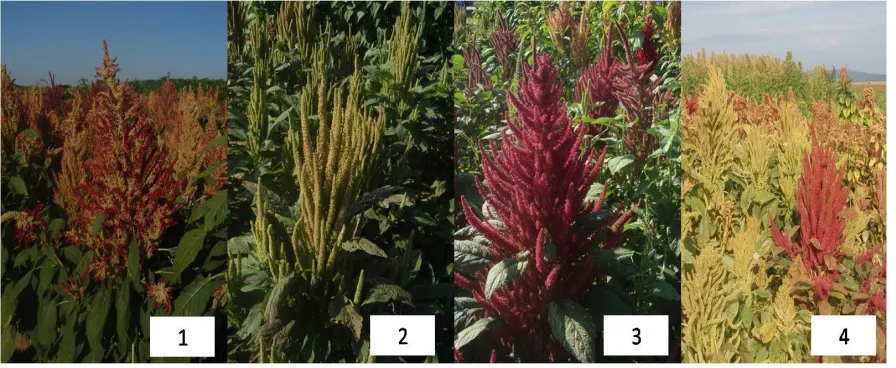
Selected seeds of Amaranthus mutant plants positively selected for the weight of the thousands seeds were used for analyses. Mutant lines together with their control genotypes were obtained from Institute of Plant Genetics and Biotechnology -Slovak Academy of Sciences in Nitra, -Slovakia (Table 1, Figure 1). Mutant lines with the statistically confirmed increase of weight of thousand seeds were taken as accessions for ISSR analyses only. The same set of the mutant lines was used in wide biochemical analyses performed by Hricová et al. (2011) and Mú dry et al. (2011).
DNA was extracted from leaf tissue of randomly selected six individual plants of each mutant line or control genotype based on the method of Rogers and Bendich (1994). The purity of DNA is one of the major factors affecting the success of genomic or genetic technologies studies. Nucleic acid isolation from polyphenol rich plants fail to produce good quality DNA or RNA as polyphenols adhere and interfere with DNA during isolation (Anuradha et al., 2013). For quantity setting of the extracted DNA, Nanodrop Nanophotometer™ was used. Determination of DNA quality was done by agarose gel electrophoresis on 1.5% agarose gel in 1xTBE buffer coloured by GelRed™.
Table 1. Species and accessions of Amaranthusstudied.
Species Accession Type
Amaranthus cruentus Ficha cultivar Control
A C 15
Mutant lines C 26
C 27 C 82 C 236
A. hypochondriacusx A. hybridus
K-433 hybrid Control B
D 54 Mutant
lines D 279
Figure 1. Analyzed specie of amaranth as in field conditions.
1 - Ficha cultivar - ControlA; 2 - C26 mutant line; 3 - K-433 hybrid - Control B; 4 - D282 mutant line.
An analysis of six randomly selected individual plants of each population was conducted with the ten selected ISSR primers. The used ISSR primers were as follows: (GTG)3GC, (CT)10T, (AG)10G, (GATA)2(GACA)2, (CTG)3GC, (GACA)4.
ISSR reactions were done in a volume of 15 μl containing 1.5 mmol × dm-3 MgCl2 (Applichem), together with 0.08 mmol × dm-3 d NTP (InvitrogenTM) 600-800 nmol × dm-3 primer, 1 U Taq polymerase (Applichem) and 50ηg of template DNA.
The repeatability of ISSR banding patterns were examined, and factors affecting the number of band generated per primer were tested, such as DNA concentrations, MgCl2and primer concentrations.
Amplifications were carried out in a Bio-Rad C1000™ Thermocycler with the following program: an initial denaturation step at 95°C for 4 min followed by 45 cycles at 95°C for 60 s, annealing at 52°C for 60 s, and extension at 72°C for 2 min and a final cycle at 72°C for 10 min. The amplified products were separated using the Experion™ Automated Electrophoresis Station following the manufacturer´s instructions. The band of equal molecular weight and mobility generated by the same ISSR primer were considered to be individual loci. Only consistently reproducible, well resolved fragments were scored.
Amplified products were surveyed for polymorphism and scored in a binary mode (1 as presence of fragment, 0 as absence), assuming that each band represents a single locus. Each experiment was repeated three times.
Non-reproducible bands were very rare and were excluded from the analyses along with weak bands.
Jaccard´s (1908) genetic dissimilarity index was used to calculate genetic similarity, employing the software SYN-TAX 2000 HIERCLUS (Podani, 2001). The same software was used for calculating of the cophenetic correlation coefficients for every used primer. Cluster analysis was conducted with UPGMA method in classifying the binary data derived to generate dendrogram to assess the relationships among the mutant lines and their control genotypes.
Results and Discussion
Table 2. Individual ISSR primers polymorphism and their average Jaccard similarity indices.
Primer No. of ISSR markers Percentage
polymorphism of ISSR markers
Cophenetic correlation coefficient
Average Jaccard similarity for Ficha mutant lines
Average Jaccard similarity for K-433 mutant lines
total polymorphic
(GTG)3GC 18 10 56 0.91 0.86 0.74
(CT)10T 18 4 22 1 0.88 0.88
(AG)10G 16 10 63 0.93 0.81 0.91
(GATA)2
(GACA)2 14 3 21 0.83 0.92 0.72
(CTG)3GC 12 12 100 0.96 0.53 0.75
(GACA)4 18 18 100 0.99 0.75 0.75
Both of the above mentioned repeat motifs were used in the primers that were applied in this study. At the individual used primers level, ISSR polymorphism was measured as the proportion of polymorphic loci to the total number of loci scored in all accessions (Table 2). Primers with low percentage of polymorphism distinguish the mutant lines of both, Ficha and K-433 from control genotypes. Primers with higher percentage of polymorphism gave no clear and different ISSR fingerprints pattern for mutant and for control lines. The differentiation ability of the primers for distinguishing Ficha and K-433 based mutant lines were reported previously (Labajová et al., 2011).
In the study of the 20 primers tested, an initial screening resulted in selection of 10 microsatellite primed PCR primers that produced clear and reproducible ISSR profiles in Ficha and K-433. ISSR assays of each primer were performed three times, with only reproducible, amplified fragments being scored. Initially screening of all the used primers showed an identical profile of amplification products in the case of 14 primers.
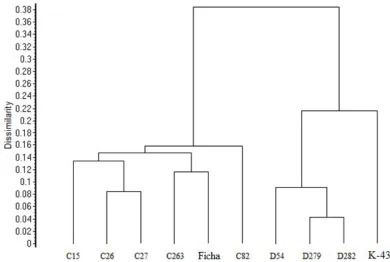
To yield more accurate and reliable results, profiles for all 6 polymorphic primers were used to generate a UPGMA dendrogram shown in Figure 1. The UPGMA analysis separated mutant lines and their control genotypes into two main clusters.
ISSR is another source of genetic markers that have higher reproducibility than RAPDs (Meyer et al., 1993; Fang and Roose, 1997). Along with the RAPD technique, both of the still preferred method for fast initiating identification of genotypes as they are relatively inexpensive, utilizes arbitrary primers, and randomly samples a potentially large number of loci in a less complex pattern than other PCR based markers (Milella et al., 2005, 2011). Transue et al. (1994) and Chan and Sun (1997) used RAPD markers for the study of evolutionary relationships among grain amaranths and their wild relatives. Popa et al. (2010) studied genetic diversity and phylogenetic relationship among six species of Amaranthus by RAPD markers and showed that there is slightly intra and inter species polymorphism. Comparisons between RAPD and ISSR techniques and their effectiveness can be made, first because only a few studies about ISSR as a type of random markers in amaranth exist and second, RAPD products often contain repetitive DNA sequences (Paran and Michelmore, 1993). Both of the techniques are used for minor and underutilized species equally (Milella et al., 2005, 2011; Labajová et al., 2011; Svobodová et al., 2011; Al-Khalifah, 2012).
Figure 2. Electrophoreogram of tested Amaranth accessions using the primer (GATA)2(GACA)2. L - Marker; C -Ficha
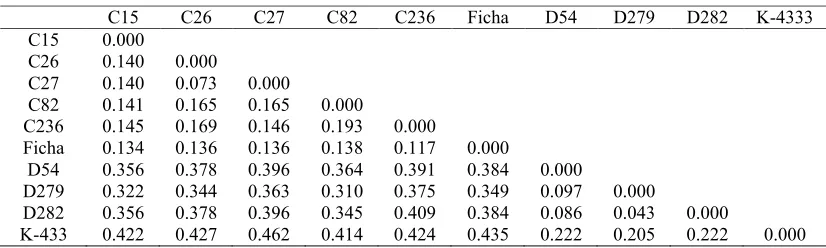
Table 3. Jaccard dissimilarity indices of analysed mutant lines and their control genotypes.
C15 C26 C27 C82 C236 Ficha D54 D279 D282 K-4333
C15 0.000
C26 0.140 0.000
C27 0.140 0.073 0.000
C82 0.141 0.165 0.165 0.000
C236 0.145 0.169 0.146 0.193 0.000
Ficha 0.134 0.136 0.136 0.138 0.117 0.000
D54 0.356 0.378 0.396 0.364 0.391 0.384 0.000
D279 0.322 0.344 0.363 0.310 0.375 0.349 0.097 0.000
D282 0.356 0.378 0.396 0.345 0.409 0.384 0.086 0.043 0.000
K-433 0.422 0.427 0.462 0.414 0.424 0.435 0.222 0.205 0.222 0.000
Ray and Roy (2007) have used both of the techniques - RAPD and ISSR - for the phylogenetic relationships analysis between Amaranthaceae, where RAPD analysis have higher level of polymorphism among leafy amaranths and ISSR shows higher level of polymorphism in grain amaranths. Authors confirmed an effective discriminating power for both of the random primer systems. For the purposes of present study, ISSR markers were chosen rather than RAPD ones, because of the mutation potential of microsatellites in plants (Gao and Xu, 2008).
As ISSR fingerprints results show, all the mutant lines of the Ficha genotype (C15, C26, C27, C82, C236) shared a genetic dissimilarity of 0,16 and their ISSR profiles were more similar to the Ficha than those of K-433 mutant lines. The K-433 mutant lines (D54, D279, D282) shared genetic dissimilarity of 0.22 but as the dendrogram shows, were more distinct to their control genotype as a whole, as those of the Ficha mutant lines. The two major clusters were observed at a dissimilarity coefficient of a 0.38, which means that the used primers had generated two relatively different sets of fingerprints, one for the Ficha and its mutant lines and one for the K-433 and its mutant lines.
Amaranthus cruentus mutant lines were grouped in the first major cluster and the average Jaccard dissimilarity coefficient for all of the Ficha mutant lines was 0.11 (Table 3). Similarly, the second cluster is compounded only from K-433 mutant lines with the average dissimilarity coefficient of 0.07.
As the Table 3 shows, no genetic uniformity was observed among the Ficha mutant lines, nor
among the K-433 mutant lines, but low average Jaccard dissimilarity coefficient indicate that their ISSR profiles were similar, but not the same completely.
As the dendrogram (Figure 3), mutant line C82 shared the specific positions to the Ficha control genotype - was the most distinct to the Ficha. The result corresponds to the results of the biochemical analyses of the same mutant lines as in this study, where C82 line is statistically different as the rest of the analysed Ficha lines (Hricová et al., 2011, personal communication; Mú dry et al., 2011).
Our data indicates the use of ISSR molecular marker systems in amaranth gamma-rays mutant lines as an advanced technique, because of the possible linkage of changes of the non-coding regions to the specific changes of the genome after the gamma-rays treatment. And, it is significant as already positive selection for the thousand seeds weight was reported from the same by Gajdošová et al. (2005).
Figure 3. Dendrogram of Ficha and K-433 mutant lines as analysed by ISSR.
In a study including both isozyme and random amplified polymorphic DNA (RAPD) markers, Chan and Sun (1997) reported molecular phylogenies of cultivated and wild amaranths. Authors evaluated 23 different species, including the three cultivated for grain as well as accessions of all species in the A. hybridusaggregate. Studies based on restriction site variations in nuclear and cytoplasmic DNA reported that A. caudatusand A. cruentusare more closely related to each other and to their supposed progenitors than to A. hypochondriacus (Lanoue et al., 1996). Isozyme and RAPD markers were used by other authors and findings tends to agree with the different evolutionary hypothesis presented herein (Ranade et al., 1997; Zheleznov et al., 1997).
Xu and Sun (2001) reported that both, AFLP and double-primer ISSR detected high levels of polymorphism among species, averaging 96.7 and 99.5%, respectively. Within species, however, AFLP polymorphism was much lower than double-primer ISSR polymorphism. All these results confirms the reliability of the molecular marker based methods for distinguishing closely related material, such as lines.
Conclusions
Gamma-irradiated amaranth mutants were analysed with ISSR markers. The results showed
specific changes in non-coding regions of mutants, based on inter microsatellite length polymorphism. Different ISSR fingerprints patterns of the mutant lines when compared to the Ficha and K-433 ISSR specific profiles may be part of a consequence of the complex response of the intergenic space of mutant lines to the gamma-radiance.
Acknowledgements
Biological material and photos were kindly provided by Institute of Plant Genetics and Biotechnology, Slovak Academy of Sciences, Nitra. This work was supported by the projects KEGA 001SPU/4-2012 (50%) and VEGA 2/0066/13 (50%) and scientific instruments were obtained from ECOVA and ECOVA+ projects.
References
Acharya, S., A. Srichamroen, S. Basu, B. Ooraikul and T. Basu. 2006. Improvement in the nutritional properties of fenugreek (Trigonella foenum-graecum L.). Songklanakarin J. Sci. Technol. 28:1-9.
Anuradha, J. H., K. Vijayan, C. V. Nair and A. Manjula. 2013. A novel and efficient protocol for the isolation of genomic DNA from mulberry (Morus L.). Emir. J. Food Agric. 25:124-131.
Baláž ová, Ž ., M. Vivodík and Z. Gálová. 2007. Determination of genetic relationships among wheat genotypes by microsatellite markers. Acta Biochim. Polon. 54:45.
Brenner, D. M., D. D. Baltensperger, P. A. Kulakow, J. W. Lehmann, R. L. Myers, M. M. Slabbert and B. B. Sleugh. 2000. Genetic resources and breeding of Amaranthus. Plant Breed. Rev. 19:227–285.
Mladenovic, S. D., M. Kostadinovic, D. Ristic, M. Simic and L. Stefanovic. 2012. Assessment of genetic relatedness of the two Amaranthus retroflexuspopulations by protein and random amplified polymorphic DNA (RAPD) markers. Afr. J. Biotech. 11:7331-7337. Fang, D. Q. and M. Roose. 1997. Identification of
closely related citrus cultivars with inter-simple sequence repeat markers. Theor. Appl. Genet. 95:408–417.
Gajdošová, A., G. Libiaková, M. G. Ostrolucká and J. Fejér. 2008. Mutation breeding in selected Amaranthusspp. Amaranth- Plant for the Future. Nitra: SAV. pp. 93-94.
Gajdošová, A., G. Libiaková, M. G. Ostrolucká and J. Fejér. 2005. Aplikácia radiačnej mutagenézy v šľachtení láskavca. Nové poznatky z genetiky a šľachtenia poľnohospodárskych rastlín. Piešťany: VÚRV,
ISBN 80-88790-43-3.
Gajdošová, A., G. Libiaková and J. Fejér. 2007. Improvement of selected Amaranthuscultivars by means of mutation induction and biotechnological approaches, In: S. Ochatt and S. M. Jain (Eds.). pp. 151-169. Breeding of Neglected and Under-Utilized Crops, Spices and Herbs. Enfield, Science Publishers, New Hampshire.
Gao, L. Z. and H. Xu. 2008. Comparisons of mutation rate variation at genome-wide microsatellites: evolutionary insights from two cultivated rice and their wild relatives. BMC Evol. Biol. 8:11.
Hauptli, H. and S. Jain. 1984. Allozyme variation and evolutionary relationships of grain
amaranths (Amaranthus spp.). Theor. Appl. Gen. 69:153–165.
Hricová, A. M. Kečkešová, Z. Gálová, G.
Libiaková and A. Gajdošová. 2011. Skú manie zmien profilu bielkovín v semenách láskavca
podrobených radiačnej mutagenéze. Chemické
listy. 105:542-545.
Huang, J. C. and M. Sun. 2000. Fluorescein PAGE analysis of microsatellite-primed PCR: A fast and efficient approach for genomic fingerprinting. BioTech. 28:1068–1072. Chan, K. F. and M. Sun. 1997. Genetic diversity
and relationships detected by isozyme and RAPD analysis of crop and wild species of Amaranthus. Theor. Appl. Genet. 95:865–873. Jaccard, P. 1908. Nouvelles recherches sur la
distribution florale. Bull. Soc. Vaud. Sci. Nat. 44:223–270.
Kgang, I. E., L. Emmenes, N. Laloo, K. Kunert, N. Matole and U. Schluter. 2008. Characterization of drought tolerant A. tricolor mutant plants. Amaranth- Plant for the Future. Nitra: SAV. pp. 66-69.
Labajová, M., S. Senková, J. Ž iarovská, K. Raž ná, M.Bež o, V. Štefú nová and L. Zeleňáková.
2011. The Potential of ISSR Markers in Amaranth Gamma-radiance mutants Genotypying. J. Microbiol. Biotech. Food Sci. 1:507-521.
Lanoue, K. Z., P. G. Wolf, S. Browning and E. E. Hood. 1996. Phylogenetic analysis of restriction-site variation in wild and cultivated Amaranthus species (Amaranthaceae). Theor. Appl. Genet. 93:722–732.
Lee, J. R., G. Y. Hong, A. Dixit, J. W. Chung, K. H. Ma, J. H. Lee, H. K. Kang, Y. H. Cho, J. G. Gwag and Y. J. Park. 2008. Characterization of microsatellite loci developed for Amaranthus hypochondriacus and their crossamplification in wild species. Conserv. Genet. 9:243-246.
Majer, P. and E. Hideg. 2012. Existing antioxidant levels are more important in acclimation to supplemental UV-B irradiation than inducible ones: Studies with high light pretreated tobacco leaves. Emir. J. Food Agric. 24:598-606.
conventional DNA fingerprinting used as single primers in the polymerase chain reaction to distinguish strains of Cryptococcus neoformans. J. Clin. Microbiol. 31:2274– 2280.
Milella, L., G. Martelli, J. Salava, E. C. Fernández, J. Ovesná and I. Greco. 2011. Total phenolic content, RAPDs, AFLPs and morphological traits for the analysis of variability in Smalanthus sonchifolius. Genet. Resour. Crop Evol. 58:545–551.
Milella, L., J. Salava, G. Martelli, I. Greco, E. F. Cusimamani and I. Viehmanová. 2005. Genetic Diversity between Yacon Landraces from Different Countries Based on Random Amplified Polymorphic DNAs. Czech J. Genet. Plant Breed. 41:73–78.
Mú dry, P., A. Hricová, G. Libiaková and A. Gajdošová. 2011. Methodological approaches to simple enzyme polymorphism analyses of amaranth (Amaranthus sp.). Agric.
Poľnohospodárstvo 57:1-11.
Nováková, A, K. Šimáčková, J. BártaandV. Čurn.
2010. Utilization of DNA markers based on microsatellite polymorphism for identification of potato varietes cultivated in the Czech Republic. J. Central Eur. Agric. 11:415-422. Paran, I. and R. W. Michelmore. 1993.
Development of reliable PCR-based markers linked to downy mildew resistance genes in lettuce. Theor. Appl. Genet. 85:985-993. Podani, J. 2001. SYN-TAX 2000. Computers
Program for data analysis in ecology and systematics for Windows 95, 98 and NT. User’s manual. Sci. Publ., Budapest, pp.53. Popa, G., C. P. Cornea, M. Ciuca, N. Babeanu, O.
Popa and D. Marin. 2010. Studies on genetic diversity in Amaranthus species using the RAPD markers. Analele Universitati din Oradea - Fascicula Biol. Tom. 17: 280-285. Ranade, S. A., A. Kumar, M. Goswami, N.
Farooqui and P. V. Sane. 1997. Genome analysis of amaranths: determination of inter-and intra-species variations. J. Biosci. 22:457– 464.
Ray, T. and S. C. Roy. 2007. Phylogenetic relationships between members of Amaranthaceae and Chenopodiaceae of Lower Gangetic Plains Using RAPD and ISSR markers. Bangladesh J. Bot. 36:21-28.
Ray, T. and S. C. Roy. 2008. Genetic diversity of Amaranthus species from the Indo-Gangetic plains revealed by RAPD analysis leading to the development of ecotype-specific SCAR marker. Oxford J. 100:338-347.
Reboredo, F. and Lidon, F. J. C. 2012. UV-B radiation effects on terrestrial plants - A perspective. Emir. J. Food Agric. 24:502-509. Rogers, S. O. and A. J. Bendich. 1994. Extraction
of total cellular DNA from plants, algae and fungi. In: S. B. Gelvin and R. A. Schilperoort (Eds.). pp. D1/1 – D1/8. Plant Molecular Biology Manual D1. Kluwer Academics Publishers, Dordrecht, The Netherlands. Sun, M., H. Chen and G. C. Leung. 1999. Low-Cot
DNA sequences for fingerprinting analysis of germplasm diversity and relationships in Amaranthus. Theor. Appl. Genet. 99:464–472.
Svobodová, E., P. Hlásná Čepková and Z.
Dvořáková. 2011. First preliminary screening of the genetic diversity of selected Peruvian accessions of Yacon (Smallanthus sonchifolius) using Inter-Simple Sequence Repeats molecular markers, 5th Scientific Conference of Institute of Tropics and Subtropics, Sustainable Use of Natural resources in Tropics and Subtropics. Prague. ISBN 978-80-213-2233-2.
Štefú nová, V. and M. Bež o. 2002. Analý za genetickej rozmanitosti genotypov láskavca metlinatého (Amaranthus cruentus L.) metó dou RAPD. Biologické dni. Nitra: Univerzita Konštantína Filozofa, pp. 272-273, ISBN 80-8050-520-9.
Štefú nová, V. and M. Bež o. 2003. Genetic diversity analysis of amaranth (Amaranthus cruentus) germplasm collection by RAPD. Biol. 58:53–58.
Tautz, D. and M. Renz. 1989. Simple sequences are ubiquitous repetitive components of eukaryotic genomes. Nucleic Acids Res. 12:4127–4138.
Transue, D. K., D. J. Fairbanks, L. R. Robison and W. R. Andersen. 1994. Species identification by RAPD analysis of grain Amaranth genetic resources. Crop Sci. 34:1385-1389.
Vos, P., R. Hogers, M. Bleeker, M. Reijans, T. van de Lee, M. Hornes, A. Frijters, J. Pot, J. Peleman, M. Kuiper and M. Zabeau. 1995. AFLP: a new technique for DNA fingerprinting. Nucleic Acids Res. 23:4407– 4414.
Wassom, J. J. and P. J. Tranel. 2005. Amplified Fragment Length Polymorphism-based genetic relationships among weedy Amaranthus species J. Hered. 96:410-416.
Wetzel, D. K., M. J. Horak and D. Z. Skinner. 1999. Use of PCR-based molecular markers to
identify weedy Amaranthus species. Weed Sci. 47:518–523.
Xu, F. and M. Sun. 2001. Comparative analysis of phylogenetic relationships of grain amaranths and their wild relatives (Amaranthus; Amaranthaceae) using internal transcribed spacer, amplified fragment length polymorphism, and double-primer fluorescent intersimple sequence repeat markers. Mol. Phylogenet. Evol. 21:372-387.
Zheleznov, A. V., L. P. Solonenko and N. B. Zheleznova. 1997. Seed protein of the wild and cultivated Amaranthusspecies. Euphytica 97:177–182.