Original Research Article
Awareness and practice regarding road safety among toto (e-rickshaw)
drivers in Burdwan Town, West Bengal
Pramit Goswami, Abhishek Paul, Md. Samsuzzaman*, Sima Roy, Dilip Kumar Das
INTRODUCTION
Road traffic accidents (RTA), the global epidemic in most regions of the world, are increasing.1 More than 1.25 million people die every year in the world from RTA while in addition for every death, 20-50 non-fatal injuries and 10-20 serious injuries occurs which requires long periods of treatment.2,3 Unless immediate actions are
taken, deaths due to RTA will raise to the fifth leading cause of deaths by 2030.3 Almost 90% of world's RTA fatalities occur in low- and middle-income countries.3 In India where population of motor vehicle is growing at a faster rate than the economic and population growth, a total of 1.46 lakh deaths were reported from RTA in 2015 which further translates into 57 accidents and 17 deaths on an average every hour.2,4 The state of West Bengal
ABSTRACT
Background: Global epidemic of traffic injuries are increasing rapidly. Unless immediate measures are taken, deaths due to road traffic accidents will rise to the fifth leading cause of deaths by 2030. Recently E-Rickshaws (locally known as ‘Toto’) have gained immense popularity. However, the awareness and practice regarding road safety issues among e-rickshaws drivers is yet to be documented. The study was conducted to assess their knowledge and practices regarding traffic rules and road safety measures, and to find out association of their knowledge and practice with socio-demographic characteristics.
Methods: A cross-sectional study was conducted from September-November 2017 at Burdwan Municipality. Assuming 50% prevalence of good knowledge, 10% relative-precision and 10% non-response; calculated sample size was 422. Convenient sampling technique was used due to uneven distribution of study subjects. Equal numbers of participants were included from seven prominent locations of municipality. Depending upon the responses the overall knowledge and practice were grouped into three categories (i.e. good/average/poor) and two categories (i.e. favourable/unfavourable) respectively.
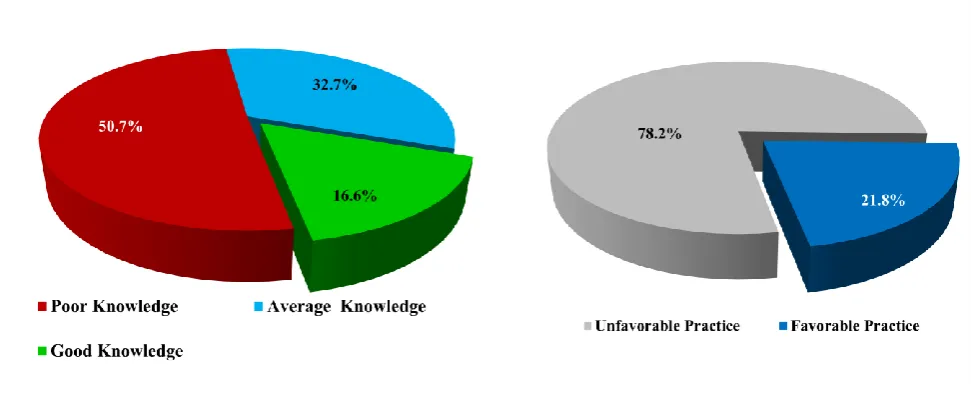
Results: 78.2% and 97.16% drivers were unaware about maximum permissible speed limit of e-rickshaws and the ‘cross-road ahead’ signal respectively. 86.73% had unfavourable practice regarding carrying recommended maximum number of passengers. Overall 16.6% drivers had good road safety knowledge and 21.8% had favourable practice. Significant association was found between knowledge and practice with age and educational status of the participants. Practice was also significantly associated with their income status.
Conclusions: Overall knowledge and practice regarding road safety was low among the e-rickshaw drivers. Targeted interventions are recommended for improvement.
Keywords: Awareness, Drivers, E-rickshaw, Practice, Road safety
Department of Community Medicine, Burdwan Medical College, Burdwan, West Bengal, India
Received: 20 April 2018
Revised: 29 May 2018
Accepted: 30 May 2018
*Correspondence:
Dr. Md. Samsuzzaman,
E-mail: [email protected]
Copyright: © the author(s), publisher and licensee Medip Academy. This is an open-access article distributed under the terms of the Creative Commons Attribution Non-Commercial License, which permits unrestricted non-commercial use, distribution, and reproduction in any medium, provided the original work is properly cited.
was among the top 13 states which accounted for 86.7% of all road accidents in the country during the same year.4
Accidents are complex phenomena of multiple causations. The etiological factors may be classified into two broad categories–human and environmental. Drivers’ fault has been found to be the single most responsible factor for road accidents on all roads in India over a long period of time (77.1% of road accidents in India in 2015 were due to driver’s fault).4 An average increase in
vehicle speed is directly related to the likelihood of a crash occurring and the severity of the consequences of the crash.5 Estimates shows that the risk of being involved in a crash increases significantly above a blood alcohol concentration (BAC) of 0.04 g/dl along with increasing the likelihood that the crash will result in loss of lives or serious injuries.5 Among various types of distractions that can lead to impaired driving, use of mobile phones while driving is matter of growing concern for road safety. This distraction can impair driving performance in number of ways, e.g. longer reaction times, impaired ability to keep in correct lane etc. Hence the factors associated with RTA are preventable to a large extent. Awareness regarding road safety and practicing road safety measures can play very important role in prevention of RTA.
The Burdwan Municipality covers a total area of 26.30 sq. km holding a population of around 3.14 lakh.6 The Grand Trunk Road runs across the city, and the main Howrah-Delhi rail track passes through Burdwan, and the city is served by Burdwan railway station, which is a very important junction station of Eastern Railway. Moreover being the district headquarters the Burdwan town attracts thousands of peoples every day exerting heavy pressure on the existing urban public transport system. To address this increasing demand, e-rickshaws (locally known as
‘Toto’) had been introduced in Burdwan town in 2014.7 E-Rickshaws are ‘a special purpose battery powered vehicle having three wheels for carrying goods or passengers, manufactured, constructed or adapted, equipped and maintained in accordance with such specifications, as may be prescribed in this behalf.’8 These vehicles are
equipped with brushless DC (direct current) motors, powered by conventional lead-acid batteries having a top speed of 25 km/hour and maximum load capacity of ≤ 400 kilograms.9 These are environment friendly mode of public transport and shortly after introduction it gained its popularity to became the main face of intra city public transport due to easy availability, comfort and low fare.10,11 A survey done by Roy revealed that nearly 6000-7000 Totos are in motion in Burdwan town; a number much higher than the government records.7 Among them only 565 has been registered under Regional Transport office (RTO), Burdwan and rest are unregistered and driven by non-licensed drivers making them vulnerable on road safety issues.7 It is important that the drivers of such an important mode of public transport system should have adequate knowledge about road safety and traffic rules to prevent RTAs.
With this background, the present study was conducted in Burdwan town area to assess the knowledge and practices of Toto drivers regarding traffic rules and road safety measures, and to find out the association of their knowledge and practice with their socio-demographic characteristics.
METHODS
Study type, design, settings and period
A descriptive cross-sectional study was conducted in Burdwan Municipal area of Purba Burdwan district of West Bengal from September 2017 to November 2017.
Study population
All the toto drivers driving e-rickshaws in the study area during the study period mentioned.
Sample size
In absences of specific data regarding the level of road safety awareness among toto drivers; a prevalence of 50% of good knowledge was assumed for the purpose of sample size estimation. With 10% relative-precision and 10% non-response/incomplete-response; the sample size calculated was 422 using the ⁄ formula.
Sampling technique
Convenient sampling technique was adopted as the study subjects were neither evenly nor permanently distributed in the study area. Equal numbers (approximately 60) of Toto drivers were included from seven prominent locations/sites of municipality area viz. rail station, Curzon gate, two bus stands, Hospital, Medical College and University Toto stand. A driver once included in one location/site were excluded subsequently if found on another location/site. Drivers who were unwilling to participate were also excluded.
Tools and technique; data collection
After a brief introduction about the nature and purpose of the study, informed consents were obtained from drivers who were willing to participate. A designed pre-tested schedule was used for interviewing the participants. Spot observation checklists and necessary vehicle documents were also used for data collection.
Study variables
Toto, documents to be carried while driving, frequency of servicing etc.) and (iii) regarding selected important intra city road traffic signals (like knowledge regarding U- turn prohibited ahead, no parking, horn prohibited, over taking prohibited, no entry ahead, railway level crossing ahead, school ahead, narrow road ahead, crossroad ahead, and speed breaker ahead signals). These three aspects had 14, 6 and 13 questions respectively. For each completely correct, partially correct and incorrect response a score of 2, 1 and 0 were assigned respectively. Depending upon the responses the overall knowledge was grouped into three categories (i.e.-Good score ≥75th percentile; Average score between 75th-50th percentile and Poor score<50th percentile).
Practices related to safe driving was assessed on two aspects, i.e. (i) maintenance of vehicle condition with regards to essential requirements (like presence of intact windshield, windshield wiper, functioning headlight, indicator light, rare brake light, extra tyre, music system, papers and driving licence etc.) and (ii) related to safe driving (like overtaking from left side, using mobile phone during driving, driving with ear phone plugs, maximum number of passenger they usually carry). These two aspects had 13 and 6 questions respectively. For each correct and incorrect response a score of 1 and 0 was assigned respectively. Depending upon the responses the overall practice was grouped into two categories (i.e. favourable -score ≥75th percentile and unfavourable- score <75th percentile).
Data were assembled in Microsoft Excel 2010 and analyzed using SPSS 20 software (IBM Corp. Released 2011. IBM SPSS Statistics for Windows, Version 20.0. Armonk, NY: IBM Corp). Chi-square test for independence was used to find out the association of knowledge and practice with their socio-demographic characteristics.
RESULTS
All of the 422 toto drivers studied were male and most (91.46%) of them was aged between18 to 59 years whereas 8.29% were below 18 years. Mean (SD) age of the participants was 31.47(8.43) years and around13% of them were illiterate or just literate (non-formal).
Study revealed that 4.74% of Toto drivers did not have good knowledge regarding yellow traffic signal light and 39.57% had average knowledge regarding maximum number of passenger to be taken (Table 1). Surprisingly 15.40% and 3.08% of them respectively, think using mobile phones during driving and driving in drunken state can be done (Table 1). Majority of the divers had poor knowledge of ‘Narrow road ahead’ (65.4%) and ‘No parking’ (64.5%) signal (Figure 1).
Figure 1: Knowledge of toto drivers of selected intra city road traffic signals (n=422).
(1=U- turn prohibited ahead, 2=No parking, 3=Horn prohibited, 4=Over taking prohibited, 5=No entry ahead, 6=Railway level crossing ahead, 7=School ahead, 8=Narrow road ahead, 9=Crossroad ahead, 10=Speed breaker ahead).
Table 1: Knowledge on different aspects of safe driving and vehicle maintenance (n=422).
Components Knowledge level
Good No (%) Average No (%) Poor No (%) Safe driving
Traffic signal light interpretation
-Red 420 (99.6) 1 (0.2) 1 (0.2)
-Green 421 (99.8) 0 (0) 1 (0.2)
-Yellow 402 (95.3) 19 (4.5) 1 (0.2)
Max speed limit for Toto 92 (21.8) 128(30.3) 202(47.9) Correct overtaking side 417 (98.8) 0 (0) 5 (1.2) Hand sign for stopping 402 (95.3) 5(1.2) 15 (3.5) Maximum number of passengers to be boarded 255 (60.4) 167 (39.6) 0 (0) Parking place of the vehicle 400 (94.8) 19 (4.5) 3 (0.7) Use of mobile while driving 357 (84.6) 65 (15.4) 0 (0) Driving in drunken state 409 (96.9) 13 (3.1) 0 (0)
Vehicle maintenance
Importance of licence 375 (88.9) 12 (2.8) 35 (8.3) Documents to be carried 267 (63.3) 127 (30.1) 28 (6.6) Importance of indicator light 383 (90.8) 30 (7.1) 9 (2.1) Essentiality of servicing 389 (92.2) 31 (7.4) 2 (0.4) Frequency of servicing 166 (39.3) 101 (24) 155 (36.7)
87.4 16.1
98.8 42.7
47.4
94.1 95 12.6
2.8
88.6
7.4 19.4
0.2 9.7
14
2.4 1.2 22
89.3
7.4
5.2 64.5
1 47.6
38.6 3.5 3.8 65.4
7.9 4
1 2 3 4 5 6 7 8 9 10
Table 2: Practice on different aspects of essential vehicle requirements, maintenance and safe driving (n=422).
Components Practice
Favourable No (%) Unfavourable No (%) Requirements/maintenance
Presence of intact windshield 174 (41.2) 248 (58.8) Functional windshield wiper 41 (9.7) 381 (90.3) Functional head lights 336 (79.6) 86 (20.4) Functional indicator lights 234 (55.4) 188 (44.6) Functional rear lights 245 (58.1) 177 (41.9)
Intact roof 330 (78.2) 92 (21.8)
Extra tyre 413 (97.9) 9 (2.1)
Side and back view mirror 359 (85.1) 63 (14.9) Driving licence 342 (81.0) 80 (19.0) Vehicle documents 195 (46.2) 227 (53.8)
Safe driving
Overtaking from left side 293 (69.4) 129 (30.6) Use of mobile while driving 239 (56.6) 183 (43.4) Driving with earphone plugs 62 (14.7) 360 (85.3) Parking habits 397 (94.1) 25 (5.9) Maximum passengers usually boarded 56 (13.3) 366 (86.7)
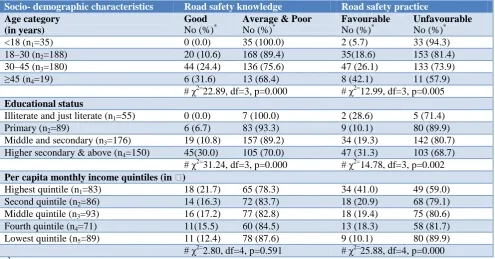
Table 3: Association of overall road safety knowledge and practice with certain socio-demographic characteristics (n=422).
Socio- demographic characteristics Road safety knowledge Road safety practice Age category
(in years)
Good
No (%)*
Average & Poor
No (%)*
Favourable
No (%)*
Unfavourable
No (%)* <18 (n1=35) 0 (0.0) 35 (100.0) 2 (5.7) 33 (94.3)
18–30 (n2=188) 20 (10.6) 168 (89.4) 35(18.6) 153 (81.4)
30–45 (n3=180) 44 (24.4) 136 (75.6) 47 (26.1) 133 (73.9)
≥45 (n4=19) 6 (31.6) 13 (68.4) 8 (42.1) 11 (57.9)
# χ2=22.89, df=3, p=0.000 # χ2=12.99, df=3, p=0.005
Educational status
Illiterate and just literate (n1=55) 0 (0.0) 7 (100.0) 2 (28.6) 5 (71.4)
Primary (n2=89) 6 (6.7) 83 (93.3) 9 (10.1) 80 (89.9)
Middle and secondary (n3=176) 19 (10.8) 157 (89.2) 34 (19.3) 142 (80.7)
Higher secondary & above (n4=150) 45(30.0) 105 (70.0) 47 (31.3) 103 (68.7)
# χ2=
31.24, df=3, p=0.000 # χ2=14.78, df=3, p=0.002
Per capita monthly income quintiles (in ₹)
Highest quintile (n1=83) 18 (21.7) 65 (78.3) 34 (41.0) 49 (59.0)
Second quintile (n2=86) 14 (16.3) 72 (83.7) 18 (20.9) 68 (79.1)
Middle quintile (n3=93) 16 (17.2) 77 (82.8) 18 (19.4) 75 (80.6)
Fourth quintile (n4=71) 11(15.5) 60 (84.5) 13 (18.3) 58 (81.7)
Lowest quintile (n5=89) 11 (12.4) 78 (87.6) 9 (10.1) 80 (89.9)
# χ2=2.80, df=4, p=0.591 # χ2=25.88, df=4, p=0.000
#χ2test for independence with Yate’s correction was applied when expected cell count was below 5.
*Parenthesis includes row percentages.
Findings from the observational checklist of vehicle condition and important documents showed that apart from having an extra tyre, most of the essential vehicle conditional requirements were missing in majority of the studied vehicles (Table 2). It was also estimated that most of the drivers had unfavourable practice regarding maximum number of passengers usually boarded (86.7%) and driving with earphone plugs (85.3%) (Table 2).
Figure 2: (A) Distribution of overall road safety knowledge of study participants (n=422); (B) Distribution of overall road safety practice of study participants (n=422).
DISCUSSION
The present study conducted among the drivers of Toto; one of the newest mode of public para-transit system, was one of its kind, hindering comparative analytical discussion of the study findings. However an extensive literature search brought up some related research findings. A study conducted in five cities (Delhi, Kanpur, Amritsar, Agartala and Roorkee) of India by the Institute of Urban Transport among the stakeholders of E-Rickshaw showed that 3% of the drivers were below 18 years of age and, 48% were illiterate and just literate.11Among the drivers included in the present study 8.29% were below 18 years while only 1.66% were illiterate and just literate. These differences may be attributed to the difference in the study settings.
Majority of the drivers studied had good knowledge regarding not to drive in drunken state and interpretation of traffic signals and lights (Table 1). Most of them had favourable practice of vehicle parking and having functional vehicle headlights (Table 2). These findings are encouraging considering the period of introduction of the E-Rickshaws in India. But estimates also revealed that the drivers had average and poor knowledge on maximum passengers to be boarded and the speed limit, and had unfavourable practice on the same issues. The urgency to earn more by carrying extra passengers and doing more trips may be the responsible factor as a significant association was also found between practice and per capita income quintile status of the drivers. However a study by Majumdar and Jash showed that regularization of speed of e-rikshaws would restrict and reduce the traffic movement and energy efficiency of the conventional vehicles. Singh and Mishra in a study done in Patna estimated that after buses and trucks three wheeled vehicles were most notorious in terms of proportion of road accidents.12 According to the study
conducted by Roy, sudden increase of E-Rickshaw population has resulted in traffic congestion, shrinkage of road space and increase possibilities of accidents.7 It also pointed out that events of accidents had increased after the initiation of Rickshaw service and most of the E-Rickshaw drivers were unaware of the traffic rules and regulation. The present study revealed similar findings as only around 1/5th of drivers were estimated to have good knowledge and favourable practice on road safety.
The motor vehicles (Amendment) ordinance, 2015 legalized e-rickshaws, but findings of the present study have stretched the issue further. Problems created by sudden upsurge of this para-transit system must be addressed immediately. Registration and regularization of all the vehicles and their drivers while banning the unregistered ones along with periodic inspection of the vehicles and conduction of road safety awareness programs among the drivers are some of essential steps need to be taken. E-Rickshaw service is still in its infancy in our country, but it has huge potential considering both the economic and environmental impact it can have on a long run. Immediate measures are warranted to address the problems of the least carbon foot print producing public transport system.
ACKNOWLEDGEMENTS
The authors acknowledge the co-operation and support offered by the Toto drivers, without which this study would not have been possible.
Funding: No funding sources Conflict of interest: None declared
REFERENCES
1. Phanindra D, Chaitanya G. Awareness and practice of road safety measures among college going students in Guntur city. Int J Public health Res. 2016;3(2):54-8.
2. Park K. A textbook of preventive and social medicine: Non Communicable Diseases. 24th ed. Jabalpur. M/s Banarisdasbhanot Publishers; 2017: 423-431.
3. World Health Organization. Global status report on road safety: time for action: WHO Press; 2009.Availablefrom:http://apps.who.int/iris/bitstrea m/10665/44122/1/9789241563840_eng.pdf. Accessed on 20 February 2018.
4. Ministry of Road Transport and Highways. Road accidents in India-2015. New Delhi: Government of India; 2015. Available at: http://pibphoto.nic.in/ documents/rlink/2016/jun/p20166905.pdf. Accessed on 20 February 2018.
5. World Health Organization. Global health observatory: WHO Press; 2018 Jan. Available at: http://www.who.int/gho/road_safety/legislation/situ ation_trends_alcohol/en/. Accessed on 18 February 2018.
6. Registrar General and Census Commissioner. West Bengal; District Census Handbook: Barddhaman– Village and Town Wise Primary Census Abstract, series 20, part XII B. Census of India 2011. New Delhi: Office of the Registrar General & Census Commissioner, Government of India; 2015: 700. 7. Roy A. E-Rickshaw Service in Barddhaman Town:
Importance, Problems and Future Prospects. Int J Scientific Res Publications. 2016;6(9):702-6.
8. Legislative Department, Ministry of Law and Justice. The Motor Vehicles (Amendment) Ordinance, 2015, No. 2, New Delhi: The Controller of Publications, Government of India; 2015: 3. Available at: http://lawmin.nic.in/ld/textord/Ord 2015.pdf. Accessed on 11 January 2018.
9. Zeniak Innovation India Limited. Passenger E-Rickshaw specifications. Zeniak Innovation India Limited. Available at: https://www.indiamart. com/zeniakinnovation/passenger-e-rickshaw.html. Accessed on 12 February 2018.
10. Majumdar D, Jash T. Merits and Challenges of E-Rickshaw as An Alternative form of Public Road Transport System: A Case Study in the State of West Bengal in India. Energy Procedia. 2015;79:307-14.
11. Institute of Urban Transport, India. Improving and Upgrading Electric Rickshaws in Indian Cities. Paper presented at: 8thConference and Expo on Urban Mobility India; 2015. Available at: http://urbanmobilityindia.in/Upload/Conference/76b 645da-1ba8-4db8-a5a7-aaf1222ba5aa.pdf Accessed on 20 January 2018.
12. Singh SK, Mishra A. Road Accident Analysis: A Case Study of Patna City. Urban Transport J. 2017;2(2):60-75.
Cite this article as: Goswami P, Paul A,
Samsuzzaman M, Roy S, Das DK.Awareness and practice regarding road safety among toto (e-rickshaw) drivers in Burdwan Town, West Bengal. Int J