University of South Carolina
Scholar Commons
Theses and Dissertations
2017
Pedagogical Practices in Homogeneous and
Heterogeneous Ability Grouped Classrooms
Theresa Marie Kinsey University of South Carolina
Follow this and additional works at:https://scholarcommons.sc.edu/etd Part of theCurriculum and Instruction Commons
This Open Access Dissertation is brought to you by Scholar Commons. It has been accepted for inclusion in Theses and Dissertations by an authorized administrator of Scholar Commons. For more information, please [email protected].
Recommended Citation
PEDAGOGICAL PRACTICES IN HOMOGENEOUS AND HETEROGENEOUS
ABILITY GROUPED CLASSROOMS
by
Theresa Marie Kinsey
Bachelor of Arts
University of South Carolina, 1991
Master of Library and Information Science University of South Carolina, 2009
Submitted in Partial Fulfillment of the Requirements
For the Degree of Doctor of Education in
Curriculum and Instruction
College of Education
University of South Carolina
2017
Accepted by
Kenneth Vogler, Major Professor
Susan Schramm-Pate, Committee Member
Richard Lussier, Committee Member
Suha Tamin, Committee Member
Vic Olgan, Committee Member
ii
DEDICATION
I dedicate this work to my loving husband, Gerald Hoffman, who from the
beginning was my support and my rock. God placed him in my life for a reason, and I
am thankful for all the encouragement he has provided through this entire process.
I also dedicate this dissertation to my beautiful daughter, Tracey Kizer. She has
always been my inspiration to better myself because I wanted to show her that she could
achieve any goal she set her mind to accomplish.
Finally I dedicate this research to my parents, Thomas and Carolyn Kinsey, who
from my earliest memories, instilled in me that education was one of the most important
gifts they could offer. They showed me that hard work pays off, and family is
iii
ACKNOWLEDGEMENTS
As I began this journey to fulfill my dream of achieving a doctoral degree, I was
unaware of the energy, confidence, and perseverance that would be needed to succeed. I
did not think it would be easy, but I did not expect how mentally and physically draining
this entire process would be to complete this program. I would not have accomplished
this terminal degree without the guidance and wisdom of so many people.
I offer special thanks to Dr. Susan Schramm-Pate for her advice, patience and
guidance. Her criticism was often difficult to hear, but it helped improve my work over
time. I genuinely appreciate her serving on my committee and all she has done
throughout this entire process.
I would also like to thank my Dissertation Chair, Dr. Kenneth Vogler for his
guidance and advice. I learned a great deal from him during this program.
I would like to thank my library assistant, Onika Hall-Calas. Her willingness to
step up and take over responsibilities at work made it possible for me to complete this
degree.
Finally I would like to thank “Mrs. Jackson.” Without her help this project would
have been impossible. Her willingness to participate and openness to new ideas made
this process much easier for me. Thanks to her for not only being a colleague, but also
iv
ABSTRACT
The purpose of this qualitative action research study was to describe one sixth grade
English Language Arts (ELA) teacher’s pedagogical practices in her heterogeneous
grouped classroom and her homogeneous grouped classroom. The focus of this study
was on instructional practices in two classes, one homogeneously grouped based on high
English Language Arts ability; the other heterogeneously grouped. Through the data
generated, the participant-researcher reflected upon the English Language Arts
instruction in both classes and described the teacher’s instructional practices in this
middle school. Semi-structured interviews, a questionnaire, field observations,
videotapes and lesson plans provided the qualitative research data for this action
research. Findings include lack of challenge and rigor for honors/gifted and talented
ELA students, low teacher goals and expectations for all students, and traditional
pedagogy within both class types. The participant-researcher reflected on the data with
the teacher-participant to design an action plan to improve instruction within her sixth
grade homogeneous and heterogeneous ability grouped English Language Arts classes.
v
TABLE OF CONTENTS
DEDICATION ... ii
ACKNOWLEDGEMENTS ... iii
ABSTRACT ... iv
LIST OF TABLES ... vi
CHAPTER 1: RESEARCH OVERVIEW ...1
CHAPTER 2: LITERATURE REVIEW ...18
CHAPTER 3: METHODOLOGY ...42
CHAPTER 4: FINDINGS AND IMPLICATIONS ...50
CHAPTER 5: SUMMARY, CONCLUSIONS AND ACTION PLAN ...79
REFERENCES ...103
APPENDIX A: ONLINE TEACHER-PARTICIPANT QUESTIONNAIRE ...118
APPENDIX B: TEACHER-PARTICIPANT INTERVIEW ...120
APPENDIX C: FIELD NOTES ...121
APPENDIX D: TEACHER-PARTICIPANT INFORMED CONSENT ...122
vi
LIST OF TABLES
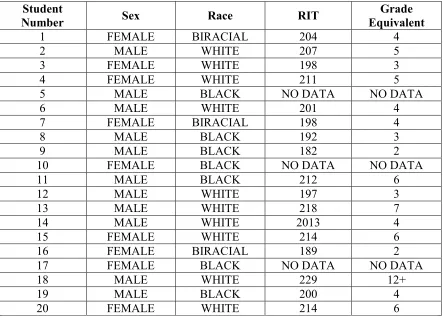
Table 4.1: Heterogeneously Grouped Regular Education ELA Students’ 5th Grade MAP
Scores ...56
Table 4.2: Homogeneously Grouped Gifted and Talented ELA Students’ 5th Grade MAP
1
CHAPTER 1: RESEARCH OVERVIEW
Introduction
Before the Industrial Revolution, students of all ages were taught together in a
one-room schoolhouse. One teacher taught all students of varying ages, the differentiated
instruction of the time, with the ultimate goal of student achievement. In response to the
growing number of immigrants coming to the United States, our country needed a better
way to teach this more diverse population. Intelligence Quotient (IQ) tests had recently
been developed and became the manner in which educators could test and place students
into classes according to ability (Ansalone, 2003). Since school organization began,
there have been numerous models used to try to determine how to classify or group
students so that the most effective learning can take place within classrooms. The No
Child Left Behind Act (NCLB) of 2001 guaranteed “that all children have fair, equal, and
significant opportunity to obtain a high-quality education and reach, at a minimum,
proficiency on challenging state academic achievement standards and state academic
assessments” (NCLB, 2008). This legislation caused school districts to reevaluate
instructional practices and curriculum and instruction within their schools. Once again
the question of which ability grouping practice, homogeneous or heterogeneous, best
meets the academic needs of our students rose to the forefront of the education discussion
2
education also creates questions regarding which philosophy is best for our schools and
students.
From the turn of the century, homogeneous ability grouped classrooms have been
prominent features on the landscape of American education. Supporters of homogeneous
grouping focus on the idea that when students are grouped in this manner, they are much
easier to teach because there are less individual differences among them. Students are
able to more easily grasp material presented because it can be directed at the appropriate
level (Kulik & Kulik, 1982). Higher tracked students are exposed to and cover more of
the curriculum, so student achievement should be higher for that particular group (Van de
gaer, Pustjens, Van Damme, & De Munter, 2006). When grouped together, slower
students are more likely to participate in class activities because they will not feel
overshadowed by their advanced peers, and the advanced students are less likely to
become bored when instruction is geared toward the middle or lower students (Kulik &
Kulik, 1982).
Opponents of homogeneous grouping ascribe that it simply stratifies society into
in-groups and out-groups. They argue that this type of grouping draws on differences
that cause feelings of inferiority among students in slower groups. This practice has also
come under widespread criticism as being discriminatory against minority students and
those from poor families (Sparks, 2013). Lower tracks tend to contain a disproportionate
number of African American and Hispanic students, which facilitates the separation of
social classes (Ansalone, 2010). There are also questions as to whether students in the
lower ability groups receive the same quality educational experiences as those in the
3
low ability classrooms, valuable class time is often wasted on managing student
behaviors. Students in these classes spend too much time on paperwork, drill, and
practice (Linchevski & Kutshcer, 1998). Opponents hold that student achievement is not
improved through separating students simply based upon their ability levels.
Educators continue to battle regarding whether traditional or progressive
pedagogical practices are best suited for present day school. Traditional schools
emphasize academic standards, follow a content-based curriculum that is formed around
the core disciplines and tend to be authoritarian, with the teacher as the instructional
leader of the classroom (Goodman & Kuzmic, 1997). These ideas are criticized for
impairing the development of children by ignoring the individual learning styles of each
child, having too narrow an academic focus, overuse of direct instruction and rote
memorization, and ignoring the development of the emotional adjustment and creativity
of children (Chandler, 2000).
Progressive schools accept a more democratic, child centered approach that
emphasizes group work and projects rather than individual grades and competition;
progressivists have a humanistic concern for the whole child including social and
emotional development as well as self-esteem (Nehring, 2006). Critics of progressivism
believe they emphasize process over content, thereby weakening the academic basis
needed for lifelong learning, and they note that the teacher holding a less central role in
the classroom is detrimental to overall discipline and the authority that adults should
4
Improving pedagogy within one sixth grade English Language Arts (ELA)
teacher’s homogeneous and heterogeneous ability grouped classes was the goal of this
action research study. Student achievement in sixth grade ELA has been stagnant over
the past few years, so data compiled from analyzing current instructional practices and
reviewing homogeneous and heterogeneous ability grouping practices was used to create
an action plan to improve the teacher-participant’s pedagogical practices in her classes.
Statement of the Problem
Improving sixth grade ELA students’ academic achievement and growth has been
problematic over the past few years at River Middle School. One sixth grade ELA
teacher currently teaches one class of homogeneously ability grouped honors/gifted and
talented ELA students, while the remainder of her classes are heterogeneously ability
grouped general education ELA classes. Using this organizational technique has
prompted interest among other faculty members in the school and caused discussion and
debate regarding whether homogeneously ability grouping or heterogeneously ability
grouping best serves students. The identified problem of practice at River Middle School
focused on how to improve one ELA teacher’s pedagogical practices in her
heterogeneous grouped classroom and her homogeneous grouped classroom, thereby
improving student achievement and academic growth. The teacher-participant, Mrs.
Jackson, was observed and interviewed to gain insight into her instructional practices in
both types of classes. This action research study enabled River Middle School to acquire
data on instructional practices in both an honors/gifted and talented ELA classroom and a
general education ELA classroom and described an action plan for the implementation of
5
research question that drove this action research study was “What were the pedagogical
practices of a sixth grade English Language Arts teacher in her heterogeneous and
homogeneous grouped classrooms? These statements identify the research objectives of
this action research study:
1. The first objective was to describe the overall demographics of Mrs. Jackson’s
ability-grouped students including race, gender, age, and Measures of
Academic Progress lexile levels.
2. The second objective was to describe Mrs. Jackson's pedagogical practices in
her heterogeneous ability grouped classroom of general-level students and her
homogeneous ability grouped classroom of honors/gifted and talented
students.
The purpose of this action research study was to describe one sixth grade English
Language Arts teacher-participant’s pedagogical practices in her heterogeneous grouped
classroom and her homogeneous grouped classroom. The teacher-researcher, in
collaboration with the teacher-participant, used interviews, lesson plans, and field notes
from classroom observations to develop an action plan that made suggestions to improve
the teacher-participant’s instructional practices within both class types.
Rationale
Ability Grouping
The topic of ability grouping became an interest in the fall of 2014 as a result of
the beginning of the year faculty meeting at River Middle School. There were only a few
6
as the faculty had remained fairly constant for the past several years. As the meeting
progressed, the faculty began to discuss scheduling issues for the upcoming school year.
During this discussion, one veteran social studies teacher requested that all of her classes
be homogeneously ability grouped. The principal very quickly responded that this
teacher’s request would be denied. She adamantly refused to homogeneously ability
group these students. Some teachers were upset that the principal refused to honor the
teacher’s request; they did not understand why she refused without even considering the
request. The head administrator noted the confused look of many faculty members and
stated that research showed that students learned more effectively when heterogeneously
grouped in classes. After this interaction, the faculty expected that an upcoming faculty
meeting or Tuesday professional development session would be devoted to discussing
homogeneous and heterogeneous ability grouping or that a book would be assigned as a
book study, but that never happened. No mention of this topic was heard again, unless it
was between teachers discussing how they wished their classes would be grouped by
ability. The only problem with the discussion held between the teachers was that no one
wanted the “low kids” because they were perceived as nothing but “behavior problems.”
Teachers believed it to be virtually impossible to teach a class with only “low kids”
because behavior would be an issue.
A considerable number of teachers at River Middle School are like many teachers
across America; they are supportive of homogeneously ability grouped classes. Parents of
high achievers are avid supporters of ability grouping, as they fear heterogeneous
grouping will “water down” curriculum and lower the learning standards for their
7
believe it provides a comfortable environment for all students to progress (LaPrade,
2011). In other words, students’ self-efficacy is positively influenced because their work
is not compared to work of those who are more able. Grouping students with similar
achievement levels tends to increase students’ motivation to learn, and motivation suffers
when new learning activities are either too difficult or too easy. The level of challenge
must match the students’ level of readiness. Students of high ability learn more quickly,
are able to work at advanced levels within the given subject matter, and can focus on
higher level conceptual content; therefore, supporters believe that grouping high ability
students with low or average achieving students will only impede their progress in
learning (Feldhusen & Moon, 1992). Supporters also promote homogeneous grouping is
an organizational technique that is helpful to teachers. Teachers are better able to meet
students’ needs when students are grouped by ability (Werblow, Urick & Duesbery,
2013; LaPrade, 2011).
River Middle School’s principal took a stand against homogeneously grouping
students. She, like many researchers, disfavors tracking. These proponents point out
those students who are in lower tracks often do not receive the same delivery and content
as the higher tracked students (LaPrade, 2011). As a result, test scores of lower tracked
students could not be as high as upper tracked students, because they may be receiving
different instruction or instruction that is not nearly as challenging as that of higher
tracked students. Students who are placed in lower academic tracks in the early grades
often remain there throughout their entire academic careers; they have no means of
moving up to a higher track. These lower tracked students often have limited
8
Placing students in ability groups draws attention to differences and can cause feelings of
inferiority among children in the lower groups (Ogletree & Ujlaki, 1971).
Taking all the positive and negative implications of ability grouping from the
research into consideration, the administration at River Middle School has chosen to
homogeneously ability group some of the ELA and math classes. In order to meet the
gifted and talented requirement, the students who are state identified as “gifted and
talented” are homogeneously ability grouped, while the remainder of students who are
not identified as gifted and talented are heterogeneously ability grouped in the remaining
sections of ELA and math classes. Parents can request that their children be placed into
the higher tracked ELA and math classes, but the head administrator has the final say as
to whether students are moved into those classes. Typically, those requests are granted
when students perform exceptionally well on state standardized tests but do not meet
South Carolina’s criteria for gifted and talented identification. Even though all students
in the honors/gifted and talented classes are not state identified gifted and talented
students, teachers and students alike refer to students in these classes as the “GT kids.”
No other classes at River Middle School are grouped according to ability levels, with the
exception of special education students. Special education students are mainstreamed
into related arts classes, and some high functioning special education students are
mainstreamed into regular education science and social studies classes. The inclusion
9
Pedagogical Practices
The administration of River Middle School recognizes the benefits of progressive
instructional practices; implementation of a project based learning period was
incorporated into the master schedule to provide students an opportunity to experience a
different type of classroom instruction. Although progressive practices are encouraged
within all classes, many teachers do not feel comfortable utilizing progressive pedagogy.
Many teachers at River Middle School are traditionalists. Classrooms tend to be
teacher-centered with students sitting in rows, working independently on individual subject
matter activities (Chandler, 2000; Cothran, 2016; Goodland, 2004). Progressive
methodologies integrate subject areas, and students play active roles in curriculum
planning while teachers serve as facilitators (Little & Ellison, 2016). Cooperative group
work with assessments based upon projects, not tests, is the norm (Olsen, 1999; Francis
& Grindle, 1998).
Methodology
Participant Selection
Purposive sampling was used in this research study. Purposive sampling is a kind
of non-probability sampling that relies on the judgment of the researcher when selecting
members of the population to be studied (Coyne, 1997; Dudovskiy, 2016; Purposive
Sampling, 2012). This sampling can be very useful for circumstances when a targeted
sample needs to be reached quickly and sampling for proportionality is not a major
10
For this study, the teacher-participant was a sixth grade ELA teacher at River
Middle School. The teacher-participant, Mrs. Jackson, desired to be the subject of this
study in order to determine whether constructivist and progressive techniques are being
used within her homogeneously and heterogeneously grouped ELA classes and how her
pedagogical techniques can be improved. The top academic students were grouped
homogeneously into an honors/gifted and talented ELA class, while the remaining sixth
grade students were divided heterogeneously into the seven remaining ELA regular
education class sections. The top academic students grouped into the honors/gifted and
talented ELA class were those who were state identified “gifted and talented” and any
other student with special permission received from the head administrator or previously
placed in the gifted and talented program. The students, once grouped in these ELA
classes, typically remain in these same groupings until they leave River Middle School.
This is the normal practice at River Middle School. The teacher-researcher had no input
into grouping the students; grouping practices were already in place within the school.
Once the honors/gifted and talented ELA students reach eighth grade, they are placed in
English I classes for high school credit. No other students are typically given the
opportunity to take English I unless the student’s parent or guardian specifically requests
the child be placed in the course. At this point, the student may or may not be placed in
English I for high school credit; this decision is solely at the discretion of the head
administrator.
Research Site
The site chosen for this research study was River Middle School, where the
11
specialist. Prior to becoming the media specialist, the teacher-researcher worked in the
capacity of English Language Arts teacher and gifted education teacher for 15 years at
River Middle School.
The school is located in a small, rural, southern town in South Carolina. River
Middle School is one of nine schools within the River County School District. There is
also an alternative school and vocational school within River County School District.
River Middle School, however, is the only “true” middle school in the school district.
There is one elementary school that feeds into River Middle School, and River Middle
School feeds into one high school.
River Middle School is comprised of 540 students in grades six through eight.
Sixth grade is made up of 189 students, seventh grade has 154 students, and eighth grade
is the largest group with 197 students. The student population is fairly evenly divided
when considering race, with Whites making up 53% of the population and
African-Americans, 44%. There is a small Hispanic population at the school, and this category
seems to grow from year to year. River Middle School is a Title I School, and 78% of
the students are eligible to receive free or reduced lunch.
The faculty of River Middle School consists of 24 core subject area teachers
(English Language Arts, math, science, and social studies), eight related arts teachers,
five special education teachers, and one part-time ESOL teacher. There is one full time
school library media specialist and two full time guidance counselors. The administrative
team consists of one head administrator, one assistant administrator, and one
12
advanced degrees, and there is one National Board Certified Teacher on staff. Ninety
percent of the teachers at River Middle School are returning teachers, and the teachers
have a 95.5% attendance rate.
Students at River Middle School attend seven classes per day. Teachers work
together in pods of four for subject area classes, and students attend one related arts class,
one enrichment class, and one Project Based Learning class per day. Sixth grade students
do not have a Project Based Learning period, instead, teachers teach an hour long
enrichment period during the allotted Project Based Learning time slot. Related arts
offerings include art, band, chorus, computer science, physical education, and drama, and
there are a variety of courses that fall under each related arts category. Eighth graders are
offered English I, Algebra I, and keyboarding for high school credit.
Research Question
The research question that drove this action research project was what are the
pedagogical practices of a sixth grade English Language Arts teacher in her
heterogeneous ability grouped classroom and her homogeneous ability grouped
classroom?
Sources of Data Collection
The initial step in the data collection process was to secure permission to conduct
research from the River School District. The teacher-researcher drafted letters that
outlined the purpose of the study and requested permission to access and collect student
data. The letters were sent to the District Superintendent and the building administrator.
13
South Carolina Institutional Review Board for approval. Upon approval from the
Institutional Review Board, basic demographic information on the students was extracted
from PowerSchool. This data included sex/ethnicity, grade/age, the number of state
identified “gifted and talented” students in sixth grade ELA classes, and Northwest
Evaluation Association Measures of Academic Progress ELA scores. During the
research project, the teacher-researcher observed both homogeneous and heterogeneous
grouped ELA classes. During these classroom observations, the focus was on whether
the teacher-participant was using progressive or traditional pedagogical practices in the
heterogeneous class and the homogeneous class. Was the teacher teaching the same
material? Were the lessons equally as challenging in both grouping type classes? Did
the teacher have the same expectations from both grouping types? Lesson plans for both
class types were supplied. These lesson plans gave information regarding whether the
content being taught to the homogeneous class was the same that was being taught to the
heterogeneous class and whether the rigor was comparable. In order to obtain this same
type of information, the teacher-participant completed an online survey and participated
in interviews with the teacher-researcher. Through the interviews, the teacher-researcher
gained perspective into the teacher-participant’s feelings regarding the different class
types that she taught and what her ideas were in relation to her teaching style. Mrs.
Jackson’s insight into the similarities and differences between the two different groups of
students, if she had any, may have impacted the achievement made by the students within
14
Significance of the Study
The goal of this action research study was to improve the instructional practices
of one ELA teacher in her homogeneous and heterogeneous ability grouped classes.
After the data was collected and coded, the teacher-researcher collaborated with the
teacher-participant to develop an action plan that would improve teacher instruction and
have a positive impact on student growth and achievement. During this process the
teacher-researcher noticed the number of minority and low socioeconomic students
represented in the honors/gifted and talented ELA class was significantly lower than the
number of white students in the class. This follows suite with research that shows
underrepresentation of minority and low socioeconomic status students in higher tracked
classes (Ansalone, 2010; Gamoran & Mare, 1989; Rubin & Noguera, 2004). Not only
did this action research study allow an ELA teacher to improve her pedagogical practices,
but it also brought to light a social justice issue that should be investigated.
Research Challenges
Because the researcher was a colleague going into the
teacher-participant’s classroom, there was the potential for the teacher-researcher’s objectivity to
be challenged. Being in a position to critique a colleague’s pedagogical practices could
be an uncomfortable position. The teacher-researcher faced the ethical dilemma
regarding whether the previously established working relationship would be impacted
due to the objective insight required to successfully conduct the action research project.
If the teacher-researcher had been a supervisor or administrator of the teacher-participant,
15
was required to remove herself from the position of colleague and approach this as
research, plain and simple. The researcher was fortunate that the
teacher-participant chose to participate in this study and wanted constructive evaluations of her
pedagogical practices to assist with instructional improvements.
Conclusion
This action research study was done to describe one sixth grade ELA teacher’s
pedagogical practices in her homogeneous and heterogeneous ability grouped classes.
Through interviews, lesson plans, and observations, the teacher-researcher found a lack
of challenge and rigor in the honors/gifted and talented class, low teacher expectations
and goals for all students, and very traditional instructional practices within the
teacher-participant’s classes. Using data from the action research study, the teacher-researcher
and the teacher-participant collaborated to create a viable action plan for implementation
into the teacher-participant’s classroom. Remaining chapters will describe in detail the
action research process, related scholarly literature, research findings, and the devised
action plan that resulted from this action research study.
Keyword Glossary
For the purpose of this study, the following terms are defined in an attempt to assist the
reader in understanding key concepts:
Ability grouping: The practice of grouping students with similar abilities into
separate classes for the purpose of providing them with instruction targeted to their
16
Achievement gap: One group of students outperforms another group of students
by a statistically significant difference—especially groups defined by race, ethnicity,
gender or socioeconomic status.
De-tracking: The process of eliminating student grouping based on perceived
academic abilities; intentionally placing students in mixed ability heterogeneous classes.
All students have access to the same knowledge and academic opportunities.
Heterogeneous grouping: A method of grouping students with varying abilities
and learning styles together to provide equal and quality instruction to all students.
High-achieving students: Students placed in the highest academic track based on
perceived ability level or tested ability level.
Homogeneous grouping: The method of grouping students in the same classes
according to perceived ability or performance levels.
Low-achieving students: Students placed in the lowest academic track based on
perceived ability level or tested ability level.
No Child Left Behind Act: Standards based education reform based on the
premise of setting high standards and establishing measurable goals to improve
education. This act requires all public schools that receive federal funding to administer
standardized testing to all students.
Progressive Education: School of thought that promotes child-centered learning,
17
Self-fulfilling prophecy: Any positive or negative expectation about a situation or
event that affects an individual behavior and causes that expectation to be fulfilled;
causing something to happen by believing it will come true.
Socioeconomic status (SES): An individual’s or group’s position within a
hierarchical social structure that is dependent upon a combination of variables, including
occupation, education, income, wealth, and place of residence.
Tracking: The practice of grouping students based on perceived ability levels into
a course or track of courses, in this study referred to as high/low.
Traditional Education: School of thought that promotes mastery of basic skills,
teacher-centered classrooms, and separate subject matter with little emphasis on
18
CHAPTER 2: LITERATURE REVIEW
Introduction
Since A Nation at Risk was published in 1983, blaming schools for American’s
inability to compete in global markets, American education policy has focused on
improving schools for global economic competition. This has led to the domination of
our educational system by standardized testing and accountability (Spring, 2014).
Testing has overrun a system that was created to prepare students for the future. The goal
of educators is to prepare students to be competitive within global markets and the
workplace, to which standardized test scores have no merit. Even so, standardized test
scores impact far too many things within our educational system. Schools are graded by
student test scores. Teachers are rated by student test scores. Funding is allocated by test
scores, and students’ placements in classes are determined by test scores. Given this
heavy dependence upon test scores, it is important to explore the content and
administration of testing in regards to fairness to those being judged by them.
According to Oakes (2005) when standardized tests are created, items are
eliminated if everyone answers them the same way, either correctly or incorrectly. In
other words, items that will not appear on the test would be things that everyone is likely
to know, or not know. In designing such a test, as many as 60% of the questions that
initially would be considered as good indicators of achievement may have to be
19
that are kept as valid test questions are those that a substantial number of students miss.
As a result, we have no real guarantee that those items are the best determinants of
achievement of the topic being tested; we cannot truly be sure that the content of the test
being created matches the curricular objectives that students have encountered. We are,
however, still willing to judge a student’s level of achievement based on this type of test
score (2005).
When considering whether or not standardized tests are fair, we must take into
consideration whether or not the test is culturally biased. In Banks’s 2006 study, she
performed differential distractor functioning analyses on incorrect items to determine if
cultural groups with equal ability would be drawn to incorrect options that illustrate their
culture. Banks (2006) found that, “Half of the time, Black examinees had greater odds of
choosing distractors that were thought to illustrate aspects of Black culture” (pp.
130-131). Many researchers who have looked at the issues of test content and test
administration have concluded that both the substance of most standardized tests and
procedures of administration are culturally biased (Oakes, 2005).
The consequences of these testing issues are what constitutes the most damage,
however, as students living in poverty consistently score lower than middle class and
upper class students. Standardized test scores tend to be highly correlated with
socioeconomic status (SES). Research shows that a student’s parents’ education alone
explained more than 50% of the variation in SAT scores (Fetler, 1991). Several
explanations have been proposed to justify the strong relationship between
socioeconomic status and standardized test scores. One of the most plausible
20
create differences in academic preparation that exist at both institutional and familial
levels. Because school funding is based on local property taxes, districts’ spending per
pupil can vary greatly from a wealthy neighborhood to a poor neighborhood (Croizet &
Dutrevis, 2004). Poorer families often cannot provide for preschool program costs, for
educational resources or even for physiological necessities like enough food or a safe
environment (Ricciuti, 1993; Sigman, 1995). We judge these students, and are being
judged ourselves, by test scores that may not truly be a reflection of the capabilities of all
students. What we do know and should not forget is that the ability to learn is normally
distributed among and within all social groups (Oakes, 2005).
Teachers’ expectations of their students have a direct impact upon the students as
well as the classroom environment. The expectations a teacher has for students can
influence the efforts made by those students, and those same teacher expectations drive
instruction within the classroom. Do teachers have the same expectations and provide the
same type of instruction to homogeneously and heterogeneously ability grouped classes?
Are progressive pedagogical practices used in both class types, and is rigorous and
challenging instruction provided to students?
Research Purpose
The identified problem of practice at River Middle School focused on how to
improve one ELA teacher’s pedagogical practices in her heterogeneous grouped
classroom and her homogeneous grouped classroom. Therefore the purpose of this action
research study was to describe one sixth grade English Language Arts
21
her homogeneous ability grouped classroom. The variation of instructional practices
within both settings was investigated. This study helped determine whether both groups
of students were receiving the same instruction and if any improvements should be made
in these particular sixth grade ELA classes to improve pedagogical practices.
Research Question
The research question that drove this action research project was, “What were the
pedagogical practices of a sixth grade English Language Arts teacher in her
heterogeneous ability grouped classroom and her homogeneous ability grouped
classroom?”
Importance of Literature Review
To fully gain insight into ability grouping and traditional and progressive
pedagogical practices and the impact they have upon students and teachers, past studies
and an abundance of literature was reviewed. This examination of literature allowed the
teacher-researcher to provide a systematic summary of the previous research conducted
on the topics of ability grouping and traditional and progressive pedagogical practices. In
this chapter, results from previous studies on ability grouping are compiled to show how
its implementation can impact students within the classroom. Information regarding the
impact traditional and progressive pedagogical practices on student achievement is also
included. The literature review helps avoid mistakes made by other researchers and
allows for improvements upon previously used designs. It justifies and shows relevance
for this research. This literature review is comprehensive, as it provides an extensive
22
Primary and secondary sources as well as periodicals and dissertations were
included in the literature review. Books were included for establishing historical and
theoretical background. In order to compile literature for this review, the Academic
Search Complete electronic database from the University of South Carolina’s Thomas
Cooper Library and Google Scholar were used. Literature was acquired both
electronically and through hard copies from university libraries; many books were
purchased for personal use. Search terms used included: ability grouping, tracking,
de-tracking, homogeneous grouping, heterogeneous grouping, low socioeconomic status,
traditional pedagogy, progressive pedagogy, and mixed ability grouping. These terms
were used in isolation or combination to produce search results.
Historical Context
The Beginning
Our country’s first schools were one-room schoolhouses where children of
different ages and abilities received their education from one teacher in one room
(LaPrade, 2011). Tracking can be traced back to the 1800s when there were few teachers
and class sizes were large. To address this issue, a monitorial instructional plan was put
in place. Through this plan, teachers trained the smart, older students (i.e., monitors) who
in turn taught groups of younger students. This monitorial system began the
transformation from the one-room schoolhouse to multi-room schools where students
were grouped differently (Keliher, 1931).
Leading common school crusaders Horace Mann, Calvin Stowe and John Pierce
23
plan of gradation based on the Prussian model” (Tyack, 1974, p. 44). A common man,
John Philbrick, convinced the Boston school board that a new kind of building, one
dubbed the “egg-crate school” was necessary for proper classification of students. This
classification of students should be made, according to Philbrick, by their “tested
proficiency” (p. 45). From these suggestions, the Quincy School was created, and
Philbrick was named principal. In the Quincy School each teacher had a separate
classroom for the grade being taught, and each student had his own desk (1974). This
setup was a far cry from the one-room school house of the early 1800s.
Impact on Immigrants and Blacks
Moving into the twentieth century, the American demographic continued to
change, as more immigrants were making America their home. The earliest forms of
schooling for newly arriving immigrants was seen as an attempt to Americanize them
(Ansalone, 2010; LaPrade 2011). By 1920, however, northeastern cities were
experiencing a population explosion, mainly consisting of poor, uneducated, unskilled
immigrants. There was increased pressure for schools to do more. In response to the
abrupt need to educate unparalleled numbers of students from diverse backgrounds, the
comprehensive school was formed (Oakes, 2005; Worthy, 2010). The comprehensive
school offered something for everyone, but not the same thing for everyone. Gone was
the notion of common learning. The comprehensive school separated students into
college preparatory and vocational tracks because of individual needs and abilities. Some
educators saw this method as the most effective way to prepare future citizens for the
industrialized economy. Others alleged that tracking was a form of equal educational
24
surprise that the children of immigrants and the poor were most likely to follow the
vocational or basic track, while the middle class white students were targeted for the
college preparatory or regular track (Worthy, 2010).
Brown v. Board of Education of Topeka mandated that states must provide
education to all on an equal basis (Spring, 2014). Naturally blacks began to demand
better schooling for their children. One response to these demands was the movement for
“compensatory education” (Tyack, 1974, p. 281). Compensatory education was designed
to improve the academic achievement of those children who did not perform well in
school, specifically the poor and children of color. Those in charge of the educational
system felt that the problem lay in the child not within the educational system (1974).
Even though Brown decreed equal education for all, black students were still being sorted
and tracked because they were seen as lower than the middle class white students.
Intelligence Tests
Edward Thorndike’s work led to the development of current day intelligence tests
(Spring, 2014). During the early part of the twentieth century, Alfred Binet developed an
Intelligence Quotient test as a scientifically valid measure of a person’s intelligence. He
maintained that this test could be used to determine a student’s appropriate placement in
school (Tyack, 1974). As the use of these tests spread throughout the school systems,
students were separated into different curriculum groups. Typically students from lower
economic and social groups were channeled into vocational tracks, while those from
upper social groups were moved through the college preparatory courses (Ansalone,
25
intelligence tests to guide classification and placement of students in ability-based
learning tracks (Ryan & Stoskopf, 2008). The use of intelligence tests was one of the
initial methods of tracking students by ability level. This educational practice was
commonplace, as it seemed an effective way to prepare students for their appropriate
places within the workforce. High ability students were given opportunities for more
advanced academic training, and students who did not score so well on intelligence tests
were placed in lower academic tracks and trained for vocational type work positions
(Ansalone, 2006). Unsurprisingly, this contributed to the continued separation of
students based on ethnic, racial, and socio-economic lines.
De-tracking
The National Education Association’s Committee of Ten began to work away at
the concept of tracking. They cited the importance of heterogeneous grouping in public
schools as a way to bring together diverse populations of students. The committee
believed that, “rigorous training of the mind through academic subjects would best fit
anyone for the duties of life” (Tyack, 1974, p. 58). Charles Eliot, who served as
chairman of the Committee of Ten, argued, “Americans habitually underestimate the
capacity of pupils at almost every stage of education” (Oakes, 2005, p. 18). The
committee went on record unequivocally opposing the separation of college-bound and
non-college-bound students into different tracks (2005).
Traditional Education
The first free school opened in Virginia in 1635, and the Massachusetts Bay
26
principles of religion and the laws of the commonwealth (Sass, 2016). Initial concepts of
traditional education can be traced back to Christian Wolff. Wolff surmised that the
mind was made of faculties, and these faculties could best be developed through drill and
repetition of basic skills (Watson, 1978; Sass, 2016; Hettche, 2006). John Thorndike’s
book Educational Psychology: The Psychology of Learning was published in the early
1900s. This text presented the idea that human learning involves habit formation.
Thorndike believed that connections are strengthened by repetition (Tomlinson, 1997).
These ideas greatly influenced the traditional school of thought in American education.
Progressive Education
John Dewey is often referred to as the “father of Progressive education,” because
he was the most influential figure in educational Progressivism; his ideas transcended the
typical rote memorization theories of traditional education (Gordon, 2016; Cottrell, 1994;
Olson, 1999). Dewey promoted the idea that a better society could be attained through
education, and that education began with the needs and interests of the child and
emphasized the role of the teacher as a facilitator (Semel & Sadovnik, 1995).
According to Olson (1999) progressive education grew from a large political and
social movement during the first two decades of the 20th century. In a time of
tremendous industrial growth and urbanization, progressive politicians hoped to curb the
excesses of capitalism; it is during this time that reformers turned to schools. Eventually
the push of progressivism was diminished by a resurgence of traditional education, due in
27
new life by those who chose to transform America’s schools (Chandler, 2000; Cottrell,
1994).
Conclusion
From the origination of schools to present day, the shifting patterns of control of
schools usually reflect the inclination of one or more groups in society to ensure that
schools served a particular political, social, and economic interest (Spring, 2014).
Tracking within school has served multiple purposes and has been based on race, social
class and economic status. It has been used as a means to educate groups of people to
direct them to where they are believed to be best suited in life as a result of their race,
social or economic status. Unfortunately the restraints of tracking remain a practice
today not only in American schools but also worldwide.
The battle between the schools of traditional and progressive education will likely
continue. Both schools of thought have their own distinct characteristics, but there is no
real evidence regarding which is “best” for our educational system. Ideally the
instructional practices within classrooms would encompass keeping the curriculum
constant and marrying traditional with progressive pedagogy.
Methodology
Ability Grouping
Since the implementation of the No Child Left Behind Act (2008), much
consideration has been given in regards to how to close the achievement gap between
28
Ability grouping is a method considered by some to be the solution to this problem, while
various research contradicts this consideration. Overall, there are mixed reviews
regarding the impact, positive or negative, of ability grouping students (Loveless, 2016;
Tyack, 1974; George, 2005; Braddock & Slavin, 1992).
Some reviews of research on ability grouping have failed to find any major
positive effects between class ability grouping for any sub group of students (Loveless,
2016). A few studies noted slight positive effects of ability grouping for high achievers
and negative effects for low achievers (Braddock & Slavin, 1992). Students at lower
levels tend to regress in terms of academic achievement once higher level students are
removed from their classes. Other research demonstrates that homogeneous ability
grouping has a significant positive impact on the academic achievement of gifted
learners, and they achieve more than their gifted counterparts who are in regular
heterogeneous classes (Shields, 2002). More research is needed to explore how student
self-efficacy is influenced when homogeneous ability groups are used within schools and
how teacher expectations differ between high and low ability grouped students.
Research Design
For the purpose of this action research study, a study of a particular organization
or aspect of the organization (Mertler, 2014), a qualitative research design was used to
explore the instructional practices of a teacher of homogenous and heterogeneous ability
grouped students. This type of action research methodology provided the ability to
effectively collect data that examined the instructional practices of the
29
understanding of the implications of tracking on teacher instruction of one middle school
using multiple points of information and evidence for triangulation. One sixth grade
English Language Arts (ELA) teacher was observed and interviewed to gain insight into
the pedagogical practices currently employed in her ability grouped classes with the
overall goal of creating an action plan to help improve her pedagogical practices, which
should help advance student growth and achievement.
By using a single case study, this action research design could be replicated by a
building administrator or teacher leader to perform self-analysis of a building or
classroom practices. This action research design allows for a reflective, cyclical research
process to take place so that improvements or adjustments can be made using the
information collected from the research process (Mertler, 2014).
Population
This action research study was conducted at one school in order to gain depth of
findings; this strengthens the case study approach. The population of this case study
consisted of one sixth grade ELA teacher at River Middle School in a small, rural,
southern, South Carolina town. The middle school enrolls approximately 540 students in
grades six through eight with a racial composition of 53% White, 44% African American,
and a small but growing Hispanic population. River Middle School is a Title I school in
which 78% of the population receives free or reduced lunch.
Sample
A convenience sample was used in this action research study. A convenience
30
subjects” (Marshall, 1996, p. 523). A convenience sample was used because there was a
need to limit the case study to a single school, rather than a large group. This action
research was done within the teacher-researcher’s home school with hopes of making
improvements to the teacher-participant’s pedagogical practices within both
heterogeneous and homogeneous ability grouped ELA classes.
For this study, the selected participant was one sixth grade ELA teachers who
teaches students who were grouped into homogeneously and heterogeneously ELA
classes vis-à-vis “ability” as measured on a standardized test. The teacher-participant
was a veteran teacher who had taught the specified subject area and grade level for
numerous years.
The top academic students were grouped homogeneously into an honors/gifted
and talented ELA class, while the remaining sixth grade students were divided
heterogeneously into the seven remaining regular education ELA class sections. The top
academic students were considered those who were state identified as “gifted and
talented” and any other student with special permission received from the head
administrator or who had been placed in the gifted and talented program in previous
years. The students, once grouped in these ELA classes, will typically remain in these
same groupings until they leave River Middle School; this is the normal practice at River
Middle School. Even though all students in the honors/gifted and talented class are not
state identified as gifted and talented, students and teachers consider all students enrolled
in this class the “gifted kids.” The teacher-researcher had no input into grouping the
students; grouping practices were already in place within the school. Once the
31
classes for high school credit. No other students are typically given the opportunity to
take English I unless the student’s parent or guardian specifically requests the child be
placed in the course. At this point, the student may or may not be placed in English I for
high school credit; this decision is solely at the discretion of the head administrator.
Process
Interview questions, teacher-participant lesson plans, and classroom observations
were used to gather qualitative data for this case study. These three data sets were used
for triangulation of collected data.
During the teacher interview process, the teacher-researcher used semi-structured
interview questions. Semi-structured questions allowed the teacher-researcher to ask
base questions but also provided an option for following up a given response with an
alternative, optional question (Mertler, 2014). Semi-structured interviews are one of the
best options when gathering qualitative data (2014).
The teacher-researcher observed the teacher-participant’s classes on multiple
occasions; both homogeneous and heterogeneous classes were observed. The
teacher-researcher videotaped some class observations, and wrote field notes during all
observations. The teacher-participant provided weekly lesson plans during the action
32
Theoretical Base
Proponents of Homogeneous Grouping
Mortimer Adler’s “The Paideia Proposal” (1982/2013) called for equality in
education for everyone. Adler’s excellence in education noted that children are educable
to varying degrees, and all children should be educated up to capacity, not simply trained
for a job. He proposed that in order for everyone to receive the same quality education,
the same course of study should be provided to all students. He favored eliminating all
sidetracks, specialized courses, and electives as offering; these allow students to
voluntarily downgrade their educations (Adler, 1982/2013). Opportunities for equitable
education should be made available to all students, and expectations of teachers should
also be equitable. Students who perform at a basic level on a standard achievement test
are still capable of being successful in an advanced class of study with students who
perform at a higher level on the same achievement test.
Excellence, however, can mean different things depending upon the context and
situation in which the term is being utilized. A Nation at Risk: The Imperative for
Educational Reform (1983) defines excellence:
At the level of the individual learner, it means performing on the boundary of
individual ability in ways that test and push back personal limits, in school and in
the workplace. Excellence characterizes a school or college that sets high
expectations and goals for all learners, and then tries in every way possible to help
students reach for them. Excellence characterizes a society that has adopted these
33
to respond to the challenges of a rapidly changing world. Our Nation’s people
and its schools and colleges must be committed to achieving excellence in all
these senses. (p. 12-13)
Another theory that was made regarding ability grouping of students was that
students, especially slower ones, feel more positively about themselves and have more
positive attitudes about school when they are in homogeneous groups (Ansalone, 2010;
Oakes, 2005). Stories are often told of classroom competitions where the bright kids
dominate and the slower kids are left with low self-esteem because they were over
shadowed by their smarter peers. This type of classroom scenario also lends to disruptive
behaviors and alienation from school (Oakes, 2005). Many who are avid supporters of
ability grouping do so because they believe these types of problems will be avoided.
The most widespread reason for homogeneous grouping is to allow teachers to
most efficiently meet the learning needs of students (Ansalone, 2010; Goodlad, 2004;
Linchevski & Kutscher, 1998; Tyack, 1974). The monitorial system, established to train
older, smarter students to teach the younger students, is an example that was introduced
early in education as an attempt to meet the needs of more children more efficiently
(Keliher, 1931). Those strong supporters of tracking believe that some students are just
brighter than others and have more positive orientations towards school. “Schools did
not create these differences, but the schools must accommodate them, and one way is
through grouping students according to their needs and abilities” (Nevi, 1987, p. 25).
The objective of ability grouping is to have different tracks move ahead at rates that are
most appropriate to their individual abilities, thereby bringing about the best academic
34
Building on this theoretical base used to justify the implementation of tracking in
schools, teachers find that creating lessons to meet the varying needs of students is
difficult. Low ability learners may need more time to complete assignments than high
ability learners. Clustering these student together in one class will hold back those high
ability students (Argys, Rees, & Brewer, 1996). Separating students by ability will allow
for high achievers to move ahead. Low ability learners may benefit most by this
separation because they will be afforded more individual time and instruction by the
teacher (Hallinan & Sorensen, 1983).
Proponents of Heterogeneous Grouping
Excellence, according to Nel Noddings in The False Promise of the Paideia
(1983/2013), should include teaching students to read, write, and compute, but also how
to operate machinery and gadgets, to care for living things, and to develop a commitment
to service. Noddings (1983/2013) believes:
It is not the subjects offered that make curriculum properly a part of education but
how those subjects are taught, how they connect to the personal interests and
talents of the students who study them, and how skillfully they are laid out against
the whole continuum of human experience. (p.193)
Offering students the ability to choose areas of interest to study allows them the
ability to develop their talents to the fullest. Setting high goals and standards within
students’ areas of interest is individual excellence, not a one size fits all education for
students. College is not for everyone, nor is technical school. The opportunities must be
35
for them. Excellence can then be achieved in that arena of choice. Nel Noddings
(1983/2013) notes, “Students do not have to study exactly the same subject matter nor
need they be deprived of choice in order to be truly educated” (p. 193).
The decision regarding which homogeneous group students are placed in has been
a topic of debate in schools across the country. The placement of students in groups can
have a major impact upon the levels at which students perform academically (Ballon,
2008). When focusing on middle level education, standardized test scores are typically
used as the determining placement factor for high and low level tracks. The
implementation of school ability grouping undermines the doctrine of Brown v. Board of
Education of Topeka when students of color are largely assigned to lower track
classrooms (Venzant, 2006). Low achievers are more likely to be placed in lower tracks;
therefore, tracking emphasizes the differences between groups (Gamoran & Mare, 1989;
Ansalone, 2010). Critics note the disproportionate number of socioeconomically
disadvantaged and racial minority students placed in low level tracks. Rubin and
Noguera (2004) surmise that “tracking often serves to separate students along race and
class lines, re-segregating diverse schools and raising questions about equal access to a
college-bound curriculum” (p. 92).
If there were no tracks, our efforts would not be focused on where to place
students but rather on the most productive method of instruction for all students.
Regardless of ability level, all students should be given access to high-level curriculum
through differentiated instruction (Tieso, 2003; Tomlinson, 2006). Cohen and Lotan
(1995) found significant gains in participation and achievement of low achieving students
36
can be fairly confident that bright students are not held back when in heterogeneous
classes, and the deficiencies of slower students are not more easily remediated when they
are grouped together.
Impact of Socioeconomic Status (SES)
Today the job of a teacher is not only to promote learning, but also to be a nurse,
counselor, parent, and much more. These expectations have grown due to the changes
within society. One of the most prevalent changes is the number of children living in
poverty. Highlights from the 2014 United States Census note the poverty rate for
children less than 18 years of age as 21.1% (Bureau of Census, 2014). The American
Community Survey 2010 states that nationally one in five children live in poverty, while
25% of the children in South Carolina live in poverty (Macartney, 2011). Naturally this
leads to a larger percentage of public school students coming from low socioeconomic
homes. This percentage is significant because research shows that a child’s
socioeconomic status (SES) affects overall student achievement (Bradley & Corwyn,
2002; Ram & Hou, 2003).
Children from low SES homes tend to have many siblings, which means there is
less time for their parents to spend quality time working individually with them on basic
skills needed for school (Constantino, 2005). Bradley and Corwyn (2002) found that
high SES parents engage in more conversations with their children and tend to use richer
vocabulary with them. Children in low income homes have less access to educational
resources and books as compared to children in higher SES families, and they are also
37
Family income has correlations with children’s ability and achievement levels.
Duncan, Yeung, Brooks-Gunn and Smith (1998) found that children in families with
incomes less than one-half the poverty line scored between 6 and 13 points lower on
various standardized tests. This study revealed that poverty has a strong parallel with low
level preschool ability, which is associated with low test scores later in school as well as
grade failure, lack of interest in school, and dropping out of school.
A study done by Milne and Plourde (2006) showed those students from low SES
homes can be academically successful when educational materials are made available to
them. Parents setting aside specific time each day for children to do homework and other
academic activities proved to be an important success factor, as did parents making
themselves available to participate in the activities. Limiting the amount of television
from 30 minutes to an hour per day also proved influential in the academic success of low
SES students. Finally, the Milne and Plourde (2006) study emphasized the importance of
parents spending time with their children. Even when time constraints proved to be an
issue, parents of high achieving low SES students worked to make one-on-one time with
their children a top priority.
Providing education and support for low SES families can impact the academic
success of children within those homes. Making academic materials available for low
SES families and teaching parents how to help their children are imperative tasks if a
38
Teachers’ Perceptions and Expectations
There is a propensity for more rigorous curriculum and instruction to be in place
within the higher level tracks and the opposite for lower level tracks (Oakes, 2005). In
other words, teachers tend to have higher expectations for higher tracked students and
minimal expectations for lower tracked students. Curriculum for lower tracked students
is believed to be “watered down” (Burris & Welner, 2005, p. 595). This type of
instruction is a result of minimal teacher expectations of lower tracked students, which in
turn results in low student achievement. Students in lower tracks are often stigmatized by
an attitude that they are not capable learners, fewer curriculum units are covered, pace of
instruction is slower, and fewer demands are made for higher-order thinking skills
(Braddock & McPartland, 1990; Desimone & Long, 2010; Oakes, 2005). Teachers view
lower tracked students differently and have lower expectations for them than for their
bright counterparts. As a result, students recognize they are being treated as second class
citizens and often fail to put forth the effort that could propel them to reach similar
academic benchmarks as their higher tracked peers. Teachers’ academic expectations
affect student achievement on standardized tests (Clifton & Bulcock, 1987; Muller,
1998). These negative effects particularly impact students from ethnic minority groups
and low SES groups, who tend to be unequally distributed in lower tracks (Jussim,
Eccles, & Madon, 1996). The central idea of Rosenthal and Jacobson’s Pygmalion in the
Classroom is that “one person’s expectation for another’s behavior could come to serve
as a self-fulfilling prophecy” (1968, p. 174).
Oakes (2005) cited results of a study in which students were surveyed regarding