The role of media literacy in body dissatisfaction and disordered eating: A systematic review
Abstract
This study comprised a systematic review of literature examining empirical relationships between levels of media literacy and body dissatisfaction and disordered eating. The review aimed to integrate research on this topic. Electronic databases were searched for key
concepts: media literacy, body dissatisfaction, and disordered eating. Media literacy measures were coded for consistency with media literacy constructs. Sixteen eligible studies were identified. Cross-sectional outcomes depended upon the media literacy construct assessed. Some relationships between high scores on measures consistent with media literacy constructs and low scores on body dissatisfaction and related attitudes were found. Media literacy-based interventions revealed improvements in media literacy constructs realism scepticism, influence of media, and awareness of media motives for profit, and improvements in body-related variables, but not disordered eating. Further research examining relationships between theoretically-driven media literacy constructs and body and eating concerns is needed. Recommendations are made for evaluating media literacy-based eating disorder prevention.
The role of media literacy in body dissatisfaction and disordered eating: A systematic review Media literacy (ML) interventions, which aim to enhance participants’ ability to access, analyse, evaluate, and create media (Aufderheide & Firestone, 1993), are
recommended to develop critical viewing and thinking in order to reduce vulnerability to negative media influences (Strasburger & Council on Communications and Media Executive Committee, 2010) and enhance health outcomes (J. D. Brown & Bobkowski, 2011).
Although ML-based programs are being recommended and implemented to prevent body dissatisfaction and eating disorders (e.g., González, Penelo, Gutiérrez, & Raich, 2011; Wilksch et al., 2015) and cross-sectional research exists that has assessed relationships between an individual’s level of ML and body and eating concerns (e.g., Engeln-Maddox & Miller, 2008), the body of research examining empirical relationships between individuals’ level of media literacy and body and eating concerns has not been subject to a systematic review. This study aims to a) review research exploring empirical relationships between an individual’s level of ML and level of body and eating concerns (i.e., body image, and body- and disordered eating-related constructs), b) review changes following ML interventions in participant’s ML and body and eating concerns, and c) integrate the literature into a model of the proposed effects of media literacy on body and eating concerns.
It has been established that media, and particularly advertising, influence attitudes, decision making, and behaviours (Strasburger, Jordan, & Donnerstein, 2010). Depending on its content, media can have harmful consequences, including increased intake of unhealthy food and beverages (Harris, Bargh, & Brownell, 2009; Olafsdottir et al., 2014),
exposure to appearance-focused media in experimental and correlational studies is associated with higher levels of body dissatisfaction and disordered eating attitudes and beliefs in vulnerable individuals (Ferguson, 2013; Grabe, Ward, & Hyde, 2008; Groesz, Levine, & Murnen, 2002; Want, 2009).
Rather than relying on legislation to restrict media exposure in order to reduce the negative impact of viewing appearance-ideal images, an alternative approach has been to endeavour to build ML competencies by promoting the development of skills to resist media influence through critical viewing (Hobbs, 1998). Critical viewing is thought to buffer the persuasive influence of media messages (Bergsma & Carney, 2008) by reducing perceived credibility of media messages, thus minimising impact on attitudes and behaviour, thereby leading to better health outcomes (e.g., Pinkleton, Austin, Cohen, Miller, & Fitzgerald, 2007). Media Literacy and Body and Eating Concerns
Several types of empirical evidence have led researchers to advocate for ML approaches for preventing body and eating concerns (Levine, 2016; McVey, Tweed, & Blackmore, 2005). First, exposure to thin-ideal media images produces elevated body dissatisfaction (e.g., Grabe et al., 2008), prompting consideration of ways to reduce the influence of media. Findings from qualitative studies have indicated that individuals with positive body image actively filter and reject unrealistic media images to protect their body image (Holmqvist & Frisén, 2012; Wood-Barcalow, Tylka, & Augustus-Horvath, 2010), suggesting that building these skills may have a protective effect. Furthermore, the effective application of ML interventions to health risk behaviours such as substance use and violence (e.g., Fingar & Jolls, 2014; Kupersmidt, Scull, & Benson, 2012) suggests that ML
evaluated in controlled studies. The defining features of these “media literacy” interventions have not been clearly specified. However, programs intended to increase ML include content such as raising critical awareness of: examination of positive and negative messages
transmitted by media, how media affect people, motivations behind advertising, and ways to respond to media through advocacy. One common feature of these interventions is discussion or demonstration of manipulations used by media to produce flawless and thus, unrealistic human images.
A number of these ML interventions have been found to have positive outcomes for weight and shape concern, thin-ideal internalisation, and risk for disordered eating (González et al., 2011; Mora et al., 2015; Wilksch et al., 2015). However, not all evaluations of ML interventions have assessed the levels of ML of participants at baseline and at
post-intervention. Without including actual media literacy assessment it is not possible to quantify the extent to which the intervention effect is a result of an increase in participants’ ML rather than some other aspect of intervention involvement (e.g., creating cognitive dissonance or reducing peer pressure to meet appearance ideals).
Sociocultural Model of Body and Eating Concerns: Role for Media Literacy
Despite recent studies responding to calls to implement ML interventions for body and eating concerns (e.g., González et al., 2011; Wilksch et al., 2015), mechanisms by which ML facilitates change in risk and protective factors for body and eating concerns have not been articulated (Levine & Kelly, 2012). The tripartite influence model, a sociocultural model of the development of body dissatisfaction and eating disorders (Thompson, Heinberg, Altabe, & Tantleff-Dunn, 1999), offers a structure for proposing pathways by which ML may relate to body and eating concerns via risk factors for these concerns (see Figure 1).
hypothesised to occur by reducing the persuasive influence of media and rendering media messages regarding appearance ideals less desirable and less plausible, thus reducing internalisation and comparison of self to media images. Reductions in internalising and comparing, two variables that have been shown to predict increases in body and eating concerns (Jackson & Chen, 2008; Rodgers, McLean, & Paxton, 2015), would then reduce the distal factors, body dissatisfaction and disordered eating.
Media Processing Models and Frameworks
To inform an examination of relationships between ML and body and eating
concerns, theoretical models of the relationships between media exposure, media processing, and health outcomes are also important to consider. The message interpretation process (MIP) model (Austin & Meili, 1994) outlines processes by which media messages are interpreted, scepticism is developed, and media messages are accepted or rejected. Media messages that promote unhealthy behaviour are likely to be rejected, and intentions to engage in unhealthy behaviour are likely to be lower, if the messages are perceived as unrealistic portrayals of social reality, dissimilar to and not reflective of one’s experiences of reality, undesirable or unattractive portrayals, and if expectations of positive outcomes associated
with behaviours promoted by media messages are low. In essence, greater scepticism about media messages in relation to each of these concepts is likely to be associated with lower acceptability of those messages and better health outcomes. This model has been supported by cross-sectional studies of alcohol and tobacco advertising effects (Austin, Chen, & Grube, 2006; Scull, Kupersmidt, Parker, Elmore, & Benson, 2010). Further, an MIP-based
intervention had positive outcomes for intentions to use tobacco, and effects were mediated by changes in perceived realism of tobacco use advertising and perceived similarity of media portrayals to personal experiences (Kupersmidt et al., 2012).
the MIP model, has outlined three theoretical ML domains: authors and audiences (e.g., understanding that authors create messages for particular purposes), messages and meanings (e.g., that messages are subjective and value laden, and use production techniques to
influence audiences), and representation and reality (e.g., that images and messages can omit information and be inaccurate portrayals). Each domain includes core concepts (see Table 1) representing the multifaceted construct of ML. Proficiency in the core concepts of ML is proposed to lower susceptibility to persuasive media messages and lead to lesser engagement in health risk behaviour (Primack et al., 2006). Cross-sectional associations between high ML and lower odds of smoking and alcohol use in adolescents aged 14-18 years support this model (Chang et al., 2014; Primack & Hobbs, 2009). However, varied relationships between core ML concepts and smoking have been observed. For example, high scores on the concept “media filters reality” were related to lower odds of current smoking, but scores on the concept “messages contain values and specific points of view” were not related to odds for smoking in adolescents (Primack & Hobbs, 2009).
In summary, various models of ML assume that to be media literate is to possess critical thinking skills about: motives of media creators, potential influence of media messages, and credibility of messages, and crucially, to use those skills to construct
influence, that media contain specific points of view, and that media may omit pertinent information. It is, however, less clear how this set of capabilities is best measured (Martens, 2010), although self-report measures have been developed that have attempted to capture these critical thinking skills in health risk research and in relation to body and eating concerns (e.g., Irving, DuPen, & Berel, 1998; Primack et al., 2006; Scull et al., 2010).
Summary and Aims
Although higher levels of ML have been assumed to protect against the negative impact of idealised appearance media on body and eating concerns and although there have been reviews of the potential of ML approaches to be effective in prevention of these concerns (Levine & Kelly, 2012) and of outcomes for body and eating concerns from participation in ML interventions (Wilksch & Wade, 2015), there has not been a review of the relationship between body and eating concerns and ML as an individual difference variable (i.e., a trait). Within such a review it would be important, first, to assess for the presence of a relationship between ML and body and eating concerns in cross-sectional and prospective research. This is the first aim of the present review. In line with the postulated role for ML outlined above, greater ML is expected to be associated with less media ideal internalisation and appearance comparison, and less body dissatisfaction and disordered eating.
of ML most relevant for evaluation in this field. Therefore, ML measures used in reviewed studies, including their psychometric properties, will be examined.
The second main aim of the study is to identify the role of individuals’ ML in preventing body and eating concerns. A recent review of published prevention programs concluded that ML programs with particular characteristics, such as being targeted at universal, early adolescent audiences and having long duration, produced positive outcomes (Wilksch & Wade, 2015), however, in that review actual outcomes on participants’ ML were not examined. It is not our aim to replicate this review of outcomes for body and eating concerns variables, but rather to extend these findings by attempting to establish the specific role of improving ML in interventions producing positive outcomes for body and eating concerns. Therefore, single- and multi-session ML interventions which have assessed not only changes in body and/or eating concerns but also participants’ levels of ML following the intervention will be examined. This aim addresses the need to understand whether
“prevention programs can increase media literacy… and in turn reduce or delay development of proximal risk factors” (Levine & Murnen, 2009, p. 32). It was expected that ML
approaches would both increase ML and reduce body and eating concerns and that the latter reductions would be mediated by changes in ML.
Method
This review was conducted in accordance with the PRISMA guidelines for reporting systematic reviews (Moher, Liberati, Tetzlaff, Altman, & Group, 2009).
Eligibility Criteria
Eligibility criteria were as follows: (a) English language peer-reviewed studies. Non-peer-reviewed studies (e.g., dissertations), were excluded as search and selection procedures for these studies can introduce bias (Ferguson & Brannick, 2012); (b) cross-sectional,
measure of body image or disordered eating or a related construct (e.g., appearance comparison). To evaluate empirical relationships between an individual’s level of ML and level of body and eating concerns, studies needed to assess both constructs. Since this is the first known review of this area, studies of varying design (cross-sectional, prospective, experimental including intervention evaluations) were included to fully explore relationships of interest; (c) original data were presented. Studies without original data, such as reviews or commentaries, were excluded. A publication date range was not specified, although the first known paper to link the fields of ML and eating disorders was published in 1996 (Levine, Smolak, & Schermer, 1996) and it was not expected that eligible studies would be identified prior to this date.
Data Sources and Search
Two electronic databases, PsycInfo (Ovid) and Web of Science (ISI) were searched for eligible studies addressing the concepts of (a) body dissatisfaction, (b) eating disorders or disordered eating, and (c) media literacy. Body dissatisfaction terms searched for included: [(body image OR body OR weight OR shape) AND (dissatisfaction OR disturbance OR concern OR preoccupation OR attitudes OR satisfaction OR esteem OR appreciation)]. Disordered eating terms were: [eating disorders OR disordered eating]. The ML concept terms were: [(media OR mass media OR media exposure OR social media) AND (media literacy OR critical OR critical thinking OR analysis OR critical analysis)]. Keyword searches and subject heading searches were conducted. The first database search was
conducted on 14 July 2014 and updated 15 July 2015. Reference lists of selected studies were searched for relevant records, and cited reference searches of selected studies also conducted. Study Selection and Data Collection
a standardised form including: author, publication date, journal, country, aims, design, sample size, sample age, participant gender (% female), ML measure, body and eating concerns measure, measures’ psychometric properties, and summary of results including effect sizes (d) taken directly from publications or calculated from standard formulae. Face Validity: Categorization of Media Literacy Concept
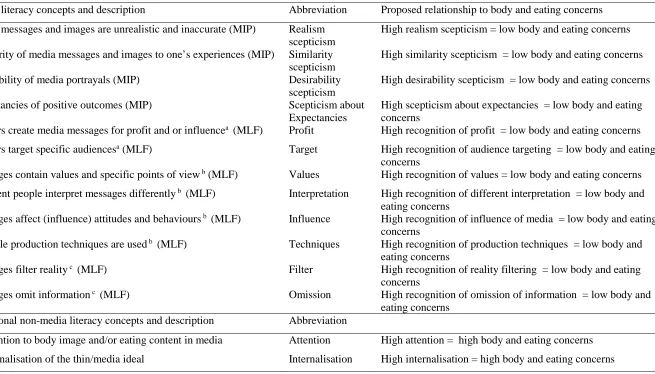
The first and second authors independently reviewed descriptions of measures and individual items to categorise the ML measures, collectively termed here media processing measures, according to consistency with the MIP model (Austin & Meili, 1994) and ML framework (Primack et al., 2006) described above and in Table 1. Where measures were not consistent with ML concepts, an alternative non-ML concept was identified if the items from the measure appeared to map onto other recognisable concepts within the body and eating concerns literature. Information in Table 1 also describes proposed relationships of ML and additional concepts to body and eating outcomes. It is expected that higher media scepticism and higher proficiency in ML framework core concepts would be related to lower media persuasion which in turn would be related to lower body and eating concerns. Interrater reliability (kappa = .89) for categorisation of measures was substantial (Landis & Koch, 1977).
Results Study Selection
concerns measure (n = 9), the study did not present original data (n = 4), or the paper reported on the same sample as a publication already included (n = 1). Sixteen papers met eligibility criteria for inclusion. Figure 2 shows the original review process flow diagram. The updated search of 124 unique records found no additional eligible papers. See the Supplementary Materials linked online to this article.
Study Characteristics
Half (n = 8) of the 16 studies included in the review were cross-sectional, seven were evaluations of interventions to improve body and eating concerns, and one was an
experimental study of the effects on body dissatisfaction of exposure to thin-ideal media. No prospective studies met inclusion criteria. The publication date range was 1998 to 2013.
Most (n = 12) of the included studies assessed samples of females only, whereas none comprised males only. Participants’ ages varied: three studies had pre-adolescent samples; five had adolescent samples; six had college-age samples, one had a non-college adult sample (mean age mid-30s), and two had multiple cohorts, e.g., children and their parents. Thirteen studies were conducted in the United States, three in Australia, and one in Israel.
Measurement of Media Literacy
All media processing measures were self-report and most studies (n = 11) assessed processing of images. Others (n = 5) had a broader content focus. Ten studies used one measure, six had multiple measures. Nine studies (56%) used measures developed by the authors or adapted other scales for their study. Existing measures were used in five studies (31%). Two studies (13%) used participant generated data from thought listing tasks.
2000; Sherwood & Neumark-Sztainer, 2001) used items adapted from the Sociocultural Attitudes Towards Appearance Questionnaire (Heinberg, Thompson, & Stormer, 1995) to assess knowledge of the influence of media on body image and eating. A sample item is “Some advertisements in magazines or on TV make people think they should go on a diet.” Two studies (Botta, 1999, 2003) used a measure described as critical viewing and questioning of media. A sample item is “I question why the models need to have such perfect bodies.” The remaining studies used various measures or items to assess ML.
Psychometric properties of media literacy measures. For the majority of scales
used to assess media literacy constructs, little information about psychometric properties was presented. Cronbach’s alpha for internal consistency was presented in 11 of the 16 (69%) included studies. The range of values for the 20 scales was α = .62 to α = .92, with values < .70 for three (15%) scales; values between .70 and .79 reported for seven (35%) scales and ≥
.80 for 10 (50%) scales. Internal consistency was not reported for four studies for which it was inappropriate.
Adequate test-retest reliability (range: r = .67 to .86), construct validity, and factor structure was demonstrated for the Critical Processing of Beauty Images measure (Engeln-Maddox & Miller, 2008). The factor structure of items from the Media Attitudes
Questionnaire was presented in another study (McLean et al., 2013). Also presented was interrater reliability (kappa = .88) for one study that used the thought-listing technique (Engeln-Maddox, 2005). The authors of one study which used an unspecified number of media processing items stated that validity was “supported by a panel of experts” (Kater, Rohwer, & Levine, 2000, p. 10) but did not provide illustrative data.
Face validity: Categorization of media literacy concepts. Face validity of measures
Realism Scepticism (also including Filter) from both the MIP model and ML framework,
corresponding to scepticism about how realistic media images are and considering that media messages filter reality (Tables 2 and 3). A sample item is “That kind of perfection isn’t real” (Engeln-Maddox & Miller, 2008). The concept Influence, i.e., recognising that media
influence attitudes and behaviours, from the ML framework, was used in six (38%) studies. A sample item is “Advertisements often encourage people to take risks with their health”
(Zucker, Stewart, Pomerleau, & Boyd, 2005). The concept Similarity Scepticism, from the MIP model, was used in five (31%) studies. Sample items are “I question why the models don’t look more like how my friends and I look” (Botta, 1999, 2003) and “most women could be as thin as the models in ads by exercising and /or dieting” (reversed scored; Irving & Berel, 2001). Each MIP concept (Austin & Meili, 1994) was assessed in at least one study, whereas only three (of seven) core ML framework concepts (Primack et al., 2006) were assessed in the reviewed studies.
Although all measures were described by the study authors as assessing ML, critical media viewing/processing, or media interpretation, some measures were categorised in the present review as assessing non-ML concepts. Six studies (38%) used measures appearing to assess Attention, which relates to attention to appearance and or eating content. Sample items are “She’s too skinny to be healthy” (Engeln-Maddox & Miller, 2008) and “I notice how much the characters eat or do not eat” (Nathanson & Botta, 2003). Measures used in three studies (19%) were categorised as assessing Internalisation of the thin-media ideal, as in, “Women who appear in television shows and movies project the type of appearance that I see as my ideal” (Botta, 1999). These non-ML concepts were not expected to be related to body and eating concern variables in the same manner as the critical thinking measures that aligned with ML concepts. Rather, consistent with the nature of these variables which reflect
expected that higher scores for attention and internalisation of the thin-media ideal would be related to higher scores for body and eating concerns. In addition, eight (of 29) measures used across studies were categorised as assessing more than one concept, such as similarity
scepticism and attention.
Measurement of Body and Eating Concerns
All studies included a measure of body image, with most (n = 12, 75%) assessing dissatisfaction or appearance concern. Body-related attitudes such as internalisation of the thin-ideal and appearance comparison were also frequently assessed (n = 8, 50%, and n = 5, 31%, respectively). Eight studies (50%) assessed disordered eating variables including bulimia symptoms, dieting, and other weight loss behaviours. The measures are shown in Tables 2, 3, and 4. Most measures of body image (n = 29, 91%) were established scales for which adequate psychometric properties had previously been demonstrated. This was also the case for measures of body-related attitudes (n = 21, 88%), whereas for measures of
disordered eating, established scales comprised half (n = 9, 50%) of the 18 measures used. The other body image, body-related attitudes, and disordered eating measures used across studies were developed by authors for their studies (n = 3, 9%; n = 3, 12%; n = 9, 50% respectively).
Cross-sectional Relationships Between Media Processing and Body and Eating Concerns Variables
MIP model and ML framework constructs. Findings for cross-sectional
constructs). For example, a high score for realism scepticism reflects high levels of scepticism about the reality of media content.
Regarding the first major aim, mixed findings were revealed for cross-sectional studies that examined relationships between media processing and body and eating concerns as shown in Table 2. Two studies found that high scores on media processing measures were associated with low body and eating concerns scores, consistent with expectations. High scores on a measure assessing realism scepticism, similarity scepticism, and desirability scepticism were associated with low scores for weight and shape concern, thin-ideal
internalisation, and upward appearance comparison (McLean et al., 2013). High scores on a measure assessing realism scepticism, influence, and attention were associated with high scores for downward appearance comparison (Engeln-Maddox, 2005). Effect sizes were medium to large.
In contrast, three studies found high scores on processing measures were associated with more body and eating concerns. High scores on a measure assessing both similarity scepticism and attention were associated with greater body dissatisfaction, drive for thinness, and bulimia in adolescent girls (Botta, 1999), and in a young adult sample with body
dissatisfaction for females but not males, and with drive for thinness, desire for muscularity, bulimia, and anorexia in females and males (Botta, 2003). Further, in young adult women, high scores on a measure of both influence and attention were associated with greater body dissatisfaction, media as an information source about appearance, perceived media pressure to look like media appearance ideals, and internalisation of the thin-ideal and athlete ideal (Engeln-Maddox & Miller, 2008). Effect sizes were medium to large.
on a media processing measure capturing the filter, influence, and values concepts were not significantly associated with weight concern (Zucker et al., 2005).
Attention and internalisation constructs. Findings for cross-sectional relationships
between body and eating concerns and media literacy measures that solely assessed
constructs inconsistent with the MIP model or ML framework are presented in this section. For these measures, high scores reflect high levels of attention to thin-ideal or eating media content or high internalisation of the thin-ideal and, as noted above, could be expected to be associated with high body and eating concerns as they do not reflect critical thinking about or scepticism towards media presentations. Consistent with this idea, high scores on a scale assessing attention as a single concept were associated with more internalisation of athletic ideals for college age women (Engeln-Maddox & Miller, 2008) and with greater drive for thinness for adolescent girls and boys (Nathanson & Botta, 2003). High scores on a media processing measure categorised as assessing attention and internalisation were associated with greater body dissatisfaction, drive for thinness, and bulimia in adolescent girls (Botta, 1999).
Impact of conceptualisation of media literacy on relationships with body and eating concerns variables. In line with the subsidiary study aim, to uncover the impact of type of media processing measurement on relationships with body and eating concerns, we categorised the observed relationships for measures consistent with the MIP model and ML framework according to the measure of media processing used and conducted Fisher’s exact probability tests to determine if differences between observed results were statistically significant.
body and eating concerns scores (Engeln-Maddox, 2005; McLean et al., 2013), 10 (71%) were null results (Engeln-Maddox, 2005; Engeln-Maddox & Miller, 2008), and zero associations were in the direction opposite to that expected. Outcomes were mixed for the similarity scepticism and influence concepts. For similarity scepticism, three of 16 (19%) associations tested were in the expected direction (McLean et al., 2013), two (13%) were null results (Botta, 1999, 2003), and 11 (69%) were in the non-expected direction (Botta, 1999, 2003). For influence, one of 11 (9%) associations tested was in the expected direction (Engeln-Maddox, 2005), four (36%) were null results (Engeln-Maddox, 2005; Zucker et al., 2005), and six (55%) were in the direction opposite to that which had been predicted (Engeln-Maddox & Miller, 2008).
Fisher’s exact tests compared the measured MIP model and ML framework constructs on the proportion of outcomes that were: in the expected direction versus null results versus in the non-expected direction. There were significant differences between realism scepticism and influence (p < .01), and realism scepticism and similarity scepticism (p < .001), but not between influence and similarity scepticism (p = .454). The results indicated that the type of media processing measure did impact relationships with body and eating concerns. Most relationships with measures assessing similarity scepticism and influence were in the direction opposite to predictions: thus, higher levels of processing in relation to recognising influence of media on attitudes and behaviour and perceptions of similarity of the self to media were associated with greater body and eating concerns. However, assessment of similarity often included overlapping constructs, such as attention, which may have
Outcomes of ML Intervention Studies
Regarding the second major aim, to examine the media processing and body and eating concerns outcomes of ML interventions, seven studies were identified that conducted evaluations of ML interventions which aimed to improve body and eating concerns and which assessed both change in levels of ML and change in levels of body and eating
concerns. Outcomes from studies were interpreted only if the design had a control group and appropriate inferential statistics were conducted to compare differences between
experimental groups adjusting for baseline levels of the variable of interest.
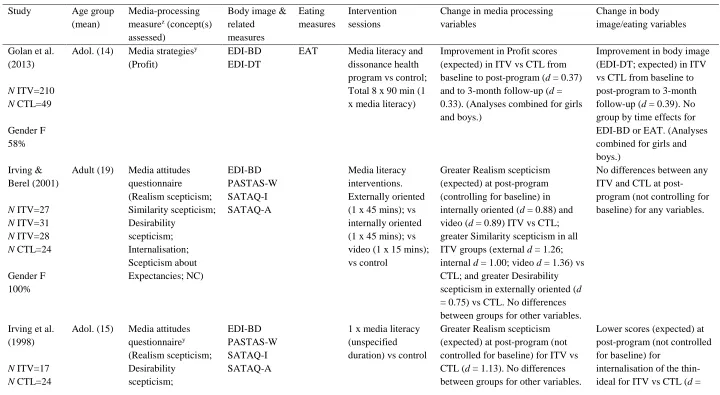
Media processing outcomes. For change in media processing, outcomes from four studies that met these criteria were interpreted (Golan, Hagay, & Tamir, 2013; Irving & Berel, 2001; Neumark-Sztainer et al., 2000; Richardson, Paxton, & Thomson, 2009). Consistent with our expectations, significant improvements in media processing were observed for the intervention relative to control groups in three of four studies (75%), and improvements at trend level were found in the fourth study (see Table 3). Media processing variables that showed improvement were: profit, from baseline to three-month follow-up (Golan et al., 2013); realism scepticism, similarity scepticism, and desirability scepticism, from baseline to program (Irving & Berel, 2001); techniques, from baseline to post-program and baseline to three-month follow-up (Richardson et al., 2009); influence (trend improvement) from baseline to post-program (Richardson et al., 2009); and influence and expectancies (trend improvement), from baseline to post-program and baseline to three-month follow-up (Neumark-Sztainer et al., 2000). Effect sizes were small to large.
processing and the length of program content dedicated to ML. For example, small
improvements were found for media processing for both the program with the greatest ML content (3 x 90 minutes, d = 0.26 to 0.35; Neumark-Sztainer et al., 2000) and also for the program with moderate ML content (1 x 90 minutes; d = 0.33 to 0.37; Golan et al., 2013). Small to large effect sizes were found for programs with relatively brief ML content (1 x 45 minutes; d = 0.75 to 1.36; Irving & Berel, 2001; 1 x 50 minutes; d = .38 to .87; Richardson et al., 2009).
Body and eating concerns outcomes. The same criteria regarding use of a control
group and adjustment for baseline levels of outcome variables were applied for interpreting body and eating concerns outcomes. Outcomes from three studies were interpreted (Golan et al., 2013; Neumark-Sztainer et al., 2000; Richardson et al., 2009), in which improvements were found for some, but not all variables. Improvements were observed for drive for thinness in girls and boys from baseline to three-month follow-up (Golan et al., 2013), internalisation of the thin-ideal for girls at post-program (Richardson et al., 2009) and three month follow-up (Neumark-Sztainer et al., 2000), body size acceptance for girls at post-program (Neumark-Sztainer et al., 2000), and body satisfaction for boys at post-post-program and three month follow-up (Richardson et al., 2009). Effect sizes were small to large. No
improvements were found for any of the disordered eating variables. See Table 3.
Outcomes for the intervention studies reviewed demonstrated improvements in media processing and body concerns variables for college age women and adolescent participants, both boys and girls. For the three studies finding improvements in body image variables, improvements in the media processing variables profit, techniques, influence, and
Experimental Study Outcomes
One experimental study was identified (Tiggemann, Slater, Bury, Hawkins, & Firth, 2013), which compared outcomes of viewing thin-ideal media images in groups in which participants did or did not view warning labels regarding digital alteration of images. Female participants (N = 114, Mage = 20.0, SD = 2.7) rated at post-viewing how realistic they
perceived the appearance of models to be using the perceived realism scale (Tiggemann et al., 2013). Groups did not differ on realism ratings. Analyses were not conducted to examine if realism was related to change in body satisfaction from pre-to post-image viewing.
Discussion
Enhancing individuals’ media literacy, defined as the ability to access, critically evaluate, and create media (Aufderheide & Firestone, 1993), has been promoted as a method to prevent body dissatisfaction and eating disorders. The aim of this review was to
systematically examine empirical relationships between level of ML and level of body and eating outcomes, including evaluating change in level of ML and body and eating concerns following ML-based interventions, to better understand the role of ML skills in protecting against body and eating concerns. The review included 16 eligible cross-sectional,
intervention, and experimental (including intervention evaluations) studies.
al., 2009), internalisation of the thin-ideal in girls (Richardson et al., 2009), body size acceptance in girls (Neumark-Sztainer et al., 2000), and drive for thinness in girls and boys (Golan et al., 2013) were revealed following ML interventions that also increased ML. Eating outcomes were not improved in any study. Interestingly, no studies reviewed analysed
whether ML variables mediated positive outcomes. Consequently, we could not examine if reductions in body and eating concerns were explained by changes in ML.
Not including evaluations of interventions, only one of the reviewed studies used an experimental design. There was no evidence that realism scepticism was increased following viewing of warning labels on images of thin models (Tiggemann et al., 2013).
Impact of measurement. Although the cross-sectional outcomes were not strongly
supportive of expected findings, results from examination of the impact of the particular ML conceptualisation on the pattern of relationships with outcome measures, suggest that
outcomes were dependent upon the concept assessed. For relationships in the expected direction, where greater ML was associated with lower body and eating concerns, the measures used in analyses reflected the constructs realism scepticism, similarity scepticism, desirability scepticism, and influence, from the MIP model and ML framework (Austin & Meili, 1994; Primack et al., 2006; Primack & Hobbs, 2009). Significantly more outcomes for realism scepticism were in the expected direction than for similarity scepticism and influence. However, due to the proportion of null relationships found for these constructs, the results must be considered preliminary and interpreted with caution.
media. Furthermore, in some studies, data supporting the construct validity of these measures in relation to media processing was not presented (Botta, 1999, 2003; Nathanson & Botta, 2003), thus it cannot be concluded that these scales are valid measures of ML. Consistent with research showing that heightened attention to thin-ideal images exacerbates body concerns (A. Brown & Dittmar, 2005), these findings suggest that media processing that draws attention to appearance and eating content may highlight discrepancies between the viewer’s perceived appearance and appearance ideals portrayed in media, thus contributing to heightened body dissatisfaction. Consideration of the potential for increased body
dissatisfaction resulting from attention to media appearance ideals is required by
interventionists delivering ML programs. Participants in these programs might find their awareness of ideals, and thus their body dissatisfaction, enhanced through presentation of visual material that, while highlighting the techniques and strategies used by media to create unrealistic appearance ideals, by default, also involves increased exposure to these ideals. Such material needs to be delivered with care to ensure that exposure is balanced with sufficient critical analysis to reduce the persuasive influence of exposure to these media appearance ideals.
outcome variables may have been confounded by the presence of other constructs within the measures. It is also possible that the similarity scepticism construct, while applicable to other health risk behaviours, has a less straightforward relationship with body concerns. From a media processing theory perspective, evaluating oneself as dissimilar to thin- or muscular-ideal images in advertising (high similarity scepticism) reflects critical thinking processes and an understanding that media images are highly constructed and that, in real life, people are highly unlikely to look similar to the highly manipulated images. Such a critical
perspective can be protective for body image in that the media-depicted ideals would be less likely to be internalised or considered as appropriate targets for comparison (Halliwell, Easun, & Harcourt, 2011; Posavac, Posavac, & Weigel, 2001). On the other hand, simply evaluating oneself as dissimilar to media portrayals in the absence of a critical perspective directed at the media message, may reflect a simple identification that the individual
perceives themselves to be discrepant from current media ideals for appearance. Under these circumstances, body dissatisfaction is likely to result. Furthermore, recognition of oneself as dissimilar to appearance ideals portrayed by models may not reduce attention to, or
comparison with such ideals, particularly when the motivation for appearance comparison is self-enhancement. These varied interpretations of the implications of similarity media processing measures suggests that further work is required for developing similarity scepticism measures for application to body and eating concerns research which reflect the critical component and not merely discrepancies from or disapproval of media appearance ideals (Want, Vickers, & Amos, 2009).
comparisons between the self and media images, and reduce internalising media appearance standards as one’s own, thus reducing body concerns. Results consistent with this contention were found from cross-sectional and intervention studies. Although cross-sectional results were not strongly supportive, they do suggest that of the ML concepts, realism scepticism appears to have the most potential to pursue in future research. Critical thinking in this domain may enhance the development of more realistic appearance ideals both for the self (Neumark-Sztainer et al., 2000) and in relation to media images (Halliwell et al., 2011). Our findings underscore the importance of being clear about the constructs of ML that are being assessed with each measurement tool, and also being clear about the constructs that are targeted in ML interventions, however, further research is needed to consolidate empirical support for the small number of expected relationships that have been revealed in this study. Implications for Media Literacy Models
Evidence from reviewed studies provides preliminary support for elements of the proposed ML model (Figure 1), whereas other elements are untested. Relationships between higher ML and lower thin-ideal internalisation, appearance comparison, and body
Relationships between eating concerns and ML were infrequently assessed and none of the ML interventions improved eating outcomes. Regarding the latter point, only one intervention included eating-related ML content (Neumark-Sztainer et al., 2000). The other interventions focused on appearance- or general-ML content (Golan et al., 2013; Richardson et al., 2009). Thus, it is not surprising that eating outcomes were not improved when they were not targeted in the intervention content. This observation is consistent with the recommendation that “researchers should be more explicit about the media literacy core concepts/skills they include in their intervention” (Bergsma & Carney, 2008, p. 540).
The review also found that none of the intervention studies examined change in body and eating outcomes in relation to change in ML, the putative mechanism by which
improvements occur in ML-based programs. Although improvements in both body concern outcomes and ML occurred (Golan et al., 2013; Neumark-Sztainer et al., 2000; Richardson et al., 2009), it cannot be concluded that body-related improvements resulted from changes in ML due to the intervention. Extensive program evaluation, including tests of mediation, as has been conducted in evaluations of smoking interventions based on the MIP model (Kupersmidt et al., 2012), are needed to clarify the utility of ML approaches for preventing body and eating concerns.
Limitations of the Review Findings and Methodology
The review findings were limited by the extent to which identified studies conducted analyses consistent with the research aims. For example, ML is assumed to disrupt
appearance comparison processes (Botta, 1999; Halliwell et al., 2011; Posavac et al., 2001), therefore, it was somewhat surprising that few studies examined relationships between appearance comparison and ML. As noted above, intervention studies did not assess mediation of outcomes, therefore, this aspect of the study could not be investigated.
prevention studies which did not assess individual levels of ML (e.g., González et al., 2011; Halliwell et al., 2011; Wilksch et al., 2015). This criterion was selected to enable examination of the empirical relationship between ML and body and eating outcomes; if ML is not
assessed, it cannot be ascertained whether an intervention has modified ML. However, it should be noted that other ML body and eating concern interventions have been reported and a review of their effects on body and eating concerns outcomes has recently been conducted (Wilksch & Wade, 2015).
Conclusions and Recommendations for Future Research
This review’s findings advance our understanding of the relationship between ML and body and eating concerns, but a number of areas remain unclear and other important issues have yet to be investigated. The review has established that the realism scepticism concept has the most consistent relationships with body and eating concerns, in the directions that were expected, but patterns in relationships between levels of ML and levels of body and eating concerns depended on the ML concept measured. Mixed findings for directions of relationships between ML constructs (e.g., similarity scepticism and influence) and the overlap between assessed constructs, highlight that the best way to assess the extent to which an individual is media literate remains unclear. Furthermore, a number of core concepts of the ML framework, such as “authors target specific audiences”, “different people interpret
messages differently”, and “messages omit information,” have not been assessed in research in this field, hence it is unknown whether those concepts are relevant to this field. Thus, development of measures yielding valid and reliable scores is essential for use in body and eating concerns research (Martens, 2010). Advances in other areas of ML assessment (Primack et al., 2006; Scull et al., 2010) could guide such endeavours.
interventions that also improved levels of participants’ ML. However, limitations in scope and analyses of reviewed studies point to several recommendations for future research. First, methodological rigour is required regarding use of a randomised controlled design and controlling for baseline levels of variables in analyses. Second, ML interventions need to be based on a sound theoretical framework of ML processes as related to body and eating concerns. Third, interventions must identify and target ML constructs relevant to body and eating concern change. Fourth, levels of ML must be assessed to ascertain whether ML-based interventions do increase ML. Fifth, ML measures reflecting specific ML theory constructs as applied to body and eating concerns research need further development, and sixth,
Acknowledgements
This research was funded by Australian Rotary Health through the award of a Lorraine and Bruce McKenzie PhD scholarship for Mental Health of Young Australians to the first author. The funding source had no role in study design, collection, analysis or interpretation of data, in writing the report, or in the decision to submit the article for publication.
References
References marked with an asterisk indicate studies included in the systematic review.
Aufderheide, P., & Firestone, C. M. (1993). Media literacy: A report of the National Leadership Conference on Media Literacy. Queenstown, MD: The Aspen Institute. Austin, E. W., Chen, M.-J., & Grube, J. W. (2006). How does alcohol advertising influence
underage drinking? The role of desirability, identification and skepticism. Journal of Adolescent Health, 38, 376-384. doi: 10.1016/j.jadohealth.2005.08.017
Austin, E. W., & Meili, H. K. (1994). Effects of interpretations of televised alcohol portrayals on children's alcohol beliefs. Journal of Broadcasting & Electronic Media, 38, 417-435. doi: 10.1080/08838159409364276
Bergsma, L. J., & Carney, M. E. (2008). Effectiveness of health-promoting media literacy education: A systematic review. Health Education Research, 23, 522-542. doi: 10.1093/her/cym084
*Botta, R. A. (1999). Television images and adolescent girls' body image disturbance. Journal of Communication, 49, 22-41. doi: 10.1111/j.1460-2466.1999.tb02791.x
*Botta, R. A. (2003). For your health? The relationship between magazine reading and adolescents' body image and eating disturbances. Sex Roles, 48, 389-399. doi: 10.1023/a:1023570326812
Brown, A., & Dittmar, H. (2005). Think "thin" and feel bad: The role of appearance schema activation, attention level, and thin-ideal internalization for young women's responses to ultra-thin media ideals. Journal of Social and Clinical Psychology, 24, 1088-1113. doi: 10.1521/jscp.2005.24.8.1088
Chang, F.-C., Miao, N.-F., Lee, C.-M., Chen, P.-H., Chiu, C.-H., & Lee, S.-C. (2014). The association of media exposure and media literacy with adolescent alcohol and tobacco use. Journal of Health Psychology, Advance online publication. doi:
10.1177/1359105314530451
*Engeln-Maddox, R. (2005). Cognitive responses to idealized media images of women: The relationship of social comparison and critical processing to body image disturbance in college women. Journal of Social and Clinical Psychology, 24, 1114-1138. doi: 10.1521/jscp.2005.24.8.1114
*Engeln-Maddox, R., & Miller, S. A. (2008). Talking back to the media ideal: The development and validation of the Critical Processing of Beauty Images Scale. Psychology of Women Quarterly, 32, 159-171. doi:
10.1111/j.1471-6402.2008.00420.x
Ferguson, C. J. (2013). In the eye of the beholder: Thin-ideal media affects some, but not most, viewers in a meta-analytic review of body dissatisfaction in women and men. Psychology of Popular Media Culture, 2, 20-37. doi: 10.1037/a0030766
Ferguson, C. J., & Brannick, M. T. (2012). Publication bias in psychological science: Prevalence, methods for identifying and controlling, and implications for the use of meta-analyses. Psychological Methods, 17, 120-128. doi: 10.1037/a0024445 Fingar, K. R., & Jolls, T. (2014). Evaluation of a school-based violence prevention media
literacy curriculum. Injury Prevention, 20, 183-190. doi: 10.1136/injuryprev-2013-040815
Gentile, D. A., Coyne, S., & Walsh, D. A. (2011). Media violence, physical aggression, and relational aggression in school age children: A short-term longitudinal study.
*Golan, M., Hagay, N., & Tamir, S. (2013). The effect of "In Favor of Myself'': Preventive program to enhance positive self and body image among adolescents. PLos ONE, 8. doi: 10.1371/journal.pone.0078223
González, M., Penelo, E., Gutiérrez, T., & Raich, R. M. (2011). Disordered eating prevention programme in schools: A 30-month follow-up. European Eating Disorders Review, 19, 349-356. doi: 10.1002/erv.1102
Grabe, S., Ward, L. M., & Hyde, J. S. (2008). The role of the media in body image concerns among women: A meta-analysis of experimental and correlational studies.
Psychological Bulletin, 134, 460-476. doi: 10.1037/0033-2909.134.3.460
Groesz, L. M., Levine, M. P., & Murnen, S. K. (2002). The effect of experimental presentation of thin media images on body satisfaction: A meta-analytic review. International Journal of Eating Disorders, 31, 1-16. doi: 10.1002/eat.10005
Halliwell, E., Easun, A., & Harcourt, D. (2011). Body dissatisfaction: Can a short media literacy message reduce negative media exposure effects amongst adolescent girls? British Journal of Health Psychology, 16, 396-403. doi: 10.1348/135910710X515714
Harris, J. L., Bargh, J. A., & Brownell, K. D. (2009). Priming effects of television food advertising on eating behavior. Health Psychology, 28, 404-413. doi:
10.1037/a0014399
Harrison, K. (2000). The body electric: Thin-ideal media and eating disorders in adolescents. Journal of Communication, 50, 119-143. doi: 10.1111/j.1460-2466.2000.tb02856.x
Heinberg, L. J., Thompson, J., & Stormer, S. (1995). Development and validation of the sociocultural attitudes towards appearance questionnaire. International Journal of Eating Disorders, 17, 81-89. doi:
Hobbs, R. (1998). The seven great debates in the media literacy movement. Journal of Communication, 48, 16-32. doi: 10.1111/j.1460-2466.1998.tb02734.x
Hobbs, R. (2011). Digital and media literacy: Connecting culture and classroom. Thousand Oaks, CA: Corwin Press.
Holmqvist, K., & Frisén, A. (2012). “I bet they aren’t that perfect in reality:” Appearance ideals viewed from the perspective of adolescents with a positive body image. Body Image, 9, 388-395. doi: 10.1016/j.bodyim.2012.03.007
*Irving, L. M., & Berel, S. R. (2001). Comparison of media-literacy programs to strengthen college women's resistance to media images. Psychology of Women Quarterly, 25, 103-111. doi: 10.1111/1471-6402.00012
*Irving, L. M., DuPen, J., & Berel, S. (1998). A media literacy program for high school females. Eating Disorders, 6, 119-132. doi: 10.1080/10640269808251248 Jackson, T., & Chen, H. (2008). Predicting changes in eating disorder symptoms among
Chinese adolescents: A 9-month prospective study. Journal of Psychosomatic Research, 64, 87-95. doi: 10.1016/j.jpsychores.2007.08.015
*Kater, K. J., Rohwer, J., & Levine, M. P. (2000). An elementary school project for
developing healthy body image and reducing risk factors for unhealthy and disordered eating. Eating Disorders: The Journal of Treatment & Prevention, 8, 3 - 16. doi: 10.1080/10640260008251208
Kupersmidt, J. B., Scull, T. M., & Benson, J. W. (2012). Improving media message
interpretation processing skills to promote healthy decision making about substance use: The effects of the middle school Media Ready curriculum. Journal of Health Communication, 17, 546-563. doi: 10.1080/10810730.2011.635769
Levine, M. P. (2016). Media literacy approaches to prevention. In T. Wade (Ed.), Encyclopedia of feeding and eating disorders (pp. 1-6). Singapore: Springer.
Levine, M. P., & Kelly, J. (2012). Mass media 1: A primer on media literacy's role in the prevention of negative body image and disordered eating. In G. L. McVey, M. P. Levine, N. Piran, & H. B. Ferguson (Eds.), Preventing eating-related and weight-related disorders: Collaborative research, advocacy, and policy change (pp. 85-111).
Waterloo, Ontario: Wilfrid Laurier University Press.
Levine, M. P., & Murnen, S. K. (2009). "Everybody knows that mass media are/are not (pick one) a cause of eating disorders": A critical review of evidence of a causal link between media, negative body image, and disordered eating in females. Journal of Social and Clinical Psychology, 28, 9-42. doi: 10.1521/jscp.2009.28.1.9
Levine, M. P., Smolak, L., & Schermer, F. (1996). Media analysis and resistance by elementary school children in the primary prevention of eating problems. Eating Disorders, 4, 310-322. doi: 10.1080/10640269608249191
Martens, H. (2010). Evaluating media literacy education: Concepts, theories and future directions. Journal of Media Literacy Education, 2, 1-22.
*McLean, S. A., Paxton, S. J., & Wertheim, E. H. (2013). Mediators of the relationship between media literacy and body dissatisfaction in early adolescent girls: Implications for prevention. Body Image, 10, 282-289. doi: 10.1016/j.bodyim.2013.01.009
McVey, G., Tweed, S., & Blackmore, E. (2005). Correlates of weight loss and muscle-gaining behavior in 10- to 14-year-old males and females. Preventive Medicine: An International Journal Devoted to Practice and Theory, 40, 1-9. doi:
Moher, D., Liberati, A., Tetzlaff, J., Altman, D. G., & Group, T. P. (2009). Preferred reporting items for systematic reviews and meta-analyses: The PRISMA statement. PLoS Medicine, 6, e1000097. doi: 10.1371/journal.pmed.1000097
Mora, M., Penelo, E., Gutiérrez, T., Espinoza, P., González, M. L., & Raich, R. M. (2015). Assessment of two school-based programs to prevent universal eating disorders: Media literacy and theatre-based methodology in Spanish adolescent boys and girls. The Scientific World Journal, 2015, 12. doi: 10.1155/2015/328753
Murnen, S., & Smolak, L. (2009). Are feminist women protected from body image problems? A meta-analytic review of relevant research. Sex Roles, 60, 186-197. doi:
10.1007/s11199-008-9523-2
*Nathanson, A. I., & Botta, R. A. (2003). Shaping the effects of television on adolescents' body image disturbance. Communication Research, 30, 304-331. doi:
10.1177/0093650203030003003
*Neumark-Sztainer, D., Sherwood, N. E., Coller, T., & Hannan, P. J. (2000). Primary prevention of disordered eating among preadolescent girls: feasibility and short-term effect of a community-based intervention. Journal of the American Dietetic
Association, 100, 1466-1473. doi: 10.1016/S0002-8223(00)00410-7
Nunez-Smith, M., Wolf, E., Huang, H. M., Chen, P. G., Lee, L., Emanuel, E. J., & Gross, C. P. (2010). Media exposure and tobacco, illicit drugs, and alcohol use among children and adolescents: A systematic review. Substance Abuse, 31, 174-192. doi:
10.1080/08897077.2010.495648
Pinkleton, B. E., Austin, E. W., Cohen, M., Miller, A., & Fitzgerald, E. (2007). A statewide evaluation of the effectiveness of media literacy training to prevent tobacco use among adolescents. Health Communication, 21, 23-34. doi:
10.1080/10410230701283306
Piran, N. (2010). A feminist perspective on risk factor research and on the prevention of eating disorders. Eating Disorders: The Journal of Treatment & Prevention, 18, 183 - 198. doi: 10.1080/10640261003719435
*Posavac, H. D., Posavac, S. S., & Weigel, R. G. (2001). Reducing the impact of media images on women at risk for body image disturbance: Three targeted interventions. Journal of Social and Clinical Psychology, 20, 324-340. doi:
10.1521/jscp.20.3.324.22308
Potter, W. J. (2004). Argument for the need for a cognitive theory of media literacy. American Behavioral Scientist, 48, 266-272. doi: 10.1177/0002764204267274
Primack, B. A., Gold, M. A., Switzer, G. E., Hobbs, R., Land, S. R., & Fine, M. J. (2006). Development and validation of a smoking media literacy scale for adolescents. Archives of Pediatrics and Adolescent Medicine, 160, 369-374. doi:
10.1001/archpedi.160.4.369
Primack, B. A., & Hobbs, R. (2009). Association of various components of media literacy and adolescent smoking. American Journal of Health Behavior, 33, 192-201. doi: 10.1001/jama.291.10.1238
*Richardson, S. M., Paxton, S. J., & Thomson, J. S. (2009). Is BodyThink an efficacious body image and self-esteem program? A controlled evaluation with adolescents. Body Image, 6, 75-82. doi: 10.1016/j.bodyim.2008.11.001
Implications for the tripartite influence model. Developmental Psychology, 51, 706-713. doi: 10.1037/dev0000013
Schooler, D., & Trinh, S. (2011). Longitudinal associations between television viewing patterns and adolescent body satisfaction. Body Image, 8, 34-42. doi:
10.1016/j.bodyim.2010.09.001
Scull, T. M., Kupersmidt, J. B., Parker, A. E., Elmore, K. C., & Benson, J. W. (2010).
Adolescents' media-related cognitions and substance use in the context of parental and peer influences. Journal of Youth and Adolescence, 39, 981-998. doi:
10.1007/s10964-009-9455-3
*Sherwood, N. E., & Neumark-Sztainer, D. (2001). Internalization of the sociocultural ideal: Weight-related attitudes and dieting behaviors among young adolescent girls.
American Journal of Health Promotion, 15, 228-231. doi:
10.4278/0890-1171-15.4.228
Strasburger, V. C., & Council on Communications and Media Executive Committee. (2010). Policy statement: Media education. Pediatrics, 126, 1012-1017. doi:
10.1542/peds.2010-1636
Strasburger, V. C., Jordan, A. B., & Donnerstein, E. (2010). Health effects of media on children and adolescents. Pediatrics, 125, 756-767. doi: 10.1542/peds.2009-2563 Thompson, J. K., Heinberg, L. J., Altabe, M., & Tantleff-Dunn, S. (1999). Exacting beauty:
Theory, assessment, and treatment of body image disturbance. Washington, DC:
American Psychological Association.
*Tiggemann, M., Slater, A., Bury, B., Hawkins, K., & Firth, B. (2013). Disclaimer labels on fashion magazine advertisements: Effects on social comparison and body
Want, S. C. (2009). Meta-analytic moderators of experimental exposure to media portrayals of women on female appearance satisfaction: Social comparisons as automatic processes. Body Image, 6, 257-269. doi: 10.1016/j.bodyim.2009.07.008 Want, S. C., Vickers, K., & Amos, J. (2009). The influence of television programs on
appearance satisfaction: Making and mitigating social comparisons to "Friends". Sex Roles, 60, 642-655. doi: 10.1007/s11199-008-9563-7
Wilksch, S. M., Paxton, S. J., Byrne, S. M., Austin, S. B., McLean, S. A., Thompson, K. M., . . . Wade, T. D. (2015). Prevention Across the Spectrum: A randomized controlled trial of three programs to reduce risk factors for both eating disorders and obesity. Psychological Medicine, 45, 1811-1823. doi: 10.1017/S003329171400289X
Wilksch, S. M., & Wade, T. D. (2015). Media literacy in the prevention of eating disorders. In L. Smolak & M. P. Levine (Eds.), The Wiley handbook of eating disorders (pp. 610-624). Chichester, UK: John Wiley & Sons, Ltd.
Wood-Barcalow, N. L., Tylka, T. L., & Augustus-Horvath, C. L. (2010). “But I Like My Body”: Positive body image characteristics and a holistic model for young-adult women. Body Image, 7, 106-116. doi: 10.1016/j.bodyim.2010.01.001
Table 1
Concepts Assessed by Media Processing Measures and Proposed Relationships to Body and Eating Concerns
Media literacy concepts and description Abbreviation Proposed relationship to body and eating concerns
Media messages and images are unrealistic and inaccurate (MIP) Realism scepticism
High realism scepticism = low body and eating concerns
Similarity of media messages and images to one’s experiences (MIP) Similarity scepticism
High similarity scepticism = low body and eating concerns
Desirability of media portrayals (MIP) Desirability
scepticism
High desirability scepticism = low body and eating concerns
Expectancies of positive outcomes (MIP) Scepticism about
Expectancies
High scepticism about expectancies = low body and eating concerns
Authors create media messages for profit and or influencea (MLF) Profit High recognition of profit = low body and eating concerns
Authors target specific audiencesa (MLF) Target High recognition of audience targeting = low body and eating
concerns
Messages contain values and specific points of view b (MLF) Values High recognition of values = low body and eating concerns
Different people interpret messages differently b (MLF) Interpretation High recognition of different interpretation = low body and eating concerns
Messages affect (influence) attitudes and behaviours b (MLF) Influence High recognition of influence of media = low body and eating concerns
Multiple production techniques are used b (MLF) Techniques High recognition of production techniques = low body and eating concerns
Messages filter reality c (MLF) Filter High recognition of reality filtering = low body and eating
concerns
Messages omit information c (MLF) Omission High recognition of omission of information = low body and
eating concerns Additional non-media literacy concepts and description Abbreviation
Attention to body image and/or eating content in media Attention High attention = high body and eating concerns
Internalisation of the thin/media ideal Internalisation High internalisation = high body and eating concerns
MIP = message interpretation process model (Austin & Meili, 1994)
Table 2
Characteristics and Results of Cross-sectional Studies Included in the Review
Study Age group
(mean years)
Media-processing measurez (concept(s) assessed)
Body image and related measures
Eating measures
Results
Botta (1999)
N = 214
Gender F 100%
Adol. (15) Critical viewingy (Attention; Similarity scepticism) Media images as realistic idealy; (Internalisation; Attention)
EDI-BD EDI-DT
EDI-B Higher scores for Similarity scepticism & Attention and Internalisation & Attention associated with greater body
dissatisfaction (EDI-BD; d = 0.35; d = 0.54) and disordered eating (EDI-B; d = 0.45; d = 0.49). Higher scores for Internalisation & Attention also associated with greater drive for thinness (EDI-DT; d = 0.77). Null results for other relationships.
Botta (2003)
N = 397
Gender F 51%
Adol/Adult (19)
Critical viewing (Attention; Similarity scepticism) EDI-BD EDI-DT MUSCy EDI-B ANBy
Girls: Higher scores for Similarity scepticism & Attention associated with lesser body satisfaction (EDI-BD; d = 0.70) and greater drive for thinness (EDI-DT; d = 0.80) disordered eating (EDI-B; d = 0.77, ANB; d = 0.93), and muscularity (MUSC d = .41).
Boys: Higher scores for Similarity scepticism & Attention associated with greater drive for thinness and desire for muscularity (EDI-DT; d
= 0.80, MUSC d = 0.39) and disordered eating (EDI-B; d = 0.85, ANB; d = 0.68), but not body satisfaction (EDI-BD).
Engeln-Maddox (2005)
N = 202
Gender F 100%
Adult (18) Critical processingx (Realism scepticism; Attention; Influence)
EDI-BD MBSRQ – AE MBSRQ - AO SATAQ-I
NACTx
PACTx
Higher scores for Realism Scepticism, Attention, & Influence
associated with greater downward appearance comparison (PACT; d = 0.54); with lesser internalisation of the thin-ideal (SATAQ-I; d = 0.32, trend); with lesser importance of appearance (MBSRQ-AO; d = 0.39, trend); and with greater satisfaction with appearance (MBSRQ-AE; d
= 0.43, trend).
No association between Realism Scepticism, Attention, & Influence and body image (EDI-BD).
Engeln-Maddox & Miller (2008)
N = 393
Adult (19) Critical processing of beauty images scaley
Questioning/accusing subscale (Influence; Attention)
EDI-BD MBSRQ - AE SATAQ-I SATAQ – AI
Study Age group (mean years)
Media-processing measurez (concept(s) assessed)
Body image and related measures
Eating measures
Results
Gender F 100% Too thin subscaley (Attention)
Fake subscaley (Realism scepticism; Techniques)
SATAQ – P SATAQ-M
d = 0.80; P; d = 1.04), and with lesser body satisfaction (MBSRQ-AE;
d = 0.54).
Higher scores for Attention associated with higher scores for
internalisation of the athlete ideal (SATAQ-AI; d = 0.32). Null results for other relationships.
Fake subscale not associated with any body image or related measures.
McLean et al. (2013)
N = 469
Gender F 100%
Adol. (13) Media attitudes questionnaire (Realism scepticism; Similarity scepticism; Desirability scepticism) EDEQ-WS SATAQ-I PACS
Higher scores for Realism scepticism, Similarity scepticism & Desirability scepticism associated with lesser weight and shape concern (EDEQ-WS; d = 0.41), internalisation of the thin-ideal (SATAQ-I; d = 0.95) and appearance comparison (PACS; d = 0.56).
Nathanson & Botta (2003)
N Adol. = 149
N Adult = 160
Gender Adol F 62% Adult F 68%
Adol. (16) Adult (21)
Processing of incidental contenty (Attention)
EDI-BD EDI-DT SCPy
EDI-B ANBy
Higher scores for Attention associated with greater drive for thinness (EDI-DT; d = 0.98) in adolescents.
Data for other relationships between Attention and outcome variables not available for adolescents or adults.
Sherwood & Neumark-Sztainer (2001)
N = 234
Gender F 100%
Child (11) Knowledge of media
influences (Influence; Expectancies) BSS SATAQ-I ABBS DIETy WLPy
No differences in Influence & Expectancies scores between dieters and non-dieters.
Relationships between Influence & Expectancies and outcome variables not available.
Zucker et al. (2005)
N = 942
Gender F 100%
Adult (34) Advertising scepticism (Filter; Influence; Values)
WC No association between scores for Filter, Influence & Values and
scores for weight concern (WC).
Table 3
Characteristics and Results of Experimental Intervention Studies Included in the Review
Study Age group
(mean)
Media-processing measurez (concept(s) assessed)
Body image & related measures Eating measures Intervention sessions
Change in media processing variables
Change in body image/eating variables
Golan et al. (2013)
N ITV=210
N CTL=49
Gender F 58%
Adol. (14) Media strategiesy (Profit)
EDI-BD EDI-DT
EAT Media literacy and
dissonance health program vs control; Total 8 x 90 min (1 x media literacy)
Improvement in Profit scores (expected) in ITV vs CTL from baseline to post-program (d = 0.37) and to 3-month follow-up (d = 0.33). (Analyses combined for girls and boys.)
Improvement in body image (EDI-DT; expected) in ITV vs CTL from baseline to post-program to 3-month follow-up (d = 0.39). No group by time effects for EDI-BD or EAT. (Analyses combined for girls and boys.)
Irving & Berel (2001)
N ITV=27
N ITV=31
N ITV=28
N CTL=24
Gender F 100%
Adult (19) Media attitudes questionnaire (Realism scepticism; Similarity scepticism; Desirability scepticism; Internalisation; Scepticism about Expectancies; NC) EDI-BD PASTAS-W SATAQ-I SATAQ-A Media literacy interventions. Externally oriented (1 x 45 mins); vs internally oriented (1 x 45 mins); vs video (1 x 15 mins); vs control
Greater Realism scepticism (expected) at post-program (controlling for baseline) in internally oriented (d = 0.88) and video (d = 0.89) ITV vs CTL; greater Similarity scepticism in all ITV groups (external d = 1.26; internal d = 1.00; video d = 1.36) vs CTL; and greater Desirability scepticism in externally oriented (d
= 0.75) vs CTL. No differences between groups for other variables.
No differences between any ITV and CTL at post-program (not controlling for baseline) for any variables.
Irving et al. (1998)
N ITV=17
N CTL=24
Adol. (15) Media attitudes questionnairey (Realism scepticism; Desirability scepticism; EDI-BD PASTAS-W SATAQ-I SATAQ-A
1 x media literacy (unspecified duration) vs control
Greater Realism scepticism (expected) at post-program (not controlled for baseline) for ITV vs CTL (d = 1.13). No differences between groups for other variables.
Lower scores (expected) at post-program (not controlled for baseline) for